EP0352878B1 - Katalysatoren, die auf Ton oder wasserhaltiges Silikat aufgebrachte Metallverbindungen enthalten, und ihre Verwendung - Google Patents
Katalysatoren, die auf Ton oder wasserhaltiges Silikat aufgebrachte Metallverbindungen enthalten, und ihre Verwendung Download PDFInfo
- Publication number
- EP0352878B1 EP0352878B1 EP89303433A EP89303433A EP0352878B1 EP 0352878 B1 EP0352878 B1 EP 0352878B1 EP 89303433 A EP89303433 A EP 89303433A EP 89303433 A EP89303433 A EP 89303433A EP 0352878 B1 EP0352878 B1 EP 0352878B1
- Authority
- EP
- European Patent Office
- Prior art keywords
- catalyst
- clay
- chloride
- solution
- zinc
- Prior art date
- Legal status (The legal status is an assumption and is not a legal conclusion. Google has not performed a legal analysis and makes no representation as to the accuracy of the status listed.)
- Expired - Lifetime
Links
- 239000003054 catalyst Substances 0.000 title claims abstract description 61
- 239000004927 clay Substances 0.000 title claims abstract description 36
- 150000002736 metal compounds Chemical class 0.000 title claims abstract description 8
- BPQQTUXANYXVAA-UHFFFAOYSA-N Orthosilicate Chemical compound [O-][Si]([O-])([O-])[O-] BPQQTUXANYXVAA-UHFFFAOYSA-N 0.000 title abstract description 4
- UHOVQNZJYSORNB-UHFFFAOYSA-N Benzene Chemical compound C1=CC=CC=C1 UHOVQNZJYSORNB-UHFFFAOYSA-N 0.000 claims abstract description 69
- 238000006243 chemical reaction Methods 0.000 claims abstract description 30
- KCXMKQUNVWSEMD-UHFFFAOYSA-N benzyl chloride Chemical compound ClCC1=CC=CC=C1 KCXMKQUNVWSEMD-UHFFFAOYSA-N 0.000 claims abstract description 25
- 229940073608 benzyl chloride Drugs 0.000 claims abstract description 25
- PXHVJJICTQNCMI-UHFFFAOYSA-N Nickel Chemical compound [Ni] PXHVJJICTQNCMI-UHFFFAOYSA-N 0.000 claims abstract description 22
- HCHKCACWOHOZIP-UHFFFAOYSA-N Zinc Chemical compound [Zn] HCHKCACWOHOZIP-UHFFFAOYSA-N 0.000 claims abstract description 12
- 229910052802 copper Inorganic materials 0.000 claims abstract description 12
- 239000010949 copper Substances 0.000 claims abstract description 12
- 229910052725 zinc Inorganic materials 0.000 claims abstract description 12
- 239000011701 zinc Substances 0.000 claims abstract description 12
- RYGMFSIKBFXOCR-UHFFFAOYSA-N Copper Chemical compound [Cu] RYGMFSIKBFXOCR-UHFFFAOYSA-N 0.000 claims abstract description 11
- 150000001875 compounds Chemical class 0.000 claims abstract description 11
- CZZYITDELCSZES-UHFFFAOYSA-N diphenylmethane Chemical compound C=1C=CC=CC=1CC1=CC=CC=C1 CZZYITDELCSZES-UHFFFAOYSA-N 0.000 claims abstract description 11
- 229910052759 nickel Inorganic materials 0.000 claims abstract description 11
- 229910052751 metal Inorganic materials 0.000 claims abstract description 6
- 239000002184 metal Substances 0.000 claims abstract description 6
- 239000011541 reaction mixture Substances 0.000 claims abstract description 5
- 229910021645 metal ion Inorganic materials 0.000 claims abstract description 3
- 238000000034 method Methods 0.000 claims description 38
- JIAARYAFYJHUJI-UHFFFAOYSA-L zinc dichloride Chemical group [Cl-].[Cl-].[Zn+2] JIAARYAFYJHUJI-UHFFFAOYSA-L 0.000 claims description 36
- OKKJLVBELUTLKV-UHFFFAOYSA-N Methanol Chemical compound OC OKKJLVBELUTLKV-UHFFFAOYSA-N 0.000 claims description 24
- 239000002904 solvent Substances 0.000 claims description 22
- 230000008569 process Effects 0.000 claims description 18
- 239000011592 zinc chloride Substances 0.000 claims description 18
- 235000005074 zinc chloride Nutrition 0.000 claims description 18
- LFQSCWFLJHTTHZ-UHFFFAOYSA-N Ethanol Chemical compound CCO LFQSCWFLJHTTHZ-UHFFFAOYSA-N 0.000 claims description 16
- 150000003839 salts Chemical class 0.000 claims description 14
- 238000001704 evaporation Methods 0.000 claims description 9
- 239000000758 substrate Substances 0.000 claims description 9
- ORTQZVOHEJQUHG-UHFFFAOYSA-L copper(II) chloride Chemical compound Cl[Cu]Cl ORTQZVOHEJQUHG-UHFFFAOYSA-L 0.000 claims description 8
- XEEYBQQBJWHFJM-UHFFFAOYSA-N Iron Chemical compound [Fe] XEEYBQQBJWHFJM-UHFFFAOYSA-N 0.000 claims description 7
- 239000002168 alkylating agent Substances 0.000 claims description 7
- 229940100198 alkylating agent Drugs 0.000 claims description 7
- 230000008020 evaporation Effects 0.000 claims description 7
- 229910052805 deuterium Inorganic materials 0.000 claims description 6
- 238000000926 separation method Methods 0.000 claims description 6
- 229910052731 fluorine Inorganic materials 0.000 claims description 5
- 150000004820 halides Chemical group 0.000 claims description 5
- 238000010438 heat treatment Methods 0.000 claims description 5
- 238000004519 manufacturing process Methods 0.000 claims description 5
- 238000002156 mixing Methods 0.000 claims description 5
- 238000005406 washing Methods 0.000 claims description 5
- VEXZGXHMUGYJMC-UHFFFAOYSA-M Chloride anion Chemical compound [Cl-] VEXZGXHMUGYJMC-UHFFFAOYSA-M 0.000 claims description 4
- 229910021586 Nickel(II) chloride Inorganic materials 0.000 claims description 4
- 125000000217 alkyl group Chemical group 0.000 claims description 4
- 229910052739 hydrogen Inorganic materials 0.000 claims description 4
- 229910052742 iron Inorganic materials 0.000 claims description 4
- QMMRZOWCJAIUJA-UHFFFAOYSA-L nickel dichloride Chemical compound Cl[Ni]Cl QMMRZOWCJAIUJA-UHFFFAOYSA-L 0.000 claims description 4
- 238000003756 stirring Methods 0.000 claims description 4
- 150000001805 chlorine compounds Chemical group 0.000 claims description 3
- 229960003280 cupric chloride Drugs 0.000 claims description 3
- 125000004122 cyclic group Chemical group 0.000 claims description 3
- 125000000623 heterocyclic group Chemical group 0.000 claims description 3
- 150000002430 hydrocarbons Chemical class 0.000 claims description 3
- YZCKVEUIGOORGS-OUBTZVSYSA-N Deuterium Chemical compound [2H] YZCKVEUIGOORGS-OUBTZVSYSA-N 0.000 claims description 2
- 125000003118 aryl group Chemical group 0.000 claims description 2
- 125000002837 carbocyclic group Chemical group 0.000 claims description 2
- 229910052799 carbon Inorganic materials 0.000 claims description 2
- 239000004215 Carbon black (E152) Substances 0.000 claims 1
- 229930195733 hydrocarbon Natural products 0.000 claims 1
- 238000005804 alkylation reaction Methods 0.000 abstract description 8
- 230000029936 alkylation Effects 0.000 abstract description 5
- FYYHWMGAXLPEAU-UHFFFAOYSA-N Magnesium Chemical compound [Mg] FYYHWMGAXLPEAU-UHFFFAOYSA-N 0.000 abstract description 4
- 239000004411 aluminium Substances 0.000 abstract description 4
- 229910052782 aluminium Inorganic materials 0.000 abstract description 4
- XAGFODPZIPBFFR-UHFFFAOYSA-N aluminium Chemical compound [Al] XAGFODPZIPBFFR-UHFFFAOYSA-N 0.000 abstract description 4
- 229910052749 magnesium Inorganic materials 0.000 abstract description 3
- 239000011777 magnesium Substances 0.000 abstract description 3
- 230000010933 acylation Effects 0.000 abstract 1
- 238000005917 acylation reaction Methods 0.000 abstract 1
- 229910052793 cadmium Inorganic materials 0.000 abstract 1
- BDOSMKKIYDKNTQ-UHFFFAOYSA-N cadmium atom Chemical compound [Cd] BDOSMKKIYDKNTQ-UHFFFAOYSA-N 0.000 abstract 1
- 229910017052 cobalt Inorganic materials 0.000 abstract 1
- 239000010941 cobalt Substances 0.000 abstract 1
- GUTLYIVDDKVIGB-UHFFFAOYSA-N cobalt atom Chemical compound [Co] GUTLYIVDDKVIGB-UHFFFAOYSA-N 0.000 abstract 1
- 239000000243 solution Substances 0.000 description 17
- GUJOJGAPFQRJSV-UHFFFAOYSA-N dialuminum;dioxosilane;oxygen(2-);hydrate Chemical compound O.[O-2].[O-2].[O-2].[Al+3].[Al+3].O=[Si]=O.O=[Si]=O.O=[Si]=O.O=[Si]=O GUJOJGAPFQRJSV-UHFFFAOYSA-N 0.000 description 12
- 229910052901 montmorillonite Inorganic materials 0.000 description 9
- 239000000047 product Substances 0.000 description 8
- -1 copper halide Chemical class 0.000 description 6
- 239000000463 material Substances 0.000 description 5
- 239000000203 mixture Substances 0.000 description 5
- 239000000440 bentonite Substances 0.000 description 4
- 229910000278 bentonite Inorganic materials 0.000 description 4
- SVPXDRXYRYOSEX-UHFFFAOYSA-N bentoquatam Chemical compound O.O=[Si]=O.O=[Al]O[Al]=O SVPXDRXYRYOSEX-UHFFFAOYSA-N 0.000 description 4
- KWLMIXQRALPRBC-UHFFFAOYSA-L hectorite Chemical compound [Li+].[OH-].[OH-].[Na+].[Mg+2].O1[Si]2([O-])O[Si]1([O-])O[Si]([O-])(O1)O[Si]1([O-])O2 KWLMIXQRALPRBC-UHFFFAOYSA-L 0.000 description 4
- 229910000271 hectorite Inorganic materials 0.000 description 4
- 239000003444 phase transfer catalyst Substances 0.000 description 4
- 238000002360 preparation method Methods 0.000 description 4
- 239000000376 reactant Substances 0.000 description 4
- 229930040373 Paraformaldehyde Natural products 0.000 description 3
- QAOWNCQODCNURD-UHFFFAOYSA-N Sulfuric acid Chemical compound OS(O)(=O)=O QAOWNCQODCNURD-UHFFFAOYSA-N 0.000 description 3
- QILSFLSDHQAZET-UHFFFAOYSA-N diphenylmethanol Chemical compound C=1C=CC=CC=1C(O)C1=CC=CC=C1 QILSFLSDHQAZET-UHFFFAOYSA-N 0.000 description 3
- 229920002866 paraformaldehyde Polymers 0.000 description 3
- 239000012429 reaction media Substances 0.000 description 3
- 239000001117 sulphuric acid Substances 0.000 description 3
- 235000011149 sulphuric acid Nutrition 0.000 description 3
- 239000004094 surface-active agent Substances 0.000 description 3
- BSPCSKHALVHRSR-UHFFFAOYSA-N 2-chlorobutane Chemical compound CCC(C)Cl BSPCSKHALVHRSR-UHFFFAOYSA-N 0.000 description 2
- HEDRZPFGACZZDS-UHFFFAOYSA-N Chloroform Chemical compound ClC(Cl)Cl HEDRZPFGACZZDS-UHFFFAOYSA-N 0.000 description 2
- UQSXHKLRYXJYBZ-UHFFFAOYSA-N Iron oxide Chemical compound [Fe]=O UQSXHKLRYXJYBZ-UHFFFAOYSA-N 0.000 description 2
- 229910021578 Iron(III) chloride Inorganic materials 0.000 description 2
- VYPSYNLAJGMNEJ-UHFFFAOYSA-N Silicium dioxide Chemical compound O=[Si]=O VYPSYNLAJGMNEJ-UHFFFAOYSA-N 0.000 description 2
- 239000002253 acid Substances 0.000 description 2
- 230000004913 activation Effects 0.000 description 2
- 239000003093 cationic surfactant Substances 0.000 description 2
- 150000001768 cations Chemical class 0.000 description 2
- 238000001914 filtration Methods 0.000 description 2
- 229910052500 inorganic mineral Inorganic materials 0.000 description 2
- 150000002500 ions Chemical group 0.000 description 2
- RBTARNINKXHZNM-UHFFFAOYSA-K iron trichloride Chemical compound Cl[Fe](Cl)Cl RBTARNINKXHZNM-UHFFFAOYSA-K 0.000 description 2
- 235000010755 mineral Nutrition 0.000 description 2
- 239000011707 mineral Substances 0.000 description 2
- 238000010992 reflux Methods 0.000 description 2
- 239000011435 rock Substances 0.000 description 2
- 239000007787 solid Substances 0.000 description 2
- 239000000126 substance Substances 0.000 description 2
- XLYOFNOQVPJJNP-UHFFFAOYSA-N water Substances O XLYOFNOQVPJJNP-UHFFFAOYSA-N 0.000 description 2
- VNDYJBBGRKZCSX-UHFFFAOYSA-L zinc bromide Chemical compound Br[Zn]Br VNDYJBBGRKZCSX-UHFFFAOYSA-L 0.000 description 2
- UAYWVJHJZHQCIE-UHFFFAOYSA-L zinc iodide Chemical compound I[Zn]I UAYWVJHJZHQCIE-UHFFFAOYSA-L 0.000 description 2
- ONDPHDOFVYQSGI-UHFFFAOYSA-N zinc nitrate Chemical compound [Zn+2].[O-][N+]([O-])=O.[O-][N+]([O-])=O ONDPHDOFVYQSGI-UHFFFAOYSA-N 0.000 description 2
- OKTJSMMVPCPJKN-UHFFFAOYSA-N Carbon Chemical compound [C] OKTJSMMVPCPJKN-UHFFFAOYSA-N 0.000 description 1
- 241000272194 Ciconiiformes Species 0.000 description 1
- 229910021592 Copper(II) chloride Inorganic materials 0.000 description 1
- 101100440695 Dictyostelium discoideum corB gene Proteins 0.000 description 1
- VTLYFUHAOXGGBS-UHFFFAOYSA-N Fe3+ Chemical group [Fe+3] VTLYFUHAOXGGBS-UHFFFAOYSA-N 0.000 description 1
- PXGOKWXKJXAPGV-UHFFFAOYSA-N Fluorine Chemical compound FF PXGOKWXKJXAPGV-UHFFFAOYSA-N 0.000 description 1
- DGAQECJNVWCQMB-PUAWFVPOSA-M Ilexoside XXIX Chemical compound C[C@@H]1CC[C@@]2(CC[C@@]3(C(=CC[C@H]4[C@]3(CC[C@@H]5[C@@]4(CC[C@@H](C5(C)C)OS(=O)(=O)[O-])C)C)[C@@H]2[C@]1(C)O)C)C(=O)O[C@H]6[C@@H]([C@H]([C@@H]([C@H](O6)CO)O)O)O.[Na+] DGAQECJNVWCQMB-PUAWFVPOSA-M 0.000 description 1
- WHXSMMKQMYFTQS-UHFFFAOYSA-N Lithium Chemical compound [Li] WHXSMMKQMYFTQS-UHFFFAOYSA-N 0.000 description 1
- 229910019142 PO4 Inorganic materials 0.000 description 1
- 238000007792 addition Methods 0.000 description 1
- 150000001298 alcohols Chemical class 0.000 description 1
- 230000004075 alteration Effects 0.000 description 1
- PNEYBMLMFCGWSK-UHFFFAOYSA-N aluminium oxide Inorganic materials [O-2].[O-2].[O-2].[Al+3].[Al+3] PNEYBMLMFCGWSK-UHFFFAOYSA-N 0.000 description 1
- 229940115440 aluminum sodium silicate Drugs 0.000 description 1
- 150000001450 anions Chemical class 0.000 description 1
- 150000001491 aromatic compounds Chemical class 0.000 description 1
- 150000004945 aromatic hydrocarbons Chemical class 0.000 description 1
- 230000008901 benefit Effects 0.000 description 1
- PFJMCTBSOSRXCT-UHFFFAOYSA-N benzene;chloromethylbenzene Chemical compound C1=CC=CC=C1.ClCC1=CC=CC=C1 PFJMCTBSOSRXCT-UHFFFAOYSA-N 0.000 description 1
- RWCCWEUUXYIKHB-UHFFFAOYSA-N benzophenone Chemical compound C=1C=CC=CC=1C(=O)C1=CC=CC=C1 RWCCWEUUXYIKHB-UHFFFAOYSA-N 0.000 description 1
- 239000012965 benzophenone Substances 0.000 description 1
- 238000005574 benzylation reaction Methods 0.000 description 1
- 150000001649 bromium compounds Chemical class 0.000 description 1
- 239000003795 chemical substances by application Substances 0.000 description 1
- 150000008280 chlorinated hydrocarbons Chemical class 0.000 description 1
- 238000010790 dilution Methods 0.000 description 1
- 239000012895 dilution Substances 0.000 description 1
- 238000004821 distillation Methods 0.000 description 1
- 230000000694 effects Effects 0.000 description 1
- 239000000839 emulsion Substances 0.000 description 1
- 238000005516 engineering process Methods 0.000 description 1
- 239000000706 filtrate Substances 0.000 description 1
- 239000011737 fluorine Substances 0.000 description 1
- 238000001030 gas--liquid chromatography Methods 0.000 description 1
- 238000001027 hydrothermal synthesis Methods 0.000 description 1
- 238000011065 in-situ storage Methods 0.000 description 1
- 150000004694 iodide salts Chemical class 0.000 description 1
- 238000002955 isolation Methods 0.000 description 1
- 229910052744 lithium Inorganic materials 0.000 description 1
- 238000011068 loading method Methods 0.000 description 1
- 150000002739 metals Chemical class 0.000 description 1
- 238000006386 neutralization reaction Methods 0.000 description 1
- 150000002823 nitrates Chemical class 0.000 description 1
- 239000002736 nonionic surfactant Substances 0.000 description 1
- 239000002245 particle Substances 0.000 description 1
- 235000021317 phosphate Nutrition 0.000 description 1
- 150000003013 phosphoric acid derivatives Chemical class 0.000 description 1
- 238000000746 purification Methods 0.000 description 1
- 230000035484 reaction time Effects 0.000 description 1
- 238000011084 recovery Methods 0.000 description 1
- 229930195734 saturated hydrocarbon Natural products 0.000 description 1
- ZJMWRROPUADPEA-UHFFFAOYSA-N sec-butylbenzene Chemical compound CCC(C)C1=CC=CC=C1 ZJMWRROPUADPEA-UHFFFAOYSA-N 0.000 description 1
- 239000013049 sediment Substances 0.000 description 1
- 150000004760 silicates Chemical class 0.000 description 1
- 239000000377 silicon dioxide Substances 0.000 description 1
- 229910052708 sodium Inorganic materials 0.000 description 1
- 239000011734 sodium Substances 0.000 description 1
- 239000000429 sodium aluminium silicate Substances 0.000 description 1
- 235000012217 sodium aluminium silicate Nutrition 0.000 description 1
- 241000894007 species Species 0.000 description 1
- 125000001424 substituent group Chemical group 0.000 description 1
- 150000003467 sulfuric acid derivatives Chemical class 0.000 description 1
- 229910001428 transition metal ion Inorganic materials 0.000 description 1
- AAAQKTZKLRYKHR-UHFFFAOYSA-N triphenylmethane Chemical compound C1=CC=CC=C1C(C=1C=CC=CC=1)C1=CC=CC=C1 AAAQKTZKLRYKHR-UHFFFAOYSA-N 0.000 description 1
- 238000010626 work up procedure Methods 0.000 description 1
- 229940102001 zinc bromide Drugs 0.000 description 1
- LRXTYHSAJDENHV-UHFFFAOYSA-H zinc phosphate Chemical compound [Zn+2].[Zn+2].[Zn+2].[O-]P([O-])([O-])=O.[O-]P([O-])([O-])=O LRXTYHSAJDENHV-UHFFFAOYSA-H 0.000 description 1
- 229910000165 zinc phosphate Inorganic materials 0.000 description 1
- NWONKYPBYAMBJT-UHFFFAOYSA-L zinc sulfate Chemical compound [Zn+2].[O-]S([O-])(=O)=O NWONKYPBYAMBJT-UHFFFAOYSA-L 0.000 description 1
- 239000011686 zinc sulphate Substances 0.000 description 1
- 235000009529 zinc sulphate Nutrition 0.000 description 1
Classifications
-
- C—CHEMISTRY; METALLURGY
- C07—ORGANIC CHEMISTRY
- C07C—ACYCLIC OR CARBOCYCLIC COMPOUNDS
- C07C45/00—Preparation of compounds having >C = O groups bound only to carbon or hydrogen atoms; Preparation of chelates of such compounds
- C07C45/45—Preparation of compounds having >C = O groups bound only to carbon or hydrogen atoms; Preparation of chelates of such compounds by condensation
- C07C45/46—Friedel-Crafts reactions
-
- B—PERFORMING OPERATIONS; TRANSPORTING
- B01—PHYSICAL OR CHEMICAL PROCESSES OR APPARATUS IN GENERAL
- B01J—CHEMICAL OR PHYSICAL PROCESSES, e.g. CATALYSIS OR COLLOID CHEMISTRY; THEIR RELEVANT APPARATUS
- B01J21/00—Catalysts comprising the elements, oxides, or hydroxides of magnesium, boron, aluminium, carbon, silicon, titanium, zirconium, or hafnium
- B01J21/16—Clays or other mineral silicates
-
- B—PERFORMING OPERATIONS; TRANSPORTING
- B01—PHYSICAL OR CHEMICAL PROCESSES OR APPARATUS IN GENERAL
- B01J—CHEMICAL OR PHYSICAL PROCESSES, e.g. CATALYSIS OR COLLOID CHEMISTRY; THEIR RELEVANT APPARATUS
- B01J27/00—Catalysts comprising the elements or compounds of halogens, sulfur, selenium, tellurium, phosphorus or nitrogen; Catalysts comprising carbon compounds
- B01J27/06—Halogens; Compounds thereof
- B01J27/08—Halides
- B01J27/10—Chlorides
-
- C—CHEMISTRY; METALLURGY
- C07—ORGANIC CHEMISTRY
- C07C—ACYCLIC OR CARBOCYCLIC COMPOUNDS
- C07C2/00—Preparation of hydrocarbons from hydrocarbons containing a smaller number of carbon atoms
- C07C2/86—Preparation of hydrocarbons from hydrocarbons containing a smaller number of carbon atoms by condensation between a hydrocarbon and a non-hydrocarbon
- C07C2/861—Preparation of hydrocarbons from hydrocarbons containing a smaller number of carbon atoms by condensation between a hydrocarbon and a non-hydrocarbon the non-hydrocarbon contains only halogen as hetero-atoms
-
- C—CHEMISTRY; METALLURGY
- C07—ORGANIC CHEMISTRY
- C07C—ACYCLIC OR CARBOCYCLIC COMPOUNDS
- C07C2/00—Preparation of hydrocarbons from hydrocarbons containing a smaller number of carbon atoms
- C07C2/86—Preparation of hydrocarbons from hydrocarbons containing a smaller number of carbon atoms by condensation between a hydrocarbon and a non-hydrocarbon
- C07C2/862—Preparation of hydrocarbons from hydrocarbons containing a smaller number of carbon atoms by condensation between a hydrocarbon and a non-hydrocarbon the non-hydrocarbon contains only oxygen as hetero-atoms
- C07C2/864—Preparation of hydrocarbons from hydrocarbons containing a smaller number of carbon atoms by condensation between a hydrocarbon and a non-hydrocarbon the non-hydrocarbon contains only oxygen as hetero-atoms the non-hydrocarbon is an alcohol
-
- C—CHEMISTRY; METALLURGY
- C07—ORGANIC CHEMISTRY
- C07C—ACYCLIC OR CARBOCYCLIC COMPOUNDS
- C07C45/00—Preparation of compounds having >C = O groups bound only to carbon or hydrogen atoms; Preparation of chelates of such compounds
- C07C45/002—Preparation of compounds having >C = O groups bound only to carbon or hydrogen atoms; Preparation of chelates of such compounds by dehydrogenation
-
- C—CHEMISTRY; METALLURGY
- C07—ORGANIC CHEMISTRY
- C07C—ACYCLIC OR CARBOCYCLIC COMPOUNDS
- C07C2521/00—Catalysts comprising the elements, oxides or hydroxides of magnesium, boron, aluminium, carbon, silicon, titanium, zirconium or hafnium
- C07C2521/16—Clays or other mineral silicates
-
- C—CHEMISTRY; METALLURGY
- C07—ORGANIC CHEMISTRY
- C07C—ACYCLIC OR CARBOCYCLIC COMPOUNDS
- C07C2527/00—Catalysts comprising the elements or compounds of halogens, sulfur, selenium, tellurium, phosphorus or nitrogen; Catalysts comprising carbon compounds
- C07C2527/06—Halogens; Compounds thereof
- C07C2527/122—Compounds comprising a halogen and copper
-
- C—CHEMISTRY; METALLURGY
- C07—ORGANIC CHEMISTRY
- C07C—ACYCLIC OR CARBOCYCLIC COMPOUNDS
- C07C2527/00—Catalysts comprising the elements or compounds of halogens, sulfur, selenium, tellurium, phosphorus or nitrogen; Catalysts comprising carbon compounds
- C07C2527/06—Halogens; Compounds thereof
- C07C2527/128—Compounds comprising a halogen and an iron group metal or a platinum group metal
-
- C—CHEMISTRY; METALLURGY
- C07—ORGANIC CHEMISTRY
- C07C—ACYCLIC OR CARBOCYCLIC COMPOUNDS
- C07C2527/00—Catalysts comprising the elements or compounds of halogens, sulfur, selenium, tellurium, phosphorus or nitrogen; Catalysts comprising carbon compounds
- C07C2527/06—Halogens; Compounds thereof
- C07C2527/138—Compounds comprising a halogen and an alkaline earth metal, magnesium, beryllium, zinc, cadmium or mercury
Definitions
- the present invention relates to a catalyst. It also relates to its use in alkylation reactions.
- catalysts are known for use in alkylation of materials. Such materials may be open chain components or cyclic, and may be substituted. The materials may be based on hydrocarbon chains or may have atoms other than carbon in the backbone structure and thereby form heterocyclic rings. Particular materials which have been the subject of many publications, particularly patent specifications, include benzene. Benzene can be alkylated with benzyl chloride to form diphenylmethane.
- EP-A- 0037628 discloses a process for the production of a diphenylmethane in which "a" benzene is reacted with "an” ⁇ -chloromethyl benzene in the presence of sulphuric acid and a surfactant selected from particular classes.
- the surfactants include cationic surfactants which are stated to include phase transfer catalysts.
- Other surfactants which may be used are non-ionic surfactants which it is stated are believed to operate in the same manner as the cationic surfactants.
- US-A- 3 679 760 discloses a process for the preparation of diarylalkane which comprises reacting an ⁇ -haloalkylaromatic compound with an aromatic compound in the presence of a copper halide catalyst.
- a copper halide catalyst refers to reacting benzene, with benzylchloride to form diphenylmethane.
- reacting benzene benzylchloride and cupric chloride in a weight ratio of 1.8:1:0.33 ( a molar ratio of 3:1:0.30)
- there is little information on the yield or selectivity of the reaction Indeed it is only stated that the presence of diphenylmethane was disclosed in the product by gas-liquid chromatography.
- US-A- 3 678 112 is a similar disclosure to US-A- 3 679 760 but is concerned with alkylation or benzylation using an alkylic halide or a benzylic halide.
- US-A- 4 251 675 is specifically directed to the preparation of a diphenylmethane compound by reacting benzene with a benzyl halide using ferric chloride as a catalyst, there being careful control of the ratios of the reactants and of the catalyst.
- a reaction of 1.2 mole of benzene with 0.4 mole of benzylchloride in the presence of 0.0002 mole of ferric chloride the reaction being conducted at 65°C for 2.5 hours.
- the yield would appear to be rather low and the selectivity was only 25%. Recovery would appear to require washing out of the catalyst which would not be filterable. The catalyst presumably could therefore not be re-used.
- a catalyst particularly an alkylation catalyst, which comprises a compound of a metal which is zinc, copper or nickel, supported on a clay, the metal compound being present in an amount of 0.1 to 20m mol per gram of clay and the catalyst being one which gives a minimum rate of conversion of 20% per hour at room temperature and atmospheric pressure of benzylchloride to diphenyl-methane in a reaction mixture comprising benzene (140 ml), benzylchloride (10 ml), and catalyst (8g at 1 m mol metal ion per gramme of catalyst),and being obtainable by a method which comprises preparing a solution of a salt of zinc, copper or nickel in an alcohol followed by mixing a clay with the solution and removing the alcohol solvent by evaporation without preliminary separation of the clay from the solvent.
- clay is unusual in that it has decidely different meanings to technologists in different fields.
- a definition which seems to be particularly applicable to the clay supports which may be used in the present invention is that in the Penguin Dictionary of Science, namely "finely divided rock materials whose component minerals are various silicates, mainly of magnesium or aluminium".
- a naturally occurring sediment including that obtained by alteration in situ by supergene and hydrothermal processes
- sedimentary rock composed of one or more minerals and accessory compounds, the whole usually being rich in hydrated silicated of aluminium, iron or magnesium, hydrated alumina, or iron oxide, predominating in particles of colloidal or near-colloidal size, and commonly developing plasticity when sufficiently pulverised and wetted
- Kirk-Othmer Encyclopaedia of Chemical Technology , Volume 5, page 544, 2nd edition, John Wiley and Sons, Inc., New York, New York 1964.
- montmorillonite clays refer generally to crystalline clays having three layers. These clays are composed of units having two layers of silica tetrahedrons and one centrally disposed dioctahedral or trioctahedral layer. Such montmorillonite clays may be classified as either having an expanding lattice structure or a non-expanding lattice, (see The Encyclopaedia of Chemistry , third edition, Van Nostrand Reinhold Co., New York, 1973). Chemically, they may be considered to be clays of the general formula HAlSi2O6 but with variable A1-Si ratios, variable amounts of water and usually containing variable amounts of exchangeable cations.
- a method for the production of the catalyst of the invention which comprises preparing a solution of a salt of zinc, copper or nickel in an alcohol, followed by mixing a clay with the solution, and removing the alcohol solvent by evaporation, without preliminary separation of the clay from the solvent.
- the clay used in this process may be an ion exchanged clay prepared by washing or stirring a clay with a solution of a salt of zinc, copper or nickel in an alcohol solvent until no further iron is removed into the alcohol solvent, and separating the clay from the solution.
- One method of preparing a catalyst of the present invention thus comprises firstly preparing a solution of a salt of zinc, copper or nickel in an alcohol solvent, followed by mixing the clay with the solution (usually by stirring the solution in the presence of the clay), and preferably then slowly evaporating the alcohol solvent.
- concentration of the metal compound in the solution changes during the preparation of the catalyst due to evaporation, the concentration used is not of importance. Any concentration can be used bearing in mind the amount of solid and the size of the vessel in which the catalyst is being prepared, together of course with the solubility of the particular salt. However it is preferred to use concentrations close to saturation so as to have less solvent to subsequently remove.
- the compound of the metal is usually a salt.
- suitable salts are nitrates, phosphates, sulphates and, particularly halides.
- the halides may be iodides or bromides, the chlorides are preferred.
- Particularly useful chlorides are zinc chloride, nickel chloride, and cupric chloride.
- the metal may however be present in the anion rather than in the cation as in the salts particularly disclosed herein.
- the particularly preferred metals are zinc and nickel, especially zinc.
- the solvents employed are selected from alcohols, particularly methanol. It is necessary to bear in mind the restricted solubility of the metal compounds.
- Zinc chloride and clay form particularly useful catalysts.
- a particular catalyst (which we refer to as “clayzic”) can be prepared by stirring a solution of zinc chloride in methanol containing clay in accordance with the first method as described above. The methanol is then removed by evaporation.
- a corresponding catalyst prepared in accordance with the second method as described above is one which we refer to as "clayziczic".
- the loading of the metal compound onto the clay is usually in the range of 0.1 to 20 m mol of metal compound per gram of clay, preferably 0.2 to 2 m mol per gram, and more preferably about 1 m mol per gram.
- the catalyst so produced may then be activated by heating, usually at a temperature in the range of 50°C to 300°C.
- a separate activation step may not be required, since when solvent is evaporated, such evaporating usually involves heating and that heating leads to activation.
- an alkylated compound which comprises reacting an organic substrate (as hereinafter defined) with an alkylating agent in the presence of a catalyst of the present invention or produced in accordance with the process of the present invention.
- the catalyst is as more particularly described hereinabove, particularly with reference to its preparation.
- the organic substrate may be a straight chain or branched hydrocarbon compound. However it may also be a cyclic structure which is carbocyclic or heterocyclic.
- suitable organic substrates which may be used in the process of the present invention include those compounds having the general formula where each of R1 to R4 independently is
- Suitable alkylating agents which may be used in the processes of the present invention include
- the substance to be alkylated (the substrate) is reacted with the alkylating agent in the presence of the catalyst.
- the molar ratio of reactants is usually (agent:substrate) in the range 1:20, preferably 1:5 to 1:10.
- the amount of catalyst employed ranges widely depending on the particular catalyst and the reactants. Whilst it may be within the wide range of 0.1% to 100%, it is usually 0.1% to 10% for alkylation reactions. The percentages are based on the alkylating agent.
- the temperature at which the alkylation is conducted usually depends on the particular reaction but is generally in the range of O°C to 200°C.
- the alkylating agent may be added slowly to the reaction medium, it may be added totally at the commencement.
- the reaction medium may also contain a solvent.
- the solvents which may be employed include saturated hydrocarbons, aromatic hydrocarbons of lower activity than the substrate, and chlorinated hydrocarbons, such as, for example, chloroform.
- chlorinated hydrocarbons such as, for example, chloroform.
- the substrate itself may act as the solvent.
- the catalyst On completion of the reaction the catalyst may be filtered from the reaction medium and re-used. Purification and isolation of the product may be performed in a conventional manner.
- Reaction of benzene and benzylchloride in the presence of zinc chloride supported on montmorillonite-K10 was conducted as follows.
- a catalyst was prepared by dissolving 10 m mol of zinc chloride in 250 ml of methanol. 10g of the clay were added, and the mixture stirred. The methanol was then removed using a rotary evaporator. The catalyst so produced (clayzic) was then heated in an oven at 170°C for 18 hours. 8g of this catalyst were then added to a solution of benzylchloride (10 ml) in benzene (140 ml), and the mixture stirred at room temperature. After 15 minutes 99% conversion of the benzylchloride to diphenylmethane was achieved. Three further additions of benzene and benzylchloride were made, with conversion in each case being in excess of 90%.
- Reaction of benzene and benzyl chloride in the presence of copper II chloride supported on montmorillonite K10 was conducted as follows. Example 1 was repeated using the same reaction conditions but with copper (II) chloride in place of zinc chloride. After one hour, 52% conversion of benzyl chloride was achieved.
- Example 1 The procedure of Example 1 was repeated, but using zinc bromide in place of zinc chloride. After 1 hour 95% conversion of benzylchloride was achieved.
- Example 1 The procedure of Example 1 was repeated, but using zinc iodide in place of zinc chloride. After 15 minutes, 91% conversion of benzylchloride was achieved.
- Example 1 The procedure of Example 1 was repeated, but using nickel chloride in place of zinc chloride. After 15 minutes, 96% conversion of benzylchloride was achieved.
- Example 1 The procedure of Example 1 was repeated, but using zinc nitrate in place of zinc chloride. After 1 hour, 60% conversion of benzylchloride was achieved.
- Example 1 The procedure of Example 1 was repeated, but using zinc sulphate in place of zinc chloride. After 1 hour, 30% conversion of benzylchloride was achieved.
- Example 1 The procedure of Example 1 was repeated, but using zinc phosphate in place of zinc chloride. After 15 minutes, 66% conversion of benzylchloride was achieved.
- Reaction of benzene and paraformaldehyde in the presence of zinc chloride and montmorillonite K10 was conducted as follows.
- a catalyst was prepared by dissolving 20 m mol of zinc chloride in 200 ml of methanol. 20g of the clay were added to this solution and the mixture is stirred for 15 minutes. The solids were then separated by filtration and added to a second zinc chloride solution (as before).
- Reaction of benzene and sec-butylchloride in the presence of clayzic was conducted as follows. 60g of benzene and 11g of sec-butylchloride were stirred with 1g of clayzic at 80°C. After 4 hours 12g of sec-butylbenzene were formed.
- Reaction of benzene and benzhydrol in the presence of clayzic was conducted as follows. 150 ml of benzene and 15g of benzhydrol were stirred with 3g of clayzic at 80°C for 2 hours. The conversion of benzhydrol was 69% triphenylmethane, 13% diphenylmethane and 13% benzophenone.
Landscapes
- Chemical & Material Sciences (AREA)
- Organic Chemistry (AREA)
- Chemical Kinetics & Catalysis (AREA)
- Engineering & Computer Science (AREA)
- Materials Engineering (AREA)
- Dispersion Chemistry (AREA)
- Catalysts (AREA)
- Low-Molecular Organic Synthesis Reactions Using Catalysts (AREA)
- Organic Low-Molecular-Weight Compounds And Preparation Thereof (AREA)
- Silicates, Zeolites, And Molecular Sieves (AREA)
Claims (13)
- Katalysator, der eine Verbindung aus einem Metall umfaßt, welches Zink, Kupfer oder Nickel ist, die auf einem Ton gehalten wird, wobei die Metallverbindung in einer Menge von 0,1 bis 20 mmol pro Gramm Ton vorliegt und es sich bei dem Katalysator um einen handelt, welcher eine Mindestumwandlungsrate von 20% pro Stunde bei Raumtemperatur und atmosphärischem Druck von Benzylchlorid in Diphenylmethan in einem Reaktionsgemisch bereitstellt, das Benzol (140 ml), Benzylchlorid (10 ml) und Katalysator (8 g bei 1 mmol Metallion pro Gramm Katalysator) umfaßt und durch ein Verfahren erhaltbar ist, welches das Herstellen einer Lösung aus einem Salz von Zink, Kupfer oder Nickel in einem Alkohol, gefolgt vom Mischen eines Tons mit der Lösung und Entfernen des Alkohollösungsmittels durch Verdampfung ohne Vortrennung des Tons von dem Lösungsmittel umfaßt.
- Katalysator nach Anspruch 1, worin die Verbindung ein Salz ist.
- Katalysator nach Anspruch 2, worin das Salz ein Chlorid ist.
- Katalysator nach Anspruch 3, worin das Chlorid Zinkchlorid, Nickelchlorid oder Kupfer(II)-chlorid ist.
- Verfahren für die Herstellung eines Katalysators nach einem der Ansprüche 1 bis 4, welches das Herstellen einer Lösung aus einem Salz von Zink, Kupfer oder Nickel in einem Alkohol umfaßt, gefolgt vom Mischen eines Tons mit der Lösung und Entfernen des Alkohollösungsmittels durch Verdampfung ohne Vortrennung des Tons von dem Lösungsmittel.
- Verfahren nach Anspruch 5, worin der Ton ein ionenausgetauschter Ton ist, der durch Waschen oder Rühren eines Tons mit einer Lösung aus einem Salz von Zink, Kupfer oder Nickel in einem Alkohollösungsmittel hergestellt wird, bis kein weiteres Eisen mehr in das Alkohollösungsmittel entfernt wird und Trennen des Tons von der Lösung.
- Verfahren nach Anspruch 5 oder 6, worin der Katalysator durch Erwärmen aktiviert wird, entweder als ein getrennter Schritt oder aufgrund von Erwärmen zum Verdampfen des Alkohollösungsmittels.
- Verfahren nach einem der Ansprüche 5 bis 7, worin das Salz ein Halogenid ist.
- Verfahren nach Anspruch 8, worin das Halogenid ein Chlorid ist.
- Verfahren nach einem der Ansprüche 5 bis 9, worin der Alkohol Methanol ist.
- Prozeß für die Herstellung einer alkylierten Verbindung, welcher das Reagieren eines organischen Substrates umfaßt, bei dem es sich um einen geradkettigen oder verzweigtkettigen Kohlenwasserstoff handelt oder das eine zyklische Struktur besitzt, welche karbozyklisch oder heterozyklisch ist, mit einem alkylierenden Mittel in Anwesenheit eines Katalysators nach einem der Ansprüche 1 bis 4 oder wie anhand eines Verfahrens nach einem der Ansprüche 5 bis 10 hergestellt.
- Prozeß nach Anspruch 11, worin das organische Substrat eine Verbindung mit der folgenden allgemeinen Formel ist:
 (a) H, D (Deuterium), F, Cl, Br, I;(b) Alkyl;(c) OR;(d) SR:(e) NR²(f) COR(g)
 (h)
(h)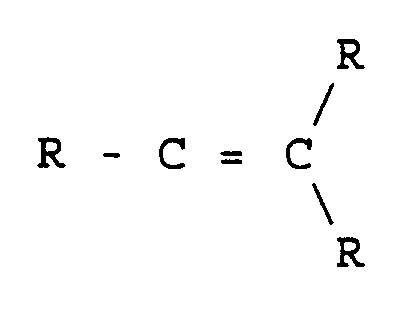 (i) C = C - R(j) CN(k) NO₂worin jedes R unabhängig H, D, Alkyl oder Aryl ist, welches substituiert werden kann; und Y O, NH, ND, NR (worin R wie oben definiert ist) oder S ist.
 - Prozeß nach Anspruch 11 oder 12, worin das alkylierende Mittel die allgemeine Formel(1) R⁷ R⁸ R⁹ CX¹(2) R⁷ R⁸ C = CR⁹R¹⁰(3) R⁷C = CR⁸oder(4) R⁷COR⁷besitzt, worin jeweils jedes R⁷ bis R¹⁰ unabhängig auf die gleiche Weise wie R nach Anspruch 12 definiert ist
X¹ F, C, Br, I, o-Tosyl, OH oder OR ist (wobei R wie nach Anspruch 12 definiert ist).
Applications Claiming Priority (2)
| Application Number | Priority Date | Filing Date | Title |
|---|---|---|---|
| GB8808239 | 1988-04-08 | ||
| GB888808239A GB8808239D0 (en) | 1988-04-08 | 1988-04-08 | Catalyst & its use in alkylation & acylation |
Related Child Applications (1)
| Application Number | Title | Priority Date | Filing Date |
|---|---|---|---|
| EP94109499.7 Division-Into | 1989-04-07 |
Publications (2)
| Publication Number | Publication Date |
|---|---|
| EP0352878A1 EP0352878A1 (de) | 1990-01-31 |
| EP0352878B1 true EP0352878B1 (de) | 1995-08-23 |
Family
ID=10634797
Family Applications (1)
| Application Number | Title | Priority Date | Filing Date |
|---|---|---|---|
| EP89303433A Expired - Lifetime EP0352878B1 (de) | 1988-04-08 | 1989-04-07 | Katalysatoren, die auf Ton oder wasserhaltiges Silikat aufgebrachte Metallverbindungen enthalten, und ihre Verwendung |
Country Status (6)
| Country | Link |
|---|---|
| EP (1) | EP0352878B1 (de) |
| AT (1) | ATE126728T1 (de) |
| DE (1) | DE68923918T2 (de) |
| ES (1) | ES2078233T3 (de) |
| GB (1) | GB8808239D0 (de) |
| GR (1) | GR3017873T3 (de) |
Cited By (3)
| Publication number | Priority date | Publication date | Assignee | Title |
|---|---|---|---|---|
| WO2015009013A1 (en) * | 2013-07-18 | 2015-01-22 | Sk Innovation Co.,Ltd. | Double metal cyanide catalyst and epoxide/carbon dioxide copolymer prepared using the same |
| EP4209264A1 (de) | 2016-09-16 | 2023-07-12 | International Flavors & Fragrances Inc. | Mit viskositätskontrollmitteln stabilisierte mikrokapselzusammensetzungen |
| EP4438132A2 (de) | 2016-07-01 | 2024-10-02 | International Flavors & Fragrances Inc. | Stabile mikrokapselzusammensetzungen |
Families Citing this family (3)
| Publication number | Priority date | Publication date | Assignee | Title |
|---|---|---|---|---|
| US5977010A (en) * | 1995-06-15 | 1999-11-02 | Engelhard Corporation | Shaped hydrogenation catalyst and processes for their preparation and use |
| DE19935914A1 (de) | 1999-07-30 | 2001-02-01 | Sued Chemie Ag | Verfahren zur Herstellung von Katalysatoren durch Säureaktivierung |
| US6548722B1 (en) * | 2000-10-10 | 2003-04-15 | Council Of Scientific And Industrial Research | Process for the preparation of substituted aromatic compound employing friedel-crafts reaction using a reusable basic anionic clay catalyst |
Citations (2)
| Publication number | Priority date | Publication date | Assignee | Title |
|---|---|---|---|---|
| EP0144219A1 (de) * | 1983-11-30 | 1985-06-12 | The British Petroleum Company p.l.c. | Verfahren zur Herstellung von Kohlenwasserstoffen aus C1-C4-Monohaloalkanen |
| EP0206265A1 (de) * | 1985-06-22 | 1986-12-30 | BASF Aktiengesellschaft | Geformter Katalysator, Verfahren zu seiner Herstellung und dessen Verwendung bei der Oxichlorierung von Ethylen zu 1,2-Dichlorethan |
Family Cites Families (1)
| Publication number | Priority date | Publication date | Assignee | Title |
|---|---|---|---|---|
| GB1265152A (de) * | 1968-03-20 | 1972-03-01 |
-
1988
- 1988-04-08 GB GB888808239A patent/GB8808239D0/en active Pending
-
1989
- 1989-04-07 EP EP89303433A patent/EP0352878B1/de not_active Expired - Lifetime
- 1989-04-07 ES ES89303433T patent/ES2078233T3/es not_active Expired - Lifetime
- 1989-04-07 AT AT89303433T patent/ATE126728T1/de not_active IP Right Cessation
- 1989-04-07 DE DE68923918T patent/DE68923918T2/de not_active Expired - Fee Related
-
1995
- 1995-10-25 GR GR950402978T patent/GR3017873T3/el unknown
Patent Citations (2)
| Publication number | Priority date | Publication date | Assignee | Title |
|---|---|---|---|---|
| EP0144219A1 (de) * | 1983-11-30 | 1985-06-12 | The British Petroleum Company p.l.c. | Verfahren zur Herstellung von Kohlenwasserstoffen aus C1-C4-Monohaloalkanen |
| EP0206265A1 (de) * | 1985-06-22 | 1986-12-30 | BASF Aktiengesellschaft | Geformter Katalysator, Verfahren zu seiner Herstellung und dessen Verwendung bei der Oxichlorierung von Ethylen zu 1,2-Dichlorethan |
Cited By (3)
| Publication number | Priority date | Publication date | Assignee | Title |
|---|---|---|---|---|
| WO2015009013A1 (en) * | 2013-07-18 | 2015-01-22 | Sk Innovation Co.,Ltd. | Double metal cyanide catalyst and epoxide/carbon dioxide copolymer prepared using the same |
| EP4438132A2 (de) | 2016-07-01 | 2024-10-02 | International Flavors & Fragrances Inc. | Stabile mikrokapselzusammensetzungen |
| EP4209264A1 (de) | 2016-09-16 | 2023-07-12 | International Flavors & Fragrances Inc. | Mit viskositätskontrollmitteln stabilisierte mikrokapselzusammensetzungen |
Also Published As
| Publication number | Publication date |
|---|---|
| GB8808239D0 (en) | 1988-05-11 |
| ES2078233T3 (es) | 1995-12-16 |
| GR3017873T3 (en) | 1996-01-31 |
| EP0352878A1 (de) | 1990-01-31 |
| DE68923918T2 (de) | 1996-01-04 |
| ATE126728T1 (de) | 1995-09-15 |
| DE68923918D1 (de) | 1995-09-28 |
Similar Documents
| Publication | Publication Date | Title |
|---|---|---|
| US6998497B2 (en) | Metal bis-triflimide compounds and methods for synthesis of metal bis-triflimide compounds | |
| AU2002241085A1 (en) | Processes using metal bis-triflimide compounds | |
| EP0254305B1 (de) | Herstellung von kristallinem Tribromstyrol | |
| EP1432511A1 (de) | Verfahren unter verwendung von zeolithen als katalysatoren oder katalysatorvorstufen | |
| EP0352878A1 (de) | Katalysatoren, die auf Ton oder wasserhaltiges Silikat aufgebrachte Metallverbindungen enthalten, und ihre Verwendung | |
| US6586632B2 (en) | Preparation of quaternary ammonium compounds | |
| EP0421340B1 (de) | Verfahren zur Herstellung von 1,1-Diarylethanen | |
| WO1996026787A1 (en) | Supported aluminium halide catalyst | |
| US5003108A (en) | Process for the preparation of phosphanes | |
| EP0225723A1 (de) | Verfahren zur Herstellung eines halogenierten Benzolabkömmlings in Gegenwart eines zeolitischen Katalysators | |
| US3358023A (en) | Dehalogenation process to produce 2-mono-halo-acetoacetamides | |
| JP4210091B2 (ja) | 金属カチオン交換モンモリロナイト触媒 | |
| US4338459A (en) | Use of alkylformamide and acetamide in preparing α-acetyl-α'-methylsuccinate ester | |
| US2835708A (en) | Process for the manufacture of resorcinol | |
| JP2741744B2 (ja) | 有機化合物のアルキル化方法 | |
| EP0102140A1 (de) | Katalytisches Verfahren zur Herstellung von Aminen aus Alkylsulfaten | |
| EP0010443B1 (de) | Verfahren zur Herstellung von Natrium-m-nitrobenzolsulfonat | |
| US20060241300A1 (en) | Phosphazenium salt mixtures containing hexakis(amino)diphosphazenium, tetrakis(amino)-phosphonium and polyaminophosphazenium salts | |
| US4400567A (en) | Oxidative coupling of aromatic methyl groups | |
| JPH0551570B2 (de) | ||
| EP1061061B1 (de) | Verfahren zur Herstellung von alpha,alpha'-bis (4-p-Hydroxyphenyl)-1,3-diisopropylbenzol | |
| US4990687A (en) | Preparation of 4-methyl-2-cyclohexylphenol | |
| JP4326759B2 (ja) | 4−アルキルフェノール類の製造方法 | |
| RU2014322C1 (ru) | Способ получения диметил-2- дифторметил-4- (2-метилпропил)-6- трифторметил-3,5- пиридиндикарботиоата | |
| US6730814B1 (en) | Clay based catalytic process for the preparation of acylated aromatic ethers |
Legal Events
| Date | Code | Title | Description |
|---|---|---|---|
| PUAI | Public reference made under article 153(3) epc to a published international application that has entered the european phase |
Free format text: ORIGINAL CODE: 0009012 |
|
| AK | Designated contracting states |
Kind code of ref document: A1 Designated state(s): AT BE CH DE ES FR GB GR IT LI LU NL SE |
|
| 17P | Request for examination filed |
Effective date: 19900309 |
|
| 17Q | First examination report despatched |
Effective date: 19901129 |
|
| ITF | It: translation for a ep patent filed | ||
| GRAA | (expected) grant |
Free format text: ORIGINAL CODE: 0009210 |
|
| AK | Designated contracting states |
Kind code of ref document: B1 Designated state(s): AT BE CH DE ES FR GB GR IT LI LU NL SE |
|
| REF | Corresponds to: |
Ref document number: 126728 Country of ref document: AT Date of ref document: 19950915 Kind code of ref document: T |
|
| XX | Miscellaneous (additional remarks) |
Free format text: TEILANMELDUNG 94109499.7 EINGEREICHT AM 07/04/89. |
|
| REF | Corresponds to: |
Ref document number: 68923918 Country of ref document: DE Date of ref document: 19950928 |
|
| ET | Fr: translation filed | ||
| REG | Reference to a national code |
Ref country code: ES Ref legal event code: FG2A Ref document number: 2078233 Country of ref document: ES Kind code of ref document: T3 |
|
| REG | Reference to a national code |
Ref country code: GR Ref legal event code: FG4A Free format text: 3017873 |
|
| PLBE | No opposition filed within time limit |
Free format text: ORIGINAL CODE: 0009261 |
|
| STAA | Information on the status of an ep patent application or granted ep patent |
Free format text: STATUS: NO OPPOSITION FILED WITHIN TIME LIMIT |
|
| 26N | No opposition filed | ||
| PGFP | Annual fee paid to national office [announced via postgrant information from national office to epo] |
Ref country code: LU Payment date: 20010419 Year of fee payment: 13 |
|
| PGFP | Annual fee paid to national office [announced via postgrant information from national office to epo] |
Ref country code: GR Payment date: 20010427 Year of fee payment: 13 |
|
| REG | Reference to a national code |
Ref country code: GB Ref legal event code: IF02 |
|
| PG25 | Lapsed in a contracting state [announced via postgrant information from national office to epo] |
Ref country code: LU Free format text: LAPSE BECAUSE OF NON-PAYMENT OF DUE FEES Effective date: 20020407 |
|
| PGFP | Annual fee paid to national office [announced via postgrant information from national office to epo] |
Ref country code: SE Payment date: 20020426 Year of fee payment: 14 Ref country code: AT Payment date: 20020426 Year of fee payment: 14 |
|
| PG25 | Lapsed in a contracting state [announced via postgrant information from national office to epo] |
Ref country code: GR Free format text: LAPSE BECAUSE OF NON-PAYMENT OF DUE FEES Effective date: 20021105 |
|
| PG25 | Lapsed in a contracting state [announced via postgrant information from national office to epo] |
Ref country code: AT Free format text: LAPSE BECAUSE OF NON-PAYMENT OF DUE FEES Effective date: 20030407 |
|
| PG25 | Lapsed in a contracting state [announced via postgrant information from national office to epo] |
Ref country code: SE Free format text: LAPSE BECAUSE OF NON-PAYMENT OF DUE FEES Effective date: 20030408 |
|
| PGFP | Annual fee paid to national office [announced via postgrant information from national office to epo] |
Ref country code: FR Payment date: 20030425 Year of fee payment: 15 |
|
| PGFP | Annual fee paid to national office [announced via postgrant information from national office to epo] |
Ref country code: NL Payment date: 20030429 Year of fee payment: 15 |
|
| PGFP | Annual fee paid to national office [announced via postgrant information from national office to epo] |
Ref country code: DE Payment date: 20030502 Year of fee payment: 15 Ref country code: CH Payment date: 20030502 Year of fee payment: 15 |
|
| PGFP | Annual fee paid to national office [announced via postgrant information from national office to epo] |
Ref country code: ES Payment date: 20030527 Year of fee payment: 15 |
|
| PGFP | Annual fee paid to national office [announced via postgrant information from national office to epo] |
Ref country code: BE Payment date: 20030617 Year of fee payment: 15 |
|
| EUG | Se: european patent has lapsed | ||
| PG25 | Lapsed in a contracting state [announced via postgrant information from national office to epo] |
Ref country code: ES Free format text: LAPSE BECAUSE OF NON-PAYMENT OF DUE FEES Effective date: 20040410 |
|
| PG25 | Lapsed in a contracting state [announced via postgrant information from national office to epo] |
Ref country code: LI Free format text: LAPSE BECAUSE OF NON-PAYMENT OF DUE FEES Effective date: 20040430 Ref country code: CH Free format text: LAPSE BECAUSE OF NON-PAYMENT OF DUE FEES Effective date: 20040430 Ref country code: BE Free format text: LAPSE BECAUSE OF NON-PAYMENT OF DUE FEES Effective date: 20040430 |
|
| BERE | Be: lapsed |
Owner name: *CONTRACT CHEMICALS (KNOWSLEY) LTD Effective date: 20040430 |
|
| PG25 | Lapsed in a contracting state [announced via postgrant information from national office to epo] |
Ref country code: NL Free format text: LAPSE BECAUSE OF NON-PAYMENT OF DUE FEES Effective date: 20041101 |
|
| PG25 | Lapsed in a contracting state [announced via postgrant information from national office to epo] |
Ref country code: DE Free format text: LAPSE BECAUSE OF NON-PAYMENT OF DUE FEES Effective date: 20041103 |
|
| REG | Reference to a national code |
Ref country code: CH Ref legal event code: PL |
|
| PG25 | Lapsed in a contracting state [announced via postgrant information from national office to epo] |
Ref country code: FR Free format text: LAPSE BECAUSE OF NON-PAYMENT OF DUE FEES Effective date: 20041231 |
|
| NLV4 | Nl: lapsed or anulled due to non-payment of the annual fee |
Effective date: 20041101 |
|
| REG | Reference to a national code |
Ref country code: FR Ref legal event code: ST |
|
| PG25 | Lapsed in a contracting state [announced via postgrant information from national office to epo] |
Ref country code: IT Free format text: LAPSE BECAUSE OF NON-PAYMENT OF DUE FEES;WARNING: LAPSES OF ITALIAN PATENTS WITH EFFECTIVE DATE BEFORE 2007 MAY HAVE OCCURRED AT ANY TIME BEFORE 2007. THE CORRECT EFFECTIVE DATE MAY BE DIFFERENT FROM THE ONE RECORDED. Effective date: 20050407 |
|
| REG | Reference to a national code |
Ref country code: ES Ref legal event code: FD2A Effective date: 20040410 |
|
| APAH | Appeal reference modified |
Free format text: ORIGINAL CODE: EPIDOSCREFNO |
|
| PGFP | Annual fee paid to national office [announced via postgrant information from national office to epo] |
Ref country code: GB Payment date: 20060405 Year of fee payment: 18 |
|
| GBPC | Gb: european patent ceased through non-payment of renewal fee |
Effective date: 20070407 |
|
| PG25 | Lapsed in a contracting state [announced via postgrant information from national office to epo] |
Ref country code: GB Free format text: LAPSE BECAUSE OF NON-PAYMENT OF DUE FEES Effective date: 20070407 |