EP0353383A2 - Méthode de commutation de données entrantes entre des processus dans un système multi-processus en réponse au type de communication - Google Patents
Méthode de commutation de données entrantes entre des processus dans un système multi-processus en réponse au type de communication Download PDFInfo
- Publication number
- EP0353383A2 EP0353383A2 EP89105662A EP89105662A EP0353383A2 EP 0353383 A2 EP0353383 A2 EP 0353383A2 EP 89105662 A EP89105662 A EP 89105662A EP 89105662 A EP89105662 A EP 89105662A EP 0353383 A2 EP0353383 A2 EP 0353383A2
- Authority
- EP
- European Patent Office
- Prior art keywords
- type
- communication
- communications
- recited
- modem
- Prior art date
- Legal status (The legal status is an assumption and is not a legal conclusion. Google has not performed a legal analysis and makes no representation as to the accuracy of the status listed.)
- Withdrawn
Links
Images
Classifications
-
- G—PHYSICS
- G06—COMPUTING OR CALCULATING; COUNTING
- G06F—ELECTRIC DIGITAL DATA PROCESSING
- G06F13/00—Interconnection of, or transfer of information or other signals between, memories, input/output devices or central processing units
- G06F13/38—Information transfer, e.g. on bus
- G06F13/382—Information transfer, e.g. on bus using universal interface adapter
- G06F13/387—Information transfer, e.g. on bus using universal interface adapter for adaptation of different data processing systems to different peripheral devices, e.g. protocol converters for incompatible systems, open system
Definitions
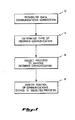
- This invention particularly relates to switching a modem or other communications device from one use to another in a multi-process or multi-processor system in response to the type of incoming call. More specifically, a communications link of an unknown type and origin is established; then the type and origin are determined; and then control of the communications device by the appropriate process is selected in response to that determination.
- the environment in which the present invention has application comprises a processor handling a plurality of processes substantially simultaneously (or, as one embodiment, a computer system having a plurality of processors), a communications device which must receive at least two types of incoming data communication at least one type of which needs to be handled by one process (or processor) and at least one other type which needs to be handled by another process (or processor), and both processes (or processors) require direct control of the communications device.
- the environment includes multiple call types, multiple processes, a shared communications device (e.g., a modem, UART, USART, etc.), and means for switching control of an ongoing communications connection between two processes.
- a shared communications device e.g., a modem, UART, USART, etc.
- a UART Universal Asynchronous Receiver Transmitter
- a computer system which utilizes a UART as a serial communications port transfers information by reading from and writing to registers that physically reside within the UART.
- the registers logically reside within the I/O address space reserved by the computer for the asynchronous serial interface.
- a USART Universal Synchronous-Asynchronous Receiver Transmitter
- USART Universal Synchronous-Asynchronous Receiver Transmitter
- a modem is a device used to convert serial digital data from a transmitting terminal (such as from the UART serial port of a computer) to a signal suitable for transmission over a telephone channel and to reconvert the signal to serial digital data for acceptance by a receiving terminal.
- the receiving terminal may likewise be a computer having a UART serial port.
- a modem typically does not detect dial tones or distant busy or ringing signals. Messages from the modem inform the user only when a connection is made to another modem or when a carrier signal is not received. On loss of carrier (either intentional or unintentional) the modem returns automatically to the local command state. If the carrier tone is not heard within the specified time period, it hangs up and returns the result code NO CARRIER. If a carrier tone is detected, the modem returns a CONNECT result code and goes on-line.
- Carrier signals are signals exchanged by modems over telephone lines. They are continuous, audible tones at predetermined frequencies.
- one modem To establish a connection between two remote computers via the telephone lines, one modem originates a call to another compatible modem. When the second modem answers the call, the modems exchange signals (tones) that allow a data communications connection to be made.
- the information utilities, electronic mail services, bulletin boards, and time-sharing systems are established as answer-only applications so that a user may originate a call to them; some modems are designed only to answer calls. When two microcomputers wish to communicate, however, the users must decide which modem will originate and which will answer the call.
- a device need only be capable of representing two numbers (0 and 1).
- a modulator is used to convert digital signals into analog signals and a demodulator to reconvert the signals from the computer or terminal connected to it.
- a modem performs both the modulator and demodulator functions; the word "modem” is a contraction of MOdulate-DEModulate. To communicate, both ends of a line must be equipped with a modem and certain characteristics of the modems must be alike.
- Compatibility between modems is determined by design and operating characteristics, such as the frequencies at which the modems transmit, the signaling techniques they use, and the transmission speeds of which they are capable.
- design and operating characteristics such as the frequencies at which the modems transmit, the signaling techniques they use, and the transmission speeds of which they are capable.
- the fundamental characteristics of modems are described below.
- the signals exchanged by modems are referred to as carrier signals--continuous audible tones, at predetermined frequencies, used to carry information over the telephone line. Whenever the carrier signal disappears, the connection is broken between the modems.
- Electronic signals for transmission on communication lines are generated as sine waves.
- the sine wave proceeds over time from a zero level, to a positive level, then to an equal negative level, and back to zero.
- Information is transmitted by altering the carrier signal.
- the representation of digital information (the binary "one” and the binary "zero") requires only two states. Therefore, digital information may be transmitted by the carrier signal by altering the signal one way to represent one state and another way to represent the other state. The change is accomplished by a technique called modulation.
- the three types of modulation of the sine wave signal change either its amplitude (magnitude or voltage level), frequency (number of complete oscillations of the signal per unit of time), or phase (location at which a signal crosses the zero level, relative to the previous signal).
- FSK frequency shift keying
- PSK phase shift keying
- the carrier signal is modulated between different frequencies to represent 0 and 1.
- the originating modem may transmit at 1270 hertz to represent the binary digital "1" and transmit at 1070 hertz for "0" while it receives a "1" at 2225 hertz and a "0" at 2025 hertz.
- the high speed carrier signal transmits at one frequency and receives at another; however, a 0 or a 1 is indicated by a change in the phase of the steady signal.
- handshaking in this context means the establishment of synchronization between sending and receiving equipment by means of exchange of specific character configurations.
- incoming data communication will be illustrated as electronic mail (e-mail) and remote access. It should be understood, however, that the present invention is not limited to differentiation between those particular applications, but rather may be employed to accommodate the receipt of many different types of data communication.
- Remote access or "remote computing” programs are commonly designed mainly for unattended remote operation and for long-distance support and collaboration. These programs turn one computer into a host, which runs whatever application program one is using; the other unit becomes a remote terminal. Both host and remote, however, show the same screens (video output) and can give orders to the application program. Typical host-terminal programs are capable of fully unattended operation and can also work for computer conferencing.
- a properly equipped computer may be set up to allow access from another computer in a remote location via a modem.
- Direct connection e.g., through a computer's RS-232 serial port
- the host computer may be controlled via the keyboard of the remote computer, just as if the user were sitting at the host computer's keyboard. Likewise, the display seen by the user on the screen of the remote computer will duplicate that of the host computer. This allows access to software running on the host computer. Programs on the host computer may be loaded and executed via commands from the remote computer functioning as a terminal.
- the host computer must be set up for remote access (i.e., be equipped with the necessary software to recognize a remote access attempt and allow control from signals received via a communications port); and, (2) a remote access program which sends commands to and receives data from the host computer (e.g., for screen display) must be run on the remote computer.
- Electronic mail is a common application of personal computers. Messages are composed at one computer and sent to another computer. Typically, this communication takes place over telephone lines and both the sending computer and the receiving computer are equipped with modems.
- e-mail sent and received without interrupting programs running on either the sending or receiving computer.
- an application program which is not concerned with e-mail
- some multi-purpose computers incorporate a dedicated microprocessor for sending and receiving e-mail. This microprocessor controls the modem, schedules transmissions, and passes incoming messages to the main processor for storage (e.g., on a magnetic disk). All this can occur while the other processor is simultaneously performing other tasks--e.g., running a word processing program or performing a spreadsheet recalculation.
- the present invention is a method which allows two or more processes to share a communications device such as a serial communications port (a UART or USART) or a modem connected to such a port. This is accomplished by providing the multitasking communications-receiving computer with software which switches the communications device among different processes after a communications link has been established.
- multitasking communications-receiving computer means a processor running multiple processes in a multitasking, time-slicing or task-switching environment for receiving incoming data communications and establishing a communications link or an analogous system comprising a plurality of associated processors wherein different processes are run on different processors.
- Termination of the communications session may or may not terminate the connection.
- a system comprising a modem, a 16-bit Intel 8086 microprocessor (CPU) configured to run industry-standard software, an 8-bit Zilog Z-80 microprocessor for communications, and the usual peripherals associated with a personal computer (PC) such as a keyboard, CRT video display, disk drives, and the like.
- CPU Intel 8086 microprocessor
- PC personal computer
- Included in the system is dual port memory--a 128-byte block in the common address space of each microprocessor through which the two CPU's can communicate.
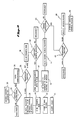
- an incoming e-mail may be handled as follows:
Landscapes
- Engineering & Computer Science (AREA)
- Theoretical Computer Science (AREA)
- Physics & Mathematics (AREA)
- General Engineering & Computer Science (AREA)
- General Physics & Mathematics (AREA)
- Communication Control (AREA)
Applications Claiming Priority (2)
| Application Number | Priority Date | Filing Date | Title |
|---|---|---|---|
| US22908988A | 1988-08-05 | 1988-08-05 | |
| US229089 | 1988-08-05 |
Publications (2)
| Publication Number | Publication Date |
|---|---|
| EP0353383A2 true EP0353383A2 (fr) | 1990-02-07 |
| EP0353383A3 EP0353383A3 (fr) | 1991-12-18 |
Family
ID=22859808
Family Applications (1)
| Application Number | Title | Priority Date | Filing Date |
|---|---|---|---|
| EP19890105662 Withdrawn EP0353383A3 (fr) | 1988-08-05 | 1989-03-30 | Méthode de commutation de données entrantes entre des processus dans un système multi-processus en réponse au type de communication |
Country Status (2)
| Country | Link |
|---|---|
| EP (1) | EP0353383A3 (fr) |
| DE (1) | DE353383T1 (fr) |
Cited By (3)
| Publication number | Priority date | Publication date | Assignee | Title |
|---|---|---|---|---|
| FR2721159A1 (fr) * | 1994-06-13 | 1995-12-15 | Ibm | Interface de communication par modem dans un système de traitement de données. |
| EP0730382A3 (fr) * | 1995-02-28 | 1997-04-23 | Gen Instrument Corp | ContrÔle d'accès pour support hybride configurable pour réseaux métropolitains câblés |
| EP0982662A3 (fr) * | 1998-08-25 | 2002-06-26 | STMicroelectronics, Inc. | Contrôleur de communication modulaire et méthode associée |
Family Cites Families (1)
| Publication number | Priority date | Publication date | Assignee | Title |
|---|---|---|---|---|
| GB8304573D0 (en) * | 1983-02-18 | 1983-03-23 | Micromite Ltd | Microcomputer local area networks |
-
1989
- 1989-03-30 EP EP19890105662 patent/EP0353383A3/fr not_active Withdrawn
- 1989-03-30 DE DE1989105662 patent/DE353383T1/de active Pending
Cited By (5)
| Publication number | Priority date | Publication date | Assignee | Title |
|---|---|---|---|---|
| FR2721159A1 (fr) * | 1994-06-13 | 1995-12-15 | Ibm | Interface de communication par modem dans un système de traitement de données. |
| EP0730382A3 (fr) * | 1995-02-28 | 1997-04-23 | Gen Instrument Corp | ContrÔle d'accès pour support hybride configurable pour réseaux métropolitains câblés |
| US5696765A (en) * | 1995-02-28 | 1997-12-09 | General Instrument Corporation | Configurable hybrid medium access control for cable metropolitan area networks |
| EP0982662A3 (fr) * | 1998-08-25 | 2002-06-26 | STMicroelectronics, Inc. | Contrôleur de communication modulaire et méthode associée |
| US6549951B1 (en) | 1998-08-25 | 2003-04-15 | Stmicroelectronics, Inc. | Method and device for controlling communications with a serial bus |
Also Published As
| Publication number | Publication date |
|---|---|
| EP0353383A3 (fr) | 1991-12-18 |
| DE353383T1 (de) | 1990-07-26 |
Similar Documents
| Publication | Publication Date | Title |
|---|---|---|
| US4965641A (en) | Processor modem | |
| US4700358A (en) | Synchronous/asynchronous modem | |
| EP0258716B1 (fr) | Méthode d'établissement d'une liaison (handshaking) entre deux modems | |
| KR100204076B1 (ko) | 데이터 전송용 어댑터 | |
| US4864567A (en) | High throughput data communication system | |
| US5625775A (en) | Modem communication interface in a data processing system | |
| US4862456A (en) | High speed modem | |
| US5023903A (en) | Voice and data telecommunications apparatus | |
| WO1984003020A1 (fr) | Unite d'interface pour bus de communication | |
| JPH0618371B2 (ja) | 通信端末装置 | |
| EP0353383A2 (fr) | Méthode de commutation de données entrantes entre des processus dans un système multi-processus en réponse au type de communication | |
| JP2001053828A (ja) | 2つの動作モードを有するポートを備えるシステム | |
| US6188720B1 (en) | Modulation and signaling converter | |
| US5499372A (en) | Method of controlling access to restricted access data and communication system therefor | |
| KR100207820B1 (ko) | 근거리 통신망 전용전화기 및 그 운용방법 | |
| KR19990070099A (ko) | 전력선 모뎀의 접속 방법 | |
| KR20030051917A (ko) | 발신자 세부정보 전송기능이 구비된 사설교환기 및 그제어방법 | |
| JPH0616639B2 (ja) | ハンドシェイク方式 | |
| JPH11205479A (ja) | 集中監視システムにおけるデータ送受信装置 | |
| Berry et al. | Porting text between machines | |
| Kupanna | Design, implementation and analysis of a terminal support network | |
| John | The Design of Systems for Telecommunications Between Small and Large Computers | |
| Janis | Accessing ERIC with Your Microcomputer: Update. ERIC Digest. | |
| GB2335579A (en) | Providing real time control information between a computer and a wireless modem | |
| JPS6158367A (ja) | 情報端末装置 |
Legal Events
| Date | Code | Title | Description |
|---|---|---|---|
| PUAI | Public reference made under article 153(3) epc to a published international application that has entered the european phase |
Free format text: ORIGINAL CODE: 0009012 |
|
| AK | Designated contracting states |
Kind code of ref document: A2 Designated state(s): DE FR GB IT NL |
|
| TCNL | Nl: translation of patent claims filed | ||
| ITCL | It: translation for ep claims filed |
Representative=s name: BARZANO' E ZANARDO ROMA S.P.A. |
|
| EL | Fr: translation of claims filed | ||
| DET | De: translation of patent claims | ||
| PUAL | Search report despatched |
Free format text: ORIGINAL CODE: 0009013 |
|
| AK | Designated contracting states |
Kind code of ref document: A3 Designated state(s): DE FR GB IT NL |
|
| STAA | Information on the status of an ep patent application or granted ep patent |
Free format text: STATUS: THE APPLICATION IS DEEMED TO BE WITHDRAWN |
|
| 18D | Application deemed to be withdrawn |
Effective date: 19920619 |