EP0353809B1 - Vaccin contre le virus pseudorabique - Google Patents
Vaccin contre le virus pseudorabique Download PDFInfo
- Publication number
- EP0353809B1 EP0353809B1 EP89201887A EP89201887A EP0353809B1 EP 0353809 B1 EP0353809 B1 EP 0353809B1 EP 89201887 A EP89201887 A EP 89201887A EP 89201887 A EP89201887 A EP 89201887A EP 0353809 B1 EP0353809 B1 EP 0353809B1
- Authority
- EP
- European Patent Office
- Prior art keywords
- gii
- polypeptide
- mab
- prv
- vaccine
- Prior art date
- Legal status (The legal status is an assumption and is not a legal conclusion. Google has not performed a legal analysis and makes no representation as to the accuracy of the status listed.)
- Expired - Lifetime
Links
Images


Classifications
-
- C—CHEMISTRY; METALLURGY
- C07—ORGANIC CHEMISTRY
- C07K—PEPTIDES
- C07K14/00—Peptides having more than 20 amino acids; Gastrins; Somatostatins; Melanotropins; Derivatives thereof
- C07K14/005—Peptides having more than 20 amino acids; Gastrins; Somatostatins; Melanotropins; Derivatives thereof from viruses
-
- A—HUMAN NECESSITIES
- A61—MEDICAL OR VETERINARY SCIENCE; HYGIENE
- A61P—SPECIFIC THERAPEUTIC ACTIVITY OF CHEMICAL COMPOUNDS OR MEDICINAL PREPARATIONS
- A61P31/00—Antiinfectives, i.e. antibiotics, antiseptics, chemotherapeutics
- A61P31/12—Antivirals
-
- A—HUMAN NECESSITIES
- A61—MEDICAL OR VETERINARY SCIENCE; HYGIENE
- A61K—PREPARATIONS FOR MEDICAL, DENTAL OR TOILETRY PURPOSES
- A61K39/00—Medicinal preparations containing antigens or antibodies
-
- C—CHEMISTRY; METALLURGY
- C12—BIOCHEMISTRY; BEER; SPIRITS; WINE; VINEGAR; MICROBIOLOGY; ENZYMOLOGY; MUTATION OR GENETIC ENGINEERING
- C12N—MICROORGANISMS OR ENZYMES; COMPOSITIONS THEREOF; PROPAGATING, PRESERVING, OR MAINTAINING MICROORGANISMS; MUTATION OR GENETIC ENGINEERING; CULTURE MEDIA
- C12N2710/00—MICROORGANISMS OR ENZYMES; COMPOSITIONS THEREOF; PROPAGATING, PRESERVING, OR MAINTAINING MICROORGANISMS; MUTATION OR GENETIC ENGINEERING; CULTURE MEDIA dsDNA viruses
- C12N2710/00011—Details
- C12N2710/16011—Herpesviridae
- C12N2710/16711—Varicellovirus, e.g. human herpesvirus 3, Varicella Zoster, pseudorabies
- C12N2710/16722—New viral proteins or individual genes, new structural or functional aspects of known viral proteins or genes
-
- Y—GENERAL TAGGING OF NEW TECHNOLOGICAL DEVELOPMENTS; GENERAL TAGGING OF CROSS-SECTIONAL TECHNOLOGIES SPANNING OVER SEVERAL SECTIONS OF THE IPC; TECHNICAL SUBJECTS COVERED BY FORMER USPC CROSS-REFERENCE ART COLLECTIONS [XRACs] AND DIGESTS
- Y10—TECHNICAL SUBJECTS COVERED BY FORMER USPC
- Y10S—TECHNICAL SUBJECTS COVERED BY FORMER USPC CROSS-REFERENCE ART COLLECTIONS [XRACs] AND DIGESTS
- Y10S530/00—Chemistry: natural resins or derivatives; peptides or proteins; lignins or reaction products thereof
- Y10S530/806—Antigenic peptides or proteins
Definitions
- the present invention is concerned with a polypeptide having immunizing activity characteristic of the glycoprotein gII of pseudorabies virus (PRV), a polynucleotide coding for such a polypeptide, a recombinant DNA and a host comprising these, as well as a vaccine for the immunization of mammals against Aujeszky's disease.
- PRV pseudorabies virus
- Pseudorabies virus is the causative agent of Aujeszky's disease which induces serious economic losses especially among piglets in swine breeding farms and leads to latent infection in older animals.
- PRV is a member of the herpes virus group, which contains in its core a double-stranded DNA molecule with a molecular weight of about 90 x 106 daltons (D), separated by inverted repeats into a long and a short unique region - U L and U S , respectively.
- This DNA core is enclosed by an icosahedral capsid consisting of 162 capsomers.
- an amorphous structure called the tegument which in turn is enclosed by the envelope with small spikes protruding from it.
- the envelope is acquired from the cellular membrane when the nucleocapsid buds through virus-modified patches of the cellular membrane. As a result the envelope largely consists of cellular membrane material with viral glycoproteins embedded therein. Probably these envelope glycoproteins are the only proteins exposed at the surface of intact PRV.
- herpes virus glycoproteins that are expressed at the surface are involved in the generation of virus neutralizing and protective antibodies. It has been shown that antibodies against gII can effectively neutralize PRV in vitro. Furthermore, after passive immunisation of mice with antibodies against gII, protection against a lethal PRV infection is obtained. The glycoprotein gII is stably expressed by all PRV isolates tested so far, seems highly stabile against mutation and it is believed that this protein is essential for virus replication.
- glycoprotein gII can play an essential role in the neutralization of PRV.
- the present invention is concerned with a polypeptide that, although it differs from the native glycoprotein gII, comprises at least one polypeptide fragment of gII, or a polypeptide having the same immunological characteristics as said polypeptide fragment.
- the present invention is in particular concerned with polypeptides as defined in the appended claims.
- glycoprotein gII Within the glycoprotein gII at least 4 epitopes are located which interact with distinct groups of monoclonal antibodies all capable to effectively neutralize the infectivity of PRV. These 4 groups of monoclonal antibodies are represented by the monoclonal antibodies produced by the hybridoma strains 1/5, IN4, N4 and N12, deposited with the European Collection of Animal Cell Cultures at Porton Down, U.K. under the deposit numbers 88080103, 88080102, 88080101 and 88080104, respectively.
- polypeptide fragments corresponding with these epitopes also form part of the present invention.
- polypeptides according to the present invention are useful in or as synthetic vaccines for the immunization of mammals against Aujeszky's disease.
- the ability to raise neutralizing antibodies of these polypeptides per se may be low.
- the immunogenicity of these polypeptides should be raised. This can be established, for example, by presenting the polypeptides coupled to some carrier.
- Suitable carriers for this purpose are macromolecules, such as natural polymers (proteins, like key-hole limpet hemocyanin, albumin, toxins), synthetic polymers like poly-amino acids (poly-lysine, poly-alanine), or micelles of amphiphilic compounds like saponins.
- the polypeptides may be provided as polymers thereof, preferably linear polymers.
- linear polymers may contain multiple copies of the same polypeptide, or of two or more different polypeptides according to the invention, and optionally may contain polypeptides representing fragments of other proteins (e.g. from PRV or from an other pathogen) as well.
- the respective relevant polypeptides may be coupled directly to each other or may be coupled by means of a linking group, preferably one or more amino acid.
- Both the polypeptide-carrier-bound and the linearly polymerized polypeptides according to the invention may advantageously be prepared as coupled products using recombinant DNA (rDNA) techniques whereby a polynucleotide coding for said polypeptide is inserted into a suitable expression vector.
- rDNA recombinant DNA
- a further alternative for the effective presentation of the polypeptides according to the invention is the covalent coupling of these polypeptides with amphiphilic compounds having adjuvant properties.
- these coupling products may be associated by non-covalent bonds to form complexes like micelles.
- a further type of vaccine according to the invention comprises so-called vector vaccines.
- a polynucleotide sequence coding for a gII polypeptide according to the invention is grafted by recombinant techniques into the genetic material of a host micro-organism (e.g. virus or bacterium) thereby enabling the latter to express the gII polypeptide within an in vitro cell system or directly in an animal to be protected against Aujeszky's disease.
- a host micro-organism e.g. virus or bacterium
- Suitable examples of vaccine vectors are for example pox viruses (such as vaccinia, cowpox, rabbit pox), herpes viruses (such as chicken pox (Varizella Zoster) virus), bacteriophages, adenoviruses, influenza viruses, or bacteria (such as Escherichia coli and Salmonella).
- pox viruses such as vaccinia, cowpox, rabbit pox
- herpes viruses such as chicken pox (Varizella Zoster) virus
- bacteriophages such as chicken pox (Varizella Zoster) virus
- bacteriophages such as bacteriophages
- adenoviruses such as adenoviruses
- influenza viruses such as Escherichia coli and Salmonella.
- Still a further aspect of the present invention is a so-called anti-idiotype antibody to the gII polypeptide.
- Such an antibody is directed against the idiotype of the antibody specific for the gII polypeptide according to the invention.
- idiotype is meant that part of the antibody which is actually in direct contact with the polypeptide and which is responsible for the specific binding of that polypeptide to the antibody.
- variable fragment (Fv) of an anti-idiotype antibody exactly mimicks the epitope of the particular gII polypeptide.
- the anti-idiotype antibody for gII polypeptide or a variable fragment thereof will upon administration to an animal give rise to antibodies against the particular gII epitope.
- An anti-idiotype vaccine for gII polypeptide may contain such an anti-idiotype antibody or an Fv part thereof, optionally bound to a carrier.
- Such an antibody may be a polyclonal antibody but more advantageously it may be a monoclonal anti-idiotype antibody or a mixture of several of these with different specificities.
- the above-described vaccines are suitable for active immunization against Aujeszky's disease.
- the antibodies and in particular monoclonal antibodies referred to in the description of the present invention can be prepared by methods known in the art such as immunization of an animal with gII polypeptide, immortalization of thus obtained antibody-producing cells and recombinant techniques.
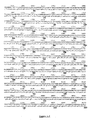
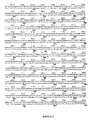
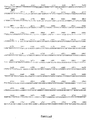
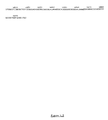
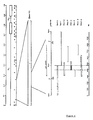
- polynucleotides which code for a polypeptide according to the invention also form part of the present invention. More in particular this relates to polynucleotides coding for the entire gII polypeptide of about 121 amino acids as represented by the nucleotide base numbers about 2639 through about 3001 in figure 1. This also relates to subsequences thereof coding for a particular gII epitope, for chimeric polypeptides containing one or more of the gII epitopes or the entire about 121 amino acids gII polypeptide, and to polynucleotides which code for these same polypeptides making use of different codons for one or several of the respective constituting amino acids.
- a vaccine according to the invention contains as its active ingredient either a gII-derived polypeptide, or an antibody against this polypeptide, or an anti-idiotype antibody for said polypeptide.
- the vaccine with the gII-derived polypeptide or the anti-idiotype antibody therefore generally can be administered in a conventional active immunization scheme: single or repeated administration optionally preceded by or followed by an administration of inactivated PRV.
- the administration of the vaccine can be done e.g. intradermally, subcutaneously, intramuscularly or intravenously.
- the vaccine also may contain stabilizers, adjuvants, solubilizers, buffers, etc.
- the vaccine may contain additionally other immunogens, like antigens of parvovirus, swine influenza virus, TGE virus, rotavirus, Escherichia coli, atrophic rhinitis, Erysipelas.
- immunogens like antigens of parvovirus, swine influenza virus, TGE virus, rotavirus, Escherichia coli, atrophic rhinitis, Erysipelas.
- the vaccine with the antibodies against the gII-derived polypeptide may be administered as a single dose, optionally in a slow release dosage form, or repeatedly.
- the route of administration for this vaccine is preferably by intradermal, subcutaneous, intramuscular or intravenous injection.
- This vaccine may contain also stabilizers, solubilizers, buffers, etc.
- Hybridoma supernatants producing PRV-specific antibodies were further analyzed by radioimmuno-precipitation and Western blotting to select for gII-specific Mab.
- This major envelope constituent of PRV represents a glycoprotein complex consisting of three glycoproteins gIIa, gIIb, and gIIc linked together via disulfide bonds which are demonstrable under reducing conditions (in the presence of e.g. 2-mercapto-ethanol). Under non-reducing conditions a single protein with an apparent molecular weight of ca. 155 kDa can be detected. After Western blotting the reaction of the Mab with the different gII subunits can be demonstrated.
- mice with different anti-gII Mab conferred different degrees of protection against a lethal challenge infection with strain PHYLAXIA.
- the protection rate ranged between 5 to 85% of animals surviving challenge (Table 2).
- the following mutants could be obtained after selection with the Mab 5/14 (m5/14) , Mab 1/5 (m1/5 (1) and m1/5 (2) ) , Mab IN4 (mIN4 (1) and mIN4 (2) ) , and Mab N4 (mN4 (1) and mN4 (2) ) .
- the mutants did not bind the homologous Mab in immunosurface binding assay.
- the mutants m1/5 and mIN4 were completely neutralized and recognized by the heterologous Mab.
- the mutant m5/14 was resistant in neutralization against the Mab N3 and N4, but neutralized by the other heterologous Mab.
- Analogous results were found for the mutant mN4 and the Mab 5/14 and N3.
- the m5/14 virus did not react with the Mab N4, but bound the other heterologous Mab.
- the mN4 virus displayed also binding of the Mab 5/14 (Table 4).
- Domain A is recognized by the Mab 5/14, N4 and N3, domain B specific for Mab 1/5, C for Mab IN4 and at least one additional epitope recognized by the remaining neutralizing Mab.
- gII in the mar-mutants was investigated by radioimmunoprecipitation tests. In principle, the same pattern of reactivity was found as already described for neutralization and immunosurface binding of the different anti-gII Mab. All mutants produced a gII protein qualitatively not altered as compared to wild-type PRV. It appears that the mutant mIN4 might synthesize reduced amounts of gII. No reaction was found after testing the mutant m5/14 and m1/5 with the Mab used for selection, whereas the homologous Mab precipitated only low amounts of gII of the two other mutants. The heterologous Mab precipitated gII of all mar-mutants, except of Mab 5/14 which was not able to precipitate the mutated gII from mN4 virus.
- the resistant phenotypes arose from mutations which either altered the conformation or the amino acid sequence of the epitopic sites of gII.
- the fusion proteins expressed by pRZPS-3 and pTSX-4 were purified by ⁇ -Galactosidase affinity chromatography according to the instructions of the manufacturer (Pharmacia).
- the purified fusion proteins were emulsified in mineral oil using Tween® 80 and Span® 80 as emulsifiers. With each fusion protein two rabbits were injected at different sides and boostered twice at 6-weeks interval. The sera obtained were tested in the Elisa and in the virus neutralisation (VN) test. After one injection antibodies reacting in the Elisa were found for both fusion proteins. However, after two booster injections neutralising antibodies were only found for the fusion protein resulting from pRZPS-3 (Table 5, rabbit no. 3869 and 3870).
Landscapes
- Health & Medical Sciences (AREA)
- Chemical & Material Sciences (AREA)
- Life Sciences & Earth Sciences (AREA)
- Organic Chemistry (AREA)
- General Health & Medical Sciences (AREA)
- Virology (AREA)
- Medicinal Chemistry (AREA)
- Biophysics (AREA)
- Genetics & Genomics (AREA)
- Biochemistry (AREA)
- Molecular Biology (AREA)
- Proteomics, Peptides & Aminoacids (AREA)
- Gastroenterology & Hepatology (AREA)
- General Chemical & Material Sciences (AREA)
- Public Health (AREA)
- Chemical Kinetics & Catalysis (AREA)
- Communicable Diseases (AREA)
- Nuclear Medicine, Radiotherapy & Molecular Imaging (AREA)
- Pharmacology & Pharmacy (AREA)
- Animal Behavior & Ethology (AREA)
- Oncology (AREA)
- Veterinary Medicine (AREA)
- Medicines Containing Antibodies Or Antigens For Use As Internal Diagnostic Agents (AREA)
- Peptides Or Proteins (AREA)
- Preparation Of Compounds By Using Micro-Organisms (AREA)
- Micro-Organisms Or Cultivation Processes Thereof (AREA)
- Medicines That Contain Protein Lipid Enzymes And Other Medicines (AREA)
Claims (13)
- Polypeptide ayant une activité immunisante caractéristique de la glycoprotéine gII du virus de la pseudo-rage, caractérisé en ce qu'il consiste en une partie au moins du fragment du polypeptide situé entre l'acide aminé No 590 et l'acide aminé No 710 de la glycoprotéine gII native.
- Polypeptide suivant la revendication 1, caractérisé en ce qu'il comprend un épitope reconnu par les anticorps monoclonaux 1/5, IN4, N4 et N12, déposés sous les numéros de dépôt 88080103, 88080102, 88080101 et 88080104, respectivement, à l'European Collection of Animal Cell Cultures, ou un anticorps réagissant de façon croisée avec ces anticorps monoclonaux.
- Polypeptide ayant une activité immunisante caractéristique de la glycoprotéine gII du virus de la pseudo-rage, caractérisé en ce qu'il consiste en une partie au moins du fragment du polypeptide situé entre l'acide aminé No 415 et l'acide aminé No 533 de la glycoprotéine gII native.
- Polypeptide ayant une activité immunisante caractéristique de la glycoprotéine gII du virus de la pseudo-rage, caractérisé en ce qu'il comprend des copies multiples du polypeptide suivant la revendication 1 et/ou du polypeptide suivant la revendication 3.
- Polypeptide comprenant le polypeptide suivant les revendications 1 ou 3, lié à un support immunogène.
- Polynucléotide codant pour un polypeptide suivant les revendications 1 à 5.
- ADN recombinant comprenant un polynucléotide suivant la revendication 6.
- Hôte contenant un ADN recombinant suivant la revendication 7.
- Vaccin pour l'immunisation des mammifères contre la maladie d'Aujeszky, caractérisé en ce qu'il contient un polypeptide suivant les revendications 1 à 5.
- Vaccin pour l'immunisation des mammifères contre la maladie d'Aujeszky, caractérisé en ce qu'il contient un ADN recombinant capable d'exprimer un polypeptide suivant les revendications 1 à 5 chez ce mammifère.
- Anticorps monoclonal, caractérisé en ce qu'il est spécifique du polypeptide suivant les revendications 1 à 5.
- Anticorps monoclonal spécifique de la protéine gII du virus de la pseudo-rage, caractérisé en ce qu'il appartient au groupe N4, IN4, 1/5 et N12, déposés sous les numéros de dépôt 88080103, 88080102, 88080101 et 88080104, respectivement, à l'European Collection of Animal Cell Cultures.
- Vaccin pour l'immunisation passive des mammifères contre la maladie d'Aujeszky, caractérisé en ce qu'il contient un anticorps monoclonal suivant les revendications 11 ou 12.
Applications Claiming Priority (2)
| Application Number | Priority Date | Filing Date | Title |
|---|---|---|---|
| EP88112479 | 1988-08-01 | ||
| EP88112479 | 1988-08-01 |
Publications (2)
| Publication Number | Publication Date |
|---|---|
| EP0353809A1 EP0353809A1 (fr) | 1990-02-07 |
| EP0353809B1 true EP0353809B1 (fr) | 1995-01-11 |
Family
ID=8199168
Family Applications (1)
| Application Number | Title | Priority Date | Filing Date |
|---|---|---|---|
| EP89201887A Expired - Lifetime EP0353809B1 (fr) | 1988-08-01 | 1989-07-18 | Vaccin contre le virus pseudorabique |
Country Status (6)
| Country | Link |
|---|---|
| US (2) | US5196516A (fr) |
| EP (1) | EP0353809B1 (fr) |
| JP (1) | JPH02142737A (fr) |
| AT (1) | ATE116860T1 (fr) |
| DE (1) | DE68920502T2 (fr) |
| ES (1) | ES2069574T3 (fr) |
Families Citing this family (7)
| Publication number | Priority date | Publication date | Assignee | Title |
|---|---|---|---|---|
| FR2667245B1 (fr) * | 1990-10-01 | 1992-11-06 | Rhone Merieux | Association vaccinale contre les pathogenes infectieux. |
| US6350583B1 (en) | 1997-09-09 | 2002-02-26 | Abbott Laboratories | Reagents and methods useful for detecting diseases of the prostate |
| DE19757767A1 (de) * | 1997-12-23 | 1999-07-15 | Dade Behring Marburg Gmbh | Immunreaktive Bereiche des Glycoproteins gpII des Varicella-Zoster-Virus (VZV) |
| US6068974A (en) * | 1998-04-29 | 2000-05-30 | Klann; Richard Chris | Specific, highly sensitive, nested PCR detection scheme for the pseudorabies virus |
| WO2015088256A1 (fr) * | 2013-12-12 | 2015-06-18 | (주)셀트리온 | Molécules de liaison pouvant neutraliser des virus de la rage |
| CN105693827B (zh) * | 2015-06-29 | 2020-05-15 | 普莱柯生物工程股份有限公司 | 一种猪伪狂犬病病毒亚单位疫苗及其制备方法和应用 |
| US12589147B2 (en) | 2019-12-20 | 2026-03-31 | Intervet Inc. | Multivalent HVT vector vaccine |
Family Cites Families (3)
| Publication number | Priority date | Publication date | Assignee | Title |
|---|---|---|---|---|
| EP0162738A1 (fr) * | 1984-04-09 | 1985-11-27 | MOLECULAR GENETICS RESEARCH & DEVELOPMENT LIMITED PARTNERSHIP | Production d'unités secondaires de vaccins de virus pseudorabique |
| US4711850A (en) * | 1986-01-28 | 1987-12-08 | Novagene, Inc. | Pseudorabies virus mutants, vaccines containing same, methods for the production of same and methods for the use of same |
| EP0261940A3 (fr) * | 1986-09-23 | 1989-07-05 | Applied Biotechnology, Inc. | Vaccins pseudorabiques et vecteurs d'ADN pour recombiner avec les poxvirus |
-
1989
- 1989-07-18 AT AT89201887T patent/ATE116860T1/de not_active IP Right Cessation
- 1989-07-18 EP EP89201887A patent/EP0353809B1/fr not_active Expired - Lifetime
- 1989-07-18 ES ES89201887T patent/ES2069574T3/es not_active Expired - Lifetime
- 1989-07-18 DE DE68920502T patent/DE68920502T2/de not_active Expired - Fee Related
- 1989-07-21 US US07/383,833 patent/US5196516A/en not_active Expired - Fee Related
- 1989-08-01 JP JP1200151A patent/JPH02142737A/ja active Pending
-
1994
- 1994-10-31 US US08/332,610 patent/US5449765A/en not_active Expired - Fee Related
Non-Patent Citations (1)
| Title |
|---|
| CHEMICAL ABSTRACTS, vol. 105, no. 4, 28 July 1986, Columbus, OH (US); T.C.METTENLEITER et al., p. 168, no. 36564n * |
Also Published As
| Publication number | Publication date |
|---|---|
| ATE116860T1 (de) | 1995-01-15 |
| DE68920502D1 (de) | 1995-02-23 |
| ES2069574T3 (es) | 1995-05-16 |
| EP0353809A1 (fr) | 1990-02-07 |
| US5196516A (en) | 1993-03-23 |
| US5449765A (en) | 1995-09-12 |
| JPH02142737A (ja) | 1990-05-31 |
| DE68920502T2 (de) | 1995-05-18 |
Similar Documents
| Publication | Publication Date | Title |
|---|---|---|
| US5352449A (en) | Vaccine comprising recombinant feline leukemia antigen and saponin adjuvant | |
| EP0486170B1 (fr) | Système d'expression baculoviral comportant une séquence leader procaryote | |
| US5283191A (en) | Mareks' disease virus vaccine | |
| EP0353809B1 (fr) | Vaccin contre le virus pseudorabique | |
| EP0538341B1 (fr) | Vaccin a base de glycoproteine de vhe-4 (virus d'herpes equin-4) | |
| WO1984002847A1 (fr) | Procedes et materiaux de developpement des vaccins du parvovirus | |
| Shimizu et al. | Monoclonal antibodies with neutralizing activity to equine herpesvirus 1 | |
| US6521236B1 (en) | Vector vaccine of recombinant feline herpesvirus | |
| EP0513921B1 (fr) | Vaccin recombinant contre la maladie de Marek | |
| JP2644625B2 (ja) | インフルエンザ菌b型の外膜タンパク質p1およびペプチド類 | |
| Zuckerman | New hepatitis B vaccines | |
| CA2006587C (fr) | Proteines et peptides de membrane de haemophilus influenza de type b | |
| EP0247904B1 (fr) | Méthode de préparation et utilisation d'antigènes du virus de la leucémie des chats | |
| CA2028045A1 (fr) | Vaccin antiviral contre la bronchite infectieuse | |
| EP0366684B1 (fr) | Epitope vp2 de l'ibdv reconnu par des anticorps monoclonaux protecteurs et neutralisant ce virus | |
| Hu et al. | Studies of TGEV spike protein GP195 expressed in E. coli and by a TGE-vaccinia virus recombinant | |
| US5690939A (en) | Recombinant vaccine against marek's disease | |
| AU619477B2 (en) | Ibdv vp2 epitope recognised by virus neutralising and protective monoclonal antibodies | |
| US5674735A (en) | DNA encoding the EHV-4 gH or gC glycoprotein | |
| WO1989006971A1 (fr) | Segments de genes de rotavirus conserves et utilisation de tels segments dans des techniques d'immunisation et de neutralisation | |
| US5916562A (en) | Membrane proteins and peptides of haemophilus influenzae type B | |
| CA1339265C (fr) | Epitope ibdv vp2 reconnu par neutralisation et anticorps monoclonaux protecteurs | |
| Nilsson et al. | Identification of a neutralizing epitope on an 82-kDa protein encoded by gene 3 of group C rotavirus | |
| Chardonnet et al. | Identification of shared antigenic determinants of different polypeptides from Davis and Towne cytomegalovirus strains with monoclonal antibodies | |
| WO1994000587A2 (fr) | Herpesvirus-4 equin attenue utilise comme vaccin vivant ou vecteur recombine |
Legal Events
| Date | Code | Title | Description |
|---|---|---|---|
| PUAI | Public reference made under article 153(3) epc to a published international application that has entered the european phase |
Free format text: ORIGINAL CODE: 0009012 |
|
| AK | Designated contracting states |
Kind code of ref document: A1 Designated state(s): AT BE CH DE ES FR GB GR IT LI NL SE |
|
| 17P | Request for examination filed |
Effective date: 19900330 |
|
| 17Q | First examination report despatched |
Effective date: 19920121 |
|
| RAP1 | Party data changed (applicant data changed or rights of an application transferred) |
Owner name: AKZO NOBEL N.V. |
|
| GRAA | (expected) grant |
Free format text: ORIGINAL CODE: 0009210 |
|
| AK | Designated contracting states |
Kind code of ref document: B1 Designated state(s): AT BE CH DE ES FR GB GR IT LI NL SE |
|
| PG25 | Lapsed in a contracting state [announced via postgrant information from national office to epo] |
Ref country code: GR Free format text: LAPSE BECAUSE OF FAILURE TO SUBMIT A TRANSLATION OF THE DESCRIPTION OR TO PAY THE FEE WITHIN THE PRESCRIBED TIME-LIMIT Effective date: 19950111 Ref country code: AT Effective date: 19950111 |
|
| REF | Corresponds to: |
Ref document number: 116860 Country of ref document: AT Date of ref document: 19950115 Kind code of ref document: T |
|
| REF | Corresponds to: |
Ref document number: 68920502 Country of ref document: DE Date of ref document: 19950223 |
|
| ET | Fr: translation filed | ||
| ITF | It: translation for a ep patent filed | ||
| PG25 | Lapsed in a contracting state [announced via postgrant information from national office to epo] |
Ref country code: SE Effective date: 19950411 |
|
| REG | Reference to a national code |
Ref country code: ES Ref legal event code: FG2A Ref document number: 2069574 Country of ref document: ES Kind code of ref document: T3 |
|
| PGFP | Annual fee paid to national office [announced via postgrant information from national office to epo] |
Ref country code: DE Payment date: 19950614 Year of fee payment: 7 |
|
| PGFP | Annual fee paid to national office [announced via postgrant information from national office to epo] |
Ref country code: BE Payment date: 19950615 Year of fee payment: 7 |
|
| PGFP | Annual fee paid to national office [announced via postgrant information from national office to epo] |
Ref country code: FR Payment date: 19950621 Year of fee payment: 7 |
|
| PG25 | Lapsed in a contracting state [announced via postgrant information from national office to epo] |
Ref country code: GB Effective date: 19950718 |
|
| PGFP | Annual fee paid to national office [announced via postgrant information from national office to epo] |
Ref country code: ES Payment date: 19950720 Year of fee payment: 7 |
|
| PGFP | Annual fee paid to national office [announced via postgrant information from national office to epo] |
Ref country code: NL Payment date: 19950721 Year of fee payment: 7 |
|
| PG25 | Lapsed in a contracting state [announced via postgrant information from national office to epo] |
Ref country code: LI Effective date: 19950731 Ref country code: CH Effective date: 19950731 |
|
| PLBE | No opposition filed within time limit |
Free format text: ORIGINAL CODE: 0009261 |
|
| STAA | Information on the status of an ep patent application or granted ep patent |
Free format text: STATUS: NO OPPOSITION FILED WITHIN TIME LIMIT |
|
| 26N | No opposition filed | ||
| GBPC | Gb: european patent ceased through non-payment of renewal fee |
Effective date: 19950718 |
|
| REG | Reference to a national code |
Ref country code: CH Ref legal event code: PL |
|
| PG25 | Lapsed in a contracting state [announced via postgrant information from national office to epo] |
Ref country code: ES Free format text: LAPSE BECAUSE OF THE APPLICANT RENOUNCES Effective date: 19960719 |
|
| PG25 | Lapsed in a contracting state [announced via postgrant information from national office to epo] |
Ref country code: BE Effective date: 19960731 |
|
| BERE | Be: lapsed |
Owner name: AKZO NOBEL N.V. Effective date: 19960731 |
|
| PG25 | Lapsed in a contracting state [announced via postgrant information from national office to epo] |
Ref country code: NL Effective date: 19970201 |
|
| PG25 | Lapsed in a contracting state [announced via postgrant information from national office to epo] |
Ref country code: FR Effective date: 19970328 |
|
| NLV4 | Nl: lapsed or anulled due to non-payment of the annual fee |
Effective date: 19970201 |
|
| PG25 | Lapsed in a contracting state [announced via postgrant information from national office to epo] |
Ref country code: DE Effective date: 19970402 |
|
| REG | Reference to a national code |
Ref country code: FR Ref legal event code: ST |
|
| REG | Reference to a national code |
Ref country code: ES Ref legal event code: FD2A Effective date: 19991007 |
|
| PG25 | Lapsed in a contracting state [announced via postgrant information from national office to epo] |
Ref country code: IT Free format text: LAPSE BECAUSE OF NON-PAYMENT OF DUE FEES Effective date: 20050718 |