EP0353938A1 - Verfahren zur Herstellung von Neuraminidase - Google Patents
Verfahren zur Herstellung von Neuraminidase Download PDFInfo
- Publication number
- EP0353938A1 EP0353938A1 EP89307598A EP89307598A EP0353938A1 EP 0353938 A1 EP0353938 A1 EP 0353938A1 EP 89307598 A EP89307598 A EP 89307598A EP 89307598 A EP89307598 A EP 89307598A EP 0353938 A1 EP0353938 A1 EP 0353938A1
- Authority
- EP
- European Patent Office
- Prior art keywords
- neuraminidase
- dna
- mixture
- dna fragment
- participates
- Prior art date
- Legal status (The legal status is an assumption and is not a legal conclusion. Google has not performed a legal analysis and makes no representation as to the accuracy of the status listed.)
- Granted
Links
Images
Classifications
-
- C—CHEMISTRY; METALLURGY
- C12—BIOCHEMISTRY; BEER; SPIRITS; WINE; VINEGAR; MICROBIOLOGY; ENZYMOLOGY; MUTATION OR GENETIC ENGINEERING
- C12N—MICROORGANISMS OR ENZYMES; COMPOSITIONS THEREOF; PROPAGATING, PRESERVING, OR MAINTAINING MICROORGANISMS; MUTATION OR GENETIC ENGINEERING; CULTURE MEDIA
- C12N9/00—Enzymes; Proenzymes; Compositions thereof; Processes for preparing, activating, inhibiting, separating or purifying enzymes
- C12N9/14—Hydrolases (3)
- C12N9/24—Hydrolases (3) acting on glycosyl compounds (3.2)
- C12N9/2402—Hydrolases (3) acting on glycosyl compounds (3.2) hydrolysing O- and S- glycosyl compounds (3.2.1)
-
- C—CHEMISTRY; METALLURGY
- C12—BIOCHEMISTRY; BEER; SPIRITS; WINE; VINEGAR; MICROBIOLOGY; ENZYMOLOGY; MUTATION OR GENETIC ENGINEERING
- C12Y—ENZYMES
- C12Y302/00—Hydrolases acting on glycosyl compounds, i.e. glycosylases (3.2)
- C12Y302/01—Glycosidases, i.e. enzymes hydrolysing O- and S-glycosyl compounds (3.2.1)
- C12Y302/01018—Exo-alpha-sialidase (3.2.1.18), i.e. trans-sialidase
-
- A—HUMAN NECESSITIES
- A61—MEDICAL OR VETERINARY SCIENCE; HYGIENE
- A61K—PREPARATIONS FOR MEDICAL, DENTAL OR TOILETRY PURPOSES
- A61K38/00—Medicinal preparations containing peptides
Definitions
- Neuraminidase (EC 3.2.1.18) is a hydrolase, of which substrate is a ketoside having an a-configuration in sialic acid residues (acyl derivatives of neuraminic acid are collectively called sialic acid) located at the ends of glycoproteins, glycolipids, etc., important constituents of the living body, and which is capable of releasing the sialic acid residues.
- Neuraminidase is used for quantitative determination of sialic acid-containing substances in the living body, such as sera, etc., and utilized in the field of clinical diagnosis of various inflammatory diseases, diffuse collagen diseases, cancer, etc.
- neuraminidase is widely distributed in microorganisms such as viruses, bacteria, actinomycetes, etc., various tissues from fowls, mammals, etc.
- neuraminidase For the production of neuraminidase by using microorganisms, there have been known various processes wherein a microorganism capable of producing neuraminidase is cultured in a medium supplemented with a neuraminidase inducer such as colominic acid, a leach and extract of various animal tissues, and neuraminidase formed is recovered therefrom [Metabolism, 16 (5), 761 (1979); Biochim. Biophys. Acta, 350, 425-431 (1974); J. Biochem., 82, 1425-1433 (1977); J. Bacteriol., 119 (2), 394-400 (1974); Canadian J. Microbiology, 18, 1007 (1972); Ja panese Published Examined Patent Ap plication No. 11991/1975; and Japanese Published Unexamined Patent Application No. 34181/1985 (USP No. 4710470, EP 133694-A)].
- a neuraminidase inducer such as
- the present inventors have made various investigations on processes for producing neuraminidase at low costs in an industrial scale. As a result, it has been found that by cloning a DNA fragment harboring a gene encoding neuraminidase and introducing a recombinant DNA containing the DNA fragment into a host microorganism, neuraminidase productivity of the host microorganism can be increased and neuraminidase can be produced without supplementing any neuraminidase inducer, and the present invention has been accomplished.
- the present invention provides a process for producing neuraminidase which comprises culturing in a medium a microorganism belonging to the genus Streptomyces and harboring a recombinant DNA containing a DNA fragment which is derived from a microorganism belonging to the genus Micromonospora and carries thereon genetic information that participates in the synthesis of neuraminidase, accumulating neuraminidase in the culture; and recovering neuraminidase from the culture.
- chromosomal DNA of a microorganism belonging to the genus Micromonospora and capable of producing neuraminidase.
- Specific examples of strains are as follows.
- the chromosomal DNA of the strains described above can be extracted in the manner later shown in Example 1 and used as a source for providing a DNA fragment carrying thereon genetic information that participates in the synthesis of neuraminidase.
- any vector is usable so long as it is able to autonomously replicate in strains belonging to the genus Streptomyces.
- Preferred examples include plJ41 [Gene, 20, 51-62 (1982)], plJ702 [J. Gen. Microbiol., 129, 2703-2714 (1983)], etc.
- Recombinant DNAs containing a DNA fragment carrying thereon genetic information that participates in the synthesis of neuraminidase can be obtained as a mixture of various recombinant DNAs by cleaving a donor DNA and a vector DNA with appropriate restriction enzymes, for example, Bgl II or Bcl I, and ligating them by utilizing their cleavage terminals. Microorganisms incapable of producing neuraminidase are transformed by using the thus obtained recombinant DNAs. By examining neuraminidase productivity of the thus obtained transformants, a transformant which has acquired neuraminidase productivity is selected. Recombinant DNAs containing DNA fragment carrying thereon genetic information that participates in the synthesis of neuraminidase can be obtained by extracting from the thus obtained transformant.
- any microorganisms are usable so long as they belong to the genus Streptomyces and can acquire neuraminidase productivity by harboring a recombinant DNA according to the present invention. Specifically, the following strains can be used.
- a strain capable of producing neuraminidase can be obtained by transforming one of the host microorganisms described above with a recombinant DNA containing a DNA fragment carrying thereon genetic information that participates in the synthesis of neuraminidase in accordance with the method of K.F. Chater et al. [Current Topics in Microbiology and Immunology, 96, 69-95 (1982)].
- the strains have been deposited with the Fermentation Research Institute, Agency of Industrial Science and Technology of Japan under the Budapest Treaty on February 27, 1988 and March 17, 1989 under accession Nos. FERM BP-1768 and FERM BP-2340, respectively.
- transformants having neuraminidase productivity which are obtained in the present invention are cultured in a manner conventionally employed for the cultivation of ordinary actinomycetes without supplementing any neuraminidase inducer to produce and accumulate neuraminidase in the culture.
- any of natural medium and synthetic medium may be used so long as carbon sources, nitrogen sources, inorganic substances and other nutrients are suitably contained therein.
- various carbohydrates such as glucose, fructose, sucrose, maltose, mannose, starch, starch hydrolysate, molasses, etc.
- various sugar alcohols such as glycerol, sorbitol, mannitol, etc.
- various organic acids such as acetic acid, lactic acid, pyruvic acid, fumaric acid, citric acid, etc.
- various alcohols such as ethanol, etc.
- various glycols such as ethylene glycol, propylene glycol, etc.
- various amino acids a leaching solution of bovine heart of bovine brain, bovine blood powders, etc.
- ammonia or various inorganic and organic ammonium salts such as ammonium chloride, ammonium carbonate, ammonium phosphate, ammonium nitrate, ammonium acetate, etc.; nitrates such as sodium nitrate, potassium nitrate, etc.; urea, amino acids and other nitrogen compounds, as well as nitrogen-containing organic compounds, such as peptone, NZ-amine, meat extract, corn steep liquor, casein hydrolysate, chrysalis hydrolysate, fish meal or its digestion products, defatted soybean or digestion products thereof, etc.
- ammonia or various inorganic and organic ammonium salts such as ammonium chloride, ammonium carbonate, ammonium phosphate, ammonium nitrate, ammonium acetate, etc.
- nitrates such as sodium nitrate, potassium nitrate, etc.
- urea amino acids and other nitrogen compounds
- nitrogen-containing organic compounds such as peptone, NZ
- potassium dihydrogenphosphate dipotassium hydrogenphosphate
- potassium chloride magnesium sulfate, manganese sulfate, ferrous sulfate, sodium chloride, calcium carbonate, etc.
- the cultivation is carried out at a pH of 6.0 to 7.5 and a temperature of 25 to 35 ° C for 4 to 6 days under aerobic conditions while agitating.
- Neuraminidase can be recovered from the culture as follows.
- the culture After completion of the cultivation, the culture is filtered or centrifuged and the cells are removed to obtain the filtrate or supernatant.
- the filtrate or supernatant is treated in a conventional manner generally used for the purification of enzyme, for example, salting out, precipitation with organic solvents, dialysis, ion exchange column chromatography, gel filtration, freeze drying, etc. to recover purified neuraminidase.
- the filtrate of a culture is subjected to salting out with 50% saturation with ammonium sulfate.
- the precipitates formed are dissolved in a buffer.
- the dialysate is adsorbed on a column packed with an anionic exchange resin, such as DEAE-Sephadex or DEAE-cellulose.
- the adsorbed enzyme is eluted with density gradient of sodium chloride or ammonium sulfate.
- the eluted enzyme is further purified by gel filtration with Sephadex G-75 or Biogel P-100.
- Micromonospora viridifaciens ATCC 31146 was extracted as described below.
- Micromonospora viridifaciens ATCC 31146 was inoculated into 4 ml of SK No. 2c medium [20 g of stabirose K (manufactured by Matsutani Chemical Industry Co., Ltd.), 5 g of glucose, 5 g of yeast extract (manufactured by Daigo Nutrient Chemical Co., Ltd.), 5 g of peptone (manufactured by Kyokuto Pharmaceutical Industry Co., Ltd.), 3 g of meast extract (manufactured by Kyokuto Pharmaceutical Industry Co., Ltd.), 0.2 g of KH 2 PO 4 , 0.6 g of MgSO 4 .7H 2 O and 1 g of CaC0 3 were made 1 liter by adding deionized water thereto, pH of which was adjusted to 7.6; autoclaved at 120°C for 20 minutes] followed by shaking culture at 30°C for
- the entire amount was inoculated into 30 ml of SK No. 2 medium (SK No. 2c medium described above, from which CaC0 3 was omitted) followed by further shaking culture at 30 * C for 2 days.
- the culture was centrifuged at 12,000 rpm, 4°C for 10 minutes to collect the cells.
- the cells were washed twice with 20 ml of 10.3% sucrose solution.
- the cells were suspended in 6 ml of TS buffer [50 mM Tris[tris(hydroxymethyl)aminomethane]hydrochloride buffer (pH 8.0) containing 10.3% sucrose and 25 mM disodium ethylenediaminetetraacetate (EDTA)] and 50 mg of albumen lysozyme was further added to the suspension followed by incubation at 37 C for an hour. Then 0.6 ml of proteinase K (manufactured by Sigma Inc., its concentration was adjusted to 2 mg/ml with TS buffer) and 3.6 ml of 3.3% sodium dodecyl sulfate solution, was added thereto and the resulting mixture was incubated at 37°C for an hour to cause lysis. After heating at 50 C for 30 minutes, the system was dipped in a water bath to cool.
- TS buffer 50 mM Tris[tris(hydroxymethyl)aminomethane]hydrochloride buffer (pH 8.0) containing 10.3% sucrose and
- chromosomal DNA of Micromonospora viridifaciens.
- the thus obtained chromosomal DNA 5 ⁇ g, was added to 100 ⁇ l of M buffer [with respect to its composition, see Manual for Genetic Engineering (Cold Spring Harbour Laboratories), page 228 (1980)] containing 15 units of restriction enzyme Bgl II (manufactured by Boehringer GmbH) followed by reacting at 37° C for 3 hours.
- M buffer [with respect to its composition, see Manual for Genetic Engineering (Cold Spring Harbour Laboratories), page 228 (1980)] containing 15 units of restriction enzyme Bgl II (manufactured by Boehringer GmbH) followed by reacting at 37° C for 3 hours.
- Bgl II restriction enzyme
- Vector plJ702, 5 ⁇ g, for actinomyces was added to 40 ⁇ l of M buffer containing 5 units of restriction enzyme Bgl II, and the mixture was incubated at 37° C for 2 hours. Then, 50 ⁇ l of deionized water and 10 ⁇ l of 1 MTris-hydrochloride buffer (pH 8.5) were added to the reaction mixture. The system was thoroughly mixed. Furthermore, 2.5 units of bovine small intestine alkaline phosphatase (for molecular biology, manufactured by Boehringer GmbH) was added thereto, followed by incubation at 37° C for 45 minutes. Then, 100 ⁇ l of phenol-chloroform mixture was added thereto. After vigorously stirred for 10 seconds, the mixture was centrifuged at 12,000 rpm, 4° C for 5 minutes to obtain the supernatant.
- MTris-hydrochloride buffer pH 8.5
- the thus obtained supernatant, 25 ⁇ l, containing 5 ⁇ g of chromosomal DNA of Micromonospora viridifaciens ATCC 31146 was mixed with 25 ⁇ l of the thus obtained supernatant containing 5 ⁇ g of pIJ702.
- the mixture was thoroughly mixed with 1/10 volume of 3 M sodium acetate solution and an equal volume of isopropanol. Under ice cooling, the mixture was allowed to stand for 30 minutes. Then, the mixture was centrifuged at 14,000 rpm, 4° C for 5 minutes to give pellets. The pellets were washed with 400 ⁇ l of 70% cold ethanol and dried in vacuo.
- ligation buffer composed of 66 mM Tris-hydrochloride buffer containing 0.8 mM ATP (adenosine triphosphate, manufactured by Sigma Inc.), 10 mM dithiothreitol (manufactured by Nakarai Chemical Co., Ltd.) and 6.6 mM magnesium chloride to solve the pellets.
- ligation buffer pH 7.6
- 1 unit of T4 ligase manufactured by Boehringer GmbH was added to the solution, followed by incubation at 15° C for 15 hours.
- T hen 500 ⁇ l of T-medium [mixture of 25 vol% polyethylene glycol 1000 (manufactured by Nakarai Chemical Co., Ltd.) and 75 vol% P-medium] was added to the mixture and stirred.
- the mixture was appropriately diluted with P-medium, and 100 ⁇ l each of the suspension was coated onto regeneration plate R5 [103 g of sucrose, 0.25 g of K 2 S0 4 ., 10.12 g of MgC1 2 .6H 2 0, 10 g of glucose, 1 g of Casamino acid (manufactured by Difco Inc.), 5 g of yeast extract (manufactured by Difco Inc.), 2 ml of trace metal solution, 5.73 g of TES and 2.5 g of NaOH were made 1 liter with deionized water, and its pH was adjusted to 7.2.
- the mixture was divided into 5 aliquot portions and 4.4 g of Bactoagar (manufactured by Difco Inc.) was added to each aliquot, followed by sterilization for 20 minutes under high pressure. To one of them were added 3 ml of 20% sodium glutamate solution, 3 ml of 2% NaN0 3 solution, 2 ml of 0.5% KH 2 PO 4 . solution and 0.8 ml of 5 M CaC1 2 . The mixture was thoroughly mixed and 20 ml each of the mixture was inoculated on plates and dried for 1.5 hours. The dried ones were used].
- Bactoagar manufactured by Difco Inc.
- a recombinant DNA containing DNA fragment carrying thereon genetic information that participates in the synthesis of neuraminidase was constructed from the chromosomal DNA of Micromonospora viridifaciens prepared in (1) described above in a manner similar to (1) using restriction enzyme Bcl I.
- chromosomal DNA was added to 100 ⁇ l of M-buffer containing 15 units of restriction enzyme Bcl I (manufactured by Boehringer Mannheim GmbH), and the mixture was reacted at 50 C for 2 hours. After 100 ⁇ l of phenol-chloroform mixture had been added thereto with vigorous agitation, the resulting mixture was centrifuged at 12,000 rpm, 4°C for 5 minutes to give the supernatant.
- Vector- plJ702 for actinomycetes was cleaved with restriction enzyme Bgl II and treated with bovine small intestine alkaline phosphatase and then with a phenol-chloroform mixture in a manner similar to (1) described above; and the product was added to the supernatant.
- To the mixture were added 1/10 volume of 3 M sodium acetate solution and an equal volume of isopropanol, based on the volume of the mixture. After thoroughly mixed, the mixture was allowed to stand for 30 minutes under ice cooling. The mixture was then centrifuged at 14,000 rpm, 4° C for 5 minutes to give pellets. The pellets were washed with 400 ⁇ l of 70% cold ethanol and dried in vacuo. To the pellets was added 25 ⁇ l of ligation buffer to solve the pellets. Furthermore, 1 unit of T4 ligase was added to the solution, followed by incubation at 15° C for 15 hours.
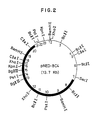
- neuraminidase production test was performed under conditions similar to Example 2 described hereinbelow. A strain having excellent neuraminidase productivity was selected, and a plasmid possessed by the strain was isolated. Analysis of its structure by digestion with various restriction enzymes and agarose gel electrophoresis revealed that the plasmid had the structure as shown in Fig. 2. This plasmid was named pNED-BC4.
- Each of the cultivation sample was centrifuged at 14,000 rpm at 4°C for 5 minutes to collect the supernatant.
- the supernatant was diluted with deionized water to 40-fold, and its neuraminidase activity was determined.
- neuraminidase activity was made in accordance with the quantitative assay for N-acetylhexosamine described in "Protein, Nucleic Acid, Enzyme", separate volume “Experimental Method of Glycosides", page 22 (1968) published by Kyoritsu Publishing Co., Ltd.
- borate solution prepared by dissolving 4.95 g of boric acid in 50 ml of deionized water and adjusting its pH to 9.1, followed by the addition of deionized water to make 100 ml
- the reaction mixture was dipped in water to cool.
- Micromonospora viridifaciens the original strain, showed 1.2 units/ml at the highest.
- the whole amount was gently adsorbed on a column (having an inner diameter of 4.2 cm and a height of 37.5 cm) packed with 500 ml of DEAE-Sepharose CL-6B (manufactured by Pharmacia Fine Chemicals Inc.), and 1 liter of phosphate buffer was passed through the column to remove the non-adsorbed portion.
- a column having an inner diameter of 4.2 cm and a height of 37.5 cm
- DEAE-Sepharose CL-6B manufactured by Pharmacia Fine Chemicals Inc.
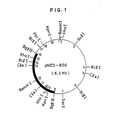
- DNA nucleotide sequence of the neuraminidase gene derived from Micromonospora viridifaciens was determined as follows. Since it was expected that the gene was present in the common part (8, 9, 10, 11, 12 and 13 'positions in Fig. 1 and 15, 16, 17, 18, 19 and 20 positions in Fig. 2) of insert DNAs in recombinant plasmids pNED-BG6 and pNED-BC4 produced in Example 1, the common region and the upstream and downstream regions thereof were analyzed.
- a DNA fragment of 2.5 kb digested with Bgl II (Fig. 1, 8 to 16 positions), derived from pNED-BG6, and a DNA fragment of 0.5 kb digested with Bg l II (Fig. 2, 13 to 15 positions), derived from pNED-BC4, were cloned, respectively, using E. coli cloning vector pUC118 [Methods in Enzymology, 153, 3-11 (1987)]. Since nucleotide sequence is determined using viral single-stranded DNA and primer extension goes only toward one direction to inserted DNA, each DNA fragment was inserted in two directions, so as to make it possible to determine the nucleotide sequence of the inserted DNA fragment from both ends.
- the inserted DNA fragment was excised by using restriction enzymes Pst I and Xba I (both manufactured by Boehringer GmbH), and various deletion mutants were prepared using Kilo-Deletion Kit (manufactured by Takara Shuzo Co., Ltd.). From the deletion mutants obtained, various DNA fragments were recovered with helper phage M13K07 as single stranded DNA, and their base sequence was determined in accordance with the dideoxy method [Proc. Natl. Acad. Sci. USA., 74, 5463-5467 (1977)].
- neuraminidase By the use of microorganisms harboring the recombinant DNA containing DNA fragment carrying thereon genetic information that participates in synthesis of neuraminidase, neuraminidase can be produced efficiently without supplementation of any neuraminidase inducer.
Landscapes
- Chemical & Material Sciences (AREA)
- Life Sciences & Earth Sciences (AREA)
- Organic Chemistry (AREA)
- Health & Medical Sciences (AREA)
- Zoology (AREA)
- Engineering & Computer Science (AREA)
- Bioinformatics & Cheminformatics (AREA)
- Genetics & Genomics (AREA)
- Wood Science & Technology (AREA)
- General Health & Medical Sciences (AREA)
- General Engineering & Computer Science (AREA)
- Biochemistry (AREA)
- Molecular Biology (AREA)
- Microbiology (AREA)
- Biotechnology (AREA)
- Biomedical Technology (AREA)
- Medicinal Chemistry (AREA)
- Enzymes And Modification Thereof (AREA)
- Micro-Organisms Or Cultivation Processes Thereof (AREA)
Applications Claiming Priority (4)
| Application Number | Priority Date | Filing Date | Title |
|---|---|---|---|
| JP186441/88 | 1988-07-26 | ||
| JP18644188 | 1988-07-26 | ||
| JP81199/89 | 1989-03-31 | ||
| JP1081199A JP2886547B2 (ja) | 1988-07-26 | 1989-03-31 | ノイラミニダーゼの製造法 |
Publications (2)
| Publication Number | Publication Date |
|---|---|
| EP0353938A1 true EP0353938A1 (de) | 1990-02-07 |
| EP0353938B1 EP0353938B1 (de) | 1994-12-21 |
Family
ID=26422236
Family Applications (1)
| Application Number | Title | Priority Date | Filing Date |
|---|---|---|---|
| EP89307598A Expired - Lifetime EP0353938B1 (de) | 1988-07-26 | 1989-07-26 | Verfahren zur Herstellung von Neuraminidase |
Country Status (4)
| Country | Link |
|---|---|
| US (1) | US5268290A (de) |
| EP (1) | EP0353938B1 (de) |
| JP (1) | JP2886547B2 (de) |
| DE (1) | DE68920087T2 (de) |
Families Citing this family (9)
| Publication number | Priority date | Publication date | Assignee | Title |
|---|---|---|---|---|
| JPWO2004022731A1 (ja) * | 2002-09-04 | 2005-12-22 | 株式会社ディナベック研究所 | シアル酸結合活性を有する膜蛋白質をエンベロープに含むウイルスベクターをグラム陽性菌由来ノイラミニダーゼを用いて製造する方法 |
| US8129187B2 (en) * | 2005-12-13 | 2012-03-06 | Kyoto University | Somatic cell reprogramming by retroviral vectors encoding Oct3/4. Klf4, c-Myc and Sox2 |
| US8278104B2 (en) | 2005-12-13 | 2012-10-02 | Kyoto University | Induced pluripotent stem cells produced with Oct3/4, Klf4 and Sox2 |
| BRPI0619794B8 (pt) | 2005-12-13 | 2022-06-14 | Univ Kyoto | Uso de um fator de reprogramação, agente para a preparação de uma célula-tronco pluripotente induzida a partir de uma célula somática e métodos para preparar uma célula- tronco pluripotente induzida método e para preparar uma célula somática e uso de células-tronco pluripotentes induzidas |
| US20090227032A1 (en) | 2005-12-13 | 2009-09-10 | Kyoto University | Nuclear reprogramming factor and induced pluripotent stem cells |
| US9213999B2 (en) | 2007-06-15 | 2015-12-15 | Kyoto University | Providing iPSCs to a customer |
| JP2008307007A (ja) | 2007-06-15 | 2008-12-25 | Bayer Schering Pharma Ag | 出生後のヒト組織由来未分化幹細胞から誘導したヒト多能性幹細胞 |
| SG10201400329YA (en) | 2008-05-02 | 2014-05-29 | Univ Kyoto | Method of nuclear reprogramming |
| CA3169961A1 (en) | 2020-02-03 | 2021-08-12 | Premas Biotech Private Limited | Recombinant expression platform, constructs and methods for expression of difficult to express proteins (dte-ps) |
Citations (1)
| Publication number | Priority date | Publication date | Assignee | Title |
|---|---|---|---|---|
| EP0133694A2 (de) * | 1983-08-04 | 1985-03-06 | Kyowa Hakko Kogyo Co., Ltd. | Verfahren zur Herstellung von Neuraminidase und Verfahren und Reagenz zur quantitativen Bestimmung einer Sialinsäure enthaltenden Substanz unter Verwendung von Neuraminidase |
Family Cites Families (2)
| Publication number | Priority date | Publication date | Assignee | Title |
|---|---|---|---|---|
| JPS5011991A (de) * | 1973-06-01 | 1975-02-06 | ||
| US5024948A (en) * | 1985-10-17 | 1991-06-18 | American Cyanamid Company | Genetic system for micromonospora |
-
1989
- 1989-03-31 JP JP1081199A patent/JP2886547B2/ja not_active Expired - Fee Related
- 1989-07-25 US US07/384,709 patent/US5268290A/en not_active Expired - Lifetime
- 1989-07-26 EP EP89307598A patent/EP0353938B1/de not_active Expired - Lifetime
- 1989-07-26 DE DE68920087T patent/DE68920087T2/de not_active Expired - Fee Related
Patent Citations (1)
| Publication number | Priority date | Publication date | Assignee | Title |
|---|---|---|---|---|
| EP0133694A2 (de) * | 1983-08-04 | 1985-03-06 | Kyowa Hakko Kogyo Co., Ltd. | Verfahren zur Herstellung von Neuraminidase und Verfahren und Reagenz zur quantitativen Bestimmung einer Sialinsäure enthaltenden Substanz unter Verwendung von Neuraminidase |
Non-Patent Citations (2)
| Title |
|---|
| CHEMICAL ABSTRACTS, vol. 108, part 23, 6th June 1988, page 181, abstract no. 199433v, Columbus, Ohio, US; E.R. VIMR et al.: "Cloning and expression of the Vibrio cholerae neuraminidase gene nanH in Escherichia coli", & J. BACTERIOL. 1988, 170 (4), 1495-504 * |
| JOURNAL OF BACTERIOLOGY, vol. 170, no. 1, January 1988, pages 71-77, American Society for Microbiology, Washington, D.C., US; E.Z. BAUM et al.: "Temporally regulated tandem promoters in micromonospora echinospora" * |
Also Published As
| Publication number | Publication date |
|---|---|
| JPH02131577A (ja) | 1990-05-21 |
| DE68920087T2 (de) | 1995-07-20 |
| US5268290A (en) | 1993-12-07 |
| EP0353938B1 (de) | 1994-12-21 |
| DE68920087D1 (de) | 1995-02-02 |
| JP2886547B2 (ja) | 1999-04-26 |
Similar Documents
| Publication | Publication Date | Title |
|---|---|---|
| Sawers et al. | Expression and operon structure of the sel genes of Escherichia coli and identification of a third selenium-containing formate dehydrogenase isoenzyme | |
| CA1170202A (en) | Process for cloning the gene coding for a thermostable alpha-amylase into escherichia coli and bacillus subtilis | |
| US5268290A (en) | Process for producing neuraminidase | |
| JP2729628B2 (ja) | 巨大菌からのグルコース・デヒドロゲナーゼの調製方法 | |
| Zolg et al. | Isolation of a small DNA fragment carrying the gene for a dihydrofolate reductase from a trimethoprim resistance factor | |
| JPH06225776A (ja) | リボフラビンの製造法 | |
| EP0537553B1 (de) | Farnesylpyrophosphatsynthetase und dafür kodierende DNA-Sequenz | |
| EP0067071B1 (de) | Plasmid und dessen Herstellung | |
| EP0456986B1 (de) | Wärmebeständige Beta-Galactosyltransferase, ihr Herstellungsverfahren und ihre Verwendung | |
| JPH0630583B2 (ja) | Dνaおよびその用途 | |
| JP3799784B2 (ja) | 2,6−ジアミノプリン−2’−デオキシリボシドおよび2’−デオキシグアノシンの製造法 | |
| EP0374771B1 (de) | Verfahren zur Herstellung der Restriktionsendonucklease PvuI | |
| US4478937A (en) | Plasmid and production thereof | |
| EP0240105B1 (de) | Biotin-Synthetase kodierendes Gen und dessen Verwendung | |
| Brush et al. | Bacteriophage T4 deoxynucleotide kinase: gene cloning and enzyme purification | |
| JP2615090B2 (ja) | プラスミド及びそれで形質転換されたエシェリチア・コリ | |
| EP0542240B1 (de) | Verfahren zur Herstellung von Flavin-Nukleotiden | |
| Murray et al. | Characterization of a rifampin-resistant, conditional asporogenous mutant of Bacillus subtilis | |
| JP3508871B2 (ja) | クレアチニンデイミナーゼ活性を有する蛋白質の遺伝情報を有するdna並びにクレアチニンデイミナーゼの製造法 | |
| KR100814313B1 (ko) | 대장균의 염색체 재조합에 사용되는 플라스미드 | |
| JPS59159778A (ja) | 耐熱性のロイシン脱水素酵素の製造法 | |
| JPH0679556B2 (ja) | プラスミド | |
| JP2602840B2 (ja) | プラスミド及びそれで形質転換されたエシェリチア・コリ | |
| JPS60180580A (ja) | エシエリチア・コリ | |
| JPH07163341A (ja) | 安定化された改変タンパク質 |
Legal Events
| Date | Code | Title | Description |
|---|---|---|---|
| PUAI | Public reference made under article 153(3) epc to a published international application that has entered the european phase |
Free format text: ORIGINAL CODE: 0009012 |
|
| AK | Designated contracting states |
Kind code of ref document: A1 Designated state(s): DE FR GB |
|
| 17P | Request for examination filed |
Effective date: 19900226 |
|
| 17Q | First examination report despatched |
Effective date: 19930114 |
|
| GRAA | (expected) grant |
Free format text: ORIGINAL CODE: 0009210 |
|
| AK | Designated contracting states |
Kind code of ref document: B1 Designated state(s): DE FR GB |
|
| REF | Corresponds to: |
Ref document number: 68920087 Country of ref document: DE Date of ref document: 19950202 |
|
| ET | Fr: translation filed | ||
| PLBE | No opposition filed within time limit |
Free format text: ORIGINAL CODE: 0009261 |
|
| STAA | Information on the status of an ep patent application or granted ep patent |
Free format text: STATUS: NO OPPOSITION FILED WITHIN TIME LIMIT |
|
| 26N | No opposition filed | ||
| REG | Reference to a national code |
Ref country code: GB Ref legal event code: IF02 |
|
| PGFP | Annual fee paid to national office [announced via postgrant information from national office to epo] |
Ref country code: FR Payment date: 20050708 Year of fee payment: 17 |
|
| PGFP | Annual fee paid to national office [announced via postgrant information from national office to epo] |
Ref country code: GB Payment date: 20050720 Year of fee payment: 17 |
|
| PGFP | Annual fee paid to national office [announced via postgrant information from national office to epo] |
Ref country code: DE Payment date: 20050721 Year of fee payment: 17 |
|
| PG25 | Lapsed in a contracting state [announced via postgrant information from national office to epo] |
Ref country code: GB Free format text: LAPSE BECAUSE OF NON-PAYMENT OF DUE FEES Effective date: 20060726 |
|
| PG25 | Lapsed in a contracting state [announced via postgrant information from national office to epo] |
Ref country code: DE Free format text: LAPSE BECAUSE OF NON-PAYMENT OF DUE FEES Effective date: 20070201 |
|
| GBPC | Gb: european patent ceased through non-payment of renewal fee |
Effective date: 20060726 |
|
| REG | Reference to a national code |
Ref country code: FR Ref legal event code: ST Effective date: 20070330 |
|
| PG25 | Lapsed in a contracting state [announced via postgrant information from national office to epo] |
Ref country code: FR Free format text: LAPSE BECAUSE OF NON-PAYMENT OF DUE FEES Effective date: 20060731 |