EP0354893A2 - Verfahren zur Herstellung grosser symmetrischer Polymerteilchen - Google Patents
Verfahren zur Herstellung grosser symmetrischer Polymerteilchen Download PDFInfo
- Publication number
- EP0354893A2 EP0354893A2 EP89870121A EP89870121A EP0354893A2 EP 0354893 A2 EP0354893 A2 EP 0354893A2 EP 89870121 A EP89870121 A EP 89870121A EP 89870121 A EP89870121 A EP 89870121A EP 0354893 A2 EP0354893 A2 EP 0354893A2
- Authority
- EP
- European Patent Office
- Prior art keywords
- process according
- olefin monomer
- particles
- complex
- metallocene catalyst
- Prior art date
- Legal status (The legal status is an assumption and is not a legal conclusion. Google has not performed a legal analysis and makes no representation as to the accuracy of the status listed.)
- Granted
Links
Images



Classifications
-
- C—CHEMISTRY; METALLURGY
- C08—ORGANIC MACROMOLECULAR COMPOUNDS; THEIR PREPARATION OR CHEMICAL WORKING-UP; COMPOSITIONS BASED THEREON
- C08F—MACROMOLECULAR COMPOUNDS OBTAINED BY REACTIONS ONLY INVOLVING CARBON-TO-CARBON UNSATURATED BONDS
- C08F10/00—Homopolymers and copolymers of unsaturated aliphatic hydrocarbons having only one carbon-to-carbon double bond
-
- C—CHEMISTRY; METALLURGY
- C08—ORGANIC MACROMOLECULAR COMPOUNDS; THEIR PREPARATION OR CHEMICAL WORKING-UP; COMPOSITIONS BASED THEREON
- C08F—MACROMOLECULAR COMPOUNDS OBTAINED BY REACTIONS ONLY INVOLVING CARBON-TO-CARBON UNSATURATED BONDS
- C08F4/00—Polymerisation catalysts
- C08F4/42—Metals; Metal hydrides; Metallo-organic compounds; Use thereof as catalyst precursors
- C08F4/44—Metals; Metal hydrides; Metallo-organic compounds; Use thereof as catalyst precursors selected from light metals, zinc, cadmium, mercury, copper, silver, gold, boron, gallium, indium, thallium, rare earths or actinides
- C08F4/60—Metals; Metal hydrides; Metallo-organic compounds; Use thereof as catalyst precursors selected from light metals, zinc, cadmium, mercury, copper, silver, gold, boron, gallium, indium, thallium, rare earths or actinides together with refractory metals, iron group metals, platinum group metals, manganese, rhenium technetium or compounds thereof
- C08F4/62—Refractory metals or compounds thereof
- C08F4/639—Component covered by group C08F4/62 containing a transition metal-carbon bond
- C08F4/63912—Component covered by group C08F4/62 containing a transition metal-carbon bond in combination with an organoaluminium compound
-
- C—CHEMISTRY; METALLURGY
- C08—ORGANIC MACROMOLECULAR COMPOUNDS; THEIR PREPARATION OR CHEMICAL WORKING-UP; COMPOSITIONS BASED THEREON
- C08F—MACROMOLECULAR COMPOUNDS OBTAINED BY REACTIONS ONLY INVOLVING CARBON-TO-CARBON UNSATURATED BONDS
- C08F4/00—Polymerisation catalysts
- C08F4/42—Metals; Metal hydrides; Metallo-organic compounds; Use thereof as catalyst precursors
- C08F4/44—Metals; Metal hydrides; Metallo-organic compounds; Use thereof as catalyst precursors selected from light metals, zinc, cadmium, mercury, copper, silver, gold, boron, gallium, indium, thallium, rare earths or actinides
- C08F4/60—Metals; Metal hydrides; Metallo-organic compounds; Use thereof as catalyst precursors selected from light metals, zinc, cadmium, mercury, copper, silver, gold, boron, gallium, indium, thallium, rare earths or actinides together with refractory metals, iron group metals, platinum group metals, manganese, rhenium technetium or compounds thereof
- C08F4/62—Refractory metals or compounds thereof
- C08F4/639—Component covered by group C08F4/62 containing a transition metal-carbon bond
- C08F4/6392—Component covered by group C08F4/62 containing a transition metal-carbon bond containing at least one cyclopentadienyl ring, condensed or not, e.g. an indenyl or a fluorenyl ring
- C08F4/63922—Component covered by group C08F4/62 containing a transition metal-carbon bond containing at least one cyclopentadienyl ring, condensed or not, e.g. an indenyl or a fluorenyl ring containing at least two cyclopentadienyl rings, fused or not
- C08F4/63927—Component covered by group C08F4/62 containing a transition metal-carbon bond containing at least one cyclopentadienyl ring, condensed or not, e.g. an indenyl or a fluorenyl ring containing at least two cyclopentadienyl rings, fused or not two cyclopentadienyl rings being mutually bridged
Definitions
- the present invention relates to a process for preparing large sized polyolefin particles of high bulk density. More particularly the present invention relates to a high yield process for preparing large sized symmetrical polyolefin particles using a metallocene catalyst.
- Polyolefins obtained from polymerization reactors are generally in the form of a powder having a wide particle size distribution. These polyolefin powders have a poor pourability and an undesirable amount of powder fines making them difficult to handle and process. Thus, prior to processing, these polyolefins must generally be formed into large particles or pellets.
- large sized polyolefin particles having a particle diameter in the range of about 300 to 800 microns and a narrow particle size distribution, have many advantages in various applications including for example, ease of handling, etc.
- U.S. patent no. 3,687,919 discloses a process for producing spherical particles of ethylenic monomers with controlled size distribution by a two-stage, polymerization method wherein a portion of the monomer is prepolymerized with turbulent agitation, the prepolymerized monomer is mixed with a large quantity of additional monomer and the resulting mixture is slowly polymerized with mild agitation. The quantity of monomer prepolymerized and the speed of agitation during the prepolymerization is said to serve as control on size distribution of the final product.
- metallocene catalysts A separate group of catalysts for producing polyolefins, called metallocene catalysts, have many advantages over other types of polyolefin polymerization catalysts.
- the advantages in using metallocene catalysts include, for example, high productivity and the ability to control or change many polymer properties by altering or varying the type of metallocene used.
- German patent application 2,608,863 discloses a catalyst system for the polymerization of ethylene which system consists of a bis(cyclopentadienyl) titanium dialkyl, an aluminum trialkyl and water.
- German patent application 2,608,933 discloses a zirconium metallocene of the formula (cyclopentadienyl) n ZrY 4-n , wherein Y represents R, CH2AlR2, CH2CH2AlR2, or CH2CH(AlR2) and where R is an alkyl or metallo alkyl and n is an integer from 1-4.
- Metallocene catalysts are known to be useful in the copolymerization of ethylene and other alpha-olefins.
- U.S. patent no. 4,542,199 to Kaminsky, et al discloses a catalyst system that comprises a catalyst of the formula (cyclopentadienyl)2MeRHal, in which R is a halogen, a cyclopentadienyl group, or a C1-C6 alkyl radical; Me is a transition metal, in particular zirconium, and Hal is a halogen, in particular chlorine.
- the catalyst system also includes an alumoxane of the formula Al2OR4(Al(R)-O) n for a linear molecule and/or (Al(R)-O) n+2 for a cyclical molecule in which n is a number from 4-20 and R is a methyl or ethyl radical.
- a similar catalyst system is disclosed in U.S. patent no. 4,404,344.
- Metallocene catalysts particularly useful in the polymerization of propylene and higher alpha-olefins are disclosed in European patent publication no. 0185918.
- This publication discloses a zirconium metallocene catalyst that includes a bridge between two cyclopentadienyl rings. The bridge is described as being a linear hydrocarbon with 1-4 carbon atoms or a cyclical hydrocarbon with 3-6 carbon atoms.
- Application serial no. 096,075 discloses a catalyst system comprising a stereo-rigid hafnium metallocene catalyst in combination with an aluminum compound.
- Application serial no. 034,472 describes a method for varying the melting points and molecular weights of polyolefins by varying the bridge and other substituents on a metallocene catalyst.
- 095,755 describes a method for producing polyolefins having a broad molecular weight distribution using at least two different chiral, stereo-rigid metallocene catalysts and an aluminum compound.
- Application serial nos. and filed July 15, 1988 disclose a catalyst and method for producing syndiotactic polypropylene using syndiospecific metallocenes in which the two bridged cyclopentadienyl groups are substantially dissimilar, with respect to steric hindrance and electrical effects.
- the catalyst is generally described by the formula R ⁇ (CpR n )(CpR′ m )MeQ k wherein R ⁇ includes a bridge between the two cyclopentadienyl rings that are substituted in a substantially different manner.
- Homogeneous (slurry) polymerizations such as with toluene as a solvent, using metallocene catalysts, yield small particles of fluff having low bulk density (0.1-0.2 g/ml) and an open polymer morphology.
- the fluff or powder, resulting from slurry polymerizations is difficult to handle. This same problem occurs in low temperature (around 50°C and lower for propylene) liquid (bulk) polymerizations.
- High temperature bulk polymerizations without prepolymerization, using metallocene catalysts, produce small particles of fluff having a closed morphology. These small fluff particles compress together into jagged pieces which then agglomerate thereby giving the particles high bulk density. These particles have a high bulk density, but they are nevertheless undesirable since they are not uniform and are difficult to handle.
- High bulk density is of practical importance in obtaining high reactor solids content and in fluff handling operations prior to extrusion and pelletization.
- Polymers of low bulk density are difficult to handle and are in fact dangerous if the right particle mixture is in the air and a spark is brought into contact with the particles.
- the applicant has discovered a method of producing large, symmetrical polyolefin particles having a high bulk density using metallocene catalysts.
- This process entails the precontacting of an organoaluminum compound with a metallocene thereby forming an active complex, precipitating the active complex with a hydrocarbon that is a nonsolvent for the complex, prepolymerizing the precipitated complex by contacting the complex with an olefin monomer at a temperature below the polymerization temperature of the monomer, followed by polymerizing the olefin monomer under polymerization conditions thereby producing large symmetrical polyolefin particles.
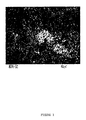
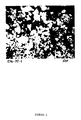
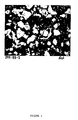
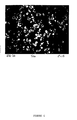
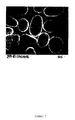
- Microphotographs 1-8 were all taken at a magnification of 50x. These microphotographs are of polypropylene particles obtained from polymerization processes all using a metallocene catalyst in the absence of a solvent for the catalyst (bulk polymerization).
- the process of the present invention produces large symmetrical polyolefin particles having a high bulk density.
- the process according to the present invention requires contacting a precipitated active complex with an olefin monomer at a temperature significantly below the olefin monomer's polymerization temperature to prepolymerize the complex, followed by polymerizing the olefin monomer under polymerization conditions thereby producing large symmetrical polyolefin particles.
- the active complex is formed by precontacting an organoaluminum compound with a metallocene catalyst. After the complex is formed it is generally precipitated with a hydrocarbon that is a nonsolvent for the complex. In order to produce large symmetrical polyolefin particles it is important that the precipitated active complex, however it is formed, be prepolymerized at a reduced temperature prior to polymerizing the olefin under polymerization conditions.
- the present invention is generally useful in preparing large size polymer particles of any olefin, however, alpha olefins are preferred due to availability, reactivity and crystallinity of the final polymer.
- the present invention is more particularly useful in the polymerization of olefins having from 3 to 5 carbon atoms with propylene being the most preferred due to availability and use in the industry.
- the hydrocarbon that is used to precipitate the active complex is nonaromatic (alycyclic and aliphatic).
- the important requirement for this hydrocarbon, in order to precipitate the complex, is simply that the active complex be insoluble therein.
- This "nonsolvent" hydrocarbon preferably has from 3 to 12 carbon atoms, more preferably from 3 to 7 carbon atoms, due to availability, volatility and ease in handling.
- the "nonsolvent" hydrocarbon and the monomer are one and the same with the most preferred monomer “nonsolvent” being propylene.
- the use of the monomer as the nonsolvent is advantageous since it alleviates the solvent recovery step and shortens the prepolymerization time.
- the monomer is also the "precipitating hydrocarbon” the precipitation must also be conducted below the polymerization temperature of the monomer.
- the prepolymerization of the catalyst must be conducted below the polymerization temperature of the olefin monomer otherwise large uniform polyolefin particles of high bulk density generally cannot be produced.
- this temperature is significantly below the polymerization temperature of the olefin monomer since, along with other factors, a lower temperature generally produces larger particles (a long prepolymerization time, a slow stirring rate and a high catalyst efficiency also affect particle size).
- the prepolymerization temperature is generally below 70°C, preferively below about 35 to 40°C.
- ambient temperature is most preferred due to convenience.
- the prepolymerization of the present invention is preferably carried out in two steps since this allows for better control of the final particle size.
- the precipitated complex is brought into contact with the olefin monomer at a temperature below the polymerization temperature of the monomer. This temperature is held for a time sufficient to prepolymerize the complex. This time is generally from 0 to 10 minutes, preferably 1 to 6 minutes, with about 5 minutes being most preferred.
- the complex and the monomer are then heated at a specified rate, further prepolymerizing the complex, until the final polymerization temperature is reached. The polymerization is then allowed to take place at this temperature and then the reaction is terminated.
- the first prepolymerization step is carried out at a temperature as indicated above and the second prepolymerization step is preferably carried out while rapidly heating the reaction mixture.
- This second prepolymerization step is preferably carried out while the reaction mixture is heated as rapidly as practical to the polymerization temperature so as to avoid producing a large quantity of polymer below the final polymerization temperature.
- This step is preferably carried out while heating the complex and the monomer at a rate not less than 5°C per minute, more preferably, not less than 10°C per minute.
- the final polymerization temperature depends upon the particular olefin monomer employed. In the case of propylene, this temperature is below about 80° to 85°C and preferably between 50° and 80°C with about 70°C being most preferred. Therefore, if propylene is the monomer employed in the preferred process of the present invention the initial prepolymerization temperature is about 25°C, the heating rate is not less than 10°C per minute and the final polymerization temperature is about 70°C.
- the bulk density of the resulting large uniform polyolefin particles is generally between 0.3 and 0.45 g/ml and can be as high as 0.5 g/ml.
- the process of the present invention preferably produces polyolefin particles in which the majority of the particles have a particle size between about 300 and 800 microns, more preferably 500 to 2,000 microns, with about 90 percent of the particles being larger than 100 microns.
- the process of the present invention can even produce particles with about 95 percent of the particles being larger than 400 microns and in some cases 99 percent of the particles being larger than 400 microns.
- the process of the present invention can be conducted in any type of polymerization reactor, provided large symmetrical polyolefin particles are produced.
- suitable reactors include batch type reactors, loop type reactors, etc.
- the metallocene catalyst used in accordance with the present invention is described by the formula: R ⁇ (C5R′ m )2 Me
- Q p (C5R′ m ) is a cyclopentadienyl or substituted cyclopentadienyl
- R′ is hydrogen or hydrocarbyl radical(s) having 1-20 carbon atoms, and each R′ can be the same or different
- R ⁇ is an alkylene radical having 1-4 carbon atoms, a silicon hydrocarbyl compound, a germanium hydrocarbyl compound, an alkyl phosphine, or an alkyl amine, and R ⁇ acts to bridge the two (C5R′ m ) rings
- Q is a hydrocarbon radical having 1-20 carbon atoms or a halogen
- Me is a group 4b, 5b, or 6b metal of the Periodic Table of Elements
- M is an integer from 0-4
- P is an integer from 0-3.
- Me is selected from tianium, zirconium, and hafnium with zirconium being most preferred.
- R′ may be hydrogen or a hydrocarbyl radical.
- hydrocarbyl radicals useful as R′ include alkyl, alkenyl, aryl, alkylaryl or arylalkyl radicals. More specifically, exemplary hydrocarbyl radicals include methyl, ethyl, propyl, butyl, amyl, isoamyl, hexyl, isobutyl, heptyl, octyl, nonyl, decyl, cetyl, phenyl, methylene, ethylene, propylene, and other like groups.
- the R's are selected so that (C5(R′)4) is an indenyl radical (Ind) or a hydrated indenyl radical (IndH4).
- R ⁇ is a stable component that bridges the two (C5(R′)4) rings in order to render the catalyst stereo-rigid.
- R ⁇ can be organic or inorganic and can include groups depending from the portion acting as the bridge. Examples of R ⁇ include alkylene radicals having 1-4 carbon atoms, silicon hydrocarbyl groups, germanium hydrocarbyl groups, alkyl phosphines, alkyl amines, boron, nitrogen, sulfur, phosphorous, aluminum and other groups containing these elements.
- the preferred R ⁇ components are methylene (-CH2-), ethylene (-C2H4-), alkyl silicons, and cycloalkyl silicons such as cyclopropyl silicon, among others.
- Q can be any of the hydrocarbyl groups listed for R′ above, but preferably, Q is a halogen, and most preferably, Q is chlorine. Also in the preferred embodiment, p is 2.
- the metallocene catalyst should be chiral, i.e., non-superimposable on its mirror image, or prochiral for the polymerization of propylene and higher alpha-olefins in order to produce a useful polymer product. It is not necessary, however, for the catalyst to be chiral or stereo-rigid for the polymerization of ethylene or predominantly ethylene copolymers.
- the metallocene catalyst should be either syndiospecific or isospecific.
- Syndiospecific metallocenes are disclosed in U.S. Application Serial nos. and filed July 15, 1988 (Attorney Docket nos. B-26817/COS-562 and B-26818/COS-563) the disclosures of which are incorporated herein by reference.
- Syndiospecific metallocenes have cyclopentadienyl groups that are substantially dissimilar. These metallocenes produce polyolefins with a high syndiotactic index when prepared from monomers having at least 3 carbon atoms, such as propylene.
- syndiotactic polyolefins such as polypropylene
- syndiotactic polymers have lower heats of crystallization than the corresponding isotactic polymers.
- syndiotactic polymers have a higher melting point than isotactic polymers.
- a metallocene catalyst generally results in a polyolefin having a molecular weight distribution between about 2 and 10, preferably between 2 and 3.
- a metallocene catalyst generally results in a polyolefin having a molecular weight distribution between about 2 and 10, preferably between 2 and 3.
- two metallocenes are used, as in Application Serial no. 095,755, the disclosure of which is incorporated herein by reference, a polyolefin having a broad molecular weight distribution is produced.
- the catalyst can be prepared by any method known in the art. It is important, however, that the catalyst complex be "clean" as usually low molecular weight, amorphous polymer is produced by impure catalysts. Generally, the preparation of the catalyst complex consists of forming and isolating the Cp or substituted Cp ligands which are then reacted with a halogenated metal to form the complex.
- the catalysts of the present invention are particularly useful in combination with an aluminum cocatalyst, preferably an alumoxane, an alkyl aluminum, or a mixture thereof.
- an aluminum cocatalyst preferably an alumoxane, an alkyl aluminum, or a mixture thereof.
- a complex can be isolated between a metallocene catalyst as described herein and an excess amount of aluminum cocatalyst in accordance with the teachings of European Patent Publication No. 226,463 published on June 24, 1987 assigned to Exxon Chemical Patents Inc., with Howard Turner listed as the inventor.
- the alumoxanes useful in combination with the catalysts of the present invention can be represented by the general formula (R-Al-O-) in the cyclic form and R(R-Al-O) n -ALR2 in the linear form wherein R is an alkyl group with 1 to 5 carbon atoms and n is an integer from 1 to about 20. Most preferably, R is a methyl group.
- the alumoxanes can be prepared by various methods known in the art. Preferably, they are prepared by contacting water with a solution of trialkyl aluminum, such as, trimethyl aluminum, in a suitable solvent such as benzene.
- Another preferred method includes the preparation of alumoxane in the presence of a hydrated copper sulfate as described in U.S. Patent No. 4,404,344 the disclosure of which is incorporated herein by reference.
- This method comprises treating a dilute solution of trimethyl aluminum in toluene with copper sulfate.
- the preparation of other aluminum cocatalysts useful in the present invention can be prepared by methods known to those skilled in the art.
- metallocene catalysts used in the present invention are produced using methods known to those skilled in the art and include those methods in the copending applications cited above.
- a baked-out two or four liter stainless steel Zipperclave was utilized as the reaction vessel and was purged with dry nitrogen. Three-fourths of the total amount of liquid propylene for the run (usually about 900 ml), was added to the reaction vessel. The stirrer was set at 1,200 rpm and the reaction was warmed to the desired polymerization temperature.
- the metallocene was dissolved in a bottle containing 10 to 20 ml of toluene.
- the alumoxane was dissolved in a bottle containing 10 ml of toluene.
- the contents of both bottles were canulated into a dry de-areated stainless steel bomb and were left in the bomb (precontacted) for a specified time to form an active catalyst complex? The catalyst was charged to the reactor by rapidly pumping liquid propylene through the bomb. The polymerizations were terminated by venting the monomer.
- This procedure is similar to Procedure A except that a specified volume of toluene was first canulated into the reactor under a nitrogen atmosphere.
- the precontacted catalyst solution (metallocene and alumoxane in toluene) was canulated into the reactor under a nitrogen atmosphere at room temperature. Propylene was added at 30° and the catalyst was allowed to be prepolymerized for the specified time. The reactor contents were then heated to polymerization temperature in less than 5 minutes (second prepolymerization step) then allowed to polymerize. Polymerizations were then terminated by rapid venting of the monomer.
- polymerization run 1 was a low temperature bulk polymerization
- polymerization runs 2-5 were slurry polymerizations
- polymerization 6 was a low temperature bulk polymerization with a prepolymerization step. These runs yielded small polymer particles of low bulk density all resembling the particles in Fig. 1 (microphotograph of the particles produced by run no. 1).
- Polymerization run 7 was a low temperature bulk polymeration without a prepolymerization step using a large amount of metallocene, and polymerization runs 8-11 were bulk polymerizations at high temperature without a prepolymerization step. These runs yielded irregular, agglomerated particles of polymer having a high bulk density.
- Runs 12-20 were bulk polymerizations at high temperature with prepolymerization. These runs yielded large symmetrical particles of polymer having a high bulk density.
- Table II shows that more than 95 wt.% of the polypropylene particles produced by run no. 15 are larger than 355 microns and that the estimated median particle size for particles produced in this run is 648 microns.
- Table III shows that about 99 wt.% of the polypropylene particles produced by run no. 19 are larger than 355 microns and that the estimated median particle size for particles produced in this run is 799 microns.
Landscapes
- Chemical & Material Sciences (AREA)
- Health & Medical Sciences (AREA)
- Chemical Kinetics & Catalysis (AREA)
- Medicinal Chemistry (AREA)
- Polymers & Plastics (AREA)
- Organic Chemistry (AREA)
- Transition And Organic Metals Composition Catalysts For Addition Polymerization (AREA)
Applications Claiming Priority (2)
| Application Number | Priority Date | Filing Date | Title |
|---|---|---|---|
| US22936188A | 1988-08-05 | 1988-08-05 | |
| US229361 | 1988-08-05 |
Publications (4)
| Publication Number | Publication Date |
|---|---|
| EP0354893A2 true EP0354893A2 (de) | 1990-02-14 |
| EP0354893A3 EP0354893A3 (de) | 1991-11-06 |
| EP0354893B1 EP0354893B1 (de) | 1994-11-02 |
| EP0354893B2 EP0354893B2 (de) | 2002-03-13 |
Family
ID=22860876
Family Applications (1)
| Application Number | Title | Priority Date | Filing Date |
|---|---|---|---|
| EP19890870121 Expired - Lifetime EP0354893B2 (de) | 1988-08-05 | 1989-07-31 | Verfahren zur Herstellung grosser symmetrischer Polymerteilchen |
Country Status (2)
| Country | Link |
|---|---|
| EP (1) | EP0354893B2 (de) |
| DE (1) | DE68919156T3 (de) |
Cited By (17)
| Publication number | Priority date | Publication date | Assignee | Title |
|---|---|---|---|---|
| EP0566349A3 (en) * | 1992-04-15 | 1994-06-15 | Mitsubishi Petrochemical Co | Process for producing alpha-olefin polymers |
| EP0611780A3 (de) * | 1991-08-14 | 1995-10-25 | Mitsui Petrochemical Ind | Polyolefine, das ein X-olefin/polymer Copolymere enthält, und darauf basierende Produkte. |
| WO1996028479A1 (en) * | 1995-03-10 | 1996-09-19 | Exxon Chemical Patents Inc. | Method for producing a prepolymerized catalyst |
| WO1997027224A1 (en) * | 1996-01-26 | 1997-07-31 | Borealis A/S | Olefin polymerization catalyst system, producing and using it |
| EP0773242A3 (de) * | 1989-07-08 | 1998-03-11 | Hoechst Aktiengesellschaft | Verfahren zur Herstellung von Cycloolefinpolymeren |
| WO2000012572A1 (en) | 1998-08-26 | 2000-03-09 | Exxon Chemical Patents Inc. | Branched polypropylene compositions |
| US6117962A (en) * | 1997-12-10 | 2000-09-12 | Exxon Chemical Patents Inc. | Vinyl-containing stereospecific polypropylene macromers |
| US6174930B1 (en) | 1999-04-16 | 2001-01-16 | Exxon Chemical Patents, Inc. | Foamable polypropylene polymer |
| US6207750B1 (en) | 1998-05-13 | 2001-03-27 | Exxon Chemical Patents, Inc. | Propylene homopolymers and methods of making the same |
| US6342574B1 (en) | 1997-12-10 | 2002-01-29 | Exxonmobil Chemical Patents Inc | Propylene polymers incorporating macromers |
| WO2003002583A2 (en) | 2001-06-29 | 2003-01-09 | Exxonmobil Chemical Patents Inc. | Metallocenes and catalyst compositions derived therefrom |
| US6512019B1 (en) | 1999-11-04 | 2003-01-28 | Exxonmobil Chemical Patents Inc. | Polypropylene copolymer foams and their use |
| US6555635B2 (en) | 1997-02-07 | 2003-04-29 | Exxonmobil Chemical Patents Inc. | Preparation of vinyl-containing macromers |
| US6660809B1 (en) | 1997-02-07 | 2003-12-09 | Exxonmobil Chemical Patents Inc. | Propylene polymers incorporating polyethylene macromers |
| US6908876B2 (en) | 2003-04-16 | 2005-06-21 | Saudi Basic Industries Corporation | Supported metallocene catalyst system for olefin polymerization, method for making and using the same |
| EP2186831A1 (de) | 2008-11-10 | 2010-05-19 | Borealis AG | Verfahren zur Herstellung eines nicht geträgerten, festen Olefinpolymerisationskatalysators und Verwendung bei der Polymerisation von Olefinen |
| DE102009027447A1 (de) | 2009-07-03 | 2011-01-05 | Evonik Degussa Gmbh | Modifizierte Polyolefine mit besonderem Eigenschaftsprofil, Verfahren zu deren Herstellung und deren Verwendung |
Families Citing this family (13)
| Publication number | Priority date | Publication date | Assignee | Title |
|---|---|---|---|---|
| JP2826362B2 (ja) * | 1990-02-13 | 1998-11-18 | 三井化学株式会社 | オレフィン重合用固体触媒の製造方法、オレフィン重合用固体触媒およびオレフィンの重合方法 |
| AU9159191A (en) * | 1990-12-28 | 1992-08-17 | Exxon Chemical Patents Inc. | Syndiotactic polypropylene |
| DE4120006A1 (de) * | 1991-06-18 | 1992-12-24 | Basf Ag | Durch vorpolymerisation getraegerte katalysatorsysteme zur herstellung von polyalk-1-enen |
| US5478890A (en) * | 1991-08-14 | 1995-12-26 | Mitsui Petrochemical Industries, Ltd. | Olefin polymer composition |
| US5438100A (en) * | 1991-08-14 | 1995-08-01 | Mitsui Petrochemical Industries, Ltd. | Olefin polymer composition |
| US5240894A (en) * | 1992-05-18 | 1993-08-31 | Exxon Chemical Patents Inc. | Method for making and using a supported metallocene catalyst system |
| US6184327B1 (en) | 1997-12-10 | 2001-02-06 | Exxon Chemical Patents, Inc. | Elastomeric propylene polymers |
| US6306960B1 (en) | 1998-05-13 | 2001-10-23 | Exxonmobil Chemical Patents Inc. | Articles formed from foamable polypropylene polymer |
| US6784269B2 (en) | 1998-05-13 | 2004-08-31 | Exxonmobil Chemical Patents Inc. | Polypropylene compositions methods of making the same |
| CN1407995A (zh) | 1999-12-10 | 2003-04-02 | 埃克森化学专利公司 | 丙烯-二烯共聚的聚合物 |
| US6809168B2 (en) | 1999-12-10 | 2004-10-26 | Exxonmobil Chemical Patents Inc. | Articles formed from propylene diene copolymers |
| US6977287B2 (en) | 1999-12-10 | 2005-12-20 | Exxonmobil Chemical Patents Inc. | Propylene diene copolymers |
| EP1847555A1 (de) | 2006-04-18 | 2007-10-24 | Borealis Technology Oy | Mehrfach verzweigtes Polypropylen |
Family Cites Families (1)
| Publication number | Priority date | Publication date | Assignee | Title |
|---|---|---|---|---|
| JP2618384B2 (ja) * | 1986-12-27 | 1997-06-11 | 三井石油化学工業株式会社 | オレフイン重合用固体触媒およびその製法 |
-
1989
- 1989-07-31 DE DE68919156T patent/DE68919156T3/de not_active Expired - Lifetime
- 1989-07-31 EP EP19890870121 patent/EP0354893B2/de not_active Expired - Lifetime
Cited By (23)
| Publication number | Priority date | Publication date | Assignee | Title |
|---|---|---|---|---|
| EP0773242A3 (de) * | 1989-07-08 | 1998-03-11 | Hoechst Aktiengesellschaft | Verfahren zur Herstellung von Cycloolefinpolymeren |
| EP0611780A3 (de) * | 1991-08-14 | 1995-10-25 | Mitsui Petrochemical Ind | Polyolefine, das ein X-olefin/polymer Copolymere enthält, und darauf basierende Produkte. |
| EP0679661A1 (de) * | 1991-08-14 | 1995-11-02 | Mitsui Petrochemical Industries, Ltd. | Prepolymerizierter Olefinpolymerisationskatalysator und Polymerisationsverfahren |
| CN1048733C (zh) * | 1991-08-14 | 2000-01-26 | 三井化学株式会社 | 含烯烃聚合物组合物的制品 |
| EP0566349A3 (en) * | 1992-04-15 | 1994-06-15 | Mitsubishi Petrochemical Co | Process for producing alpha-olefin polymers |
| WO1996028479A1 (en) * | 1995-03-10 | 1996-09-19 | Exxon Chemical Patents Inc. | Method for producing a prepolymerized catalyst |
| WO1997027224A1 (en) * | 1996-01-26 | 1997-07-31 | Borealis A/S | Olefin polymerization catalyst system, producing and using it |
| CN1098281C (zh) * | 1996-01-26 | 2003-01-08 | 博里利斯股份公司 | 烯烃聚合催化剂体系、其生产方法和用途 |
| US6225423B1 (en) | 1996-01-26 | 2001-05-01 | Borealis Technolgy Oy | Olefin polymerization catalyst system, producing and using it |
| US6660809B1 (en) | 1997-02-07 | 2003-12-09 | Exxonmobil Chemical Patents Inc. | Propylene polymers incorporating polyethylene macromers |
| US6555635B2 (en) | 1997-02-07 | 2003-04-29 | Exxonmobil Chemical Patents Inc. | Preparation of vinyl-containing macromers |
| US6117962A (en) * | 1997-12-10 | 2000-09-12 | Exxon Chemical Patents Inc. | Vinyl-containing stereospecific polypropylene macromers |
| US6342574B1 (en) | 1997-12-10 | 2002-01-29 | Exxonmobil Chemical Patents Inc | Propylene polymers incorporating macromers |
| US6207750B1 (en) | 1998-05-13 | 2001-03-27 | Exxon Chemical Patents, Inc. | Propylene homopolymers and methods of making the same |
| US6476173B1 (en) | 1998-05-13 | 2002-11-05 | Exxon Mobil Chemical Patents Inc. | Propylene homopolymers and methods of making the same |
| WO2000012572A1 (en) | 1998-08-26 | 2000-03-09 | Exxon Chemical Patents Inc. | Branched polypropylene compositions |
| US6174930B1 (en) | 1999-04-16 | 2001-01-16 | Exxon Chemical Patents, Inc. | Foamable polypropylene polymer |
| US6512019B1 (en) | 1999-11-04 | 2003-01-28 | Exxonmobil Chemical Patents Inc. | Polypropylene copolymer foams and their use |
| WO2003002583A2 (en) | 2001-06-29 | 2003-01-09 | Exxonmobil Chemical Patents Inc. | Metallocenes and catalyst compositions derived therefrom |
| US6908876B2 (en) | 2003-04-16 | 2005-06-21 | Saudi Basic Industries Corporation | Supported metallocene catalyst system for olefin polymerization, method for making and using the same |
| EP2186831A1 (de) | 2008-11-10 | 2010-05-19 | Borealis AG | Verfahren zur Herstellung eines nicht geträgerten, festen Olefinpolymerisationskatalysators und Verwendung bei der Polymerisation von Olefinen |
| DE102009027447A1 (de) | 2009-07-03 | 2011-01-05 | Evonik Degussa Gmbh | Modifizierte Polyolefine mit besonderem Eigenschaftsprofil, Verfahren zu deren Herstellung und deren Verwendung |
| EP2272933A2 (de) | 2009-07-03 | 2011-01-12 | Evonik Degussa GmbH | Modifizierte Polyolefine mit besonderem Eigenschaftsprofil, Verfahren zu deren Herstellung und deren Verwendung |
Also Published As
| Publication number | Publication date |
|---|---|
| DE68919156T2 (de) | 1995-03-30 |
| EP0354893B1 (de) | 1994-11-02 |
| EP0354893A3 (de) | 1991-11-06 |
| EP0354893B2 (de) | 2002-03-13 |
| DE68919156T3 (de) | 2002-08-14 |
| DE68919156D1 (de) | 1994-12-08 |
Similar Documents
| Publication | Publication Date | Title |
|---|---|---|
| EP0354893A2 (de) | Verfahren zur Herstellung grosser symmetrischer Polymerteilchen | |
| EP0260130B1 (de) | Polymerisationskatalysator auf Träger | |
| EP0367597B1 (de) | Verfahren zur Herstellung eines Polyethylenwachses durch Gasphasenpolymerisation | |
| EP0436326B1 (de) | Katalysator und Prepolymer für Herstellung von Polyolefinen | |
| EP0646137B1 (de) | Katalysator auf trager fur 1-(co)olefinpolymerisation | |
| DE69116157T2 (de) | Trägerkatalysator für olefinpolymerisation mit monozyklopentadienylkomplexen von übergangsmetallen | |
| RU2176252C2 (ru) | Способ многостадийной полимеризации одного или более олефинов и способ многостадийного получения гетерофазных сополимеров пропилена | |
| EP0232595B1 (de) | Polymerisationskatalysator auf Träger | |
| US5206199A (en) | Catalyst for polymerizing an olefin and process for polymerizing an olefin | |
| EP0314797B1 (de) | Olefin-polymerisationskatalysator und verfahren zum polymerisieren von olefin | |
| EP0435514B1 (de) | Katalysator und Prepolymer für Polyolefinherstellung | |
| EP0413530B1 (de) | Verfahren zur Herstellung eines Titanium/Vanadium-Ziegler-Natta-Katalysators für Olefinpolymerisation | |
| EP0447070B1 (de) | Katalysator und Prepolymere für die Polymerisation von Olefinen und daraus erhältliches Ethylen(co)polymer | |
| JPH0791328B2 (ja) | 幅広い分子量分布を有するポリエチレンの製造方法及びその触媒 | |
| EP0447071B1 (de) | Katalysator und Prepolymere für die Polymerisation von Olefin und daraus erhältliches Ethylen(co)polymer | |
| EP0426646B1 (de) | Verfahren zur Herstellung von Polyolefinpulver mit kontrollierter Morphologie unter Anwendung eines metallocenhaltigen Katalytorsystems | |
| WO1995015985A1 (en) | Novel olefin polymerization catalyst and process for polymerizing olefin by using the same | |
| JPH09328311A (ja) | イオン交換性層状珪酸塩の球状造粒物およびその製造法 | |
| CA1339589C (en) | Process for producing large symmetrical polymer particles | |
| JP2817799B2 (ja) | 大粒径の対称的な重合体粒子の製造方法 | |
| CA2033029A1 (en) | Process for preparing a ziegler-natta type catalyst | |
| JPH10245418A (ja) | オレフィン重合体の製造方法 | |
| JP3805498B2 (ja) | エチレン−α−オレフィン共重合体 | |
| JP3689208B2 (ja) | エチレン−α−オレフィン共重合体 | |
| JPH09316119A (ja) | オレフィン重合用触媒およびこれを用いたオレフィンの重合法 |
Legal Events
| Date | Code | Title | Description |
|---|---|---|---|
| PUAI | Public reference made under article 153(3) epc to a published international application that has entered the european phase |
Free format text: ORIGINAL CODE: 0009012 |
|
| 17P | Request for examination filed |
Effective date: 19890807 |
|
| AK | Designated contracting states |
Kind code of ref document: A2 Designated state(s): BE DE FR GB IT NL |
|
| PUAL | Search report despatched |
Free format text: ORIGINAL CODE: 0009013 |
|
| AK | Designated contracting states |
Kind code of ref document: A3 Designated state(s): BE DE FR GB IT NL |
|
| 17Q | First examination report despatched |
Effective date: 19920306 |
|
| GRAA | (expected) grant |
Free format text: ORIGINAL CODE: 0009210 |
|
| AK | Designated contracting states |
Kind code of ref document: B1 Designated state(s): BE DE FR GB IT NL |
|
| ET | Fr: translation filed | ||
| REF | Corresponds to: |
Ref document number: 68919156 Country of ref document: DE Date of ref document: 19941208 |
|
| ITF | It: translation for a ep patent filed | ||
| PLBI | Opposition filed |
Free format text: ORIGINAL CODE: 0009260 |
|
| PLBI | Opposition filed |
Free format text: ORIGINAL CODE: 0009260 |
|
| 26 | Opposition filed |
Opponent name: EXXON CHEMICAL PATENTS INC. Effective date: 19950627 |
|
| 26 | Opposition filed |
Opponent name: EXXON CHEMICAL PATENTS INC. Effective date: 19950627 Opponent name: HOECHST AG Effective date: 19950802 |
|
| NLR1 | Nl: opposition has been filed with the epo |
Opponent name: EXXON CHEMICAL PATENTS INC. |
|
| NLR1 | Nl: opposition has been filed with the epo |
Opponent name: EXXON CHEMICAL PATENTS INC. Opponent name: HOECHST AG |
|
| PLBF | Reply of patent proprietor to notice(s) of opposition |
Free format text: ORIGINAL CODE: EPIDOS OBSO |
|
| PLBF | Reply of patent proprietor to notice(s) of opposition |
Free format text: ORIGINAL CODE: EPIDOS OBSO |
|
| PLBQ | Unpublished change to opponent data |
Free format text: ORIGINAL CODE: EPIDOS OPPO |
|
| PLAB | Opposition data, opponent's data or that of the opponent's representative modified |
Free format text: ORIGINAL CODE: 0009299OPPO |
|
| R26 | Opposition filed (corrected) |
Opponent name: EXXON CHEMICAL PATENTS INC. * 950802 HOECHST AG Effective date: 19950627 |
|
| NLR1 | Nl: opposition has been filed with the epo |
Opponent name: EXXON CHEMICAL PATENTS INC. Opponent name: HOECHST AG |
|
| PLBQ | Unpublished change to opponent data |
Free format text: ORIGINAL CODE: EPIDOS OPPO |
|
| PLAB | Opposition data, opponent's data or that of the opponent's representative modified |
Free format text: ORIGINAL CODE: 0009299OPPO |
|
| PLBQ | Unpublished change to opponent data |
Free format text: ORIGINAL CODE: EPIDOS OPPO |
|
| PLAB | Opposition data, opponent's data or that of the opponent's representative modified |
Free format text: ORIGINAL CODE: 0009299OPPO |
|
| PLAW | Interlocutory decision in opposition |
Free format text: ORIGINAL CODE: EPIDOS IDOP |
|
| R26 | Opposition filed (corrected) |
Opponent name: EXXON CHEMICAL PATENTS INC. * 950802 HOECHST AG Effective date: 19950627 |
|
| R26 | Opposition filed (corrected) |
Opponent name: EXXON CHEMICAL PATENTS INC. * 950802 TARGOR GMBH Effective date: 19950627 |
|
| PLBQ | Unpublished change to opponent data |
Free format text: ORIGINAL CODE: EPIDOS OPPO |
|
| PLAB | Opposition data, opponent's data or that of the opponent's representative modified |
Free format text: ORIGINAL CODE: 0009299OPPO |
|
| NLR1 | Nl: opposition has been filed with the epo |
Opponent name: EXXON CHEMICAL PATENTS INC. Opponent name: HOECHST AG |
|
| APAC | Appeal dossier modified |
Free format text: ORIGINAL CODE: EPIDOS NOAPO |
|
| APAE | Appeal reference modified |
Free format text: ORIGINAL CODE: EPIDOS REFNO |
|
| NLR1 | Nl: opposition has been filed with the epo |
Opponent name: TARGOR GMBH Opponent name: EXXON CHEMICAL PATENTS INC. |
|
| R26 | Opposition filed (corrected) |
Opponent name: EXXON CHEMICAL PATENTS INC. * 950802 TARGOR GMBH Effective date: 19950627 |
|
| APAC | Appeal dossier modified |
Free format text: ORIGINAL CODE: EPIDOS NOAPO |
|
| NLR1 | Nl: opposition has been filed with the epo |
Opponent name: TARGOR GMBH Opponent name: EXXON CHEMICAL PATENTS INC. |
|
| APAC | Appeal dossier modified |
Free format text: ORIGINAL CODE: EPIDOS NOAPO |
|
| PLAW | Interlocutory decision in opposition |
Free format text: ORIGINAL CODE: EPIDOS IDOP |
|
| REG | Reference to a national code |
Ref country code: GB Ref legal event code: IF02 |
|
| PUAH | Patent maintained in amended form |
Free format text: ORIGINAL CODE: 0009272 |
|
| STAA | Information on the status of an ep patent application or granted ep patent |
Free format text: STATUS: PATENT MAINTAINED AS AMENDED |
|
| 27A | Patent maintained in amended form |
Effective date: 20020313 |
|
| AK | Designated contracting states |
Kind code of ref document: B2 Designated state(s): BE DE FR GB IT NL |
|
| NLR2 | Nl: decision of opposition | ||
| NLR3 | Nl: receipt of modified translations in the netherlands language after an opposition procedure | ||
| ET3 | Fr: translation filed ** decision concerning opposition | ||
| APAH | Appeal reference modified |
Free format text: ORIGINAL CODE: EPIDOSCREFNO |
|
| PGFP | Annual fee paid to national office [announced via postgrant information from national office to epo] |
Ref country code: DE Payment date: 20080722 Year of fee payment: 20 |
|
| PGFP | Annual fee paid to national office [announced via postgrant information from national office to epo] |
Ref country code: FR Payment date: 20080715 Year of fee payment: 20 Ref country code: NL Payment date: 20080716 Year of fee payment: 20 Ref country code: IT Payment date: 20080725 Year of fee payment: 20 |
|
| PGFP | Annual fee paid to national office [announced via postgrant information from national office to epo] |
Ref country code: GB Payment date: 20080722 Year of fee payment: 20 |
|
| PGFP | Annual fee paid to national office [announced via postgrant information from national office to epo] |
Ref country code: BE Payment date: 20080814 Year of fee payment: 20 |
|
| REG | Reference to a national code |
Ref country code: GB Ref legal event code: PE20 Expiry date: 20090730 |
|
| NLV7 | Nl: ceased due to reaching the maximum lifetime of a patent |
Effective date: 20090731 |
|
| PG25 | Lapsed in a contracting state [announced via postgrant information from national office to epo] |
Ref country code: NL Free format text: LAPSE BECAUSE OF EXPIRATION OF PROTECTION Effective date: 20090731 Ref country code: GB Free format text: LAPSE BECAUSE OF EXPIRATION OF PROTECTION Effective date: 20090730 |