EP0358408A2 - Intelligentes Netzwerk - Google Patents
Intelligentes Netzwerk Download PDFInfo
- Publication number
- EP0358408A2 EP0358408A2 EP89308813A EP89308813A EP0358408A2 EP 0358408 A2 EP0358408 A2 EP 0358408A2 EP 89308813 A EP89308813 A EP 89308813A EP 89308813 A EP89308813 A EP 89308813A EP 0358408 A2 EP0358408 A2 EP 0358408A2
- Authority
- EP
- European Patent Office
- Prior art keywords
- service
- network
- services
- applications
- control
- Prior art date
- Legal status (The legal status is an assumption and is not a legal conclusion. Google has not performed a legal analysis and makes no representation as to the accuracy of the status listed.)
- Withdrawn
Links
Images






Classifications
-
- G—PHYSICS
- G06—COMPUTING OR CALCULATING; COUNTING
- G06F—ELECTRIC DIGITAL DATA PROCESSING
- G06F17/00—Digital computing or data processing equipment or methods, specially adapted for specific functions
-
- H—ELECTRICITY
- H04—ELECTRIC COMMUNICATION TECHNIQUE
- H04M—TELEPHONIC COMMUNICATION
- H04M15/00—Arrangements for metering, time-control or time indication ; Metering, charging or billing arrangements for voice wireline or wireless communications, e.g. VoIP
-
- H—ELECTRICITY
- H04—ELECTRIC COMMUNICATION TECHNIQUE
- H04Q—SELECTING
- H04Q3/00—Selecting arrangements
- H04Q3/0016—Arrangements providing connection between exchanges
- H04Q3/0029—Provisions for intelligent networking
-
- H—ELECTRICITY
- H04—ELECTRIC COMMUNICATION TECHNIQUE
- H04Q—SELECTING
- H04Q2213/00—Indexing scheme relating to selecting arrangements in general and for multiplex systems
- H04Q2213/1313—Metering, billing
-
- H—ELECTRICITY
- H04—ELECTRIC COMMUNICATION TECHNIQUE
- H04Q—SELECTING
- H04Q2213/00—Indexing scheme relating to selecting arrangements in general and for multiplex systems
- H04Q2213/13513—UPT - personal as opposed to terminal mobility, inc. number portability
-
- H—ELECTRICITY
- H04—ELECTRIC COMMUNICATION TECHNIQUE
- H04Q—SELECTING
- H04Q2213/00—Indexing scheme relating to selecting arrangements in general and for multiplex systems
- H04Q2213/13516—Indexing scheme relating to selecting arrangements in general and for multiplex systems agents or brokers - user, terminal etc., also OSI agent/managers
-
- H—ELECTRICITY
- H04—ELECTRIC COMMUNICATION TECHNIQUE
- H04Q—SELECTING
- H04Q2213/00—Indexing scheme relating to selecting arrangements in general and for multiplex systems
- H04Q2213/13527—Indexing scheme relating to selecting arrangements in general and for multiplex systems protocols - X.25, TCAP etc.
-
- H—ELECTRICITY
- H04—ELECTRIC COMMUNICATION TECHNIQUE
- H04Q—SELECTING
- H04Q2213/00—Indexing scheme relating to selecting arrangements in general and for multiplex systems
- H04Q2213/13535—Indexing scheme relating to selecting arrangements in general and for multiplex systems distributed systems - also domains in service creation
Definitions
- This invention relates to the field of intelligent networks designed for the support and creation of enriched services and, more particularly, enables value-added information services to be controlled by application processes. While the current regulatory climate prohibits some network service providers from becoming information providers, they are not currently prohibited from adding service value or from providing applications control for information services.
- the intelligent network described permits value-added information services to be controlled by applications processes. Numerous service applications examples can be cited to illustrate the value of this approach. These include, but are not limited to, the fields of Office Automation, ACD/MIS (Automatic Call Distributor/Managment Information System) functions, Operations Administration and Maintenance, Personal Services, and applications control of workplace functions.
- a highly customizable intelligent network in which user service and application needs can be customized is of high value to users, to network service providers, and to third party providers.
- an Application Management Control (AMC) Layer and Network Operating System are introduced into the network design. It has two environments: the Applications Services Management Environment (ASME), and the Applications Services Control Environment (ASCE).
- ASME Applications Services Management Environment
- ASCE Applications Services Control Environment
- CSE Customer Service Environments
- This invention specifically introduces the ASME and ASCE layers above the layer seven of the Open System Interconnect (OSI) Reference Model.
- OSI principles are used to compute interworking needs between service elements.
- the current telecommunications networks implement several forms of service processing including integrated call processing by using associated data base call processing for WATS and Advanced 800 services, and by using applications processors for dedicated applications services such as message services, off line processing of billing, directory, and the like.
- the current network designs provide basic transport services. Only a few more complex value-added services are offered. Those that do provide them involve some form of virtual network, centrex offering, and conferencing. None of the existing systems provide the ability to compute interworking needs and to satisfy them from a general description of the end point interface requirements.
- None of the existing network systems provide for service configurations to be assembled in response to a resource request from the AMC process with the topology being specified by the AMC process.
- None of the existing network systems provide for brokering for service provider selection based upon implicit request utilizing service criteria specified by the customer.
- None of the existing network systems provide for the network to compute interworking needs and automatically invoke a broker to establish the network.
- NSE Network Service Environment
- AMC Application Management Control
- OSI Open System Interconnect
- ASME Applications Service Management Environment
- ASCE Applications Services Control Environment
- CSE Customer Service Environment
- the Application Services Control Environment provides a plurality of applications control processes which may be freely and widely distributed throughout multiple nodes of the architecture. These processes are programmable and they can have several levels of open access. The system, group, and individual levels are all supported. The system level is the most public with access being provided through a System Application Profile Directory (SAPD). Group level processes are available to users assigned group membership and the appropriate Group Application Profile Directory (GAPD). Individual level processes are private and access to these is provided by the Individual Application Profile Directory (IAPD).
- SAPD System Application Profile Directory
- GPD Group Application Profile Directory
- IAPD Individual Application Profile Directory
- the Customer Service Environment implements a control environment which acts as applications process initiator and routes messages to the distributed control processes invoked by the user.
- the CSE transforms the profile data bases into efficient message routing tables for transmission to the applications processes.
- the functions of the User Agent are to select and initiate these applications processes and to faithfully route messages to them for processing.
- the ASME communicates with the ASCE through message transactions which distribute event occurrence information as well as data to the running applications.
- the ASCE communicates with the ASME through message transactions to provide control information to the basic network as well as to other applications which are running.
- the ASCE may request that services capabilities be located and reserved for it by the Network Services Environment (NSE) which provides another broker service.
- NSE Network Services Environment
- the ASCE may then request that a virtual network configuration of service elements both from network and other providers be constructed by the NSE.
- a user may request a distributed conference call be set up and that it be cost-efficient. This may entail the use of several controllable voice bridges and transmission links supplied by a preferred Inter Exchange Carrier as specified in the user profile data base.
- the network herein disclosed can respond to the requests from the ASCE to network the service elements by using Open System Interconnect (OSI) principles.
- OSI Open System Interconnect
- the term "network" can mean the interconnection of both information and control interfaces in accordance with the topological specification.
- a mathematical model termed the Network Transform is utilized to compute the interworking needs.
- the transform is computed for each link, the service elements are connected with the necessary transport and protocol conversion to provide for interworking between them.
- NSE Network Services Environment
- Other methods can be used for networking the service elements into a services network.
- One method of providing interworking of the service elements can be by providing transport between the designated information and control ports of the elements.
- Another method of providing interworking of the service elements can be by providing the Application Service Control Environment (ASCE) process with the control and information port addresses for each element which the ASCE process can use to configure the service arrangement by transmitting destination addresses to each network element to configure the virtual services network.
- ASCE Application Service Control Environment
- each network service element port may be connected by a virtual circuit to its destination port utilizing packet or statistical transport systems such as provided by local, metropolitan, or wide area networks.
- the Network Service Environment can utilize a knowledge data base to favorably bias the selection of previously satisfactory arrangements, and bias against the selection of unsatisfactory arrangements.
- the Application Services Control Environment (ASCE) process continues to execute for the user as long as desired or until service application completion occurs.
- ASCE Application Services Control Environment
- command resolution is provided by a Resolver Function of the User Agent to reconcile conflicting directives from ASCE processes in different locations.
- API Application Profile Directories
- the Application Services Control Environment can be provided by any of several nodes. These can include, the service node also called the switching node or operations, the central data base processor (NCP/SCP), the feature node (applications processor), or the customer location equipment termed the customer node.
- the service node also called the switching node or operations
- the central data base processor NCP/SCP
- the feature node applications processor
- customer location equipment termed the customer node.
- the multiple architectural nodes can support the ASCE using the applicable protocol drivers which transport messages as required. Examples of these protocols can include Signaling System 7, and ISDN (Integrated Service Digital Network) Q.931 signaling protocols and the like.
- the Applications Service Management Environment (ASME) with the Customer Service Environment (CSE) can be integrated into the switches of the network, such as the Electronics Switching Systems, Private Branch Exchanges (PBXs such as the Systems 75-85), or Local Area Network (LAN) products offered by AT&T.
- switches of the network such as the Electronics Switching Systems, Private Branch Exchanges (PBXs such as the Systems 75-85), or Local Area Network (LAN) products offered by AT&T.
- PBXs Private Branch Exchanges
- LAN Local Area Network
- This architecture is designed to provide maximum freedom to the Network Service Provider (NSP) to configure the network in whatever manner desired for business reasons.
- Open Network Architecture (ONA) principles are used at the interface between the ASCE and the ASME to allow third party providers and customers to offer various applications. In the current network architectures, this interface is currently being provided by many separate control protocols which are not totally open. Network proprietary services can be provided through an interface which is not open for reasons of performance and network security.
- This invention provides for the implementation of a Network Services Environment (NSE) that provides for the life cycle management of each service element and component.
- NSE Network Services Environment
- a service element may have hundreds or thousands of current users at any instant of time and, therefore, must not be removed from service until it has become service idle.
- the Network Services Environment (NSE) will allow for the installation and removal of all service elements without causing service disruption.
- the application management control layer 500 which consists of two parts. These are the Application Service Management Environment (110) containing the Customer Service Environment (CSE) and the Application Services Control Environment (ASCE) 200.
- a uniform interface 300 is provided between the ASME and ASCE.
- the CSE provides the necessary AMC layer intelligence and profiles data base for the invention to control the access to services and applications. These functions are located in the Service Node, 100.
- the Application Services Control Environment (ASCE) 200 provides the applications creation and execution environment for the applications customization and programmability.
- the process applications 150 are shown as being in the ASCE.
- the ASCE can be located in a variety of nodes of the network such as the Service Node, Feature Node, Network Centralized Data Base, or Customer Node, or be implemented from any other node of the network. Because Open Network Architecture (ONA) principles are used between the network and the ASCE 300, the ASCE can be owned and operated by any business entity or by an end customer.
- OMA Open Network Architecture
- the Network Service Environment (NSE) 100 provides the environment and utilities to support the applications and the life cycle management for the Network Service Provider. It can be constructed using a real time operating system which can include UNIX and ORYX/PECOS (Operating Systems of AT&T).
- Basic Services 85, and Basic+ Services, 95 provide the needed service functionality required to allow the Customer Service Environment (CSE) and the ASCE processes to operate.
- CSE Customer Service Environment
- FIG. 2 illustrates the physical implementation of the invention.
- Basic services can be provided by existing network elements such as the 5ESS, conference bridges, DACS (Digital Access Cross Connect System), SLC (Subscriber Loop Carrier) and Lightwave transmission products.
- NSE Network Services Environment
- CSE Customer Service Environment
- API Application Profile Directories
- FIG. 2 illustrates the physical implementation of the invention.
- Basic services can be provided by existing network elements such as the 5ESS, conference bridges, DACS (Digital Access Cross Connect System), SLC (Subscriber Loop Carrier) and Lightwave transmission products.
- NSE Network Services Environment
- CSE Customer Service Environment
- API Application Profile Directories
- the interfaces between the Application Services Control Environment (ASCE) and the Customer Service Environment (CSE) can take many forms depending on the specific node functionality being supported.
- ASCE Application Services Control Environment
- CSE Customer Service Environment
- FN Feature Node
- BRI ISDN Basic Rate Interface
- PRI Primary Rate Interface
- the interface rates will alter the performance of the application and services and, therefore, would normally be specified.
- ASCE Application Services Control Environment
- AMC Application Management Control
- This interface may entail use of SS7, Q.931, ISDN BRI and PRI, or direct memory access techniques for messaging.
- enriched services can be implemented in a variety of network nodes.
- NSE Network Services Environment
- Profiles provide the extensive customer data bases required for operation. These are further expanded in FIG. 3.
- the Customer Service Environment (CSE) supports the User Agent which utilizes the customer data base profile.
- the Subscriber personal profile (SPP) 300 contains a variety of information required by this invention to provide applications services.
- the routing of the control messages is defined in the User Event Trigger Table (UETT) 310 which serves as a message routing table to Application Services Control Environment (ASCE) applications.
- the User Subscription Table 320 provides a list of subscribed applications and the operating status of the application relative to the Customer Service Environment (CSE).
- a Scheduled Applications Map 330 is provided to initiate time scheduled applications such as call forwarding by time of day. Interface and data base managers are provided for the administrator 800, customer 900 and Customer Service Environment 700.
- the basic profile located in the CSE is termed the Subscriber Personal Profile (SPP), 300. It includes data providing user identification, terminal characteristics, applications, program, interest, and billing data bases.
- Application Profile Directories are provided for system wide, group, and individual services.
- SAPD System Application Profile Directory
- GAPD Group Application Profile Directory
- IAPD Individual Applications Profile Directory
- SPP Subscriber Personal Profile
- UETT User Event Trigger Table
- UST User Subscription Table
- SAM SAM 330
- the UST provides the status of application subscription and the running status of the application to the User Agent.
- the UETT provides the message routing table which indicates to the User Agent which applications are to be notified by the message when an event occurs. It is constructed from the Application Profile Directories (APD) table and maps events into the applications which require messages. Other profile data 170 needed by the application are identified in the directory.
- API Application Profile Directories
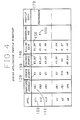
- the SAPD is further explained by FIG. 4.
- Applications Providers list their applications 100 in the SAPD. This directory includes the service provider and network address 110.
- event data to initiate the running of the application 120 and event data required by the application 130 and 140 are identified.
- the provider can identify service rates 150 as the network service provider can also identify brokering fees 160 associated when the selection of one member of a class of services of the same kind is to be made. For example, in this FIG., three type A1 applications are listed which differ only by provider and by fee schedule.
- FIG. 6 illustrates the structure of the User Event Trigger Table (UETT) used by the User Agent during execution.
- events can include stimuli, messages, alarms and data.
- the UETT is the message routing table used to efficiently distribute data to the Application Services Control Environment (ASCE) applications. It translates the event 100 to the applications 110, 120, 130 which require information.
- ASCE Application Services Control Environment
- A9 is an example of an application initiated when an event E2 occurs.
- the UETT efficiently provides the message routing table by mapping events to the applications which are initiated by the event occurrence, and the events which are to be sent to the applications during the session.
- the UETT is constructed by a subscription process which reads from the appropriate Application Profile Directories (APD) and builds the UETT. This may occur dynamically and does not require Network Service Provider provisioning.
- API Application Profile Directories
- FIG. 7 illustrates the service element life cycle.
- an application implemented as a component 110 is installed 120.
- diagnostics is run to verify operation.
- the component moves into a service active state 130.
- traffic busy 140 When the component is to be removed from service, it is marked maintenance busy to prevent new traffic from accessing the component while existing traffic is supported.
- the service element can be removed only when all service traffic is reduced to zero 150 to 160.
- all hardware and software service elements are treated as network components. That is, they may be taken from storage, installed and diagnosed before certification and linking into the system.
- NSE Network Services Environment
- API Application Profile Directories
- the component During service, the component will have zero or more users at any instant in time.
- maintenance such as occurs during a program upgrade, or redistribution for traffic load balancing, the component may be removed from service. If a replacement service element is to be installed, it is loaded similarly and the Application Profile Directory (APD) entry for the old component is rewritten to divert new service traffic to the new component.
- API Application Profile Directory
- the maintenance state of the component is changed 150. This state for the component is maintained until all users have completed their service request. Thereafter, the component may enter the final state 160 at which time it can be removed.
- FIG. 8 illustrates the concept of the network transform 130 as one value added service of the invention. It provides a transformation of the multiple layers of a service element interface 100 to that of another service element or with that of an endpoint such as a customer 120.
- the intelligent network must ensure interface conformance between all such elements, applications and endpoints.
- This model from the interface definition for each element can be used to compute the necessary interworking services such as protocol or media conversion as well as transport services to find the elements in the desired service network.
- Control and information ports of all elements provide an interface represented by a layered model, such as the seven layer OSI model.
- the network provides a transformation function.
- NSE Network Services Environment
- FIG. 9 illustrates the operation of the User Agent in the Customer Service Environment (CSE).
- CSE Customer Service Environment
- Two forms of service subscriptions are available: dynamic and static.
- the dynamic service subscription entails the selection of the service provider application at each invocation.
- a static service subscription determines the service provider at subscription time until resubscription occurs.
- the application is entered into the UST, 150, and marked to be dynamic.
- the UETT and UST tables are updated based on the directory information.
- the ASCE broker, 110 is used to select the provider based on user described criteria.
- FIG. 10 illustrates User Agent Message Routing.
- the User Agent receives a event stimulus or message, 200, which is to be routed to appropriate applications.
- the User Agent reads the UETT to locate the applications to be initiated, 202. If the application has been marked dynamic, 205, then for each invocation the broker, 110, is called into use to select a provider, and the UETT is updated, 130.
- the application is static, 206, then no brokering is required and it is marked active in the UST and a new process is created with a startup message, 215.
- the UETT is read to identify processes that require the message, 200.
- An application that is running is sent a message, 222. If the user has temporarily shut-off the application, 221, then no message is routed to it.
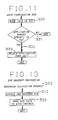
- FIG. 11 illustrates the treatment of ASCE Termination Message.
- an application When an application is completed, it sends an application Terminated Message to the User Agent.
- the application entry in the UST is marked idle. If the application was marked to be dynamic, 332, then the UETT is updated to remove the entries, 333. If it was marked as static, then the application terminates without change to the UETT, 331.
- FIG. 12 illustrates the Application Services Control Environment Process.
- the startup message, 400 causes the application to initialize for the user session, 401. If the ASCE application requires external resources, it may request them from the Network Services Environment 405 and, upon confirmation, the application establishes the session topology 406 for the flow of control and information. The SCEs are then initialized by the application 407 and the ASCE process is now ready to execute.
- Every message received is processed by the application, 420, and 421 until it is completed.
- a mechanism is provided for feedback, 440 and 450, to update the knowledge database to be accessed by the broker and maintenance components. In this manner, the quality of service is improved with experience, and the intelligent network self adapts to minimize the likelihood of selecting unsatisfactory service elements.
- SCE were required then they are released 460, and billing changes for the elements may be requested, 461.
- the application can then produce a total bill which can be sent to the CSE or the application may use the billing data for direct billing, 470.
- the ASCE Terminated Message is transmitted to the CSE, 480.
- FIG. 13 illustrates the Processing of SCE resource requests by the NSE.
- the NSE When the resource request arrives, 500, the NSE must use the resource directories, reserve them, 510, and return a confirmation to the ASCE process, 520.
- These resources may be network based or non-network based and provided by third parties.
- FIG. 14 illustrates the NSE receipt of the Release SCE Message.
- the message arrives, 600, and the resource is released, 610.
- a bill for use of the SCE is returned and a debit is made by the accounting subsystem.
- a third party has provided the resource, its account is credited for the service provided, 630, by the accounting subsystem.
- FIG. 15 illustrates the treatment of the Connection Message by the NSE from the ASCE process. This flow chart illustrates the functions performed by the network to connect two endpoints when a connect message is received.
- the connect message arrives 700, the NSE checks the end point resource tables for conformance, 710. If the interfaces do conform, 721, the connection is established 750, and a confirm message is returned to the application. Alternatively, when utilizing a packet network, rather than establishing the connection, the network address of each end point is returned. If conformance does not exist 720, the Network Transform (NT) is then used to compute the interworking needs, 730, and suitable interworking SCE must be located, 740 to create conformance, 750, by establishing the connection through the device. The confirm message is then returned to the ASCE application, 760.
- NT Network Transform
Landscapes
- Engineering & Computer Science (AREA)
- Computer Networks & Wireless Communication (AREA)
- Theoretical Computer Science (AREA)
- Physics & Mathematics (AREA)
- Mathematical Physics (AREA)
- Databases & Information Systems (AREA)
- Data Mining & Analysis (AREA)
- Software Systems (AREA)
- General Engineering & Computer Science (AREA)
- General Physics & Mathematics (AREA)
- Signal Processing (AREA)
- Computer And Data Communications (AREA)
- Data Exchanges In Wide-Area Networks (AREA)
Applications Claiming Priority (2)
| Application Number | Priority Date | Filing Date | Title |
|---|---|---|---|
| US24088288A | 1988-09-06 | 1988-09-06 | |
| US240882 | 1988-09-06 |
Publications (1)
| Publication Number | Publication Date |
|---|---|
| EP0358408A2 true EP0358408A2 (de) | 1990-03-14 |
Family
ID=22908322
Family Applications (1)
| Application Number | Title | Priority Date | Filing Date |
|---|---|---|---|
| EP89308813A Withdrawn EP0358408A2 (de) | 1988-09-06 | 1989-08-31 | Intelligentes Netzwerk |
Country Status (3)
| Country | Link |
|---|---|
| EP (1) | EP0358408A2 (de) |
| JP (1) | JPH02230352A (de) |
| KR (1) | KR900005321A (de) |
Cited By (14)
| Publication number | Priority date | Publication date | Assignee | Title |
|---|---|---|---|---|
| EP0459337A1 (de) * | 1990-05-30 | 1991-12-04 | Alcatel Cit | Teilnehmer-Zugriffsverfahren auf Abonnementdaten für einen schnurlosen Telefondienst |
| EP0488706A1 (de) * | 1990-11-28 | 1992-06-03 | Fujitsu Limited | System zur Auswahl von Übertragungsleitungen |
| WO1995024104A1 (en) * | 1994-03-03 | 1995-09-08 | Geonet Limited L.P. | System for managing networked computer applications |
| WO1995030317A1 (en) * | 1994-04-28 | 1995-11-09 | British Telecommunications Public Limited Company | Service provision system for communications networks |
| WO1997005734A1 (en) * | 1995-07-27 | 1997-02-13 | British Telecommunications Public Limited Company | Billing for communications usage |
| EP0642280A3 (de) * | 1993-08-03 | 1997-04-09 | Plessey Telecomm | Telekommunikationssystem. |
| GB2280821B (en) * | 1993-08-03 | 1998-01-28 | Plessey Telecomm | Telecommunications system |
| US5898839A (en) * | 1997-03-17 | 1999-04-27 | Geonet Limited, L.P. | System using signaling channel to transmit internet connection request to internet service provider server for initiating and internet session |
| US5995610A (en) * | 1997-05-06 | 1999-11-30 | Telefonaktiebolaget Lm Ericsson | Cooperative call processing across public and private intelligent networks |
| US6044142A (en) * | 1997-05-06 | 2000-03-28 | Telefonaktiebolaget L M Ericsson | Method and arrangement for integrating intelligent network services with operator assisted services |
| US6049819A (en) * | 1997-12-10 | 2000-04-11 | Nortel Networks Corporation | Communications network incorporating agent oriented computing environment |
| EP1012760A1 (de) * | 1996-11-11 | 2000-06-28 | Nokia Corporation | Ausführung von gebühren in einem telekommunikationssystem |
| EP1063818A3 (de) * | 1999-06-25 | 2003-07-23 | Intel Corporation | System zur mehrschichtigen Bereitstellung in Computernetzwerken |
| EP1217762A3 (de) * | 2000-12-20 | 2004-08-04 | Hughes Electronics Corporation | System zur Betriebsmittelverwaltung und zur Abrechnung in einem breitbandigen Satellitenkommunikationssystem |
Families Citing this family (2)
| Publication number | Priority date | Publication date | Assignee | Title |
|---|---|---|---|---|
| US4897866A (en) * | 1988-10-19 | 1990-01-30 | American Telephone And Telegraph Company, At&T Bell Laboratories | Telecommunication system with subscriber controlled feature modification |
| JP4585490B2 (ja) * | 2006-07-20 | 2010-11-24 | 株式会社エヌ・ティ・ティ・ドコモ | 交換装置、付加サービス提供システム |
-
1989
- 1989-08-14 JP JP1208000A patent/JPH02230352A/ja active Pending
- 1989-08-31 EP EP89308813A patent/EP0358408A2/de not_active Withdrawn
- 1989-09-06 KR KR1019890012854A patent/KR900005321A/ko not_active Withdrawn
Cited By (22)
| Publication number | Priority date | Publication date | Assignee | Title |
|---|---|---|---|---|
| EP0459337A1 (de) * | 1990-05-30 | 1991-12-04 | Alcatel Cit | Teilnehmer-Zugriffsverfahren auf Abonnementdaten für einen schnurlosen Telefondienst |
| FR2662880A1 (fr) * | 1990-05-30 | 1991-12-06 | Cit Alcatel | Procede d'acces d'un usager aux donnees d'un abonnement a un service de telephonie sans fil. |
| US5297189A (en) * | 1990-05-30 | 1994-03-22 | Alcatel N.V. | Wireless telephone service subscription data user access method |
| EP0488706A1 (de) * | 1990-11-28 | 1992-06-03 | Fujitsu Limited | System zur Auswahl von Übertragungsleitungen |
| GB2280821B (en) * | 1993-08-03 | 1998-01-28 | Plessey Telecomm | Telecommunications system |
| EP0642280A3 (de) * | 1993-08-03 | 1997-04-09 | Plessey Telecomm | Telekommunikationssystem. |
| AU684912B2 (en) * | 1994-03-03 | 1998-01-08 | Geonet Limited L.P. | System for managing networked computer applications |
| WO1995024104A1 (en) * | 1994-03-03 | 1995-09-08 | Geonet Limited L.P. | System for managing networked computer applications |
| RU2143183C1 (ru) * | 1994-03-03 | 1999-12-20 | Рише Нафтали | Способ администрирования сетевых компьютерных приложений и система для его осуществления (варианты) |
| WO1995030317A1 (en) * | 1994-04-28 | 1995-11-09 | British Telecommunications Public Limited Company | Service provision system for communications networks |
| US6151309A (en) * | 1994-04-28 | 2000-11-21 | British Telecommunications Public Limited Company | Service provision system for communications networks |
| WO1997005734A1 (en) * | 1995-07-27 | 1997-02-13 | British Telecommunications Public Limited Company | Billing for communications usage |
| US6052450A (en) * | 1995-07-27 | 2000-04-18 | British Telecommunications Public Limited Company | Billing for communications usage |
| AU713964B2 (en) * | 1995-07-27 | 1999-12-16 | British Telecommunications Public Limited Company | Billing for communications usage |
| EP1012760A1 (de) * | 1996-11-11 | 2000-06-28 | Nokia Corporation | Ausführung von gebühren in einem telekommunikationssystem |
| US5898839A (en) * | 1997-03-17 | 1999-04-27 | Geonet Limited, L.P. | System using signaling channel to transmit internet connection request to internet service provider server for initiating and internet session |
| US6044142A (en) * | 1997-05-06 | 2000-03-28 | Telefonaktiebolaget L M Ericsson | Method and arrangement for integrating intelligent network services with operator assisted services |
| US5995610A (en) * | 1997-05-06 | 1999-11-30 | Telefonaktiebolaget Lm Ericsson | Cooperative call processing across public and private intelligent networks |
| US6049819A (en) * | 1997-12-10 | 2000-04-11 | Nortel Networks Corporation | Communications network incorporating agent oriented computing environment |
| EP1063818A3 (de) * | 1999-06-25 | 2003-07-23 | Intel Corporation | System zur mehrschichtigen Bereitstellung in Computernetzwerken |
| EP1718011A3 (de) * | 1999-06-25 | 2007-03-07 | Intel Corporation | System zur mehrschichtigen Bereitstellung in Computernetzwerken |
| EP1217762A3 (de) * | 2000-12-20 | 2004-08-04 | Hughes Electronics Corporation | System zur Betriebsmittelverwaltung und zur Abrechnung in einem breitbandigen Satellitenkommunikationssystem |
Also Published As
| Publication number | Publication date |
|---|---|
| JPH02230352A (ja) | 1990-09-12 |
| KR900005321A (ko) | 1990-04-14 |
Similar Documents
| Publication | Publication Date | Title |
|---|---|---|
| EP0358408A2 (de) | Intelligentes Netzwerk | |
| US6041109A (en) | Telecommunications system having separate switch intelligence and switch fabric | |
| US6895087B2 (en) | Flexible software architecture for a call processing system | |
| US5404396A (en) | Feature interaction manager | |
| CZ250296A3 (en) | System for controlling applications of a network computer | |
| EP1551129B1 (de) | Verwaltungssystem umd Methode zur Erbringung von Abonnementdienstleistungen | |
| US20020059416A1 (en) | Management of performance of intelligent network services | |
| JP2002528932A (ja) | インテリジェント・ネットワークにおけるリアルタイム呼処理サービスを提供する方法および装置 | |
| US5023780A (en) | Method of operating a packet switching network | |
| AU714733B2 (en) | Method of controlling an exchange | |
| GB2336969A (en) | PC-based PBX | |
| US5737406A (en) | Distributed connection control in telecommunication networks | |
| US5826019A (en) | Modular application software and data providing mobility in telecommunication networks | |
| EP0576864B1 (de) | Anrufbearbeitungssystem | |
| EP0873029A1 (de) | Service Control Point Schnittstelle | |
| US6526050B1 (en) | Programming call-processing application in a switching system | |
| US6898199B1 (en) | Architecture for providing flexible, programmable supplementary services in an expandable telecommunications system | |
| EP0873028A1 (de) | Dienstunabhängiger Baustein | |
| CA1309764C (en) | Method of operating a packet switching network | |
| SE516458C2 (sv) | Rörlighet i telekommunikationsnät | |
| JPH0730669A (ja) | 複数呼相互間のリソース共有動作の実現方法 |
Legal Events
| Date | Code | Title | Description |
|---|---|---|---|
| PUAI | Public reference made under article 153(3) epc to a published international application that has entered the european phase |
Free format text: ORIGINAL CODE: 0009012 |
|
| AK | Designated contracting states |
Kind code of ref document: A2 Designated state(s): BE DE ES FR GB IT NL SE |
|
| STAA | Information on the status of an ep patent application or granted ep patent |
Free format text: STATUS: THE APPLICATION HAS BEEN WITHDRAWN |
|
| 18W | Application withdrawn |
Withdrawal date: 19901005 |
|
| R18W | Application withdrawn (corrected) |
Effective date: 19901005 |