EP0358618B1 - Cachespeicherung von Argumentsgrössen in Mustergleichzeitigkeitsnetzwerken - Google Patents
Cachespeicherung von Argumentsgrössen in Mustergleichzeitigkeitsnetzwerken Download PDFInfo
- Publication number
- EP0358618B1 EP0358618B1 EP89850237A EP89850237A EP0358618B1 EP 0358618 B1 EP0358618 B1 EP 0358618B1 EP 89850237 A EP89850237 A EP 89850237A EP 89850237 A EP89850237 A EP 89850237A EP 0358618 B1 EP0358618 B1 EP 0358618B1
- Authority
- EP
- European Patent Office
- Prior art keywords
- argument
- nodes
- node
- test
- value
- Prior art date
- Legal status (The legal status is an assumption and is not a legal conclusion. Google has not performed a legal analysis and makes no representation as to the accuracy of the status listed.)
- Expired - Lifetime
Links
Images

Classifications
-
- G—PHYSICS
- G06—COMPUTING OR CALCULATING; COUNTING
- G06N—COMPUTING ARRANGEMENTS BASED ON SPECIFIC COMPUTATIONAL MODELS
- G06N5/00—Computing arrangements using knowledge-based models
- G06N5/04—Inference or reasoning models
- G06N5/046—Forward inferencing; Production systems
- G06N5/047—Pattern matching networks; Rete networks
Definitions
- the present invention relates to pattern-matching networks,including those networks of the RETE type, and more particularly to enhancing performance of such networks.
- a working memory element is an input data structure. Any new WME, changed WME or deleted WME results in a "delta" requiring that the RETE be updated.
- the delta means that the informational content of the RETE does not reflect the WME addition, change or deletion; therefore, the RETE needs to be updated such that it reflects the current informational state of the inputs.
- such "delta” is represented by a change token constructed to precisely represent the delta; that change token is then "pushed" through the RETE for updating the network to reflect the change(s) that have occurred because of the WME change.
- the RETE consists of alpha and beta portions.
- the alpha portions usually have no memory nodes, i.e. nodes wherein partial pattern matching results are stored; in contrast the beta portion includes such memory nodes and other nodes as well, such as join nodes which may include a plurality of tests involving a multiplicity of argument values.
- Intermediate the alpha and beta portions are alpha distribution nodes, all of which are memory nodes which store the partial pattern matching results generated in the alpha portion.
- the RETE is updated by so-called change tokens. Each change token has an informational content showing the change in information (the delta) in the RETE system resulting from a new or changed WME or changes resulting from a deleted WME. Such change tokens are pushed through the alpha portion for creating partial match results to be stored in the alpha distribution nodes. Change tokens are then pushed from the alpha distribution nodes into the beta portion.
- each of the join nodes can have two inputs; a left hand sided input (LHS) input and a right hand sided input (RHS).
- a change token may arrive at either of the two inputs.
- a join node may include a multiplicity of pattern matching tests. When a token arrives at one input (either LHS or RHS), these tests may require plural test iterations for each change token; i.e. each test may have many test operations when the opposite memory has a large number of partial match tokens. These tests may be thought of as having two parts; a first part which obtains the arguments for the tests and a second part which performs the test.
- the outputs of the memory nodes represent an update status of the RETE; the memory node contents include partial match tokens and can be an input to a next successor node as an "opposite memory".
- the change token is compared with specified partial match tokens in the opposite memory.
- Such opposite memory is the memory of an immediate predecessor node on the "opposite" side of the node receiving the change token.
- This matching uses two kinds of information.
- a first kind of information describes pattern tests including a type of test function to call, specifications of the test arguments and information describing partially matched WME data element tokens. This first kind of information is computed when the RETE structure is built from specified patterns.
- a second kind of information is computed as WMEs are created, modified or deleted which cause WME change tokens to be pushed through the RETE. It is to be understood that accesses to all information follow usual programming procedures and that the matching operations are usual programming effected comparisons.
- a single join or a match node each could utilize 100, 1000 or more values in a single test; such values are scanned for effecting comparisons looking for a match with a change token being pushed through the network. Each such node may have many of such tests.
- a digital computer for performing pattern matching operations, the computer including: an internal memory including a working memory for storing working memory elements (WMEs); a pattern-matching network program stored in the internal memory and arranged to create a pattern-matching network including nodes connected by logical paths; the network including a number of join nodes arranged to perform pattern-matching tests, each join node having first and second inputs and an output, and comprising at least one test data structure including argument fields containing definitions of access paths to the data for the arguments used as inputs for the test; change token creation means, responsive to a change in the working memory elements within the working memory, to create a change token having an informational content to enable the pattern-matching network to be updated to match the current state of the working memory; means for passing the change token to a root node of the network for subsequent pushing through the nodes of the network; the join nodes being arranged such that, upon receipt of the change token at one of the inputs of the join node, the pattern-matching tests are
- the present invention provides a method of performing pattern matching operations in a digital computer having an internal memory including a working memory for storing working memory elements (WMEs), and a pattern-matching network program stored in the internal memory and arranged to create a pattern-matching network including nodes connected by logical paths, the network including a number of join nodes arranged to perform pattern-matching tests, each join node having first and second inputs and an output; the method comprising the steps of: establishing at least one test data structure in each join node including argument fields containing definitions of access paths to the data for the arguments used as inputs for the test; responsive to a change in the working memory elements within the working memory, creating a change token having an informational content to enable the pattern-matching network to be updated to match the current state of the working memory; passing the change token to a root node of the network for subsequent pushing through the nodes of the network; upon receipt of the change token at one of the inputs of the join node, performing the pattern-matching tests within
- WMEs working memory
- the present invention provides enhanced pattern-matching updating.
- pattern matching join nodes having tests are examined to ascertain whether or not the arguments inputs for the test depend only on a change token from one side (exclusively) of the join node.
- this examination depends only on the structure of the RETE, and not on any current contents of any partial match nodes. As a consequence, the examination for determining caching advantages is performed once when the RETE is built or substantially revised.
- a single change token derived value can be compared with a plurality of argument values. Such comparisons are performed in a program loop, such as by scanning a plurality of possible partial match tokens from the opposite memory. During this loop, whenever the change token argument supplied value is constant, it is cached in the join node test portion in which the tests are being conducted. This caching avoids all recomputations for such inputs thereby enhancing RETE operation.
- a particular test being conducted at a join node may refer to WME values from either the arriving change token, the opposite memory token (one at a time being selected in the join node loop over all partial match tokens in the opposite memory), or both.
- Caching argument values in a join node is preferably on a test by test basis. In any series of different tests, argument values may be cached for some of the tests, such caching may be for argument values derived from either the LHS or RHS nodal inputs.
- Computer program 11 is arranged as previous matching network programs, such as RETE programs. Program 11 can be written in common LISP language. These programs operate on data structures (nodes, tokens, rules) to perform the pattern matching operations.
- a first step in generating or creating a RETE network is to generate a list of rules to define the logic paths of a network, one path per rule. A form of such a rule in shown in Schor et al, supra, on page 226. Then the rules are parsed and arranged, as is well known.
- Such pattern matching nodes are interconnected to predecessor and successor nodes in a rule defined logic path that extends through the network from the root node 30 to output location 60, one such logic path per rule.
- This parsing and arranging compiles the pattern-matching network having root node 30, alpha matching nodes 33, alpha distribution nodes 35 and beta nodes 37.
- the collection of items 30, 33, 35 and 37 are herein termed the RETE.
- Root node 30 is logically connected to working memory 15. When a working memory element WME is added to, deleted from or changed in working memory 15, as indicated by arrow 16, the informational status of working memory 15 is different from the informational status of RETE resulting in a delta between the RETE and working memory 15.
- This delta requires a change token, having an informational content representative of the delta, to be pushed through the RETE for updating its data contents to the current state of working memory 15. That change token is stored at a token address. Access to the token and its identification in RETE is made by an address pointer to the token address of memory area 20, another program 11 denominated area of memory 13. It is parenthetically noted that such data and data structures can be paged into and out of memory 13 to peripheral data storage devices, not shown. All other values and operators are similarly identified in network 33-37. The ensuing description assumes that change token pushing has been completed into alpha distribution nodes 35.
- the beta nodes consist of diverse types of nodes, here the interest is in join nodes.
- Each join node enables pattern matching machine implemented operations to be performed between the two inputs.
- Each join node includes a table of predicate tests which define the pattern matching testing between the two arguments presented at the two nodal inputs.
- the program 11 scan of beta portion 37 is, in part, based on the hierarchical nodal connections.
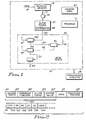
- the Fig 1 illustration shows but a few join nodes 40-43, it being understood that many logic paths and many such join or beta nodes are in fact present in a practical construction of a RETE.
- one input receives the change token (herein termed the delta input pattern to the node) having data to be matched against data stored in the opposite memory (at the opposite nodal input) which is the result memory of the predecessor memory node.
- the change token herein termed the delta input pattern to the node
- Each join or beta node can have two input ports and one output port.
- the token address is usually stored in the output of the passing predecessor node 40 (enables sharing by plural successor nodes).
- Each output port may store a plurality of such token addresses--representing multiple matching instances.
- a left-hand sided LHS input port for the join nodes is represented by numerals 51, 53, 56, and 58 respectively for beta nodes 40-43. So called right-hand sided RHS inputs of the beta or join nodes are respectively represented by numbers 50, 54, 55 and 57 for nodes 40-43.
- alpha distribution nodes 35 have a relatively large number of logical outputs to a large number of level one nodes and with connections directly to lower levels (higher number of level) in the beta node portion of the RETE.
- Level one nodes may have one or both inputs from the distribution or memory nodes 35.
- a predecessor node is one that is logically closer to the alpha distribution node 35 than the node of interest, i.e. node 40 is a predecessor node to node 41; node 41 is a successor node to node 40. It is to be appreciated that in a constructed embodiment, that the number of join nodes may be numbered in the hundreds or more.
- Beta node data structure 99 includes field TYPE 100 which indicates the character or type of join node, as is known. Examples of the type of beta node are the characteristics of the pattern-matching tests to be conducted by program 11 at the node, which in an oversimplification can include AND logic steps, "does-not-exist" logic steps, etc.
- Field RP 101 stores a memory address pointer to the RHS or right (RP) predecessor node, if any.
- Field RS 102 similarly stores a memory address pointer(s) to RHS or right successor (RS) nodes.
- a similar set of address pointer fields LP 105 and LS 106 respectively store the points to the left predecessor and left successor nodes.
- MEM field 104 stores the partial match tokens constructed from tokens arriving at the nodal inputs, representing those tokens passing the logic or pattern matching tests of the node.
- the caching concept includes partial caching of a stabilized delta input to a node wherein the caching is only for the test argument determined to be stable or effectively a constant for the moment; no changing argument is cached. It is to be understood that structure 99 contains additional control fields not shown nor discussed as is known.
- test data structure 119 includes definitions of tests as represented by test data structure 119; here is where the argument values are cached.
- Fields ARG1 120 and ARG2 121 contain pointers to first and second test arguments for the join node test being described.
- Predicate tests field 122 stores an address pointer to "program(s)" stored in memory area 20 which execute the identified predicate tests between the ARG1 and ARG2 computed values.
- a plurality of test structures 119 may be at one beta node and may be stored as a linked list.
- the test arguments have no logic relationship to the LHS nor RHS inputs of the join node.
- Each argument includes four fields, the fields of ARG1 only are shown; it being understood that ARG2 has an identical field structure.
- Field 125 contains a definition of the access paths to the data for the argument.
- field "argument function" 128 contains a pointer to a program in memory area 20 which combines the data from each of the access paths into one test argument value; that one value is to be used in the predicate test identified in field 122.
- Such program pointed to in field 128 can be any expression or programmed function usable for combining values, as defined below.
- the term value includes numeric values, arbitrary symbol strings, data objects (such as arrays, programmed functions or procedures, hashing tables, vector structured arrays, and the like), etc. which can cooperate with a predicate test.
- Field 126 indicates whether or not the value of an argument is a candidate for caching, as later explained.
- the actual cached values are stored in field 127.
- the test expression may be used with a large plurality of test values of one of the test arguments; this requires repeated usage of the argument value (derived from the received change token) which is to be cached for such repeated testing against a multitude of argument values stored in the opposite memory.
- the access path characteristics of the arguments of pattern tests that may be present in the join node are analyzed.
- the computation of that argument value is cached in the appropriate field 127.
- Such caching action saves the result of computing the value of an argument to a predicate test and eliminates subsequent recomputation of that value for subsequently executed tests which include iterated or loop comparisons between the change token argument value with partial match tokens of the "opposite" memory. This caching reduces the accessing in predecessor tokens of WME values and enhances the pattern matching speed.
- the cached value is maintained for the duration of the join loop comparison operations with the opposite memory.
- An argument for a pattern test in a join node may involve values from WMEs arriving on the LHS, the RHS, or both nodal inputs. This determination may be done once, when the RETE structure is built from the pattern match specification. Arguments depending on values only from one nodal input side (either RHS or LHS) may be cached when the change token arrives from the same side.
- the caching candidacy is determined by analyzing the pattern match tests argument access paths for all nodes having pattern match tests.
- the caching candidacy is established independently for each argument of a pattern test. There may be zero or more such patterns at any of the join nodes.
- the argument access paths specify one or more paths through the token tree to reach particular WMEs identified in the token; once a particular WME is selected from the partial-match token, the access path includes access to an attribute identified in the selected WME.
- a partial-match token generally is an n-tuple of WMEs representing a partial pattern match among such WMEs in the n-tuple that satisfy the pattern matching tests up the that point in the RETE.
- the n-tuple of WME's is stored as a binary tree having a structure paralleling that of the respective join nodes in the RETE.
- a particular argument in a pattern-matching test often may refer to but one value in one WME; in such an instance, when the WME being referred to is found via a partial match token at the LHS nodal input (either the delta change arrives there or a token from the LHS predecessor node's partial match memory 104), the argument is marked as "L" in field 126.
- an argument in a test refers to a multiplicity of WME values, all such values are accessed via the LHS nodal input. This argument is also marked as "L" in field 126.
- Fig. 3 shows the overall sequencing while Fig. 4 shows obtaining arguments using cached and non-cached operations.
- step 150 a change token is received at either of the nodal inputs, LHS or RHS; the sequence of operations is the same for both inputs excepting that the nodal sides are reversed.
- step 151 the join node (as defined above) is examined for any tests (number of tests may vary from none to an arbitrary large number of tests each of which may have a large number of argument values to be tested) to be conducted with respect to the received change token and partial match token(s) in the opposite memory.
- step 151 program 11 proceeds to other machine operations beyond the scope of the present description; otherwise the tests to be conducted are initialized in step 154 and the cache value fields (127 for ARG1 and not shown for ARG2) are erased or reset.
- the opposite memory for an LHS received change token is the memory at the right predecessor node and for an RHS received change token it is the memory at the left predecessor node.
- step 154 a test loop 160 is entered for conducting the tests.
- steps 161 and 162 the arguments ARG1 and ARG2 for the tests are obtained and computed, as shown in Fig. 4 for each of the arguments. Then a test is conducted at step 163.
- program 11 determines whether or not more tests are to be conducted.
- test loop 160 No additional testing occurs whenever the last test conducted failed or all tests were successfully completed. With no more tests to be conducted, the illustrated set of machine operations are exited for machine operations known in the art relating to leaving the join node and proceeding to other operations beyond the scope of this description. When more tests are to be conducted, then the program indexes to the next test at step 166 for another iteration of test loop 160.
- step 161 and 162 The machine operations conducted in steps 161 and 162 are shown in Fig. 4 beginning with step 170 wherein the allow caching value 126 of ARG1 or of ARG2 is examined.
- This caching value is "L", "R” or “not cacheable”; L indicating that the LHS nodal input (ARG1, for example) is a candidate for caching, R indicating that the RHS nodal input (ARG2, for example) is a candidate for caching and not cacheable indicating that neither argument is a candidate for caching.
- L indicates that the LHS nodal input (ARG1, for example) is a candidate for caching
- R the RHS nodal input
- not cacheable is employed.
- the prior art requires that in each iteration of loop 160, program 11 obtains and computes the argument value at step 171 for the current argument.
- program 11 matches the R and L indications with the side the node received the change token.
- the value R is compared with an RHS input change token while at step 174 the value L is compared with an LHS input change token side. If there is a mismatch, then caching is not performed, and again the prior art method of obtaining and computing the argument value in each loop interation is employed.
- program 11 proceeds to step 171 to perform an argument computation for the current argument. Assuming no mismatch, program 11 at step 175 determines whether the argument fetch and calculation is the first pass for the current argument. If yes, the current argument is fetched and computed at step 177, which is identical to the operations of step 171 and in the prior art.
- the computed value at step 177 is cached in the appropriate ARG1 or ARG2 cached value field for use in ensuing iterations of the test and, of course, is used in the current test.
- the cached value is obtained from the cached value field at step 180 and used in the test.
- Program 11 at step 175 determines it is not the first pass, therefore program 11 knows the cached value is present and ready for usage.
Landscapes
- Engineering & Computer Science (AREA)
- Theoretical Computer Science (AREA)
- Physics & Mathematics (AREA)
- Computational Linguistics (AREA)
- Data Mining & Analysis (AREA)
- Evolutionary Computation (AREA)
- Artificial Intelligence (AREA)
- Computing Systems (AREA)
- General Engineering & Computer Science (AREA)
- General Physics & Mathematics (AREA)
- Mathematical Physics (AREA)
- Software Systems (AREA)
- Computer Vision & Pattern Recognition (AREA)
- Devices For Executing Special Programs (AREA)
- Test And Diagnosis Of Digital Computers (AREA)
Claims (11)
- Ein digitaler Rechner zur Durchführung von Mustervergleichsoperationen, wobei der Rechner beinhaltet:einen internen Speicher (13) einschließlich eines Arbeitsspeichers (15) zum Abspeichern von Arbeitsspeicherelementen (Working Memory Elements - WMEs);ein Mustervergleichs-Netzwerkprogramm (11), das im internen Speicher (13) abgespeichert ist und so ausgelegt ist, daß es ein Mustervergleichs-Netzwerk aufbaut, das Knoten enthält, die über logische Pfade verbunden sind;wobei das Netzwerk eine Anzahl Verbindungsknoten (40, 41, 42) beinhaltet, die so angeordnet sind, daß sie Mustervergleichstests durchführen, wobei jeder Knoten erste und zweite Eingänge und einen Ausgang aufweist, und die mindestens eine Testdatenstruktur (119) einschließlich Argumentfelder aufweisen, die Definitionen (125) für Pfade zum Zugriff auf die Daten für die Argumente enthalten, die als Eingaben für den Test benutzt werden;Mittel zum Erzeugen eines Änderungs-Token als Reaktion auf eine Veränderung in den Arbeitsspeicherelementen innerhalb des Arbeitsspeichers (15), um ein Änderungs-Token zu erzeugen, das einen Informationsgehalt aufweist, um das Mustervergleichsnetzwerk aktualisieren zu können, so daß es mit dem augenblicklichen Zustand des Arbeitsspeichers (15) übereinstimmt;Mittel zur Weitergabe des Änderungs-Tokens an einen Wurzelknoten (30) des Netzwerks für anschließendes Schieben durch die Knoten des Netzwerks;wobei die Verbindungsknoten (40, 41, 42) so angeordnet sind, daß bei Eingang des Änderungs-Tokens an einem der Eingänge des Verbindungsknotens die Mustervergleichstests mit Argumenten durchgeführt werden, die vom Änderungs-Token abgerufen werden, und mit Argumenten, die aus den teilweisen Vergleichsdaten gewonnen werden, die an einem gegenüberliegenden Vorgängerknoten abgespeichert sind, der logisch mit dem anderen Eingang des Verbindungsknotens verbunden ist;wobei der Rechner dadurch gekennzeichnet ist, daßdie Argumentfelder in den Testdatenstrukturen (119) der Verbindungsknoten ferner ein Cache-Freigabefeld (126), das angibt, ob der Wert eines Arguments zum Cache-Abspeichern in Frage kommt, und ein Cache-Wertfeld (127) zum Abspeichern der aktuellen Cache-gespeicherten Werte aufweisen; undCachespeicher-Bestimmungsmittel zum Festlegen, ob ein Argument für einen Mustervergleichstest nur vom Änderungs-Token abhängt, das an einem der Eingänge des Verbindungsknotens eingeht, und wenn so, Cache-Speichern des Wertes dieses Arguments im Cache-Wertfeld (127);dabei Ausschalten der Neuberechnung dieses Argumentwertes für anschließend durchgeführte Tests, die iterative Vergleiche zwischen dem Änderungs-Token-Argumentwert und den Argumentwerten aus den teilweisen Übereinstimmungsdaten des gegenüberliegenden Vorgängerknotens einschließen.
- Ein Rechner gemäß Anspruch 1, der ferner beinhaltet:Cachespeicher-Aktivierungsmittel zum Prüfen der Zugriffspfade für Argumente aus den ersten und den zweiten Eingängen, und wenn die Zugriffspfade für beliebige dieser Argumente Eingaben zu Vorgängerknoten beinhalten, die alle als entsprechende erste und zweite Eingänge dieser Vorgängerknoten dienen, dann Markieren des Cache-Freigabefeldes dieser Argumente, um anzuzeigen, daß der Argumentwert Cache-speicherfähig ist, wenigstens für einen gegebenen der Tests; undMarkieren der Cache-Freigabefelder in allen anderen Argumenten im Knoten als nicht-Cachespeicherfähig.
- Ein Rechner gemäß Anspruch 2, in demdie Zugriffspfade einen oder mehrere Pfade durch den Tokenbaum zu besonderen WMEs spezifizieren, die im Token gekennzeichnet sind;das Cachspeicher-Aktivierungsmittel so angeordnet ist, daß es das Cache-Freigabefeld (126) eines Argumentfeldes markiert in Abhängigkeit vom Ort der WME-Werte, auf die durch die Zugriffspfade (125) für dieses Argument Bezug genommen wird, wobei das Cache-Freigabefeld markiert wird mit einem Zeichen:- 'L', wenn die WME-Werte über die Daten am linken Eingang des Verbindungsknotens gefunden werden;- 'R', wenn die WME-Werte über die Daten am rechten Eingang des Verbindungsknotens gefunden werden;- 'nicht Cache-speicherfähig' wenn das Argument WME-Werte beinhaltet, die über Daten sowohl am linken Eingang als auch am rechten Eingang des Verbindungsknotens gefunden wurden;wobei die Cachespeicher-Bestimmungsmittel so angeordnet sind, daß sie das Cache-Freigabefeld jedes Arguments prüfen, und wenn das Zeichen 'L' oder 'R' ist, das L- und R-Zeichen mit der Seite des Knotens vergleichen, die das Änderungs-Token aufgenommen hat;die Cachespeicher-Bestimmungsmittel ferner so ausgelegt sind, daß im Falle einer Übereinstimmung das augenblickliche Argument während der ersten Test-Iteration abgerufen und berechnet wird und der berechnete Wert im Cache- Wertfeld (127) abgespeichert wird, und in nachfolgenden Iterationen der Cache-gespeicherte Wert für der Vergleich herangezogen wird.
- Rechner gemäß einem beliebigen der Ansprüche 1 bis 3, in dem das Mustervergleichsnetzwerk eine RETE-Netzwerk ist mit einem Alpha-Teil und einem Beta-Teil, wobei der Alpha-Teil Alpha-Knoten und Alpha-Verteilerknoten, und der Beta-Teil die Anschlußknoten enthält;das Änderungs-Token durch die Alpha-Knoten zu den Alpha-Verteilerknoten geschoben wird, wobei die Alpha-Verteilerknoten Änderungs-Token abspeichern, die zu den Beta-Teil-Knoten geschoben werden müssen.
- Ein Rechner gemäß einem beliebigen vorstehenden Anspruch, wobei, wenn eine Vielzahl von Zugriffspfaden für ein beliebiges Argument für einen Test definiert sind, der Rechner ferner eine Argumentfunktionssteuerung (128) aufweist zum Kombinieren der Daten von jedem der Vielzahl der Zugriffspfade für das Testargument zu einem einzigen Testwert, wobei der Testwert dann in dem Test angewandt wird.
- Ein Verfahren zur Durchführung von Mustervergleichsoperationen in einem Digitalrechner mit einem internen Speicher (13) einschließlich eines Arbeitsspeichers (15) zum Abspeichern von Arbeitsspeicherelementen (Working Memory Elements - WMEs), und eines Mustervergleichs-Netzwerkprogramms (11), das im internen Speicher (13) abgespeichert ist und so ausgelegt ist, daß es ein Mustervergleichs-Netzwerk aufbaut, das Knoten enthält, die über logische Pfade verbunden sind, wobei das Netzwerk eine Anzahl Verbindungsknoten (40, 41, 42) beinhaltet, die so angeordnet sind, daß sie Mustervergleichstests durchführen, wobei jeder Knoten erste und zweite Eingänge und einen Ausgang aufweist; wobei das Verfahren die folgenden Schritte umfaßt:Aufbau wenigstens einer Testdatenstruktur (119) in jedem Verbindungsknoten einschließlich Argumentfeldern, die Definitionen (125) von Zugriffspfaden auf die Daten für die Argumente enthalten, die als Eingänge für den Test verwendet werden sollen;die auf eine Änderung in den Arbeitsspeicherelementen im Arbeitsspeicher (15) ansprechen um ein Änderungs-Token zu erzeugen, das einen Informationsgehalt aufweist um die Aktualisierung des Mustervergleichs-Netzwerks zu bewirken, so daß es dem augenblicklichen Stand des Arbeitsspeichers (15) entspricht;Übergabe des Änderungs-Tokens zu einem Wurzelknoten (30) des Netzwerks, um es anschließend durch die Knoten des Netzwerks zu schieben;bei Eingang des Änderungs-Tokens an einem der Eingänge des Verbindungsknotens Durchführen der Mustervergleichstests in diesem Verbindungsknoten mit den Argumenten, die aus dem Änderungs-Token erhalten wurden, und mit Argumenten, die aus teilweisen Übereinstimmungsdaten erhalten wurden, die an einem gegenüberliegenden Vorgängerknoten abgespeichert sind, der mit dem anderen Eingang des Verbindungsknotens logisch verknüpft ist;wobei das Verfahren durch die folgenden Schritte gekennzeichnet ist:Versehen der Argumentfelder in den Testdatenstrukturen (119) der Verbindungsknoten mit einem Cache-Freigabefeld (126), das angibt, ob ein Argumentwert zum Abspeichern im Cache-Speicher in Frage kommt, und mit einem Cache-Wertfeld (127) zum Abspeichern der aktuellen Cache-gespeicherten Werte;Bestimmen, ob ein Argument für einen Mustervergleichstest nur von dem Änderungs-Token abhängt, das an einem der Eingänge des Verbindungsknotens eingegangen ist; undwenn diese Bestimmung positiv ist, Cache-Speichern des Wertes dieses Arguments im Cache-Wertfeld (127);dabei Eliminieren der Neuberechnung dieses Argumentwertes für anschließend durchgeführte Tests, die iterative Vergleiche zwischen dem Änderungs-Token-Argumentwert und der Argumentwerten aus den teilweisen Übereinstimmungsdaten des gegenüberliegenden Vorgängerknotens einschließen.
- Ein Verfahren gemäß Anspruch 6, das ferner die folgenden Schritte enthält:Prüfen der Zugriffspfade für Argumente aus den ersten und den zweiten Eingängen, und wenn die Zugriffspfade für beliebige dieser Argumente Eingaben zu Vorgängerknoten beinhalten, die alle als entsprechende erste und zweite Eingängen dieser Vorgängerknoten dienen, dann Markieren des Cache-Freigabefelds dieser Argumente, um anzuzeigen, daß der Argumentwert Cache-speicherfähig ist, wenigstens für einen gegebenen der Tests; undMarkieren der Cache-Freigabefelder in allen anderen Argumenten im Knoten als nicht Cache-speicherfähig.
- Ein Verfahren gemäß Anspruch 7 in dem die Zugriffspfade einen oder mehrere Pfade durch den Tokenbaum zu besonderen WMEs spezifizieren, die im Token gekennzeichnet sind, und das Verfahren ferner die folgenden Schritte enthält:Markieren des Cache-Freigabefelds (126) eines Argumentfeldes in Abhängigkeit vom Ort der WME-Werte, auf die durch die Zugriffspfade (125) für dieses Argument Bezug genommen wird, wobei das Cache-Freigabefeld markiert wird mit einem Zeichen:- 'L', wenn die WME-Werte über die Daten am linken Eingang des Verbindungsknoten gefunden werden;- 'R', wenn die WME-Werte über die Daten am rechten Eingang des Verbindungsknoten gefunden werden;- 'nicht Cache-speicherfähig' wenn das Argument WME-Werte beinhaltet, die über Daten sowohl am linken Eingang als auch am rechten Eingang des Verbindungsknoten gefunden wurden;Prüfung des Cache-Freigabefelds jedes Arguments, und wenn das Zeichen 'L' oder 'R' ist, Vergleichen der L- und R-Angabe mit der Seite des Knotens, die das Änderungs-Token aufgenommen hat;im Falle einer Übereinstimmung Abrufen und Berechnung des augenblickliche Arguments während der ersten Test-Iteration und Abspeichern des berechneten Werts im Cache-Wertfeld (127), undin nachfolgenden Iterationen Benutzen des Cache-gespeicherten Werts für den Vergleich.
- Verfahren gemäß einem beliebigen der Ansprüche 6 bis 8, in dem das Mustervergleichsnetzwerk ein RETE-Netzwerk ist mit einem Alpha-Teil und einem Beta-Teil, wobei der Alpha-Teil Alpha-Knoten und Alpha-Verteilerknoten, und der Beta-Teil die Anschlußknoten enthält, wobei das Verfahren die folgenden Schritte enthält:Schieben des Änderungs-Tokens durch die Alpha-Knoten zu den Alpha-Verteilerknoten; undAbspeichern der Änderungs-Token in den Alpha-Verteilerknoten, um sie zu den Beta-Teil-Knoten zu schieben.
- Ein Verfahren gemäß einem beliebigen der Ansprüche 6 bis 9, in dem, sofern eine Vielzahl von Zugriffspfaden für ein beliebiges Argument Er einen Test definiert sind, das Verfahren ferner eine Argumentfunktionssteuerung (128) anwendet zum Kombinieren der Daten von jedem der Vielzahl der Zugriffspfade für das Testargument zu einem einzigen Testwert, wobei der Testwert dann in dem Test angewandt wird.
- Verfahren gemäß einem beliebigen der Ansprüche 6 bis 10, das ferner die folgenden Schritte beinhaltet:Durchführen einer Testreihe unter Verwendung unterschiedlicher Argumentwerte, die mit einer Vielzahl von Änderungs-Token in Beziehung stehen; undCache-Speichern der entsprechenden unterschiedlichen Argumentwerte für diese Tests, in denen diese unterschiedlichen Argumentwerte für Cache-speicherfähig gehalten werden.
Applications Claiming Priority (2)
| Application Number | Priority Date | Filing Date | Title |
|---|---|---|---|
| US07/241,498 US4882691A (en) | 1988-09-07 | 1988-09-07 | Caching argument values in pattern-matching networks |
| US241498 | 1988-09-07 |
Publications (3)
| Publication Number | Publication Date |
|---|---|
| EP0358618A2 EP0358618A2 (de) | 1990-03-14 |
| EP0358618A3 EP0358618A3 (de) | 1992-10-21 |
| EP0358618B1 true EP0358618B1 (de) | 1996-04-24 |
Family
ID=22910918
Family Applications (1)
| Application Number | Title | Priority Date | Filing Date |
|---|---|---|---|
| EP89850237A Expired - Lifetime EP0358618B1 (de) | 1988-09-07 | 1989-07-24 | Cachespeicherung von Argumentsgrössen in Mustergleichzeitigkeitsnetzwerken |
Country Status (4)
| Country | Link |
|---|---|
| US (1) | US4882691A (de) |
| EP (1) | EP0358618B1 (de) |
| JP (1) | JPH0283624A (de) |
| DE (1) | DE68926326D1 (de) |
Families Citing this family (8)
| Publication number | Priority date | Publication date | Assignee | Title |
|---|---|---|---|---|
| US4951225A (en) * | 1988-11-14 | 1990-08-21 | International Business Machines Corp. | Updating pattern-matching networks |
| WO1990007151A1 (fr) * | 1988-12-14 | 1990-06-28 | Sony Corporation | Systeme de gestion de donnees |
| JP2507593B2 (ja) * | 1989-04-25 | 1996-06-12 | 株式会社東芝 | 推論方式 |
| US5159662A (en) * | 1990-04-27 | 1992-10-27 | Ibm Corporation | System and method for building a computer-based rete pattern matching network |
| US5179633A (en) * | 1990-06-29 | 1993-01-12 | Digital Equipment Corporation | Method and apparatus for efficiently implementing read-type procedural attachments in rete-like pattern matching environment |
| US5265193A (en) * | 1992-04-30 | 1993-11-23 | International Business Machines Corporation | Efficiently organizing objects in a rete pattern matching network |
| US6826599B1 (en) * | 2000-06-15 | 2004-11-30 | Cisco Technology, Inc. | Method and apparatus for optimizing memory use in network caching |
| US9269047B2 (en) * | 2010-12-09 | 2016-02-23 | At&T Intellectual Property I, L.P. | Rule-based selection of content |
Family Cites Families (1)
| Publication number | Priority date | Publication date | Assignee | Title |
|---|---|---|---|---|
| US4837735A (en) * | 1987-06-09 | 1989-06-06 | Martin Marietta Energy Systems, Inc. | Parallel machine architecture for production rule systems |
-
1988
- 1988-09-07 US US07/241,498 patent/US4882691A/en not_active Expired - Fee Related
-
1989
- 1989-07-24 DE DE68926326T patent/DE68926326D1/de not_active Expired - Lifetime
- 1989-07-24 EP EP89850237A patent/EP0358618B1/de not_active Expired - Lifetime
- 1989-07-27 JP JP1192791A patent/JPH0283624A/ja active Pending
Also Published As
| Publication number | Publication date |
|---|---|
| EP0358618A2 (de) | 1990-03-14 |
| US4882691A (en) | 1989-11-21 |
| JPH0283624A (ja) | 1990-03-23 |
| DE68926326D1 (de) | 1996-05-30 |
| EP0358618A3 (de) | 1992-10-21 |
Similar Documents
| Publication | Publication Date | Title |
|---|---|---|
| van Emde Boas et al. | Design and implementation of an efficient priority queue | |
| Dovier et al. | {log}: A language for programming in logic with finite sets | |
| Jones | LOGSPACE and PTIME characterized by programming languages | |
| Korns | Accuracy in symbolic regression | |
| US4951225A (en) | Updating pattern-matching networks | |
| US5438511A (en) | Disjunctive unification | |
| CN113836174B (zh) | 基于强化学习dqn算法的异步sql连接查询优化方法 | |
| KR19990077006A (ko) | 유전자 프로그래밍방법 및 시스템 | |
| CN116187458A (zh) | 量子电路处理方法、装置及电子设备 | |
| Watson et al. | An efficient incremental DFA minimization algorithm | |
| Mazzotta et al. | Compilation of aggregates in ASP systems | |
| EP0358618B1 (de) | Cachespeicherung von Argumentsgrössen in Mustergleichzeitigkeitsnetzwerken | |
| Paige | Viewing a program transformation system at work | |
| Duesterwald et al. | Reducing the cost of data flow analysis by congruence partitioning | |
| Liu et al. | Heuristic target class selection for advancing performance of coverage-based rule learning | |
| US4989162A (en) | Method of using an accuracy valve in a conflict resolution of a forward inference | |
| Deshmukh et al. | Automatic verification of parameterized data structures | |
| Etessami | Analysis of probabilistic processes and automata theory | |
| Allison | Circular programs and self‐referential structures | |
| Luccio et al. | A model of sequential computation with pipelined access to memory | |
| Hagerup | Dynamic algorithms for graphs of bounded treewidth | |
| Taljaard et al. | Constraint caching revisited | |
| KR20050065015A (ko) | 프로그램의 복제 여부를 검사하는 방법 및 시스템 | |
| Condon | A theory of strict P-completeness | |
| Baclet et al. | Around Hopcroft’s algorithm |
Legal Events
| Date | Code | Title | Description |
|---|---|---|---|
| PUAI | Public reference made under article 153(3) epc to a published international application that has entered the european phase |
Free format text: ORIGINAL CODE: 0009012 |
|
| AK | Designated contracting states |
Kind code of ref document: A2 Designated state(s): DE FR GB |
|
| 17P | Request for examination filed |
Effective date: 19900723 |
|
| PUAL | Search report despatched |
Free format text: ORIGINAL CODE: 0009013 |
|
| AK | Designated contracting states |
Kind code of ref document: A3 Designated state(s): DE FR GB |
|
| 17Q | First examination report despatched |
Effective date: 19940627 |
|
| GRAA | (expected) grant |
Free format text: ORIGINAL CODE: 0009210 |
|
| AK | Designated contracting states |
Kind code of ref document: B1 Designated state(s): DE FR GB |
|
| PG25 | Lapsed in a contracting state [announced via postgrant information from national office to epo] |
Ref country code: FR Effective date: 19960424 |
|
| REF | Corresponds to: |
Ref document number: 68926326 Country of ref document: DE Date of ref document: 19960530 |
|
| PGFP | Annual fee paid to national office [announced via postgrant information from national office to epo] |
Ref country code: GB Payment date: 19960621 Year of fee payment: 8 |
|
| PG25 | Lapsed in a contracting state [announced via postgrant information from national office to epo] |
Ref country code: DE Effective date: 19960725 |
|
| EN | Fr: translation not filed | ||
| PLBE | No opposition filed within time limit |
Free format text: ORIGINAL CODE: 0009261 |
|
| STAA | Information on the status of an ep patent application or granted ep patent |
Free format text: STATUS: NO OPPOSITION FILED WITHIN TIME LIMIT |
|
| 26N | No opposition filed | ||
| PG25 | Lapsed in a contracting state [announced via postgrant information from national office to epo] |
Ref country code: GB Free format text: LAPSE BECAUSE OF NON-PAYMENT OF DUE FEES Effective date: 19970724 |
|
| GBPC | Gb: european patent ceased through non-payment of renewal fee |
Effective date: 19970724 |