EP0358875A2 - Procédé et dispositif d'enregistrement et reproduction de paquets de données transmis par multiplexage temporel avec le signal d'image d'un signal de télévision - Google Patents
Procédé et dispositif d'enregistrement et reproduction de paquets de données transmis par multiplexage temporel avec le signal d'image d'un signal de télévision Download PDFInfo
- Publication number
- EP0358875A2 EP0358875A2 EP89112523A EP89112523A EP0358875A2 EP 0358875 A2 EP0358875 A2 EP 0358875A2 EP 89112523 A EP89112523 A EP 89112523A EP 89112523 A EP89112523 A EP 89112523A EP 0358875 A2 EP0358875 A2 EP 0358875A2
- Authority
- EP
- European Patent Office
- Prior art keywords
- signal
- time
- memory
- data packet
- data packets
- Prior art date
- Legal status (The legal status is an assumption and is not a legal conclusion. Google has not performed a legal analysis and makes no representation as to the accuracy of the status listed.)
- Granted
Links
Images

Classifications
-
- H—ELECTRICITY
- H04—ELECTRIC COMMUNICATION TECHNIQUE
- H04N—PICTORIAL COMMUNICATION, e.g. TELEVISION
- H04N9/00—Details of colour television systems
- H04N9/79—Processing of colour television signals in connection with recording
- H04N9/87—Regeneration of colour television signals
- H04N9/89—Time-base error compensation
-
- H—ELECTRICITY
- H04—ELECTRIC COMMUNICATION TECHNIQUE
- H04N—PICTORIAL COMMUNICATION, e.g. TELEVISION
- H04N9/00—Details of colour television systems
- H04N9/79—Processing of colour television signals in connection with recording
- H04N9/797—Processing of colour television signals in connection with recording for recording the signal in a plurality of channels, the bandwidth of each channel being less than the bandwidth of the signal
- H04N9/7973—Processing of colour television signals in connection with recording for recording the signal in a plurality of channels, the bandwidth of each channel being less than the bandwidth of the signal by dividing the luminance or colour component signal samples or frequency bands among a plurality of recording channels
Definitions
- the invention relates to a method for recording the data packet transmitted in a television signal in time-division multiplex with the image information, with the features specified in the preamble of claim 1.
- the invention further relates to a method for reproducing and arrangements for carrying out the aforementioned methods.
- a method for recording or playing back the data packet transmitted in a television signal in time division multiplex with the image information is known from DE-OS 36 29 657 by the applicant.
- the data packets of each line are separated from the television signal by means of a time gate, a time-delayed version is additionally formed for each data packet, all data packets are subjected to multilevel coding and the information associated with a line, which is present multiple times, is offset in time on different inclined tracks recorded on a recording medium.
- coding is necessary on the recording side and decoding of the data packets on the playback side.
- the object of the invention is to provide a method for recording the data packet transmitted in a time-division multiplex in a television signal, which does not require coding of the data packets and nevertheless creates the conditions for playback-side dropout compensation for the data packets.
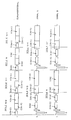
- FIG. 1 shows a diagram to explain the principle of operation of the invention.
- the lines N-2, N-1, N and N + 1 of the input signal which can be, for example, a D2-MAC satellite television signal, can be seen from FIG. 1a.
- the line N-2 contains a data packet D (N-2), a chrominance information C (N-2) and a luminance information Y (N-2).
- the line N-1 contains a data packet D (N-1), a chrominance information C (N-1) and a luminance information Y (N-1).
- the line N contains a data packet D (N), a chrominance information C (N) and a luminance information Y (N) one after the other.
- the line N + 1 contains a data packet D (N + 1), a chrominance information C (N + 1) and a luminance information Y (N + 1) one after the other.
- the signal shown in FIG. 1a is processed in a circuit, which is explained in more detail below with reference to FIG. 2, in such a way that an additional version is formed for each data packet.
- This additional data packet is stretched in time and inserted in time before the data packet of another line, which is also stretched in time.
- the overall signal obtained in this way is further provided with a synchronous signal and a burst and divided over the recording channels 1 and 2 in such a way as is shown in principle in FIGS. 1b and 1c. It is pointed out that the signals shown in FIGS. 1b and 1c are delayed in time compared to the signal in FIG. 1a, which is not apparent from the drawing.
- FIG. 1b shows the signals fed to the recording channel 1.
- the temporally stretched line N-2 contains a synchronous signal S, a burst B, the data packet D (N), the data packet D (N-2), the chrominance information C (N-2) and the luminance information Y (N-2 ).
- the time-stretched line N-1 contains a synchronizing signal S, a burst B, the data packet D (N + 1), the data packet D (N-1), the chrominance information C (N-1) and the luminance information Y (N -1).
- the time-stretched line N contains a synchronous signal S, a burst B, the data packet D (N + 2), the data packet D (N), the chrominance information C (N) and the luminance information Y (N).
- the time-stretched line N + 1 contains a synchronizing signal S, a burst B, the data packet D (N + 3), the data packet D (N + 1), the chrominance information C (N + 1) and the luminance information Y (N +1).
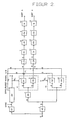
- FIG. 2 shows a block diagram for an exemplary explanation of the signal processing on the recording side.
- a satellite television signal according to the D2-MAC standard is fed to input E.
- One frame of this satellite television signal has a total of 625 lines. Most of these lines contain - as has already been described in connection with FIG. 1a - a data packet, a chrominance information and a luminance information in time division multiplex.
- the write-in and read-out operations assigned to the memories 3 and 16 are controlled by a control circuit 20 via a control bus SL.
- the control circuit 20 generates the write-in and the read-out clock by evaluating a synchronous signal which is derived using the synchronous signal generator 19 from the D2-MAC signal present at input E.
- the output signal of the memory unit 4 is fed to a circuit point P1 and there with the additional data packets which are made available at the output of the memory unit 17 and which correspond to the data packet of the next-but-one line of the D2-MAC signal, as well as with synchronous signals and burst signals which are in of the control circuit 20 are provided.
- the signal is fed to a circuit 6, in which a ramp signal or a multi-level signal is inserted into a gap created by a suitable memory controller.
- This ramp signal or multi-level signal is used on the reproduction side for signal equalization.
- This signal equalization is described in more detail, for example, in European patent application 0 171 759.
- the signal From the output of the circuit 6, the signal reaches a D / A converter 7, a pre-emphasis stage 8, a frequency modulator 9, an amplifier 10 and is finally recorded by a recording head A in a first helical track of a video tape recorder.
- the output signal of the memory unit 5 is fed to a circuit point P2 and there with the additional data packets which are made available at the output of the memory unit 18 and which correspond to the data packet of the next but one line of the D2-MAC signal, as well as with synchronous signals and burst signals which are generated in the control circuit 20.
- the signal from circuit point P2 is fed to a circuit 11 in which a ramp signal or a multi-level signal is inserted into a gap created by a suitable memory controller. This ramp signal or multi-level signal is used on the reproduction side for signal equalization.
- the signal From the output of the circuit 11, the signal reaches a D / A converter 12, a pre-emphasis stage 13, a frequency modulator 14, an amplifier 15 and is finally recorded by a recording head B in a second helical track of the video tape recorder.
- FIG. 3 shows a block diagram for an exemplary explanation of the signal processing on the reproduction side.
- the signal recorded in a first helical track of the video tape recorder is read by a playback head A and fed to an FM demodulator 22 via a playback amplifier 21.
- the demodulated signal reaches an A / D converter 24 via a de-emphasis stage 23 and is converted there into a digital signal.
- the digital signal is fed to a linearity circuit 25, in which the ramp or multi-level signal inserted on the recording side is evaluated in the sense of signal equalization.
- the equalized signal is fed to a memory unit 27 of a memory 26.
- the signal recorded in a second helical track of the video tape recorder is read by a playback head B and fed to an FM demodulator 30 via a playback amplifier 29.
- the demodulated signal reaches an A / D converter 32 via a de-emphasis stage 31 and is converted there into a digital signal.
- the digital signal is fed to a linearity circuit 33, in which the ramp or multi-level signal inserted on the recording side is evaluated in the sense of signal equalization.
- the equalized signal is fed to a memory unit 28 of the memory 26.
- the signals are essentially time compressed, time error corrected and combined to form a single-channel signal.
- the single-channel signal passes through a switch 45, whose movable contact is in position a, a switch 47, whose movable contact is also in position a, and a D / A converter 48 at the output of FIG Circuit.
- the output signal of the linearity circuit 25 is fed to a memory unit 37 of a further memory 36 and the output signal of the linearity circuit 33 is fed to a memory unit 38 of the further memory 36.
- the further memory 36 can be constructed in the same way as the memory 26.
- the main purpose of the memory 36 is to separate the additional data packet inserted into each line of the signal on the recording side, to compress it back in time to its original length, and to correct the time error in the data line interval of each line to provide.
- the signal supplied at the output of the further memory 36 is delayed in a two-line delay 49 and passed on to the terminal b of the switch 47. In the event of a dropout of the data packet, a suitable data packet can then be inserted into the reproduced signal at the correct time by appropriately switching the switch 47, as will be described below.
- the write-in and read-out processes associated with the memories 26 and 36 are controlled by a control circuit 41 via a control bus SL.
- the control circuit 41 generates the write and read clock by evaluating the synchronizing signals which were inserted into the signal on the recording side and are separated from the demodulated signals of the two channels by means of synchronizing signal separating stages 39 and 40.
- the mode of operation of the circuit shown in FIG. 3 in the event of a dropout of a data packet in channel B is described in more detail below.
- the reproduced signal is derived between the reproduction amplifier 29 and the FM demodulator 30 and fed to a dropout detector 35. This generates a dropout identification signal DK, which is fed to the A / D converter 32.
- a certain bit combination which has been reserved specifically for the transmission of a dropout identification signal and does not appear in the reproduced signal, is inserted into the reproduced time-error signal in the A / D converter 32, which runs through it Memory 26 and is available at the output of memory 26 as a dropout identification signal. Further details on such a transmission of a dropout identification signal together with the reproduced signal can be found in DE-OS 36 30 179 of the applicant.
- the reproduced signal is fed, among other things, to a logic circuit 42 which detects whether the dropout identification signal is present or not.
- the logic circuit 42 In the presence of the dropout identification signal, the logic circuit 42 generates a high-level signal DO which is applied to the control input of the switch 45 and to a first input of an AND gate 46.
- the switch 45 is brought into the switch position b when there is a dropout.
- a signal D generated by the control circuit 41 is present at the second input of the AND gate 46 and has a high level in the time interval of each line period in which a data packet occurs at the output of the memories 26 and 36. Consequently, if a dropout identification signal is present, the switch 47 is brought into its switch position b during the time interval of each line period in which the data packet occurs, and thus a data packet is input from the output of the two-line delay 49 into the signal passed via the switch 45.
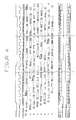
- FIG. 4 shows a diagram showing the structure of the memory 3 from FIG. 2, the division of the input lines between the line memories and the recording channels.
- the memory 3 consists of eight line memories, four of which are arranged in the memory unit 4 or in channel A and four in the memory unit 5 or in channel B.
- the memory configuration described can advantageously also be used for dropout compensation in the event of a dropout in the 625th line of the D2MAC signal.
- the entire 625th line of a D2MAC signal contains, according to standards, data words for initializing the receiver and for identifying the channel and the signal structure.
- an additional version of the 625th line of each frame is formed on the recording side by means of a suitable memory controller. This additional version of the 625th line is assigned to a different recording channel and thus a different recording track than the "normal" 625th line.
- the additional version of the 625th line is recorded at the beginning of a track and the "normal" version of the 625th line at the end of another track. If a dropout is now detected during playback of the 625th line, the additional version of the 625th line reproduced from the other channel can be inserted into the signal at the correct time instead of the disturbed 625th line.
Landscapes
- Engineering & Computer Science (AREA)
- Multimedia (AREA)
- Signal Processing (AREA)
- Television Signal Processing For Recording (AREA)
- Television Systems (AREA)
Applications Claiming Priority (2)
| Application Number | Priority Date | Filing Date | Title |
|---|---|---|---|
| DE3831330A DE3831330A1 (de) | 1988-09-15 | 1988-09-15 | Verfahren und anordnung zur aufzeichnung und wiedergabe der in einem fernsehsignal im zeitmultiplex mit der bildinformation uebertragenen datenpakete |
| DE3831330 | 1988-09-15 |
Publications (3)
| Publication Number | Publication Date |
|---|---|
| EP0358875A2 true EP0358875A2 (fr) | 1990-03-21 |
| EP0358875A3 EP0358875A3 (fr) | 1992-02-26 |
| EP0358875B1 EP0358875B1 (fr) | 1995-03-29 |
Family
ID=6362981
Family Applications (1)
| Application Number | Title | Priority Date | Filing Date |
|---|---|---|---|
| EP89112523A Expired - Lifetime EP0358875B1 (fr) | 1988-09-15 | 1989-07-08 | Procédé et dispositif d'enregistrement et reproduction de paquets de données transmis par multiplexage temporel avec le signal d'image d'un signal de télévision |
Country Status (3)
| Country | Link |
|---|---|
| EP (1) | EP0358875B1 (fr) |
| AT (1) | ATE120598T1 (fr) |
| DE (2) | DE3831330A1 (fr) |
Family Cites Families (3)
| Publication number | Priority date | Publication date | Assignee | Title |
|---|---|---|---|---|
| JPS6146681A (ja) * | 1984-08-11 | 1986-03-06 | Matsushita Electric Ind Co Ltd | 映像信号の記録再生方法 |
| JPS61158288A (ja) * | 1984-12-29 | 1986-07-17 | Sony Corp | 映像信号の再生装置 |
| DE3629657A1 (de) * | 1986-08-30 | 1988-03-10 | Grundig Emv | Verfahren zur aufzeichnung und wiedergabe des in einem fernsehsignal uebertragenen datenpakets |
-
1988
- 1988-09-15 DE DE3831330A patent/DE3831330A1/de not_active Withdrawn
-
1989
- 1989-07-08 DE DE58909139T patent/DE58909139D1/de not_active Expired - Fee Related
- 1989-07-08 AT AT89112523T patent/ATE120598T1/de not_active IP Right Cessation
- 1989-07-08 EP EP89112523A patent/EP0358875B1/fr not_active Expired - Lifetime
Also Published As
| Publication number | Publication date |
|---|---|
| EP0358875A3 (fr) | 1992-02-26 |
| DE3831330A1 (de) | 1990-04-05 |
| DE58909139D1 (de) | 1995-05-04 |
| EP0358875B1 (fr) | 1995-03-29 |
| ATE120598T1 (de) | 1995-04-15 |
Similar Documents
| Publication | Publication Date | Title |
|---|---|---|
| DE69527401T2 (de) | Aufzeichnung und wiedergabe eines mpeg-informationssignals auf einen/von einem aufzeichnungsträger | |
| DE3115902C2 (fr) | ||
| DE3038594C2 (de) | Verfahren zum Aufzeichnen eines digitalisierten Farb-Videosignals und Vorrichtung zur Wiedergabe | |
| DE3114631C2 (fr) | ||
| DE3102967C2 (fr) | ||
| DE3856377T2 (de) | Vorrichtung zum Übertragen eines digitalen Videosignals | |
| DE3102996C2 (de) | Verfahren und Anordnung zur Speicherung und/oder Übertragung eines digitalen Farbfernsehinformationssignals | |
| DE69325005T2 (de) | Gerät zur Aufzeichnung und Wiedergabe digitaler Signale | |
| DE2258028C2 (de) | Schaltungsanordnung zur Aufzeichnung und Wiedergabe eines Farbfernsehsignalgemisches auf bzw. von einem magnetischen Aufzeichnungsträger | |
| DE3782512T2 (de) | Bearbeiten von zeitkodedaten in einem aufgezeichneten digitalen videosignal. | |
| DE3916592A1 (de) | Pcm-signal erzeugungs/wiedergabe-vorrichtung | |
| DE69427054T2 (de) | Aufzeichnungs- und Wiedergabegerät für Videosignale mit Kennung | |
| DE69032737T2 (de) | Kodierung- und Dekodierungsvorrichtung geeignet für das Kopieren von Daten | |
| DE69321048T2 (de) | Audiovisuelles Datensignalwiedergabegerät | |
| DE2748233C2 (de) | Verfahren und Schaltungsanordnung zum Einfügen eines Adressensignals in ein Videosignal | |
| EP0262362B1 (fr) | Procédé d'enregistrement et de reproduction de paquets de données transmis avec un signal de télévision | |
| DE69428483T2 (de) | Vorrichtung und Verfahren zur Übertragung digitaler Video- und Audiodaten für die Aufzeichnung in unterschiedlichen Formaten | |
| DE3686196T2 (de) | Digitales signalaufzeichnungs- und -wiedergabesystem. | |
| DE3108941A1 (de) | Anordnung zur verhinderung von fehlerhaften korrekturen | |
| DE69423540T2 (de) | Gerät zur Aufzeichnung von digitalen Signalen | |
| DE3409418A1 (de) | Kompensationsschaltung fuer einen videosignalausfall | |
| DE3034716C2 (de) | Magnetband mit Schrägspuraufzeichnung zeitlich komprimierter Ton- und Bildinformationssignalteile sowie Aufnahme- und Wiedergabevorrichtung hierfür | |
| EP0226796B1 (fr) | Appareil d'enregistrement pour un système de télévision à définition élevée | |
| DE2707847C2 (fr) | ||
| EP0358875B1 (fr) | Procédé et dispositif d'enregistrement et reproduction de paquets de données transmis par multiplexage temporel avec le signal d'image d'un signal de télévision |
Legal Events
| Date | Code | Title | Description |
|---|---|---|---|
| PUAI | Public reference made under article 153(3) epc to a published international application that has entered the european phase |
Free format text: ORIGINAL CODE: 0009012 |
|
| AK | Designated contracting states |
Kind code of ref document: A2 Designated state(s): AT DE FR GB IT |
|
| PUAL | Search report despatched |
Free format text: ORIGINAL CODE: 0009013 |
|
| AK | Designated contracting states |
Kind code of ref document: A3 Designated state(s): AT DE FR GB IT |
|
| 17P | Request for examination filed |
Effective date: 19920803 |
|
| 17Q | First examination report despatched |
Effective date: 19940510 |
|
| GRAA | (expected) grant |
Free format text: ORIGINAL CODE: 0009210 |
|
| AK | Designated contracting states |
Kind code of ref document: B1 Designated state(s): AT DE FR GB IT |
|
| PG25 | Lapsed in a contracting state [announced via postgrant information from national office to epo] |
Ref country code: IT Free format text: LAPSE BECAUSE OF FAILURE TO SUBMIT A TRANSLATION OF THE DESCRIPTION OR TO PAY THE FEE WITHIN THE PRE;WARNING: LAPSES OF ITALIAN PATENTS WITH EFFECTIVE DATE BEFORE 2007 MAY HAVE OCCURRED AT ANY TIME BEFORE 2007. THE CORRECT EFFECTIVE DATE MAY BE DIFFERENT FROM THE ONE RECORDED.SCRIBED TIME-LIMIT Effective date: 19950329 |
|
| REF | Corresponds to: |
Ref document number: 120598 Country of ref document: AT Date of ref document: 19950415 Kind code of ref document: T |
|
| GBT | Gb: translation of ep patent filed (gb section 77(6)(a)/1977) |
Effective date: 19950330 |
|
| REF | Corresponds to: |
Ref document number: 58909139 Country of ref document: DE Date of ref document: 19950504 |
|
| REG | Reference to a national code |
Ref country code: GB Ref legal event code: 746 Effective date: 19950704 |
|
| ET | Fr: translation filed | ||
| PLBE | No opposition filed within time limit |
Free format text: ORIGINAL CODE: 0009261 |
|
| STAA | Information on the status of an ep patent application or granted ep patent |
Free format text: STATUS: NO OPPOSITION FILED WITHIN TIME LIMIT |
|
| 26N | No opposition filed | ||
| REG | Reference to a national code |
Ref country code: FR Ref legal event code: CD |
|
| REG | Reference to a national code |
Ref country code: FR Ref legal event code: TP |
|
| REG | Reference to a national code |
Ref country code: FR Ref legal event code: D6 |
|
| REG | Reference to a national code |
Ref country code: GB Ref legal event code: IF02 |
|
| REG | Reference to a national code |
Ref country code: GB Ref legal event code: 732E |
|
| REG | Reference to a national code |
Ref country code: FR Ref legal event code: TP |
|
| PGFP | Annual fee paid to national office [announced via postgrant information from national office to epo] |
Ref country code: FR Payment date: 20050713 Year of fee payment: 17 |
|
| PGFP | Annual fee paid to national office [announced via postgrant information from national office to epo] |
Ref country code: GB Payment date: 20060710 Year of fee payment: 18 |
|
| PGFP | Annual fee paid to national office [announced via postgrant information from national office to epo] |
Ref country code: AT Payment date: 20060720 Year of fee payment: 18 |
|
| PGFP | Annual fee paid to national office [announced via postgrant information from national office to epo] |
Ref country code: DE Payment date: 20060726 Year of fee payment: 18 |
|
| GBPC | Gb: european patent ceased through non-payment of renewal fee |
Effective date: 20070708 |
|
| PG25 | Lapsed in a contracting state [announced via postgrant information from national office to epo] |
Ref country code: DE Free format text: LAPSE BECAUSE OF NON-PAYMENT OF DUE FEES Effective date: 20080201 |
|
| PG25 | Lapsed in a contracting state [announced via postgrant information from national office to epo] |
Ref country code: GB Free format text: LAPSE BECAUSE OF NON-PAYMENT OF DUE FEES Effective date: 20070708 |
|
| REG | Reference to a national code |
Ref country code: FR Ref legal event code: ST Effective date: 20080331 |
|
| PG25 | Lapsed in a contracting state [announced via postgrant information from national office to epo] |
Ref country code: AT Free format text: LAPSE BECAUSE OF NON-PAYMENT OF DUE FEES Effective date: 20070708 |
|
| PG25 | Lapsed in a contracting state [announced via postgrant information from national office to epo] |
Ref country code: FR Free format text: LAPSE BECAUSE OF NON-PAYMENT OF DUE FEES Effective date: 20070731 |
|
| PG25 | Lapsed in a contracting state [announced via postgrant information from national office to epo] |
Ref country code: FR Free format text: LAPSE BECAUSE OF NON-PAYMENT OF DUE FEES Effective date: 20060731 |