EP0359550A2 - Gerät zum Ablesen analytischer Tests - Google Patents
Gerät zum Ablesen analytischer Tests Download PDFInfo
- Publication number
- EP0359550A2 EP0359550A2 EP89309302A EP89309302A EP0359550A2 EP 0359550 A2 EP0359550 A2 EP 0359550A2 EP 89309302 A EP89309302 A EP 89309302A EP 89309302 A EP89309302 A EP 89309302A EP 0359550 A2 EP0359550 A2 EP 0359550A2
- Authority
- EP
- European Patent Office
- Prior art keywords
- dial
- standard
- wells
- sample
- support member
- Prior art date
- Legal status (The legal status is an assumption and is not a legal conclusion. Google has not performed a legal analysis and makes no representation as to the accuracy of the status listed.)
- Granted
Links
Images



Classifications
-
- G—PHYSICS
- G01—MEASURING; TESTING
- G01N—INVESTIGATING OR ANALYSING MATERIALS BY DETERMINING THEIR CHEMICAL OR PHYSICAL PROPERTIES
- G01N33/00—Investigating or analysing materials by specific methods not covered by groups G01N1/00 - G01N31/00
- G01N33/48—Biological material, e.g. blood, urine; Haemocytometers
- G01N33/50—Chemical analysis of biological material, e.g. blood, urine; Testing involving biospecific ligand binding methods; Immunological testing
- G01N33/68—Chemical analysis of biological material, e.g. blood, urine; Testing involving biospecific ligand binding methods; Immunological testing involving proteins, peptides or amino acids
-
- G—PHYSICS
- G01—MEASURING; TESTING
- G01N—INVESTIGATING OR ANALYSING MATERIALS BY DETERMINING THEIR CHEMICAL OR PHYSICAL PROPERTIES
- G01N21/00—Investigating or analysing materials by the use of optical means, i.e. using sub-millimetre waves, infrared, visible or ultraviolet light
- G01N21/17—Systems in which incident light is modified in accordance with the properties of the material investigated
- G01N21/25—Colour; Spectral properties, i.e. comparison of effect of material on the light at two or more different wavelengths or wavelength bands
- G01N21/251—Colorimeters; Construction thereof
- G01N21/253—Colorimeters; Construction thereof for batch operation, i.e. multisample apparatus
-
- G—PHYSICS
- G01—MEASURING; TESTING
- G01N—INVESTIGATING OR ANALYSING MATERIALS BY DETERMINING THEIR CHEMICAL OR PHYSICAL PROPERTIES
- G01N33/00—Investigating or analysing materials by specific methods not covered by groups G01N1/00 - G01N31/00
- G01N33/48—Biological material, e.g. blood, urine; Haemocytometers
- G01N33/50—Chemical analysis of biological material, e.g. blood, urine; Testing involving biospecific ligand binding methods; Immunological testing
- G01N33/53—Immunoassay; Biospecific binding assay; Materials therefor
- G01N33/543—Immunoassay; Biospecific binding assay; Materials therefor with an insoluble carrier for immobilising immunochemicals
- G01N33/54366—Apparatus specially adapted for solid-phase testing
-
- G—PHYSICS
- G01—MEASURING; TESTING
- G01N—INVESTIGATING OR ANALYSING MATERIALS BY DETERMINING THEIR CHEMICAL OR PHYSICAL PROPERTIES
- G01N21/00—Investigating or analysing materials by the use of optical means, i.e. using sub-millimetre waves, infrared, visible or ultraviolet light
- G01N21/75—Systems in which material is subjected to a chemical reaction, the progress or the result of the reaction being investigated
- G01N21/77—Systems in which material is subjected to a chemical reaction, the progress or the result of the reaction being investigated by observing the effect on a chemical indicator
- G01N21/78—Systems in which material is subjected to a chemical reaction, the progress or the result of the reaction being investigated by observing the effect on a chemical indicator producing a change of colour
-
- G—PHYSICS
- G01—MEASURING; TESTING
- G01N—INVESTIGATING OR ANALYSING MATERIALS BY DETERMINING THEIR CHEMICAL OR PHYSICAL PROPERTIES
- G01N2201/00—Features of devices classified in G01N21/00
- G01N2201/04—Batch operation; multisample devices
- G01N2201/0438—Linear motion, sequential
-
- G—PHYSICS
- G01—MEASURING; TESTING
- G01N—INVESTIGATING OR ANALYSING MATERIALS BY DETERMINING THEIR CHEMICAL OR PHYSICAL PROPERTIES
- G01N2201/00—Features of devices classified in G01N21/00
- G01N2201/12—Circuits of general importance; Signal processing
- G01N2201/127—Calibration; base line adjustment; drift compensation
Definitions
- the present invention is directed, in general, toward test apparatus and, more particularly, toward apparatus for determining the presence of an analyte in a sample.
- a further object of the present invention is to provide such an improved device which is easy construct, inexpensive to manufacture, can be handheld, does not involve any expensive or complicated electronic components, and which automatically and accurately indicates the concentration of the sample.
- the present invention is directed to achieving these objects. It provides an elongated stationary standard tray having spaced post-type holders into which thee end wells of a strip of interconnected standard wells are attached. Along the inside edge of the stationary sample tray is an elongated track in which an elongated movable standard tray slides.
- the movable sample tray similarly has holder devices at spaced locations for holding therein a strip of interconnected sample wells.
- the elongated movable sample tray has a rack gear along its inside edge, and a circular gear attached to a dial meshes with the gears of the rack gear.
- a support plate secured to the stationary standard tray is positioned on the side of the movable sample tray opposite to the stationary standard tray.
- the dial then is mounted for rotation about an axis through this support plate.
- the dial will be caused to rotate as its gears mesh with the gears of the rack.
- Numbers corresponding to the concentration of the substance to be tested and placed in the wells of the movable sample tray are imprinted radially on the dial.
- the dial is automatically rotated by the meshing gears. When in this aligned position one of the numbers on the dial appears in a window of the face plate covering the dial. This number then is the concentration of the tested substance.
- the present invention is directed toward apparatus and method for detecting the presence of an analyte in a sample.
- two strips having microtiter wells are provided for performing the subject analyte detection tests.
- a standard strip contains a known concentration of the analyte to be detected and the sample strip contains the sample which may contain the analyte.
- analyte denotes the substance which is being detected in the sample and can be either inorganic or organic in its composition.
- color as used herein is meant to denote a change in the light absorbance or intensity occurring due to the interaction of analyte with the analyte detection reagents. As such, the term, as used herein, would also include changes in the shade of color.
- test used to detect the presence of the analyte will vary depending on the analyte and may be based, for example, on classical chemical or immunological detection techniques. Such tests are known to those of skill in the art.
- Particularly preferred tests for detection of analyte are those based on immunoassay techniques utilizing analyte-specific antibody.
- antibody as used in this invention is meant to include intact molecules as well as fragments thereof, such as, for example, Fab and F(ab′)2, which are capable of binding the analyte.
- Antibodies are particularly suited for use in immunoassays in which they can be utilized in liquid phase or bound to a solid phase carrier.
- the antibodies in these immunoassays can be detectably labeled in various ways.
- types of immunoassays which can utilize antibodies are competitive and non-competitive immunoassays in either a direct or indirect format.
- examples of such immunoassays are the radioimmunoassay (RIA) and the sandwich or other format (immunometric) assay.
- RIA radioimmunoassay
- sandwich or other format immunometric assay.
- Detection of analyte using antibodies can be done utilizing immunoassays which are run in either the forward, reverse, or simultaneous modes, including immunohistochemical assays on physiological samples. Regardless of the type of immunoassay which is used, the concentration of antibody utilized can be readily determined by one of skill in the art.
- analyte specific antibody can be bound to many different carriers and used to detect the presence of analyte.
- carriers include glass, polystyrene, polyvinyl chloride, polypropylene, polyethylene, polycarbonate, dextran, nylon, amylases, natural and modified celluloses, polyacrylamides, agaroses and magnetite.
- the nature of the carrier can be either soluble or insoluble for purposes of the invention. Those skilled in the art will know of other suitable carriers for binding antibody, or will be able to ascertain such, using routine experimentation.
- the specific concentration of antibody, the temperature and time of incubation, as well as other assay conditions, can be varied depending on such factors as the concentration of the antigen in the sample, the nature of the sample, and the like. Those skilled in the art will be able to determine operative and optimal assay conditions for each determination while employing routine experimentation.
- the immunoassay may be run at about 4-45°C, preferably at about 26°C, and each incubation step may be as long as 4 hours or more, although much shorter times, for example, about 10 minutes is preferred.
- one or more of the antibodies will be coupled with, or modified to produce, a detectable label.
- Such substances to which the antibody can be coupled include enzymes and fluorescent compounds.
- the binding of these labels to the antibody can be done using standard techniques common to those of ordinary skill in the art.
- One of the ways in which the antibody in the immunoassay can be detectably labeled is by linking this binding partner to an enzyme. This enzyme, in turn, when later exposed to its substrate will react to the substrate in such a manner as to produce a chemical moiety which can be visually detected.
- enzymes that can be used to detectably label are horseradish peroxidase, malate dehydrogenase, staphylococcal nuclease, delta-5-steroid isomerase, yeast alcohol dehydrogenase, alpha-glycerophosphate dehydrogenase, triose phosphate isomerase, alkaline phosphatase, asparaginase, glucose oxidase, beta-galactosidase, ribonuclease, urease, catalase, glucose-6-phosphate dehydrogenase, glucoamylase, and acetylcholine esterase.
- fluorescent labeling compounds fluorescein isothiocyanate, rhodamine, phycoerythrin, phycocyanin, allophycocyanin, o-phthaldehyde, and fluorescamine.
- the analyte which is being detected may be present in biological fluids and tissues, as well as samples derived from environmental and ecological sources.
- any sample containing a detectable yet unknown amount of analyte can be used.
- the sample can be liquid such as, for example, urine, saliva, cerebrospinal fluid, blood, serum, water and the like, or a solid or semi-solid such as, for example, tissues, feces, plant material, inorganic substrates, feeds and the like.
- analytes which can be detected are hormones, enzymes, inflammatory agents, infectious agents, and toxins, as well as such environmental contaminants as pesticides, herbicides, pollutants, or other such compounds.
- Hormones are substances that act to inhibit or enhance metabolic activities.
- hormones of interest are those associated with reproduction such as human choriogonadotropin, luteinizing hormone and follicle-stimulating hormone, as well as hormones associated with metabolism, such as thyroid-stimulating hormones and the like.
- Enzymes are protein molecules which catalyze biochemical reactions. Changes in the concentration of enzymes which are associated with certain biochemical pathways can be of valuable diagnostic significance in evaluating a disease state. Examples of enzymes of significance are most protein kinases, creatinine phosphokinase, lactate dehydrogenase, C reactive protein (CRP), serum amyloid P component (SAP), alpha-2 macroglobulin, and the like.
- Inflammatory agents can be released by cells of the immune system, often following contact with an antigen.
- inflammatory agents include histamine, prostaglandins, thromboxane, herparin, tryptase, kininogenase and beta-glucosaminidase.
- Infectious agents primarily encompass disease-causing organism of viral, bacterial or parastic origin. Examples of such agents are those causing dengue fever, bubonic plague, yellow fever, malaria, small pox, pneumonia and encephalitis.
- Toxins are poisonous substances some of which are produced by plants, animals, or microorganisms that in sufficient dose can be debilitating or lethal.
- Examples of such toxins are botulin, zearalenone and Bacillus thuringensis toxin.
- Environmental contaminants which can be detected are pesticides, for example, diflurbenzuron, paraquat, and aldicarb sulfone; herbicides, for example, 2,4-D, alachlor, glyphosate, chlorpyrifos, and atrazine; as well as such pollutants as, for example, dioxin and polychlorinated biphenyls.
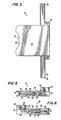
- an analytic reader device of the present invention is shown generally at 20.
- Device 20 is seen to basically comprise a stationary standard tray 22, a movable sample tray 24, a support plate 26, a dial 28, and a face or cover plate 30.
- the movable sample tray 24 has along its outside edge an elongated track 32 in which the elongated side engaging member 34 of the stationary standard tray 22 rides.
- the movable sample tray 24 is longer at either end 36, 38 thereof than is the stationary standard tray to extend the corresponding track 32 of the movable sample tray 24 which must be moved the length of the stationary standard tray 22.
- Both the stationary standard tray 22 and the movable sample tray 24 have four round post-type holder members thereon 40, 42 spaced so as to retain therein the opposite end wells of strips of wells 44, 46.
- These holders 40, 42 are adapted so that the strips of wells 44, 46 can be easily snapped in and out for replacement purposes.
- the holder posts are each moved in the distance of one well where a six instead of an eight well strip is to be usd. Although it is preferred to not have fewer than six wells, as few as thre can be used.
- the strips 44, 46 are preferably removable microtiter strips which are commercially available and are pretreated and disposable.
- the holders 40 of the stationary standard tray 22 will hold a strip of wells 44 holding serially diluted solutions of the standard.
- the holders 42 of the movable sample tray 24 will hold a strip of wells 46 containing the sample fluid in serial dilution.
- the techniques for preparing these dilutions are known and are also set forth herein.
- the support plate 26 is secured relative to the stationary standard tray 22, as best shown in Figure 7, and the axis 48 of the dial 28 passes perpendicularly therethrough.
- the dial 28 is shown to comprise a disk 50 with an axle 52 at the axis 48 through the center thereof with pointed tips 54, 56 at either end of the axle 52. These tips 54, 56 then, when the dial 28 is secured in the device, are held and rotate in circular rotation plates 58, 60 as shown in Figure 7.
- the cover plate 30 has four posts 62 secured thereto and extending down therefrom which removably snap into four openings 64 in the support plate 26. This allows the cover plate 30 to be removed so that the dial 28 can be replaced as needed as will be apparent from the discussion to follow.
- the dial 28 has about it spaced numbers 66 representing the possible concentrations of the substance to be tested and associated with those in the standard wells. These numbers 66 can be positioned to be facing radially out from the center of the dial or can be positioned to be along the radii of the dial (as depicted in Figure 7). Where more than one substance (analyte) is to be tested then a different set of numbers (not shown) can be provided in a circular band concentric to the band of the first set of numbers 66.
- the cover plate 30 has a window 68 therethrough through which one or possibly two numbers 66 on the dial 28 are visible depending upon the orientation of the dial 28 about its axis 46.
- This window 68 can be at any position relative to the dial 28 and is shown in the drawings the three o'clock position but it also could be at, for example the six or nine or twelve o'clock positions.
- an indicator arrow (not shown) can be provided such as on the face plate 30 to indicate which of the values or numbers 66 on the dial 28 is the correct value for that test solution.
- a different dial can be inserted with a different set of readout concentrations thereon to accommodate different assays.
- the standard and sample wells are prepared with the serially diluted solutions as is known.
- the strips of wells 44, 46 are oriented relative to the trays so that the concentration increases from the top to the bottom and then snapped into place in their respective holders 40, 42.
- the movable sample tray 24 then is moved along the track 30 so that the sample and standards wells are positioned adjacent one another when the visual characteristics thereof are identical.
- These visual characteristics can be color, color intensity, trubidity, opaqueness, or any other visually detectable parameter that changes in relation to the concentration of a test substance. It can be used for absorbance of light in the visible spectrum or under ultra violet light for fluorometric assays.
- the device 20 can be utilized in any assay where the retention, generation or alteration of a substance that emits or absorbs light in the visible spectrum as correlated, directly or inversely, with the concentration of the test substance.
- the movable sample tray 24 can be manually juxtaposed by moving as with the tester's thumb moving the edge 70 of the dial 28 extending out from between the support and cover plates 26, 30 as shown in Figure 1. In other words, it is manually juxtaposed until the color range of the sample strip 46 aligns with that of the standard strip 44. At each alignment station, the concentration of the test substance, which is precalculated for the test in use and printed on the dial 28 as shown by numbers 66, appears in the window 68 on the face plate 30.
- a color graduated polymer strip (not shown) of paper, plastic, nitrocellulose and the like can be used.
- the removable standard well technique though adding an additional preparation technique to this reading device, is more accurate since the solutions in the standard wells and the sample wells are prepared under similar testing conditions including the same temperature of the reagent.
- FIG. 9 A second design of the analytic reader device of the present invention is shown generally at 72 in Figures 9 and 10.
- a similar elongated stationary standard tray 74 is provided with holding posts 76 for holding the strip of standard wells 78.
- the elongated movable sample tray 80 then slides in a track 81 along the stationary standard tray 74 and the movable sample tray 80 similarly has holding posts 82 for snap holding a strip of sample wells 84.
- On the side of the movable sample tray 80 opposite to and underneath the stationary standard tray 74 is an elongated strip 86 fixed relative to the stationary standard tray 74.
- the various possible concentrations 88 are imprinted along this strip 86.
- the sliding sample tray 80 can be slid relative to the stationary standard tray 74 to juxtapose or match visually identical standard and sample wells by grasping the finger grips 90.
- a readout window 92 is provided so that when the sample and standard wells are manually aligned the readout window 92 then is positioned directly over the correct numerical value 88 on the strip 86. This numerical value can then be easily read.
- this device is inexpensive to manufacture and operating can be easily held in the hand of the tester.
- the visual comparison can be easily done and the value then quickly read.
- HSA human serum albumin
- the standard and sample strips 44, 46 were placed into well holders 40, 42 and 100 ul of diluent (phoshate buffered saline, pH 7.4, 0.1% bovine serum albumin) added to all eight wells of both strips. After the addition of diluent, 100 ul of a standard solution containing 20 ug/ml HSA was added to the first well of the standard strip. Starting with this well the albumin standard is then serially diluted through the remaining wells of the standard strip and 100 ul discarded from the last well.
- diluent phoshate buffered saline, pH 7.4, 0.1% bovine serum albumin
- the urine specimen Prior to the addition of urine to the sample strip the urine specimen was clarified by centrifugation. Next, 100 ul of clarified urine was added to the first well of the sample strip 46. The contents of the wells were then serially diluted in 100 ul aliquots through the remaining wells of the sample strip 46 and 100 ul discarded from the final well thereof.
- the standard strip 44 was mounted on the left stationary plate 22 of the device 20 such that the top and bottom wells were contained in the well holders 40. In this configuration it was important that the first well, containing the highest concentration of standard, was positioned at the top of the device.
- the sample strip 16 was mounted on the right movable plate 24 of the device, taking the same precautions as those exercised with the standard strip.
- the concentration value 66 indicated in the window 68 of the device read twenty ug/ml.
- the dial 28 of the device of the invention was moved clockwise or counterclockwise until the color in the sample wells matched, well-for-well, with the color in the adjacent wells of the standard strip. The numerical concentration as shown in the window 68 was then read. In those instances where values in-between the printed concentrations were obtained it was possible to estimate the concentration in the sample.
- Table 1 shows the results of using the device of the invention and compares the values obtained for the standard strip as compared to a sample strip containing normal human urine and a sample strip containing normal human urine to which human serum albumin (HSA) had been added (75 ug/ml).
- HSA human serum albumin
Landscapes
- Health & Medical Sciences (AREA)
- Life Sciences & Earth Sciences (AREA)
- Immunology (AREA)
- Engineering & Computer Science (AREA)
- Chemical & Material Sciences (AREA)
- Biomedical Technology (AREA)
- Hematology (AREA)
- Molecular Biology (AREA)
- Urology & Nephrology (AREA)
- Physics & Mathematics (AREA)
- Pathology (AREA)
- Analytical Chemistry (AREA)
- General Physics & Mathematics (AREA)
- General Health & Medical Sciences (AREA)
- Biochemistry (AREA)
- Cell Biology (AREA)
- Medicinal Chemistry (AREA)
- Food Science & Technology (AREA)
- Microbiology (AREA)
- Biotechnology (AREA)
- Spectroscopy & Molecular Physics (AREA)
- Proteomics, Peptides & Aminoacids (AREA)
- Investigating Or Analysing Biological Materials (AREA)
- Automatic Analysis And Handling Materials Therefor (AREA)
- Investigating Or Analysing Materials By The Use Of Chemical Reactions (AREA)
Applications Claiming Priority (2)
| Application Number | Priority Date | Filing Date | Title |
|---|---|---|---|
| US245423 | 1988-09-16 | ||
| US07/245,423 US5057275A (en) | 1988-09-16 | 1988-09-16 | Analytic reader device |
Publications (3)
| Publication Number | Publication Date |
|---|---|
| EP0359550A2 true EP0359550A2 (de) | 1990-03-21 |
| EP0359550A3 EP0359550A3 (de) | 1991-05-08 |
| EP0359550B1 EP0359550B1 (de) | 1995-01-11 |
Family
ID=22926591
Family Applications (1)
| Application Number | Title | Priority Date | Filing Date |
|---|---|---|---|
| EP89309302A Expired - Lifetime EP0359550B1 (de) | 1988-09-16 | 1989-09-13 | Gerät zum Ablesen analytischer Tests |
Country Status (5)
| Country | Link |
|---|---|
| US (1) | US5057275A (de) |
| EP (1) | EP0359550B1 (de) |
| JP (1) | JPH02120665A (de) |
| AT (1) | ATE117079T1 (de) |
| DE (1) | DE68920519D1 (de) |
Cited By (2)
| Publication number | Priority date | Publication date | Assignee | Title |
|---|---|---|---|---|
| US5380493A (en) * | 1992-03-27 | 1995-01-10 | Chavez; Jeffery B. | Cell well plate holder and well marking system |
| WO2003024321A3 (de) * | 2001-09-17 | 2003-09-12 | Joerg Ulrich Streif | Verfahren zur ermittlung von wahrscheinlichkeiten vor allem im medizinischen bereich und vorrichtung hierzu |
Families Citing this family (5)
| Publication number | Priority date | Publication date | Assignee | Title |
|---|---|---|---|---|
| US5174963A (en) * | 1991-01-07 | 1992-12-29 | United Medical Manufacturing Company | Blood glucose reflectance meter including a null prompting means and a device for providing a constant brightness light |
| US6174729B1 (en) * | 1995-01-10 | 2001-01-16 | Aftab Alam | Method, and kit for total protein assay |
| US6294541B1 (en) | 1996-06-06 | 2001-09-25 | Euro-Celtique S.A. | Purine derivatives having phosphodiesterase IV inhibition activity |
| US6616846B2 (en) * | 2001-08-28 | 2003-09-09 | Mds (Canada) Inc. | Extraction of phosphonates |
| WO2003075011A1 (fr) * | 2002-03-07 | 2003-09-12 | Enbiotec Laboratories Co., Ltd. | Instruments de detection de substances de faible poids moleculaire |
Family Cites Families (28)
| Publication number | Priority date | Publication date | Assignee | Title |
|---|---|---|---|---|
| US437800A (en) * | 1890-10-07 | Piston-throw indicator for air-brakes | ||
| US1675967A (en) * | 1927-03-15 | 1928-07-03 | Emil C Zitkowski | Comparator |
| US2027816A (en) * | 1931-08-06 | 1936-01-14 | Drucker Albert | Comparator |
| FR824554A (fr) * | 1936-10-02 | 1938-02-11 | Hellige & Compagnieg M B H F | Appareil pour la détermination de valeurs chimiques par comparaison de couleurs |
| US2146005A (en) * | 1937-04-15 | 1939-02-07 | Bernholz Herman | Indicating device |
| US2353716A (en) * | 1941-02-19 | 1944-07-18 | Spencer Lens Co | Colorimetric apparatus |
| DE818270C (de) * | 1948-10-02 | 1951-10-25 | Aptila App Und Geraetefabrik F | Kolorimeter |
| US3176577A (en) * | 1962-05-02 | 1965-04-06 | Gomer S Frank | Visual color comparator having a rotatable color keyed standard |
| US3381572A (en) * | 1963-12-19 | 1968-05-07 | Sidney B. Tuwiner | Colorimetric testing device |
| US3488156A (en) * | 1966-02-23 | 1970-01-06 | Lab Line Biomedical Products I | Automatic agglutinometer |
| US3591805A (en) * | 1969-02-20 | 1971-07-06 | Schoeffel Instrument Corp | Thin layer chromatographic plate having preadjusted spectral transmissivity and emissivity and preadjusted opaque and nonopaque intervals |
| US3713985A (en) * | 1970-10-19 | 1973-01-30 | Kantor F | Device and method for testing potency of biological control reagents |
| US3721010A (en) * | 1971-02-08 | 1973-03-20 | H Ristow | Dial indicator gage |
| US4056359A (en) * | 1973-04-10 | 1977-11-01 | American Home Products Corporation | Profile recognition apparatus for identifying bacteria |
| US3964831A (en) * | 1973-12-26 | 1976-06-22 | Aquality, Inc. | Visual color comparator with integral dual dip cells |
| DE2548728C2 (de) * | 1975-10-31 | 1986-07-31 | Merck Patent Gmbh, 6100 Darmstadt | Vorrichtung zur analytischen Bestimmung von Substanzen in Lösung |
| USD247821S (en) | 1976-06-15 | 1978-05-02 | Telautograph Corporation | Color comparator for testing swimming pools |
| GB1556082A (en) | 1977-05-26 | 1979-11-21 | Tintometer Gmbh | Device for determining the ion concentration of certain substances or mixtures of substances in swimming pool water |
| USD250834S (en) | 1978-04-05 | 1979-01-16 | Hycel, Inc. | Analysis station for multichannel automated apparatus for analysis of chemical samples |
| US4330299A (en) * | 1981-03-09 | 1982-05-18 | Evreka, Inc. | Article and method for measuring glucose level in body fluids |
| US4468371A (en) * | 1982-07-19 | 1984-08-28 | Daryl Laboratories, Inc. | Immunoassay test slide |
| US4594327A (en) * | 1983-11-02 | 1986-06-10 | Syntex (U.S.A.) Inc. | Assay method for whole blood samples |
| US4923800A (en) * | 1984-01-10 | 1990-05-08 | Ly Uy Vu | Instrumentless quantitative analysis system |
| US4678757A (en) * | 1985-04-11 | 1987-07-07 | Smithkline Diagnostics, Inc. | Device and method for whole blood separation and analysis |
| US4956302A (en) * | 1987-09-11 | 1990-09-11 | Abbott Laboratories | Lateral flow chromatographic binding assay device |
| US4877580A (en) * | 1988-02-09 | 1989-10-31 | Technimed Corporation | Assay kit including an analyte test strip and a color comparator |
| US4871258A (en) * | 1988-04-29 | 1989-10-03 | Boehringer Mannheim Corporation | Color test meter |
| US4904605A (en) * | 1988-06-20 | 1990-02-27 | Cuno, Inc. | Method and apparatus for residential water test kit |
-
1988
- 1988-09-16 US US07/245,423 patent/US5057275A/en not_active Expired - Fee Related
-
1989
- 1989-09-13 DE DE68920519T patent/DE68920519D1/de not_active Expired - Lifetime
- 1989-09-13 EP EP89309302A patent/EP0359550B1/de not_active Expired - Lifetime
- 1989-09-13 AT AT89309302T patent/ATE117079T1/de active
- 1989-09-16 JP JP1240476A patent/JPH02120665A/ja active Pending
Cited By (2)
| Publication number | Priority date | Publication date | Assignee | Title |
|---|---|---|---|---|
| US5380493A (en) * | 1992-03-27 | 1995-01-10 | Chavez; Jeffery B. | Cell well plate holder and well marking system |
| WO2003024321A3 (de) * | 2001-09-17 | 2003-09-12 | Joerg Ulrich Streif | Verfahren zur ermittlung von wahrscheinlichkeiten vor allem im medizinischen bereich und vorrichtung hierzu |
Also Published As
| Publication number | Publication date |
|---|---|
| DE68920519D1 (de) | 1995-02-23 |
| ATE117079T1 (de) | 1995-01-15 |
| EP0359550A3 (de) | 1991-05-08 |
| US5057275A (en) | 1991-10-15 |
| JPH02120665A (ja) | 1990-05-08 |
| EP0359550B1 (de) | 1995-01-11 |
Similar Documents
| Publication | Publication Date | Title |
|---|---|---|
| US4791461A (en) | Portable analyzer | |
| EP0677170B1 (de) | Prüfungsstreifen für immunoassays | |
| US4826759A (en) | Field assay for ligands | |
| CA1304290C (en) | Orthographic flow immunoassays and devices | |
| EP0306772B1 (de) | Gerät für die laterale immunochromatographische Bestimmung | |
| US5435970A (en) | Device for analysis for constituents in biological fluids | |
| US4717656A (en) | Device for chemical analyses and use thereof | |
| EP0335244B1 (de) | Festphasenanalytische Vorrichtung und Verfahren zum Gebrauch derselben | |
| CA1262061A (en) | Portable analyzer | |
| EP0389003A1 (de) | Festphaseanalytische Vorrichtung und Verfahren zu ihrer Verwendung | |
| NO331708B1 (no) | Systemer og fremgangsmåter for utføring av magnetisk kromatografianalyser | |
| RU2006135394A (ru) | Система из измерительного устройства уровня анализируемых веществ в биологических жидкостях и кассеты для выполнения комбинированных общих химических и специфических анализов связывания | |
| CA2005564A1 (en) | Test carrier for the analytical investigation of a sample liquid with the help of a specific binding reaction of two bioaffine binding partners and a corresponding test process | |
| EP1121591A1 (de) | Immunoassay mit speichelsammlung und speichelassay | |
| SE458643B (sv) | Anordning med kolonnelement uppdelat i provparti och referenspatri | |
| US20100255510A1 (en) | rapid and sensitive method for quantitative determination of the level of heparin - pf4 complex induced immunoglobulin antibodies | |
| EP1879028B1 (de) | Verwendung von Albumin, Bovin, P-Aminophenyl-N-Acetyl-ß-D-Glucosaminid als Positivcontrolle für eine Immuntestvorrichtung | |
| US5891658A (en) | Single-step, solid-state competitive immunoassay | |
| EP0359550B1 (de) | Gerät zum Ablesen analytischer Tests | |
| AU2002225017B2 (en) | Test device | |
| US4299493A (en) | Auto-optical centering device for photometers | |
| AU2002225017A1 (en) | Test device | |
| US4868767A (en) | Reflectance gradient densitometer | |
| EP0204579A2 (de) | Immunoassay-Inkubationsapparat | |
| CA2198948A1 (en) | Quantitative detection of analytes on immunochromatographic strips |
Legal Events
| Date | Code | Title | Description |
|---|---|---|---|
| PUAI | Public reference made under article 153(3) epc to a published international application that has entered the european phase |
Free format text: ORIGINAL CODE: 0009012 |
|
| AK | Designated contracting states |
Kind code of ref document: A2 Designated state(s): AT BE CH DE FR GB IT LI LU NL SE |
|
| RIN1 | Information on inventor provided before grant (corrected) |
Inventor name: NEUMAN, ROBERT GLENN |
|
| PUAL | Search report despatched |
Free format text: ORIGINAL CODE: 0009013 |
|
| AK | Designated contracting states |
Kind code of ref document: A3 Designated state(s): AT BE CH DE FR GB IT LI LU NL SE |
|
| 17P | Request for examination filed |
Effective date: 19910522 |
|
| 17Q | First examination report despatched |
Effective date: 19921202 |
|
| GRAA | (expected) grant |
Free format text: ORIGINAL CODE: 0009210 |
|
| AK | Designated contracting states |
Kind code of ref document: B1 Designated state(s): AT BE CH DE FR GB IT LI LU NL SE |
|
| PG25 | Lapsed in a contracting state [announced via postgrant information from national office to epo] |
Ref country code: IT Free format text: LAPSE BECAUSE OF FAILURE TO SUBMIT A TRANSLATION OF THE DESCRIPTION OR TO PAY THE FEE WITHIN THE PRE;WARNING: LAPSES OF ITALIAN PATENTS WITH EFFECTIVE DATE BEFORE 2007 MAY HAVE OCCURRED AT ANY TIME BEFORE 2007. THE CORRECT EFFECTIVE DATE MAY BE DIFFERENT FROM THE ONE RECORDED.SCRIBED TIME-LIMIT Effective date: 19950111 Ref country code: LI Effective date: 19950111 Ref country code: FR Effective date: 19950111 Ref country code: NL Effective date: 19950111 Ref country code: CH Effective date: 19950111 Ref country code: AT Effective date: 19950111 Ref country code: BE Effective date: 19950111 |
|
| REF | Corresponds to: |
Ref document number: 117079 Country of ref document: AT Date of ref document: 19950115 Kind code of ref document: T |
|
| REF | Corresponds to: |
Ref document number: 68920519 Country of ref document: DE Date of ref document: 19950223 |
|
| PG25 | Lapsed in a contracting state [announced via postgrant information from national office to epo] |
Ref country code: SE Effective date: 19950411 |
|
| PG25 | Lapsed in a contracting state [announced via postgrant information from national office to epo] |
Ref country code: DE Effective date: 19950412 |
|
| REG | Reference to a national code |
Ref country code: CH Ref legal event code: PL |
|
| EN | Fr: translation not filed | ||
| NLV1 | Nl: lapsed or annulled due to failure to fulfill the requirements of art. 29p and 29m of the patents act | ||
| PG25 | Lapsed in a contracting state [announced via postgrant information from national office to epo] |
Ref country code: GB Effective date: 19950913 |
|
| PG25 | Lapsed in a contracting state [announced via postgrant information from national office to epo] |
Ref country code: LU Free format text: LAPSE BECAUSE OF NON-PAYMENT OF DUE FEES Effective date: 19950930 |
|
| PLBE | No opposition filed within time limit |
Free format text: ORIGINAL CODE: 0009261 |
|
| STAA | Information on the status of an ep patent application or granted ep patent |
Free format text: STATUS: NO OPPOSITION FILED WITHIN TIME LIMIT |
|
| 26N | No opposition filed | ||
| GBPC | Gb: european patent ceased through non-payment of renewal fee |
Effective date: 19950913 |