EP0362673B1 - Dérivé de 1,1-dicyclohexyle cycloalcane, son procédé de préparation et fluide de traction le contenant - Google Patents
Dérivé de 1,1-dicyclohexyle cycloalcane, son procédé de préparation et fluide de traction le contenant Download PDFInfo
- Publication number
- EP0362673B1 EP0362673B1 EP89117750A EP89117750A EP0362673B1 EP 0362673 B1 EP0362673 B1 EP 0362673B1 EP 89117750 A EP89117750 A EP 89117750A EP 89117750 A EP89117750 A EP 89117750A EP 0362673 B1 EP0362673 B1 EP 0362673B1
- Authority
- EP
- European Patent Office
- Prior art keywords
- cycloalkane
- dicyclohexyl
- reaction
- compound
- general formula
- Prior art date
- Legal status (The legal status is an assumption and is not a legal conclusion. Google has not performed a legal analysis and makes no representation as to the accuracy of the status listed.)
- Expired - Lifetime
Links
- 0 CCC=CC*(*)(*)N Chemical compound CCC=CC*(*)(*)N 0.000 description 2
- KZWMODHQQYGTRT-GRQBKTHUSA-N C1C2(CCC3)[C@H]3C12 Chemical compound C1C2(CCC3)[C@H]3C12 KZWMODHQQYGTRT-GRQBKTHUSA-N 0.000 description 1
- GQZXOLWTZGSICW-UHFFFAOYSA-N C1C2=CC(CCC3)C3C12 Chemical compound C1C2=CC(CCC3)C3C12 GQZXOLWTZGSICW-UHFFFAOYSA-N 0.000 description 1
- JAPMJSVZDUYFKL-UHFFFAOYSA-N C1C2C1CCC2 Chemical compound C1C2C1CCC2 JAPMJSVZDUYFKL-UHFFFAOYSA-N 0.000 description 1
Images











Classifications
-
- C—CHEMISTRY; METALLURGY
- C10—PETROLEUM, GAS OR COKE INDUSTRIES; TECHNICAL GASES CONTAINING CARBON MONOXIDE; FUELS; LUBRICANTS; PEAT
- C10M—LUBRICATING COMPOSITIONS; USE OF CHEMICAL SUBSTANCES EITHER ALONE OR AS LUBRICATING INGREDIENTS IN A LUBRICATING COMPOSITION
- C10M171/00—Lubricating compositions characterised by purely physical criteria, e.g. containing as base-material, thickener or additive, ingredients which are characterised exclusively by their numerically specified physical properties, i.e. containing ingredients which are physically well-defined but for which the chemical nature is either unspecified or only very vaguely indicated
- C10M171/002—Traction fluids
-
- C—CHEMISTRY; METALLURGY
- C07—ORGANIC CHEMISTRY
- C07C—ACYCLIC OR CARBOCYCLIC COMPOUNDS
- C07C1/00—Preparation of hydrocarbons from one or more compounds, none of them being a hydrocarbon
- C07C1/20—Preparation of hydrocarbons from one or more compounds, none of them being a hydrocarbon starting from organic compounds containing only oxygen atoms as heteroatoms
- C07C1/22—Preparation of hydrocarbons from one or more compounds, none of them being a hydrocarbon starting from organic compounds containing only oxygen atoms as heteroatoms by reduction
-
- C—CHEMISTRY; METALLURGY
- C07—ORGANIC CHEMISTRY
- C07C—ACYCLIC OR CARBOCYCLIC COMPOUNDS
- C07C13/00—Cyclic hydrocarbons containing rings other than, or in addition to, six-membered aromatic rings
- C07C13/28—Polycyclic hydrocarbons or acyclic hydrocarbon derivatives thereof
-
- C—CHEMISTRY; METALLURGY
- C10—PETROLEUM, GAS OR COKE INDUSTRIES; TECHNICAL GASES CONTAINING CARBON MONOXIDE; FUELS; LUBRICANTS; PEAT
- C10M—LUBRICATING COMPOSITIONS; USE OF CHEMICAL SUBSTANCES EITHER ALONE OR AS LUBRICATING INGREDIENTS IN A LUBRICATING COMPOSITION
- C10M105/00—Lubricating compositions characterised by the base-material being a non-macromolecular organic compound
- C10M105/02—Well-defined hydrocarbons
- C10M105/04—Well-defined hydrocarbons aliphatic
-
- C—CHEMISTRY; METALLURGY
- C07—ORGANIC CHEMISTRY
- C07C—ACYCLIC OR CARBOCYCLIC COMPOUNDS
- C07C2601/00—Systems containing only non-condensed rings
- C07C2601/12—Systems containing only non-condensed rings with a six-membered ring
- C07C2601/14—The ring being saturated
-
- C—CHEMISTRY; METALLURGY
- C10—PETROLEUM, GAS OR COKE INDUSTRIES; TECHNICAL GASES CONTAINING CARBON MONOXIDE; FUELS; LUBRICANTS; PEAT
- C10M—LUBRICATING COMPOSITIONS; USE OF CHEMICAL SUBSTANCES EITHER ALONE OR AS LUBRICATING INGREDIENTS IN A LUBRICATING COMPOSITION
- C10M2203/00—Organic non-macromolecular hydrocarbon compounds and hydrocarbon fractions as ingredients in lubricant compositions
- C10M2203/02—Well-defined aliphatic compounds
-
- C—CHEMISTRY; METALLURGY
- C10—PETROLEUM, GAS OR COKE INDUSTRIES; TECHNICAL GASES CONTAINING CARBON MONOXIDE; FUELS; LUBRICANTS; PEAT
- C10M—LUBRICATING COMPOSITIONS; USE OF CHEMICAL SUBSTANCES EITHER ALONE OR AS LUBRICATING INGREDIENTS IN A LUBRICATING COMPOSITION
- C10M2203/00—Organic non-macromolecular hydrocarbon compounds and hydrocarbon fractions as ingredients in lubricant compositions
- C10M2203/02—Well-defined aliphatic compounds
- C10M2203/022—Well-defined aliphatic compounds saturated
-
- C—CHEMISTRY; METALLURGY
- C10—PETROLEUM, GAS OR COKE INDUSTRIES; TECHNICAL GASES CONTAINING CARBON MONOXIDE; FUELS; LUBRICANTS; PEAT
- C10M—LUBRICATING COMPOSITIONS; USE OF CHEMICAL SUBSTANCES EITHER ALONE OR AS LUBRICATING INGREDIENTS IN A LUBRICATING COMPOSITION
- C10M2203/00—Organic non-macromolecular hydrocarbon compounds and hydrocarbon fractions as ingredients in lubricant compositions
- C10M2203/02—Well-defined aliphatic compounds
- C10M2203/024—Well-defined aliphatic compounds unsaturated
-
- C—CHEMISTRY; METALLURGY
- C10—PETROLEUM, GAS OR COKE INDUSTRIES; TECHNICAL GASES CONTAINING CARBON MONOXIDE; FUELS; LUBRICANTS; PEAT
- C10M—LUBRICATING COMPOSITIONS; USE OF CHEMICAL SUBSTANCES EITHER ALONE OR AS LUBRICATING INGREDIENTS IN A LUBRICATING COMPOSITION
- C10M2203/00—Organic non-macromolecular hydrocarbon compounds and hydrocarbon fractions as ingredients in lubricant compositions
- C10M2203/04—Well-defined cycloaliphatic compounds
-
- C—CHEMISTRY; METALLURGY
- C10—PETROLEUM, GAS OR COKE INDUSTRIES; TECHNICAL GASES CONTAINING CARBON MONOXIDE; FUELS; LUBRICANTS; PEAT
- C10N—INDEXING SCHEME ASSOCIATED WITH SUBCLASS C10M RELATING TO LUBRICATING COMPOSITIONS
- C10N2040/00—Specified use or application for which the lubricating composition is intended
- C10N2040/04—Oil-bath; Gear-boxes; Automatic transmissions; Traction drives
-
- C—CHEMISTRY; METALLURGY
- C10—PETROLEUM, GAS OR COKE INDUSTRIES; TECHNICAL GASES CONTAINING CARBON MONOXIDE; FUELS; LUBRICANTS; PEAT
- C10N—INDEXING SCHEME ASSOCIATED WITH SUBCLASS C10M RELATING TO LUBRICATING COMPOSITIONS
- C10N2040/00—Specified use or application for which the lubricating composition is intended
- C10N2040/04—Oil-bath; Gear-boxes; Automatic transmissions; Traction drives
- C10N2040/042—Oil-bath; Gear-boxes; Automatic transmissions; Traction drives for automatic transmissions
-
- C—CHEMISTRY; METALLURGY
- C10—PETROLEUM, GAS OR COKE INDUSTRIES; TECHNICAL GASES CONTAINING CARBON MONOXIDE; FUELS; LUBRICANTS; PEAT
- C10N—INDEXING SCHEME ASSOCIATED WITH SUBCLASS C10M RELATING TO LUBRICATING COMPOSITIONS
- C10N2040/00—Specified use or application for which the lubricating composition is intended
- C10N2040/04—Oil-bath; Gear-boxes; Automatic transmissions; Traction drives
- C10N2040/044—Oil-bath; Gear-boxes; Automatic transmissions; Traction drives for manual transmissions
-
- C—CHEMISTRY; METALLURGY
- C10—PETROLEUM, GAS OR COKE INDUSTRIES; TECHNICAL GASES CONTAINING CARBON MONOXIDE; FUELS; LUBRICANTS; PEAT
- C10N—INDEXING SCHEME ASSOCIATED WITH SUBCLASS C10M RELATING TO LUBRICATING COMPOSITIONS
- C10N2040/00—Specified use or application for which the lubricating composition is intended
- C10N2040/04—Oil-bath; Gear-boxes; Automatic transmissions; Traction drives
- C10N2040/046—Oil-bath; Gear-boxes; Automatic transmissions; Traction drives for traction drives
-
- C—CHEMISTRY; METALLURGY
- C10—PETROLEUM, GAS OR COKE INDUSTRIES; TECHNICAL GASES CONTAINING CARBON MONOXIDE; FUELS; LUBRICANTS; PEAT
- C10N—INDEXING SCHEME ASSOCIATED WITH SUBCLASS C10M RELATING TO LUBRICATING COMPOSITIONS
- C10N2040/00—Specified use or application for which the lubricating composition is intended
- C10N2040/08—Hydraulic fluids, e.g. brake-fluids
Definitions
- the present invention relates to a derivative of a 1,1-dicyclohexyl cycloalkane, a method for the preparation of the compound and a traction-drive fluid containing the compound.
- traction-drive fluids are required to have a high traction coefficient in a temperature range from low to high temperatures, low viscosity, excellent oxidation resistance and the like among various kinds of other properties.
- a compound having a low viscosity at room temperature to exhibit a high efficiency of power transmission at low temperatures usually has an unduly low traction coefficient at high temperatures and the viscosity thereof at high temperatures is so low that drawbacks are sometimes caused in the lubrication of the traction-transmission apparatus filled therewith.
- US-A-4,604,492 discloses 1,3-dicyclohexylcyclopentane derivatives of the following general formula: in which R1 nR2 are each a hydrogen atom or an alkyl group having from 1 to 3 carbon atoms which are prepared by hydrogenating the corresponding diphenylcyclopentane derivates, i.e. 1-methyl-1,3-diphenylcyclopentane, and the suitability as a fluid for traction drive.
- the present invention accordingly has an object to provide a novel compound which can be a constituent of a traction-drive fluid capable of satisfying all of the above mentioned requirements for a high-performance fluid by possessing a low viscosity at low temperature and a high traction coefficient at high temperatures, these properties of the fluid being maintained even when the compound is blended with other compounds.
- Another object of the invention is to provide a method for the preparation of such a compound.
- the novel compound provided by the invention is a 1,1-dicyclohexyl cycloalkane derivative represented by the general formula in which R1 and R2 are each, independently from the other, a hydrogen atom or a lower alkyl group, R3, R4, R5 and R6 are each, independently from the others, a hydrogen atom, a lower alkyl group or an alkylene group forming a ring structure together with either one of the others and the carbon atom in the cycloalkane ring to which the group is bonded, and the subscripts m and n are each zero or a positive integer not exceeding 6 with the proviso that m+n is 4, 5 or 6.
- the above defined 1,1-dicyclohexyl cycloalkane derivative can be prepared by subjecting a 1,1-di(hydroxyphenyl) cycloalkane compound represented by the general formula in which each symbol has the same meaning as defined above, to a hydrogenation reaction and a dehydration reaction concurrently in the simultaneous presence of a hydrogenation catalyst and a dehydration catalyst.
- the 1,1-dicyclohexyl cycloalkane derivative of the general formula (I) can be prepared by first hydrogenating the 1,1-di(hydroxyphenyl) cycloalkane compound of the general formula (II) to give a 1,1-di(hydroxycyclohexyl) cycloalkane compound represented by the general formula in which each symbol has the same meaning as defined above, and then dehydrating and hydrogenating the compound of the general formula (III).
- the traction-drive fluid of the invention comprises at least 1% by weight or, preferably, from 5 to 60% by weight of the 1,1-dicyclohexyl cycloalkane derivative of the general formula (I).
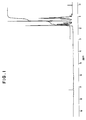
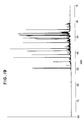
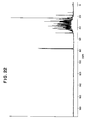
- Figures 1, 2 and 3 are a 1H-NMR diagram (solvent: CDCl3), a 13C-NMR diagram (solvent: CDCl3) and a GC-MS diagram, respectively, of 1,1-dicyclohexyl cyclohexane prepared in Example 1.
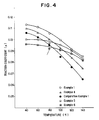
- Figure 4 is a graph showing the traction coefficient of the fluids in Examples 1, 4, 5 and 6 and Comparative Example 1 as a function of temperature.
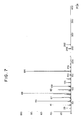
- Figures 5, 6 and 7 are a 1H-NMR diagram (solvent: CDCl3), a 13C-NMR diagram (solvent: CDCl3) and a GC-MS diagram, respectively, of 1-cyclohexyl-1-(3-methyl cyclohexyl) cyclohexane prepared in Example 5.
- Figures 8, 9 and 10 are a 1H-NMR diagram (solvent: CDCl3), a 13C-NMR diagram (solvent: CDCl3) and a GC-MS diagram, respectively of 1,1-di(3-methyl cyclohexyl) cyclohexane prepared in Example 6.
- Figures 11, 12 and 13 are a 1H-NMR diagram (solvent: CDCl3), a 13C-NMR diagram (solvent: CDCl3) and a GC-MS diagram, respectively, of 1,1-dicyclohexyl cyclopentane prepared in Example 7.
- Figure 14 is a graph showing the traction coefficient of the fluids in Examples 7, 8, 9 and 10 and Comparative Example 1 as a function of temperature.
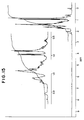
- Figures 15, 16 and 17 are a 1H-NMR diagram (solvent: CDCl3), a 13C-NMR diagram (solvent: CDCl3) and a GC-MS diagram, respectively, of 1,1-di(3-methyl cyclohexyl) cyclopentane prepared in Example 8.
- Figures 18, 19 and 20 are a 1H-NMR diagram (solvent: CDCl3), a 13C-NMR diagram (solvent: CDCl3) and a GC-MS diagram, respectively, of 2,2-dicyclohexyl [2.2.1]-bicycloheptane prepared in Example 9.
- Figures 21, 22 and 23 are a 1H-NMR diagram (solvent: CDCl3), a 13C-NMR diagram (solvent: CDCl3) and a GC-MS diagram, respectively, of 2,2-di(3-methyl cyclohexyl) [2.2.1]-bicycloheptane prepared in Example 10.
- the 1,1-dicyclohexyl cycloalkane derivative represented by the above given general formula (I) is a novel compound not known in the prior art nor described in any literatures.
- each of the symbols R1, R2, R3, R4, R5 and R6 can be a hydrogen atom or a lower alkyl group having 1 to 6 carbon atoms including methyl, ethyl, propyl, isopropyl, butyl, isobutyl, tert-butyl, pentyl and hexyl groups.
- R1 to R6 can be the same ones or different ones each independently from the others.
- a molecule of the compound of the general formula (I) has two or more of each of R3, R4, R5 and R6, they can be the same ones or different ones from each other albeit they are denoted by the same symbol.
- a molecule of the compound has two of the groups denoted by R3 which can be, one, a methyl group and, the other, an ethyl group.
- each of the groups denoted by R3, R4, R5 and R6 can be a divalent group forming an alkylene group jointly with either one of the other groups.
- the alkylene group has 1 to 12 carbon atoms and can be straightly linear or branched in structure. Examples of the alkylene group include methylene, ethylene, propylene, trimethylene, isopropylidene and isobutylene groups.
- the reaction for the preparation of the compound of the general formula (I) from the compound of the general formula (II) is performed in the presence of hydrogen, a hydrogenation catalyst and a dehydration catalyst.
- the reaction can be performed in three different ways. Firstly, the reaction is performed in the simultaneous presence of hydrogen, a hydrogenation catalyst and a dehydration catalyst. Secondly, the compound of the general formula (II) is first hydrogenated by using hydrogen and a hydrogenation catalyst and the hydrogenation product is then subjected to a reaction by using hydrogen, a hydrogenation catalyst and a dehydration catalyst.
- the compound of the general formula (II) is hydrogenated by using hydrogen and a hydrogenation catalyst to give a hydrogenation product which is subjected to successive reactions first by using a dehydration catalyst and then by using hydrogen and a hydrogenation catalyst to effect the second hydrogenation reaction.
- the first method is preferred among the three because the reaction can be completed in one pot to be time-saving.
- the hydrogenation catalyst used in the above mentioned reaction can be any one of conventional hydrogenation catalysts containing one or more of the metallic elements such as nickel, ruthenium, palladium, platinum, rhodium, iridium, copper, chromium, molybdenum, cobalt, tungsten and the like. These metallic elements can be used as supported on a suitable catalyst carrier such as active carbon and the like.
- the dehydration catalyst is preferably a solid acid catalyst including conventional ones such as, for example, terra abla, i.e. activated earth and acid clay; zeolites, silica gel, alumina gel, silica-alumina gel, cation-exchange resins, heteropolyacids and the like.
- terra abla i.e. activated earth and acid clay
- zeolites silica gel, alumina gel, silica-alumina gel, cation-exchange resins, heteropolyacids and the like.
- the hydrogenation catalyst is used in an amount in the range from 0.1 to 100% by weight or, preferably, from 1 to 20% by weight and the solid acid catalyst is used in an amount in the range from 0.1 to 100% by weight or, preferably, from 1 to 20% by weight each based on the amount of the starting material.
- organic solvents can be used as a reaction medium in which the reaction according to the inventive method is performed.
- suitable organic solvents include saturated hydrocarbon solvents such as n-pentane, n-hexane, decane, cyclopentane, cyclohexane, methyl cyclohexane, ethyl cyclohexane, decahydronaphthalene and the like, aromatic hydrocarbon solvents such as benzene, toluene, xylene, tetrahydronaphthalene and the like and polar organic solvents such as acetone, ethyl alcohol and the like, of which the saturated hydrocarbon solvents are preferred because the aromatic hydrocarbon solvents may be hydrogenated in their part and the polar solvents can also be hydrogenated or dehydrated as a possibility.
- saturated hydrocarbon solvents such as n-pentane, n-hexane, decane, cyclopentane, cyclohexane, methyl
- the above mentioned reaction is performed at a temperature in the range from room temperature to 300°C or, preferably, from room temperature to 220°C under a pressure in the range from normal pressure to 200 kg/cm2G or, preferably, from 5 to 150 kg/cm2G.
- the reaction is complete usually within 0.5 to 24 hours or, in most cases, within 1 to 8 hours.
- a good efficiency of the reaction can be obtained by first hydrogenating the starting compound at about 120°C for about 2 hours and then dehydrating and hydrogenating the product in the first step reaction at a temperature of 180 to 200°C for about 2 hours.
- the above mentioned temperature range is important because the dehydration reaction can hardly proceed at a temperature lower than room temperature while the starting compound of the general formula (II) may be subject to thermal decomposition when the temperature exceeds the upper limit.
- the reaction mixture is filtered to remove the solid catalysts and, if necessary, stripped to be freed from the solvent to give the desired 1,1-dicylohexyl cycloalkane compound of the general formula (I) as the product.
- Examples of the 1,1-dicyclohexyl cycloalkane derivative represented by the general formula (I) and synthesized by the above described method include: 1,1-dicyclohexyl cyclopentane; 1-cyclohexyl-1-(methyl cyclohexyl) cyclopentanes; 1-cyclohexyl-1-(ethyl cyclohexyl) cyclopentanes; 1-cyclohexyl-1-(propyl cyclohexyl) cyclopentanes; 1-cyclohexyl-1-(butyl cyclohexyl) cyclopentanes; 1,1-di(methyl cyclohexyl) cyclopentanes; 1-(methyl cyclohexyl)-1-(ethyl cyclohexyl) cyclopentanes; 1,1-di(ethyl cyclohexyl) cyclopentanes; 1,1-dicyclohe
- 1,1-dicyclohexyl cycloalkane derivatives in general have a low viscosity and a high traction coefficient at high temperatures so that they are quite satsifactory as a constituent of a traction-drive fluid.
- the 1,1-dicyclohexyl cycloalkane derivative can be used as blended with other conventional traction-drive fluids to improve the performance thereof.
- the content thereof in the traction-drive fluid should be at least 1% by weight or, preferably, in the range from 5 to 60% by weight.
- a conventional traction-drive fluid can be imparted with a remarkably improved traction coefficient. Since the inventive 1,1-dicyclohexyl cycloalkane compound has a lower viscosity than that of conventional traction-drive fluids, the traction coefficient of the blend can be increased by increasing the proportion of the inventive compound in the blend.
- reaction mixture cooled to room temperature and taken out of the autoclave was filtered to remove the catalyst and the filtrate was freed from the solvent by distillation.
- the thus obtained reaction product was analyzed by the 1H-NMR method to find no peaks assignable to the aromatic structure or olefinic unsaturation indicating at least 99.9% of hydrogenation. Further, the analysis by the 13C-NMR method indicated presence of a single quaternary carbon atom and two tertiary carbon atoms, the rest being secondary carbon atoms, in a molecule.
- the molecular weight of the compound was 248 corresponding to a molecular formula of C18H32 according to the result of the GC-MS analysis.
- the gas-chromatographic (FID) diagram had a single peak with a retention time of 15.1 minutes showing complete absence of the starting material.
- the gas chromatographic analysis was conducted under the following conditions. Column: OV-7, stainless steel column, 2 meters Column temperature: 80°C to 330°C, increased at a rate of 10°C/minute Temperature at the injection port: 350°C Carrier gas: nitrogen, 45 ml/minute Detector: FID
- Columns 1, 2 and 3 of the accompanying drawing show a 1H-NMR diagram, 13C-NMR diagram and GC-MS diagram, respectively, of the compound. This compound had following physical properties.
- each of the cylinders was made from a bearing steel SUJ-2 having a mirror-polished surface and the maximum Hertzian contact pressure was 10983,45 ⁇ 103hPa (112 kgf/mm2).
- Figure 4 gives the traction coefficient determined at a slip factor of 5% as a function of the oil temperature which was varied in the range from 40°C to 140°C by heating the oil tank with a heater.
- Example 2 The same synthetic reaction as in Example 1 was undertaken except that the reaction temperature was 190°C throughout the reaction time of 4 hours.
- the reaction product was analyzed by the gas chromatography (FID) to give the same peak as in Example 1 though with a selectivity of 90%.
- the reaction mixture cooled to room temperature and taken out of the autoclave was filtered to remove the catalyst and the filtrate was analyzed by the gas chromatography (FID) to find that the gas chromatogram had the same peak with a retention time of 15.1 minutes as obtained in Example 1 in a selectivity of 95% with complete disappearance of the peak with a retention time of 20.8 minutes.
- FID gas chromatography
- reaction mixture cooled to room temperature and taken out of the autoclave was filtered to remove the catalyst and the filtrate was analyzed to find that it was composed of 75% of 2-methyl-1,2-di(methyl cyclohexyl) propane and 25% of 2-methyl-1,1-di(methyl cyclohexyl) propane with at least 99.9% hydrogenation of the starting compounds.
- This product had following physical properties.
- the crystals were dissolved in acetone and the solution was analyzed by the gas chromatography (FID) to give three constituents, referred to as the compounds (a), (b) and (c) hereinbelow, in a relative amount of 10:22:68 at the retention times of 8.1 minutes, 8.6 minutes and 9.0 minutes, respectively.
- FID gas chromatography
- the reaction product was treated in the same manner as in Example 1 and subjected to analysis to find that the hydrogenation was 99.9% or higher with complete disappearance of the hydroxy groups. Further, the results of the gas chromatographic analysis (FID) and GC-MS analysis indicated that this product was composed of 9% of 1,1-dicyclohexyl cyclohexane C18H32, 24% of 1-cyclohexyl-1-(3-methyl cyclohexyl) cyclohexane C19H34 and 67% of 1,1-di(3-methyl cyclohexyl) cyclohexane C20H36. The yield of the product was 118 g.
- Figures 5, 6 and 7 show a 1H-NMR diagram, 13C-NMR diagram and GC-MS diagram of the fraction of C19H34 taken by the liquid chromatography of this product.
- the above obtained crystalline product as a whole had following physical properties.
- Refractive index n 20 D 1.5048
- Figure 4 shows the traction coefficient of this product as a function of temperature in the range from 40°C to 140°C.
- reaction was further continued for additional 4.5 hours by increasing the temperature to 215°C under an increased hydrogen pressure of 108886,4 hPa (110 kg/cm2G).
- reaction mixture was processed in the same manner as in Example 1 to give 108.56 g of a reaction product.
- the diagram obtained by the 1H-NMR analysis indicated complete disappearance of the peaks assignable to the aromatic structure and olefinic unsaturation to give a conclusion that the hydrogenation of the starting compound was at least 99.9%.
- the result of the 13C-NMR analysis indicated that the molecule of the product compound had a single quaternary carbon atom and two tertiary carbon atoms, all of the other carbon atoms being secondary.
- the compound had a molecular weight of 234 corresponding to a molecular formula of C17H30 according to the result of the GC-MS analysis.
- the retention time of the compound in the gas chromatographic analysis (FID) was 4.3 minutes supporting the conclusion that this product was a compound completely different from the starting compound.
- the above mentioned analytical results led to a conclusion that this product could be identified to be 1,1-dicyclohexyl cyclopentane.
- Figures 11, 12 and 13 show a 1H-NMR diagram, 13C-NMR diagram and GC-MS diagram, respectively, of this product compound.
- the compound had following physical properties. Kinematic viscosity: 25.72 centistokes at 40°C; 3.788 centistokes at 100°C Viscosity index: -53 Specific gravity (15/4°C): 0.9586 Refractive index n 20 D : 1.5111 Further, the traction coefficient of this product compound was determined in the same manner as in Example 1 to give the results shown in Figure 14 as a function of temperature in the range from 40°C to 140°C.
- Figures 15, 16 and 17 show a 1H-NMR diagram, 13C-NMR diagram and GC-MS diagram, respectively, of this compound.
- This product had following physical properties. Kinematic viscosity: 61.82 centistokes at 40°C; 4.813 centistokes at 100°C Viscosity index: -241 Specific gravity (15/4°C): 0.9426 Refractive index n 20 D : 1.5034 Further, the traction coefficient of this product compound was determined to give the results shown in Figure 14 as a function of temperature in the range from 40°C to 140°C.
- Figures 21, 22 and 23 show a 1H-NMR diagram, 13C-NMR diagram and GC-MS diagram, respectively, of this compound.
- This product had following physical properties. Kinematic viscosity: 230.2 centistokes at 40°C; 8.337 centistokes at 100°C Viscosity index: -277 Specific gravity (15/4°C): 0.9660 Refractive index n 20 D : 1.5135 Further, the traction coefficient of this product was determined to give the results shown in Figure 14 as a function of temperature in the range from 40°C to 140°C.
- the present invention provides an efficient method for the preparation of various kinds of 1,1-dicyclohexyl cycloalkane derivatives as a class of novel compounds.
- These compounds generally have a low viscosity and high traction coefficient over a wide temperature range from room temperature to elevated temperatures.
- These unique properties of the inventive compound as a traction-drive fluid give a possibility of constructing a traction drive apparatus of a compact and light-weight design with an increase in the serviceable life of the apparatus even when the apparatus is driven under adverse conditions.
Landscapes
- Chemical & Material Sciences (AREA)
- Organic Chemistry (AREA)
- Oil, Petroleum & Natural Gas (AREA)
- Chemical Kinetics & Catalysis (AREA)
- General Chemical & Material Sciences (AREA)
- Engineering & Computer Science (AREA)
- Organic Low-Molecular-Weight Compounds And Preparation Thereof (AREA)
- Low-Molecular Organic Synthesis Reactions Using Catalysts (AREA)
Claims (6)
- Dérivé de 1,1-dicyclohexylcycloalcane représenté par la formule générale

- Procédé de préparation d'un dérivé de 1,1-dicyclohexylcycloalcane représenté par la formule générale

soumettre un composé 1,1-di(hydroxyphényl)cycloalcane représenté par la formule générale
- Procédé de préparation d'un dérivé de 1,1-dicyclohexylcycloalcane selon la revendication 2, dans lequel la réaction est réalisée à une température dans la gamme allant de la température ambiante à 220°C, sous une pression manométrique d'hydrogène dans la gamme allant de 0,59 MPa (5 kg/cm²) à 14,99 MPa (150 kg/cm²).
- Procédé de préparation d'un dérivé de 1,1-dicyclohexyl-cycloalcane représenté par la formule générale
 (a) soumettre un composé 1,1-di(hydroxyphényl)cycloalcane représenté par la formule générale
 (b) soumettre le composé 1,1-di(hydroxycyclohexyl)cycloalcane obtenu dans l'étape (a) à une réaction de déshydratation et à une réaction d'hydrogénation, en combinaison, en présence simultanée d'un catalyseur de déshydratation et d'un catalyseur d'hydrogénation.
 - Fluide de transmission, qui comprend au moins 1% en poids d'un dérivé de 1,1-dicyclohexylcycloalcane représenté par la formule générale

- Fluide de transmission selon la revendication 5, qui comprend de 5% en poids à 60% en poids du dérivé de 1,1-dicyclohexylcycloalcane.
Applications Claiming Priority (4)
| Application Number | Priority Date | Filing Date | Title |
|---|---|---|---|
| JP24688088 | 1988-09-30 | ||
| JP246880/88 | 1988-09-30 | ||
| JP1103381A JPH0639419B2 (ja) | 1988-09-30 | 1989-04-25 | 1,1―ジシクロヘキシルシクロアルカン誘導体,その製造法及びそれを含有するトラクションドライブ用流体 |
| JP103381/89 | 1989-04-25 |
Publications (2)
| Publication Number | Publication Date |
|---|---|
| EP0362673A1 EP0362673A1 (fr) | 1990-04-11 |
| EP0362673B1 true EP0362673B1 (fr) | 1993-07-28 |
Family
ID=26444027
Family Applications (1)
| Application Number | Title | Priority Date | Filing Date |
|---|---|---|---|
| EP89117750A Expired - Lifetime EP0362673B1 (fr) | 1988-09-30 | 1989-09-26 | Dérivé de 1,1-dicyclohexyle cycloalcane, son procédé de préparation et fluide de traction le contenant |
Country Status (4)
| Country | Link |
|---|---|
| US (1) | US5107041A (fr) |
| EP (1) | EP0362673B1 (fr) |
| CA (1) | CA1322770C (fr) |
| DE (1) | DE68907841T2 (fr) |
Families Citing this family (13)
| Publication number | Priority date | Publication date | Assignee | Title |
|---|---|---|---|---|
| JPH0288697A (ja) * | 1988-09-26 | 1990-03-28 | Mitsubishi Oil Co Ltd | トラクションドライブ用潤滑油 |
| US5107041A (en) * | 1988-09-30 | 1992-04-21 | Idemitsu Kosan Co., Ltd. | 1,1-dicyclohexyl cycloalkane derivative, method for the preparation thereof and traction-drive fluid containing the same |
| JP2561758B2 (ja) * | 1991-04-08 | 1996-12-11 | 出光興産株式会社 | トラクションドライブ用流体,その製造方法及びビシクロオクタン化合物 |
| US5306851A (en) * | 1992-11-23 | 1994-04-26 | Mobil Oil Corporation | High viscosity index lubricant fluid |
| EP0949319A3 (fr) * | 1998-04-08 | 2001-03-21 | Nippon Mitsubishi Oil Corporation | Fluide de traction |
| US6319879B1 (en) * | 1998-07-01 | 2001-11-20 | Idemitsu Kosan Co., Ltd. | Derivative of bicyclo [2.2.1] heptane, method for its production, and fluid for traction drive |
| WO2002083812A1 (fr) * | 2001-04-11 | 2002-10-24 | Solutia Inc. | Procede de fabrication de polymeres sensibles a la temperature |
| US7629467B2 (en) * | 2003-07-24 | 2009-12-08 | Merck & Co., Inc. | Diphenyl substituted cycloalkanes, compositions containing such compounds and methods of use |
| US20060100466A1 (en) * | 2004-11-08 | 2006-05-11 | Holmes Steven A | Cycloalkane base oils, cycloalkane-base dielectric liquids made using cycloalkane base oils, and methods of making same |
| US7531083B2 (en) * | 2004-11-08 | 2009-05-12 | Shell Oil Company | Cycloalkane base oils, cycloalkane-base dielectric liquids made using cycloalkane base oils, and methods of making same |
| US8674007B2 (en) | 2006-07-12 | 2014-03-18 | Sabic Innovative Plastics Ip B.V. | Flame retardant and scratch resistant thermoplastic polycarbonate compositions |
| CN111233605B (zh) * | 2020-01-19 | 2023-02-10 | 西安瑞联新材料股份有限公司 | 一种(反,反)-4-烷基-4′-烷基-1,1′-双环己烷的合成方法 |
| CN114890857B (zh) * | 2022-06-21 | 2023-04-07 | 中节能万润股份有限公司 | 一种通过分子筛由环醇一步制备环烷烃的方法 |
Family Cites Families (4)
| Publication number | Priority date | Publication date | Assignee | Title |
|---|---|---|---|---|
| US4556503A (en) * | 1983-09-09 | 1985-12-03 | Idemitsu Kosan Company Limited | Traction drive fluids |
| JPS61100533A (ja) * | 1984-10-23 | 1986-05-19 | Idemitsu Kosan Co Ltd | 1,3‐ジシクロヘキシル‐1‐メチルシクロペンタン |
| US4704843A (en) * | 1986-09-26 | 1987-11-10 | W. R. Grace & Co., Cryovac Div. | Apparatus and method for packaging articles |
| US5107041A (en) * | 1988-09-30 | 1992-04-21 | Idemitsu Kosan Co., Ltd. | 1,1-dicyclohexyl cycloalkane derivative, method for the preparation thereof and traction-drive fluid containing the same |
-
1989
- 1989-09-13 US US07/406,688 patent/US5107041A/en not_active Expired - Fee Related
- 1989-09-19 CA CA000611986A patent/CA1322770C/fr not_active Expired - Fee Related
- 1989-09-26 DE DE89117750T patent/DE68907841T2/de not_active Expired - Fee Related
- 1989-09-26 EP EP89117750A patent/EP0362673B1/fr not_active Expired - Lifetime
Also Published As
| Publication number | Publication date |
|---|---|
| CA1322770C (fr) | 1993-10-05 |
| EP0362673A1 (fr) | 1990-04-11 |
| US5107041A (en) | 1992-04-21 |
| DE68907841T2 (de) | 1993-11-25 |
| DE68907841D1 (de) | 1993-09-02 |
Similar Documents
| Publication | Publication Date | Title |
|---|---|---|
| EP0402881B1 (fr) | Procédé de modification du coefficient de traction. | |
| US5107041A (en) | 1,1-dicyclohexyl cycloalkane derivative, method for the preparation thereof and traction-drive fluid containing the same | |
| KR0124371B1 (ko) | 견인구동용 유체, 그 제조방법 및 비시클로옥탄화합물 | |
| US3972243A (en) | Traction drive with a traction fluid containing gem-structured polar organo compound | |
| EP0305807B1 (fr) | Fluide pour entraînement par traction | |
| US4329529A (en) | Traction fluids for traction drive transmissions | |
| US3778487A (en) | Polyisobutylene oil having a high viscosity index | |
| US6187979B1 (en) | Lubricating base oil composition and process for producing same | |
| JP4891469B2 (ja) | トラクションドライブ用流体 | |
| US3793203A (en) | Lubricant comprising gem-structured organo compound | |
| JP2001247492A (ja) | ビシクロ[2.2.1]ヘプタン誘導体及びその製造方法並びにトラクションドライブ用流体 | |
| EP0240814B1 (fr) | Fluide de transmission pour entraînement par traction | |
| KR950006790B1 (ko) | 1,1-디시클로헥실 시클로알칸 유도체, 그 제조방법 및 그것을 함유한 견인구동용 유체 | |
| EP0224259B1 (fr) | Fluide de travail pour entraînement par traction | |
| JP4792171B2 (ja) | 潤滑油基油組成物 | |
| US4604492A (en) | Dicyclohexylcyclopentane compounds | |
| US4604493A (en) | 1-cyclohexyl-1,4-dimethyl decahydronaphthalene and a working fluid for traction drive formulated therewith | |
| US4386229A (en) | Olefin dimerization | |
| US4997586A (en) | Medium for transmitting motive power | |
| US5180866A (en) | Process for preparing synthetic lubricant base stocks having improved viscosity from vinylcyclohexene and long-chain olefins | |
| JP2608305B2 (ja) | トラクションドライブ用流体 | |
| JPH01198692A (ja) | トラクションドライブ用流体 | |
| EP0246506B1 (fr) | Composition fluide, son procédé de préparation et son utilisation comme moyen de chauffage | |
| JP2002294265A (ja) | 潤滑用流体 | |
| JPH0562918B2 (fr) |
Legal Events
| Date | Code | Title | Description |
|---|---|---|---|
| PUAI | Public reference made under article 153(3) epc to a published international application that has entered the european phase |
Free format text: ORIGINAL CODE: 0009012 |
|
| AK | Designated contracting states |
Kind code of ref document: A1 Designated state(s): BE CH DE FR GB IT LI NL SE |
|
| 17P | Request for examination filed |
Effective date: 19901002 |
|
| 17Q | First examination report despatched |
Effective date: 19920210 |
|
| GRAA | (expected) grant |
Free format text: ORIGINAL CODE: 0009210 |
|
| AK | Designated contracting states |
Kind code of ref document: B1 Designated state(s): BE CH DE FR GB IT LI NL SE |
|
| PG25 | Lapsed in a contracting state [announced via postgrant information from national office to epo] |
Ref country code: LI Effective date: 19930728 Ref country code: CH Effective date: 19930728 Ref country code: BE Effective date: 19930728 |
|
| REF | Corresponds to: |
Ref document number: 68907841 Country of ref document: DE Date of ref document: 19930902 |
|
| ET | Fr: translation filed | ||
| ITF | It: translation for a ep patent filed | ||
| REG | Reference to a national code |
Ref country code: CH Ref legal event code: PL |
|
| K2C2 | Correction of patent specification (partial reprint) published |
Effective date: 19930728 |
|
| PLBE | No opposition filed within time limit |
Free format text: ORIGINAL CODE: 0009261 |
|
| STAA | Information on the status of an ep patent application or granted ep patent |
Free format text: STATUS: NO OPPOSITION FILED WITHIN TIME LIMIT |
|
| 26N | No opposition filed | ||
| ITTA | It: last paid annual fee | ||
| EAL | Se: european patent in force in sweden |
Ref document number: 89117750.3 |
|
| PGFP | Annual fee paid to national office [announced via postgrant information from national office to epo] |
Ref country code: NL Payment date: 19950922 Year of fee payment: 7 |
|
| PG25 | Lapsed in a contracting state [announced via postgrant information from national office to epo] |
Ref country code: NL Effective date: 19970401 |
|
| NLV4 | Nl: lapsed or anulled due to non-payment of the annual fee |
Effective date: 19970401 |
|
| PGFP | Annual fee paid to national office [announced via postgrant information from national office to epo] |
Ref country code: SE Payment date: 19970918 Year of fee payment: 9 |
|
| PG25 | Lapsed in a contracting state [announced via postgrant information from national office to epo] |
Ref country code: SE Free format text: LAPSE BECAUSE OF NON-PAYMENT OF DUE FEES Effective date: 19980927 |
|
| PGFP | Annual fee paid to national office [announced via postgrant information from national office to epo] |
Ref country code: GB Payment date: 19981001 Year of fee payment: 10 |
|
| EUG | Se: european patent has lapsed |
Ref document number: 89117750.3 |
|
| PGFP | Annual fee paid to national office [announced via postgrant information from national office to epo] |
Ref country code: FR Payment date: 19990909 Year of fee payment: 11 |
|
| PG25 | Lapsed in a contracting state [announced via postgrant information from national office to epo] |
Ref country code: GB Free format text: LAPSE BECAUSE OF NON-PAYMENT OF DUE FEES Effective date: 19990926 |
|
| GBPC | Gb: european patent ceased through non-payment of renewal fee |
Effective date: 19990926 |
|
| PG25 | Lapsed in a contracting state [announced via postgrant information from national office to epo] |
Ref country code: FR Free format text: LAPSE BECAUSE OF NON-PAYMENT OF DUE FEES Effective date: 20010531 |
|
| REG | Reference to a national code |
Ref country code: FR Ref legal event code: ST |
|
| PGFP | Annual fee paid to national office [announced via postgrant information from national office to epo] |
Ref country code: DE Payment date: 20021002 Year of fee payment: 14 |
|
| PG25 | Lapsed in a contracting state [announced via postgrant information from national office to epo] |
Ref country code: DE Free format text: LAPSE BECAUSE OF NON-PAYMENT OF DUE FEES Effective date: 20040401 |
|
| PG25 | Lapsed in a contracting state [announced via postgrant information from national office to epo] |
Ref country code: IT Free format text: LAPSE BECAUSE OF NON-PAYMENT OF DUE FEES;WARNING: LAPSES OF ITALIAN PATENTS WITH EFFECTIVE DATE BEFORE 2007 MAY HAVE OCCURRED AT ANY TIME BEFORE 2007. THE CORRECT EFFECTIVE DATE MAY BE DIFFERENT FROM THE ONE RECORDED. Effective date: 20050926 |