EP0362709A2 - Méthode pour obtenir l'accès à des structures de données sans verrouillage - Google Patents
Méthode pour obtenir l'accès à des structures de données sans verrouillage Download PDFInfo
- Publication number
- EP0362709A2 EP0362709A2 EP89118049A EP89118049A EP0362709A2 EP 0362709 A2 EP0362709 A2 EP 0362709A2 EP 89118049 A EP89118049 A EP 89118049A EP 89118049 A EP89118049 A EP 89118049A EP 0362709 A2 EP0362709 A2 EP 0362709A2
- Authority
- EP
- European Patent Office
- Prior art keywords
- node
- tree
- nodes
- affix
- steps
- Prior art date
- Legal status (The legal status is an assumption and is not a legal conclusion. Google has not performed a legal analysis and makes no representation as to the accuracy of the status listed.)
- Ceased
Links
Images


Classifications
-
- G—PHYSICS
- G06—COMPUTING OR CALCULATING; COUNTING
- G06F—ELECTRIC DIGITAL DATA PROCESSING
- G06F16/00—Information retrieval; Database structures therefor; File system structures therefor
- G06F16/10—File systems; File servers
- G06F16/13—File access structures, e.g. distributed indices
Definitions
- the present invention relates to a method for establishing and maintaining a data structure to increase concurrency for readers.
- a file may be considered as a set of n records containing the file information and a key that is uniquely associated with the file information. It is assumed that the key uniquely identifies the record.
- a user may conduct various types of transactions against a file including the insertion, deletion retrieval and updating of the file records.
- a weak searcher is a reader with no intent to update.
- a weak-search returns a result that was valid at some time during the search, but is not guaranteed to be current at the time of search termination. If, however, a weak-searcher has obtained a lock on the object of the search before starting to traverse the B-tree, then, using this invention it will be guaranteed a valid (i.e, current) object at the time of search termination.
- B-link tree which does not define methods for the contraction of the B-tree in the traditional manner. Although this might be acceptable in a tree that is either stable or changing with uniformly distributed insertions and deletions, it is not generally robust. In particular, the result of 0.69 mean density, described in Yao, A. "On random 2-3 trees,” Acta Inf. 9, 2 (1978), 159-170, will not hold. In addition, the B-link tree is not amenable to the application of shadow update which is used to perform an atomic update involving more than one node.
- the method of the present invention applies to data structures connected by address pointers.
- Such data structures include trees, lists and certain types of tables (for example, a hash table with chained overflow buckets).
- nodes Each node in the structure except the terminal node contains a pointer to another node. This method is feasible if readers either:
- a reader atomically computes the time interval between obtaining a pointer to a node and completing its search of the node, it can compare this to the specified time interval and a)proceed if its duration is less than the specified time interval or b)restart if its duration exceeded the specified time interval.
- the specified time interval is selected so that it both insures that a high percentage of the readers will complete without a restart and that only a small amount of storage will be in a pending state. Also, in practice a reader should abort short of the specified time interval by an amount that represents the maximum error in measuring elapsed time.
- a reader restarts when it reaches a node that is either no longer a part of the same structure or has been reused as another node of the structure.
- Shadow writing consists of creating a new node in a different memory area. In one atomic update the writer changes the pointer to the new node or nodes. Thus, if a reader has yet to obtain the pointer the reader will see the new nodes, or continue to see the old nodes until it is reused. Since it will not be reused for the specified time interval the reader must make its reference within that interval.
- the data structure used is a tree, which, as stated above, is typical in database systems, a change to the data structure shadows a complete subtree to a point that a single atomic update can prune the old branches and attach new ones.
- the invention will be described with respect to B+-trees.
- a B+-tree is a leaf search tree in which all keys (and possibly associated data) appear in the external nodes (i.e., leaves) and the internal nodes contain separator keys which provide a route to the leaves. These separator keys are often called routers and the routing scheme can affect concurrency (Kwong, Y. and Wood, D., "On B-trees: routing schemes and concurrency," ACM/SIGMOD Int. Conf. Management of Data , 1980, pp. 207-213).
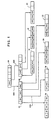
- the leaves are nodes 10-22, and the internal nodes 24-28 contain routers.
- path 28A is taken since, it is to the left of key 340 and 103 is less than 340.
- path 24A is taken since this path is more than 38 and less than 123. This, in turn leads to node 18, where key 103 is found.
- a B+-tree of order m has the following properties:
- m is used to refer to both m or m′, and, where the distinction is not important, element key/data. Also the use of leaves corresponds to the father-of-leaves level in much of the literature
- the ( ⁇ , ⁇ ) routing scheme is used herein for non-leaf nodes. This routing scheme is defined as follows:
- routers, r In any non-leaf node containing j routers, r, 1 ⁇ r ⁇ j, and j + 1 pointers, p, 0 ⁇ p ⁇ j, let S(p i ) be the subtree pointed to by p i . Then in the ( ⁇ , ⁇ ) routing scheme, routers, r, satisfy the following: for 1 ⁇ i ⁇ j, all keys in 5(p i-1 ) ⁇ r i ⁇ all keys in S(p i ).
- Livelock is theoretically possible in this invention as it is likely to be in any solution that allows concurrent reading and writing of any data structure.
- This invention is of primary value when there are more readers than writers, and since B+-tree restructuring occurs approximately once every m 2 updates, livelock will tend not to be a practical problem.
- solutions for livelock such as that mentioned in Lehman and Yao can be implemented if necessary.
- the pages (i.e., nodes) of the B+-tree are stored on a secondary storage device, for example a disk.
- Multiple processes may concurrently read and modify the B+-tree. These processes may exist in one or more computer systems.
- a computer system consists of a primary store connected to one or more processors.
- a process can read or write only one page at a time but can have multiple pages simultaneously accessible in primary storage. For simplicity it is assumed that an output operation that writes a node from primary to secondary storage is indivisible.
- a process modifying a node in the B+-tree works on a private copy of the node in primary memory and then introduces the node into the B+-tree by writing it from primary to secondary storage.
- Updaters may use any locking technique that ensures the correct serialization of B+-tree modifications.
- a lock gives a process exclusive modification rights to a page. Readers do not have to use locks and are never prevented from accessing a page.
- the invention is not concerned with the details of the locking discipline or its implementation in a distributed environment.
- a node in a B-tree is insertion-safe if it is not full, i.e., it has less than m - 1 keys, and it is deletion-safe if it is not minimal, i.e., it has more than ceiling( m 2 - 2) keys.
- an INSERT process Before changing the B+-tree, an INSERT process first locks its scope using some locking protocol. As a result the subtree whose root is the deepest safe node will remain locked when the insertion point is found. This subtree will in its simplest form be a safe leaf node in which the new key and data can be inserted without causing an overflow. Otherwise it is the deepest safe node which is the parent of a descendant path that is not insertion-safe and will therefore result in node split(s) due to the insertion.
- the traditional way of accomplishing this is to split the leaf node which is receiving the new key/data into nodes containing ( m′ 2 - 1) and m′ - ceiling( m′ 2 ) key/data elements respectively, and add the new element to the appropriate node. This then causes the propagation of a router/pointer element to the parent, which will cause overflow if the parent is not insertion-safe. Therefore, this "upward" propagation can occur recursively until the deepest insertion-safe node is reached.
- the leaf node is insertion safe then the new data is inserted and the leaf node is written to its existing location on secondary storage (i.e., in-place ). Otherwise, for each splitting node up to the deepest insertion-safe node, the two new nodes replacing the former node are written to new secondary storage locations rather than their existing location. That is, both nodes resulting from the split are written in their final form to new secondary storage locations leaving the B+-tree in its former consistent state. They are connected to the tree by the insertion of the new router into an insertion-safe node along with the two new pointers. The insertion-safe node is then written to its existing location on secondary storage. As a result of this operation, the B+-tree is transformed into its new consistent state.
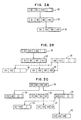
- FIGS. 2A, 2B, and 2C The new solution for insertion is illustrated in FIGS. 2A, 2B, and 2C.
- FIG. 2A depicts a portion of a B+-tree having three nodes 30, 32 and 34 before the insertion of an element 102.
- FIG. 28 shows the state after the new shadow updated nodes 36, 38, 40 and 42 (resulting from the overflows) have been written, but before they have been connected to the insertion-safe node 30.
- FIG. 2C the shadowed nodes have been connected to node 30 via the insertion of key 98 into node 30 and its two adjacent pointers. Note that the former path is now disconnected from the tree.
- a delete process locks its scope using a locking protocol in the same way as the insert process.
- the target element is then deleted with a possible consequent merge (due to underflow) until a key rotation or deletion in the deletion-safe node occurs.
- deletion is managed as follows:
- the node containing the deleted element does not underflow as a result of its deletion, then that node is written in-place and the process is done. Otherwise the immediate sibling(s) that receive(s) the merging elements is (are) shadow updated by being written to new secondary storage allocations. (An immediate sibling is adjacent in the common parent. Therefore, the nodes designated by the leftmost and rightmost pointers have only one immediate sibling. All other children of the parent have two immediate siblings). If this merging procedure is terminated by a key rotation, then the siblings involved in the rotation are also shadow updated. In this case, the parent involved in the key rotation is written in-place thereby connecting the new nodes to the tree.
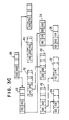
- FIGS. 3A, 3B and 3C illustrate the new method of deletion according to the present invention.
- FIG. 3A illustrates a portion of a B+-tree having nodes 40-52 before the deletion of element 108.
- FIG. 38 the two new shadow updated nodes 54 and 56 resulting from the underflow of the leaf and its parent are dotted.
- FIG. 3C the same portion of the B+-tree is shown after the rotation has connected the shadowed nodes.
- the former nodes that are now disconnected, 42-52, are also shown dotted. Note that nodes 42 and 44 were updated by shadow writing the corresponding nodes 62 and 60 in order to rotate the routers 185 and 200. This rotation was completed by replacing router 185 with 200 in the root and then writing the root in-place.
- shadow updating to achieve "local" consistency for a restructure operation has been described.
- the technique can also be used to achieve a larger range of consistency.
- any number of logically connected but physically disjoint elements in the B+-tree can be atomically changed by shadow updating until a common node, i.e., the root of the minimal subtree which contains all of the changed elements, is reached, at which point the entire set of changes is introduced in one operation.
- Method 1 will cause less (usually no) restarting at the expense of some amount of secondary storage space on temporary hold.
- Methods 2 and 3 allow nodes to be reused as needed but will tend to incur more reader restarting.
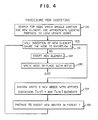
- FIG. 4 shows the procedure that is followed during the insertion of a new element in the B+-tree.
- the standard B+-tree search technique is used to find the leaf node that is to contain the new element (logic block 100).
- An appropriate locking protocol is used to lock the update scope. If the insertion of the new element will not cause an overflow in the node then the new element is inserted and the node and its affix written in-place (logic blocks 101-103). If the insertion causes an overflow then the following is done iteratively until an insertion-safe node is found (logic blocks 104-105, 101):
- FIG. 5 shows the procedure that is followed during the deletion of an element in the B+-tree.
- the standard B+-tree search technique is used to find the leaf node that contains the element to be deleted (logic block 200).
- An appropriate locking protocol is used to lock the update scope. If the deletion of the element will not cause an underflow in the node then the element is deleted and the node and its affix written in-place (logic blocks 201-203). If the deletion causes an underflow then an immediate sibling is checked to see if the two nodes can be joined into one (logic block 204). If they can, then they are combined into a new node which is shadow written with an affix.
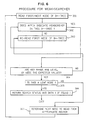
- FIG. 6 shows the procedure that is followed by readers (i.e., weak-searchers).
- the first node (i.e., root) of the B+-tree is read (logic block 301).
- the affix is checked for the correct object identity (logic block 302) and if it is incorrect a retry is attempted (logic block 303, 301).
- the affix will indicate an error if the node has been deleted from the B+-tree and reused in some other object between the time that the searcher starts and the subsequent inspection of the node. If the node passes the affix check, then the key range and level of the node are checked for the expected key range (in the case of the root this is the key range of the entire B+-tree) and level at logic block 304.
- the search is restarted at logic block 303.
- the key range may be incorrect if the node has been deleted and subsequently reused as another node in the B+-tree during the search. If the node is a leaf node, it is now searched for the target data and the search status and target data, if found, are returned to the client (logic block 305-306). If the node is not a leaf, then the next node to search is determined by scanning the routers (logic block 307) and the search continues at logic block 301.
Landscapes
- Engineering & Computer Science (AREA)
- Theoretical Computer Science (AREA)
- Data Mining & Analysis (AREA)
- Databases & Information Systems (AREA)
- Physics & Mathematics (AREA)
- General Engineering & Computer Science (AREA)
- General Physics & Mathematics (AREA)
- Information Retrieval, Db Structures And Fs Structures Therefor (AREA)
Applications Claiming Priority (2)
| Application Number | Priority Date | Filing Date | Title |
|---|---|---|---|
| US07/255,000 US5089952A (en) | 1988-10-07 | 1988-10-07 | Method for allowing weak searchers to access pointer-connected data structures without locking |
| US255000 | 1988-10-07 |
Publications (2)
| Publication Number | Publication Date |
|---|---|
| EP0362709A2 true EP0362709A2 (fr) | 1990-04-11 |
| EP0362709A3 EP0362709A3 (fr) | 1992-08-19 |
Family
ID=22966413
Family Applications (1)
| Application Number | Title | Priority Date | Filing Date |
|---|---|---|---|
| EP19890118049 Ceased EP0362709A3 (fr) | 1988-10-07 | 1989-09-29 | Méthode pour obtenir l'accès à des structures de données sans verrouillage |
Country Status (3)
| Country | Link |
|---|---|
| US (1) | US5089952A (fr) |
| EP (1) | EP0362709A3 (fr) |
| JP (1) | JPH0786843B2 (fr) |
Cited By (2)
| Publication number | Priority date | Publication date | Assignee | Title |
|---|---|---|---|---|
| EP0453707A3 (en) * | 1990-04-26 | 1992-12-02 | International Business Machines Corporation | Method and means for managing space re-use in a shadow written b-tree via free space lists |
| EP0644483A1 (fr) * | 1993-09-14 | 1995-03-22 | International Business Machines Corporation | Système d'ordinateur et procédé pour exécuter des tâches multiples |
Families Citing this family (39)
| Publication number | Priority date | Publication date | Assignee | Title |
|---|---|---|---|---|
| JPH02130647A (ja) * | 1988-11-11 | 1990-05-18 | Toshiba Corp | 索引木構造の更新方式 |
| JPH03266039A (ja) * | 1990-03-16 | 1991-11-27 | Fujitsu Ltd | フリーフォーマットデータリンク処理方式 |
| US5293600A (en) * | 1990-04-06 | 1994-03-08 | International Business Machines Corporation | Counter and flux bit locking for very fast shared serialization of shared data objects |
| US5440730A (en) * | 1990-08-09 | 1995-08-08 | Bell Communications Research, Inc. | Time index access structure for temporal databases having concurrent multiple versions |
| US5317728A (en) * | 1990-09-07 | 1994-05-31 | International Business Machines Corporation | Storage management of a first file system using a second file system containing surrogate files and catalog management information |
| US5285528A (en) * | 1991-02-22 | 1994-02-08 | International Business Machines Corporation | Data structures and algorithms for managing lock states of addressable element ranges |
| US5430869A (en) * | 1991-05-29 | 1995-07-04 | Hewlett-Packard Company | System and method for restructuring a B-Tree |
| US5204958A (en) * | 1991-06-27 | 1993-04-20 | Digital Equipment Corporation | System and method for efficiently indexing and storing a large database with high data insertion frequency |
| JP2781092B2 (ja) * | 1991-11-06 | 1998-07-30 | 富士通株式会社 | システム間排他制御方式 |
| EP0567668A1 (fr) * | 1992-04-27 | 1993-11-03 | International Business Machines Corporation | Système d'ordinateur pour le recouvrement d'information |
| US5440732A (en) * | 1993-02-05 | 1995-08-08 | Digital Equipment Corp., Pat. Law Gr. | Key-range locking with index trees |
| US5446887A (en) * | 1993-09-17 | 1995-08-29 | Microsoft Corporation | Optimal reorganization of a B-tree |
| US20020156737A1 (en) * | 1993-10-22 | 2002-10-24 | Corporation For National Research Initiatives, A Virginia Corporation | Identifying, managing, accessing, and tracking digital objects and associated rights and payments |
| JP3441807B2 (ja) * | 1994-09-19 | 2003-09-02 | 株式会社日立製作所 | B木インデクスの管理方法およびシステム |
| US5644763A (en) * | 1995-06-28 | 1997-07-01 | Sybase, Inc. | Database system with improved methods for B-tree maintenance |
| US5842196A (en) * | 1996-04-03 | 1998-11-24 | Sybase, Inc. | Database system with improved methods for updating records |
| US5832484A (en) * | 1996-07-02 | 1998-11-03 | Sybase, Inc. | Database system with methods for parallel lock management |
| US5873116A (en) * | 1996-11-22 | 1999-02-16 | International Business Machines Corp. | Method and apparatus for controlling access to data structures without the use of locks |
| US5937401A (en) * | 1996-11-27 | 1999-08-10 | Sybase, Inc. | Database system with improved methods for filtering duplicates from a tuple stream |
| US6792432B1 (en) | 1998-03-31 | 2004-09-14 | Sybase, Inc. | Database system with methods providing high-concurrency access in B-Tree structures |
| US6363387B1 (en) | 1998-10-20 | 2002-03-26 | Sybase, Inc. | Database system providing methodology for enhancing concurrency using row update bit and deferred locking |
| US6606626B1 (en) | 1998-10-20 | 2003-08-12 | Sybase, Inc. | Database system with lock manager enhancement for improving concurrency |
| US6631366B1 (en) | 1998-10-20 | 2003-10-07 | Sybase, Inc. | Database system providing methodology for optimizing latching/copying costs in index scans on data-only locked tables |
| US6591269B1 (en) | 1999-05-19 | 2003-07-08 | Sybase, Inc. | Database system with methodology for online index rebuild |
| WO2001067207A2 (fr) | 2000-03-09 | 2001-09-13 | The Web Access, Inc. | Procede et dispositif d'organisation de donnees par la superposition d'une base de donnees consultable comportant une arborescence de repertoires |
| US6490578B1 (en) | 2000-04-05 | 2002-12-03 | Sybase, Inc. | Database system with methodology for high-performance date |
| US7363325B2 (en) * | 2000-08-10 | 2008-04-22 | Nec Laboratories America, Inc. | Synchronizable transactional database method and system |
| EA006038B1 (ru) * | 2001-11-01 | 2005-08-25 | Верисайн, Инк. | Диспетчер транзакций в памяти |
| US8335779B2 (en) * | 2002-08-16 | 2012-12-18 | Gamroe Applications, Llc | Method and apparatus for gathering, categorizing and parameterizing data |
| US7043494B1 (en) * | 2003-01-28 | 2006-05-09 | Pmc-Sierra, Inc. | Fast, deterministic exact match look-ups in large tables |
| US7761474B2 (en) * | 2004-06-30 | 2010-07-20 | Sap Ag | Indexing stored data |
| JP4644002B2 (ja) * | 2005-02-18 | 2011-03-02 | 国立大学法人東京工業大学 | ディレクトリ更新方法及びディレクトリ更新プログラム、並びに、木構造型データ記憶装置 |
| US20070161214A1 (en) * | 2006-01-06 | 2007-07-12 | International Business Machines Corporation | High k gate stack on III-V compound semiconductors |
| JP4971717B2 (ja) * | 2006-08-11 | 2012-07-11 | 国立大学法人東京工業大学 | ディレクトリ分散型記憶装置及びデータ処理要求移譲プログラム |
| US7941451B1 (en) * | 2006-08-18 | 2011-05-10 | Unisys Corporation | Dynamic preconditioning of a B+ tree |
| US9208258B2 (en) | 2013-04-11 | 2015-12-08 | Apple Inc. | Locking and traversal methods for ordered tree data structures |
| US9305040B2 (en) | 2014-01-06 | 2016-04-05 | International Business Machines Corporation | Efficient B-tree data serialization |
| US10795875B2 (en) | 2015-08-12 | 2020-10-06 | Industry-University Cooperation Foundation Hanyang University | Data storing method using multi-version based data structure |
| US12093550B2 (en) * | 2021-07-28 | 2024-09-17 | EMC IP Holding Company LLC | Per-service storage of attributes |
Family Cites Families (12)
| Publication number | Priority date | Publication date | Assignee | Title |
|---|---|---|---|---|
| US4054911A (en) * | 1976-06-03 | 1977-10-18 | Idr, Inc. | Information retrieval system for providing downstream loading of remote data and processing control thereof |
| US4318184A (en) * | 1978-09-05 | 1982-03-02 | Millett Ronald P | Information storage and retrieval system and method |
| US4236227A (en) * | 1979-01-02 | 1980-11-25 | Honeywell Information Systems Inc. | Data storage system |
| US4479196A (en) * | 1982-11-15 | 1984-10-23 | At&T Bell Laboratories | Hyperedge entity-relationship data base systems |
| US4611272A (en) * | 1983-02-03 | 1986-09-09 | International Business Machines Corporation | Key-accessed file organization |
| US4677550A (en) * | 1983-09-30 | 1987-06-30 | Amalgamated Software Of North America, Inc. | Method of compacting and searching a data index |
| US4561051A (en) * | 1984-02-10 | 1985-12-24 | Prime Computer, Inc. | Memory access method and apparatus in multiple processor systems |
| US4590586A (en) * | 1984-07-12 | 1986-05-20 | Sperry Corporation | Forced clear of a memory time-out to a maintenance exerciser |
| US4648036A (en) * | 1985-03-06 | 1987-03-03 | At&T Bell Laboratories | Method for controlling query and update processing in a database system |
| US4725870A (en) * | 1985-11-18 | 1988-02-16 | American Telephone And Telegraph Company, At&T Bell Laboratories | Silicon germanium photodetector |
| US4823310A (en) * | 1987-08-10 | 1989-04-18 | Wang Laboratories, Inc. | Device for enabling concurrent access of indexed sequential data files |
| US4914569A (en) * | 1987-10-30 | 1990-04-03 | International Business Machines Corporation | Method for concurrent record access, insertion, deletion and alteration using an index tree |
-
1988
- 1988-10-07 US US07/255,000 patent/US5089952A/en not_active Expired - Fee Related
-
1989
- 1989-09-29 EP EP19890118049 patent/EP0362709A3/fr not_active Ceased
- 1989-10-06 JP JP1260391A patent/JPH0786843B2/ja not_active Expired - Lifetime
Cited By (3)
| Publication number | Priority date | Publication date | Assignee | Title |
|---|---|---|---|---|
| EP0453707A3 (en) * | 1990-04-26 | 1992-12-02 | International Business Machines Corporation | Method and means for managing space re-use in a shadow written b-tree via free space lists |
| EP0644483A1 (fr) * | 1993-09-14 | 1995-03-22 | International Business Machines Corporation | Système d'ordinateur et procédé pour exécuter des tâches multiples |
| US6199160B1 (en) | 1993-09-14 | 2001-03-06 | International Business Machines Corporation | Computer system and method for performing multiple tasks |
Also Published As
| Publication number | Publication date |
|---|---|
| EP0362709A3 (fr) | 1992-08-19 |
| US5089952A (en) | 1992-02-18 |
| JPH0786843B2 (ja) | 1995-09-20 |
| JPH02144637A (ja) | 1990-06-04 |
Similar Documents
| Publication | Publication Date | Title |
|---|---|---|
| US5089952A (en) | Method for allowing weak searchers to access pointer-connected data structures without locking | |
| US5123104A (en) | Method and apparatus for concurrent modification of an index tree in a transaction processing system utilizing selective indication of structural modification operations | |
| US7577658B2 (en) | Hierarchical locking in B-tree indexes | |
| Kornacker et al. | High-concurrency locking in R-trees | |
| EP0303231B1 (fr) | Méthode et dispositif pour permettre l'accés simultané de fichiers séquentiels indexés | |
| Sagiv | Concurrent operations on b-trees with overtaking | |
| US6411964B1 (en) | Methods for in-place online reorganization of a database | |
| US5276872A (en) | Concurrency and recovery for index trees with nodal updates using multiple atomic actions by which the trees integrity is preserved during undesired system interruptions | |
| US5758356A (en) | High concurrency and recoverable B-tree index management method and system | |
| US4914569A (en) | Method for concurrent record access, insertion, deletion and alteration using an index tree | |
| US5430869A (en) | System and method for restructuring a B-Tree | |
| US8768977B2 (en) | Data management using writeable snapshots in multi-versioned distributed B-trees | |
| US7966298B2 (en) | Record-level locking and page-level recovery in a database management system | |
| US20030033328A1 (en) | Cache-conscious concurrency control scheme for database systems | |
| US8108431B1 (en) | Two-dimensional data storage system | |
| Pollari-Malmi et al. | Concurrency control in B-trees with batch updates | |
| Song et al. | An enhanced concurrency control scheme for multidimensional index structures | |
| CN108256019A (zh) | 数据库主键生成方法、装置、设备及其存储介质 | |
| Muro et al. | Multi-version concurrency control scheme for a database system | |
| Ng et al. | The R-Link tree: A recoverable index structure for spatial data | |
| Clifton et al. | Indexing in a hypertext database | |
| KR100243113B1 (ko) | 데이터베이스 관리 시스템에서 에스큐엘 수준의갱신 연산의 원자성 보장 방법 | |
| Sheng | Non-blocking lazy schema changes in multi-version database management systems | |
| Bozkaya et al. | Indexing transaction time databases | |
| Banks et al. | high-concurrency locking in R-Trees |
Legal Events
| Date | Code | Title | Description |
|---|---|---|---|
| PUAI | Public reference made under article 153(3) epc to a published international application that has entered the european phase |
Free format text: ORIGINAL CODE: 0009012 |
|
| AK | Designated contracting states |
Kind code of ref document: A2 Designated state(s): DE FR GB |
|
| 17P | Request for examination filed |
Effective date: 19900820 |
|
| PUAL | Search report despatched |
Free format text: ORIGINAL CODE: 0009013 |
|
| AK | Designated contracting states |
Kind code of ref document: A3 Designated state(s): DE FR GB |
|
| 17Q | First examination report despatched |
Effective date: 19941110 |
|
| GRAG | Despatch of communication of intention to grant |
Free format text: ORIGINAL CODE: EPIDOS AGRA |
|
| STAA | Information on the status of an ep patent application or granted ep patent |
Free format text: STATUS: THE APPLICATION HAS BEEN REFUSED |
|
| 18R | Application refused |
Effective date: 19970327 |