EP0363537A1 - Katalysator für die Umwandlung von Synthesegas zu schweren Kohlenwasserstoffen und Umwandlungsverfahren - Google Patents
Katalysator für die Umwandlung von Synthesegas zu schweren Kohlenwasserstoffen und Umwandlungsverfahren Download PDFInfo
- Publication number
- EP0363537A1 EP0363537A1 EP88309637A EP88309637A EP0363537A1 EP 0363537 A1 EP0363537 A1 EP 0363537A1 EP 88309637 A EP88309637 A EP 88309637A EP 88309637 A EP88309637 A EP 88309637A EP 0363537 A1 EP0363537 A1 EP 0363537A1
- Authority
- EP
- European Patent Office
- Prior art keywords
- catalyst
- cobalt
- silica
- amount
- hydrocarbon synthesis
- Prior art date
- Legal status (The legal status is an assumption and is not a legal conclusion. Google has not performed a legal analysis and makes no representation as to the accuracy of the status listed.)
- Granted
Links
Images
Classifications
-
- C—CHEMISTRY; METALLURGY
- C07—ORGANIC CHEMISTRY
- C07C—ACYCLIC OR CARBOCYCLIC COMPOUNDS
- C07C1/00—Preparation of hydrocarbons from one or more compounds, none of them being a hydrocarbon
- C07C1/02—Preparation of hydrocarbons from one or more compounds, none of them being a hydrocarbon from oxides of a carbon
- C07C1/04—Preparation of hydrocarbons from one or more compounds, none of them being a hydrocarbon from oxides of a carbon from carbon monoxide with hydrogen
- C07C1/0425—Catalysts; their physical properties
- C07C1/043—Catalysts; their physical properties characterised by the composition
- C07C1/0435—Catalysts; their physical properties characterised by the composition containing a metal of group 8 or a compound thereof
-
- B—PERFORMING OPERATIONS; TRANSPORTING
- B01—PHYSICAL OR CHEMICAL PROCESSES OR APPARATUS IN GENERAL
- B01J—CHEMICAL OR PHYSICAL PROCESSES, e.g. CATALYSIS OR COLLOID CHEMISTRY; THEIR RELEVANT APPARATUS
- B01J23/00—Catalysts comprising metals or metal oxides or hydroxides, not provided for in group B01J21/00
- B01J23/70—Catalysts comprising metals or metal oxides or hydroxides, not provided for in group B01J21/00 of the iron group metals or copper
- B01J23/74—Iron group metals
- B01J23/75—Cobalt
-
- B—PERFORMING OPERATIONS; TRANSPORTING
- B01—PHYSICAL OR CHEMICAL PROCESSES OR APPARATUS IN GENERAL
- B01J—CHEMICAL OR PHYSICAL PROCESSES, e.g. CATALYSIS OR COLLOID CHEMISTRY; THEIR RELEVANT APPARATUS
- B01J23/00—Catalysts comprising metals or metal oxides or hydroxides, not provided for in group B01J21/00
- B01J23/70—Catalysts comprising metals or metal oxides or hydroxides, not provided for in group B01J21/00 of the iron group metals or copper
- B01J23/76—Catalysts comprising metals or metal oxides or hydroxides, not provided for in group B01J21/00 of the iron group metals or copper combined with metals, oxides or hydroxides provided for in groups B01J23/02 - B01J23/36
- B01J23/84—Catalysts comprising metals or metal oxides or hydroxides, not provided for in group B01J21/00 of the iron group metals or copper combined with metals, oxides or hydroxides provided for in groups B01J23/02 - B01J23/36 with arsenic, antimony, bismuth, vanadium, niobium, tantalum, polonium, chromium, molybdenum, tungsten, manganese, technetium or rhenium
- B01J23/889—Manganese, technetium or rhenium
- B01J23/8896—Rhenium
-
- C—CHEMISTRY; METALLURGY
- C07—ORGANIC CHEMISTRY
- C07C—ACYCLIC OR CARBOCYCLIC COMPOUNDS
- C07C2521/00—Catalysts comprising the elements, oxides or hydroxides of magnesium, boron, aluminium, carbon, silicon, titanium, zirconium or hafnium
- C07C2521/06—Silicon, titanium, zirconium or hafnium; Oxides or hydroxides thereof
-
- C—CHEMISTRY; METALLURGY
- C07—ORGANIC CHEMISTRY
- C07C—ACYCLIC OR CARBOCYCLIC COMPOUNDS
- C07C2521/00—Catalysts comprising the elements, oxides or hydroxides of magnesium, boron, aluminium, carbon, silicon, titanium, zirconium or hafnium
- C07C2521/06—Silicon, titanium, zirconium or hafnium; Oxides or hydroxides thereof
- C07C2521/08—Silica
-
- C—CHEMISTRY; METALLURGY
- C07—ORGANIC CHEMISTRY
- C07C—ACYCLIC OR CARBOCYCLIC COMPOUNDS
- C07C2523/00—Catalysts comprising metals or metal oxides or hydroxides, not provided for in group C07C2521/00
- C07C2523/70—Catalysts comprising metals or metal oxides or hydroxides, not provided for in group C07C2521/00 of the iron group metals or copper
- C07C2523/74—Iron group metals
- C07C2523/75—Cobalt
Definitions
- This invention relates to a catalyst of improved activity for the production of hydrocarbons from synthesis gas, hydrogen and carbon monoxide, and to an improved hydrocarbon synthesis process.
- this invention relates to a catalyst comprising cobalt on at least a predominantly titania support to which small amounts of silica are added.
- the resulting catalyst is more active with regard to carbon monoxide conversion than catalysts not containing the added silica and allows reduced operating temperatures for hydrocarbon synthesis and thereby a reduction in methane selectivity and concommitant increases in C5+ yield.
- Methane is available in large quantities in many areas of the world. Some methane is generated from refinery applications while large amounts of methane, as the principal constituent of natural gas, are found in deposits in various areas. Methane can be used as a gas, for example, for heating purposes, and can be transported by pipeline or as a liquefied gas over long distances. Where use of the methane as a gas is not economic or the transportation of methane requires traversing oceans, the methane can be converted to a liquid which is more easily transported and may have signficantly higher value than methane gas.
- Conversion of methane is normally carried out in a two-step procedure involving reforming the methane to produce hydrogen and carbon monoxide, synthesis gas, and converting the synthesis gas to higher hydrocarbons, C5+, in a Fischer-Tropsch type reaction. Both steps of the process are well known and can be readily illustrated: the first step by U.S. Patents 1,711,036 1,960,912 and 3,138,438; and second step by U.S. Patents 4,477,595 4,542,122, and 4,088,671.
- This invention is concerned with the second step, the well known Fischer-Tropsch reaction which is referred to hereinafter as hydrocarbon synthesis.
- This invention is primarily concerned with cobalt containing catalysts for hydrocarbon synthesis which have been disclosed as being useful in such reactions, either alone or jointly with other materials. What has not been disclosed in the art is the combination of steps required to produce a composition that is novel and has superior catalytic activity properties relative to other cobalt containing catalysts. These properties include: improved CO conversion, improved volumetric productivity, enhanced selectivity to C5+ and lower CH4 production.
- U.S. Patent 4,542,122 discloses a cobalt or cobalt-thoria on titania catalyst for hydrocarbon synthesis having a preferred ratio of rutile to anatase.
- Patent 4,568,663 discloses a high activity hydrocarbon synthesis catalyst comprising cobalt and rhenium on a titania support.
- U.S. Patent 4,413,064 discloses an alumina supported catalyst having cobalt, ruthenium and a Group IIIA or Group IVB metal oxide, e.g., thoria.
- European Patent application 86/180269A discloses a silica supported cobalt catalyst to which a silicon compound has been added prior to addition of the catalytic metal.
- a substantial increase in the activity of cobalt catalysts supported on titania can be achieved when silica is added to the catalyst.
- activity may be measured as cobalt-time yield (defined as the moles of carbon monoxide converted per hour per gram-atom of cobalt in the catalyst) or as cobalt site-time yield (defined as the moles of carbon monoxide converted per hour per surface cobalt atom in the catalyst). In either case, activity increases in excess of 40%, preferably in excess of 50%, may be obtained by practicing this invention.
- silica may be reacting with or in some way tying up specific sites on the surface of the support, titania, that would otherwise promote the formation of carbon. The presence of silica may act, therefore, to retard carbon formation on the catalyst. Indirect evidence suggests that the silica is in close proximity to the cobalt and may even block some cobalt sites because the degree of cobalt dispersion, after addition of the silica, is somewhat less than the cobalt dispersion without added silica. Regardless of the theoretical explanation for the increased activity of the catalyst, this invention is based on the presence of sufficient silica to increase catalyst activity vis-a-vis a catalyst that has no added silica.
- European patent application 86/180269A discloses the addition of a silicon containing compound to cobalt containing catalysts supported on silica and an increase in catalyst activity is claimed. They claim that the silicon containing compound prevents the subsequently applied cobalt from reacting with silicates present as a result of the use of a silica support and, therefore, more cobalt is available for use as a catalytic metal in hydrocarbon synthesis. The addition of the silicon containing compound prevents the formation of hydroxy silicates that effectively tie up some of the cobalt.
- This invention utilizes a titania containing support and does not utilize a silica containing support and the explanation of the increased activity in the application does not apply in this invention.
- Cobalt does not tie up titanates the way it ties up with silicates in a silica containing support and the chemisorption measurements show that the amount of cobalt available actually decreases when silica is added to the catalyst of this invention.
- any amount of added silica to the catalyst will improve catalyst activity.
- too much silica should not be added because the available cobalt is reduced sufficiently to overcome the advantage of adding silica, for example, available cobalt may be reduced by masking by the silica. Also, the cobalt may tie up with silicates if too much silica is added.
- silica additions may range up to about 15% by weight, preferably about 1 wt.% to about 10 wt.% catalyst, and more preferably 3 to 7 wt.%.
- Silica can be added to the catalyst with any suitable compound that will result in SiO2 upon decomposition, for example, as an alkoxide solution (tetraethyl ortho-silicate in methanol).
- alkoxide solution tetraethyl ortho-silicate in methanol.
- Other precursors for silica that are usable in this invention are described in European patent application 86/180269A.
- the silica or silica precursor may be added to the support either before or after addition of catalytic metals. Either method will produce the results disclosed herein although addition of silica or silica precursor after addition of catalytic metals is preferred.
- Catalysts that may be employed in this invention comprise cobalt or cobalt and thoria on an inorganic oxide support containing a major amount of titania.
- the catalyst may also contain a promoter metal, preferably rhenium, in an amount sufficient to provide a catalyst having a rhenium:cobalt weight ratio greater than about 0.01 to 1, preferably 0.025:1 to about 0.1 to 1.
- the catalyst contains about 2 to 25 wt.% cobalt, preferably 5 to 20 wt.% cobalt.
- the hydrocarbon synthesis reaction is carried out at conditions that are known in the art.
- the H2:CO ratio is at least about 0.5 up to about 10, preferably 0.5 to 4.0, and more preferably about 1.0 to 2.5.
- the gas hourly space velocity can range from about 100 v/hr/v to about 5000 v/hr/v, preferably from about 300 v/hr/v to about 1500 v/hr/v and reaction temperatures may range from about 160°C to about 300°C, preferably about 190°C to 260°C, while pressures are above about 80 psig, preferably about 80 to 600 psig, more preferably about 140 to 400 psig.
- Hydrocarbon synthesis results in the formation of hydrocarbons of carbon number range C5 to about C40 or higher.
- the synthesized hydrocarbons are primarily or almost completely paraffins.
- Reaction temperatures while generally in the range accepted for this type of reaction may be in the lower regions of that range, thereby reducing the amount of methane made during the reaction.
- the catalytic metals are supported on an inorganic refractory oxide support comprising a major portion of titania although other materials, e.g., alumina, may be present.
- the support material is titania and more preferably the titania has a rutile:anatase ratio of at least about 2:3 as determined by x-ray diffraction (ASTM D2730-78), preferably about 2:3 to about 100:1 or higher, more preferably about 4:1 to 100:1 or higher, e.g., 100% rutile.
- the surface area of the support is, generally, less than about 50 m2/gm (BET).
- Rhenium-cobalt/titania catalysts exhibit high selectively in the synthesis of hydrocarbon liquids from carbon monoxide and hydrogen.
- the catalysts employed in the practice of this invention may be prepared by techniques known in the art for the preparation of other catalysts.
- the catalyst can, e.g., be prepared by gellation, or cogellation techniques.
- the metals can be deposited on a previously pilled, pelleted, beaded, extruded, or sieved support material by the impregnation method.
- the metals are deposited from solution on the support in preselected amounts to provide the desired absolute amounts, and weight ratio of the respective metals, cobalt and rhenium.
- the cobalt and rhenium are composited with the support by contacting the support with a solution of a cobalt-containing compound, or salt, or a rhenium-containing compound, or salt, e.g., a nitrate, carbonate or the like.
- the cobalt and rhenium can be coimpregnated upon the support.
- the cobalt and rhenium compounds used in the impregnation can be any organo-metallic or inorganic compounds which decompose to give cobalt, rhenium oxides upon calcination, such as a cobalt or rhenium, nitrate, acetate, acetylacetonate, naphthenate, carbonyl, or the like.
- the amount of impregnation solution should be sufficient to completely wet the carrier, usually within the range from about 1 to 20 times of the carrier by volume, depending on the metal, or metals, concentration in the impregnation solution.
- the impregnation treatment can be carried out under a wide range of conditions including ambient or elevated temperatures.
- the catalyst after impregnation, is dried by heating at a temperature above about 30°C, preferably between 30°C and 125°C, in the presence of nitrogen or oxygen, or both, or air, in a gas stream or under vacuum. It is necessary to activate the cobalt-titania and promoted cobalt-titania catalysts prior to use.
- the catalyst is contacted with oxygen, air, or other oxygen-containing gas at temperature sufficient to oxidize the cobalt, and convert the cobalt to Co3O4.
- Temperatures ranging above about 150°C, and preferably above about 200°C are satisfactory to convert the cobalt to the oxide, but temperatures up to about 500°C such as might be used in the regeneration of a severely deactivated catalyst, can generally be tolerated.
- the oxidation of the cobalt is achieved at temperatures ranging from about 150°C to about 300°C.
- the cobalt, or cobalt and rhenium metals contained in the catalyst are then reduced. Reduction is performed by contact of the catalyst, whether or not previously oxidized, with a reducing gas, suitably with hydrogen or a hydrogen-containing gas stream at temperatures above about 200°C, preferably above about 300°C.
- the catalyst is reduced at temperatures ranging from about 200°C to about 500°C, and preferably from about 300°C to about 450°C, for periods ranging from about 0.5 to about 24 hours at pressures ranging from ambient to about 40 atmospheres.
- Hydrogen, or a gas containing hydrogen and inert components in admixture is satisfactory for use in carrying out the reduction.
- Degusa P25 TiO2 was calcined at 650°C for 16 hours and then screened to 80-150 mesh (Tyler mesh series) size.
- the support had a rutile content of 97%, a surface area of 14 m2/g and a pore volume of 0.17 cm3/g.
- Cobalt and rhenium were deposited on to this support from an acetone solution using a slurry technique.
- the slurry was dried at room temperature in a rotary evaporator and then in vacuum at 140°C for 16 hours. It was then calcined at 250°C for 3 hours and rescreened to remove fines.
- the catalyst was then reduced before chemisorption and hydrocarbon synthesis measurements at conditions described below (flowing hydrogen 250-450°C).
- the Co and Re contents of the reduced catalyst were 11.6 and 0.43-0.48 wt.%, respectively (x-ray fluorsecence).
- SiO2 was desposited onto an unreduced CoRe/TiO2 [catalyst A] by incipient wetness impregnation with a solution of tetraethoxysilane (TEOS) in methanol in an inert atmosphere (N2).
- TEOS tetraethoxysilane
- N2 inert atmosphere
- TEOS was decomposed by treating with water-saturated He (40 Torr H2O) while increasing the temperature from 25 to 400°C at 4°C/min and holding at the latter temperature for 13 hours.
- the catalysts were reduced at 250-450°C for 2-14 hours before chemisorption and hydrocarbon synthesis experiments.
- Catalyst A was pretreated in water-saturated He (40 Torr H2O) following the procedure used for Catalysts B and C, but without SiO2 addition in order to insure that any observed effects of added SiO2 are not caused by the pretreatment procedure.
- the catalyst was then reduced as described above.
- Dihydrogen uptakes were measured in an all-glass static chemisorption unit, pumped by diffusion and roughing pumps isolated from the system by liquid nitrogen traps, and capable of a dynamic vacuum of 10 ⁇ 7 Torr.
- Prereduced and passivated samples were rereduced in flowing dihydrogen (200 cm3(STP)/g-cat-min) for 1-2 hours at 200-800°C, and then evacuated to less than 10 ⁇ 6 Torr for 0.5-1hr. at a temperature sufficient to remove all chemisorbed hydrogen (>250°C).
- the samples were then cooled to the adsorption temperature (25 to 150°C) and isotherms were measured at 3 to 5 hydrogen pressures between 100 and 700 Torr.
- a backsorption isotherm was sometimes measured by evacuating the sample to 10 ⁇ 6 Torr at the adsorption temperature for 0.5 hour and then measuring the hydrogen uptakes again between 100 and 600 Torr. Adsorption and backsorption isotherms were extrapolated to zero pressure to obtain the total and weak chemisorption uptakes, respectively.
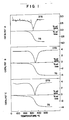
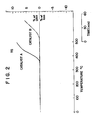
- a Mettler TA 2000C thermal balance measured both weight changes (TG) and rates of weight change (DTG) in H2, CO, or 1:1 H2/CO mixtures, at atmospheric pressure. Peaks in the derivative weight curve correspond to maximum rates of weight change. Gas flows were set at 100cm3 (STP)/min and 150 mg catalyst samples were used. A 6°C/min temperature program was adopted as a standard heating rate. All samples were reduced in H2 from room temperature to 500°C. Following the H2 treatment, the sample was cooled and treated in 1:1 H2/CO mixture. The growth of an amorphous carbon phase was used to determine intimate contact and strong interactions between cobalt and silica. Powder x-ray diffraction spectra, taken before and after the runs confirmed the phases present.
- Hydrocarbon synthesis rates are reported as cobalt-normalized rates (cobalt-time yields), defined as the moles of CO converted per hour per g-atom cobalt in the catalysts, as site-normalized rates (site-time yields), defined as the molecules of CO converted per hour per surface cobalt atom in the catalysts, and as volumetric rates, defined as the volume of CO converted per volume of catalyst per hour.
- Hydrocarbon selectivities are reported on a carbon atom basis, as the percentage of the converted CO that appears as a given product.
- Reported chain growth probabilities are asymptotic values, obtained from the constant slope of Flory plots for C35-C100 hydrocarbons.
- CoRe/TiO2 Treatment of CoRe/TiO2 with He/H2O at 400°C, decreased cobalt dispersion to the level measured on SiO2 containing samples subjected to the same pretreatment.
- the cobalt time yield is lower than on fresh CoRe/TiO2 because of the lower dispersion, but the site-time yields are identical.
- SiO2 is not to improve the reducibility of cobalt oxide precursors or to prevent the formation of cobalt titanates during catalyst preparation, pretreatment, and use in hydrocarbon synthesis.
- the effect of SiO2 during carburization suggests that SiO2 may prevent the short term deactivation observed on these catalysts during the first few hours in H2/CO environments; the effect is to increase the apparent site activity by maintaining surface cobalt atoms available during hydrocarbon synthesis.
- SiO2 is known to adsorb onto strong acid sites in Al2O3, to modify hydroxyl groups and acid sites in fused silica tubing, and to prevent carburization of stainless steel reactor walls.
- SiO2 titrates or modifies specific sites on Co/TiO2 catalysts, decreasing their activity for carbon formation. Decoration of the cobalt surface with SiO2, and inhibition of carbon deposition by the accompanying decrease in available cobalt ensemble size is unlikely. If so, the addition of SiO2 would have decreased the hydrogen uptake, and the apparent dispersion, more than the He/H2O treatment did (Table 1).
Landscapes
- Chemical & Material Sciences (AREA)
- Organic Chemistry (AREA)
- Chemical Kinetics & Catalysis (AREA)
- Engineering & Computer Science (AREA)
- Materials Engineering (AREA)
- General Chemical & Material Sciences (AREA)
- Oil, Petroleum & Natural Gas (AREA)
- Catalysts (AREA)
- Organic Low-Molecular-Weight Compounds And Preparation Thereof (AREA)
- Low-Molecular Organic Synthesis Reactions Using Catalysts (AREA)
Priority Applications (1)
| Application Number | Priority Date | Filing Date | Title |
|---|---|---|---|
| DE19883851837 DE3851837T2 (de) | 1988-10-14 | 1988-10-14 | Katalysator für die Umwandlung von Synthesegas zu schweren Kohlenwasserstoffen und Umwandlungsverfahren. |
Applications Claiming Priority (3)
| Application Number | Priority Date | Filing Date | Title |
|---|---|---|---|
| US07/007,494 US4794099A (en) | 1987-01-28 | 1987-01-28 | SiO2 -promoted cobalt catalyst on a support of TiO2 for converting synthesis gas to heavy hydrocarbons |
| JP63224358A JP2557959B2 (ja) | 1987-01-28 | 1988-09-07 | 炭化鉄ベース触媒を用いるh▲下2▼及びco▲下2▼からのアルコール及びオレフィンの製造法 |
| CA000579742A CA1335446C (en) | 1987-01-28 | 1988-10-11 | Synthesis gas to heavy hydrocarbons on sio_ promoted co/tio |
Publications (2)
| Publication Number | Publication Date |
|---|---|
| EP0363537A1 true EP0363537A1 (de) | 1990-04-18 |
| EP0363537B1 EP0363537B1 (de) | 1994-10-12 |
Family
ID=27168076
Family Applications (1)
| Application Number | Title | Priority Date | Filing Date |
|---|---|---|---|
| EP88309637A Expired - Lifetime EP0363537B1 (de) | 1987-01-28 | 1988-10-14 | Katalysator für die Umwandlung von Synthesegas zu schweren Kohlenwasserstoffen und Umwandlungsverfahren |
Country Status (5)
| Country | Link |
|---|---|
| US (1) | US4794099A (de) |
| EP (1) | EP0363537B1 (de) |
| JP (1) | JP2557959B2 (de) |
| AU (1) | AU614777B2 (de) |
| CA (1) | CA1335446C (de) |
Cited By (11)
| Publication number | Priority date | Publication date | Assignee | Title |
|---|---|---|---|---|
| WO2001036352A1 (en) * | 1999-11-17 | 2001-05-25 | Conoco Inc | Regeneration procedure for fischer-tropsch catalyst |
| WO2001083108A1 (en) | 2000-05-04 | 2001-11-08 | Shell Internationale Research Maatschappij B.V. | A catalyst support and a supported metal catalyst, a process for their preparation, and the use of the catalyst |
| FR2826880A1 (fr) * | 2001-07-04 | 2003-01-10 | Inst Francais Du Petrole | Composition amelioree de catalyseur pour la metathese des olefines |
| WO2003041860A3 (en) * | 2001-11-13 | 2003-12-31 | Exxonmobil Res & Eng Co | In situ catalyst regeneration/activation process |
| US6869978B2 (en) | 1999-11-17 | 2005-03-22 | Conocophillips Company | Pressure swing catalyst regeneration procedure for Fischer-Tropsch catalyst |
| US7087191B2 (en) | 2000-07-24 | 2006-08-08 | Shell Oil Company | Shell metal catalyst and a precursor thereof, a process for their preparation and the use of the catalyst |
| US7282467B2 (en) | 2000-07-14 | 2007-10-16 | Shell Oil Company | Catalysts support, a supported group VIII metal catalyst and precursor thereof, processes for their preparations, and use of the supported group VIII metal catalyst |
| US7365040B2 (en) | 2004-04-26 | 2008-04-29 | Sasoltechnology (Proprietary) Limited | Catalysts |
| US8062620B2 (en) | 2004-11-29 | 2011-11-22 | Shell Oil Company | Catalytic process for the conversion of Co (II)hydroxide in Co (III)oxidehydroxide |
| US10569258B2 (en) | 2014-12-19 | 2020-02-25 | Shell Oil Company | Method for preparing a catalyst |
| US11298688B2 (en) | 2015-12-21 | 2022-04-12 | Shell Oil Company | Hydrogenation catalyst and method for preparing the same |
Families Citing this family (24)
| Publication number | Priority date | Publication date | Assignee | Title |
|---|---|---|---|---|
| EP0453674B1 (de) * | 1987-05-07 | 1994-06-29 | Exxon Research And Engineering Company | Verfahren zur Herstellung dispergierter Kobalt enthaltender oberflächenimpregnierten Katalysatoren und Kohlenwasserstoffsynthese mittels dieser Katalysatoren |
| US5545674A (en) * | 1987-05-07 | 1996-08-13 | Exxon Research And Engineering Company | Surface supported cobalt catalysts, process utilizing these catalysts for the preparation of hydrocarbons from synthesis gas and process for the preparation of said catalysts |
| US4977126A (en) * | 1987-05-07 | 1990-12-11 | Exxon Research And Engineering Company | Process for the preparation of surface impregnated dispersed cobalt metal catalysts |
| US4992406A (en) * | 1988-11-23 | 1991-02-12 | Exxon Research And Engineering Company | Titania-supported catalysts and their preparation for use in Fischer-Tropsch synthesis |
| US5169821A (en) * | 1991-11-14 | 1992-12-08 | Exxon Research And Engineering Company | Method for stabilizing titania supported cobalt catalyst and the catalyst for use in Fischer-Tropsch process |
| US5397806A (en) * | 1991-11-14 | 1995-03-14 | Exxon Research & Engineering Co. | Method for stabilizing titania supported cobalt catalyst (C-2715) |
| JP2685130B2 (ja) * | 1995-09-22 | 1997-12-03 | 通商産業省基礎産業局長 | エタノールの製造方法 |
| FR2747054B1 (fr) | 1996-04-09 | 1998-05-22 | Inst Francais Du Petrole | Procede de conversion du gaz de synthese en presence d'un catalyseur a base de cobalt et de titane |
| US6117814A (en) * | 1998-02-10 | 2000-09-12 | Exxon Research And Engineering Co. | Titania catalysts their preparation and use in fischer-tropsch synthesis |
| JP4577464B2 (ja) * | 2000-06-27 | 2010-11-10 | 三菱瓦斯化学株式会社 | 銅−亜鉛系触媒前駆体組成物および該触媒の製造法 |
| DE10120484A1 (de) * | 2001-04-25 | 2002-10-31 | Degussa | Verfahren und Vorrichtung zur thermischen Behandlung von pulverförmigen Stoffen |
| GB0214383D0 (en) * | 2002-06-21 | 2002-07-31 | Isis Innovation | Catalyst |
| US7253136B2 (en) * | 2003-04-11 | 2007-08-07 | Exxonmobile Research And Engineering Company | Preparation of titania and cobalt aluminate catalyst supports and their use in Fischer-Tropsch synthesis |
| US7393876B2 (en) * | 2005-12-16 | 2008-07-01 | Eltron Research, Inc. | Fischer-tropsch catalysts |
| JP4935604B2 (ja) * | 2006-11-27 | 2012-05-23 | 住友化学株式会社 | 担持酸化ルテニウムの製造方法 |
| EP2185281A1 (de) * | 2007-09-10 | 2010-05-19 | Shell Internationale Research Maatschappij B.V. | Verfahren zur stabilisierung eines fischer-tropsch-katalysators |
| AU2015366160B2 (en) * | 2014-12-19 | 2020-04-16 | Bp P.L.C. | Process for preparation of a supported cobalt-containing Fischer-Tropsch synthesis catalyst |
| JP7009294B2 (ja) * | 2018-04-19 | 2022-02-10 | 日本製鉄株式会社 | 二酸化炭素と水素から炭化水素を製造するための触媒、その触媒の製造方法、及び二酸化炭素と水素とから炭化水素を製造する方法 |
| CN108569907B (zh) * | 2018-06-12 | 2020-08-25 | 中钢集团洛阳耐火材料研究院有限公司 | 一种Catofin丙烷脱氢反应器用耐火材料的制备方法 |
| JP7227564B2 (ja) * | 2018-07-05 | 2023-02-22 | 株式会社豊田中央研究所 | アルコール合成用触媒及びそれを用いたアルコールの製造方法 |
| DE112021001774T5 (de) | 2020-03-23 | 2023-01-12 | Ihi Corporation | System zur erzeugung von kohlenwasserstoff und verfahren zur erzeugung von kohlenwasserstoff |
| CA3224937A1 (en) | 2021-07-08 | 2023-01-12 | Aaron R. GARG | Conversion of synthesis gas to liquid fuels |
| CN116351433B (zh) * | 2021-12-27 | 2025-11-14 | 中国石油化工股份有限公司 | 一种异丁烯/叔丁醇选择性氧化的成型催化剂及其制备方法 |
| JPWO2024247458A1 (de) * | 2023-05-30 | 2024-12-05 |
Citations (2)
| Publication number | Priority date | Publication date | Assignee | Title |
|---|---|---|---|---|
| US4568663A (en) * | 1984-06-29 | 1986-02-04 | Exxon Research And Engineering Co. | Cobalt catalysts for the conversion of methanol to hydrocarbons and for Fischer-Tropsch synthesis |
| US4595703A (en) * | 1984-06-29 | 1986-06-17 | Exxon Research And Engineering Co. | Preparation of hydrocarbons from synthesis gas |
Family Cites Families (3)
| Publication number | Priority date | Publication date | Assignee | Title |
|---|---|---|---|---|
| US3159569A (en) * | 1961-03-30 | 1964-12-01 | Union Oil Co | Hydrocracking process and catalysts |
| ATE21340T1 (de) * | 1982-11-22 | 1986-08-15 | Shell Int Research | Verfahren zur herstellung eines fischer-tropsch- katalysators, der auf diese weise hergestellte katalysator und seine verwendung zur herstellung von kohlenwasserstoffen. |
| US4670472A (en) * | 1985-06-05 | 1987-06-02 | Air Products And Chemicals, Inc. | Fischer-Tropsch process |
-
1987
- 1987-01-28 US US07/007,494 patent/US4794099A/en not_active Expired - Lifetime
-
1988
- 1988-09-07 JP JP63224358A patent/JP2557959B2/ja not_active Expired - Fee Related
- 1988-10-11 CA CA000579742A patent/CA1335446C/en not_active Expired - Fee Related
- 1988-10-14 EP EP88309637A patent/EP0363537B1/de not_active Expired - Lifetime
- 1988-10-14 AU AU23906/88A patent/AU614777B2/en not_active Expired
Patent Citations (3)
| Publication number | Priority date | Publication date | Assignee | Title |
|---|---|---|---|---|
| US4568663A (en) * | 1984-06-29 | 1986-02-04 | Exxon Research And Engineering Co. | Cobalt catalysts for the conversion of methanol to hydrocarbons and for Fischer-Tropsch synthesis |
| US4595703A (en) * | 1984-06-29 | 1986-06-17 | Exxon Research And Engineering Co. | Preparation of hydrocarbons from synthesis gas |
| EP0220343A1 (de) * | 1984-06-29 | 1987-05-06 | Exxon Research And Engineering Company | Kobaltkatalysator und dessen Verwendung zur Umsetzung von Synthesegas oder Methanol in Kohlenwasserstoffe |
Cited By (16)
| Publication number | Priority date | Publication date | Assignee | Title |
|---|---|---|---|---|
| US6486220B1 (en) | 1999-11-17 | 2002-11-26 | Conoco Inc. | Regeneration procedure for Fischer-Tropsch catalyst |
| WO2001036352A1 (en) * | 1999-11-17 | 2001-05-25 | Conoco Inc | Regeneration procedure for fischer-tropsch catalyst |
| US6869978B2 (en) | 1999-11-17 | 2005-03-22 | Conocophillips Company | Pressure swing catalyst regeneration procedure for Fischer-Tropsch catalyst |
| US6962947B2 (en) | 1999-11-17 | 2005-11-08 | Conocophillips Company | Pressure swing catalyst regeneration procedure for Fischer-Tropsh catalyst |
| WO2001083108A1 (en) | 2000-05-04 | 2001-11-08 | Shell Internationale Research Maatschappij B.V. | A catalyst support and a supported metal catalyst, a process for their preparation, and the use of the catalyst |
| US7282467B2 (en) | 2000-07-14 | 2007-10-16 | Shell Oil Company | Catalysts support, a supported group VIII metal catalyst and precursor thereof, processes for their preparations, and use of the supported group VIII metal catalyst |
| US7087191B2 (en) | 2000-07-24 | 2006-08-08 | Shell Oil Company | Shell metal catalyst and a precursor thereof, a process for their preparation and the use of the catalyst |
| FR2826880A1 (fr) * | 2001-07-04 | 2003-01-10 | Inst Francais Du Petrole | Composition amelioree de catalyseur pour la metathese des olefines |
| US6908878B2 (en) | 2001-07-04 | 2005-06-21 | Institut Francais Du Petrole | Catalyst compound for the metathesis of olefins |
| WO2003041860A3 (en) * | 2001-11-13 | 2003-12-31 | Exxonmobil Res & Eng Co | In situ catalyst regeneration/activation process |
| AU2002335008B2 (en) * | 2001-11-13 | 2007-07-19 | Exxonmobil Research And Engineering Company | In situ catalyst regeneration/activation process |
| US6900151B2 (en) | 2001-11-13 | 2005-05-31 | Exxonmobil Research And Engineering Company | In situ catalyst regeneration/activation process |
| US7365040B2 (en) | 2004-04-26 | 2008-04-29 | Sasoltechnology (Proprietary) Limited | Catalysts |
| US8062620B2 (en) | 2004-11-29 | 2011-11-22 | Shell Oil Company | Catalytic process for the conversion of Co (II)hydroxide in Co (III)oxidehydroxide |
| US10569258B2 (en) | 2014-12-19 | 2020-02-25 | Shell Oil Company | Method for preparing a catalyst |
| US11298688B2 (en) | 2015-12-21 | 2022-04-12 | Shell Oil Company | Hydrogenation catalyst and method for preparing the same |
Also Published As
| Publication number | Publication date |
|---|---|
| JP2557959B2 (ja) | 1996-11-27 |
| CA1335446C (en) | 1995-05-02 |
| AU614777B2 (en) | 1991-09-12 |
| EP0363537B1 (de) | 1994-10-12 |
| JPH0273023A (ja) | 1990-03-13 |
| US4794099A (en) | 1988-12-27 |
| AU2390688A (en) | 1990-04-26 |
Similar Documents
| Publication | Publication Date | Title |
|---|---|---|
| EP0363537A1 (de) | Katalysator für die Umwandlung von Synthesegas zu schweren Kohlenwasserstoffen und Umwandlungsverfahren | |
| US4729981A (en) | ROR-activated catalyst for synthesis gas conversion | |
| EP0319625B1 (de) | Ruthenium-Kobalt-Katalysatoren für die Fischer-Tropsch-Synthese | |
| US5922925A (en) | Catalyst, and processes for dehydrogenating dehydrogenatable hydrocarbons | |
| US4670414A (en) | Activated cobalt catalyst and synthesis gas conversion using same | |
| US4822824A (en) | Cobalt-ruthenium catalysts for Fischer-Tropsch synthesis | |
| US4605676A (en) | Synthesis gas conversion using ROR-activated catalyst | |
| EP0253924A1 (de) | Umwandlung von Synthesegas mittels eines voraktivierten Katalysators | |
| US4605679A (en) | Activated cobalt catalyst and synthesis gas conversion using same | |
| US4608360A (en) | Dehydrogenation catalyst compositions and method of preparing same | |
| EP0101645B1 (de) | Katalytisches Verfahren zur Herstellung von Methanol | |
| US4960801A (en) | Synthesis gas to heavy hydrocarbons on SiO2 promoted CO/TiO2 | |
| US4579995A (en) | Process for the conversion of methanol to hydrocarbons | |
| US4558030A (en) | Ruthenium-rhenium catalyst on titania support for Fischer-Tropsch synthesis | |
| US4672146A (en) | Dehydrogenation catalyst compositions and its use in dehydrogenation | |
| EP0553115B1 (de) | Katalysator basierend auf eisen/zink sowie korversion von synthesegas zu alpha-olefinen unter benutzung dieses katalysators | |
| US4567205A (en) | Ruthenium catalysts, and use thereof for Fischer-Tropsch synthesis | |
| US4647592A (en) | Start-up with ruthenium catalysts | |
| EP0131465B1 (de) | Eisen auf Titandioxyd-Katalysator und dessen Verwendung für Kohlenwasserstoffsynthese | |
| US6096790A (en) | Process for the preparation of a catalyst based on cobalt and scandium | |
| CA1250566A (en) | Iron carbide on titania surface modified with group va oxides as fischer-tropsch catalysts | |
| US4518714A (en) | Process for the selective production of olefins from synthesis gas | |
| EP0133778B1 (de) | Verfahren zur Konvertierung von Methanol | |
| US4754092A (en) | Reducing methane production and increasing liquid yields in Fischer-Tropsch reactions | |
| US4608359A (en) | Iron carbide on titania surface modified with group VA oxides as Fischer-Tropsch catalysts |
Legal Events
| Date | Code | Title | Description |
|---|---|---|---|
| PUAI | Public reference made under article 153(3) epc to a published international application that has entered the european phase |
Free format text: ORIGINAL CODE: 0009012 |
|
| AK | Designated contracting states |
Kind code of ref document: A1 Designated state(s): BE DE FR GB IT NL |
|
| 17P | Request for examination filed |
Effective date: 19901010 |
|
| 17Q | First examination report despatched |
Effective date: 19910801 |
|
| GRAA | (expected) grant |
Free format text: ORIGINAL CODE: 0009210 |
|
| AK | Designated contracting states |
Kind code of ref document: B1 Designated state(s): BE DE FR GB IT NL |
|
| REF | Corresponds to: |
Ref document number: 3851837 Country of ref document: DE Date of ref document: 19941117 |
|
| ET | Fr: translation filed | ||
| ITF | It: translation for a ep patent filed | ||
| PLBE | No opposition filed within time limit |
Free format text: ORIGINAL CODE: 0009261 |
|
| STAA | Information on the status of an ep patent application or granted ep patent |
Free format text: STATUS: NO OPPOSITION FILED WITHIN TIME LIMIT |
|
| 26N | No opposition filed | ||
| REG | Reference to a national code |
Ref country code: GB Ref legal event code: IF02 |
|
| PGFP | Annual fee paid to national office [announced via postgrant information from national office to epo] |
Ref country code: BE Payment date: 20021125 Year of fee payment: 15 |
|
| PG25 | Lapsed in a contracting state [announced via postgrant information from national office to epo] |
Ref country code: BE Free format text: LAPSE BECAUSE OF NON-PAYMENT OF DUE FEES Effective date: 20031031 |
|
| BERE | Be: lapsed |
Owner name: *EXXON RESEARCH AND ENGINEERING CY Effective date: 20031031 |
|
| PGFP | Annual fee paid to national office [announced via postgrant information from national office to epo] |
Ref country code: GB Payment date: 20070918 Year of fee payment: 20 |
|
| PGFP | Annual fee paid to national office [announced via postgrant information from national office to epo] |
Ref country code: DE Payment date: 20071031 Year of fee payment: 20 Ref country code: NL Payment date: 20070920 Year of fee payment: 20 |
|
| PGFP | Annual fee paid to national office [announced via postgrant information from national office to epo] |
Ref country code: IT Payment date: 20071012 Year of fee payment: 20 |
|
| PGFP | Annual fee paid to national office [announced via postgrant information from national office to epo] |
Ref country code: FR Payment date: 20071004 Year of fee payment: 20 |
|
| REG | Reference to a national code |
Ref country code: GB Ref legal event code: PE20 Expiry date: 20081013 |
|
| PG25 | Lapsed in a contracting state [announced via postgrant information from national office to epo] |
Ref country code: NL Free format text: LAPSE BECAUSE OF EXPIRATION OF PROTECTION Effective date: 20081014 |
|
| NLV7 | Nl: ceased due to reaching the maximum lifetime of a patent |
Effective date: 20081014 |
|
| PG25 | Lapsed in a contracting state [announced via postgrant information from national office to epo] |
Ref country code: GB Free format text: LAPSE BECAUSE OF EXPIRATION OF PROTECTION Effective date: 20081013 |