EP0365550B1 - Composition comprenant des produits d'addition a base d'hydrocarbures azotes - Google Patents
Composition comprenant des produits d'addition a base d'hydrocarbures azotes Download PDFInfo
- Publication number
- EP0365550B1 EP0365550B1 EP88905048A EP88905048A EP0365550B1 EP 0365550 B1 EP0365550 B1 EP 0365550B1 EP 88905048 A EP88905048 A EP 88905048A EP 88905048 A EP88905048 A EP 88905048A EP 0365550 B1 EP0365550 B1 EP 0365550B1
- Authority
- EP
- European Patent Office
- Prior art keywords
- group
- composition
- sulfur
- lubricating oil
- diimide
- Prior art date
- Legal status (The legal status is an assumption and is not a legal conclusion. Google has not performed a legal analysis and makes no representation as to the accuracy of the status listed.)
- Expired - Lifetime
Links
Classifications
-
- C—CHEMISTRY; METALLURGY
- C10—PETROLEUM, GAS OR COKE INDUSTRIES; TECHNICAL GASES CONTAINING CARBON MONOXIDE; FUELS; LUBRICANTS; PEAT
- C10M—LUBRICATING COMPOSITIONS; USE OF CHEMICAL SUBSTANCES EITHER ALONE OR AS LUBRICATING INGREDIENTS IN A LUBRICATING COMPOSITION
- C10M151/00—Lubricating compositions characterised by the additive being a macromolecular compound containing sulfur, selenium or tellurium
-
- C—CHEMISTRY; METALLURGY
- C08—ORGANIC MACROMOLECULAR COMPOUNDS; THEIR PREPARATION OR CHEMICAL WORKING-UP; COMPOSITIONS BASED THEREON
- C08F—MACROMOLECULAR COMPOUNDS OBTAINED BY REACTIONS ONLY INVOLVING CARBON-TO-CARBON UNSATURATED BONDS
- C08F8/00—Chemical modification by after-treatment
- C08F8/34—Introducing sulfur atoms or sulfur-containing groups
-
- C—CHEMISTRY; METALLURGY
- C10—PETROLEUM, GAS OR COKE INDUSTRIES; TECHNICAL GASES CONTAINING CARBON MONOXIDE; FUELS; LUBRICANTS; PEAT
- C10L—FUELS NOT OTHERWISE PROVIDED FOR; NATURAL GAS; SYNTHETIC NATURAL GAS OBTAINED BY PROCESSES NOT COVERED BY SUBCLASSES C10G OR C10K; LIQUIFIED PETROLEUM GAS; USE OF ADDITIVES TO FUELS OR FIRES; FIRE-LIGHTERS
- C10L1/00—Liquid carbonaceous fuels
- C10L1/10—Liquid carbonaceous fuels containing additives
- C10L1/14—Organic compounds
- C10L1/24—Organic compounds containing sulfur, selenium and/or tellurium
- C10L1/2493—Organic compounds containing sulfur, selenium and/or tellurium compounds of uncertain formula; reactions of organic compounds (hydrocarbons, acids, esters) with sulfur or sulfur containing compounds
-
- C—CHEMISTRY; METALLURGY
- C10—PETROLEUM, GAS OR COKE INDUSTRIES; TECHNICAL GASES CONTAINING CARBON MONOXIDE; FUELS; LUBRICANTS; PEAT
- C10M—LUBRICATING COMPOSITIONS; USE OF CHEMICAL SUBSTANCES EITHER ALONE OR AS LUBRICATING INGREDIENTS IN A LUBRICATING COMPOSITION
- C10M143/00—Lubricating compositions characterised by the additive being a macromolecular hydrocarbon or such hydrocarbon modified by oxidation
-
- C—CHEMISTRY; METALLURGY
- C08—ORGANIC MACROMOLECULAR COMPOUNDS; THEIR PREPARATION OR CHEMICAL WORKING-UP; COMPOSITIONS BASED THEREON
- C08F—MACROMOLECULAR COMPOUNDS OBTAINED BY REACTIONS ONLY INVOLVING CARBON-TO-CARBON UNSATURATED BONDS
- C08F2800/00—Copolymer characterised by the proportions of the comonomers expressed
- C08F2800/20—Copolymer characterised by the proportions of the comonomers expressed as weight or mass percentages
-
- C—CHEMISTRY; METALLURGY
- C10—PETROLEUM, GAS OR COKE INDUSTRIES; TECHNICAL GASES CONTAINING CARBON MONOXIDE; FUELS; LUBRICANTS; PEAT
- C10M—LUBRICATING COMPOSITIONS; USE OF CHEMICAL SUBSTANCES EITHER ALONE OR AS LUBRICATING INGREDIENTS IN A LUBRICATING COMPOSITION
- C10M2203/00—Organic non-macromolecular hydrocarbon compounds and hydrocarbon fractions as ingredients in lubricant compositions
- C10M2203/10—Petroleum or coal fractions, e.g. tars, solvents, bitumen
-
- C—CHEMISTRY; METALLURGY
- C10—PETROLEUM, GAS OR COKE INDUSTRIES; TECHNICAL GASES CONTAINING CARBON MONOXIDE; FUELS; LUBRICANTS; PEAT
- C10M—LUBRICATING COMPOSITIONS; USE OF CHEMICAL SUBSTANCES EITHER ALONE OR AS LUBRICATING INGREDIENTS IN A LUBRICATING COMPOSITION
- C10M2207/00—Organic non-macromolecular hydrocarbon compounds containing hydrogen, carbon and oxygen as ingredients in lubricant compositions
- C10M2207/10—Carboxylix acids; Neutral salts thereof
- C10M2207/12—Carboxylix acids; Neutral salts thereof having carboxyl groups bound to acyclic or cycloaliphatic carbon atoms
- C10M2207/125—Carboxylix acids; Neutral salts thereof having carboxyl groups bound to acyclic or cycloaliphatic carbon atoms having hydrocarbon chains of eight up to twenty-nine carbon atoms, i.e. fatty acids
-
- C—CHEMISTRY; METALLURGY
- C10—PETROLEUM, GAS OR COKE INDUSTRIES; TECHNICAL GASES CONTAINING CARBON MONOXIDE; FUELS; LUBRICANTS; PEAT
- C10M—LUBRICATING COMPOSITIONS; USE OF CHEMICAL SUBSTANCES EITHER ALONE OR AS LUBRICATING INGREDIENTS IN A LUBRICATING COMPOSITION
- C10M2207/00—Organic non-macromolecular hydrocarbon compounds containing hydrogen, carbon and oxygen as ingredients in lubricant compositions
- C10M2207/10—Carboxylix acids; Neutral salts thereof
- C10M2207/12—Carboxylix acids; Neutral salts thereof having carboxyl groups bound to acyclic or cycloaliphatic carbon atoms
- C10M2207/129—Carboxylix acids; Neutral salts thereof having carboxyl groups bound to acyclic or cycloaliphatic carbon atoms having hydrocarbon chains of thirty or more carbon atoms
-
- C—CHEMISTRY; METALLURGY
- C10—PETROLEUM, GAS OR COKE INDUSTRIES; TECHNICAL GASES CONTAINING CARBON MONOXIDE; FUELS; LUBRICANTS; PEAT
- C10M—LUBRICATING COMPOSITIONS; USE OF CHEMICAL SUBSTANCES EITHER ALONE OR AS LUBRICATING INGREDIENTS IN A LUBRICATING COMPOSITION
- C10M2207/00—Organic non-macromolecular hydrocarbon compounds containing hydrogen, carbon and oxygen as ingredients in lubricant compositions
- C10M2207/28—Esters
- C10M2207/287—Partial esters
- C10M2207/289—Partial esters containing free hydroxy groups
-
- C—CHEMISTRY; METALLURGY
- C10—PETROLEUM, GAS OR COKE INDUSTRIES; TECHNICAL GASES CONTAINING CARBON MONOXIDE; FUELS; LUBRICANTS; PEAT
- C10M—LUBRICATING COMPOSITIONS; USE OF CHEMICAL SUBSTANCES EITHER ALONE OR AS LUBRICATING INGREDIENTS IN A LUBRICATING COMPOSITION
- C10M2209/00—Organic macromolecular compounds containing oxygen as ingredients in lubricant compositions
- C10M2209/02—Macromolecular compounds obtained by reactions only involving carbon-to-carbon unsaturated bonds
- C10M2209/08—Macromolecular compounds obtained by reactions only involving carbon-to-carbon unsaturated bonds containing monomers having an unsaturated radical bound to a carboxyl radical, e.g. acrylate type
- C10M2209/084—Acrylate; Methacrylate
-
- C—CHEMISTRY; METALLURGY
- C10—PETROLEUM, GAS OR COKE INDUSTRIES; TECHNICAL GASES CONTAINING CARBON MONOXIDE; FUELS; LUBRICANTS; PEAT
- C10M—LUBRICATING COMPOSITIONS; USE OF CHEMICAL SUBSTANCES EITHER ALONE OR AS LUBRICATING INGREDIENTS IN A LUBRICATING COMPOSITION
- C10M2219/00—Organic non-macromolecular compounds containing sulfur, selenium or tellurium as ingredients in lubricant compositions
-
- C—CHEMISTRY; METALLURGY
- C10—PETROLEUM, GAS OR COKE INDUSTRIES; TECHNICAL GASES CONTAINING CARBON MONOXIDE; FUELS; LUBRICANTS; PEAT
- C10M—LUBRICATING COMPOSITIONS; USE OF CHEMICAL SUBSTANCES EITHER ALONE OR AS LUBRICATING INGREDIENTS IN A LUBRICATING COMPOSITION
- C10M2219/00—Organic non-macromolecular compounds containing sulfur, selenium or tellurium as ingredients in lubricant compositions
- C10M2219/04—Organic non-macromolecular compounds containing sulfur, selenium or tellurium as ingredients in lubricant compositions containing sulfur-to-oxygen bonds, i.e. sulfones, sulfoxides
- C10M2219/046—Overbased sulfonic acid salts
-
- C—CHEMISTRY; METALLURGY
- C10—PETROLEUM, GAS OR COKE INDUSTRIES; TECHNICAL GASES CONTAINING CARBON MONOXIDE; FUELS; LUBRICANTS; PEAT
- C10M—LUBRICATING COMPOSITIONS; USE OF CHEMICAL SUBSTANCES EITHER ALONE OR AS LUBRICATING INGREDIENTS IN A LUBRICATING COMPOSITION
- C10M2221/00—Organic macromolecular compounds containing sulfur, selenium or tellurium as ingredients in lubricant compositions
- C10M2221/04—Macromolecular compounds obtained otherwise than by reactions only involving carbon-to-carbon unsaturated bonds
- C10M2221/041—Macromolecular compounds obtained otherwise than by reactions only involving carbon-to-carbon unsaturated bonds involving sulfurisation of macromolecular compounds, e.g. polyolefins
-
- C—CHEMISTRY; METALLURGY
- C10—PETROLEUM, GAS OR COKE INDUSTRIES; TECHNICAL GASES CONTAINING CARBON MONOXIDE; FUELS; LUBRICANTS; PEAT
- C10M—LUBRICATING COMPOSITIONS; USE OF CHEMICAL SUBSTANCES EITHER ALONE OR AS LUBRICATING INGREDIENTS IN A LUBRICATING COMPOSITION
- C10M2223/00—Organic non-macromolecular compounds containing phosphorus as ingredients in lubricant compositions
- C10M2223/02—Organic non-macromolecular compounds containing phosphorus as ingredients in lubricant compositions having no phosphorus-to-carbon bonds
- C10M2223/04—Phosphate esters
- C10M2223/045—Metal containing thio derivatives
-
- C—CHEMISTRY; METALLURGY
- C10—PETROLEUM, GAS OR COKE INDUSTRIES; TECHNICAL GASES CONTAINING CARBON MONOXIDE; FUELS; LUBRICANTS; PEAT
- C10N—INDEXING SCHEME ASSOCIATED WITH SUBCLASS C10M RELATING TO LUBRICATING COMPOSITIONS
- C10N2010/00—Metal present as such or in compounds
- C10N2010/04—Groups 2 or 12
-
- C—CHEMISTRY; METALLURGY
- C10—PETROLEUM, GAS OR COKE INDUSTRIES; TECHNICAL GASES CONTAINING CARBON MONOXIDE; FUELS; LUBRICANTS; PEAT
- C10N—INDEXING SCHEME ASSOCIATED WITH SUBCLASS C10M RELATING TO LUBRICATING COMPOSITIONS
- C10N2040/00—Specified use or application for which the lubricating composition is intended
-
- C—CHEMISTRY; METALLURGY
- C10—PETROLEUM, GAS OR COKE INDUSTRIES; TECHNICAL GASES CONTAINING CARBON MONOXIDE; FUELS; LUBRICANTS; PEAT
- C10N—INDEXING SCHEME ASSOCIATED WITH SUBCLASS C10M RELATING TO LUBRICATING COMPOSITIONS
- C10N2040/00—Specified use or application for which the lubricating composition is intended
- C10N2040/02—Bearings
-
- C—CHEMISTRY; METALLURGY
- C10—PETROLEUM, GAS OR COKE INDUSTRIES; TECHNICAL GASES CONTAINING CARBON MONOXIDE; FUELS; LUBRICANTS; PEAT
- C10N—INDEXING SCHEME ASSOCIATED WITH SUBCLASS C10M RELATING TO LUBRICATING COMPOSITIONS
- C10N2040/00—Specified use or application for which the lubricating composition is intended
- C10N2040/04—Oil-bath; Gear-boxes; Automatic transmissions; Traction drives
-
- C—CHEMISTRY; METALLURGY
- C10—PETROLEUM, GAS OR COKE INDUSTRIES; TECHNICAL GASES CONTAINING CARBON MONOXIDE; FUELS; LUBRICANTS; PEAT
- C10N—INDEXING SCHEME ASSOCIATED WITH SUBCLASS C10M RELATING TO LUBRICATING COMPOSITIONS
- C10N2040/00—Specified use or application for which the lubricating composition is intended
- C10N2040/04—Oil-bath; Gear-boxes; Automatic transmissions; Traction drives
- C10N2040/042—Oil-bath; Gear-boxes; Automatic transmissions; Traction drives for automatic transmissions
-
- C—CHEMISTRY; METALLURGY
- C10—PETROLEUM, GAS OR COKE INDUSTRIES; TECHNICAL GASES CONTAINING CARBON MONOXIDE; FUELS; LUBRICANTS; PEAT
- C10N—INDEXING SCHEME ASSOCIATED WITH SUBCLASS C10M RELATING TO LUBRICATING COMPOSITIONS
- C10N2040/00—Specified use or application for which the lubricating composition is intended
- C10N2040/04—Oil-bath; Gear-boxes; Automatic transmissions; Traction drives
- C10N2040/044—Oil-bath; Gear-boxes; Automatic transmissions; Traction drives for manual transmissions
-
- C—CHEMISTRY; METALLURGY
- C10—PETROLEUM, GAS OR COKE INDUSTRIES; TECHNICAL GASES CONTAINING CARBON MONOXIDE; FUELS; LUBRICANTS; PEAT
- C10N—INDEXING SCHEME ASSOCIATED WITH SUBCLASS C10M RELATING TO LUBRICATING COMPOSITIONS
- C10N2040/00—Specified use or application for which the lubricating composition is intended
- C10N2040/04—Oil-bath; Gear-boxes; Automatic transmissions; Traction drives
- C10N2040/046—Oil-bath; Gear-boxes; Automatic transmissions; Traction drives for traction drives
-
- C—CHEMISTRY; METALLURGY
- C10—PETROLEUM, GAS OR COKE INDUSTRIES; TECHNICAL GASES CONTAINING CARBON MONOXIDE; FUELS; LUBRICANTS; PEAT
- C10N—INDEXING SCHEME ASSOCIATED WITH SUBCLASS C10M RELATING TO LUBRICATING COMPOSITIONS
- C10N2040/00—Specified use or application for which the lubricating composition is intended
- C10N2040/08—Hydraulic fluids, e.g. brake-fluids
-
- C—CHEMISTRY; METALLURGY
- C10—PETROLEUM, GAS OR COKE INDUSTRIES; TECHNICAL GASES CONTAINING CARBON MONOXIDE; FUELS; LUBRICANTS; PEAT
- C10N—INDEXING SCHEME ASSOCIATED WITH SUBCLASS C10M RELATING TO LUBRICATING COMPOSITIONS
- C10N2040/00—Specified use or application for which the lubricating composition is intended
- C10N2040/25—Internal-combustion engines
-
- C—CHEMISTRY; METALLURGY
- C10—PETROLEUM, GAS OR COKE INDUSTRIES; TECHNICAL GASES CONTAINING CARBON MONOXIDE; FUELS; LUBRICANTS; PEAT
- C10N—INDEXING SCHEME ASSOCIATED WITH SUBCLASS C10M RELATING TO LUBRICATING COMPOSITIONS
- C10N2040/00—Specified use or application for which the lubricating composition is intended
- C10N2040/25—Internal-combustion engines
- C10N2040/251—Alcohol-fuelled engines
-
- C—CHEMISTRY; METALLURGY
- C10—PETROLEUM, GAS OR COKE INDUSTRIES; TECHNICAL GASES CONTAINING CARBON MONOXIDE; FUELS; LUBRICANTS; PEAT
- C10N—INDEXING SCHEME ASSOCIATED WITH SUBCLASS C10M RELATING TO LUBRICATING COMPOSITIONS
- C10N2040/00—Specified use or application for which the lubricating composition is intended
- C10N2040/25—Internal-combustion engines
- C10N2040/252—Diesel engines
-
- C—CHEMISTRY; METALLURGY
- C10—PETROLEUM, GAS OR COKE INDUSTRIES; TECHNICAL GASES CONTAINING CARBON MONOXIDE; FUELS; LUBRICANTS; PEAT
- C10N—INDEXING SCHEME ASSOCIATED WITH SUBCLASS C10M RELATING TO LUBRICATING COMPOSITIONS
- C10N2040/00—Specified use or application for which the lubricating composition is intended
- C10N2040/25—Internal-combustion engines
- C10N2040/252—Diesel engines
- C10N2040/253—Small diesel engines
-
- C—CHEMISTRY; METALLURGY
- C10—PETROLEUM, GAS OR COKE INDUSTRIES; TECHNICAL GASES CONTAINING CARBON MONOXIDE; FUELS; LUBRICANTS; PEAT
- C10N—INDEXING SCHEME ASSOCIATED WITH SUBCLASS C10M RELATING TO LUBRICATING COMPOSITIONS
- C10N2040/00—Specified use or application for which the lubricating composition is intended
- C10N2040/25—Internal-combustion engines
- C10N2040/255—Gasoline engines
-
- C—CHEMISTRY; METALLURGY
- C10—PETROLEUM, GAS OR COKE INDUSTRIES; TECHNICAL GASES CONTAINING CARBON MONOXIDE; FUELS; LUBRICANTS; PEAT
- C10N—INDEXING SCHEME ASSOCIATED WITH SUBCLASS C10M RELATING TO LUBRICATING COMPOSITIONS
- C10N2040/00—Specified use or application for which the lubricating composition is intended
- C10N2040/25—Internal-combustion engines
- C10N2040/255—Gasoline engines
- C10N2040/28—Rotary engines
-
- C—CHEMISTRY; METALLURGY
- C10—PETROLEUM, GAS OR COKE INDUSTRIES; TECHNICAL GASES CONTAINING CARBON MONOXIDE; FUELS; LUBRICANTS; PEAT
- C10N—INDEXING SCHEME ASSOCIATED WITH SUBCLASS C10M RELATING TO LUBRICATING COMPOSITIONS
- C10N2040/00—Specified use or application for which the lubricating composition is intended
- C10N2040/30—Refrigerators lubricants or compressors lubricants
-
- C—CHEMISTRY; METALLURGY
- C10—PETROLEUM, GAS OR COKE INDUSTRIES; TECHNICAL GASES CONTAINING CARBON MONOXIDE; FUELS; LUBRICANTS; PEAT
- C10N—INDEXING SCHEME ASSOCIATED WITH SUBCLASS C10M RELATING TO LUBRICATING COMPOSITIONS
- C10N2040/00—Specified use or application for which the lubricating composition is intended
- C10N2040/32—Wires, ropes or cables lubricants
-
- C—CHEMISTRY; METALLURGY
- C10—PETROLEUM, GAS OR COKE INDUSTRIES; TECHNICAL GASES CONTAINING CARBON MONOXIDE; FUELS; LUBRICANTS; PEAT
- C10N—INDEXING SCHEME ASSOCIATED WITH SUBCLASS C10M RELATING TO LUBRICATING COMPOSITIONS
- C10N2040/00—Specified use or application for which the lubricating composition is intended
- C10N2040/34—Lubricating-sealants
-
- C—CHEMISTRY; METALLURGY
- C10—PETROLEUM, GAS OR COKE INDUSTRIES; TECHNICAL GASES CONTAINING CARBON MONOXIDE; FUELS; LUBRICANTS; PEAT
- C10N—INDEXING SCHEME ASSOCIATED WITH SUBCLASS C10M RELATING TO LUBRICATING COMPOSITIONS
- C10N2040/00—Specified use or application for which the lubricating composition is intended
- C10N2040/36—Release agents or mold release agents
-
- C—CHEMISTRY; METALLURGY
- C10—PETROLEUM, GAS OR COKE INDUSTRIES; TECHNICAL GASES CONTAINING CARBON MONOXIDE; FUELS; LUBRICANTS; PEAT
- C10N—INDEXING SCHEME ASSOCIATED WITH SUBCLASS C10M RELATING TO LUBRICATING COMPOSITIONS
- C10N2040/00—Specified use or application for which the lubricating composition is intended
- C10N2040/38—Conveyors or chain belts
-
- C—CHEMISTRY; METALLURGY
- C10—PETROLEUM, GAS OR COKE INDUSTRIES; TECHNICAL GASES CONTAINING CARBON MONOXIDE; FUELS; LUBRICANTS; PEAT
- C10N—INDEXING SCHEME ASSOCIATED WITH SUBCLASS C10M RELATING TO LUBRICATING COMPOSITIONS
- C10N2040/00—Specified use or application for which the lubricating composition is intended
- C10N2040/40—Generators or electric motors in oil or gas winning field
-
- C—CHEMISTRY; METALLURGY
- C10—PETROLEUM, GAS OR COKE INDUSTRIES; TECHNICAL GASES CONTAINING CARBON MONOXIDE; FUELS; LUBRICANTS; PEAT
- C10N—INDEXING SCHEME ASSOCIATED WITH SUBCLASS C10M RELATING TO LUBRICATING COMPOSITIONS
- C10N2040/00—Specified use or application for which the lubricating composition is intended
- C10N2040/42—Flashing oils or marking oils
-
- C—CHEMISTRY; METALLURGY
- C10—PETROLEUM, GAS OR COKE INDUSTRIES; TECHNICAL GASES CONTAINING CARBON MONOXIDE; FUELS; LUBRICANTS; PEAT
- C10N—INDEXING SCHEME ASSOCIATED WITH SUBCLASS C10M RELATING TO LUBRICATING COMPOSITIONS
- C10N2040/00—Specified use or application for which the lubricating composition is intended
- C10N2040/44—Super vacuum or supercritical use
-
- C—CHEMISTRY; METALLURGY
- C10—PETROLEUM, GAS OR COKE INDUSTRIES; TECHNICAL GASES CONTAINING CARBON MONOXIDE; FUELS; LUBRICANTS; PEAT
- C10N—INDEXING SCHEME ASSOCIATED WITH SUBCLASS C10M RELATING TO LUBRICATING COMPOSITIONS
- C10N2040/00—Specified use or application for which the lubricating composition is intended
- C10N2040/50—Medical uses
-
- C—CHEMISTRY; METALLURGY
- C10—PETROLEUM, GAS OR COKE INDUSTRIES; TECHNICAL GASES CONTAINING CARBON MONOXIDE; FUELS; LUBRICANTS; PEAT
- C10N—INDEXING SCHEME ASSOCIATED WITH SUBCLASS C10M RELATING TO LUBRICATING COMPOSITIONS
- C10N2070/00—Specific manufacturing methods for lubricant compositions
- C10N2070/02—Concentrating of additives
Definitions
- This invention relates to specified nitrogen- and sulfur-containing hydrocarbon compounds, specifically hydrocarbon and polymeric adducts. More particularly, this invention relates to the use of specified nitrogen-and sulfur-containing hydrocarbon and polymeric adducts as additives, particularly as oil additives. Still more particularly, this invention relates to methods for the preparation of these hydrocarbon and polymeric additives, as well as to methods for their use.
- Nitrogen- and sulfur-containing hydrocarbon and polymeric compositions have been shown to possess useful properties in a broad range of applications.
- sulfur- and nitrogen-containing hydrocarbon compositions are known to have beneficial properties when adapted for use as additives in hydrocarbon fuel and lubricating oil compositions.
- multifunctional viscosity index improvers containing nitrogen have enhanced dispersant activity.
- polymeric nitrogen-containing substances are known to be useful as lubricating additives, with detergent-dispersant and other properties.
- U.S. Patent No. 4,194,984 teaches the incorporation of ethylenically unsaturated, nitrogen-containing organic reactants onto substantially saturated hydrocarbon backbone chains with side chain unsaturation.
- this patent discloses the incorporation of acrylonitrile onto terpolymers of ethylene-propylene and 5-ethylidene-2-norbornene by a thermal ene reaction.
- the product disclosed in this patent is said to be a dispersant when having an M n of from about 1,000 to 10,000 and to be a viscosity index improver with dispersant-detergent properties when having an M n of from about 10,000 to 200,000.
- This patent specifically discusses the benefits of a thermal addition as compared to the free radical co-polymerization or grafting of nitrogen-containing compounds with or onto V.I. improving polymeric substances. It also suggests the inclusion of sulfur atoms in the nitrogen-containing ethylenically unsaturated reactants, but does not suggest the addition of any reactants which have one or more reactive sulfur-to-nitrogen unsaturated sites to any hydrocarbon backbone chain.
- US 4510063 discloses a process for imparting amine functionality to a polymer by hydrolyzing a functionalised polymer having a side chain with a double bond between beta and gamma eachen atoms and pendant on the alpha carbon a carbonate group.
- 3,309,316 teaches the sulfurization of an alkenyl substituted succinic anhydride by reacting first with elemental sulfur and then with a polyalkylene polyamine.
- the sulfur and nitrogen-containing products of this patent are said to possess corrosion inhibition properties, detergent-dispersant properties when of low molecular weight and, with higher molecular weight olefin polymers as the alkenyl substituent, may impart V.I. improving properties.
- U.S. Patent No. 3,200,107 teaches a process for preparing a multifunctional additive of hydrocarbon compositions wherein an alkylene polyamine is reacted with carbon disulfide and with a hydrocarbon-substituted dicarboxylic acid or its anhydride.
- the preferred low molecular weight product contains both nitrogen and sulfur, and possesses antioxidant, detergent and corrosion-inhibiting properties, and when of high molecular weight possesses V.I. improving properties.
- none of these references suggests the direct thermal addition of a single sulfur-and nitrogen-containing compound onto a hydrocarbon compound.
- alkenyl isothiocyanate precursors include octadecenyl isothiocyanate, polyisobutenyl isothiocyanate, poly (ethylene-propylene-1,4-hexadiene) isothiocyanate, poly (ethylene-propylene-2,5-ethylidene norbornene) isothiocyanate, etc.
- this patent does not suggest the direct thermal addition of reactants with one or more reactive sulfur-to-nitrogen unsaturated sites to unsaturation in hydrocarbon compounds.
- thermo-oxidative stability nitrogen- and sulfur-containing hydrocarbon compounds having dispersancy-detergency and enhanced thermo-oxidative stability, and that hydrocarbon and polymeric compounds useful in connection with polymeric or oleaginous compositions can be obtained by incorporating by thermal addition sulfur mono- and diimides onto a carbon-to-carbon double bond which is present in a substantially saturated hydrocarbon backbone.
- the benefits of enhanced thermo-oxidative stability can be incorporated into a hydrocarbon or polymer compound, which, depending upon molecular weight, will also possess enhanced dispersant-detergent characteristics or combined dispersant-V.I. improving characteristics.
- novel class of hydrocarbon products of the present invention can be characterized as adducts of a sulfur monoimide or diimide with a substantially saturated hydrocarbon containing limited amounts of ethylenic unsaturation, preferably either hydrocarbon polymers or hydrocarbon nonomers including at least eighteen carbon atoms.
- the hydrocarbon and/or polymer products of this invention are oil-soluble hydrocarbon adducts exhibiting significantly enhanced dispersancy and thermo-oxidative stability characteristics for lubricating oil compositions, detergent and fuel stability characteristics for fuel compositions, and additionally, when of higher molecular weight, V.I. improving properties.
- the olefinic hydrocarbons and polymers with which the sulfur mono- and diimides of the present invention are to be reacted are well known in the art.
- These oil soluble olefinic compounds comprise substantially saturated hydrocarbon backbones, which cause them to be relatively inert to ozone attack and oxidative degradation, yet they also have a minor amount of ethylenic unsaturation which is available for adduct formation by means of the thermal addition processes.
- the radical should preferably be substantially saturated, i.e., at least about 92% of the total number of carbon-to-carbon covalent linkages are saturated linkages. An excessive proportion of unsaturated linkages or bonds renders the molecule susceptible to oxidation, degradation, and polymerization, and results in products which are unsuitable for use in hydrocarbon oils in many applications.
- hydrocarbon and “hydrocarbyl” (and the cognate term “hydrocarbyloxy”) are herein to include substantially hydrocarbon compounds and hydrocarbyl- groups (and substantially hydrocarbyloxy) as well as purely hydrocarbyl groups.
- the description of these groups as being substantially hydrocarbon or hydrocarbyl means that they contain no non-hydrocarbyl substituents or non-carbon atoms which significantly affect the hydrocarbyl characteristics or properties of such compounds and groups relevant to their uses as described herein.
- a purely hydrocarbyl C 40 alkyl group and a C 40 alkyl group substituted with a methoxy substituent are substantially similar in their properties with regard to their use in this invention and would be hydrocarbyl.
- Carbohydrocarbyloxy groups e.g., hydrocarbyl
- Sulfonyl groups e.g., hydrocarbyl
- Sulfinyl groups e.g., hydrocarbyl
- This list is intended to be merely illustrative and not exhaustive, and the omission of a certain class of substituent is not meant to require its exclusion.
- substituents there will not be more than two for each ten carbon atoms in the substantially hydrocarbyl group and preferably not more than one for each ten carbon atoms since this number of substituents usually will not substantially affect the hydrocarbyl characteristics and properties of the group.
- the hydrocarbyl groups usually will be free from non-hydrocarbon groups due to economic considerations, that is, they will be purely hydrocarbyl groups consisting of only carbon and hydrogen atoms.
- the ethylenic unsaturation in these olefinic hydrocarbons will either be (1) terminal, that is, appearing at a position no more than three carbon atom positions from one end of a hydrocarbon compound; (2) internal, that is, in the principal or main chain of a hydrocarbon compound and more than about three carbon atom positions from one end of that hydrocarbon compound; or (3) pendant, that is, appearing in a hydrocarbyl branch or substituent off of the main chain of that hydrocarbyl compound, whether internal or external to cyclic hydrocarbyl groupings within or external to the main chain of the hydrocarbon compound.
- Non-limiting examples of terminal, internal and pendant ethylenic unsaturation are illustrated below, where the zig-zag line represents the principal portion of the hydrocarbon compound and the allylic fragment containing the ethylenic unsaturation is specifically depicted.
- suitable oil soluble hydrocarbon compounds having particular utility as fuel additives include C 18 to C 40 , and preferably C 18 to C 30 olefins, including both alpha-olefins and internal olefins, which may be straight or branched. In one preferred embodiment, these will be C 18 to C 30 olefins, and examples of same include octadecene, eicosene and octacosene. These will preferably comprise hydrocarbons including between 1 and 4 double bonds, and preferably between 1 and 3 double bonds.
- Suitable oligomers include oligomers of C 3 to C 12 olefins, preferably of C 3 to C 8 olefins, again including both alpha-olefins and internal olefins. These preferably include from 2 to 8 repeating units, such as pentaisobutylene and octapropylene, and trimers of alpha-olefins, e.g., 1-decene.
- the oil soluble olefinic polymers which can be utilized in connection with this invention will generally have a number average molecular weight of at least about 500, and probably from 500 to 1,000,000, and generally from 700 to 5,000, and more preferably from 800 to 3,000 for dispersant and detergent applications, and from 5,000 to 1,000,000, such as from 10,000 to 500,000 or up to 1,000,000, and generally from 20,000 to 1,000,000(i.e., 40,000 to 500,000), and most generally from 20,000 to 400,000 (i.e., 40,000 to 200,000), for V.I. improver-dispersant applications.
- polymers useful as V.I. improvers will be used. These V.I.
- improvers will generally have a narrow range of molecular weight, as determined by the ratio of weight average molecular weight Polymers having a to number average molecular weight of less than 10, preferably less than 7, and more preferably 4 or less are most desirable. As used herein and are measured by the well known techniques of vapor phase osmometry (VPO), membrane osmometry and gel permeation chromotography. Polymers in this range may be obtained by a choice of synthesis conditions, and/or by choice of principal catalyst and co-catalyst combination, and the addition of hydrogen during the synthesis.
- VPO vapor phase osmometry
- membrane osmometry membrane osmometry
- gel permeation chromotography gel permeation chromotography
- Post synthesis treatment such as extrusion at elevated temperatures and under high shear through small orifices, and fractional precipitation from solution may also be used to obtain narrow ranges of desired molecular weights.
- Polymer Chemistry of Synthetic Elastomers edited by Kennedy and Tornqvist, Interscience, New York 1969.
- polymers within the most desirable range can be made by direct polymerisation in accordance with the teachings of U.S. Patent No. 4,540,753, entitled “Narrow MWD Alpha-Olefin Copolymers”.
- the olefinic polymers useful in this invention may be essentially amorphous in character, including those with up to about 25 percent by weight of crystalline segments as determined by x-ray or differential scanning calorimetry. Details of these methods for measurement of crystallinity are found in J. Polymer Sci. A.2,9,127 (1971) by G. VerStrate and Z. W. Wilchinsky. Additionally, the polymers may be of any of the tapered or block copolymers known in the prior art, or the copolymers of alpha-olefins comprised of chains of intramolecularly heterogenous and intermolecularly homogenous monomer units, such as those prepared by a process of the aforementioned U.S. Patent No. 4,540,753.
- suitable hydrocarbon polymers include homopolymers and copolymers of one or more monomers of C 2 to C 30 , e.g., C 2 to C 8 olefins, including both alpha-olefins and internal olefins, which may be straight or branched, aliphatic, aromatic, alkylaromatic, and cycloaliphatic. In one preferred embodiment, these will be polymers of ethylene with C 3 to C 30 olefins, preferably copolymers of ethylene and propylene. Examples of polymers of other olefins include polymers of ethylene or polymers of propylene which contain non-conjugated diolefins, such as hexadiene.
- polymers of butene, isobutylene, polymers and copolymers of C 6 and higher alpha-olefins particularly useful examples being polybutenes, polyisobutylenes, copolymers of propylene and isobutylene, copolymers of isobutylene and butadiene, and the like.
- hydrocarbon polymers containing olefinic unsaturation include those which may be described as hydrogenated or partially hydrogenated homopolymers, and random, tapered, or block polymers (copolymers, including terpolymers, tetrapolymers, etc.) of conjugated dienes and/or monovinyl aromatic compounds with, optionally, alpha-olefins or lower alkenes, e.g., C 3 to C 18 alpha-olefins or lower alkenes.
- the conjugated dienes include isoprene, butadiene, 2,3-dimethylbutadiene, piperylene and/or mixtures thereof, such as isoprene and butadiene.
- the monovinyl aromatic compounds include any of the following, or mixtures thereof, vinyl di-or polyaromatic compounds, e.g., vinyl naphthalene, but are preferably monovinyl monoaromatic compounds, such as styrene or alkylated styrenes substituted at the alpha-carbon atoms of the styrene, such as alpha-methylstyrene, or at ring carbons, such as o-, m-, p- methylstyrene, ethylstyrene, propylstyrene, isopropyl-styrene, butylstyrene, isobutylstyrene, tert-butylstyrene (e.g., p-tert-butylstyrene).
- vinyl di-or polyaromatic compounds e.g., vinyl naphthalene
- Alpha-olefins and lower alkenes optionally included in these random, tapered and block copolymers preferably include ethylene, propylene, butene, ethylene-propylene copolymers, isobutylene, and polymers and copolymers thereof.
- these random, tapered and block copolymers may include relatively small amounts, that is less than about 5 mole %, of other copolymerizable monomers such as vinyl pyridines, vinyl lactams, methacrylates, vinyl chloride, vinylidene chloride, vinyl acetate, vinyl stearate, and the like.
- specific examples include random polymers of butadiene and/or isoprene and polymers of isoprene and/or butadiene and styrene.
- Typical block copolymers include polystyrene° polyisoprene, polystyrene-polybutadiene, polystyrenepolyethylene, polystyrene-ethylene propylene copolymer, polyvinyl cyclohexane-hydrogenated polyisoprene, and polyvinyl cyclohexane-hydrogenated polybutadiene.
- Tapered polymers include those of the foregoing monomers prepared by methods known in the art.
- the preferred polymers foruse in connection herewith are prepared from ethylene and ethylenically unsaturated hydrocarbons including cyclic, alicyclic and acyclic materials containing from 3 to 28 carbon atoms, e.g., 2 to 18 carbon atoms.
- These ethylene copolymers may on average contain from about an average of 15 to 90 wt. % ethylene, preferably about an average of 30 to 80 wt. % of ethylene, and about an average of 10 to 85 wt. %, and preferably about an average of 20 to 70 wt. % of one or more C 3 to C 8 , alpha-olefins.
- Copolymers of ethylene and propylene are most preferred.
- alpha-olefins suitable in place of propylene to form the copolymer, or to be used in combination with ethylene and propylene so as to form terpolymers, tetrapolymers, etc. include 1-butene, 1-pentene,1-hexene, 1-heptene,1-octene, 1-nonene,1-decene, etc.; also branched chain alpha-olefins, such as 4-methyl-1-pentene, 4-methyl-hexene-1, 5-methylpentene-1, 4,4-dimethyl-pentene-1, and 6-methylheptene-1, and mixtures thereof.
- polymers particularly for use in accordance with this invention as additives with effective dispersancy properties, are homopolymers and copolymers of isobutylene with one or more C 2 to C lo , e.g., C 2 to C 5 , monoolefins.
- olefins are ethylene, propylene, butylene, pentene, octene-1, styrene, etc.
- copolymers include those of butylene and isobutylene, propylene and isobutylene, etc. These polymers will usually have number average molecular weights within the range of from 700 to 5,000, more particularly between 800 and 3,000.
- Particularly useful olefin polymers have number average molecular weights within the range of from 1,500 to 5,000, particularly between 1,600 and 3,000, and more particularly between 1,500 and 2,500, with approximately one terminal double bond per polymer chain.
- the number average molecular weight for such polymers can be determined by several known techniques. A convenient method for such determination is by gel permeation chromatography (GPC) which additionally provides molecular weight distribution information, as set forth by W. W. Yau, J. J. Kirkland and D. D. Bly, in "Modern Size Exclusion Liquid chromatography,” John Wiley and Sons, New York, 1979.
- copolymer as used herein is thus meant to include terpolymers, tetrapolymers, etc. of ethylene, C 3 to C 28 alpha-olefins and/or non-conjugated diolefins, of mixtures of such diolefins, and of isobutylene with C 4 to C 18 non-conjugated diolefins, or mixtures of such diolefins.
- the amount of non-conjugated diolefin will generally range from 0.5 to 20 mole percent, and preferably from 1 to 10 mole percent, based on the total amount of ethylene and alpha-olefin present.
- non-conjugated dienes that may be used in these polymers include:
- the sulfur mono- or diimides used to form the adducts of the present invention are, generally speaking, unsaturated, polar, nitrogen- and sulfur-containing organic reactants. They will generally include carbon, hydrogen, nitrogen, sulfur, and oxygen, and will contain at least one sulfur atom double-bonded to at least one nitrogen atom, and must also contain an electron withdrawing group in sufficient proximity to the nitrogen-sulfur double-bond such that at least one nitrogen-sulfur double bond is activated towards reaction with the olefinic unsaturation in the hydrocarbon monomer or polymer.
- the preferred unsaturated, polar nitrogen- and sulfur-containing reactants to which the present invention is directed are heterocumulenes having the formula:
- the substituent R' or R" can be any substituted or non-substituted aliphatic (linear or branched), aromatic, cycloaliphatic, or heterocyclic group, and although the substituent group will normally be saturated, some non-ethylenic unsaturation may be tolerated, forexample, 1 to 2 unsaturated bonds per substituent group. Such unsaturation will be one or more of carbon to hetero-atom or hetero-atom to hetero-atom bonds, for example, ketoic, carboxylic, thioic, sulfonic, sulfuric, imidic, etc.
- Aliphatic substituent groups can include the straight or branched alkyl chains such as methyl, ethyl, nonyl, octadecyl, and the like. Examples of such groups include 2-ethyl-hexyl, 2,2,4-trimethyl pentyl, 2,6,10,14-tetramethyl pentadecyl, etc.
- sulfur imides include N,N'-diacetyl sulfur diimide, N,N'- di(methyl sulfonyl) sulfur diimide, N,N'-dibutyryl sulfur diimide, N,N'-di(butyl sulfonyl) sulfur diimide, N,N'-di(2-ethyl-hexanoyl) sulfur diimide, N,N'-di(2-ethyl-hexyl sulfonyl) sulfur diimide, N,N'-di-octadecanoyl sulfur diimide, N,N'-di(octadecyl sulfonyl) sulfur diimide, and the equivalent mono- and unsymetrically substituted mono- and diimides.
- Aromatic substituents which may be heteroatom-containing (e.g., nitrogen) aromatic substituents, include those having one or more hydrocarbyl or heteroatom-containing hydrocarbyl groups substituted for a hydrogen attached to a ring carbon. Such substitution can be at one or more of the ortho, meta or para positions. Specific examples of such substituents include phenyl, tolyl, xylyl, 2,4,6-trimethyl pyridyl, 2(4-butyl) pyridyl, and 2(4-decyl) pyridyl.
- Such compounds include N,N'-dibenzoyl sulfur diimide, bis nicotinoyl sulfur diimide, N-sulfinyl benzamide, N-sulfinyl-p-toluene sulfonamide, N,N'-bis-p-toluene sulfonyl sulfur diimide, N,N'-bis(4-hexadecyl phenyl sulfonyl) sulfur diimide, and N,N'-bis(4-octadecyl benzoyl) sulfur diimide.
- the sulfur diimides may be unsymmetrically substituted with any of the radicals listed above. Such an unsymmetrical sulfur diimide is exemplified by N-benzoyl-N'-carbethoxy sulfur diimide.
- hydrocarbyloxy groups such as aliphatic groups having an -O- atom attached directly to the electron-withdrawing group -C(O)-, i.e., alkoxy substituents.
- compounds so comprised include N-sulfinyl methyl carbamate, N-sulfinyl-2-ethylhexyl carbamate, N-sulfinyl-N-octadecyl carbamate, N,N-dicarbethoxy sulfur diimide, N,N'-bis- carbodecyloxy sulfur diimide, N,N'-biscarboctadecyloxy sulfur diimide, N,N'-biscarbo-2-ethyldecyloxy sulfur diimide, or any mono- or dicarboalkoxy sulfur diimide where the mono- or dicarboalkoxy groups contain one to about 18 carbon atoms.
- the sulfur diimides may contain one hydrocarbyloxy substituent as well as a different hydrocarbyloxy or another of the above-described substituents, e.g., N-nicotinoyl-N'-carboctadecyloxy sulfur diimide.
- the dialkyl phosphoro (sulfinyl amidates) such as diethyl phosphoro (sulfinyl amidate) are another specific group of compounds having hydrocarbyloxy substituents and thus having utility in accordance with this invention.
- Aryloxy -R', R'" and R"" substituents include the aromatic substituents described above attached to the -O- atom which is directly attached to the carbon atom of the electron-withdrawing group -C(O)-.
- Specific examples of these compounds include N-sulfinyl-phenyl carbamate, N-sulfinyl-4-butyl phenyl carbamate, N-sulfinyl-3-pyridyi-carbamate, bis(carbophenoxy) sulfur diimide, bis (carbo-4-octadecyl phenoxy) sulfur diimide, bis (carbo-4-heptyl-2-pyridyloxy) sulfur diimide, and compounds produced by the unsymmetrical substitution on the sulfur diimide radical of these substituents, or mixed with those substituents in the preceding paragraphs.
- the various sulfur mono- and diimides can be produced by means of the procedures as described in the articles by Messrs. Kresze and Munsterer and by Hoerhold mentioned in the Background section of this specification, and the disclosure of which is incorporated herein by reference thereto.
- the sulfur monoimides of this invention can be prepared by treating N-chloroiminocarbonic esters with thionyl chloride.
- the sulfur diimides can be prepared by treating an N,N-dichlorocarbamate with sulfur dichloride, generally at 50 to 60°C.
- An alternative method involves reacting a carbamate or aroylamide with thionyl chloride in the presence of pyridine, benzene, toluene or other non-protic solvents.
- sulfonamides give the corresponding sulfonyl sulfur mono- or diimides when reacted with thionyl chloride in the presence of a non-protic base, e.g., pyridine, generally at 50 to 60°C, all as known in the art.
- dialkyl phosphoroamidates give the corresponding phosphoryl sulfur mono- or diimides, when reacted with thionyl chloride in the presence of benzene or other such non-protic solvents, with the mixture being slowly heated at 50 to 80°C. In each of these cases the production of the diimide will be favored by continued heating and stirring at reaction temperatures.
- a sulfur diimide formed as above is treated with a 1 molar equivalent of an aroyl anide in the presence of a base catalyst. Utilizing this general procedure the desired sulfur mono- or diimide can be formed, and the more reactive functional groups substituted for those less reactive groups in the desired manner.
- “more reactive” in this context is meant a greater degree of basicity as determined by pKb measurement.
- the preparation of the products of the present invention from the aforementioned olefinic hydrocarbon compounds and sulfur mono- or diimides is carried out by means of a thermal addition reaction.
- the exact means or mechanism of this addition reaction is not important with respect to the purposes of this invention, so long as the sulfur imides become chemically bound to the olefinic hydrocarbons contemplated herein.
- the variety of locations, and thus properties, of the ethylenic unsaturation in the olefinic hydrocarbon compounds, as well as the varying reactive properties of the sulfur imide compounds, are believed to lead to different mechanisms of the thermal addition reaction. Those mechanisms are theorized to be encompassed within the following description, although applicants do not wish to be bound by same.
- the electron-poor sulfur atom of the sulfur imide is believed to be drawn to the electron-rich ethylenic unsaturation in the olefinic hydrocarbon and, at least initially, forms a single C-S, or sigma bond, with one of the double-bonded carbon atoms constituting that ethylenic unsaturation. A consequent allylic shift of the double bond may then occur, which is accompanied by a shift of an allylic hydrogen to the sulfur imide.
- This reaction is an "ene” reaction, and results in a final product represented by (A) in Figure I.
- a similar fragmentation is believed to occur to a minor extent for the sulfur diimide adducts in the event of impurity (e.g., catalytic reagents, water, other N- or S-containing impurities, free radical groups, etc.) in the reaction solvent or mix.
- impurity e.g., catalytic reagents, water, other N- or S-containing impurities, free radical groups, etc.
- the nitrogen-containing group continues to contribute dispersant properties to this resulting hydrocarbon adduct while the separated sulfur-containing group will form low molecular weight products that can be stripped off or retained in solution. If retained, the sulfur-containing compounds will contribute anti-oxidant properties to the finally formulated compositions, as is known in the art.
- Y or Y' is the intermediate leading to the product represented by (A) in Figure I, that is after the C-S bond has commenced forming but prior to any allylic shifts, may collapse to the product represented by (C) in Figure II, which represents a Diels-Alder addition where both the S and a carbonyl 0 from a substituted carbonyl electron-withdrawing group, where such is present in the selected sulfur imide, form sigma bonds with the double-bonded carbon atome constituting the ethylenic unsaturation.
- the sulfurdiimide is unsymmetrically substituted, mixtures of regioisomers may occur by the same mechanisms represented above. Such regioisomers, though not illustrated here, are within the scope of this invention.
- the addition product portion of the final hydrocarbon adduct of this invention will then be presented by one of (A), (B), (C), or (D) in Figures I and II, and regioisomers, or a combination thereof.
- the olefinic hydrocarbon adducts of the present invention can thus be prepared by various processes in which the olefinic hydrocarbon compounds, including the olefinic polymers hereof, and the sulfur mono- or diimide are intimately intermixed and concurrently or subsequently heated to a temperature at which such thermal addition occurs, again without the appreciable generation of free radicals or decomposition.
- This is possible in accordance with the present invention because of the high reactivity of the particular claimed sulfur mono- and diimides of this invention, by which free radical chemistry is not employed in connection with the formation of the adduct hereof.
- Reaction temperatures are generally within the range of from 0°C to 160°C, preferably from 25°C to 150°C, and more preferably from 50°C to 150°C.
- the particular preferred temperature range will vary depending upon the particular olefinic hydrocarbon compounds or polymers and sulfur mono-or diimides employed. However, in order to shorten reaction times, higher temperatures, up to 180°C and higher, are feasible, but theme temperatures must not exceed the decomposition temperatures for the specific mono- or diimide monomers being added thereto.
- mixing of the olefinic polymer and imide reactants can be obtained by blending these reactants together, preferably with a solvent, in an internal mixer, such as a stirred tank, masticator or the like, or extruder.
- the hydrocarbon compounds or polymers are dissolved in a solvent such as benzene, heptane, cyclohexane, synthetic oil or mineral oil, and the imide reactant is then introduced into this solution.
- the solution can then be heated to temperatures of between 25°C and 150°C for several hours in the substantial absence of air or oxygen, thus preferably under a blanket of inert gas, such as nitrogen.
- inert gas such as nitrogen.
- Each water molecule present in the reactor may act as a poison with respect to each equivalent molecule of the mono- or diimide present therein, thus preventing its addition to the hydrocarbon monomer or polymer present therein and reducing the overall efficiency of the process.
- the product may be subsequently separated from the reaction mixture by stripping off the reaction solvent, and the mono-or diimide monomer where that monomer is sufficiently volatile. Where they are insufficiently volatile for such purpose, separation can be achieved by precipitating the polymer product by the addition of a low molecular weight polar solvent which is miscible with the reaction solution, such as acetone, methanol, isopropanol and the like.
- a low molecular weight polar solvent which is miscible with the reaction solution, such as acetone, methanol, isopropanol and the like.
- the hydrocarbon or polymer adduct either essentially pure in the case where the process has been conducted without solvent, or in the oil utilized as a solvent, can then be packaged in that condition, or further diluted with appropriate lubricating oil packages for desired intermediate or end use purposes.
- the proportions in which the imide reactants of the present invention are to be used can vary according to the particular olefinic hydrocarbon employed, but normally will range between 0.01 and 3, and preferably between 0.1 and 1.5 mole of the imide reactant per mole of the ethylenic unsaturation in the polymer.
- the degree of ethylenic unsaturation of the polymer is measured by several methods which are known to those of ordinary skill in this art, among which are included nuclear magnetic resonance (NMR), calibrated infrared spectroscopy, refractive index comparisons (particularly for ethylene-propylene-norbornene terpolymers), and calibrated iodine titration measurements.
- the adducts formed from the above hydrocarbon monomers and polymers and the sulfur mono- and diimides will contain between 0.05 and 15 wt. % nitrogen, and preferably between 0.1 and 7 wt % nitrogen, and between .05 and 32 wt. % sulfur, preferably between 0.1 and 16 wt. % sulfur. More particularly, the specific amounts of nitrogen and sulfur most desired in a given situation will depend both upon the ultimate use intended for the selected adduct, and upon the specific monomer or polymer with which it is adducted. Furthermore, with intended end uses as multifunctional V.I. improvers, between 0.1 and 0.8 wt. % nitrogen will be desired, while in the came of desired dispersant utilization, between 0.1 and 7 wt. % nitrogen will be most preferred.
- the adducts produced in accordance with the present invention have been found to be particularly useful as fuel and lubricating oil additives.
- a concentration of the additive in the fuel in the range of typically from 0.001 wt. % to 0.5 wt. %, preferably 0.005 wt. % to 0.2 wt %, based on the total weight of the composition, will usually be employed.
- These adducts can contribute fuel stability as well as dispersant activity and/or varnish control behavior to the fuel.
- adducts of this invention find their primary utility, however, in lubricating oil compositions, which employ a base oil in which the additives are dissolved or dispersed.
- base oils may be natural or synthetic.
- base oils suitable for use in preparing the lubricating compositions of the present invention include those conventionally employed as crankcase lubricating oils for spark-ignited and compression-ignited internal combustion engines, such as automobile and truck engines, marine and railroad diesel engines, and the like.
- Advantageous results are also achieved by employing the additives of the present invention in base oils conventionally employed in and/or adapted for use as power transmitting fluids such as automatic transmission fluids, tractor fluids, universal tractor fluids and hydraulic fluids, heavy duty hydraulic fluids, power steering fluids and the like.
- Gear lubricants, industrial oils, pump oils and other lubricating oil compositions can also benefit from the incorporation therein of the additives of the present invention.
- the additives of the present invention may be suitably incorporated into synthetic base oils such as alkyl esters of dicarboxylic acids, polyglycols and alcohols; polyalpha-olefins, polybutenes, alkyl benzenes, organic esters of phosphoric acids, polysilicone oils, etc.
- synthetic base oils such as alkyl esters of dicarboxylic acids, polyglycols and alcohols; polyalpha-olefins, polybutenes, alkyl benzenes, organic esters of phosphoric acids, polysilicone oils, etc.
- Natural base oils include mineral lubricating oils which may vary widely as to their crude source, e.g., whether paraffinic, naphthenic, mixed, paraffinic naphthenic, and the like; as well as to their formation, e.g., distillation range, straight run or cracked, hydrofined, solvent extracted and the like.
- the natural lubricating oil base stocks which can be used in the compositions of thin invention may be straight mineral lubricating oil or distillates derived from paraffinic, naphthenic, asphaltic, or mixed base crudes, or, if desired, various blends oils may be employed as well as residuals, particularly those from which asphaltic constituents have been removed.
- the oils may be refined by conventional methods using acid, alkali, and/or clay or other agents such as aluminum chloride, or they may be extracted oils produced, for example, by solvent extraction with solvents of the type of phenol, sulfur dioxide, furfural, dichlorodiethyl ether, nitrobenzene, crotonaldehyde, etc.
- the additives of the present invention can be employed in a lubricating oil composition which comprises lubricating oil, typically in a major amount, and the additive, typically in a minor amount, which is effective to impart enhanced dispersancy and/or V.I. improvement relative to the absence of the additive.
- Additional conventional additives selected to meet the particular requirements of a selected type of lubricating oil composition can be included as desired.
- the additives of this invention are oil-soluble, dissolvable in oil with the aid of a suitable solvent, or are stably dispersible materials.
- Oil-soluble, dissolvable, or stably dispersible does not necessarily indicate that the materials are soluble, dissolvable, miscible, or capable of being suspended in oil in all proportions. It does mean, however, that the additives, for instance, are soluble or stably dispersible in oil to an extent sufficient to exert their intended effect in the environment in which the oil is employed.
- the additional incorporation of other additives may also permit incorporation of higher levels of a particular polymer adduct hereof, if desired.
- any effective amount of these additives can be incorporated into the fully formulated lubricating oil composition, it is contemplated that such effective amount be sufficient to provide maid lube oil composition with an amount of the additive of typically from 0.01 to 10, e.g., 0.1 to 6.0, and preferably from 0.25 to 3.0 wt. %, based on the weight of said composition.
- the additives of the present invention can be incorporated into the lubricating oil in any convenient way.
- they can be added directly to the oil by dispersing, or dissolving the same in the oil at the desired level of concentration, typically with the aid of a suitable solvent such as toluene, cyclohexane, or tetrahydrofuran.
- a suitable solvent such as toluene, cyclohexane, or tetrahydrofuran.
- these additives may be blended with a suitable oil-soluble solvent and base oil to form a concentrate, which may then be blended with a lubricating oil base stock to obtain the final formulation.
- Concentrates will typically contain from 2 to 80 wt. %, by weight of the additive, and preferably from 5 to 40% by weight of the additive.
- the lubricating oil base stock for the additives of the present invention typically is adapted to perform a selected function by the incorporation of additives therein to form lubricating oil compositions (i.e., formulations).
- Representative additives typically present in such formulations include viscosity modifiers, corrosion inhibitors, oxidation inhibitors, friction modifiers, other dispersants, anti-foaming agents, anti-wear agents, pour point depressants, detergents, rust inhibitors and the like.
- Viscosity modifiers impart high and low temperature operability to the lubricating oil and permit it to remain shear stable at elevated temperatures and also exhibit acceptable viscosity or fluidity at low temperatures.
- These viscosity modifiers are generally high molecular weight hydrocarbon polymers including polyesters.
- the viscosity modifiers may also be derivatized to include other properties or functions, such as the addition of dispersancy properties.
- oil soluble viscosity modifying polymers will generally have weight average molecular weights of from about 10,000 to 1,000,000, preferably 20,000 to 500,000, as determined by gel permeation chromatography or light scattering methods.
- suitable viscosity modifiers are any of the types known to the art including polyisobutylene, copolymers of ethylene and propylene, polymethacrylates, methacrylate copolymers, copolymers of an unsaturated dicarboxylic acid and vinyl compound, interpolymers of styrene and acrylic esters, and partially hydrogenated copolymers of styrene/isoprene, styrene/butadiene, and isoprene/buta- diene, as well as the partially hydrogenated homopolymers of butadiene and isoprene.
- Corrosion inhibitors also known as anti-corrosive agents, reduce the degradation of the metallic parts contacted by the lubricating oil composition.
- corrosion inhibitors are phosphosulfurized hydrocarbons and the products obtained by reaction of a phosphosulfurized hydrocarbon with an alkaline earth metal oxide or hydroxide, preferably in the presence of an alkylated phenol or of an alkylphenol thioester, and also preferably in the presence of carbon dioxide.
- Phosphosulfurized hydrocarbons are prepared by reacting a suitable hydrocarbon such as 3 terpene, a heavy petroleum fraction of a C 2 to C 6 olefin polymer such as polyisobutylene, with from 5 to 30 wt.
- Oxidation inhibitors reduce the tendency of mineral oils to deteriorate in service which deterioration can be evidenced by the products of oxidation such as sludge and varnish-like deposits on the metal surfaces, and by viscosity growth.
- oxidation inhibitors include alkaline earth metal salts of alkylphenolthioesters having preferably C 5 to C 12 alkyl side chains, e.g., calcium nonylphenol sulfide, barium t-octylphenyl sulfide, dioctylphenylamine, phenylalphanaphthylamine, phospho- sulfurized or sulfurized hydrocarbons, etc.
- oxidation inhibitors or antioxidants useful in this invention comprise oil-soluble copper compounds.
- the copper may be blended into the oil as any suitable oil soluble copper compound.
- oil soluble it is meant that the compound is oil soluble under normal blending conditions in the oil or additive package.
- the copper compound may be in the cuprous or cupric form.
- the copper may be in the form of the copper dihydrocarbyl thio- or dithio-phosphates.
- the copper may be added as the copper salt of a synthetic or natural carboxylic acid.
- Examples of same thus include C 10 to C 18 fatty acids, such as stearic or palmitic acid, but unsaturated acids such as oleic or branched carboxylic acids such as napthenic acids of molecular weights of from 200 to 500, or synthetic carboxylic acids, are preferred, because of the improved handling and solubility properties of the resulting copper carboxylates.
- oil-soluble copper dithiocarbamates of the general formula (RR'NCSS) n Cu (where n is 1 or 2 and R and R' are the same or different hydrocarbyl radicals containing from 1 to 18, and preferably 2 to 12, carbon atoms, and including radicals such as alkyl, alkenyl, aryl, aralkyl, alkaryl and cycloaliphatic radicals. Particularly preferred as R and R' groups are alkyl groups of from 2 to 8 carbon atoms.
- the radicals may, for example, be ethyl, n-propyl, i-propyl, n-butyl, i-butyl, sec-butyl, amyl, n-hexyl, i-hexyl, n-heptyl, n-octyl, decyl, dodecyl, Octadecyl, 2-ethylhexyl, phenyl, butylphenyl, cyclohexyl, methylcyclopentyl, propenyl, butenyl, etc.
- the total number of carbon atoms i.e., Rand R'
- Copper sulphonates, phenates, and acetylacetonates may also be used.
- Exemplary of useful copper compounds are copper Cu l and/or Cull salts of alkenyl succinic acids or anhydrides.
- the salts themselves may be basic, neutral or acidic. They may be formed by reacting (a) polyalkylene succinimides (having polymer groups of M n of 700 to 5,000) derived from polyalkylene-polyamines, which have at least one free carboxylic acid group, with (b) a reactive metal compound.
- Suitable rective metal compounds include those such as cupric or cuprous hydroxides, oxides, acetates, borates, and carbonates or basic copper carbonate.
- these metal salts are Cu salts of polyisobutenyl succinic anhydride, and Cu salts of polyisobutenyl succinic acid.
- the selected metal employed is its divalent form, e.g., cu+2.
- the preferred substrates are polyalkenyl succinic acids in which the alkenyl group has a molecular weight greater than about 700.
- the alkenyl group desirably has a M n from 900 to 1,400, and up to 2,500, with a M n of about 950 being most preferred.
- polyisobutylene succinic anhydride or acid is especially preferred.
- These materials may desirably be dissolved in a solvent, such as a mineral oil, and heated in the presence of a water solution (or slurry) of the metal bearing material. Heating may take place between 70° and 200°C. Temperatures of 110°C to 140°C are entirely adequate. It may be necessary, depending upon the salt produced, not to allow the reaction to remain at a temperature above about 140°C for an extended period of time, e.g., longer than 5 hours, or decomposition of the salt may occur.
- a solvent such as a mineral oil
- the copper antioxidants e.g., Cu-polyisobutenyl succinic anhydride, Cu-oleate, or mixtures thereof
- Cu-polyisobutenyl succinic anhydride e.g., Cu-polyisobutenyl succinic anhydride, Cu-oleate, or mixtures thereof
- the copper antioxidants will be generally employed in an amount of from 50 to 500 ppm by weight of the metal, in the final lubricating or fuel composition.
- Friction modifiers serve to impart the proper friction characteristics to lubricating oil compositions such as automatic transmission fluids.
- Dispersants maintain oil insolubles, resulting from oxidation during use, in suspension in the fluid thus preventing sludge flocculation and precipitation or deposition on metal parts.
- Suitable dispersants include high molecular weight alkyl succinimides, the reaction product of oil-soluble polyisobutylene succinic anhydride with ethylene amines such as tetraethylene pentamine and borated salts thereof.
- Pour point depressants otherwise known as lube oil flow improvers, lower the temperature at which the fluid will flow or can be poured.
- Such additives are well known.
- those additives which usefully optimize the low temperature fluidity of the fluid are C 8 -C l8 dialkylfumarate vinyl acetate copolymers, polymethacrylates, and wax naphthalene.
- Foam control can be provided by an antifoamant of the polysiloxane type, e.g., silicone oil and polydimethy siloxane.
- Anti-wear agents reduce wear of metal parts.
- Representatives of conventional anti-wear agents are zinc dialkyldithiophosphate and zinc diaryldithiosphate.
- Detergents and metal rust inhibitors include the metal salts of sulphonic acids, alkyl phenols, sulfurized alkyl phenols, alkyl salicylates, naphthenates and other oil soluble mono-and di-carboxylic acids.
- Highly basic (viz, overbased) metal sales, such as highly basic alkaline earth metal sulfonates (especially Ca and Mg salts) are frequently used as detergents. Representative examples of such materials, and their methods of preparation, are found in EP-A-208 560 published on 14.01.87.
- compositions when containing these conventional additives are typically blended into the base oil in amounts which are effective to provide their normal attendant function.
- Representative effective amounts of such additives are illustrated as follows:
- additive concentrates comprising concentrated solutions or dispersions of the dispersant (in concentrate amounts hereinabove described), together with one or more of said other additives (said concentrate when constituting an additive mixture being referred to herein as an additive-package) whereby several additives can be added simultaneously to the base oil to form the lubricating oil composition. Dissolution of the additive concentrate into the lubricating oil may be facilitated by solvents and by mixing accompanied with mild heating, but this is not essential.
- the concentrate or additive-package will typically be formulated to contain the dispersant additive and optional additional additives in proper amounts to provide the desired concentration in the final formulation when the additive-package is combined with a predetermined amount of base lubricant.
- the products of the present invention can be added to small amounts of base oil or other compatible solvents along with other desirable additives to form additive-packages containing active ingredients in collective amounts of typically from 2.5 to 90%, and preferably from 5 to 75%, and most preferably from 8 to 50% by weight additives in the appropriate proportions with the remainder being base oil.
- the final formulations may employ typically about 10 wt. % of the additive-package with the remainder being base oil.
- weight percents expressed herein are based on active ingredient (a.i.) content of the additive, and/or upon the total weight of any additive-package, or formulation which will be the sum of the a.i. weight of each additive plus the weight of total oil or diluent.
- N-sulfinyl urethane was prepared by dissolving 181.6 grams of urethane and 150 ml. of thionyl chloride in 1.3 liters of ether; followed by cooling to 0°C. This solution was then stirred well and 324 ml. of dry pyridine was added in a dropwise manner at 0°C to 5°C over a two-hour period. When the reaction mixture reached room temperature, it was filtered, and the filtrate was then concentrated under vacuum. Vacuum distillation of the residue at 0.6 to 1.2 mm. yielded a total of 142.8 grams of N-sulfinyl urethane having a boiling point of from 23°C to 28°C.
- Dicarbethoxy sulfur diimide was prepared by dissolving 35.6 grams of urethane and 80 grams of pyridine in 500 ml. of dry toluene, at room temperature. Then 47.6 grams of thionyl chloride dissolved in 60 ml. of toluene was added to this stirred solution. The reaction temperature rose from 25°C to 46°C during this addition. Stirring was then continued overnight, and the reaction mixture was then filtered, and the filtrate was concentrated by roto evaporation at about 80°C. Vacuum distillation of the residue (37 grams) at 0.2 mm. provided an 80% yield- of biscarbethoxy sulfur diimide with a boiling point of from 80°C to 86°C.
- Dibenzoyl sulfur diimide was prepared by adding 0.1 moles of benzamide and 0.25 moles of pyridine to 70 ml. of toluene, at room temperature. Then 0.1 moles of thionyl chloride dissolved in 10 ml. of toluene was added dropwise to the stirred mixture. The reaction temperature rose from 22°C to 49°C during this addition. After the mixture was stirred overnight at room temperature, the mother liquid was decanted from the pyridine hydrochloride salt, and roto-evaporated at 45°C and a pressure of 4 mm. Recrystallization of the residue from toluene/pentane provided a 75% yield of the dibenzoyl sulfur diimide, having a melting point of from 116°C to 118°C.
- a polymer adduct in accordance with the present invention was prepared by dissolving about 50 grams of dry terpolymer (VISTALON 2504, a product of Exxon Chemical Company, a terpolymer of ethylene, propylene and 5-ethylidene-2-nobornene including about 50% ethylene, about 45% propylene, and about 5 wt. % of the 5-ethylidene-2-nobornene, and having a Mooney viscosity of about 40 (MI 1+8, 100°C) the M" of which, as measured by GPC, is about 64,000, and the j; ⁇ , as measured by GPC, is about 135,000) in 500 ml.
- dry terpolymer VISTALON 2504, a product of Exxon Chemical Company
- a terpolymer of ethylene, propylene and 5-ethylidene-2-nobornene including about 50% ethylene, about 45% propylene, and about 5 wt. % of
- N-sulfinyl urethane polymer adduct was prepared by dissolving 20 grams of VISTALON 2200 polymer (a product of EXXON Chemical Company, a terpolymer having a Mooney Viscosity, (M1 1+8, 100 ° C) of about 40, and having an ethylene content of about 50 wt. % and a 5-ethylidene-2-norbornene content of about 2.5 wt. %, the remainder being propylene; the g n as measured by GPC of VISTALON 2200 is about 47,000, the "w as measured by GPC is about 174,000) in about 150 ml. of cyclohexane which was then stirred overnight at room temperature.
- VISTALON 2200 polymer a product of EXXON Chemical Company, a terpolymer having a Mooney Viscosity, (M1 1+8, 100 ° C) of about 40, and having an ethylene content of about 50 wt.
- a dicarbethoxy sulfur diimide polymer adduct was prepared by dissolving 10 grams of VISTALON 2200 in 190 ml. of cyclohexane, at room temperature. Then 0.4 grams of dicarbethoxy sulfur diimide in 10 ml. of cyclohexane was added dropwise to this stirred polymer solution, at room temperature. The reaction mixture was then heated to 70°C, and stirred at this temperature for about three hours, and then at room temperature over a weekend period. The polymer adduct was then isolated by gradually adding the reaction mixture to a large volume of dry acetone (about 2 liters).
- the isolated polymer After drying, the isolated polymer analyzed for 0.214% nitrogen and 0.28% sulfur, and featured an infrared spectrum with a prominent ester carbonyl absorption band at 5.85 microns.
- the GPC of the polymer adduct was identical with that for VISTALON 2200, indicating that the molecular weight distribution of the polymer was not affected by modification with the dicarbethoxy sulfur diimide.
- a dicarbethoxy sulfur diimide-polymer adduct was prepared by dissolving 180 grams of NORDEL 2052 (a product of Dupont Chemical Company, a terpolymer having a Mooney viscosity at 100°C of about 25 and including about 53 wt. % of ethylene, about 3.5 wt. % of 1,4-hexadiene, and about 43.5% of propylene and having a M n of about 55,000) in 1020 grams of mineral oil (S1 OONLP), and by then heating to 80°C under a nitrogen atmosphere. Then 5.1 grams of dicarbethoxy sulfur diimide monomer dissolved in 50 grams of mineral was added to this stirred polymer solution in oil, at 80°C.
- NORDEL 2052 a product of Dupont Chemical Company, a terpolymer having a Mooney viscosity at 100°C of about 25 and including about 53 wt. % of ethylene, about 3.5 wt. % of 1,4
- the above polymer adducts were then combined and formulated in an SAE 10W-40 commercial detergent inhibitor package, and evaluated in the L-38 Test Method (ASTM STP 509A, Part IV) which is designed to evaluate crankcase lubricating oils for resistance to oxidation stability, corrosion, and sludge and varnish when subjected to high temperature operation.
- This formulation contained about 77.4 wt. % of an S100N hydrofined mineral lubricating oil composition, about 5.0 wt. % of a bright stock, about 1.4 wt. % of a 65%/35% CJC5 zinc dialkyldithiophosphate concentrate having 75 wt. % active ingredient in a diluent oil, about 1.2 wt.
- % of a magnesium sulfonate concentrate with 400 total base number having 52 wt. % active ingredient in a diluent oil, about 0.3 wt. % of a cupric stearate concentrate having 40 wt. % active ingredient in a diluent oil, about 0.1 wt. % oleyl glyceride, about 0.4 wt. % of a commercial poly-alkylmethacrylate concentrate having 40 wt. % active ingredient in a diluent oil, and about 14.2 wt. % of the dicarbethoxy sulfur diimide polymer adduct of this example.
- These polymer adducts were found to meet typical industrial requirements, as shown in Table 1 below.
- a dicarbethoxy sulfur diimide-polymer adduct was prepared by dissolving about 50 grams of dry EPDM terpolymer (VISTALON 2504) in 500 ml; of dry cyclohexane, and stirring at room temperature under a blanket of nitrogen. About 5.0 grams (about 0.024 moles) of dicarbethoxy sulfur diimide was then added at room temperature. The reaction mixture was then stirred overnight at about 25°C, and about 75 ml. of the reaction mixture was then added to 1600 ml. of acetone. The polymer product produced thereby demonstrated a strong ester carbonyl absorption band at 5.8 microns in the infrared.
- a dibenzoyl sulfur diimide polymer adduct was prepared by dissolving 10 grams of the VISTALON 2200 polymer in 190 grams of cyclohexane. Then 0.5 grams of dibenzoyl sulfur diimide in 20 ml. of CH2Cl2was added dropwise to the stirred polymer solution at room temperature. The stirred reaction mixture was then heated to about 45°C for three hours, and then at room temperature overnight.
- a sample of the neat, dried polymer analyzed for 0.274% nitrogen and 0.33% sulfur, and featured a gel permeation chromatogram (GPC) virtually identical to that for VISTALON 2200.
- the UV/GPC data clearly indicated that modifying polymers with sulfur diimides does not affect molecular weight distribution, and that the polymer was randomly functionalized.
- thermo-oxidative degradation weight loss
- a benzoyl carbethoxy sulfur diimide polymer adduct is prepared by repeating the procedure outlined in Example 9 but using benzoyl carbethoxy sulfur diimide in place of the dibenzoyl sulfur diimide.
- a benzoyl carbethoxy sulfur diimide was formed by reacting 11.0 grams of dicarbethoxy sulfur diimide with 6 grams of benzamide and two drops of pyridine as catalyst in methylene chloride, at room temperature. A mass spectrometry measurement of this reaction product further reacted with ethylidene norbornane, in accordance with the procedure of Example 9, provided a mass spectrum consistent with that expected for the addition of benzoyl carbethoxy sulfur diimide to ethylidene norbornane.
- a dicarbethoxy sulfur diimide-polybutene adduct was prepared by dissolving 10 grams of polybutene (M n of about 950) in 100 ml. of toluene. Then 2.7 grams of the dicarbethoxy sulfur diimide was added dropwise to the solution, blanketed with nitrogen. The reaction mixture was then heated to 65°C and stirred at this temperature for three hours. The reaction mixture was then filtered, and the filtrate was concentrated by rotoevaporation. The residue analyzed for 2.03% nitrogen, and showed an infrared spectrum with a strong ester carbonyl absorption band at 5.85 microns.
- a dibenzoyl sulfur diimide-polybutene adduct was prepared by dissolving 10 grams of polybutene ( M n of about 950) in 100 ml. of toluene in a manner similar to that of Example 11. This mixture was then combined with 2.7 grams of dibenzoyl sulfur diimide (in 10 ml. of toluene) and refluxed at 110°C for two hours. The mixture was then filtered, and the supernatant concentrated by rotoevaporation. The residue analyzed for 1.3% nitrogen.
- the SIB Test has been found, after a large number of evaluations, to be an excellent test for assessing the dispersing power of lubricating oil dispersant additives.
- the medium chosen for the SIB test was a used crankcase mineral lubricating oil composition having an original viscosity of about 325 SUS at 38° C. that had been used in a taxicab that was driven generally for short trips only, thereby causing a buildup of a high concentration of sludge precursors.
- the oil that was used contained only a refined base mineral lubricating oil, a viscosity index improver, a pour point depressant and zinc dialkyldithiophosphate anti-wear additive.
- the oil contained no sludge dispersant. A quantity of such used oil was acquired by draining and refilling the taxicab crankcase at 1000-2000 mile intervals.
- the SIB test is conducted in the following manner: The aforesaid used crankcase oil, which is milky brown in color, is freed of sludge by centrifuging for one hour at about 39,000 gravities (gs.). The resulting clear bright red supernatant oil is then decanted from the insoluble sludge particles thereby separated out. However, the supernatant oil still contains oil-soluble sludge precursors which on heating under the conditions employed by this test will tend to form additional oil-insoluble deposits of sludge.
- the sludge inhibiting properties of the additives being tested are determined by adding to portions of the supernatant used oil, a small amount, such as 0.5, 1 or 2 weight percent, of the particular additive being tested.
- each test sample consisted of 10 grams of lubricating oil containing a small amount of the additive being tested.
- the test oil to which the additive is admixed is of the same type as used in the above-described SIB test.
- Each ten gram sample was heat soaked overnight at about 140° C. and thereafter centrifuged to remove the sludge.
- the supernatant fluid of each sample was subjected to heat cycling from about 150° C. to room temperature over a period of 3.5 hours at a frequency of about 2 cycles per minute.
- gas which was a mixture of about 0.7 volume percent S0 2 , 1.4 volume percent NO and balance air was bubbled through the test samples.
- SIB test oil 10.00 grams were mixed with 0.08 grams of the products of Examples 5, 6 and 9 and tested in the aforedescribed SIB and VIB tests.
Landscapes
- Chemical & Material Sciences (AREA)
- Chemical Kinetics & Catalysis (AREA)
- General Chemical & Material Sciences (AREA)
- Organic Chemistry (AREA)
- Oil, Petroleum & Natural Gas (AREA)
- Health & Medical Sciences (AREA)
- Medicinal Chemistry (AREA)
- Polymers & Plastics (AREA)
- Engineering & Computer Science (AREA)
- Lubricants (AREA)
- Organic Low-Molecular-Weight Compounds And Preparation Thereof (AREA)
- Liquid Carbonaceous Fuels (AREA)
- Addition Polymer Or Copolymer, Post-Treatments, Or Chemical Modifications (AREA)
- Treating Waste Gases (AREA)
- Solid Fuels And Fuel-Associated Substances (AREA)
- Gas Separation By Absorption (AREA)
- Disinfection, Sterilisation Or Deodorisation Of Air (AREA)
Claims (56)


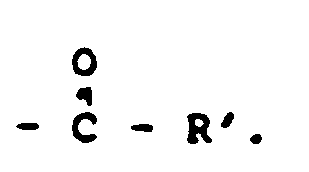


Priority Applications (1)
| Application Number | Priority Date | Filing Date | Title |
|---|---|---|---|
| AT88905048T ATE73464T1 (de) | 1987-04-08 | 1988-04-06 | Stickstoffhaltige kohlenwasserstoffaddukte enthaltende produkte. |
Applications Claiming Priority (2)
| Application Number | Priority Date | Filing Date | Title |
|---|---|---|---|
| US07/036,015 US4772406A (en) | 1987-04-08 | 1987-04-08 | Olefinic hydrocarbon modification with sulfur imides |
| US36015 | 1993-03-23 |
Publications (2)
| Publication Number | Publication Date |
|---|---|
| EP0365550A1 EP0365550A1 (fr) | 1990-05-02 |
| EP0365550B1 true EP0365550B1 (fr) | 1992-03-11 |
Family
ID=21886123
Family Applications (1)
| Application Number | Title | Priority Date | Filing Date |
|---|---|---|---|
| EP88905048A Expired - Lifetime EP0365550B1 (fr) | 1987-04-08 | 1988-04-06 | Composition comprenant des produits d'addition a base d'hydrocarbures azotes |
Country Status (9)
| Country | Link |
|---|---|
| US (1) | US4772406A (fr) |
| EP (1) | EP0365550B1 (fr) |
| JP (1) | JPH02503091A (fr) |
| KR (1) | KR890700614A (fr) |
| AT (1) | ATE73464T1 (fr) |
| BR (1) | BR8807447A (fr) |
| CA (1) | CA1303016C (fr) |
| DE (1) | DE3869133D1 (fr) |
| WO (1) | WO1988008008A2 (fr) |
Families Citing this family (5)
| Publication number | Priority date | Publication date | Assignee | Title |
|---|---|---|---|---|
| US5047158A (en) * | 1987-04-08 | 1991-09-10 | Exxon Chemical Patents Inc. | Olefinic hydrocarbon modification with sulfur imides |
| US4867753A (en) * | 1987-04-08 | 1989-09-19 | Exxon Chemical Patents Inc. | Olefinic hydrocarbon modification with sulfur imides |
| JP2804271B2 (ja) * | 1988-09-30 | 1998-09-24 | 出光興産株式会社 | 2サイクルエンジン用潤滑油組成物 |
| US5191022A (en) * | 1990-03-09 | 1993-03-02 | Exxon Chemical Patents Inc. | Covulcanizable polymer blends and process for producing the same |
| DE4412489A1 (de) * | 1994-04-12 | 1995-10-19 | Basf Ag | Kraft- oder Schmierstoffadditive, Verfahren zu ihrer Herstellung sowie Kraft- oder Schmierstoffzusammensetzungen, enthaltend diese Additive |
Family Cites Families (14)
| Publication number | Priority date | Publication date | Assignee | Title |
|---|---|---|---|---|
| US3200107A (en) * | 1961-06-12 | 1965-08-10 | Lubrizol Corp | Process for preparing acylated amine-cs2 compositions and products |
| US3309316A (en) * | 1964-07-02 | 1967-03-14 | Standard Oil Co | Low corrosivity nitrogen and sulfurcontaining detergent for lubricant oil formulations |
| US3390086A (en) * | 1964-12-29 | 1968-06-25 | Exxon Research Engineering Co | Sulfur containing ashless disperant |
| US4194984A (en) * | 1976-12-09 | 1980-03-25 | Exxon Research & Engineering Co. | Ethylene copolymer/ethylenically unsaturated nitrogen reactant ene adducts having utility as multifunctional V. I. improvers for lubricating oils |
| US4120804A (en) * | 1977-03-07 | 1978-10-17 | The Dow Chemical Company | Ashless oil dispersants |
| US4177153A (en) * | 1978-03-31 | 1979-12-04 | Chevron Research Company | Lubricating oil additive composition |
| US4357250A (en) * | 1978-04-17 | 1982-11-02 | The Lubrizol Corporation | Nitrogen-containing terpolymer-based compositions useful as multi-purpose lubricant additives |
| US4303539A (en) * | 1979-09-12 | 1981-12-01 | Exxon Research & Engineering Co. | Oil additives containing a thiocarbamyl moiety |
| US4292185A (en) * | 1979-12-31 | 1981-09-29 | Rohm And Haas Company | Polymeric additive for lubricants and fuels |
| HU181066B (en) * | 1980-03-12 | 1983-05-30 | Gyogyszerkutato Intezet | Process for preparing steroid -spiro-oxathiazolidine derivatives |
| US4659491A (en) * | 1982-08-06 | 1987-04-21 | Texaco Inc. | Lubricating oil containing a polymer having a functionalized backbone which contains an electron withdrawing group |
| US4510063A (en) * | 1983-07-05 | 1985-04-09 | Texaco Inc. | Amine-polymer dispersants in lubricating oils and a method of improving the dispersancy of a lubricating oil |
| EP0199453A3 (fr) * | 1985-04-24 | 1988-04-13 | Texaco Development Corporation | Compositions d'hydrocarbures contenant des polymères de polyoléfine greffés |
| US4652600A (en) * | 1985-09-20 | 1987-03-24 | Exxon Research And Engineering Company | Sulfomaleation of polyolefins (C-1966) |
-
1987
- 1987-04-08 US US07/036,015 patent/US4772406A/en not_active Expired - Lifetime
-
1988
- 1988-04-06 WO PCT/US1988/001107 patent/WO1988008008A2/fr not_active Ceased
- 1988-04-06 AT AT88905048T patent/ATE73464T1/de not_active IP Right Cessation
- 1988-04-06 BR BR888807447A patent/BR8807447A/pt unknown
- 1988-04-06 JP JP63504760A patent/JPH02503091A/ja active Pending
- 1988-04-06 EP EP88905048A patent/EP0365550B1/fr not_active Expired - Lifetime
- 1988-04-06 DE DE8888905048T patent/DE3869133D1/de not_active Expired - Lifetime
- 1988-04-07 CA CA000563551A patent/CA1303016C/fr not_active Expired - Lifetime
- 1988-12-07 KR KR1019880701621A patent/KR890700614A/ko not_active Ceased
Also Published As
| Publication number | Publication date |
|---|---|
| BR8807447A (pt) | 1990-04-10 |
| WO1988008008A2 (fr) | 1988-10-20 |
| WO1988008008A3 (fr) | 1989-01-12 |
| KR890700614A (ko) | 1989-04-26 |
| CA1303016C (fr) | 1992-06-09 |
| DE3869133D1 (de) | 1992-04-16 |
| ATE73464T1 (de) | 1992-03-15 |
| EP0365550A1 (fr) | 1990-05-02 |
| JPH02503091A (ja) | 1990-09-27 |
| US4772406A (en) | 1988-09-20 |
Similar Documents
| Publication | Publication Date | Title |
|---|---|---|
| US5075383A (en) | Dispersant and antioxidant additive and lubricating oil composition containing same | |
| EP0295853B1 (fr) | Additif dispersant améliorant l'indice de viscosité pour compositions d'huiles à base de copolymères d'éthylène | |
| JP5049330B2 (ja) | 硫化フェノール添加剤、中間体および組成物の製造方法 | |
| US5219480A (en) | Ethylene alpha-olefin mannich base viscosity index improver/dispersant additives derived from amino phenols and monosecondary amines | |
| JP4860035B2 (ja) | 潤滑油組成物 | |
| US5409623A (en) | Functionalized graft co-polymer as a viscosity and index improver, dispersant, and anti-oxidant additive and lubricating oil composition containing same | |
| EP0336716B1 (fr) | Lactones modifiées modifiant la viscosité, utilisables dans des compositions huileuses | |
| EP0352072A1 (fr) | Agent modifiant la viscosité, multifonctionnel désactivé | |
| US5726134A (en) | Multigrade lubricating compositions | |
| US5721200A (en) | Process for making a lubricating oil composition | |
| US5094766A (en) | Dispersant-antioxidant viscosity index improver | |
| EP0352070A1 (fr) | Agent multifonctionnel modifié modifiant l'indice de viscosité | |
| US4866135A (en) | Heterocyclic amine terminated, lactone modified, aminated viscosity modifiers of improved dispersancy | |
| US5356999A (en) | Multifunctional viscosity index improvers based on polymers containing sulfonamides | |
| EP0365550B1 (fr) | Composition comprenant des produits d'addition a base d'hydrocarbures azotes | |
| EP0400866A1 (fr) | Additifs à buts multiples pour la modification de l'indice de viscosité dérivés de polyamines contenant une amine primaire et au moins une amine secondaire | |
| US5256325A (en) | Polyanhydride modified adducts or reactants and oleaginous compositions containing same | |
| US4908146A (en) | Oil additive compositions exhibiting reduced haze containing polymeric viscosity index improver | |
| EP0323088A1 (fr) | Préparation de sulfonate de magnésium superbasique | |
| DE69512409T2 (de) | Multigrad schmiermittelzusammensetzungen, die keine viskositätsmodifizierungsmittel enthalten | |
| US4867753A (en) | Olefinic hydrocarbon modification with sulfur imides | |
| US5047158A (en) | Olefinic hydrocarbon modification with sulfur imides | |
| EP0337602B1 (fr) | Adducts ou produits de réaction modifiés par des polyanhydrides et compositions huileuses | |
| US5733852A (en) | Lubricating oil compositions | |
| US5652202A (en) | Lubricating oil compositions |
Legal Events
| Date | Code | Title | Description |
|---|---|---|---|
| PUAI | Public reference made under article 153(3) epc to a published international application that has entered the european phase |
Free format text: ORIGINAL CODE: 0009012 |
|
| 17P | Request for examination filed |
Effective date: 19891013 |
|
| AK | Designated contracting states |
Kind code of ref document: A1 Designated state(s): AT BE CH DE FR GB IT LI LU NL SE |
|
| 17Q | First examination report despatched |
Effective date: 19900906 |
|
| GRAA | (expected) grant |
Free format text: ORIGINAL CODE: 0009210 |
|
| AK | Designated contracting states |
Kind code of ref document: B1 Designated state(s): AT BE CH DE FR GB IT LI LU NL SE |
|
| REF | Corresponds to: |
Ref document number: 73464 Country of ref document: AT Date of ref document: 19920315 Kind code of ref document: T |
|
| REF | Corresponds to: |
Ref document number: 3869133 Country of ref document: DE Date of ref document: 19920416 |
|
| ET | Fr: translation filed | ||
| RBV | Designated contracting states (corrected) |
Designated state(s): BE DE FR GB IT NL |
|
| ITF | It: translation for a ep patent filed | ||
| PLBE | No opposition filed within time limit |
Free format text: ORIGINAL CODE: 0009261 |
|
| STAA | Information on the status of an ep patent application or granted ep patent |
Free format text: STATUS: NO OPPOSITION FILED WITHIN TIME LIMIT |
|
| 26N | No opposition filed | ||
| PGFP | Annual fee paid to national office [announced via postgrant information from national office to epo] |
Ref country code: DE Payment date: 19940331 Year of fee payment: 7 |
|
| PGFP | Annual fee paid to national office [announced via postgrant information from national office to epo] |
Ref country code: BE Payment date: 19940413 Year of fee payment: 7 |
|
| PGFP | Annual fee paid to national office [announced via postgrant information from national office to epo] |
Ref country code: NL Payment date: 19940430 Year of fee payment: 7 |
|
| PG25 | Lapsed in a contracting state [announced via postgrant information from national office to epo] |
Ref country code: BE Effective date: 19950430 |
|
| BERE | Be: lapsed |
Owner name: EXXON CHEMICAL PATENTS INC. Effective date: 19950430 |
|
| PG25 | Lapsed in a contracting state [announced via postgrant information from national office to epo] |
Ref country code: NL Effective date: 19951101 |
|
| NLV4 | Nl: lapsed or anulled due to non-payment of the annual fee |
Effective date: 19951101 |
|
| PG25 | Lapsed in a contracting state [announced via postgrant information from national office to epo] |
Ref country code: DE Effective date: 19960103 |
|
| REG | Reference to a national code |
Ref country code: GB Ref legal event code: IF02 |
|
| PGFP | Annual fee paid to national office [announced via postgrant information from national office to epo] |
Ref country code: GB Payment date: 20020315 Year of fee payment: 15 |
|
| PGFP | Annual fee paid to national office [announced via postgrant information from national office to epo] |
Ref country code: FR Payment date: 20020404 Year of fee payment: 15 |
|
| PG25 | Lapsed in a contracting state [announced via postgrant information from national office to epo] |
Ref country code: GB Free format text: LAPSE BECAUSE OF NON-PAYMENT OF DUE FEES Effective date: 20030406 |
|
| GBPC | Gb: european patent ceased through non-payment of renewal fee |
Effective date: 20030406 |
|
| PG25 | Lapsed in a contracting state [announced via postgrant information from national office to epo] |
Ref country code: FR Free format text: LAPSE BECAUSE OF NON-PAYMENT OF DUE FEES Effective date: 20031231 |
|
| REG | Reference to a national code |
Ref country code: FR Ref legal event code: ST |
|
| PG25 | Lapsed in a contracting state [announced via postgrant information from national office to epo] |
Ref country code: IT Free format text: LAPSE BECAUSE OF NON-PAYMENT OF DUE FEES;WARNING: LAPSES OF ITALIAN PATENTS WITH EFFECTIVE DATE BEFORE 2007 MAY HAVE OCCURRED AT ANY TIME BEFORE 2007. THE CORRECT EFFECTIVE DATE MAY BE DIFFERENT FROM THE ONE RECORDED. Effective date: 20050406 |