EP0365831A1 - Procédé pour dissoudre des produits à point de fusion élevé dans des dissolvants à bas point d'ébullition, en particulier avec blanchiment simultané - Google Patents
Procédé pour dissoudre des produits à point de fusion élevé dans des dissolvants à bas point d'ébullition, en particulier avec blanchiment simultané Download PDFInfo
- Publication number
- EP0365831A1 EP0365831A1 EP89117536A EP89117536A EP0365831A1 EP 0365831 A1 EP0365831 A1 EP 0365831A1 EP 89117536 A EP89117536 A EP 89117536A EP 89117536 A EP89117536 A EP 89117536A EP 0365831 A1 EP0365831 A1 EP 0365831A1
- Authority
- EP
- European Patent Office
- Prior art keywords
- solvent
- bleaching
- product
- dissolving
- paste
- Prior art date
- Legal status (The legal status is an assumption and is not a legal conclusion. Google has not performed a legal analysis and makes no representation as to the accuracy of the status listed.)
- Withdrawn
Links
- 238000000034 method Methods 0.000 title claims abstract description 58
- 238000004061 bleaching Methods 0.000 title claims abstract description 40
- 239000002904 solvent Substances 0.000 title claims abstract description 39
- 230000008569 process Effects 0.000 title claims abstract description 37
- 238000002844 melting Methods 0.000 title claims description 10
- 238000009835 boiling Methods 0.000 title claims description 8
- 230000008018 melting Effects 0.000 title description 2
- XLYOFNOQVPJJNP-UHFFFAOYSA-N water Substances O XLYOFNOQVPJJNP-UHFFFAOYSA-N 0.000 claims abstract description 30
- MHAJPDPJQMAIIY-UHFFFAOYSA-N Hydrogen peroxide Chemical compound OO MHAJPDPJQMAIIY-UHFFFAOYSA-N 0.000 claims abstract description 19
- 238000002156 mixing Methods 0.000 claims abstract description 13
- 239000007788 liquid Substances 0.000 claims abstract description 8
- 239000007787 solid Substances 0.000 claims abstract description 8
- 238000001704 evaporation Methods 0.000 claims abstract description 6
- 230000008020 evaporation Effects 0.000 claims abstract description 5
- HEMHJVSKTPXQMS-UHFFFAOYSA-M Sodium hydroxide Chemical compound [OH-].[Na+] HEMHJVSKTPXQMS-UHFFFAOYSA-M 0.000 claims description 21
- -1 alkyl glycoside Chemical class 0.000 claims description 16
- 229930182470 glycoside Natural products 0.000 claims description 9
- 229930182478 glucoside Natural products 0.000 claims description 7
- 150000001875 compounds Chemical class 0.000 claims description 6
- 238000013112 stability test Methods 0.000 claims description 6
- 238000003860 storage Methods 0.000 claims description 5
- 239000002736 nonionic surfactant Substances 0.000 claims description 4
- 239000003513 alkali Substances 0.000 claims description 3
- 238000010438 heat treatment Methods 0.000 claims description 3
- 150000008044 alkali metal hydroxides Chemical class 0.000 claims 1
- 239000000126 substance Substances 0.000 abstract description 12
- 238000004519 manufacturing process Methods 0.000 abstract description 9
- 238000007711 solidification Methods 0.000 abstract description 3
- 230000008023 solidification Effects 0.000 abstract description 3
- 238000004090 dissolution Methods 0.000 abstract description 2
- 239000000047 product Substances 0.000 description 38
- 239000000243 solution Substances 0.000 description 14
- 238000001816 cooling Methods 0.000 description 6
- 239000000203 mixture Substances 0.000 description 5
- 230000003068 static effect Effects 0.000 description 5
- 238000006243 chemical reaction Methods 0.000 description 4
- 238000012545 processing Methods 0.000 description 4
- 238000003756 stirring Methods 0.000 description 4
- 239000004094 surface-active agent Substances 0.000 description 4
- PEDCQBHIVMGVHV-UHFFFAOYSA-N Glycerine Chemical compound OCC(O)CO PEDCQBHIVMGVHV-UHFFFAOYSA-N 0.000 description 3
- 125000000217 alkyl group Chemical group 0.000 description 3
- WQZGKKKJIJFFOK-VFUOTHLCSA-N beta-D-glucose Chemical compound OC[C@H]1O[C@@H](O)[C@H](O)[C@@H](O)[C@@H]1O WQZGKKKJIJFFOK-VFUOTHLCSA-N 0.000 description 3
- 239000007844 bleaching agent Substances 0.000 description 3
- 150000002191 fatty alcohols Chemical class 0.000 description 3
- 229960001031 glucose Drugs 0.000 description 3
- 150000004668 long chain fatty acids Chemical class 0.000 description 3
- 230000010349 pulsation Effects 0.000 description 3
- SNRUBQQJIBEYMU-UHFFFAOYSA-N Dodecane Natural products CCCCCCCCCCCC SNRUBQQJIBEYMU-UHFFFAOYSA-N 0.000 description 2
- WQZGKKKJIJFFOK-GASJEMHNSA-N Glucose Natural products OC[C@H]1OC(O)[C@H](O)[C@@H](O)[C@@H]1O WQZGKKKJIJFFOK-GASJEMHNSA-N 0.000 description 2
- LRHPLDYGYMQRHN-UHFFFAOYSA-N N-Butanol Chemical compound CCCCO LRHPLDYGYMQRHN-UHFFFAOYSA-N 0.000 description 2
- RAHZWNYVWXNFOC-UHFFFAOYSA-N Sulphur dioxide Chemical compound O=S=O RAHZWNYVWXNFOC-UHFFFAOYSA-N 0.000 description 2
- 239000000654 additive Substances 0.000 description 2
- 230000001476 alcoholic effect Effects 0.000 description 2
- 230000008901 benefit Effects 0.000 description 2
- 230000015572 biosynthetic process Effects 0.000 description 2
- 239000007795 chemical reaction product Substances 0.000 description 2
- 238000010924 continuous production Methods 0.000 description 2
- 239000002537 cosmetic Substances 0.000 description 2
- 239000003599 detergent Substances 0.000 description 2
- 125000003438 dodecyl group Chemical group [H]C([H])([H])C([H])([H])C([H])([H])C([H])([H])C([H])([H])C([H])([H])C([H])([H])C([H])([H])C([H])([H])C([H])([H])C([H])([H])C([H])([H])* 0.000 description 2
- 150000002148 esters Chemical class 0.000 description 2
- 239000006260 foam Substances 0.000 description 2
- 239000008103 glucose Substances 0.000 description 2
- KFZMGEQAYNKOFK-UHFFFAOYSA-N isopropyl alcohol Natural products CC(C)O KFZMGEQAYNKOFK-UHFFFAOYSA-N 0.000 description 2
- 239000000155 melt Substances 0.000 description 2
- 125000001421 myristyl group Chemical group [H]C([*])([H])C([H])([H])C([H])([H])C([H])([H])C([H])([H])C([H])([H])C([H])([H])C([H])([H])C([H])([H])C([H])([H])C([H])([H])C([H])([H])C([H])([H])C([H])([H])[H] 0.000 description 2
- 150000002927 oxygen compounds Chemical class 0.000 description 2
- 239000002994 raw material Substances 0.000 description 2
- 239000012265 solid product Substances 0.000 description 2
- VEXZGXHMUGYJMC-UHFFFAOYSA-M Chloride anion Chemical compound [Cl-] VEXZGXHMUGYJMC-UHFFFAOYSA-M 0.000 description 1
- ZAMOUSCENKQFHK-UHFFFAOYSA-N Chlorine atom Chemical compound [Cl] ZAMOUSCENKQFHK-UHFFFAOYSA-N 0.000 description 1
- 235000013162 Cocos nucifera Nutrition 0.000 description 1
- 244000060011 Cocos nucifera Species 0.000 description 1
- YZCKVEUIGOORGS-OUBTZVSYSA-N Deuterium Chemical compound [2H] YZCKVEUIGOORGS-OUBTZVSYSA-N 0.000 description 1
- LYCAIKOWRPUZTN-UHFFFAOYSA-N Ethylene glycol Chemical class OCCO LYCAIKOWRPUZTN-UHFFFAOYSA-N 0.000 description 1
- 208000007976 Ketosis Diseases 0.000 description 1
- 239000004435 Oxo alcohol Substances 0.000 description 1
- 238000007171 acid catalysis Methods 0.000 description 1
- 230000000996 additive effect Effects 0.000 description 1
- 150000001323 aldoses Chemical class 0.000 description 1
- 238000013459 approach Methods 0.000 description 1
- 239000007864 aqueous solution Substances 0.000 description 1
- QVGXLLKOCUKJST-UHFFFAOYSA-N atomic oxygen Chemical compound [O] QVGXLLKOCUKJST-UHFFFAOYSA-N 0.000 description 1
- 239000002585 base Substances 0.000 description 1
- 238000010923 batch production Methods 0.000 description 1
- 238000010009 beating Methods 0.000 description 1
- 238000005282 brightening Methods 0.000 description 1
- 230000008859 change Effects 0.000 description 1
- 239000000460 chlorine Substances 0.000 description 1
- 229910052801 chlorine Inorganic materials 0.000 description 1
- 239000012459 cleaning agent Substances 0.000 description 1
- 239000007859 condensation product Substances 0.000 description 1
- 235000009508 confectionery Nutrition 0.000 description 1
- 238000010276 construction Methods 0.000 description 1
- 238000005260 corrosion Methods 0.000 description 1
- 230000007797 corrosion Effects 0.000 description 1
- 125000002704 decyl group Chemical group [H]C([H])([H])C([H])([H])C([H])([H])C([H])([H])C([H])([H])C([H])([H])C([H])([H])C([H])([H])C([H])([H])C([H])([H])* 0.000 description 1
- 238000009826 distribution Methods 0.000 description 1
- 238000003912 environmental pollution Methods 0.000 description 1
- 150000002170 ethers Chemical class 0.000 description 1
- 238000002474 experimental method Methods 0.000 description 1
- 238000005187 foaming Methods 0.000 description 1
- 125000001449 isopropyl group Chemical group [H]C([H])([H])C([H])(*)C([H])([H])[H] 0.000 description 1
- 150000002584 ketoses Chemical class 0.000 description 1
- 125000002347 octyl group Chemical group [H]C([*])([H])C([H])([H])C([H])([H])C([H])([H])C([H])([H])C([H])([H])C([H])([H])C([H])([H])[H] 0.000 description 1
- 239000007800 oxidant agent Substances 0.000 description 1
- 230000001590 oxidative effect Effects 0.000 description 1
- 229910052760 oxygen Inorganic materials 0.000 description 1
- 239000001301 oxygen Substances 0.000 description 1
- 125000000913 palmityl group Chemical group [H]C([*])([H])C([H])([H])C([H])([H])C([H])([H])C([H])([H])C([H])([H])C([H])([H])C([H])([H])C([H])([H])C([H])([H])C([H])([H])C([H])([H])C([H])([H])C([H])([H])C([H])([H])C([H])([H])[H] 0.000 description 1
- 125000000864 peroxy group Chemical group O(O*)* 0.000 description 1
- 229920000151 polyglycol Polymers 0.000 description 1
- 239000010695 polyglycol Substances 0.000 description 1
- 239000000843 powder Substances 0.000 description 1
- 238000002360 preparation method Methods 0.000 description 1
- 150000003138 primary alcohols Chemical class 0.000 description 1
- 150000003856 quaternary ammonium compounds Chemical class 0.000 description 1
- 230000009257 reactivity Effects 0.000 description 1
- 230000009467 reduction Effects 0.000 description 1
- 229960001922 sodium perborate Drugs 0.000 description 1
- YKLJGMBLPUQQOI-UHFFFAOYSA-M sodium;oxidooxy(oxo)borane Chemical compound [Na+].[O-]OB=O YKLJGMBLPUQQOI-UHFFFAOYSA-M 0.000 description 1
- 239000007790 solid phase Substances 0.000 description 1
- 235000020354 squash Nutrition 0.000 description 1
- 125000004079 stearyl group Chemical group [H]C([*])([H])C([H])([H])C([H])([H])C([H])([H])C([H])([H])C([H])([H])C([H])([H])C([H])([H])C([H])([H])C([H])([H])C([H])([H])C([H])([H])C([H])([H])C([H])([H])C([H])([H])C([H])([H])C([H])([H])C([H])([H])[H] 0.000 description 1
- 238000003420 transacetalization reaction Methods 0.000 description 1
- 238000005406 washing Methods 0.000 description 1
Images
Classifications
-
- C—CHEMISTRY; METALLURGY
- C07—ORGANIC CHEMISTRY
- C07H—SUGARS; DERIVATIVES THEREOF; NUCLEOSIDES; NUCLEOTIDES; NUCLEIC ACIDS
- C07H15/00—Compounds containing hydrocarbon or substituted hydrocarbon radicals directly attached to hetero atoms of saccharide radicals
- C07H15/02—Acyclic radicals, not substituted by cyclic structures
- C07H15/04—Acyclic radicals, not substituted by cyclic structures attached to an oxygen atom of the saccharide radical
-
- B—PERFORMING OPERATIONS; TRANSPORTING
- B01—PHYSICAL OR CHEMICAL PROCESSES OR APPARATUS IN GENERAL
- B01F—MIXING, e.g. DISSOLVING, EMULSIFYING OR DISPERSING
- B01F33/00—Other mixers; Mixing plants; Combinations of mixers
- B01F33/70—Mixers specially adapted for working at sub- or super-atmospheric pressure, e.g. combined with de-foaming
-
- B—PERFORMING OPERATIONS; TRANSPORTING
- B01—PHYSICAL OR CHEMICAL PROCESSES OR APPARATUS IN GENERAL
- B01F—MIXING, e.g. DISSOLVING, EMULSIFYING OR DISPERSING
- B01F21/00—Dissolving
- B01F21/02—Methods
-
- B—PERFORMING OPERATIONS; TRANSPORTING
- B01—PHYSICAL OR CHEMICAL PROCESSES OR APPARATUS IN GENERAL
- B01F—MIXING, e.g. DISSOLVING, EMULSIFYING OR DISPERSING
- B01F21/00—Dissolving
- B01F21/30—Workflow diagrams or layout of plants, e.g. flow charts; Details of workflow diagrams or layout of plants, e.g. controlling means
-
- B—PERFORMING OPERATIONS; TRANSPORTING
- B01—PHYSICAL OR CHEMICAL PROCESSES OR APPARATUS IN GENERAL
- B01F—MIXING, e.g. DISSOLVING, EMULSIFYING OR DISPERSING
- B01F21/00—Dissolving
- B01F21/40—Dissolving characterised by the state of the material being dissolved
- B01F21/401—Molten solids
-
- B—PERFORMING OPERATIONS; TRANSPORTING
- B01—PHYSICAL OR CHEMICAL PROCESSES OR APPARATUS IN GENERAL
- B01F—MIXING, e.g. DISSOLVING, EMULSIFYING OR DISPERSING
- B01F23/00—Mixing according to the phases to be mixed, e.g. dispersing or emulsifying
- B01F23/50—Mixing liquids with solids
- B01F23/51—Methods thereof
-
- B—PERFORMING OPERATIONS; TRANSPORTING
- B01—PHYSICAL OR CHEMICAL PROCESSES OR APPARATUS IN GENERAL
- B01F—MIXING, e.g. DISSOLVING, EMULSIFYING OR DISPERSING
- B01F27/00—Mixers with rotary stirring devices in fixed receptacles; Kneaders
- B01F27/80—Mixers with rotary stirring devices in fixed receptacles; Kneaders with stirrers rotating about a substantially vertical axis
Definitions
- the invention relates to a method for dissolving high-melting products in low-boiling liquids as a solvent.
- dissolving means the homogeneous distribution of the high-melting product with and in the low-boiling solvent, depending on the concentration of the end product, this term ranges from molecularly disperse solution to homogeneous, easily dilutable paste.
- High-melting products are understood to mean those substances in organic chemistry whose melting points or fixed points or pour points are above 50 ° C., in particular above 100 ° C. and very particularly above 120 ° C.
- Low-boiling liquids are those solvents that are suitable for dissolving the solid substance and that already have a vapor pressure of over 100 mbar at the fixed point of the high-melting compound. In particular, these solvents have a boiling point that is below normal pressure the fixed point of the high-melting product, which is in particular at least 10 ° C below.
- European patent application 0 165 721 A1 describes a process for bleaching organic products, in particular alkyl polyglycosides, in which the product is first treated with hydrogen peroxide and then with a substance which releases sulfur dioxide, in order to obtain color-stable products in this way. This treatment process is carried out on aqueous pastes of the organic product, without the production of these pastes being described in more detail.
- the process for dissolving high-melting products in low-boiling solvents, in particular with simultaneous bleaching is characterized in that the product to be dissolved is kept at a temperature above its fixed point (pour point) and the liquid serving as solvent is added so that in the mixing device Operating pressure of 1.1 to 10 bar arises when the solvent is added and evaporation of the solvent when mixing no longer occurs afterwards.
- True molecular-disperse solutions can be produced with the method according to the invention, but preference is given to the production of homogeneous pastes which are suitable for further processing into both liquid and solid confection forms.
- Homogeneous pastes with a solids content (product amount) of 20-80% by weight, preferably 40-70% by weight, are preferably produced.
- the process according to the invention can be carried out batchwise or continuously.
- the advantages of the method according to the invention are of several kinds: During the Mixing process prevents the formation of a solid phase; the procedure leads to a considerable reduction in the dissolution time; Loss of solvents due to evaporation and associated recipe errors, environmental pollution and costs are avoided.
- Another particular advantage of the method is that the dissolving process can be combined with a bleaching process. If the loosening and bleaching are foaming surfactant raw materials, the foam problems can be mastered well during the process.
- the method according to the invention thus represents a solution to the problem of economical handling and processing on an operational production scale.
- the invention relates in particular to the conversion of waxy to solid products which are suitable for further processing into detergents or cosmetic products, in particular oleochemical products, into highly concentrated pastes with little intrinsic color and good storage stability.
- the production of alcoholic, aqueous / alcoholic and aqueous pastes is particularly preferred.
- the process relates in particular to the conversion of the alkyl glycosides, in particular fatty alkyl glucosides, produced by acid catalysis from glycoses, oligoglycoses or polyglycoses, into aqueous, in particular 40-70% pastes with simultaneous bleaching with oxidizing substances, in particular peroxy compounds, so that light-colored pastes result , which are suitable for the production of washing and cleaning agents due to their color stability in an alkaline environment and their storage stability.
- water is used as the solvent and the dissolving method with a Bleaching process using an active oxygen-releasing compound, in particular hydrogen peroxide.
- an active oxygen-releasing compound in particular hydrogen peroxide.
- Operating pressures of 2 to 10 bar are preferably set.
- this bleaching process can also be carried out using a compound containing or releasing active chlorine; however, this variant is less preferred because of the inevitable formation of chloride ions, which in many cases can lead to corrosion problems when using the bleached product.
- the process according to the invention can generally be applied to products of organic chemistry which have a pour point in the range from about 50 ° C. to 250 ° C., preferably 50 to 200 ° C., and which are dissolved or paste-like for the purpose of better handling Form can be transferred. From an application point of view, such solutions or pastes are often required to have certain properties regarding their color or storage stability, so that bleaching of the product is necessary.
- the method according to the invention can in principle be applied to those products of the chemical industry which are produced as melts and which, upon cooling, change to a solid or waxy or gel-like consistency, in particular to oleochemical products. Such products are often converted into solutions or pastes for better handling and further processing.
- Typical representatives for these substances are the partial esters of long-chain fatty acids with glycerol, the esters of long-chain fatty acids with ethylene glycols, the fatty alcohols, the fatty alcohol polyglycol ethers, the condensation products of long-chain fatty acids with polyaminoalkanes or hydroxyalkylpolyaminoalkanes or quaternary ammonium compounds with one or two long-chain alkyls.
- the process according to the invention is used as a combined dissolving and bleaching process using water as a solvent and hydrogen peroxide as an oxidizing agent for working up large quantities of alkyl glucosides, primarily the fatty alkyl glucosides, which are used as nonionic surfactants for the production of liquid and powder detergents and cosmetic Appropriate means are applied.
- alkyl glycosides and their preparation are described, for example, in US Pat. No. 3,547,828 or in European patent applications 0 035 589 A1 and 092 355 A1.
- the alkyl component of the alkyl glycosides is generally aliphatic radicals with C1 to C30, of which the range C8 to C20, in particular C12 to C18, results in products with surfactant properties.
- the sugar component in the alkyl glycoside can in principle be derived from conventional aldoses or ketoses. Because of the glucose available in large quantities and their good reactivity, the alkyl glucosides are particularly preferred.
- Typical representatives of the alkyl glycosides which have the properties of a nonionic surfactant are those whose aliphatic radical represents a typical fatty alkyl radical, for example octyl, decyl, dodecyl, tetradecyl, hexadecyl, octadecyl.
- Particularly suitable alkyl glycosides contain a coconut fatty alkyl radical, ie mixtures with essentially dodecyl and tetradecyl.
- nonionic surfactants are those alkyl glycosides whose alkyl radical is derived from synthetic primary alcohols, in particular the so-called C9-C13 oxo alcohols, ie those primary alkanols which have a certain percentage of branched isomers.
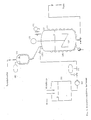
- the product melt is placed in a preheated pressure vessel, and temperatures that are approximately 15-25 ° C above the pour point of the solid product are selected.
- the solvent for example water
- the solvent is then metered into the molten product with slow stirring. Due to the initially evaporating solvent, the required operating pressure builds up automatically, with pressures of 1.1 bar to 10 bar occurring depending on the choice of solvent. In the case of water as a solvent, pressures of 3.5 to 5 bar generally arise.
- the amount of solvent is chosen so that a solvent concentration between 30 and 90, preferably between 30 and 70 and in particular between 40 and 60% by weight is achieved.
- the bleaching substance preferably hydrogen peroxide
- the bleaching substance can be added directly to the water, so that the processes of dissolving and bleaching take place simultaneously, ie without additional time being required for the bleaching.
- such amounts of the bleaching active oxygen compounds are generally used that they are 0.2 to 1.5% by weight, calculated as pure H2O2, used in the usual concentration (approx. 30 to 35%) ), correspond.
- so much sodium hydroxide solution is added that the bleach is clearly in the alkaline range, preferably at pH 7.5 to pH 10 and in particular takes place at 8 to 9.5.
- the molten product and the solvent are conveyed in a ratio of 40% to 70%, preferably 50% to 60% solvent, preferably with gear pumps, to the solvent pressure of preferably about 3.5 to 5 bar and homogenized in a static mixer.
- the hot solution is cooled in a heat exchanger in counterflow to the solvent to 70-100 ° C., preferably about 90 ° C., and brought to ambient pressure after the dissolving process or the simultaneous bleaching has ended.
- the solvent heated in the heat exchanger is adjusted to the desired dissolving temperature in a reheater before entering the mixing section, for example to about 140 ° C. for the preferred solvent water.
- a second mixing device is preferably used in order to introduce the bleaching chemicals into the already cooled solution or paste at an optimal bleaching temperature. This is done with conventional metering pumps, for example diaphragm metering pumps, with a pulsation damper preferably ensuring a uniform additive flow.
- the addition of the bleaching chemicals is controlled in such a way that the actual bleaching takes place essentially only after the dissolving process, when the solution or paste kept at the optimum bleaching temperature is transported or stored, so that in comparison with the discontinuous process with a reduced volume of the mixing devices can be worked.
- the thermal process for the product melt is lower in the continuous procedure, so that lighter pastes are obtained even before bleaching.
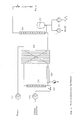
- a schematic representation of the continuous process can be found in Fig. 2.
- the effectiveness of the combined dissolving / bleaching process is determined by the following storage and alkali stability test for the aqueous paste: A sample amount of the aqueous paste is adjusted to pH 12-13 with concentrated sodium hydroxide solution and heated to 100 ° C. for 0.5 hours. After cooling to room temperature, a 5% solution is adjusted by adding water / isopropyl alcohol, ratio approx. 1: 1, and the color number is measured according to Velcro. A 1 cm cell and a blue filter are used for this. The Velcro numbers for the product treated in this way should be below 35.
- This example describes the batch process for a technical approach.
- the pH of the product measured on a 1% strength aqueous sample, was 9.
- Water from room temperature in an amount of 86 kg (liter) was added over a period of 15 minutes with slow stirring (approx. 75 rpm) , whereby a mixing temperature of 140 ° C was established, which was brought to 90-93 ° C by cooling.
- This example describes the continuous process in a pilot plant.
- the product melt of the C12-C14 alkyl glycoside as in Example 1 was conveyed in a ratio of 1: 1 with water from room temperature via the gear pumps (1) or (2) to a solvent pressure of 4.5 bar and in the static mixer (3), Construction type Sulzer SMX, homogenized.
- the throughput amounts were 32 kg per hour.
- the mixture was cooled to 90 ° C. in the plate heat exchanger (4) and then brought to ambient pressure.
- the dissolving water heated in the plate heat exchanger was brought to 140 ° C. by means of a reheater (5) before entering the mixing section.
- the 90 ° C warm mixture then passed through the second static mixer of the same type and 0.75 kg of 30% hydrogen peroxide and 50% sodium hydroxide per hour were fed into it via the diaphragm metering pumps (7) and the pulsation damper (8) .
- the finished mixture was discharged via an intermediate container in the transport container without further cooling, so that the bleaching reaction could be terminated there.
- Water content of the paste approx. 52% by weight, appearance light yellow-cloudy; Viscosity at 25 ° C 280 mPas.
- Color stability test color numbers according to Velcro 21 after bleaching or 24 after the color stability test. pH of the paste 9.6.
Landscapes
- Chemical & Material Sciences (AREA)
- Chemical Kinetics & Catalysis (AREA)
- Organic Chemistry (AREA)
- Engineering & Computer Science (AREA)
- Health & Medical Sciences (AREA)
- Life Sciences & Earth Sciences (AREA)
- Crystallography & Structural Chemistry (AREA)
- Biochemistry (AREA)
- Biotechnology (AREA)
- General Health & Medical Sciences (AREA)
- Genetics & Genomics (AREA)
- Molecular Biology (AREA)
- Dispersion Chemistry (AREA)
- Detergent Compositions (AREA)
- Saccharide Compounds (AREA)
Applications Claiming Priority (2)
| Application Number | Priority Date | Filing Date | Title |
|---|---|---|---|
| DE3833230 | 1988-09-30 | ||
| DE3833230A DE3833230A1 (de) | 1988-09-30 | 1988-09-30 | Verfahren zum loesen hochschmelzender erzeugnisse in tiefsiedenden fluessigkeiten als loesungsmittel, insbesondere mit simultaner bleiche |
Publications (1)
| Publication Number | Publication Date |
|---|---|
| EP0365831A1 true EP0365831A1 (fr) | 1990-05-02 |
Family
ID=6364073
Family Applications (1)
| Application Number | Title | Priority Date | Filing Date |
|---|---|---|---|
| EP89117536A Withdrawn EP0365831A1 (fr) | 1988-09-30 | 1989-09-22 | Procédé pour dissoudre des produits à point de fusion élevé dans des dissolvants à bas point d'ébullition, en particulier avec blanchiment simultané |
Country Status (5)
| Country | Link |
|---|---|
| EP (1) | EP0365831A1 (fr) |
| KR (1) | KR900701383A (fr) |
| CN (1) | CN1041290A (fr) |
| DE (1) | DE3833230A1 (fr) |
| WO (1) | WO1990003216A1 (fr) |
Cited By (3)
| Publication number | Priority date | Publication date | Assignee | Title |
|---|---|---|---|---|
| WO1991019723A1 (fr) * | 1990-06-15 | 1991-12-26 | Henkel Kommanditgesellschaft Auf Aktien | Procede pour eclaircir des alkylglycosides tensioactifs decolores et pour traiter le produit blanchi |
| US5510482A (en) * | 1990-06-15 | 1996-04-23 | Henkel Kommanditgesellschaft Auf Aktien | Process for bleaching discolored surface-active alkyl glycosides and for working up the bleached material |
| US5857773A (en) * | 1994-11-15 | 1999-01-12 | Turun Asennusteam Oy | Polymer dissolving method and apparatus |
Families Citing this family (3)
| Publication number | Priority date | Publication date | Assignee | Title |
|---|---|---|---|---|
| DE4232165A1 (de) * | 1992-09-25 | 1994-03-31 | Henkel Kgaa | Verfahren zur Herstellung von oberflächenaktiven Stoffen mit verbesserter Reinigungsleistung |
| DE19519889A1 (de) * | 1995-05-31 | 1996-12-05 | Henkel Kgaa | Verfahren zur Herstellung hellfarbiger, niedrigviskoser Alkyloligoglycoside |
| CN117884026B (zh) * | 2024-03-14 | 2024-05-17 | 云南聚杰环保科技有限公司 | 一种强碱性物料固液自动转换混合装置 |
Citations (4)
| Publication number | Priority date | Publication date | Assignee | Title |
|---|---|---|---|---|
| DE404907C (de) * | 1923-09-09 | 1924-10-25 | Bruno Waeser Dr Ing | Verfahren und Vorrichtung zum Mischen von Fluessigkeiten oder Gasen |
| DE694142C (de) * | 1938-10-26 | 1940-07-26 | Hermann Plauson | tten sowie Talloelprodukten |
| CH289063A (de) * | 1949-10-31 | 1953-02-28 | Decker Rudolf | Verfahren zur Überführung von in Wasser nicht oder schwer löslichen organischen Verbindungen in fein verteilte Form. |
| DE2305411A1 (de) * | 1973-02-03 | 1974-08-08 | Henkel & Cie Gmbh | Verfahren zur herstellung waessriger emulsionen oder kolloidaler loesungen von oel-, fett- oder wachsartigen stoffen oder stoffgemischen |
-
1988
- 1988-09-30 DE DE3833230A patent/DE3833230A1/de not_active Ceased
-
1989
- 1989-09-22 WO PCT/EP1989/001105 patent/WO1990003216A1/fr not_active Ceased
- 1989-09-22 EP EP89117536A patent/EP0365831A1/fr not_active Withdrawn
- 1989-09-22 KR KR1019900701147A patent/KR900701383A/ko not_active Withdrawn
- 1989-09-25 CN CN89107480A patent/CN1041290A/zh active Pending
Patent Citations (4)
| Publication number | Priority date | Publication date | Assignee | Title |
|---|---|---|---|---|
| DE404907C (de) * | 1923-09-09 | 1924-10-25 | Bruno Waeser Dr Ing | Verfahren und Vorrichtung zum Mischen von Fluessigkeiten oder Gasen |
| DE694142C (de) * | 1938-10-26 | 1940-07-26 | Hermann Plauson | tten sowie Talloelprodukten |
| CH289063A (de) * | 1949-10-31 | 1953-02-28 | Decker Rudolf | Verfahren zur Überführung von in Wasser nicht oder schwer löslichen organischen Verbindungen in fein verteilte Form. |
| DE2305411A1 (de) * | 1973-02-03 | 1974-08-08 | Henkel & Cie Gmbh | Verfahren zur herstellung waessriger emulsionen oder kolloidaler loesungen von oel-, fett- oder wachsartigen stoffen oder stoffgemischen |
Cited By (3)
| Publication number | Priority date | Publication date | Assignee | Title |
|---|---|---|---|---|
| WO1991019723A1 (fr) * | 1990-06-15 | 1991-12-26 | Henkel Kommanditgesellschaft Auf Aktien | Procede pour eclaircir des alkylglycosides tensioactifs decolores et pour traiter le produit blanchi |
| US5510482A (en) * | 1990-06-15 | 1996-04-23 | Henkel Kommanditgesellschaft Auf Aktien | Process for bleaching discolored surface-active alkyl glycosides and for working up the bleached material |
| US5857773A (en) * | 1994-11-15 | 1999-01-12 | Turun Asennusteam Oy | Polymer dissolving method and apparatus |
Also Published As
| Publication number | Publication date |
|---|---|
| KR900701383A (ko) | 1990-12-01 |
| CN1041290A (zh) | 1990-04-18 |
| WO1990003216A1 (fr) | 1990-04-05 |
| DE3833230A1 (de) | 1990-04-05 |
Similar Documents
| Publication | Publication Date | Title |
|---|---|---|
| DE2448453A1 (de) | Verfahren zum herstellen von natriumpercarbonat mit erhoehter stabilitaet in festen bleich- und waschmitteln | |
| WO1990015050A1 (fr) | Procede pour fabriquer des melanges tensio-actifs a base d'ethersulfonates, et leur utilisation | |
| DE69228330T2 (de) | Verfahren zur Herstellung von Waschmittelzusammensetzungen | |
| DE1289524B (de) | Verfahren und Vorrichtung zur Herstellung einer waessrigen 0, 5- bis 7gewichtsprozentigen Peressigsaeureloesung | |
| DE68910744T2 (de) | Granulöses Waschmittelkonzentrat von hoher Dichte. | |
| DE60107829T2 (de) | Verfahren zur herstellung von flüssigen tensidzusammensetzungen | |
| DE3442579C2 (de) | Verfahren zur Herstellung von oberflächenaktiven Kondensationsprodukten | |
| EP0365831A1 (fr) | Procédé pour dissoudre des produits à point de fusion élevé dans des dissolvants à bas point d'ébullition, en particulier avec blanchiment simultané | |
| EP0576464B1 (fr) | Procede de preparation de pates tres concentrees en sulfate d'alccools gras | |
| DE2704310C2 (de) | Verfahren zur Herstellung wäßriger Suspensionen von feinteiligen, zum Kationenaustausch befähigten wasserunlöslichen Silikaten | |
| EP0336263A2 (fr) | Procédé pour la préparation d'éthers polyglycoliques d'alcools gras ayant un contenu d'EO ou de PO diminué | |
| EP0319819A1 (fr) | Procédé d'obtention de produits solides ou pâteux | |
| EP0533723B1 (fr) | Procede pour eclaircir des alkylglycosides tensioactifs decolores et pour traiter le produit blanchi | |
| DE4134707A1 (de) | Verfahren zur herstellung hellfarbiger alkyloligoglycosid-pasten | |
| EP0249846B1 (fr) | Procédé de préparation de sels solides de métaux alcalins d'esters d'acides gras alpha sulfonés | |
| DE2517591C2 (de) | Verfahren zur Herstellung von β-Naphthol | |
| EP0370273A1 (fr) | Mélanges d'alcools gras et leurs éthoxylates à caractéristiques modifiées à basse température | |
| EP0074590B1 (fr) | Préparation d'azurants optiques | |
| EP0141395B1 (fr) | Procédé pour la préparation d'un agent de traitement pour le linge | |
| EP0026308B1 (fr) | Utilisation de produits de réaction de diacides carboxyliques non saturés et d'esters comme agents auxiliaires pour pâtes de pigment | |
| DE3011834A1 (de) | Verfahren zur herstellung feinstteiliger zeolithischer natriumaluminiumsilikate | |
| EP0556220B1 (fr) | Procédé d'obtention de pâte aqueuse tensioactive stabilisée | |
| DE4423641C1 (de) | Verfahren zur Herstellung hellfarbiger Tenside | |
| EP0617045A2 (fr) | Procédé de préparation en continu d'alkylglycosides | |
| DE1617223A1 (de) | Verfahren zur Herstellung eines phosphathaltigen Reinigungsmittels |
Legal Events
| Date | Code | Title | Description |
|---|---|---|---|
| PUAI | Public reference made under article 153(3) epc to a published international application that has entered the european phase |
Free format text: ORIGINAL CODE: 0009012 |
|
| AK | Designated contracting states |
Kind code of ref document: A1 Designated state(s): ES GR |
|
| 17P | Request for examination filed |
Effective date: 19901025 |
|
| STAA | Information on the status of an ep patent application or granted ep patent |
Free format text: STATUS: THE APPLICATION HAS BEEN WITHDRAWN |
|
| 18W | Application withdrawn |
Withdrawal date: 19901219 |
|
| R18W | Application withdrawn (corrected) |
Effective date: 19901219 |