EP0366272A1 - Temperaturregelung von Kühlwagen - Google Patents
Temperaturregelung von Kühlwagen Download PDFInfo
- Publication number
- EP0366272A1 EP0366272A1 EP89309868A EP89309868A EP0366272A1 EP 0366272 A1 EP0366272 A1 EP 0366272A1 EP 89309868 A EP89309868 A EP 89309868A EP 89309868 A EP89309868 A EP 89309868A EP 0366272 A1 EP0366272 A1 EP 0366272A1
- Authority
- EP
- European Patent Office
- Prior art keywords
- air
- heat exchanger
- heater
- temperature
- suction
- Prior art date
- Legal status (The legal status is an assumption and is not a legal conclusion. Google has not performed a legal analysis and makes no representation as to the accuracy of the status listed.)
- Ceased
Links
Images


Classifications
-
- F—MECHANICAL ENGINEERING; LIGHTING; HEATING; WEAPONS; BLASTING
- F25—REFRIGERATION OR COOLING; COMBINED HEATING AND REFRIGERATION SYSTEMS; HEAT PUMP SYSTEMS; MANUFACTURE OR STORAGE OF ICE; LIQUEFACTION SOLIDIFICATION OF GASES
- F25D—REFRIGERATORS; COLD ROOMS; ICE-BOXES; COOLING OR FREEZING APPARATUS NOT OTHERWISE PROVIDED FOR
- F25D23/00—General constructional features
- F25D23/06—Walls
- F25D23/061—Walls with conduit means
-
- B—PERFORMING OPERATIONS; TRANSPORTING
- B29—WORKING OF PLASTICS; WORKING OF SUBSTANCES IN A PLASTIC STATE IN GENERAL
- B29C—SHAPING OR JOINING OF PLASTICS; SHAPING OF MATERIAL IN A PLASTIC STATE, NOT OTHERWISE PROVIDED FOR; AFTER-TREATMENT OF THE SHAPED PRODUCTS, e.g. REPAIRING
- B29C51/00—Shaping by thermoforming, i.e. shaping sheets or sheet like preforms after heating, e.g. shaping sheets in matched moulds or by deep-drawing; Apparatus therefor
- B29C51/16—Lining or labelling
-
- B—PERFORMING OPERATIONS; TRANSPORTING
- B29—WORKING OF PLASTICS; WORKING OF SUBSTANCES IN A PLASTIC STATE IN GENERAL
- B29C—SHAPING OR JOINING OF PLASTICS; SHAPING OF MATERIAL IN A PLASTIC STATE, NOT OTHERWISE PROVIDED FOR; AFTER-TREATMENT OF THE SHAPED PRODUCTS, e.g. REPAIRING
- B29C65/00—Joining or sealing of preformed parts, e.g. welding of plastics materials; Apparatus therefor
- B29C65/48—Joining or sealing of preformed parts, e.g. welding of plastics materials; Apparatus therefor using adhesives, i.e. using supplementary joining material; solvent bonding
-
- B—PERFORMING OPERATIONS; TRANSPORTING
- B29—WORKING OF PLASTICS; WORKING OF SUBSTANCES IN A PLASTIC STATE IN GENERAL
- B29C—SHAPING OR JOINING OF PLASTICS; SHAPING OF MATERIAL IN A PLASTIC STATE, NOT OTHERWISE PROVIDED FOR; AFTER-TREATMENT OF THE SHAPED PRODUCTS, e.g. REPAIRING
- B29C66/00—General aspects of processes or apparatus for joining preformed parts
- B29C66/01—General aspects dealing with the joint area or with the area to be joined
- B29C66/05—Particular design of joint configurations
- B29C66/10—Particular design of joint configurations particular design of the joint cross-sections
- B29C66/11—Joint cross-sections comprising a single joint-segment, i.e. one of the parts to be joined comprising a single joint-segment in the joint cross-section
- B29C66/112—Single lapped joints
- B29C66/1122—Single lap to lap joints, i.e. overlap joints
-
- B—PERFORMING OPERATIONS; TRANSPORTING
- B29—WORKING OF PLASTICS; WORKING OF SUBSTANCES IN A PLASTIC STATE IN GENERAL
- B29C—SHAPING OR JOINING OF PLASTICS; SHAPING OF MATERIAL IN A PLASTIC STATE, NOT OTHERWISE PROVIDED FOR; AFTER-TREATMENT OF THE SHAPED PRODUCTS, e.g. REPAIRING
- B29C66/00—General aspects of processes or apparatus for joining preformed parts
- B29C66/40—General aspects of joining substantially flat articles, e.g. plates, sheets or web-like materials; Making flat seams in tubular or hollow articles; Joining single elements to substantially flat surfaces
- B29C66/41—Joining substantially flat articles ; Making flat seams in tubular or hollow articles
- B29C66/43—Joining a relatively small portion of the surface of said articles
- B29C66/432—Joining a relatively small portion of the surface of said articles for making tubular articles or closed loops, e.g. by joining several sheets ; for making hollow articles or hollow preforms
- B29C66/4322—Joining a relatively small portion of the surface of said articles for making tubular articles or closed loops, e.g. by joining several sheets ; for making hollow articles or hollow preforms by joining a single sheet to itself
-
- B—PERFORMING OPERATIONS; TRANSPORTING
- B29—WORKING OF PLASTICS; WORKING OF SUBSTANCES IN A PLASTIC STATE IN GENERAL
- B29C—SHAPING OR JOINING OF PLASTICS; SHAPING OF MATERIAL IN A PLASTIC STATE, NOT OTHERWISE PROVIDED FOR; AFTER-TREATMENT OF THE SHAPED PRODUCTS, e.g. REPAIRING
- B29C66/00—General aspects of processes or apparatus for joining preformed parts
- B29C66/40—General aspects of joining substantially flat articles, e.g. plates, sheets or web-like materials; Making flat seams in tubular or hollow articles; Joining single elements to substantially flat surfaces
- B29C66/41—Joining substantially flat articles ; Making flat seams in tubular or hollow articles
- B29C66/43—Joining a relatively small portion of the surface of said articles
- B29C66/432—Joining a relatively small portion of the surface of said articles for making tubular articles or closed loops, e.g. by joining several sheets ; for making hollow articles or hollow preforms
- B29C66/4326—Joining a relatively small portion of the surface of said articles for making tubular articles or closed loops, e.g. by joining several sheets ; for making hollow articles or hollow preforms for making hollow articles or hollow-preforms, e.g. half-shells
-
- B—PERFORMING OPERATIONS; TRANSPORTING
- B29—WORKING OF PLASTICS; WORKING OF SUBSTANCES IN A PLASTIC STATE IN GENERAL
- B29C—SHAPING OR JOINING OF PLASTICS; SHAPING OF MATERIAL IN A PLASTIC STATE, NOT OTHERWISE PROVIDED FOR; AFTER-TREATMENT OF THE SHAPED PRODUCTS, e.g. REPAIRING
- B29C66/00—General aspects of processes or apparatus for joining preformed parts
- B29C66/40—General aspects of joining substantially flat articles, e.g. plates, sheets or web-like materials; Making flat seams in tubular or hollow articles; Joining single elements to substantially flat surfaces
- B29C66/47—Joining single elements to sheets, plates or other substantially flat surfaces
- B29C66/472—Joining single elements to sheets, plates or other substantially flat surfaces said single elements being substantially flat
-
- B—PERFORMING OPERATIONS; TRANSPORTING
- B29—WORKING OF PLASTICS; WORKING OF SUBSTANCES IN A PLASTIC STATE IN GENERAL
- B29C—SHAPING OR JOINING OF PLASTICS; SHAPING OF MATERIAL IN A PLASTIC STATE, NOT OTHERWISE PROVIDED FOR; AFTER-TREATMENT OF THE SHAPED PRODUCTS, e.g. REPAIRING
- B29C66/00—General aspects of processes or apparatus for joining preformed parts
- B29C66/40—General aspects of joining substantially flat articles, e.g. plates, sheets or web-like materials; Making flat seams in tubular or hollow articles; Joining single elements to substantially flat surfaces
- B29C66/49—Internally supporting the, e.g. tubular, article during joining
- B29C66/494—Internally supporting the, e.g. tubular, article during joining using an inflatable core
-
- B—PERFORMING OPERATIONS; TRANSPORTING
- B29—WORKING OF PLASTICS; WORKING OF SUBSTANCES IN A PLASTIC STATE IN GENERAL
- B29C—SHAPING OR JOINING OF PLASTICS; SHAPING OF MATERIAL IN A PLASTIC STATE, NOT OTHERWISE PROVIDED FOR; AFTER-TREATMENT OF THE SHAPED PRODUCTS, e.g. REPAIRING
- B29C66/00—General aspects of processes or apparatus for joining preformed parts
- B29C66/70—General aspects of processes or apparatus for joining preformed parts characterised by the composition, physical properties or the structure of the material of the parts to be joined; Joining with non-plastics material
- B29C66/72—General aspects of processes or apparatus for joining preformed parts characterised by the composition, physical properties or the structure of the material of the parts to be joined; Joining with non-plastics material characterised by the structure of the material of the parts to be joined
- B29C66/723—General aspects of processes or apparatus for joining preformed parts characterised by the composition, physical properties or the structure of the material of the parts to be joined; Joining with non-plastics material characterised by the structure of the material of the parts to be joined being multi-layered
-
- B—PERFORMING OPERATIONS; TRANSPORTING
- B29—WORKING OF PLASTICS; WORKING OF SUBSTANCES IN A PLASTIC STATE IN GENERAL
- B29C—SHAPING OR JOINING OF PLASTICS; SHAPING OF MATERIAL IN A PLASTIC STATE, NOT OTHERWISE PROVIDED FOR; AFTER-TREATMENT OF THE SHAPED PRODUCTS, e.g. REPAIRING
- B29C66/00—General aspects of processes or apparatus for joining preformed parts
- B29C66/80—General aspects of machine operations or constructions and parts thereof
- B29C66/81—General aspects of the pressing elements, i.e. the elements applying pressure on the parts to be joined in the area to be joined, e.g. the welding jaws or clamps
- B29C66/814—General aspects of the pressing elements, i.e. the elements applying pressure on the parts to be joined in the area to be joined, e.g. the welding jaws or clamps characterised by the design of the pressing elements, e.g. of the welding jaws or clamps
- B29C66/8145—General aspects of the pressing elements, i.e. the elements applying pressure on the parts to be joined in the area to be joined, e.g. the welding jaws or clamps characterised by the design of the pressing elements, e.g. of the welding jaws or clamps characterised by the constructional aspects of the pressing elements, e.g. of the welding jaws or clamps
- B29C66/81455—General aspects of the pressing elements, i.e. the elements applying pressure on the parts to be joined in the area to be joined, e.g. the welding jaws or clamps characterised by the design of the pressing elements, e.g. of the welding jaws or clamps characterised by the constructional aspects of the pressing elements, e.g. of the welding jaws or clamps being a fluid inflatable bag or bladder, a diaphragm or a vacuum bag for applying isostatic pressure
-
- B—PERFORMING OPERATIONS; TRANSPORTING
- B60—VEHICLES IN GENERAL
- B60H—ARRANGEMENTS OF HEATING, COOLING, VENTILATING OR OTHER AIR-TREATING DEVICES SPECIALLY ADAPTED FOR PASSENGER OR GOODS SPACES OF VEHICLES
- B60H1/00—Heating, cooling or ventilating devices
- B60H1/00007—Combined heating, ventilating, or cooling devices
- B60H1/00014—Combined heating, ventilating, or cooling devices for load cargos on load transporting vehicles
-
- B—PERFORMING OPERATIONS; TRANSPORTING
- B60—VEHICLES IN GENERAL
- B60H—ARRANGEMENTS OF HEATING, COOLING, VENTILATING OR OTHER AIR-TREATING DEVICES SPECIALLY ADAPTED FOR PASSENGER OR GOODS SPACES OF VEHICLES
- B60H1/00—Heating, cooling or ventilating devices
- B60H1/00271—HVAC devices specially adapted for particular vehicle parts or components and being connected to the vehicle HVAC unit
- B60H1/00295—HVAC devices specially adapted for particular vehicle parts or components and being connected to the vehicle HVAC unit for trim components, e.g. panels, dashboards, liners
-
- B—PERFORMING OPERATIONS; TRANSPORTING
- B60—VEHICLES IN GENERAL
- B60P—VEHICLES ADAPTED FOR LOAD TRANSPORTATION OR TO TRANSPORT, TO CARRY, OR TO COMPRISE SPECIAL LOADS OR OBJECTS
- B60P3/00—Vehicles adapted to transport, to carry or to comprise special loads or objects
- B60P3/20—Refrigerated goods vehicles
-
- B—PERFORMING OPERATIONS; TRANSPORTING
- B60—VEHICLES IN GENERAL
- B60P—VEHICLES ADAPTED FOR LOAD TRANSPORTATION OR TO TRANSPORT, TO CARRY, OR TO COMPRISE SPECIAL LOADS OR OBJECTS
- B60P3/00—Vehicles adapted to transport, to carry or to comprise special loads or objects
- B60P3/20—Refrigerated goods vehicles
- B60P3/205—Refrigerated goods vehicles with means for dividing the interior volume, e.g. movable walls or intermediate floors
-
- E—FIXED CONSTRUCTIONS
- E04—BUILDING
- E04C—STRUCTURAL ELEMENTS; BUILDING MATERIALS
- E04C2/00—Building elements of relatively thin form for the construction of parts of buildings, e.g. sheet materials, slabs, or panels
- E04C2/02—Building elements of relatively thin form for the construction of parts of buildings, e.g. sheet materials, slabs, or panels characterised by specified materials
- E04C2/26—Building elements of relatively thin form for the construction of parts of buildings, e.g. sheet materials, slabs, or panels characterised by specified materials composed of materials covered by two or more of groups E04C2/04, E04C2/08, E04C2/10 or of materials covered by one of these groups with a material not specified in one of the groups
- E04C2/284—Building elements of relatively thin form for the construction of parts of buildings, e.g. sheet materials, slabs, or panels characterised by specified materials composed of materials covered by two or more of groups E04C2/04, E04C2/08, E04C2/10 or of materials covered by one of these groups with a material not specified in one of the groups at least one of the materials being insulating
- E04C2/292—Building elements of relatively thin form for the construction of parts of buildings, e.g. sheet materials, slabs, or panels characterised by specified materials composed of materials covered by two or more of groups E04C2/04, E04C2/08, E04C2/10 or of materials covered by one of these groups with a material not specified in one of the groups at least one of the materials being insulating composed of insulating material and sheet metal
-
- B—PERFORMING OPERATIONS; TRANSPORTING
- B29—WORKING OF PLASTICS; WORKING OF SUBSTANCES IN A PLASTIC STATE IN GENERAL
- B29C—SHAPING OR JOINING OF PLASTICS; SHAPING OF MATERIAL IN A PLASTIC STATE, NOT OTHERWISE PROVIDED FOR; AFTER-TREATMENT OF THE SHAPED PRODUCTS, e.g. REPAIRING
- B29C66/00—General aspects of processes or apparatus for joining preformed parts
- B29C66/70—General aspects of processes or apparatus for joining preformed parts characterised by the composition, physical properties or the structure of the material of the parts to be joined; Joining with non-plastics material
- B29C66/71—General aspects of processes or apparatus for joining preformed parts characterised by the composition, physical properties or the structure of the material of the parts to be joined; Joining with non-plastics material characterised by the composition of the plastics material of the parts to be joined
-
- B—PERFORMING OPERATIONS; TRANSPORTING
- B29—WORKING OF PLASTICS; WORKING OF SUBSTANCES IN A PLASTIC STATE IN GENERAL
- B29K—INDEXING SCHEME ASSOCIATED WITH SUBCLASSES B29B, B29C OR B29D, RELATING TO MOULDING MATERIALS OR TO MATERIALS FOR MOULDS, REINFORCEMENTS, FILLERS OR PREFORMED PARTS, e.g. INSERTS
- B29K2105/00—Condition, form or state of moulded material or of the material to be shaped
- B29K2105/04—Condition, form or state of moulded material or of the material to be shaped cellular or porous
-
- B—PERFORMING OPERATIONS; TRANSPORTING
- B29—WORKING OF PLASTICS; WORKING OF SUBSTANCES IN A PLASTIC STATE IN GENERAL
- B29L—INDEXING SCHEME ASSOCIATED WITH SUBCLASS B29C, RELATING TO PARTICULAR ARTICLES
- B29L2007/00—Flat articles, e.g. films or sheets
- B29L2007/002—Panels; Plates; Sheets
-
- B—PERFORMING OPERATIONS; TRANSPORTING
- B29—WORKING OF PLASTICS; WORKING OF SUBSTANCES IN A PLASTIC STATE IN GENERAL
- B29L—INDEXING SCHEME ASSOCIATED WITH SUBCLASS B29C, RELATING TO PARTICULAR ARTICLES
- B29L2024/00—Articles with hollow walls
- B29L2024/006—Articles with hollow walls multi-channelled
-
- B—PERFORMING OPERATIONS; TRANSPORTING
- B29—WORKING OF PLASTICS; WORKING OF SUBSTANCES IN A PLASTIC STATE IN GENERAL
- B29L—INDEXING SCHEME ASSOCIATED WITH SUBCLASS B29C, RELATING TO PARTICULAR ARTICLES
- B29L2031/00—Other particular articles
- B29L2031/762—Household appliances
- B29L2031/7622—Refrigerators
-
- B—PERFORMING OPERATIONS; TRANSPORTING
- B60—VEHICLES IN GENERAL
- B60H—ARRANGEMENTS OF HEATING, COOLING, VENTILATING OR OTHER AIR-TREATING DEVICES SPECIALLY ADAPTED FOR PASSENGER OR GOODS SPACES OF VEHICLES
- B60H1/00—Heating, cooling or ventilating devices
- B60H1/00271—HVAC devices specially adapted for particular vehicle parts or components and being connected to the vehicle HVAC unit
- B60H2001/003—Component temperature regulation using an air flow
Definitions
- This invention relates to refrigerated vehicles such as lorries, vans, trailers and semi-trailers and refrigerated containers used for carrying fresh, chilled or frozen foodstuffs, or other goods whose temperature must be controlled and in particular to the temperature control of the load space of such vehicles and containers.
- the invention especially relates to the temperature control of the compartments of mult-compartmental vehicles or containers, that is, vehicles or containers whose load space is divided into two or more compartments.
- a refrigeration unit In known refrigerated vehicles, a refrigeration unit is employed to maintain the temperature at that required for the goods being carried.
- the refrigeration unit normally extracts heat, in order to cool the temperature of the air so that, for example, frozen foodstuffs may be carried.
- the refrigeration unit it is common for the refrigeration unit also to be arranged so that it is also capable of heating the air when a high compartment temperature is desired, for example, in cold weather when damage to fresh cargo could occur.
- the refrigeration unit has been located in the compartment which is to be kept at the lowest temperature.
- the compartments are all interconnected by air ducts, which may be located in the movable bulkheads which form the compartments or in the walls of the compartments, in which are positioned fans.
- air ducts When another compartment is to be cooled, the air ducts between the compartment containing the refrigeration unit and the compartment to the cooled and any intermediate compartments are opened and the fans operated to cause cold air to be transferred to the second compartment.
- Temperature probes in each of the compartments control the opening of the ducts and operation of the fans.
- This arrangement has the disadvantage that individual temperature control of each of the compartments is not possible, only the compartment containing the refrigeration unit being able to be either heated or cooled. For example, if the compartment is being cooled then tbe other compartments can also only be cooled.
- auxiliary chamber at the front of the vehicle or container between a 'false' bulkhead and the front bulkhead and to locate the heat exchanger and fan in the auxiliary chamber.
- Two plenum chambers are provided, each of which has shuttered openings connecting it to each of the compartments.
- One plenum chamber serves to carry air from the heat exchanger and the other serves to return it thereto.
- the plenum chambers extend the length of the container whilst with a longitudinally divided container they extend across the width. The arrangement allows independant temperature control of all the compartments.
- an apparatus for controlling the temperature of at least one enclosed space comprises a heater, a heat exchanger, an air flow path which connects a suction passage and a discharge passage and contains at least one air circulation means, the suction and discharge passages being connected to the space(s) by selectively operable vents, and means for controlling the operation of the vents in response to the temperature in the space(s), the system being capable of selective operation in one of two modes, a first mode in which the air flow path includes the heat exchanger alone and a second mode in which the air flow path includes the heater.
- the arrangement further permits individual temperature control of a plurality of spaces and the speed of switching from cooling to heating is particularly advantageous when a number of spaces are to have their temperature controlled, since one space can be cooled and, without any significant time delay, another space can be heated.
- means are provided whereby the air flow path can be arranged to either pass through the heat exchanger alone or to bypass the heat exchanger and pass through the heater.
- This embodiment allows practically instantaneous switching from cooling to heating, and vice-versa. Further the heat exchanger need only be capable of cooling air.
- the heat exchanger has to be capable of both heating and cooling air, and means are provided whereby the air flow path can be arranged to either pass through the heat exchanger alone or to pass through both the heat exchanger and the heater.
- the heat exchanger is switched from cooling to heating, the heater is activated, and the air flow path is arranged to go through both the heat exchanger and the heater.
- the hot air from the heater serves to very rapidly bring the heat exchanger to the correct operating temperature, at which point the vents to the space where heating is required are opened.
- the advantage of this arrangement is that only a relatively small heater is required since the combined effect of the heat from the exchanger itself and the hot air circulating across is that the switch from cooling to heating, whilst not instantaneous, is very quick.
- the arrangement is such that air can pass from the suction passage to both the heater and the heat exchanger both of which have air circulation means, preferably in the form of a fan, associated therewith.
- the discharge plenum is arranged to receive air both from the heater and the heat exchanger, passage of air through both of which occurs when the associated air circulation means is activated.
- a flap is provided which is movable between two positions, a first position which allows air to pass over the heat exchanger and a second position where passage of air to the heat exchanger is prevented.
- air from the heater passes to the discharge passage via the heat exchanger via a duct connecting the heater casing and the heat exchanger.
- the apparatus is very suitably employed in the temperature control of the body of a refrigerated vehicle or container, in particular one which is divided into several compartments.
- the body includes a false bulkhead which in use co-operates with the front bulkhead to form a chamber with which the suction and discharge passages communicate.
- the heater is externally mounted and is enclosed in a casing, the heater casing being connected to the suction passage and to the chamber.
- a thermostat is provided in each compartment which senses the temperature therein, the thermostat(s) being connected to a control means which is operable to activate the air circulation means and/or the vents and/or the heater and/or the heat exchanger and, in the first embodiment, to move the flap from the first position to the second position and vice-versa.
- the vehicle body is divided laterally into three compartments and comprises a longitudinally extending chamber above the compartments, the chamber being internally divided to form the suction passage and the discharge passage.
- the suction passage and the discharge passage are provided in a chamber above the compartments rather than providing the discharge passage above the compartments and the suction passage below the compartments, as is the case in some suggested arrangements, space is saved and there is no intrusion of the passages into the load-carrying spaces making them irregular in cross-section and reducing their load carrying capacity.
- the air is directed downwards from the discharge passage and sucked upwards into the suction passage which means that there is good mixing of the air in the compartment whose temperature is being controlled and the temperature change in the compartment is accelerated.
- the false bulkhead is pivotedly connected at its upper edge to the ceiling of the body so that it can be moved into a position closely adjacent and substantially parallel to the ceiling.
- the heat exchanger is mounted to the front bulkhead on the opposite side from the false bulkhead and air passes to the exchanger from the discharge passage via the chamber between the bulkheads and then through an opening in the front bulkhead.
- the false bulkhead can be swung away and air returned to the heat exchanger via the opening in the front bulkhead rather than the suction passage.
- the advantage of this is that the available load space is increased. When compartments are required the false bulkhead must be swung back to a position separating the forwardmost compartment from the opening and the heat exchanger.
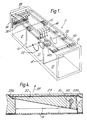
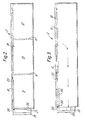
- the body of the vehicle 2 shown in Figures 1 to 3 is divided by bulkheads 4, 6 into three compartments 8, 10 and 12.
- the roof of the vehicle contains three ducts, two of which, 14a 14b, act as suction passages, that is, air moves out of the compartments 8, 10 and 12 via openings 15 into them, and one of which, 16, acts as a discharge passage, air moving from it via openings 18, into the compartments 8, 10 and 12. Passage of air through the openings 15, 18 is controlled by selectively operable flaps 20.
- the air passes through a grilled opening 28 in the front bulkhead 24 to a heat exchanger mounted on the opposite side of the front bulkhead 24 and enclosed by a casing 29, as will be described in greater detail below.
- the false bulkhead 26 is preferably hinged, see 30, to the ceiling of the vehicle 2.
- the advantage of this is that when the vehicle 2 is to be used with no divisions, as shown in Figure 3, the bulkhead 26 can be swung away and load space is thereby increased.
- the air then, instead of leaving the single compartment via the suction passages 14, is simply sucked straight into the grilled opening 28, through the bottom of chamber 27 which is in effect a suction passage, and thence to the heat exchanger.
- the only duct which is operational is the discharge passage 16, and the flaps 20 over the openings 18 between this and the single compartment are operated sequentially to ensure an even temperature distribution along the length of the compartment.
- a preferred form of flap 20 is shown in Figure 4 covering an opening 18 between the discharge passage 16 and a compartment. This is generally wedge-shaped, the thin end facing the direction of incoming air from the heat exchanger.
- the flap 20 has a flexible sheet 29 secured therein such that its two ends 29a, 29b are free.
- the ends 29a, 29b in the closed position, as shown, abut against the specially shaped edges of the opening 18 in the roof which connecta the discharge passage 16 to the compartment and this not only seals the opening 18, but holds the flap 20 down.
- a rod 31 which passes through and is secured to its thick end is caused to rotate by means which are not shown.
- the rod 31 preferably also causes movement of the other flaps associated with the compartment which cover the openings 18 between the compartment and the suction passages 14, all the flaps connecting the passages 14, 16 and a particular compartment suitably being aligned.
- the flap 20 rotates in the direction of arrow 33 which causes the end 29a of the sheet 29 to move into abutment with the roof of the passage 16 and the other end 29b to move into abutment with another portion 35 of the edge of the opening 18.
- the flap 20 then blocks movement of air further along the passage 16 and thereby ensures maximum heating/cooling effect.
- flaps are identical to that described above and all the openings 15, 18 between the suction passages 14 and discharge passage 16 and the compartments are formed with their edges as shown in Figure 4.
- FIGS 5 and 6 show one embodiment of an apparatus for controlling the temperature of the vehicle 2 described above.
- the apparatus comprises a heat exchanger 32 mounted in the front bulkhead 26 and a fan 34, the heat exchanger 32 and fan 34 being covered by the casing 29.
- the chamber 27 provided between the front and false bulkhead 24, 26 is divided into a lower portion 36 and an upper portion 38, which is broader due to the angling of the false bulkhead 26, by a divider 40, secured to the front bulkhead 24.
- the top end of the angled portion of the false bulkhead is hinged, see 39, to the roof of the vehicle so that it can be swung into the position shown at 26′ for maintenance of the apparatus.
- the apparatus further comprises a heater 42 which has an associated fan, not shown.
- the heater 42 is also enclosed by a casing which is in air communication with the suction passages 14a and 14b via duct 44 and with the discharge passage 16 by duct 46, via the upper section 38 of the chamber 27.
- the apparatus is shown in Figure 5 in the cooling mode, that is, cool air is being circulated through a compartment.
- the fan 34 associated with the heat exchanger 32 is activated, the heat exchanger 32 is operating in the cooling mode and the fan associated with the heater 42 is off. Air from the compartment is sucked through the suction passages 14a and 14b by the fan 34 and enters the lower portion 36 of the chamber 27 between the front and false bulkheads 24, 26 (see 48). Little if no air moves through the heater since the associated fan is not operating.
- An opening 50 between the chamber 27 and the fan 34 is covered by a flap 52 and the air therefore moves down the lower portion 36 of chamber 27, through grilled opening 28 and over the heat exchanger 32 where it is cooled.
- the fan 34 returns the air to the compartment via the upper portion 38 of the chamber 27 and the discharge passage 16. The movement of the air is shown by arrows 54.
- the heater 42 is activated as is its fan and the flap 52 is moved into a position where it blocks passage of air down the lower portion 36 of the chamber 27 to the heat exchanger 32 and uncovers the opening 50.
- the heat exchanger 32 can be deactivated during heating or it can continue operating ready for an immediate switch back to cooling.
- the heat exchanger therefore need not be capable of both heating and cooling and this can save expense.
- a heat exchanger which can also heat air is employed, then when heating is required it can be turned to heating and, once it has warmed up, the flap 52 can be moved so that hot air is supplied to the compartments from both the heater 42 and the heat exchanger 32 which will allow the compartment temperature to be raised very rapidly.
- FIG. 7 and 8 A second emodiment of the temperature control apparatus is shown in Figures 7 and 8. This is similar structurally to the first embodiment shown in Figures 5 and 6 so like parts have been given the same reference numerals and only the differences will be described.
- this embodiment no flap or divider is provided in chamber 27. Instead the suction passages 14a and 14b discharge adjacent the grilled opening 28.
- the inlet duct 54 to the heater 42 is from the upper end of chamber 27 while the outlet duct 56 leads to the heat exchanger 32.
- the arrangement is very similar to the first embodiment in that the heater 42 and associated fan are not activated whilst the heat exchanger 32 is operating to cool air and the associated fan 34 is on. Air flows from the suction passages 14a and 14b to the heat exchanger 32 where it is cooled and is then returned by fan 34 through the upper part of chamber 27 to the discharge passage 16. (see arrows 58 in Figure 7). No air moves along ducts 54 and 56 since the heater fan is off.
- the effect of the hot air on the heat exchanger is to accelerate greatly its transfer from cooling to heating so that it rapidly reaches the required operating temperature.
- the flaps between the appropriate compartment and the suction and discharge passages are opened and air from the compartment is again circulated across the heat exchanger, see arrows 58 in Figure 7.
- the fan associated with the heater 42 is still operational so that some air is withdrawn from the upper chamber and passed across the heater 42 and heat exchanger 32 (see arrows 62).
- the advantage of this embodiment is that firstly it is structurally simple and therefore inexpensive to produce. Only a low power heater is required to make a significant change to the rate of conversion of the heat exchanger from cooling to heating. Thus almost continuous temperature control of the compartments can be achieved.
- the false bulkhead 26 in Figures 7 and 8 has an angled upper end as in Figures 5 and 6 but the vertical portion of the bulkhead 26 is hinged to the angled portion 54 and the upper end is hinged to the roof of the vehicle 39.
- the hinge 64 acts in the same way as the hinge 30 in the arrangement of Figures 2 and 3 where the roof rather than the bulkhead is angled, that is, it allows the false bulkhead 26 to be swung up against the roof when a single load space is required.
- the hinge 39 allows inspection and maintenance of the upper portions of the apparatus.
- the activation of the heat exchanger 32 and its associated fan 34, the heater 42 and the associated fan and the operation of the flaps 20 is controlled by a central control unit.
- the unit also controls the position of the flap 52 within the chamber 27 in the embodiment of Figures 5 and 6.
- the control unit operates in response to signals from temperature probes (not shown) in each enclosed space whose temperature is to be controlled.
- the control unit is set with the desired temperature for each space when the vehicle or container is loaded and gives the appropriate instructions, depending on the difference between the sensed and desired temperatures.
- Both embodiments of the temperature control apparatus can be employed with either multi- compartmental or single compartment vehicles or containers or indeed any enclosed space or spaces.
- the multi-compartmental vehicle described herein is one which is divided laterally but the temperature control apparatus can be equally successfully employed with longitudinally divided vehicles, the only real difference being that the air passages extend widthwise across the vehicle instead of lengthwise.
- the apparatus of the invention provides a relatively simple and very efficient way of controlling the temperature of one or more enclosed spaces and in particular of a multi-compartment vehicle or container.
Landscapes
- Engineering & Computer Science (AREA)
- Mechanical Engineering (AREA)
- Physics & Mathematics (AREA)
- Thermal Sciences (AREA)
- Public Health (AREA)
- Architecture (AREA)
- Transportation (AREA)
- Health & Medical Sciences (AREA)
- Combustion & Propulsion (AREA)
- General Engineering & Computer Science (AREA)
- Chemical & Material Sciences (AREA)
- Civil Engineering (AREA)
- Structural Engineering (AREA)
- Refrigerator Housings (AREA)
- Devices That Are Associated With Refrigeration Equipment (AREA)
Applications Claiming Priority (2)
| Application Number | Priority Date | Filing Date | Title |
|---|---|---|---|
| GB888822767A GB8822767D0 (en) | 1988-09-28 | 1988-09-28 | Improvements in & relating to refrigerated vehicles |
| GB8822767 | 1988-09-28 |
Publications (1)
| Publication Number | Publication Date |
|---|---|
| EP0366272A1 true EP0366272A1 (de) | 1990-05-02 |
Family
ID=10644388
Family Applications (2)
| Application Number | Title | Priority Date | Filing Date |
|---|---|---|---|
| EP89309874A Withdrawn EP0364133A1 (de) | 1988-09-28 | 1989-09-28 | Kühlfahrzeuge |
| EP89309868A Ceased EP0366272A1 (de) | 1988-09-28 | 1989-09-28 | Temperaturregelung von Kühlwagen |
Family Applications Before (1)
| Application Number | Title | Priority Date | Filing Date |
|---|---|---|---|
| EP89309874A Withdrawn EP0364133A1 (de) | 1988-09-28 | 1989-09-28 | Kühlfahrzeuge |
Country Status (4)
| Country | Link |
|---|---|
| EP (2) | EP0364133A1 (de) |
| AU (2) | AU4241289A (de) |
| DK (2) | DK475489A (de) |
| GB (1) | GB8822767D0 (de) |
Cited By (2)
| Publication number | Priority date | Publication date | Assignee | Title |
|---|---|---|---|---|
| DE102007002939A1 (de) * | 2007-01-19 | 2008-07-24 | Kaiser, Ria, Dipl.-Ing. | Luftverteiler für eine Frachtkühlanordnung |
| USRE46663E1 (en) | 2000-07-20 | 2018-01-09 | Fg Products, Inc. | System and method for partitioning cargo areas |
Families Citing this family (4)
| Publication number | Priority date | Publication date | Assignee | Title |
|---|---|---|---|---|
| FI4705U1 (fi) * | 2000-06-15 | 2000-11-23 | Juhani Kauko | Lämpöeristeen asennustuki |
| BE1017151A3 (de) * | 2006-05-24 | 2008-03-04 | Krautz Bv | |
| CN102390239A (zh) * | 2011-09-30 | 2012-03-28 | 东莞市长安上名模具科技有限公司 | 汽车空调进气口改造方法 |
| KR20230000266U (ko) * | 2020-05-27 | 2023-02-02 | 스마트 쿨링 어드밴스드 쿨링 시스템즈 엘티디. | 운송 냉동 유닛용 냉동 덕트 시스템 |
Citations (5)
| Publication number | Priority date | Publication date | Assignee | Title |
|---|---|---|---|---|
| US2318858A (en) * | 1939-11-22 | 1943-05-11 | Gen Motors Corp | Refrigerating apparatus |
| US4462461A (en) * | 1982-05-10 | 1984-07-31 | Grant Hendrie J | Thermal management system and apparatus |
| US4553584A (en) * | 1983-12-07 | 1985-11-19 | Red Owl Stores, Inc. | Refrigeration/air exchanger system maintaining two different temperature compartments |
| US4726196A (en) * | 1986-12-04 | 1988-02-23 | American Trailers, Incorporated | Temperature control apparatus including air return bulkhead for mounting in a transportable body |
| WO1988002705A1 (en) * | 1986-10-17 | 1988-04-21 | Petter Refrigeration Limited | Refrigeration of multi-compartmented spaces such as multi-compartment vehicles |
Family Cites Families (4)
| Publication number | Priority date | Publication date | Assignee | Title |
|---|---|---|---|---|
| DE1182967B (de) * | 1959-01-05 | 1964-12-03 | Hans Dunker Appbau Ing | Anordnung der zur Kuehlung und Isolierung dienenden Mittel im Inneren eines Kleintransporters |
| DE2855242C3 (de) * | 1978-12-21 | 1981-08-13 | Metzeler Schaum Gmbh, 8940 Memmingen | Verfahren zur Herstellung von Polstermöbeln aus Schaumstoff |
| DE3509634A1 (de) * | 1984-11-02 | 1986-05-07 | Prins, Marinus Hendrik, Dronten | Verfahren zur herstellung eines aus kunststoff bestehenden hohlprofilfoermigen formkoerpers |
| US4692199A (en) * | 1985-12-13 | 1987-09-08 | Lear Siegler, Inc. | Method and apparatus for bonding fabric to a foam pad |
-
1988
- 1988-09-28 GB GB888822767A patent/GB8822767D0/en active Pending
-
1989
- 1989-09-27 AU AU42412/89A patent/AU4241289A/en not_active Abandoned
- 1989-09-27 DK DK475489A patent/DK475489A/da not_active Application Discontinuation
- 1989-09-27 AU AU42411/89A patent/AU4241189A/en not_active Abandoned
- 1989-09-27 DK DK475589A patent/DK475589A/da not_active Application Discontinuation
- 1989-09-28 EP EP89309874A patent/EP0364133A1/de not_active Withdrawn
- 1989-09-28 EP EP89309868A patent/EP0366272A1/de not_active Ceased
Patent Citations (5)
| Publication number | Priority date | Publication date | Assignee | Title |
|---|---|---|---|---|
| US2318858A (en) * | 1939-11-22 | 1943-05-11 | Gen Motors Corp | Refrigerating apparatus |
| US4462461A (en) * | 1982-05-10 | 1984-07-31 | Grant Hendrie J | Thermal management system and apparatus |
| US4553584A (en) * | 1983-12-07 | 1985-11-19 | Red Owl Stores, Inc. | Refrigeration/air exchanger system maintaining two different temperature compartments |
| WO1988002705A1 (en) * | 1986-10-17 | 1988-04-21 | Petter Refrigeration Limited | Refrigeration of multi-compartmented spaces such as multi-compartment vehicles |
| US4726196A (en) * | 1986-12-04 | 1988-02-23 | American Trailers, Incorporated | Temperature control apparatus including air return bulkhead for mounting in a transportable body |
Cited By (2)
| Publication number | Priority date | Publication date | Assignee | Title |
|---|---|---|---|---|
| USRE46663E1 (en) | 2000-07-20 | 2018-01-09 | Fg Products, Inc. | System and method for partitioning cargo areas |
| DE102007002939A1 (de) * | 2007-01-19 | 2008-07-24 | Kaiser, Ria, Dipl.-Ing. | Luftverteiler für eine Frachtkühlanordnung |
Also Published As
| Publication number | Publication date |
|---|---|
| EP0364133A1 (de) | 1990-04-18 |
| DK475589D0 (da) | 1989-09-27 |
| DK475589A (da) | 1990-03-29 |
| AU4241289A (en) | 1990-04-05 |
| DK475489A (da) | 1990-03-29 |
| AU4241189A (en) | 1990-04-05 |
| GB8822767D0 (en) | 1988-11-02 |
| DK475489D0 (da) | 1989-09-27 |
Similar Documents
| Publication | Publication Date | Title |
|---|---|---|
| EP0583909B1 (de) | Kühlsystem mit Mehrtemperaturverdampfer und Verdichter mit variabler Geschwindigkeit | |
| US4887437A (en) | Integral false ceiling for refrigerated vehicles | |
| US6073458A (en) | Apparatus and method for supplying cool air to the interior of a refrigerator | |
| EP2153146B1 (de) | Temperaturgesteuerte ablageeinheit | |
| CA1242087A (en) | Refrigeration/air exchanger system | |
| EP0329668B1 (de) | Kühlung von mehrfach unterteilten räumen, wie fahrzeuge mit mehreren abteilen | |
| WO1996002800A1 (en) | Refrigerator | |
| US3973620A (en) | Air conditioning systems for motor vehicles | |
| US7043926B2 (en) | Cargo area grocery chiller | |
| JP3227924B2 (ja) | 冷気循環形冷蔵ショーケース | |
| US4844150A (en) | Air distributing mechanism for an automotive air conditioning system | |
| GB2032604A (en) | Referigerated display or cooler chest | |
| GB2120379A (en) | Heating and ventilating device for the passenger compartment of a motor vehicle | |
| EP0399449B1 (de) | Gekühltes Transportabteil für Lebensmittel und ähnlich verderbliche Artikel | |
| US4531377A (en) | Temperature control apparatus for mounting in a transportable body | |
| US3108452A (en) | Railway refrigerator car | |
| BE1017151A3 (de) | ||
| EP0169040A2 (de) | Luftklimatisierungssystem für geschlossene Fahrzeugkabine | |
| KR100438935B1 (ko) | 사이드 바이 사이드형 냉장고의 냉기공급장치 | |
| KR200149233Y1 (ko) | 냉온장용 콘솔박스 | |
| RU2081006C1 (ru) | Система отопления салона транспортного средства | |
| US5899079A (en) | Damper apparatus for refrigerated vending machines with a defrost cycle | |
| GB2224108A (en) | Refrigerated vehicle | |
| KR0110598Y1 (ko) | 차량용 에어 컨디셔닝 장치 | |
| JPH06103452A (ja) | ホットアンドコールド自動販売機の庫内通風切換え用シャッタ装置 |
Legal Events
| Date | Code | Title | Description |
|---|---|---|---|
| PUAI | Public reference made under article 153(3) epc to a published international application that has entered the european phase |
Free format text: ORIGINAL CODE: 0009012 |
|
| AK | Designated contracting states |
Kind code of ref document: A1 Designated state(s): BE DE ES FR GB IT NL |
|
| 17P | Request for examination filed |
Effective date: 19900925 |
|
| 17Q | First examination report despatched |
Effective date: 19911125 |
|
| STAA | Information on the status of an ep patent application or granted ep patent |
Free format text: STATUS: THE APPLICATION HAS BEEN REFUSED |
|
| 18R | Application refused |
Effective date: 19920517 |