EP0366447B1 - Flüssiger Entwickler für elektrostatische Photographie - Google Patents
Flüssiger Entwickler für elektrostatische Photographie Download PDFInfo
- Publication number
- EP0366447B1 EP0366447B1 EP89311005A EP89311005A EP0366447B1 EP 0366447 B1 EP0366447 B1 EP 0366447B1 EP 89311005 A EP89311005 A EP 89311005A EP 89311005 A EP89311005 A EP 89311005A EP 0366447 B1 EP0366447 B1 EP 0366447B1
- Authority
- EP
- European Patent Office
- Prior art keywords
- group
- resin
- acid
- carbon atoms
- dispersion
- Prior art date
- Legal status (The legal status is an assumption and is not a legal conclusion. Google has not performed a legal analysis and makes no representation as to the accuracy of the status listed.)
- Expired - Lifetime
Links
Classifications
-
- G—PHYSICS
- G03—PHOTOGRAPHY; CINEMATOGRAPHY; ANALOGOUS TECHNIQUES USING WAVES OTHER THAN OPTICAL WAVES; ELECTROGRAPHY; HOLOGRAPHY
- G03G—ELECTROGRAPHY; ELECTROPHOTOGRAPHY; MAGNETOGRAPHY
- G03G9/00—Developers
- G03G9/08—Developers with toner particles
- G03G9/12—Developers with toner particles in liquid developer mixtures
- G03G9/13—Developers with toner particles in liquid developer mixtures characterised by polymer components
- G03G9/131—Developers with toner particles in liquid developer mixtures characterised by polymer components obtained by reactions only involving carbon-to-carbon unsaturated bonds
Definitions
- This invention relates to an electrostatic photographic liquid developer comprising a dispersion of at least a resin in a carrier solution with an electric resistance of 109 ⁇ cm or more and a dielectric constant of 3.5 or less, and, in particular, it relates to a liquid developer with outstanding redispersibility, storage properties, stability, image reproduction properties and fixing properties.
- the resin was dispersed in such developers as insoluble latex particles in a particle form with a diameter of a few nanometers to a few hundred nanometers.
- a soluble resin for dispersion stabilization and the polarity controlling agent assume a form in which they were readily diffusible in solution since there was insufficient bonding between the soluble resin for dispersion stabilization and the polarity controlling agent and insoluble latex particles.
- the disadvantages that long term storage and repeated use cause the soluble resin for dispersion stabilization to separate from the insoluble latex particles, the particles sediment, agglutinate and accumulate and the polarity becomes indistinct.
- the particles which have agglutinated and accumulated are difficult to redisperse, the particles remain adhering to the developing apparatus and stain the image portion and a breakdown of the developing apparatus, for example, by blocking the liquid feed pump occurs.
- the dispersion stabilizer and insolubilizing monomer which are used to produce monodisperse particles with a narrow particle size distribution.
- particles with a broad particle size distribution containing large amounts of coarse particles, or polydisperse particles in which 2 or more average particle sizes are present result.
- the dispersion stabilizer used must be produced by a production process which is complicated and requires a long time.
- JP-A-60-179751 and JP-A-62-151868 disclose in JP-A-60-179751 and JP-A-62-151868.
- Dispersion resin particles produced in accordance with the procedures disclosed in the above-mentioned JP-A-60-179751, JP-A-62-151868, JP-A-60-185963 and JP-A-61-63855 have not necessarily resulted in a satisfactory performance in the dispersibility or redispersibility of the particles when the developing speed has been increased, nor in the printing resistance when the fixing time has been shortened or in cases involving large sized masterplates (for example, size A3 or larger).
- This invention is to resolve the problems of conventional liquid developers as outlined above.
- liquid developer which can be used in a variety of systems in which it is possible to use liquid developers such as ink jet recording, cathode ray tube recording and recording relying on processes such as pressure changes or static electrical changes.
- an electrostatic photographic liquid developer comprising, as carrier liquid, a nonaqueous solvent having an electric resistance of 109 ⁇ cm or more and a dielectric constant of 3.5 or less dispersed resin particles being obtained by the copolymerization, in a nonaqueous solvent, of at least one monofunctional monomer (A) which is soluble in the nonaqueous solvent but which is rendered insoluble by polymerization, and at least one monomer (B) represented by the following general formula (II) wherein R1 represents an aliphatic group with 8 or more carbon atoms; T represents -COO-, -CONH-, where R2 represents an aliphatic group, -OCO-, -CH2COO- or -O-; and b1 and b2, which may be the same or different, each represents a hydrogen atom, an alkyl group, -COOR3 or -CH2-COOR3 where R3 represents an aliphatic group, which contains an aliphatic group with 8
- the carrier liquid with an electric resistance of 109 ⁇ cm or more and a dielectric constant of 3.5 or less which is used in this invention can be preferably straight chain or branched aliphatic hydrocarbons, alicyclic hydrocarbons, aromatic hydrocarbons and halogen-substituted derivatives thereof.
- the nonaqueous dispersion resin particles which are a very important structural component in this invention are produced as polymer particles by the copolymerization of monofunctional monomer (A) and monomer (B) which has an aliphatic group with 8 or more carbon atoms in the nonaqueous solvent, in the presence of a dispersion stabilization resin which is produced by bonding an acidic group selected from the group consisting of a -PO3H2 group, an -SO3H group, a -COOH group, an -OH group, an -SH group, or a group, where R0 denotes a hydrocarbon group, onto only one terminal of at least one main polymer chain and which is a polymer containing a repeating unit represented by the above-mentioned general formula (I) and a portion of the polymer chains of which are crosslinked.
- a dispersion stabilization resin which is produced by bonding an acidic group selected from the group consisting of a -PO3H2 group, an -SO3H
- substances which are miscible with the above-mentioned carrier solution are suitable as solvents which are used when producing the dispersion resin particles.
- straight chain or branched aliphatic hydrocarbons, alicyclic hydrocarbons, aromatic hydrocarbons and halogen-substituted derivatives thereof are preferred.
- Specific examples include hexanone, octane, isooctane, decane, isodecane, decalin, nonane, dodecane, isododecane, Isopar E, Isopar G, Isopar H, Isopar L, Shellsol 70, Shellsol 71, Amsco OMS and Amsco 460 and other such solvents are used either alone or as mixtures.
- solvents which can be used in admixture therewith include, for example, alcohols (for example, methyl alcohol, ethyl alcohol, propyl alcohol, butyl alcohol and fluorinated alcohol), ketones (for example, acetone, methyl ethyl ketone, cyclohexanone), carboxylic acid esters (for example, methyl acetate, ethyl acetate, propyl acetate, butyl acetate, methyl propionate, ethyl propionate), ethers (for example, diethyl ether, dipropyl ether, tetrahydrofuran, dioxane), and halogenated hydrocarbons (for example, methylene dichloride, chloroform, carbon tetrachloride, dichloroethane, methylchloroform).
- alcohols for example, methyl alcohol, ethyl alcohol, propyl alcohol, butyl alcohol and fluorinated alcohol
- ketones for
- nonaqueous solvents which are used in admixture are preferably distilled off by heating or under reduced pressure after polymeric particle production, but even if they are carried over into the liquid developer as latex particle dispersions, there will be no problems if the electric resistance of the developing solution is such that it is 109 ⁇ cm or greater.
- a solvent which is the same as the carrier liquid in the resin dispersion production stage, and, as mentioned previously, it is possible to mention straight chain or branched aliphatic hydrocarbons, alicyclic hydrocarbons, aromatic hydrocarbons and halogen-substituted hydrocarbons.
- the dispersion stabilization resin of this invention which is used in a nonaqueous solvent to form a stable resin dispersion of the copolymer which is insoluble in the solvent and is produced by copolymerization of monofunctional monomer (A) and monomer (B) which has an aliphatic group with 8 or more carbon atoms, is a polymer containing repeating units represented by the general formula (I), a portion of the polymer chains of which are crosslinked, and is a polymer which is soluble in the nonaqueous solvent, produced by bonding an acidic group selected from the group consisting of a -PO3H2 group, an -SO3H group, a -COOH group, an -OH group, an -SH group or a group, where R0 denotes a hydrocarbon group, onto only one terminal of at least one main polymer chain.
- Aliphatic groups and hydrocarbon groups in the repeating unit represented by general formula (I) may be substituted.
- X1 preferably represents -COO-, -OCO-, -CH2OCO-, -CH2COO- or -O-, and more preferably represents -COO-, -CH2COO- or -O-.
- Y1 preferably represents an alkyl group, an alkenyl group or an aralkyl group with 8 to 22 carbon atoms, which may be substituted.
- substituent groups include substituent groups such as halogen atoms (for example, fluorine, chlorine, bromine), -O-Z2, -COO-Z2 and -OCO-Z2 (where Z2 represents an alkyl group with 6 to 22 carbon atoms such as a hexyl group, an octyl group, a decyl group, a dodecyl group, a hexadecyl group or an octadecyl group).
- Y1 represents an alkyl group or an alkenyl group with 8 to 22 carbon atoms.
- Examples include an octyl group, a decyl group, a dodecyl group, a tridecyl group, a tetradecyl group, a hexadecyl group, an octadecyl group, a docosanyl group, an octenyl group, a decenyl group, a dodecenyl group, a tetradecenyl group, a hexadecenyl group and an octadecenyl group.
- a1 and a2 which may be the same or different, preferably each represents a hydrogen atom, a halogen atom (for example, fluorine, chlorine, bromine), a cyano group, an alkyl group with 1 to 3 carbon atoms, -COO-Z1 or -CH2COO-Z1 (where Z1 represents an aliphatic group with 1 to 22 carbon atoms, such as, for example, a methyl group, an ethyl group, a propyl group, a butyl group, a hexyl group, an octyl group, a decyl group, a dodecyl group, a tridecyl group, a tetradecyl group, a hexadecyl group, an octadecyl group, a docosanyl group, a pentenyl group, a hexenyl group, a heptenyl group, an
- a1 and a2 each represents a hydrogen atom, an alkyl group with 1 to 3 carbon atoms (for example, a methyl group, an ethyl group, a propyl group), -COO-Z3 or -CH2COO-Z3 (where Z3 represents an alkyl group or an alkenyl group with 1 to 12 carbon atoms, such as, for example, a methyl group, an ethyl group, a propyl group, a butyl group, a hexyl group, an octyl group, a decyl group, a dodecyl group, a pentenyl group, a hexenyl group, a heptenyl group, an octenyl group and a decenyl group, and these alkyl groups and alkenyl groups may have the same substituent groups as those described for Y1).
- the dispersion stabilization resin of this invention which is used in the nonaqueous solvent to produce a stable resin dispersion of the copolymer which is not soluble in the solvent and which is formed by copolymerization of monomers (A) and (B), is a resin which does not contain a grafting group which polymerizes with monomers (A) and (B), and it is a polymer which contains at least one type of repeating unit represented by general formula (I), a portion of which is crosslinked, and it is a polymer produced by bonding at least one type of acidic group selected from a carboxyl group, a sulfo group, a phosphono group, a hydroxyl group, a mercapto group and a group ⁇ where R0 preferably is a hydrocarbon group with 1 to 18 carbon atoms [and more preferably is an aliphatic group with 1 to 8 carbon atoms which may be substituted (for example, a methyl group, an ethyl group, a
- the linking group can be any combination of atomic groups with a carbon-carbon bond (single bond or double bond), a carbon-hetero atom bond (for example, with oxygen atom, sulfur atoms, nitrogen atoms and silicon atoms as the hetero atoms) or a hetero atom-hetero atom bond.
- Z4 and Z5 respectively denote a hydrogen atom, a halogen atom (for example, fluorine, chlorine, bromine), a cyano group, a hydroxyl group, an alkyl group (for example, a methyl group, an ethyl group,
- the polymeric components of the dispersion stabilization resin of this invention contain copolymeric components obtained by polymerization of homopolymeric components or copolymeric components selected from the repeating unit represented by general formula (I) and other monomers copolymerizable with a monomer corresponding to the repeating unit represented by general formula (I); and in addition, the polymer is partially crosslinked.
- crosslinking reactions by polymerization or due to the functional group -CONHCH2OZ8 (where Z8 denotes a hydrogen atom or an alkyl group) which has a self-crosslinking capability are effective from the standpoint of the simplicity of production (for example, the reaction time is short, the reaction is quantitative, and the contamination, for example, by the use of auxiliary reaction promoting agents is eliminated).
- Preferred polymerization reactions are a method in which the polymer chains are crosslinked by the polymerization of monomers having 2 or more polymerizable functional groups together with monomers corresponding to the repeating unit represented by the above-mentioned formula (I).
- monomers having 2 or more polymerizable functional groups include, as monomers having the same polymerizable functional groups, for example, divinylbenzene, trivinylbenzene, styrene derivatives, polyhydric alcohols (for example, ethylene glycol, diethylene glycol, triethylene glycol, polyethylene glycol #200, #400, #600, 1,3-butylene glycol, neopentyl glycol, dipropylene glycol, polypropylene glycol, trimethylolpropane, trimethylolethane, and pentaerythritol), methacrylic acid, acrylic acid or crotonic acid esters, vinyl ethers or allyl ethers of polyhydroxyphenols (for example, hydroquinone, resorcinol, catechol and derivatives thereof), vinyl esters, allyl esters, vinyl amides or allyl amides of dicarboxylic acids (for example, malonic acid, succinic acid, glutaric acid,
- monomers having different polymerizable functional groups include, for example, amide derivatives or ester derivatives containing vinyl groups derived from carboxylic acids containing vinyl groups [for example, methacrylic acid, acrylic acid, methacryloylacetic acid, acryloylacetic acid, methacryloylpropionic acid, acryloylpropionic acid, itaconyloylacetic acid and itaconyloylpropionic acid and the reaction products of alcohols or amines with carboxylic anhydrides (for example, allyloxycarbonylpropionic acid, allyloxycarbonylacetic acid, 2-allyloxycarbonylbenzoic acid and allylaminocarbonylpropionic acid)], (for example, vinyl methacrylate, vinyl acrylate, vinyl itaconate, allyl methacrylate, allyl acrylate, allyl itaconate, vinyl methacryloylacetate, vinyl methacryloylpropionate, allyl meth
- the monomer containing 2 or more polymerizable functional groups used in this invention is used at 15% by weight or less, and preferably 10% by weight or less, of the total of the monomers and forms a dispersion stabilization resin which is soluble in the nonaqueous solvent of this invention.
- the dispersion stabilization resin of this invention which is produced by bonding a specific acidic group to only one terminal of at least one polymer main chain, can be readily produced by a synthesis method such as a method in which various agents are reacted on the terminal of a living polymer obtained using conventionally known anion polymerization or cation polymerization (an ionic polymerization method), a method in which a radical polymerization is carried out using a chain transfer agent and/or a polymerization initiator containing a specific acidic group in the molecule (a method using free radical polymerization), or a method in which a polymer containing reactive groups at its terminals obtained by ionic polymerization or free radical polymerization as described above is converted to the specific acidic groups of this invention by a macromolecular reaction.
- a synthesis method such as a method in which various agents are reacted on the terminal of a living polymer obtained using conventionally known anion polymerization or cation polymerization (an ionic polymer
- the resins may be produced using a method described, for example, in P. Dreyfuss and R.P. Quirk, Encycl. Polym. Sci. Eng. , 7 , 551 (1987), S. Nakajo and Y. Yamashita, Senryo to Yakuhin (Dyes and Reagents) , 30 , 232 (1985), A. Ueda and S. Nagai, Kagaku to Kogyo (Science and Industry) , 60 , 57 (1986) and other such general texts and the literature cited therein.
- the weight average molecular weight of the dispersion stabilization resins of this invention is preferably 1 ⁇ 104 to 6 ⁇ 105 and more preferably 2 ⁇ 104 to 3 ⁇ 105.
- a weight average molecular weight of less than 1 ⁇ 104 the average particle size of the resin particles obtained by polymerization particle formation increases (for example, it becomes larger than 0.5 »m) and the particle size distribution is broadened.
- the average particle size of the resin particles obtained by polymer particle formation increases and it becomes difficult to maintain the average particle size in the preferred region of 0.15 to 0.4 »m.
- the dispersion stabilization resin polymers used in this invention can be produced using, for example, (1) a method in which a mixture of the monomer having the repeating unit represented by general formula (I), the above-mentioned polyfunctional monomer and a chain transfer agent containing the acidic group is polymerized using a polymerization initiator (for example, an azobis-based compound or a peroxide), (2) a method in which the above-mentioned chain transfer agent is not used and polymerization is carried out using a polymerization initiator containing the acidic group, (3) a method using a compound containing the acidic group in any of the chain transfer agent and the polymerization initiator, or (4) a method in which the acidic group is introduced by carrying out a polymerization reaction in the three methods above using a compound containing an amino group, a halogen atom, an epoxy group, an acid halide group or the like as a substituent group for the chain transfer agent or polymerization initiator, and then reacting these functional
- chain transfer agents which can be used are, for example, a mercapto group containing the acidic group or a substituent group from which the acidic group can be derived (for example, thioglycolic acid, thiomalic acid, thiosalicylic acid, 2-mercaptopropionic acid, 3-mercaptopropionic acid, 3-mercaptobutyric acid, N-(2-mercaptopropionyl)glycine, 2-mercaptonicotinic acid, 3-[N-(2-mercaptoethyl)carbamoyl]propionic acid, 3-[N-(2-mercaptoethyl)amino]propionic acid, N-(3-mercaptopropionyl)alanine, 2-mercaptoethanesulfonic acid, 3-mercaptopropanesulfonic acid, 4-mercaptobutanesulfonic acid, 2-mercaptoethanol, 3-mercapto-1,2-propanediol, 1-mercapto-2-
- chain transfer agents or polymerization initiators are used respectively, in an amount of 0.1 to 15% by weight and preferably 0.5 to 10% by weight per 100 parts by weight of all of the monomers.
- the dispersion stabilization resin of this invention which is produced as described above, is assumed to have a synergistic action with the nonsoluble resin particles due to the acidic group bonded to only one terminal of the main polymer chain and to markedly improve compatibility with the nonaqueous solvent due to the crosslinking of the component which is soluble in the nonaqueous solvent.
- agglutination and sedimentation of the insoluble particles is inhibited and redispersibility is markedly improved.
- the monomers used when producing the nonaqueous dispersion resin can be monofunctional monomers (A) which are soluble in the nonaqueous solvent but which are rendered insoluble by polymerization, and monomers (B) which contain aliphatic groups with 8 or more carbon atoms and are represented by the above-mentioned general formula (II) and which form copolymers with monomers (A).
- Monomer (A) used in this invention may be any monofunctional monomer which is soluble in the nonaqueous solvent but is rendered insoluble by polymerization. More specifically, monomers represented by general formula (III) are suitable.
- Q represents -COO-, -OCO-, -CH2OCO-, -CH2COO-, -O-
- R5 represents a hydrogen atom or an aliphatic group with 1 to 18 carbon atoms which may be substituted (for example, methyl, ethyl, propyl, butyl, 2-chloroethyl, 2-bromoethyl, 2-cyanoethyl, 2-hydroxyethyl, benzyl, chlorobenzyl, methylbenzyl, methoxybenzyl, phenethyl, 3-phenylpropyl, dimethylbenzyl, fluorobenzyl, 2-methoxyethyl and 3-methoxypropyl).
- R4 represents a hydrogen atom or an aliphatic group with 1 to 6 carbon atoms which may be substituted (for example, methyl, ethyl, propyl, butyl, 2-chloroethyl, 2,2-dichloroethyl, 2,2,2-trifluoroethyl, 2-bromoethyl, 2-glycidylethyl, 2-hydroxyethyl, 2-hydroxypropyl, 2,3-dihydroxypropyl, 2-hydroxy-3-chloropropyl, 2-cyanoethyl, 3-cyanopropyl, 2-nitroethyl, 2-methoxyethyl, 2-methanesulfonylethyl, 2-ethoxyethyl, N,N-dimethylaminoethyl, N,N-diethylaminoethyl, trimethoxysilylpropyl, 3-bromopropyl, 4-hydroxybutyl, 2-furfurylethyl, 2-thi
- d1 and d2 which may be the same or different, each represents the same groups as a1 or a2 in the above general formula (I).
- Specific monofunctional monomers (A) include, for example, vinyl esters or allyl esters of aliphatic carboxylic acids with 1 to 6 carbon atoms (for example, acetic acid, propionic acid, butyric acid, monochloroacetic acid and trifluoropropionic acid), optionally substituted alkyl esters or amides with 1 to 4 carbon atoms of acrylic acid, methacrylic acid, crotonic acid, itaconic acid, maleic acid and other such unsaturated carboxylic acids (with, as examples of alkyl groups, methyl, ethyl, propyl, butyl, 2-chloroethyl, 2-bromoethyl, 2-fluoroethyl, trifluoroethyl, 2-hydroxyethyl, 2-cyanoethyl, 2-nitroethyl, 2-methoxyethyl, 2-methanesulfonylethyl, 2-benzenesulfonylethyl,
- Baifukan (1986) for example, N-vinylpyridine, N-vinylimidazole, N-vinylpyrrolidone, vinylthiophene, vinyltetrahydrofuran, vinyloxazoline, vinylthiazole and N-vinylmorpholine).
- Two or more monofunctional monomers (A) may be used in combination.
- R1 preferably represents an optionally substituted alkyl group with 10 or more carbon atoms or an alkenyl group with 10 or more carbon atoms
- T represents -COO-, -CONH-
- R2 preferably is an aliphatic group with 1 to 32 carbon atoms (the aliphatic group being, for example, alkyl, alkenyl or aralkyl)], -OCO-, -CH2OCO- or -O-.
- b1 and b2 which may be the same or different, each preferably represents hydrogen atoms, methyl groups, -COOR3 or -CH2COOR3 (where R3 preferably is an alkyl group, an alkenyl group, an aralkyl group or a cycloalkyl group with 1 to 32 carbon atoms).
- T represents -COO-, -CONH or b1 and b2, which may be the same or different, each represents hydrogen atoms or methyl groups, and R1 represents the same groups as mentioned above.
- monomer (B) represented by the general formula (II) as described above include esters of unsaturated carboxylic acids such as acrylic acid, methacrylic acid, crotonic acid, maleic acid and itaconic acid having aliphatic groups with 10 to 32 carbon atoms (the aliphatic groups may contain substituent groups such as halogen atoms, hydroxyl groups, amino groups and alkoxy groups, or the carbon bond of the main chain may be interrupted by hetero atoms such as oxygen atoms, sulfur atoms and nitrogen atoms) (the aliphatic groups being, for example, a decyl group, a dodecyl group, a tridecyl group, a tetradecyl group, a hexadecyl group, an octadecyl group, a docosanyl group, a dodecenyl group, a hexadecenyl group, an oleyl group, a lin
- the dispersion resin of this invention comprises at least one of each of monomer (A) and monomer (B), and the essential thing is that, if the resin synthesized from these monomers is not soluble in the nonaqueous solvent, it is possible to obtain the desired dispersion resin. More specifically, monomer (B) represented by general formula (II) is preferably used at 0.1 to 20% by weight, and more preferably at 0.3 to 8% by weight, with respect to the insolubilized monomer (A). Further, the molecular weight of the dispersion resin of this invention is preferably 103 to 106 and more preferably 104 to 106.
- dispersion resin used in this invention it is generally sufficient to heat and polymerize the previously mentioned dispersion stabilization resin, monomer (A) and monomer (B) in the nonaqueous solution in the presence of a polymerization initiator such as benzoyl peroxide, azobisisobutyronitrile or butyl lithium.
- a polymerization initiator such as benzoyl peroxide, azobisisobutyronitrile or butyl lithium.
- a method in which the polymerization initiator is added to a mixed solution of monomer (A) and monomer (B) and the dispersion stabilization resin a method in which the polymerization initiator is added dropwise together with monomer (A) and monomer (B) into a solution in which the dispersion stabilization resin has been dissolved, a method in which the polymerization initiator and the remaining monomer mixture are added as desired to a mixed solution containing part of a mixture of monomer (A) and monomer (B) and the whole of the dispersion stabilization resin, and a method in which a mixed solution of the monomers and the dispersion stabilization resin is added as desired together with the polymerization initiator to the nonaqueous solvent; and it is possible to effect production using any of these methods.
- the overall amount of monomer (A) and monomer (B) is about 5 to 80 parts by weight, and preferably 10 to 50 parts by weight per 100 parts by weight of the nonaqueous solvent.
- the amount of the soluble resin, which is the dispersion stabilizer is 1 to 100 parts by weight, and preferably 5 to 50 parts by weight, per 100 parts by weight of all the monomers used as described above.
- the amount of the polymerization initiator is appropriately 0.1 to 5% (by weight) of all the monomers.
- the polymerization temperature is about 50 to 180°C and preferably 60 to 120°C.
- the reaction time is preferably 1 to 15 hours.
- the nonaqueous latex particles produced as described above are present as fine particles with a uniform particle size distribution, and in addition, they exhibit extremely stable dispersion properties. In particular, they have good dispersion properties even when used repeatedly over a long period in a developing apparatus, and redispersion is easy even when the developing speed is raised and there is absolutely no adhesive soiling to be seen on the various parts of the apparatus.
- liquid developer of this invention has outstanding dispersion stabilization properties, redispersion properties and fixing properties even when the developing and fixing stages are speeded up and masterplates of large size are used.
- colorants may be present in the liquid developers of this invention.
- one method of coloring is, for example, a method in which the pigment or dye is physically dispersed in the dispersion resin and a large number of useable pigments and dyes are known.
- the pigment or dye is physically dispersed in the dispersion resin and a large number of useable pigments and dyes are known.
- magnetic iron oxide powder, powdered lead iodide, carbon black, Nigrosine, alkali blue, Hansa yellow, quinacridone red and phthalocyanine blue can be used.
- Another method of coloring is a method of dyeing the dispersion resin with a preferred dye as described in, for example, JP-A-57-48738.
- other methods are a method in which the dispersion resin and the dye are chemically bonded as disclosed in JP-A-53-54029, or a method in which a dye-containing copolymer is obtained by using a monomer previously made to contain the dye when carrying out a polymerization granulation method, as described, for example, in JP-B-44-22955 (the term "JP-B" as used herein refers to an "examined Japanese patent publication").
- liquid developers of this invention may be added to the liquid developers of this invention in order to reinforce the electric charge properties or to improve the image properties or the like; for example, the substances described specifically in Y. Harasaki, Denshi Shashin (Electrophotography) , page 44 of Volume 16, No. 2 can be used.
- copolymers containing di-2-ethylhexylsulfosuccinic acid metal salts, naphthenic acid metal salts, higher fatty acid metal salts, lecithin, poly(vinylpyrrolidone), and semimaleic acid half amide can be used.
- the toner particles produced with the resin and, as required colorants as their main component are preferably 0.5 part by weight to 50 parts by weight per 1,000 parts by weight of the carrier liquid. If less than 0.5 part by weight is used, the image density is insufficient, and if in excess of 50 parts by weight is used, fogging is tends to occur in the nonimage areas. Further, a carrier-liquid-soluble resin for use in dispersion stabilization as described above is also used as required, and it is possible to add about 0.5 part by weight to 100 parts by weight per 1,000 parts by weight of carrier liquid. Electric charge adjusters as described above are preferably employed at 0.001 part by weight to 1.0 part by weight per 1,000 parts by weight of the carrier liquid.
- various additives may be employed as desired, and the upper limit for the overall amount of these additives is dependent on the electrical resistance of the developer.
- the various added amounts for the various additives must be controlled within this limit.
- a mixed solution of 97 g of octadecyl methacrylate, 3 g of thioglycolic acid, 5.0 g of divinylbenzene and 200 g of toluene was heated to a temperature of 85°C while stirring in a nitrogen stream.
- 0.8 g of 1,1′-azobis(cyclohexane-1-carbonitrile) (abbreviated "ACHN”) was added and reacted for 4 hours, following which 0.4 g of ACHN was added and reacted for 2 hours and then a further 0.2 g of ACHN was added and reacted for 2 hours.
- this mixed solution was recrystallized in 1.5 liters of methanol, a white powder was collected by filtration and then dried and 88 g of powder was obtained.
- the weight average molecular weight of the polymer obtained was 30,000.
- a mixed solution of 97 g of octadecyl methacrylate, 3 g of thiomalic acid, 4.5 g of divinylbenzene, 150 g of toluene and 50 g of ethanol was heated to a temperature of 60°C in a nitrogen stream.
- 0.5 g of 2,2′-azobis(isobutyronitrile) (abbreviated "AIBN”) was added and reacted for 5 hours, following which 0.3 g of AIBN was added and reacted for 3 hours and then a further 0.2 g of AIBN was added and reacted for 3 hours.
- recrystallization was carried out in 2 liters of methanol and a white powder was collected by filtration and then dried. The yield was 85 g and the weight average molecular weight of the polymer was 35,000.
- Dispersion stabilization resins were produced in the same manner as in Synthesis Example 23 except that the mercapto compounds shown in Table 3 below were used instead of the 3 g of thiomalic acid in Synthesis Example 23.
- a mixture of 94 g of hexadecyl methacrylate, 1.0 g of diethylene glycol dimethacrylate, 150 g of toluene and 50 g of isopropyl alcohol was heated to a temperature of 90°C in a nitrogen stream.
- 6 g of 2,2′-azobis(4-cyanovalerate) (abbreviated ACV) was added and reacted for 8 hours. After cooling, this reaction solution was recrystallized in 1.5 liters of methanol and a white powder was collected by filtration and then dried. The yield was 83 g and the weight average molecular weight of the polymer was 65,000.
- a mixed solution of 95 g of octadecyl methacrylate, 5 g of 2-mercaptoethylamine, 5 g of divinylbenzene and 200 g of toluene was heated to a temperature of 85°C in a nitrogen stream.
- 0.7 g of ACHN was added and reacted for 8 hours.
- a mixed solution of 95 g of octadecyl methacrylate, 3 g of thioglycolic acid, 6 g of ethylene glycol dimethacrylate, 150 g of toluene and 50 g of ethanol was heated to a temperature of 80°C in a nitrogen stream. 2 g of ACV was added and reacted for 4 hours and then a further 0.5 g of ACV was added and reacted for 4 hours. After cooling, recrystallization was carried out in 1.5 liters of methanol and a white powder was collected by filtration and then dried. The yield was 80 g and the weight average molecular weight was 35,000.
- a mixed solution of 94 g of tridecyl methacrylate, 6 g of 2-mercaptoethanol, 9 g of divinylbenzene, 150 g of toluene and 50 g of ethanol was heated to a temperature of 80°C in a nitrogen stream. 4 g of ACHN was added and reacted for 4 hours and then a further 2 g of ACHN was added and reacted for 4 hours.
- a mixed solution of 12 g of Dispersion Stabilization Resin P-1, 100 g of vinyl acetate, 1.0 g of octadecyl methacrylate and 384 g of Isopar H was heated to a temperature of 70°C while stirring in a nitrogen stream.
- 0.8 g of 2,2′-azobis(isovaleronitrile) (abbreviated AIVN) was added and reacted for 6 hours.
- a white suspension was produced 20 minutes after the addition of the initiator and the reaction temperature rose to 88°C.
- the temperature was increased to 100°C and stirring was carried out for 2 hours and the unreacted vinyl acetate was removed by distillation. After cooling, the white dispersion which was obtained by passing through a 200 mesh nylon cloth was a latex with a polymerization rate of 90% and an average particle size of 0.24 »m.
- Latex Particles D-2 to D-12 of this invention were produced in the same manner as in Synthesis Example 41 except that the dispersion stabilization resins described in Table 5 below were used instead of Resin P-1 in latex particle Synthesis Example 41.
- Latex particles were produced in the same manner as in Synthesis Example 41 for Latex Particles D-1 except that 1 g, respectively, of the monomers shown in Table 6 below was used instead of the 1 g, respectively, of octadecyl methacrylate in Synthesis Example 41.
- a mixed solution of 6 g of Dispersion Stabilization Resin P-10, 8 g of poly(octadecyl methacrylate), 100 g of vinyl acetate, 0.8 g of dodecyl methacrylate and 400 g of Isopar H was heated to a temperature of 75°C while stirring in a nitrogen stream.
- 0.7 g of 2,2′-azobis(isobutyronitrile) (abbreviated "AIBN”) was added and reacted for 4 hours and then a further 0.5 g of AIBN was added and reacted for 2 hours.
- a white dispersion was obtained by passing through a 200 mesh nylon cloth and was a latex with an average particle size of 0.20 »m.
- a mixed solution of 10 g of Dispersion Stabilization Resin P-11, 90 g of vinyl acetate, 10 g of N-vinylpyrrolidone, 1.5 g of octadecyl methacrylate and 400 g of isododecane was heated to a temperature of 65°C while stirring in a nitrogen stream. 1.5 g of AIBN was added and reacted for 4 hours. After cooling, the white dispersion obtained by passing through a 200 mesh nylon cloth was a latex with an average particle size of 0.25 »m.
- a mixed solution of 20 g of Dispersion Stabilization Resin P-1, 94 g of vinyl acetate, 6 g of crotonic acid, 2 g of hexadecyl methacrylate and Isopar G was heated to a temperature of 60°C while stirring in a nitrogen stream.
- 1.0 g of AIVN was added and reacted for 2 hours.
- a further 0.5 g of AIVN was added and reacted for 2 hours.
- the white dispersion obtained by passing through a 200 mesh nylon cloth was a latex with an average particle size of 0.28 »m.
- a mixed solution of 25 g of Dispersion Stabilization Resin P-16, 100 g of methyl methacrylate, 2 g of decyl methacrylate, 0.8 g of n-dodecyl mercaptan and Isopar H was heated to a temperature of 60°C while stirring in a nitrogen stream.
- 0.7 g of AIVN was added and reacted for 4 hours.
- the white dispersion obtained by passing through a 200 mesh nylon cloth was a latex with an average particle size of 0.25 »m.
- a mixed solution of 25 g of Dispersion Stabilization Resin P-15, 100 g of styrene, 2 g of octadecyl vinyl ether and 380 g of Isopar H was heated to a temperature of 45°C while stirring in a nitrogen stream.
- a hexane solution of n-butyl lithium was added to an amount of 1.0 g as solid n-butyl lithium and the reaction was carried out for 4 hours.
- the white dispersion obtained by passing through a 200 mesh nylon cloth was a latex with an average particle size of 0.35 »m.
- Latex Particle Production (Comparative Example A) :
- a white dispersion of latex particles with a polymerization rate of 88% and an average particle size of 0.27 »m was obtained in the same manner as in latex particle Synthesis Example 41 except that a mixed solution of 20 g of poly(octadecyl methacrylate) (Dispersion Stabilization Resin (R)-1), 100 g of vinyl acetate, 1 g of octadecyl methacrylate and 380 g of Isopar H was used.
- Latex Particle Production (Comparative Example B) :
- a white dispersion of latex particles with a polymerization rate of 89% and an average particle size of 0.15 »m was obtained in the same manner as in latex particle Synthesis Example 41 except that use was made of a mixed solution of 10 g of this Dispersion Stabilization Resin (R)-2, 100 g of vinyl acetate, 1.0 g of octadecyl methacrylate and 384 g of Isopar H.
- R Dispersion Stabilization Resin
- Latex Particle Production (Comparative Example C) :
- a white dispersion of latex particles with a polymerization rate of 87% and an average particle size of 0.23 »m was obtained in the same manner as in latex particle Synthesis Example 41 except that use was made of a mixed solution of 12 g of Dispersion Stabilization Resin (R)-3 with the following formula, which had been prepared in accordance with the method described in JP-A-61-63855, 100 g of vinyl acetate, 1.0 g of octadecyl methacrylate and 382 g of Isopar H.
- R Dispersion Stabilization Resin
- An electrostatic photographic liquid developer was prepared by using 1 liter of Isopar G to dilute 30 g of the resin dispersion of latex particle Synthesis Example 41, 2.5 g of the above-mentioned Nigrosine dispersion, 15 g of the higher alcohol FOC-1600 (made by Nissan Kagaku K.K.), and 0.07 g of an octadecene/octadecyl maleic acid half amide copolymer.
- Comparative Liquid Developers A, B and C were prepared by substituting the following resin particles for the resin dispersion in the above-mentioned synthesis examples.
- Comparative Liquid Developer B Comparative Liquid Developer B :
- a mixture of 100 g of the white dispersion obtained in latex particle Synthesis Example 42 and 1.5 g of Sumikaron black was heated to a temperature of 100°C and stirring was carried out with heating for 4 hours. After cooling to room temperature, a black resin dispersion with an average particle size of 0.20 »m was obtained by passing through a 200 mesh nylon cloth and removing the dye which remained.
- a liquid developer was prepared using 1 liter of Shellsol 71 to dilute 32 g of the above-mentioned black resin dispersion and 0.05 g of zirconium naphthenate.
- the image quality of the offset printing masterplate obtained was clear and the image quality of prints after printing 10,000 copies was extremely clear.
- a liquid developer was prepared by using 1 liter of Isopar H to dilute 32 g of the above-mentioned blue resin dispersion and 0.05 g of zirconium naphthenate.
- a liquid developer was prepared by using 1 liter of Isopar G to dilute 32 g of the white dispersion obtained in latex particle Synthesis Example 52, 2.5 g of the Nigrosine dispersion obtained in Example 1 and 0.02 g of the docosanyl monoamide compound of the copolymer of diisobutylene and maleic anhydride.
- a liquid developer was prepared by using 1 liter of Isopar G to dilute 30 g of the white resin dispersion obtained in latex particle Synthesis Example 41, 4.2 g of the above-mentioned Alkali Blue dispersion, 15 g of the higher alcohol FOC-1400 (made by Nissan Kagaku K.K.) and 0.06 g of the docosanyl half amide compound of the copolymer of diisobutylene and maleic anhydride.
- Liquid developers were prepared in the same manner as in Example 5 except that an amount of 6.0 g as the solid latex particles shown in Table 8 below was used instead of the white resin dispersion of latex particle Synthesis Example 41 in Example 5.
- developing solutions are obtained with outstanding stable dispersion properties, redispersion properties and fixing properties.
- soiling does not occur in the developing unit and the image quality of the offset printing masterplate obtained and the image quality of the prints after printing 10,000 copies is extremely clear even when used under plate making conditions with an extremely fast plate making speed.
Landscapes
- Chemical & Material Sciences (AREA)
- Chemical Kinetics & Catalysis (AREA)
- Physics & Mathematics (AREA)
- General Physics & Mathematics (AREA)
- Liquid Developers In Electrophotography (AREA)
Claims (7)
- Flüssigentwickler für die elektrostatische Photographie, umfassend eine Trägerflüssigkeit, die ein nicht-wäßriges Lösungsmittel mit einem elektrischen Widerstand von 10⁹ Ω cm und einer Dielektrizitätskonstante von 3,5 oder weniger ist, und dispergierte Harzteilchen, die erhalten wurden durch Copolymerisation in einem nicht-wäßrigen Lösungsmittel von mindestens einem monofunktionellen Monomer (A), das in dem nicht-wäßrigen Lösungsmittel löslich ist aber durch die Polymerisation unlöslich gemacht wird, und Monomer (B), das durch die allgemeine Formel (II) unten dargestellt wird

T für -COO-, -CONH-,
b¹ und b², die gleich oder verschieden sein können, jeweils ein Wasserstoffatom, eine Alkylgruppe, eine Gruppe -COOR³ oder eine Gruppe -CH₂-COOR³ bedeuten, wobei R³ eine aliphatische Gruppe darstellt; welches eine aliphatische Gruppe mit 8 oder mehr Kohlenstoffatomen enthält und durch Polymerisation mit Monomer (A) ein Copolymer liefert; in Anwesenheit eines Dispersionsstabilisierenden Harzes, das in dem nicht-wäßrigen Lösungsmittel löslich ist und eine saure Gruppe, ausgewählt aus der Gruppe, die besteht aus einer Gruppe -PO₃H₂, einer Gruppe -SO₃H, einer Gruppe -COOH, einer Gruppe -OH, einer Gruppe -SH oder einer Gruppe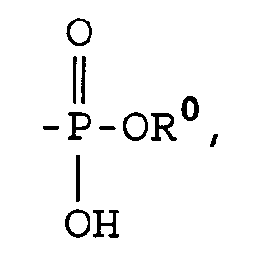

Y¹ eine aliphatische Gruppe mit 6 bis 32 Kohlenstoffatomen darstellt; und
a¹ und a², die gleich oder verschieden sein können, jeweils ein Wasserstoffatom, ein Halogenatom, eine Cyanogruppe, eine Kohlenwasserstoffgruppe mit 1 bis 8 Kohlenstoffatomen, eine Gruppe -COO-Z¹ oder eine Gruppe -COO-Z¹, die über eine Kohlenwasserstoffgruppe mit 1 bis 8 Kohlenstoffatomen gebunden ist, bedeuten, wobei Z¹ eine Kohlenwasserstoffgruppe mit 1 bis 22 Kohlenstoffatomen darstellt; und worin ein Teil des Polymers vernetzt ist. - Flüssigentwickler nach Anspruch 1, in welchem das nichtwäßrige Lösungsmittel als Trägerflüssigkeit ein geradkettiger oder verzweigtkettiger aliphatischer Kohlenwasserstoff, ein alicyclischer Kohlenwasserstoff, ein aromatischer Kohlenwasserstoff, ein Halogen-Derivat davon oder eine Mischung davon ist.
- Flüssigentwickler nach Anspruch 1, in welchem X¹ für -COO-, -OCO-, -CH₂OCO-, -CH₂COO- oder -O- steht, Y¹ eine Aralkylgruppe, eine Alkenylgruppe oder eine Alkylgruppe, jeweils mit 8 bis 22 Kohlenstoffatomen, darstellt.
- Flüssigentwickler nach Anspruch 1, in welchem die Menge an durch die allgemeine Formel (II) dargestellter wiederkehrender Einheit in dem Copolymer-Harz 0,1 Gew.-% bis 20 Gew.-% beträgt.
- Flüssigentwickler nach Anspruch 1, in welchem das Gewichtsmittel des Molekulargewichts des Harzes für Dispersions-stabilisierende Zwecke 1 x 10⁴ bis 6 x 10⁵ beträgt.
- Flüssigentwickler nach Anspruch 1, in welchem die dispergierten Harzteilchen gefärbte dispergierte Harzteilchen sind.
- Flüssigentwickler nach Anspruch 1, in welchem die dispergierten Harzteilchen als Tonerteilchen in einer Menge von 0,5 bis 50 Gewichtsteilen pro 100 Gewichtsteile der Trägerflüssigkeit anwesend sind.
Applications Claiming Priority (2)
| Application Number | Priority Date | Filing Date | Title |
|---|---|---|---|
| JP63269468A JPH0812491B2 (ja) | 1988-10-27 | 1988-10-27 | 静電写真用液体現像剤 |
| JP269468/88 | 1988-10-27 |
Publications (3)
| Publication Number | Publication Date |
|---|---|
| EP0366447A2 EP0366447A2 (de) | 1990-05-02 |
| EP0366447A3 EP0366447A3 (en) | 1990-12-27 |
| EP0366447B1 true EP0366447B1 (de) | 1995-07-26 |
Family
ID=17472856
Family Applications (1)
| Application Number | Title | Priority Date | Filing Date |
|---|---|---|---|
| EP89311005A Expired - Lifetime EP0366447B1 (de) | 1988-10-27 | 1989-10-25 | Flüssiger Entwickler für elektrostatische Photographie |
Country Status (4)
| Country | Link |
|---|---|
| US (1) | US5035971A (de) |
| EP (1) | EP0366447B1 (de) |
| JP (1) | JPH0812491B2 (de) |
| DE (1) | DE68923596T2 (de) |
Families Citing this family (8)
| Publication number | Priority date | Publication date | Assignee | Title |
|---|---|---|---|---|
| US5112718A (en) * | 1989-06-12 | 1992-05-12 | Fuji Photo Film Co., Ltd. | Liquid developer for electrostatic photography |
| US5108864A (en) * | 1989-10-27 | 1992-04-28 | Fuji Photo Film Co., Ltd. | Liquid developer for electrostatic photography |
| JP2627200B2 (ja) * | 1989-11-20 | 1997-07-02 | 富士写真フイルム株式会社 | 自己分散型着色体、静電写真用液体現像剤、補給トナーおよびトナーキツト |
| US5334475A (en) * | 1991-11-29 | 1994-08-02 | Fuji Photo Film Co., Ltd. | Liquid developer for electrostatic photography |
| US6184267B1 (en) | 1997-01-17 | 2001-02-06 | Fuji Photo Film Co., Ltd. | Oil-based ink for preparing printing plate by ink jet process and method for preparing printing plate by ink jet process |
| US6136889A (en) * | 1997-01-29 | 2000-10-24 | Fuji Photo Film Co., Ltd. | Oil-based ink for preparing printing plate by ink jet process and method for preparing printing plate by ink jet process |
| CN103087254A (zh) * | 2011-10-28 | 2013-05-08 | 江南大学 | 一种双亲性共网络树脂的制备方法及其应用 |
| JP6838828B2 (ja) * | 2017-05-19 | 2021-03-03 | 花王株式会社 | 液体現像剤 |
Citations (1)
| Publication number | Priority date | Publication date | Assignee | Title |
|---|---|---|---|---|
| EP0366492A2 (de) * | 1988-10-27 | 1990-05-02 | Fuji Photo Film Co., Ltd. | Flüssiger Entwickler für elektrostatische Photographie |
Family Cites Families (4)
| Publication number | Priority date | Publication date | Assignee | Title |
|---|---|---|---|---|
| DE3564047D1 (en) * | 1984-02-20 | 1988-09-01 | Fuji Photo Film Co Ltd | Liquid developer for electrostatic photography |
| JPS60179751A (ja) * | 1984-02-28 | 1985-09-13 | Fuji Photo Film Co Ltd | 静電写真用液体現像剤 |
| JPS6163855A (ja) * | 1984-09-05 | 1986-04-02 | Fuji Photo Film Co Ltd | 静電写真用液体現像剤 |
| DE3730288A1 (de) * | 1986-09-09 | 1988-03-17 | Fuji Photo Film Co Ltd | Fluessiger entwickler fuer die elektrostatische photographie |
-
1988
- 1988-10-27 JP JP63269468A patent/JPH0812491B2/ja not_active Expired - Lifetime
-
1989
- 1989-10-25 DE DE68923596T patent/DE68923596T2/de not_active Expired - Fee Related
- 1989-10-25 EP EP89311005A patent/EP0366447B1/de not_active Expired - Lifetime
- 1989-10-27 US US07/427,386 patent/US5035971A/en not_active Expired - Lifetime
Patent Citations (1)
| Publication number | Priority date | Publication date | Assignee | Title |
|---|---|---|---|---|
| EP0366492A2 (de) * | 1988-10-27 | 1990-05-02 | Fuji Photo Film Co., Ltd. | Flüssiger Entwickler für elektrostatische Photographie |
Also Published As
| Publication number | Publication date |
|---|---|
| US5035971A (en) | 1991-07-30 |
| JPH0812491B2 (ja) | 1996-02-07 |
| DE68923596T2 (de) | 1996-03-21 |
| DE68923596D1 (de) | 1995-08-31 |
| JPH02116858A (ja) | 1990-05-01 |
| EP0366447A3 (en) | 1990-12-27 |
| EP0366447A2 (de) | 1990-05-02 |
Similar Documents
| Publication | Publication Date | Title |
|---|---|---|
| US5035971A (en) | Electrostatic photographic liquid developer | |
| JPH02116859A (ja) | 静電写真用液体現像剤 | |
| EP0366491B1 (de) | Flüssige Entwickler für Elektrophotographie | |
| JPH06157618A (ja) | 非水系樹脂分散物の製造方法及び静電写真用液体現像剤 | |
| JP2592322B2 (ja) | 静電写真用液体現像剤 | |
| JP2597196B2 (ja) | 静電写真用液体現像剤 | |
| JP2597195B2 (ja) | 静電写真用液体現像剤 | |
| JP2916559B2 (ja) | 静電写真用液体現像剤 | |
| JPH087469B2 (ja) | 静電写真用液体現像剤 | |
| JP2916550B2 (ja) | 静電写真用液体現像剤 | |
| JP2592323B2 (ja) | 静電写真用液体現像剤 | |
| JP2597201B2 (ja) | 静電写真用液体現像剤 | |
| JP2592319B2 (ja) | 静電写真用液体現像剤 | |
| JP2597203B2 (ja) | 静電写真用液体現像剤 | |
| JP2609152B2 (ja) | 静電写真用液体現像剤 | |
| JP2592320B2 (ja) | 静電写真用液体現像剤 | |
| JP2597199B2 (ja) | 静電写真用液体現像剤 | |
| JP2597189B2 (ja) | 静電写真用液体現像剤 | |
| JP2916555B2 (ja) | 静電写真用液体現像剤 | |
| JP2916553B2 (ja) | 静電写真用液体現像剤 | |
| JP2597200B2 (ja) | 静電写真用液体現像剤 | |
| JP2609169B2 (ja) | 静電写真用液体現像剤 | |
| JP2609153B2 (ja) | 静電写真用液体現像剤 | |
| JP2597190B2 (ja) | 静電写真用液体現像剤 | |
| JP2609158B2 (ja) | 静電写真用液体現像剤 |
Legal Events
| Date | Code | Title | Description |
|---|---|---|---|
| PUAI | Public reference made under article 153(3) epc to a published international application that has entered the european phase |
Free format text: ORIGINAL CODE: 0009012 |
|
| AK | Designated contracting states |
Kind code of ref document: A2 Designated state(s): DE GB |
|
| PUAL | Search report despatched |
Free format text: ORIGINAL CODE: 0009013 |
|
| AK | Designated contracting states |
Kind code of ref document: A3 Designated state(s): DE GB |
|
| 17P | Request for examination filed |
Effective date: 19910624 |
|
| 17Q | First examination report despatched |
Effective date: 19931026 |
|
| GRAA | (expected) grant |
Free format text: ORIGINAL CODE: 0009210 |
|
| AK | Designated contracting states |
Kind code of ref document: B1 Designated state(s): DE GB |
|
| REF | Corresponds to: |
Ref document number: 68923596 Country of ref document: DE Date of ref document: 19950831 |
|
| PLBE | No opposition filed within time limit |
Free format text: ORIGINAL CODE: 0009261 |
|
| STAA | Information on the status of an ep patent application or granted ep patent |
Free format text: STATUS: NO OPPOSITION FILED WITHIN TIME LIMIT |
|
| 26N | No opposition filed | ||
| REG | Reference to a national code |
Ref country code: GB Ref legal event code: IF02 |
|
| PGFP | Annual fee paid to national office [announced via postgrant information from national office to epo] |
Ref country code: GB Payment date: 20041020 Year of fee payment: 16 |
|
| PGFP | Annual fee paid to national office [announced via postgrant information from national office to epo] |
Ref country code: DE Payment date: 20041021 Year of fee payment: 16 |
|
| PG25 | Lapsed in a contracting state [announced via postgrant information from national office to epo] |
Ref country code: GB Free format text: LAPSE BECAUSE OF NON-PAYMENT OF DUE FEES Effective date: 20051025 |
|
| PG25 | Lapsed in a contracting state [announced via postgrant information from national office to epo] |
Ref country code: DE Free format text: LAPSE BECAUSE OF NON-PAYMENT OF DUE FEES Effective date: 20060503 |
|
| GBPC | Gb: european patent ceased through non-payment of renewal fee |
Effective date: 20051025 |