EP0367036A2 - Substituierte 3-Aminosydnonimine, Verfahren zu ihrer Herstellung und ihre Verwendung - Google Patents
Substituierte 3-Aminosydnonimine, Verfahren zu ihrer Herstellung und ihre Verwendung Download PDFInfo
- Publication number
- EP0367036A2 EP0367036A2 EP19890119456 EP89119456A EP0367036A2 EP 0367036 A2 EP0367036 A2 EP 0367036A2 EP 19890119456 EP19890119456 EP 19890119456 EP 89119456 A EP89119456 A EP 89119456A EP 0367036 A2 EP0367036 A2 EP 0367036A2
- Authority
- EP
- European Patent Office
- Prior art keywords
- carbon atoms
- radical
- compound
- atoms
- formula
- Prior art date
- Legal status (The legal status is an assumption and is not a legal conclusion. Google has not performed a legal analysis and makes no representation as to the accuracy of the status listed.)
- Granted
Links
- 0 CNN(CC1)NOC1=N* Chemical compound CNN(CC1)NOC1=N* 0.000 description 1
Classifications
-
- C—CHEMISTRY; METALLURGY
- C07—ORGANIC CHEMISTRY
- C07D—HETEROCYCLIC COMPOUNDS
- C07D271/00—Heterocyclic compounds containing five-membered rings having two nitrogen atoms and one oxygen atom as the only ring hetero atoms
- C07D271/02—Heterocyclic compounds containing five-membered rings having two nitrogen atoms and one oxygen atom as the only ring hetero atoms not condensed with other rings
- C07D271/04—1,2,3-Oxadiazoles; Hydrogenated 1,2,3-oxadiazoles
-
- A—HUMAN NECESSITIES
- A61—MEDICAL OR VETERINARY SCIENCE; HYGIENE
- A61P—SPECIFIC THERAPEUTIC ACTIVITY OF CHEMICAL COMPOUNDS OR MEDICINAL PREPARATIONS
- A61P7/00—Drugs for disorders of the blood or the extracellular fluid
- A61P7/02—Antithrombotic agents; Anticoagulants; Platelet aggregation inhibitors
-
- A—HUMAN NECESSITIES
- A61—MEDICAL OR VETERINARY SCIENCE; HYGIENE
- A61P—SPECIFIC THERAPEUTIC ACTIVITY OF CHEMICAL COMPOUNDS OR MEDICINAL PREPARATIONS
- A61P9/00—Drugs for disorders of the cardiovascular system
Definitions
- the invention relates to pharmacologically active substituted 3-aminosydnonimines of the general formula I. and their pharmacologically acceptable acid addition salts, wherein R1 alkyl with 1 to 8 C atoms, cycloalkyl with 5 to 8 C atoms, where the alkyl or cycloalkyl radical can also be substituted with -OR4 or -N (R5, R6), or adamantyl, R2 is hydrogen, -NO or the rest -COR3, R3 is an aliphatic radical having 1 to 6 carbon atoms, which can also be substituted by alkoxy having 1 to 6 carbon atoms or by an aliphatic thio radical having up to 4 carbon atoms; a cycloaliphatic radical with 5 to 7 carbon atoms; a bicycloaliphatic radical with 7 to 14 C atoms; a tricycloaliphatic radical with 7 to 16 carbon atoms; an alkoxy radical having 1 to 6 carbon atoms, which
- the invention further relates to a process for the preparation of the compounds according to the invention and their use.
- Aliphatic residues, alkyl residues, alkoxy residues, alkylamino residues and dialkylamino residues can be straight-chain or branched. This also applies if they appear as substituents on other residues.
- the alkyl radicals for R5 and R6 can be the same or different.
- R 1 examples are: methyl, ethyl, n-propyl, i-propyl, n-, i-, sec- and tert-butyl, n-, i-pentyl, n-, i-hexyl, n-, i -Heptyl, n-, i-octyl, cyclopentyl, cyclohexyl, cycloheptyl, cyclooctyl, 2-hydroxyethyl, 2- or 3-hydroxypropyl, 2-, 3- or 4-hydroxybutyl, 3-, 4- or 5-hydroxy-2 -methyl-pentyl, 2-methoxy-, -ethoxy-, -propoxy-ethyl, 3-methoxy-, -ethoxy-, -propoxy-propyl, 3-isopropoxy-propyl, 4-butoxy-butyl, 2-amino-, -Dimethylamino-, -Diethy
- R 1 are preferred: alkyl having 1 to 6 carbon atoms, furthermore hydroxyalkyl having 2 to 6 carbon atoms, cyclohexyl and hydroxycyclohexyl, in particular 2-hydroxycyclohexyl, adamantyl.
- radicals for R 1 are: methyl, ethyl, i-propyl, neopentyl, cyclohexyl, 2-hydroxyethyl, Adamantyl, 2-hydroxycyclohexyl, of which ethyl, i-propyl, cyclohexyl, 2-hydroxycyclohexyl and 1-adamantyl are particularly preferred.
- R2 are preferred: hydrogen, acetyl, propionyl, i-propylcarbonyl, tert-butylcarbonyl, cyclohexylcarbonyl, benzoyl, 4-chlorobenzoyl, methoxycarbonyl, ethoxycarbonyl, i-propoxycarbonyl, butoxycarbonyl, allylthiomethylcarbonyl.
- Suitable aliphatic radicals for R3 are, in particular, alkyl radicals, preferably having 1 to 4 carbon atoms.
- the aliphatic radicals, in particular alkyl radicals, which represent R3 can also be substituted by alkoxy having 1 to 6 C atoms, in particular 1 to 4 C atoms, preferably 1 to 3 C atoms.
- alkyl and alkoxyalkyl radicals which can represent R3 are: methyl; Ethyl; n-propyl; i-propyl; n-, i-, sec.- and tert.-butyl; n- and i-pentyl; n- and i-hexyl; Methoxy, ethoxy, n-propoxy, i-propoxy, n-butoxy, i-butoxymethyl; 2-methoxy, 2-ethoxy, 2-n-propoxy, 2-i-propoxy, 2-n-butoxy-ethyl; 2-methoxy, 3-ethoxy, 3-n-propoxy, 3-i-propoxypropyl or -i-propyl.
- the aliphatic radicals which stand for R3, in particular the alkyl radicals, can also be substituted by an aliphatic-substituted thio radical having up to 4 carbon atoms.
- Cycloaliphatic radicals which stand for R3 are in particular cycloalkyl radicals having 5 to 7 carbon atoms, in particular cyclopentyl, and preferably cyclohexyl.
- 2,6,6-Trimethylbicyclo (3.1.1) heptan-3-yl ( pinanyl-3) in particular comes as the bicycloaliphatic radical representing R3 into consideration.
- the alkoxy radicals representing R3 in particular have 1 to 4 carbon atoms, preferably 1 or 2 carbon atoms.
- the alkoxy substituents for the alkoxy radicals have in particular 1 to 4 carbon atoms.
- Examples of alkoxy radicals and alkoxyalkoxy radicals which can represent R3 are: methoxy; Ethoxy; n- and i-propoxy; n-, i-, sec.- and tert.-butoxy; n-pentoxy; i-hexoxy; Methoxy, ethoxy, n-propoxy, i-propoxy, n-butoxymethoxy; 2-methoxy, 2-ethoxy, 2-n-propoxy, 2-i-propoxy-ethoxy; 3-methoxy, 3-ethoxy, 3-n-propoxy, 3-i-propoxypropoxy; 4-methoxy, 4-ethoxy, 4-n-propoxy, 3-propoxy, 4-n-butoxy-butoxy.
- the alkoxycarbonyl radical representing R3 preferably has 2 to 5 carbon atoms. Examples include: methoxy, ethoxy, n-propoxy, i-propoxy, n-butoxy, i-butoxy-carbonyl. As the alkoxycarbonyl radical representing R3, the ethoxycarbonyl radical is particularly suitable.
- aryl radicals for R3 are ⁇ - or ⁇ -naphthyl radicals, but especially the phenyl radical.
- aryloxy radicals which stand for R3 are ⁇ - or ⁇ -naphthoxy radicals, but in particular the phenoxy radical.
- the aryl radicals standing for R3 can be mono-, di- or tri-substituted, although even with tri-substitution there can only be a maximum of 2 nitro groups, such as 2-methyl-4,6-dinitrophenyl and 2-chloro-6-methyl-4 -nitrophenyl.
- Halogen substituents for the aryl radicals are, for example, fluorine, chlorine and / or bromine atoms.
- alkylcarbonyloxy substituents for the aryl radicals include: acetoxy, n-propionyloxy, i-propionyloxy, n-butyryloxy, i-butyryloxy.
- Examples of the optionally substituted aryl radicals which represent R3 are: phenyl, 2-,, 3- or 4-methyl-, -ethyl-, -n-propyl-, -i-propyl-phenyl; 2-, 3- or 4-methoxy-, -ethoxy-, -n-propoxy-, -i-propoxyphenyl; 2-, 3- or 4-fluoro, chloro or bromophenyl; 2-, 3- or 4-nitrophenyl; 2-, 3- or 4-hydroxyphenyl; 2-, 3- or 4-acetoxy-, -n-propionyloxy-, -n-butyryloxyphenyl; 2,3-, 2,4-, 2,5- or 2,6-dimethyl-, -diethyl-, -dipropyl-phenyl; 2- or 3-methyl-4-chlorophenyl; 2- or 3-ethyl-4-fluorophenyl; 2-chloro-4-ethylphenyl; 2-brom
- the imidazolyl radical representing R3 is preferably a 1-imidazolyl radical.
- R3 are preferred: methyl, ethyl, cyclohexyl, phenyl, 4-chlorophenyl, 4-nitrophenyl, methoxy, ethoxy, n-propoxy, i-propoxy, 2-n-propoxy-ethoxy, 2-i-propoxy-ethoxy, n -Butoxymethyl, 2-n-butoxy-ethoxy and allylthiomethyl.
- R4 is preferably hydrogen.
- the alkyl radicals R4, R5 and R6 preferably have 1 to 4 carbon atoms.
- the cyclization of compound II to compound Ia is carried out in a suitable organic or inorganic solvent, dispersant or diluent with the addition of a cyclizing agent, normally at temperatures from -10 to 40 ° C., in particular 0 to 40 ° C., preferably at 0 to 20 o C, carried out.
- Suitable cyclizing agents are those which set a pH of 3 or less in aqueous solution, for example strong acids, such as mineral acids, such as sulfuric, nitric or phosphoric acid, preferably hydrogen chloride, but also strong organic acids, such as trifluoroacetic acid.
- the cyclization is usually carried out under ice cooling. For example, based on 1 mol of the compound of formula II, 0.1 to 10 mol, preferably 1 to 5 mol, of the cyclizing agent is used.
- the cyclizing agent is normally used in excess. It is particularly convenient to use hydrogen chloride as the cyclizing agent, which is normally introduced into the reaction mixture until it is saturated.
- the corresponding acid addition salt of compound Ia is normally obtained in the cyclization.
- Suitable solvents, dispersants or diluents are, for example: alcohols, for example those with 1 to 8 C atoms, in particular those with 1 to 6 C atoms, preferably those with 1 to 4 C atoms, such as methanol, ethanol, i - and n-propanol, i-, sec- and tert-butanol, n-, i-, sec.-, tert.-pentanol, n-hexanol, 2-ethylbutanol, 2-ethylhexanol, isooctyl alcohol, cyclopentanol, cyclohexanol, methylcyclohexanol (Mixture), benzyl alcohol; Ethers, in particular those with 2 to 8 carbon atoms in the molecule, such as diethyl ether, methyl ethyl ether, di-n-propyl ether, di-isopropyl ether
- X means e.g. especially halogen, preferably -Cl or -Br; -OH; -O-alkyl, in particular with 1 to 5 carbon atoms; -O-aryl, the aryl radical being in particular a phenyl radical which can also be substituted one or more times with alkyl, in particular methyl, and / or nitro and is, for example, a tolyl, dinitrophenyl or nitrophenyl radical; -O-CO-R3; -O-CO-O-alkyl, in particular with 1 to 5 carbon atoms in the alkyl radical, or the radical of an azole or benzazole bonded via an N atom with at least 2 N atoms in the quasi-aromatic five-membered ring.
- halogen preferably -Cl or -Br
- -OH -O-alkyl, in particular with 1 to 5 carbon atoms
- -O-aryl the aryl
- the acylation is advantageously carried out in the liquid phase in the presence of an inert solvent, dispersant or diluent or in an excess of the acyly agent, conveniently carried out with stirring.
- the molar ratio between the compound of the formula Ia and the acylating agent of the formula IV is theoretically 1: 1.
- the acylating agent of the formula IV is expediently used in a small molar excess. Excesses of up to 30 mol% are usually sufficient, i.e. the molar ratio between the compound of the formula Ia and the acylating agent of the formula IV is normally 1: (1 to 1.3), preferably 1: (1 to 1.2).
- an acid scavenger e.g. an alkyl hydroxide, e.g. Sodium, potassium or lithium hydroxide, a tertiary organic amine such as e.g.
- Suitable catalysts such as e.g. 4-dimethylaminopyridine can be added.
- the acylation can be carried out prizipiell at temperatures between -10 o C and the boiling point of the solvent used, dispersant or diluent. In many cases the reaction is carried out at 0 to 50 o C, in particular at 0 to 30 o C and preferably at room temperature.
- acylating agents of the formula IV can be prepared by processes known per se.
- activating agent which has the task of increasing or activating the acylating potential of the carboxylic acid or the carboxylic acid in situ or preferably shortly before the reaction with the compound of the formula Ia in a reactive carboxylic acid derivative to transfer the formula IV.
- Suitable activating agents of this type are, for example: N, N'-disubstituted carbodiimides, in particular if they contain at least one secondary or tertiary alkyl radical, such as, for example, diisopropyl, dicyclohexyl or N-methyl-N'-tert.butyl-carbodiimide (cf. Methodicum Chimicum, Verlag G.
- Carbonic acid derivatives such as phosgene, chloroformate, in particular with 1 to 5 carbon atoms in the alkyl radical (see, for example, Tetrahedron Letters 24 (1983), 3365 to 3368); Carbonic acid esters such as N, N'-disuccinimido carbonate, diphthalimido carbonate, 1,1 '- (carbonyldioxy) -dibenzo-tri azole or di-2-pyridyl carbonate (see, for example, Tetrahedron Letters, Vol.25, No.
- N, N'-carbonyldiazoles such as N, N'-carbonyl-diimidazole, 2,2'-carbonyl-ditriazole (1,2,3), 1,1'-carbonyl-ditriazole (1,2 , 4), N, N'-carbonyl-dipyrazole, 2,2'-carbonyl-ditetrazole, N, N'-carbonyl-benzimidazole or N, N'-carbonylbenztriazole, suitable (see, for example, HA Staab, M.
- N, N'-carbonyl-diimidazole is often used as N, N'-carbonyl-diazole.
- the other N, N'-carbonylazoles are also easily accessible from the respective azole and phosgene.
- oxalic acid such as oxalyl chloride (see, for example, GB-PS 2 139 225) or N, N′-oxalyldiazoles such as 1,1′-oxalyldiimidazole, 1,1 ′ -Oxalyldi-1,2,4-triazole and 1,1'-oxalyldi-1,2,3,4-tetrazole (see e.g. Shizuaka Murata, Bull.Chem. Soc.Jap.
- Methyl ethylphosphinic anhydride see, for example, DE-OS 31 01 427; Diphosphorus tetraiodide (Chem. Lett. 1983 , 449); Dialkyl disulfite (Indian J. Chem. 21 , 259 (1982)); or other reactive agents.
- Suitable solvents, dispersants or diluents for the acylation are, for example, those which have been specified for carrying out the cyclization, and also, for example, pyridine and amides, such as, for example, dimethylformamide.
- polar organic solvents such as dimethylformamide, dimethyl sulfoxide or pyridine are preferred for the acylation.
- Mixtures of solvents, such as a mixture of water and methylene chloride, are also suitable.
- a compound of the formula Ia which may also be in the form of an acid addition salt, is prepared in a manner known per se, advantageously in a suitable inert solvent or solvent mixture, preferably in water, normally nitrosated at temperatures from 0 to 40 o C, and preferably at temperatures from 0 to 10 o C.
- Nitrosation is carried out with nitrous acid, NO, NOCl or NO-containing gas mixtures.
- the nitrosation is expediently carried out using nitrous acid, which is advantageously produced from an alkali metal nitrite, for example sodium nitrite, and an acid, in particular hydrochloric acid.
- a 3-aminosydnonimine of the formula III which can also be in the form of an acid addition salt, is treated with an acid.
- Catalytic amounts of acid are already sufficient for this treatment.
- a larger molar excess of acid can also be used.
- the 3-aminosydnonimine of the formula III or an acid addition salt thereof is contacted with an acid in a molar ratio of 1: (0.1 to 5), preferably 1: (0.1 to, 0.5).
- This treatment is also advantageously carried out in a suitable organic or inorganic solvent, dispersant or diluent.
- the reaction temperature is normally 0 ° C.
- a compound of the formula III can be left to stand for a long time at room temperature with an acid in a suitable solvent.
- Solvents, dispersants or diluents for process variant b) include e.g. those that have been specified for the cyclization according to process variant a).
- acids for the elimination of the tert-butyl group e.g. the acids mentioned in process variant a) as cyclizing agents are used.
- the substituted 3-aminosydnonimines of the general formula I form acid addition salts with inorganic or organic acids.
- Inorganic or organic acids are suitable for the formation of such acid addition salts.
- Suitable acids are, for example, hydrogen chloride, hydrogen bromide, phosphoric, nitric, sulfuric, oxalic, milk, wine, vinegar, salicylic, benzoic, ant, propionic, pivalic, diethylacetic, malonic, Amber, pimeline, fumaric, maleic, apple, sulfamine, phenylpropione, gluconic, ascorbic, isonicotinic, methane sulfonic, p-toluenesulfonic, citric, adipic, naphthalenedisulfonic, especially naphthalenedisulfonic, acids (1, 5).
- Pharmacologically acceptable acid addition salts are preferred.
- the acid addition salts can be prepared as usual by combining the components,
- the starting compounds of the general formula II required for the synthesis route a) can, provided that R 1 is a bulky residue, such as a secondary or tertiary alkyl group or cycloalkyl, in a manner known per se, according to the Strecker aminonitrile synthesis from hydrazines of the general formula V R1-NH-NH2 (V) wherein R1 has the meaning already mentioned, by reaction with formaldehyde and hydrocyanic acid or sodium cyanide in a suitable solvent, for example water, are prepared, with a compound of the general formula VI R1-NH-NH-CH2-CN (VI) arises, which is converted into compound II by nitrosation.
- R 1 is a bulky residue, such as a secondary or tertiary alkyl group or cycloalkyl, in a manner known per se, according to the Strecker aminonitrile synthesis from hydrazines of the general formula V R1-NH-NH2 (V) wherein R1 has the meaning already mentioned
- the nitrosation is carried out in a known manner in a suitable inert solvent or solvent mixture, preferably in water, normally at temperatures from 0 to 40 ° C., preferably at temperatures from 0 to 10 ° C.
- the nitrous acid is usually generated from an alkali metal nitrite, for example sodium nitrite, and an acid, especially hydrochloric acid. It is advisable to adjust the aqueous solution of compound VI to an pH of 1 to 3 with an acid, in particular hydrochloric acid, and to add the alkali metal nitrite in the form of an aqueous solution to the stirred and cooled solution of the compound.
- the solution of the compound II obtained in this way can be subjected directly to the cyclization reaction. More normal However, it is wise to first take up the nitroso compound II in a suitable organic solvent and, if appropriate after adding a further solvent, to carry out the cyclization to the compound of the formula Ia in it.
- the starting compounds of formula III required for process variant b) can be derived from compounds of formula VII by cyclization, as described for process variant a). Since the cyclization is carried out by the action of acid, the tert-butyl group is split off when the acid has been exposed to the acid for a long time after the cyclization. This means that process variant b) can also be carried out directly after the synthesis of compound III without isolating compound III.
- the required starting compounds of the general formula VII can be prepared in a manner known per se from Strecker's aminonitrile synthesis from compounds of the general formula VIII wherein R1 has the meaning already mentioned, by reaction with formaldehyde and hydrocyanic acid or sodium cyanide in a suitable solvent, for example water, are prepared, with a compound of the general formula IX arises, which is converted into compound VII by nitrosation and then cyclized, as has already been described in connection with the compounds of formula VI in process variant a).
- Some of the compounds of the general formula VIII are known or can be derived from compounds of the general formula X Prepare by either nitrosating a compound of the formula X to give the N-nitroso compound XI and then reducing it, expediently using lithium aluminum hydride: or that in a manner known per se a compound of formula X with potassium cyanate in the acidic medium in the urine Substance derivative XII is transferred, which is then converted into compound XIII by oxidation with sodium hypochlorite after Hoffmann degradation.
- the compound of general formulas I and III and their pharmacologically acceptable acid addition salts have valuable pharmacological properties. Its effect on the cardiovascular system is particularly pronounced. Compared to known sydnonimine compounds substituted in the 3-position, for example those of EP-B-59356, and the commercially available structurally similar compound molsidomine, they surprisingly have a considerably stronger action and a longer duration of action. For example, they lower blood pressure as well as pulmonary artery pressure and left ventricular end-diastolic pressure and thus help relieve cardiac activity in the sense of an antianginal effect, without provoking reflex tachycardia.
- the compounds can also show antithrombotic effects.
- the compounds of the formulas I and III and their pharmacologically acceptable acid addition salts can therefore be administered to humans as remedies on their own, in mixtures with one another or in the form of pharmaceutical preparations which allow enteral or parenteral use and which, as an active ingredient, have a pharmacologically active dose at least one compound of formula I or an acid addition salt thereof, in addition to the usual pharmaceutically acceptable carriers and additives.
- the remedies can be administered orally, e.g. in the form of pills, tablets, coated tablets, coated tablets, hard and soft gelatin capsules, solutions, syrups, emulsions or suspensions or aerosol mixtures.
- administration can also be rectal, e.g. in the form of suppositories, or parenterally, e.g. in the form of solutions for injection, or percutaneously, e.g. in the form of ointments or tinctures.
- Pharmaceutical inert inorganic or organic carriers can be used to produce the pharmaceutical preparations. Lactose, corn starch or derivatives thereof, talc, stearic acid or its salts etc. can be used for the production of pills, tablets, dragees and hard gelatin capsules. Carriers for soft gelatin capsules and suppositories are, for example, fats, waxes, semi-solid and liquid polyols, natural or hardened oils etc. As carriers for the production of solutions and syrups, for example, water, sucrose, invert sugar, glucose, polyols etc. are suitable as carriers for the production of injection solutions For example, water, alcohols, glycerin, polyols or vegetable oils.
- the pharmaceutical preparations can also contain additives such as Fillers, extenders, explosives, binders, lubricants, wetting agents, stabilizers, emulsifiers, preservatives, sweeteners, colors, flavors or aromatizers, buffer substances, furthermore solvents or solubilizers or agents for achieving a Depot effect, as well as salts to change the osmotic pressure, coating agents or antioxidants.
- additives such as Fillers, extenders, explosives, binders, lubricants, wetting agents, stabilizers, emulsifiers, preservatives, sweeteners, colors, flavors or aromatizers, buffer substances, furthermore solvents or solubilizers or agents for achieving a Depot effect, as well as salts to change the osmotic pressure, coating agents or antioxidants.
- They can also contain two or more compounds of the formula I or their pharmacologically acceptable acid addition salts and still other therapeutically active substances.
- Such other therapeutically active substances are, for example: ⁇ -receptor blockers, e.g. Propranolol, pindolol, metoprolol; Vasodilators, e.g. Carbochromes; Sedatives, e.g. Barbituric acid derivatives, 1,4-benzodiazepines and meprobamate; Diuretics, such as Chlorothiazide; heart tonifying agents such as Digitalis preparations; antihypertensive agents such as Hydralazine, dihydralazine, prazosin, clonidine, Rauwolfia alkaloids; Agents that lower the level of fatty acids in the blood, e.g. Benzafibrate, fenofibrate; Agents for thromboprophylaxis, e.g. Phenprocoumon.
- ⁇ -receptor blockers e.g. Propranolol, pindolol, metoprolol
- the compounds of the formula I, their pharmacologically acceptable acid addition salts and pharmaceutical preparations which contain the compounds of the formula I or their pharmacologically acceptable acid addition salts as active compounds can be used in humans in combating or preventing diseases of the cardiovascular system, for example as antihypertensive aggressive remedies for the various forms of high blood pressure, for fighting or preventing angina pectoris etc.
- the dosage can vary within wide limits and must be adapted to the individual circumstances in each individual case. In general, a daily dose of about 0.5 to 100 mg, preferably 1 to 20 mg, is appropriate for oral administration per human individual. In other forms of application, too, the daily dose is in similar quantitative ranges, owing to the good absorption of the active ingredients, ie generally also from 0.5 to 100 mg / person.
- the daily dose is usually divided into several, for example 2 to 4, sub-administrations.
- This compound is prepared analogously to Example 8 from 7.6 g of 3- (2-hydroxycylohexylamino) -sydnonim hydrochloride, 3.4 g of ethyl chloroformate and 5.5 g of sodium bicarbonate and recrystallized from isopropyl acetate. Yield: 5.8 g Mp .: 147 o C.
- Rectal drug form containing 4 mg of active ingredient per suppository per suppository Active ingredient 4 mg Suppository base ad 2 g
- Tablets containing 2 mg of active ingredient per tablet per tablet Active ingredient 2 mg Lactose 60 mg Cornstarch 30 mg soluble starch 4 mg Magnesium stearate 4 mg 100 mg
- Dragees containing 1 mg of active ingredient per dragee per dragee Active ingredient 1 mg Cornstarch 100 mg Lactose 60 mg sec calcium phosphate 30 mg soluble starch 3 mg Magnesium stearate 2 mg colloidal silica 4 mg 200 mg
- the pharmacological activity of the compound of the formula I was determined using a modified method from Godfraind and Kaba (Arch. Int. Pharmacodyn. Ther. 196 , (Suppl) 35 to 49, 1972) and from Schümann et al (Naunyn-Schmiedeberg's Arch. Pharmacol. 289 , 409 to 418, 1975). Spiral strips of the pulmonary artery of the guinea pig are depolarized with 40 mmol / l potassium after equilibration in calcium-free Tyrode solution. The addition of 0.5 mmol / l CaCl2 then triggers a contraction. The relaxing effect of the test substance is determined by the cumulative addition of concentrations graded in 1/2 log 10.
Landscapes
- Chemical & Material Sciences (AREA)
- Organic Chemistry (AREA)
- Health & Medical Sciences (AREA)
- Life Sciences & Earth Sciences (AREA)
- General Health & Medical Sciences (AREA)
- Veterinary Medicine (AREA)
- Chemical Kinetics & Catalysis (AREA)
- General Chemical & Material Sciences (AREA)
- Medicinal Chemistry (AREA)
- Nuclear Medicine, Radiotherapy & Molecular Imaging (AREA)
- Bioinformatics & Cheminformatics (AREA)
- Pharmacology & Pharmacy (AREA)
- Engineering & Computer Science (AREA)
- Animal Behavior & Ethology (AREA)
- Public Health (AREA)
- Hematology (AREA)
- Diabetes (AREA)
- Cardiology (AREA)
- Heart & Thoracic Surgery (AREA)
- Organic Low-Molecular-Weight Compounds And Preparation Thereof (AREA)
- Pharmaceuticals Containing Other Organic And Inorganic Compounds (AREA)
- Acyclic And Carbocyclic Compounds In Medicinal Compositions (AREA)
- Pyrrole Compounds (AREA)
- Heterocyclic Carbon Compounds Containing A Hetero Ring Having Nitrogen And Oxygen As The Only Ring Hetero Atoms (AREA)
- Plural Heterocyclic Compounds (AREA)
Abstract

R¹ z.B. Alkyl mit 1 bis 8 C-Atomen,
R² Wasserstoff oder den Rest -COR³,
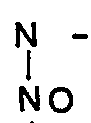
R³ z.B. einen aliphatischen Rest mit1 bis 4 C-Atomen bedeuten, werden z.B. durch Cyclisierung einer Verbindung der Formel II
R¹-NH-
und gegebenenfalls anschließende Acylierung hergestellt und besitzen wertvolle pharmakologische Eigenschaften.
Description
- Die Erfindung betrifft pharmakologisch wirksame substituierte 3-Aminosydnonimine der allgemeinen Formel I

R¹ Alkyl mit 1 bis 8 C-Atomen, Cycloalkyl mit 5 bis 8 C-Atomen, wobei der Alkyl- oder Cycloalkylrest auch mit -OR⁴ oder -N(R⁵, R⁶) substituiert sein kann, oder Adamantyl,
R² Wasserstoff, -NO oder den Rest -COR³,
R³ einen aliphatischen Rest mit 1 bis 6 C-Atomen, der auch durch Alkoxy mit 1 bis 6 C-Atomen oder durch einen aliphatischen Thiorest mit bis zu 4 C-Atomen substituiert sein kann; einen cycloaliphatischen Rest mit 5 bis 7 C-Atomen; einen bicycloaliphatischen Rest mit 7 bis 14 C-Atomen; einen tricycloaliphatischen Rest mit 7 bis 16 C-Atomen; einen Alkoxyrest mit 1 bis 6 C-Atomen, der auch durch Alkoxy mit 1 bis 6 C-Atomen substituiert sein kann; einen Aryloxyrest mit 6 bis 10 C-Atomen; einen Alkoxycarbonylrest mit insgesamt 2 bis 7 C-Atomen; einen Arylrest mit 6 bis 10 C-Atomen; einen durch 1 bis 3 Halogenatome und/oder 1 bis 3 Alkylreste mit 1 bis 3 C-Atomen und/oder 1 bis 3 Alkoxyreste mit 1 bis 3 C-Atomen und/oder 1 oder 2 Nitrogruppen und/oder 1 oder 2 Hydroxygruppen und/oder 1 oder 2 Alkylcarbonyloxyreste mit 1 bis 4 C-Atomen mono-, di- oder trisubstituierten Arylrest mit 6 bis 10 C-Atomen; Imidazolyl,
R⁴, R⁵, R⁶ Wasserstoff oder Alkyl mit 1 bis 6 C-Atomen bedeuten. - Die Erfindung betrifft ferner ein Verfahren zur Herstellung der erfindungsgemäßen Verbindungen und ihre Verwendung.
- Aliphatische Reste, Alkylreste, Alkoxyreste, Alkylaminoreste und Dialkylaminoreste können geradkettig oder verzweigt sein. Dies gilt auch, wenn sie als Substituenten anderer Reste auftreten.
- Die für R⁵ und R⁶ stehenden Alkylreste können gleich oder verschieden sein.
- Beispiele für R¹ sind: Methyl, Ethyl, n-Propyl, i-Propyl, n-, i-, sec.- und tert.-Butyl, n-, i-Pentyl, n-, i-Hexyl, n-, i-Heptyl, n-, i-Octyl, Cyclopentyl, Cyclohexyl, Cycloheptyl, Cyclooctyl, 2-Hydroxyethyl, 2- oder 3-Hydroxypropyl, 2-, 3- oder 4-Hydroxybutyl, 3-, 4- oder 5-Hydroxy-2-methyl-pentyl, 2-Methoxy-, -Ethoxy-, -Propoxy-ethyl, 3-Methoxy-, -Ethoxy-, -Propoxy-propyl, 3-Isopropoxy-propyl, 4-Butoxy-butyl, 2-Amino-, -Dimethylamino-, -Diethylamino-, -Methylethyl-amino-, -Methylpropylamino-ethyl, 4-Dibutylamino-butyl, 2- oder 3-Hydroxycyclopentyl, 2-, 3- oder 4-Hydroxycyclohexyl, 2-, 3- oder 4-Hydroxycycloheptyl, 2-, 3-, 4- oder 5-Hydroxycyclooctyl, 2-, 3- oder 4-Methoxy-, -Ethoxy-, -Propoxy-, -Butoxy-cyclohexyl, 2-, 3- oder 4-Amino-, -Dimethylamino-, -Diethylamino-, -Methylethylamino-cyclohexyl, 1-Adamantyl.
- Für R¹ sind bevorzugt: Alkyl mit 1 bis 6 C-Atomen, ferner Hydroxyalkyl mit 2 bis 6 C-Atomen, Cyclohexyl und Hydroxycyclohexyl, insbesondere 2-Hydroxycyclohexyl, Adamantyl.
- Besonders bevorzugte Reste für R¹ sind: Methyl, Ethyl, i-Propyl, Neopentyl, Cyclohexyl, 2-Hydroxyethyl, Adamantyl, 2-Hydroxycyclohexyl, von denen Ethyl, i-Propyl, Cyclohexyl, 2-Hydroxycyclohexyl und 1-Adamantyl ganz besonders bevorzugt sind.
- Für R² sind bevorzugt: Wasserstoff, Acetyl, Propionyl, i-Propylcarbonyl, tert.-Butylcarbonyl, Cyclohexylcarbonyl, Benzoyl, 4-Chlorbenzoyl, Methoxycarbonyl, Ethoxycarbonyl, i-Propoxycarbonyl, Butoxycarbonyl, Allylthiomethylcarbonyl.
- Als für R³ stehende aliphatische Reste kommen insbesondere Alkylreste, vorzugsweise mit 1 bis 4 C-Atomen, in Betracht. Die für R³ stehenden aliphatischen Reste, insbesondere Alkylreste, können auch mit Alkoxy mit 1 bis 6 C-Atomen, insbesondere 1 bis 4 C-Atomen, vorzugsweise 1 bis 3 C-Atomen, substituiert sein. Beispiele für Alkyl- und Alkoxyalkylreste, die für R³ stehen können, sind: Methyl; Ethyl; n-Propyl; i-Propyl; n-, i-, sec.- und tert.-Butyl; n- und i-Pentyl; n- und i-Hexyl; Methoxy-, Ethoxy-, n-Propoxy-, i-Propoxy-, n-Butoxy-, i-Butoxymethyl; 2-Methoxy-, 2-Ethoxy-, 2-n-Propoxy-, 2-i-Propoxy-, 2-n-Butoxy-ethyl; 2-Methoxy-, 3-Ethoxy-, 3-n-Propoxy-, 3-i-Proppoxy-propyl oder -i-propyl. Die für R³ stehenden aliphatischen Reste, insbesondere die Alkylreste, können auch mit einem aliphatisch substituierten Thiorest mit bis zu 4 C-Atomen substituiert sein. Derartige aliphatische Thioreste sind zum Beispiel Alkylthioreste mit 1 bis 4 C-Atomen, wie zum Beispiel Methyl-, Ethyl-, n-Propyl-, i-Propyl-, n-Butyl-, tert.-Butyl-thio, vorzugsweise aber Alllylthio (CH₂=CH-CH₂-S-). Als für R³ stehende cycloaliphatische Reste kommen vor allem Cycloalkylreste mit 5 bis 7 C-Atomen, insbesondere Cyclopentyl, und bevorzugt Cyclohexyl, in Betracht. Als für R³ stehender bicycloaliphatischer Rest kommt insbesondere das 2,6,6-Trimethylbicyclo(3.1.1)heptan-3-yl (=Pinanyl-3) in Betracht. Als für R³ stehender tricycloaliphatischer Rest kommt insbesondere das Tricyclo(3.3.1.13,7)decan-1-yl (=Adamantyl) in Betracht.
- Die für R³ stehenden Alkoxyreste besitzen insbesondere 1 bis 4 C-Atome, vorzugsweise 1 oder 2 C-Atome. Die Alkoxysubstituenten für die Alkoxyreste besitzen insbesondere 1 bis 4 C-Atome. Beispiele für Alkoxyreste und Alkoxyalkoxyreste, die für R³ stehen können sind: Methoxy; Ethoxy; n- und i-Propoxy; n-, i-, sec.- und tert.-Butoxy; n-Pentoxy; i-Hexoxy; Methoxy-, Ethoxy-, n-Propoxy-, i-Propoxy-, n-Butoxy-methoxy; 2-Methoxy-, 2-Ethoxy-, 2-n-Propoxy-, 2-i-Propoxy-ethoxy; 3-Methoxy-, 3-Ethoxy-, 3-n-Propoxy-, 3-i-Propoxy-propoxy; 4-Methoxy-, 4-Ethoxy-, 4-n-Propoxy-, 3-Propoxy-, 4-n-Butoxy-butoxy.
- Der für R³ stehende Alkoxycarbonylrest besitzt vorzugsweise 2 bis 5 C-Atome. Beispielsweise seien hierfür genannt: Methoxy-, Ethoxy-, n-Propoxy-, i-Propoxy-, n-Butoxy-, i-Butoxy-carbonyl. Als für R³ stehender Alkoxycarbonylrest kommt insbesondere der Ethoxycarbonylrest in Betracht.
- Als für R³ stehende Arylreste sind z.B. α- oder β-Naphthylreste, insbesondere aber der Phenylrest, zu nennen. Als für R³ stehende Aryloxyreste sind z.B. α-oder β-Naphthoxyreste, insbesondere aber der Phenoxyrest, zu nennen. Die für R³ stehenden Arylreste können mono-, di- oder trisubstituiert sein, wobei jedoch auch bei einer Trisubstitution nur maximal 2 Nitrogruppen vorhanden sein können, wie beispielsweise 2-Methyl-4,6-dinitrophenyl und 2-Chlor-6-methyl-4-nitrophenyl. Als Halogensubstituenten für die Arylreste kommen z.B. Fluor-, Chlor- und/oder Bromatome in Betracht. Als Alkylcarbonyloxysubstituenten für die Arylreste, insbesondere für einen Phenylrest, sind z.B. zu nennen: Acetoxy, n-Propionyloxy, i-Propionyloxy, n-Butyryloxy, i-Butyryloxy.
- Beispiele für die für R³ stehenden, gegebenenfalls substituierten Arylreste sind: Phenyl, 2-, ,3- oder 4-Methyl-, -Ethyl-, -n-Propyl-, -i-Propyl-phenyl; 2-, 3-oder 4-Methoxy-, -Ethoxy-, -n-Propoxy-, -i-Propoxyphenyl; 2-, 3- oder 4-Fluor-, -Chlor- oder -Brom-phenyl; 2-, 3- oder 4-Nitrophenyl; 2-, 3- oder 4-Hydroxyphenyl; 2-, 3- oder 4-Acetoxy-, -n-Propionyloxy-, -n-Butyryloxyphenyl; 2,3-, 2,4-, 2,5- oder 2,6-Dimethyl-, -Diethyl-, -Dipropyl-phenyl; 2- oder 3-Methyl-4-chlorphenyl; 2- oder 3-Ethyl-4-fluorphenyl; 2-Chlor-4-ethylphenyl; 2-Brom-4-i-propylphenyl; 2,6-Diethoxy-4-chlorphenyl; 2,3,4-, 3,4,5- oder 2,3,5-Trimethyl-, -Triethyl-, -Tripropyl-, -Trimethoxy-, -Triethoxy- oder Tripropoxy-phenyl; 2-Hydroxy-3-, -4- oder -5-chlorphenyl; 2-Methyl-3-, -4- oder -5-acetoxy-phenyl.
- Als für R³ stehende substituierte Arylreste sind insbesondere zu nennen: Methylphenyl (= Tolyl), Nitrophenyl und Chlorphenyl. Der für R³ stehende Imidazolylrest ist vorzugsweise ein 1-Imidazolylrest.
- Rür R³ sind bevorzugt: Methyl, Ethyl, Cyclohexyl, Phenyl, 4-Chlorphenyl, 4-Nitrophenyl, Methoxy, Ethoxy, n-Propoxy, i-Propoxy, 2-n-Propoxy-ethoxy, 2-i-Propoxy-ethoxy, n-Butoxymethyl, 2-n-Butoxy-ethoxy und Allylthiomethyl.
- R⁴ bedeutet vorzugsweise Wasserstoff. Die für R⁴, R⁵ und R⁶ stehenden Alkylreste besitzen vorzugsweise 1 bis 4 C-Atome.
- Eine Verbindung der Formel I kann dadurch hergestellt werden, daß
- a) eine Verbindung der allgemeinen Formel II
R¹-NH-CH₂-CN (II)
worin R¹ die bereits genannte Bedeutung besitzt, zu einer Verbindung der allgemeinen Formel Ia
- b) aus einem 3-Aminosydnonimin der Formel III

- Die Herstellung der erfindungsgemäßen Verbindungen der Formel I nach der Verfahrensvariante b) ist bevorzugt.
- Die Cyclisierung der Verbindung II zu der Verbindung Ia wird in einem geeigneten organischen oder anorganischan Lösungs-, Dispergier- oder Verdünnungsmittel unter Zusatz eines Cyclisierungsmittels, normalerweise bei Temperaturen von -10 bis 40oC, insbesondere 0 bis 40oC, vorzugsweise bei 0 bis 20oC, durchgeführt.
- Als Cyclisierungsmittel sind solche geeignet, die in wäßriger Lösung einen pH-Wert von 3 oder darunter einstellen, also z.B. starke Säuren, wie Mineralsäuren, wie Schwefel-, Salpeter- oder Phosphorsäure, vorzugsweise Chlorwasserstoff, aber auch starke organische Säuren, wie Trifluoressigsäure. Die Cyclisierung wird normalerweise unter Eiskühlung durchgeführt. Von dem Cyclisierungsmittel kommt z.B. bezogen auf 1 mol der Verbindung der Formel II 0,1 bis 10 mol, vorzugsweise 1 bis 5 mol, zur Anwendung. Das Cyclisierungsmittel wird normalerweise im Überschuß eingesetzt. Besonders bequem ist die Verwendung von Chlorwasserstoff als Cyclisierungsmittel, der normalerweise bis zur Sättigung in den Reaktionsansatz eingeleitet wird. Bei der Cyclisierung wird normalerweise das entsprechende Säureadditionssalz der Verbindung Ia erhalten.
- Geeignete Lösungs-, Dispergier- oder Verdünnungsmittel sind z.B.: Alkohole, beispielsweise solche mit 1 bis 8 C-Atomen, insbesondere solche mit 1 bis 6 C-Atomen, vorzugsweise solche mit 1 bis 4 C-Atomen, wie z.B. Methanol, Ethanol, i- und n-Propanol, i-, sec- und tert-Butanol, n-, i-, sec.-, tert.-Pentanol, n-Hexanol, 2-Ethylbutanol, 2-Ethylhexanol, Isooctylalkohol, Cyclopentanol, Cyclohexanol, Methylcyclohexanol (Gemisch), Benzylalkohol; Ether, insbesondere solche mit 2 bis 8 C-Atomen im Molekül, wie z.B. Diethylether, Methyl-ethylether, Di-n-propyl-ether, Di-isopropyl-ether, Methyl-n-butylether, Methyl-tert-butylether, Ethyl-propyl-ether, Di-butyl-ether, Tetrahydrofuran, 1,4-Dioxan, 1,2-Dimethoxyethan, Bis-ß-methoxyethylether; Oligoethylen-glykol-dimethyl-ether, wie z.B. Tetraglyme oder Pentaglyme; Carbonsäurealkylester, insbesondere solche mit 2 bis 10 C-Atomen im Molekül, wie z.B. Ameisensäure-methyl-, -ethyl-, -butyl- oder -isobutyl-ester, Essigsäure-methyl-, -ethyl-, -propyl-, isopropyl-, -butyl-, -isobutyl- oder -sec-butyl-, -amyl-, -isoamyl-, -hexyl-, -cyclohexyl- oder -benzyl-ester, Propionsäure-methyl-, -ethyl- oder -butyl-ester; Ketone, insbesondere solche mit 3 bis 10 C-Atomen im Molekül, wie z.B. Aceton, Methylethylketon, Methyl-n-propylketon, Diethylketon, 2-Hexanon, 3-Hexanon, Di-n-propylketon, Di-iso-propylketon, Di-iso-butylketon, Cyclopentanon, Cyclohexanon, Methylcyclohexanon, Dimethylcyclohexanon, Benzophenon, Acetophenon; aliphatische Kohlenwasserstoffe, wie z.B. Hexan, Heptan, niedrig-und hochsiedende Petrolether, Spezialbenzine und Testbenzin; cycloaliphatische Kohlenwasserstoffe, wie z.B. Cyclopentan, Cyclohexan, Methylcyclohexan, Tetralin, Decalin; aromatische Kohlenwasserstoffe, wie z.B. Benzol, Toluol, o-, m- und p-Xylol, Ethylbenzol; halogenierte aliphatische oder aromatische Kohlenwasserstoffe, wie z.B. Methylenchlorid, Chloroform, Tetrachlorkohlenstoff, 1,2-Dichlorethan, Chlorbenzol, Dichlorbenzol; Hexamethylphosphorsäuretriamid; Sulfoxide, wie z.B. Dimethyl-sulfoxid; Tetramethylensulfon; Wasser. Auch Gemische verschiedener Lösungs- oder Dispergiermittel können verwendet werden, beispielsweise Wasser-Methanol oder vorzugsweise Essigsäureethylester-Methanol.
- Die Verbindungen der Formel Ia stellen erfindungsgemäße Verbindungen der allgemeinen Formel I für den Fall dar, daß R² = Wasserstoff ist.
- Die Acylierung der Verbindung der Formel Ia, die auch in Form eines Säureadditionssalzes vorliegen kann, zur Einführung des Restes R² = -COR³ kann in an sich bekannter Weise mit einem geeigneten Acylierungsmittel der Formel IV durchgeführt werden
X--R³ (IV)
worin X ein nukleophil abspaltbarer Rest darstellt. - In der Formel IV bedeutet X z.B. insbesondere Halogen, vorzugsweise -Cl oder -Br; -OH; -O-Alkyl, insbesondere mit 1 bis 5 C-Atomen; -O-Aryl, wobei der Arylrest insbesondere ein Phenylrest ist, der auch mit Alkyl, insbesondere Methyl, und/oder Nitro ein- oder mehrfach substituiert sein kann und beispielsweise ein Tolyl-, Dinitrophenyl- oder Nitrophenyl-Rest ist; -O-CO-R³; -O-CO-O-Alkyl, insbesondere mit 1 bis 5 C-Atomen im Alkylrest, oder den über ein N-Atom gebundenen Rest eines Azols oder Benzazols mit mindestens 2 N-Atomen im quasi-aromatischen Fünfring.
- Die Acylierung wird zweckmäßigerweise in flüssiger Phase in Anwesenheit eines inerten Lösungs-, Dispergier- oder Verdünnungsmittels oder in einem Überschuß des Acylie rungsmittels, zweckmäßigerweise unter Rühren, durchgeführt.
- Bei der Acylierung beträgt das Molverhältnis zwischen der Verbindung der Formel Ia und dem Acylierungsmittel der Formel IV theoretisch 1 : 1. Zweckmäßigerweise wird das Acylierungsmittel der Formel IV in einem geringen molaren Überschuß eingesetzt. Überschüsse von bis zu 30 mol% sind in der Regel ausreichend, d.h. das Molverhältnis zwischen der Verbindung der Formel Ia und dem Acylierungsmittel der Formel IV beträgt normalerweise 1 : (1 bis 1,3), vorzugsweise 1: (1 bis 1,2). Falls bei der Acylierungsreaktion eine Säure abgespalten wird, ist der Zusatz eines Säurefängers, wie z.B. eines Alkylihydroxids, wie z.B. Natrium-, Kalium- oder Lithium-hydroxid, eines tertiären organischen Amins, wie z.B. Pyridin oder Triethylamin, eines Alkalicarbonats oder Alkalibicarbonats, wie z.B. Soda oder Natriumbicarbonat, oder eines Alkalisalzes einer schwachen organischen Säure, wie z.B. Natriumacetat, zweckmäßig. Bei der Acylierungsreaktion können auch geeignete Katalysatoren, wie z.B. 4-Dimethylaminopyridin, zugesetzt werden.
- Die Acylierung kann prizipiell bei Temperaturen zwischen -10oC und dem Siedepunkt des verwendeten Lösungs-, Dispergier- oder Verdünnungsmittels erfolgen. In vielen Fällen wird die Umsetzung bei 0 bis 50oC, insbesondere bei 0 bis 30oC und vorzugsweise bei Raumtemperatur, durchgeführt.
- Die Verbindungen der Formel IV sind Acylierungsmittel und stellen somit z.B. dar: für X = Halogen Säurehalogenide bzw. Halogenameisensäureester, von denen Säurechloride und Chlorameisensäureester bevorzugt sind; für -OH Carbonsäuren; für -O-Alkyl und -O-Aryl Ester, von denen die Tolyl-, 2,4-Dinitro- oder 4-Nitrophenylester bevorzugt sind; für -O-CO-R³ Anhydride; für -O-CO-O-Alkyl gemischte Carbonsäure-Kohlensäure-Anhydride; oder heterocyclische Amide oder Azolide, insbesondere von N,N′-Carbonyldiazolen, wie z.B. N,N′-Carbonyldiimidazol, 2,2′-Carbonyl-ditriazol(1,2,3), 1,1′-Carbonyl-ditriazol(1,2,4), N,N′-Carbonyl-dipyrazol, 2,2′-Carbonyl-ditriazol (vgl. z.B. H.A. Staab, M. Lücking und F.H. Dürr, Chem. Ber. 95, (1962), 1275 ff, H. A. Staab und A. Mannschreck, Chem. Ber. 95, (1962), 1284 ff.; H.A. Staab und W. Rohr, "Synthesen mit heterocyclischen Amiden (Azoliden)" in "Neuere Methoden der Präparativen Organischen Chemie", Band V, Verlag Chemie, 1967, S. 53 ff ., insbesondere S. 65 bis 69). Die Acylierungsmittel der Formel IV können nach an sich bekannten Verfahren hergestellt werden.
- Bei der Verwendung einer Carbonsäure als Acylierungsmittel ist der Zusatz eines Aktivierungsmittels zweckmäßig, das die Aufgabe hat, das Acylierungspotential der Carbonsäure zu erhöhen oder zu aktivieren bzw. die Carbonsäure in situ oder vorzugsweise kurz vor der Umsetzung mit der Verbindung der Formel Ia in ein reaktives Carbonsäurederivat der Formel IV zu überführen. Als derartige Aktivierungsmittel sind z.B. geeignet: N,N′-disubstituierte Carbodiimide, insbesondere wenn sie mindestens einen sekundären oder tertiären Alkylrest enthalten, wie z.B. Diisopropyl-, Dicyclohexyl- oder N-Methyl-N′-tert.butyl-carbodiimid (vgl. Methodicum Chimicum, Verlag G.Thieme, Stuttgart, Bd. 6, (1974), S.682/683, und Houben-Weyl, Methoden der Org. Chemie, Bd. 8, (1952), S. 521/522); Kohlensäurederivate, wie z.B. Phosgen, Chlorameisensäureester, insbesondere mit 1 bis 5 C-Atomen im Alkylrest (vgl. z.B. Tetrahedron Letters 24 (1983), 3365 bis 3368); Kohlensäureester, wie z.B. N,N′-Disuccinimido-carbonat, Diphthalimido-carbonat, 1,1′-(Carbonyldioxy)-dibenzo-tri azol oder Di-2-pyridyl-carbonat (vgl. z.B. Tetrahedron Letters, Vol.25, No. 43, 4943-4946), gegebenenfalls in Anwesenheit geeigneter Katalysatoren, wie z.B. 4-Dimethylaminopyridin. Ferner sind als Aktivierungsmittel N,N′-Carbonyldiazole, wie z.B. N,N′-Carbonyl-diimidazol, 2,2′-Carbonyl-ditriazol(1,2,3), 1,1′-Carbonyl-ditriazol(1,2,4), N,N′-Carbonyl-dipyrazol, 2,2′-Carbonyl-ditetrazol, N,N′-Carbonyl-benzimidazol oder N,N′-Carbonylbenztriazol, geeignet (vgl. z.B. H.A. Staab, M. Lücking und F.H. Dürr, loc. cit; H.A. Staab und A. Mannschreck loc. cit.; H.A. Staab und W. Rohr loc. cit). Als N,N′-Carbonyl-diazol wird häufig das käufliche N,N′-Carbonyl-diimidazol verwendet. Die anderen N,N′-Carbonylazole sind aber aus dem jeweiligen Azol und Phosgen ebenfalls leicht zugänglich.
- Als Aktivierungsmittel für Carbonsäuren sind ferner geeignet: Derivate der Oxalsäure, wie z.B. Oxalylchlorid (vgl. z.B. GB-PS 2 139 225) oder N,N′-Oxalyl-diazole wie z.B. 1,1′-Oxalyldi-imidazol, 1,1′-Oxalyldi-1,2,4-triazol und 1,1′-Oxalyldi-1,2,3,4-tetrazol (vgl. z.B. Shizuaka Murata, Bull.Chem. Soc.Jap. 57, 3597-3598 (1984)); Methylethylphosphinsäureanhydrid (vgl. z.B. DE-OS 31 01 427); Diphosphortetrajodid (Chem. Lett. 1983, 449); Dialkyldisulfit (Indian J. Chem. 21, 259 (1982)); oder andere reaktive Agentien.
- Geeignete Lösungs-, Dispergier- oder Verdünnungsmittel für die Acylierung sind z.B. solche, die für die Durchführung der Cyclisierung angegeben worden sind, darüber hinaus auch z.B. Pyridin und Amide, wie z.B. Dimethylformamid. Neben Wasser werden für die Acylierung polare organische Lösungsmittel, wie Dimethylformamid, Dimethylsulfoxid oder Pyridin bevorzugt. Auch Lösungsmittelgemische, wie z.B. ein Gemisch aus Wasser und Methylenchlorid, sind geeignet.
- Falls eine Verbindung der Formel I mit R² = -NO hergestellt werden soll, wird eine Verbindung der Formel Ia, die auch in Form eines Säureadditionssalzes vorliegen kann, in an sich bekannter Weise, zweckmäßigerweise in einem geeigneten inerten Lösungsmittel oder Lösungsmittelgemisch, vorzugsweise in Wasser, normalerweise bei Temperaturen von 0 bis 40oC, und vorzugsweise bei Temperaturen von 0 bis 10oC, nitrosiert. Die Nitrosierung erfolgt mit salpetriger Säure, NO, NOCl oder NO-haltigen Gasgemischen. Zweckmäßigerweise erfolgt die Nitrosierung mit salpetriger Säure, die vorteilhafterweise aus einem Alkalimetallnitrit, z.B. Natriumnitrit, und einer Säure, insbesondere Salzsäure, erzeugt wird. Es ist zweckmäßig, die wäßrige Lösung der Verbindung Ia mit einer Säure, insbesondere Salzsäure, auf einen pH-Wert von 1 bis 3 einzustellen und das Alkalimetallnitrit in Form einer wäßrigen Lösung zu der gerührten und abgekühlten Lösung der Verbindung zuzutropfen.
- Zur Herstellung einer erfindungsgemäßen Verbindung nach der Verfahrensvariante b) wird ein 3-Aminosydnonimin der Formel III, das auch in Form eines Säureadditionssalzes vorliegen kann, mit einer Säure behandelt. Für diese Behandlung genügen bereits katalytische Mengen an Säure. Es kann jedoch auch ein größerer molarer Säureüberschuß eingesetzt werden. Normalerweise wird das 3-Aminosydnonimin der Formel III oder ein Säureadditionssalz davon mit einer Säure im Molverhältnis 1 : (0,1 bis 5), vorzugsweise 1 : (0,1 bis ,0,5) in Kontakt gebracht. Diese Behandlung erfolgt zweckmäßigerweise ebenfalls in einem geeigneten organischen oder anorganischen Lösungs-, Dispergier- oder Verdünnungsmittel. Die Reaktionstemperatur beträgt normalerweise 0oC bis zur Siedetemperatur des Reaktionsgemisches, insbesondere 0 bis 40oC, vorzugsweise 0 bis 20oC. Zur Abspaltung der tert.-Butylgruppe kann man eine Verbindung der Formel III bei Raumtemperatur längere Zeit mit einer Säure in einem geeigneten Lösungsmittel stehen lassen.
- Als Lösungs-, Dispergier- oder Verdünnungsmittel kommen für die Verfahrensvariante b) z.B. diejenigen in Betracht, die für die Cyclisierung nach der Verfahrens variante a) angegeben worden sind.
- Als Säuren für die Abspaltung der tert.-Butylgruppe können z.B. die bei der Verfahrensvariante a) als Cyclisierungsmittel genannten Säuren verwendet werden.
- Bei der Verfahrensvariante b) fallen Säureadditionssalze der Verbindungen der Formel Ia an. Die Verbindungen der Formel Ia lassen sich durch die bereits genannte Acylierung oder Nitrosierung in anderer Verbindungen der Formel I überführen.
- Die substituierten 3-Amino-sydnonimine der allgemeinen Formel I bilden mit anorganischen oder organischen Säuren Säureadditionssalze. Zur Bildung derartiger Säureadditionssalze sind anorganische oder organische Säuren geeignet. Geeignete Säuren sind beispielsweise Chlorwasserstoff, Bromwasserstoff, Phosphor-, Salpeter-, Schwefel-, Oxal-, Milch-, Wein-, Essig-, Salicyl-, Benzoe-, Ameisen-, Propion-, Pivalin-, Diethylessig-, Malon-, Bernstein-, Pimelin-, Fumar-, Malein-, Apfel-, Sulfamin-, Phenylpropion-, Glucon-, Ascorbin-, Isonicotin-, Methansulfon-, p-Toluolsulfon-, Zitronen-, Adipinsäure, Naphthalindisulfonsäuren, insbesondere Naphthalindisulfonsäure(1,5). Pharmakologisch annehmbare Säureadditionssalze werden bevorzugt. Die Säureadditionssalze können wie üblich durch Vereinigung der Komponenten, zweckmäßigerweise in einem geeigneten Lösungs- oder Verdünnungsmittel, hergestellt werden.
- Bei der Synthese der Verbindungen der Formel Ia fallen normalerweise die Säureadditionssalze an.
- Die für den Syntheseweg a) benötigten Ausgangsverbindungen der allgemeinen Formel II können, sofern R¹ einen sperrigen Rest, wie z.B. eine sekundäre oder tertiäre Alkylgruppe oder Cycloalkyl, bedeutet, in an sich bekannter Weise nach der Strecker'schen Aminonitrilsynthese aus Hydrazinen der allgemeinen Formel V
R¹-NH-NH₂ (V)
worin R¹ die bereits genannte Bedeutung besitzt, durch Umsetzung mit Formaldehyd und Blausäure bzw. Natriumcyanid in einem geeigneten Lösungsmittel, z.B. Wasser, hergestellt werden, wobei zunächst eine Verbindung der allgemeinen Formel VI
R¹-NH-NH-CH₂-CN (VI)
entsteht, die durch Nitrosierung in die Verbindung II überführt wird. Die Nitrosierung wird in bekannter Weise in einem geeigneten inerten Lösungsmittel oder Lösungsmittelgemisch, vorzugsweise in Wasser, normalerweise bei Temperaturen von 0 bis 40oC, vorzugsweise bei Temperaturen von 0 bis 10oC durchgeführt. Die salpetrige Säure wird dabei normalerweise aus einem Alkalimetallnitrit, z.B. Natriumnitrit, und einer Säure, insbesondere Salzsäure, erzeugt. Es ist zweckmäßig, die wäßrige Lösung der Verbindung VI mit einer Säure, insbesondere Salzsäure auf einen pH-Wert von 1 bis 3 einzustellen und das Alkalimetallnitrit in Form einer wäßrigen Lösung zu der gerührten und abgekühlten Lösung der Verbindung zuzutropfen. - Die Lösung der dabei erhaltenen Verbindung II kann direkt der Cyclisierungsreaktion unterworfen werden. Normaler weise ist es jedoch angebracht, die Nitrosoverbindung II zunächst in einem geeigneten organischen Lösungsmittel aufzunehmen und in ihm, gegebenenfalls nach Zusatz eines weiteren Lösungsmittels, die Cyclisierung zu der Verbindung der Formel Ia durchzuführen.
- Die Herstellung der Ausgangsverbindungen der Formel V ist bekannt oder kann nach an sich bekannten Verfahren durchgeführt werden.
- Die für die Verfahrensvariante b) benötigten Ausgangsverbindungen der Formel III lassen sich ausgehend von Verbindungen der Formel VII

- Die benötigten Ausgangsverbindungen der allgemeinen Formel VII können in an sich bekannter Weise nach der Strecker'schen Aminonitrilsynthese aus Verbindungen der allgemeinen Formel VIII


- Die Verbindungen der allgemeinen Formel VIII sind zum Teil bekannt bzw. lassen sich, ausgehend von Verbindungen der allgemeinen Formel X

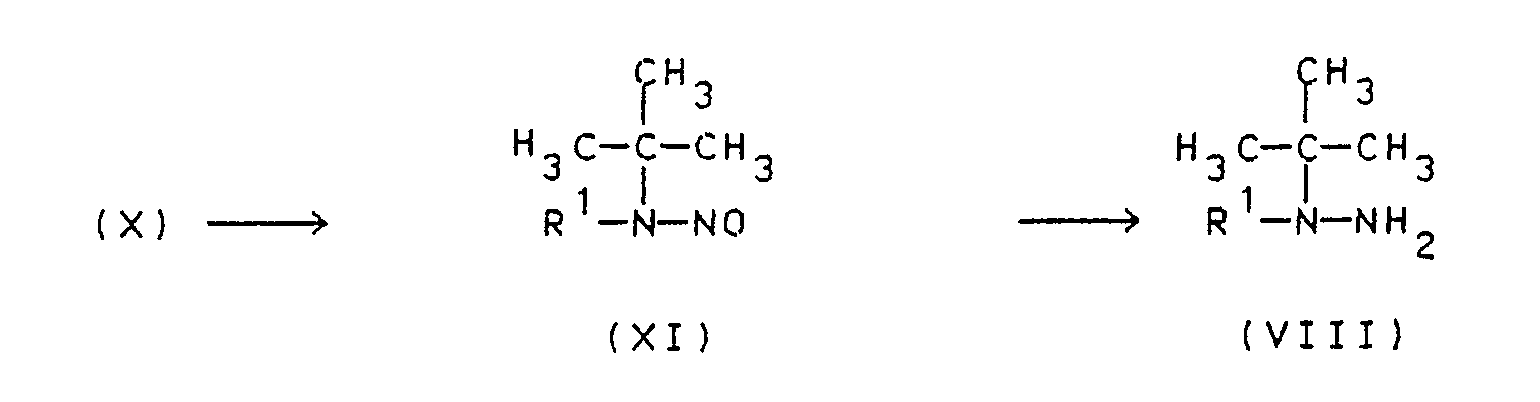

- Die Herstellung der Ausgangsverbindungen der Formeln IV und X ist bekannt oder kann nach an sich bekannten Verfahren durchgeführt werden.
- Die Verbindung der allgemeinen Formel I und III und ihre pharmakologisch annehmbaren Säureadditionssalze besitzen wertvolle pharmakologische Eigenschaften. Besonders ausgeprägt ist ihre Wirkung auf das Herz-Kreislauf-System. Verglichen mit bekannten, in 3-Stellung substituierten Sydnoniminverbindungen, z.B. solchen der EP-B-59356, sowie der im Handel befindlichen strukturähnlichen Verbindung Molsidomin, besitzen sie überraschenderweise eine wesentlich stärkere Wirkung und eine längere Wirkungsdauer. Sie senken beispielsweise den Blutdruck ebenso wie den Pulmonalarteriendruck und den linksventrikulären enddiastolischen Druck und tragen so zu einer Entlastung der Herztätigkeit im Sinne einer antianginösen Wirkung bei, ohne dabei eine reflektorische Tachykardie zu provozieren.
- Durch Hemmung der Thrombocytenaggregation können die Verbindungen außerdem antithrombotische Effekte zeigen.
- Die Verbindungen der Formel I und III und ihre pharmakologisch annehmbaren Säureadditionssalze können daher am Menschen als Heilmittel für sich allein, in Mischungen untereinander oder in Form von pharmazeutischen Zubereitungen verabreicht werden, die eine enterale oder parenterale Anwendung gestatten und die als aktiven Bestandteil eine pharmakologisch wirksame Dosis mindestens einer Verbindung der Formel I oder eines Säureadditionssalzes davon, neben üblichen pharmazeutisch einwandfreien Träger- und Zusatzstoffen enthalten.
- Die Heilmittel können oral, z.B. in Form von Pillen, Tabletten, Lacktabletten, Dragees, Hart- und Weichgelatinekapseln, Lösungen, Sirupen, Emulsionen oder Suspensionen oder Aerosolmischungen verabreicht werden. Die Verabreichung kann aber auch rektal, z.B. in Form von Suppositorien, oder parenteral, z.B. in Form von Injektionslösungen, oder perkutan, z.B. in Form von Salben oder Tinkturen, erfolgen.
- Zur Herstellung der pharmazeutischen Präparate können pharmazeutisch inerte anorganische oder organische Trägerstoffe verwendet werden. Für die Herstellung von Pillen, Tabletten, Dragees und Hartgelatinekapseln kann man z.B. Lactose, Maisstärke oder Derivate davon, Talk, Stearinsäure oder deren Salze etc. verwenden. Trägerstoffe für Weichgelatinekapseln und Suppositorien sind z.B. Fette, Wachse, halbfeste und flüssige Polyole, natürliche oder gehärtete Öle etc. Als Trägerstoffe für die Herstellung von Lösungen und Sirupen eignen sich z.B. Wasser, Saccharose, Invertzucker, Glukose, Polyole etc. Als Trägerstoffe für die Herstellung von Injektionslösungen eig nen sich z.B. Wasser, Alkohole, Glyzerin, Polyole oder pflanzliche Öle.
- Die pharmazeutischen Präparate können neben den Wirk- und Trägerstoffen noch Zusatzstoffe, wie z.B. Füllstoffe, Streck-, Spreng-, Binde-, Gleit-, Netz-, Stabilisierungs-, Emulgier-, Konservierungs-, Süß-, Färbe-, Geschmacks- oder Aromatisierungs-Mittel, Puffersubstanzen, ferner Lösungsmittel oder Lösungsvermittler oder Mittel zur Erzielung eines Depoteffekts, sowie Salze zur Veränderung des osmotischen Drucks, Überzugsmittel oder Antioxidantien enthalten. Sie können auch zwei oder mehrere Verbindungen der Formel I oder ihrer pharmakologisch annehmbaren Säureadditionssalze und noch andere therapeutisch wirksame Stoffe enthalten.
- Derartige andere therapeutisch wirksame Substanzen sind beispielsweise: β-Rezeptorenblocker, wie z.B. Propranolol, Pindolol, Metoprolol; Vasodilatatoren, wie z.B. Carbochromen; Beruhigungsmittel, wie z.B. Barbitursäurederivate, 1,4-Benzodiazepine und Meprobamat; Diuretica, wie z.B. Chlorothiazid; das Herz tonisierende Mittel, wie z.B. Digitalispräparate; blutdrucksenkende Mittel, wie z.B. Hydralazin, Dihydralazin, Prazosin, Clonidin, Rauwolfia-Alkaloide; Mittel, die den Fettsäurespiegel im Blut senken, wie z.B. Benzafibrat, Fenofibrat; Mittel für die Thromboseprophylaxe, wie z.B. Phenprocoumon.
- Die Verbindungen der Formel I, ihre pharmakologisch annehmbaren Säureadditionsssalze und pharmazeutische Präparate, welche die Verbindungen der Formel I oder ihre pharmakologisch annehmbaren Säureadditionssalze als Wirkstoffe enthalten, können am Menschen bei der Bekämpfung bzw. Vorbeugung von Erkrankungen des kardiovaskulären Systems verwendet werden, beispielsweise als antihyper tensive Heilmittel bei den verschiedenen Formen des Bluthochdrucks, bei der Bekämpfung bzw. Vorbeugung von Angina pectoris usw. Die Dosierung kann innerhalb weiter Grenzen variieren und ist in jedem einzelnen Fall den individuellen Gegebenheiten anzupassen. Im allgemeinen ist bei oraler Verabreichung pro menschlichem Individuum eine Tagesdosis von etwa 0,5 bis 100 mg, vorzugsweise 1 bis 20 mg, angemessen. Auch bei anderen Applikationsformen liegt die Tagesdosis, wegen der guten Resorption der Wirkstoffe, in ähnlichen Mengenbereichen, d.h. im allgemeinen ebenfalls bei 0,5 bis 100 mg/Mensch. Die Tagesdosis wird normalerweise in mehrere, z.B. 2 bis 4 Teilverabreichungen aufgeteilt.
- In den nachfolgenden Beispielen sind, sofern nichts anderes angegeben ist, Prozente in Gewichtsprozenten angegeben. Angegebene Verhältnisse zwischen Komponenten von Lösungs- oder Fließmitteln sind Volumenverhältnisse. Die Angabe "Zers." bedeutet "Zersetzung".
- 10 g 3-(tert.-Butyl-(2-hydroxyethyl)-amino)-sydnonimin-hydrochlorid werden in 100 ml 10%iger ethanolischer Salzsäure 14 Tage bei Raumtemperatur (20oC) aufbewahrt. Die Mischung wird 3 h im Eisbad gerührt und der Niederschlag abgesaugt und aus Ethanol umkristallisiert.
Ausbeute: 5,0 g Fp.: 145oC (Zers.) - Das als Ausgangsprodukt benötigte 3-(tert.-Butyl-(2-hydroxyethyl)-amino)-sydnonimin-hydrochlorid wird wie folgt hergestellt:
- 23,4 g 2-tert.-Butylamino-ethanol werden in 60 ml Wasser gelöst und mit 19,7 g konz. Salzsäure versetzt. Die Lösung von 20,7 g Natriumnitrit in 30 ml Wasser wird bei 30-40oC zugetropft. Nach beendeter Zugabe wird die Mischung 1 Stunde auf 70oC erwärmt und dann im Eisbad gerührt. Das Produkt wird abgesaugt bzw. im Falle der öligen Derivate der nachfolgenden Beispiele mit Diethylether ausgeschüttelt und die Ether-Phase getrocknet und eingeengt.
Ausbeute: 23,9 g Fp. 65-68oC - Die Mischung von 23 g N-Nitroso-tert.-butyl-(2-hydroxyethyl)-amin und 200 ml wasserfreies Tetrahydrofuran wird portionsweise bei 60oC mit insgesamt 12,2 g Lithiumalanat versetzt. Nach beendeter Zugabe wird noch 1 Stunde auf 60oC erwärmt, im Eisbad abgekühlt und das überschüssige Lithiumalanat durch vorsichtiges Zutropfen von Methanol und dann Wasser hydrolysiert. Die Feststoffe werden durch Absaugen entfernt, das Filtrat eingeengt. Es bleibt ein farbloses Öl (14 g) zurück, das ohne weitere Reinigung weiterverwendet wird.
- Das in der Stufe c erhaltene Öl (14 g) wird in 50 ml Wasser und 8,1 g konz. Salzsäure gelöst und auf -5oC abgekühlt. Dann wird die Lösung von 6,6 g Kaliumcyanid in 20 ml Wasser zugetropft. Nach Zugabe von 15 ml Ethanol wird eine 39%ige Formalinlösung (8,2 g) zugetropft und der pH-Wert der Mischung auf 7 eingestellt. Es wird 2 Stunden bei Raumtemperatur gerührt, mit konz. Salzsäure auf pH = 1,5 gestellt und unter Eiskühlung die Lösung von 5,6 g Natriumnitrit in 25 ml Wasser zugetropft. Es wird über Nacht bei Raumtemperatur nachgerührt und dann mit Diethylether extrahiert, getrocknet und eingeengt. Das zurückbleibende Öl wird in 50 ml konz. methanolische Salzsäure gelöst und mit 50 ml Essigsäureethylester verdünnt. Der ausgefallene Niederschlag wird abgesaugt und verworfen. Das Filtrat wird nach 2 Stunden eingeengt und der Rückstand mit Essigsäureethylester verrührt und der Feststoff abgesaugt und aus Ethanol/Diethylether (1:2) umkristallisiert.
Ausbeute: 5,9 g Fp = 161-163oC (Zers.) - Die Lösung von 26,55 g N-tert.-Butyl-N-ethyl-hydrazin-hydrochlorid und von 9,38 g Natriumcyanid in 100 ml Wasser wird bei 0 bis 5oC mit 14,5 g 39%igem Formalin versetzt. Diese Mischung wird 16 h bei Raumtemperatur gerührt, wobei der pH-Wert auf 7 bis 7,5 eingestellt wird. Durch Zugabe von konzentrierter Salzsäure wird dann auf pH 1,0 gestellt, die Mischung im Eisbad abgekühlt und eine Lösung von 9,5 g Natriumnitrit in 20 ml Wasser zugetropft. Die entstandene Nitrosoverbindung wird mit Ether extrahiert, getrocknet und eingeengt. Das verbleibende Öl wird mit 10 ml Isopropanol vermischt und mit in Essigester gelöstem Chlorwasserstoff versetzt und einen Tag lang bei Raumtemperatur gehalten. Die Bildung des Niederschlags wird durch Abkühlung auf 0oC verstärkt und der Niederschlag abgesaugt und aus Isopropanol umkristallisiert.
Ausbeute: 4,4 g Fp.: 177oC (Zers.) - Die auf 0oC abgekühlte Lösung von 7,9 g 3-Ethylamino-sydnonimin-hydrochlorid in 30 ml Wasser wird mit 7,5 g Natriumbicarbonat und anschließend mit einer Lösung von 5,8 g Chlorameisensäureethylester in 30 ml Methylenchlorid versetzt und 15 h bei Raumtemperatur gerührt. Die Methylenchloridphase wird abgetrennt, getrocknet und eingeengt. Das verbleibende Öl wird säulenchromatographisch (Kieselgel; CH₂Cl₂:MeOH=98:2) gereinigt und durch Verrühren mit Diisopropylether zur Kristallisation gebracht.
Ausbeute: 4,6 g Fp.: 131oC (Zers.) - Die Mischung bestehend aus 13,2 ml 10N Salzsäure, 50 ml Wasser, 18,8 g tert.-Butyl-cyclohexyl-amin und 17,9 g Natriummitrit wird 3 h auf 90oC erwärmt. Beim Abkühlen fällt ein Feststoff aus, der abgesaugt wird.
Ausbeute: 16,3 g Fp.: 87oC - Die Mischung aus 50 ml Tetrahydrofuran, 100 ml Dibutylether, 0,38 g Lithiumalanat und 1,8 g Nitroso-tert.-butyl-cyclohexyl-amin wird 2 h unter Stickstoff zum Sieden erhitzt. Dann werden 14,5 g Nitrosoverbindung auf einmal und insgesamt 3,8 g Lithiumalanat in 3 Portionen innerhalb von 5 Stunden zugefügt und das Gemisch währenddessen auf 90oC erwärmt. Nach Beendigung der Umsetzung wird das restliche Lithiumalanat durch vorsichtiges Zutropfen von Wasser unter Kühlung vernichtet, der sich bildende Feststoff abgesaugt und das Filtrat mit 2 Portionen 1N Salzsäure (je 100 ml) ausgeschüttelt. Die wäßrige Phase, die das Hydrazinhydrochlorid enthält, wird mit Ether ausgeschüttelt und für die nächste Stufe ohne weitere Reinigung eingesetzt.
- Die unter b erhaltene Lösung des Hydrazinhydrochlorids wird im Eisbad gerührt und mit 4 g Natriumcyanid versetzt. Die Mischung wird neutral gestellt, und 7,7 g einer 39%igen Formalinlösung werden zugetropft. Durch Zugabe von Sodalösung wird das pH auf einen Wert von 7 eingestellt, 2 Stunden bei Raumtemperatur gerührt und das Produkt mit diethylether extrahiert. Nach dem Trocknen und Einengen verbleibt ein gelbes Öl, das ohne weitere Reinigung für die nächste Stufe eingesetzt wird.
Ausbeute: 12,2 g - Das unter c erhaltene Öl wird in 100 ml Wasser gelöst und mit 6 ml 10N HCl versetzt. Dann wird die Lösung von 6,9 g Natriumnitrit in 20 ml Wasser zugetropft und eine Stunde bei Raumtemperatur nachgerührt. Die Nitrosozwischenstufe wird mit Essigester (50 ml) ausgeschüttelt, die Essigesterphase getrocknet und mit überschüssiger etherischer Salzsäure bei 0-5oC behandelt. Das sich abscheidende Öl wird säulenchromatographisch (Kieselgel, MeOH:CH₂Cl₂=1:9) gereinigt. Nach dem Einengen der entsprechenden Fraktionen im Rotationsverdampfer wird der Rückstand mit Diethylether verrührt und der Feststoff abgesaugt.
Ausbeute: 6,7 g Fp.: 158oC (Zers.) - Die Lösung von 4 g 3-(tert.-Butyl-N-cyclohexyl-amino)-sydnonimin-hydrochlorid in 30 ml konz. ethanolischer Salzsäure wird einen Tag bei Raumtemperatur stehen gelassen und dann im Rotationsverdampfer eingeengt. Der Rückstand wird säulenchromatografisch (Kieselgel, CH₂Cl₂: MeOH=9:1) gereinigt und der nach dem Einengen der entsprechenden Fraktionen erhaltene Rückstand mit Essigsäureisopropylester verrührt und abgesaugt.
Ausbeute: 2,5 g Fp.: 90oC (Zers.) - Zur Lösung von 38,8 g N-Nitroso-tert.-butyl-(2-hydroxycyclohexyl)-amin (durch Erhitzen von 1.2-Epoxy-cyclohexan mit tert.-Butylamin auf 150oC im Autoklaven und anschließendes Nitrosieren mit Natriumnitrit/HCl gewonnen) werden unter Stickstoffatmosphäre 10 g Lithiumalanat in Portionen von 1 g innerhalb von 2 Tagen zugegeben, wobei die Mischung auf 50oC erwärmt wird. Das restliche Lithiumalanat wird durch Abkühlen der Mischung und vorsichtiges Zutropfen von 50 ml Methanol und anschließend 75 ml Wasser vernichtet. Die Mischung wird dann filtriert und das Filtrat eingeengt. Der Rückstand wird in 100 ml Methylenchlorid aufgenommen, das sich abscheidende Wasser abgetrennt und die organische Phase getrocknet und erneut eingeengt. Das so erhältliche Öl wird in 20 ml Ethanol und 150 ml tert.-Butylmethylether gelöst und das Hydrazinhydrochlorid durch Zugabe von etherischer HCl gefällt.
Ausbeute: 28,5 g Fp.: 145oC (Zers.) - Die Mischung aus 13,35 g N-tert.-Butyl-N-(2-hydroxycylohexyl)-hydrazin-hydrochlorid, 3,1 g Natriumcyanid und 50 ml Wasser wird im Eisbad gerührt und tropfenweise mit einer 39%igen Formalinlösung (5,7 g) versetzt. Der pH-Wert der Mischung wird auf 7 bis 7,5 eingestellt und 3 Stunden bei Raumtemperatur gerührt. Dann wird mit konz. Salzsäure auf pH=1 gestellt und die Lösung von 6 g Natriumnitrit in 25 ml Wasser zugetropft. Nach einer Stunde wird die Nitrosoverbindung mit Diethylether extrahiert, die etherische Phase getrocknet und mit etherischer HCl versetzt. Nach 2 Tagen wird der Niederschlag abgesaugt und aus Isopropanol/Essigester umkristallisiert.
Ausbeute: 4,5 g Fp.: 174-5oC (Zers.) - Die auf 5oC abgekühlte Lösung von 1,9 g 3-(2-Hydroxycylohexyl-amino)-sydnonimin-hydrochlorid und 1,7 g Natriumbicarbonat in 20 ml Wasser wird mit der Lösung von 1,45 g Benzoylchlorid in 20 ml Methylenchlorid versetzt und 4 Stunden im Eisbad gerührt. Der Niederschlag wird abgesaugt und aus Isopropanol umkristallisiert.
Ausbeute: 1,6 g Fp.: 174oC (Zers.) - Die auf 5oC abgekühlte Lösung von 3,5 g 3-(2-Hydroxycyclohexyl-amino)-sydnonimin-hydrochlorid und 2,6 g Natriumbicarbonat in 30 ml Wasser wird mit der Lösung von 3,3 g Cyclohexancarbonsäurechlorid in 30 ml Methylen chlorid versetzt und 20 Stunden bei Raumtemperatur gerührt. Die Methylenchloridphase wird abgetrennt, getrocknet und eingeengt. Der Rückstand wird aus Essigsäureisopropylester umkristallisiert.
Ausbeute: 2,6 g Fp.: 155oC (Zers.) - Die Lösung von 3,5 g 3-(2-Hydroxycylohexyl-amino)-sydnonim-hydrochlorid in 30 ml Wasser wird auf 5oC abgekühlt und nacheinandermit 2,6 g Natriumcarbonat und der Lösung von 3,9 g 4-Chlorbenzoylchlorid in 30 ml Methylenchlorid versetzt und 20 Stunden bei Raumtemperatur gerührt. Die organische Phase wird abgetrennt, getrocknet und eingeengt. Der ölige Rückstand wird aus Di-n-propylether kristallisiert.
Ausbeute: 3,3 g Fp.: 169oC (Zers.) - Diese Verbindung wird analog Beispiel 8 aus 7,6 g 3-(2-Hydroxycylohexyl-amino)-sydnonim-hydrochlorid, 3,4 g Chlorameisensäureethylester und 5,5 g Natriumbicarbonat hergestellt und aus Essigsäureisopropylester umkristallisiert.
Ausbeute: 5,8 g Fp.: 147oC - Die nachfolgenden Beispiele A bis F betreffen pharmazeutische Präparate.
- Gelatineweichkapseln, enthaltend 5 mg Wirkstoff pro Kapsel:
pro Kapsel Wirkstoff 5 mg Aus Kokosfett fraktioniertes Triglycerid-Gemisch 150 mg Kapselinhalt 155 mg - Injektionslösung, enthaltend 1 mg Wirkstoff pro ml:
pro ml Wirkstoff 1,0 mg Polyethylenglycol 400 0,3 ml Natriumchlorid 2,7 mg Wasser zu Injektionszwecken ad 1 ml - Emulsion, enthaltend 3 mg Wirkstoff pro 5 ml
pro 100 ml Emulsion Wirkstoff 0,06 g Neutralöl q.s. Natriumcarboxymethylcellulose 0,6 g Polyoxyethylen-stearat q.s. Glycerin rein 0,2 bis 2,0 g Geschmacksstoff q.s. Wasser (entsalzt oder destilliert) ad 100 ml - Rektale Arzneiform, enthaltend 4 mg Wirkstoff pro Suppositorium
pro Suppositorium Wirkstoff 4 mg Suppositoriengrundmasse ad 2 g - Tabletten, enthaltend 2 mg Wirkstoff pro Tablette
pro Tabelette Wirkstoff 2 mg Lactose 60 mg Maisstärke 30 mg lösliche Stärke 4 mg Magnesiumstearat 4 mg 100 mg - Dragees, enthaltend 1 mg Wirkstoff pro Dragee
pro Dragee Wirkstoff 1 mg Maisstärke 100 mg Lactose 60 mg sec Calciumphosphat 30 mg lösliche Stärke 3 mg Magnesiumstearat 2 mg kolloidale Kieselsäure 4 mg 200 mg - Die pharmakologische Wirkung der Verbindung der Formel I wurde nach einer modifizierten Methode von Godfraind and Kaba (Arch. Int. Pharmacodyn. Ther. 196, (Suppl) 35 bis 49, 1972) und von Schümann et al (Naunyn-Schmiedeberg's Arch. Pharmacol. 289, 409 bis 418, 1975) ermittelt. Dabei werden Spiralstreifen der Arteria pulmonalis des Meerschweinchens nach Äquilibrierung in calciumfreier Tyrodelösung mit 40 mmol/l Kalium depolarisiert. Ein Zusatz von 0,5 mmol/l CaCl₂ löst dann eine Kontraktion aus. Die relaxierende Wirkung der Prüfsubstanz wird durch kumulative Zugabe von in 1/2 log 10 ab gestuften Konzentrationen ermittelt. Aus der Konzentrationswirkungskurve (Abszisse: -log mol/l Prüfsubstanz, Ordinate: % Hemmung der maximalen Kontraktion, Mittelwert von 4 bis 6 Gefäß streifen) wird die Konzentration der Prüfsubstanz ermittelt, welche die Kontraktion um 50% hemmt (= IC₅₀, mol/l). In der folgenden Tabelle sind die so erhaltenen IC₅₀-Werte angegeben. Wie der Vergleich mit dem IC₅₀-Wert:> 1·10⁻⁴ für die bekannte Verbindung Molsidomin (N-Ethoxycarbonyl-3-morpholino-sydnonimin), vgl. DE-B-16 95 897, ergibt, liegen die Werte für die Verbindungen der Formel I erheblich günstiger.
Tabelle Verbindung der Formel I gemäß Beispiel IC₅₀ (mol/l) 1a 2·10⁻⁶ 2 2·10⁻⁶ 4e 2·10⁻⁶ 5b 1·10⁻⁶ Molsidomin (Vergleichssubstanz) > 1·10⁻⁴
Claims (11)

R¹ Alkyl mit 1 bis 8 C-Atomen, Cycloalkyl mit 5 bis 8 C-Atomen, wobei der Alkyl- oder Cycloalkylrest auch mit -OR⁴ oder -N(R⁵, R⁶) substituiert sein kann, oder Adamantyl,
R² Wasserstoff, -NO oder den Rest -COR³,
R³ einen aliphatischen Rest mit 1 bis 6 C-Atomen, der auch durch Alkoxy mit 1 bis 6 C-Atomen oder durch einen aliphatischen Thiorest mit bis zu 4 C-Atomen substituiert sein kann; einen cycloaliphatischen Rest mit 5 bis 7 C-Atomen; einen bicycloaliphatischen Rest mit 7 bis 14 C-Atomen; einen tricycloaliphatischen Rest mit 7 bis 16 C-Atomen; einen Alkoxyrest mit 1 bis 6 C-Atomen, der auch durch Alkoxy mit 1 bis 6 C-Atomen substituiert sein kann; einen Aryloxyrest mit 6 bis 10 C-Atomen; einen Alkoxycarbonylrest mit insgesamt 2 bis 7 C-Atomen; einen Arylrest mit 6 bis 10 C-Atomen; einen durch 1 bis 3 Halogenatome und/oder 1 bis 3 Alkylreste mit 1 bis 3 C-Atomen und/oder 1 bis 3 Alkoxyreste mit 1 bis 3 C-Atomen und/oder 1 oder 2 Nitrogruppen und/oder 1 oder 2 Hydroxygruppen und/oder 1 oder 2 Alkylcarbonyloxyreste mit 1 bis 4 C-Atomen mono-, di- oder trisubstituierten Arylrest mit 6 bis 10 C-Atomen; Imidazolyl,
R⁴, R⁵, R⁶ Wasserstoff oder Alkyl mit 1 bis 6 C-Atomen bedeuten, dadurch gekennzeichnet, daß
R¹-NH-

worin R¹ die bereits genannte Bedeutung besitzt, zu einer Verbindung der allgemeinen Formel Ia
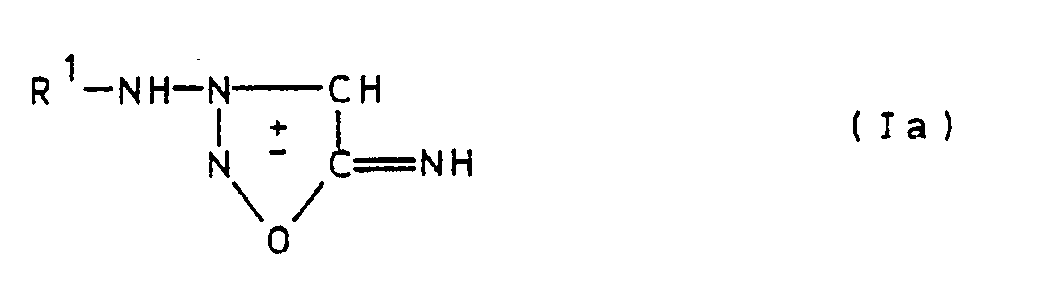


R¹ Alkyl mit 1 bis 8 C-Atomen, Cycloalkyl mit 5 bis 8 C-Atomen, wobei der Alkyl- oder Cycloalkylrest auch mit -OR⁴ oder -N(R⁵, R⁶) substituiert sein kann, oder Adamantyl,
R² Wasserstoff, -NO oder den Rest -COR³,
R³ einen aliphatischen Rest mit 1 bis 6 C-Atomen, der auch durch Alkoxy mit 1 bis 6 C-Atomen oder durch einen aliphatischen Thiorest mit bis zu 4 C-Atomen substituiert sein kann; einen cycloaliphatischen Rest mit 5 bis 7 C-Atomen; einen bicycloaliphatischen Rest mit 7 bis 14 C-Atomen; einen tricycloaliphatischen Rest mit 7 bis 16 C-Atomen; einen Alkoxyrest mit 1 bis 6 C-Atomen, der auch durch Alkoxy mit 1 bis 6 C-Atomen substituiert sein kann; einen Aryloxyrest mit 6 bis 10 C-Atomen; einen Alkoxycarbonylrest mit insgesamt 2 bis 7 C-Atomen; einen Arylrest mit 6 bis 10 C-Atomen; einen durch 1 bis 3 Halogenatome und/oder 1 bis 3 Alkylreste mit 1 bis 3 C-Atomen und/oder 1 bis 3 Alkoxyreste mit 1 bis 3 C-Atomen und/ oder 1 oder 2 Nitrogruppen und/oder 1 oder 2 Hydroxygruppen und/oder 1 oder 2 Alkylcarbonyloxyreste mit 1 bis 4 C-Atomen mono-, di- oder trisubstituierten Arylrest mit 6 bis 10 C-Atomen; Imidazolyl, R⁴, R⁵, R⁶ Wasserstoff oder Alkyl mit 1 bis 6 C-Atomen bedeuten, dadurch gekennzeichnet, daß eine Verbindung der allgemeinen Formel VII

Priority Applications (1)
| Application Number | Priority Date | Filing Date | Title |
|---|---|---|---|
| AT89119456T ATE75468T1 (de) | 1988-11-03 | 1989-10-20 | Substituierte 3-aminosydnonimine, verfahren zu ihrer herstellung und ihre verwendung. |
Applications Claiming Priority (2)
| Application Number | Priority Date | Filing Date | Title |
|---|---|---|---|
| DE3837327 | 1988-11-03 | ||
| DE3837327A DE3837327A1 (de) | 1988-11-03 | 1988-11-03 | Substituierte 3-aminosydnonimine, verfahren zu ihrer herstellung und ihre verwendung |
Publications (3)
| Publication Number | Publication Date |
|---|---|
| EP0367036A2 true EP0367036A2 (de) | 1990-05-09 |
| EP0367036A3 EP0367036A3 (en) | 1990-10-24 |
| EP0367036B1 EP0367036B1 (de) | 1992-04-29 |
Family
ID=6366408
Family Applications (1)
| Application Number | Title | Priority Date | Filing Date |
|---|---|---|---|
| EP89119456A Expired - Lifetime EP0367036B1 (de) | 1988-11-03 | 1989-10-20 | Substituierte 3-Aminosydnonimine, Verfahren zu ihrer Herstellung und ihre Verwendung |
Country Status (13)
| Country | Link |
|---|---|
| US (1) | US5006540A (de) |
| EP (1) | EP0367036B1 (de) |
| JP (1) | JPH02178275A (de) |
| KR (1) | KR900007817A (de) |
| AT (1) | ATE75468T1 (de) |
| DE (2) | DE3837327A1 (de) |
| DK (1) | DK522889A (de) |
| ES (1) | ES2038389T3 (de) |
| GR (1) | GR3004473T3 (de) |
| HU (1) | HU203086B (de) |
| IE (1) | IE893533L (de) |
| PT (1) | PT92175B (de) |
| ZA (1) | ZA898342B (de) |
Cited By (1)
| Publication number | Priority date | Publication date | Assignee | Title |
|---|---|---|---|---|
| EP0497122A1 (de) * | 1991-01-26 | 1992-08-05 | CASSELLA Aktiengesellschaft | Substituierte 3-Aminosydnonimine, Verfahren zu ihrer Herstellung und ihre Verwendung |
Families Citing this family (2)
| Publication number | Priority date | Publication date | Assignee | Title |
|---|---|---|---|---|
| DE4025604A1 (de) * | 1990-08-13 | 1992-02-20 | Cassella Ag | 3-dicyclohexylamino-sydnonimine, verfahren zu ihrer herstellung und ihre verwendung |
| AU7339996A (en) * | 1995-11-06 | 1997-05-29 | Chugai Seiyaku Kabushiki Kaisha | Sydnone imine derivatives |
Family Cites Families (4)
| Publication number | Priority date | Publication date | Assignee | Title |
|---|---|---|---|---|
| FR1496056A (fr) * | 1964-06-08 | 1967-09-29 | Takeda Chemical Industries Ltd | Nouveaux composés chimiques du type sydnonimine |
| DE1695897C3 (de) * | 1966-07-04 | 1979-02-15 | Takeda Chemical Industries Ltd | N-Acyl-sydnonimine, deren Salze, Verfahren zu ihrer Herstellung und diese Verbindungen enthaltende Arzneimittel |
| DE1670127A1 (de) * | 1966-08-09 | 1970-12-03 | Boehringer Sohn Ingelheim | Verfahren zur Herstellung neuer substituierter 3-Amino-sydnonimine |
| DE3819914A1 (de) * | 1988-06-11 | 1989-12-21 | Cassella Ag | Substituierte 3-aminosydnonimine, verfahren zu ihrer herstellung und ihre verwendung |
-
1988
- 1988-11-03 DE DE3837327A patent/DE3837327A1/de not_active Withdrawn
-
1989
- 1989-10-17 US US07/422,502 patent/US5006540A/en not_active Expired - Fee Related
- 1989-10-20 AT AT89119456T patent/ATE75468T1/de not_active IP Right Cessation
- 1989-10-20 DE DE8989119456T patent/DE58901277D1/de not_active Expired - Fee Related
- 1989-10-20 ES ES198989119456T patent/ES2038389T3/es not_active Expired - Lifetime
- 1989-10-20 DK DK522889A patent/DK522889A/da not_active Application Discontinuation
- 1989-10-20 EP EP89119456A patent/EP0367036B1/de not_active Expired - Lifetime
- 1989-11-01 KR KR1019890015785A patent/KR900007817A/ko not_active Withdrawn
- 1989-11-02 ZA ZA898342A patent/ZA898342B/xx unknown
- 1989-11-02 HU HU895651A patent/HU203086B/hu not_active IP Right Cessation
- 1989-11-02 PT PT92175A patent/PT92175B/pt not_active IP Right Cessation
- 1989-11-02 IE IE893533A patent/IE893533L/xx unknown
- 1989-11-02 JP JP1285048A patent/JPH02178275A/ja active Pending
-
1992
- 1992-04-30 GR GR920400769T patent/GR3004473T3/el unknown
Cited By (1)
| Publication number | Priority date | Publication date | Assignee | Title |
|---|---|---|---|---|
| EP0497122A1 (de) * | 1991-01-26 | 1992-08-05 | CASSELLA Aktiengesellschaft | Substituierte 3-Aminosydnonimine, Verfahren zu ihrer Herstellung und ihre Verwendung |
Also Published As
| Publication number | Publication date |
|---|---|
| IE893533L (en) | 1990-05-03 |
| HUT53093A (en) | 1990-09-28 |
| US5006540A (en) | 1991-04-09 |
| GR3004473T3 (de) | 1993-03-31 |
| ATE75468T1 (de) | 1992-05-15 |
| PT92175A (pt) | 1990-05-31 |
| PT92175B (pt) | 1995-07-03 |
| KR900007817A (ko) | 1990-06-02 |
| HU895651D0 (en) | 1990-01-28 |
| DK522889A (da) | 1990-05-04 |
| DE58901277D1 (de) | 1992-06-04 |
| ZA898342B (en) | 1990-07-25 |
| DK522889D0 (da) | 1989-10-20 |
| JPH02178275A (ja) | 1990-07-11 |
| EP0367036A3 (en) | 1990-10-24 |
| HU203086B (en) | 1991-05-28 |
| DE3837327A1 (de) | 1990-05-10 |
| ES2038389T3 (es) | 1993-07-16 |
| EP0367036B1 (de) | 1992-04-29 |
Similar Documents
| Publication | Publication Date | Title |
|---|---|---|
| EP0059356B1 (de) | Substituierte 3-Amino-sydnonimine, Verfahren zu ihrer Herstellung und ihre Verwendung | |
| EP0210474B1 (de) | Substituierte 3-Amino-sydnonimine, Verfahren zu ihrer Herstellung, ihre Verwendung und sie enthaltende pharmazeutische Präparate | |
| EP0327808B1 (de) | Substituierte 3-Aminosydnonimine, Verfahren zu ihrer Herstellung und ihre Verwendung | |
| EP0276710B1 (de) | Allylmercaptoacetyl-sydnonimine, Verfahren zu ihrer Herstellung und ihre Verwendung | |
| EP0054872B1 (de) | 3,4-Bis-substituierte 1,2,5-Oxadiazol-2-oxide, Verfahren zu ihrer Herstellung, und sie enthaltende pharmazeutische Zubereitungen | |
| EP0346694B1 (de) | Substituierte 3-Aminosydnonimine, Verfahren zu ihrer Herstellung und ihre Verwendung | |
| EP0312773B1 (de) | Substituierte 3-Aminosydnonimine, Verfahren zu ihrer Herstellung und ihre Verwendung | |
| EP0367036B1 (de) | Substituierte 3-Aminosydnonimine, Verfahren zu ihrer Herstellung und ihre Verwendung | |
| EP0406659A1 (de) | Substituierte 3-Aminosydnonimine, Verfahren zu ihrer Herstellung und ihre Verwendung | |
| EP0346684A1 (de) | Substituierte 3-Aminosydnonimine, Verfahren zu ihrer Herstellung und ihre Verwendung | |
| EP0497122A1 (de) | Substituierte 3-Aminosydnonimine, Verfahren zu ihrer Herstellung und ihre Verwendung | |
| EP0406661A1 (de) | Substituierte 3-Aminosydnonimine, Verfahren zu ihrer Herstellung und ihre Verwendung | |
| EP0429751B1 (de) | Substituierte 3-Aminosydnonimine, Verfahren zu ihrer Herstellung und ihre Verwendung | |
| EP0471232A1 (de) | 3-Dicyclohexylamino-sydnonimine, Verfahren zu ihrer Herstellung und ihre Verwendung | |
| EP0480241A1 (de) | 3-Piperazino-sydnonimine, Verfahren zu ihrer Herstellung und ihre Verwendung | |
| DD209195A5 (de) | Verfahren zur herstellung von 1,2,5-oxadiazol-3,4-dicarbonsaeurederivaten | |
| EP0392233B1 (de) | Substituierte 1.2.3.4-Oxatriazolium-5-olate, Verfahren zu ihrer Herstellung und ihre Verwendung | |
| EP0570724B1 (de) | Salze von 3-(cis-2,6-Dimethylpiperidino)-sydnonimin | |
| DE3939550A1 (de) | Substituierte 3-aminosydnonimine, verfahren zu ihrer herstellung und ihre verwendung | |
| EP0457199A1 (de) | Substituierte 3-Aminosydnonimine, Verfahren zu ihrer Herstellung und ihre Verwendung | |
| DE3939515A1 (de) | Substituierte 3-aminosydnonimine, verfahren zu ihrer herstellung und ihre verwendung | |
| EP0475156A1 (de) | Substituierte 3-Aminosydnonimine, Verfahren zu ihrer Herstellung und ihre Verwendung |
Legal Events
| Date | Code | Title | Description |
|---|---|---|---|
| PUAI | Public reference made under article 153(3) epc to a published international application that has entered the european phase |
Free format text: ORIGINAL CODE: 0009012 |
|
| AK | Designated contracting states |
Kind code of ref document: A2 Designated state(s): AT BE CH DE ES FR GB GR IT LI NL SE |
|
| PUAL | Search report despatched |
Free format text: ORIGINAL CODE: 0009013 |
|
| AK | Designated contracting states |
Kind code of ref document: A3 Designated state(s): AT BE CH DE ES FR GB GR IT LI NL SE |
|
| 17P | Request for examination filed |
Effective date: 19901117 |
|
| 17Q | First examination report despatched |
Effective date: 19910308 |
|
| RIN1 | Information on inventor provided before grant (corrected) |
Inventor name: OSTROWSKI, JOERG, DR. Inventor name: BOHN, HELMUT, DR. Inventor name: JUST, MELITTA, DR. Inventor name: BEYERLE, RUDI, DR. Inventor name: SCHOENAFINGER, KARL, DR. |
|
| GRAA | (expected) grant |
Free format text: ORIGINAL CODE: 0009210 |
|
| AK | Designated contracting states |
Kind code of ref document: B1 Designated state(s): AT BE CH DE ES FR GB GR IT LI NL SE |
|
| REF | Corresponds to: |
Ref document number: 75468 Country of ref document: AT Date of ref document: 19920515 Kind code of ref document: T |
|
| REF | Corresponds to: |
Ref document number: 58901277 Country of ref document: DE Date of ref document: 19920604 |
|
| ITF | It: translation for a ep patent filed | ||
| GBT | Gb: translation of ep patent filed (gb section 77(6)(a)/1977) | ||
| ET | Fr: translation filed | ||
| PGFP | Annual fee paid to national office [announced via postgrant information from national office to epo] |
Ref country code: SE Payment date: 19920911 Year of fee payment: 4 |
|
| PGFP | Annual fee paid to national office [announced via postgrant information from national office to epo] |
Ref country code: AT Payment date: 19920915 Year of fee payment: 4 |
|
| PGFP | Annual fee paid to national office [announced via postgrant information from national office to epo] |
Ref country code: FR Payment date: 19921006 Year of fee payment: 4 |
|
| PGFP | Annual fee paid to national office [announced via postgrant information from national office to epo] |
Ref country code: ES Payment date: 19921015 Year of fee payment: 4 |
|
| PGFP | Annual fee paid to national office [announced via postgrant information from national office to epo] |
Ref country code: GR Payment date: 19921023 Year of fee payment: 4 |
|
| PGFP | Annual fee paid to national office [announced via postgrant information from national office to epo] |
Ref country code: NL Payment date: 19921031 Year of fee payment: 4 |
|
| PGFP | Annual fee paid to national office [announced via postgrant information from national office to epo] |
Ref country code: DE Payment date: 19921120 Year of fee payment: 4 |
|
| PGFP | Annual fee paid to national office [announced via postgrant information from national office to epo] |
Ref country code: BE Payment date: 19921130 Year of fee payment: 4 |
|
| REG | Reference to a national code |
Ref country code: GR Ref legal event code: FG4A Free format text: 3004473 |
|
| PGFP | Annual fee paid to national office [announced via postgrant information from national office to epo] |
Ref country code: CH Payment date: 19930118 Year of fee payment: 4 |
|
| PLBE | No opposition filed within time limit |
Free format text: ORIGINAL CODE: 0009261 |
|
| STAA | Information on the status of an ep patent application or granted ep patent |
Free format text: STATUS: NO OPPOSITION FILED WITHIN TIME LIMIT |
|
| 26N | No opposition filed | ||
| REG | Reference to a national code |
Ref country code: ES Ref legal event code: FG2A Ref document number: 2038389 Country of ref document: ES Kind code of ref document: T3 |
|
| PG25 | Lapsed in a contracting state [announced via postgrant information from national office to epo] |
Ref country code: GB Effective date: 19931020 Ref country code: AT Effective date: 19931020 |
|
| PG25 | Lapsed in a contracting state [announced via postgrant information from national office to epo] |
Ref country code: SE Effective date: 19931021 Ref country code: ES Free format text: LAPSE BECAUSE OF THE APPLICANT RENOUNCES Effective date: 19931021 |
|
| PG25 | Lapsed in a contracting state [announced via postgrant information from national office to epo] |
Ref country code: LI Effective date: 19931031 Ref country code: CH Effective date: 19931031 Ref country code: BE Effective date: 19931031 |
|
| BERE | Be: lapsed |
Owner name: CASSELLA A.G. Effective date: 19931031 |
|
| PG25 | Lapsed in a contracting state [announced via postgrant information from national office to epo] |
Ref country code: GR Free format text: THE PATENT HAS BEEN ANNULLED BY A DECISION OF A NATIONAL AUTHORITY Effective date: 19940430 |
|
| PG25 | Lapsed in a contracting state [announced via postgrant information from national office to epo] |
Ref country code: NL Effective date: 19940501 |
|
| GBPC | Gb: european patent ceased through non-payment of renewal fee |
Effective date: 19931020 |
|
| NLV4 | Nl: lapsed or anulled due to non-payment of the annual fee | ||
| PG25 | Lapsed in a contracting state [announced via postgrant information from national office to epo] |
Ref country code: FR Effective date: 19940630 |
|
| REG | Reference to a national code |
Ref country code: CH Ref legal event code: PL |
|
| PG25 | Lapsed in a contracting state [announced via postgrant information from national office to epo] |
Ref country code: DE Effective date: 19940701 |
|
| REG | Reference to a national code |
Ref country code: FR Ref legal event code: ST |
|
| REG | Reference to a national code |
Ref country code: GR Ref legal event code: MM2A Free format text: 3004473 |
|
| EUG | Se: european patent has lapsed |
Ref document number: 89119456.5 Effective date: 19940510 |
|
| REG | Reference to a national code |
Ref country code: ES Ref legal event code: FD2A Effective date: 19991007 |
|
| PG25 | Lapsed in a contracting state [announced via postgrant information from national office to epo] |
Ref country code: IT Free format text: LAPSE BECAUSE OF NON-PAYMENT OF DUE FEES;WARNING: LAPSES OF ITALIAN PATENTS WITH EFFECTIVE DATE BEFORE 2007 MAY HAVE OCCURRED AT ANY TIME BEFORE 2007. THE CORRECT EFFECTIVE DATE MAY BE DIFFERENT FROM THE ONE RECORDED. Effective date: 20051020 |