EP0367337B1 - Membranbehälter mit verschlossenen Poren - Google Patents
Membranbehälter mit verschlossenen Poren Download PDFInfo
- Publication number
- EP0367337B1 EP0367337B1 EP89202702A EP89202702A EP0367337B1 EP 0367337 B1 EP0367337 B1 EP 0367337B1 EP 89202702 A EP89202702 A EP 89202702A EP 89202702 A EP89202702 A EP 89202702A EP 0367337 B1 EP0367337 B1 EP 0367337B1
- Authority
- EP
- European Patent Office
- Prior art keywords
- container
- substance
- pores
- pore
- plugged
- Prior art date
- Legal status (The legal status is an assumption and is not a legal conclusion. Google has not performed a legal analysis and makes no representation as to the accuracy of the status listed.)
- Expired - Lifetime
Links
- 239000011148 porous material Substances 0.000 title claims description 76
- 239000012528 membrane Substances 0.000 title description 16
- 238000000926 separation method Methods 0.000 claims description 45
- 239000000126 substance Substances 0.000 claims description 23
- 230000007613 environmental effect Effects 0.000 claims description 14
- 229920000609 methyl cellulose Polymers 0.000 claims description 7
- 239000001856 Ethyl cellulose Substances 0.000 claims description 6
- ZZSNKZQZMQGXPY-UHFFFAOYSA-N Ethyl cellulose Chemical compound CCOCC1OC(OC)C(OCC)C(OCC)C1OC1C(O)C(O)C(OC)C(CO)O1 ZZSNKZQZMQGXPY-UHFFFAOYSA-N 0.000 claims description 6
- 229920001249 ethyl cellulose Polymers 0.000 claims description 4
- 235000019325 ethyl cellulose Nutrition 0.000 claims description 4
- 235000010944 ethyl methyl cellulose Nutrition 0.000 claims description 3
- 230000014759 maintenance of location Effects 0.000 claims description 2
- 239000001761 ethyl methyl cellulose Substances 0.000 claims 1
- PEDCQBHIVMGVHV-UHFFFAOYSA-N Glycerine Chemical compound OCC(O)CO PEDCQBHIVMGVHV-UHFFFAOYSA-N 0.000 description 39
- 239000000463 material Substances 0.000 description 31
- 210000005239 tubule Anatomy 0.000 description 31
- 230000004888 barrier function Effects 0.000 description 28
- 229920000642 polymer Polymers 0.000 description 28
- 210000000582 semen Anatomy 0.000 description 20
- 239000000243 solution Substances 0.000 description 19
- 241000287828 Gallus gallus Species 0.000 description 18
- 210000004027 cell Anatomy 0.000 description 17
- 239000002577 cryoprotective agent Substances 0.000 description 16
- 239000000203 mixture Substances 0.000 description 12
- IJGRMHOSHXDMSA-UHFFFAOYSA-N Atomic nitrogen Chemical compound N#N IJGRMHOSHXDMSA-UHFFFAOYSA-N 0.000 description 10
- 230000009027 insemination Effects 0.000 description 10
- 239000000047 product Substances 0.000 description 10
- 238000010257 thawing Methods 0.000 description 10
- 241000282414 Homo sapiens Species 0.000 description 9
- 238000005138 cryopreservation Methods 0.000 description 9
- 238000004519 manufacturing process Methods 0.000 description 8
- 239000002609 medium Substances 0.000 description 8
- 235000015097 nutrients Nutrition 0.000 description 8
- 238000003860 storage Methods 0.000 description 8
- 239000004606 Fillers/Extenders Substances 0.000 description 7
- 238000000034 method Methods 0.000 description 7
- 238000006213 oxygenation reaction Methods 0.000 description 7
- QVGXLLKOCUKJST-UHFFFAOYSA-N atomic oxygen Chemical compound [O] QVGXLLKOCUKJST-UHFFFAOYSA-N 0.000 description 6
- 239000001923 methylcellulose Substances 0.000 description 6
- 235000010981 methylcellulose Nutrition 0.000 description 6
- 239000001301 oxygen Substances 0.000 description 6
- 229910052760 oxygen Inorganic materials 0.000 description 6
- 238000004321 preservation Methods 0.000 description 6
- 102000002322 Egg Proteins Human genes 0.000 description 5
- 108010000912 Egg Proteins Proteins 0.000 description 5
- 238000013270 controlled release Methods 0.000 description 5
- 238000001816 cooling Methods 0.000 description 5
- 210000002969 egg yolk Anatomy 0.000 description 5
- 235000013345 egg yolk Nutrition 0.000 description 5
- 235000013601 eggs Nutrition 0.000 description 5
- 230000003628 erosive effect Effects 0.000 description 5
- 239000012530 fluid Substances 0.000 description 5
- 239000007788 liquid Substances 0.000 description 5
- 229910052757 nitrogen Inorganic materials 0.000 description 5
- 241000271566 Aves Species 0.000 description 4
- 102000004895 Lipoproteins Human genes 0.000 description 4
- 108090001030 Lipoproteins Proteins 0.000 description 4
- -1 cells Substances 0.000 description 4
- 239000003085 diluting agent Substances 0.000 description 4
- 239000003814 drug Substances 0.000 description 4
- 210000000887 face Anatomy 0.000 description 4
- 239000004009 herbicide Substances 0.000 description 4
- 238000007654 immersion Methods 0.000 description 4
- 239000002184 metal Substances 0.000 description 4
- 229910052751 metal Inorganic materials 0.000 description 4
- 239000012982 microporous membrane Substances 0.000 description 4
- 239000002245 particle Substances 0.000 description 4
- 241000894006 Bacteria Species 0.000 description 3
- 241000283073 Equus caballus Species 0.000 description 3
- 239000013543 active substance Substances 0.000 description 3
- 238000004113 cell culture Methods 0.000 description 3
- 239000003795 chemical substances by application Substances 0.000 description 3
- 235000013330 chicken meat Nutrition 0.000 description 3
- 239000000470 constituent Substances 0.000 description 3
- 230000002254 contraceptive effect Effects 0.000 description 3
- 239000003337 fertilizer Substances 0.000 description 3
- 238000003780 insertion Methods 0.000 description 3
- 230000037431 insertion Effects 0.000 description 3
- 235000013372 meat Nutrition 0.000 description 3
- 150000002739 metals Chemical class 0.000 description 3
- 229920002492 poly(sulfone) Polymers 0.000 description 3
- 230000008569 process Effects 0.000 description 3
- 230000004044 response Effects 0.000 description 3
- 241000894007 species Species 0.000 description 3
- 230000004083 survival effect Effects 0.000 description 3
- 230000035899 viability Effects 0.000 description 3
- XLYOFNOQVPJJNP-UHFFFAOYSA-N water Substances O XLYOFNOQVPJJNP-UHFFFAOYSA-N 0.000 description 3
- 241000251468 Actinopterygii Species 0.000 description 2
- 241000283690 Bos taurus Species 0.000 description 2
- 241000282472 Canis lupus familiaris Species 0.000 description 2
- IAZDPXIOMUYVGZ-UHFFFAOYSA-N Dimethylsulphoxide Chemical compound CS(C)=O IAZDPXIOMUYVGZ-UHFFFAOYSA-N 0.000 description 2
- 241001465754 Metazoa Species 0.000 description 2
- 241000699666 Mus <mouse, genus> Species 0.000 description 2
- 239000004698 Polyethylene Substances 0.000 description 2
- 239000004793 Polystyrene Substances 0.000 description 2
- 239000002253 acid Substances 0.000 description 2
- 230000009471 action Effects 0.000 description 2
- 239000003963 antioxidant agent Substances 0.000 description 2
- 239000007864 aqueous solution Substances 0.000 description 2
- 230000008901 benefit Effects 0.000 description 2
- 239000006227 byproduct Substances 0.000 description 2
- 238000005119 centrifugation Methods 0.000 description 2
- 239000000919 ceramic Substances 0.000 description 2
- 230000008859 change Effects 0.000 description 2
- 239000011248 coating agent Substances 0.000 description 2
- 238000000576 coating method Methods 0.000 description 2
- 230000003247 decreasing effect Effects 0.000 description 2
- 238000000502 dialysis Methods 0.000 description 2
- 238000004090 dissolution Methods 0.000 description 2
- 244000144992 flock Species 0.000 description 2
- 230000002068 genetic effect Effects 0.000 description 2
- 230000012010 growth Effects 0.000 description 2
- 239000012510 hollow fiber Substances 0.000 description 2
- 239000005556 hormone Substances 0.000 description 2
- 229940088597 hormone Drugs 0.000 description 2
- JVTAAEKCZFNVCJ-UHFFFAOYSA-N lactic acid Chemical compound CC(O)C(O)=O JVTAAEKCZFNVCJ-UHFFFAOYSA-N 0.000 description 2
- 230000007774 longterm Effects 0.000 description 2
- 229920003087 methylethyl cellulose Polymers 0.000 description 2
- 238000000465 moulding Methods 0.000 description 2
- 239000000575 pesticide Substances 0.000 description 2
- 229920003023 plastic Polymers 0.000 description 2
- 239000004033 plastic Substances 0.000 description 2
- 229920000573 polyethylene Polymers 0.000 description 2
- 229920002223 polystyrene Polymers 0.000 description 2
- 239000001267 polyvinylpyrrolidone Substances 0.000 description 2
- 229920000036 polyvinylpyrrolidone Polymers 0.000 description 2
- 235000013855 polyvinylpyrrolidone Nutrition 0.000 description 2
- 230000001105 regulatory effect Effects 0.000 description 2
- 239000002195 soluble material Substances 0.000 description 2
- 239000002904 solvent Substances 0.000 description 2
- 239000000725 suspension Substances 0.000 description 2
- 231100000331 toxic Toxicity 0.000 description 2
- 230000002588 toxic effect Effects 0.000 description 2
- 229920002134 Carboxymethyl cellulose Polymers 0.000 description 1
- 229920002466 Dynel Polymers 0.000 description 1
- 241000282412 Homo Species 0.000 description 1
- 241000124008 Mammalia Species 0.000 description 1
- 241000288147 Meleagris gallopavo Species 0.000 description 1
- 102000014171 Milk Proteins Human genes 0.000 description 1
- 108010011756 Milk Proteins Proteins 0.000 description 1
- 241000699670 Mus sp. Species 0.000 description 1
- 239000004677 Nylon Substances 0.000 description 1
- 241001494479 Pecora Species 0.000 description 1
- 239000002202 Polyethylene glycol Substances 0.000 description 1
- 239000004721 Polyphenylene oxide Substances 0.000 description 1
- 239000004743 Polypropylene Substances 0.000 description 1
- 241000700159 Rattus Species 0.000 description 1
- 241000282898 Sus scrofa Species 0.000 description 1
- 241000700605 Viruses Species 0.000 description 1
- 239000000654 additive Substances 0.000 description 1
- 239000012773 agricultural material Substances 0.000 description 1
- 239000002386 air freshener Substances 0.000 description 1
- 239000003708 ampul Substances 0.000 description 1
- 230000003078 antioxidant effect Effects 0.000 description 1
- 238000013459 approach Methods 0.000 description 1
- 238000010420 art technique Methods 0.000 description 1
- 210000003719 b-lymphocyte Anatomy 0.000 description 1
- 239000001768 carboxy methyl cellulose Substances 0.000 description 1
- 235000010948 carboxy methyl cellulose Nutrition 0.000 description 1
- 239000008112 carboxymethyl-cellulose Substances 0.000 description 1
- 230000010261 cell growth Effects 0.000 description 1
- 210000000170 cell membrane Anatomy 0.000 description 1
- 230000001413 cellular effect Effects 0.000 description 1
- 229920002301 cellulose acetate Polymers 0.000 description 1
- 238000006243 chemical reaction Methods 0.000 description 1
- 239000000084 colloidal system Substances 0.000 description 1
- 239000002131 composite material Substances 0.000 description 1
- 238000010276 construction Methods 0.000 description 1
- 230000001276 controlling effect Effects 0.000 description 1
- 210000004087 cornea Anatomy 0.000 description 1
- 239000013078 crystal Substances 0.000 description 1
- 210000004748 cultured cell Anatomy 0.000 description 1
- 238000013500 data storage Methods 0.000 description 1
- 230000001419 dependent effect Effects 0.000 description 1
- 239000000645 desinfectant Substances 0.000 description 1
- 239000003599 detergent Substances 0.000 description 1
- 239000000385 dialysis solution Substances 0.000 description 1
- 238000009826 distribution Methods 0.000 description 1
- 229940068204 drug implant Drugs 0.000 description 1
- 239000003844 drug implant Substances 0.000 description 1
- 230000000694 effects Effects 0.000 description 1
- 229920001971 elastomer Polymers 0.000 description 1
- 230000005611 electricity Effects 0.000 description 1
- 210000002257 embryonic structure Anatomy 0.000 description 1
- 230000004907 flux Effects 0.000 description 1
- 235000013305 food Nutrition 0.000 description 1
- 238000007710 freezing Methods 0.000 description 1
- 230000008014 freezing Effects 0.000 description 1
- 230000006870 function Effects 0.000 description 1
- 239000007789 gas Substances 0.000 description 1
- 230000008570 general process Effects 0.000 description 1
- 239000011521 glass Substances 0.000 description 1
- 239000003292 glue Substances 0.000 description 1
- 150000004676 glycans Chemical class 0.000 description 1
- 239000001963 growth medium Substances 0.000 description 1
- 239000001866 hydroxypropyl methyl cellulose Substances 0.000 description 1
- 229920003088 hydroxypropyl methyl cellulose Polymers 0.000 description 1
- 235000010979 hydroxypropyl methyl cellulose Nutrition 0.000 description 1
- UFVKGYZPFZQRLF-UHFFFAOYSA-N hydroxypropyl methyl cellulose Chemical compound OC1C(O)C(OC)OC(CO)C1OC1C(O)C(O)C(OC2C(C(O)C(OC3C(C(O)C(O)C(CO)O3)O)C(CO)O2)O)C(CO)O1 UFVKGYZPFZQRLF-UHFFFAOYSA-N 0.000 description 1
- 230000000977 initiatory effect Effects 0.000 description 1
- 239000002917 insecticide Substances 0.000 description 1
- 230000003834 intracellular effect Effects 0.000 description 1
- 238000011005 laboratory method Methods 0.000 description 1
- 239000004310 lactic acid Substances 0.000 description 1
- 235000014655 lactic acid Nutrition 0.000 description 1
- 150000002632 lipids Chemical class 0.000 description 1
- 230000005389 magnetism Effects 0.000 description 1
- 238000012423 maintenance Methods 0.000 description 1
- 238000007726 management method Methods 0.000 description 1
- 239000000693 micelle Substances 0.000 description 1
- 235000021239 milk protein Nutrition 0.000 description 1
- 230000004048 modification Effects 0.000 description 1
- 238000012986 modification Methods 0.000 description 1
- 239000000025 natural resin Substances 0.000 description 1
- 231100000252 nontoxic Toxicity 0.000 description 1
- 230000003000 nontoxic effect Effects 0.000 description 1
- 229920001778 nylon Polymers 0.000 description 1
- 210000000287 oocyte Anatomy 0.000 description 1
- 239000002420 orchard Substances 0.000 description 1
- 230000004783 oxidative metabolism Effects 0.000 description 1
- 238000012858 packaging process Methods 0.000 description 1
- 210000000496 pancreas Anatomy 0.000 description 1
- 230000002085 persistent effect Effects 0.000 description 1
- 230000000704 physical effect Effects 0.000 description 1
- 239000002574 poison Substances 0.000 description 1
- 231100000614 poison Toxicity 0.000 description 1
- 229920000058 polyacrylate Polymers 0.000 description 1
- 229920002239 polyacrylonitrile Polymers 0.000 description 1
- 239000004417 polycarbonate Substances 0.000 description 1
- 229920000515 polycarbonate Polymers 0.000 description 1
- 229920000867 polyelectrolyte Polymers 0.000 description 1
- 229920000570 polyether Polymers 0.000 description 1
- 229920001223 polyethylene glycol Polymers 0.000 description 1
- 238000006116 polymerization reaction Methods 0.000 description 1
- 229920001155 polypropylene Polymers 0.000 description 1
- 229920001282 polysaccharide Polymers 0.000 description 1
- 239000005017 polysaccharide Substances 0.000 description 1
- 229920002635 polyurethane Polymers 0.000 description 1
- 239000004814 polyurethane Substances 0.000 description 1
- 239000004800 polyvinyl chloride Substances 0.000 description 1
- 229920000915 polyvinyl chloride Polymers 0.000 description 1
- 244000144977 poultry Species 0.000 description 1
- 235000013594 poultry meat Nutrition 0.000 description 1
- 238000002360 preparation method Methods 0.000 description 1
- 235000018102 proteins Nutrition 0.000 description 1
- 102000004169 proteins and genes Human genes 0.000 description 1
- 108090000623 proteins and genes Proteins 0.000 description 1
- 238000005086 pumping Methods 0.000 description 1
- 230000008521 reorganization Effects 0.000 description 1
- 230000035440 response to pH Effects 0.000 description 1
- 230000000717 retained effect Effects 0.000 description 1
- 239000005060 rubber Substances 0.000 description 1
- 150000003839 salts Chemical class 0.000 description 1
- 230000035945 sensitivity Effects 0.000 description 1
- 238000013207 serial dilution Methods 0.000 description 1
- 150000003384 small molecules Chemical class 0.000 description 1
- 239000002689 soil Substances 0.000 description 1
- 239000007787 solid Substances 0.000 description 1
- 239000010902 straw Substances 0.000 description 1
- 238000007920 subcutaneous administration Methods 0.000 description 1
- 238000013268 sustained release Methods 0.000 description 1
- 239000012730 sustained-release form Substances 0.000 description 1
- 238000012360 testing method Methods 0.000 description 1
- 230000010512 thermal transition Effects 0.000 description 1
- 231100000419 toxicity Toxicity 0.000 description 1
- 230000001988 toxicity Effects 0.000 description 1
- 230000001960 triggered effect Effects 0.000 description 1
- 150000003673 urethanes Chemical class 0.000 description 1
- 229920002554 vinyl polymer Polymers 0.000 description 1
- 235000013343 vitamin Nutrition 0.000 description 1
- 239000011782 vitamin Substances 0.000 description 1
- 229940088594 vitamin Drugs 0.000 description 1
- 229930003231 vitamin Natural products 0.000 description 1
- 238000010792 warming Methods 0.000 description 1
Images

Classifications
-
- A—HUMAN NECESSITIES
- A01—AGRICULTURE; FORESTRY; ANIMAL HUSBANDRY; HUNTING; TRAPPING; FISHING
- A01N—PRESERVATION OF BODIES OF HUMANS OR ANIMALS OR PLANTS OR PARTS THEREOF; BIOCIDES, e.g. AS DISINFECTANTS, AS PESTICIDES OR AS HERBICIDES; PEST REPELLANTS OR ATTRACTANTS; PLANT GROWTH REGULATORS
- A01N1/00—Preservation of bodies of humans or animals, or parts thereof
- A01N1/10—Preservation of living parts
- A01N1/14—Mechanical aspects of preservation; Apparatus or containers therefor
- A01N1/146—Non-refrigerated containers specially adapted for transporting or storing living parts whilst preserving
- A01N1/147—Carriers for immersion in cryogenic fluid for slow freezing or vitrification
-
- A—HUMAN NECESSITIES
- A01—AGRICULTURE; FORESTRY; ANIMAL HUSBANDRY; HUNTING; TRAPPING; FISHING
- A01N—PRESERVATION OF BODIES OF HUMANS OR ANIMALS OR PLANTS OR PARTS THEREOF; BIOCIDES, e.g. AS DISINFECTANTS, AS PESTICIDES OR AS HERBICIDES; PEST REPELLANTS OR ATTRACTANTS; PLANT GROWTH REGULATORS
- A01N1/00—Preservation of bodies of humans or animals, or parts thereof
- A01N1/10—Preservation of living parts
- A01N1/14—Mechanical aspects of preservation; Apparatus or containers therefor
-
- A—HUMAN NECESSITIES
- A61—MEDICAL OR VETERINARY SCIENCE; HYGIENE
- A61D—VETERINARY INSTRUMENTS, IMPLEMENTS, TOOLS, OR METHODS
- A61D19/00—Instruments or methods for reproduction or fertilisation
- A61D19/02—Instruments or methods for reproduction or fertilisation for artificial insemination
-
- B—PERFORMING OPERATIONS; TRANSPORTING
- B01—PHYSICAL OR CHEMICAL PROCESSES OR APPARATUS IN GENERAL
- B01D—SEPARATION
- B01D69/00—Semi-permeable membranes for separation processes or apparatus characterised by their form, structure or properties; Manufacturing processes specially adapted therefor
- B01D69/02—Semi-permeable membranes for separation processes or apparatus characterised by their form, structure or properties; Manufacturing processes specially adapted therefor characterised by their properties
Definitions
- the invention is related to a container having preselected separation kinetics for releasing a substance over an extended period of time, comprising at least one wall shaped to form a hollow fillable container, said container being filled with a first substance, said wall defining an interior surface and an exterior surface, said wall further having at least one preformed pore therein, said pore between said interior surface and said exterior surface being filled solely with a second substance, said second substance being chemically different from said first substance and further being erodible upon exposure to environmental conditions which form part of a separation to be performed according to the preselected separation kinetics.
- Such container is known from DE-A-3629994.
- This known container takes the form of a moulded article, having a wall which is formed by moulding the wall material around a sustained release construct. This means that the contents of this container should be assembled in a previous manufacturing step. Subsequently, the construct thus obtained is provided with a wall in a subsequent moulding step.
- This known container has several disadvantages. First of all, it is only possible to manufacture such container for materials which can be assembled in such a way that a self-contained construct is obtained. It is not possible to use this container for a construct which is not self-contained, e.g. for a fluid etc.. In such cases, it is not possible to mould the outer wall.
- the object of the invention is therefore to provide a container which does not have these disadvantages.
- This object is achieved by said container having an access means formed therein to receive said first substance, said access means and said pore being separate structures wherein said second substance and said preformed pore have a chemical identity and size, respectively, which together are calculated to define the preselected separation kinetics of the container, and in that said first substance is a combination of a first product and a second product wherein said second product is smaller than said first product and further wherein said pore has dimensions which permit egress of said second product and retention of said first product.
- the outer wall of the container is manufactured previously. Due to the presence of an access means, subsequently the substances in question can be introduced into said container.
- the container comprises turkey spermatozoa cells.
- the present invention is a noningestible separation barrier having one or more pores or micropores of one or more sizes therein, plugged with a material selected for its solubility or erodibility upon exposure to certain environmental conditions.
- the material forming the separation barrier itself may also have erodibility or solubility, as long as the separation barrier and plugged pores do not consist of the identical composition of matter.
- Separation barriers having plugged pores have a wide variety of uses in a myriad of industries. Suitable applications include cell cultures and cryobiology, preingestion preservation and storage of food and pharmaceuticals, shelf-life extension of polymers, proteins and other products, and the containing, transporting and dispensing of active agents including cells, herbicides, pesticides, fertilizers, disinfectants, indoor air fresheners, and cell growth nutrients or other biologically active agents for use in laboratory or industrial settings.
- cryopreservation of spermatozoa for artificial insemination has heretofore required process steps which can be eliminated by the complex separation protocols possible with the present invention.
- cryopreservation of spermatozoa requires attention to three considerations.
- cryopreservation requires selection of an appropriate container, including appropriate volume, dimensions, material, thermal properties, etc., with the appropriate choices usually including nonporous glass ampules or vials, plastic vials or straws or metal tubes.
- a cryoprotectant must be selected to ensure survival of the cells during cooling from 38 o C to 0-5 o C, subsequent cooling to minus 196 o C, and subsequent rewarming above 0 o C.
- cryoprotectants include egg yolk, lipoproteins, milk proteins, glycerol, dimethylsulfoxide, polyethylene glycol, sugar and others.
- controlled post-thaw modification of the cellular and intracellular environment is essential for certain species. For example, rooster sperm must be serially diluted with a medium free from the cryoprotectant, followed by centrifugation and resuspension in the same cryoprotectant-free medium. This latter process, although cumbersome, has in the past been essential to avoid the inevitable contraceptive effect of the presence of the cryoprotectant around and within the sperm at the moment of artificial insemination.
- the present separation barrier having plugged pores simplifies thawing and removal of the cryoprotectant from the spermatozoa of the rooster.
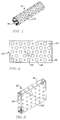
- the terminal portion of a sealed polymeric tubule is illustrated, comprising the tubule 10 having plugged micropores 12 therein and an end seal 14.
- the end of the tubule not shown may comprise an open end; alternately, the seal 14 may be removed or originally omitted to leave an open end to the tubule 10.
- the tubule may be prelabelled for identification or may be adapted for insertion of a labelled plug in the open end.
- rooster semen Collected rooster semen, evaluated, pooled, extended with media and processed by means known in the art, is cooled to 5 o C, mixed with cryoprotectant (if cryoprotectant is absent from the original extension media), and charged to the interior of the tubule 10 of Figure 1.
- the open end of the tubule is then sealed.
- the sealed tubule and its contents are then cooled at one or more controlled rates, as known in the art, to -196 o C.
- a tubule 10 Prior to insemination of a group of chickens, a tubule 10 is transferred from cryopreservation storage at minus 196 o C (liquid nitrogen) into a thawing solution known in the art, and after initial thawing the tubule 10 is subsequently transferred to a post-thaw treatment solution of appropriate temperature, composition and oxygenation.
- a post-thaw treatment solution the action of at least one of the constituents of the post-thaw treatment solution on the plugged micropores 12 opens the micropores 12 and allows controlled egress of the cryoprotectant from the environment around and within the rooster sperm and simultaneously permits controlled ingress of the post-thaw treatment solution into the tubule 10.
- the micropores 12 are, of course, smaller than the sperm cells. After a 10-60 minute treatment period, sperm in the tubule are ready for use.
- the tubule 10 may be used, along with appropriate auxiliary mechanical devices, to disperse the sperm directly into one or more hens for artificial insemination of the chicken flock, or the sperm may be transferred from the tube into an appropriate auxiliary mechanical device for insemination.
- the tubule 10 is insoluble in the liquid nitrogen at minus 196 o C, as are the polymer plugged micropores 12. Both the tubule 10 and plugged micropores 12 are likewise insoluble or not completely eroded in the thawing solutions known in the art.
- the tubule 10 undergoes no separation or change in separation kinetics with respect to its contents or structure.
- the action of at least one constituent of the post-thaw treatment solution constitutes the environmental factor which commences or completes dissolution of a selected polymer within the plugged micropores 12, so that pre-determined time- and rate-controlled egress of cryoprotectant and ingress of medium is accomplished. If two or more cryoprotectants are used, they can be removed selectively through pores having different sizes and/or erosion characteristics (as suggested in Figures 2 and 3).
- both the plugged micropores 12 and the tubule 10 may both be fabricated of materials soluble or erodible under certain conditions.
- the plugged micropores 12 may be moderately soluble in human plasma, with the tubule 10 being only somewhat soluble in human plasma, so that an entire structure comprising a small tubule 10 according to Figure 1, filled with a pharmaceutically active agent, would constitute a human subcutaneous controlled release drug implant which would not release the agent for some period of time, then release the agent at a controlled rate, and ultimately completely erode.
- tubules 10 according to Figure 1, or other structures such as that shown in Figure 3 may be used in the cryopreservation of a wide variety of cells and cell cultures, with the polymer or other material for plugging the plugged micropore 12 being selected in reliance on the reaction or release kinetics required by the particular post-thawing parameters required for the preserved cells. Additional applications include controlled release of nutrients to cells or organisms; bacteria; herbicides; and release of alkaline agents to neutralize water or soil, each triggered by the appropriate change in environmental conditions.
- Separation barriers according to the present invention may be fabricated from a wide variety of materials including polymers, ceramics, metals and natural and semi-synthetic cellulosics. More particularly, the separation barrier may consist of a wide variety of materials and polymers including polyether compositions, polyethylene and polypropylene polymers, polyvinyl polymers, moisture vapor permeable urethanes and other polyurethanes, polycarbonate polymers, cellulosics, semi-synthetic cellulosics, ceramics, metals, natural resins including rubbers, etc.
- the separation barrier may be fabricated of one or more of the compositions also suitable for use in plugging the pores or micropores in the separation barrier, which compositions include cellulosics (i.e., hydroxypropylmethylcellulose), polyelectrolyte complexes, polysulfone compositions, acrylic polymers, cellulose acetates, Dynel® compositions, polyacrylonitrile compositions, polyvinylpyrrolidone polymers, cellulosic composites on polyvinyl chloride, and other materials known in the membranologic arts. Also feasible are selectively soluble salt or polysaccharide crystals as long as the dissolution of same does not poison adjacent biologic media and is not toxic to cells in or near the barrier.
- cellulosics i.e., hydroxypropylmethylcellulose
- polyelectrolyte complexes i.e., polyelectrolyte complexes
- polysulfone compositions acrylic polymers
- cellulose acetates Dy
- the separation barrier may be constructed for one-time use, or may be designed for multiple uses i.e., when the barrier device is returned to the producer for replugging and refilling.
- water-soluble materials included within the pores or micropores of the separation barrier will have applicability at least to cryobiologic preservation of spermatozoa (poultry, human, horse, fish, pig, sheep, dog, mouse, rat, etc.); oocytes (cattle, human, horse, pig, mouse, rat, etc.); embryos (human, cattle, horse, mice, dogs, etc.) of all species of mammals with physiological need and economic advantage; human pancreas B-cells; human corneas; primary cell cultures; and seeds.
- Thermal sensitive polymer plugs have application in frost damage control: erodibility of the plugs, in the separation barrier pores, can upon decreasing temperature release frost-protective bacteria onto crops, fields or orchards.
- Polymer plugs having pH sensitivity may be applied to the non-oral controlled release of pharmaceuticals to animals and humans in pH-fluctuating anatomic areas, and likewise have application in the ecosystem to deliver the appropriate acid or base upon a drop or increase in environmental pH conditions.
- Photo-inducible polymer erodibility can release agricultural materials after sufficient exposure to sunlight.
- a side elevational view of a membrane 20 having pores of two different diameters.
- the large pores 22 are filled with a first polymer composition and the small pores 24 are filled with a second and different polymer composition.
- any one of three or all three separation kinetics attributable to the respective polymers may be controlled by appropriate changes in the corollary environmental conditions including temperature, pH, presence of specific solvents, electrical charge, magnetic field, light waves, or sound energy. For example, if the largest pores open last, the largest separable particles cordoned by the membrane will diffuse last.
- the membrane 20 of Figure 2 may be used in lieu of other prior art separation membranes, when the sequential or selective separation kinetics possible with the membrane 20 are desired or necessary for a given application.
- Such a membrane can be directly fabricated into a variety of shapes, or used as a sheet for later insertion into an appropriate container.
- Figure 3 illustrates a three-dimensional rectangular construct having five closed sides, or faces.
- the rectangular construct 30 is fabricated of a polymer, and the largest closed face thereof has polymer-plugged pores 32 therein.
- the remaining closed faces shown have polymer-plugged pores 34 and 36 therein.
- Polymer plugged pores 32, 34, and 36 are filled with a second, third, and fourth polymer, respectively.
- the rectangular construct 30 functions as building-block type unit, and can be used alone or in an array of a number of identical rectangular constructs 30 for laboratory or production use in a variety of configurations. Complex sequential or selective separations are possible due to the varied polymer plugs in the polymer-plugged pores 32, 34, and 36.
- the remaining closed faces not shown may also contain plugged pores.
- the rectangular construct 30 is representative of a commercial embodiment of the present separation barrier having plugged pores, in which units may be assembled by the user as needed.
- the plugged pores may be true plugged pores, i.e., the pores in the separation barrier may be filled to the extent of the pore cavity only, or the plugged pores may be plugged by means of a continuous coating on one or both sides of the separation barrier to plug the pores by coating over them.
- additional treating materials may be used to alter the chemical and physical properties of the polymers, such as for altering toxicity, adapting polar and non-polar materials for their specific intended applications, or increasing bonding properties.
- a container need not be homogeneous, for example, but could have sides each of different materials.
- a six-sided construct could include six different materials in the different-sized pores of each respective side, for example, which construct would then effect unique separation kinetics by means of each of its separate sides.
- Dimensions for the tubule of Figure 1, for cryopreservation of sperm range from 1-80 mm in diameter or more, with 1-5 mm diameters being preferred.
- the tubules may range in length from about 5 mm to 10 centimeters or more, with about 50-200 mm being preferred.
- Pores or micropores may be of any size. For many separations, pores of 0.2 to 0.6 micrometers effective diameter are preferred, but for some applications only pores greater than 0.6 micrometers are appropriate. Often pores can be larger than the pores in prior art separation membranes due to the nature of the materials to be retained and the initial plugged configuration of the pores. Other embodiments of the invention may have widely varied dimensions depending upon the intended application.
- Polymers which can provide a persistent plug in a number of environments include ethyl cellulose, among others.
- methyl cellulose plugs are appropriate.
- the use of polyvinylpyrrolidone enables thermal transition opening of the pores containing it, and carboxymethylcellulose allows pores to open in response to pH shift.
- Detergent activated, photoactivatable, and other compositions known in the art can be selected as needed.
- a further particular application of the present invention is in the production of fertilized turkey eggs, which eggs can be produced commercially only by artificial insemination (AI).
- AI artificial insemination
- Prior art methods permit holding of turkey sperm for only six to eight hours after collection, which allows only about two hours for transport of the turkey sperm.
- oxygenation of turkey sperm has increased the holding time to about 24 hours, but the laboratory techniques have been impractical on a commercial basis.
- turkey sperm viability and quality should be maintained for up to 48 hours. Preservation of turkey sperm is discussed further below and in Example IV herewith.
- the present invention provides for the use of unique containers and storage conditions for preservation of turkey sperm.
- the container is uniquely constructed with pores that are ordinarily initially impermeable (allowing easy loading and handling) but which open rapidly after the container of turkey semen is placed in contact with exchange solutions. Precise control of temperature and oxygen content and continuous exchange of nutrients and antioxidants into the sperm suspension, without damage to the sperm, is possible using the container along with an optional microprocessor controlled system. This will allow the industry to create "super stud farms" with the potential for total reorganization of the distribution of germ plasm.
- turkey toms e.g., male line meat strain
- Semen is collected by massage every 3-4 days from a group of toms and pooled within a few minutes.
- Sperm quality is determined by several tests, as are known to the art.
- extenders have been developed for holding turkey sperm and 5 o C and are known in the art, and these extenders may be admixed with acceptable turkey semen and placed within plugged-porous containers according to the present invention.
- the appropriate plugged porous container is ordinarily fabricated from nylon "frames" and specially prepared polysulfone membranes with 0.22 »m pores, with the pores initially sealed using methyl cellulose and ethyl cellulose. Identical membranes are fastened to both large faces of the container using UV-activated glue. These containers are nontoxic to turkey sperm and have pores that open in a controlled and repeatable manner. Transmembrane flux of small molecules ( 10,000 kD) in the internal or external diluent has a half-time of about 2-5 min.; sperm cannot pass through the membrane.
- the above-identified polymers are exemplary.
- the containers are incubated in special environmental control units. Chambers are fabricated and fitted with circulation pumps, miniature oxygen sensors, small air pumps, electronically controlled air nitrogen valves, and a small oxygenation reservoir.
- the total volume of the chamber is about 30 ml; the chamber is preferably fitted with control circuits.
- the desired oxygen content in the medium can be achieved using appropriately blended gas mixtures and a constant rate of addition with a diffuser, as are known in the art.
- the environmental control chamber regulates oxygen tension and temperature of turkey sperm to which have been added diluents and/or extenders; the present invention provides the heretofore unknown means by which cooling, selective oxygenation, antioxidant treatment, etc., of turkey sperm may be scaled up to a commercially feasible level using porous containers.
- a five-walled chamber 40 has control means for controlling temperature and oxygenation (for example, oxygen concentration can be monitored with a miniature oxygen sensor connected to a multiplex A/D converter, with optional electronic data storage) and acts as a bath-type receptacle for turkey semen receiving containers 42.
- Exchange fluid 44 selectively enters and exits the chamber 40 via inlet 46 and outlet 48 as desired, and the exchange fluid 44 can enter and exit the containers 42 depending upon the constituents of the fluid and the pore size of the container(s).
- Frozen rooster semen is not successfully used commercially because the cryoprotectant most effective for spermatozoa survival during freezing and thawing, glycerol, also demonstrates contraceptive properties after artificial insemination.
- this cryoprotectant is removed by serial dilution followed by centrifugation or conventional dialysis. Such processes successfully reduce cryoprotectant concentration but are commercially impractical.
- the glycerol must be removed from the avian spermatozoa prior to artificial insemination.
- rapid removal of glycerol from avian spermatozoa damages the spermatozoa cells, probably as a consequence of rapid movement of glycerol across the cell membrane, which alters the characteristics of the membrane and the viability of the cell.
- Slow removal of glycerol from cryopreserved rooster semen is therefore a necessity, notwithstanding the typical high cost of achieving it according to prior art techniques.
- a group of roosters raised by an integrated breeder is selected, which roosters possess a virtually identical genetic background and therefore transmit the same phenotype. Semen is collected from this group of roosters, a collection unit, with the semen then being evaluated, pooled, extended, and cooled by means known in the art. (Oxygenation is required if the cells are held above 15 o C because avian spermatozoa are highly dependent on oxidative metabolism unless they are cooled to near 5 o C or frozen.) Initial cooling proceeds to 5 o C.
- glycerol is added as a cryoprotectant (if not present in the original extender), and the cryoprotected extended semen then is immediately charged to hollow tubules having plugged micropores such as the tubule illustrated in Figure 1.
- the hollow tubule is a cylindrical polymeric separation barrier open at one end and having plugged pores therein, having the following features: 1) impermeable for 20-30 minutes to aqueous solutions placed inside at 5 o C; 2) impermeable to viruses or bacteria coming in contact with the outside of the tubule, while the pores remain plugged; 3) resistant to immersion and long-term storage in liquid nitrogen; 4) resistant for 6-300 seconds to warming in aqueous solutions at 2-75 o C; 5) has pores partially soluble upon 5-20 minutes' further immersion in aqueous post-thaw treatment solutions at 5-38 o C; and 6) develops pores of a size which permit only molecules below a certain size to pass.
- microporous hollow fiber having the following characteristics: 1) wall thickness, 0.5 mm; length, 60 mm; and diameter, 4 mm (other possible configurations include: a right cylinder (30-40 mm diameter and 5-10 mm in length) of a nonporous material, such as polystyrene, to which is attached a "lid" of the microporous membrane described herein, or a flattened tube 2 mm x 20 mm x 60 mm); 2) separation barrier constructed of polyethylene (or other acceptable polymer); and 3) 0.2 micrometer micropores plugged with methyl cellulose.
- a three-dimensional rectangular device to provide greater capacity or an alternative packaging process, it would have five impermeable sides, fabricated from polystyrene or another material, forming a square or rectangular shape (25 mm x 25-40 mm x 5-10 mm) and the sixth surface would be a microporous membrane with plugged pores, applied and sealed as a lid.
- Cryopreservation of the semen in the hollow tubules is effected by means known in the art. Shortly before insemination of a flock of chickens, a tubule is removed from liquid nitrogen in storage at minus 196 o C and is transferred to a thawing solution. After thawing, the hollow tubule is transferred to an aqueous post-thaw treatment solution including additives necessary for the optimal survival of the avian spermatozoa (with oxygenation, if appropriate).
- the plugged pores open to permit controlled and relatively slow egress of glycerol cryoprotectant from the solution within the container, and hence from the spermatozoa, and simultaneous controlled ingress of the external medium to surround the thawed rooster sperm.
- the thawed and treated rooster sperm then are ready for use in artificial insemination.
- a second example is provided to illustrate the concept of two different rates of release, as well as an extended time for initiation of pore opening.
- both glycerol and crude lipid micelles are used in the art of cryopreservation. It is desirable, after thawing, to remove the glycerol slowly (as for rooster sperm) and then rapidly remove the egg yolk lipoprotein particles.
- the general process of Example I is followed except that the initial extender contains egg yolk and is centrifuged (20,000 x g for 30 minutes, for example) or filtered (through a 0.2 or 0.4 micrometer filter) to remove material larger than the dimension desired for the colloidal particles, and glycerol is added after the extended sperm are cooled to 5 o C.
- the container is a three dimensional rectangular construct (although the shape is not important) with four nonporous sides.
- One of the other sides is a microporous membrane with pores (about 0.2 micrometers diameter) plugged with a material (i.e., high ratio of methyl cellulose to ethyl cellulose) having erodibility characteristics suitable for the controlled removal of glycerol. These pores open soon after immersion of the container into the thawing solution.
- the last face consists of a microporous membrane with different size pores (0.3-0.5 micrometers) plugged with a different material (i.e., low ratio of methyl cellulose to ethyl cellulose) that is rapidly eroded after a time delay (30-40 minutes) to allow rapid egress of the egg yolk lipoproteins and further entrance of the treatment medium.
- a different material i.e., low ratio of methyl cellulose to ethyl cellulose
- a third example is provided to illustrate release of soluble materials to the environment and an alternative mode of release in response to changing environmental conditions.
- Nutrients may be provided to cultured cells held within "bioreactors". Continuous culture of cells for purpose of production of pharmaceuticals and other bioproducts requires (at a minimum): removal of the desired products as they are excreted into the growth medium; removal of toxic side products from the medium; and selective means for replenishing nutrients and regulatory substances necessary for continued culture of the cells.
- Controlled release of nutrients and regulatory substances is achieved by the following process.
- a hollow tube composed of one or more pores plugged with one or more materials chosen to allow selective opening under environmental stimulus, is filled with a sterile suspension (solid or liquid) or solution of the materials needed for continuous growth and production by the specific cells under culture. Examples include vitamins, hormones, trace metals, etc.
- the surface of the tube then is sterilized, yielding a container that allows long term storage of the materials to be added to the culture, and facile insertion into the bioreactor network as needed.
- the tube is inserted into the culture (directly or into circulating media) as needed.
- the environmental signal is either a passive (water based erosion of the pore plug, as outlined for the treatment of rooster sperm) or an active response to the changing culture conditions (pH shift as induced by production of acid by-products (e.g., lactic acid) by the cells).
- a container can also be used in a large scale agriculture environment, i.e., addition of nutrients for growth of fish on a commercial scale.
- a plastic chamber holds six rectangular plugged-pore containers plus exchange solutions.
- the chamber is fitted with control circuits, an "oxystat," a control means which enables maintenance of constant O2 tension by way of differential addition of air or N2, and with means known in the art for temperature control, pumping and valving.
- an "oxystat” a control means which enables maintenance of constant O2 tension by way of differential addition of air or N2, and with means known in the art for temperature control, pumping and valving.
- Turkey semen is collected, pooled and extended by means known in the art; the extended turkey sperm is cooled at a linear rate to temperatures between 5 o C and 20 o C and ⁇ 1.5 ml aliquots are charged to each of the six rectangular plugged-pore containers.
- the containers have inside dimensions of 3.5 x 17 x 36 millimeters, although containers having inside diameters of 3.0 x 17 x 22 millimeters could be substituted.
- the two largest walls of the containers are constructed of polysulfone membranes having 0.22 micrometer pores, with the pores initially sealed with methyl cellulose and ethyl cellulose.
- the containers are placed in the chamber containing exchange fluid at the desired temperature (5-20 o C); the pores of the containers are no longer plugged after several minutes. Cooling and dialysis can continue for the holding period.
Landscapes
- Life Sciences & Earth Sciences (AREA)
- Health & Medical Sciences (AREA)
- Zoology (AREA)
- Wood Science & Technology (AREA)
- General Health & Medical Sciences (AREA)
- Engineering & Computer Science (AREA)
- Dentistry (AREA)
- Veterinary Medicine (AREA)
- Environmental Sciences (AREA)
- Chemical & Material Sciences (AREA)
- Animal Behavior & Ethology (AREA)
- Chemical Kinetics & Catalysis (AREA)
- Public Health (AREA)
- Reproductive Health (AREA)
- Micro-Organisms Or Cultivation Processes Thereof (AREA)
- Separation Using Semi-Permeable Membranes (AREA)
- Medicinal Preparation (AREA)
- Manufacture Of Porous Articles, And Recovery And Treatment Of Waste Products (AREA)
Claims (6)
- Behälter (10, 20, 30, 42), der vorgegebene Separationskinetiken zur Freigabe einer Substanz über einen ausgedehnten Zeitraum besitzt, der mindestens eine Wand, die so geformt ist, um einen hohlen, befüllbaren Behälter zu bilden, aufweist, wobei der Behälter mit einer ersten Substanz gefüllt ist, wobei die Hand eine Innenoberfläche und eine Außenoberfläche bildet, wobei die Wand weiterhin mindestens eine vorgeformte Pore (12, 22, 24, 32, 34, 36) darin besitzt, wobei die Pore zwischen der Innenoberfläche und der Außenoberfläche nur mit einer zweiten Substanz gefüllt ist, wobei die zweite Substanz chemisch zu der ersten Substanz unterschiedlich ist und die weiterhin unter Aussetzung gegenüber Umgebungsbedingungen erodierbar ist, die einen Teil einer Separation, die durchgeführt werden soll, gemäß den vorgewählten Separationskinetiken bildet, gekennzeichnet dadurch, daß der Behälter (10, 20, 30, 42), der eine Zugangseinrichtung (14), die darin gebildet ist, um die erste Substanz aufzunehmen, besitzt, wobei die Zugangseinrichtung (14) und die Pore (12, 22, 24, 32, 34, 36) separate Strukturen sind, wobei die zweite Substanz und die vorgeformte Pore eine chemische Identität und Größe jeweils besitzen, die zusammen so berechnet sind, um die vorgewählten Separationskinetiken des Behälters zu definieren, und daß die erste Substanz eine Kombination eines ersten Produkts und eines zweiten Produkts ist, wobei das zweite Produkt kleiner als das erste Produkt ist und wobei weiterhin die Pore Dimensionen besitzt, die einen Ausfluß des zweiten Produkts und eine Zurückhaltung des ersten Produkts ermöglichen.
- Behälter nach Anspruch 1, wobei das erste Produkt weiterhin Truthahn-Spermatozoonzellen aufweist.
- Behälter nach Anspruch 2, wobei die Pore eine Mikropore ist.
- Behälter nach Anspruch 3, wobei die Mikropore 0,22 Mikrometer im Durchmesser beträgt.
- Behälter nach Anspruch 1, wobei die erodierbare Substanz weiterhin eine Beimischung aus Ethylzellulose und Methylzellulose aufweist.
- Behälter nach einem der Ansprüche 1-5, wobei der Behälter eine dreidimensionale, rechtwinklige Konstruktion ist.
Applications Claiming Priority (4)
| Application Number | Priority Date | Filing Date | Title |
|---|---|---|---|
| US26304988A | 1988-10-26 | 1988-10-26 | |
| US263049 | 1988-10-26 | ||
| US41634789A | 1989-10-06 | 1989-10-06 | |
| US416347 | 1989-10-06 |
Publications (2)
| Publication Number | Publication Date |
|---|---|
| EP0367337A1 EP0367337A1 (de) | 1990-05-09 |
| EP0367337B1 true EP0367337B1 (de) | 1995-03-08 |
Family
ID=26949635
Family Applications (1)
| Application Number | Title | Priority Date | Filing Date |
|---|---|---|---|
| EP89202702A Expired - Lifetime EP0367337B1 (de) | 1988-10-26 | 1989-10-25 | Membranbehälter mit verschlossenen Poren |
Country Status (5)
| Country | Link |
|---|---|
| EP (1) | EP0367337B1 (de) |
| JP (1) | JPH0764947B2 (de) |
| CA (1) | CA2001395C (de) |
| DE (1) | DE68921544T2 (de) |
| ES (1) | ES2071643T3 (de) |
Families Citing this family (4)
| Publication number | Priority date | Publication date | Assignee | Title |
|---|---|---|---|---|
| US6315767B1 (en) | 1998-08-19 | 2001-11-13 | Gambro, Inc. | Cell storage maintenance and monitoring system |
| ATE260697T1 (de) * | 1999-03-17 | 2004-03-15 | Foster Miller Inc | Sensible gele und verfahren zur ihrer verwendung |
| JP5051716B2 (ja) * | 2007-12-21 | 2012-10-17 | 学校法人明治大学 | 生殖細胞用デバイス及び生殖細胞凍結保存方法 |
| JP2009148221A (ja) * | 2007-12-21 | 2009-07-09 | National Agriculture & Food Research Organization | 生殖細胞凍結保存容器及び生殖細胞凍結保存方法 |
Family Cites Families (4)
| Publication number | Priority date | Publication date | Assignee | Title |
|---|---|---|---|---|
| AU3062184A (en) * | 1983-06-10 | 1985-01-04 | Washington Research Foundation | Biochemical detection and/or treatment process |
| JPS61283305A (ja) * | 1985-06-05 | 1986-12-13 | Ube Ind Ltd | 多孔質中空糸膜 |
| US4755180A (en) * | 1986-06-16 | 1988-07-05 | Alza Corporation | Dosage form comprising solubility regulating member |
| DE3629994A1 (de) * | 1986-09-03 | 1988-03-17 | Weissenbacher Ernst Rainer Pro | Vorrichtung zur medikamentenapplikation in koerperhoehlen bzw. auf koerperoberflaechen |
-
1989
- 1989-10-24 CA CA002001395A patent/CA2001395C/en not_active Expired - Fee Related
- 1989-10-25 EP EP89202702A patent/EP0367337B1/de not_active Expired - Lifetime
- 1989-10-25 DE DE68921544T patent/DE68921544T2/de not_active Expired - Fee Related
- 1989-10-25 ES ES89202702T patent/ES2071643T3/es not_active Expired - Lifetime
- 1989-10-26 JP JP1279610A patent/JPH0764947B2/ja not_active Expired - Fee Related
Non-Patent Citations (1)
| Title |
|---|
| PATENT ABSTRACTS OF JAPAN vol. 5, no. 85 (C-57)(757), 3 June 1981; & Jp-A-56 032 417 (SEISAN NIHONSHIYA K.K.) 01.04.1981 * |
Also Published As
| Publication number | Publication date |
|---|---|
| CA2001395A1 (en) | 1990-04-26 |
| DE68921544D1 (de) | 1995-04-13 |
| ES2071643T3 (es) | 1995-07-01 |
| JPH02269135A (ja) | 1990-11-02 |
| EP0367337A1 (de) | 1990-05-09 |
| CA2001395C (en) | 1995-10-03 |
| DE68921544T2 (de) | 1995-08-24 |
| JPH0764947B2 (ja) | 1995-07-12 |
Similar Documents
| Publication | Publication Date | Title |
|---|---|---|
| US5026342A (en) | Noningestible separation barrier with plugged pores | |
| US5261870A (en) | Separation barrier with plugged pores | |
| Overmeer et al. | A standardized method for testing the side effects of pesticides on the predacious mite, Amblyseius potentillae [Acarina: Phytoseiidae] | |
| EP1399015B1 (de) | Hydrogelkugeln oder kapseln als künstliches medium zur eiablage von insekten und zucht von endoparasitoiden | |
| Wilson | The soldier of the ant Camponotus (Colobopsis) fraxinicola as a trophic caste | |
| EP0220667A2 (de) | Hydrogel verkapselte Nematoden | |
| Lindquist et al. | Laboratory studies on sterilization of the boll weevil with apholate | |
| Srivastava et al. | Alterations in the gill filaments and secondary lamellae of Cirrhinus mrigala exposed to “nuvan,” an organophosphorus insecticide | |
| EP0367337B1 (de) | Membranbehälter mit verschlossenen Poren | |
| Lingren et al. | Response of Campoletis perdistinctus and Apanteles marginiventris to insecticides | |
| Small et al. | Effect of low‐temperature incubation of channel catfish Ictalurus punctatus eggs on development, survival, and growth | |
| Lindquist et al. | Mating studies with apholate-sterilized boll weevils | |
| US6391295B1 (en) | Artificial bait | |
| JP2888570B2 (ja) | 過酸化水素製剤とその用途 | |
| JPH04505701A (ja) | 虫生線虫をパッケージ化するための方法および媒体 | |
| Otto | Effect of diluents and temperature on instrumental insemination of queen honey bees | |
| FI89277C (fi) | Foerfarande och material foer inkubering av aegg och larver av fisk och kraeftdjur | |
| ES2293815B1 (es) | Atrayente para moscas de la fruta. | |
| CN113749091B (zh) | 蝗虫微孢子虫孢子水悬浮剂及其制备方法和应用 | |
| CN1073794C (zh) | 大田直接用不育剂防治害虫的方法 | |
| Tasei et al. | Registration of systemic insecticides and European and Mediterranean Plant Protection Organisation (EPPO) guidelines | |
| Lindquist | Joint FAO/IAEA tsetse fly programme: Current and future | |
| ULTRAMICROPOROUS | Arthur S. Obermayer | |
| RU2295566C2 (ru) | Способ криоконсервации гребневика beroe ovata | |
| Luckmann et al. | Inducing sterility in the onion maggot |
Legal Events
| Date | Code | Title | Description |
|---|---|---|---|
| PUAI | Public reference made under article 153(3) epc to a published international application that has entered the european phase |
Free format text: ORIGINAL CODE: 0009012 |
|
| AK | Designated contracting states |
Kind code of ref document: A1 Designated state(s): DE ES FR GB IT NL |
|
| 17P | Request for examination filed |
Effective date: 19900917 |
|
| 17Q | First examination report despatched |
Effective date: 19920526 |
|
| GRAA | (expected) grant |
Free format text: ORIGINAL CODE: 0009210 |
|
| AK | Designated contracting states |
Kind code of ref document: B1 Designated state(s): DE ES FR GB IT NL |
|
| REF | Corresponds to: |
Ref document number: 68921544 Country of ref document: DE Date of ref document: 19950413 |
|
| ITF | It: translation for a ep patent filed | ||
| ET | Fr: translation filed | ||
| REG | Reference to a national code |
Ref country code: ES Ref legal event code: FG2A Ref document number: 2071643 Country of ref document: ES Kind code of ref document: T3 |
|
| PLBE | No opposition filed within time limit |
Free format text: ORIGINAL CODE: 0009261 |
|
| STAA | Information on the status of an ep patent application or granted ep patent |
Free format text: STATUS: NO OPPOSITION FILED WITHIN TIME LIMIT |
|
| 26N | No opposition filed | ||
| REG | Reference to a national code |
Ref country code: GB Ref legal event code: IF02 |
|
| PG25 | Lapsed in a contracting state [announced via postgrant information from national office to epo] |
Ref country code: IT Free format text: LAPSE BECAUSE OF NON-PAYMENT OF DUE FEES;WARNING: LAPSES OF ITALIAN PATENTS WITH EFFECTIVE DATE BEFORE 2007 MAY HAVE OCCURRED AT ANY TIME BEFORE 2007. THE CORRECT EFFECTIVE DATE MAY BE DIFFERENT FROM THE ONE RECORDED. Effective date: 20051025 |
|
| PGFP | Annual fee paid to national office [announced via postgrant information from national office to epo] |
Ref country code: NL Payment date: 20060429 Year of fee payment: 17 |
|
| PGFP | Annual fee paid to national office [announced via postgrant information from national office to epo] |
Ref country code: GB Payment date: 20060502 Year of fee payment: 17 Ref country code: DE Payment date: 20060502 Year of fee payment: 17 Ref country code: FR Payment date: 20060502 Year of fee payment: 17 |
|
| PGFP | Annual fee paid to national office [announced via postgrant information from national office to epo] |
Ref country code: ES Payment date: 20060530 Year of fee payment: 17 |
|
| PG25 | Lapsed in a contracting state [announced via postgrant information from national office to epo] |
Ref country code: NL Free format text: LAPSE BECAUSE OF NON-PAYMENT OF DUE FEES Effective date: 20070501 Ref country code: DE Free format text: LAPSE BECAUSE OF NON-PAYMENT OF DUE FEES Effective date: 20070501 |
|
| GBPC | Gb: european patent ceased through non-payment of renewal fee |
Effective date: 20061025 |
|
| NLV4 | Nl: lapsed or anulled due to non-payment of the annual fee |
Effective date: 20070501 |
|
| REG | Reference to a national code |
Ref country code: FR Ref legal event code: ST Effective date: 20070629 |
|
| PG25 | Lapsed in a contracting state [announced via postgrant information from national office to epo] |
Ref country code: GB Free format text: LAPSE BECAUSE OF NON-PAYMENT OF DUE FEES Effective date: 20061025 |
|
| REG | Reference to a national code |
Ref country code: ES Ref legal event code: FD2A Effective date: 20061026 |
|
| PG25 | Lapsed in a contracting state [announced via postgrant information from national office to epo] |
Ref country code: FR Free format text: LAPSE BECAUSE OF NON-PAYMENT OF DUE FEES Effective date: 20061031 Ref country code: ES Free format text: LAPSE BECAUSE OF NON-PAYMENT OF DUE FEES Effective date: 20061026 |
|
| PGFP | Annual fee paid to national office [announced via postgrant information from national office to epo] |
Ref country code: IT Payment date: 20061031 Year of fee payment: 18 |
|
| PGRI | Patent reinstated in contracting state [announced from national office to epo] |
Ref country code: IT Effective date: 20080301 |
|
| PGRI | Patent reinstated in contracting state [announced from national office to epo] |
Ref country code: IT Effective date: 20080301 |