EP0367877A1 - Adsorptionsverfahren zur Trennung von Triglyceriden gemäss ihrem Unsättigungsgrad - Google Patents
Adsorptionsverfahren zur Trennung von Triglyceriden gemäss ihrem Unsättigungsgrad Download PDFInfo
- Publication number
- EP0367877A1 EP0367877A1 EP88310553A EP88310553A EP0367877A1 EP 0367877 A1 EP0367877 A1 EP 0367877A1 EP 88310553 A EP88310553 A EP 88310553A EP 88310553 A EP88310553 A EP 88310553A EP 0367877 A1 EP0367877 A1 EP 0367877A1
- Authority
- EP
- European Patent Office
- Prior art keywords
- triglycerides
- adsorbent
- unsaturation
- desorbent
- ketone
- Prior art date
- Legal status (The legal status is an assumption and is not a legal conclusion. Google has not performed a legal analysis and makes no representation as to the accuracy of the status listed.)
- Withdrawn
Links
- 150000003626 triacylglycerols Chemical class 0.000 title claims abstract description 65
- 238000000034 method Methods 0.000 title claims abstract description 54
- 230000008569 process Effects 0.000 title claims abstract description 52
- 238000001179 sorption measurement Methods 0.000 title claims description 29
- 239000003463 adsorbent Substances 0.000 claims abstract description 101
- 239000000203 mixture Substances 0.000 claims abstract description 56
- YXFVVABEGXRONW-UHFFFAOYSA-N Toluene Chemical compound CC1=CC=CC=C1 YXFVVABEGXRONW-UHFFFAOYSA-N 0.000 claims abstract description 29
- 239000010457 zeolite Substances 0.000 claims abstract description 21
- OKTJSMMVPCPJKN-UHFFFAOYSA-N Carbon Chemical compound [C] OKTJSMMVPCPJKN-UHFFFAOYSA-N 0.000 claims abstract description 19
- HNPSIPDUKPIQMN-UHFFFAOYSA-N dioxosilane;oxo(oxoalumanyloxy)alumane Chemical compound O=[Si]=O.O=[Al]O[Al]=O HNPSIPDUKPIQMN-UHFFFAOYSA-N 0.000 claims abstract description 17
- 229910021536 Zeolite Inorganic materials 0.000 claims abstract description 16
- 150000002576 ketones Chemical class 0.000 claims abstract description 14
- 239000007791 liquid phase Substances 0.000 claims abstract description 10
- 229930195733 hydrocarbon Natural products 0.000 claims abstract description 6
- 150000002430 hydrocarbons Chemical class 0.000 claims abstract description 6
- 239000012188 paraffin wax Substances 0.000 claims abstract description 6
- 239000002952 polymeric resin Substances 0.000 claims abstract description 6
- 229920003002 synthetic resin Polymers 0.000 claims abstract description 6
- 239000004215 Carbon black (E152) Substances 0.000 claims abstract description 5
- 239000000463 material Substances 0.000 claims description 56
- 238000003795 desorption Methods 0.000 claims description 21
- VLKZOEOYAKHREP-UHFFFAOYSA-N n-Hexane Chemical compound CCCCCC VLKZOEOYAKHREP-UHFFFAOYSA-N 0.000 claims description 15
- CSCPPACGZOOCGX-UHFFFAOYSA-N Acetone Chemical compound CC(C)=O CSCPPACGZOOCGX-UHFFFAOYSA-N 0.000 claims description 12
- ZWEHNKRNPOVVGH-UHFFFAOYSA-N 2-Butanone Chemical group CCC(C)=O ZWEHNKRNPOVVGH-UHFFFAOYSA-N 0.000 claims description 9
- FDPIMTJIUBPUKL-UHFFFAOYSA-N pentan-3-one Chemical compound CCC(=O)CC FDPIMTJIUBPUKL-UHFFFAOYSA-N 0.000 claims description 6
- UFTFJSFQGQCHQW-UHFFFAOYSA-N triformin Chemical compound O=COCC(OC=O)COC=O UFTFJSFQGQCHQW-UHFFFAOYSA-N 0.000 claims description 6
- NTIZESTWPVYFNL-UHFFFAOYSA-N Methyl isobutyl ketone Chemical compound CC(C)CC(C)=O NTIZESTWPVYFNL-UHFFFAOYSA-N 0.000 claims description 5
- UIHCLUNTQKBZGK-UHFFFAOYSA-N Methyl isobutyl ketone Natural products CCC(C)C(C)=O UIHCLUNTQKBZGK-UHFFFAOYSA-N 0.000 claims description 5
- 239000011230 binding agent Substances 0.000 claims description 5
- 239000011159 matrix material Substances 0.000 claims description 3
- 229910052700 potassium Inorganic materials 0.000 claims description 3
- 125000003944 tolyl group Chemical group 0.000 claims 1
- 230000000274 adsorptive effect Effects 0.000 abstract description 14
- 229910052799 carbon Inorganic materials 0.000 abstract description 13
- -1 hydrogen- Chemical group 0.000 abstract description 3
- QUQFTIVBFKLPCL-UHFFFAOYSA-L copper;2-amino-3-[(2-amino-2-carboxylatoethyl)disulfanyl]propanoate Chemical compound [Cu+2].[O-]C(=O)C(N)CSSCC(N)C([O-])=O QUQFTIVBFKLPCL-UHFFFAOYSA-L 0.000 abstract 1
- 125000000468 ketone group Chemical group 0.000 abstract 1
- 238000000926 separation method Methods 0.000 description 30
- 238000012360 testing method Methods 0.000 description 17
- HBOQXIRUPVQLKX-BBWANDEASA-N 1,2,3-trilinoleoylglycerol Chemical compound CCCCC\C=C/C\C=C/CCCCCCCC(=O)OCC(OC(=O)CCCCCCC\C=C/C\C=C/CCCCC)COC(=O)CCCCCCC\C=C/C\C=C/CCCCC HBOQXIRUPVQLKX-BBWANDEASA-N 0.000 description 11
- HBOQXIRUPVQLKX-UHFFFAOYSA-N linoleic acid triglyceride Natural products CCCCCC=CCC=CCCCCCCCC(=O)OCC(OC(=O)CCCCCCCC=CCC=CCCCCC)COC(=O)CCCCCCCC=CCC=CCCCCC HBOQXIRUPVQLKX-UHFFFAOYSA-N 0.000 description 11
- 229940081852 trilinolein Drugs 0.000 description 11
- PHYFQTYBJUILEZ-IUPFWZBJSA-N triolein Chemical compound CCCCCCCC\C=C/CCCCCCCC(=O)OCC(OC(=O)CCCCCCC\C=C/CCCCCCCC)COC(=O)CCCCCCC\C=C/CCCCCCCC PHYFQTYBJUILEZ-IUPFWZBJSA-N 0.000 description 11
- BAECOWNUKCLBPZ-HIUWNOOHSA-N Triolein Natural products O([C@H](OCC(=O)CCCCCCC/C=C\CCCCCCCC)COC(=O)CCCCCCC/C=C\CCCCCCCC)C(=O)CCCCCCC/C=C\CCCCCCCC BAECOWNUKCLBPZ-HIUWNOOHSA-N 0.000 description 10
- PHYFQTYBJUILEZ-UHFFFAOYSA-N Trioleoylglycerol Natural products CCCCCCCCC=CCCCCCCCC(=O)OCC(OC(=O)CCCCCCCC=CCCCCCCCC)COC(=O)CCCCCCCC=CCCCCCCCC PHYFQTYBJUILEZ-UHFFFAOYSA-N 0.000 description 10
- 229940117972 triolein Drugs 0.000 description 10
- 235000019868 cocoa butter Nutrition 0.000 description 9
- 229940110456 cocoa butter Drugs 0.000 description 9
- VYPSYNLAJGMNEJ-UHFFFAOYSA-N Silicium dioxide Chemical compound O=[Si]=O VYPSYNLAJGMNEJ-UHFFFAOYSA-N 0.000 description 8
- 229920006395 saturated elastomer Polymers 0.000 description 8
- 239000007788 liquid Substances 0.000 description 7
- 239000002808 molecular sieve Substances 0.000 description 7
- 239000012071 phase Substances 0.000 description 7
- 239000000700 radioactive tracer Substances 0.000 description 7
- URGAHOPLAPQHLN-UHFFFAOYSA-N sodium aluminosilicate Chemical compound [Na+].[Al+3].[O-][Si]([O-])=O.[O-][Si]([O-])=O URGAHOPLAPQHLN-UHFFFAOYSA-N 0.000 description 7
- 239000012530 fluid Substances 0.000 description 6
- PEDCQBHIVMGVHV-UHFFFAOYSA-N glycerol group Chemical group OCC(O)CO PEDCQBHIVMGVHV-UHFFFAOYSA-N 0.000 description 6
- 229910000323 aluminium silicate Inorganic materials 0.000 description 5
- 150000001768 cations Chemical class 0.000 description 5
- 150000001875 compounds Chemical class 0.000 description 5
- 238000000746 purification Methods 0.000 description 5
- 238000011144 upstream manufacturing Methods 0.000 description 5
- 235000019485 Safflower oil Nutrition 0.000 description 4
- PNEYBMLMFCGWSK-UHFFFAOYSA-N aluminium oxide Inorganic materials [O-2].[O-2].[O-2].[Al+3].[Al+3] PNEYBMLMFCGWSK-UHFFFAOYSA-N 0.000 description 4
- 238000009835 boiling Methods 0.000 description 4
- 230000000694 effects Effects 0.000 description 4
- 230000014759 maintenance of location Effects 0.000 description 4
- 239000002245 particle Substances 0.000 description 4
- 239000003813 safflower oil Substances 0.000 description 4
- 235000005713 safflower oil Nutrition 0.000 description 4
- 239000000377 silicon dioxide Substances 0.000 description 4
- 239000000126 substance Substances 0.000 description 4
- BGHCVCJVXZWKCC-UHFFFAOYSA-N tetradecane Chemical compound CCCCCCCCCCCCCC BGHCVCJVXZWKCC-UHFFFAOYSA-N 0.000 description 4
- QQZOPKMRPOGIEB-UHFFFAOYSA-N 2-Oxohexane Chemical class CCCCC(C)=O QQZOPKMRPOGIEB-UHFFFAOYSA-N 0.000 description 3
- NHTMVDHEPJAVLT-UHFFFAOYSA-N Isooctane Chemical compound CC(C)CC(C)(C)C NHTMVDHEPJAVLT-UHFFFAOYSA-N 0.000 description 3
- 238000004587 chromatography analysis Methods 0.000 description 3
- JVSWJIKNEAIKJW-UHFFFAOYSA-N dimethyl-hexane Natural products CCCCCC(C)C JVSWJIKNEAIKJW-UHFFFAOYSA-N 0.000 description 3
- 238000006073 displacement reaction Methods 0.000 description 3
- 238000005194 fractionation Methods 0.000 description 3
- CATSNJVOTSVZJV-UHFFFAOYSA-N heptan-2-one Chemical class CCCCCC(C)=O CATSNJVOTSVZJV-UHFFFAOYSA-N 0.000 description 3
- 239000003921 oil Substances 0.000 description 3
- 235000019198 oils Nutrition 0.000 description 3
- XNLICIUVMPYHGG-UHFFFAOYSA-N pentan-2-one Chemical class CCCC(C)=O XNLICIUVMPYHGG-UHFFFAOYSA-N 0.000 description 3
- 239000007787 solid Substances 0.000 description 3
- 230000003068 static effect Effects 0.000 description 3
- 239000011550 stock solution Substances 0.000 description 3
- 239000011800 void material Substances 0.000 description 3
- IJGRMHOSHXDMSA-UHFFFAOYSA-N Atomic nitrogen Chemical compound N#N IJGRMHOSHXDMSA-UHFFFAOYSA-N 0.000 description 2
- 229960000892 attapulgite Drugs 0.000 description 2
- 239000000440 bentonite Substances 0.000 description 2
- 229910000278 bentonite Inorganic materials 0.000 description 2
- SVPXDRXYRYOSEX-UHFFFAOYSA-N bentoquatam Chemical compound O.O=[Si]=O.O=[Al]O[Al]=O SVPXDRXYRYOSEX-UHFFFAOYSA-N 0.000 description 2
- 229910052681 coesite Inorganic materials 0.000 description 2
- 229910052593 corundum Inorganic materials 0.000 description 2
- 229910052906 cristobalite Inorganic materials 0.000 description 2
- 239000002178 crystalline material Substances 0.000 description 2
- 230000018044 dehydration Effects 0.000 description 2
- 238000006297 dehydration reaction Methods 0.000 description 2
- 230000001419 dependent effect Effects 0.000 description 2
- 235000014113 dietary fatty acids Nutrition 0.000 description 2
- 239000000194 fatty acid Substances 0.000 description 2
- 229930195729 fatty acid Natural products 0.000 description 2
- 150000004665 fatty acids Chemical class 0.000 description 2
- 239000007789 gas Substances 0.000 description 2
- 125000005456 glyceride group Chemical group 0.000 description 2
- 229910052739 hydrogen Inorganic materials 0.000 description 2
- 239000001257 hydrogen Substances 0.000 description 2
- VNWKTOKETHGBQD-UHFFFAOYSA-N methane Chemical compound C VNWKTOKETHGBQD-UHFFFAOYSA-N 0.000 description 2
- 125000001117 oleyl group Chemical group [H]C([*])([H])C([H])([H])C([H])([H])C([H])([H])C([H])([H])C([H])([H])C([H])([H])C([H])([H])/C([H])=C([H])\C([H])([H])C([H])([H])C([H])([H])C([H])([H])C([H])([H])C([H])([H])C([H])([H])C([H])([H])[H] 0.000 description 2
- 125000001312 palmitoyl group Chemical group O=C([*])C([H])([H])C([H])([H])C([H])([H])C([H])([H])C([H])([H])C([H])([H])C([H])([H])C([H])([H])C([H])([H])C([H])([H])C([H])([H])C([H])([H])C([H])([H])C([H])([H])C([H])([H])[H] 0.000 description 2
- 229910052625 palygorskite Inorganic materials 0.000 description 2
- 239000011148 porous material Substances 0.000 description 2
- 238000010926 purge Methods 0.000 description 2
- 230000009467 reduction Effects 0.000 description 2
- 229920005989 resin Polymers 0.000 description 2
- 239000011347 resin Substances 0.000 description 2
- 235000012239 silicon dioxide Nutrition 0.000 description 2
- 125000004079 stearyl group Chemical group [H]C([*])([H])C([H])([H])C([H])([H])C([H])([H])C([H])([H])C([H])([H])C([H])([H])C([H])([H])C([H])([H])C([H])([H])C([H])([H])C([H])([H])C([H])([H])C([H])([H])C([H])([H])C([H])([H])C([H])([H])C([H])([H])[H] 0.000 description 2
- 229910052682 stishovite Inorganic materials 0.000 description 2
- 229910052905 tridymite Inorganic materials 0.000 description 2
- XLYOFNOQVPJJNP-UHFFFAOYSA-N water Substances O XLYOFNOQVPJJNP-UHFFFAOYSA-N 0.000 description 2
- 229910001845 yogo sapphire Inorganic materials 0.000 description 2
- 235000013162 Cocos nucifera Nutrition 0.000 description 1
- 244000060011 Cocos nucifera Species 0.000 description 1
- RYGMFSIKBFXOCR-UHFFFAOYSA-N Copper Chemical compound [Cu] RYGMFSIKBFXOCR-UHFFFAOYSA-N 0.000 description 1
- 241000196324 Embryophyta Species 0.000 description 1
- OTMSDBZUPAUEDD-UHFFFAOYSA-N Ethane Chemical compound CC OTMSDBZUPAUEDD-UHFFFAOYSA-N 0.000 description 1
- 239000004606 Fillers/Extenders Substances 0.000 description 1
- UFHFLCQGNIYNRP-UHFFFAOYSA-N Hydrogen Chemical compound [H][H] UFHFLCQGNIYNRP-UHFFFAOYSA-N 0.000 description 1
- 239000004165 Methyl ester of fatty acids Substances 0.000 description 1
- 235000019482 Palm oil Nutrition 0.000 description 1
- 239000004793 Polystyrene Substances 0.000 description 1
- ZLMJMSJWJFRBEC-UHFFFAOYSA-N Potassium Chemical compound [K] ZLMJMSJWJFRBEC-UHFFFAOYSA-N 0.000 description 1
- 244000299461 Theobroma cacao Species 0.000 description 1
- 238000013459 approach Methods 0.000 description 1
- 125000003118 aryl group Chemical group 0.000 description 1
- 230000015572 biosynthetic process Effects 0.000 description 1
- 125000004432 carbon atom Chemical group C* 0.000 description 1
- 125000002091 cationic group Chemical group 0.000 description 1
- 230000008859 change Effects 0.000 description 1
- 229920001429 chelating resin Polymers 0.000 description 1
- 238000006243 chemical reaction Methods 0.000 description 1
- 235000019219 chocolate Nutrition 0.000 description 1
- 239000004927 clay Substances 0.000 description 1
- 239000003245 coal Substances 0.000 description 1
- 235000009508 confectionery Nutrition 0.000 description 1
- 238000010924 continuous production Methods 0.000 description 1
- 229910052802 copper Inorganic materials 0.000 description 1
- 239000010949 copper Substances 0.000 description 1
- 239000013078 crystal Substances 0.000 description 1
- 238000013461 design Methods 0.000 description 1
- 230000008034 disappearance Effects 0.000 description 1
- 238000004821 distillation Methods 0.000 description 1
- 238000010828 elution Methods 0.000 description 1
- 150000002148 esters Chemical class 0.000 description 1
- 238000002474 experimental method Methods 0.000 description 1
- 235000019387 fatty acid methyl ester Nutrition 0.000 description 1
- 235000021588 free fatty acids Nutrition 0.000 description 1
- 238000004817 gas chromatography Methods 0.000 description 1
- 239000008187 granular material Substances 0.000 description 1
- YCOZIPAWZNQLMR-UHFFFAOYSA-N heptane - octane Natural products CCCCCCCCCCCCCCC YCOZIPAWZNQLMR-UHFFFAOYSA-N 0.000 description 1
- 150000002431 hydrogen Chemical class 0.000 description 1
- 238000005984 hydrogenation reaction Methods 0.000 description 1
- GPRLSGONYQIRFK-UHFFFAOYSA-N hydron Chemical compound [H+] GPRLSGONYQIRFK-UHFFFAOYSA-N 0.000 description 1
- 238000004811 liquid chromatography Methods 0.000 description 1
- 238000004519 manufacturing process Methods 0.000 description 1
- 238000002156 mixing Methods 0.000 description 1
- 229930014626 natural product Natural products 0.000 description 1
- 229910052757 nitrogen Inorganic materials 0.000 description 1
- 125000004430 oxygen atom Chemical group O* 0.000 description 1
- 239000002540 palm oil Substances 0.000 description 1
- 229920002223 polystyrene Polymers 0.000 description 1
- 239000011591 potassium Substances 0.000 description 1
- 239000000843 powder Substances 0.000 description 1
- 230000000063 preceeding effect Effects 0.000 description 1
- 230000000750 progressive effect Effects 0.000 description 1
- 238000011084 recovery Methods 0.000 description 1
- 235000003441 saturated fatty acids Nutrition 0.000 description 1
- 150000004671 saturated fatty acids Chemical class 0.000 description 1
- 239000003549 soybean oil Substances 0.000 description 1
- 235000012424 soybean oil Nutrition 0.000 description 1
- 238000003786 synthesis reaction Methods 0.000 description 1
- QEMXHQIAXOOASZ-UHFFFAOYSA-N tetramethylammonium Chemical compound C[N+](C)(C)C QEMXHQIAXOOASZ-UHFFFAOYSA-N 0.000 description 1
- 238000012546 transfer Methods 0.000 description 1
- 235000021122 unsaturated fatty acids Nutrition 0.000 description 1
- 150000004670 unsaturated fatty acids Chemical class 0.000 description 1
Images


Classifications
-
- C—CHEMISTRY; METALLURGY
- C11—ANIMAL OR VEGETABLE OILS, FATS, FATTY SUBSTANCES OR WAXES; FATTY ACIDS THEREFROM; DETERGENTS; CANDLES
- C11B—PRODUCING, e.g. BY PRESSING RAW MATERIALS OR BY EXTRACTION FROM WASTE MATERIALS, REFINING OR PRESERVING FATS, FATTY SUBSTANCES, e.g. LANOLIN, FATTY OILS OR WAXES; ESSENTIAL OILS; PERFUMES
- C11B3/00—Refining fats or fatty oils
- C11B3/10—Refining fats or fatty oils by adsorption
-
- C—CHEMISTRY; METALLURGY
- C07—ORGANIC CHEMISTRY
- C07C—ACYCLIC OR CARBOCYCLIC COMPOUNDS
- C07C67/00—Preparation of carboxylic acid esters
- C07C67/48—Separation; Purification; Stabilisation; Use of additives
- C07C67/56—Separation; Purification; Stabilisation; Use of additives by solid-liquid treatment; by chemisorption
-
- C—CHEMISTRY; METALLURGY
- C11—ANIMAL OR VEGETABLE OILS, FATS, FATTY SUBSTANCES OR WAXES; FATTY ACIDS THEREFROM; DETERGENTS; CANDLES
- C11B—PRODUCING, e.g. BY PRESSING RAW MATERIALS OR BY EXTRACTION FROM WASTE MATERIALS, REFINING OR PRESERVING FATS, FATTY SUBSTANCES, e.g. LANOLIN, FATTY OILS OR WAXES; ESSENTIAL OILS; PERFUMES
- C11B7/00—Separation of mixtures of fats or fatty oils into their constituents, e.g. saturated oils from unsaturated oils
- C11B7/0008—Separation of mixtures of fats or fatty oils into their constituents, e.g. saturated oils from unsaturated oils by differences of solubilities, e.g. by extraction, by separation from a solution by means of anti-solvents
Definitions
- This invention relates to the solid bed adsorptive separation of triglycerides. More specifically, the invention relates to a process for separating a mixture of triglycerides having varying degrees of unsaturation according to their degree of unsaturation by a liquid phase adsorption process which employs Cu, H, or K-exchanged omega zeolites or carbon or carbonized polymeric resin as the adsorbent, and toluene, a ketone or a mixture of a ketone and a paraffin as the desorbent.
- the process of separating triglycerides described herein has many potential uses, for example, the fractionation of triglycerides, e.g., palm olein. Also oils, such as soybean oil, can be processed to give fractions which are enriched or depleted in unsaturation.
- Cocoa butter for example, is a high value natural product consisting predominantly of a mixture of particular triglycerides where the 2-position of glycerol is esterified with an oleyl group, and the 1- and 3-positions are esterified with either the palmitoyl or the stearyl group. Both the palmitoyl and stearyl groups are fully saturated, i.e., have no double bond unsaturation, but the oleyl group is unsaturated, so that the glycerides have a single site of unsaturation.
- cocoa butter being primarily monounsaturated, has been referred to as a monounsaturated triglyceride (MUT).
- MUT monounsaturated triglyceride
- Cocoa butter is a predominant component in chocolate confections. It is believed that large quantities of triglycerides could be synthesized and used as cocoa butter extenders by reaction of free fatty acids with glycerol or by selective hydrogenation of polyunsaturated triglycerides, followed by separation of the resulting mixtures according to their degree of unsaturation.
- the present invention is a process for separating particular triglycerides from a feed mixture comprising at least two triglycerides having different degrees of unsaturation or saturation.
- the process comprises contacting the mixture at adsorption conditions with an adsorbent comprising an omega type zeolite exchanged with copper, hydrogen ion, or potassium, or an activated carbon, or carbonized polymeric resin.
- an adsorbent comprising an omega type zeolite exchanged with copper, hydrogen ion, or potassium, or an activated carbon, or carbonized polymeric resin.
- omega zeolite With the omega zeolite, the more unsaturated triglycerides are selectively adsorbed in preference to the. more saturated triglycerides.
- the less unsaturated triglycerides e.g., monounsaturated triglycerides (MUT)
- MUT monounsaturated triglycerides
- PUT polyunsaturated triglycerides
- the adsorbed triglyceride is desorbed by a liquid ketone, toluene, or a mixture of a ketone and a paraffin desorbent.
- the desorbent may be a ketone having up to 7 carbon atoms, e.g., acetone, the pentanones, hexanones and heptanones.
- desorbent liquids useful in the process are toluene, acetone, methylethyl ketone, diethyl ketone, methylpropyl ketone, 2-hexanone, 2-heptanone, etc. and mixtures thereof with hexane.
- the adsorptive separation process according to the invention is performed in a simulated moving bed operation.
- the steps of the process are:
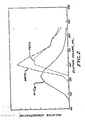
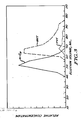
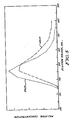
- FIGS. 1 to 5 of the accompanying Drawings present the results of chromatographic adsorptive separations using the process of the present invention in terms of concentration of components in feed versus time as measured by elution volume.
- feed mixture is a mixture containing one or more extract components and one or more raffinate components to be fed to an adsorbent of the process.
- feed stream indicates a stream of feed mixture which passes to an adsorbent used in the process.
- extract component is a type of compound or a compound that is more selectively adsorbed by the adsorbent while a “raffinate component” is a compound or type of compound that is less selectively adsorbed.
- raffinate component is a compound or type of compound that is less selectively adsorbed.
- triglycerides with less unsaturation are extract components and the more unsaturated tryglycerides are raffinate components.
- raffinate stream or "raffinate output stream” means a stream through which a raffinate component is removed from an adsorbent.
- the composition of the raffinate stream can vary from essentially 100% desorbent material (hereinafter defined) to essentially 100% raffinate components.
- extract stream or "extract output stream” means a stream in which an extract material which has been desorbed by a desorbent material is removed from the adsorbent.
- the composition of the extract stream likewise, can vary from essentially 100% desorbent material to essentially 100% extract components.
- raffinate product hereinafter defined
- the extract and raffinate streams then are further distinguished from each other and from the feed mixture by the ratio of the concentrations of an extract component and a specific raffinate component, both appearing in the particular stream.
- the ratio of the concentration of the more selectively adsorbed triglycerides to the concentration of less selectively adsorbed triglycerides will be highest in the extract stream, next highest in the feed mixture, and lowest in the raffinate stream.
- the ratio of the less selectively adsorbed triglycerides to the more selectively adsorbed triglycerides will be highest in the raffinate stream, next highest in the feed mixture, and the lowest in the extract stream.
- desorbent material means generally a material capable of desorbing an extract component.
- desorbent stream or "desorbent input stream” indicates the stream through which desorbent material passes to the adsorbent.
- separation means typically fractionators, where at least a portion of the desorbent material will be separated at separation conditions to produce an extract product and a raffinate product.
- extract product and raffinate product mean products produced by the process containing, respectively, an extract component and a raffinate component in higher concentrations than those found in the respective extract stream and the raffinate stream.
- selective pore volume of the adsorbent is defined as the volume of the adsorbent which selectively adsorbs extract components from a feed mixture.
- nonselective void volume of an adsorbent is the volume of an adsorbent which does not selectively retain an extract component from a feed mixture. This volume includes the cavities of the adsorbent which contain no adsorptive sites and the interstitial void spaces between adsorbent particles.
- the selective pore volume and the nonselective void volume are generally expressed in volumetric quantities and are of importance in determining the proper flow rates of fluid required to be passed into the process for efficient operations to take place for a given quantity of adsorbent.
- desorbent material means any fluid substance capable of removing a selectively adsorbed feed component from the adsorbent.
- desorbent material selection is not too critical, and desorbent materials comprising gaseous hydrocarbons such as methane, ethane, etc., or other types of gases such as nitrogen or hydrogen, may be used at elevated temperatures or reduced pressures or both to effectively purge the adsorbed feed component from the adsorbent.
- the desorbent material relied upon must be judiciously selected to satisfy several criteria. Firstly, the desorbent material must displace the extract components from the adsorbent with reasonable mass flow rates, without itself being so strongly adsorbed as unduly to prevent the extract from displacing the desorbent material in a following adsorption cycle. Expressed in terms of the selectivity (hereinafter discussed in more detail), it is preferred that the adsorbent be more selective for the extract component with respect to a raffinate component that it is for the desorbent material with respect to a raffinate component.
- desorbent materials must be compatible with the particular adsorbent and the particular feed mixture. More specifically, the desorbent must not react with either the adsorbent or any component of the feed material, and must not reduce or destroy the critical selectivity of the adsorbent for the extract components with respect to the raffinate component.
- Desorbent materials to be used in the process of this invention should additionally be substances which are easily separable from the feed mixture that is passed into the process. After desorbing the extract components of the feed, both desorbent material and the extract components are typically removed in admixture from the adsorbent.
- any desorbent material used in this process will have a substantially different average boiling point from that of the feed mixture, to allow separation of desorbent material from feed components in the extract and raffinate streams by simple fractionation, thereby permitting reuse of desorbent material in the process.
- substantially different as used herein means that the difference between the average boiling points of the desorbent material and the feed mixture shall be at least 5°C. The boiling range of the desorbent material may be higher or lower than that of the feed mixture.
- a ketone e.g., methyl ethyl ketone, methyl isobutyl ketone, diethyl ketone, acetone
- mixtures of a ketone and a paraffinic hydrocarbon e.g. hexane and isooctane
- adsorbents are highly desirable, if not absolutely necessary, for the successful operation of a selective adsorption process. Among such characteristics are: adsorptive capacity for some volume of an extract component per volume of adsorbent; the selective adsorption of an extract component with respect to a raffinate component and the desorbent material; and sufficiently fast rates of adsorption and desorption of the extract components to and from the adsorbent.
- Capacity of the adsorbent for adsorbing a specific volume of one or more extract components is, of course, a necessity; without such capacity the adsorbent is useless for adsorptive separation. Further-more, the higher capacity of the adsorbent for an extract component, the better is the adsorbent. Increased capacity of a particular adsorbent makes it possible to reduce the amount of adsorbent needed to separate the extract component contained in a particular charge rate of feed mixture. A reduction in the amount of adsorbent required for a specific adsorptive separation reduces the cost of the separation process. It is important that the good initial capacity of the adsorbent should be maintained during actual use in the separation process over some economically desirable life.
- the second necessary adsorbent characteristic is the ability of the adsorbent to separate components of the feed; or, in other words, the adsorbent should possess adsorptive selectivity, (B), for one component as compared to another component.
- Relative selectivity can be expressed not only for one feed component as compared to another but can also be expressed between any feed mixture component and the desorbent material.
- the selectivity, (B), as used throughout this specification, is defined as the ratio of the two components of the adsorbed phase over the ratio of the same two components in the unadsorbed phase at equilibrium conditions.
- Equation 1 Relative selectivity is shown as Equation 1 below:
- C and D are two components of the feed, represented in volume percent, and the subscripts A and U represent the adsorbed and unadsorbed phases, respectively.
- the equilibrium conditions are those at which the feed passing over a bed of adsorbent does not change composition after contacting the bed of adsorbent. In other words, there is no net transfer of material occurring between the unadsorbed and adsorbed phases.
- a value of (B) less than 1.0 would indicate that component D is preferentially adsorbed, leaving an unadsorbed phase richer in component C and an adsorbed phase richer in component D.
- selectivity of the adsorbent for the extract component with respect to the raffinate component just exceeds a value of 1.0, it is preferred that such selectivity should have a value approaching or exceeding 2.
- selectivity the higher the selectivity, the easier is the separation to perform. Higher selectivities permit a smaller amount of adsorbent to be used in the process.
- desorbent materials should have a selectivity equal to 1 or less than 1 with respect to all extract components, so that all of the extract components can be extracted as a class and all raffinate components clearly rejected into the raffinate stream.
- the third important characteristic is the rate of exchange of the extract component of the feed mixture material with the desorbent material or, in other words, the relative rate of desorption of the extract component.
- This characteristic relates directly to the amount of desorbent material that must be employed in the process to recover the extract component from the adsorbent; faster rates of exchange reduce the amount of desorbent material needed to remove the extract component and, therefore, permit a reduction in the operating costs of the process. With faster rates of exchange, less desorbent material has to be pumped through the process and separated from the extract stream for reuse in the process.
- a dynamic testing apparatus In order to test various adsorbents and desorbent materials with a particular feed mixture to measure the adsorbent characteristics of adsorptive capacity and selectivity and exchange rate, a dynamic testing apparatus is employed.
- the apparatus comprises an adsorbent chamber of approximately 70 cc volume, having inlet and outlet portions at opposite ends of the chamber.
- the chamber is contained within a temperature-control means and, in addition, pressure control equipment is used to operate the chamber at a constant predetermined pressure.
- Chromatographic analysis equipment can be attached to the outlet line of the chamber and used to analyze "on-stream" the effluent stream leaving the adsorbent chamber.
- a pulse test performed using this apparatus and the following general procedure, is used to determine selectivities and other data for various adsorbent systems.
- the adsorbent is filled to equilibrium with a particular desorbent by passing the desorbent material through the adsorbent chamber.
- a pulse of feed containing known concentrations of a nonadsorbed tracer (e.g. n-tetradecane n-C14), and of the particular feed material, all diluted in desorbent, is injected for a duration of several minutes.
- Desorbent flow is resumed, and the tracer and the aromatic isomers are eluted as in a liquid-solid chromatographic operation.
- the effluent can be analyzed by on-stream chromatographic equipment and traces of the envelopes of corresponding component peaks developed. Alternatively, effluent samples can be collected periodically and later analyzed separately by gas or liquid chromatography.
- adsorbent performance can be rated in terms of capacity index for an extract component, selectivity for one isomer with respect to the other, and the rate of desorption of an extract component by the desorbent.
- the capacity index may be characterized as the distance between the centre of the peak envelope of the selectively adsorbed isomer, and the peak envelope of the tracer component, or some other known reference point. It is expressed in terms of the volume in cubic centimetres of desorbent pumped during this period.
- Selectivity, (B), for an extract component with respect to a raffinate component may be characterized as the ratio of the distance between the centre of an extract component peak envelope and the tracer peak envelope (or other reference point) to the corresponding distance between the centre of a raffinate component peak envelope and the tracer peak envelope.
- the rate of exchange of an extract component with the desorbent can generally be characterized as the width of the peak envelopes at half intensity. The narrower the peak width, the faster the desorption rate.
- the desorption rate can also be characterized as the distance between the centre of the tracer peak envelope and the disappearance of an extract component which has just been desorbed. This distance is again the volume of desorbent pumped during this period.
- the adsorbents to be used in the process of this invention comprise specific crystalline aluminosilicates and activated carbon or carbonized polymeric resins.
- Crystalline aluminosilicates such as those used in the present invention include crystalline aluminosilicate cage structures in which alumina and silica tetrahedra are intimately connected in an open 3-dimensional network. The tetrahedra are crosslinked by the sharing of oxygen atoms, with spaces between the tetrahedra occupied by water molecules before partial or total dehydration of this zeolite. The dehydration of the zeolite results in crystals interlaced with cells having molecular dimensions.
- the crystalline aluminosilicates are often referred to as "molecular sieves" when the separation which they effect is dependent essentially upon differences between the sizes of the feed molecules as, for instance, when smaller normal paraffin molecules are separated from larger isoparaffin molecules by using a particular molecular sieve.
- molecular sieves although widely used, is not strictly suitable, since the separation of specific triglycerides is apparently dependent on differences in electrochemical attraction of the different triglycerides and the adsorbent, rather than solely on physical size differences in the triglyceride molecules.
- the crystalline aluminosilicates generally encompass those zeolites represented by the Formula 1 below:
- M is a cation which balances the electrovalence of the tetrahedra and is generally referred to as an exchangeable cationic site
- n represents the valence of the cation
- w represents the moles of SiO2
- y represents the moles of water.
- the generalized cation "M” may be monovalent, divalent or trivalent cations or mixtures thereof.
- omega type structured zeolite in the hydrated or partially hydrated form can be closely approximated in terms of moles of oxides as shown in Formula 2 below (Probable Structure of Zeolite ⁇ , R. M. Barrer et al., Chemical Communications, 1969, 12, pp 659-60):
- adsorbents used in separative processes contain the crystalline material dispersed in an amorphous binder material or inorganic matrix, having channels and cavities therein which enable liquid access to the crystalline material.
- the adsorbent especially omega zeolite, may be binderless. Silica, alumina, bentonite, or mixtures thereof are typical of such inorganic matrix materials.
- the binder aids in forming or agglomerating the crystalline particles which otherwise would comprise a fine powder.
- the adsorbent may thus be in the form of particles such as extrudates, aggregates, tablets, macrospheres or granules having a desired particle range, preferably from 16 to 60 Standard U.S. Mesh (1.19 to 0.25 mm).
- Carbon adsorbents useful in this invention include activated carbons and carbonized resins.
- Activated carbons can be produced from natural sources, such as coal or coconut shells, while carbonized resins can be made from functionalized or unfunctionalized polymeric material.
- Examples of carbons useful in the present invention include Purasiy carbon, used in the Union Carbide Purasiy process, and XE 348 carbon, from Rohm and Haas.
- the adsorbent may be employed in the form of a dense fixed bed which is alternately contacted with a feed mixture and a desorbent material, in which case the process will be only semicontinuous.
- a set of two or more static beds of adsorbent may be employed with appropriate valving, so that a feed mixture can be passed through one or more adsorbent beds of a set while a desorbent material is passed through one or more of the other beds in a set.
- the flow of a feed mixture and a desorbent material may be either upwards or downwards through an adsorbent in such beds. Any conventional apparatus employed in a static bed fluid-solid contacting may be used.
- Moving bed or simulated moving bed flow systems have a much greater separation efficiency than fixed bed systems and are, therefore, preferred.
- the retention and displacement operations are continuously taking place, which allows both continuous production of an extract and a raffinate stream and the continual use of feed and displacement fluid streams.
- One preferred embodiment of this process utilizes what is known in the art as the simulated moving bed countercurrent flow system. In such a system, it is the progressive movement of multiple liquid access points down a molecular sieve chamber that simulates the upward movement of molecular sieve contained in the chamber.
- Another embodiment of a simulated moving bed flow system suitable for use in the process of the present invention is the cocurrent high efficiency simulated moving bed process disclosed in US-A-4402832.
- At least a portion of the extract output stream will pass into a separation means wherein at least a portion of the desorbent material can be separated at separating conditions to produce an extract product containing a reduced concentration of desorbent material.
- at least a portion of the raffinate output stream will also be passed to a separation means wherein at least a portion of the desorbent material can be separated at separating conditions to produce a desorbent stream, which can be reused in the process, and a raffinate product containing a reduced concentration of desorbent material.
- the concentration of desorbent material in the extract product and the raffinate product will be less than 5 vol. % and more preferably less than 1 vol. %.
- the separation means will typically be a fractionation column, the design and operation of which is well known to the separation art.
- Adsorption conditions will preferably include a temperature range of from 20 to 250°C, with 100 to 200°C being more preferred, and a pressure sufficient to maintain liquid phase.
- Desorption conditions will include the same range of temperatures and pressures as used for adsorption conditions.
- the size of the units which can utilize the process of this invention can vary anywhere from those of pilot-plant scale (see for example US-A-3706812) to those of commercial scale, and can range in flow rates from as little as a few cubic centimetres up to many thousands of cubic metres per hour.
- Figures 1 to 4 are chromatographic traces of the pulse tests described in Examples II to V, illustrating the separations achieved with omega zeolite and carbon adsorbents and various specified desorbents.
- Natural oils obtained from plant sources such as safflow oil, palm oil and cocoa butter are mixtures of triglycerides.
- Safflower oil and cocoa butter are relatively simple mixtures.
- Safflower oil contains predominately polyunsaturated triglycerides (PUT), such as trilinolein which has six unsaturated bonds (PUT-6), while cocoa butter contains mostly monounsaturated triglycerides (MUT), such as 1,3-stearyl 2-oleyl glyceride (SOS).
- PUT predominately polyunsaturated triglycerides
- MUT monounsaturated triglycerides
- SOS 1,3-stearyl 2-oleyl glyceride
- a static test was carried out to determine the ability of two adsorbents, carbon and omega type zeolite, to separate triglycerides having a lower degree of unsaturation from triglycerides having a higher degree of unsaturation.
- a measured amount of adsorbent was placed in a container and a feed mixture was added and allowed to stand until equilibrium was reached.
- The. various fluids were measured to determine amount and composition of each to calculate the ratio, CF/CI, of the final concentration (CF) to the initial concentration (CI) of each component. The results are listed in Table 1.
- Triolein and Trilinolein in Isooctane 0.059 wt % 0.054 wt % Initial Ratio, Triolein/Trilinolein 1.167 1.065 Equilibrium Ratio of Triolein to Trilinolein 0.248 2.325 CF/CI, Triolein (PUT-3) 0.008 0.785 CF/CI, Trilinolein (PUT-6) 0.04 0.360 Adsorbent Purasiv Carbon K-Exchanged Omega Adsorbent w/Attapulgite Binder 0.47 gm/cc Stock Solution 0.25 gm/cc Stock Solution
- triolein was selectively adsorbed.
- trilinolein was the selectively adsorbed component.
- the pulse test was performed to evaluate the ability of the present invention to separate trilinolein from triolein.
- the feed mixture comprised 0.2 g of trilinolein, 0.2 g of triolein, 0.1 g of C14 tracer, and 1.5 cc of hexane.
- the adsorbent used was a potassium-exchanged omega zeolite and can be prepared by mixing with 20 wt. % of attapulgite clay. The adsorbent was redried at 600°C before it was utilized in the process in each test.
- the adsorbent so produced was used to evaluate the ability of the present invention to separate triglycerides having a higher degree of saturation from triglycerides with a higher degree of unsaturation.
- the column was maintained at a temperature of 156°C and a pressure of 200 psig (1480 kPa).
- Liquid chromatographic analysis equipment was used to analyze the column effluent stream in order to determine the composition of the effluent material at given time intervals. The operations taking place for each test were as follows: the desorbent material was run continuously at a nominal liquid hourly space velocity (LHSV) of 1.0 hr. ⁇ 1.
- LHSV liquid hourly space velocity
- the desorbent mixture was 50% toluene in hexane.
- triolein PUT-3
- PUT-6 trilinolein
- the selectivity for the trilinolein relative to the triolein is 1.39.
- the retention volumes of trilinolein and triolein were 13.65 and 9.8 cc, respectively.
- Example I The pulse test of Example I was repeated for omega type molecular sieves.
- binderless hydrogen-exchanged omega zeolite that had been dried in air at 600°C was used.
- the temperature was 80°C and the desorbent was 100 vol. % toluene.
- the feed was 0.5 g of cocoa butter (MUT); 0.5 g of safflower oil (PUT); 0.28 g of n-C14 (tetradecane); and 1.0 cc of desorbent.
- Example illustrates how the present invention can be used in a two-step desorption process to obtain triglycerides which are highly enriched, according to their degree of unsaturation.
- Example III The pulse test of Example III was repeated, except that a copper-exchanged omega zeolite with a bentonite binder was used for the adsorbent.
- the feed composition was as follows: 0.5 g of cocoa butter (PUT); 0.5 g of safflower oil (MUT); 0.25 of n-C14; and 1 cc of desorbent.
- Example II The pulse test of Example II was repeated, except that XE 348 carbon was used as the adsorbent at a temperature of 60°C. From Figure 5, it is noted that in contrast to the preceeding examples, the carbon adsorbent is selective for the monounsaturated triglycerides (MUT).
- MUT monounsaturated triglycerides
Landscapes
- Chemical & Material Sciences (AREA)
- Organic Chemistry (AREA)
- Life Sciences & Earth Sciences (AREA)
- Engineering & Computer Science (AREA)
- Chemical Kinetics & Catalysis (AREA)
- Oil, Petroleum & Natural Gas (AREA)
- Wood Science & Technology (AREA)
- Analytical Chemistry (AREA)
- Microbiology (AREA)
- Organic Low-Molecular-Weight Compounds And Preparation Thereof (AREA)
- Treatment Of Liquids With Adsorbents In General (AREA)
Applications Claiming Priority (1)
| Application Number | Priority Date | Filing Date | Title |
|---|---|---|---|
| US07/070,266 US4784807A (en) | 1987-07-06 | 1987-07-06 | Process for separating triglylcerides by degree of unsaturation |
Publications (1)
| Publication Number | Publication Date |
|---|---|
| EP0367877A1 true EP0367877A1 (de) | 1990-05-16 |
Family
ID=22094229
Family Applications (1)
| Application Number | Title | Priority Date | Filing Date |
|---|---|---|---|
| EP88310553A Withdrawn EP0367877A1 (de) | 1987-07-06 | 1988-11-09 | Adsorptionsverfahren zur Trennung von Triglyceriden gemäss ihrem Unsättigungsgrad |
Country Status (2)
| Country | Link |
|---|---|
| US (1) | US4784807A (de) |
| EP (1) | EP0367877A1 (de) |
Cited By (3)
| Publication number | Priority date | Publication date | Assignee | Title |
|---|---|---|---|---|
| WO1992022626A1 (de) * | 1991-06-12 | 1992-12-23 | Battelle-Institut E.V. | Verfahren zur herstellung eines von bei der weiterverarbeitung störenden bestandteilen befreiten triglycerid-gemisches |
| EP1078686A3 (de) * | 1999-08-25 | 2001-04-18 | Praxair Technology, Inc. | Neue Adsorptionsmittel für die Vorzugsadsorption von Stickstoff aus anderen Gasen |
| WO2002086039A1 (en) * | 2001-04-20 | 2002-10-31 | Dow Global Technologies Inc. | Separation of plant oil triglyceride mixtures by solid bed adsorption |
Families Citing this family (6)
| Publication number | Priority date | Publication date | Assignee | Title |
|---|---|---|---|---|
| US4961881A (en) * | 1988-02-17 | 1990-10-09 | Uop | Process for separating triglycerides and regenerating absorbent used in said separation process |
| US5288619A (en) * | 1989-12-18 | 1994-02-22 | Kraft General Foods, Inc. | Enzymatic method for preparing transesterified oils |
| US5171870A (en) * | 1991-04-22 | 1992-12-15 | Uop | Process for separating triglycerides having different degrees of unsaturation |
| US5484436A (en) * | 1991-06-07 | 1996-01-16 | Hemostatic Surgery Corporation | Bi-polar electrosurgical instruments and methods of making |
| WO2011039776A1 (en) * | 2009-09-17 | 2011-04-07 | V. B. Medicare Pvt. Ltd. | High purity concentrates of polyunsaturated fatty acid and ester by copper complexation. |
| US10065903B2 (en) | 2015-07-31 | 2018-09-04 | Uop Llc | Processes for producing hydrocarbons from a renewable feedstock |
Citations (7)
| Publication number | Priority date | Publication date | Assignee | Title |
|---|---|---|---|---|
| US4048205A (en) * | 1976-08-02 | 1977-09-13 | Uop Inc. | Process for separating an ester of a monoethanoid fatty acid |
| US4049688A (en) * | 1976-08-02 | 1977-09-20 | Uop Inc. | Process for separating esters of fatty acids by selective adsorption |
| US4277412A (en) * | 1980-01-02 | 1981-07-07 | The Proctor & Gamble Company | Fractionation of triglyceride mixtures |
| US4284580A (en) * | 1980-01-02 | 1981-08-18 | The Procter & Gamble Company | Fractionation of triglyceride mixture |
| US4297292A (en) * | 1979-05-25 | 1981-10-27 | The Procter & Gamble Company | Fractionation of triglyceride mixtures |
| US4353838A (en) * | 1981-02-13 | 1982-10-12 | Uop Inc. | Process for separating a monoethanoid fatty acid |
| US4770819A (en) * | 1987-07-06 | 1988-09-13 | Uop Inc. | Process for separating di- and triglycerides |
-
1987
- 1987-07-06 US US07/070,266 patent/US4784807A/en not_active Expired - Fee Related
-
1988
- 1988-11-09 EP EP88310553A patent/EP0367877A1/de not_active Withdrawn
Patent Citations (7)
| Publication number | Priority date | Publication date | Assignee | Title |
|---|---|---|---|---|
| US4048205A (en) * | 1976-08-02 | 1977-09-13 | Uop Inc. | Process for separating an ester of a monoethanoid fatty acid |
| US4049688A (en) * | 1976-08-02 | 1977-09-20 | Uop Inc. | Process for separating esters of fatty acids by selective adsorption |
| US4297292A (en) * | 1979-05-25 | 1981-10-27 | The Procter & Gamble Company | Fractionation of triglyceride mixtures |
| US4277412A (en) * | 1980-01-02 | 1981-07-07 | The Proctor & Gamble Company | Fractionation of triglyceride mixtures |
| US4284580A (en) * | 1980-01-02 | 1981-08-18 | The Procter & Gamble Company | Fractionation of triglyceride mixture |
| US4353838A (en) * | 1981-02-13 | 1982-10-12 | Uop Inc. | Process for separating a monoethanoid fatty acid |
| US4770819A (en) * | 1987-07-06 | 1988-09-13 | Uop Inc. | Process for separating di- and triglycerides |
Cited By (6)
| Publication number | Priority date | Publication date | Assignee | Title |
|---|---|---|---|---|
| WO1992022626A1 (de) * | 1991-06-12 | 1992-12-23 | Battelle-Institut E.V. | Verfahren zur herstellung eines von bei der weiterverarbeitung störenden bestandteilen befreiten triglycerid-gemisches |
| US5427790A (en) * | 1991-06-12 | 1995-06-27 | Dr. Frische Gmbh | Process for producing a triglyceride mix free from components hampering further processing |
| EP1078686A3 (de) * | 1999-08-25 | 2001-04-18 | Praxair Technology, Inc. | Neue Adsorptionsmittel für die Vorzugsadsorption von Stickstoff aus anderen Gasen |
| WO2002086039A1 (en) * | 2001-04-20 | 2002-10-31 | Dow Global Technologies Inc. | Separation of plant oil triglyceride mixtures by solid bed adsorption |
| US7097770B2 (en) | 2001-04-20 | 2006-08-29 | Dow Global Technologies Inc. | Separation of plant oil triglyceride mixtures by solid bed adsorption |
| CN100554392C (zh) * | 2001-04-20 | 2009-10-28 | 陶氏环球技术公司 | 由固体床吸附分离植物油甘油三酯混合物的方法 |
Also Published As
| Publication number | Publication date |
|---|---|
| US4784807A (en) | 1988-11-15 |
Similar Documents
| Publication | Publication Date | Title |
|---|---|---|
| CA1190482A (en) | Process for separating normal paraffins | |
| US4961881A (en) | Process for separating triglycerides and regenerating absorbent used in said separation process | |
| US4770819A (en) | Process for separating di- and triglycerides | |
| US4519952A (en) | Process for separating fatty acids from unsaponifiables | |
| US4455444A (en) | Low temperature process for separating hydrocarbons | |
| US4797233A (en) | Process for separating mono-, di- and triglycerides | |
| EP1060776B1 (de) | Verwendung einer Spülung der Raffinatsleitung in einem kontinuierlichen adsorptiven Trennverfahren mittels eines simulierten Wanderbettes | |
| CA1156260A (en) | Two-stage process for separating mixed fatty-acid esters | |
| US4337156A (en) | Adsorptive separation of contaminants from naphtha | |
| US4404145A (en) | Process for separating fatty acids from rosin acids | |
| JPH0129230B2 (de) | ||
| US4524029A (en) | Process for separating fatty acids | |
| US4524030A (en) | Process for separating fatty acids | |
| US4486618A (en) | Process for separating C6 olefin hydrocarbons | |
| US4353838A (en) | Process for separating a monoethanoid fatty acid | |
| US4409033A (en) | Simulated moving bed separation process for high viscosity feed streams | |
| EP0442181B1 (de) | Trennung von paraffinischen Hydroxydicarbonsäuren aus deren Gemischen mit olefinischen Dicarbonsäuren | |
| US4529828A (en) | Separation of ortho-xylene | |
| US4784807A (en) | Process for separating triglylcerides by degree of unsaturation | |
| US4522761A (en) | Process for separating fatty acids from rosin acids | |
| EP0712825A1 (de) | Verfahren zur adsorptiven Abtrennung von meta-Xylol von aromatischen Kohlenwasserstoffen | |
| HU205058B (en) | Process for adsorption separation of paraxylol by using tetraline desorbent | |
| EP0549245A1 (de) | Verfahren zur Adsorptionstrennung von Para-Xylol mit Verwendung von Indan oder einem Indanderivat als schweres Desorbierungsmittel | |
| EP0160744A1 (de) | Trennung von ortho-bialkyl-substituierten monocyclischen aromatischen Isomeren | |
| US4578223A (en) | Process for separating saturated fatty acids from each other |
Legal Events
| Date | Code | Title | Description |
|---|---|---|---|
| PUAI | Public reference made under article 153(3) epc to a published international application that has entered the european phase |
Free format text: ORIGINAL CODE: 0009012 |
|
| AK | Designated contracting states |
Kind code of ref document: A1 Designated state(s): DE FR GB IT NL |
|
| 17P | Request for examination filed |
Effective date: 19901019 |
|
| 17Q | First examination report despatched |
Effective date: 19921208 |
|
| STAA | Information on the status of an ep patent application or granted ep patent |
Free format text: STATUS: THE APPLICATION IS DEEMED TO BE WITHDRAWN |
|
| 18D | Application deemed to be withdrawn |
Effective date: 19930420 |