EP0368313A2 - Enregistreur à bande vidéo en mesure de recevoir une diffusion de télétexte - Google Patents
Enregistreur à bande vidéo en mesure de recevoir une diffusion de télétexte Download PDFInfo
- Publication number
- EP0368313A2 EP0368313A2 EP89120792A EP89120792A EP0368313A2 EP 0368313 A2 EP0368313 A2 EP 0368313A2 EP 89120792 A EP89120792 A EP 89120792A EP 89120792 A EP89120792 A EP 89120792A EP 0368313 A2 EP0368313 A2 EP 0368313A2
- Authority
- EP
- European Patent Office
- Prior art keywords
- data
- character
- group
- date
- character group
- Prior art date
- Legal status (The legal status is an assumption and is not a legal conclusion. Google has not performed a legal analysis and makes no representation as to the accuracy of the status listed.)
- Granted
Links
- 230000004044 response Effects 0.000 claims 2
- 230000006870 function Effects 0.000 abstract description 3
- 238000000034 method Methods 0.000 description 8
- 238000010586 diagram Methods 0.000 description 5
- 238000012545 processing Methods 0.000 description 4
- 239000000284 extract Substances 0.000 description 2
- 238000012544 monitoring process Methods 0.000 description 2
- 238000012546 transfer Methods 0.000 description 2
- 238000007796 conventional method Methods 0.000 description 1
Images





Classifications
-
- H—ELECTRICITY
- H04—ELECTRIC COMMUNICATION TECHNIQUE
- H04H—BROADCAST COMMUNICATION
- H04H40/00—Arrangements specially adapted for receiving broadcast information
- H04H40/09—Arrangements for receiving desired information automatically according to timetables
-
- H—ELECTRICITY
- H04—ELECTRIC COMMUNICATION TECHNIQUE
- H04H—BROADCAST COMMUNICATION
- H04H20/00—Arrangements for broadcast or for distribution combined with broadcast
- H04H20/28—Arrangements for simultaneous broadcast of plural pieces of information
-
- H—ELECTRICITY
- H04—ELECTRIC COMMUNICATION TECHNIQUE
- H04H—BROADCAST COMMUNICATION
- H04H60/00—Arrangements for broadcast applications with a direct linking to broadcast information or broadcast space-time; Broadcast-related systems
- H04H60/27—Arrangements for recording or accumulating broadcast information or broadcast-related information
-
- H—ELECTRICITY
- H04—ELECTRIC COMMUNICATION TECHNIQUE
- H04H—BROADCAST COMMUNICATION
- H04H60/00—Arrangements for broadcast applications with a direct linking to broadcast information or broadcast space-time; Broadcast-related systems
- H04H60/35—Arrangements for identifying or recognising characteristics with a direct linkage to broadcast information or to broadcast space-time, e.g. for identifying broadcast stations or for identifying users
- H04H60/37—Arrangements for identifying or recognising characteristics with a direct linkage to broadcast information or to broadcast space-time, e.g. for identifying broadcast stations or for identifying users for identifying segments of broadcast information, e.g. scenes or extracting programme ID
-
- H—ELECTRICITY
- H04—ELECTRIC COMMUNICATION TECHNIQUE
- H04H—BROADCAST COMMUNICATION
- H04H60/00—Arrangements for broadcast applications with a direct linking to broadcast information or broadcast space-time; Broadcast-related systems
- H04H60/35—Arrangements for identifying or recognising characteristics with a direct linkage to broadcast information or to broadcast space-time, e.g. for identifying broadcast stations or for identifying users
- H04H60/38—Arrangements for identifying or recognising characteristics with a direct linkage to broadcast information or to broadcast space-time, e.g. for identifying broadcast stations or for identifying users for identifying broadcast time or space
- H04H60/40—Arrangements for identifying or recognising characteristics with a direct linkage to broadcast information or to broadcast space-time, e.g. for identifying broadcast stations or for identifying users for identifying broadcast time or space for identifying broadcast time
-
- H—ELECTRICITY
- H04—ELECTRIC COMMUNICATION TECHNIQUE
- H04H—BROADCAST COMMUNICATION
- H04H60/00—Arrangements for broadcast applications with a direct linking to broadcast information or broadcast space-time; Broadcast-related systems
- H04H60/68—Systems specially adapted for using specific information, e.g. geographical or meteorological information
- H04H60/72—Systems specially adapted for using specific information, e.g. geographical or meteorological information using electronic programme guides [EPG]
-
- H—ELECTRICITY
- H04—ELECTRIC COMMUNICATION TECHNIQUE
- H04N—PICTORIAL COMMUNICATION, e.g. TELEVISION
- H04N5/00—Details of television systems
- H04N5/76—Television signal recording
- H04N5/765—Interface circuits between an apparatus for recording and another apparatus
-
- H—ELECTRICITY
- H04—ELECTRIC COMMUNICATION TECHNIQUE
- H04N—PICTORIAL COMMUNICATION, e.g. TELEVISION
- H04N7/00—Television systems
- H04N7/08—Systems for the simultaneous or sequential transmission of more than one television signal, e.g. additional information signals, the signals occupying wholly or partially the same frequency band, e.g. by time division
- H04N7/087—Systems for the simultaneous or sequential transmission of more than one television signal, e.g. additional information signals, the signals occupying wholly or partially the same frequency band, e.g. by time division with signal insertion during the vertical blanking interval only
- H04N7/088—Systems for the simultaneous or sequential transmission of more than one television signal, e.g. additional information signals, the signals occupying wholly or partially the same frequency band, e.g. by time division with signal insertion during the vertical blanking interval only the inserted signal being digital
- H04N7/0882—Systems for the simultaneous or sequential transmission of more than one television signal, e.g. additional information signals, the signals occupying wholly or partially the same frequency band, e.g. by time division with signal insertion during the vertical blanking interval only the inserted signal being digital for the transmission of character code signals, e.g. for teletext
-
- H—ELECTRICITY
- H04—ELECTRIC COMMUNICATION TECHNIQUE
- H04N—PICTORIAL COMMUNICATION, e.g. TELEVISION
- H04N7/00—Television systems
- H04N7/08—Systems for the simultaneous or sequential transmission of more than one television signal, e.g. additional information signals, the signals occupying wholly or partially the same frequency band, e.g. by time division
- H04N7/087—Systems for the simultaneous or sequential transmission of more than one television signal, e.g. additional information signals, the signals occupying wholly or partially the same frequency band, e.g. by time division with signal insertion during the vertical blanking interval only
- H04N7/088—Systems for the simultaneous or sequential transmission of more than one television signal, e.g. additional information signals, the signals occupying wholly or partially the same frequency band, e.g. by time division with signal insertion during the vertical blanking interval only the inserted signal being digital
- H04N7/0887—Systems for the simultaneous or sequential transmission of more than one television signal, e.g. additional information signals, the signals occupying wholly or partially the same frequency band, e.g. by time division with signal insertion during the vertical blanking interval only the inserted signal being digital for the transmission of programme or channel identifying signals
Definitions
- the present invention relates to a video tape recorder (hereinafter referred to as a VTR) capable of receiving teletext broadcasting and, more specifically, to a VTR in which reservation of video recording can be carried out by utilizing a program list, that is, information such as the date of broadcast, start time, title of the program and so on of programs to be put on the air, transmitted as a part of the teletext data.
- a program list that is, information such as the date of broadcast, start time, title of the program and so on of programs to be put on the air, transmitted as a part of the teletext data.
- teletext broadcasting transmitting character information.
- information corresponding to characters of two lines for example, is multiplexed on a video signal to be broadcasted in the form of character code signal in accordance with internationally common teletext standard, in the vertical blanking period of the television video signal, and the information is stored in a memory of a receiver.
- character information corresponding to one picture is once stored in the memory, the information is read and supplied superposed on the video signal to a display apparatus.
- the teletext data that is, the character information, is adapted to be identified by every picture by a page number.
- a so-called program list including information such as the date of broadcast, start time, end time, title and so on of programs to be put on the air is broadcasted as one of the above described character information.
- a method of reserving video recording by utilizing such a program list received by a VTR capable of receiving teletext broadcasting has been proposed and disclosed in, for example, German Patent Publication No. 3,335,082.
- information such as the date of broadcast and the start time, which is the content of the program list is displayed as character information on a screen of a display apparatus connected to the VTR.
- An operator designates a desired program by means of a cursor or the like while monitoring the displayed character information, so as to reserve recording of a desired program by taking the data necessary for reserving video recording into a reservation data memory of the VTR.
- May 15th may be represented as "15. May” or "May 15".
- the conventional method of reserving video recording of VTR in which date and time are recognized in accordance with the fixed formats can not correspond to the various and many display formats of time or date.
- the display of time or date may not be properly recognized.
- Numerals which are not the display of time may be erroneously recognized as time, and the numerals which are not the display of date may be erroneously recognized as date.
- an object of the present invention is to provide a VTR which can properly recognize time or date to utilize the same for video recording reservation, no matter what display form of the time or date is used in a program list transmitted in teletext broadcasting.
- the present invention is a video tape recorder which can receive teletext data transmitted multiplexed on a television video signal in a vertical blanking period and which can take in at least character data indicative of time information in association with the program to be put on the air from the received teletext data to utilize the same for reservation of video recording, characterized by a character group classifying circuit for determining types of characters constituting character data one by one and grouping continuous characters of the same type to classify the character data into at least 1 character group, and a time decoding circuit for decoding time information based on an arrangement of a character group indicating numerals out of the said at least one character group classified by the character group classifying circuit.
- the video tape recorder which can receive teletext data transmitted multiplexed on a television video signal in a vertical blanking period and which can take in at least character data indicative of date information in association with programs to be put on the air out of the received teletext data to utilize the same for reservation of video recording is characterized by a character group classifying circuit for determining types of characters constituting character data one by one and grouping continuous characters of the same type to classify the character data into at least two character groups, and a date decoding circuit for decoding date information based on arrangements of a character group indicating numerals and a character group indicating month out of the said at least two character groups classified by the character group classifying circuit.
- main advantage of the present invention is that video recording reservation data indicating time or date can be surely taken into the VTR without error by simple key operation from a program list regardless of the form of the list.
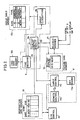
- a broadcasting signal captured by an antenna 1 is selected for reception by a tuner 2 to be applied to an intermediate frequency and detecting circuit (hereinafter referred to as an IF ⁇ DET).
- the channel selecting operation of the tuner 2 is controlled by a signal from a channel selecting circuit 16, which will be described later.
- the output from the IF ⁇ DEP 3 is applied to a video signal processing circuit 4, a teletext signal extracting circuit 8 and a VPS (Video Program System) extracting circuit 14.
- VPS Video Program System
- a video signal b processed by the video signal processing circuit 4 is applied to a display switching circuit 5 whose switching is controlled by a switching signal a from a teletext controlling portion 6, which will be described later, constituted by a microcomputer.
- a teletext signal (coded character information) multiplexed in the vertical blanking period is extracted by a teletext signal extracting circuit 8 out of the video signal outputted from the IF ⁇ DET 3 to be applied to a page selecting circuit 9.
- the page selecting circuit 9 extracts data of the page number previously designated by the teletext controlling portion 6 out of the extracted teletext signal to apply the same to a picture data memory 10.
- the picture data of the specified page number selected by the page selecting circuit 9 is written in accordance with a control signal from the teletext controlling portion 6.
- the data written in the picture data memory 10 is read in accordance with a control signal from the teletext controlling portion 6 to be applied to a character generator 7.
- the character generator 7 converts the received teletext signal into a character signal c to apply the same to a display switching circuit 5.
- the teletext signal extracting circuit 8, the page selecting circuit 9 and the character generator 7 constitute a teletext decoder 21.
- the display switching circuit 5 selects either the video signal b from the video signal processing circuit 4 or the character signal c from the character generator 7 to output the same in accordance with a switching signal a from the teletext controlling portion 6.
- the teletext controlling portion 6 controls display of the screen by sending instruction to the page selecting circuit 9 and to the display switching circuit 5 and carries out various functions for reserving video recording. These functions will be described in more detail later.
- a key input portion 11 is operated by a user, and the teletext controlling portion 6 carries out processes corresponding to the key operation.
- a work memory 12 is used during processes for reserving video recording of programs by the teletext controlling portion 6, the details of which will be described later.
- the reservation of video recording of a program by the teletext controlling portion 6 will be briefly described in the following.
- a picture of a prescribed page number of the teletext data that is, the program list
- the user further operates the key input portion 11 to move a cursor on the screen to select a desired program, and operates a video recording reservation key included in the key input portion 11.
- the teletext controlling portion 6 writes program reservation data corresponding to the selected program to a reservation data memory 19. Writing of the program reservation data to the memory 19 will be described in detail later.
- the reservation data written in the reservation data memory 19 is read by a timer reservation controlling portion 13 formed of a microcomputer.
- the VPS signal multiplexed only in a specified vertical blanking period is extracted by the VPS signal extracting circuit 14 from the video signal outputted from the IF ⁇ DET 3 to be applied to the timer reservation controlling portion 13.
- the VPS signal is used for controlling the start time, the end time and the like of the program reserved in the VTR from the side of broadcasting station, when the start time, the end time or the like of the program is changed.
- Time data from a clock circuit 15 is also applied to the timer reservation controlling portion 13.
- the timer reservation controlling portion 13 compares the time data with the reservation data or, when there is a VPS signal, the VPS signal with the reservation data.
- the controlling portion 13 controls the channel selecting circuit 16 to have the tuner 2 select a prescribed program, and applies a video recording instruction to a system controller 17.
- the system controller 17 controls a recording circuit 18 correspondingly, to start video recording operation.
- the program reservation data written in the reservation data memory 19 is erased.
- the above described timer reservation controlling portion 13, the VPS signal extracting circuit 14, the clock circuit 15, the channel selecting circuit 16 and the system controller 17 constitute a VTR controlling portion 20.
- the system controller 17 carries out various operations of the VTR, that is, reproduction, fast forwarding, rewinding, stopping and the like in accordance with the input through the key input portion 11.
- the key input portion 11 of Fig. 1 comprises a keyboard 11a provided on the body of the VTR, a remote control transmitter 11b and an input controlling circuit 11c. Instructions inputted through the key board 11a or through the remote control transmitter 11b are converted into common code signals by the input controlling circuit 11c to be applied to the teletext controlling portion 6.
- the teletext controlling portion 6 carries out reservation of video recording by writing the program reservation data to the reservation data memory 19, based on a signal from the input controlling circuit 11c.
- the data of date "May 15", data of the start time "10:15” and data of the end time "10:30" are stored in the reservation data memory 19, and the reservation video recording is carried out by the VTR in accordance with the reservation data.
- the VTR is set in a teletext receiving mode by a prescribed operation of the keyboard 11a or the remote control transmitter 11b.
- codes related to the teletext control are applied from the input controlling circuit 11c to the teletext controlling circuit 6a in the teletext controlling portion 6, and the teletext controlling circuit 6a supplies commands CO to the teletext decoder 21 to have the teletext decoder 21 carry out teletext processing corresponding to the given code, for example, designation of page number.
- the teletext decoder 21 extracts a teletext signal multiplexed in the vertical blanking period of the video signal from the IF ⁇ DET 3 of Fig. 1 in accordance with the command CO transmitted from the teletext controlling circuit 6a and applies the same to the picture data memory 10.
- the teletext signal once stored in the memory 10 is read to the teletext decoder 21, and it is converted into a character signal c by the teletext decoder 21 to be outputted.
- the teletext controlling circuit 6a is adapted to directly read the content of the picture data memory 10.
- the teletext controlling circuit 6a When an instruction to carry out reservation of video recording using the program list is inputted to the teletext controlling circuit 6a by the operation of the keyboard 11a or the remote control transmitter 11b, the teletext controlling circuit 6a directly reads the content of the picture data memory 10 to apply the same to the group classifying circuit 6b.
- the group classifying circuit 6b reads the codes of the applied character data one by one successively and determines the type of the character (for example, numerals, alphabets and so on). When there are continues characters of the same type, the circuit classifies these characters as one group.
- the group classifying circuit 6b successively classifies a plurality of characters read from the memory 10 into a plurality of types of character groups, with the results stored in a group table memory 12a constituting the work memory 12.
- the group classifying circuit 6b carries out classifying operation such as shown in the group table memory 12a of Fig. 2. Such classification can be realized in software by constituting the group classifying circuit 6b with microcomputers.
- step S1 the group classifying circuit 6b forms a group of characters of a fist type.
- the character data read from the picture data memory 10 is "10:15 NEWS". Therefore, the first character is "1". Accordingly, the first character group is the group of numerals.
- step S2 whether or not the next character is of the same type as the preceding character is determined.
- the next character is "0" and therefore it is the same type as the preceding character. Accordingly, the character "0" is added to the preceding group (numeral group) in the next step S3.
- step S4 whether or not all the content in the picture data memory 10 are read is determined. In this example, the answer is no, so that the program returns to the step S2.
- step S2 whether or not the next character is of the same type as the preceding one is determined.
- the character is ":", which is not a numeral but a separator. It is a character of a different type, so that a new group (separator group) is formed in the step S5 in which the character ":" is included.
- the group classifying circuit 6b finishes the classifying operation.
- the data stored in the group table memory 12a in this manner is successively read by the time decoding circuit 6c of the teletext controlling portion 6.
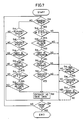
- the time decoding circuit 6c decodes the start time of broadcast from the read data based on the arrangement of the character group indicating numerals. Namely, no matter whether the display format of time is "10:15" or "1015", the time can be correctly decoded by this operation.
- the decoding operation can be realized in software by constituting the time decoding circuit 6c with microcomputers.
- the program proceeds to the next step S13 in which whether or not the next group is a separator group is determined. Since ":" is a separator group, the program proceeds to the next step S14 in which whether or not the second character group is a numeral group is determined. Since the second character group is a numeral group of "15", the program proceeds to the next step S15.
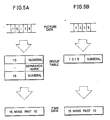
- step S15 whether or not the data "10:15” is proper as the time data is determined. For example, the data "37:11" is apparently wrong as a time display of 24 hours. In such a case, the data is not regarded as the time data. Since the data "10:15” in this embodiment is determined acceptable as the time display, the time data are extracted as the data indicating "15 minutes past ten" in the step S16 and they are stored in the time data memory 12b constituting the work memory 12.
- step S17 whether or not the decoding operation is done on every content in the group table memory 12a is determined. If the decoding operation has not yet been completed, the program returns to the step S11. When it is determined in the step S17 that decoding is done for all the contents in the group table memory 12a, then the time decoding circuit 6c finishes the above described decoding operation.
- step S12 When the time data is applied in the form of "1015" as shown in Fig. 5B, it is determined in the step S12 that the number of digits in the numeral group is not 2, and the program proceeds to the step S18. In the step S18, whether or not the number of digits is 4 is determined. In this case, since the numeral group contains 4 digits of "1015", the program proceeds to the step S15. If the number of digits is not 4 in the step S18, the program proceeds to the step S17.
- step S15 If is determined in the step S15 that the data "1015" is proper as the time data, then the data is extracted as the time data indicating "15 minutes past 10" in the next step S16 to be stored in the time data memory 12b.
- the display "10:15” or “1015" on the screen of the display apparatus connected to the VTR is selected by moving a cursor or the like through the operation of the keyboard 11a or the remote control transmitter 11b, and a reservation button is pressed.
- the teletext controlling circuit 6a transfer the time data indicating "15 minutes past 10" stored in the time data memory 12b to the reservation data memory 19 to be stored therein. In this manner, the reservation of video recording by the teletext data is completed.
- FIG. 6 Main portions of a VTR in accordance with a second embodiment of the present invention will be described in the following with reference to Fig. 6.
- the second embodiment relates to a VTR in which recording reservation data indicating date of broadcast can be surely taken in the reservation data memory regardless of the form of display of the program list.
- the embodiment shown in Fig. 6 is the same as that shown in Fig. 2 except the following points.
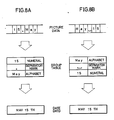
- the teletext data stored in the picture data memory 10 includes data of broadcasting date, for example "15. May" before the time data and such character data is classified by the group classifying circuit 6b in the similar manner as described in the first embodiment, and stored in the group table memory 12a in accordance with respective character groups.
- the character data stored in the group table memory 12a in this manner is successively read by a date decoding circuit 6d in the teletext controlling portion 6 and the date decoding circuit 6d decodes the date of broadcast based on the arrangement of the read character data.
- Such decoding operation can be realized in software by constituting the date decoding circuit 6d by microcomputers.
- the program proceeds to the next step S23 in which whether or not the data "15" is proper as the data of date is determined. For example, such display as "33" is clearly wrong as a date and such data is not regarded as date data.
- the data "15" in this embodiment is determined to be acceptable as a date display, so that the program proceeds to the next step S24.
- step S24 whether or not the next group is a separator group is determined. Since the next character group ".” is a separator group, the program proceeds to the step S25.
- step S25 whether or not the second next character group is a group of alphabets is determined. Since the character group is a group of alphabets "May", the program proceeds to the step S26.
- the group of alphabets includes groups of letters other than English, for example, Spanish, French, German and so on.
- a character group including "Mayo" which means May in Spanish is also regarded as a group of alphabets.
- step S26 whether or not the group of alphabets is a group of characters indicating month is determined. This is done by providing a ROM table in which words representing months in various languages are stored in advance as shown in Fig. 9 in the date decoding circuit 6d and by comparing the read character data with the contents of the ROM table. Since the group "May” is regarded as acceptable as month representation, the data is extracted in the step S33 as the data indicting "May 15th", which data is stored in a date data memory 12c constituting the work memory 12. The date data once decoded can be displayed in some suitable form such as "15.05".
- step S34 whether or not the date decoding operation has been carried out on all the contents in the group table memory 12a is determined. If not, the program returns to the step S21. When it is determined in the step S34 that the date decoding has been carried out on every content in the group table memory 12a, the date decoding circuit 6d finishes the decoding operation.
- the first character group is a group of alphabets "May", so that the program proceeds to the step S27.
- step S27 whether or not the character group is a group of alphabets is determined. Since this group is a group of alphabets, the program proceeds to the step S28.
- step S28 whether or not the group of alphabets is a group of characters indicating month is determined in the same manner as the above described step S26. Since "May" is determined to be acceptable as a month representation, the program proceeds to the step S29.
- step S29 whether or not the next group is a separator group is determined.
- the next data is a space of 1 character, which is a separator, so that the program proceeds to S30.
- step S30 whether the second next character group is a numeral group or not is determined.
- the program proceeds to the step S32 in which whether or not the data "15" is proper as date data is determined. Since the data "15" is determined as acceptable as date representation, the program proceeds to the step S33 in which the date data is extracted as the data indicating "May 15th" to be stored in the date data memory 12c.
- step S34 whether or not the decoding operation is carried out on every content in the group table memory 12a is determined. If not, the program returns to S21. When it is determined in the step S34 that the decoding is carried out on every content in the group table memory 12a, the date decoding circuit 6d finishes the coding operation.
- the time data is selected by moving a cursor or the like through the operation of the keyboard 11a or the remote control transmitter 11b as described above and the reservation button is pressed, then the teletext controlling circuit 6a transfers the data indicating "May 15th" stored in the date data memory 12c as well as the time data to the reservation data memory 19 to be stored therein.
- the time or date can be accurately recognized regardless of the display formats of time or date of a program list transmitted by the teletext broadcasting, whereby the time and labor of key operations for reserving video recording can be considerably reduced, and in addition, errors in reserving video recording due to erroneous key operation can be prevented.
Landscapes
- Engineering & Computer Science (AREA)
- Signal Processing (AREA)
- Multimedia (AREA)
- Television Systems (AREA)
- Television Signal Processing For Recording (AREA)
Applications Claiming Priority (4)
| Application Number | Priority Date | Filing Date | Title |
|---|---|---|---|
| JP28322788 | 1988-11-09 | ||
| JP283227/88 | 1988-11-09 | ||
| JP1252973A JPH0656679B2 (ja) | 1988-11-09 | 1989-09-27 | ビデオテープレコーダ |
| JP252973/88 | 1989-09-27 |
Publications (3)
| Publication Number | Publication Date |
|---|---|
| EP0368313A2 true EP0368313A2 (fr) | 1990-05-16 |
| EP0368313A3 EP0368313A3 (fr) | 1991-12-18 |
| EP0368313B1 EP0368313B1 (fr) | 1997-06-25 |
Family
ID=26540970
Family Applications (1)
| Application Number | Title | Priority Date | Filing Date |
|---|---|---|---|
| EP19890120792 Expired - Lifetime EP0368313B1 (fr) | 1988-11-09 | 1989-11-09 | Enregistreur à bande vidéo en mesure de recevoir une diffusion de télétexte |
Country Status (3)
| Country | Link |
|---|---|
| EP (1) | EP0368313B1 (fr) |
| JP (1) | JPH0656679B2 (fr) |
| DE (1) | DE68928142T2 (fr) |
Cited By (8)
| Publication number | Priority date | Publication date | Assignee | Title |
|---|---|---|---|---|
| EP0488379A3 (en) * | 1990-11-29 | 1993-01-13 | Matsushita Electric Industrial Co., Ltd. | Text broadcast receiver |
| EP0572090A3 (fr) * | 1992-05-27 | 1994-08-03 | Koninkl Philips Electronics Nv | |
| EP0503070A4 (en) * | 1990-08-10 | 1994-08-17 | Matsushita Electric Industrial Co Ltd | Transmission system and receiver |
| US5390027A (en) * | 1990-08-23 | 1995-02-14 | Matsushita Electric Industrial Co., Ltd. | Television program recording and reproducing system using program data of text broadcast signal |
| US5515173A (en) * | 1993-03-05 | 1996-05-07 | Gemstar Developement Corporation | System and method for automatically recording television programs in television systems with tuners external to video recorders |
| EP0661879A3 (fr) * | 1993-12-30 | 1998-05-06 | Lg Electronics Inc. | Méthode et dispositif pour régler l'heure automatiquement en utilisant un signal transmis |
| CN1099193C (zh) * | 1997-06-20 | 2003-01-15 | 三星电子株式会社 | 用于备用记录观看的广播节目的方法和装置 |
| US9762942B2 (en) | 2000-07-20 | 2017-09-12 | Resource Consortium Limited | Adaptable programming guide for networked devices |
Families Citing this family (1)
| Publication number | Priority date | Publication date | Assignee | Title |
|---|---|---|---|---|
| US20020029384A1 (en) | 2000-07-20 | 2002-03-07 | Griggs Theodore L. | Mechanism for distributing content data |
-
1989
- 1989-09-27 JP JP1252973A patent/JPH0656679B2/ja not_active Expired - Fee Related
- 1989-11-09 EP EP19890120792 patent/EP0368313B1/fr not_active Expired - Lifetime
- 1989-11-09 DE DE1989628142 patent/DE68928142T2/de not_active Expired - Fee Related
Non-Patent Citations (4)
| Title |
|---|
| FUNK-TECHNIK. vol. 41, no. 6, 30 June 1986, HEIDELBERG DE pages 249 - 251; C.L.M.: 'Videorecorder Programmieren mit VPV' * |
| IEEE TRANSACTIONS ON CONSUMER ELECTRONICS. vol. 34, no. 3, 30 August 1988, NEW YORK US pages 788 - 792; U.BENSCH: 'VPV-Videotext programs Videorecorder' * |
| IEEE TRANSACTIONS ON CONSUMER ELECTRONICS. vol. 34, no. 3, 30 August 1988, NEW YORK US pages 814 - 818; G.ZEISEL ET AL: 'An Interactive Menu-driven Remote Control Unit for TV-Receivers and VC-Recorders' * |
| NTZ NACHRICHTECHNISCHE ZEITSCHRIFT. vol. 35, no. 6, 30 June 1982, BERLIN DE pages 368 - 376; H.ECKHARD KRUGER: 'Das digitale Fernsehkennungssystem' * |
Cited By (13)
| Publication number | Priority date | Publication date | Assignee | Title |
|---|---|---|---|---|
| US5552833A (en) * | 1990-08-10 | 1996-09-03 | Matsushita Electric Industrial Co., Ltd. | Transmission system and receiver using teletext information for programming video recorder |
| EP0503070A4 (en) * | 1990-08-10 | 1994-08-17 | Matsushita Electric Industrial Co Ltd | Transmission system and receiver |
| EP0810788A3 (fr) * | 1990-08-10 | 1998-03-25 | Matsushita Electric Industrial Co., Ltd. | Système de transmission et récepteur associé |
| EP0989749A3 (fr) * | 1990-08-10 | 2000-05-31 | Matsushita Electric Industrial Co., Ltd. | Système de transmission et récepteur |
| US5390027A (en) * | 1990-08-23 | 1995-02-14 | Matsushita Electric Industrial Co., Ltd. | Television program recording and reproducing system using program data of text broadcast signal |
| US5260788A (en) * | 1990-11-29 | 1993-11-09 | Matsushita Electric Industrial Co., Ltd. | Text broadcast receiver |
| EP0488379A3 (en) * | 1990-11-29 | 1993-01-13 | Matsushita Electric Industrial Co., Ltd. | Text broadcast receiver |
| EP0572090A3 (fr) * | 1992-05-27 | 1994-08-03 | Koninkl Philips Electronics Nv | |
| US5515173A (en) * | 1993-03-05 | 1996-05-07 | Gemstar Developement Corporation | System and method for automatically recording television programs in television systems with tuners external to video recorders |
| US5987213A (en) * | 1993-03-05 | 1999-11-16 | Gemstar Development Corporation | System and method for automatically recording television programs in television systems with tuners external to video recorders |
| EP0661879A3 (fr) * | 1993-12-30 | 1998-05-06 | Lg Electronics Inc. | Méthode et dispositif pour régler l'heure automatiquement en utilisant un signal transmis |
| CN1099193C (zh) * | 1997-06-20 | 2003-01-15 | 三星电子株式会社 | 用于备用记录观看的广播节目的方法和装置 |
| US9762942B2 (en) | 2000-07-20 | 2017-09-12 | Resource Consortium Limited | Adaptable programming guide for networked devices |
Also Published As
| Publication number | Publication date |
|---|---|
| JPH02244448A (ja) | 1990-09-28 |
| DE68928142T2 (de) | 1998-01-29 |
| EP0368313A3 (fr) | 1991-12-18 |
| DE68928142D1 (de) | 1997-07-31 |
| EP0368313B1 (fr) | 1997-06-25 |
| JPH0656679B2 (ja) | 1994-07-27 |
Similar Documents
| Publication | Publication Date | Title |
|---|---|---|
| EP0420123B1 (fr) | Dispositif de réservation de programmes pour un enregistreur à bande vidéo en mesure de recevoir une diffusion de télétexte | |
| US5526127A (en) | Video tape recorder which allows preset program recording | |
| US5296931A (en) | Channel selecting method for programs of the same category | |
| EP0393555B1 (fr) | Traitement modifié d'information transmise pendant l'intervalle de retour vertical de signal de télévision | |
| KR0165246B1 (ko) | 문자입력 예약녹화 방법 및 장치 | |
| EP0488379B1 (fr) | Récepteur de radiodiffusion pour un signal de texte | |
| EP0811274B1 (fr) | Dispositif et procede de commande a distance | |
| US6021185A (en) | Method and apparatus for processing and displaying videotext or telephone data | |
| KR100283916B1 (ko) | 비디오 테이프 레코더 | |
| US7269333B2 (en) | Recording arrangement having key word detection means | |
| JP3965239B2 (ja) | 受信装置 | |
| CN1066357A (zh) | 盒式磁带录象机频道变换表的记录删除 | |
| CN1038973C (zh) | 对盒式磁带录象机进行程序设定的自适应菜单 | |
| JPH02189753A (ja) | 番組予約方法 | |
| EP0368313B1 (fr) | Enregistreur à bande vidéo en mesure de recevoir une diffusion de télétexte | |
| US5900912A (en) | Broadcasting signal receiver | |
| EP0393556B1 (fr) | Améliorations dans des applications d'informations transmises pendant l'intervalle de retour vertical de signal de télévision | |
| JP3033798B2 (ja) | 文字放送受信機 | |
| US6907185B1 (en) | Method and apparatus for reserve-recording a viewing broadcast program | |
| US6031961A (en) | Device and method for outputting recorded information as a voice message in programmed recording system using transmitted schedule data | |
| JP3148280B2 (ja) | ビデオテープレコーダの番組予約装置 | |
| JP3203398B2 (ja) | 磁気記録装置 | |
| KR960007951B1 (ko) | 방송 프로그램의 식별 기호 부여 방법과 이를 이용한 예약 녹화 방법 | |
| KR100205379B1 (ko) | 티브이를 이용하여 브이씨알에 녹화예약용 데이터를 제공하는 방법 및 그 장치 | |
| JP2000123440A (ja) | 受信装置 |
Legal Events
| Date | Code | Title | Description |
|---|---|---|---|
| PUAI | Public reference made under article 153(3) epc to a published international application that has entered the european phase |
Free format text: ORIGINAL CODE: 0009012 |
|
| AK | Designated contracting states |
Kind code of ref document: A2 Designated state(s): CH DE ES GB LI SE |
|
| 17P | Request for examination filed |
Effective date: 19901228 |
|
| PUAL | Search report despatched |
Free format text: ORIGINAL CODE: 0009013 |
|
| AK | Designated contracting states |
Kind code of ref document: A3 Designated state(s): CH DE ES GB LI SE |
|
| 17Q | First examination report despatched |
Effective date: 19931122 |
|
| GRAG | Despatch of communication of intention to grant |
Free format text: ORIGINAL CODE: EPIDOS AGRA |
|
| GRAH | Despatch of communication of intention to grant a patent |
Free format text: ORIGINAL CODE: EPIDOS IGRA |
|
| GRAH | Despatch of communication of intention to grant a patent |
Free format text: ORIGINAL CODE: EPIDOS IGRA |
|
| GRAA | (expected) grant |
Free format text: ORIGINAL CODE: 0009210 |
|
| AK | Designated contracting states |
Kind code of ref document: B1 Designated state(s): CH DE ES GB LI SE |
|
| PG25 | Lapsed in a contracting state [announced via postgrant information from national office to epo] |
Ref country code: CH Effective date: 19970625 Ref country code: ES Free format text: THE PATENT HAS BEEN ANNULLED BY A DECISION OF A NATIONAL AUTHORITY Effective date: 19970625 Ref country code: LI Effective date: 19970625 |
|
| REG | Reference to a national code |
Ref country code: CH Ref legal event code: EP |
|
| REF | Corresponds to: |
Ref document number: 68928142 Country of ref document: DE Date of ref document: 19970731 |
|
| PG25 | Lapsed in a contracting state [announced via postgrant information from national office to epo] |
Ref country code: SE Effective date: 19970925 |
|
| REG | Reference to a national code |
Ref country code: CH Ref legal event code: PL |
|
| PLBE | No opposition filed within time limit |
Free format text: ORIGINAL CODE: 0009261 |
|
| STAA | Information on the status of an ep patent application or granted ep patent |
Free format text: STATUS: NO OPPOSITION FILED WITHIN TIME LIMIT |
|
| 26N | No opposition filed | ||
| REG | Reference to a national code |
Ref country code: GB Ref legal event code: IF02 |
|
| PGFP | Annual fee paid to national office [announced via postgrant information from national office to epo] |
Ref country code: DE Payment date: 20071101 Year of fee payment: 19 |
|
| PGFP | Annual fee paid to national office [announced via postgrant information from national office to epo] |
Ref country code: GB Payment date: 20071107 Year of fee payment: 19 |
|
| GBPC | Gb: european patent ceased through non-payment of renewal fee |
Effective date: 20081109 |
|
| PG25 | Lapsed in a contracting state [announced via postgrant information from national office to epo] |
Ref country code: DE Free format text: LAPSE BECAUSE OF NON-PAYMENT OF DUE FEES Effective date: 20090603 |
|
| PG25 | Lapsed in a contracting state [announced via postgrant information from national office to epo] |
Ref country code: GB Free format text: LAPSE BECAUSE OF NON-PAYMENT OF DUE FEES Effective date: 20081109 |