EP0368514B1 - Statische Schutzfolie - Google Patents
Statische Schutzfolie Download PDFInfo
- Publication number
- EP0368514B1 EP0368514B1 EP19890311099 EP89311099A EP0368514B1 EP 0368514 B1 EP0368514 B1 EP 0368514B1 EP 19890311099 EP19890311099 EP 19890311099 EP 89311099 A EP89311099 A EP 89311099A EP 0368514 B1 EP0368514 B1 EP 0368514B1
- Authority
- EP
- European Patent Office
- Prior art keywords
- accordance
- envelope
- layer
- antistatic layer
- sheet material
- Prior art date
- Legal status (The legal status is an assumption and is not a legal conclusion. Google has not performed a legal analysis and makes no representation as to the accuracy of the status listed.)
- Expired - Lifetime
Links
Images
Classifications
-
- H—ELECTRICITY
- H05—ELECTRIC TECHNIQUES NOT OTHERWISE PROVIDED FOR
- H05F—STATIC ELECTRICITY; NATURALLY-OCCURRING ELECTRICITY
- H05F1/00—Preventing the formation of electrostatic charges
- H05F1/02—Preventing the formation of electrostatic charges by surface treatment
-
- B—PERFORMING OPERATIONS; TRANSPORTING
- B32—LAYERED PRODUCTS
- B32B—LAYERED PRODUCTS, i.e. PRODUCTS BUILT-UP OF STRATA OF FLAT OR NON-FLAT, e.g. CELLULAR OR HONEYCOMB, FORM
- B32B27/00—Layered products comprising a layer of synthetic resin
- B32B27/06—Layered products comprising a layer of synthetic resin as the main or only constituent of a layer, which is next to another layer of the same or of a different material
- B32B27/08—Layered products comprising a layer of synthetic resin as the main or only constituent of a layer, which is next to another layer of the same or of a different material of synthetic resin
-
- B—PERFORMING OPERATIONS; TRANSPORTING
- B32—LAYERED PRODUCTS
- B32B—LAYERED PRODUCTS, i.e. PRODUCTS BUILT-UP OF STRATA OF FLAT OR NON-FLAT, e.g. CELLULAR OR HONEYCOMB, FORM
- B32B27/00—Layered products comprising a layer of synthetic resin
- B32B27/18—Layered products comprising a layer of synthetic resin characterised by the use of special additives
- B32B27/20—Layered products comprising a layer of synthetic resin characterised by the use of special additives using fillers, pigments, thixotroping agents
-
- B—PERFORMING OPERATIONS; TRANSPORTING
- B32—LAYERED PRODUCTS
- B32B—LAYERED PRODUCTS, i.e. PRODUCTS BUILT-UP OF STRATA OF FLAT OR NON-FLAT, e.g. CELLULAR OR HONEYCOMB, FORM
- B32B27/00—Layered products comprising a layer of synthetic resin
- B32B27/28—Layered products comprising a layer of synthetic resin comprising synthetic resins not wholly covered by any one of the sub-groups B32B27/30 - B32B27/42
- B32B27/285—Layered products comprising a layer of synthetic resin comprising synthetic resins not wholly covered by any one of the sub-groups B32B27/30 - B32B27/42 comprising polyethers
-
- B—PERFORMING OPERATIONS; TRANSPORTING
- B32—LAYERED PRODUCTS
- B32B—LAYERED PRODUCTS, i.e. PRODUCTS BUILT-UP OF STRATA OF FLAT OR NON-FLAT, e.g. CELLULAR OR HONEYCOMB, FORM
- B32B27/00—Layered products comprising a layer of synthetic resin
- B32B27/32—Layered products comprising a layer of synthetic resin comprising polyolefins
-
- B—PERFORMING OPERATIONS; TRANSPORTING
- B32—LAYERED PRODUCTS
- B32B—LAYERED PRODUCTS, i.e. PRODUCTS BUILT-UP OF STRATA OF FLAT OR NON-FLAT, e.g. CELLULAR OR HONEYCOMB, FORM
- B32B27/00—Layered products comprising a layer of synthetic resin
- B32B27/34—Layered products comprising a layer of synthetic resin comprising polyamides
-
- C—CHEMISTRY; METALLURGY
- C08—ORGANIC MACROMOLECULAR COMPOUNDS; THEIR PREPARATION OR CHEMICAL WORKING-UP; COMPOSITIONS BASED THEREON
- C08J—WORKING-UP; GENERAL PROCESSES OF COMPOUNDING; AFTER-TREATMENT NOT COVERED BY SUBCLASSES C08B, C08C, C08F, C08G or C08H
- C08J5/00—Manufacture of articles or shaped materials containing macromolecular substances
- C08J5/18—Manufacture of films or sheets
-
- C—CHEMISTRY; METALLURGY
- C08—ORGANIC MACROMOLECULAR COMPOUNDS; THEIR PREPARATION OR CHEMICAL WORKING-UP; COMPOSITIONS BASED THEREON
- C08K—Use of inorganic or non-macromolecular organic substances as compounding ingredients
- C08K3/00—Use of inorganic substances as compounding ingredients
- C08K3/30—Sulfur-, selenium- or tellurium-containing compounds
-
- H—ELECTRICITY
- H10—SEMICONDUCTOR DEVICES; ELECTRIC SOLID-STATE DEVICES NOT OTHERWISE PROVIDED FOR
- H10W—GENERIC PACKAGES, INTERCONNECTIONS, CONNECTORS OR OTHER CONSTRUCTIONAL DETAILS OF DEVICES COVERED BY CLASS H10
- H10W42/00—Arrangements for protection of devices
- H10W42/60—Arrangements for protection of devices protecting against electrostatic charges or discharges, e.g. Faraday shields
-
- Y—GENERAL TAGGING OF NEW TECHNOLOGICAL DEVELOPMENTS; GENERAL TAGGING OF CROSS-SECTIONAL TECHNOLOGIES SPANNING OVER SEVERAL SECTIONS OF THE IPC; TECHNICAL SUBJECTS COVERED BY FORMER USPC CROSS-REFERENCE ART COLLECTIONS [XRACs] AND DIGESTS
- Y10—TECHNICAL SUBJECTS COVERED BY FORMER USPC
- Y10S—TECHNICAL SUBJECTS COVERED BY FORMER USPC CROSS-REFERENCE ART COLLECTIONS [XRACs] AND DIGESTS
- Y10S428/00—Stock material or miscellaneous articles
- Y10S428/922—Static electricity metal bleed-off metallic stock
-
- Y—GENERAL TAGGING OF NEW TECHNOLOGICAL DEVELOPMENTS; GENERAL TAGGING OF CROSS-SECTIONAL TECHNOLOGIES SPANNING OVER SEVERAL SECTIONS OF THE IPC; TECHNICAL SUBJECTS COVERED BY FORMER USPC CROSS-REFERENCE ART COLLECTIONS [XRACs] AND DIGESTS
- Y10—TECHNICAL SUBJECTS COVERED BY FORMER USPC
- Y10T—TECHNICAL SUBJECTS COVERED BY FORMER US CLASSIFICATION
- Y10T428/00—Stock material or miscellaneous articles
- Y10T428/13—Hollow or container type article [e.g., tube, vase, etc.]
- Y10T428/1334—Nonself-supporting tubular film or bag [e.g., pouch, envelope, packet, etc.]
- Y10T428/1338—Elemental metal containing
-
- Y—GENERAL TAGGING OF NEW TECHNOLOGICAL DEVELOPMENTS; GENERAL TAGGING OF CROSS-SECTIONAL TECHNOLOGIES SPANNING OVER SEVERAL SECTIONS OF THE IPC; TECHNICAL SUBJECTS COVERED BY FORMER USPC CROSS-REFERENCE ART COLLECTIONS [XRACs] AND DIGESTS
- Y10—TECHNICAL SUBJECTS COVERED BY FORMER USPC
- Y10T—TECHNICAL SUBJECTS COVERED BY FORMER US CLASSIFICATION
- Y10T428/00—Stock material or miscellaneous articles
- Y10T428/31504—Composite [nonstructural laminate]
- Y10T428/3154—Of fluorinated addition polymer from unsaturated monomers
-
- Y—GENERAL TAGGING OF NEW TECHNOLOGICAL DEVELOPMENTS; GENERAL TAGGING OF CROSS-SECTIONAL TECHNOLOGIES SPANNING OVER SEVERAL SECTIONS OF THE IPC; TECHNICAL SUBJECTS COVERED BY FORMER USPC CROSS-REFERENCE ART COLLECTIONS [XRACs] AND DIGESTS
- Y10—TECHNICAL SUBJECTS COVERED BY FORMER USPC
- Y10T—TECHNICAL SUBJECTS COVERED BY FORMER US CLASSIFICATION
- Y10T428/00—Stock material or miscellaneous articles
- Y10T428/31504—Composite [nonstructural laminate]
- Y10T428/31678—Of metal
- Y10T428/31681—Next to polyester, polyamide or polyimide [e.g., alkyd, glue, or nylon, etc.]
-
- Y—GENERAL TAGGING OF NEW TECHNOLOGICAL DEVELOPMENTS; GENERAL TAGGING OF CROSS-SECTIONAL TECHNOLOGIES SPANNING OVER SEVERAL SECTIONS OF THE IPC; TECHNICAL SUBJECTS COVERED BY FORMER USPC CROSS-REFERENCE ART COLLECTIONS [XRACs] AND DIGESTS
- Y10—TECHNICAL SUBJECTS COVERED BY FORMER USPC
- Y10T—TECHNICAL SUBJECTS COVERED BY FORMER US CLASSIFICATION
- Y10T428/00—Stock material or miscellaneous articles
- Y10T428/31504—Composite [nonstructural laminate]
- Y10T428/31678—Of metal
- Y10T428/31692—Next to addition polymer from unsaturated monomers
Definitions
- This invention relates to static shielding film constructions. More particularly, this invention relates to film constructions useful for making packages of the type used for protective packaging of electronic components such as metal oxide semiconductors, and provides a flexible sheet material and an envelope adapted therefor.
- Such type of envelope includes a transparent sheet material having an antistatic layer on one surface and a conductive layer on the opposite surface.
- the sheet material can be polyester film and a heat sealable layer comprising polyethylene.
- the effectiveness of the sheet material as static shielding film can be affected by the manner in which the antistatic layer is secured to the polyester film.
- a flexible sheet material according to claim 1, which is adapted for packaging electronic components and which is sufficiently transparent to enable visual identification of components through the sheet material.
- the sheet material comprises:
- the sheet material can be easily formed into a strong hermetically sealable envelope which is useful for protecting electronic components (e.g., metal oxide semiconductors).
- electronic components e.g., metal oxide semiconductors
- the envelope according to a further aspect of the invention is characterized by the features of claim 11.
- Such an envelope is capable of shielding an electronic component from external electrostatic fields, provides a path to ground for external static electrical charges contacting the envelope, provides a high impedance to prevent electrostatic charges outside the envelope from reaching the electronic component within the envelope, provides for draining of any electrostatic charges at the inner surface of the envelope that may have developed during manufacturing and packaging, restricts development of electrostatic charges due to relative movement between the electronic component and the inner surface of the envelope and provides a high impedance path for the controlled discharge of such electrostatic charges if they do occur, and enables visual identification of the electronic component in the envelope.
- the envelope does not shed particles which may be considered contaminants.
- envelope refers to any complete enclosure formed by one or more sheets of the sheet material which have their edges secured together.
- the enclosures can be any shape required to enclose an electronic component.
- the envelope is formed from only one sheet of the sheet material in order to ensure electrical continuity of the electrically conductive layer over the entire outer surface of the envelope and continuity of the antistatic layer over the entire inner surface of the envelope.
- the insulating film e.g., polyester
- a tie layer preferably an acrylate polymer
- the antistatic layer includes a fluoroaliphaticsulfonamide polyether compound. Conventional antistatic compounds are not effective in the antistatic layer when there is a tie layer present as described herein.
- the antistatic layer in the sheet material of this invention has improved electrical properties such that it remains conductive at low humidities (i.e., less than 10%). Also the antistatic compounds used herein are non-corrosive and non-contaminating. A tie layer may be included between the antistatic layer and the insulating film without deleterious effect on the desired surface resistivity of the antistatic layer.
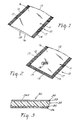
- FIGs 1 and 2 there is illustrated a preferred type of envelope 10 of the invention comprising a sheet material 11 of the invention which has been folded upon itself along fold line 12. Side edges 13, 14 and 15 of opposed walls 16 are brought into alignment, as illustrated. The edge portions 17 of the walls are fused together (e.g., by heat sealing) to form an envelope having an opening at one end between the pair of aligned edges 15.
- An electronic component 18 may be easily inserted into the envelope through the opening, and then the aligned edges 15 can be fused together to form edge 19 to seal the component in the envelope, as illustrated, in Figure 2.
- FIG. 3 illustrates the preferred form of sheet material 30 of the invention.
- This sheet material comprises a self-supporting electrically insulating film 32.
- an electrically conductive layer 33 On the upper surface of the film there is provided an electrically conductive layer 33.
- an abrasion-resistant coating 34 which presents an exposed surface 34A.
- the film 32 has a volume resistivity of at least 1010 ohm-centimeters (and preferably at least 1015 ohm-centimeters).
- the film 32 is preferably biaxially oriented polyester having a thickness in the range of about 10 to 50 microns.
- the abrasion-resistant coating 34 is sufficiently tough to restrict abrasion of the conductive layer without impairing surface conductivity of the sheet material.
- a suitable thin abrasion-resistant coating is described in U.S. Patent 3,118,781.
- the coating may be about 0.1 to 1 »m (micron) thick, for example.
- the conductive layer 33 comprises metal or metal containing compounds and provides a surface resistivity no greater than 104 ohms per square while still affording with the other layers of the sheet material a light transmittance sufficient to enable.visual identification of an electronic component through the sheet material (i.e., a light transmissivity of at least 25%, and preferably no less than 40%).
- Vapor deposition in vacuum by electron beam is the preferred method of applying the conductive layer to the film 32. Sputtering or electroless plating may also be used.
- Various metals may be used for conductive layer. Thin metal layers are useful because they can provide low resistivity and adequate light transmission. Nickel is particularly preferred because it can provide low resistivity of about 90 to 550 ohms per square in thicknesses while providing about 50 to 60% light transmission. Aluminum and copper could also be used, although they are not preferred. Inconel and chromium could also be used but have higher surface resistivity. Silver and gold could also be used but are more expensive.
- Metallic compounds could also be used such as tin and indium oxides, cuprous chloride, and cuprous iodide.
- the tie layer 35 Secured to the lower surface of film 32 is a tie layer 35 which adheres antistatic layer 36 to film 32.
- the tie layer 35 preferably comprises an acrylate polymer at a thickness in the range of 5 to 15 »m (microns) (preferably 7 to 10 »m (microns)).
- the presence of a tie layer is optional.
- the tie layer and the antistatic layer are preferably co-extruded, after which the tie layer is adhered to the polyester film by passing the polyester film and the tie layer/antistatic layer composite through nip rollers.
- the tie layer/antistatic layer composite can be passed under ultraviolet lamps while being passed over a heated drum to improve its bond to the polyester film.
- the tie layer and the antistatic layer can be extruded separately and then pressed together to form a composite which is then adhered to the polyester film.
- the tie layer preferably comprises an acrylate polymer such as ethylene-acrylic acid copolymers or ethylene/ methacrylic acid copolymers or other acrylate polymers which are tacky and which have a volume resistivity of at least 1010 ohm-centimeters.
- an acrylate polymer such as ethylene-acrylic acid copolymers or ethylene/ methacrylic acid copolymers or other acrylate polymers which are tacky and which have a volume resistivity of at least 1010 ohm-centimeters.
- the antistatic layer preferably comprises low density polyethylene (e.g., 1550P from Eastman Kodak) and 0.05 to 10% by weight (more preferably 0.15 to 1%) of a fluoroaliphatic-sulfonamide polyether compound.
- a linear low density polyethylene works very well in the antistatic layer because it has very good heat-sealing properties.
- a surfactant comprising a non-ionic polyether compound (e.g., polyethylene oxide or polypropylene oxide derivatives)
- the surfactant is helpful because it assists in reducing the tribocharging characteristics of the antistatic layer.
- Tribocharging can result in build-up of static charges in the antistatic layer due to frictional forces (e.g., as occurring when an object is rubbed against the antistatic layer).
- Two common types of useful surfactants are Tergitol NP-10 or Igepal 530 (a nonylphenol ethyoxylate) and Carbowax 400 (a polyethylene glycol).
- the fluoroaliphaticsulfonamide polyether compounds which are useful in the antistatic layer of the sheet material of this invention are of the formula where y and n are each in the range of 0 to 100 (more preferably 4 to 20); wherein y + n is at least 2; wherein R is hydrogen, alkyl, aryl, aralkyl, aminoalkyl, or hydroxyalkyl; wherein R ⁇ and R′′′ are selected from ethylene and propylene; and wherein R′ is hydrogen, alkyl, aryl, aralkyl, alkaryl, aminoalkyl, hydroxyalkyl, alkoxy, or perfluorosulfonamido. Where y and n units are both present in the compound they may be either randomly distributed throughout and/or they may be present in blocks of y and n units.
- the fluoroaliphatic radical, R f is a fluorinated, stable, inert, non-polar, preferably saturated, monovalent moiety which, if sufficiently large (e.g., 5 or more carbon atoms), is both hydrophobic and oleophobic. It can be straight chain, branched chain, or, if sufficiently large, cyclic, or combinations thereof, such as alkylcycloaliphatic radicals.
- the skeletal chain in the fluoroaliphatic radical can include catenary divalent oxygen atoms and/or trivalent nitrogen atoms bonded only to carbon atoms.
- R f will have 1 to 30 carbon atoms, preferably 4 to about 12 carbon atoms, and will contain about 40 to 78 weight percent, preferably 50 to 78 weight percent, carbon-bound fluorine.
- the terminal portion of the R f group has preferably at least one trifluoromethyl group, and preferably has a terminal group of at least three fully fluorinated carbon atoms, e.g., CF3CF2CF2-.
- the preferred R f groups are fully or substantially fluorinated, as in the case where R f is perfluoroalkyl, C m F 2m+1 -.
- the polyether compound is of the formula where m is an integer of 1 to 12; n is in the range of 2 to 20; R is hydrogen, alkyl, aryl, aralkyl, aminoalkyl, or hydroxyalkyl; and R′ is hydrogen, alkyl, aryl, aralkyl, alkaryl, aminoalkyl, hydroxyalkyl, alkoxy, or perfluorosulfonamido.
- lithium perfluorosulfonate salt which is useful in increasing antistatic or conductive properties of a plastic film to which the antistatic layer is applied, especially at low humidity (e.g., less than about 15% relative humidity).
- low humidity e.g., less than about 15% relative humidity.
- the lithium perfluorosulfonate salt which is useful herein is of the formula R f SO3Li wherein R f is a fluoroaliphatic radical as described above having from 1 to about 30 carbon atoms.
- Lithium disulfonate salts may also be used, e.g., LiO3S-C n F 2n -SO3Li, where n is 1 to about 30.
- the amount of lithium salt which may be included in the antistatic layer may vary (e.g., from about 0.01 to 1% by weight based on the weight of the antistatic layer).
- Various sheet materials are prepared comprising a polyester film, a polyethylene layer, and an antistatic compound contained in the polyethylene layer.
- the polyethylene used was either low density (LD) or linear low density (LL).
- a tie layer, if used, was an acrylate polymer identified in the following Table I as CXA-3101 (an ethylene based acrylate polymer commercially available from Dupont); EAA-459, EAA-435, EAA-3440 (ethylene/acrylic acid copolymers commercially available from DOW); or EMA-2207 (ethylene/methacrylic acid copolymer commercially available from DOW).
- the resistivity (ohm/square) of the antistatic layer at 10% relative humidity and 50% relative humidity are shown in the table.
- the type of antistatic compound is also shown in the table.
- Varstat K22 is a commercially-available antistatic compound from Sherex and is identified as N,N-Bis(2-hydroxyethyl)alkyl amine (an ethoxylated cocoamine).
- Kemamine 650 is also a commercially-available antistatic compound available from Humko Chemical and is chemically similar to Varstat K22.
- polyethylene layer comprised linear low density polyethylene. In the other examples low density polyethylene was used.
- the insulating film used in all of the constructions was polyester having a thickness of about 50 »m (microns).
- the tie layer used was EMA-2207 at a thickness of about 8 »m (microns).
- the antistatic layer in each construction was low density polyethylene having a thickness of about 43 »m (microns).
- the antistatic compound used in each construction was mixed with the polyethylene resin prior to extrusion of the antistatic layer.
- a perfluorosulfonamide polyether compound having the formula of compound 2 above is prepared using the following procedure.
- a polyether amine (100 grams) (MNPA-750, commercially available from Texaco), triethylamine (20 grams), and isopropyl ether (100 grams) are dried over potassium hydroxide and then combined in a one-liter flask fitted with a mechanical stirrer and gas inlet.
- Perfluorooctanesulfonyl fluoride 72 grams; commercially available from 3M as FX-8 is then added to the flask and the mixture is heated at reflux under a nitrogen blanket for 3 hours. The mixture is then cooled and neutralized with 50 mL. of 50% concentrated hydrochloric acid.
- the reaction mixture is then combined with an equal portion of chloroform, and the chloroform organic layer is washed three times with deionized water.
- the organic layer is separated and dried over anhydrous magnesium sulfate, filtered, and then the chloroform is removed under vacuum.
- the product (133 grams) is collected as an amber syrup.
- sulfonate salt may also be produced in the reaction, the presence of even major amounts of sulfonate salt is not detrimental to the ability of the desired perfluorosulfonamide polyether compound to function as an antistatic compound in the film constructions of this invention.
- Preparing the perfluorosulfonamide polyether compounds under anhydrous conditions improves the yield of the desired compound.
- Other useful polyoxyalkylene amines which may be used as starting materials include the Jeffamine ED series from Texaco.
- C8F17SO3Li The beneficial effect of C8F17SO3Li is also demonstrated in these examples.
- the polyethylene resin of Example 26-28 is blended with 0.4% by weight of compound (11) shown above and different amounts of the lithium salt and then processed in an extruder having a temperature profile of 204°C. and 304°C. After the polyethylene was extruded it was passed over a drum at 132°C. and exposed to ultraviolet light. After aging the film was tested, with the results shown in the following table.
Landscapes
- Chemical & Material Sciences (AREA)
- Engineering & Computer Science (AREA)
- Chemical Kinetics & Catalysis (AREA)
- Medicinal Chemistry (AREA)
- Polymers & Plastics (AREA)
- Organic Chemistry (AREA)
- Health & Medical Sciences (AREA)
- Manufacturing & Machinery (AREA)
- Materials Engineering (AREA)
- Laminated Bodies (AREA)
- Wrappers (AREA)
- Packaging Frangible Articles (AREA)
- Elimination Of Static Electricity (AREA)
Claims (21)
- Elastisches Flachenmaterial (11, 30) adaptiert zum Verpacken eines elektronischen Bauteils (18) und ausreichend transparent zur visuellen Identifikation des Bauteils (18) durch das Flachenmaterial (11, 30), das Flachenmaterial (11, 30) folgendes umfassend:(a) einen selbsttragenden elektrischen Isolierfilm (32) mit oberen und unteren Hauptflächen, wobei der Film (32) einen spezifischen Volumenwiderstand von wenigstens 10¹⁰ Ohm-Zentimetern aufweist;(b) eine elektrisch leitfähige Schicht (33), welche von der oberen Hauptfläche des Films (32) getragen wird, wobei die elektrisch leitfahige Schicht (32) einen spezifischen Oberflachenwiderstand von nicht größer als 10⁴ Ohm pro Quadrat liefert; und(c) eine antistatische Schicht (36), welche von der unteren Hauptflache des Films (32) getragen wird, wobei die antistatische Schicht (36) ein Polymer mit einer darin dispergierten fluoroaliphatischen Sulfonamidpolyetherverbindung umfaßt, welche der antistatischen Schicht einen spezifischen Oberflächenwiderstand in dem Bereich von 10⁷ bis 10¹⁴ Ohm pro Quadrat verleiht, dadurch gekennzeichnet, daß die Fluorosulfonamidpolyetherverbindung die Formel

- Elastisches Flachenmaterial (11, 30) nach Anspruch 1, dadurch gekennzeichnet, daß das fluoroaliphatische Radikal ein perfluoroaliphatisches Radikal ist.
- Elastisches Flächenmaterial (11, 30) nach einer der vorangegangenen Ansprüche, welches weiter eine Bindungsschicht (35) umfaßt, die an der unteren Fläche des Films (32) befestigt ist, dadurch gekennzeichnet, daß die antistatische Schicht (36) an der Bindungsschicht (35) befestigt ist und dadurch gekennzeichnet, daß die Bindungsschicht (35) ein Acrylatpolymer mit einem spezifischen Volumenwiderstand von wenigstens 10¹⁰ Ohm-Zentimetern umfaßt.
- Elastisches Flächenmaterial (11, 30) nach einer der vorangegangenen Ansprüche, dadurch gekennzeichnet, daß das Polymer ein thermoplastisches warmeabdichtendes Polymer umfaßt; und dadurch gekennzeichnet, daß die Polyetherverbindung in der antistatischen Schicht (36) in einer Menge von 0,05% bis 10% des Gewichtsanteils vorhanden ist.
- Elastisches Flächenmaterial (11, 30) nach einer der vorangegangenen Ansprüche, dadurch gekennzeichnet, daß die antistatische Schicht (36) Polyethylen mit niedriger Dichte und eine Verbindung der Formel

- Elastisches Flächenmaterial (11, 30) nach einer der vorangegangenen Ansprüche, dadurch gekennzeichnet, daß die antistatische Schicht (36) weiter einen nichtionischen, grenzflächenaktiven Polyether umfaßt.
- Elastisches Flächenmaterial (11, 30) nach einer der vorangegangenen Ansprüche, welches weiter eine abriebsfeste Schicht (34) über der elektrische leitenden Schicht (33) umfaßt.
- Elastisches Flächenmaterial (11, 30) nach einer der vorangegangenen Ansprüche, dadurch gekennzeichnet, daß der elektrische Isolierfilm (32) Polyester umfaßt und eine Dicke in dem Bereich von 10 bis 50 »m (Mikron) aufweist.
- Elastisches Flächenmaterial (11, 30) nach einer der vorangegangenen Ansprüche, dadurch gekennzeichnet, daß die antistatische Schicht weiter ein Lithium-Perfluorosulfonatsalz umfaßt.
- Elastisches Flächenmaterial (11, 30) nach Anspruch 9, dadurch gekennzeichnet, daß das Salz aus der Formel CmF2m+1SO₃Li besteht, wobei m eine ganze Zahl von 1 bis 8 ist.
- Eine Hülle (10), welche adaptiert ist, um ein elektronisches Bauteil (18) aufzunehmen und zu schützen, wobei die Hülle (10) Wände aufweist, welche aus einem elastischem Material (11, 30) gebildet sind mit ersten und zweiten Hauptflächen, wobei die erste Hauptfläche eine Außenfläche der Hülle (10) definiert und die zweite Hauptfläche eine Innenfläche der Hülle (10) definiert, dadurch gekennzeichnet, daß das Material (11, 30) folgendes umfaßt:(a) einen selbsttragenden elektrischen Isolierfilm (32) mit einem spezifischen Volumenwiderstand von wenigstens 10¹⁰ Ohm-Zentimetern; wobei der Film (32) obere und untere Hauptflächen aufweist;(b) eine elektrisch leitfähige Schicht (33), welche von der oberen Hauptfläche des Films (32) getragen wird; wobei die leitfähige Schicht (33) einen spezifischen Oberflächenwiderstand von nicht größer als 10⁴ Ohm pro Quadrat liefert;(c) eine antistatische Schicht (36), welche von der unteren Fläche des Films (32) getragen wird, wobei die antistatische Schicht (36) ein Polymer mit einer darin dispergierten fluoroaliphatischen Sulfonamidpolyetherverbindung umfaßt, wobei die antistatische Schicht einen spezifischen Oberflächenwiderstand in dem Bereich von 10⁷ bis 10¹⁴ Ohm pro Quadrat liefert, dadurch gekennzeichnet, daß die fluoroaliphatische Sulfonamidpolyetherverbindung die Formel

- Hülle (10) nach Anspruch 11, dadurch gekennzeichnet, daß das fluoroaliphatische Radikal ein perfluoroaliphatisches Radikal ist.
- Hülle (10) nach einer der Ansprüche (11-12), dadurch gekennzeichnet, daß das Polymer in der antistatischen Schicht (36) ein thermoplastisches wameabdichtendes Polymer ist.
- Hülle (10) nach einer der Ansprüche (11-13), umfaßt weiter eine Bindungsschicht (35), welche an der unteren Fläche des Films (32) befestigt ist, dadurch gekennzeichnet, daß die antistatische Schicht (36) an der Bindungsschicht (35) befestigt ist.
- Hülle (10) nach Anspruch 14, dadurch gekennzeichnet, daß die Bindungsschicht (35) ein Acrylatpolymer mit einem spezifischem Volumenwiderstand von wenigstens 10¹⁰ Ohm-Zentimeter umfaßt.
- Hülle (10) nach einer der Ansprüche 11-15, dadurch gekennzeichnet, daß die antistatische Schicht (36) Polyethylen mit niedriger Dichte und einer Verbindung der Formel

- Hülle (10) nach einer der Ansprüche (11-16), dadurch gekennzeichnet, daß die antistatische Schicht (36) Polyethylen mit niedriger Dichte und eine Verbindung der Formel umfaßt.

- Hülle (10) nach einer der Ansprüche (11-17), dadurch gekennzeichnet, daß die antistatische Schicht (36) Polyethylen mit niedriger Dichte und eine Verbindung der Formel umfaßt,

- Hülle (10) nach einer der Ansprüche (11-18) umfaßt weiter eine abriebsfeste Schicht (34) über der elektrische leitenden Schicht (33).
- Hülle (10) nach einer der Ansprüche (11-19), dadurch gekennzeichnet, daß die antistatische Schicht (36) weiter ein Lithium-perfluorosulfonatsalz umfaßt.
- Hülle (10) nach Anspruch 20, dadurch gekennzeichnet, daß das Salz aus der Formel CmF2m+1SO₃Li besteht, wobei m eine ganze Zahl von 1 bis 8 ist.
Applications Claiming Priority (2)
| Application Number | Priority Date | Filing Date | Title |
|---|---|---|---|
| US07/264,333 US5043195A (en) | 1988-10-28 | 1988-10-28 | Static shielding film |
| US264333 | 1988-10-28 |
Publications (2)
| Publication Number | Publication Date |
|---|---|
| EP0368514A1 EP0368514A1 (de) | 1990-05-16 |
| EP0368514B1 true EP0368514B1 (de) | 1995-03-22 |
Family
ID=23005582
Family Applications (1)
| Application Number | Title | Priority Date | Filing Date |
|---|---|---|---|
| EP19890311099 Expired - Lifetime EP0368514B1 (de) | 1988-10-28 | 1989-10-27 | Statische Schutzfolie |
Country Status (7)
| Country | Link |
|---|---|
| US (1) | US5043195A (de) |
| EP (1) | EP0368514B1 (de) |
| JP (1) | JPH02186598A (de) |
| KR (1) | KR900006417A (de) |
| CA (1) | CA1316444C (de) |
| DE (1) | DE68921845T2 (de) |
| MY (1) | MY104243A (de) |
Families Citing this family (36)
| Publication number | Priority date | Publication date | Assignee | Title |
|---|---|---|---|---|
| US5217767A (en) * | 1988-10-28 | 1993-06-08 | Minnesota Mining And Manufacturing Company | Static shielding film |
| US6524698B1 (en) | 1990-09-27 | 2003-02-25 | Helmuth Schmoock | Fluid impermeable foil |
| JP3016884B2 (ja) * | 1991-02-06 | 2000-03-06 | ローム株式会社 | サーマルヘッド |
| US5244951A (en) * | 1991-05-02 | 1993-09-14 | Minnesota Mining And Manufacturing Company | Durably hydrophilic, thermoplastic fiber |
| WO1993010650A1 (en) * | 1991-11-19 | 1993-05-27 | Key Tronic Corporation, Inc. | Controlled electrostatic discharge grounding system for a keyboard |
| US5293996A (en) * | 1992-05-14 | 1994-03-15 | Motorola, Inc. | Container having an observation window |
| US6380289B1 (en) | 1993-06-28 | 2002-04-30 | 3M Innovative Properties Company | Thermoplastic composition comprising fluoroaliphatic radical-containing surface-modifying additive |
| JPH0758192A (ja) * | 1993-08-12 | 1995-03-03 | Nikon Corp | 基板収納ケース |
| CA2176625C (en) * | 1995-05-19 | 2008-07-15 | Donald Harold Fergusen | Radio frequency identification tag |
| US6496382B1 (en) | 1995-05-19 | 2002-12-17 | Kasten Chase Applied Research Limited | Radio frequency identification tag |
| TW309498B (en) * | 1995-06-29 | 1997-07-01 | Sharp Kk | Sealed bag and container for accommodating electronic device, and method for facilitating storing and transporting electronic device using such sealed bag and container |
| US6066684A (en) * | 1995-07-21 | 2000-05-23 | Mitsubishi Rayon Co., Ltd. | Photopolymerizable composition and optical disk having cured coating thereof |
| US5644899A (en) * | 1995-12-26 | 1997-07-08 | Motorola, Inc. | Method for packaging semiconductor components for shipment |
| JP4003090B2 (ja) * | 1996-04-11 | 2007-11-07 | 東洋紡績株式会社 | 導電性組成物 |
| US5689878A (en) * | 1996-04-17 | 1997-11-25 | Lucent Technologies Inc. | Method for protecting electronic circuit components |
| US5804625A (en) * | 1996-05-21 | 1998-09-08 | Minnesota Mining And Manufacturing Company | Fluorochemical and hydrocarbon surfactant blends as hydrophilic additives to thermoplastic polymers |
| US6476114B2 (en) | 1997-11-19 | 2002-11-05 | 3M Innovative Properties Company | Thermoplastic polymer film comprising a fluorochemical compound |
| US6140405A (en) * | 1998-09-21 | 2000-10-31 | The B. F. Goodrich Company | Salt-modified electrostatic dissipative polymers |
| US6933059B1 (en) * | 1999-05-07 | 2005-08-23 | Scc Products, Inc. | Electrostatic shielding, low charging-retaining moisture barrier film |
| US20050065284A1 (en) * | 1999-08-06 | 2005-03-24 | Venkataram Krishnan | Novel latex compositions for deposition on various substrates |
| US6372829B1 (en) * | 1999-10-06 | 2002-04-16 | 3M Innovative Properties Company | Antistatic composition |
| JP2003237833A (ja) * | 2002-02-18 | 2003-08-27 | Corning Inc | ガラス基板包装体 |
| US7781498B2 (en) | 2003-07-03 | 2010-08-24 | Mallard Creek Polymers, Inc. | Cationic latex as a carrier for bioactive ingredients and methods for making and using the same |
| US7491753B2 (en) | 2003-07-03 | 2009-02-17 | Mallard Creek Polymers, Inc. | Antimicrobial and antistatic polymers and methods of using such polymers on various substrates |
| US7981946B2 (en) | 2003-07-03 | 2011-07-19 | Mallard Creek Polymers, Inc. | Antimicrobial and antistatic polymers and methods of using such polymers on various substrates |
| US7230043B2 (en) | 2004-09-07 | 2007-06-12 | 3M Innovative Properties Company | Hydrophilic polymer composition |
| US20070048249A1 (en) | 2005-08-24 | 2007-03-01 | Purdue Research Foundation | Hydrophilized bactericidal polymers |
| BRPI0716573A2 (pt) | 2006-08-24 | 2013-11-05 | Mallard Creek Polymers Inc | Látex aniônico como carreador para componentes bioativos e métodos para fazer e usar os mesmos |
| BRPI0715857A2 (pt) * | 2006-08-24 | 2013-07-23 | Mallard Creek Polymers Inc | lÁtex catiânico como veÍculo para componentes bioativos e mÉtodos para fazer e usar os mesmos |
| JPWO2012105478A1 (ja) | 2011-02-04 | 2014-07-03 | 日本碍子株式会社 | 炭化珪素質材料、ハニカム構造体及び電気加熱式触媒担体 |
| JP5069365B1 (ja) * | 2011-06-30 | 2012-11-07 | 清二 加川 | 近傍界ノイズ抑制フィルム |
| JP6444316B2 (ja) | 2013-01-29 | 2018-12-26 | スリーエム イノベイティブ プロパティズ カンパニー | 界面活性剤並びにその製造及び使用方法 |
| JP6765988B2 (ja) * | 2017-02-22 | 2020-10-07 | 信越化学工業株式会社 | 導電性ポリマー用高分子化合物及びその製造方法 |
| JP6661212B2 (ja) * | 2017-02-22 | 2020-03-11 | 信越化学工業株式会社 | 導電性ポリマー複合体及び基板 |
| US20180340046A1 (en) | 2017-05-27 | 2018-11-29 | Poly Group LLC | Dispersible antimicrobial complex and coatings therefrom |
| HUE068413T2 (hu) | 2017-06-16 | 2024-12-28 | Poly Group LLC | Polimer, antimikrobiális felületaktív anyag |
Family Cites Families (4)
| Publication number | Priority date | Publication date | Assignee | Title |
|---|---|---|---|---|
| US2915554A (en) * | 1957-07-23 | 1959-12-01 | Minnesota Mining & Mfg | Non-ionic surfactant derivatives of perfluoro alkane-sulfonamides |
| US4154344A (en) * | 1976-11-09 | 1979-05-15 | Minnesota Mining And Manufacturing Company | Material for forming envelopes used to protect electronic components |
| JPS58212944A (ja) * | 1982-06-07 | 1983-12-10 | 出光石油化学株式会社 | 積層体 |
| JPH081797A (ja) * | 1994-06-23 | 1996-01-09 | Dainippon Printing Co Ltd | 複合部材及びその製造方法 |
-
1988
- 1988-10-28 US US07/264,333 patent/US5043195A/en not_active Expired - Fee Related
-
1989
- 1989-09-01 CA CA000610166A patent/CA1316444C/en not_active Expired - Fee Related
- 1989-10-19 MY MYPI89001440A patent/MY104243A/en unknown
- 1989-10-26 JP JP1279629A patent/JPH02186598A/ja active Pending
- 1989-10-27 EP EP19890311099 patent/EP0368514B1/de not_active Expired - Lifetime
- 1989-10-27 DE DE68921845T patent/DE68921845T2/de not_active Expired - Fee Related
- 1989-10-27 KR KR1019890015478A patent/KR900006417A/ko not_active Ceased
Also Published As
| Publication number | Publication date |
|---|---|
| KR900006417A (ko) | 1990-05-08 |
| US5043195A (en) | 1991-08-27 |
| CA1316444C (en) | 1993-04-20 |
| MY104243A (en) | 1994-02-28 |
| DE68921845T2 (de) | 1995-10-12 |
| JPH02186598A (ja) | 1990-07-20 |
| DE68921845D1 (de) | 1995-04-27 |
| EP0368514A1 (de) | 1990-05-16 |
Similar Documents
| Publication | Publication Date | Title |
|---|---|---|
| US5043195A (en) | Static shielding film | |
| US5217767A (en) | Static shielding film | |
| JP2755479B2 (ja) | 帯電防止シート材料、包装体及び製造方法 | |
| US4756414A (en) | Antistatic sheet material and package | |
| US4154344A (en) | Material for forming envelopes used to protect electronic components | |
| US5110669A (en) | Conductive polymer laminates | |
| KR910001296B1 (ko) | 대전방지성 시이트물질, 포장물, 및 그의 제조방법 | |
| CA2097906A1 (en) | Heat-sealable films and film laminates with an antistatic coating, process for their production, and their use | |
| US4875581A (en) | Static dissipative elastomeric coating for electronic packaging components | |
| JP6117098B2 (ja) | カバーテープ | |
| JP4055918B2 (ja) | 透明導電性カバーテープ | |
| US20070160786A1 (en) | Semi-transparent shielding bag formed by translucent barrier statis shielding film | |
| US20250340050A1 (en) | Gas barrier laminate, packaging container, and packaged product | |
| WO2017200744A1 (en) | Self-priming adhesive | |
| EP0366483A2 (de) | Fluoraliphatisch sulfonamidierte Polyoxyalkylen-Verbindungen | |
| EP0397185A1 (de) | Permanent antistatische, steife Behälter aus polymerem Werkstoff | |
| JP2012030897A (ja) | 電子部品包装用カバーテープ | |
| JP2006312489A (ja) | 電子部品包装用カバーテープ | |
| WO2005049309A2 (en) | Transparent chemically resistant polymer composite | |
| JP2554840Y2 (ja) | 電子部品包装用導電性キャリアテープ | |
| EP0366482A2 (de) | Fluoralifatisch sulfonamidierte Polyoxyalkylen-Verbindungen | |
| JP2003128806A (ja) | 帯電防止能に優れたフィルム | |
| JP2716366B2 (ja) | 可撓・防汚・耐候・防水性樹脂被覆アモルファス金属薄膜積層複合シート | |
| JPS6224887Y2 (de) | ||
| JPS63272542A (ja) | 電子部品包装用シ−ト |
Legal Events
| Date | Code | Title | Description |
|---|---|---|---|
| PUAI | Public reference made under article 153(3) epc to a published international application that has entered the european phase |
Free format text: ORIGINAL CODE: 0009012 |
|
| AK | Designated contracting states |
Kind code of ref document: A1 Designated state(s): CH DE FR GB IT LI NL |
|
| 17P | Request for examination filed |
Effective date: 19901012 |
|
| 17Q | First examination report despatched |
Effective date: 19920828 |
|
| ITF | It: translation for a ep patent filed | ||
| GRAA | (expected) grant |
Free format text: ORIGINAL CODE: 0009210 |
|
| AK | Designated contracting states |
Kind code of ref document: B1 Designated state(s): CH DE FR GB IT LI NL |
|
| REF | Corresponds to: |
Ref document number: 68921845 Country of ref document: DE Date of ref document: 19950427 |
|
| ET | Fr: translation filed | ||
| PGFP | Annual fee paid to national office [announced via postgrant information from national office to epo] |
Ref country code: NL Payment date: 19950913 Year of fee payment: 7 Ref country code: FR Payment date: 19950913 Year of fee payment: 7 Ref country code: CH Payment date: 19950913 Year of fee payment: 7 |
|
| PGFP | Annual fee paid to national office [announced via postgrant information from national office to epo] |
Ref country code: DE Payment date: 19950925 Year of fee payment: 7 |
|
| PGFP | Annual fee paid to national office [announced via postgrant information from national office to epo] |
Ref country code: GB Payment date: 19950927 Year of fee payment: 7 |
|
| PLBE | No opposition filed within time limit |
Free format text: ORIGINAL CODE: 0009261 |
|
| STAA | Information on the status of an ep patent application or granted ep patent |
Free format text: STATUS: NO OPPOSITION FILED WITHIN TIME LIMIT |
|
| 26N | No opposition filed | ||
| PG25 | Lapsed in a contracting state [announced via postgrant information from national office to epo] |
Ref country code: GB Effective date: 19961027 |
|
| PG25 | Lapsed in a contracting state [announced via postgrant information from national office to epo] |
Ref country code: LI Effective date: 19961031 Ref country code: CH Effective date: 19961031 |
|
| PG25 | Lapsed in a contracting state [announced via postgrant information from national office to epo] |
Ref country code: NL Effective date: 19970501 |
|
| REG | Reference to a national code |
Ref country code: CH Ref legal event code: PL |
|
| GBPC | Gb: european patent ceased through non-payment of renewal fee |
Effective date: 19961027 |
|
| PG25 | Lapsed in a contracting state [announced via postgrant information from national office to epo] |
Ref country code: FR Effective date: 19970630 |
|
| NLV4 | Nl: lapsed or anulled due to non-payment of the annual fee |
Effective date: 19970501 |
|
| PG25 | Lapsed in a contracting state [announced via postgrant information from national office to epo] |
Ref country code: DE Effective date: 19970701 |
|
| REG | Reference to a national code |
Ref country code: FR Ref legal event code: ST |
|
| PG25 | Lapsed in a contracting state [announced via postgrant information from national office to epo] |
Ref country code: IT Free format text: LAPSE BECAUSE OF NON-PAYMENT OF DUE FEES;WARNING: LAPSES OF ITALIAN PATENTS WITH EFFECTIVE DATE BEFORE 2007 MAY HAVE OCCURRED AT ANY TIME BEFORE 2007. THE CORRECT EFFECTIVE DATE MAY BE DIFFERENT FROM THE ONE RECORDED. Effective date: 20051027 |