EP0368980B1 - Testmethode - Google Patents
Testmethode Download PDFInfo
- Publication number
- EP0368980B1 EP0368980B1 EP89906176A EP89906176A EP0368980B1 EP 0368980 B1 EP0368980 B1 EP 0368980B1 EP 89906176 A EP89906176 A EP 89906176A EP 89906176 A EP89906176 A EP 89906176A EP 0368980 B1 EP0368980 B1 EP 0368980B1
- Authority
- EP
- European Patent Office
- Prior art keywords
- reagent
- assay
- specific binding
- binding partner
- ligand
- Prior art date
- Legal status (The legal status is an assumption and is not a legal conclusion. Google has not performed a legal analysis and makes no representation as to the accuracy of the status listed.)
- Expired - Lifetime
Links
- 238000003556 assay Methods 0.000 title claims abstract description 75
- 238000000034 method Methods 0.000 title claims abstract description 46
- 239000000427 antigen Substances 0.000 claims abstract description 49
- 239000003446 ligand Substances 0.000 claims abstract description 48
- 108091007433 antigens Proteins 0.000 claims abstract description 47
- 102000036639 antigens Human genes 0.000 claims abstract description 47
- 239000003153 chemical reaction reagent Substances 0.000 claims description 110
- 230000009870 specific binding Effects 0.000 claims description 47
- 108010057464 Prolactin Proteins 0.000 claims description 20
- 229940097325 prolactin Drugs 0.000 claims description 20
- 238000012289 standard assay Methods 0.000 claims description 12
- 239000012911 assay medium Substances 0.000 claims description 10
- 239000000243 solution Substances 0.000 claims description 10
- 239000012086 standard solution Substances 0.000 claims description 10
- 102000004190 Enzymes Human genes 0.000 claims description 8
- 108090000790 Enzymes Proteins 0.000 claims description 8
- 230000002285 radioactive effect Effects 0.000 claims description 2
- 102000003946 Prolactin Human genes 0.000 claims 1
- 239000007788 liquid Substances 0.000 abstract description 7
- 239000000523 sample Substances 0.000 description 21
- 102100024819 Prolactin Human genes 0.000 description 19
- 238000002360 preparation method Methods 0.000 description 18
- 239000007790 solid phase Substances 0.000 description 17
- 241001494479 Pecora Species 0.000 description 12
- TWRXJAOTZQYOKJ-UHFFFAOYSA-L Magnesium chloride Chemical compound [Mg+2].[Cl-].[Cl-] TWRXJAOTZQYOKJ-UHFFFAOYSA-L 0.000 description 10
- MHMNJMPURVTYEJ-UHFFFAOYSA-N fluorescein-5-isothiocyanate Chemical compound O1C(=O)C2=CC(N=C=S)=CC=C2C21C1=CC=C(O)C=C1OC1=CC(O)=CC=C21 MHMNJMPURVTYEJ-UHFFFAOYSA-N 0.000 description 10
- JIAARYAFYJHUJI-UHFFFAOYSA-L zinc dichloride Chemical compound [Cl-].[Cl-].[Zn+2] JIAARYAFYJHUJI-UHFFFAOYSA-L 0.000 description 8
- 239000000872 buffer Substances 0.000 description 7
- 239000012895 dilution Substances 0.000 description 7
- 238000010790 dilution Methods 0.000 description 7
- 239000012634 fragment Substances 0.000 description 7
- 239000013610 patient sample Substances 0.000 description 7
- FAPWRFPIFSIZLT-UHFFFAOYSA-M Sodium chloride Chemical compound [Na+].[Cl-] FAPWRFPIFSIZLT-UHFFFAOYSA-M 0.000 description 6
- 239000000758 substrate Substances 0.000 description 6
- 102000002260 Alkaline Phosphatase Human genes 0.000 description 5
- 108020004774 Alkaline Phosphatase Proteins 0.000 description 5
- 241000699666 Mus <mouse, genus> Species 0.000 description 5
- 230000001263 anti-prolactin effect Effects 0.000 description 5
- 238000001514 detection method Methods 0.000 description 5
- 230000000694 effects Effects 0.000 description 5
- 238000002474 experimental method Methods 0.000 description 5
- 229940088597 hormone Drugs 0.000 description 5
- 239000005556 hormone Substances 0.000 description 5
- 229910001629 magnesium chloride Inorganic materials 0.000 description 5
- JXKPEJDQGNYQSM-UHFFFAOYSA-M sodium propionate Chemical compound [Na+].CCC([O-])=O JXKPEJDQGNYQSM-UHFFFAOYSA-M 0.000 description 5
- 235000010334 sodium propionate Nutrition 0.000 description 5
- 239000004324 sodium propionate Substances 0.000 description 5
- 229960003212 sodium propionate Drugs 0.000 description 5
- 241000894007 species Species 0.000 description 5
- YBJHBAHKTGYVGT-ZKWXMUAHSA-N (+)-Biotin Chemical compound N1C(=O)N[C@@H]2[C@H](CCCCC(=O)O)SC[C@@H]21 YBJHBAHKTGYVGT-ZKWXMUAHSA-N 0.000 description 4
- 229920005654 Sephadex Polymers 0.000 description 4
- 239000012507 Sephadex™ Substances 0.000 description 4
- PXIPVTKHYLBLMZ-UHFFFAOYSA-N Sodium azide Chemical compound [Na+].[N-]=[N+]=[N-] PXIPVTKHYLBLMZ-UHFFFAOYSA-N 0.000 description 4
- 239000007983 Tris buffer Substances 0.000 description 4
- 239000012131 assay buffer Substances 0.000 description 4
- 230000027455 binding Effects 0.000 description 4
- 239000001913 cellulose Substances 0.000 description 4
- 229920002678 cellulose Polymers 0.000 description 4
- 238000003018 immunoassay Methods 0.000 description 4
- 238000011084 recovery Methods 0.000 description 4
- LENZDBCJOHFCAS-UHFFFAOYSA-N tris Chemical compound OCC(N)(CO)CO LENZDBCJOHFCAS-UHFFFAOYSA-N 0.000 description 4
- 239000011592 zinc chloride Substances 0.000 description 4
- 235000005074 zinc chloride Nutrition 0.000 description 4
- 108091003079 Bovine Serum Albumin Proteins 0.000 description 3
- 102000004576 Placental Lactogen Human genes 0.000 description 3
- 108010003044 Placental Lactogen Proteins 0.000 description 3
- 239000000381 Placental Lactogen Substances 0.000 description 3
- HEMHJVSKTPXQMS-UHFFFAOYSA-M Sodium hydroxide Chemical compound [OH-].[Na+] HEMHJVSKTPXQMS-UHFFFAOYSA-M 0.000 description 3
- 241000700605 Viruses Species 0.000 description 3
- 230000032683 aging Effects 0.000 description 3
- 230000000890 antigenic effect Effects 0.000 description 3
- 229940098773 bovine serum albumin Drugs 0.000 description 3
- 230000009260 cross reactivity Effects 0.000 description 3
- 239000002609 medium Substances 0.000 description 3
- 238000010606 normalization Methods 0.000 description 3
- 230000003287 optical effect Effects 0.000 description 3
- 239000002245 particle Substances 0.000 description 3
- 239000000047 product Substances 0.000 description 3
- 230000035945 sensitivity Effects 0.000 description 3
- 239000011780 sodium chloride Substances 0.000 description 3
- 239000012089 stop solution Substances 0.000 description 3
- 239000006228 supernatant Substances 0.000 description 3
- 239000011534 wash buffer Substances 0.000 description 3
- JWDFQMWEFLOOED-UHFFFAOYSA-N (2,5-dioxopyrrolidin-1-yl) 3-(pyridin-2-yldisulfanyl)propanoate Chemical compound O=C1CCC(=O)N1OC(=O)CCSSC1=CC=CC=N1 JWDFQMWEFLOOED-UHFFFAOYSA-N 0.000 description 2
- 102100023635 Alpha-fetoprotein Human genes 0.000 description 2
- 108090001008 Avidin Proteins 0.000 description 2
- 108010022366 Carcinoembryonic Antigen Proteins 0.000 description 2
- 102100025475 Carcinoembryonic antigen-related cell adhesion molecule 5 Human genes 0.000 description 2
- XUIIKFGFIJCVMT-GFCCVEGCSA-N D-thyroxine Chemical compound IC1=CC(C[C@@H](N)C(O)=O)=CC(I)=C1OC1=CC(I)=C(O)C(I)=C1 XUIIKFGFIJCVMT-GFCCVEGCSA-N 0.000 description 2
- LFQSCWFLJHTTHZ-UHFFFAOYSA-N Ethanol Chemical compound CCO LFQSCWFLJHTTHZ-UHFFFAOYSA-N 0.000 description 2
- 102000012673 Follicle Stimulating Hormone Human genes 0.000 description 2
- 108010079345 Follicle Stimulating Hormone Proteins 0.000 description 2
- 108010000521 Human Growth Hormone Proteins 0.000 description 2
- 102000002265 Human Growth Hormone Human genes 0.000 description 2
- 239000000854 Human Growth Hormone Substances 0.000 description 2
- 108060003951 Immunoglobulin Proteins 0.000 description 2
- 108090001090 Lectins Proteins 0.000 description 2
- 102000004856 Lectins Human genes 0.000 description 2
- RJKFOVLPORLFTN-LEKSSAKUSA-N Progesterone Chemical compound C1CC2=CC(=O)CC[C@]2(C)[C@@H]2[C@@H]1[C@@H]1CC[C@H](C(=O)C)[C@@]1(C)CC2 RJKFOVLPORLFTN-LEKSSAKUSA-N 0.000 description 2
- VYPSYNLAJGMNEJ-UHFFFAOYSA-N Silicium dioxide Chemical compound O=[Si]=O VYPSYNLAJGMNEJ-UHFFFAOYSA-N 0.000 description 2
- CDBYLPFSWZWCQE-UHFFFAOYSA-L Sodium Carbonate Chemical compound [Na+].[Na+].[O-]C([O-])=O CDBYLPFSWZWCQE-UHFFFAOYSA-L 0.000 description 2
- PMZURENOXWZQFD-UHFFFAOYSA-L Sodium Sulfate Chemical compound [Na+].[Na+].[O-]S([O-])(=O)=O PMZURENOXWZQFD-UHFFFAOYSA-L 0.000 description 2
- UIIMBOGNXHQVGW-UHFFFAOYSA-M Sodium bicarbonate Chemical compound [Na+].OC([O-])=O UIIMBOGNXHQVGW-UHFFFAOYSA-M 0.000 description 2
- MUMGGOZAMZWBJJ-DYKIIFRCSA-N Testostosterone Chemical compound O=C1CC[C@]2(C)[C@H]3CC[C@](C)([C@H](CC4)O)[C@@H]4[C@@H]3CCC2=C1 MUMGGOZAMZWBJJ-DYKIIFRCSA-N 0.000 description 2
- 102000011923 Thyrotropin Human genes 0.000 description 2
- 108010061174 Thyrotropin Proteins 0.000 description 2
- 108010026331 alpha-Fetoproteins Proteins 0.000 description 2
- 239000012491 analyte Substances 0.000 description 2
- 238000004458 analytical method Methods 0.000 description 2
- 229960002685 biotin Drugs 0.000 description 2
- 235000020958 biotin Nutrition 0.000 description 2
- 239000011616 biotin Substances 0.000 description 2
- 238000011088 calibration curve Methods 0.000 description 2
- 150000001720 carbohydrates Chemical class 0.000 description 2
- 235000014633 carbohydrates Nutrition 0.000 description 2
- 210000004027 cell Anatomy 0.000 description 2
- 229940028334 follicle stimulating hormone Drugs 0.000 description 2
- 238000004128 high performance liquid chromatography Methods 0.000 description 2
- JYGXADMDTFJGBT-VWUMJDOOSA-N hydrocortisone Chemical compound O=C1CC[C@]2(C)[C@H]3[C@@H](O)C[C@](C)([C@@](CC4)(O)C(=O)CO)[C@@H]4[C@@H]3CCC2=C1 JYGXADMDTFJGBT-VWUMJDOOSA-N 0.000 description 2
- 229940127121 immunoconjugate Drugs 0.000 description 2
- 102000018358 immunoglobulin Human genes 0.000 description 2
- 238000011534 incubation Methods 0.000 description 2
- 239000003112 inhibitor Substances 0.000 description 2
- NOESYZHRGYRDHS-UHFFFAOYSA-N insulin Chemical compound N1C(=O)C(NC(=O)C(CCC(N)=O)NC(=O)C(CCC(O)=O)NC(=O)C(C(C)C)NC(=O)C(NC(=O)CN)C(C)CC)CSSCC(C(NC(CO)C(=O)NC(CC(C)C)C(=O)NC(CC=2C=CC(O)=CC=2)C(=O)NC(CCC(N)=O)C(=O)NC(CC(C)C)C(=O)NC(CCC(O)=O)C(=O)NC(CC(N)=O)C(=O)NC(CC=2C=CC(O)=CC=2)C(=O)NC(CSSCC(NC(=O)C(C(C)C)NC(=O)C(CC(C)C)NC(=O)C(CC=2C=CC(O)=CC=2)NC(=O)C(CC(C)C)NC(=O)C(C)NC(=O)C(CCC(O)=O)NC(=O)C(C(C)C)NC(=O)C(CC(C)C)NC(=O)C(CC=2NC=NC=2)NC(=O)C(CO)NC(=O)CNC2=O)C(=O)NCC(=O)NC(CCC(O)=O)C(=O)NC(CCCNC(N)=N)C(=O)NCC(=O)NC(CC=3C=CC=CC=3)C(=O)NC(CC=3C=CC=CC=3)C(=O)NC(CC=3C=CC(O)=CC=3)C(=O)NC(C(C)O)C(=O)N3C(CCC3)C(=O)NC(CCCCN)C(=O)NC(C)C(O)=O)C(=O)NC(CC(N)=O)C(O)=O)=O)NC(=O)C(C(C)CC)NC(=O)C(CO)NC(=O)C(C(C)O)NC(=O)C1CSSCC2NC(=O)C(CC(C)C)NC(=O)C(NC(=O)C(CCC(N)=O)NC(=O)C(CC(N)=O)NC(=O)C(NC(=O)C(N)CC=1C=CC=CC=1)C(C)C)CC1=CN=CN1 NOESYZHRGYRDHS-UHFFFAOYSA-N 0.000 description 2
- 239000000813 peptide hormone Substances 0.000 description 2
- KJFMBFZCATUALV-UHFFFAOYSA-N phenolphthalein Chemical compound C1=CC(O)=CC=C1C1(C=2C=CC(O)=CC=2)C2=CC=CC=C2C(=O)O1 KJFMBFZCATUALV-UHFFFAOYSA-N 0.000 description 2
- 108091033319 polynucleotide Proteins 0.000 description 2
- 102000040430 polynucleotide Human genes 0.000 description 2
- 239000002157 polynucleotide Substances 0.000 description 2
- 102000004169 proteins and genes Human genes 0.000 description 2
- 108090000623 proteins and genes Proteins 0.000 description 2
- JJAHTWIKCUJRDK-UHFFFAOYSA-N succinimidyl 4-(N-maleimidomethyl)cyclohexane-1-carboxylate Chemical compound C1CC(CN2C(C=CC2=O)=O)CCC1C(=O)ON1C(=O)CCC1=O JJAHTWIKCUJRDK-UHFFFAOYSA-N 0.000 description 2
- VOXZDWNPVJITMN-ZBRFXRBCSA-N 17β-estradiol Chemical compound OC1=CC=C2[C@H]3CC[C@](C)([C@H](CC4)O)[C@@H]4[C@@H]3CCC2=C1 VOXZDWNPVJITMN-ZBRFXRBCSA-N 0.000 description 1
- 208000030507 AIDS Diseases 0.000 description 1
- 206010003445 Ascites Diseases 0.000 description 1
- 241000894006 Bacteria Species 0.000 description 1
- 101100024317 Caenorhabditis elegans mrt-2 gene Proteins 0.000 description 1
- 241000283707 Capra Species 0.000 description 1
- PJWWRFATQTVXHA-UHFFFAOYSA-N Cyclohexylaminopropanesulfonic acid Chemical compound OS(=O)(=O)CCCNC1CCCCC1 PJWWRFATQTVXHA-UHFFFAOYSA-N 0.000 description 1
- LTMHDMANZUZIPE-AMTYYWEZSA-N Digoxin Natural products O([C@H]1[C@H](C)O[C@H](O[C@@H]2C[C@@H]3[C@@](C)([C@@H]4[C@H]([C@]5(O)[C@](C)([C@H](O)C4)[C@H](C4=CC(=O)OC4)CC5)CC3)CC2)C[C@@H]1O)[C@H]1O[C@H](C)[C@@H](O[C@H]2O[C@@H](C)[C@H](O)[C@@H](O)C2)[C@@H](O)C1 LTMHDMANZUZIPE-AMTYYWEZSA-N 0.000 description 1
- 101000687438 Homo sapiens Prolactin Proteins 0.000 description 1
- 108090001061 Insulin Proteins 0.000 description 1
- 102000004877 Insulin Human genes 0.000 description 1
- 241001465754 Metazoa Species 0.000 description 1
- 241000699670 Mus sp. Species 0.000 description 1
- 108091027881 NEAT1 Proteins 0.000 description 1
- 241000283973 Oryctolagus cuniculus Species 0.000 description 1
- 208000002606 Paramyxoviridae Infections Diseases 0.000 description 1
- 241000276498 Pollachius virens Species 0.000 description 1
- 229920001213 Polysorbate 20 Polymers 0.000 description 1
- 239000004793 Polystyrene Substances 0.000 description 1
- AUYYCJSJGJYCDS-LBPRGKRZSA-N Thyrolar Chemical compound IC1=CC(C[C@H](N)C(O)=O)=CC(I)=C1OC1=CC=C(O)C(I)=C1 AUYYCJSJGJYCDS-LBPRGKRZSA-N 0.000 description 1
- 238000002835 absorbance Methods 0.000 description 1
- 230000004913 activation Effects 0.000 description 1
- 238000003149 assay kit Methods 0.000 description 1
- 230000001580 bacterial effect Effects 0.000 description 1
- 239000011324 bead Substances 0.000 description 1
- 229910021538 borax Inorganic materials 0.000 description 1
- 239000012888 bovine serum Substances 0.000 description 1
- 239000007853 buffer solution Substances 0.000 description 1
- 238000006243 chemical reaction Methods 0.000 description 1
- 229960004407 chorionic gonadotrophin Drugs 0.000 description 1
- 238000000576 coating method Methods 0.000 description 1
- 230000000295 complement effect Effects 0.000 description 1
- 230000009918 complex formation Effects 0.000 description 1
- 230000000536 complexating effect Effects 0.000 description 1
- 239000002131 composite material Substances 0.000 description 1
- ATDGTVJJHBUTRL-UHFFFAOYSA-N cyanogen bromide Chemical compound BrC#N ATDGTVJJHBUTRL-UHFFFAOYSA-N 0.000 description 1
- ZBCBWPMODOFKDW-UHFFFAOYSA-N diethanolamine Chemical compound OCCNCCO ZBCBWPMODOFKDW-UHFFFAOYSA-N 0.000 description 1
- LTMHDMANZUZIPE-PUGKRICDSA-N digoxin Chemical compound C1[C@H](O)[C@H](O)[C@@H](C)O[C@H]1O[C@@H]1[C@@H](C)O[C@@H](O[C@@H]2[C@H](O[C@@H](O[C@@H]3C[C@@H]4[C@]([C@@H]5[C@H]([C@]6(CC[C@@H]([C@@]6(C)[C@H](O)C5)C=5COC(=O)C=5)O)CC4)(C)CC3)C[C@@H]2O)C)C[C@@H]1O LTMHDMANZUZIPE-PUGKRICDSA-N 0.000 description 1
- 229960005156 digoxin Drugs 0.000 description 1
- LTMHDMANZUZIPE-UHFFFAOYSA-N digoxine Natural products C1C(O)C(O)C(C)OC1OC1C(C)OC(OC2C(OC(OC3CC4C(C5C(C6(CCC(C6(C)C(O)C5)C=5COC(=O)C=5)O)CC4)(C)CC3)CC2O)C)CC1O LTMHDMANZUZIPE-UHFFFAOYSA-N 0.000 description 1
- 239000012470 diluted sample Substances 0.000 description 1
- 239000003085 diluting agent Substances 0.000 description 1
- UXGNZZKBCMGWAZ-UHFFFAOYSA-N dimethylformamide dmf Chemical compound CN(C)C=O.CN(C)C=O UXGNZZKBCMGWAZ-UHFFFAOYSA-N 0.000 description 1
- VHJLVAABSRFDPM-QWWZWVQMSA-N dithiothreitol Chemical compound SC[C@@H](O)[C@H](O)CS VHJLVAABSRFDPM-QWWZWVQMSA-N 0.000 description 1
- 229940079593 drug Drugs 0.000 description 1
- 239000003814 drug Substances 0.000 description 1
- 230000009977 dual effect Effects 0.000 description 1
- 229960005309 estradiol Drugs 0.000 description 1
- 229930182833 estradiol Natural products 0.000 description 1
- 230000001747 exhibiting effect Effects 0.000 description 1
- 239000012530 fluid Substances 0.000 description 1
- 230000007274 generation of a signal involved in cell-cell signaling Effects 0.000 description 1
- 208000006454 hepatitis Diseases 0.000 description 1
- 231100000283 hepatitis Toxicity 0.000 description 1
- 108091008039 hormone receptors Proteins 0.000 description 1
- 210000004408 hybridoma Anatomy 0.000 description 1
- 229960000890 hydrocortisone Drugs 0.000 description 1
- 206010022000 influenza Diseases 0.000 description 1
- 229940125396 insulin Drugs 0.000 description 1
- 108010045069 keyhole-limpet hemocyanin Proteins 0.000 description 1
- 239000002523 lectin Substances 0.000 description 1
- 230000001592 luteinising effect Effects 0.000 description 1
- 239000006249 magnetic particle Substances 0.000 description 1
- 238000007885 magnetic separation Methods 0.000 description 1
- 238000005259 measurement Methods 0.000 description 1
- 244000005700 microbiome Species 0.000 description 1
- 230000003278 mimic effect Effects 0.000 description 1
- 238000002156 mixing Methods 0.000 description 1
- 239000000203 mixture Substances 0.000 description 1
- 229940126619 mouse monoclonal antibody Drugs 0.000 description 1
- 238000005191 phase separation Methods 0.000 description 1
- 239000000256 polyoxyethylene sorbitan monolaurate Substances 0.000 description 1
- 235000010486 polyoxyethylene sorbitan monolaurate Nutrition 0.000 description 1
- 229920002223 polystyrene Polymers 0.000 description 1
- 238000001556 precipitation Methods 0.000 description 1
- 239000000186 progesterone Substances 0.000 description 1
- 229960003387 progesterone Drugs 0.000 description 1
- 230000002035 prolonged effect Effects 0.000 description 1
- 239000000700 radioactive tracer Substances 0.000 description 1
- 238000003127 radioimmunoassay Methods 0.000 description 1
- 238000006894 reductive elimination reaction Methods 0.000 description 1
- 230000000241 respiratory effect Effects 0.000 description 1
- 150000003839 salts Chemical class 0.000 description 1
- 239000012898 sample dilution Substances 0.000 description 1
- 238000000926 separation method Methods 0.000 description 1
- 210000002966 serum Anatomy 0.000 description 1
- 239000000377 silicon dioxide Substances 0.000 description 1
- 239000007974 sodium acetate buffer Substances 0.000 description 1
- 235000017557 sodium bicarbonate Nutrition 0.000 description 1
- 229910000030 sodium bicarbonate Inorganic materials 0.000 description 1
- 229910000029 sodium carbonate Inorganic materials 0.000 description 1
- 229910052938 sodium sulfate Inorganic materials 0.000 description 1
- 235000011152 sodium sulphate Nutrition 0.000 description 1
- 235000010339 sodium tetraborate Nutrition 0.000 description 1
- 239000007858 starting material Substances 0.000 description 1
- 239000003270 steroid hormone Substances 0.000 description 1
- 235000000346 sugar Nutrition 0.000 description 1
- 150000008163 sugars Chemical class 0.000 description 1
- 238000002198 surface plasmon resonance spectroscopy Methods 0.000 description 1
- 229960003604 testosterone Drugs 0.000 description 1
- 239000005495 thyroid hormone Substances 0.000 description 1
- 229940036555 thyroid hormone Drugs 0.000 description 1
- 229940034208 thyroxine Drugs 0.000 description 1
- XUIIKFGFIJCVMT-UHFFFAOYSA-N thyroxine-binding globulin Natural products IC1=CC(CC([NH3+])C([O-])=O)=CC(I)=C1OC1=CC(I)=C(O)C(I)=C1 XUIIKFGFIJCVMT-UHFFFAOYSA-N 0.000 description 1
- 238000004448 titration Methods 0.000 description 1
- 239000003053 toxin Substances 0.000 description 1
- 231100000765 toxin Toxicity 0.000 description 1
- 108700012359 toxins Proteins 0.000 description 1
- 229940035722 triiodothyronine Drugs 0.000 description 1
- BSVBQGMMJUBVOD-UHFFFAOYSA-N trisodium borate Chemical compound [Na+].[Na+].[Na+].[O-]B([O-])[O-] BSVBQGMMJUBVOD-UHFFFAOYSA-N 0.000 description 1
- 238000010200 validation analysis Methods 0.000 description 1
- 239000011782 vitamin Substances 0.000 description 1
- 229940088594 vitamin Drugs 0.000 description 1
- 229930003231 vitamin Natural products 0.000 description 1
- 235000013343 vitamin Nutrition 0.000 description 1
Images



Classifications
-
- G—PHYSICS
- G01—MEASURING; TESTING
- G01N—INVESTIGATING OR ANALYSING MATERIALS BY DETERMINING THEIR CHEMICAL OR PHYSICAL PROPERTIES
- G01N33/00—Investigating or analysing materials by specific methods not covered by groups G01N1/00 - G01N31/00
- G01N33/48—Biological material, e.g. blood, urine; Haemocytometers
- G01N33/50—Chemical analysis of biological material, e.g. blood, urine; Testing involving biospecific ligand binding methods; Immunological testing
- G01N33/74—Chemical analysis of biological material, e.g. blood, urine; Testing involving biospecific ligand binding methods; Immunological testing involving hormones or other non-cytokine intercellular protein regulatory factors such as growth factors, including receptors to hormones and growth factors
- G01N33/76—Human chorionic gonadotropin including luteinising hormone, follicle stimulating hormone, thyroid stimulating hormone or their receptors
-
- G—PHYSICS
- G01—MEASURING; TESTING
- G01N—INVESTIGATING OR ANALYSING MATERIALS BY DETERMINING THEIR CHEMICAL OR PHYSICAL PROPERTIES
- G01N33/00—Investigating or analysing materials by specific methods not covered by groups G01N1/00 - G01N31/00
- G01N33/48—Biological material, e.g. blood, urine; Haemocytometers
- G01N33/50—Chemical analysis of biological material, e.g. blood, urine; Testing involving biospecific ligand binding methods; Immunological testing
- G01N33/53—Immunoassay; Biospecific binding assay; Materials therefor
-
- G—PHYSICS
- G01—MEASURING; TESTING
- G01N—INVESTIGATING OR ANALYSING MATERIALS BY DETERMINING THEIR CHEMICAL OR PHYSICAL PROPERTIES
- G01N33/00—Investigating or analysing materials by specific methods not covered by groups G01N1/00 - G01N31/00
- G01N33/48—Biological material, e.g. blood, urine; Haemocytometers
- G01N33/50—Chemical analysis of biological material, e.g. blood, urine; Testing involving biospecific ligand binding methods; Immunological testing
- G01N33/58—Chemical analysis of biological material, e.g. blood, urine; Testing involving biospecific ligand binding methods; Immunological testing involving labelled substances
- G01N33/581—Chemical analysis of biological material, e.g. blood, urine; Testing involving biospecific ligand binding methods; Immunological testing involving labelled substances with enzyme label (including co-enzymes, co-factors, enzyme inhibitors or substrates)
-
- G—PHYSICS
- G01—MEASURING; TESTING
- G01N—INVESTIGATING OR ANALYSING MATERIALS BY DETERMINING THEIR CHEMICAL OR PHYSICAL PROPERTIES
- G01N33/00—Investigating or analysing materials by specific methods not covered by groups G01N1/00 - G01N31/00
- G01N33/48—Biological material, e.g. blood, urine; Haemocytometers
- G01N33/50—Chemical analysis of biological material, e.g. blood, urine; Testing involving biospecific ligand binding methods; Immunological testing
- G01N33/74—Chemical analysis of biological material, e.g. blood, urine; Testing involving biospecific ligand binding methods; Immunological testing involving hormones or other non-cytokine intercellular protein regulatory factors such as growth factors, including receptors to hormones and growth factors
-
- G—PHYSICS
- G01—MEASURING; TESTING
- G01N—INVESTIGATING OR ANALYSING MATERIALS BY DETERMINING THEIR CHEMICAL OR PHYSICAL PROPERTIES
- G01N33/00—Investigating or analysing materials by specific methods not covered by groups G01N1/00 - G01N31/00
- G01N33/48—Biological material, e.g. blood, urine; Haemocytometers
- G01N33/50—Chemical analysis of biological material, e.g. blood, urine; Testing involving biospecific ligand binding methods; Immunological testing
- G01N33/96—Chemical analysis of biological material, e.g. blood, urine; Testing involving biospecific ligand binding methods; Immunological testing involving blood or serum control standard
-
- G—PHYSICS
- G01—MEASURING; TESTING
- G01N—INVESTIGATING OR ANALYSING MATERIALS BY DETERMINING THEIR CHEMICAL OR PHYSICAL PROPERTIES
- G01N2333/00—Assays involving biological materials from specific organisms or of a specific nature
- G01N2333/435—Assays involving biological materials from specific organisms or of a specific nature from animals; from humans
- G01N2333/575—Hormones
- G01N2333/5756—Prolactin
-
- Y—GENERAL TAGGING OF NEW TECHNOLOGICAL DEVELOPMENTS; GENERAL TAGGING OF CROSS-SECTIONAL TECHNOLOGIES SPANNING OVER SEVERAL SECTIONS OF THE IPC; TECHNICAL SUBJECTS COVERED BY FORMER USPC CROSS-REFERENCE ART COLLECTIONS [XRACs] AND DIGESTS
- Y10—TECHNICAL SUBJECTS COVERED BY FORMER USPC
- Y10S—TECHNICAL SUBJECTS COVERED BY FORMER USPC CROSS-REFERENCE ART COLLECTIONS [XRACs] AND DIGESTS
- Y10S435/00—Chemistry: molecular biology and microbiology
- Y10S435/975—Kit
-
- Y—GENERAL TAGGING OF NEW TECHNOLOGICAL DEVELOPMENTS; GENERAL TAGGING OF CROSS-SECTIONAL TECHNOLOGIES SPANNING OVER SEVERAL SECTIONS OF THE IPC; TECHNICAL SUBJECTS COVERED BY FORMER USPC CROSS-REFERENCE ART COLLECTIONS [XRACs] AND DIGESTS
- Y10—TECHNICAL SUBJECTS COVERED BY FORMER USPC
- Y10S—TECHNICAL SUBJECTS COVERED BY FORMER USPC CROSS-REFERENCE ART COLLECTIONS [XRACs] AND DIGESTS
- Y10S436/00—Chemistry: analytical and immunological testing
- Y10S436/815—Test for named compound or class of compounds
-
- Y—GENERAL TAGGING OF NEW TECHNOLOGICAL DEVELOPMENTS; GENERAL TAGGING OF CROSS-SECTIONAL TECHNOLOGIES SPANNING OVER SEVERAL SECTIONS OF THE IPC; TECHNICAL SUBJECTS COVERED BY FORMER USPC CROSS-REFERENCE ART COLLECTIONS [XRACs] AND DIGESTS
- Y10—TECHNICAL SUBJECTS COVERED BY FORMER USPC
- Y10S—TECHNICAL SUBJECTS COVERED BY FORMER USPC CROSS-REFERENCE ART COLLECTIONS [XRACs] AND DIGESTS
- Y10S436/00—Chemistry: analytical and immunological testing
- Y10S436/815—Test for named compound or class of compounds
- Y10S436/817—Steroids or hormones
Definitions
- the present invention relates to assay techniques and to means for putting such techniques into effect.
- it relates to an improved assay technique which provides a liquid calibrator for use in standard assays in circumstances where the ligand itself is unstable in solution or is rare, expensive or difficult to prepare in a sufficiently pure and/or quantifiable form.
- the conventional multipoint calibration assay methodology facilitates normalisation of unknown sample values with respect to recurring variations in assay conditions.
- This system requires batch analysis of unknowns run with a replicate calibration or standard curve from which the unknown values are interpolated.
- the normalized unknown sample signal is then read off the stored standard base curve and providing the calibrator, the value and the corresponding signal, for example optical density, which represents that value are selected at a point on the curve which best predicts and minimises deviations across it, due to minor variations in assay conditions, then this "single point calibration" (SPC) assay controls for variation in reagent performance while other assay conditions are controlled by the instrument.
- SPC single point calibration
- liquid calibrators in such types of assays and in kits designed for such analyses presents immediate advantages of convenience to the end-user.
- many analytes for example prolactin
- standard solutions may need to be reconstituted from freeze-dried preparations prior to use.
- Reconstitution is not only inconvenient for the end-user but, more importantly, introduces considerable room for imprecision which makes the use of freeze-dried standards, particularly with the single point calibration assay described above, potentially inaccurate and thus of very limited use.
- the present invention provides a method of assay which incorporates the use of an alternative calibrator which is stable as a liquid preparation.
- the invention thus provides a method of assay for a ligand in a sample comprising
- the standard assay may be carried out by
- the specific binding partner for reagent X is provided by reagent Y.
- the standard assay may be carried out using a standard solution of a calibrator reagent Z in place of both the first specific binding partner and reagent X used in the sample assays.
- calibrator reagent Z may comprise an equivalently hapten-labelled and detectably labelled entity.
- calibrator reagent Z simply comprises reagent X additionally labelled with the hapten used to label the first specific binding partner employed in the sample assays.
- the specific binding partner for reagent Z may comprise an anti-hapten antibody conjugated to solid phase.
- reagent X comprises a second specific binding partner to the ligand
- said ligand must carry two or more epitopic sites, which may be the same or different.
- the ligand carries two or more identical epitopic sites it will be appreciated by those skilled in the art that the second specific binding partner may be the same as the first specific binding partner.
- ligand analogue refers to a species capable of complexing with the same binding site of the same specific binding partner as the ligand under assay, and includes inter alia within its scope a known quantity of the ligand under assay.
- reagent X comprises a second specific binding partner to the ligand
- a "sandwich-type" assay will result, in the presence of ligand, in complex formation between the first and second specific binding partners, indirectly via the ligand, such that the amount of reagent X bound will be directly proportional to the amount of ligand present in the sample.
- sandwich-type assay it is clear that the quantities of said reagent X and said first specific binding partner will, in order to obtain binding of reagent X in amounts proportional to the amount of ligand under assay, be present in an excess amount compared to the quantity of ligand in the sample.
- reagent X comprises a ligand analogue
- a "competition-type" assay results and a complex is formed directly such that the amount of reagent X bound will be inversely proportional to the amount of ligand present in the sample.
- sample dilutions may be required in order to quantify the amount of ligand present in the sample.
- sample assay(s) it is particularly preferred to use the same quantities of reagent X in both the sample assay(s) and the standard assay(s).
- Suitable detectable labels for reagent X include those conventionally used in immunoassays such as radioactive isotopes, fluorophors and enzymes.
- the first specific binding partner may be removed by means of a solid phase carrying a specific binding partner to said first specific binding partner.
- the solid phase may be particles, beads, wall coatings on the reaction vessel or inserts. Analogous methods may be used for removal of reagents Y and Z in embodiments (A) and (B) respectively.
- normalising refers to the comparison of the observed reading obtained from an assay of a sample containing an unknown quantity of ligand with the observed reading obtained from a standard calibrator assay.
- the reading obtained from a known quantity of the calibrator reagent Y or Z which unlike conventional standards is not simply a known amount of the ligand under assay, is itself standardised by comparison with a stored standard base curve derived from a single series of assays carried out using various known amounts of the ligand i.e. a conventional multipoint calibration curve.
- the reading obtained from the assay of a known amount of the calibrator reagent Y or Z is proportional to the readings obtained from a known amount of the ligand under assay and hence can be used to normalise the unknown sample readings.
- the calibrator reagent Y must satisfy the following four criteria:
- Calibrator reagent Z used in embodiment (B), which itself incorporates detectable label, must satisfy points 2-4 above.
- non-ligand calibrator reagent Y or Z as defined herein in the method of assay according to the present invention is of great advantage where the ligand itself is unstable in solution or is rare or difficult and/or expensive to obtain in a sufficiently pure form for the preparation and prolonged storage of numerous conventional standard solutions.
- Standards which are unstable in solution are, at present, often prepared as a more stable freeze-dried product but the necessary reconstitution procedure then carries the disadvantages of inconvenience to the end-user and imprecision incurred by adding a specified volume of solution to the standard before use.
- kits for carrying out a method of assay as described herein which comprises a reagent X as defined above, a first specific binding partner to the ligand under assay and a standard solution of calibrator reagent Y or Z as defined above.
- Kits according to the invention may if desired additionally contain a reagent comprising solid phase carrying a binding partner to reagent Y or Z respectively.
- a preferred embodiment (A) of the invention will be particularly described hereinafter with reference to an antigen as the ligand and where the first specific binding partner comprises an antibody to the said antigen.
- the invention is not to be taken as limited to assays of antibodies or antigens. Examples of ligands which may be assayed by the method of the invention are given in Table 1 below, together with an indication of a suitable specific binding partner in each instance.
- the method of the invention has very broad applicability but in particular may be used to assay: hormones, including peptide hormones (e.g. thyroid stimulating hormone (TSH), luteinising hormone (LH), human chorionic gonadotrophin (hCG), follicle stimulating hormone (FSH), insulin and prolactin) or non-peptide hormones (e.g. steroid hormones such as cortisol, estradiol, progesterone and testosterone, or thyroid hormones such as thyroxine (T4) and triiodothyronine), proteins (e.g. carcinoembryonic antigen (CEA) and alphafetoprotein (AFP)), drugs (e.g. digoxin), sugars, toxins, vitamins, viruses such as influenza, para-influenza, adeno-, hepatitis, respiratory and AIDS viruses, or microorganisms.
- hormones including peptide hormones (e.g. thyroid stimulating hormone (TSH), luteinising hormone
- antigen as used herein will be understood to include both permanently antigenic species (for example, proteins, bacteria, bacterial fragments, cells, cell fragments and viruses) and haptens which may be rendered antigenic under suitable conditions.
- the ligand is a hapten or a multiple epitope antigen such as prolactin and the first specific binding partner is an antibody, which may be polyclonal or monoclonal.
- the first specific binding partner may be effectively removed from the assay mixture by means of a solid phase carrying a specific binding partner to the said first specific binding partner.
- the solid phase may carry an antispecies antibody directed against the species in which the first specific binding partner was raised.
- the solid phase may carry an antibody directed against said hapten analogous to the technique described in EP-0105714.
- the calibrator reagent Y may comprise a known amount of an anti-species antibody directed against the species in which the reagent X antibody was raised.
- the calibrator reagent Y may comprise a known amount of the said first specific binding partner antibody.
- the method according to the invention will be particularly advantageous in the case of sandwich-type assays because a single type of calibrator reagent Y could be utilised in any number of different assay kits for different ligands providing the reagent X antibody had been raised in the same species and providing identically hapten-labelled e.g. FITC-labelled first specific binding partners were used.
- the method and kit according to the invention are suitable for use in conjunction with many different types of assay apparatus including, inter alia , devices for optical immunoassay, for example such as are described in EP-A-171148, or optical structures which are capable of exhibiting surface plasmon resonance, for example such as are disclosed in EP-A-112721.
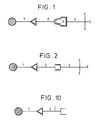
- an FITC-labelled sheep anti-mouse polyclonal antibody was used as calibrator reagent Y to form the bridging component between the sheep anti-FITC solid phase separation system and the enzyme-labelled signal generating mouse monoclonal antibody.
- Prolactin is notoriously unstable stored in liquid state at 4°C, which is the requirement for ready-to-use calibrators and until now all known manufacturers of prolactin immunoassay kits offered no alternative to using freeze-dried preparations of the hormone. Stability over the reagent shelf-life of approximately nine months is assured with the freeze-dried product, but this carries the disadvantages described above and thus the advantages of the method of assay according to the present invention are self-evident.
- Liquid non-antigen calibrator used in Single Point Calibration of the Prolactin Immunoenzymetric Assay (IEMA) .
- Monoclonal antibodies were obtained from mouse ascites fluid by the process reported by Milstein and Kohler in Nature 256 (1975) 495-497.
- Antibodies from individual hybridoma cell lines were screened to identify those producing antibody to discrete antigenic determinants. Those having the highest affinities to prolactin were selected for use in the assay.
- SMCC N-succinimidyl 4-(N-maleimidomethyl) cyclohexane-1-carboxylate
- N-succinimidyl 3-(2-pyridyldithio) propionate SPDP
- 1 ml anti-Prolactin monoclonal antibody 3 mg/ml in 200 mM sodium propionate, pH 6.0
- the antibody was separated by passage through a disposable Sephadex G-25 column (PD-10) equilibrated in 200 mM sodium acetate buffer, pH 4.5.
- Dithiothreitol (1 M) was added to the antibody (1/20 of antibody volume added) and left for 10 minutes at room temperature.
- the antibody was desalted using a Sephadex G-25 medium column ( 1 x 35cm) equilibrated in 200 mM sodium propionate, pH 6.0.
- Antibody and alkaline phosphatase prepared as above were mixed in an equimolar ratio and left to conjugate for 24 hours at 4°C.
- the resulting conjugate was purified by high performance liquid chromatography (HPLC) on a TSK 3000 SW column equilibrated in 200 mM sodium propionate, 1 mM magnesium chloride and 0.1 mM zinc chloride at pH 6.0.
- the conjugate was diluted in assay buffer to a concentration of 2.5 ⁇ g/ml for use in the assay.
- conjugate was purified by passage down a Sephadex G-25 column equilibrated with sodium propionate buffer (0.2 M, pH 6.0).
- the anti-mouse antibody was a conventional polyclonal antiserum obtained by immunising sheep with purified mouse IgG.
- the antisera obtained was then purified twice by salt precipitation using 18% w/v sodium sulphate; after which it was finally purified by passage down a TSK 3000 SW silica-based HPLC column equilibrated with 0.2M sodium propionate buffer pH 6.0.
- the antibody pool was then dialysed into 0.2M sodium bicarbonate buffer pH 9.0.
- the purified antimouse product was then conjugated to FITC as described above.
- the anti-FITC antibody was a conventional polyclonal antiserum obtained by immunising sheep with FITC conjugated to keyhole limpet haemocyanin.
- the magnetisable cellulose particles were a composite of cellulose containing approximately 50% black ferric(ous) oxide (Fe3O4), with mean particle diameter of 3 microns (see Forrest and Rattle, "Magnetic Particle Radioimmunoassay” in Immunoassays for Clinical Chemistry, p. 147-162, Ed. Hunter and Corrie, Churchill Livingstone, Edinburgh (1983)).
- Anti-FITC antiserum was covalently coupled to the magnetisable cellulose following cyanogen bromide activation of the cellulose according to the procedure of Axen et al ., Nature 214 , 1302-1304 (1967). The antiserum was coupled at a ratio of 2 ml antiserum to 1 gram of magnetisable solid phase.
- the solid phase was diluted to 6.0 mg/ml in 50 mM Tris/HCl buffer, pH 8.0, containing 0.1% sodium azide, 0.5% bovine serum albumin (BSA), fraction V, 0.25% Tween 20 and 0.5% methocell.
- BSA bovine serum albumin
- a preparation of freeze-dried prolactin, calibrated against International Reference Preparation 75/504, was diluted in heat inactivated bovine serum to give concentrations of 0, 2.09, 5.24, 9.95, 25.53, 99.05, 247.3 ng/ml (1.0 ng/ml 20 ⁇ U/ml).
- the assay buffer consisted of 0.5% BSA, fraction V, 0.2% sheep serum, 1 mM magnesium chloride, 0.1 mM zinc chloride, 0.1 M sodium chloride and 0.2% sodium azide in 0.1 M Tris/HCl, pH 8.0.
- the wash buffer consisted of 0.9% sodium chloride in 0.01 M Tris/HCl, pH 8.6.
- the substrate buffer consisted of 1.1 M solution of diethanolamine, 0.9% sodium chloride and 1 mM magnesium chloride at pH 8.6. This buffer then had the substrate for alkaline phosphatase (3.0 mM phenolphthalein monophosphatase) dissolved in it.
- the stop solution was prepared by adjusting a solution comprising 200mM sodium carbonate, 50 mM CAPS (3-[Cyclohexylamino]-1-propanesulfonic acid) to pH 13.4 by adding 240 mM NaOH.
- the absorbances of the supernatant were determined at 550 nm and 492 nm on the Ocean Scientific Chemstat Spectrophotometer. The use of the dual wavelength is applicable as cited in EP-249357.
- the optimum calibrator value was assessed with respect to both accuracy and precision of sample measurement across the standard curve as derived by single point calibration (SPC) using reconstituted freeze-dried calibrator.
- SPC single point calibration
- Ten standard curves and controls were run.
- a base curve was set up by combining the 10 curves. This base curve, fitted by the 5 parameter logistic fitting programme, is defined by the 5 parameters generated by the fitting procedure. The base curve was then used in conjunction with the formulae described in EP-0190006 to define the suitable calibrator.
- the calibrator value selected from the range tested was that giving the best compromise between precision and accuracy.
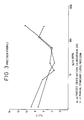
- Figure 3 demonstrates the precision profile of SPC unknown sample values obtained using the selected freeze-dried calibrator with SPC to normalise the unknown sample signals which are then read off the base curve, compared to the precision obtained for the same samples with values read from conventional standard curves. Each sample was assessed by both procedures in ten separate assays.
- Figure 4a demonstrates the mean SPC% bias observed over the range. Bias was calculated thus:- Reference values were obtained from the base curve derived values. Having selected the value of the antigen calibrator, the non-antigen calibrator was titrated by dilution in assay buffer (see figure 5). Various concentrations of the non-antigen calibrator were run in the assay and the concentration giving an OD similar to that of the selected antigen was chosen and calibrated (i.e. run as unknown with standard curves). Its corresponding antigen value was interpolated from the standard curve.
- the non-antigen calibrator - sheep anti-mouse FITC - concentration of 1.2 ⁇ g/ml gave an OR 550 nm of 5.34 and had an equivalent antigen value read from the standard curve of 82.44 ng/ml.
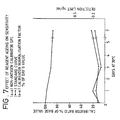
- Figure 6 demonstrates the precision profile of SPC unknown sample values obtained using the non-antigen calibration which normalises the unknown signals which are then read off the base curve vs standard curve derived precision profile. Each sample was again assessed by both procedures in ten separate assays.
- Figure 4b shows the mean % bias observed when SPC was applied with the non-antigen calibrator.
- the non-antigen calibrator's performance was demonstrated to be equivalent to that of the freeze-dried antigen calibrator in these experiments.
- Detection limit for standard curves was assessed as mean (x) of 10 replicates of zero run with each standard curve + 2 standard deviations (2SD). This value x + 2SD was read off the standard curve.
- the detection limit by SPC was determined by two methods:
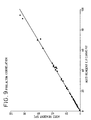
- Patient sample values were calculated by prolactin IEMA standard curve and by single point calibration using fresh and aged reagents. The same samples were also evaluated in the prolactin IRMA.
- HPL Human placental lactogen
- HGH human growth hormone
Landscapes
- Health & Medical Sciences (AREA)
- Life Sciences & Earth Sciences (AREA)
- Engineering & Computer Science (AREA)
- Molecular Biology (AREA)
- Hematology (AREA)
- Immunology (AREA)
- Biomedical Technology (AREA)
- Chemical & Material Sciences (AREA)
- Urology & Nephrology (AREA)
- Food Science & Technology (AREA)
- Biochemistry (AREA)
- Cell Biology (AREA)
- Biotechnology (AREA)
- Medicinal Chemistry (AREA)
- Physics & Mathematics (AREA)
- Analytical Chemistry (AREA)
- Microbiology (AREA)
- General Health & Medical Sciences (AREA)
- General Physics & Mathematics (AREA)
- Pathology (AREA)
- Endocrinology (AREA)
- Reproductive Health (AREA)
- Investigating Or Analysing Biological Materials (AREA)
- Measuring Or Testing Involving Enzymes Or Micro-Organisms (AREA)
- Testing Electric Properties And Detecting Electric Faults (AREA)
Claims (10)
- Testverfahren für einen Liganden in einer Probe, umfassend(i) Inkubieren der Probe, nacheinander oder gleichzeitig, mit einem ersten spezifischen Bindungspartner für den Liganden und mit einem Aliquoten des Reagens X, bestehend aus einem zweiten spezifischen Bindungspartner für den Liganden oder ein Ligand-Analoges, wobei das Reagens X direkt oder indirekt an eine bestimmbare Markierung gebunden ist;(ii) Entfernung von im wesentlichen dem gesamten ersten spezifischen Bindungspartner und einer Menge des Reagens X aus dem Testmedium, wobei die Menge des Reagens X eine Funktion der Menge des Liganden ist; und(iii) Bestimmung mittels der bestimmbaren Markierung der Menge des Reagenz X, das aus dem Testmedium entfernt wird; dadurch gekennzeichnet, daß der Test durch Vergleich mit einem Standardtest normiert wird, was einschließt die Stufe der Inkubierung eines Aliquoten des genannten Reagens X oder eines Aliquoten eines Reagens Z (Reagens Z umfaßt ein entsprechendes Reagenz, das analog zum Reagens X markiert ist) mit einem spezifischen Bindungspartner dafür (der nicht der genannte Ligand ist), worin das Reagens Z, falls es verwendet wird, aus dem Standardtestmedium in einer Weise entfernt wird, die ähnlich der ist, wie für den ersten spezifischen Bindungspartner, und das in der Lösung bei Arbeitskonzentrationen und -temperaturen stabil ist.
- Verfahren nach Anspruch 1, worin der Standardtest die Stufe der Inkubierung eines Aliquoten des genannten Reagenz X mit einem spezifischen Bindungspartner dafür einschließt, wobei der spezifische Bindungspartner für das Reagens X eine Standardlösung eines Eichreagenz Y umfaßt, das ein Reagenz ist, das in Lösung bei Arbeitskonzentrationen und -temperaturen stabil ist, und worin der Standardtest weiterhin die Stufen einschließt:(a) Entfernung von im wesentlichen des gesamten Eichreagenz Y und einer Menge des Reagenz X aus dem Testmedium in gleicher Weise, wie sie zur Entfernung des ersten spezifischen Bindungspartners in Stufe (ii) angewandt wurde, wobei die Menge des entfernten Reagenz X direkt proportional zu der Menge des Eichreagenz Y ist; und(b) Bestimmung der Menge des aus dem Testmedium wie in Stufe (iii) entfernten Reagenz X.
- Verfahren nach Anspruch 2, worin die gleiche Menge an Reagenz X in dem Probentest und in dem Standardtest verwendet wird.
- Verfahren nach einem der Ansprüche 1 bis 3, worin der zu testende Ligand ein Antigen ist.
- Verfahren nach Anspruch 4, worin das Antigen Prolactin ist.
- Verfahren nach Anspruch 1 für den Test eines Antigens, bei dem der Test normiert wird unter Verwendung eines Reagens Z, worin das Reagens X einen bestimmbar markierten Antikörper für das Antigen enthält, wobei der erste spezifische Bindungspartner einen Hapten-markierten Antikörper zu dem Antigen umfaßt, und das Reagens Z eine äquivalent Hapten-markierte und bestimmbar-markierte Einheit umfaßt.
- Verfahren nach Anspruch 6, worin das Reagens Z ein Reagenz X umfaßt, das zusätzlich mit dem gleichen Hapten markiert ist, wie es für die Markierung des ersten spezifischen Bindungspartners verwendet wurde.
- Verfahren nach einem der vorangegangenen Ansprüche, worin die bestimmbare Markierung ein radioaktives Isotop, ein Fluorphores oder ein Enzym ist.
- Ausrüstung zur Durchführung eines Testverfahrens nach Anspruch 1, wobei die Ausrüstung ein Reagens X umfaßt, wie in Anspruch 1 definiert, einen ersten spezifischen Bindungspartner für den zu testenden Liganden und eine Standardlösung eines Reagenz Z, wie in Anspruch 1 definiert.
- Ausrüstung zur Durchführung eines Testverfahrens nach Anspruch 2, worin die Ausrüstung ein Reagens X umfaßt, wie in Anspruch 1 definiert, einen ersten spezifischen Bindungspartner für den zu testenden Liganden und eine Standardlösung eines Reagenz Y, wie in Anspruch 2 definiert.
Priority Applications (1)
| Application Number | Priority Date | Filing Date | Title |
|---|---|---|---|
| AT89906176T ATE93322T1 (de) | 1988-05-24 | 1989-05-23 | Testmethode. |
Applications Claiming Priority (2)
| Application Number | Priority Date | Filing Date | Title |
|---|---|---|---|
| GB888812213A GB8812213D0 (en) | 1988-05-24 | 1988-05-24 | Method of assay |
| GB8812213 | 1988-05-24 |
Publications (2)
| Publication Number | Publication Date |
|---|---|
| EP0368980A1 EP0368980A1 (de) | 1990-05-23 |
| EP0368980B1 true EP0368980B1 (de) | 1993-08-18 |
Family
ID=10637400
Family Applications (2)
| Application Number | Title | Priority Date | Filing Date |
|---|---|---|---|
| EP89305211A Pending EP0343932A1 (de) | 1988-05-24 | 1989-05-23 | Testmethode |
| EP89906176A Expired - Lifetime EP0368980B1 (de) | 1988-05-24 | 1989-05-23 | Testmethode |
Family Applications Before (1)
| Application Number | Title | Priority Date | Filing Date |
|---|---|---|---|
| EP89305211A Pending EP0343932A1 (de) | 1988-05-24 | 1989-05-23 | Testmethode |
Country Status (12)
| Country | Link |
|---|---|
| US (1) | US5312729A (de) |
| EP (2) | EP0343932A1 (de) |
| JP (1) | JP2781873B2 (de) |
| AU (1) | AU628351B2 (de) |
| CA (1) | CA1339255C (de) |
| DE (1) | DE68908528T2 (de) |
| ES (1) | ES2046531T3 (de) |
| GB (1) | GB8812213D0 (de) |
| IL (1) | IL90396A0 (de) |
| NO (1) | NO176197C (de) |
| WO (1) | WO1989011655A1 (de) |
| ZA (1) | ZA893927B (de) |
Families Citing this family (7)
| Publication number | Priority date | Publication date | Assignee | Title |
|---|---|---|---|---|
| DK138090D0 (da) * | 1990-06-06 | 1990-06-06 | Novo Nordisk As | Diagnostisk analysemetode |
| DE4214922C2 (de) * | 1992-05-06 | 1996-06-13 | Brahms Diagnostica Gmbh | Verfahren zur quantitativen Bestimmung des Anteils der freien Form eines Schilddrüsenhormon-Liganden in einer biologischen Flüssigkeit und Kit zur Durchführung eines solchen Verfahrens |
| US6771376B2 (en) | 1999-07-05 | 2004-08-03 | Novartis Ag | Sensor platform, apparatus incorporating the platform, and process using the platform |
| ES2273704T3 (es) | 1999-07-05 | 2007-05-16 | Novartis Ag | Procedimiento para utilizar un plataforma de deteccion. |
| US7167615B1 (en) | 1999-11-05 | 2007-01-23 | Board Of Regents, The University Of Texas System | Resonant waveguide-grating filters and sensors and methods for making and using same |
| US6979545B2 (en) * | 2000-10-05 | 2005-12-27 | Pharmacia & Upjohn Company | Method for determining chemical reactivity |
| WO2008106653A1 (en) * | 2007-03-01 | 2008-09-04 | Invitrogen Corporation | Immunoassay for cross-reacting substances |
Family Cites Families (10)
| Publication number | Priority date | Publication date | Assignee | Title |
|---|---|---|---|---|
| US3998943A (en) * | 1973-10-02 | 1976-12-21 | Syva Company | Double receptor fluorescent immunoassay |
| US4299916A (en) * | 1979-12-26 | 1981-11-10 | Syva Company | Preferential signal production on a surface in immunoassays |
| GB2118300B (en) * | 1982-02-12 | 1985-06-19 | Corning Glass Works | Method of immunoassay |
| EP0125893A3 (de) * | 1983-05-12 | 1986-10-15 | Sumitomo Chemical Company, Limited | Quantitative Bestimmung von Antigenen durch Enzym-Antikörper-Brückenverfahren |
| US4791056A (en) * | 1984-03-27 | 1988-12-13 | Syntex (U.S.A.) Inc. | Calibration device for heterogeneous immunoassay |
| US4661444A (en) * | 1984-03-29 | 1987-04-28 | Ortho Diagnostic Systems Inc. | Homogeneous immunoassays employing double antibody conjugates comprising anti-idiotype antibody |
| GB8501671D0 (en) * | 1985-01-23 | 1985-02-27 | Allen G J | Immunoassay |
| US4935339A (en) * | 1985-05-07 | 1990-06-19 | Nichols Institute Diagnostics | Delayed solid phase immunologic assay |
| JPS62231168A (ja) * | 1986-03-21 | 1987-10-09 | ハイブリテツク・インコ−ポレイテツド | アナライト−レセプタ−分析用内部標準を設けるための改良法 |
| US4788138A (en) * | 1987-04-30 | 1988-11-29 | Beckman Instruments, Inc. | Method to achieve a linear standard curve in a sandwich immunoassay |
-
1988
- 1988-05-24 GB GB888812213A patent/GB8812213D0/en active Pending
-
1989
- 1989-05-23 EP EP89305211A patent/EP0343932A1/de active Pending
- 1989-05-23 DE DE89906176T patent/DE68908528T2/de not_active Expired - Lifetime
- 1989-05-23 ES ES198989906176T patent/ES2046531T3/es not_active Expired - Lifetime
- 1989-05-23 AU AU36855/89A patent/AU628351B2/en not_active Ceased
- 1989-05-23 US US07/460,861 patent/US5312729A/en not_active Expired - Lifetime
- 1989-05-23 WO PCT/GB1989/000568 patent/WO1989011655A1/en not_active Ceased
- 1989-05-23 JP JP1505648A patent/JP2781873B2/ja not_active Expired - Fee Related
- 1989-05-23 EP EP89906176A patent/EP0368980B1/de not_active Expired - Lifetime
- 1989-05-24 IL IL90396A patent/IL90396A0/xx unknown
- 1989-05-24 ZA ZA893927A patent/ZA893927B/xx unknown
- 1989-05-24 CA CA000600515A patent/CA1339255C/en not_active Expired - Fee Related
-
1990
- 1990-01-23 NO NO900317A patent/NO176197C/no not_active IP Right Cessation
Also Published As
| Publication number | Publication date |
|---|---|
| WO1989011655A1 (en) | 1989-11-30 |
| ES2046531T3 (es) | 1994-02-01 |
| NO900317D0 (no) | 1990-01-23 |
| EP0368980A1 (de) | 1990-05-23 |
| EP0343932A1 (de) | 1989-11-29 |
| GB8812213D0 (en) | 1988-06-29 |
| CA1339255C (en) | 1997-08-12 |
| ZA893927B (en) | 1990-08-29 |
| NO900317L (no) | 1990-03-19 |
| NO176197B (no) | 1994-11-07 |
| DE68908528D1 (de) | 1993-09-23 |
| DE68908528T2 (de) | 1994-02-17 |
| JP2781873B2 (ja) | 1998-07-30 |
| US5312729A (en) | 1994-05-17 |
| AU3685589A (en) | 1989-12-12 |
| NO176197C (no) | 1995-02-15 |
| IL90396A0 (en) | 1990-01-18 |
| JPH03501166A (ja) | 1991-03-14 |
| AU628351B2 (en) | 1992-09-17 |
Similar Documents
| Publication | Publication Date | Title |
|---|---|---|
| Gosling | A decade of development in immunoassay methodology | |
| AU658566B2 (en) | Improvements in or relating to methods for providing internal references for use in analyte-receptor assays | |
| Barnard et al. | Idiometric assay: noncompetitive immunoassay for small molecules typified by the measurement of estradiol in serum | |
| EP0238353B1 (de) | Verfahren zur Immunoassay | |
| CA1294870C (en) | Method to achieve a standard linear curve in a sandwich immunoassay | |
| US20020106708A1 (en) | Assays reagents and kits for detecting or determining the concentration of analytes | |
| EP1082613B1 (de) | Methode zum nachweis von analyten | |
| EP0190006B1 (de) | Immunotest-Verfahren | |
| US5459045A (en) | Reagent for immunoassay, and device using the same | |
| CN117031011A (zh) | 化学发光免疫检测试剂盒 | |
| US4914023A (en) | Method of extending the linear range of an enzyme immunoassay by measuring off-peak absorbance | |
| US5312729A (en) | Method of assay normalized with non-antigen calibrator | |
| US4637985A (en) | Assay processes and materials therefor | |
| EP0368273B1 (de) | Verfahren zur Bestimmung eines Antigens | |
| EP0389301A2 (de) | Reagenzkomplex für Immunoessay | |
| EP0441470A2 (de) | Verfahren zur Abtrennung und Messung von Spurbestandteilen | |
| Hiroyuki et al. | An enzyme immunoassay system for measurement of serum insulin | |
| Deshpande | Assay development, evaluation, and validation | |
| CN117031010A (zh) | 25-羟基维生素d化学发光免疫检测试剂盒 | |
| Sidki et al. | Direct determination of phenobarbital in serum or plasma by polarization fluoroimmunoassay | |
| Rugg et al. | A fully automated solid-phase radioimmunoassay for triiodothyronine. | |
| JP4013270B2 (ja) | 尿中生理活性ペプチドの測定法及び測定用試薬 | |
| CN120504740A (zh) | 一种促甲状腺激素抗体及其在荧光免疫层析检测中的应用 | |
| JP3451942B2 (ja) | 標準液及び免疫測定方法 | |
| Burrin | Modern Techniques of Hormone Measurement and Their Interpretation |
Legal Events
| Date | Code | Title | Description |
|---|---|---|---|
| PUAI | Public reference made under article 153(3) epc to a published international application that has entered the european phase |
Free format text: ORIGINAL CODE: 0009012 |
|
| 17P | Request for examination filed |
Effective date: 19900118 |
|
| AK | Designated contracting states |
Kind code of ref document: A1 Designated state(s): AT BE CH DE FR GB IT LI LU NL SE |
|
| RAP1 | Party data changed (applicant data changed or rights of an application transferred) |
Owner name: APPLIED RESEARCH SYSTEMS ARS HOLDING N.V. |
|
| XX | Miscellaneous (additional remarks) |
Free format text: VERBUNDEN MIT 89305211.8/0343932 (EUROPAEISCHE ANMELDENUMMER/VEROEFFENTLICHUNGSNUMMER) DURCH ENTSCHEIDUNG VOM 14.01.92. |
|
| 17Q | First examination report despatched |
Effective date: 19920219 |
|
| GRAA | (expected) grant |
Free format text: ORIGINAL CODE: 0009210 |
|
| AK | Designated contracting states |
Kind code of ref document: B1 Designated state(s): AT BE CH DE ES FR GB GR IT LI LU NL SE |
|
| REF | Corresponds to: |
Ref document number: 93322 Country of ref document: AT Date of ref document: 19930915 Kind code of ref document: T |
|
| XX | Miscellaneous (additional remarks) |
Free format text: VERBUNDEN MIT 89305211.8/0343932 (EUROPAEISCHE ANMELDENUMMER/VEROEFFENTLICHUNGSNUMMER) DURCH ENTSCHEIDUNG VOM 14.01.92. |
|
| RAP2 | Party data changed (patent owner data changed or rights of a patent transferred) |
Owner name: ARS HOLDING 89 N.V |
|
| REF | Corresponds to: |
Ref document number: 68908528 Country of ref document: DE Date of ref document: 19930923 |
|
| ET | Fr: translation filed | ||
| ITF | It: translation for a ep patent filed | ||
| REG | Reference to a national code |
Ref country code: GR Ref legal event code: FG4A Free format text: 3009827 |
|
| REG | Reference to a national code |
Ref country code: ES Ref legal event code: FG2A Ref document number: 2046531 Country of ref document: ES Kind code of ref document: T3 |
|
| PLBE | No opposition filed within time limit |
Free format text: ORIGINAL CODE: 0009261 |
|
| STAA | Information on the status of an ep patent application or granted ep patent |
Free format text: STATUS: NO OPPOSITION FILED WITHIN TIME LIMIT |
|
| EPTA | Lu: last paid annual fee | ||
| 26N | No opposition filed | ||
| EAL | Se: european patent in force in sweden |
Ref document number: 89906176.6 |
|
| REG | Reference to a national code |
Ref country code: CH Ref legal event code: PUE Owner name: ARS HOLDING 89 N.V. TRANSFER- BIOCHEM IMMUNOSYSTEM |
|
| BECA | Be: change of holder's address |
Free format text: 971104 *BIOCHEM IMMUNOSYSTEMS L.L.C.:BUSCH HILL BAY STREET, BRIDGETOWN BARBADOS |
|
| REG | Reference to a national code |
Ref country code: FR Ref legal event code: TP Free format text: PUBLIE A TORT DANS LE BOPI 98/03 SUIVANT LA NOTIFICATION DANS LE BOPI 98/07 |
|
| REG | Reference to a national code |
Ref country code: FR Ref legal event code: TP |
|
| NLS | Nl: assignments of ep-patents |
Owner name: BIOCHEM IMMUNOSYSTEMS LLC |
|
| REG | Reference to a national code |
Ref country code: ES Ref legal event code: PC2A |
|
| PGFP | Annual fee paid to national office [announced via postgrant information from national office to epo] |
Ref country code: SE Payment date: 19990510 Year of fee payment: 11 |
|
| PGFP | Annual fee paid to national office [announced via postgrant information from national office to epo] |
Ref country code: GR Payment date: 19990513 Year of fee payment: 11 |
|
| PGFP | Annual fee paid to national office [announced via postgrant information from national office to epo] |
Ref country code: LU Payment date: 19990519 Year of fee payment: 11 |
|
| PGFP | Annual fee paid to national office [announced via postgrant information from national office to epo] |
Ref country code: GB Payment date: 19990520 Year of fee payment: 11 |
|
| PGFP | Annual fee paid to national office [announced via postgrant information from national office to epo] |
Ref country code: CH Payment date: 19990521 Year of fee payment: 11 |
|
| PGFP | Annual fee paid to national office [announced via postgrant information from national office to epo] |
Ref country code: ES Payment date: 19990527 Year of fee payment: 11 |
|
| PGFP | Annual fee paid to national office [announced via postgrant information from national office to epo] |
Ref country code: AT Payment date: 19990528 Year of fee payment: 11 Ref country code: FR Payment date: 19990528 Year of fee payment: 11 |
|
| PGFP | Annual fee paid to national office [announced via postgrant information from national office to epo] |
Ref country code: NL Payment date: 19990531 Year of fee payment: 11 |
|
| PGFP | Annual fee paid to national office [announced via postgrant information from national office to epo] |
Ref country code: BE Payment date: 19990603 Year of fee payment: 11 |
|
| PG25 | Lapsed in a contracting state [announced via postgrant information from national office to epo] |
Ref country code: AT Free format text: LAPSE BECAUSE OF NON-PAYMENT OF DUE FEES Effective date: 20000523 Ref country code: GB Free format text: LAPSE BECAUSE OF NON-PAYMENT OF DUE FEES Effective date: 20000523 Ref country code: LU Free format text: LAPSE BECAUSE OF NON-PAYMENT OF DUE FEES Effective date: 20000523 |
|
| PG25 | Lapsed in a contracting state [announced via postgrant information from national office to epo] |
Ref country code: ES Free format text: THE PATENT HAS BEEN ANNULLED BY A DECISION OF A NATIONAL AUTHORITY Effective date: 20000524 Ref country code: SE Free format text: LAPSE BECAUSE OF NON-PAYMENT OF DUE FEES Effective date: 20000524 |
|
| PG25 | Lapsed in a contracting state [announced via postgrant information from national office to epo] |
Ref country code: CH Free format text: LAPSE BECAUSE OF NON-PAYMENT OF DUE FEES Effective date: 20000531 Ref country code: BE Free format text: LAPSE BECAUSE OF NON-PAYMENT OF DUE FEES Effective date: 20000531 Ref country code: LI Free format text: LAPSE BECAUSE OF NON-PAYMENT OF DUE FEES Effective date: 20000531 Ref country code: GR Free format text: LAPSE BECAUSE OF NON-PAYMENT OF DUE FEES Effective date: 20000531 |
|
| BERE | Be: lapsed |
Owner name: BIOCHEM IMMUNOSYSTEMS L.L.C. Effective date: 20000531 |
|
| PG25 | Lapsed in a contracting state [announced via postgrant information from national office to epo] |
Ref country code: NL Free format text: LAPSE BECAUSE OF NON-PAYMENT OF DUE FEES Effective date: 20001201 |
|
| GBPC | Gb: european patent ceased through non-payment of renewal fee |
Effective date: 20000523 |
|
| REG | Reference to a national code |
Ref country code: CH Ref legal event code: PL |
|
| EUG | Se: european patent has lapsed |
Ref document number: 89906176.6 |
|
| PG25 | Lapsed in a contracting state [announced via postgrant information from national office to epo] |
Ref country code: FR Free format text: LAPSE BECAUSE OF NON-PAYMENT OF DUE FEES Effective date: 20010131 |
|
| NLV4 | Nl: lapsed or anulled due to non-payment of the annual fee |
Effective date: 20001201 |
|
| REG | Reference to a national code |
Ref country code: FR Ref legal event code: ST |
|
| REG | Reference to a national code |
Ref country code: ES Ref legal event code: FD2A Effective date: 20020304 |
|
| PG25 | Lapsed in a contracting state [announced via postgrant information from national office to epo] |
Ref country code: IT Free format text: LAPSE BECAUSE OF NON-PAYMENT OF DUE FEES;WARNING: LAPSES OF ITALIAN PATENTS WITH EFFECTIVE DATE BEFORE 2007 MAY HAVE OCCURRED AT ANY TIME BEFORE 2007. THE CORRECT EFFECTIVE DATE MAY BE DIFFERENT FROM THE ONE RECORDED. Effective date: 20050523 |
|
| PGFP | Annual fee paid to national office [announced via postgrant information from national office to epo] |
Ref country code: DE Payment date: 20080527 Year of fee payment: 20 |