EP0369516A2 - Stabile, synthetische Triglyceride mit Beta-Prim-Kristallstruktur - Google Patents
Stabile, synthetische Triglyceride mit Beta-Prim-Kristallstruktur Download PDFInfo
- Publication number
- EP0369516A2 EP0369516A2 EP89202775A EP89202775A EP0369516A2 EP 0369516 A2 EP0369516 A2 EP 0369516A2 EP 89202775 A EP89202775 A EP 89202775A EP 89202775 A EP89202775 A EP 89202775A EP 0369516 A2 EP0369516 A2 EP 0369516A2
- Authority
- EP
- European Patent Office
- Prior art keywords
- hardstock
- triglycerides
- less
- beta
- fatty acid
- Prior art date
- Legal status (The legal status is an assumption and is not a legal conclusion. Google has not performed a legal analysis and makes no representation as to the accuracy of the status listed.)
- Granted
Links
Images
Classifications
-
- A—HUMAN NECESSITIES
- A23—FOODS OR FOODSTUFFS; TREATMENT THEREOF, NOT COVERED BY OTHER CLASSES
- A23L—FOODS, FOODSTUFFS OR NON-ALCOHOLIC BEVERAGES, NOT OTHERWISE PROVIDED FOR; PREPARATION OR TREATMENT THEREOF
- A23L29/00—Foods or foodstuffs containing additives; Preparation or treatment thereof
- A23L29/10—Foods or foodstuffs containing additives; Preparation or treatment thereof containing emulsifiers
-
- A—HUMAN NECESSITIES
- A61—MEDICAL OR VETERINARY SCIENCE; HYGIENE
- A61Q—SPECIFIC USE OF COSMETICS OR SIMILAR TOILETRY PREPARATIONS
- A61Q19/00—Preparations for care of the skin
-
- A—HUMAN NECESSITIES
- A23—FOODS OR FOODSTUFFS; TREATMENT THEREOF, NOT COVERED BY OTHER CLASSES
- A23D—EDIBLE OILS OR FATS, e.g. MARGARINES, SHORTENINGS OR COOKING OILS
- A23D9/00—Other edible oils or fats, e.g. shortenings or cooking oils
-
- A—HUMAN NECESSITIES
- A23—FOODS OR FOODSTUFFS; TREATMENT THEREOF, NOT COVERED BY OTHER CLASSES
- A23D—EDIBLE OILS OR FATS, e.g. MARGARINES, SHORTENINGS OR COOKING OILS
- A23D9/00—Other edible oils or fats, e.g. shortenings or cooking oils
- A23D9/007—Other edible oils or fats, e.g. shortenings or cooking oils characterised by ingredients other than fatty acid triglycerides
- A23D9/013—Other fatty acid esters, e.g. phosphatides
-
- A—HUMAN NECESSITIES
- A23—FOODS OR FOODSTUFFS; TREATMENT THEREOF, NOT COVERED BY OTHER CLASSES
- A23L—FOODS, FOODSTUFFS OR NON-ALCOHOLIC BEVERAGES, NOT OTHERWISE PROVIDED FOR; PREPARATION OR TREATMENT THEREOF
- A23L25/00—Food consisting mainly of nutmeat or seeds; Preparation or treatment thereof
- A23L25/10—Peanut butter
-
- A—HUMAN NECESSITIES
- A61—MEDICAL OR VETERINARY SCIENCE; HYGIENE
- A61K—PREPARATIONS FOR MEDICAL, DENTAL OR TOILETRY PURPOSES
- A61K47/00—Medicinal preparations characterised by the non-active ingredients used, e.g. carriers or inert additives; Targeting or modifying agents chemically bound to the active ingredient
- A61K47/44—Oils, fats or waxes according to two or more groups of A61K47/02-A61K47/42; Natural or modified natural oils, fats or waxes, e.g. castor oil, polyethoxylated castor oil, montan wax, lignite, shellac, rosin, beeswax or lanolin
-
- A—HUMAN NECESSITIES
- A61—MEDICAL OR VETERINARY SCIENCE; HYGIENE
- A61K—PREPARATIONS FOR MEDICAL, DENTAL OR TOILETRY PURPOSES
- A61K8/00—Cosmetics or similar toiletry preparations
- A61K8/18—Cosmetics or similar toiletry preparations characterised by the composition
- A61K8/30—Cosmetics or similar toiletry preparations characterised by the composition containing organic compounds
- A61K8/33—Cosmetics or similar toiletry preparations characterised by the composition containing organic compounds containing oxygen
- A61K8/37—Esters of carboxylic acids
- A61K8/375—Esters of carboxylic acids the alcohol moiety containing more than one hydroxy group
-
- A—HUMAN NECESSITIES
- A61—MEDICAL OR VETERINARY SCIENCE; HYGIENE
- A61K—PREPARATIONS FOR MEDICAL, DENTAL OR TOILETRY PURPOSES
- A61K9/00—Medicinal preparations characterised by special physical form
- A61K9/0012—Galenical forms characterised by the site of application
- A61K9/0014—Skin, i.e. galenical aspects of topical compositions
-
- C—CHEMISTRY; METALLURGY
- C11—ANIMAL OR VEGETABLE OILS, FATS, FATTY SUBSTANCES OR WAXES; FATTY ACIDS THEREFROM; DETERGENTS; CANDLES
- C11B—PRODUCING, e.g. BY PRESSING RAW MATERIALS OR BY EXTRACTION FROM WASTE MATERIALS, REFINING OR PRESERVING FATS, FATTY SUBSTANCES, e.g. LANOLIN, FATTY OILS OR WAXES; ESSENTIAL OILS; PERFUMES
- C11B7/00—Separation of mixtures of fats or fatty oils into their constituents, e.g. saturated oils from unsaturated oils
-
- C—CHEMISTRY; METALLURGY
- C11—ANIMAL OR VEGETABLE OILS, FATS, FATTY SUBSTANCES OR WAXES; FATTY ACIDS THEREFROM; DETERGENTS; CANDLES
- C11C—FATTY ACIDS FROM FATS, OILS OR WAXES; CANDLES; FATS, OILS OR FATTY ACIDS BY CHEMICAL MODIFICATION OF FATS, OILS, OR FATTY ACIDS OBTAINED THEREFROM
- C11C3/00—Fats, oils, or fatty acids by chemical modification of fats, oils, or fatty acids obtained therefrom
- C11C3/12—Fats, oils, or fatty acids by chemical modification of fats, oils, or fatty acids obtained therefrom by hydrogenation
-
- Y—GENERAL TAGGING OF NEW TECHNOLOGICAL DEVELOPMENTS; GENERAL TAGGING OF CROSS-SECTIONAL TECHNOLOGIES SPANNING OVER SEVERAL SECTIONS OF THE IPC; TECHNICAL SUBJECTS COVERED BY FORMER USPC CROSS-REFERENCE ART COLLECTIONS [XRACs] AND DIGESTS
- Y10—TECHNICAL SUBJECTS COVERED BY FORMER USPC
- Y10S—TECHNICAL SUBJECTS COVERED BY FORMER USPC CROSS-REFERENCE ART COLLECTIONS [XRACs] AND DIGESTS
- Y10S426/00—Food or edible material: processes, compositions, and products
- Y10S426/804—Low calorie, low sodium or hypoallergic
Definitions
- the present invention relates to a tailored beta-prime stable triglyceride hardstock and to various food products suitable for its use therein.
- plastic shortenings are essentially composed of high- and intermediate-melting solid fats or mixtures thereof, e.g., "hardstocks", and liquid oils which have been processed by various techniques which make the product plastic and workable at room temperature.
- Hardstocks and hardstock stabilizers are incorporated into various other food products, in addition to conventional plastic shortenings, including, but not limited to, fluid shortenings, frostings, icings, and peanut butter.
- certain kinds of fat crystals most notably the beta-prime crystals, have the capacity to form a rigidly interlocking structure when suspended in a liquid component if the solids are present in sufficient amounts.
- the hardstocks or stabilizers added to food products be of the proper crystal type.
- a shortening that contains solids that transform or recrystallize into the beta crystal phase often tends to produce graininess.
- the solid glycerides crystallize and remain in the beta-prime crystal form.
- the method of attaining the beta-prime crystal form desired for various food products is to add a suitable beta-prime-tending hardstock or hardstock stabilizer.
- These conventional beta-prime tending type hardstocks or stabilizers are produced from palm oil, cottonseed oil, rapeseed oil, corn oil, peanut oil, and certain fish oils.
- These hardstocks contain 20%-30% glycerides which are not beta-prime stable, for example, tristearin, tripalmitin, and 1,3-diglycerides, which are deleterious to product performance.
- These glycerides, and most others are not stable in the beta-prime crystal phase.
- Conventional hardstocks, which contain such glycerides will undergo polymorphic transformations and crystal size changes upon storage and/or upon temperature variations. This results in poor appearance, volume and performance in food compositions which contain such hardstocks.
- the present invention consists of a new uniquely stable beta-prime hardstock which exhibits superior beta-prime stability and yields improved texture, stability, oil retention, and/or flavor display when incorporated into various food products. This is achieved by creating the significantly more beta-prime stable hardstock of the present invention by tailoring the triglyceride molecules to position-specific compositions by the processes such as those described herein.
- beta-prime stable hardstock which exhibits excellent compatibility with other beta-prime-crystal-tending hardstocks such as fully hydrogenated high-erucic acid rapeseed oil and high-behenic acid rapeseed oil, along with good compatibility with reduced- or non-caloric fats which are either non-digestible or are only partially-digestible.
- a significantly more stable beta-prime tailored triglyceride hardstock (as compared to conventional hardstocks) which exhibits superior beta-prime stability and yields improved texture, stability, oil retention, and/or flavor display when incorporated into various food products such as shortening, frosting, icing, and peanut butter.
- lipid as used herein, particularly describes triglyceride fats and oils as well as non- or partially-digestible fatty materials as defined hereinbelow.
- Lipid encompasses fats and fat-like materials and includes those substances which are relatively insoluble in water but are miscible with fat solvents (including, but not limited to, benzene, chloroform, acetone, and ether), and which are related either actually or potentially to fatty acid esters.
- the beta-prime triglyceride hardstock is preferably produced by the crystal fractionation, most preferably by the solvent or detergent fractionation, of certain naturally occurring source oils.
- the source oils must contain high concentrations of PUP and PUU triglycerides. Said source oils are subjected to fractionation in order to separate therefrom undesirable trisaturated triglycerides (for example, tripalmitin, hereinafter PPP, and tristearin, hereinafter SSS), triunsaturated triglycerides, and diglycerides and leave behind the desirable PUP and PUU intermediates.
- PSP 2-Stearoyldipalmitin
- PSS 1-Palmitoyldistearin
- P is palmitic acid
- U is an unsaturated fatty acid having 18 carbon atoms.
- S is stearic acid
- the beta-prime stable hardstock of the present invention therefore comprises: a) from about 45% to about 98%, preferably from about 60% to about 92%, most preferably from about 60% to about 85%, of PSP triglycerides; b) from about 2% to about 55%, preferably from about 8% to about 40%, most preferably from about 15% to about 40%, of PSS triglycerides; c) less than about 7%, and preferably less than about 4%, of PPP triglycerides; d) less than about 7%, and preferably less than about 4%, of SSS triglycerides; e) less than about 3%, preferably less than 1%, and most preferably less than about 0.2%, of diglycerides; f) less than about 10%, and preferably less than about 6%, of total PPP plus SSS triglycerides; and g) less than about 10%, preferably less than about 2%, of the fatty acids of the glycerides being unsaturated.
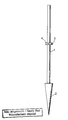
- the Drawing illustrates the penetrating device used to measure the penetration (firmness) of the reduced calorie shortenings described herein as suitable for utilizing the hardstock of the present invention.
- the penetrating device comprises a shaft 1 and needle 2 (or “cone").
- a 9" long hollow steel rod having a 3/16" outer diameter is used for the shaft.
- At the end of the shaft is a 2" long hollow stainless steel needle or cone.
- the pointed end of the needle has a 1/32" diameter and the enlarged end has a 19/32" diameter.
- the needle can be unscrewed from the shaft to insert weights into the hollow needle.
- a magnesium collar 3 with a set screw 4 is positioned around the shaft, about 4-1/4" from the end opposite the needle.
- the collar is 7/16" in diameter and 1/8" thick.
- the penetrating device as a whole, including the collar, must weigh 47 grams.
- the stable beta-prime triglyceride hardstock of the present invention is preferably produced by subjecting certain source oils which contain high concentrations of PUP and PUU triglycerides to crystal fractionation, preferably solvent fractionation.
- Such fractionation processes as described hereinbelow separate undesirable trisaturated triglycerides (e.g., PPP, SSS), triunsaturated triglycerides (which become trisaturated triglycerides upon hydrogenation), and diglycerides from the source oil and leave behind the desirable PUP and PUU triglycerides, which are intermediate triglycerides in the process of forming the desirable PSP and PSS triglycerides.
- the PUP and PUU intermediate triglycerides which remain after the fractionation of the source oils are simply hydrogenated to yield the desirable PSP and PSS triglycerides which are the main constituents in the beta-prime stable hardstock of the present invention.
- the PUP and PUU triglyceride intermediates are most preferably isolated from the source oils by the crystal fractionation process described below. There are, however, various methods to synthesize, isolate, or otherwise obtain the PUP and PUU triglyceride intermediates which are acceptable in the practice of the present invention.
- the chemical synthesis, pathway, or process used to derive the PUP and PUU triglyceride intermediates is not of any consequence; it is only important that sufficient PUP and PUU triglycerides are generated and available for hydrogenation in order to yield a composition containing sufficient amounts of PSP and PSS triglycerides upon hydrogenation.
- a suitable source oil In order to produce the beta-prime stable tailored triglyceride hardstock, a suitable source oil must undergo the fractionation processes described herein. Suitable source oils must contain high concentrations of PUP and PUU triglycerides, most preferably at least from about 45% to about 98% of PUP triglycerides and at least from about 2% to about 55% PUU triglycerides. Certain naturally occurring vegetable oils exhibit this composition and include, but are not limited to, palm oil, cottonseed oil, stillingia tallow, piquia fat, and mixtures thereof. Certain genetically engineered vegetable oils could be fashioned to exhibit the required concentration of PUP and PUU triglycerides.
- soybean oil A6
- E. G. Hammond and W. R. Fehr in Biotechnology for the Oils and Fats Industry Edited by C. Ratledge et al., Published by American Oil Chemist Society, Copyright 1984, pp. 89-96, incorporated by reference herein.
- the high concentrations of PUP and PUU found in the source oils must be separated from the undesirable constituents therein, namely trisaturated triglycerides (PPP, SSS), triunsaturated triglycerides, and diglycerides.
- a preferred method of separation is crystalline fractionation, most preferably solvent crystalline fractionation. Preferred methods of solvent fractionation are explained in Examples I, II, and IV herein.
- a method of non-solvent fractionation is set forth in Example III herein. Other methods of solvent and non-solvent fractionation of naturally occurring source oils are illustrated in the following references, all incorporated by reference herein: U.S.
- Patent 4,588,604 to Baker and Weitzel (assigned to The Procter & Gamble Company), issued May 13, 1986 (solvent fractionation of palm oil); E. S. Lutton, and F. L. Jackson, "The Polymorphism of Synthetic and Natural 2-Oleyldipalmitin," Journal of the American Chemical Society , Vol. 72, pp. 3254-57, (1950) (solvent fractionation of stillingia tallow and piquia fat); U.S. Patent 4,447,462 to Tafuri and Tao (assigned to The Procter & Gamble Company), issued May 8, 1984 (solventless, two-step thermal fractionation of palm oil); and U.S. Patent 4,247,471 to Klein and Lacome (assigned to Lesieur-Cotelle & Associes, S.A., Hauts de Sene, France), issued January 27, 1981 (solvent fractionation of palm oil).
- solvent fractionation is preferred over non-solvent fractionation because it can more satisfactorily neutralize trisaturated and triunsaturated triglyceride constituents.
- Various solvents are known in the art for use in fractionation of triglycerides. Two important examples for achieving the separation required for the present invention are hexane and acetone. Hexane may be more preferred from a cost-savings standpoint, due to the relative inexpensiveness and high availability of hexane.
- acetone as a solvent is preferred from the standpoint of effectiveness, since acetone produces better separation, thereby yielding an increased amount of the PUP and PUU triglyceride intermediates which are purer and exhibit larger crystals.
- detergent fractionation a type of non-solvent fractionation, has shown excellent results in isolating the PUP and PUU intermediates from the source oils because that process tends to more completely separate the liquid portion of fractionating solutions from the PUP and PUU triglyceride crystals.
- Other types of non-solvent fractionation for example multiple non-solvent fractionation and pressure fractionation, are also acceptable.
- any method of fractionation, as well as any order of particular fractionation steps, can be satisfactorily used on any suitable oil, so long as it removes the requisite amount of undesirable trisaturated triglycerides (PPP, SSS), trisaturated triglycerides, and diglycerides, and yields a sufficient amount of PUP and PUU triglyceride intermediates which can then go on to be hydrogenated to yield PSP and PSS triglycerides.
- PPP trisaturated triglycerides
- SSS trisaturated triglycerides
- diglycerides diglycerides
- a solventless fractionation process is disclosed herein in Example III. This process is preferably used in conjunction with the fractionation steps of source oils, either before or after the other solvent or non-solvent fractionation steps. This process is preferably used sometime during the process of isolating the PUU and PUP intermediates because it is particularly effective in removing undesirable tripalmitin triglycerides.
- PUP and PUU triglyceride intermediates are available and suitable for use in making the beta-prime stable hardstock of the present invention.
- position-specific enzymatic esterification can be utilized to obtain PUP and PUU triglycerides and genetic engineering could also be employed to produce vegetable source oils containing a high concentration of PUP and PUU triglycerides.
- Various sources of commercially fractionated vegetable oils are available which contain the requisite concentrations of palmitic acid and PUP and PUU triglycerides; the commercially fractionated palm oil hydrogenated in Example V is one such example thereof.
- any method of isolating, by fractionation or otherwise, chemically synthesizing, or otherwise obtaining the desirable PUP or PUU triglyceride intermediates is suitable for processing the beta-prime stable tailored triglyceride hardstock of the present invention, so long as the method utilized sufficiently results in a hardstock with the particular requisite composition as disclosed herein.
- the resulting tailored triglyceride hardstock comprises from about 45% to about 98%, preferably from about 60% to about 92%, most preferably from about 60% to about 85%, PSP triglycerides; from about 2% to about 55%, preferably from about 8% to about 40%, most preferably from about 15% to about 40%, PSS triglycerides; less than about 7%, preferably less than about 4%, PPP triglycerides; less than about 7%, preferably less than about 4%, SSS triglycerides; less than about 3%, preferably less than about 1%, and most preferably less than about 0.2%, diglycerides; less than about 10%, preferably less than about 6% total PPP and SSS triglycerides; and less than about 10%, preferably less than about 2%, of
- the hydrogenation of the PUP and PUU triglyceride intermediates to yield the desirable PSP and PSS triglyceride products may be by any of a number of suitable methods known in the art. Particularly preferred is that disclosed in Example V herein and also suitable are those disclosed in U.S. Patents 4,087,564 to Poot et al. (assigned to Lever Brothers Company), issued May 2, 1978; 4,702,928 to Wieske et al. (assigned to Internationale Octrooi Maatschappi; "Octropa" B. V., Rotterdam, Netherlands), issued October 27, 1987; and 4,055,679 to Kattenberg et al. (assigned to Lever Brothers Company), issued October 25, 1977; all incorporated by reference herein.
- From about 0.1% to about 20% of the hardstock resulting after the hydrogenation of the PUP and PUU intermediate triglycerides may be successfully incorporated into various food, cosmetic or pharmaceutical products which contain lipid material, particularly conventional triglyceride fats or oils and/or non- or partially-digestible fatty materials.
- lipid material particularly conventional triglyceride fats or oils and/or non- or partially-digestible fatty materials.
- non- or partially-digestible fatty materials are the sugar or sugar alcohol fatty polyol polyesters defined hereinbelow.
- Said hardstock is beta-prime stable and crystallizes very rapidly, thereby exhibiting unique functionality and yielding, when incorporated in various food products, improved texture, stability, oil retention, and/or flavor display.
- Food products especially suitable for inclusion of the beta-prime stable hardstock of the present invention are fatty food products, including, but not limited to, plastic and fluid shortening, peanut butter, frosting, and icing.
- the hardstock of the present invention When incorporated into shortenings and peanut butter, the hardstock of the present invention more effectively entraps the liquid oil components, thereby improving their storage stability at elevated temperatures (90 o F-100 o F; 32 o C-38 o C) or even when the hardstock is incorporated into the food products in reduced concentrations.
- the concentration of the hardstock.of the present invention should be from about 3% to about 12%, preferably from about 4% to about 9%, but said hardstock should replace at least 20% of the triglyceride trisaturates (e. g., PPP and SSS). All types of shortenings containing this beta-prime stable hardstock are of an improved quality and yield a significant reduction in saturated fatty acid content. Plastic shortenings containing the hardstock of the present invention exhibit a reduction in crystal size and improved creaminess and texture. In peanut butter, the concentration of the hardstock of the present invention should be from about 0.3% to about 2%, preferably from about 0.5% to about 1.4%.
- Highly hydrogenated high erucic acid rapeseed oil which is shown in Example VI is an additional example of a beta-prime tending hardstock suitable for use in various food products in combination with the hardstock of the present invention.
- the stable beta-prime PSP/PSS hardstock of the present invention is used in combination with highly hydrogenated (Iodine Value less than 20, preferably less than 10) high erucic acid (preferably at least about 40%) rapeseed oil, it should be used in ratios of PSP/PSS hardstock:high erucic acid rapeseed oil of from about 20:1 to about 1:1.
- a food product particularly suitable for utilizing the hardstock of the present invention in combination with the highly hydrogenated high erucic acid rapeseed oil of Example VI is the low-saturate all-purpose shortening of Example VII.
- the hardstock of the present invention has been found suitable for use in combination with highly hydrogenated high-erucic acid rapeseed oil type hardstocks because when these high-erucic oils are fully hydrogenated, they become high in behenic acid and high in BSB triglycerides.
- B behenic acid
- S stearic acid.
- the beta-prime crystalline morphology and stability of BSB triglycerides (2-stearoyldibehenin) has been identified and discussed by E. S. Lutton and A. J. Albert in "Polymorphism of 1-Behenoyldistearin and 2-Stearoyldibehenin," Journal of the American Oil Chemists' Society , Vol. 49, No. 5, pp.
- the stable beta-prime PSP/PSS hardstock of the present invention is used in combination with high BSB rapeseed oil hardstock in shortening and peanut butter, it should be used in ratios of PSP/PSS hardstock:BSB hardstock of from about 20:1 to about 1:1.
- the beta-prime stable hardstock of the present invention When the beta-prime stable hardstock of the present invention is blended with another beta-prime stable hardstock in a food product, the total hardstock concentration therein can be reduced. Blends of two beta-prime stable triglyceride hardstocks yields fatty food products, especially shortenings, which exhibit superior performance with a minimum concentration of saturated fatty acid groups, particularly that of palmitic acid. This is possible because the incorporation of the beta-prime stable hardstock of the present invention in various food compositions allows a reduction in the amount of intermediate-melting solid fats that need to be included in the composition. Since said intermediate-melting solid fats are generally high in saturated fatty acids, particularly palmitic acid, this results in an overall reduction in saturated fatty acids. The reduction of saturated fatty acids is desirable from a health standpoint.
- the beta-prime stable triglyceride hardstock of the present invention is also suitable for use in combination with many classes of non- or partially-digestible fatty materials.
- Non-digestible means that substantially all of the material is not digested or absorbed by the body. Said material passes through the digestive system substantially the same as when it was ingested.
- partially-digestible means that at least about 30% of the material is not digested or absorbed by the body.
- the beta-prime stable PSP and PSS triglyceride hardstock When used in combination with the non- or partially-digestible fatty material as described herein, it should be used in ratios of PSP/PSS hardstock to non- or partially-digestible fatty material of from about 1:2.9 to about 1:40, preferably from about 1:3.9 to about 1:11.7.
- the beta-prime stable hardstock of the present invention is used with non- or partially-digestible fatty materials in formulations which require the incorporation of hardstock material, from about 0% to about 50% of said fatty materials may be a hardstock material.
- non- or partially-digestible fatty materials contain fatty moieties which typically have carbon chain lengths of 8-24 carbon atoms.
- fatty moieties typically have carbon chain lengths of 8-24 carbon atoms.
- examples of such materials include, but are not limited to, those described in the following patents, all incorporated by reference herein: fatty alcohol esters of polycarboxylic acids (U.S. Patent 4,508,746 of Hamm, assigned to CPC International, Inc., issued April 2, 1985); fatty polyethers of polyglycerol (U.S.
- sugar and sugar alcohol fatty acid polyesters Preferred for use in combination with the beta-prime stable hardstock of the present invention are sugar and sugar alcohol fatty acid polyesters.
- sugar is used herein in its conventional sense as generic to mono- and disaccharides.
- sugar alcohol is likewise used herein in its conventional sense as generic to the reduction product of sugars wherein the aldehyde or ketone group has been reduced to an alcohol.
- Suitable monosaccharides are those containing 4 hydroxyl groups such as xylose, arabinose, and ribose; the sugar alcohol derived from xylose, i.e., xylitol, is likewise suitable.
- the monosaccharide erythrose is not suitable for use in the non- or partially-digestible fatty materials described herein since it only contains 3 hydroxyl groups; however, the sugar alcohol, derived from erythrose, i.e. erythritol, contains 4 hydroxyl groups and is thus suitable.
- 5 hydroxl-containing monosaccharides that are suitable for use herein are glucose, mannose, galactose, fructose, and sorbose.
- a sugar alcohol derived from sucrose, glucose, or sorbose, e.g., sorbitol, contains 6 hydroxyl groups and is also suitable as the alcohol moiety of the fatty acid ester compound.
- suitable disaccharides are maltose, lactose, and sucrose, all of which contain 8 hydroxl groups.
- sucrose fatty acid polyesters are prepared by a variety of methods known to those skilled in the art. These methods include: transesterification of the sucrose with methyl, ethyl or glycerol fatty acid esters using a variety of catalysts; acylation of the sucrose with fatty acid chlorides; acylation of the sucrose with fatty acid anhydrides; and acylation of the sucrose with fatty acids, per se. Mixtures of different fatty acids are used in the synthesis. The preparation of sucrose fatty acid esters is described in general in U.S. Patents Nos.
- sucrose fatty acid polyesters most preferred for use herein are substantially nondigestible and nonabsorbable. Therefore, the sucrose esters must have at least four fatty acid ester groups. Sucrose fatty acid ester compounds that contain three or less fatty acid ester groups are digested in, and the products of digestion are absorbed from, the intestinal tract much in the manner of ordinary triglyceride fats, whereas sucrose fatty acid ester compounds that contain four or more fatty acid ester groups are substantially nondigestible and consequently nonabsorbable by the human body.
- sucrose fatty acid esters have: (a) a total content of octa-, hepta-, and hexa-esters of not less than 95%; (b) an octa-ester content of not less than 70%; and (c) a content of the penta- and lower esters of not more than 3%.
- the fatty acid groups esterified to the sucrose molecule contain from about 2 to about 24 carbon atoms, and preferably from about 14 to about 18 carbon atoms.
- Examples of such fatty acids include caprylic, capric, lauric, myristic, myristoleic, palmitic, palmitoleic, stearic, oleic, ricinoleic, linoleic, linolenic, eleostearic, arachidic, arachidonic, behenic, and erucic acid.
- the fatty acids can be derived from naturally occurring or synthetic fatty acids; they can be saturated or unsaturated, including positional and geometrical isomers.
- the fatty acids esterified to the sucrose molecule are of mixed chain length to obtain the rheology and stability properties required herein.
- Exemplary of a noncaloric fat-like material for use in combination with the beta-prime stable hardstock of the present invention is a mixture of the hexa-, hepta-, and octa-esters of sucrose and medium- and long-chain fatty acids obtained from edible fats and oils and/or fatty acid sources that are generally recognized as safe or have been approved for direct food use by U.S. Food and Drug Administration regulations.
- Fatty acids with chain lengths of 2 to 24 carbon atoms can be used.
- sucrose polyesters preferred for use in combination with the beta-prime stable tailored triglyceride hardstock of the present invention is shown in Example VIII.
- a food product wherein the use of a blend of the beta-prime stable hardstock of the present invention and non- or partially-digestible fatty materials is especially preferred is a reduced-calorie shortening.
- Said shortening could contain as much as 75% by weight of the non- or partially-digestible fatty material. It is preferable to supplement the shortening with vitamin E at a level of 1.0 mg d-alpha-tocopherol equivalents per gram of said fatty material.
- An example of such a reduced-calorie shortening is disclosed herein at Example VIII.
- the beta-prime stable tailored triglyceride hardstock of the present invention is also suitable for use in peanut butter.
- the incorporation of the hardstock in peanut butter provides a softer peanut butter exhibiting improved storage stability by facilitating more effective entrapment of the liquid oil components.
- the hardstock of the present invention also yields a peanut butter exhibiting less stickiness in the mouth of the consumer upon ingestion.
- the hardstock of the present invention is also suitable for use as a base or a stabilizer in various cosmetic and pharmaceutical products.
- These products include, but are not limited to, stick-, lotion-, or cream-types and emulsion- and oleo-form products.
- Oleo-form cosmetic products encompass such items as lipstick, lip cream, stick-pomade, lip gloss, pastille, and deodorant.
- CNP Carbon Number Profile
- CNP-GC Gas Chromotography
- CNP-HPLC High Performance Liquid Chromotography
- the composition of the fraction B has a significantly improved composition over the starting material. It contains an increased concentration (92.1%) of the desirable PUP triglycerides (C50) and a significantly reduced concentration of both undesirable PPP (C48) and UUU (C54) triglycerides.
- This fraction B after hydrogenation, should have the preferred hardstock triglyceride (PSP, PSS, PPP, SSS) composition.
- the fraction E contains an increased concentration (11.7%) of the undesirable tripalmitin (PPP) and shows no increase in PUP content over the starting material.
- Table 2 illustrates the CNP-GC compositions of the fractions obtained.
- Table 2 CNP-GC Starting Material Intermediate Melting Fraction (Precipitate) Low Melting Fraction (Filtrate) 32 0.5% 1.0% 0.3% 34 0.5% 0.6% 1.3% 36 0.4% 0.1% 1.7% Total Diglycerides 1.4% 1.7% 3.3% 48 1.5% 1.6% 1.9% 50 69.5% 87.2% 29.9% 52 15.2% 6.0% 33.6% 54 10.5% 2.5% 23.2%
- the intermediate-melting fraction shows a substantial increase in the desirable PUP fraction (from 69.5% up to 87.2%) and a decrease in the undesirable UUU fraction (from 10.5% down to 2.5%).
- the concentration of diglycerides is less in the intermediate-melting fraction (1.7%) than in the low-melting fraction (3.3%).
- CNP-GC Gas Chromotography
- Chocomate 1000 R commercially available fractionated palm oil known as Chocomate 1000 R (previously available and marketed as Chovetta R , manufactured by Intercontinental Speciality Fats SDN.BHD., an Associate Company of Lam Malaysia & Walter Rau, W. Germany, P.O. Box 207, Port Kelang, Selangof, Malaysia) was hydrogenated in a standard pilot plant unit until the R.I. dropped from 35.9 to 31.2. During the process, the pressure was gradually increased (e.g., from atmospheric pressure to 110 psig). 1300 grams of fresh standard nickel catalyst was used. The hydrogenation was completed in five hours at 450 o F (435 o F with maximum 470 o F). Table 4 below shows the relevant GCFAC values and I.V. values.
- R. I. Refractive Index
- 60 o C Butyro Scale
- Variations in the R. I. of fats, along with variations in other optical properties of fats, can indicate the structure and compositions of fatty acids and glycerides.
- the drop in R. I. signifies a decrease in the unsaturation of the fatty acids during hydrogenation.
- GCFAC Gas Chromatography Fatty Acid Composition
- (*** I.V. (Iodine Value) of a fat or oil indicates the number of grams of Iodine equivalent to halogen absorbed by a 100 gram sample. Because the halogen absorbance is due to the double bonds present in the fatty acid residues attached to the glycerides, the I.V. of a fat or oil can give a general indication of solids content at a given temperature. As the fatty acid residues become more saturated, the fat or oil increases in solids content. In general, the lower the I.V. of a given fat or oil, the greater will be the solids content at a given temperature. The I.V. of a fat or oil can be determined by the AOCS Official Method Cd.
- Table 5 below shows Argentation Values and Table 6 below shows CNP-GC values for triglycerides present in the sample.
- Argentation values represent the triglyceride composition in terms of positional isomers as determined by Argentation thin layer chromatography (hereinafter Argentation).
- Argentation uses silver nitrate as a complexing reagent in a chromatographic separation.
- the triglycerides separate according to the degree of unsaturation and the position of the fatty acid on the triglyceride molecule. However, chain length of the saturated fatty acids cannot be determined by this method.
- the specific Argentation method used to determine the triglyceride composition of the structural fat of the present application is described in Section C.
- Refined and Bleached HEAR oil was hydrogenated by the same process as shown in Example V, except that the Initial R.I. equals 49.0, and the Final R.I. equals 34.8. This created a high beneic acid hardstock.
- HEAR oil as used herein represents a commercial oil manufactured by Humko Products, Memphis, Tennessee 38101.
- Table 7 represents the composition of the HEAR oil before and after hydrogenation as determined by GCFAC: Table 7 GCFAC Carbon Number of Fatty Acids Before Hydrogenation After Hydrogenation 16:0 3.1 3.6 18:0 1.1 39.6 18:1 13.0 0 18:2 14.8 0 18:3 9.9 0 20:0 0.7 8.2 22:0 0.7 47.1 24:0 0.3 1.4 20:1 6.7 0 22:1 45.6 0 24:1 1.2 0
- PSP/PSS hardstock (Component #1) is that described in Example V.
- High benehic hardstock (Component #2) is that described in Example VI.
- Dimoden-O R (Component #4) is manufactured by Grinsted Products, Inc., P.O. Box 26, 201 Industrial Parkway, Airport, Kansas 66031.
- the mixtures were allowed to freeze rapidly for 40 minutes (in order to maximize small crystals) and were then removed to a 15.6 o C environment for 1-1/2 hours.
- the material in the four dishes was next combined and transferred at approx. 10 o C into a Cuisinart (DLC7 Super Pro) mixer and then mixed and scraped repeatedly at approx. 24 o C until a smooth consistency was achieved.
- the percent air of the mixtures was then adjusted to the desired level by using vacuum to deaerate if needed.
- the resulting shortening was tempered at 29.5 o C for 48 hours.
- Formulation Component Weight Percent 1. Liquid triglyceride, partially hydrogenated to I.V. of 107 53.5 2. Intermediate Melting triglyceride hardened to I.V. of 43 3.5 3. High PSP/PSS palm hardstock 3.5 4. Emulsifier 4.5 5. Intermediate melting sucrose polyester 29.7 6. Hardstock sucrose polyester 5.3
- the liquid triglyceride (Component #1) is soybean oil which has been partially hydrogenated to I.V. of 107.
- the Intermediate Melting triglyceride (Component #2) is a 70/30 blend of palm/soybean oil which has been hydrogenated to I.V. of 43.
- the High PSP/PSS containing palm hardstock (Component #3) is prepared as described in Example V.
- the emulsifier (Component #4) is partially hydrogenated soybean oil, mono- and diglycerides.
- the intermediate melting sucrose polyesters suitable for use herein may be prepared by this specific, but non-limiting example: sucrose is esterified with methyl esters of a fully hydrogenated soy oil (I.V. - 8) and a partially hydrogenated soy oil (I.V. - 107), blended in about 55:45 ratio.
- sucrose is esterified with methyl esters of a fully hydrogenated soy oil (I.V. - 8) and a partially hydrogenated soy oil (I.V. - 107), blended in about 55:45 ratio.
- the intermediate melting sucrose fatty acid esters, at 37.8 o C have a non-Newtonian plastic rheology, in particular a viscosity of at least about 0.5 poise, more preferably at least about 5 poise, more preferably at least about 10 poise, and most preferably at least about 15 poise, after 10 minutes of steady shear at 10 sec. ⁇ 1.
- Viscosity and yield stress are known rheological properties, and can be measured by use of an instrument such as a plate and cone viscometer (e.g., a Ferranti-Shirley viscometer, manufactured by Ferranti Electric, Inc., 87 Modular Ave., Commack, NY 11725).
- the intermediate melting sucrose esters also have a liquid/solid stability of at least about 30%, preferably at least about 50%, more preferably at least about 70%, and most preferably at least about 90% at 37.8 o C.
- liquid/solid stability as used herein is meant that the liquid portion of the polyesters does not readily separate from the solid portion.
- the esters can be described as being very viscous and plastic. See Section G. of the Analytical Methods Section for a detailed description of the liquid/solid stability measurement.
- polyesters preferably have, at 37.8 o C, a Solid Fat Content (SFC) value of at least about 5%, more preferably at least about 10%.
- SFC Solid Fat Content
- the SFC provides a reasonable approximation of the percent by weight solids of a particular fatty material at a given temperature.
- the method of measuring the SFC in polyol fatty acid polyesters is set forth in Section D. of the Analytical Methods section.
- the intermediate melting sucrose fatty acid esters can be a single type of ester or a mixture of esters. It is not critical that each type of ester has the above-mentioned physical properties as long as the intermediate melting sucrose esters as a whole have these physical properties.
- Hardstock sucrose polyesters suitable for use herein are selected from hardstock sugar fatty acid esters, and mixtures thereof, and it has an iodine value of not more than about 12.
- the hardstock contains between about 75% and about 100% solids when measured at body temperature.
- the average fatty acid chain length of the hardstock material fatty acids must be not less than about the average fatty acid chain length of the intermediate melting sucrose ester fatty acids.
- crystallization more rapid than that of the sucrose esters alone can be achieved using hardstock materials with a shorter average fatty acid chain length as well.
- the hardstock is a substantially completely hydrogenated sugar fatty acid ester having an iodine value not exceeding about 12.
- sucrose fatty acid polyesters are those described generally above.
- the hardstock sucrose polyesters generally contain fatty acids that are more saturated than unsaturated, and more longer than shorter fatty acid chains.
- Typical examples of hardstock polyol polyesters include completely esterified sucrose polyester made from the esters of hardened palm or soybean oils, sucrose heptastearate, xylitol pentastearate, galactose pentapalmitate, and the like, or mixtures thereof.
- the shortening product having the formulation and components described above is produced using standard shortening equipment such as a scraped surface heat exchanger followed by mechanical agitation and tempering. Processing temperatures and pressures can be optimized for the specific equipment used.
- the penetration of the shortening is about 175 millimeters/10.
- the appearance is creamy and smooth.
- the reduced calorie shortenings made with the non- or reduced-calorie fatty materials as disclosed herein possess a particular Solid Fat Content curve and particular penetration properties and thereby exhibit increased smoothness and decreased graininess.
- the Solid Fat Content value provides a reasonable approximation of the percent by weight solids of a particular fatty material at a given temperature.
- the method for determining SFC is described in Part D. of the Analytical Methods section following the Examples.
- the reduced calorie shortenings described herein exhibit a relatively flat Solid Fat Content (SFC) slope (SFC vs. temperature) for the shortenings, relative to processing and usage temperatures.
- SFC Solid Fat Content
- the level of solids at temperatures encountered during the processing, packing, warehousing, shipping, and subsequent consumer storage conditions must be relatively flat. If the solids profile is not relatively flat across this temperature range, the finished product will melt and recrystallize in moving across this temperature range and will be brittle, chunky, or in other ways not smooth and creamy in appearance.
- the temperature range of 10 o C to 40 o C is representative of the temperature range a shortening product would encounter during processing, packing, warehousing, shipping, and subsequent consumer storage. The method for measuring penetration is described in Part. E. of the Analytical Methods section following the Examples.
- the penetration of firmness of the shortening at 21 o C is also critical to providing a creamy appearance.
- the reduced-calorie shortening has a penetration between about 120 millimeters/10 and about 400 millimeters/10 at 21 o C.
- the reduced-calorie shortening has a penetration between about 150 millimeters/10 and about 250 millimeters/10 at 21 o C.
- Beta-Prime Stable hardstock stabilizer contains 79% fully hydrogenated PSP as prepared in Example V (I.V. ⁇ 1.0) and 21% fully hydrogenated high behenic (45%) rapeseed oil as prepared in Example VI (I.V. ⁇ 1.0).
- Beta-Prime Stable Hardstock stabilizer is mixed with other minor ingredients (soybean monoglycerides, molasses, peanut oil) and fully melted over a steam bath.
- the peanuts for this product are prepared utilizing methods used in conventional peanut butter processing.
- the peanuts are dry toasted in a continuous roaster. After ambient air cooling the peanuts are blanched and sorted. Next, the peanuts are finally ground into a mix tank where the melted minors, along with other seasoning agents (salt, sucrose) are added. After approximately 30 minutes mix time, the product is homogenized and pumped through a standard crystal nucleating freezing step. Finally, following a crystal growth step, the product is packed into jars and sealed.
- This peanut butter has excellent texture and exhibits enhanced storage stability because the Beta-Prime Stable Hardstock Stabilizer of the present invention incorporated therein increases the entrapment of liquid oil components.
- the carbon number profile (CNP) of triglycerides of the hardstock of the present invention can be determined by programmed temperature-gas chromatography (GC) using a short fused silica column coated with methyl silicone for analysis and characterization of the composition by molecular weight.
- GC temperature-gas chromatography
- the glycerides are separated according to their respective carbon numbers, wherein the carbon number defines the total number of carbon atoms on the combined fatty acid residues.
- the carbon atoms on the glycerol molecule are not counted. Glycerides with the same carbon number will elute as the same peak.
- a triglyceride composed of three C16 (palmitic) fatty acid residues will co-elute with triglycerides made up of one C14 (myristic), one C16 and one C18 (stearic) fatty acid residue or with a triglyceride composed of two C14 fatty acid residues and one C20 (arachidic) fatty acid residue.
- Preparation of the fat sample for analysis is as follows: 1.0 milliliter of a tricaprin internal standard solution (2 micrograms/milliliter) is pipetted into a vial. The methylene chloride solvent in the standard solution is evaporated using a steam bath under a nitrogen stream. Two drops of the fat sample (20 to 40 micrograms) are pipetted into a vial. If the fat sample is solid, it is melted on a steam bath and stirred well to insure a representative sample. 1.0 milliliter of bis (trimethylsilytrifluoroacetamide) (BSTFA) is pipetted into the vial which is then capped. The contents of the vial are shaken vigorously and then placed in a beating block (temperature of 100 o C) for about 5 minutes.
- BSTFA bis (trimethylsilytrifluoroacetamide)
- a Hewlett-Packard 5880A series gas chromatograph equipped with temperature programming and a hydrogen flame ionization detector is used together with a Hewlett-Packard 3351B data system.
- a 2 meters long, 0.22 millimeters diameter fused silica capillary column coated with a thin layer of methyl silicone (Chrompak CP-SIL 5) is also used.
- the column is heated in an oven where temperature can be controlled and increased according to a specified pattern be the temperature programmer.
- the hydrogen flame ionization detector is attached to the outlet port of the column.
- the signal generated by the detector is amplified by an electrometer into a working input signal for the data system and recorder.
- the recorder prints out the gas chromatograph curve and the data system electronically integrates the area under the curve.
- the following instrument conditions are used with the gas chromatograph: Septum purge 1 milliliter/minute Inlet pressure 5 pounds per square inch Vent flow 75 milliliters/minute Makeup carrier 30 milliliters/minute Hydrogen 30 milliliters/minute Air 400 milliliters/minute
- 1.0 microliter of the prepared fat sample is taken by a gas-tight syringe and injected into the sample port of the gas chromatograph.
- the components in the sample port are warmed up to a temperature of 365 o C and swept by a helium carrier gas to push the components into the column.
- the column temperature is initially set at 175 o C and held at this temperature for 0.5 minutes.
- the column is then heated up to a final temperature of 355 o C at a rate of 25 o C/minute.
- the column is maintained at the final temperature of 355 o C for an additional 2 minutes.
- the Area of C N is based upon the actual response generated by the chromatograph multiplied by a response factor for glycerides of the particular Carbon Number. These response factors are determined by comparing the actual responses of a mixture of pure glycerides of various Carbon Numbers to the known amounts of each glyceride in the mixture. A glyceride generating an actual response greater than its actual amount has a response factor less than 1.0; likewise, a glyceride generating a response less than that of its actual amount has a response factor of greater than 1.0.
- the mixture of glycerides used (in a methylene chloride solution) is as follows:
- the carbon number profile (CNP) of the triglycerides of the hardstock of the present invention is also measured by high performance liquid chromatography (HPLC).
- HPLC high performance liquid chromatography
- the method measures the percentages of medium chain triglycerides, mono-long and di-long chain triglycerides.
- a triglyceride sample to be analyzed is injected on a reverse phase liquid chromatograph (LC) equipped with a mass (evaporative light scattering) detector.
- LC reverse phase liquid chromatograph
- a linear gradient of increasing methylene chloride in acetonitrile is used to separate all of the triglycerides based on fatty acid chain length. Retention time increases with increasing fatty acid chain length.
- medium chain triglycerides are eluted first, followed by mono-long chain and then di-long chain triglycerides.
- a reference standard is used to insure proper LC/detector operation and to verify the identification of the triglyceride peaks.
- a well-characterized material is used. When such material is not available, a commercial material such as Nu Chek Prep 50A and 51A can be substituted (Nu Chek Prep, Inc., P.O. Box 172, Elysian, MN 56028).
- the reference standard is analyzed each day prior to sample analyses.
- the fatty acid composition of the triglycerides of the beta-prime stable hardstock and of the intermediate melting sucrose fatty acid polyesters and sucrose fatty acid polyester hardstocks of the present invention is measured by gas chromatography.
- fatty acid ethyl esters of the hardstock triglycerides or of the intermediate melting sucrose polyesters and sucrose polyester hardstocks are prepared by any standard method (e.g., by transesterification using sodium ethoxide), and then separated on a capillary column which is coated with DB-WAX stationary phase.
- the fatty acid ethyl esters are next separated by chain length and degree of unsaturation.
- a split injection is made with flame ionization detection. Quantitation is performed by an area normalization method.
- This method can separate fatty acid ethyl esters from C6 to C24.
- a reference mixture of fatty acid methyl esters is used to check the operation of the instrument. This reference mixture has the following fatty acid composition: 1% C 10:0 , 4% C 16:0 , 3% C 18:0 , 45% C 18:1 , 15% C 18:2 , 3% C 18:3 , 3% C 20:0 , 3% C 22:0 , 20% C 22:1 , and 3% C 24:0 .
- a reference standard of a commercial shortening is used to check the operation of the total system -- ethylation and gas chromatographic analysis.
- the shortening reference standard has the following fatty acid composition: 0.4% C 14:0 , 21.4% C 16:0 , 9.2% C 18:0 , 40.3% C 18:1 , 23.0% C 18:2 , 2.2% C 18:3 , 0.4% C20:0, 1.3% C 20:1 , and 0.3% C 22:0 .
- the reference mixture of FAME should be diluted with hexane and then injected into the instrument. A new vial of FAME reference mixture should be opened every day since the highly unsaturated components, C 18:2 and C 18:3 , oxidize easily.
- the shortening reference standards should be ethylated with the samples prior to their analysis by capillary gas chromatography. The results from the reference standards should be compared with the known values and a judgment made concerning the completed analysis. If the results of the reference standards are equal to or within ⁇ 2 standard deviations of the known values, then the equipment, reagents and operations are performing satisfactorily.
- a reference standard of a known triglyceride is used when determining the fatty acid composition of the hardstock triglycerides or of the intermediate melting sucrose fatty acid polyesters or sucrose fatty acid polyester hardstocks herein.
- the triglyceride reference standard has the following fatty acid composition: 0.4% C16, 21.4% C16, 9.2% C18, 40.3% C 18:1 , 23.0% C 18:2 , 0.4% C20, 1.3% C 20:1 , 2.2% C 18:3 , and 0.3% C22.
- the positional isomer triglyceride composition of a fat can be determined by Argentation Thin Layer Chromatography. 20 centimeters square, 250 micron layer thickness, silica gel H plates (Analtech, Newark, Del.) are sprayed with a 2.5% solution of silver nitrate until evenly wet. These plates are then activated in a forced-air oven for 60 minutes at 115 o C and stored in a dark enclosure until cool.
- Solutions of the individual fat samples are generated at two concentrations (in chloroform): dilute (5.0 milligrams/milliliter) to better quantitate the major glyceride components and concentrated (50 milligrams/milliliter) to better quantitate the trace components.
- Analytical standard solutions are prepared for spotting alongside the fat samples of interest. Samples of each individual fat solution are then spotted at 10 micrograms and 100 micrograms concentrations alongside analytical standards which are spotted at 1, 2, 4 and 8 micrograms for each component. A secondary standard of African cocoa butter at concentrations the same as the fat solution is also spotted. After the spotting solution solvent (chloroform) evaporates, the plates are ready for development.
- Each analytical plate is developed at room temperature in a darkened chamber with 85% methylene chloride, 15% toluene, 0,1% acetic acid developing solvent until the solvent reaches a prescribed line (17 centimeters from the origin). The developing solvent is allowed to evaporate in a forced nitrogen chamber for 10 minutes.
- Each plate is then sprayed evenly with a 25% sulfuric acid solution and placed on a 21 centimeters square by 0.3 centimeter thick aluminum plate stop a hot plate.
- the plate is heated from 25 o C to 230 o C over a period of 105 minutes.
- the individual fat sample is then quantitatively scanned versus the spotted standards in a Camag densitometer set at 600 nm.
- the individual scans are integrated by a Spectraphysics SP-4100 integrator and calibration curves are prepared from the spotted standards for quantitation purposes. At least 4 (usually 6) samples for each fat are used to determine the mean levels.
- Solid Fat Content (SFC) values of a fat or shortening by PMR is described in Madison and Hill, J. Amer. Oil. Chem. Soc., Vol. 55 (1978), pp. 328-31 (herein incorporated by reference).
- SFC Solid Fat Content
- the fat or shortening sample is heated to a temperature of 60 o C for at least 0.5 hours or until the sample is completely melted.
- the melted sample is then tempered at a temperature of 0 o C for 15 minutes, 27 o C for 30 minutes, and 0 o C for 15 minutes.
- the SFC value of the shortening sample at temperatures of 10 o C, 21 o C, 27 o C, 33 o C and 41 o C is determined by pulsed magnetic resonance (PMR) after equilibrating for 30 minutes at each temperature.
- PMR pulsed magnetic resonance
- the SFC value of the fat sample at temperature of 10 o C, 21 o C, 27 o C, 33 o C, and 37.8 o C is determined by PMR after equilibrating for 30 minutes at each temperature.
- Penetration is a measure of the firmness or consistency of a shortening. Penetration is measured by measuring the distance a given weight (47 grams) of defined shape will penetrate the shortening after falling from a height of 2 centimeters above the surface of the shortening. The firmness of the shortening is related to its composition and character, and to the temperature of the sample at the time of measurement. A standard method for measuring penetration is described in A.O.C.S. Official Method Cd. 16-60 (incorporated by reference herein). However, the method for measuring penetration values of the present invention is modified in several respects, for example, a modified Precision Universal Penetrometer (manufactured by Precision Scientific Co., Chicago, Illinois) is used to measure the penetration. The penetrating device comprising the shaft and needle (or "cone”) is also modified.
- Constant temperature boxes or room automatically controlled to maintain the temperature at 29.5 o C ⁇ 0.5 o C and 21.1 o C ⁇ 0.5 o C.
- a sample container either a 1 pound or 3 pound can.
- the penetrometer is a mechanical device which provides in one unit a support or housing to grip and release the penetrating device (shaft and needle), a platform to support the sample, spirit level and adjustments to maintain the penetrometer in a level position and a depth gauge graduated to allow reading the depth of penetration in 0.1 millimeter units.
- the penetrating device comprising a shaft 1 and needle 2 (or “cone") is illustrated in Figure 1.
- a 9" long hollow steel rod having a 3/16" outer diameter is used for the shaft.
- At the end of the shaft is a 2" long hollow stainless steel needle or cone.
- the point end of the needle has a 1/32" diameter, and the enlarged end has a 19/32" diameter.
- the needle can be unscrewed from the shaft to insert weights into the hollow needle.
- a magnesium collar 3 with a set screw 4 is positioned around the shaft, about 4-1/4" from the end opposite the needle.
- the collar is 7/16" in diameter and 1/8" thick.
- the penetrating device as a whole, including the collar, must weigh 47 grams.
- the contact finger on the depth gauge is positioned below the collar.
- the collar is adjusted on the shaft so as to allow the depth gauge its full travel of 520 units. This is accomplished by moving the shaft upward until the needle is about two centimeters below the bottom of the housing and then sliding the collar up against the top of the housing and tightening the set screw. Next, the shaft is lowered exactly two centimeters.
- the depth gauge contact finger is adjusted all the way up against the collar using the adjuster screw. Remove the shaft and needle, pin the collar to the shaft and adjust the weight to 47 grams.
- the shortening sample is tempered at 29.5 o ⁇ 0.5 o C for 24 hours and then stored at 21.1 o C ⁇ 0.5 o C for 24 hours.
- thermometer Insert the thermometer in the center of the sample up to its immersion mark and record temperature to 0.1 o C.
- the temperature at which the penetration test is made should be 21.1 o ⁇ 0.5 o C.
- the average of the penetrations is recorded as the uncorrected penetration. This value is corrected for penetration temperature deviation as follows: a correction of 0.5 points for every 0.1 o C above or below 21.1 o C should be made. If below 21.1 o C (70 o F), add the correction; if above, subtract.
- the intermediate melting sucrose fatty acid ester sample or the sucrose fatty acid ester hardstock sample is heated until it completely melts (about 91 o C) and is thoroughly mixed.
- Ten grams of the melted sample is weighed into a pre-heated 20 milliliter glass vial. The sample is then allowed to recrystallize at 37.8 o C ⁇ 3 o C for 24 hours. After the 24 hour time period has elapsed, the sample is taken to the viscometer and the viscosity and yield stress are measured.
- a Ferranti-Shirley viscometer equipped with a 600 gram torque spring is used for the viscosity and yield stress measurements of the intermediate melting sucrose fatty acid ester sample or sucrose fatty acid ester/hardstock sample.
- a cone is put into place, and the viscometer temperature is adjusted to 37.8 o C.
- the chart recorder is calibrated, and the gap between the cone and plate is set. The cone speed is checked, and the cone and plate temperatures are equilibrated to 37.8 o C.
- the panel controls are set. Sufficient sample is placed between the plate and the cone so that the gap is completely filled. The temperature is allowed to stabilize at 37.8 o C for about 30 seconds, and then the cone rotation and recording are started.
- a rheogram for the sample is recorded and analyzed to determine the viscosity and yield stress. Viscosity is measured at 10 seconds ⁇ 1 after 10 minutes of steady shear. Yield stress is measured at zero time and is the stress required to achieve deformational flow.
- a twenty-gram sample is melted and mixed as described above, and then about one gram of the melted sample is placed into the Ferranti-Shirley viscometer which has equilibrated at 37.8 o C.
- the sample's shear stress is measured at 100 sec ⁇ 1 for a period of 5 minutes. Recording paper is used such that scale for chart speed is 25 millimeters per minute and the scale for shear stress is 145 dynes/cm2 equals one millimeter.
- the area under the curve is integrated using hand calculations or any of several computer assisted programs for such. The integrated area is then reported in millimeters squared.
- the intermediate melting sucrose fatty acid ester sample or sucrose fatty acid ester/hardstock sample is heated until it completely melts and is thoroughly mixed.
- the sample is then poured into Beckman #344062 4.4 milliliter centrifuge tubes.
- the tubes are immediately transferred to a 37.8 o C ⁇ 0.3 o C constant temperature room and allowed to recrystallize undisturbed for 24 hours.
- the samples are then centrifuged at 60,000 rpm for one hour at 37.8 o C (the centrifuge and centrifuge head is previously equilibrated at 37.8 o C.
- the force on the samples is 486,000 G's.
- the liquid/solid stability is then calculated as follows:
Landscapes
- Health & Medical Sciences (AREA)
- Chemical & Material Sciences (AREA)
- Life Sciences & Earth Sciences (AREA)
- Engineering & Computer Science (AREA)
- Oil, Petroleum & Natural Gas (AREA)
- Public Health (AREA)
- Veterinary Medicine (AREA)
- Animal Behavior & Ethology (AREA)
- General Health & Medical Sciences (AREA)
- Food Science & Technology (AREA)
- Polymers & Plastics (AREA)
- Epidemiology (AREA)
- Chemical Kinetics & Catalysis (AREA)
- Pharmacology & Pharmacy (AREA)
- Medicinal Chemistry (AREA)
- Wood Science & Technology (AREA)
- Organic Chemistry (AREA)
- Dermatology (AREA)
- Nutrition Science (AREA)
- Birds (AREA)
- General Chemical & Material Sciences (AREA)
- Emergency Medicine (AREA)
- Edible Oils And Fats (AREA)
- Fats And Perfumes (AREA)
- Acyclic And Carbocyclic Compounds In Medicinal Compositions (AREA)
- Coloring Foods And Improving Nutritive Qualities (AREA)
- Cosmetics (AREA)
- Medicines That Contain Protein Lipid Enzymes And Other Medicines (AREA)
- Medicinal Preparation (AREA)
Priority Applications (1)
| Application Number | Priority Date | Filing Date | Title |
|---|---|---|---|
| AT8989202775T ATE104514T1 (de) | 1988-11-14 | 1989-11-06 | Stabile, synthetische triglyceride mit beta-prim- kristallstruktur. |
Applications Claiming Priority (2)
| Application Number | Priority Date | Filing Date | Title |
|---|---|---|---|
| US270314 | 1988-11-14 | ||
| US07/270,314 US4996074A (en) | 1988-11-14 | 1988-11-14 | Tailored beta-prime stable triglyceride hardstock |
Publications (3)
| Publication Number | Publication Date |
|---|---|
| EP0369516A2 true EP0369516A2 (de) | 1990-05-23 |
| EP0369516A3 EP0369516A3 (de) | 1991-06-12 |
| EP0369516B1 EP0369516B1 (de) | 1994-04-20 |
Family
ID=23030818
Family Applications (1)
| Application Number | Title | Priority Date | Filing Date |
|---|---|---|---|
| EP89202775A Expired - Lifetime EP0369516B1 (de) | 1988-11-14 | 1989-11-06 | Stabile, synthetische Triglyceride mit Beta-Prim-Kristallstruktur |
Country Status (17)
| Country | Link |
|---|---|
| US (1) | US4996074A (de) |
| EP (1) | EP0369516B1 (de) |
| JP (1) | JP2918584B2 (de) |
| KR (1) | KR0168040B1 (de) |
| AR (1) | AR242627A1 (de) |
| AT (1) | ATE104514T1 (de) |
| AU (1) | AU619057B2 (de) |
| BR (1) | BR8905796A (de) |
| CA (1) | CA2002343C (de) |
| DE (1) | DE68914786T2 (de) |
| DK (1) | DK170812B1 (de) |
| ES (1) | ES2063115T3 (de) |
| IE (1) | IE62177B1 (de) |
| MA (1) | MA21678A1 (de) |
| MX (1) | MX166248B (de) |
| MY (1) | MY104981A (de) |
| NZ (1) | NZ231366A (de) |
Cited By (9)
| Publication number | Priority date | Publication date | Assignee | Title |
|---|---|---|---|---|
| EP0475510A3 (en) * | 1990-09-11 | 1992-06-24 | Unilever Nv | Improvements in edible fats |
| EP0536824A1 (de) * | 1991-10-03 | 1993-04-14 | Unilever N.V. | Nicht-temperiertes Fett für Süsswaren |
| EP0542202A3 (en) * | 1991-11-13 | 1994-06-29 | Asahi Denka Kogyo Kk | Fat composition for puff pastries |
| WO2001087248A1 (en) * | 2000-05-17 | 2001-11-22 | The Procter & Gamble Company | Cosmetic sticks containing triglyceride gellants having improved high temperature texture and phase stability |
| WO2001087251A1 (en) * | 2000-05-17 | 2001-11-22 | The Procter & Gamble Company | Cosmetic sticks containing triglyceride gellants having improved product hardness and low residue performance |
| WO2001087250A1 (en) * | 2000-05-17 | 2001-11-22 | The Procter & Gamble Company | Antiperspirant and deodorant sticks containing triglyceride gellants having improved product hardness and low residue performance |
| WO2001087249A1 (en) * | 2000-05-17 | 2001-11-22 | The Procter & Gamble Company | Antiperspirant and deodorant sticks containing triglyceride gellants having improved high temperature texture and phase stability |
| EP1477071A4 (de) * | 2002-01-30 | 2005-03-23 | Meiji Seika Kaisha | Ölhaltiger kuchen mit ausgezeichneter wärmestabiler formhaltigkeit und verfahren zu seiner herstellung |
| US8323721B2 (en) | 2005-12-22 | 2012-12-04 | Bunge Oils, Inc. | Phytosterol esterification product and method of making same |
Families Citing this family (20)
| Publication number | Priority date | Publication date | Assignee | Title |
|---|---|---|---|---|
| US4832975A (en) * | 1987-09-29 | 1989-05-23 | The Procter & Gamble Company | Tailored triglycerides having improved autoignition characteristics |
| GB8826770D0 (en) * | 1988-11-16 | 1988-12-21 | Unilever Plc | Edible spread |
| DK0555917T4 (da) * | 1992-02-12 | 2008-06-16 | Loders Croklaan Bv | Ikke-temperbehandlede fyldningsfedtstoffer |
| US5378502A (en) * | 1992-09-09 | 1995-01-03 | U.S. Philips Corporation | Method of chemically modifying a surface in accordance with a pattern |
| JPH08509513A (ja) * | 1993-04-23 | 1996-10-08 | ロダース・クロックラーン・ビー・ブイ | 消化性の改良された滋養油脂 |
| US6033703A (en) * | 1993-06-24 | 2000-03-07 | The Procter & Gamble Company | Beta-stable low-saturate, low trans, all purpose shortening |
| US5470598A (en) * | 1994-03-23 | 1995-11-28 | The Procter & Gamble Company | Beta-prime stable low-saturate, low trans, all purpose shortening |
| ATE183364T1 (de) * | 1994-03-23 | 1999-09-15 | Procter & Gamble | Stabiles, niedrig gesaettigtes allzweck- backfett mit beta-prim-kristallstruktur und mit einem niedrigen transgehalt |
| JPH07265010A (ja) * | 1994-03-31 | 1995-10-17 | Snow Brand Milk Prod Co Ltd | 消化吸収性を低減した飲食品およびその製造法 |
| AR006663A1 (es) * | 1996-04-15 | 1999-09-08 | Calgene Inc | Metodo para preparar un producto alimenticio que posee liberacion de sabor realzada, composicion util para llevar a cabo dicho metodo, y masa parapreparar galletas, cobertura de tipo chocolate con leche, queso crema lacteo vegetal, relleno de crema, cobertura glace y producto de confiteria preparados |
| US6312754B1 (en) | 1996-09-05 | 2001-11-06 | The Procter & Gamble Co. | Peanut butter with improved flavor and texture |
| CA2384363A1 (en) | 1999-09-09 | 2001-03-15 | Archer-Daniels-Midland Company | Peanut butter stabilizer |
| US6548103B2 (en) | 2000-03-29 | 2003-04-15 | The Procter & Gamble Co. | Process for making low fat nut spread composition with high protein and fiber |
| US6706311B2 (en) | 2000-03-29 | 2004-03-16 | The Procter & Gamble Co. | Low fat nut spread composition with high protein and fiber |
| JP4534414B2 (ja) * | 2002-10-03 | 2010-09-01 | 不二製油株式会社 | パン練り込み用油脂及びその製造法 |
| DE102007031697A1 (de) * | 2007-07-06 | 2009-01-08 | Walter Rau Neusser Öl und Fett AG | Kosmetische oder pharmazeutische Zubereitung |
| US8431177B2 (en) * | 2007-08-02 | 2013-04-30 | Bunge Oils, Inc. | Shortenings and methods of making and using thereof |
| CN103188944B (zh) * | 2010-09-27 | 2015-12-16 | 日清奥利友集团株式会社 | 油脂组合物及其制造方法 |
| US9743681B2 (en) * | 2011-05-17 | 2017-08-29 | The Nisshin Oillio Group, Ltd. | Oil and fat composition that can be used as non-tempering type hard butter |
| US8906441B2 (en) | 2011-09-22 | 2014-12-09 | Hormel Foods Corporation | Peanut spread |
Family Cites Families (20)
| Publication number | Priority date | Publication date | Assignee | Title |
|---|---|---|---|---|
| US2511136A (en) * | 1947-06-30 | 1950-06-13 | Stevens Ind Inc | Stabilized nut butter |
| US3012890A (en) * | 1960-02-03 | 1961-12-12 | Herbert J Dutton | Synthetic cocoa butter substitute |
| US3600186A (en) * | 1968-04-23 | 1971-08-17 | Procter & Gamble | Low calorie fat-containing food compositions |
| US3597230A (en) * | 1968-08-19 | 1971-08-03 | Procter & Gamble | Plastic shortening having a highly stable beta-prime crystalline phase |
| US3809711A (en) * | 1972-04-07 | 1974-05-07 | Procter & Gamble | Process for synthesizing specific complete mixed polyol esters |
| US3809712A (en) * | 1972-08-10 | 1974-05-07 | Procter & Gamble | Process for synthesizing specific complete mixed polyol esters |
| GB1542864A (en) * | 1975-03-04 | 1979-03-28 | Unilever Ltd | Plastic palm-based fat product |
| US4005195A (en) * | 1976-02-12 | 1977-01-25 | The Procter & Gamble Company | Compositions for treating hypercholesterolemia |
| US4005196A (en) * | 1976-02-12 | 1977-01-25 | The Procter & Gamble Company | Vitaminized compositions for treating hypercholesterolemia |
| CA1089703A (en) * | 1977-03-15 | 1980-11-18 | Cpc International Inc. | Peanut butter stabilizer |
| US4702298A (en) * | 1978-01-13 | 1987-10-27 | Trw Inc. | Method of assembling molds |
| FR2427386A1 (fr) * | 1978-05-31 | 1979-12-28 | Lesieur Cotelle | Procede pour la production de plusieurs fractions comestibles a partir de corps gras naturels et fractions ainsi obtenues |
| US4447462A (en) * | 1981-11-04 | 1984-05-08 | The Procter & Gamble Company | Structural fat and method for making same |
| FR2570388B1 (fr) * | 1984-09-18 | 1986-12-05 | Daniel Gerschel | Phase grasse pour produits alimentaires, procede pour sa preparation et produits alimentaires contenant ladite phase grasse |
| US4588604A (en) * | 1984-12-21 | 1986-05-13 | The Procter & Gamble Company | Solvent fractionation process for obtaining temperable confectionery fat from palm oil |
| EP0200803A1 (de) * | 1985-05-08 | 1986-11-12 | S.A. Excel Toy-Riont | Fettmischung, Verfahren zu deren Herstellung, deren Verwendung und diese enthaltende Margarine |
| EP0233856B1 (de) * | 1986-02-20 | 1994-01-05 | The Procter & Gamble Company | Kalorienarme Fettprodukte mit verbessertem Geschmack |
| EP0236288B1 (de) * | 1986-02-20 | 1993-12-15 | The Procter & Gamble Company | Kalorienarme Fettprodukte, die die laxierenden Nebeneffekte ausschliessen |
| JPS63269904A (ja) * | 1987-04-28 | 1988-11-08 | Iseki & Co Ltd | トラクタ作業機のロ−リング検出装置 |
| US4880657A (en) * | 1987-05-06 | 1989-11-14 | The Procter & Gamble Company | Shortening compositions containing polyol polyesters |
-
1988
- 1988-11-14 US US07/270,314 patent/US4996074A/en not_active Expired - Lifetime
-
1989
- 1989-11-06 ES ES89202775T patent/ES2063115T3/es not_active Expired - Lifetime
- 1989-11-06 CA CA002002343A patent/CA2002343C/en not_active Expired - Fee Related
- 1989-11-06 AT AT8989202775T patent/ATE104514T1/de not_active IP Right Cessation
- 1989-11-06 DE DE68914786T patent/DE68914786T2/de not_active Expired - Fee Related
- 1989-11-06 EP EP89202775A patent/EP0369516B1/de not_active Expired - Lifetime
- 1989-11-10 MY MYPI89001568A patent/MY104981A/en unknown
- 1989-11-13 MA MA21932A patent/MA21678A1/fr unknown
- 1989-11-13 NZ NZ231366A patent/NZ231366A/xx unknown
- 1989-11-13 AU AU44626/89A patent/AU619057B2/en not_active Ceased
- 1989-11-14 KR KR1019890016489A patent/KR0168040B1/ko not_active Expired - Fee Related
- 1989-11-14 MX MX018364A patent/MX166248B/es unknown
- 1989-11-14 DK DK569289A patent/DK170812B1/da not_active IP Right Cessation
- 1989-11-14 JP JP1295991A patent/JP2918584B2/ja not_active Expired - Lifetime
- 1989-11-14 IE IE365289A patent/IE62177B1/en not_active IP Right Cessation
- 1989-11-14 BR BR898905796A patent/BR8905796A/pt not_active IP Right Cessation
- 1989-11-14 AR AR89315438A patent/AR242627A1/es active
Cited By (10)
| Publication number | Priority date | Publication date | Assignee | Title |
|---|---|---|---|---|
| EP0475510A3 (en) * | 1990-09-11 | 1992-06-24 | Unilever Nv | Improvements in edible fats |
| EP0536824A1 (de) * | 1991-10-03 | 1993-04-14 | Unilever N.V. | Nicht-temperiertes Fett für Süsswaren |
| EP0542202A3 (en) * | 1991-11-13 | 1994-06-29 | Asahi Denka Kogyo Kk | Fat composition for puff pastries |
| US5409723A (en) * | 1991-11-13 | 1995-04-25 | Asahi Denka Kogyo Kabushiki Kaisha | Dough composition for puff pastries |
| WO2001087248A1 (en) * | 2000-05-17 | 2001-11-22 | The Procter & Gamble Company | Cosmetic sticks containing triglyceride gellants having improved high temperature texture and phase stability |
| WO2001087251A1 (en) * | 2000-05-17 | 2001-11-22 | The Procter & Gamble Company | Cosmetic sticks containing triglyceride gellants having improved product hardness and low residue performance |
| WO2001087250A1 (en) * | 2000-05-17 | 2001-11-22 | The Procter & Gamble Company | Antiperspirant and deodorant sticks containing triglyceride gellants having improved product hardness and low residue performance |
| WO2001087249A1 (en) * | 2000-05-17 | 2001-11-22 | The Procter & Gamble Company | Antiperspirant and deodorant sticks containing triglyceride gellants having improved high temperature texture and phase stability |
| EP1477071A4 (de) * | 2002-01-30 | 2005-03-23 | Meiji Seika Kaisha | Ölhaltiger kuchen mit ausgezeichneter wärmestabiler formhaltigkeit und verfahren zu seiner herstellung |
| US8323721B2 (en) | 2005-12-22 | 2012-12-04 | Bunge Oils, Inc. | Phytosterol esterification product and method of making same |
Also Published As
| Publication number | Publication date |
|---|---|
| AU4462689A (en) | 1990-05-31 |
| BR8905796A (pt) | 1990-06-12 |
| DK170812B1 (da) | 1996-01-29 |
| NZ231366A (en) | 1991-08-27 |
| HK1006129A1 (en) | 1999-02-12 |
| MA21678A1 (fr) | 1990-07-01 |
| US4996074A (en) | 1991-02-26 |
| AR242627A1 (es) | 1993-04-30 |
| DK569289D0 (da) | 1989-11-14 |
| EP0369516B1 (de) | 1994-04-20 |
| EP0369516A3 (de) | 1991-06-12 |
| DE68914786D1 (de) | 1994-05-26 |
| ATE104514T1 (de) | 1994-05-15 |
| CA2002343A1 (en) | 1990-05-14 |
| DK569289A (da) | 1990-05-15 |
| KR0168040B1 (ko) | 1998-12-01 |
| IE62177B1 (en) | 1994-12-28 |
| IE893652L (en) | 1990-05-14 |
| CA2002343C (en) | 1994-06-21 |
| MX166248B (es) | 1992-12-24 |
| KR900007350A (ko) | 1990-06-01 |
| AU619057B2 (en) | 1992-01-16 |
| ES2063115T3 (es) | 1995-01-01 |
| JPH02209999A (ja) | 1990-08-21 |
| DE68914786T2 (de) | 1994-09-29 |
| MY104981A (en) | 1994-07-30 |
| JP2918584B2 (ja) | 1999-07-12 |
Similar Documents
| Publication | Publication Date | Title |
|---|---|---|
| EP0369516B1 (de) | Stabile, synthetische Triglyceride mit Beta-Prim-Kristallstruktur | |
| KR0140696B1 (ko) | 폴리올 폴리에스테르 및 저칼로리 트리글리세라이드를 함유하는 저칼로리 지방 조성물 | |
| US5419925A (en) | Reduced calorie fat compositions containing polyol polyesters and reduced calorie triglycerides | |
| US5490995A (en) | Solid nondigestible polyol polyesters containing esterified hydroxy fatty acids such as esterified ricinoleic acid | |
| US5480667A (en) | Nondigestible fat compositions containing diversely esterified polyol polyester for passive oil loss control | |
| EP0322027B1 (de) | Fette mit verringertem Gehalt an Kalorien, hergestellt aus Fettsäure mit mittlerer und langer Kette enthaltenden Triglyceriden | |
| CA1248405A (en) | Temperable confectionery compositions having improved mouth melt suitable for chocolate | |
| EP0290421B1 (de) | Sucrose-Fettsäureester-Zusammensetzungen und hieraus bereitete Backfette und Margarinen | |
| US4888196A (en) | Process for tempering flavored confectionery compositions containing reduced calorie fats and resulting tempered products | |
| US5066510A (en) | Process for tempering flavored confectionery compositions containing reduced calorie fats and resulting tempered products | |
| EP0390408A2 (de) | Verfahren zum Temperieren von aromatisierten, kalorienarme Fette enthaltenden Süsswarenzusammensetzungen sowie die erhaltenen temperierten Produkte | |
| US6261628B1 (en) | Nondigestible fat compositions containing solid polyglycerol ester particles for passive oil loss control | |
| GB2168716A (en) | Solvent fractionation process for obtaining temperable confectionery fat from palm oil | |
| US5589216A (en) | Reduced calorie confectionery compositions which contain reduced calorie fats which exhibit rapid transformation to beta phase | |
| JPH02131557A (ja) | 低カロリーピーナツバター | |
| EP0531325B1 (de) | Niedrig gesättigtes back- und bratfett mit bratgeschmack | |
| KR0168685B1 (ko) | 폴리올 지방산 폴리에스테르 함유 쇼트닝 조성물 | |
| CZ287085B6 (en) | Process for producing potato chips with reduced caloric value | |
| HK1006129B (en) | Tailored betaprime stable triglyceride hardstock | |
| JP2516779B2 (ja) | ハ―ドバタ―様物質 | |
| CA1339555C (en) | Sucrose fatty acid ester compositions and shortenings and margarines ma de therefrom |
Legal Events
| Date | Code | Title | Description |
|---|---|---|---|
| PUAI | Public reference made under article 153(3) epc to a published international application that has entered the european phase |
Free format text: ORIGINAL CODE: 0009012 |
|
| AK | Designated contracting states |
Kind code of ref document: A2 Designated state(s): AT BE CH DE ES FR GB GR IT LI LU NL SE |
|
| PUAL | Search report despatched |
Free format text: ORIGINAL CODE: 0009013 |
|
| AK | Designated contracting states |
Kind code of ref document: A3 Designated state(s): AT BE CH DE ES FR GB GR IT LI LU NL SE |
|
| 17P | Request for examination filed |
Effective date: 19911205 |
|
| 17Q | First examination report despatched |
Effective date: 19920907 |
|
| GRAA | (expected) grant |
Free format text: ORIGINAL CODE: 0009210 |
|
| AK | Designated contracting states |
Kind code of ref document: B1 Designated state(s): AT BE CH DE ES FR GB GR IT LI LU NL SE |
|
| REF | Corresponds to: |
Ref document number: 104514 Country of ref document: AT Date of ref document: 19940515 Kind code of ref document: T |
|
| REF | Corresponds to: |
Ref document number: 68914786 Country of ref document: DE Date of ref document: 19940526 |
|
| ITF | It: translation for a ep patent filed | ||
| ET | Fr: translation filed | ||
| REG | Reference to a national code |
Ref country code: GR Ref legal event code: FG4A Free format text: 3011965 |
|
| REG | Reference to a national code |
Ref country code: ES Ref legal event code: FG2A Ref document number: 2063115 Country of ref document: ES Kind code of ref document: T3 |
|
| EAL | Se: european patent in force in sweden |
Ref document number: 89202775.6 |
|
| PLBE | No opposition filed within time limit |
Free format text: ORIGINAL CODE: 0009261 |
|
| STAA | Information on the status of an ep patent application or granted ep patent |
Free format text: STATUS: NO OPPOSITION FILED WITHIN TIME LIMIT |
|
| 26N | No opposition filed | ||
| REG | Reference to a national code |
Ref country code: GB Ref legal event code: IF02 |
|
| PGFP | Annual fee paid to national office [announced via postgrant information from national office to epo] |
Ref country code: BE Payment date: 20021213 Year of fee payment: 14 |
|
| PG25 | Lapsed in a contracting state [announced via postgrant information from national office to epo] |
Ref country code: BE Free format text: LAPSE BECAUSE OF NON-PAYMENT OF DUE FEES Effective date: 20031130 |
|
| PGFP | Annual fee paid to national office [announced via postgrant information from national office to epo] |
Ref country code: NL Payment date: 20040429 Year of fee payment: 15 |
|
| PGFP | Annual fee paid to national office [announced via postgrant information from national office to epo] |
Ref country code: GB Payment date: 20040430 Year of fee payment: 15 |
|
| PGFP | Annual fee paid to national office [announced via postgrant information from national office to epo] |
Ref country code: CH Payment date: 20040503 Year of fee payment: 15 Ref country code: AT Payment date: 20040503 Year of fee payment: 15 |
|
| PGFP | Annual fee paid to national office [announced via postgrant information from national office to epo] |
Ref country code: SE Payment date: 20040504 Year of fee payment: 15 Ref country code: FR Payment date: 20040504 Year of fee payment: 15 |
|
| PGFP | Annual fee paid to national office [announced via postgrant information from national office to epo] |
Ref country code: LU Payment date: 20040512 Year of fee payment: 15 |
|
| PGFP | Annual fee paid to national office [announced via postgrant information from national office to epo] |
Ref country code: GR Payment date: 20040526 Year of fee payment: 15 |
|
| BERE | Be: lapsed |
Owner name: THE *PROCTER & GAMBLE CY Effective date: 20031130 |
|
| PGFP | Annual fee paid to national office [announced via postgrant information from national office to epo] |
Ref country code: DE Payment date: 20040601 Year of fee payment: 15 |
|
| PGFP | Annual fee paid to national office [announced via postgrant information from national office to epo] |
Ref country code: ES Payment date: 20040615 Year of fee payment: 15 |
|
| PG25 | Lapsed in a contracting state [announced via postgrant information from national office to epo] |
Ref country code: LU Free format text: LAPSE BECAUSE OF NON-PAYMENT OF DUE FEES Effective date: 20041106 Ref country code: GB Free format text: LAPSE BECAUSE OF NON-PAYMENT OF DUE FEES Effective date: 20041106 Ref country code: AT Free format text: LAPSE BECAUSE OF NON-PAYMENT OF DUE FEES Effective date: 20041106 |
|
| PG25 | Lapsed in a contracting state [announced via postgrant information from national office to epo] |
Ref country code: SE Free format text: LAPSE BECAUSE OF NON-PAYMENT OF DUE FEES Effective date: 20041107 |
|
| PG25 | Lapsed in a contracting state [announced via postgrant information from national office to epo] |
Ref country code: ES Free format text: LAPSE BECAUSE OF NON-PAYMENT OF DUE FEES Effective date: 20041108 |
|
| PG25 | Lapsed in a contracting state [announced via postgrant information from national office to epo] |
Ref country code: LI Free format text: LAPSE BECAUSE OF NON-PAYMENT OF DUE FEES Effective date: 20041130 Ref country code: CH Free format text: LAPSE BECAUSE OF NON-PAYMENT OF DUE FEES Effective date: 20041130 |
|
| PG25 | Lapsed in a contracting state [announced via postgrant information from national office to epo] |
Ref country code: NL Free format text: LAPSE BECAUSE OF NON-PAYMENT OF DUE FEES Effective date: 20050601 Ref country code: DE Free format text: LAPSE BECAUSE OF NON-PAYMENT OF DUE FEES Effective date: 20050601 |
|
| PG25 | Lapsed in a contracting state [announced via postgrant information from national office to epo] |
Ref country code: GR Free format text: LAPSE BECAUSE OF NON-PAYMENT OF DUE FEES Effective date: 20050602 |
|
| GBPC | Gb: european patent ceased through non-payment of renewal fee |
Effective date: 20041106 |
|
| EUG | Se: european patent has lapsed | ||
| REG | Reference to a national code |
Ref country code: CH Ref legal event code: PL |
|
| PG25 | Lapsed in a contracting state [announced via postgrant information from national office to epo] |
Ref country code: FR Free format text: LAPSE BECAUSE OF NON-PAYMENT OF DUE FEES Effective date: 20050729 |
|
| NLV4 | Nl: lapsed or anulled due to non-payment of the annual fee |
Effective date: 20050601 |
|
| REG | Reference to a national code |
Ref country code: FR Ref legal event code: ST |
|
| PG25 | Lapsed in a contracting state [announced via postgrant information from national office to epo] |
Ref country code: IT Free format text: LAPSE BECAUSE OF NON-PAYMENT OF DUE FEES Effective date: 20051106 |
|
| REG | Reference to a national code |
Ref country code: ES Ref legal event code: FD2A Effective date: 20041108 |