EP0369637B1 - Sulfonamide resistance genes and their use - Google Patents
Sulfonamide resistance genes and their use Download PDFInfo
- Publication number
- EP0369637B1 EP0369637B1 EP89311269A EP89311269A EP0369637B1 EP 0369637 B1 EP0369637 B1 EP 0369637B1 EP 89311269 A EP89311269 A EP 89311269A EP 89311269 A EP89311269 A EP 89311269A EP 0369637 B1 EP0369637 B1 EP 0369637B1
- Authority
- EP
- European Patent Office
- Prior art keywords
- gene
- sulfonamide
- plant
- sequence
- dhps
- Prior art date
- Legal status (The legal status is an assumption and is not a legal conclusion. Google has not performed a legal analysis and makes no representation as to the accuracy of the status listed.)
- Expired - Lifetime
Links
Images



Classifications
-
- C—CHEMISTRY; METALLURGY
- C12—BIOCHEMISTRY; BEER; SPIRITS; WINE; VINEGAR; MICROBIOLOGY; ENZYMOLOGY; MUTATION OR GENETIC ENGINEERING
- C12N—MICROORGANISMS OR ENZYMES; COMPOSITIONS THEREOF; PROPAGATING, PRESERVING, OR MAINTAINING MICROORGANISMS; MUTATION OR GENETIC ENGINEERING; CULTURE MEDIA
- C12N9/00—Enzymes; Proenzymes; Compositions thereof; Processes for preparing, activating, inhibiting, separating or purifying enzymes
- C12N9/10—Transferases (2.)
- C12N9/1085—Transferases (2.) transferring alkyl or aryl groups other than methyl groups (2.5)
-
- C—CHEMISTRY; METALLURGY
- C12—BIOCHEMISTRY; BEER; SPIRITS; WINE; VINEGAR; MICROBIOLOGY; ENZYMOLOGY; MUTATION OR GENETIC ENGINEERING
- C12N—MICROORGANISMS OR ENZYMES; COMPOSITIONS THEREOF; PROPAGATING, PRESERVING, OR MAINTAINING MICROORGANISMS; MUTATION OR GENETIC ENGINEERING; CULTURE MEDIA
- C12N15/00—Mutation or genetic engineering; DNA or RNA concerning genetic engineering, vectors, e.g. plasmids, or their isolation, preparation or purification; Use of hosts therefor
- C12N15/09—Recombinant DNA-technology
- C12N15/63—Introduction of foreign genetic material using vectors; Vectors; Use of hosts therefor; Regulation of expression
- C12N15/79—Vectors or expression systems specially adapted for eukaryotic hosts
- C12N15/82—Vectors or expression systems specially adapted for eukaryotic hosts for plant cells, e.g. plant artificial chromosomes (PACs)
- C12N15/8241—Phenotypically and genetically modified plants via recombinant DNA technology
- C12N15/8261—Phenotypically and genetically modified plants via recombinant DNA technology with agronomic (input) traits, e.g. crop yield
- C12N15/8271—Phenotypically and genetically modified plants via recombinant DNA technology with agronomic (input) traits, e.g. crop yield for stress resistance, e.g. heavy metal resistance
- C12N15/8274—Phenotypically and genetically modified plants via recombinant DNA technology with agronomic (input) traits, e.g. crop yield for stress resistance, e.g. heavy metal resistance for herbicide resistance
-
- C—CHEMISTRY; METALLURGY
- C07—ORGANIC CHEMISTRY
- C07K—PEPTIDES
- C07K2319/00—Fusion polypeptide
Definitions
- This invention relates to sulfonamide resistance genes.
- Sulfonamides are anti-bacterial compounds which act as inhibitors of dihydropteroate synthase (DHPS), an enzyme of the folic acid synthesis pathway. Resistance to sulfonamides is conferred on bacteria by various R plasmids in Enterobacteriaceae and is found in transposons such as Tn21 (De La Cruz and Grinsted. J. Bact. 151 , 1982, 222-228) and Tn2603 (Yamamoto et al , Mol. Gen. Genet. 181 , 1981, 464-469).
- a sulfonamide resistance gene ( sul ) codes for a modified DHPS which is insensitive to inhibition by sulfonamides.
- a method of transforming a cell which method comprises
- Transformed cells can be selected whose growth is resistant to a predetermined concentration of a sulfonamide, such as asulam, or a salt thereof. Plants which are resistant to asulam and its salts can be regenerated from transformed cells. Asulam is methyl (4-aminobenzene-sulphonyl)-carbamate. That resistance of cells or regenerants is due to the integration and expression of the sul gene may be verified by assaying for the presence of sulfonamide-insensitive DHPS.
- a DNA fragment suitable for use in the method of the invention comprises a sulfonamide resistance gene which encodes a modified DHPS and which has a sequence encoding a transit peptide cleavable from the modified DHPS fused to the 5'-end of the resistance gene.
- the invention also provides:
- the invention can thus be used to kill selectively weeds.
- the herbicide is preferably asulam or an agriculturally acceptable salt thereof.
- a sulfonamide resistance gene which encodes a modified DHPS and which has a sequence encoding a transit peptide cleavable from the modified DHPS fused to the 5'-end of the resistance gene can also be used as a selectable marker in plant cells and plants, for example on the basis of the resistance it confers to sulfadiazine, asulam and their salts.
- a gene encoding another trait of interest can be linked, for example fused, to a sulfonamide resistance gene and introduced into cells. The cells are then grown on a medium containing a sulfonamide or one of its salts. Cells which survive can be assumed to have been transformed not only with the sulfonamide resistance gene but with the other gene as well.
- the present invention provides a DNA fragment comprising a sulfonamide resistance gene which encodes a modified DHPS and which has a sequence encoding a transit peptide cleavable from the modified DHPS fused to the 5'-end of the resistance gene and, linked thereto, a gene encoding a second trait such that, when the fragment is used to transform a cell, the expression of sulfonamide resistance by the cell can be utilised as an indicator that the cell has been transformed by both the sulfonamide resistance gene and the gene coding for the second trait.
- the invention additionally provides a method of transforming a cell, which method comprises:
- a preferred sulfonamide resistance gene encodes a mutated DHPS of the sequence: or the said sequence modified by one or more amino acid insertions and/or deletions provided that resistance to a said sulfonamide is conferred on a cell when the said gene is expressed therein.
- a more preferred gene has the sequence: or the said sequence modified by one or more codon insertions and/or deletions provided that resistance to a said sulfonamide is conferred on a cell when the said gene is expressed therein.
- a modified gene sequence may be obtained by introducing corresponding changes into the DNA sequence encoding the unmodified amino acid sequence of the sul gene of the invention. This may be achieved by any appropriate technique, including restriction of the DNA sequence with an endonuclease, insertion of linkers, use of an exonuclease and/or a polymerase and site-directed mutagenesis.
- a shorter DNA sequence therefore may be obtained by removing nucleotides from the 5'-terminus or the 3'-terminus of the DNA sequence encoding the unmodified amino acid sequence, for example using an exonuclease such as Bal 31. Whether a modified DNA sequence encodes a modified protein capable of conferring resistance to asulam may be readily ascertained.
- the modified DNA sequence can be cloned into an appropriate plasmid and a host cell transformed and tested for sulfonamide resistance, for example resistance to asulam or sulfadiazine.
- the sequence of the mutated DHPS encoded by the sul gene is modified, typically there is a degree of homology of at least 70% between the modified and unmodified sequences.
- the degree of homology may be 85% or more or 90% or more.
- a sulfonamide resistance gene is typically part of a larger DNA fragment.
- Such larger fragments may be up to 2.0 kb, for example up to 1.25 kb.
- Such a fragment is typically provided with restriction sites are both ends to facilitate manipulation. It preferably incorporates transcriptional regulatory sequences and/or, if not present at the 3'-end of the coding sequence of the gene, a stop codon for the sulfonamide gene.
- a fragment may therefore also incorporate a promoter, Shine-Dalgarno sequence and terminator sequence which are capable of enabling the sul gene to be expressed in plant cells or in whichever other type of cells are to be transformed by the gene.
- the fragment may be a hybrid fragment in which the sul gene promoter has been replaced by another promoter.
- the promoter may be a plant promoter, for example the 35S cauliflower mosaic virus promoter or a nopaline synthase or octopine synthase promoter. Where manipulations in bacteria are undertaken, a bacterial promoter such as the lac promoter may be present.
- plant cells are transformed with a chimaeric sul gene comprising (a) a plant promoter operably linked to (b) a sul gene which encodes a modified DHPS and which has a sequence encoding a transit peptide cleavable from the modified DHPS fused directly to the 5'-end of the said sul gene, and (c) a plant polyadenylation/terminator sequence.
- Plant cells can be transformed with the chimaeric gene directly, typically by way of a DNA fragment comprising the chimaeric gene.
- the chimaeric gene includes transcriptional control sequences, for example as above, and translational initation and/or termination sequences.
- a vector typically contains too a region which enables the chimaeric gene to be transferred to and stably integrated in the plant cell genome.
- any sul gene may be employed, although the gene is typically a bacterial gene.
- the sul gene may be a sul I or sul II gene.
- a sul gene according to the invention may be employed, although optionally there may base changes which do or do not result in amino acid substitutions in the expressed product.
- the sul gene is provided with a transit peptide sequence at its 5'-end. The encoded transit peptide is able to target the modified DHPS encoded by the sul gene into the chloroplast stroma.
- the chimaeric gene comprising a sul gene having a sequence encoding a transit peptide fused to the 5'-end of the resistance gene is typically prepared by ligating the transit peptide sequence to the 5'-end of the resistance gene.
- the transit peptide sequence may be the transit peptide for ribulose-1,5-bisphosphate carboxylase/oxygenase (RUBISCO).
- RUBISCO ribulose-1,5-bisphosphate carboxylase/oxygenase
- the pea RUBISCO transit peptide may be employed.
- the sul coding sequence is fused to a transit peptide coding sequence in such a way that cleavage between the transit peptide and the modified DHPS encoded by the sul gene releases the mature modified DHPS into the chloroplast stroma.
- the sul gene is not fused to codons encoding the N-terminal amino acid residues of the mature protein which is normally targetted to the chloroplast stroma by the transit peptide. This is in contrast to the targetting efficiency of a fusion between the RUBISCO transit peptide and 5-enolpyruval shikimate phosphate (EPSP).
- Such a fusion protein is not targetted to the chloroplast stroma when the N-terminal sequence of the mature RUBISCO protein is not present (Comai et al , J. Biol. Chem. 263 , 15104-15109, 1988).
- Transformed plant cells can be selected by growth in a medium containing a sulfonamide or a salt thereof, such as sulfadiazine, asulam or an agriculturally acceptable salt thereof.
- Plant tissue can therefore be obtained comprising a plant cell which incorporates a sul gene in the plant cell genome, the gene being expressible in the plant cell.
- Plants can then be regenerated which include the sul gene in the plant cell genome such that the gene can be expressed.
- the regenerated plants can be reproduced by conventional means and, for example, seed obtained.
- a preferred way of transforming a plant cell is to use Agrobacterium tumefaciens containing a vector comprising a chimaeric sul gene as above.
- a hybrid plasmid vector may therefore be employed which comprises:
- the DNA to be integrated into the plant cell genome is delineated by the T-DNA border sequences of a Ti-plasmid. If only one border sequence is present, it must be the right border sequence.
- the DNA sequence which enables the DNA to be transferred to the plant cell genome is generally the virulence ( vir ) region of a Ti-plasmid.
- the sul gene and its transcriptional and translational control elements can therefore be provided between the T-DNA borders of a Ti-plasmid.
- the plasmid may be a disarmed Ti-plasmid from which the genes for tumorigenicity have been deleted.
- the sul gene and its transcriptional and control elements can, however, be provided between T-DNA borders in a binary vector in trans with a Ti-plasmid with a vir region.
- Such a binary vector therefore comprises:
- Agrobacterium tumefaciens therefore, containing a hybrid plasmid vector or a binary vector in trans with a Ti-plasmid possessing a vir region can be used to transform plant cells.
- Tissue explants such as stems or leaf discs may be inoculated with the bacterium.
- the bacterium may be co-cultured with regenerating plant protoplasts.
- Plant protoplasts may also be transformed by direct introduction of DNA fragments which encode the mutated DHPS and in which the appropriate transcriptional and translational control elements are present or of a vector incorporating such a fragment. Direct introduction may be achieved using electroporation, polyethylene glycol, microinjection or particle bombardment.
- Plant cells from monocotyledonous or dicotyledonous plants can be transformed according to the present invention.
- Monocotyledonous species include barley, wheat, maize and rice.
- Dicotyledonous species include tobacco, tomato, sunflower, petunia, cotton, sugarbeet, potato, lettuce, melon, soybean, canola (rapeseed) and poplars.
- Tissue cultures of transformed plant cells are propagated to regenerate differentiated transformed whole plants.
- the transformed plant cells may be cultured on a suitable medium, preferably a selectable growth medium. Plants may be regenerated from the resulting callus. Transgenic plants are thereby obtained whose cells incorporate a sul gene in their genome, the sul gene being expressible in the cells. Seed from the regenerated plants can be collected for future use.
- the growth of weeds can be controlled by the use of a herbicide which acts by inhibiting dihydropteroate synthase, such as asulam or an agriculturally acceptable salt thereof, at a locus where plants according to the invention are under cultivation.
- a herbicide which acts by inhibiting dihydropteroate synthase, such as asulam or an agriculturally acceptable salt thereof, at a locus where plants according to the invention are under cultivation.
- the herbicide or a mixture of such herbicides can be applied without fear of damaging the plants.
- the herbicide may be applied pre-and/or post-emergence of the weeds and/or the plants.
- Suitable agriculturally acceptable salts include the alkali metal (particularly sodium and potassium), ammonium, amine (particularly diethanolamine, triethanolamine, octylamine, morpholine and dioctylmethylamine) and alkaline earth metal (particularly calcium and magnesium) salts.
- Herbicides which act by inhibiting dihydropteroate synthase, such as asulam and its salts, are active against monocotyledonous and dicotyledonous weeds. They exhibit a low toxicity to mammals, birds, fish and wild life in general, and have a short soil persistence.
- the herbicide, in particular asulam and its agriculturally acceptable salts, are normally applied as spray fluids.
- Such spray fluids may, if desired, contain from 0.1% to 1% w/v of surfactant.
- Suitable surfactants may be of the ionic or non-ionic types, for example sulphoricinoleates, quaternary ammonium derivatives, products based on condensates of ethylene oxide with nonyl-or octyl-phenols, or carboxylic acid esters of anhydro-sorbitols which have been rendered soluble by etherification of the free hydroxy groups by condensation with ethylene oxide, alkali and alkaline earth metal salts of sulphuric acid esters and sulphonic acids such as dinonyl- and di-octyl-sodium sulpho-succinates and alkali and alkaline earth metal salts of high molecular weight sulphonic acid derivatives, e.g. sodium and calcium lignosulph
- Such spray fluids may be obtained from concentrates comprising asulam or an agriculturally acceptable salt thereof.
- Compositions in the form of concentrates which are to be diluted, e.g. with water or oil, before use as herbicides may, for example, contain from 0.05% to 10% of surfactant, e.g. from 0.05% to 10% w/w of surfactant in the case of solid concentrates and from 0.05% to 10% w/v of surfactant in the case of liquid concentrates.
- Herbicidal compositions containing the herbicide may also contain diluents or carriers and/or, if desired, conventional adjuvants such as adhesives, colouring agents and corrosion inhibitors. These adjuvants may also serve as carriers or diluents.
- suitable solid diluents or carriers are water-soluble alkali metal (e.g. sodium or potassium) chlorides (e.g. sodium chloride), carbonates, bicarbonates and sulphates, and urea.
- the solid compositions which may take the form of water soluble powders or granules, are preferably prepared by grinding the active ingredient with solid diluents.
- Granular formulations may be prepared by granulating compositions in powder form obtained as described above.
- Liquid compositions may take the form of aqueous solutions or suspensions in oil which may incorporate surfactants. Suitable liquid diluents for incorporation in the liquid compositions include water and aliphatic and aromatic hydrocarbons. Surfactants, which may be present in the liquid compositions, may be of the types described above and may, when liquid, also serve as diluents or carriers. Liquid compositions in the form of concentrates may be diluted with water or an oil. e.g. kerosene, to give compositions ready for use.
- a sul gene can also be used as a selectable marker for cell transformations on the basis that cells transformed with the gene are resistant to a sulfonamide such as sulfadiazine, asulam or one of its salts. This applies not only to plant cell transformations but also to transformations of other cells, for example bacteria.
- a sul gene can be co-introduced with a gene encoding a second trait into cells. The cells are screened for resistance to a sulfonamide or salt thereof. Cells resistant to the sulfonamide or sulfonamide salt are screened for the gene coding for the second trait.
- This second trait may be another agriculturally desirable property such as resistance to another herbicide.
- the second trait may be a trait for which it is difficult to assay.
- the sul gene may therefore be linked to a gene coding for a storage protein such as phaseolin; a lectin; a resistance factor against a disease, an insect or another herbicide; or a factor providing tolerance to environmental stress. Any sul gene may be employed, although the gene is typically a bacterial gene.
- the gene may be a sul I or sul II gene.
- a sul gene according to the invention may be provided, although optionally there may base changes which do or do not result in amino acid substitutions in the expressed product.
- a chimaeric gene as described above is used when the sul gene is being used as a selectable marker for plant cell transformations.
- a chimaeric sul gene is provided between T-DNA borders.
- the gene encoding the second trait of interest is also provided between T-DNA borders. If the two genes are provided between the same T-DNA borders, preferably the chimaeric sul gene is closer to the left border sequence.
- the gene encoding the second trait of interest is also in the form of a chimaeric gene comprising a plant promoter for the coding sequence and a plant polyadenylation/terminator sequence.
- a gene encoding a second trait of interest can, therefore, be introduced with a sul gene into cells whose growth is sensitive to inhibition by a sulfonamide such as sulfadiazine, asulam or an agriculturally acceptable salt thereof.
- a sulfonamide such as sulfadiazine, asulam or an agriculturally acceptable salt thereof.
- a single DNA fragment containing both genes or two DNA fragments each containing a different one of the genes may be employed.
- the cells can then be grown in a medium containing the sulfonamide or salt thereof. Cells which survive can be assumed to have been transformed not only with the sul gene but also with the gene encoding the second trait.
- the genes can be introduced into the cells to be transformed directly or by any appropriate vector, for example a plasmid, phage (for bacteria) or virus.
- resistance or sensitivity of cells to a sulfonamide such as sulfadiazine, asulam or one of its salts is assessed by the ability of the cell to grow, to grow less well or not to grow in the presence of a predetermined concentration of the sulfonamide or salt thereof.
- concentration may be selected depending upon circumstances. It may be 10, 25, 50, 100, 250 or 500 »g, calculated as the sulfonamide per ml of the medium in which the cells are present. That resistance of cells or regenerants is due to the integration and expression of the sul gene may be verified by assaying for the presence of sulfonamide-insensitive DHPS.
- Plasmid pBR sul ⁇ 1 was obtained by deleting 550 bp from the EcoRI end of the 2.8 kb EcoR1-Sal1 fragment of R46 using BAL31 and by cloning the resulting fragment into pBR322 as shown in Figure 1.
- a 300 bp SstI-SalI fragment was deleted at the other extremity of the R46 sequence remaining in pBR sul ⁇ 2 , giving pBR sul ⁇ 3.
- E The growth of E.
- the putative coding sequence was recovered from pUC19 sul and placed in frame with the first codons of the lacZ gene in pUC19, to form pJIT92 as shown in Figure 5. This was achieved as follows. pUC19 sul was cut with StyI. After treatment with T4 polymerase to fill in the ends, the small fragment containing the sul start codon was eluted from an agarose gel and cloned into the HincII site of pUC19, giving pUC sul (Sty), in which the lacZ ATG and the sul ATG are in frame.
- the BsmI fragment of pUC19 sul was eluted from an agarose gel after treatment with T4 polymerase and cloned into the filled-in HindIII site of pUC9, giving pUC sul (Bsm).
- a frame shift was created between the lacZ ATG and the sul ATG, creating PJIT92 ⁇ Nc. This was achieved by cutting pJIT92 with NcoI, followed by treatment with T4 polymerase and self-ligation so that four bases were added between the lacZ and sul start codons.
- the frame shift is shown in Figure 5.
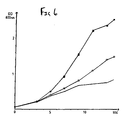
- Asulam resistance was determined as in (a) above. The results are shown in Figure 6. These indicate that the expression of the sul gene was driven by the lac promoter in pJIT92. Translation of the mRNA would lead to the synthesis of the predicted protein when initiated at the sul ATG and of a fusion protein when initiated at the lacZ ATG.
- the frame shift present in pJIT92 ⁇ Nc reduced the level of resistance to asulam to a level close to the one induced by pUC19 sul .
- the frame shift would have resulted in the synthesis of an abnormal protein when the translation was initiated at the lacZ ATG. In some cases, the translation may have been initated at the sul ATG, generating a certain amount of functional protein. This would explain the residual resistance to asulam of bacteria having pJIT92 ⁇ Nc as seen in Figure 6.
- the amino acid sequence of the mutated DHPS was deduced from the nucleotide sequence shown in Figure 4.
- the predicted protein contained 279 amino acids and its molcular weight is 30106.
- the protein possesses a hydrophobic -NH2 end and a hydrophilic -COOH end.
- the amino acid sequence showed no significant homology with the 4931 sequences present in the PIR data base (release 15.0) of the National Biomedical Research Foundation (Aberdeen, GB).
- pJIT119 In a first step to constructing pJIT119, the sul coding sequence was recovered from pJIT92 and inserted into the polylinker of pJIT117 (Guerineau et al ., Nucleic Acids Res. 16 , 11380, 1988). pJIT92 was cut with Nco I, treated with T4 polymerase, cut with Sal I and the digested fragments were separated by electrophoresis in an agarose gel. The fragment containing the sul gene was eluted from the gel as described in Maniatis et al .
- pJIT58 was constructed by insertion of the gus coding sequence recovered from pBI101-2 (Jefferson et al ., EMBO J. 6 3901-3907, 1987), into pJIT30.
- pJIT30 is an expression cassette made of a pUC-derived vector carrying the sequence from CaMV Cabb-JI corresponding to coordinates 7040-7432 (Franck et al ., Cell 21 , 285-294, 1980) and containing the 35S promoter, a polylinker and the sequence 7435 to 126 from CaMV providing a polyadenylation signal.
- the fusion 35S- gus -poly A was moved from pJIT58 into the polylinker of pBIN19 (Bevan, Nucleic Acids Res. 12 , 8711-8721 1984) as a Kpn I- Xho I fragment, generating pJIT59.
- TP 35S promoter- rbc S transit peptide
- pJIT118 The fusion 35S promoter- rbc S transit peptide (TP)- sul -polyadenylation sequence was recovered from pJIT118 as a Kpn I fragment and cloned into the Kpn I site of pJIT59, upstream from the gus gene, giving pJIT119.
- the organisation of pJIT119 is shown in Figure 7.
- pGEMTPSUL was constructed by insertion of the fusion transit peptide- sul recovered from pJIT118 as a Hind III- Eco RI fragment, into the polylinker of pGEM-4Z (Promega).
- E. coli JM101 harbouring pJIT119 were deposited at the National Collection of Industrial and Marine Bacteria, Aberdeen GB on 26 October 1989 under accession number NCIMB 40219.
- the sul and TP-sul genes cloned into pGEM-4Z were transcribed using SP6 RNA polymerase, and capped transcripts were translated in a wheat-germ lysate in the presence of [35S]-methionine (Anderson et al ., Methods Enzymol. 101 , 635-644, 1983; Melton et al ., Nucleic Acids Res. 12 , 7035-7056, 1984).
- the translation products were incubated with isolated pea leaf chloroplasts as described (Robinson and Ellis, Eur. J. Biochem. 152 , 67-73, 1985).
- Nicotiana tabacum cv Samsun plants were grown in a glasshouse under standard conditions. Approximately 1 cm2 leaf pieces were cut from surface sterilized leaves and floated on MS medium (Murashige and Skoog, Physiol. Plant 15 , 473-497, 1962) containing 3% sucrose, 1 mg/l 6-benzylaminopurine (BAP), 0.1 mg/l ⁇ -naphthaleneacetic acid (NAA) and 3mM 2-[N-morpholino]-ethanesulfonic acid (MES), pH 5.7.
- MS medium Merashige and Skoog, Physiol. Plant 15 , 473-497, 1962
- sucrose 1 mg/l 6-benzylaminopurine
- NAA 0.1 mg/l ⁇ -naphthaleneacetic acid
- MES 2-[N-morpholino]-ethanesulfonic acid
- Cocultivation was carried out for three days at 25°C under light (Photoperiod 16h/8h).
- Leaf pieces were blotted dried onto absorbing paper and placed on MS medium as above but containing 0.8% agar, 500 »g/ml of ampicillin, 250 »g/ml cefotaxime and the selective agent at various concentrations.
- Asulam or sulfadiazine was used for selecting transformants.
- Plantlets were ground in 2 ml of grinding buffer (Tris 100 mM pH 8, ethylene diamine tetracetic acid (EDTA) 20 mM, SDS 0.1%, diethyldithiocarbamate 0.5%) per g fresh weight of tissue.
- Two extractions with one volume of water-saturated phenol/chloroform (1vol/1vol) were carried out and nucleic acids were ethanol precipitated.
- Pellets were dissolved in one ml/g of distilled water and one volume of a solution containing 13% polyethyleneglycol (PEG) 6000 and 0.8 M NaCl was added to the aqueous phase. Precipitation was allowed for 30 min at 0°C. DNA was recovered by centrifugation for 5 min at 10000 g. Pellets were washed with 70% ethanol, dried and dissolved in distilled water. DNA concentration was determined using the fluorimetric method as described by Thomas and Farquhar (Anal. Biochem. 89 ,35-44, 1978).
- Prehybridization was carried out for 3h at 65°C in 5 x SSC (1 x SSC is 15 mM sodium citrate, 150 mM NaCl), 25 mM sodium phosphate buffer pH 6.5, 0.1% SDS, 5 mM EDTA, 5 x Denhart solution (1 x Denhart solution is 0.02% Fico11, 0.02% polyvinylpyrrolidone (PVP), 0.02% bovine serum albumin (BSA)), 100 »g/ml denatured calf thymus DNA. 35 ng of sul DNA fragment was labelled with [32P]dCTP using the random oligonucleotide priming method (Feinberg and Vogelstein, Anal. Biochem.
- Hybridization was carried out overnight at 65°C in the prehybridization solution.
- the membrane was washed in 2 x SSC, 0.1% SDS for 30 min at room temperature, then in 2 x SSC, 0.1% SDS for 30min at 65°C, then twice in 0.1 x salt and sodium citrate (SSC), 0.1% SDS, for 30 min at 65°C.
- SSC 0.1 x salt and sodium citrate
- the sul coding sequence was fused to the pea ribulose bis-phosphate carboxylase/oxygenase ( rbcS ) transit peptide sequence contained in the expression cassette pJIT117 (Guerineau et al ., 1988). The fusion was made so that the sul ATG translation initiation codon was exactly in the same position as the mature rbcS ATG in the native enzyme ( Figure 7).
- the bacterial DHPS was expected to be released from the transit peptide in the chloroplast stroma, in the same form as it is synthesised in bacteria, i.e. not as a fusion protein.
- a CaMV 35S promoter with a duplicated enhancer region and CaMV gene VI polyadenylation signal were placed at the 5′ and 3′ ends respectively of the TP-sul coding sequence.
- the chimeric sul gene was inserted between the right and the left T-DNA border of the binary vector pBIN19 (Bevan, 1984) which also carried the chimaeric uid A gene ( ⁇ -glucuronidase ( gus )) gene (Jefferson et al ., 1986) placed under control of the 35S promoter ( Figure 7).
- the construct was mobilized into Agrobacterium tumefaciens disarmed strain LBA4404 (Hoekema et al ., 1983) using the helper plasmid pRK2013.
- TP-DHPS The protein (TP-DHPS) was synthesized by the in vitro transcription followed by translation in a wheat-germ lysate. This expression system generated TP-DHPS and also a protein of lower M r . The latter corresponds to mature-sized DHPS which is probably generated by internal initiation; a polypeptide of identical M r was synthesized if DHPS cDNA is expressed by this method.
- TP-DHPS was imported into the stroma of isolated pea chloroplasts and processed to a lower M r form.
- the processed protein had a mobility similar to that of mature-sized DHPS, suggesting that the entire pre-sequence had been removed.
- Tobacco leaf pieces were then cocultivated with Agrobacterium tumefaciens strain LBA4404 carrying pJIT119, and placed on medium containing 50 »g/ml of kanamycin. No shoots developed on untreated control leaf pieces whereas a number of shoots grew on cocultivated leaf pieces. Shoots were rooted and assayed for ⁇ -glucuronidase (GUS) activity. Leaf pieces from four of the plantlets showing GUS activity and from an untransformed control were placed on medium containing various concentrations of sulfadiazine.
- GUS ⁇ -glucuronidase
- tobacco leaf explants were cocultivated with Agrobacterium tumefaciens carrying pJIT119 and placed on medium containing asulam or sulfadiazine at 100 »g/ml. This value was chosen because untransformed leaf explants did not produce any shoots for one month, on medium containing that concentration.
- asulam was used as the sole selective agent. Shoots developed on leaf explants cocultivated with Agrobacterium harbouring pJIT119 but not on those treated with bacteria carrying pJIT59, a pBIN19 derivative carrying the gus gene but not having the sul gene. Seven shoots growing on leaf explants cocultivated with Agrobacterium carrying pJIT119 were rooted and plants were regenerated. DNA was extracted from plantlets grown from seeds of each of the selected plants and probed for the presence of the bacterial sul gene. Progeny of all seven plants was shown to contain the bacterial sequence, indicating that the shoots selected on asulam were transformants.
- sulfadiazine was used as the sole selective agent.
- Nine shoots selected on leaf explants cocultivated with Agrobacterium harbouring pJIT119 were placed on rooting medium containing sulfadiazine at 100 »g/ml. Eight rooted and grew normally and one did not. All shoots showed specific GUS activity higher than 100 times the background activity of untransformed material. None of twelve untransformed control shoots rooted and their growth was completely inhibited on sulfadiazine at the same concentration.
- the segregation patterns were in most cases three to one which is to be expected from a dominant character encoded by a determinant integrated into the genome at one locus. No difference in the growth of seedlings on sulfadiazine, indicating homozygotic or heterozygotic status, even at 500 »g/ml, could be observed. In constrast, GUS assays allowed a clear distinction between seedlings having one or two alleles of the inserted T-DNA (data not shown). No seedling grew on sulfadiazine at 100 »g/ml, from the seed harvested on two out of the seven transformed plants.
Landscapes
- Health & Medical Sciences (AREA)
- Life Sciences & Earth Sciences (AREA)
- Genetics & Genomics (AREA)
- Engineering & Computer Science (AREA)
- Chemical & Material Sciences (AREA)
- Bioinformatics & Cheminformatics (AREA)
- Organic Chemistry (AREA)
- Wood Science & Technology (AREA)
- Zoology (AREA)
- Molecular Biology (AREA)
- Biomedical Technology (AREA)
- Biotechnology (AREA)
- General Engineering & Computer Science (AREA)
- General Health & Medical Sciences (AREA)
- Biochemistry (AREA)
- Microbiology (AREA)
- Plant Pathology (AREA)
- Cell Biology (AREA)
- Physics & Mathematics (AREA)
- Biophysics (AREA)
- Medicinal Chemistry (AREA)
- Breeding Of Plants And Reproduction By Means Of Culturing (AREA)
- Micro-Organisms Or Cultivation Processes Thereof (AREA)
- Saccharide Compounds (AREA)
- Steroid Compounds (AREA)
- Oscillators With Electromechanical Resonators (AREA)
- Agricultural Chemicals And Associated Chemicals (AREA)
Applications Claiming Priority (2)
| Application Number | Priority Date | Filing Date | Title |
|---|---|---|---|
| GB8825402 | 1988-10-31 | ||
| GB888825402A GB8825402D0 (en) | 1988-10-31 | 1988-10-31 | Sulfonamide resistance genes |
Publications (3)
| Publication Number | Publication Date |
|---|---|
| EP0369637A2 EP0369637A2 (en) | 1990-05-23 |
| EP0369637A3 EP0369637A3 (en) | 1991-02-27 |
| EP0369637B1 true EP0369637B1 (en) | 1995-04-19 |
Family
ID=10646035
Family Applications (1)
| Application Number | Title | Priority Date | Filing Date |
|---|---|---|---|
| EP89311269A Expired - Lifetime EP0369637B1 (en) | 1988-10-31 | 1989-10-31 | Sulfonamide resistance genes and their use |
Country Status (8)
| Country | Link |
|---|---|
| US (3) | US5597717A (es) |
| EP (1) | EP0369637B1 (es) |
| JP (1) | JP3346561B2 (es) |
| AT (1) | ATE121455T1 (es) |
| CA (1) | CA2001935C (es) |
| DE (1) | DE68922276T2 (es) |
| ES (1) | ES2074469T3 (es) |
| GB (2) | GB8825402D0 (es) |
Families Citing this family (64)
| Publication number | Priority date | Publication date | Assignee | Title |
|---|---|---|---|---|
| FR2673643B1 (fr) | 1991-03-05 | 1993-05-21 | Rhone Poulenc Agrochimie | Peptide de transit pour l'insertion d'un gene etranger dans un gene vegetal et plantes transformees en utilisant ce peptide. |
| USRE36449E (en) * | 1991-03-05 | 1999-12-14 | Rhone-Poulenc Agro | Chimeric gene for the transformation of plants |
| GB9708542D0 (en) * | 1997-04-25 | 1997-06-18 | Nickerson Biocem Ltd | Resistance marker |
| AU2002300506B2 (en) * | 1997-04-25 | 2005-07-28 | Biogemma Uk Limited | Resistance marker for monocotyledons |
| US6121513A (en) * | 1998-07-20 | 2000-09-19 | Mendel Biotechnology, Inc. | Sulfonamide resistance in plants |
| US6348643B1 (en) | 1998-10-29 | 2002-02-19 | American Cyanamid Company | DNA sequences encoding the arabidopsis acetohydroxy-acid synthase small subunit and methods of use |
| US6642435B1 (en) * | 1998-12-18 | 2003-11-04 | E. I. Du Pont De Nemours And Company | Plant folate biosynthetic genes |
| GB0031558D0 (en) | 2000-12-22 | 2001-02-07 | Biogemma Uk Ltd | Elongase promoters |
| GB0124574D0 (en) | 2001-10-12 | 2001-12-05 | Biogemma Uk Ltd | Oil biosynthesis |
| MXPA06002155A (es) * | 2003-08-29 | 2007-01-25 | Inst Nac De Technologia Agrope | Plantas de arroz que tienen una tolerancia incrementada a los herbicidas de imidazolinona. |
| TR200900517T2 (tr) * | 2004-07-30 | 2009-03-23 | Basf Agrochemical Products B.V. | Herbisitlere dayanıklı ayçiçeği bitkileri herbisitlere dayanıklı asetohidroksiasit sintaz geniş altünite proteinlerini kodla yan polinükleotidler ve kullanma metotları. |
| US12570965B2 (en) * | 2005-03-02 | 2026-03-10 | Instituto Nacional De Technologia Agropecuaria | Herbicide-resistant rice plants, polynucleotides encoding herbicide-resistant acetohydroxyacid synthase large subunit proteins, and methods of use |
| EA201301103A1 (ru) * | 2005-07-01 | 2014-02-28 | Басф Се | Резистентные к гербицидам растения подсолнечника, полинуклеотиды, кодирующие резистентные к гербицидам большие субъединицы белков ацетогидроксикислотной синтазы, и применение растений и полинуклеотидов |
| US8993846B2 (en) | 2005-09-06 | 2015-03-31 | Monsanto Technology Llc | Vectors and methods for improved plant transformation efficiency |
| EA023885B1 (ru) | 2005-10-13 | 2016-07-29 | МОНСАНТО ТЕКНОЛОДЖИ, ЭлЭлСи | Конструкция рекомбинантной днк для индуцирования стерильности в трансгенном растении, стерильные трансгенные растения и способы получения гибридных семян |
| US7939721B2 (en) | 2006-10-25 | 2011-05-10 | Monsanto Technology Llc | Cropping systems for managing weeds |
| UA108733C2 (uk) | 2006-12-12 | 2015-06-10 | Толерантна до гербіциду рослина соняшника | |
| EP2450448B1 (en) | 2007-03-09 | 2014-09-17 | Monsanto Technology LLC | Methods for plant transformation using spectinomycin selection |
| US10017827B2 (en) | 2007-04-04 | 2018-07-10 | Nidera S.A. | Herbicide-resistant sunflower plants with multiple herbicide resistant alleles of AHASL1 and methods of use |
| US8097712B2 (en) | 2007-11-07 | 2012-01-17 | Beelogics Inc. | Compositions for conferring tolerance to viral disease in social insects, and the use thereof |
| GB0903346D0 (en) | 2009-02-27 | 2009-04-08 | Cambridge Advanced Tech | Transgenic Plants |
| US20100319094A1 (en) * | 2009-06-12 | 2010-12-16 | Indu Bhushan Maiti | Methods and compositions for genetic transformation of plant chloroplasts |
| US8962584B2 (en) | 2009-10-14 | 2015-02-24 | Yissum Research Development Company Of The Hebrew University Of Jerusalem, Ltd. | Compositions for controlling Varroa mites in bees |
| ES2641642T3 (es) | 2010-03-08 | 2017-11-10 | Monsanto Technology Llc | Moléculas de polinucleótido para regulación génica en plantas |
| JP2013522274A (ja) * | 2010-03-18 | 2013-06-13 | バイエル・インテレクチユアル・プロパテイー・ゲー・エム・ベー・ハー | 非生物的な植物ストレスに対する活性剤としてのアリールスルホンアミド類及びヘタリールスルホンアミド類 |
| US9222100B2 (en) | 2010-08-24 | 2015-12-29 | Monsanto Technology Llc | Methods and DNA constructs for autoregulating transgene silencing |
| US9322029B2 (en) | 2010-09-22 | 2016-04-26 | British American Tobacco (Investments) Limited | Transgenic plants with reduced nitrate content |
| WO2013009935A2 (en) | 2011-07-12 | 2013-01-17 | Two Blades Foundation | Late blight resistance genes |
| BR112014005958A2 (pt) | 2011-09-13 | 2020-10-13 | Monsanto Technology Llc | métodos e composições químicas agrícolas para controle de planta, método de redução de expressão de um gene accase em uma planta, cassete de expressão microbiana, método para fazer um polinucleotídeo, método de identificação de polinucleotídeos úteis na modulação de expressão do gene accase e composição herbicida |
| MX342856B (es) | 2011-09-13 | 2016-10-13 | Monsanto Technology Llc | Metodos y composiciones para el control de malezas. |
| US10829828B2 (en) | 2011-09-13 | 2020-11-10 | Monsanto Technology Llc | Methods and compositions for weed control |
| US10806146B2 (en) | 2011-09-13 | 2020-10-20 | Monsanto Technology Llc | Methods and compositions for weed control |
| US9840715B1 (en) | 2011-09-13 | 2017-12-12 | Monsanto Technology Llc | Methods and compositions for delaying senescence and improving disease tolerance and yield in plants |
| CN103974967A (zh) | 2011-09-13 | 2014-08-06 | 孟山都技术公司 | 用于杂草控制的方法和组合物 |
| EP3434779A1 (en) * | 2011-09-13 | 2019-01-30 | Monsanto Technology LLC | Methods and compositions for weed control |
| UA116089C2 (uk) | 2011-09-13 | 2018-02-12 | Монсанто Текнолоджи Ллс | Спосіб та композиція для боротьби з бур'янами (варіанти) |
| US10760086B2 (en) | 2011-09-13 | 2020-09-01 | Monsanto Technology Llc | Methods and compositions for weed control |
| US9920326B1 (en) | 2011-09-14 | 2018-03-20 | Monsanto Technology Llc | Methods and compositions for increasing invertase activity in plants |
| GB201204869D0 (en) | 2012-03-20 | 2012-05-02 | Cambridge Advanced Tech | Transgenic plants |
| GB201204871D0 (en) | 2012-03-20 | 2012-05-02 | Cambridge Advanced Tech | Transgenic plants |
| US10240161B2 (en) | 2012-05-24 | 2019-03-26 | A.B. Seeds Ltd. | Compositions and methods for silencing gene expression |
| MX364070B (es) | 2012-10-18 | 2019-04-10 | Monsanto Technology Llc | Métodos y composiciones para el control de plagas vegetales. |
| EP2928287A1 (en) | 2012-12-05 | 2015-10-14 | British American Tobacco (Investments) Ltd | Transgenic plants having altered lignin density |
| US10683505B2 (en) | 2013-01-01 | 2020-06-16 | Monsanto Technology Llc | Methods of introducing dsRNA to plant seeds for modulating gene expression |
| WO2014106837A2 (en) | 2013-01-01 | 2014-07-10 | A. B. Seeds Ltd. | ISOLATED dsRNA MOLECULES AND METHODS OF USING SAME FOR SILENCING TARGET MOLECULES OF INTEREST |
| US10000767B2 (en) | 2013-01-28 | 2018-06-19 | Monsanto Technology Llc | Methods and compositions for plant pest control |
| EP2971185A4 (en) | 2013-03-13 | 2017-03-08 | Monsanto Technology LLC | Methods and compositions for weed control |
| BR112015022797A2 (pt) | 2013-03-13 | 2017-11-07 | Monsanto Technology Llc | método para controle de ervas daninhas, composição herbicida, cassete de expressão microbiano e método de produção de polinucleotídeo |
| US20140283211A1 (en) | 2013-03-14 | 2014-09-18 | Monsanto Technology Llc | Methods and Compositions for Plant Pest Control |
| US10568328B2 (en) | 2013-03-15 | 2020-02-25 | Monsanto Technology Llc | Methods and compositions for weed control |
| US9850496B2 (en) | 2013-07-19 | 2017-12-26 | Monsanto Technology Llc | Compositions and methods for controlling Leptinotarsa |
| RU2703498C2 (ru) | 2013-07-19 | 2019-10-17 | Монсанто Текнолоджи Ллс | Композиции и способы борьбы с leptinotarsa |
| HUE070313T2 (hu) | 2013-11-04 | 2025-05-28 | Greenlight Biosciences Inc | Ízeltlábú paraziták és kártevõfertõzöttség szabályozására szolgáló készítmények és eljárások |
| UA119253C2 (uk) | 2013-12-10 | 2019-05-27 | Біолоджикс, Інк. | Спосіб боротьби із вірусом у кліща varroa та у бджіл |
| AU2015206585A1 (en) | 2014-01-15 | 2016-07-21 | Monsanto Technology Llc | Methods and compositions for weed control using EPSPS polynucleotides |
| BR112016022711A2 (pt) | 2014-04-01 | 2017-10-31 | Monsanto Technology Llc | composições e métodos para controle de pragas de inseto |
| US10988764B2 (en) | 2014-06-23 | 2021-04-27 | Monsanto Technology Llc | Compositions and methods for regulating gene expression via RNA interference |
| EP3161138A4 (en) | 2014-06-25 | 2017-12-06 | Monsanto Technology LLC | Methods and compositions for delivering nucleic acids to plant cells and regulating gene expression |
| RU2021123470A (ru) | 2014-07-29 | 2021-09-06 | Монсанто Текнолоджи Ллс | Композиции и способы борьбы с насекомыми-вредителями |
| JP6942632B2 (ja) | 2015-01-22 | 2021-09-29 | モンサント テクノロジー エルエルシー | Leptinotarsa防除用組成物及びその方法 |
| US10883103B2 (en) | 2015-06-02 | 2021-01-05 | Monsanto Technology Llc | Compositions and methods for delivery of a polynucleotide into a plant |
| EP3302030A4 (en) | 2015-06-03 | 2019-04-24 | Monsanto Technology LLC | METHOD AND COMPOSITIONS FOR INTRODUCING NUCLEIC ACIDS IN PLANTS |
| CN109312344A (zh) | 2016-01-26 | 2019-02-05 | 孟山都技术公司 | 用于控制昆虫害虫的组合物和方法 |
| MX2019015413A (es) | 2017-06-23 | 2020-07-20 | Univ Kentucky Res Found | Metodo. |
Family Cites Families (10)
| Publication number | Priority date | Publication date | Assignee | Title |
|---|---|---|---|---|
| US4757011A (en) * | 1983-09-30 | 1988-07-12 | E. I. Du Pont De Nemours And Company | Herbicide resistant tobacco |
| US4774381A (en) * | 1983-09-30 | 1988-09-27 | E. I. Du Pont De Nemours And Company | Herbicide resistant tobacco |
| US4626505A (en) * | 1984-02-24 | 1986-12-02 | E. I. Du Pont De Nemours And Company | Selectable markers for yeast transformation |
| EP0154204B1 (en) * | 1984-03-06 | 1994-01-12 | Mgi Pharma, Inc. | Herbicide resistance in plants |
| CA1313830C (en) * | 1985-08-07 | 1993-02-23 | Dilip Maganlal Shah | Glyphosate-resistant plants |
| US4724039A (en) * | 1985-11-22 | 1988-02-09 | E. I. Du Pont De Nemours And Company | Herbicidal sulfonamides |
| GB8607502D0 (en) * | 1986-03-26 | 1986-04-30 | Antibioticos Sa | Penicillium chrysogenum |
| ATE57390T1 (de) * | 1986-03-11 | 1990-10-15 | Plant Genetic Systems Nv | Durch gentechnologie erhaltene und gegen glutaminsynthetase-inhibitoren resistente pflanzenzellen. |
| IL83348A (en) * | 1986-08-26 | 1995-12-08 | Du Pont | Nucleic acid fragment encoding herbicide resistant plant acetolactate synthase |
| AU638438B2 (en) * | 1989-02-24 | 1993-07-01 | Monsanto Technology Llc | Synthetic plant genes and method for preparation |
-
1988
- 1988-10-31 GB GB888825402A patent/GB8825402D0/en active Pending
-
1989
- 1989-10-31 GB GB8924498A patent/GB2225578B/en not_active Expired - Lifetime
- 1989-10-31 AT AT89311269T patent/ATE121455T1/de not_active IP Right Cessation
- 1989-10-31 JP JP28467189A patent/JP3346561B2/ja not_active Expired - Lifetime
- 1989-10-31 EP EP89311269A patent/EP0369637B1/en not_active Expired - Lifetime
- 1989-10-31 ES ES89311269T patent/ES2074469T3/es not_active Expired - Lifetime
- 1989-10-31 CA CA002001935A patent/CA2001935C/en not_active Expired - Lifetime
- 1989-10-31 DE DE68922276T patent/DE68922276T2/de not_active Expired - Lifetime
-
1995
- 1995-05-19 US US08/444,860 patent/US5597717A/en not_active Expired - Lifetime
- 1995-05-19 US US08/444,420 patent/US5633444A/en not_active Expired - Lifetime
- 1995-05-19 US US08/444,718 patent/US5719046A/en not_active Expired - Lifetime
Also Published As
| Publication number | Publication date |
|---|---|
| ATE121455T1 (de) | 1995-05-15 |
| GB2225578A (en) | 1990-06-06 |
| EP0369637A3 (en) | 1991-02-27 |
| GB2225578B (en) | 1992-08-26 |
| CA2001935C (en) | 2005-08-30 |
| JP3346561B2 (ja) | 2002-11-18 |
| US5719046A (en) | 1998-02-17 |
| US5597717A (en) | 1997-01-28 |
| GB8924498D0 (en) | 1989-12-20 |
| EP0369637A2 (en) | 1990-05-23 |
| GB8825402D0 (en) | 1988-11-30 |
| DE68922276D1 (de) | 1995-06-01 |
| JPH03172173A (ja) | 1991-07-25 |
| DE68922276T2 (de) | 1995-09-07 |
| ES2074469T3 (es) | 1995-09-16 |
| US5633444A (en) | 1997-05-27 |
| CA2001935A1 (en) | 1990-04-30 |
Similar Documents
| Publication | Publication Date | Title |
|---|---|---|
| EP0369637B1 (en) | Sulfonamide resistance genes and their use | |
| EP0242236B1 (en) | Plant cells resistant to glutamine synthetase inhibitors, made by genetic engineering | |
| EP0257993B1 (en) | Nucleic acid fragment encoding herbicide resistant plant acetolactate synthase | |
| EP1173582B1 (en) | Herbicide resistant plants | |
| US5378824A (en) | Nucleic acid fragment encoding herbicide resistant plant acetolactate synthase | |
| JP2511036B2 (ja) | グルタチオンs−トランスフェラ−ゼ遺伝子及び該遺伝子を含有する除草剤耐性植物 | |
| US5141870A (en) | Nucleic acid fragment encoding herbicide resistant plant acetolactate synthase | |
| US5188642A (en) | Glyphosate-resistant plants | |
| US5981842A (en) | Production of water stress or salt stress tolerant transgenic cereal plants | |
| US5679558A (en) | Transformation of monocot cells | |
| US5605011A (en) | Nucleic acid fragment encoding herbicide resistant plant acetolactate synthase | |
| US5608147A (en) | tfdA gene selectable markers in plants and the use thereof | |
| AU620039B2 (en) | Inducible virus resistance in plants | |
| JP2003528571A6 (ja) | 除草剤抵抗性植物 | |
| WO2000066747A1 (en) | Herbicide resistant plants | |
| US5073677A (en) | Herbicidal tolerant plants containing rat glutathione S-transferase gene | |
| Kokko et al. | Transformation of arctic bramble (Rubus arcticus L.) by Agrobacterium tumefaciens | |
| US5792937A (en) | Plants resistant to infection by PVX | |
| RU2169196C2 (ru) | Дезоксирибонуклеиновая кислота, кодирующая белок глутатион-s-трансферазу iiic и белок с соответствующей аминокислотной последовательностью | |
| US6753462B2 (en) | Transgenic plants with increased calcium stores | |
| US7094952B1 (en) | Method for obtaining transgenic plants expressing a protein with activity producing hydrogen peroxide by transformation by agrobacterium rhizogenes | |
| PEANT | Motcut. AR Bology | |
| AU1600895A (en) | Tfda gene selectable markers in plants and the use thereof | |
| ZA200108769B (en) | Herbicide resistant plants. | |
| ZA200108766B (en) | Herbicide resistant plants. |
Legal Events
| Date | Code | Title | Description |
|---|---|---|---|
| PUAI | Public reference made under article 153(3) epc to a published international application that has entered the european phase |
Free format text: ORIGINAL CODE: 0009012 |
|
| AK | Designated contracting states |
Kind code of ref document: A2 Designated state(s): AT BE CH DE ES FR GB GR IT LI LU NL SE |
|
| PUAL | Search report despatched |
Free format text: ORIGINAL CODE: 0009013 |
|
| AK | Designated contracting states |
Kind code of ref document: A3 Designated state(s): AT BE CH DE ES FR GB GR IT LI LU NL SE |
|
| 17P | Request for examination filed |
Effective date: 19910802 |
|
| 17Q | First examination report despatched |
Effective date: 19930607 |
|
| RAP1 | Party data changed (applicant data changed or rights of an application transferred) |
Owner name: ADVANCED TECHNOLOGIES (CAMBRIDGE) LIMITED Owner name: BIOTAL LIMITED Owner name: AGRICULTURAL GENETICS COMPANY LIMITED Owner name: AGREVO UK LIMITED Owner name: RHONE-POULENC LIMITED Owner name: BP NUTRITION LIMITED Owner name: IMPERIAL CHEMICAL INDUSTRIES PLC Owner name: CIBA-GEIGY PLC |
|
| RAP1 | Party data changed (applicant data changed or rights of an application transferred) |
Owner name: CIBA-GEIGY PLC Owner name: BP NUTRITION LIMITED Owner name: AGREVO UK LIMITED Owner name: RHONE-POULENC LIMITED Owner name: AGRICULTURAL GENETICS COMPANY LIMITED Owner name: IMPERIAL CHEMICAL INDUSTRIES PLC Owner name: ADVANCED TECHNOLOGIES (CAMBRIDGE) LIMITED Owner name: BIOTAL LIMITED |
|
| RAP1 | Party data changed (applicant data changed or rights of an application transferred) |
Owner name: RHONE-POULENC LIMITED Owner name: BP NUTRITION LIMITED Owner name: ZENECA LIMITED Owner name: ADVANCED TECHNOLOGIES (CAMBRIDGE) LIMITED Owner name: CIBA-GEIGY PLC Owner name: BIOTAL LIMITED Owner name: AGRICULTURAL GENETICS COMPANY LIMITED Owner name: AGREVO UK LIMITED |
|
| GRAA | (expected) grant |
Free format text: ORIGINAL CODE: 0009210 |
|
| AK | Designated contracting states |
Kind code of ref document: B1 Designated state(s): AT BE CH DE ES FR GR IT LI LU NL SE |
|
| REF | Corresponds to: |
Ref document number: 121455 Country of ref document: AT Date of ref document: 19950515 Kind code of ref document: T |
|
| ET | Fr: translation filed | ||
| RBV | Designated contracting states (corrected) |
Designated state(s): AT BE CH DE ES FR GR IT LI LU NL SE |
|
| REF | Corresponds to: |
Ref document number: 68922276 Country of ref document: DE Date of ref document: 19950601 |
|
| ITF | It: translation for a ep patent filed | ||
| NLT2 | Nl: modifications (of names), taken from the european patent patent bulletin |
Owner name: ADVANCED TECHNOLOGIES (CAMBRIDGE) LIMITED EN AGRIC |
|
| REG | Reference to a national code |
Ref country code: ES Ref legal event code: FG2A Ref document number: 2074469 Country of ref document: ES Kind code of ref document: T3 |
|
| REG | Reference to a national code |
Ref country code: GR Ref legal event code: FG4A Free format text: 3016873 |
|
| PLBE | No opposition filed within time limit |
Free format text: ORIGINAL CODE: 0009261 |
|
| STAA | Information on the status of an ep patent application or granted ep patent |
Free format text: STATUS: NO OPPOSITION FILED WITHIN TIME LIMIT |
|
| 26N | No opposition filed | ||
| PGFP | Annual fee paid to national office [announced via postgrant information from national office to epo] |
Ref country code: NL Payment date: 20081005 Year of fee payment: 20 |
|
| PGFP | Annual fee paid to national office [announced via postgrant information from national office to epo] |
Ref country code: CH Payment date: 20081117 Year of fee payment: 20 Ref country code: LU Payment date: 20081031 Year of fee payment: 20 Ref country code: DE Payment date: 20081027 Year of fee payment: 20 |
|
| PGFP | Annual fee paid to national office [announced via postgrant information from national office to epo] |
Ref country code: ES Payment date: 20081121 Year of fee payment: 20 Ref country code: AT Payment date: 20081013 Year of fee payment: 20 |
|
| PGFP | Annual fee paid to national office [announced via postgrant information from national office to epo] |
Ref country code: SE Payment date: 20081022 Year of fee payment: 20 Ref country code: BE Payment date: 20081009 Year of fee payment: 20 Ref country code: IT Payment date: 20081028 Year of fee payment: 20 |
|
| PGFP | Annual fee paid to national office [announced via postgrant information from national office to epo] |
Ref country code: FR Payment date: 20081014 Year of fee payment: 20 |
|
| PGFP | Annual fee paid to national office [announced via postgrant information from national office to epo] |
Ref country code: GR Payment date: 20080919 Year of fee payment: 20 |
|
| REG | Reference to a national code |
Ref country code: CH Ref legal event code: PL |
|
| BE20 | Be: patent expired |
Owner name: *AGRICULTURAL GENETICS CY LTD Effective date: 20091031 Owner name: *AGREVO UK LTD Effective date: 20091031 Owner name: *RHONE-POULENC LTD Effective date: 20091031 Owner name: *BP NUTRITION LTD Effective date: 20091031 Owner name: *ZENECA LTD Effective date: 20091031 Owner name: *TWYFORD SEEDS LTD Effective date: 20091031 Owner name: *ADVANCED TECHNOLOGIES (CAMBRIDGE) LTD Effective date: 20091031 Owner name: *NICKERSON BIOCEM LTD Effective date: 20091031 Owner name: *CIBA-GEIGY P.L.C. Effective date: 20091031 Owner name: *BIOTAL LTD Effective date: 20091031 |
|
| REG | Reference to a national code |
Ref country code: ES Ref legal event code: FD2A Effective date: 20091102 |
|
| NLV7 | Nl: ceased due to reaching the maximum lifetime of a patent |
Effective date: 20091031 |
|
| PG25 | Lapsed in a contracting state [announced via postgrant information from national office to epo] |
Ref country code: ES Free format text: LAPSE BECAUSE OF EXPIRATION OF PROTECTION Effective date: 20091102 |
|
| PG25 | Lapsed in a contracting state [announced via postgrant information from national office to epo] |
Ref country code: NL Free format text: LAPSE BECAUSE OF EXPIRATION OF PROTECTION Effective date: 20091031 |