EP0369749A2 - Anti-Tumor Compounds - Google Patents
Anti-Tumor Compounds Download PDFInfo
- Publication number
- EP0369749A2 EP0369749A2 EP89311789A EP89311789A EP0369749A2 EP 0369749 A2 EP0369749 A2 EP 0369749A2 EP 89311789 A EP89311789 A EP 89311789A EP 89311789 A EP89311789 A EP 89311789A EP 0369749 A2 EP0369749 A2 EP 0369749A2
- Authority
- EP
- European Patent Office
- Prior art keywords
- compound
- compounds
- methanol
- hours
- salts
- Prior art date
- Legal status (The legal status is an assumption and is not a legal conclusion. Google has not performed a legal analysis and makes no representation as to the accuracy of the status listed.)
- Granted
Links
- 0 Cc(c(*)c1)cc(C(C(C2CO)=C3CC(*4(CO)CN(C)C5C4)N2C5C#N)=O)c1C3=O Chemical compound Cc(c(*)c1)cc(C(C(C2CO)=C3CC(*4(CO)CN(C)C5C4)N2C5C#N)=O)c1C3=O 0.000 description 3
Classifications
-
- C—CHEMISTRY; METALLURGY
- C07—ORGANIC CHEMISTRY
- C07D—HETEROCYCLIC COMPOUNDS
- C07D471/00—Heterocyclic compounds containing nitrogen atoms as the only ring hetero atoms in the condensed system, at least one ring being a six-membered ring with one nitrogen atom, not provided for by groups C07D451/00 - C07D463/00
- C07D471/12—Heterocyclic compounds containing nitrogen atoms as the only ring hetero atoms in the condensed system, at least one ring being a six-membered ring with one nitrogen atom, not provided for by groups C07D451/00 - C07D463/00 in which the condensed system contains three hetero rings
- C07D471/18—Bridged systems
-
- A—HUMAN NECESSITIES
- A61—MEDICAL OR VETERINARY SCIENCE; HYGIENE
- A61P—SPECIFIC THERAPEUTIC ACTIVITY OF CHEMICAL COMPOUNDS OR MEDICINAL PREPARATIONS
- A61P31/00—Antiinfectives, i.e. antibiotics, antiseptics, chemotherapeutics
- A61P31/04—Antibacterial agents
-
- A—HUMAN NECESSITIES
- A61—MEDICAL OR VETERINARY SCIENCE; HYGIENE
- A61P—SPECIFIC THERAPEUTIC ACTIVITY OF CHEMICAL COMPOUNDS OR MEDICINAL PREPARATIONS
- A61P35/00—Antineoplastic agents
-
- C—CHEMISTRY; METALLURGY
- C07—ORGANIC CHEMISTRY
- C07D—HETEROCYCLIC COMPOUNDS
- C07D498/00—Heterocyclic compounds containing in the condensed system at least one hetero ring having nitrogen and oxygen atoms as the only ring hetero atoms
- C07D498/22—Heterocyclic compounds containing in the condensed system at least one hetero ring having nitrogen and oxygen atoms as the only ring hetero atoms in which the condensed system contains four or more hetero rings
Definitions
- the present invention relates to anti-tumour compounds which are derivatives of DC-52.
- DC-52 is a compound represented by the formula: and exhibits an anti-tumor activity against lymphocytic leukemia P-388, etc., in addition to an anti-bacterial activity against various bacteria.
- a first derivative of DC-52, DX-52-1, likewise having anti-tumor activity and represented by the formula: is disclosed in US Patent Specification US-A-4,650,869.
- EP-A-0 262 984 discloses further derivatives of the formula: wherein each of R1 and R2 independently represents hydrogen, lower alkoxy, azido, amino, lower alkylamino, dilower alkylamino, cyclic amino, lower alkylthio, or unsubstituted or substituted arylthio, X represents hydroxyl and Y represents cyano, or X and Y are combined together to represent - O- as -X-Y-.
- DC-52 derivatives have been discovered having superior properties over the prior art compounds.
- pharmacologically acceptable salts of compounds I including the pharmacologically acceptable acid addition salts, alkali metal salts, alkaline earth metal salts and ammonium salts and pharmacologically acceptable organic base addition salts.
- Pharmacologically acceptable acid addition salts include pharmacologically acceptable inorganic acid addition salts such as hydrochloride, hydrobromide, hydroiodide, sulfate, phosphate and nitrate; and pharmacologically acceptable organic acid addition salts such as acetate, benzoate, maleate, fumarate, succinate, tartrate, citrate, oxalate, glyoxylate, aspartate, methanosulfonate, ethanesulfonate, propanesulfonate, methanedisulfonate, alpha-, betaethanedisulfonate and benzenesulfonate.
- Alkali metal salts include sodium salts, potassium salts, etc. and alkaline earth metal salts include calcium salt, magnesium salt, etc.
- compositions comprising the Compounds I or their pharmaceutically acceptable salts in admixture with a pharmaceutically acceptable carrier or diluent.
- the compounds I can be prepared by the following steps:
- Ph represents phenyl
- each of R′1 and R′2 independently represents hydrogen or trimethylsiloxy
- X represents acetoxy, methoxy or trimethylsiloxy.
- Step 1 compound IV is obtained by reacting compound II with compound III in an inert solvent such as benzene, toluene, xylene, etc. Compound III is used in an amount of from 1 to 3 molar equivalents based on compound II. The reaction is carried out at 50 to 130°C and is usually complete within from 5 to 46 hours.
- Suitable desilylating agents are potassium carbonate, tetra-n-butylammonium fluoride, etc. and are used in an amount of from 1 to 10 molar equivalents based on compound IV.
- the reaction is carried out at 0 to 60°C and is usually complete within from 1 to 15 hours.
- the compounds I-1 can be obtained by reacting with trifluoroacetic acid in an inert solvent such as dichloroethane or chloroform, etc.
- the trifluoroacetic acid is preferably used in an amount of at least 5 molar equivalents upto a large excess based on a compound V (or IV as the case may be).
- the reaction is carried out at 0 to 50°C and is usually complete within 1 to 10 hours.
- the compounds V or the compounds IV where R′1 and R′2 are both hydrogen can be reduced by reaction with a reducing agent in an inert solvent such as tetrahydrofuran, diethyl ether, toluene, benzene, methanol or ethanol, etc. to give the compounds I-2.
- a reducing agent in an inert solvent such as tetrahydrofuran, diethyl ether, toluene, benzene, methanol or ethanol, etc.
- Suitable reducing agents are LiAlH4, LiBH4, NaBH4, etc. and are usually used in an amount of from 3 to 10 molar equiveltns based on the compound IV or V.
- the reaction is carried out at -10 to 70°C and is usually complete within 1 to 10 hours.
- the compounds I-3 can be obtained by reacting a compound I-1 or compound I-2 with a silver salt in an inert solvent.
- Suitable inert solvents are acetonitrile, methanol, ethanol, tetrahydrofuran, dioxane, etc.
- Suitable silver salts are silver nitrate, silver chlorate, silver perchlorate, silver fluoride, etc.
- the silver salt is used in an amount of from 1 to 5 molar equivalents based on the compound I-1 or compound I-2.
- the reaction is usually carried out at 0 to 50°C and is usually complete within 30 minutes to 5 hours.
- the reaction can be stopped by adding an acid, water, a buffer or the like, if necessary, and the mixture is concentrated as such, or after extraction with a nonaqueous solvent such as ethyl acetate, chloroform, etc. Alternatively, the reaction mixture is concentrated as such and purified.
- the purification can be carried out by column chromatography, thin layer chromatography, preparative high performance liquid chromatography, recrystallization or the like.
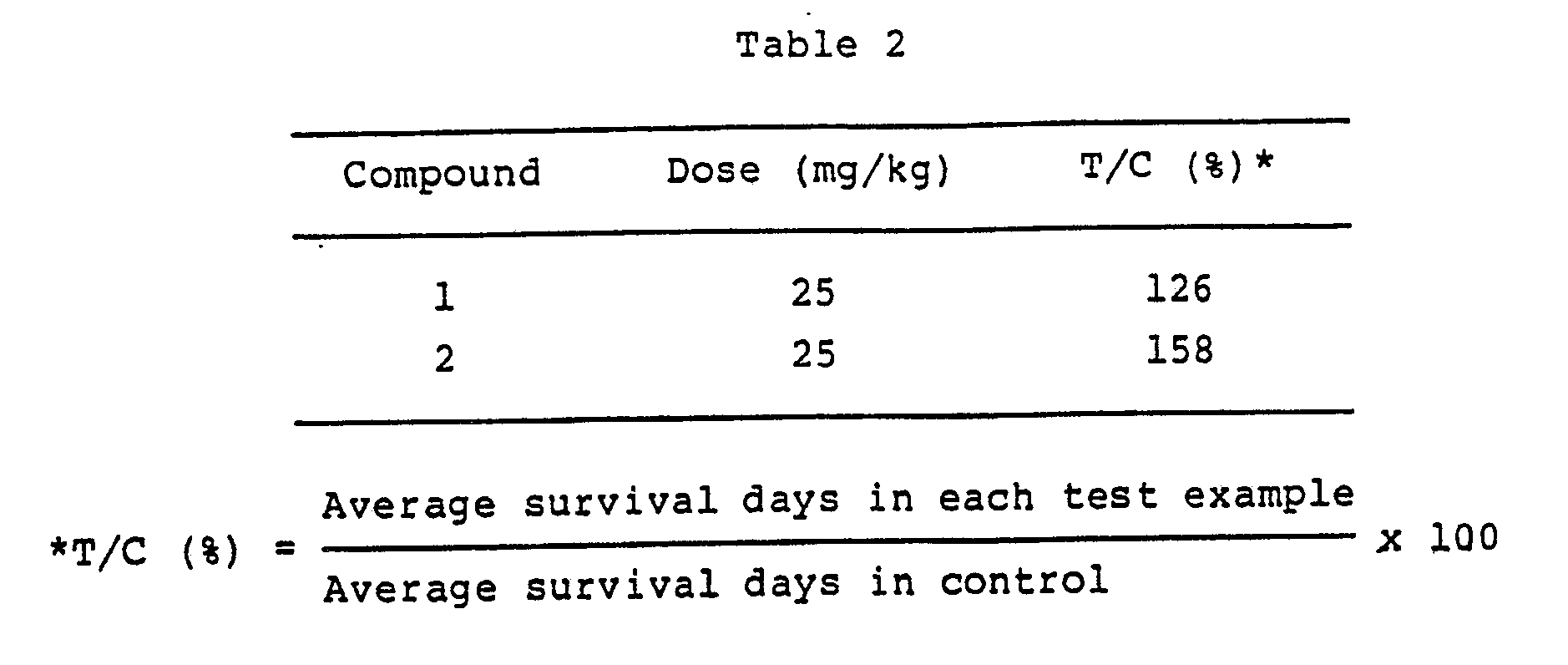
- Lymphocytic leukemia P-388 tumor cells (1 x 10⁶) were intraperitoneally implanted into CDF male mice weighing about 22g. 24 hours after the implantation, one group consisting of 5 animals was intraperitoneally administered once with 0.2 ml of a solution of each drug in phosphate-buffered physiological saline. The life prolonging effect of the drugs was shown in T/C. The results are shown in Table 2.
- LiAlH4 was suspended in 3 ml of tetrahydrofuran (THF) in an argon gas atmosphere. Under cooling to 0°C was dropwise added a solution of 180 mg of compound a obtained in Reference example 1 in 4 ml of THF. After stirring at 0°C for 50 minutes, 10 mg of LiAlH4 was added, followed by stirring for further 2 hours and 15 minutes. After stirring for 30 minutes after addition of ethyl acetate and an acetate buffer (pH 4.0), a NaHCO3 solution was added, and the mixture was extracted three times with ethyl acetate.
- THF tetrahydrofuran
Landscapes
- Chemical & Material Sciences (AREA)
- Organic Chemistry (AREA)
- Health & Medical Sciences (AREA)
- Life Sciences & Earth Sciences (AREA)
- General Health & Medical Sciences (AREA)
- Medicinal Chemistry (AREA)
- Nuclear Medicine, Radiotherapy & Molecular Imaging (AREA)
- Pharmacology & Pharmacy (AREA)
- Chemical Kinetics & Catalysis (AREA)
- Animal Behavior & Ethology (AREA)
- General Chemical & Material Sciences (AREA)
- Public Health (AREA)
- Veterinary Medicine (AREA)
- Communicable Diseases (AREA)
- Oncology (AREA)
- Pharmaceuticals Containing Other Organic And Inorganic Compounds (AREA)
- Nitrogen Condensed Heterocyclic Rings (AREA)
- Nitrogen And Oxygen Or Sulfur-Condensed Heterocyclic Ring Systems (AREA)
- Heterocyclic Carbon Compounds Containing A Hetero Ring Having Oxygen Or Sulfur (AREA)
Abstract
Description
- The present invention relates to anti-tumour compounds which are derivatives of DC-52.
- DC-52 is a compound represented by the formula:

- The preparation and properties of DC-52 are described in published unexamined Japanese patent application JP-A-170189/82.
- A first derivative of DC-52, DX-52-1, likewise having anti-tumor activity and represented by the formula:

- Other derivatives of DC-52 are disclosed in EP-A-0 283 521, viz. compounds of the formula:

- Yet further derivatives are disclosed in published unexamined Japanese patent application JP-A-183583/88, viz. compounds of the formula:

- Finally, EP-A-0 262 984 discloses further derivatives of the formula:

- In accordance with the present invention, further DC-52 derivatives have been discovered having superior properties over the prior art compounds. These are compounds of the formula (I):

- Also disclosed herein are the pharmacologically acceptable salts of compounds I including the pharmacologically acceptable acid addition salts, alkali metal salts, alkaline earth metal salts and ammonium salts and pharmacologically acceptable organic base addition salts. Pharmacologically acceptable acid addition salts include pharmacologically acceptable inorganic acid addition salts such as hydrochloride, hydrobromide, hydroiodide, sulfate, phosphate and nitrate; and pharmacologically acceptable organic acid addition salts such as acetate, benzoate, maleate, fumarate, succinate, tartrate, citrate, oxalate, glyoxylate, aspartate, methanosulfonate, ethanesulfonate, propanesulfonate, methanedisulfonate, alpha-, betaethanedisulfonate and benzenesulfonate. Alkali metal salts include sodium salts, potassium salts, etc. and alkaline earth metal salts include calcium salt, magnesium salt, etc. Pharmacologically acceptable organic base addition salts inlcude addition salts of ethanolamine, triethylamine, morpholine, piperidine, etc.
- Also included within the scope of the invention are pharmaceutical preparations comprising the Compounds I or their pharmaceutically acceptable salts in admixture with a pharmaceutically acceptable carrier or diluent.
- The compounds I can be prepared by the following steps:
-
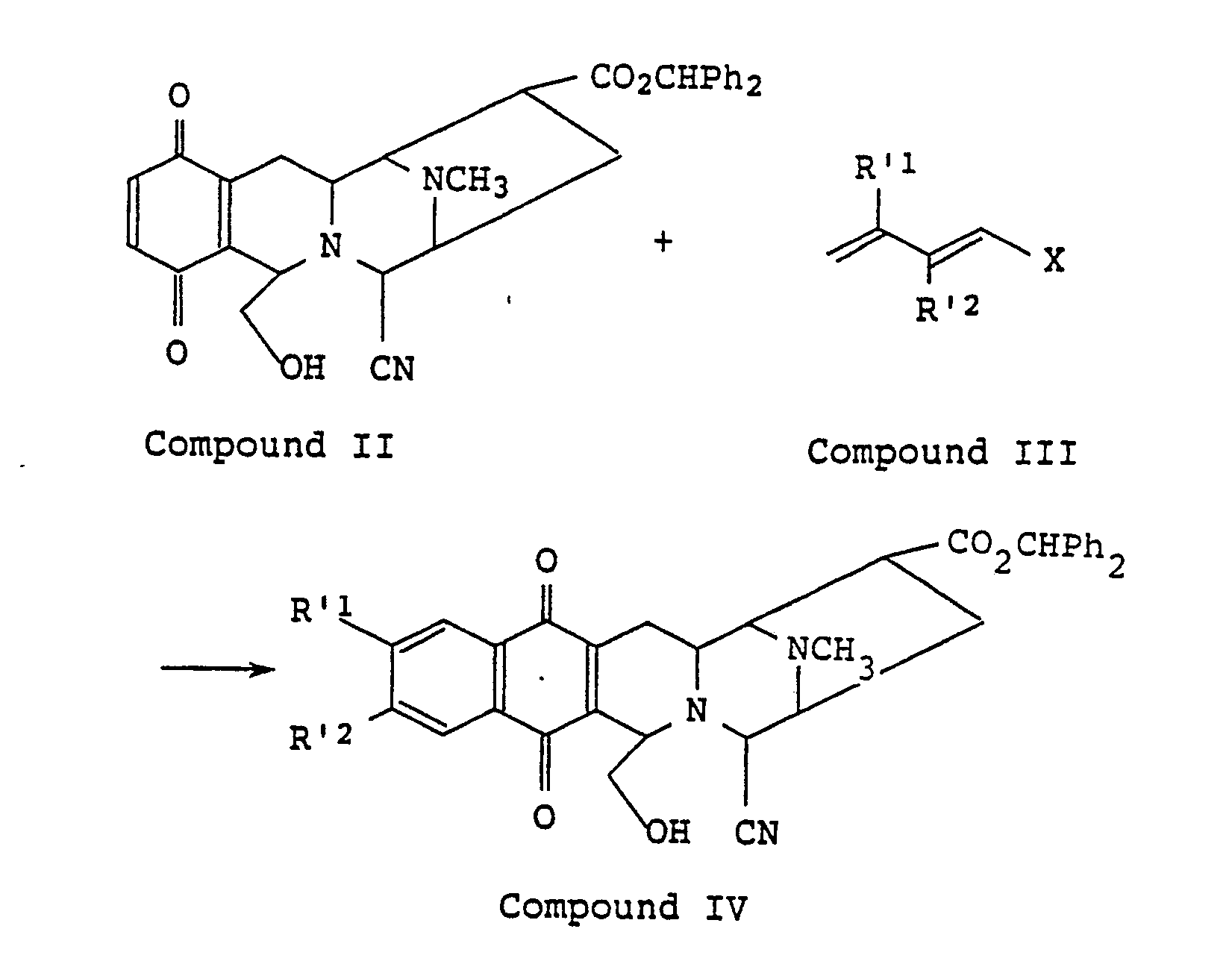
- The starting compounds II are known from EP-A-0 262 984, and compounds III are either commercially available or can be readily synthesized by known processes. In Step 1 compound IV is obtained by reacting compound II with compound III in an inert solvent such as benzene, toluene, xylene, etc. Compound III is used in an amount of from 1 to 3 molar equivalents based on compound II. The reaction is carried out at 50 to 130°C and is usually complete within from 5 to 46 hours.
- In the case of compounds IV, where R′¹ and R′² both represent trimethylsiloxy; or one of R′¹ and R′² represents trimethylsiloxy and the other represents hydrogen, these can be reacted with a desilylating agent in an inert solvent such as methanol, ethanol, tetrahydrofuran, dioxane, acetonitrile, water, etc. to produce the compound V:

- Suitable desilylating agents are potassium carbonate, tetra-n-butylammonium fluoride, etc. and are used in an amount of from 1 to 10 molar equivalents based on compound IV. The reaction is carried out at 0 to 60°C and is usually complete within from 1 to 15 hours.
-

- From the compounds V, or the compounds IV wherein R′¹ and R′² are both hydrogen, the compounds I-1 can be obtained by reacting with trifluoroacetic acid in an inert solvent such as dichloroethane or chloroform, etc. The trifluoroacetic acid is preferably used in an amount of at least 5 molar equivalents upto a large excess based on a compound V (or IV as the case may be). The reaction is carried out at 0 to 50°C and is usually complete within 1 to 10 hours.
-
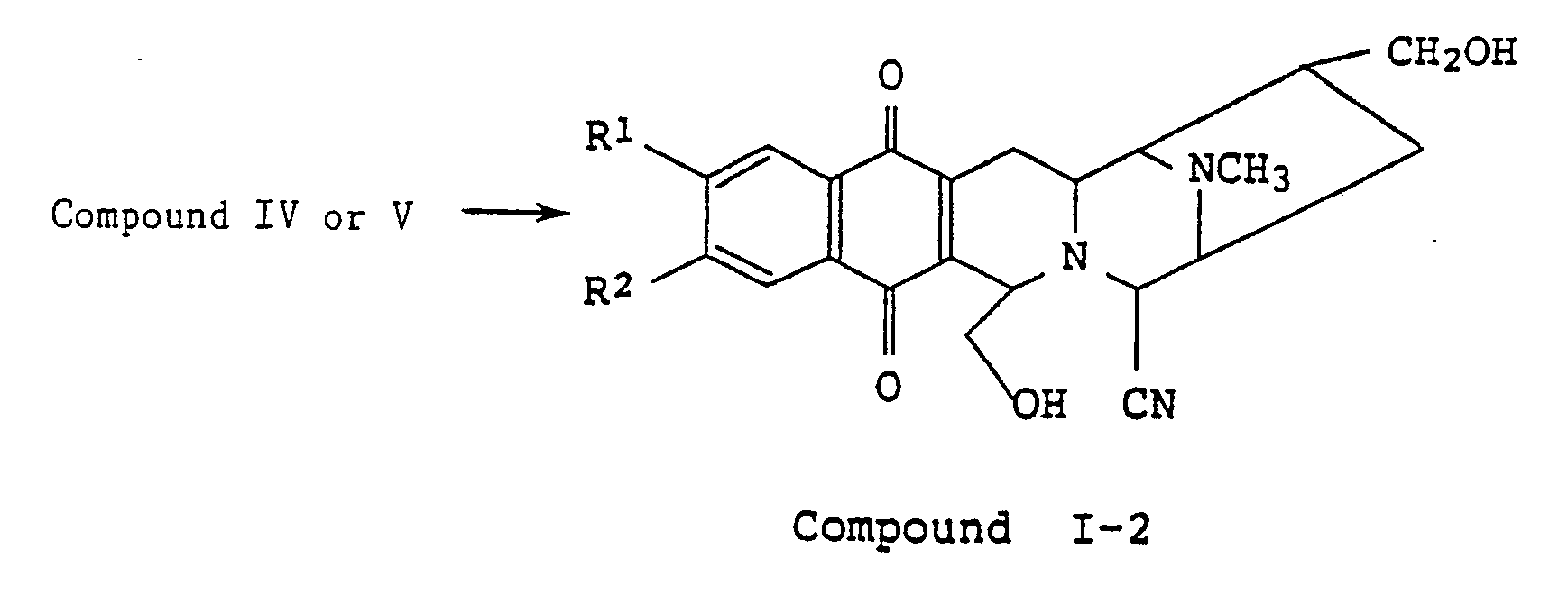
- Alternatively, the compounds V or the compounds IV where R′¹ and R′² are both hydrogen can be reduced by reaction with a reducing agent in an inert solvent such as tetrahydrofuran, diethyl ether, toluene, benzene, methanol or ethanol, etc. to give the compounds I-2. Suitable reducing agents are LiAlH₄, LiBH₄, NaBH₄, etc. and are usually used in an amount of from 3 to 10 molar equiveltns based on the compound IV or V. The reaction is carried out at -10 to 70°C and is usually complete within 1 to 10 hours.
-

- The compounds I-3 can be obtained by reacting a compound I-1 or compound I-2 with a silver salt in an inert solvent. Suitable inert solvents are acetonitrile, methanol, ethanol, tetrahydrofuran, dioxane, etc. Suitable silver salts are silver nitrate, silver chlorate, silver perchlorate, silver fluoride, etc. Usually the silver salt is used in an amount of from 1 to 5 molar equivalents based on the compound I-1 or compound I-2. The reaction is usually carried out at 0 to 50°C and is usually complete within 30 minutes to 5 hours.
- After completion of the reaction of each step, the reaction can be stopped by adding an acid, water, a buffer or the like, if necessary, and the mixture is concentrated as such, or after extraction with a nonaqueous solvent such as ethyl acetate, chloroform, etc. Alternatively, the reaction mixture is concentrated as such and purified. The purification can be carried out by column chromatography, thin layer chromatography, preparative high performance liquid chromatography, recrystallization or the like.
- Compounds I and the pharmacologically acceptable salts thereof have a strong anti-tumor activity against lymphocytic leukemia P-388, etc.
- Structures of typical compounds I are listed in Table 1.

Table 1 Compound No. R₁ R₂ X Y Z 1 H H OH CN CO₂Na 2 H H - O - CO₂H 3 H H OH CN CH₂OH 4 H H - O - CH₂OH 5 OH H OH CN CO₂H or H OH 6 OH H - O - CO₂H or H OH - The anti-tumor activity of the compounds I is demonstrated below by an experimental example.
- Lymphocytic leukemia P-388 tumor cells (1 x 10⁶) were intraperitoneally implanted into CDF male mice weighing about 22g. 24 hours after the implantation, one group consisting of 5 animals was intraperitoneally administered once with 0.2 mℓ of a solution of each drug in phosphate-buffered physiological saline. The life prolonging effect of the drugs was shown in T/C. The results are shown in Table 2.
- Examples and reference examples are illustrated below.
- Physicochemical data exhibited in the following examples and reference examples were measured by the following instruments:
NMR Bruker AM400 (400 MHz)
MS Hitachi B-80 - In this example, 1.89g of compound a obtained in Reference example 1 was dissolved in 50 mℓ of methylene chloride. Then, 3.5 mℓ of anisole and 6 mℓ of trifluoroacetic acid (TFA) were added thereto, and the mixture was stirred at room temperature for one hour and 30 minutes. After the reaction solution was concentrated, the concentrate was dissolved in a sodium bicarbonate solution and purified by column chromatography (Diaion HP-20 180 mℓ, eluting solvent; water : methanol = 1 : 0 to 4 : 1 v/v) to obtain 1.12g (79.2%) of compound 1.
¹H-NMR (DMSO-d₆ - CD₃OD) ppm; 8.11 - 8.14 (m, 2H), 7.87 - 7.92 (m, 2H), 4.66 (d, 1H, J=2.5Hz), 4.09 (m, 1H), 4.02 (m, 1H), 3.96 (bs, 1H), 3.90 (dd, 1H, J=11.4, 2.3Hz), 3.68 (dd, 1H, J=11.4, 4.1Hz), 3.51 (dd, 1H, J=9.9, 5.7Hz), 3.07 (bd, 1H, J=11.2Hz), 3.02 (dd, 1H, J=17.3, 2.5Hz), 2.70 (dt, 1H J=13.4, 6.3Hz), 2.62 (s, 3H), 2.36 (ddd, 1H, J=17.2, 10.8, 2.4Hz), 2.28 (dd, 1H, J=13.7, 10.0Hz)
SIMS (m/z); 410 (M+3)⁺ (carboxylic acid-free) - In this example, 900 mg of compound 1 was dissolved in a mixture of 15 mℓ of acetonitrile and 15 mℓ of methanol. Then, 1.07g of silver nitrate was added thereto, and the mixture was stirred at room temperature for 2 hours and 30 minutes. Then, 1N hydrochloric acid was added thereto. After removal of the formed precipitate by filtration acetonitrile and methanol were distilled away. The resulting concentrate was purified by column chromatography (Diaion HP-20 100 mℓ, eluting solvent; water : methanol = 1 : 0 to 3 : 2 v/v) to obtain 719 mg (90.2%) of compound 2.
¹H-NMR (D₂O) ppm; 7.98 (m, 2H), 7.79 (m, 2H), 5.00 (d, 1H, J=3.3Hz), 4.34 (m, 1H), 4.29 (s, 1H), 4.05 (m, 1H), 3.87 (dd, 1H, J=12.0, 2.7Hz), 3.69 (dd, 1H, J=12.0, 3.3Hz), 3.48 (bd, 1H, J=10.7Hz), 3.42 (bd, 1H, J=10.6, 5.4Hz), 2.95 (m, 1H), 2.84 (s, 3H), 2.58 (m, 1H), 2.41 (dd, 1H, J=14.3, 10.6Hz), 2.29 (m, 1H)
SIMS (m/z); 383 (M+3)⁺ - In this example, 40 mg of LiAℓH₄ was suspended in 3 mℓ of tetrahydrofuran (THF) in an argon gas atmosphere. Under cooling to 0°C was dropwise added a solution of 180 mg of compound a obtained in Reference example 1 in 4 mℓ of THF. After stirring at 0°C for 50 minutes, 10 mg of LiAℓH₄ was added, followed by stirring for further 2 hours and 15 minutes. After stirring for 30 minutes after addition of ethyl acetate and an acetate buffer (pH 4.0), a NaHCO₃ solution was added, and the mixture was extracted three times with ethyl acetate. The extract was washed with saturated aqueous sodium chloride, dried over anhydrous sodium sulfate, and evaporated to remove the solvent. The residue was purified by column chromatography (Wako gel C-200 20 mℓ, eluting solvent; n-hexane : ethyl acetate = 1 : 1 to 1 : 2 v/v) to obtain 39.9 mg (32.3%) of compound 3.
¹H-NMR (CDCℓ₃-CD₃OD) ppm; 8.08 - 8.10 (m, 2H), 7.74 - 7.76 (m, 2H), 4.18 (m, 1H), 4.13 (bs, 1H), 3.87 (dd, 1H, J=11.6, 2.8Hz), 3.70 (dd, 1H, J=11.6, 3.8Hz), 3.62 - 3.66 (m, 2H), 3.15 (br, 1H), 3.03 (m, 1H), 2.89 (dd, 1H, J=17.7, 2.2Hz), 2.64 (bs, 3H), 2.56 (m, 1H), 2.24 (ddd, 1H, J=17.7, 11.0, 2.6Hz), 1.91 - 2.03 (m, 2H)
SIMS (m/z); 396 (M+3)⁺ - In this example, 145 mg of compound 3 was dissolved in 3 mℓ of acetonitrile and 1 mℓ of methanol. Then, 157 mg of silver nitrate was added thereto. After stirring at room temperature for 4 hours and 50 minutes, the insoluble matter was removed by filtration and the filtrate was concentrated. The concentrate was purified by column chromatography (Diaion HP-20 15 mℓ, eluting solvent, water : methanol = 1 : 0 to 4 : 1 v/v) to obtain 90.2 mg (66.8%) of compound 4.
¹H-NMR (CO₃OD) ppm; 8.07 - 8.09 (m, 2H), 7.78 - 7.81 (m, 2H), 4.61 (d, 1H, J=3.1Hz), 4.41 (m, 1H), 4.20 (m, 1H), 3.89 (dd, 1H, J=11.6, 2.7Hz), 3.87 (bs, 1H), 3.73 (dd, 1H, J=11.2, 6.0Hz), 3.61 - 3.68 (m, 2H), 3.40 (m, 1H), 2.97 (s, 3H), 2.94 (dd, 1H, J=17.3, 2.5Hz), 2.32 (dd, 1H, J=14.1, 9.9Hz), 2.28 (ddd, 1H, J=17.2, 11.2, 2.3Hz), 2.08 (m, 1H)
SIMS (m/z); 369 (M+3)⁺ - In the example, 335 mg of compound b obtained in Reference example 2 was dissolved in 7 mℓ of methylene chloride. Then, 0.5 mℓ of anisole and 1 mℓ of TFA were added thereto. The mixture was stirred at room temperature for 2 hours. The reaction solution was concentrated and the residue was purified by column chromatography (Diaion HP-20 40 mℓ, eluting solvent; water : methanol = 1 : 0 to 1 : 1 v/v) to obtain 234 mg (97.3%) of compound 5.
¹H-NMR (DMSO-d₆) ppm; 12.34 (br, 1H), 10.92 (s, 1H), 7.89 (d, 1H, J=8.5Hz), 7.31 (d, 1H, J=2.6Hz), 7.15 (dd, 1H, J=8.5, 2.6Hz), 4.63 (br, 1H), 4.32 (bs, 1H), 3.82 (bs, 1H), 3.71 (dd, 1H, J=11.2, 1.9Hz), 3.43 - 3.48 (m, 2H), 3.15 (m, 1H), 2.67 - 2.75 (m, 2H), 2.40 (m, 1H), 2.22 (s, 3H), 2.12 (ddd, 1H, J=16.7, 10.5, 2.2 Hz), 1.91 (m, 1H)
SIMS (m/z); 426 (M+3)⁺, 425 (M+2)⁺, 424 (M+1)⁺ - In this example, 209 mg of compound 5 was dissolved in a mixture of 3 mℓ of acetonitrile and 6 mℓ of methanol. Then, 250 mg of silver nitrate was added thereto. After stirring at room temperature for 3 hours, water was added, the insoluble matter was removed by filtration, and acetonitrile and methanol were distilled away from the filtrate. The residue was purified by column chromatography (Diaion HP-20 30 mℓ, eluting solvent; water : methanol = 1 : 0 to 1 : 1 v/v) to obtain 185 mg (94.6%) of compound 6.
¹H-NMR (DMSO-d₆) ppm; 7.83 (d, 1H, J=8.5Hz), 7.29 (d, 1H, J=2.5Hz), 7.13 (dd, 1H, J=8.5, 2.5Hz), 4.38 (t, 1H, J=6.9Hz), 3.95 (d, 1H, J=2.5Hz), 3.57 (m, 1H), 3.41 (s, 1H), 3.26 - 3.40 (2H, overlapping with absorption of water), 3.06 (m, 1H), 2.83 (dd, 1H, J=9.7, 5.4Hz) , 2.72 (ddd, 1H, J=20.3, 5.8, 3.2Hz), 2.39 (ddd, 1H, J=20.2, 8.2, 3.3Hz), 2.30 (s, 3H), 2.17 (dt, 1H, J=12.5, 6.1Hz), 1.78 (dd, 1H, J=12.7, 9.8Hz)
SIMS (m/z); 399 (M+3)⁺ - Structures of compounds obtained by the following reference examples and compound numbers are indicated below:

- In this reference example, 1.0g of compound II was dissolved in 25 mℓ of benzene. Then, 0.27 mℓ of 1-acetoxy-1,3-butadiene was added thereto. The mixture was sealed in a pressure vessel and stirred at 90°C for 19 hours. The reaction solution was concentrated and purified by column chromatography (Wako gel C-200 100 mℓ, eluting solvent; chloroform) to obtain 849 mg (77.5%) of compound a.
¹H-NMR (CDCℓ₃) ppm; 8.08 - 8.11 (m, 2H), 7.72 - 7.76 (m, 2H), 7.30 - 7.40 (m, 10H), 6.92 (s, 1H), 4.16 (m, 1H), 4.04 (d, 1H, J=2.9Hz), 3.88 (dd, 1H, J=11.7, 3.2Hz), 3.76 (dd, 1H, J=11.8, 2.4Hz), 3.57 (bs, 1H), 3.52 (m, 1H), 3.16 (dd, 1H, J=9.6, 5.7Hz), 3.05 (m, 1H), 3.01 (m, 1H), 2.71 (m, 1H), 2.28 (ddd, 1H, J=18.9, 12.0, 2.7Hz), 2.18 (s, 3H), 1.98 (dd, 1H, J=13.6, 9.6Hz)
EIMS (m/z); 573(M⁺), 546, 542, 501, 374, 167 - In this reference example, 500 mg of compound II was dissolved in 15 mℓ of benzene. Then, 0.22 mℓ of 1-methoxy-3-trimethylsiloxy-1,3-butadiene was added thereto. The mixture was sealed in a pressure vessel and stirred at 90°C for 25 hours. After distilling away the benzene, the residue was dissolved in 20 mℓ of methanol, 7.5 mg of potassium carbonate was added, and the mixture was stirred at room temperature for 3 hours and 30 minutes. After distilling away methanol, the residue was distributed between water and ethyl acetate. The ethyl acetate layer was separated, washed with saturated aqueous sodium chloride, dried over anhydrous sodium sulfate and evaporated to remove the solvent. The residue was purified by column chromatography (Wako gel C-200 80 mℓ, eluting solvent; chloroform : methanol = 1 : 0 to 100 : 1 v/v) to obtain 358 mg (62.0%) of compound b.
¹H-NMR (CD₃Cℓ₃) ppm; 7.75 (br, 1H), 7.23 - 7.40 (m, 12H), 6.91 (s, 1H), 4.06 (br, 1H), 4.01 (bs, 1H), 3.73 - 3.82 (m, 2H), 3.59 (s, 1H), 3.48 (m, 1H), 3.22 (m, 1H), 2.98 (m, 1H), 2.87 (m, 1H), 2.68 (m, 1H), 2.16 (s, 3H), 2.12 - 2.24 (m, 1H), 2.00 (m, 1H)
SIMS (m/z): 592 (M+3)⁺, 565
Claims (3)

Applications Claiming Priority (2)
| Application Number | Priority Date | Filing Date | Title |
|---|---|---|---|
| JP289565/88 | 1988-11-16 | ||
| JP63289565A JP2569358B2 (en) | 1988-11-16 | 1988-11-16 | New compound |
Publications (3)
| Publication Number | Publication Date |
|---|---|
| EP0369749A2 true EP0369749A2 (en) | 1990-05-23 |
| EP0369749A3 EP0369749A3 (en) | 1991-08-07 |
| EP0369749B1 EP0369749B1 (en) | 1995-09-27 |
Family
ID=17744873
Family Applications (1)
| Application Number | Title | Priority Date | Filing Date |
|---|---|---|---|
| EP89311789A Expired - Lifetime EP0369749B1 (en) | 1988-11-16 | 1989-11-14 | Anti-Tumor Compounds |
Country Status (4)
| Country | Link |
|---|---|
| US (2) | US4992551A (en) |
| EP (1) | EP0369749B1 (en) |
| JP (1) | JP2569358B2 (en) |
| DE (1) | DE68924399T2 (en) |
Families Citing this family (2)
| Publication number | Priority date | Publication date | Assignee | Title |
|---|---|---|---|---|
| US5426108A (en) * | 1993-11-10 | 1995-06-20 | American Cyanamid Company | Antibiotic 31F508 ALPHA1, ALPHA2, BETA1 and BETA2 |
| US8124793B2 (en) * | 2007-11-27 | 2012-02-28 | Gail Marie Cronyn, legal representative | Derivatives of ethylene methanedisulfonate as cancer chemotherapeutic agents |
Family Cites Families (5)
| Publication number | Priority date | Publication date | Assignee | Title |
|---|---|---|---|---|
| JPS57170189A (en) * | 1981-04-11 | 1982-10-20 | Kyowa Hakko Kogyo Co Ltd | Dc-52 and its preparation |
| JPS59210086A (en) * | 1983-05-13 | 1984-11-28 | Kyowa Hakko Kogyo Co Ltd | Dx-52-1 compound and its preparation |
| JPH07116192B2 (en) * | 1986-09-05 | 1995-12-13 | 協和醗酵工業株式会社 | DC-52 derivative |
| JPS6388183A (en) * | 1986-10-01 | 1988-04-19 | Kyowa Hakko Kogyo Co Ltd | Dc-52 type antitumor compound |
| US4822882A (en) * | 1986-10-03 | 1989-04-18 | Kyowa Hakko Kogyo Co., Ltd. | DC-52 derivatives and their antitumor use |
-
1988
- 1988-11-16 JP JP63289565A patent/JP2569358B2/en not_active Expired - Lifetime
-
1989
- 1989-11-13 US US07/435,246 patent/US4992551A/en not_active Expired - Fee Related
- 1989-11-14 EP EP89311789A patent/EP0369749B1/en not_active Expired - Lifetime
- 1989-11-14 DE DE68924399T patent/DE68924399T2/en not_active Expired - Fee Related
-
1990
- 1990-11-14 US US07/612,487 patent/US5071984A/en not_active Expired - Fee Related
Also Published As
| Publication number | Publication date |
|---|---|
| DE68924399D1 (en) | 1995-11-02 |
| US5071984A (en) | 1991-12-10 |
| DE68924399T2 (en) | 1996-02-29 |
| EP0369749A3 (en) | 1991-08-07 |
| US4992551A (en) | 1991-02-12 |
| EP0369749B1 (en) | 1995-09-27 |
| JP2569358B2 (en) | 1997-01-08 |
| JPH02134381A (en) | 1990-05-23 |
Similar Documents
| Publication | Publication Date | Title |
|---|---|---|
| ES2220927T3 (en) | DERIVATIVES OF DC-89. | |
| DK169409B1 (en) | Water-insoluble, pharmaceutically acceptable salts of substituted rapamycin derivatives and pharmaceutical compositions containing such a salt | |
| MXPA06004076A (en) | Method for the production of amino crotonyl compounds. | |
| IL200692A (en) | Method of preparing a desired diastereomer of a tetrahydro-beta-carboline and use thereof for preparing an indole-1,4-dione derivative | |
| EP0468400B1 (en) | DC-89 derivatives as antitumoral agents | |
| Nagamura et al. | Synthesis and antitumor activity of duocarmycin derivatives: modification of segment A of duocarmycin B2 | |
| EP0482804B1 (en) | Pyrrolo[2,3-d]pyrimidines with cardiovascular activity, process for their preparation and pharmaceutical compositions containing them | |
| CA1102345A (en) | Soft anticholinergic agents exhibiting anti-secretory activity | |
| US5258383A (en) | DC-89 derivatives | |
| EP0643966A1 (en) | Sensitivity enhancer for antineoplasic agent | |
| EP0369749B1 (en) | Anti-Tumor Compounds | |
| EP0702014A1 (en) | Dc-89 derivative | |
| EP0461603A1 (en) | DC-89 derivatives | |
| CN118480041A (en) | Substituted polycyclic compounds, pharmaceutical compositions and uses thereof | |
| EP0365041A1 (en) | DC-88A derivatives | |
| JPWO1995026964A1 (en) | DC-89 derivatives | |
| EP0335539A2 (en) | Porphyrin derivatives | |
| EP1382608B1 (en) | Sulfate of cephem compound | |
| US5248692A (en) | DC-89 derivatives as anti-tumor agents | |
| AU755088B2 (en) | Imidazo-containing heterocyclic compounds, their compositions and uses | |
| EP0499130A1 (en) | DC-89 derivatives | |
| AU2023314930A1 (en) | Inhibitors of myc and uses thereof | |
| EP0454385A1 (en) | Process for preparing optically active isomers of 6-substituted purinyl piperazine derivatives | |
| JPS62142179A (en) | Production of mitomycin derivative | |
| JPH05208979A (en) | Dc113 derivative |
Legal Events
| Date | Code | Title | Description |
|---|---|---|---|
| PUAI | Public reference made under article 153(3) epc to a published international application that has entered the european phase |
Free format text: ORIGINAL CODE: 0009012 |
|
| AK | Designated contracting states |
Kind code of ref document: A2 Designated state(s): DE FR GB |
|
| PUAL | Search report despatched |
Free format text: ORIGINAL CODE: 0009013 |
|
| AK | Designated contracting states |
Kind code of ref document: A3 Designated state(s): DE FR GB |
|
| 17P | Request for examination filed |
Effective date: 19920120 |
|
| 17Q | First examination report despatched |
Effective date: 19931019 |
|
| GRAA | (expected) grant |
Free format text: ORIGINAL CODE: 0009210 |
|
| AK | Designated contracting states |
Kind code of ref document: B1 Designated state(s): DE FR GB |
|
| ET | Fr: translation filed | ||
| REF | Corresponds to: |
Ref document number: 68924399 Country of ref document: DE Date of ref document: 19951102 |
|
| PLBE | No opposition filed within time limit |
Free format text: ORIGINAL CODE: 0009261 |
|
| STAA | Information on the status of an ep patent application or granted ep patent |
Free format text: STATUS: NO OPPOSITION FILED WITHIN TIME LIMIT |
|
| 26N | No opposition filed | ||
| PGFP | Annual fee paid to national office [announced via postgrant information from national office to epo] |
Ref country code: FR Payment date: 19980818 Year of fee payment: 10 |
|
| PGFP | Annual fee paid to national office [announced via postgrant information from national office to epo] |
Ref country code: GB Payment date: 19981113 Year of fee payment: 10 |
|
| PGFP | Annual fee paid to national office [announced via postgrant information from national office to epo] |
Ref country code: DE Payment date: 19990129 Year of fee payment: 10 |
|
| PG25 | Lapsed in a contracting state [announced via postgrant information from national office to epo] |
Ref country code: GB Free format text: LAPSE BECAUSE OF NON-PAYMENT OF DUE FEES Effective date: 19991114 |
|
| GBPC | Gb: european patent ceased through non-payment of renewal fee |
Effective date: 19991114 |
|
| PG25 | Lapsed in a contracting state [announced via postgrant information from national office to epo] |
Ref country code: FR Free format text: LAPSE BECAUSE OF NON-PAYMENT OF DUE FEES Effective date: 20000731 |
|
| PG25 | Lapsed in a contracting state [announced via postgrant information from national office to epo] |
Ref country code: DE Free format text: LAPSE BECAUSE OF NON-PAYMENT OF DUE FEES Effective date: 20000901 |
|
| REG | Reference to a national code |
Ref country code: FR Ref legal event code: ST |