EP0372155B1 - Verfahren und System zur Synchronisation einer Zusatztonquelle, die Kanäle mit verschiedenen Sprachen enthält, mit einem Bildfilm, Videoband oder einer anderen Bildquelle mit Tonspur - Google Patents
Verfahren und System zur Synchronisation einer Zusatztonquelle, die Kanäle mit verschiedenen Sprachen enthält, mit einem Bildfilm, Videoband oder einer anderen Bildquelle mit Tonspur Download PDFInfo
- Publication number
- EP0372155B1 EP0372155B1 EP89108434A EP89108434A EP0372155B1 EP 0372155 B1 EP0372155 B1 EP 0372155B1 EP 89108434 A EP89108434 A EP 89108434A EP 89108434 A EP89108434 A EP 89108434A EP 0372155 B1 EP0372155 B1 EP 0372155B1
- Authority
- EP
- European Patent Office
- Prior art keywords
- signal
- signals
- audio message
- audio
- viewable images
- Prior art date
- Legal status (The legal status is an assumption and is not a legal conclusion. Google has not performed a legal analysis and makes no representation as to the accuracy of the status listed.)
- Expired - Lifetime
Links
- 238000000034 method Methods 0.000 title claims abstract description 59
- 230000033001 locomotion Effects 0.000 title claims description 68
- 238000013519 translation Methods 0.000 claims description 38
- 230000014616 translation Effects 0.000 claims description 38
- 230000001360 synchronised effect Effects 0.000 claims description 36
- 230000003287 optical effect Effects 0.000 claims description 12
- 230000002596 correlated effect Effects 0.000 claims description 7
- 230000001276 controlling effect Effects 0.000 claims description 6
- 230000008859 change Effects 0.000 claims description 3
- 238000005562 fading Methods 0.000 claims 10
- 230000005236 sound signal Effects 0.000 abstract description 124
- 238000010586 diagram Methods 0.000 description 13
- 238000003860 storage Methods 0.000 description 13
- 230000006870 function Effects 0.000 description 10
- 230000008901 benefit Effects 0.000 description 8
- 238000004891 communication Methods 0.000 description 8
- 230000000694 effects Effects 0.000 description 8
- 239000003550 marker Substances 0.000 description 8
- 230000008569 process Effects 0.000 description 7
- HIHOWBSBBDRPDW-PTHRTHQKSA-N [(3s,8s,9s,10r,13r,14s,17r)-10,13-dimethyl-17-[(2r)-6-methylheptan-2-yl]-2,3,4,7,8,9,11,12,14,15,16,17-dodecahydro-1h-cyclopenta[a]phenanthren-3-yl] n-[2-(dimethylamino)ethyl]carbamate Chemical compound C1C=C2C[C@@H](OC(=O)NCCN(C)C)CC[C@]2(C)[C@@H]2[C@@H]1[C@@H]1CC[C@H]([C@H](C)CCCC(C)C)[C@@]1(C)CC2 HIHOWBSBBDRPDW-PTHRTHQKSA-N 0.000 description 6
- 230000000875 corresponding effect Effects 0.000 description 6
- 230000001186 cumulative effect Effects 0.000 description 6
- 230000000007 visual effect Effects 0.000 description 5
- 238000012545 processing Methods 0.000 description 4
- 230000007704 transition Effects 0.000 description 4
- 239000004020 conductor Substances 0.000 description 3
- 238000012937 correction Methods 0.000 description 3
- 230000002441 reversible effect Effects 0.000 description 3
- 230000008867 communication pathway Effects 0.000 description 2
- 230000003247 decreasing effect Effects 0.000 description 2
- 238000009826 distribution Methods 0.000 description 2
- 238000004519 manufacturing process Methods 0.000 description 2
- 230000005055 memory storage Effects 0.000 description 2
- 230000037361 pathway Effects 0.000 description 2
- 230000002829 reductive effect Effects 0.000 description 2
- 230000004044 response Effects 0.000 description 2
- 230000009471 action Effects 0.000 description 1
- 238000013459 approach Methods 0.000 description 1
- 230000009118 appropriate response Effects 0.000 description 1
- 230000002238 attenuated effect Effects 0.000 description 1
- 230000003190 augmentative effect Effects 0.000 description 1
- 230000005540 biological transmission Effects 0.000 description 1
- 238000005314 correlation function Methods 0.000 description 1
- 238000009795 derivation Methods 0.000 description 1
- 238000011161 development Methods 0.000 description 1
- 238000009434 installation Methods 0.000 description 1
- 230000003993 interaction Effects 0.000 description 1
- 230000000670 limiting effect Effects 0.000 description 1
- 230000007246 mechanism Effects 0.000 description 1
- 238000002360 preparation method Methods 0.000 description 1
- 238000004321 preservation Methods 0.000 description 1
- 230000008439 repair process Effects 0.000 description 1
- 238000005070 sampling Methods 0.000 description 1
- 230000001052 transient effect Effects 0.000 description 1
Images


Classifications
-
- H—ELECTRICITY
- H04—ELECTRIC COMMUNICATION TECHNIQUE
- H04N—PICTORIAL COMMUNICATION, e.g. TELEVISION
- H04N9/00—Details of colour television systems
- H04N9/79—Processing of colour television signals in connection with recording
- H04N9/80—Transformation of the television signal for recording, e.g. modulation, frequency changing; Inverse transformation for playback
- H04N9/802—Transformation of the television signal for recording, e.g. modulation, frequency changing; Inverse transformation for playback involving processing of the sound signal
-
- G—PHYSICS
- G03—PHOTOGRAPHY; CINEMATOGRAPHY; ANALOGOUS TECHNIQUES USING WAVES OTHER THAN OPTICAL WAVES; ELECTROGRAPHY; HOLOGRAPHY
- G03B—APPARATUS OR ARRANGEMENTS FOR TAKING PHOTOGRAPHS OR FOR PROJECTING OR VIEWING THEM; APPARATUS OR ARRANGEMENTS EMPLOYING ANALOGOUS TECHNIQUES USING WAVES OTHER THAN OPTICAL WAVES; ACCESSORIES THEREFOR
- G03B31/00—Associated working of cameras or projectors with sound-recording or sound-reproducing means
- G03B31/04—Associated working of cameras or projectors with sound-recording or sound-reproducing means in which sound track is not on, but is synchronised with, a moving-picture film
-
- G—PHYSICS
- G11—INFORMATION STORAGE
- G11B—INFORMATION STORAGE BASED ON RELATIVE MOVEMENT BETWEEN RECORD CARRIER AND TRANSDUCER
- G11B27/00—Editing; Indexing; Addressing; Timing or synchronising; Monitoring; Measuring tape travel
- G11B27/002—Programmed access in sequence to a plurality of record carriers or indexed parts, e.g. tracks, thereof, e.g. for editing
-
- G—PHYSICS
- G11—INFORMATION STORAGE
- G11B—INFORMATION STORAGE BASED ON RELATIVE MOVEMENT BETWEEN RECORD CARRIER AND TRANSDUCER
- G11B27/00—Editing; Indexing; Addressing; Timing or synchronising; Monitoring; Measuring tape travel
- G11B27/02—Editing, e.g. varying the order of information signals recorded on, or reproduced from, record carriers
- G11B27/031—Electronic editing of digitised analogue information signals, e.g. audio or video signals
- G11B27/038—Cross-faders therefor
-
- G—PHYSICS
- G11—INFORMATION STORAGE
- G11B—INFORMATION STORAGE BASED ON RELATIVE MOVEMENT BETWEEN RECORD CARRIER AND TRANSDUCER
- G11B27/00—Editing; Indexing; Addressing; Timing or synchronising; Monitoring; Measuring tape travel
- G11B27/10—Indexing; Addressing; Timing or synchronising; Measuring tape travel
-
- G—PHYSICS
- G11—INFORMATION STORAGE
- G11B—INFORMATION STORAGE BASED ON RELATIVE MOVEMENT BETWEEN RECORD CARRIER AND TRANSDUCER
- G11B2220/00—Record carriers by type
- G11B2220/20—Disc-shaped record carriers
- G11B2220/25—Disc-shaped record carriers characterised in that the disc is based on a specific recording technology
- G11B2220/2537—Optical discs
- G11B2220/2545—CDs
-
- G—PHYSICS
- G11—INFORMATION STORAGE
- G11B—INFORMATION STORAGE BASED ON RELATIVE MOVEMENT BETWEEN RECORD CARRIER AND TRANSDUCER
- G11B2220/00—Record carriers by type
- G11B2220/90—Tape-like record carriers
-
- G—PHYSICS
- G11—INFORMATION STORAGE
- G11B—INFORMATION STORAGE BASED ON RELATIVE MOVEMENT BETWEEN RECORD CARRIER AND TRANSDUCER
- G11B2220/00—Record carriers by type
- G11B2220/90—Tape-like record carriers
- G11B2220/91—Helical scan format, wherein tracks are slightly tilted with respect to tape direction, e.g. VHS, DAT, DVC, AIT or exabyte
- G11B2220/913—Digital audio tape [DAT] format
Definitions
- the present invention is in the field of sound synchronization, and more particularly this invention relates to a method and system for the synchronizing of a higher quality sound source with another sound source of the same information content.
- This method and system are typified by an auxiliary digital sound source being synchronized, i.e. locked in time, to an analog sound track of a cinema film as the motion picture is being shown, or are typified by such an auxiliary digital sound source being synchronized to a conventional audio portion of a video tape as the video tape program is being viewed.
- the higher quality sound source contains a first (or "prime") sound track wherein the language spoken is identical (except for higher sound quality) to the language spoken in the ordinary quality sound track of the same information content in the other source.
- This prime track is used for synchronization with the other source.
- the higher quality sound source may contain one or more translation sound tracks, each of which is always simultaneously running in synchronism with the prime sound track. In each such translation sound track the spoken language is different from the language in the prime sound track and is different from the language in each of the other translation sound tracks. Each such translation track provides an appropriate translation of the prime spoken language.
- each of the simultaneously running translation sound tracks is also inherently synchronized with the ordinary sound track. Therefore, advantageously, each of the translation sound tracks is available to be selected for listening by a cinema audience or by segments of the cinema audience sitting in pre-selected seating areas having listening devices assigned to respective languages (or selected by an individual viewer in a theater or at home desiring to hear a particular language furnished by a particular one of the available synchronized translation sound tracks).
- auxiliary (digital) audio sound sources for motion pictures. They require the preparation of a special film print which contains a unique marker code in place of the standard optical audio track. This special release print film, along with the digital audio recording and special playback equipment, is supplied to theaters for digital playback. Theaters with regular projectors must receive the standard film instead and cannot utilize the higher quality digital audio sound sources.
- the synchronism is regained when the splice passes through the sound transducer.
- This momentary loss of synchronism is due to the physical film path distance between the projector aperture and the sound transducer as is conventional in motion picture projectors.
- the sound track is conventionally offset along the length of the film from the specific frames to which the sound track relates by an "offset distance" equal to the length of the normal film path distance in a projector between the optical aperture and the sound track transducer.
- offset distance equal to the length of the normal film path distance in a projector between the optical aperture and the sound track transducer.
- US-A-4,758,908 relates to a method and apparatus for substituting a higher quality audio soundtrack for a lesser quality audio soundtrack during reproduction of the lesser quality audio soundtrack and a corresponding visual picture.
- This system comprises a master reproducing apparatus which reproduces a visual signal and a corresponding first audio signal and an apparatus for substituting a second higher quality audio signal reproduced by a variable speed slave reproducing apparatus for the first audio signal during reproduction of the visual signal and the first audio signal.
- a detector detects the amount of synchronization between the first and the second audio signals and produces an error signal corresponding thereto.
- a controller controls the speed of the slave reproducing apparatus in response to the error signal, to bring the first and the second audio signals into synchronization.
- a switch switches the first audio signal to a sound system when the first and second audio signals are out of synchronization and switches the second audio signal to the sound system when the first and second audio signals are in synchronization, in response to the controller.
- the higher quality second audio signal is substituted for the first audio signal when synchronization is achieved between the second audio signal and the first audio signal.
- the object of the present invention is to provide a method and a system as well as a medium for use in the system which allows synchronization of viewable images and different audio messages.
- the method and system embodying the present invention keep an auxiliary sound source (generally the higher quality sound such as from a digital tape player) synchronized, i.e. locked in time, with the sound track on a motion picture film as the film is being projected, or with the video tape or program as it is being viewed.
- an auxiliary sound source generally the higher quality sound such as from a digital tape player
- the visual information is shown in conjunction with the auxiliary, generally higher quality, audio (which is in perfect synchronism with the picture).
- the method and system of this invention are novel inasmuch as they do not utilize nor require synchronizing tracks, markers, codes, time codes, or other extrinsic (extra) data to be recorded on either the film or video tape, or the auxiliary sound medium, as do all previous methods.
- the invention utilizes the standard sound track as the source of synchronization.
- the high quality and ordinary quality sound recordings both contain the same audio message, i.e. that they both be made from the completely edited original source.
- this completely edited original source is a "master recording” or is a high quality duplicate of the master recording.
- the motion picture film's analog optical sound track or the video tape's audio track (or whatever ordinary sound track for accompanying a moving image) is made from this master recording.
- the high quality auxiliary sound medium is also made from the master recording, or from a high quality duplicate of the master recording, so that the ordinary sound track and the high quality auxiliary sound playback medium contain the same audio message.
- the present invention advantageously utilizes the intrinsic (inherent) information within the audio message itself to achieve synchronization of the high quality sound signal to the ordinary sound.
- the invention herein advantageously utilizes the standard film which contains the optical sound track, or the video tape that contains the magnetic audio track, respectively.
- An auxiliary, higher quality recording of the same master is played back.
- the standard audio itself, from the film or video tape provides the information that controls the timing of the higher quality auxiliary sound source.
- the auxiliary audio becomes locked to the film's or video tape's sound track and, therefore, is kept in essentially perfect synchronism with the picture.
- This novel synchronizing method and system offer two major advantages over all other methods and systems, First, only a standard motion picture theater release print, or standard video tape, needs to be prepared and distributed for viewing. This single-inventory concept has obvious economic advantages over making a variety of release print types to bring digital audio to the movie audience. The same economic advantage applies to the video tape retail market. Secondly, the conventional sound track on the film or tape is redundant to the auxiliary, higher quality sound track and is always available to be used as the fall-back mode in case the higher quality, digital sound encounters difficulty.
- the synchronization method and system of this invention handle diverse situations of start-up, stop, a film or tape splice, and speed creep in either the film, tape, or the auxiliary medium.
- the most difficult situation is that of the film or tape splice.
- Many frames may be missing due to the film breakage and repair.
- motion picture film it passes through many hands wherein frames are sometimes removed by hobbyists collecting film segments.
- the motion picture image and the audio sequentially jump ahead at the splice.
- the synchronization method and system of this invention immediately and automatically causes a cross fade of the auxiliary audio to the standard track on the film print or video track to continue the show.
- the synchronization method and system of the invention upon a break or splice, enable automatic cross fades to the standard audio track on the film print or video for continuing the show. Concurrent with the preceding event, there is a shift into a search mode seeking to synchronize the auxiliary sound track to the on-going standard sound track of the picture. When the auxiliary audio and the picture conform again in synchronism, there is a reverse cross fade from the standard film or video sound track back to the higher quality auxiliary sound track.
- Film creep relates to the normal or usual tendency for small differences to occur in reproduced speed between the playback of the standard sound and the running of the higher quality auxiliary sound source.
- the synchronization method and system of the invention prevent any such creeping differences in timing from occurring and also deal with the problem of controlling the operation of the player of the higher quality sound source.
- the auxiliary sound source contains a plurality of sound tracks each containing a different spoken language.
- One of these sound tracks is the "prime track" wherein the language is identical (except for higher sound quality) with the language spoken in the ordinary quality sound track of the same information content in the other source.
- the ordinary quality sound track is the standard English language track on a motion picture film or video tape.
- the prime sound track in the auxiliary source is the higher quality English language sound track of the same information content as on the motion picture film or video tape. It is this prime English language track which is employed for synchronizing the higher quality auxiliary sound source with the picture film or video tape.
- the translation sound tracks in this auxiliary source which contain the other spoken languages are all running in synchronism with the prime tracks, and thus they also are all running in synchronism with the standard English language track on the film or video tape being presented to the viewers. Consequently, these synchronously running translations are available to be selected for listening by various viewers.
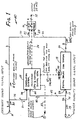
- FIG. 1 serves to explain the principles of operation and functional steps employed in one method and system embodying the present invention.
- the first input port 10 receives a signal from the standard or ordinary sound track normally accompanying the visual media.
- this first input port 10 will be receiving an ordinary analog signal being transmitted over a two-line audio connection 13, for example this analog signal is originating from the sound track on a cinema film or from a sound track on the audio portion of a video tape.
- This analog input signal at the ordinary sound signal input port 10 comes from the film's stereo sound output and is the audio voltage that normally would go to the theater's sound system.
- the number 2 on this line 13 indicates a two-line or two channel connection.
- the illustrative method and apparatus embodying the invention is shown handling a two-line or two-channel stereo input signal 21, it is to be understood that the invention is not limited to the handling of two-channel stereo.
- the method and system of this invention also can be applied to advantage for handling monaural sound signals and also for handling multi-channel "surround" stereo system sound, which may involve 4-channels or 6-channels, etc.
- the second input port or terminal 11 serves to receive the higher quality sound signal, which corresponds with the ordinary sound signal.
- this higher quality sound signal is a digital signal coming from an auxiliary digital sound storage system (not shown).
- this higher quality auxiliary sound source need have been made (recorded) from the original same sound master as the ordinary sound signal recording.
- This auxiliary higher quality sound signal source does not form part of the present invention in regard to the disclosure in our patent application as filed on December 15, 1987.
- the auxiliary storage system may be any one of many high quality sound playback systems, such as a compact disc (CD), rotary digital audio tape (R-DAT), video cassette adapter system (Sony model F-1 or PCM-1630 series), or one of the digital audio stationary head machines (DASH).
- the input line 14 from the higher quality input port 11 is indicated by the number 32 to be a thirty-two line digital audio signal transmission buss representing, say, two channels of 16 bit parallel audio lines.
- the method and system shown in FIG 1 has a single audio signal output port or terminal 12, for example a two-line stereo audio output terminal.
- This output terminal 12 provides the audio voltage that drives the theater's sound system. The intent is that this audio output voltage at terminal 12 will come from the higher quality digital sound signal input, whenever digital program material is present, or whenever a transition is not occurring. If there is no higher quality sound signal source, then the output at terminal 12 will contain the conventional ordinary sound signal being received at the input port 10.
- control terminal 15 which serves to control both the rate of the higher quality audio digital information being received at the second input terminal 11 and also controls the speed of the playback mechanism of the high quality sound source.
- FIG 1 shows three major functional blocks: a fader 16, a correlation system 17, and a delay line system 18. Although each functional block 16, 17 and 18 will be discussed in detail in later sections, it is helpful to the reader to provide first an overview of their respective functions.
- the fader 16 switches between the conventional or ordinary audio signal supplied via a connection 20 and the higher quality sound signal on a connection 22 from the delay system 18. This fader is controlled by proper commands from the correlation system 17, and these command signals are provided to the fader 16 from the correlation system 17 as indicated by the dashed line (control function path) 24.
- this fader 16 is not an ordinary switch; it is a cross fade device, which is similar in concept to a "dissolve" for slide projectors. If the command is given to switch from, say, ordinary input on line 20 to higher quality input on line 22 then the ordinary sound signal would be attenuated over time to reach full off, and the higher quality sound signal would be augmented from off to full on, over the same time period, This type of fader "switch” produces a benign transient which, for most program material, is inaudible to the audience. In this case, all that would be noticed over time is an improved audio characteristic, due to the higher quality digital playback audio signal on line 22. There is no annoying "pop" due to the switchover.
- the delay line system 18 may have any desired practical delay.
- the digital delay line system 18 handles the sound for up to ten seconds of missing motion picture film frames, and thus it has a ten-second delay capability.
- this delay line system 18 must have the same digital word width and the same average sample rate as the digital audio signal 19 which is fed into the input port 11.
- the high quality sound signal 19 on the thirty-two line buss 14 is characterized by two channels of sixteen-bit words having a sample rate of 48 kiloHertz each.
- this delay-line system 18 determines the maximum range of time synchronization capability, e.g. up to 10 seconds of missing film frames. It is desired that the fidelity or quality of the high quality analog sound signal 23 at the output 26 be equal to the fidelity or quality of the entering high quality sound signal 19 for providing the full advantages of the present invention. In order to achieve the preservation of quality, it is necessary that the delay-line system 18 have the same (or greater) number of bits per sample as the entering digital sound signal 19. (It is also possible for the delay-line system to have a faster sample rate than the entering digital sound signal 19, providing an appropriate sample rate converter be utilized in conjunction with the input port 28.)
- the delay line system 18 is intended to store as long a time-segment of the digital audio signal 19 as permitted by its capacity, e.g. a ten second time-segment.
- the output end 26 of this delay line system is generally running in exact synchronism with the ordinary audio signal 21. (However, whenever a film splice due to missing film frames has just been encountered; then, the output end 26 will momentarily be running behind exact time synchronization with the ordinary sound signal 21; the fader 16 will be switched over for transmitting the ordinary signal 21 to its output 12; and the delay line system 18 will be operating in a synch-search mode to be explained later.)
- the delay line system output end 26 includes a digital-to-analog converter (DAC) 30 (FIG 2) for converting the digital signal 19, which has been stored in the delay line into a high quality analog audio signal 23, being fed over a two-line connection 22 to the fader 16.
- DAC digital-to-analog converter
- this delay line system 16 is filled with digital signals for high quality sound which is LATER IN TIME (emphasis intended) e.g. up to ten seconds later in time, than the instantaneous present time of the ordinary sound signal 21.
- LATER IN TIME electrospray IN TIME
- the correlation system 17 advantageously instructs that the high quality analog audio output signal 23 supplied from the output 26 of the delay system be derived from stored digital signals at a later time (towards the input end 28 of this delay line.)
- the derivation tap 32 is moved ahead (later) in time by being shifted toward the delay line input end 28.
- the high quality analog signal 23 must be caused to "jump ahead” in order to regain synchronism with the film sound track signal 21 which has already experienced a jump ahead due to missing film frames.
- the left/right arrow 34 indicates that the correlation system 17 provides the output tap control 32 for determining the location within the delay line system 18 of the digital signals from which the high quality analog signal 23 is derived.
- the input end 28 of the delay line system 18 receives its input signals 19 from the auxiliary digital sound source medium.
- the momentary rate that the digital samples are received is controlled by the auxiliary digital sound source player control 15.
- the momentary rate of the digital samples is now increased. Since the sample rate of the signals 19 is now momentarily faster than normal, the delay output tap control 32 is caused to move slowly from the jump-ahead position back to the output end 26 of the delay line 18, in order to be available to react for any subsequent missing frames.
- the digital sound storage medium is then returned to it's nominal rate by the player control 15, when the delay output tap control 32 has again reached the output end of the delay line 18.
- this illustrative system as described has its normal capacity to maintain almost uninterrupted availability of synchronized high quality analog sound signals 23 up to a ten-second time-segment of missing film frames.
- the delay tap 32 will quickly be shifted to a point as shown in FIG. 1 which corresponds with 6 seconds from the output end 26 and 4 seconds from the input end 28.
- the system still retains the capability to maintain almost uninterrupted availability of synchronized high quality analog sound signals 23 up to the occurrence of a 4-second time-segment of missing frames close in time with the 6-second film splice "break" which has just been encountered.
- the 3-second "gap" has now been closed, and the delay tap control 32 causes these appropriately synchronized high quality analog sound signals 23 to appear at the output 26 of the delay line system 18.
- the fader 16 now shifts over to the high quality sound signals 23.
- the digital player continues to run faster than normal, while the delay tap control 32 is caused progressively to move (arrow 34) along the delay line system 18 towards the output end 26.
- this delay control tap 32 reaches the output end 26, then once again this output end 26 is exactly synchronized in time with the occurrence of the on-going ordinary sound signals 21.
- Small corrections in speed are made either by causing the digital player control 15 to slightly adjust the average playback speed of the digital medium or by moving the position (arrow 34) of the delay tap control 32 along the delay line system 18, or a combination of both small corrections can be used.
- the important point to be understood is that small corrections in timing can be made on an almost continuous basis to keep the digital signal in exact synchronization.
- each connection has an associated return (or ground) conductor in order to complete the circuit for the communication line.
- return or ground
- the output pathway 12 for the signal voltage being fed to the stereo loudspeaker system of the theater has a "2" numbered slash, thereby indicating two communication lines, namely one line for the left side stereo loudspeakers and a second line for the right side stereo loudspeakers.
- return conductor may comprise a common return at ground potential for both lines.
- the whole synchronization system shown in FIG. 1 is generally indicated by the reference number 40.
- this system 17 provides two functions: (a) analysis and comparison of the ordinary quality analog sound signals 21, which are fed in over a two-line path 36 to an input port 38, to high quality digital sound signals 19, which are fed in on a 16-line path 42 to input terminal 44 of the correlation system 17, and (b) controlling the whole synchronization system 40.
- the reason for a two-line path 36 is to handle both the left analog stereo signal and the right analog stereo signal.
- the correlation system 17 is analyzing the envelope of the ordinary quality analog sound signals 21 and is comparing the results of this analysis with the envelope of digital audio signals which are fed over a sixteen-line input buss 42 to a high quality digital sound signal input terminal 44 of the correlation system 17.
- the reason for using the sixteen-line input buss 42 is to accommodate both left and right digital audio signals as 8-bit parallel words. It is seen in FIG. 1 that the higher quality digital audio signal on input buss 14 comprises 16-bit words for both left and right stereo digital audio, thus requiring a 32-line buss 14.
- the least significant eight bits of both the left and right stereo audio words are not communicated via the sixteen-line input buss, because the correlation system 17 operates with regard to average envelope information and does not require greater precision than provided by the sixteen-line buss 42, as will be explained later. From the comparison of the inputs at terminals 38 and 44, the correlation system 17 determines at each instant the appropriate delay tap 32 of the delay line 18 from which to feed the output 26.
- the correlation system 17 determines the appropriate command signals fed to the output 15 for instructing operation of the digital playback medium and also determines the appropriate command signals fed via control path 24 for instructing operation of the fader 16.
- This correlation system 17 includes microcomputing elements and performs various internal functions in accordance with algorithms to be explained later.
- the correlation system 17 also contains the instructions and sub-routines for starting the film and controlling the higher quality auxiliary digital audio, including starting, stopping, and perhaps rewinding the digital audio medium, and all other control matters pertaining to the system automation.
- the synchronizing system 40 employs a delay line 18 of, say 10 seconds. Consequently, the digital audio medium will have to start running ten seconds in advance of the cinema film in order to fill the digital delay line 18 before the film starts showing (before the ordinary analog signals 21 start arriving at the input 10). This ten second "head start" for the digital player will thereby fill the ten-second delay line so that the first digital signal output at 26 will exactly correspond with the first ordinary analog signal arriving on the input connector 13.
- the digital player and the delay line 18 may be arranged to make a "fast dump" of the data corresponding to ten-seconds worth of higher quality sound signal 19. Such a "fast dump” may occur in much less than ten seconds.
- FIG. 2 shows a functional block diagram of a presently preferred digital delay line system, commonly called a FIFO, or first-in first-out overwriting memory store.
- This digital delay line system 18 operates as follows: the higher quality digital audio signal data 19 is presented via the 32-line input buss 14 to the input 28 of a write address generator 50.
- An address (memory location) 48 is assigned and, as indicated by the arrow 52, the digital audio information is stored there in a random access memory (RAM) 54.
- the digital information is written into the memory 54 sequentially until all the memory is filled. Then, the process is repeated by replacing the previous data with the new information in the same sequence.
- the memory 54 must be sufficient to store the required number of data samples to make up the desired delay time of ten seconds. For example, to accommodate ten seconds of left stereo sixteen-bit words and right stereo sixteen-bit words at a sample rate of 48 kHz the memory capacity is at least 480 k times 32 bits, as indicated.
- the output at 26 from the whole delay line system 18 comes via a read address generator 56.
- the chosen address indicated by the function arrow 58 is that of the digital audio data (digital audio word) which has been resident in the memory 54 for the maximum available ten seconds, i.e. the longest-resident digital audio word in memory.
- This longest-resident digital audio word is the first-assigned digital audio word of all words currently in memory.
- This maximum-delay word is then presented, as indicated by the function arrows 62 and 64, to the digital-to-analog converter (DAC) 30 and appears at the output 26.
- DAC digital-to-analog converter
- This maximum delay situation as just described means that the output data stream 62, 64 is exactly the same as the input data stream 52, except that a ten-second time difference exists. Turning attention back to FIG. 1, this maximum delay situation is indicated when the delay output tap 32 is located at the very output end of the delay line system 18.
- the delay time may quickly and appropriately be reduced from maximum by the advantageous expedient of assigning a new address 58 (FIG. 2) to the read address generator 56 from which the sequential process continues.
- assigning an address 58 halfway through the memory 54 instantly advances the high quality audio signal 23 in time by fifty percent of the delay line's length, namely, by five seconds in this delay line system 18.
- This process of assigning a new address 58 from which to chose the next word in wuch a FIFO overwriting store is sometimes called "changing the read pointer position".
- FIGs. 1 and 2 both show the digital audio input buss 14 as having 32-lines. These 32-lines provide for a parallel feed of two 16-bit wide pulse code modulated (PCM) words for left and right stereo digital audio as occurs in currently commercially available high quality digital sound systems.
- the digital output 62, 64 is similarly on 32-lines, and this digital output feeds the DAC 30 which provides the high quality analog stereo sound signal 23 for driving the theater's sound system.
- control busses 66 and 68 coming from the correlation system 17 (FIG. 1).
- these control busses 66 and 68 are considered to be included within the control pathway 67 shown in FIG. 1 extending from the correlation system 17 to the delay output tap 32, 34. It is to be understood that each of these control busses 66 and 68 contains multiple communication lines.
- the first control buss 66 serves to control the write address generator 50
- the second control buss 68 controls the read address generator 56 and serves to determine the read address location 58, i.e. "determines the read pointer's position.”
- clock pulses are fed to the write address generator 50, to the read address generator 56, and to the DAC 30.
- this correlation system 17 serves as the controller for the synchronization system 40 (FIG. 1 or 6) as a whole.
- This correlation system 17 includes signal processors, digital storage capability, correlation circuits, control circuits and a central processing unit (CPU) 31 which controls and keeps track of all activities within the synchronization system 40.
- CPU central processing unit
- the system 17 is continuously assuring that the higher quality digital audio being supplied to the DAC 30 (FIG.2) at the output end 26 of the delay line system 18 is the same, but higher quality, sound as the conventional analog audio signals 21 (FIGs. 1 and 3) coming from the film being shown. If the film audio signal 21 becomes different from the digital audio signal about to arrive at the DAC 30, then the correlation system 17 causes the overall synchronization system 40 to make an appropriate response, as explained in detail later.
- correlation is intended to have a precise engineering or mathematical meaning.
- correlation means to compare and calculate unambiguously that the ordinary sound signal 21 (FIG. 1 or 3) which is now being received at the input connection 13 and the higher quality sound signal being delivered from the output end of the digital delay line system 18 carry the same audio message.
- the ordinary sound signal 21 is being derived from the portion of the motion picture currently being shown, this ordinary signal always contains the appropriate audio message to accompany the current picture.
- the correlation system 17 When missing picture frames are encountered due to a film splice, the motion picture suddenly apparently "jumps ahead" in time, and the ordinary quality audio message 21 makes a similar corresponding jump ahead in time.
- a "synch search" mode When a difference in the two audio messages is sensed by the correlation system 17, a "synch search" mode immediately is initiated, and the fader 16 is caused to switch over to convey the ordinary quality sound signal 21 to the theater sound system.
- the correlator 17 immediately begins to determine the new address to place the read pointer 58 (FIG. 2), which is later in time or closer to the input end 28 (FIG 1).
- this correlation process is re-iterative. That is, the envelopes of two audio signals are being compared by repeatedly rapidly comparing in sequence the magnitudes of the voltages of the envelope of the high quality digital audio at a plurality of addresses in a memory store with the present magnitude of the voltage of the on-going ordinary quality audio.
- the correlation process is looking for (is seeking) that particular sequence of addresses on a memory store where the magnitudes of the voltages of the envelope of the high quality digital audio over a brief time interval match with (track along with) the magnitudes of the voltages of the envelope of the on-going ordinary audio over the same brief time interval.
- a sequence of numbers representing magnitudes of the voltages of the high quality audio envelope are correlated with, i.e.
- the correlation system 17 accepts the read pointer position. If the correlation is poor, i.e. the difference values "D" are not near zero, then the comparison is repeated, until a new pointer position is found where the correlation again becomes high and remains high over a brief interval of time.
- the fader 16 is caused to remain changed over to the conventional analog signal 21 so that this conventional signal 21 is supplied at the output 12 to the theater's loudspeaker system.
- the corresponding high quality digital audio signal from this new pointer position immediately goes to the memory store output 26 (FIG. 2), and the fader 16 is rapidly switched to feed this resulting new high quality audio signal 23 to the output 12.
- FIG.3 shows a functional block diagram of the correlation system 17 for making the re-iterative subtractive comparison as described above.
- the stereo analog audio signal 21 approaching the input terminal 38 has its left (L) and its right (R) stereo signals added together in adder 37, and the resulting monaural analog signal enters the input 38 of an ADC (analog-to-digital converter) 72 in which this monaural analog signal is converted to an 8-bit monaural digital representation 74.
- ADC analog-to-digital converter
- This digital representation 74 is fed by an 8-line connection 76 into a processor 78 which obtains the absolute instantaneous values of the digital representation 74 by an absolute value algorithm which causes all negative numbers to become positive and then band limiting the result by a low pass digital filter algorithm which provides new digital numbers representing the "absolute value envelope" (no negative numbers) confined to less than a predetermined frequency.
- this predetermined frequency limit for the low-pass digital filter algorithm is 50 Hz.
- a low-pass upper limit of less than about 50 Hz is that such a frequency is sufficiently high to characterize with suitable definition the "syllabic structure" of intelligible audio messages and is low enough to avoid imposing unduly or unnecessarily high rate requirements on the correlation system 17.
- this processing in the processor 78 is to provide a digital signal 80 on a buss 94 containing a sequence of digital numbers representing the absolute value envelope confined to less than 50 Hz of the monaural combination of the L and R analog audio signal 21. Therefore, this representative digital signal 80 advantageously gives a useful representation of the audio magnitude distribution occurring within the "syllabic structure" of the on-going ordinary quality audio message 21.
- this envelope representation signal 80 contains very useful information about the on-going sequence of syllables (on-going significant events) which characterize the ordinary quality audio message 21, but this envelope representation signal 80 does not contain enough digital data to define the precise waveform of the ordinary quality analog stereo signal 21.
- this syllable-type absolute value envelope representing signal 80 the rate requirements of the correlation system 17 are correspondingly lower as compared with using more precise representation of the original analog stereo signal 21.
- the digital signal 82 supplied over the 16-line buss 42 comprises two 8-bit words for the respective left and right stereo digital audio.
- the eight least significant bits of the L and R stereo digital words in the high quality signal 19 on the 32-line input buss 14 are omitted from the 16-line buss 42, as discussed further above.
- This digital signal 82 is supplied to a processor 84 which operates in a manner similar to the processor 78 plus the adder 37 and ADC 72 described above.
- the processor 84 combines the L and R 8-bit stereo words 82 into an 8-bit monaural word and then uses an absolute value algorithm and a low-pass digital filter algorithm confined to the same frequency limit being used by the processor 78, namely 50 Hz, for producing a digital signal 90 on a buss 86.
- This digital signal 90 contains a sequence of numbers representing the absolute value envelope confined to less than 50 Hz of the combination of the L and R digital audio signal 82. Therefore, this representative digital signal 90 gives a useful representation of the audio magnitude distribution occurring within the "syllabic structure" of the high quality digital audio message 19 (FIG. 1).
- This envelope representation signal 90 contains very useful information about the sequence of syllables (sequence of significant events occurring with passage of time) which characterize the high quality digital audio message 19, but this envelope representation signal 90 contains considerably less than enough digital data to define the precise analog waveform which is delineated by the high quality stereo signal 19.
- the envelope representation signal 90 is being shown supplied by a connection 86 to a low complexity delay line 92 having the same time-delay length, for example ten seconds, as the high quality digital delay line system 18 (FIGs. 1 and 2).
- the envelope signal 90 (for the digital audio message 19) precedes the other envelope signal 80 (for the analog audio message 21) by the time-delay of the delay lines 92 and 18, say ten seconds, because the high quality auxiliary digital sound medium was started running ten seconds before the cinema film was started running.
- This ten-second "head start" of the digital audio message thus causes the envelope signal 90 to precede the envelope signal 80 by ten seconds in this embodiment of the invention. Consequently the delay line 92 has been supplied with and has become filled with the most recent ten seconds of the envelope representation signal 90.
- a delay of less than ten seconds, for example eight seconds or six seconds can also be used to good effect, if desired.
- the acceptable compromise of using a shorter delay time than the presently preferred pre-determined delay in the range of about 8 seconds to 10 seconds merely causes lessened capability to maintain uninterrupted synchronization of the higher quality sound when showing spliced motion picture film wherein the splices involve significant time-segments of missing frames. Due to an acceptable compromise of using a shorter delay time storage capability than about 8 seconds, the fader 16 will switch over somewhat more often to the conventional signal 21 and some such switchovers will have a longer time duration than would occur with a longer delay time capability when showing any given motion picture film with a significant number of splices. At the present time we believe that a delay time storage capability of about three seconds is the practical lower limit for suitable, good effect operation with the standard used release print containing significant numbers of significantly long missing time-segment splices.
- the envelope signal 90 is earlier in time than the signal 80 by the pre-determined delay-time capability of the low complexity delay line 92 which exactly equals the predetermined delay-time capability of the high quality digital delay line system 18.
- This low complexity delay line 92 is shown as having numerous output taps T1 through Tn located at spaced equal time-delay increments. For example, these time-delay intervals "T" are spaced uniformly 100 milliseconds apart.
- Sequential re-iterative comparisons C1 through Cn are being made between the on-going digital numbers 80 on the buss 94 with the stored digital numbers 90 at the respective time points T1 through Tn in the delay line 92. These comparisons are advantageously being made by sequential subtractions S1 through Sn, and the resulting sequential numerical differences D1 through Dn are fed into the CPU of the functional block 31.
- the particular re-iterated subtractions S whose difference D currently (now) has a numerical value approaching zero and remaining near zero over a brief interval of time is that subtraction whose input tap T has present numbers equal to the present instantaneous numbers of the envelope representation 80 on the comparison buss 94. It is this particular D presently having a near zero value which serves as the "marker" for the CPU 31 for selecting the appropriate delay time to use for moving the output tap 32 (FIG. 1) to the appropriate delay time location in the digital delay line system 18.
- a FIFO overwriting memory store 114 (FIG. 3A), similar to that shown in FIG. 2, be used to serve as this low complexity delay line 92 (FIG. 3).
- a microprocessor, CPU using a time-share program, serves to perform the numerous subtractions S1....Sn and acts through a control buss 95 in conjunction with the FIFO overwriting memory store system 114.
- this correlation system 17 the CPU is performing subtractions S (FIG. 3A) at the rate of 1,500 samples per second.
- a subtraction S (FIG. 3A) is performed, and the resultant difference goes into a particular memory store location D1 through Dn in the CPU.
- the next subtraction is performed using the number now stored at an address in the FIFO memory which is spaced 100 milliseconds from the address for the preceding subtracted number, and the resultant difference goes into a next particular memory store location D1 through Dn in the CPU.
- This sequential subtraction is continued until all of the difference memory store locations Di through Dn have each received respective difference numbers and then the subtraction process continues repeating over and over at the sample rate of 1,500 per second.
- the memory store locations D1 through Dn in the CPU are each cumulative, and they each have the same discharge or drain-down rate.
- the particular memory store location D1 through Dn which currently is storing a cumulative difference nearest to zero and whose stored cumulative difference remains nearest to zero, is the "marker" as described above for selecting the appropriate read address 58 (FIG. 2) for synchronization.
- the synchronization will be within much less than this 1/10th second for most of the time, because the CPU is continually acting in a direction to cause the near-zero cumulative difference stored in the particular current "marker" memory storage location D to approach zero, meaning that progressively closer synchronization is being provided, until such time as the occurrence of the next film-splice break due to missing frames.
- the CPU 31 controls the entire synchronization system 40 (FIG. 1 or FIG. 6). Thus, this CPU examines all of the cumulative correlator differences stored in memory locations D1....Dn, chooses the appropriate pointer location, controls the read address generator 56 (FIG. 2) in the digital audio delay line system 18. In addition the CPU continues to update the write address generator 50. Concurrently, the CPU runs the low complexity delay line 92 (i.e. runs the FIFO overwriting memory store system 114 which serves as this delay line 92). At all times the CPU is providing control signals over the command path 33 to control operation of the auxiliary high quality digital sound signal source. The CPU provides control signals over the command path 24 for placing and keeping the fader 16 in the appropriate modes.
- the CPU includes read-only memory storage containing the protocols of the start and stop routines and timing sequences for the operation of the entire synchronization system 40 (FIGs. 1 and 6) including operation of the auxiliary digital sound storage medium, These start and stop routines and timing sequences in the CPU 31 are invoked by appropriate mechanical controls (not shown), as may be desired.
- FIG. 4 shows the components of the smooth transition fader switch system 16.
- the ordinary quality sound signal connection 20 from the analog source feeds ordinary quality analog sound signal 21 into a first variable gain element 96.
- the high quality analog sound signal 23 is fed over the connection 22 to a second variable gain element 98.
- These two variable gain elements 96 and 98 are identical and have respective output connections 97 and 99 to an adder 100 whose output connection 12 feeds either the signal 21 or 23 to the theater's sound system.
- variable gain elements 96 and 98 are, for example, volume controls ganged together and driven in opposing directions by a reversible drive motor 102. Control signals fed over the command connection 24 cause the drive motor 102 to turn for a predetermined increment in one direction or the other for increasing the volume of the appropriate signal 23 or 21 while simultaneously decreasing the volume of the other of these signals.
- FIG. 5 are shown the voltage gain output characteristics 104 and 106 of these two variable gain elements 96 and 98, respectively. These gain characteristics are plotted versus time as normalized curves in FIG. 5, and thus a value of unity equals full gain output. For example, the interval of time from the time point 108 to the time point 110 is predetermined to be one quarter of a second.
- a command signal given via connection 24 causes the fader system 16 to switch back to feed the high quality signal 23 to the stereo output connection 12.
- the gain characteristics 106 and 104 have the same shape when switching back to high quality sound, and so in one-eighth of second after a switch back command, the audio message effectively heard by the audience is the high quality sound.
- an electronic adder 100 is interposed between the variable gain output connections 97 and 99 and the final stereo output connection 2.
- this adder 100 contains at the same time both of the audio signals 23 and 21 at their respective reduced levels as shown by the respective curves 106 and 104.
- These curves 106 and 104 are shaped so that their gain levels as combined at each instant by the adder 100 during switchover effectively maintains unity acoustical power level as heard by the audience.
- FIG. 6 shows the entire synchronization system 40 in greater detail than FIG. 1. It is believed that this detailed presentation in FIG. 6 will be more easily understood and appreciated after considering FIGs. 1-5 and the detailed description relating to those FIGURES.
- FIGs. 7A and 7B for providing one or more translation sound tracks synchronized to a motion picture film, video tape or other motion picture source having a conventional sound track of ordinary quality containing a spoken language (the "original language”) different from the language in each translation sound track.
- a motion picture source 120 for example, a conventional motion picture projector 122 in a theater projection room running a conventional cinema film 124 (for example a standard motion picture theater release print).
- the film 124 passes an optical aperture 126 for projecting light images 128 toward a viewing screen (not shown).
- the film also passes a sound track transducer 130.
- the sound track is conventionally offset along the length of the film 124 from the specific frames to which the sound track relates by an "offset distance" equal to the length of the normal film path distance in the projector 122 between the optical aperture 126 and the transducer 130.
- This transducer 130 provides the ordinary sound signal 21 being fed via line 13' to the output connection 10 in FIG. 7B.
- the projector 122 is arranged for remote control, and a control interface unit 132 is connected through a control buss 134 with the projector for automatic operation.
- the control interface unit 132 is connected through another control buss 136 with an auxiliary sound signal source 140 of higher sound quality than the ordinary sound signal 21.
- This auxiliary sound signal source 140 is a high quality sound playback system, such as a compact disc (CD) player, rotary head digital audio tape (R-DAT) player, video cassette adapter system (Sony model F-1 or PCM-1600 series) or a digital audio stationary head machine (DASH).
- This auxiliary sound signal source includes a prime language channel 142 containing the same audio message as the sound track on the film except that the prime language channel 142 is preferred to be of higher quality.
- the prime language channel was made from the same master recording as was used to make the sound track on the film.
- the spoken language in the prime language channel 142 is the same as in the sound track on the film 124, for example being the English language.
- the sound signals 19 from this prime channel 142 are fed via line 14' to the input connection 11 in FIG. 7B.
- the correlation system 17 in FIG. 7B controls the interface unit 132 (FIG. 7A) through the control buss 33 and is controlling the digital delay line system 18. Consequently, the synchronism system 40A in FIG. 7B serves to keep the higher quality (converted digital signal) sound signal 23 at the output 26 of the digital delay line system 18 synchronized with the ordinary sound signal 21 in the same manner as the synchronism system 40 described above with reference to FIGs. 1-6.
- the auxiliary sound source 140 includes translation sound channels 144, 146, 148, each containing another spoken language different from the language in the prime language channel 142.
- these other spoken languages may be French, German, Italian, Spanish, Chinese, Russian, Portuguese, etc.
- each of these translation sound channels respectively comprises for example, two tracks for stereo French, two tracks for stereo German, two tracks for stereo Italian, and so forth.
- the prime language channel 142 may include two tracks for stereo English, and may include two or more tracks for stereo presentation of other sounds including music, and two tracks may be included for "surround sound" for use in those particular theaters equipped to utilize surround sound.
- These various language channels including the prime language channel are all running in synchronization.
- these language channels 144, 146, 148 are running in parallel relationship with the prime channel 142, and consequently all of these channels are running synchronously in real time.
- the different spoken languages and the other sounds, including "surround sound” are all available to be used for presentation to a theater audience desiring to hear a particular language or for presentation to various segments of a theater audience sitting in areas pre-assigned for respective particular languages and equipped with appropriate listening devices.
- the other sounds, including "surround sound” may be electronically added to the particular language so that the viewer can hear the entire intended sound track.
- the translation language in any of the channels 144, 146, or 148 may be provided on a monaural track rather than being provided on stereo L and R tracks.
- the spoken language in each of the various translation language channels 144, 146, 148 is arranged and timed in its stereo or monaural medium so that the lip motions of the persons seen by a viewer of the projected images 128, who are speaking English, for example, generally appear to correspond with the articulation of the translation spoken language to be heard by the viewer.
- the respective translation language channels 144, 146 148 in the auxiliary sound signal source 140 are connected as indicated at 14A, 14B and 14C to the respective input ends 28A, 28B, and 28C of the second, third, and Nth digital delay line systems 18A, 18B, and 18C, respectively, and thus the digital data for these respective spoken translations are present in these respective delay line systems 18A, 18B and 18C.
- These delay lines 18A, 18B and 18C are slaved to the prime delay line system 18. Consequently, the digital data for the spoken translations in these respective delay line systems 18A, 18B. and 18C are synchronized with the digital data for the prime language in the prime delay line 18 and thus with the ordinary sound signal input 21 originating from the sound track on the film 124.
- a language channel selection switch 150 enables selection of the particular spoken language desired to be heard while viewing the projected images.
- the analog sound signal 23A, 23B, or 23C available at the respective output terminals 26A, 26B, or 26C includes the other sounds, music, "surround sound” and other sound effects along with the spoken translation language. Therefore, when the arm 155 of the channel selector switch 150 is in the respective positions for connecting the contact 151, 152, 153, or 154 to the output supply line 22, a high quality analog sound signal 23, 23A, 23B, or 23C containing the prime spoken language or a translation thereof, as may be desired, if fed out through the supply line 22.
- the signal 23 includes the prime spoken language, say English, plus all of the other sounds.
- the signal 23A includes the second spoken language, say French, plus all of the other sounds.
- the signal 23B includes the third spoken language, say German, plus all of the other sounds.
- the signal 23C includes the Nth spoken language plus all of the other sounds.
- the higher quality sound being presented to the audience includes a translational track presentation of a second language
- such an unlikely automatic cross fade to the lower quality track would inherently cause the audience to suddenly begin hearing words being spoken in the prime language, which sudden change to a different language might be unsettling or unattractive to the audience.
- the second half of the automatic cross fade can be blanked out when a translational track is being presented. Then, if there happens to be a temporary loss of synchronization due to a film splice with missing picture frames, there is a half fade (decrease in volume) into a brief period of silence until synchronization is quickly restored and then another half fade (increase in volume) back to the original sound level.
- the central processing unit in the correlation system 17 may include a routine for keeping a record of those few instances where a temporary loss of synchronization occurred. Then, the next time that the film 124 is projected, the synchronization system 17 produces an automatic "fast dump" (a fast over-writing) of digital sound signal data into the front ends of the respective delay line systems 18, 18A, 18B, 18C.
- This automatic fast dump is programmed to take place at about the time when the troublesome film splice reaches the optical aperture 126. Then, the program quickly causes the read address point 32 to jump ahead to the newly installed data near the front end of the delay lines resulting from the fast dump.
- re-synchronization is automatically obtained by the time that the troublesome splice has reached the transducer 130. In other words, re-synchronization has automatically advantageously been obtained within the normal time for the offset sound track on the film to travel the normal distance from projection aperture 126 to the sound transducer 130.
- the buss 14', 14 may include more than 32 parallel communication lines, as will be understood by those ( skilled in the art.
- the present invention is riot limited to the handling of two-channel stereo with L and R sixteen-bit parallel words.
- the method, system and apparatus of this invention also can be applied to advantage for handling of monaural sound signals and also for handling multi-channel "surround" stereo system sound, which may involve 4-channel or 6-channel output connections instead of the two-channel output signal supply lines 20 and 22, depending upon the desired loudspeaker and amplifier arrangements in various theaters.
- the embodiments of this invention are very flexible and broad in scope with respect to their adaptability to various theater or home viewing installations.
- FIG. 8 shows a functional block diagram, similar to FIG. 2, of a preferred digital delay line system commonly called a FIFO, or first-in first-out overwriting memory store, for accommodating "N" language channels.
- the digital delay line system of FIG. 8 comprises the prime delay line system 18 (FIG. 2) plus the second, third, and Nth delay line systems 18A, 18B, and 18C. Consequently, the FIFO overwriting memory store 54 A of FIG. 8 handles the digital data from the prime language channel 142 of FIG. 7A plus the digital data from the translation language channels 144,146, and 148.
- the number of parallel communication lines for each connection i.e. for each buss or communication pathway, is increased from the "32" shown for FIG. 2 to 32N for handling L and R digital audio signals each as 16-bit parallel words from the N language channels 142, 144, 146 and 148 in FIG. 7A.
- the handling of digital signals in a parallel mode can be replaced by a serial mode. In this case a signal buss would handle N 32 bit serial words
- the digital-to-analog converter 30A has N analog stereo outputs 26, 26A, 268 and 26C for high quality sound signals 23, 23A, 23B, or 23C, depending upon the particular language channel being heard by the audience.
- the FIFO overwriting memory store 54A is now at least 480K times 32N bits as indicated for handling the various language channels 142, 144, 146 and 148.
- the ordinary sound signal source may be made from a "master recording” or a high quality duplication of this "master recording”.
- the high quality digital signal source may be made from the "master recording” or a high quality duplication of this "master recording”.
- original source or "master recording” is to be interpreted sufficiently broadly to include high quality duplications thereof which contain the same audio message, i.e. which have essentially the same audio informational content.
- the following is a summary of the inventive method and system for synchronizing a digital signal of an audio message at higher quality with another signal of the same audio message at lower quality.
- the illustrative embodiment of the invention synchronizes an auxiliary high quality audio digital sound signal source with the ordinary quality analog sound signal coming from a conventional analog sound track on motion picture film as the motion picture is being shown and maintains effective synchronization in spite of missing segments of the sound track due to film splices.
- the method and system of the invention do not utilize nor require synchronization tracks, markers, codes, time codes or other extrinsic data.
- the standard or conventional cinema sound track is advantageously employed. The only requirement is that the higher quality audio message recording, e.g.
- a recording in a digital medium be made from the same "master recording” (or a high quality duplicate thereof) as the sound track so that the auxiliary recording have the same informational content as the sound track.
- the higher quality message is caused to precede the lower quality message, for example, by a time difference in the range from about 6 to about 10 seconds, and is temporarily stored in time-delay means, such as a FIFO overwriting memory store.
- the synchronized high quality signal is those portions of the temporarily stored high quality message which correlate with the on-going ordinary quality message.
- Correlation is achieved by re-iterative subtractions between digital numbers representative of characteristics of the absolute value envelope of the ordinary quality message signal and digital numbers representative of characteristics of the absolute value envelope of the high quality message.
- the auxiliary sound signal source includes one or more translation sound signal channels, each respective translation channel providing an audio message in a spoken language different from the spoken language reproduced from other translation channels and also different from the spoken language being reproduced from the conventional sound track.
- the audio message signals from the respective translation channels are all synchronized with the motion picture by synchronization of the auxiliary recording containing the same informational content as the film track. Selector means enables selection of the spoken language desired to be heard by the viewing audience.
Landscapes
- Engineering & Computer Science (AREA)
- Multimedia (AREA)
- Signal Processing (AREA)
- Physics & Mathematics (AREA)
- General Physics & Mathematics (AREA)
- Signal Processing Not Specific To The Method Of Recording And Reproducing (AREA)
- Television Signal Processing For Recording (AREA)
- Stereophonic System (AREA)
- Recording Or Reproducing By Magnetic Means (AREA)
- Signal Processing For Digital Recording And Reproducing (AREA)
Claims (38)
- Verfahren zum Vorführen sichtbarer Bilder (128), die Bewegung in Verbindung mit einer Tonnachricht zeigen, mit den folgenden Schritten:Vorführen sichtbarer Bilder (128), die von einem ersten Medium (124) bereitgestellt werden, das die sichtbaren Bilder und eine erste Signaleinrichtung aufweist, die ein erstes Signal (21) als Darstellung einer ersten Tonnachricht bereitstellt, die mit den vorgeführten sichtbaren Bildern zusammenhängt und verfügbar ist, wobei die erste Tonnachricht von einer Originalaufzeichnung oder von einer hochqualitativen Kopie davon abgeleitet wurde; Bereitstellen eines zweiten Signals (19), das von einem zweiten Medium (140) mit einer zweiten Signaleinrichtung (142) gelesen wird, die das zweite Signal (19) bereitstellt, wobei das zweite Signal Tonnachrichtenmerkmale hat, die von der Originalaufzeichnung oder ihrer hochqualitativen Kopie abgeleitet sind,Synchronisieren des ersten (21) und zweiten Signals (19) durch Korrelieren von Tonnachrichtenmerkmalen des ersten (21) und zweiten Signals (19), um die Tonnachrichtenmerkmale des zweiten Signals in richtige Zeitbeziehung zu den vorgeführten sichtbaren Bildern zu bringen; wobei das Verfahren durch die folgenden weiteren Schritte gekennzeichnet ist:Bereitstellen eines dritten Signals (19A) als Darstellung einer dritten Tonnachricht (23A), die mit den sichtbaren Bildern (128) zusammenhängt, wobei das dritte Signal (19A) in einer dritten Signaleinrichtung (144) in dem zweiten Medium (140) in synchronisierter Beziehung zu dem zweiten Signal (19) gespeichert ist,Speichern von Abschnitten des dritten Signals in synchronisierter Beziehung zu Abschnitten des zweiten Signals (19) in einem Speicher (18),während der Korrelation (17) von Tonnachrichtenmerkmalen des ersten und zweiten Signals (21, 19) in dem Speicher (18) erfolgendes Auswählen jener Abschnitte des dritten Signals (19A), die in synchronisierter Beziehung zu jenen Abschnitten des zweiten Signals (19) gespeichert sind, deren Tonnachrichtenmerkmale mit Tonnachrichtenmerkmalen des ersten Signals (21) korreliert sind, und Darbieten der Tonnachricht (23A), die durch die ausgewählten Abschnitte des dritten Signals (19A) dargestellt ist, mit den vorgeführten sichtbaren Bildern (128).
- Verfahren nach Anspruch 1, ferner gekennzeichnet durch:Bereitstellen des zweiten Signals (19) in digitaler Form, undBereitstellen des dritten Signals (19A) in digitaler Form.
- Verfahren nach Anspruch 1 oder 2, ferner gekennzeichnet durch:Betreiben der dritten Signaleinrichtung (144) in Zeitbeziehung zu der zweiten Signaleinrichtung (142),wodurch das Korrelieren (17) von Tonnachrichtenmerkmalen des ersten und zweiten Signals (21 und 19) auch bewirkt, daß die Tonnachricht (23A) des dritten Signals (19A) in richtiger Zeitbeziehung mit Bewegung verfügbar ist, die durch die sichtbaren Bilder (128) gezeigt wird.
- Verfahren nach Anspruch 1, 2 oder 3, ferner gekennzeichnet durch:Bereitstellen mehrerer Signale (19A, 19B, 19C), die jeweils mehrere Tonnachrichten (23A, 23B, 23C) darstellen, die alle mit den sichtbaren Bildern (128) zusammenhängen, wobei die mehreren Signale (19A, 19B, 19C) jeweils in mehreren Signaleinrichtungen (144, 146, 148) in dem zweiten Medium (140) in synchronisierter Beziehung zu dem zweiten Signal (19) gespeichert sind,Speichern von Abschnitten der mehreren Signale (19A, 19B, 19C) in synchronisierter Beziehung zu Abschnitten des zweiten Signals (19) in dem Speicher (18),während der Korrelation (17) von Tonnachrichtenmerkmalen des ersten und zweiten Signals (21, 19) in dem Speicher (18) erfolgendes Auswählen jener Abschnitte der mehreren Signale (19A, 19B, 19C), die in synchronisierter Beziehung zu jenen Abschnitten des zweiten Signals (19) gespeichert sind, deren Tonnachrichtenmerkmale mit Tonnachrichtenmerkmalen des ersten Signals (21) korrelieren, undAuswählen (150) mindestens einer der mehreren Tonnachrichten (23A, 23B, 23C), um dargeboten zu werden, und mit den vorgeführten sichtbaren Bildern (128) erfolgendes Darbieten der ausgewählten (150) Tonnachricht (23A, 23B oder 23C), die durch die ausgewählten Abschnitte der Signale (19A, 19B oder 19C) dargestellt ist.
- Verfahren nach Anspruch 4, ferner gekennzeichnet durch:Betreiben der mehreren Signaleinrichtungen (144, 146, 148) in Zeitbeziehung zueinander und in Zeitbeziehung zu der zweiten Signaleinrichtung (142),wodurch das Korrelieren (17) von Tonnachrichtenmerkmalen des ersten und zweiten Signals (21 und 19) auch bewirkt, daß alle Tonnachrichten (23A, 23B, 23C) der jeweiligen Signale (19A, 19B, 19C) zur Auswahl (150) verfügbar sind, und wobei alle Tonnachrichten (23A, 23B, 23C) in richtiger Zeitbeziehung mit Bewegung stehen, die durch die sichtbaren Bilder (128) gezeigt wird.
- Verfahren nach Anspruch 1, 2, 3, 4 oder 5, wobei die sichtbaren Bilder (128) auch Menschen zeigen, die eine erste Sprache sprechen, und die erste Signaleinrichtung ein erstes Signal (21) als Darstellung einer ersten Tonnachricht mit der ersten gesprochenen Sprache bereitstellt, ferner gekennzeichnet durch:Bereitstellen des dritten Signals (19A) als Darstellung der dritten Tonnachricht (23A), wobei das dritte Signal (19A) in der dritten Signaleinrichtung (144) gespeichert ist, und die dritte Tonnachricht (23A) eine zweite gesprochene Sprache aufweist, die sich von der ersten gesprochenen Sprache unterscheidet und die eine Übersetzung der ersten gesprochenen Sprache ist,Anordnen der Klänge der zweiten gesprochenen Sprache in der dritten Tonnachricht (23A), um allgemein zeitlich auf Mund- und Lippenbewegungen von Menschen abstimmbar zu sein, die in den sichtbaren Bildern (128) gezeigt sind und die erste Sprache sprechen, undmit den vorgeführten sichtbaren Bildern (128) erfolgendes Darbieten der Tonnachricht (23A), die durch die ausgewählten Abschnitte des dritten Signals (19A) dargestellt ist, und wobei Klänge der zweiten gesprochenen Sprache allgemein zeitlich auf Mund- und Lippenbewegungen von Menschen abgestimmt sind, die in den sichtbaren Bildern gezeigt sind und die erste Sprache sprechen.
- Verfahren nach Anspruch 1, 2, 3, 4, 5 oder 6, wobei die sichtbaren Bilder (128) auch Menschen zeigen, die eine erste Sprache sprechen, und die erste Tonnachricht die erste gesprochene Sprache aufweist, ferner gekennzeichnet durch:Bereitstellen eines vierten und fünften Signals (19B, 19C) als Darstellung einer vierten bzw. fünften Tonnachricht (23B, 23C), wobei das vierte und fünfte Signal (19B, 19C) in einer vierten bzw. fünften Signaleinrichtung (146, 148) in dem zweiten Medium (140) in synchronisierter Beziehung zu dem zweiten Signal (19) gespeichert sind, wobei die dritte, vierte und fünfte Tonnachricht (23A, 23B, 23C) eine zweite, dritte bzw. vierte gesprochene Sprache aufweist, die sich von der ersten gesprochenen Sprache unterscheiden, und die zweite, dritte und vierte gesprochene Sprache jeweilige Übersetzungen der ersten gesprochenen Sprache sind,Anordnen der Klänge der zweiten, dritten und vierten gesprochenen Sprache in der jeweiligen dritten, vierten und fünften Tonnachricht (23A, 23B, 23C), um allgemein zeitlich auf Mund- und Lippenbewegungen von Menschen abstimmbar zu sein, die in den sichtbaren Bildern (128) gezeigt sind und die erste Sprache sprechen,Speichern von Abschnitten des vierten und fünften Signals (19B, 19C) in synchronisierter Beziehung zu Abschnitten des zweiten Signals (19) in dem Speicher (18), während der Korrelation (17) von Tonnachrichtenmerkmalen des ersten und zweiten Signals (21, 19) in dem Speicher (18) erfolgendes Auswählen jener Abschnitte des vierten und fünften Signals (19B, 19C), die in synchronisierter Beziehung zu jenen Abschnitten des zweiten Signals (19) gespeichert sind, deren Tonnachrichtenmerkmale mit Tonnachrichtenmerkmalen des ersten Signals (21) korreliert sind,Auswählen (150) der dritten, vierten und/oder fünften Tonnachricht (23A, 23B, 23C), um dargeboten zu werden, und mit den vorgeführten sichtbaren Bildern (128) erfolgendes Darbieten der ausgewählten (150) dritten, vierten oder fünften Tonnachricht (23A, 23B oder 23C), die durch die ausgewählten Abschnitte des dritten, vierten und fünften Signals (19A, 19B, 19C) dargestellt ist, und wobei Klänge der zweiten, dritten und vierten gesprochenen Sprache allgemein zeitlich auf Mund- und Lippenbewegungen von Menschen abgestimmt sind, die in den sichtbaren Bildern gezeigt sind und die erste Sprache sprechen.
- Verfahren nach Anspruch 7, ferner gekennzeichnet durch:
mit den Betrachtern in einem Publikum vorgeführten sichtbaren Bildern (128) erfolgendes Darbieten einer einzeln auswählbaren (150) dritten, vierten und fünften Tonnachricht (23A, 23B, 23C), die durch die ausgewählten Abschnitte des dritten, vierten und fünften Signals (19A, 19B, 19C) dargestellt ist, und wobei Klänge der zweiten, dritten und vierten gesprochenen Sprache alle allgemein zeitlich auf Mund- und Lippenbewegungen von Menschen abgestimmt sind, die in den sichtbaren Bildern gezeigt sind und die erste Sprache sprechen. - Verfahren nach Anspruch 6, 7 oder 8, ferner gekennzeichnet durch:Bereitstellen vorwählbarer Sitzbereiche für ein Publikum, wobei alle Zuschauer des Publikums die gleichen vorgeführten sichtbaren Bilder (128) sehen können,Darbieten der ersten Tonnachricht mit der ersten gesprochenen Sprache in einem Sitzbereich,Darbieten der Tonnachricht (23A) mit der zweiten gesprochenen Sprache, die durch die ausgewählten Abschnitte des dritten Signals (19A) dargestellt ist, in einem weiteren Sitzbereich,wodurch einzelne Zuschauer des Publikums unter Sitzbereichen in Übereinstimmung mit einer speziellen gesprochenen Sprache auswählen können, die sie hören möchten, während alle Zuschauer des Publikums die gleichen sichtbaren Bilder (128) sehen.
- Verfahren nach einem der Ansprüche 1 bis 9, wobei das erste Signal (21) erste mehrere jeweilige Signale mit einer linken und rechten Stereo-Tonnachrichtenkomponente aufweist, und wobei das zweite Signal (19) zweite mehrere Signale mit einer linken und rechten Stereo-Tonnachrichtenkomponente aufweist, ferner gekennzeichnet durch:Bereitstellen des ersten Signals (21) als erstes digitales Signal, das kombinierte Informationen über Nachrichtenmerkmale der ersten mehreren jeweiligen Signale enthält,Bereitstellen des zweiten Signals (19) als zweites digitales Signal, das kombinierte Informationen von den zweiten mehreren jeweiligen Signalen enthält, undKorrelieren (17) von Merkmalen kombinierter Informationen in dem ersten und zweiten digitalen Signal.
- Verfahren nach einem der Ansprüche 1 bis 10, ferner gekennzeichnet durch:
Korrelieren (17) von Zahlenfolgen in digitaler Form (80 und 90), die von Nachrichtenmerkmalen des ersten und zweiten Signals (21 und 19) abgeleitet sind. - Verfahren nach Anspruch 11, ferner gekennzeichnet durch:
Korrelieren (17) von Zahlenfolgen in digitaler Form (80 und 90), die von Absolutwert-Einhüllenden von Nachrichtenmerkmalen des ersten und zweiten Signals (21 und 19) abgeleitet sind. - Verfahren nach Anspruch 11 oder 12, ferner gekennzeichnet durch:
Korrelieren (17) von Zahlenfolgen in digitaler Form (80 und 90), die von Silbenstrukturmerkmalen des ersten und zweiten Signals (21 und 19) abgeleitet sind. - Verfahren nach einem der Ansprüche 1 bis 13, wobei eine Diskontinuität in dem ersten Medium (124) mit daraus folgender Diskontinuität in der ersten Signaleinrichtung auftreten kann, die bewirkt, daß durch die sichtbaren Bilder (128) gezeigte Bewegung und die durch das erste Signal (21) übertragene Nachricht plötzlich nach vorn springen, was einen kurzzeitigen Verlust der Korrelation (17) zwischen Nachrichtenmerkmalen des ersten und zweiten Signals (21 und 19) bewirkt, ferner gekennzeichnet durch:nach einem solchen Verlust der Korrelation infolge des Auftretens einer solchen Diskontinuität sofort erfolgendes Überblenden (16, 104, 106) von einem Darbieten der Nachricht (23A) der ausgewählten Abschnitte des dritten Signals (19A) zu einem Darbieten der Nachricht des ersten Signals (21),Suchen nach der Korrelation (17) zwischen Nachrichtenmerkmalen des ersten und zweiten Signals (21 und 19) in dem Speicher, undnach Wiederherstellung der Korrelation erfolgendes Rücküberblenden (16, 106, 104) von einem Darbieten der Nachricht des ersten Signals (21) zu einem Darbieten der Nachricht (23A), die durch die ausgewählten Abschnitte des dritten Signals (19A) dargestellt ist.
- Verfahren nach Anspruch 14, ferner dadurch gekennzeichnet, daß:das erste Medium (124) ein Film ist, undeine Diskontinuität in dem Medium und in der ersten Signaleinrichtung Folge einer Filmklebestelle ist, an der ein Teil des Films gemäß seiner ursprünglichen Herstellung nunmehr fehlt.
- Verfahren nach Anspruch 14 oder 15, ferner gekennzeichnet durch:Aufzeichnen (17) von Daten über jeden Fall, in dem ein kurzzeitiger Verlust der Korrelation infolge einer solchen Diskontinuität auftrat, undwährend eines anschließenden Vorführens solcher sichtbaren Bilder (128) erfolgendes automatisches Bereitstellen eines Sprungs nach vorn in der Korrelation (17) von Nachrichtenmerkmalen des ersten und zweiten Signals (21 und 19) in Übereinstimmung mit aufgezeichneten Daten über eine solche Diskontinuität.
- Verfahren nach Anspruch 16, wobei das erste Medium (124) ein Film ist, und die erste Signaleinrichtung der Länge des Films nach von jeweiligen Einzelbildern des Films versetzt ist, der sichtbare Bilder (128) zeigt, auf die sich die erste Signaleinrichtung bezieht, um einem normalen Filmwegabstand in einem Projektor (122) zwischen einem optischen Projektionsfenster (126) und einem Wandler (130) für die erste Signaleinrichtung Rechnung zu tragen, ferner gekennzeichnet durch:
Vorsehen, daß der Sprung nach vorn in der Korrelation (17) erfolgt, wenn sich die Diskontinuität in dem Film nahe dem optischen Projektionsfenster (126) in dem Projektor befindet, wodurch automatisch die Korrelation (17) bis zu dem Zeitpunkt wiederhergestellt wird, an dem die Diskontinuität den Wandler (130) passiert. - Verfahren nach Anspruch 14, 15, 16 oder 17, wobei mindestens einige Personen in einem Publikum eine Nachricht (23A) mit einer gesprochenen Sprache hören, die eine Übersetzung einer ersten gesprochenen Sprache in der durch das erste Signal (21) bereitgestellten Tonnachricht ist, ferner gekennzeichnet durch:nach einem solchen Verlust der Korrelation (17) erfolgendes sofortiges Halbüberblenden (16, 106) von einem Darbieten der Nachricht (23A) zu einer kurzen Periode der Stille, undnach Wiederherstellung der Korrelation (17) erfolgendes Halbrücküberblenden (104) von der Stille zu einem Darbieten der Nachricht (23A),wodurch solche Personen in dem Publikum nicht durch einen Wechsel zu einer anderen gesprochenen Sprache gestört werden, der ansonsten durch Vollüberblenden (16, 106 und 104) auftreten würde.
- System zum Vorführen sichtbarer Bilder (128), die Bewegung zeigen, wobei die sichtbaren Bilder von einem ersten Medium (124) bereitgestellt werden, und das erste Medium eine erste Signaleinrichtung aufweist, die ein erstes Signal (21) liefert, um eine erste Tonnachricht bereitzustellen, die mit den vorgeführten sichtbaren Bildern zusammenhängt und verfügbar ist, wobei die erste Tonnachricht der ersten Signaleinrichtung von einer Originalaufzeichnung oder von einer hochqualitativen Kopie davon abgeleitet wurde, wobei das System aufweist:ein zweites Medium (140) mit einer zweiten Signaleinrichtung (142), die ein zweites Signal (19) bereitstellt, wobei das zweite Signal Tonnachrichtenmerkmale hat, die von der Originalaufzeichnung oder ihrer hochqualitativen Kopie abgeleitet sind;eine Synchronisiereinrichtung mit einer Einrichtung (17) zum Korrelieren von Tonnachrichtenmerkmalen des ersten und zweiten Signals (21, 19), um die Tonnachrichtenmerkmale des zweiten Signals in richtige Zeitbeziehung zu den vorgeführten sichtbaren Bildern zu bringen, undeine Steuereinrichtung (31) zum Steuern des zweiten Mediums (140), gekennzeichnet durch:eine dritte Signaleinrichtung (144), die in dem zweiten Medium (140) angeordnet ist und ein drittes Signal (19A) bereitstellt, das eine dritte Tonnachricht (23A) überträgt, die mit den sichtbaren Bildern (128) zusammenhängt, wobei das dritte Signal (19A) in synchronisierter Beziehung zu dem zweiten Signal (19) angeordnet ist;eine Speichereinrichtung (18) zum Speichern von Abschnitten des dritten Signals (19A) in synchronisierter Beziehung zu Abschnitten des zweiten Signals (19);eine Wähleinrichtung (32, 34) zum Auswählen jener Abschnitte des dritten Signals (19A) in der Speichereinrichtung (18), die in synchronisierter Beziehung zu jenen Abschnitten des zweiten Signals (19) gespeichert sind, deren Tonnachrichtenmerkmale mit Tonnachrichtenmerkmalen des ersten Signals (21) korrelieren, undeine Einrichtung (22) zum Darbieten der Tonnachricht (23A), die durch die ausgewählten Abschnitte des dritten Signals (19A) dargestellt ist, mit den vorgeführten sichtbaren Bildern (128).
- System nach Anspruch 19, ferner dadurch gekennzeichnet, daß:das zweite Signal (19) digitale Form hat, unddas dritte Signal (19A) digitale Form hat.
- System nach Anspruch 19 oder 20, ferner dadurch gekennzeichnet, daß:die dritte Signaleinrichtung (144) in Zeitbeziehung zu der zweiten Signaleinrichtung (142) betrieben wird,wodurch das Korrelieren (17) von Nachrichtenmerkmalen des ersten und zweiten Signals (21 und 19) auch bewirkt, daß die Nachricht (23A) des dritten Signals (19A) in richtiger Zeitbeziehung mit Bewegung verfügbar ist, die durch die sichtbaren Bilder (128) gezeigt wird.
- System nach Anspruch 19, 20 oder 21, ferner dadurch gekennzeichnet, daß:das zweite Medium (140) mehrere Signaleinrichtungen (144, 146, 148) zusätzlich zu der zweiten Signaleinrichtung (142) hat, wobei die mehreren Signaleinrichtungen (144, 146 und 148) jeweilige Signale (19A, 19B, 19C) jeweils als Darstellung mehrerer Tonnachrichten (23A, 23B, 23C) bereitstellen, die alle mit den sichtbaren Bildern (128) zusammenhängen und in synchronisierter Beziehung zu dem zweiten Signal (19) stehen,die Speichereinrichtung (18) Abschnitte der mehreren Signale (19A, 19B, 19C) in synchronisierter Beziehung zu Abschnitten des zweiten Signals (19) speichert,eine Auswahleinrichtung (150) mindestens eine der mehreren Tonnachrichten (23A, 23B, 23C) auswählt, um dargeboten zu werden,die Wähleinrichtung (32, 34) in der Speichereinrichtung (18) jene Abschnitte der mehreren Signale (19A, 19B, 19C) auswählt, die in synchronisierter Beziehung zu jenen Abschnitten des zweiten Signals (19) gespeichert sind, deren Tonnachrichtenmerkmale mit Tonnachrichtenmerkmalen des ersten Signals (21) korreliert sind, und die Einrichtung (22) zum Darbieten mit den vorgeführten sichtbaren Bildern (128) die ausgewählte (150) Tonnachricht (23A, 23B, 23C) darbietet, die durch die ausgewählten Abschnitte der Signale (19A, 19B, 19C) dargestellt ist.
- System nach Anspruch 22, ferner gekennzeichnet durch:eine Einrichtung (132, 136), die die mehreren Signaleinrichtungen (144, 146, 148) in Zeitbeziehung zueinander und in Zeitbeziehung zu der zweiten Signaleinrichtung (142) betreibt,wodurch das Korrelieren (17) von Nachrichtenmerkmalen des ersten und zweiten Signals (21 und 19) auch bewirkt, daß alle Tonnachrichten (23A, 23B, 23C) der jeweiligen Signale (19A, 19B, 19C) zur Auswahl (150) verfügbar sind, wobei alle Tonnachrichten in richtiger Zeitbeziehung mit Bewegung stehen, die durch die sichtbaren Bilder (128) gezeigt wird.
- System nach Anspruch 19, 20, 21, 22 oder 23, wobei die sichtbaren Bilder (128) auch Menschen zeigen, die eine erste Sprache sprechen, und die erste Signaleinrichtung ein erstes Signal als Darstellung einer ersten Tonnachricht (23) mit der ersten gesprochenen Sprache bereitstellt, ferner gekennzeichnet durch:die dritte Tonnachricht (23A) mit einer zweiten gesprochenen Sprache, die sich von der ersten gesprochenen Sprache unterscheidet und die eine Übersetzung der ersten gesprochenen Sprache ist, undwobei die dritte Tonnachricht (23A) in der dritten Signaleinrichtung (144) Klänge der zweiten gesprochenen Sprache hat, die allgemein zeitlich auf Mund- und Lippenbewegungen von Menschen abgestimmt werden, die in den sichtbaren Bildern (128) gezeigt sind und die erste Sprache sprechen, wenn Tonnachrichtenmerkmale des zweiten Signals (19) mit Tonnachrichtenmerkmalen des ersten Signals (21) korreliert sind.
- System nach Anspruch 19, 20, 21, 22, 23 oder 24, wobei die sichtbaren Bilder (128) auch Menschen zeigen, die eine erste Sprache sprechen, und die erste Signaleinrichtung ein erstes Signal als Darstellung einer ersten Tonnachricht (23) mit der ersten gesprochenen Sprache bereitstellt, ferner gekennzeichnet durch:mehrere Signaleinrichtungen (144, 146, 148), die jeweilige Signale (19B, 19C) bereitstellen, die eine vierte bzw. fünfte Tonnachricht (23B, 23C) mit einer dritten bzw. vierten gesprochenen Sprache darstellen, die sich von der ersten gesprochenen Sprache unterscheiden und jeweilige Übersetzungen der ersten gesprochenen Sprache sind,wobei die vierte und fünfte Tonnachricht (23B, 23C) in der vierten und fünften Signaleinrichtung (146, 148) Klänge der jeweiligen dritten und vierten gesprochenen Sprache hat, die allgemein zeitlich auf Mund- und Lippenbewegungen von Menschen abgestimmt werden, die in den sichtbaren Bildern (128) gezeigt sind und die erste Sprache sprechen, wenn Tonnachrichtenmerkmale des zweiten Signals auf Tonnachrichtenmerkmale des ersten Signals abgestimmt sind,eine Einrichtung (14A, 14B, 14C), die gleichzeitig die jeweiligen Signale (19A, 19B, 19C) bereitstellt,wobei die Speichereinrichtung (18) Abschnitte des dritten, vierten und fünften Signals (19A, 19B, 19C) speichert,wobei die Wähleinrichtung (32, 34) angeordnet ist zum Auswählen jener Abschnitte des dritten, vierten und fünften Signals (19A, 19B, 19C) in der Speichereinrichtung, die in synchronisierter Beziehung zu Abschnitten des zweiten Signals (19) gespeichert sind, deren Tonnachrichtenmerkmale mit Tonnachrichtenmerkmalen des ersten Signals (21) korrelieren,wobei die Auswahleinrichtung (150) angeordnet ist zum Auswählen der dritten, vierten und/oder fünften Tonnachricht (23A, 23B, 23C), um dargeboten zu werden, unddie Einrichtung (22) zum mit den vorgeführten sichtbaren Bildern (128) erfolgenden Darbieten der ausgewählten (150) dritten, vierten oder fünften Tonnachricht (23A, 23B oder 23C), die durch die ausgewählten Abschnitte des dritten, vierten und fünften Signals (19A, 19B, 19C) dargestellt ist, und wobei Klänge der zweiten, dritten oder vierten gesprochenen Sprache allgemein zeitlich auf Mund- und Lippenbewegungen von Menschen abgestimmt sind, die in den sichtbaren Bildern gezeigt sind und die erste Sprache sprechen.
- System nach Anspruch 25, ferner gekennzeichnet durch:
eine weitere Auswahleinrichtung (155), durch die einzelne Betrachter in einem Publikum, während alle Zuschauer des Publikums gleichzeitig die sichtbaren Bilder (128) sehen, einzeln jeweilige Tonnachrichten (23A, 23B, 23C) auswählen (150) können, die durch ausgewählte Abschnitte des dritten, vierten und fünften Signals (19A, 19B, 19C) dargestellt sind, wobei die jeweiligen Tonnachrichten (23A, 23B, 23C) einzeln mit Klängen der jeweiligen gesprochenen Sprachen hörbar sind, die allgemein zeitlich auf Mund- und Lippenbewegungen von Menschen abgestimmt sind, die in den sichtbaren Bildern (128) gezeigt sind und die erste Sprache sprechen. - System nach Anspruch 24, 25 oder 26, ferner gekennzeichnet durch:vorwählbare Sitzbereiche für ein Publikum, wobei alle Zuschauer des Publikums die gleichen vorgeführten sichtbaren Bilder (128) sehen können,Höreinrichtungen in einem Sitzbereich, die die erste Tonnachricht mit der ersten gesprochenen Sprache darbieten,Höreinrichtungen in einem weiteren Sitzbereich, die die Tonnachricht (23A) mit der zweiten gesprochenen Sprache darbieten,wodurch einzelne Zuschauer des Publikums unter Sitzbereichen in Übereinstimmung mit einer speziellen gesprochenen Sprache auswählen können, die sie hören möchten, während alle Zuschauer des Publikums die gleichen sichtbaren Bilder (128) sehen.
- System nach einem der Ansprüche 19 bis 27, wobei das erste Signal (21) erste mehrere jeweilige Signale mit einer linken und rechten Stereo-Tonnachrichtenkomponente aufweist, und wobei das zweite Signal (19) zweite mehrere Signale mit einer linken und rechten Stereo-Tonnachrichtenkomponente aufweist, ferner gekennzeichnet durch:eine Einrichtung (17), die das erste Signal (21) als erstes digitales Signal bereitstellt, das kombinierte Informationen über Nachrichtenmerkmale der ersten mehreren jeweiligen Signale enthält,eine Einrichtung (17), die das zweite Signal (19) als zweites digitales Signal bereitstellt, das kombinierte Informationen von den zweiten mehreren jeweiligen Signalen enthält, undeine Korrelationseinrichtung (17) zum Korrelieren von Merkmalen kombinierter Informationen in dem ersten und zweiten digitalen Signal.
- System nach einem der Ansprüche 19 bis 28, ferner gekennzeichnet durch:
die Korrelationseinrichtung (17), die Zahlenfolgen in digitaler Form (80 und 90) korreliert, die von Nachrichtenmerkmalen des ersten und zweiten Signals (21 und 19) abgeleitet sind. - System nach Anspruch 29, ferner gekennzeichnet durch:
die Korrelationseinrichtung (17), die angeordnet ist zum Korrelieren von Zahlenfolgen in digitaler Form (80 und 90), die von Absolutwert-Einhüllenden von Nachrichtenmerkmalen des ersten und zweiten Signals (21 und 19) abgeleitet sind. - System nach Anspruch 29 oder 30, ferner gekennzeichnet durch:
die Korrelationseinrichtung (17), die angeordnet ist zum Korrelieren von Zahlenfolgen in digitaler Form (80 und 90), die von Silbenstrukturmerkmalen des ersten und zweiten Signals (21 und 19) abgeleitet sind. - System nach einem der Ansprüche 19 bis 31, wobei eine Diskontinuität in dem ersten Medium (124) mit daraus folgender Diskontinuität in der ersten Signaleinrichtung auftreten kann, die bewirkt, daß durch die sichtbaren Bilder (128) gezeigte Bewegung und die durch das erste Signal (21) übertragene Nachricht plötzlich nach vorn springen, was einen kurzzeitigen Verlust der Korrelation (17) zwischen Nachrichtenmerkmalen des ersten und zweiten Signals (21 und 19) bewirkt, ferner gekennzeichnet durch:eine Überblendungseinrichtung (16), die nach einem solchen Verlust der Korrelation infolge des Auftretens einer solchen Diskontinuität sofort von einem Darbieten der Nachricht (23A) der ausgewählten Abschnitte des dritten Signals (19A) zu einem Darbieten der Nachricht des ersten Signals (21) überblendet (104, 106),wobei die Korrelationseinrichtung (17) nach der Korrelation zwischen Nachrichtenmerkmalen des ersten und zweiten Signals (21 und 19) sucht, undwobei die Überblendungseinrichtung (16) nach Wiederherstellung der Korrelation sofort von einem Darbieten der Nachricht des ersten Signals (21) zu einem Darbieten der durch die ausgewählten Abschnitte des dritten Signals (19A) dargestellten Nachricht (23A) zurück überblendet.
- System nach Anspruch 32, ferner dadurch gekennzeichnet, daß:das erste Medium (124) ein Film ist, undeine Diskontinuität in dem Medium und in der ersten Signaleinrichtung Folge einer Filmklebestelle ist, an der ein Teil des Films gemäß seiner ursprünglichen Herstellung nunmehr fehlt.
- System nach Anspruch 32 oder 33, ferner gekennzeichnet durch:eine zweite Steuereinrichtung (17), die Daten über jeden Fall aufzeichnet, in dem ein kurzzeitiger Verlust der Korrelation infolge einer solchen Diskontinuität auftrat,wobei während eines anschließenden Vorführens solcher sichtbaren Bilder (128) die zweite Steuereinrichtung (17) automatisch einen Sprung nach vorn in der Korrelation (17) von Nachrichtenmerkmalen des ersten und zweiten Signals (21 und 19) in Übereinstimmung mit aufgezeichneten Daten über eine solche Diskontinuität bereitstellt.
- System nach Anspruch 34, wobei das erste Medium (124) ein Film ist, und die erste Signaleinrichtung der Länge des Films nach von jeweiligen Einzelbildern des Films versetzt ist, der sichtbare Bilder (128) zeigt, auf die sich die erste Signaleinrichtung bezieht, um einem normalen Filmwegabstand in einem Projektor (122) zwischen einem optischen Projektionsfenster (126) und einem Wandler (130) für die erste Signaleinrichtung Rechnung zu tragen, ferner gekennzeichnet durch:
die zweite Steuereinrichtung (17), die angeordnet ist vorzusehen, daß der Sprung nach vorn in der Korrelation erfolgt, wenn sich die Diskontinuität in dem Film nahe dem optischen Projektionsfenster (126) in dem Projektor befindet, wodurch automatisch die Korrelation (17) bis zu dem Zeitpunkt wiederhergestellt wird, an dem die Diskontinuität den Wandler (130) passiert. - System nach Anspruch 32, 33, 34 oder 35, wobei mindestens einige Personen in einem Publikum eine Nachricht (23A) mit einer gesprochenen Sprache hören, die eine Übersetzung einer ersten gesprochenen Sprache in der durch das erste Signal (21) bereitgestellten Tonnachricht ist, ferner gekennzeichnet durch:eine Halbüberblendungseinrichtung (16), die nach einem solchen Verlust der Korrelation (17) sofort von einem Darbieten der Nachricht (23A) zu einer kurzen Periode der Stille halb überblendet (106), unddie Halbüberblendungseinrichtung nach Wiederherstellung der Korrelation (17) von der Stille zu einem Darbieten der Nachricht (23A) halb zurück überblendet (104),wodurch solche Personen in dem Publikum nicht durch einen Wechsel zu einer anderen Sprache gestört werden, der ansonsten durch Vollüberblenden (16, 106 und 104) auftreten würde.
- Verwendung eines Mediums mit:einer zweiten Signaleinrichtung (142) in dem zweiten Medium (140), die das zweite Signal (19) mit Tonnachrichtenmerkmalen der ersten gesprochenen Sprache bereitstellt, die von der Originalaufzeichnung oder ihrer hochqualitativen Kopie abgeleitet sind,einer dritten Signaleinrichtung (144) in dem zweiten Medium (140), die ein drittes Signal (19A) als Darstellung einer dritten Tonnachricht (23A) mit einer zweiten gesprochenen Sprache bereitstellt, die sich von der ersten gesprochenen Sprache unterscheidet und eine Übersetzung der ersten gesprochenen Sprache ist,wobei das dritte Signal (19A) in synchronisierter Beziehung zu dem zweiten Signal (19) in dem zweiten Medium (140) angeordnet ist, undwobei die dritte Tonnachricht (23A) in der dritten Signaleinrichtung (144) Klänge der zweiten gesprochenen Sprache hat, die allgemein zeitlich auf Mund- und Lippenbewegungen von Menschen abgestimmt werden, die in den sichtbaren Bildern (128) gezeigt sind und die erste Sprache sprechen, wenn Tonnachrichtenmerkmale des zweiten Signals (19) mit Tonnachrichtenmerkmalen des ersten Signals (21) korreliert sind,als zweites Medium (140) in einem System nach einem der Ansprüche 19 bis 36.
- Verwendung eines Mediums (140) nach Anspruch 37, gekennzeichnet durch:mehrere Signaleinrichtungen (144, 146, 148) in dem zweiten Medium (140), die mehrere jeweilige Signale (19A, 19B, 19C) bereitstellen, die eine dritte, vierte und fünfte Tonnachricht (23A, 23B, 23C) mit einer zweiten, dritten bwz. vierten gesprochenen Sprache übertragen, die sich von der ersten gesprochenen Sprache unterscheiden und jeweilige Übersetzungen der ersten gesprochenen Sprache sind,wobei die jeweiligen Signale (19A, 19B, 19C) in synchronisierter Beziehung zueinander und zu dem zweiten Signal (19) in dem zweiten Medium (140) angeordnet sind, undwobei die dritte, vierte und fünfte Tonnachricht (23A, 23B, 23C) in der dritten, vierten und fünften Signaleinrichtung (144, 146, 148) Klänge der jeweiligen zweiten, dritten und vierten gesprochenen Sprache hat, die allgemein zeitlich auf Mund- und Lippenbewegungen von Menschen abgestimmt werden, die sprechend in den sichtbaren Bildern (128) gezeigt sind, wenn Tonnachrichtenmerkmale des zweiten Signals (19) mit Tonnachrichtenmerkmalen des ersten Signals (21) korreliert sind.
Applications Claiming Priority (2)
| Application Number | Priority Date | Filing Date | Title |
|---|---|---|---|
| US282305 | 1988-12-09 | ||
| US07/282,305 US5055939A (en) | 1987-12-15 | 1988-12-09 | Method system & apparatus for synchronizing an auxiliary sound source containing multiple language channels with motion picture film video tape or other picture source containing a sound track |
Publications (3)
| Publication Number | Publication Date |
|---|---|
| EP0372155A2 EP0372155A2 (de) | 1990-06-13 |
| EP0372155A3 EP0372155A3 (de) | 1992-01-15 |
| EP0372155B1 true EP0372155B1 (de) | 1997-04-09 |
Family
ID=23080901
Family Applications (1)
| Application Number | Title | Priority Date | Filing Date |
|---|---|---|---|
| EP89108434A Expired - Lifetime EP0372155B1 (de) | 1988-12-09 | 1989-05-10 | Verfahren und System zur Synchronisation einer Zusatztonquelle, die Kanäle mit verschiedenen Sprachen enthält, mit einem Bildfilm, Videoband oder einer anderen Bildquelle mit Tonspur |
Country Status (4)
| Country | Link |
|---|---|
| US (1) | US5055939A (de) |
| EP (1) | EP0372155B1 (de) |
| AT (1) | ATE151539T1 (de) |
| DE (1) | DE68927950D1 (de) |
Cited By (2)
| Publication number | Priority date | Publication date | Assignee | Title |
|---|---|---|---|---|
| US9311922B2 (en) | 2004-03-01 | 2016-04-12 | Dolby Laboratories Licensing Corporation | Method, apparatus, and storage medium for decoding encoded audio channels |
| US10250927B2 (en) | 2014-01-31 | 2019-04-02 | Interdigital Ce Patent Holdings | Method and apparatus for synchronizing playbacks at two electronic devices |
Families Citing this family (70)
| Publication number | Priority date | Publication date | Assignee | Title |
|---|---|---|---|---|
| US5450146A (en) * | 1989-05-24 | 1995-09-12 | Digital Theater Systems, L.P. | High fidelity reproduction device for cinema sound |
| JP2708961B2 (ja) * | 1990-09-28 | 1998-02-04 | デジタル・シアター・システムズ・リミテッド・パートナーシップ | 映画フイルムのデジタル位置識別子提供方法及び映画オーディオ信号生成方法 |
| US5539591A (en) * | 1990-10-18 | 1996-07-23 | Sony Corporation | Integrated, multi-track driven, two device control system |
| US5189563A (en) * | 1990-12-14 | 1993-02-23 | Sima Products Corporation | Video tape editor with fade control functions |
| US5253275A (en) | 1991-01-07 | 1993-10-12 | H. Lee Browne | Audio and video transmission and receiving system |
| KR930001641B1 (ko) * | 1991-01-22 | 1993-03-08 | 삼성전자 주식회사 | 데이타 기록장치 및 방법 |
| EP0527527B1 (de) * | 1991-08-09 | 1999-01-20 | Koninklijke Philips Electronics N.V. | Verfahren und Apparat zur Handhabung von Höhe und Dauer eines physikalischen Audiosignals |
| DE69231266T2 (de) * | 1991-08-09 | 2001-03-15 | Koninklijke Philips Electronics N.V., Eindhoven | Verfahren und Gerät zur Manipulation der Dauer eines physikalischen Audiosignals und eine Darstellung eines solchen physikalischen Audiosignals enthaltendes Speichermedium |
| EP0527529B1 (de) * | 1991-08-09 | 2000-07-19 | Koninklijke Philips Electronics N.V. | Verfahren und Gerät zur Manipulation der Dauer eines physikalischen Audiosignals und eine Darstellung eines solchen physikalischen Audiosignals enthaltendes Speichermedium |
| FR2684463A1 (fr) * | 1991-12-03 | 1993-06-04 | Lochen Elisabeth | Dispositif haute fidelite de reproduction du son au cinema. |
| US5576843A (en) * | 1993-10-29 | 1996-11-19 | Time Warner Entertainment Co., L.P. | System and method for controlling play of multiple dialog audio tracks of a software carrier |
| JPH07264144A (ja) * | 1994-03-16 | 1995-10-13 | Toshiba Corp | 信号圧縮符号化装置および圧縮信号復号装置 |
| JP3485958B2 (ja) * | 1994-04-08 | 2004-01-13 | 株式会社東芝 | 記録媒体再生装置及び記録媒体再生方法 |
| US5815634A (en) * | 1994-09-30 | 1998-09-29 | Cirrus Logic, Inc. | Stream synchronization method and apparatus for MPEG playback system |
| KR0136025B1 (ko) * | 1994-12-30 | 1998-05-15 | 배순훈 | 캡션기능을 갖춘 비디오 디스크와 그 재생장치(video compact disc with caption data recorded thereon and system for handling the same) |
| US5621627A (en) * | 1995-04-14 | 1997-04-15 | Ac International Inc. | A.C. to A.C. power converter for the adaptive correction of waveform abnormalities |
| US5838874A (en) * | 1995-05-08 | 1998-11-17 | Kabushiki Kaisha Toshiba | Audiovisual encoding system with a reduced number of audio encoders |
| JP3348339B2 (ja) * | 1995-08-02 | 2002-11-20 | ソニー株式会社 | データ記録方法及び装置、データ再生方法及び装置 |
| KR100206786B1 (ko) * | 1996-06-22 | 1999-07-01 | 구자홍 | 디브이디 재생기의 복수 오디오 처리 장치 |
| US6209028B1 (en) | 1997-03-21 | 2001-03-27 | Walker Digital, Llc | System and method for supplying supplemental audio information for broadcast television programs |
| US6959220B1 (en) * | 1997-11-07 | 2005-10-25 | Microsoft Corporation | Digital audio signal filtering mechanism and method |
| WO1999066369A1 (en) * | 1998-06-15 | 1999-12-23 | Sony Cinema Products Corporation | A system and method for dynamically synchronizing a digital soundtrack with a moving picture in motion picture media |
| US20050068462A1 (en) * | 2000-08-10 | 2005-03-31 | Harris Helen J. | Process for associating and delivering data with visual media |
| US7711123B2 (en) | 2001-04-13 | 2010-05-04 | Dolby Laboratories Licensing Corporation | Segmenting audio signals into auditory events |
| US7610205B2 (en) | 2002-02-12 | 2009-10-27 | Dolby Laboratories Licensing Corporation | High quality time-scaling and pitch-scaling of audio signals |
| US7461002B2 (en) | 2001-04-13 | 2008-12-02 | Dolby Laboratories Licensing Corporation | Method for time aligning audio signals using characterizations based on auditory events |
| US7283954B2 (en) | 2001-04-13 | 2007-10-16 | Dolby Laboratories Licensing Corporation | Comparing audio using characterizations based on auditory events |
| US9286941B2 (en) | 2001-05-04 | 2016-03-15 | Legend3D, Inc. | Image sequence enhancement and motion picture project management system |
| DK1386312T3 (da) | 2001-05-10 | 2008-06-09 | Dolby Lab Licensing Corp | Forbedring af transient ydeevne af audio kodningssystemer med lav bithastighed ved reduktion af forudgående stöj |
| MXPA03010750A (es) | 2001-05-25 | 2004-07-01 | Dolby Lab Licensing Corp | Metodo para la alineacion temporal de senales de audio usando caracterizaciones basadas en eventos auditivos. |
| MXPA03010749A (es) * | 2001-05-25 | 2004-07-01 | Dolby Lab Licensing Corp | Comparacion de audio usando caracterizaciones basadas en eventos auditivos. |
| US6483568B1 (en) * | 2001-06-29 | 2002-11-19 | Harris Corporation | Supplemental audio content system for a cinema and related methods |
| US20030002689A1 (en) * | 2001-06-29 | 2003-01-02 | Harris Corporation | Supplemental audio content system with wireless communication for a cinema and related methods |
| US20040027496A1 (en) * | 2002-05-15 | 2004-02-12 | Morales Steven A. | Simultaneous multi-language motion picture playback system |
| US20050200810A1 (en) * | 2002-05-15 | 2005-09-15 | Morales Steven A. | Motion picture playback system providing two or more language soundtracks simultaneously |
| US8009966B2 (en) * | 2002-11-01 | 2011-08-30 | Synchro Arts Limited | Methods and apparatus for use in sound replacement with automatic synchronization to images |
| US20070127888A1 (en) * | 2003-10-16 | 2007-06-07 | Daisuke Hayashi | Audio and video recording and reproducing apparatus, audio and video recording method, and audio and video reproducing method |
| US7508947B2 (en) | 2004-08-03 | 2009-03-24 | Dolby Laboratories Licensing Corporation | Method for combining audio signals using auditory scene analysis |
| DE102004050648A1 (de) * | 2004-10-18 | 2006-04-20 | Rohde & Schwarz Gmbh & Co. Kg | Anordnung zur synchronen Ausgabe von in zwei oder mehr Digitale/Analog-Wandlern erzeugten Analogsignalen |
| EP1729173A3 (de) * | 2005-05-27 | 2007-01-03 | Telegraf ApS | System zur Erstellung synchronisierter Zusatzinformationen |
| EP1927102A2 (de) | 2005-06-03 | 2008-06-04 | Dolby Laboratories Licensing Corporation | Anordnung und verfahren zum kodieren von audiosignale mit hilfe von dekodierungsinstructionen |
| DE102005045627A1 (de) * | 2005-06-22 | 2007-01-25 | Fraunhofer-Gesellschaft zur Förderung der angewandten Forschung e.V. | Vorrichtung und Verfahren zum Durchführen einer Korrelation zwischen einem Testtonsignal, das mit variabler Geschwindigkeit abspielbar ist, und einem Referenztonsignal |
| DE102005045628B3 (de) * | 2005-06-22 | 2007-01-11 | Fraunhofer-Gesellschaft zur Förderung der angewandten Forschung e.V. | Vorrichtung und Verfahren zum Ermitteln einer Stelle in einem Film, der in einer zeitlichen Folge aufgebrachte Filminformationen aufweist |
| US7948557B2 (en) * | 2005-06-22 | 2011-05-24 | Fraunhofer-Gesellschaft Zur Foerderung Der Angewandten Forschung E.V. | Apparatus and method for generating a control signal for a film event system |
| DE102006044929B4 (de) | 2006-09-22 | 2008-10-23 | Opticom Dipl.-Ing. Michael Keyhl Gmbh | Vorrichtung zum Bestimmen von Informationen zur zeitlichen Ausrichtung zweier Informationssignale |
| US8272008B2 (en) | 2007-02-28 | 2012-09-18 | At&T Intellectual Property I, L.P. | Methods, systems, and products for retrieving audio signals |
| US20080219641A1 (en) * | 2007-03-09 | 2008-09-11 | Barry Sandrew | Apparatus and method for synchronizing a secondary audio track to the audio track of a video source |
| US8179475B2 (en) * | 2007-03-09 | 2012-05-15 | Legend3D, Inc. | Apparatus and method for synchronizing a secondary audio track to the audio track of a video source |
| GB201017174D0 (en) * | 2010-10-12 | 2010-11-24 | Muvemedia Ltd | System and method for delivering multilingual video or film sound tracks or multilingual spoken or sung dialog for synchronization and playback |
| US8730232B2 (en) | 2011-02-01 | 2014-05-20 | Legend3D, Inc. | Director-style based 2D to 3D movie conversion system and method |
| US9407904B2 (en) | 2013-05-01 | 2016-08-02 | Legend3D, Inc. | Method for creating 3D virtual reality from 2D images |
| US9113130B2 (en) | 2012-02-06 | 2015-08-18 | Legend3D, Inc. | Multi-stage production pipeline system |
| US9288476B2 (en) | 2011-02-17 | 2016-03-15 | Legend3D, Inc. | System and method for real-time depth modification of stereo images of a virtual reality environment |
| US9282321B2 (en) | 2011-02-17 | 2016-03-08 | Legend3D, Inc. | 3D model multi-reviewer system |
| US9241147B2 (en) | 2013-05-01 | 2016-01-19 | Legend3D, Inc. | External depth map transformation method for conversion of two-dimensional images to stereoscopic images |
| US20140237528A1 (en) * | 2011-09-27 | 2014-08-21 | Telefonaktiebolaget L M Ericsson (Publ) | Apparatus and method for use with a data stream |
| JP6003083B2 (ja) * | 2012-02-27 | 2016-10-05 | ソニー株式会社 | 信号処理装置、信号処理方法、およびプログラム、電子機器、並びに、信号処理システムおよび信号処理システムの信号処理方法 |
| US9215020B2 (en) | 2012-09-17 | 2015-12-15 | Elwha Llc | Systems and methods for providing personalized audio content |
| US10638221B2 (en) * | 2012-11-13 | 2020-04-28 | Adobe Inc. | Time interval sound alignment |
| US9007404B2 (en) | 2013-03-15 | 2015-04-14 | Legend3D, Inc. | Tilt-based look around effect image enhancement method |
| EP2992683A1 (de) | 2013-04-30 | 2016-03-09 | Dolby Laboratories Licensing Corporation | System und verfahren zur ausgabe mehrsprachiger audioinhalte sowie entsprechende audioinhalte aus einem einzelnen behälter |
| US9438878B2 (en) | 2013-05-01 | 2016-09-06 | Legend3D, Inc. | Method of converting 2D video to 3D video using 3D object models |
| WO2015038186A1 (en) * | 2013-09-16 | 2015-03-19 | Thomson Licensing | Auxiliary content synchronization system and method |
| US9609307B1 (en) | 2015-09-17 | 2017-03-28 | Legend3D, Inc. | Method of converting 2D video to 3D video using machine learning |
| US10991399B2 (en) | 2018-04-06 | 2021-04-27 | Deluxe One Llc | Alignment of alternate dialogue audio track to frames in a multimedia production using background audio matching |
| DE102018212902B4 (de) * | 2018-08-02 | 2024-12-19 | Bayerische Motoren Werke Aktiengesellschaft | Verfahren zum Bestimmen eines digitalen Assistenten zum Ausführen einer Fahrzeugfunktion aus einer Vielzahl von digitalen Assistenten in einem Fahrzeug, computerlesbares Medium, System, und Fahrzeug |
| KR20210112726A (ko) * | 2020-03-06 | 2021-09-15 | 엘지전자 주식회사 | 차량의 좌석별로 대화형 비서를 제공하는 방법 |
| KR20220059629A (ko) * | 2020-11-03 | 2022-05-10 | 현대자동차주식회사 | 차량 및 그의 제어방법 |
| EP4260013A2 (de) * | 2020-12-09 | 2023-10-18 | Cerence Operating Company | Infotainmentsystem für kraftfahrzeuge mit räumlich kognizierenden anwendungen, die mit einer sprachschnittstelle interagieren |
| US12175970B2 (en) * | 2020-12-24 | 2024-12-24 | Cerence Operating Company | Speech dialog system for multiple passengers in a car |
Family Cites Families (28)
| Publication number | Priority date | Publication date | Assignee | Title |
|---|---|---|---|---|
| US2693127A (en) * | 1951-03-16 | 1954-11-02 | Gordon C Ortman | Sound synchronizing system |
| US2925753A (en) * | 1956-01-27 | 1960-02-23 | Kalart Co Inc | Sound projector |
| US3051042A (en) * | 1959-05-28 | 1962-08-28 | Kalart Co Inc | Method of re-recording a sound record line and apparatus for re-recording a sound record line |
| DE1549120A1 (de) * | 1966-06-29 | 1971-11-18 | Vyzk Ustav Rozhlasu A Televize | Anordnung fuer einen gleichlaufenden Antrieb eines Mehrbandsystems von perforlerten oder nichtperforierten Traegern verschiedener Aufzeichnungen |
| US3620609A (en) * | 1968-06-10 | 1971-11-16 | Bell & Howell Co | Automatic projector-recorder synchronizer |
| US3492068A (en) * | 1968-08-12 | 1970-01-27 | Philip N Baron | Motion picture sound system |
| US3826566A (en) * | 1970-04-23 | 1974-07-30 | Eastman Kodak Co | Apparatus for the synchronization of separate picture and sound records |
| US3664735A (en) * | 1970-05-04 | 1972-05-23 | Eastman Kodak Co | Digital encoding apparatus for the synchronization of separate pictures and sound records |
| US4027958A (en) * | 1972-09-22 | 1977-06-07 | Canon Kabushiki Kaisha | System for controlling reproduction of audio tape in synchronism with projection of video film |
| US3832045A (en) * | 1972-10-02 | 1974-08-27 | E Shenk | Wideband frequency compensation system in a sound motion picture projector |
| US3979774A (en) * | 1974-03-13 | 1976-09-07 | The University Of Akron | Digital control system and method for the synchronization of audio-visual equipment |
| US3900251A (en) * | 1974-03-29 | 1975-08-19 | Super 8 Sound Inc | Synchronizer system for a motion picture sound recorder |
| US3932032A (en) * | 1974-04-03 | 1976-01-13 | Weinstein Stephen B | Motion picture sound synchronization |
| US4075668A (en) * | 1975-12-18 | 1978-02-21 | Educational Electronics Of California Inc. | Digital logic control for audio visual programs and method therefor |
| US4110017A (en) * | 1977-06-03 | 1978-08-29 | Warner Bros. Inc. | Low-frequency sound program generation |
| FR2410297A1 (fr) * | 1977-11-28 | 1979-06-22 | Equipar Sa | Procede et dispositif de synchronisation de la lecture d'informations sonores et visuelles |
| JPS56144682A (en) * | 1980-04-11 | 1981-11-11 | Sony Corp | Recording and reproducing device for digital video signal and audio signal |
| US4313135B1 (en) * | 1980-07-28 | 1996-01-02 | J Carl Cooper | Method and apparatus for preserving or restoring audio to video |
| JPS5748881A (en) * | 1980-09-08 | 1982-03-20 | Pioneer Electronic Corp | Video format signal recording and playback system |
| US4461552A (en) * | 1980-09-09 | 1984-07-24 | Levine Arnold M | Film sound track recording and playback system |
| JPS58164383A (ja) * | 1982-03-25 | 1983-09-29 | Sony Corp | ビデオ信号記録装置 |
| US4547816A (en) * | 1982-05-03 | 1985-10-15 | Robert Bosch Gmbh | Method of recording digital audio and video signals in the same track |
| US4600280A (en) * | 1984-07-16 | 1986-07-15 | Clark Lloyd D | Digital audio recording/playback system for motion picture film |
| US4703355A (en) * | 1985-09-16 | 1987-10-27 | Cooper J Carl | Audio to video timing equalizer method and apparatus |
| US4743981A (en) * | 1986-01-31 | 1988-05-10 | Walt Disney Productions | System for synchronizing audiotape and videotape machines |
| US4758908A (en) * | 1986-09-12 | 1988-07-19 | Fred James | Method and apparatus for substituting a higher quality audio soundtrack for a lesser quality audio soundtrack during reproduction of the lesser quality audio soundtrack and a corresponding visual picture |
| GB2195810B (en) * | 1986-10-07 | 1990-10-10 | Sony Corp | Multichannel audio signal reproduction |
| US4839733A (en) * | 1987-12-15 | 1989-06-13 | Karamon John J | Method and system for synchronization of an auxiliary sound source to motion picture film, video tape, or other picture source containing a sound track |
-
1988
- 1988-12-09 US US07/282,305 patent/US5055939A/en not_active Expired - Fee Related
-
1989
- 1989-05-10 EP EP89108434A patent/EP0372155B1/de not_active Expired - Lifetime
- 1989-05-10 DE DE68927950T patent/DE68927950D1/de not_active Expired - Lifetime
- 1989-05-10 AT AT89108434T patent/ATE151539T1/de not_active IP Right Cessation
Cited By (4)
| Publication number | Priority date | Publication date | Assignee | Title |
|---|---|---|---|---|
| US9311922B2 (en) | 2004-03-01 | 2016-04-12 | Dolby Laboratories Licensing Corporation | Method, apparatus, and storage medium for decoding encoded audio channels |
| US9454969B2 (en) | 2004-03-01 | 2016-09-27 | Dolby Laboratories Licensing Corporation | Multichannel audio coding |
| US9520135B2 (en) | 2004-03-01 | 2016-12-13 | Dolby Laboratories Licensing Corporation | Reconstructing audio signals with multiple decorrelation techniques |
| US10250927B2 (en) | 2014-01-31 | 2019-04-02 | Interdigital Ce Patent Holdings | Method and apparatus for synchronizing playbacks at two electronic devices |
Also Published As
| Publication number | Publication date |
|---|---|
| EP0372155A2 (de) | 1990-06-13 |
| DE68927950D1 (de) | 1997-05-15 |
| ATE151539T1 (de) | 1997-04-15 |
| EP0372155A3 (de) | 1992-01-15 |
| US5055939A (en) | 1991-10-08 |
Similar Documents
| Publication | Publication Date | Title |
|---|---|---|
| EP0372155B1 (de) | Verfahren und System zur Synchronisation einer Zusatztonquelle, die Kanäle mit verschiedenen Sprachen enthält, mit einem Bildfilm, Videoband oder einer anderen Bildquelle mit Tonspur | |
| US4839733A (en) | Method and system for synchronization of an auxiliary sound source to motion picture film, video tape, or other picture source containing a sound track | |
| EP0305208B1 (de) | Automatisierte Stereo-Synthese-Vorrichtung und -Verfahren für Ton-Bildprogramme | |
| JP2715083B2 (ja) | 品質の劣る音声サウンドトラツク及び対応する動画の再生中に品質の劣る音声サウンドトラツクに代えて品質の高い音声サウンドトラツクを使用する方法及び装置 | |
| US5450146A (en) | High fidelity reproduction device for cinema sound | |
| US4074083A (en) | Stereophonic sound system particularly useful in a cinema auditorium | |
| US4743981A (en) | System for synchronizing audiotape and videotape machines | |
| GB2326516A (en) | Method of and apparatus for editing audio or audio-visual recordings | |
| US3743391A (en) | System for dubbing fresh sound tracks on motion picture films | |
| JP3245416B2 (ja) | 映画音響用のハイファイ再生装置 | |
| CA1307745C (en) | Method & system for synchronization of an auxiliary sound source which may contain multiple language channels to motion picture film, video tape, or other picture source containing a sound track | |
| JP3263996B2 (ja) | 番組制作装置、情報伝送方法及び再生装置 | |
| US5189563A (en) | Video tape editor with fade control functions | |
| EP0286283A3 (de) | Verfahren und Gerät zur Steuerung eines Video-Kassettenaufzeichnungsgerätes | |
| JPS6125101Y2 (de) | ||
| JP3277423B2 (ja) | ビデオ編集方法 | |
| JPH0934481A (ja) | 録画再生装置 | |
| JPS6218986B2 (de) | ||
| Kelln | The Development of a Low-Cost Synchronized Pcm Digital Audio System for Video Production | |
| JPH0877680A (ja) | フォトcd装置の静止画像の再現制御方法とその装置 | |
| JPH02254436A (ja) | 映画用音声再生装置 | |
| Rafter | BFI Handbook: Sound Design & Mixing | |
| JP2909092B2 (ja) | 光デイスクの信号記録再生方法および信号再生回路 | |
| JP2775973B2 (ja) | 音声信号モニタ装置 | |
| JPH0435286A (ja) | 複写用映像再生装置 |
Legal Events
| Date | Code | Title | Description |
|---|---|---|---|
| PUAI | Public reference made under article 153(3) epc to a published international application that has entered the european phase |
Free format text: ORIGINAL CODE: 0009012 |
|
| AK | Designated contracting states |
Kind code of ref document: A2 Designated state(s): AT BE CH DE ES FR GB GR IT LI LU NL SE |
|
| 17P | Request for examination filed |
Effective date: 19901228 |
|
| PUAL | Search report despatched |
Free format text: ORIGINAL CODE: 0009013 |
|
| AK | Designated contracting states |
Kind code of ref document: A3 Designated state(s): AT BE CH DE ES FR GB GR IT LI LU NL SE |
|
| 17Q | First examination report despatched |
Effective date: 19931202 |
|
| GRAG | Despatch of communication of intention to grant |
Free format text: ORIGINAL CODE: EPIDOS AGRA |
|
| GRAH | Despatch of communication of intention to grant a patent |
Free format text: ORIGINAL CODE: EPIDOS IGRA |
|
| GRAH | Despatch of communication of intention to grant a patent |
Free format text: ORIGINAL CODE: EPIDOS IGRA |
|
| GRAA | (expected) grant |
Free format text: ORIGINAL CODE: 0009210 |
|
| AK | Designated contracting states |
Kind code of ref document: B1 Designated state(s): AT BE CH DE ES FR GB GR IT LI LU NL SE |
|
| PG25 | Lapsed in a contracting state [announced via postgrant information from national office to epo] |
Ref country code: IT Free format text: LAPSE BECAUSE OF FAILURE TO SUBMIT A TRANSLATION OF THE DESCRIPTION OR TO PAY THE FEE WITHIN THE PRE;WARNING: LAPSES OF ITALIAN PATENTS WITH EFFECTIVE DATE BEFORE 2007 MAY HAVE OCCURRED AT ANY TIME BEFORE 2007. THE CORRECT EFFECTIVE DATE MAY BE DIFFERENT FROM THE ONE RECORDED.SCRIBED TIME-LIMIT Effective date: 19970409 Ref country code: FR Effective date: 19970409 Ref country code: AT Effective date: 19970409 Ref country code: LI Free format text: LAPSE BECAUSE OF FAILURE TO SUBMIT A TRANSLATION OF THE DESCRIPTION OR TO PAY THE FEE WITHIN THE PRESCRIBED TIME-LIMIT Effective date: 19970409 Ref country code: NL Effective date: 19970409 Ref country code: ES Free format text: THE PATENT HAS BEEN ANNULLED BY A DECISION OF A NATIONAL AUTHORITY Effective date: 19970409 Ref country code: GR Free format text: LAPSE BECAUSE OF FAILURE TO SUBMIT A TRANSLATION OF THE DESCRIPTION OR TO PAY THE FEE WITHIN THE PRESCRIBED TIME-LIMIT Effective date: 19970409 Ref country code: CH Free format text: LAPSE BECAUSE OF FAILURE TO SUBMIT A TRANSLATION OF THE DESCRIPTION OR TO PAY THE FEE WITHIN THE PRESCRIBED TIME-LIMIT Effective date: 19970409 Ref country code: BE Effective date: 19970409 |
|
| REF | Corresponds to: |
Ref document number: 151539 Country of ref document: AT Date of ref document: 19970415 Kind code of ref document: T |
|
| REG | Reference to a national code |
Ref country code: CH Ref legal event code: EP |
|
| PG25 | Lapsed in a contracting state [announced via postgrant information from national office to epo] |
Ref country code: LU Free format text: LAPSE BECAUSE OF NON-PAYMENT OF DUE FEES Effective date: 19970510 |
|
| REF | Corresponds to: |
Ref document number: 68927950 Country of ref document: DE Date of ref document: 19970515 |
|
| PG25 | Lapsed in a contracting state [announced via postgrant information from national office to epo] |
Ref country code: SE Effective date: 19970709 |
|
| PG25 | Lapsed in a contracting state [announced via postgrant information from national office to epo] |
Ref country code: DE Effective date: 19970710 |
|
| NLV1 | Nl: lapsed or annulled due to failure to fulfill the requirements of art. 29p and 29m of the patents act | ||
| EN | Fr: translation not filed | ||
| REG | Reference to a national code |
Ref country code: CH Ref legal event code: PL |
|
| PLBE | No opposition filed within time limit |
Free format text: ORIGINAL CODE: 0009261 |
|
| STAA | Information on the status of an ep patent application or granted ep patent |
Free format text: STATUS: NO OPPOSITION FILED WITHIN TIME LIMIT |
|
| 26N | No opposition filed | ||
| PGFP | Annual fee paid to national office [announced via postgrant information from national office to epo] |
Ref country code: GB Payment date: 19990506 Year of fee payment: 11 |
|
| PG25 | Lapsed in a contracting state [announced via postgrant information from national office to epo] |
Ref country code: GB Free format text: LAPSE BECAUSE OF NON-PAYMENT OF DUE FEES Effective date: 20000510 |
|
| GBPC | Gb: european patent ceased through non-payment of renewal fee |
Effective date: 20000510 |