EP0372230A2 - Méthode de transfert par conjugaison des vecteurs transposables de E.coli dans des bactéries gram positives et vecteurs appropriés - Google Patents
Méthode de transfert par conjugaison des vecteurs transposables de E.coli dans des bactéries gram positives et vecteurs appropriés Download PDFInfo
- Publication number
- EP0372230A2 EP0372230A2 EP89120473A EP89120473A EP0372230A2 EP 0372230 A2 EP0372230 A2 EP 0372230A2 EP 89120473 A EP89120473 A EP 89120473A EP 89120473 A EP89120473 A EP 89120473A EP 0372230 A2 EP0372230 A2 EP 0372230A2
- Authority
- EP
- European Patent Office
- Prior art keywords
- vector
- coli
- gram
- vectors
- mobilizable
- Prior art date
- Legal status (The legal status is an assumption and is not a legal conclusion. Google has not performed a legal analysis and makes no representation as to the accuracy of the status listed.)
- Granted
Links
- 239000013598 vector Substances 0.000 title claims abstract description 78
- 241000588724 Escherichia coli Species 0.000 title claims abstract description 65
- 238000012546 transfer Methods 0.000 title claims abstract description 31
- 238000000034 method Methods 0.000 title claims abstract description 29
- 241000192125 Firmicutes Species 0.000 title claims description 13
- 239000013612 plasmid Substances 0.000 claims abstract description 35
- 241000186226 Corynebacterium glutamicum Species 0.000 claims description 27
- 210000004027 cell Anatomy 0.000 claims description 25
- 239000012634 fragment Substances 0.000 claims description 17
- 241000894006 Bacteria Species 0.000 claims description 13
- 108090000623 proteins and genes Proteins 0.000 claims description 13
- 238000002703 mutagenesis Methods 0.000 claims description 12
- 231100000350 mutagenesis Toxicity 0.000 claims description 12
- 239000013605 shuttle vector Substances 0.000 claims description 10
- 238000003780 insertion Methods 0.000 claims description 7
- 230000037431 insertion Effects 0.000 claims description 7
- 230000035939 shock Effects 0.000 claims description 7
- 241000186031 Corynebacteriaceae Species 0.000 claims description 6
- 210000000349 chromosome Anatomy 0.000 claims description 6
- 108090000790 Enzymes Proteins 0.000 claims description 4
- 102000004190 Enzymes Human genes 0.000 claims description 4
- 230000000694 effects Effects 0.000 claims description 2
- 230000001771 impaired effect Effects 0.000 claims 1
- 230000003362 replicative effect Effects 0.000 claims 1
- 210000005255 gram-positive cell Anatomy 0.000 abstract 1
- 108020004414 DNA Proteins 0.000 description 20
- 229930027917 kanamycin Natural products 0.000 description 12
- 229960000318 kanamycin Drugs 0.000 description 12
- SBUJHOSQTJFQJX-NOAMYHISSA-N kanamycin Chemical compound O[C@@H]1[C@@H](O)[C@H](O)[C@@H](CN)O[C@@H]1O[C@H]1[C@H](O)[C@@H](O[C@@H]2[C@@H]([C@@H](N)[C@H](O)[C@@H](CO)O2)O)[C@H](N)C[C@@H]1N SBUJHOSQTJFQJX-NOAMYHISSA-N 0.000 description 12
- 229930182823 kanamycin A Natural products 0.000 description 12
- 101150033534 lysA gene Proteins 0.000 description 10
- 241001485655 Corynebacterium glutamicum ATCC 13032 Species 0.000 description 8
- 239000002609 medium Substances 0.000 description 8
- 238000004458 analytical method Methods 0.000 description 5
- 239000000872 buffer Substances 0.000 description 5
- 230000021615 conjugation Effects 0.000 description 5
- 239000000203 mixture Substances 0.000 description 5
- 238000012360 testing method Methods 0.000 description 5
- 230000009466 transformation Effects 0.000 description 5
- KDXKERNSBIXSRK-YFKPBYRVSA-N L-lysine Chemical compound NCCCC[C@H](N)C(O)=O KDXKERNSBIXSRK-YFKPBYRVSA-N 0.000 description 4
- 230000001580 bacterial effect Effects 0.000 description 4
- 210000002421 cell wall Anatomy 0.000 description 4
- 230000009089 cytolysis Effects 0.000 description 4
- 238000010438 heat treatment Methods 0.000 description 4
- 229960000210 nalidixic acid Drugs 0.000 description 4
- MHWLWQUZZRMNGJ-UHFFFAOYSA-N nalidixic acid Chemical compound C1=C(C)N=C2N(CC)C=C(C(O)=O)C(=O)C2=C1 MHWLWQUZZRMNGJ-UHFFFAOYSA-N 0.000 description 4
- 235000014469 Bacillus subtilis Nutrition 0.000 description 3
- 241000186146 Brevibacterium Species 0.000 description 3
- 241000186216 Corynebacterium Species 0.000 description 3
- 239000004472 Lysine Substances 0.000 description 3
- 238000000246 agarose gel electrophoresis Methods 0.000 description 3
- 238000003776 cleavage reaction Methods 0.000 description 3
- 238000010276 construction Methods 0.000 description 3
- 238000002744 homologous recombination Methods 0.000 description 3
- 230000006801 homologous recombination Effects 0.000 description 3
- 230000010354 integration Effects 0.000 description 3
- 244000005700 microbiome Species 0.000 description 3
- 239000008188 pellet Substances 0.000 description 3
- 108091008146 restriction endonucleases Proteins 0.000 description 3
- 230000007017 scission Effects 0.000 description 3
- 239000006228 supernatant Substances 0.000 description 3
- 229920001817 Agar Polymers 0.000 description 2
- 244000063299 Bacillus subtilis Species 0.000 description 2
- 241000186221 Cellulosimicrobium cellulans Species 0.000 description 2
- 241000186650 Clavibacter Species 0.000 description 2
- 241001517047 Corynebacterium acetoacidophilum Species 0.000 description 2
- 241000133018 Corynebacterium melassecola Species 0.000 description 2
- 241000186249 Corynebacterium sp. Species 0.000 description 2
- FBPFZTCFMRRESA-FSIIMWSLSA-N D-Glucitol Natural products OC[C@H](O)[C@H](O)[C@@H](O)[C@H](O)CO FBPFZTCFMRRESA-FSIIMWSLSA-N 0.000 description 2
- 102000012410 DNA Ligases Human genes 0.000 description 2
- 108010061982 DNA Ligases Proteins 0.000 description 2
- KCXVZYZYPLLWCC-UHFFFAOYSA-N EDTA Chemical compound OC(=O)CN(CC(O)=O)CCN(CC(O)=O)CC(O)=O KCXVZYZYPLLWCC-UHFFFAOYSA-N 0.000 description 2
- WQZGKKKJIJFFOK-GASJEMHNSA-N Glucose Natural products OC[C@H]1OC(O)[C@H](O)[C@@H](O)[C@@H]1O WQZGKKKJIJFFOK-GASJEMHNSA-N 0.000 description 2
- KDXKERNSBIXSRK-UHFFFAOYSA-N Lysine Natural products NCCCCC(N)C(O)=O KDXKERNSBIXSRK-UHFFFAOYSA-N 0.000 description 2
- 241000192041 Micrococcus Species 0.000 description 2
- 241000319304 [Brevibacterium] flavum Species 0.000 description 2
- 239000008272 agar Substances 0.000 description 2
- 230000003698 anagen phase Effects 0.000 description 2
- 239000003242 anti bacterial agent Substances 0.000 description 2
- 229940088710 antibiotic agent Drugs 0.000 description 2
- 230000003115 biocidal effect Effects 0.000 description 2
- 230000033228 biological regulation Effects 0.000 description 2
- 229960005091 chloramphenicol Drugs 0.000 description 2
- WIIZWVCIJKGZOK-RKDXNWHRSA-N chloramphenicol Chemical compound ClC(Cl)C(=O)N[C@H](CO)[C@H](O)C1=CC=C([N+]([O-])=O)C=C1 WIIZWVCIJKGZOK-RKDXNWHRSA-N 0.000 description 2
- 230000002759 chromosomal effect Effects 0.000 description 2
- 238000011161 development Methods 0.000 description 2
- 230000018109 developmental process Effects 0.000 description 2
- 238000005516 engineering process Methods 0.000 description 2
- 238000002474 experimental method Methods 0.000 description 2
- 230000004927 fusion Effects 0.000 description 2
- 238000010353 genetic engineering Methods 0.000 description 2
- 239000008103 glucose Substances 0.000 description 2
- 235000018977 lysine Nutrition 0.000 description 2
- 230000007246 mechanism Effects 0.000 description 2
- GMKMEZVLHJARHF-SYDPRGILSA-N meso-2,6-diaminopimelic acid Chemical compound [O-]C(=O)[C@@H]([NH3+])CCC[C@@H]([NH3+])C([O-])=O GMKMEZVLHJARHF-SYDPRGILSA-N 0.000 description 2
- 230000001483 mobilizing effect Effects 0.000 description 2
- 230000003287 optical effect Effects 0.000 description 2
- 239000013600 plasmid vector Substances 0.000 description 2
- 230000008569 process Effects 0.000 description 2
- 210000001938 protoplast Anatomy 0.000 description 2
- 239000007787 solid Substances 0.000 description 2
- 239000000600 sorbitol Substances 0.000 description 2
- GMKMEZVLHJARHF-UHFFFAOYSA-N (2R,6R)-form-2.6-Diaminoheptanedioic acid Natural products OC(=O)C(N)CCCC(N)C(O)=O GMKMEZVLHJARHF-UHFFFAOYSA-N 0.000 description 1
- QKNYBSVHEMOAJP-UHFFFAOYSA-N 2-amino-2-(hydroxymethyl)propane-1,3-diol;hydron;chloride Chemical compound Cl.OCC(N)(CO)CO QKNYBSVHEMOAJP-UHFFFAOYSA-N 0.000 description 1
- 235000012539 Bacterium linens Nutrition 0.000 description 1
- 241000186310 Brevibacterium linens Species 0.000 description 1
- UXVMQQNJUSDDNG-UHFFFAOYSA-L Calcium chloride Chemical compound [Cl-].[Cl-].[Ca+2] UXVMQQNJUSDDNG-UHFFFAOYSA-L 0.000 description 1
- 108091026890 Coding region Proteins 0.000 description 1
- 241000186145 Corynebacterium ammoniagenes Species 0.000 description 1
- 241000272947 Corynebacterium callunae DSM 20147 Species 0.000 description 1
- 241000993880 Corynebacterium ilicis Species 0.000 description 1
- 241000272957 Corynebacterium pilosum DSM 20521 Species 0.000 description 1
- 241000186308 Corynebacterium stationis Species 0.000 description 1
- 241000203811 Curtobacterium flaccumfaciens Species 0.000 description 1
- 241000983382 Curtobacterium pusillum Species 0.000 description 1
- WHUUTDBJXJRKMK-UHFFFAOYSA-N Glutamic acid Natural products OC(=O)C(N)CCC(O)=O WHUUTDBJXJRKMK-UHFFFAOYSA-N 0.000 description 1
- WTDHULULXKLSOZ-UHFFFAOYSA-N Hydroxylamine hydrochloride Chemical compound Cl.ON WTDHULULXKLSOZ-UHFFFAOYSA-N 0.000 description 1
- 235000019766 L-Lysine Nutrition 0.000 description 1
- 241000203815 Microbacterium testaceum Species 0.000 description 1
- VZUNGTLZRAYYDE-UHFFFAOYSA-N N-methyl-N'-nitro-N-nitrosoguanidine Chemical compound O=NN(C)C(=N)N[N+]([O-])=O VZUNGTLZRAYYDE-UHFFFAOYSA-N 0.000 description 1
- ISWSIDIOOBJBQZ-UHFFFAOYSA-N Phenol Chemical compound OC1=CC=CC=C1 ISWSIDIOOBJBQZ-UHFFFAOYSA-N 0.000 description 1
- 108020004511 Recombinant DNA Proteins 0.000 description 1
- 241000187561 Rhodococcus erythropolis Species 0.000 description 1
- 241000187694 Rhodococcus fascians Species 0.000 description 1
- 241001507264 Sinomonas albida Species 0.000 description 1
- FBPFZTCFMRRESA-NQAPHZHOSA-N Sorbitol Chemical compound OCC(O)[C@H](O)[C@@H](O)[C@H](O)CO FBPFZTCFMRRESA-NQAPHZHOSA-N 0.000 description 1
- 239000004098 Tetracycline Substances 0.000 description 1
- 239000007984 Tris EDTA buffer Substances 0.000 description 1
- 239000002253 acid Substances 0.000 description 1
- 150000007513 acids Chemical class 0.000 description 1
- 235000001014 amino acid Nutrition 0.000 description 1
- 150000001413 amino acids Chemical class 0.000 description 1
- 230000005540 biological transmission Effects 0.000 description 1
- 230000015572 biosynthetic process Effects 0.000 description 1
- 229940055012 brevibacterium stationis Drugs 0.000 description 1
- 239000001110 calcium chloride Substances 0.000 description 1
- 229910001628 calcium chloride Inorganic materials 0.000 description 1
- 235000011148 calcium chloride Nutrition 0.000 description 1
- 229920002301 cellulose acetate Polymers 0.000 description 1
- 238000005119 centrifugation Methods 0.000 description 1
- 230000008859 change Effects 0.000 description 1
- 238000010367 cloning Methods 0.000 description 1
- 230000007547 defect Effects 0.000 description 1
- 230000029087 digestion Effects 0.000 description 1
- 238000012869 ethanol precipitation Methods 0.000 description 1
- 230000002349 favourable effect Effects 0.000 description 1
- 238000010359 gene isolation Methods 0.000 description 1
- 230000002068 genetic effect Effects 0.000 description 1
- 239000006481 glucose medium Substances 0.000 description 1
- 235000013922 glutamic acid Nutrition 0.000 description 1
- 239000004220 glutamic acid Substances 0.000 description 1
- 238000009396 hybridization Methods 0.000 description 1
- 238000001727 in vivo Methods 0.000 description 1
- 230000002779 inactivation Effects 0.000 description 1
- 238000010348 incorporation Methods 0.000 description 1
- 230000001404 mediated effect Effects 0.000 description 1
- 238000010369 molecular cloning Methods 0.000 description 1
- 239000003471 mutagenic agent Substances 0.000 description 1
- 239000002773 nucleotide Substances 0.000 description 1
- 125000003729 nucleotide group Chemical group 0.000 description 1
- 239000011148 porous material Substances 0.000 description 1
- 230000006798 recombination Effects 0.000 description 1
- 238000010992 reflux Methods 0.000 description 1
- 230000008929 regeneration Effects 0.000 description 1
- 238000011069 regeneration method Methods 0.000 description 1
- 230000003248 secreting effect Effects 0.000 description 1
- 238000012163 sequencing technique Methods 0.000 description 1
- 239000000725 suspension Substances 0.000 description 1
- 229960002180 tetracycline Drugs 0.000 description 1
- 229930101283 tetracycline Natural products 0.000 description 1
- 235000019364 tetracycline Nutrition 0.000 description 1
- 150000003522 tetracyclines Chemical class 0.000 description 1
- 238000000844 transformation Methods 0.000 description 1
- 230000001131 transforming effect Effects 0.000 description 1
- XLYOFNOQVPJJNP-UHFFFAOYSA-N water Substances O XLYOFNOQVPJJNP-UHFFFAOYSA-N 0.000 description 1
Images


Classifications
-
- C—CHEMISTRY; METALLURGY
- C12—BIOCHEMISTRY; BEER; SPIRITS; WINE; VINEGAR; MICROBIOLOGY; ENZYMOLOGY; MUTATION OR GENETIC ENGINEERING
- C12N—MICROORGANISMS OR ENZYMES; COMPOSITIONS THEREOF; PROPAGATING, PRESERVING, OR MAINTAINING MICROORGANISMS; MUTATION OR GENETIC ENGINEERING; CULTURE MEDIA
- C12N15/00—Mutation or genetic engineering; DNA or RNA concerning genetic engineering, vectors, e.g. plasmids, or their isolation, preparation or purification; Use of hosts therefor
- C12N15/09—Recombinant DNA-technology
- C12N15/63—Introduction of foreign genetic material using vectors; Vectors; Use of hosts therefor; Regulation of expression
- C12N15/74—Vectors or expression systems specially adapted for prokaryotic hosts other than E. coli, e.g. Lactobacillus, Micromonospora
-
- C—CHEMISTRY; METALLURGY
- C12—BIOCHEMISTRY; BEER; SPIRITS; WINE; VINEGAR; MICROBIOLOGY; ENZYMOLOGY; MUTATION OR GENETIC ENGINEERING
- C12N—MICROORGANISMS OR ENZYMES; COMPOSITIONS THEREOF; PROPAGATING, PRESERVING, OR MAINTAINING MICROORGANISMS; MUTATION OR GENETIC ENGINEERING; CULTURE MEDIA
- C12N15/00—Mutation or genetic engineering; DNA or RNA concerning genetic engineering, vectors, e.g. plasmids, or their isolation, preparation or purification; Use of hosts therefor
- C12N15/09—Recombinant DNA-technology
- C12N15/63—Introduction of foreign genetic material using vectors; Vectors; Use of hosts therefor; Regulation of expression
- C12N15/74—Vectors or expression systems specially adapted for prokaryotic hosts other than E. coli, e.g. Lactobacillus, Micromonospora
- C12N15/77—Vectors or expression systems specially adapted for prokaryotic hosts other than E. coli, e.g. Lactobacillus, Micromonospora for Corynebacterium; for Brevibacterium
Definitions
- the invention relates to a method for the conjugative transfer of mobilizable vectors from E. coli to Gram-positive bacteria and vectors suitable therefor.
- transposons for mutagenesis, gene isolation and analysis has so far been largely restricted to Gram-negative bacteria.
- the transposon mutagenesis of Bacillus subtilis can be classified by the transposon Tn917 (Youngman et al. PNAS80, 4 (1983) 2305-2309), which is made possible by the fact that B.subtilis has a sufficiently high natural competence to take up of plasmid DNA from the surrounding medium.
- the object of the invention is the development of a crossing regulation (conjugative transfer), according to which mobilizable vector plasmids can be transferred at high frequency from E. coli into Gram-positive, in particular coryneform, bacteria.
- the invention relates to a method for the conjugative transfer of mobilizable vectors from E. coli into Gram-positive bacteria, which is characterized in that restriction-defective cells of a Gram-positive bacterium are produced and these are cross-linked with a mobilizing vector which carries the mobilizable vector E.coli mobilizer strain mixes.
- Donor and recipient cells are generally used in a ratio of 1: 2 to 1:10, preferably 1: 4 to 1: 6, in particular 1: 5.
- the suitable mobilizable E. coli vectors are not self-transferable.
- E. coli vectors generally includes all plasmids which replicate independently only in E. coli strains and which, according to the prior art, have proven to be useful for genetic engineering applications.
- E. coli vectors examples include pMB9, pBR322, pBR325, pKB111, pUC8, pUC9, pACYC184, pACYC177, pSC101.
- E. coli vectors are neither pBR325 (Bolivar, F. et al., Gene 2, 95, (1977) or pACYC184 (Chang, AC.Y. and Cohen, SN, J. Bact. 134, 1141 (1978)) self-transferable and still sufficiently mobilizable.
- the plasmid RP4 is preferably used for these purposes.
- E. coli vectors which carry a 1.9 kb fragment (mob site) of RP4 can be used advantageously in the method according to the invention.
- Modified E. coli strains are suitable as mobilizer strains, which contain a plasmid integrated in the chromosome or containing it freely, which is able to provide the functions necessary for mobilization.
- Strains are particularly suitable in whose chromosome an RP4 derivative is integrated, the transfer function of which acts on the mob site of the above-mentioned vectors.
- Suitable vectors and E. coli mobilizer strains are known from US Pat. No. 4,626,504 and deposited with the Northern Regional Research Center: Table 1 Tribes NRRL deposit number E. coli CSH52 / pSUP101 B-15484 E.coli CSH52 / pSUP201 B-15487 E. coli CSH52 / pSUP202 B-15488 E.coli CSH52 / pSUP203 B-15489 E. coli CSH52 / pSUP301 B-15492 E. coli CSH52 / pSUP401 B-15494 E.coli SM10 B-15481 E. coli S68-7 B-15482 E. coli S17-1 B-15483
- pSUP102 or pSUP205 are known from the literature and are obtained from known vectors by analogous processes (Simon et al., Methods of Enzymology 118 , 640 ff (1986) and Biotechnology, November 1983).
- the restriction defect can be genetic and z. B. by mutagenic agents (for example NTG: methylnitronitrosoguanidine), but it can also be physiologically caused, e.g. B. by a heat shock.
- a heat shock for a period of 1 to 30 minutes, preferably approximately 9 minutes, at 45 to 55 ° C., preferably approximately 49 ° C., makes it possible to achieve the object of the invention with the subsequent increase in the transfer frequency.
- Vectors as listed in Table 1 can also be referred to as suicide vectors, since they can no longer replicate there after being transferred to Gram-positive bacterial strains.
- a gene coding for enzyme activity in a Gram-positive bacterial strain fragment
- the resulting vector is transferred by conjugation from an E. coli mobilizing strain into a Gram-positive strain in which homologous recombination can take place with the corresponding intact gene located there.
- the homologous recombination either leads to the insertion of the entire resulting vector (single cross-over) or to an exchange of the introduced gene fragment for the homologous sequence in the intact gene of the recipient (double cross-over).
- Vectors in which the third DNA segment (c) is derived from a vector which replicates in coryneform bacteria, in particular Corynebacterium glutamicum, are preferred.
- a vector according to the invention is in particular pECM1 (DSM 4982), which was deposited with the German Collection for Microorganisms (DSM) in accordance with the Budapest Treaty.
- vector in this text stands for plasmid vector, phage vector or plasmid.
- Finding and scaling replicons as a basis for vector development for Gram-positive bacteria is also made easier.
- the crossing protocol allows the conjugative transfer of mobilizable shuttle vectors from an E. coli mobilizer strain into cell wall-intact or spheroidized Gram-positive bacteria with a frequency of approx. 10 ⁇ 1 to 10 ⁇ 3, based on the donor titer.
- the transfer of the vectors can be checked using characteristic antibiotic resistance markers and by lysis of the transconjugants with subsequent analysis of the plasmid content by agarose gel electrophoresis. A change in the vectors as a result of the conjugation process is not registered. Control transformations can rule out natural transformation as a transmission mechanism.
- DNA segments (a) and (b) are derived from one of the vectors from the group pSUP101, pSUP102, pSUP201, pSUP202, pSUP203, pSUP205, pSUP301, pSUP401.
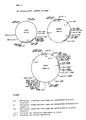
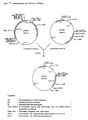
- Vectors that have these preferred features are pECM1 and pECM3, the restriction maps of which are shown in Figures 1 and 2, respectively.
- the host range of these vectors includes the amino acid-secreting strains of the genera Cornyebacterium and Brevibacterium, in particular Corynebacterium acetoacidophilum Corynebacterium glutamicum Corynebacterium glutamicum ATCC 13032 Corynebacterium glutamicum ATCC 13058 Corynebacterium hyfrocarboclastum Cornyebacterium ilicis Corynebacterium lilium Corynebacterium sp. DSM 20140 Brevibacterium flavum Brevibacterium lactofermentum Brevibacterium lyticum Brevibacterium roseum Micrococcus sodonense
- the method according to the invention for conjugative transfer also enables the rapid determination of the host range of replicons, in particular of known plasmids, such as, for. B. pHM1519.
- the mobilizable shuttle vector pECM1 (Fig.1) was constructed by fusion of the mobilizable E.coli vector pSUP102 (Fig.1; Simon et al. (1)) with the Corynebacterium glutamicum plasmid pCV35 (Fig.1;)
- 0.5 ⁇ g pSUP102 DNA and 1 ⁇ g pCV35 DNA are incubated in the React 3 cleavage buffer (manufacturer: BRL-Gibco, Düsseldorf), in the presence of 1 ⁇ BamHI restriction enzyme (BRL-Gibco, Düsseldorf), for 1 h at 37 ° C.
- Completely cleaved pSUP102 DNA is mixed with the linearized pCV35 DNA in the cleavage buffer and the mixture is incubated for 5 min at 70 ° C.
- the conditions for the ligation are set using the ligation buffer (BRL-Gibco) and ATP. In the presence of 1u T4 DNA ligase, ligation is carried out at 14 ° C. for 16 h.
- the ligation mixture is introduced by transformation (according to Maniatis et al. (5)) into cells of the E.coli strain S17-1, which are capable of absorbing plasmid DNA as a result of CaCl2 treatment.
- Cells that receive pECM1 become resistant to the antibiotics kanamycin and chloramphenicol (50 ⁇ g / ml), but are sensitive to tetracycline (5 ⁇ g / ml).
- pECM1 replicates in E.coli and in C.glutamicum and can be mobilized using the transfer functions of the RP4 derivative integrated in the chromosome of the E.coli S17-1 mobilizer strain.
- pECM1 is deposited in E.coli S17-1 at the German Collection for Microorganisms under the number DSM 4982.
- the plasmid pCV34 deposited as DSM 5025, was according to Thierbach et al. (1988) (6) isolated and cleaved with the enzyme BglII.
- the mutagenesis mixture consists of approximately 2 ⁇ g plasmid DNA in 60 ⁇ l TE buffer, 180 ⁇ l 1.5M hydroxylamine-HCl in 25 mM EDTA, 5 ⁇ l 0.25 M EDTA and 13 ⁇ l 1M Tris-HCl, pH 8.0. The mixture was mixed and incubated at 60 ° C for 20 minutes. After phenol treatment and ethanol precipitation of the plasmid DNA (Maniatis et al.
- the DNA pellet was taken up in 20 ⁇ l of TE and treated with T4 DNA ligase. After transforming C.glutamicum ATCC 13032 with the plasmid DNA, it was possible to isolate transformants which had lost one of the two BglII sites.
- pCV35 is new and has the same level of kanamycin resistance as pcV33 (see parallel application DE - 38 41454)
- pECM3 arises from pECM1 by deleting a 0.3 kb SalI fragment and a BamHI / BglII fragment which carries the information for the kanamycin resistance.
- This vector is constructed using generally known methods from the stored vector pECM1.
- 10ml Luria Broth Medium with 50 ⁇ g / ml Kanamycin are inoculated with pECM1-bearing cells from the mobilizer strain E.coli S17-1 in a test tube and incubated overnight at 37 ° C in a roller (donor preculture).
- 10 ml Luria Broth glucose medium (with 50 ⁇ g / ml nalidixic acid) in a test tube is inoculated with C. glutamicum ATCC 13032 and incubated at 30 ° C in a roller until an optical density of 3-4, at a Wavelength of 580nm is reached (approx.20h).
- 10 ml Luria Broth Medium (with 50 ⁇ g / ml Kanamycin) are inoculated with 100 ⁇ l of the donor preculture in a test tube and incubated at 37 ° C in a roller until an optical density (at 580 nm) of 0.6-0. 7 is reached.
- the recipient cultures are exposed in a test tube for 13 minutes in a water bath at a temperature of 49 ° C (heat shock).
- the heat-treated recipient cultures are transferred to sterile PE tubes and centrifuged for 8 minutes at 3000 rpm. The supernatant is discarded and the pellet is resuspended in the reflux.
- Donor and recipient cells in a ratio of 1: 5 are used for the crossing. An appropriate amount of donor culture is transferred to sterile PE tubes and centrifuged for 8 minutes at 3000 rpm. The supernatant is completely discarded.
- the resuspended recipient cells are then pipetted into the donor pellet.
- the suspension is centrifuged again for 8 minutes at 3000 rpm and the supernatant is reduced to a maximum of 500 ⁇ l.
- the cells are very carefully resuspended and dripped onto cellulose acetate filters (0.45 ⁇ m pore size), which were placed on Luria Broth glucose solid medium.
- the plates are incubated for 18 hours at 30 ° C. and the filters are then washed off with 0.8 ml of Luria Broth Medium.
- the transconjugants are selected at 30 ° C. on Luria Broth glucose solid medium which contains kanamycin (25 ⁇ g / ml) and nalidixic acid (50 ⁇ g / ml).
- the spheroplast batch (approx. 330 ⁇ l) is suspended in 10ml TSMC * buffer before the heat treatment is carried out and incubated for at least 3 hours at 30 ° C. After centrifugation, recipient cells and hybrid mixture are not resuspended in Luria Broth Medium, but in TSMC * buffer.
- the transconjugants are selected on osmotically stabilized sorbitol (SB) regeneration plates which contain kanamycin (17.5 ⁇ g / ml and nalidixic acid (50 ⁇ g / ml).
- the mobilizable shuttle vector pECM1 (example 1) is mobilized from E. coli S17-1 to C. glutamicum, following the crossing procedure already described.
- the frequencies determined are mean values of three crossings carried out independently of one another and each relate to the donor titer.
- pHM1519 is a 3 kb, cryptic plasmid which was isolated from C.glutamicum ATCC 13058 (Miwa et al. (7)).
- pHM1519 is the basic replicon of the C.glutamicum vector pCV35, which was used for the construction of the mobilizable E.coli C.glutamicum shuttle vector pECM1 (Example 1).
- pECM1 from E.coli S17-1 is mobilized in representatives from the group of coryneform bacteria.
- the crossings are carried out according to the regulation already described.
- the transconjugants are selected on LBKm25Nx50 medium, the natural resistance to the antibiotic nalidixic acid, which is widespread within the coryneform bacteria, being used for selection against the donor.
- pECM1 The transfer of pECM1 is verified on the basis of the vector-mediated resistance to the antibiotics kanamycin and chloramphenicol, as well as by lysis of the transconjugants (modified according to Birnboim et al. (8), and subsequent analysis of the plasmid content by agarose gel electrophoresis.
- the result of this experiment shows that the host range of pHM1519 includes a number of representatives from the group of coryneform bacteria, some of which are of considerable commercial interest: Corynebacterium acetoacidophilum Corynebacterium glutamicum ATCC 13032 Corynebacterium glutamicum ATCC 13058 Corynebacterium hydrocarboclastum Corynebacterium ilicis Corynebacterium lilium Corynebacterium sp.
- DSM 20140 Brevibacterium divaricatum Brevibacterium flavum Brevibacterium lactofermentum Brevibacterium lyticum Brevibacterium roseum Brevibacterium stationis Micrococcus sodonense Corynebacterium callunae DSM 20147 Corynebacterium pilosum DSM 20521 Corynebacterium fascians DSM 20131 Corynebacterium herculis DSM 20301 Corynebacterium melassecola ATCC 17965 Corynebacterium melassecola ATCC 17966 Arthrobacter albidus DSM 20128 Brevibacterium ammoniagenes 20305
- the lysA gene codes for the enzyme meso-diaminopimelate decarboxylase, which catalyzes the last step in lysine biosynthesis.
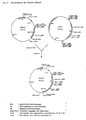
- the vector pEMlys2 (Fig. 4-6) was constructed using the known methods of recombinant DNA technology.
- An internal fragment of the lysA gene (1.1 kb) was cut out of the plasmid pTG1225 using the restriction enzymes Sal I and Sac I and ligated with the likewise cleaved vector pK18 (Pridmore (12)).
- An internal fragment of the lysA coding region was isolated from the resulting plasmid pK18lys (3.7 kb) by cleavage with the restriction enzymes Bcl I and Hin dIII and fused with the vector pSUP102 restricted by Bam HI and Hin dIII.
- pEMlys1 The kanamycin resistance gene of the transposon Tn 903 was cloned into the resulting vector pEMlys1 (6.7 kb).
- pEMlys1 was linearized by digestion with Pst I and ligated to a 1.4 kb Pst I fragment of the vector pUC4K.
- the resulting vector pEMlys2 (8.1 kb) was transformed into the E. coli S 17-1 mobilizer strain.
- the conjugation of this plasmid from E. coli to C.glutamicum ATCC 13032 was carried out according to the protocol detailed in Example 2. Kanamycin-resistant colonies occurred at a frequency of 2 x 10 ⁇ 7 based on the donor titer.
- the kanamycin-resistant transconjugants were stamped on minimal agar (Kaneko & Sakaguchi (13)) and on minimal agar supplemented with L-lysine.
- the transconjugants examined in this way showed a lysine auxotrophic phenotype corresponding to the insertion inactivation of the chromosomal lysA gene by integration of pEMlys2.
- Birnboim et al. carried out lysis of the transconjugants with subsequent analysis of the plasmid content by agarose gel electrophoresis, no free plasmids could be detected in the cells.
- Evidence of the specific integration was shown by digoxygenin hybridization (14) of the labeled E. coli vector pSUP102 against total DNA isolated from C. glutamicum wild- type cells and the transconjugants, only DNA from transconjugants hybridizing with the DNA of the E. coli vector.
Landscapes
- Genetics & Genomics (AREA)
- Health & Medical Sciences (AREA)
- Engineering & Computer Science (AREA)
- Life Sciences & Earth Sciences (AREA)
- Chemical & Material Sciences (AREA)
- Wood Science & Technology (AREA)
- Organic Chemistry (AREA)
- Biotechnology (AREA)
- General Engineering & Computer Science (AREA)
- Biomedical Technology (AREA)
- Zoology (AREA)
- Bioinformatics & Cheminformatics (AREA)
- Molecular Biology (AREA)
- Microbiology (AREA)
- Plant Pathology (AREA)
- Physics & Mathematics (AREA)
- Biochemistry (AREA)
- General Health & Medical Sciences (AREA)
- Biophysics (AREA)
- Micro-Organisms Or Cultivation Processes Thereof (AREA)
- Preparation Of Compounds By Using Micro-Organisms (AREA)
- Medicines Containing Material From Animals Or Micro-Organisms (AREA)
Applications Claiming Priority (2)
| Application Number | Priority Date | Filing Date | Title |
|---|---|---|---|
| DE3841453A DE3841453A1 (de) | 1988-12-09 | 1988-12-09 | Verfahren zum konjugativen transfer von mobilisierbaren vektoren aus e.coli in gram-positive bakterien und dafuer geeignete vektoren |
| DE3841453 | 1988-12-09 |
Publications (3)
| Publication Number | Publication Date |
|---|---|
| EP0372230A2 true EP0372230A2 (fr) | 1990-06-13 |
| EP0372230A3 EP0372230A3 (fr) | 1991-09-04 |
| EP0372230B1 EP0372230B1 (fr) | 1993-05-26 |
Family
ID=6368766
Family Applications (1)
| Application Number | Title | Priority Date | Filing Date |
|---|---|---|---|
| EP89120473A Expired - Lifetime EP0372230B1 (fr) | 1988-12-09 | 1989-11-06 | Méthode de transfert par conjugaison des vecteurs transposables de E.coli dans des bactéries gram positives et vecteurs appropriés |
Country Status (7)
| Country | Link |
|---|---|
| US (1) | US5346818A (fr) |
| EP (1) | EP0372230B1 (fr) |
| JP (1) | JPH0829094B2 (fr) |
| AU (1) | AU626953B2 (fr) |
| DE (2) | DE3841453A1 (fr) |
| ES (1) | ES2057061T3 (fr) |
| NO (1) | NO894345L (fr) |
Cited By (3)
| Publication number | Priority date | Publication date | Assignee | Title |
|---|---|---|---|---|
| EP0501921A3 (en) * | 1991-03-01 | 1992-11-19 | Ciba-Geigy Ag | Process of genetic manipulation of myxobacteria |
| EP0563527A1 (fr) * | 1992-03-19 | 1993-10-06 | Degussa Aktiengesellschaft | Procédé de mise en évidence d'éléments d'insertion ou de transposons |
| FR3099769A1 (fr) | 2019-08-05 | 2021-02-12 | Bgene Genetics | Mutagénèse bactérienne par conjugaison en milieu liquide |
Families Citing this family (10)
| Publication number | Priority date | Publication date | Assignee | Title |
|---|---|---|---|---|
| WO1993004169A1 (fr) * | 1991-08-20 | 1993-03-04 | Genpharm International, Inc. | Ciblage de genes dans des cellules animales au moyen de produits de synthese d'adn isogeniques |
| WO1996029418A1 (fr) * | 1995-03-22 | 1996-09-26 | Novo Nordisk A/S | Introduction d'adn dans des souches de bacillus par conjugaison |
| ATE220716T1 (de) * | 1996-01-19 | 2002-08-15 | Novozymes Biotech Inc | Bakterielle donorzelle, nützlich für die konjugation |
| US5763187A (en) * | 1997-01-17 | 1998-06-09 | Novo Nordisk Biotech, Inc. | Bacterial donor cell useful in conjugation |
| US7198924B2 (en) | 2000-12-11 | 2007-04-03 | Invitrogen Corporation | Methods and compositions for synthesis of nucleic acid molecules using multiple recognition sites |
| DE10137815A1 (de) * | 2001-08-06 | 2003-02-27 | Basf Ag | Verfahren zur Herstellung eines marker-freien mutierten Zielorganismus sowie dafür geeignete Plasmidvektoren |
| US6524147B1 (en) * | 2001-09-28 | 2003-02-25 | Mark X Steering Systems, Llc | Power assist marine steering system |
| WO2005010144A2 (fr) * | 2003-04-21 | 2005-02-03 | Wisconsin Alumni Research Foundation | Deplacement d'un plasmide dans une population bacterienne |
| WO2005054438A2 (fr) | 2003-12-01 | 2005-06-16 | Invitrogen Corporation | Molecule d'acide nucleique contenant des sites de recombinaison et leurs procedes d'utilisation |
| WO2022250068A1 (fr) * | 2021-05-25 | 2022-12-01 | Spiber株式会社 | Procédé de production de plasmide et plasmide |
Family Cites Families (1)
| Publication number | Priority date | Publication date | Assignee | Title |
|---|---|---|---|---|
| IL67510A (en) * | 1981-12-17 | 1988-08-31 | Kyowa Hakko Kogyo Kk | Recombinant vector plasmids autonomously replicable in microorganisms belonging to the genus corynebacterium or brevibacterium and process for the production thereof |
-
1988
- 1988-12-09 DE DE3841453A patent/DE3841453A1/de not_active Withdrawn
-
1989
- 1989-11-01 NO NO89894345A patent/NO894345L/no unknown
- 1989-11-06 ES ES89120473T patent/ES2057061T3/es not_active Expired - Lifetime
- 1989-11-06 EP EP89120473A patent/EP0372230B1/fr not_active Expired - Lifetime
- 1989-11-06 DE DE8989120473T patent/DE58904497D1/de not_active Expired - Lifetime
- 1989-12-08 US US07/447,139 patent/US5346818A/en not_active Expired - Lifetime
- 1989-12-08 AU AU46086/89A patent/AU626953B2/en not_active Ceased
- 1989-12-11 JP JP1319064A patent/JPH0829094B2/ja not_active Expired - Lifetime
Cited By (5)
| Publication number | Priority date | Publication date | Assignee | Title |
|---|---|---|---|---|
| EP0501921A3 (en) * | 1991-03-01 | 1992-11-19 | Ciba-Geigy Ag | Process of genetic manipulation of myxobacteria |
| US5686295A (en) * | 1991-03-01 | 1997-11-11 | Novartis Finance Corporation | Process for the genetic manipulation of myxobacteria |
| EP0563527A1 (fr) * | 1992-03-19 | 1993-10-06 | Degussa Aktiengesellschaft | Procédé de mise en évidence d'éléments d'insertion ou de transposons |
| US5380657A (en) * | 1992-03-19 | 1995-01-10 | Degussa Aktiengesellschaft | Method for isolation of insertion elements from coryneform bacteria |
| FR3099769A1 (fr) | 2019-08-05 | 2021-02-12 | Bgene Genetics | Mutagénèse bactérienne par conjugaison en milieu liquide |
Also Published As
| Publication number | Publication date |
|---|---|
| NO894345L (no) | 1990-06-11 |
| DE58904497D1 (de) | 1993-07-01 |
| JPH0829094B2 (ja) | 1996-03-27 |
| ES2057061T3 (es) | 1994-10-16 |
| AU4608689A (en) | 1990-06-14 |
| JPH02273188A (ja) | 1990-11-07 |
| EP0372230A3 (fr) | 1991-09-04 |
| NO894345D0 (no) | 1989-11-01 |
| AU626953B2 (en) | 1992-08-13 |
| US5346818A (en) | 1994-09-13 |
| DE3841453A1 (de) | 1990-06-13 |
| EP0372230B1 (fr) | 1993-05-26 |
Similar Documents
| Publication | Publication Date | Title |
|---|---|---|
| Schäfer et al. | High-frequency conjugal plasmid transfer from gram-negative Escherichia coli to various gram-positive coryneform bacteria | |
| Oultram et al. | Introduction of plasmids into whole cells of Clostridium acetobutylicum by electroporation | |
| EP0563527B1 (fr) | Procédé de mise en évidence d'éléments d'insertion ou de transposons | |
| Schwarzer et al. | Manipuiation of Corynebacterium glutamicum by Gene Disruption and Replacement | |
| DE69013520T3 (de) | Stabile integration von dna in bakterielle genome. | |
| DE60037949T4 (de) | Thermosensitives Plasmid für coryneforme Bakterien | |
| DE3587519T2 (de) | Verfahren zur Herstellung von L-Aminosäuren. | |
| Flannagan et al. | Conjugative transfer of Tn916 in Enterococcus faecalis: trans activation of homologous transposons | |
| EP0372230B1 (fr) | Méthode de transfert par conjugaison des vecteurs transposables de E.coli dans des bactéries gram positives et vecteurs appropriés | |
| DE3012921C2 (fr) | ||
| DE69415085T2 (de) | Promotor DNA Fragment von coryneformen Bakterien | |
| EP0093611B1 (fr) | Plasmide composé | |
| Strätz et al. | Plasmid transfer into the homoacetogen Acetobacterium woodii by electroporation and conjugation | |
| DE4018441A1 (de) | Rekombinantes restriktionsenzym sau3ai | |
| AU646886B2 (en) | Corynebacteria integron, method of transformation of corynebacteria by said integron, and corynebacteria obtained | |
| DE3485823T4 (de) | Verfahren zur Herstellung von L-Tryptophan durch Gärung. | |
| DE69330920T2 (de) | Integrative Genexpression in Mikroorganismen mit Nahrungsmittelqualität | |
| US5643790A (en) | Plasmid vector and a method for regulation of gene expression using the same | |
| EP0158940B1 (fr) | Plasmide composé transductible | |
| EP0375889B1 (fr) | Méthode pour la mutagénèse spécifique pour un site de l'ADN et développement de vecteurs plasmidiques | |
| EP0543344B1 (fr) | Microorganismes pour la stabilisation de plasmides | |
| DE4006637A1 (de) | Transposon, dieses transposon enthaltende testvektoren und verfahren zur mutagenese | |
| EP0215388B1 (fr) | Vecteur de plasmide et une méthode de régulation d'expression de gène par utilisation de ce vecteur | |
| DE69331255T2 (de) | Transponierbares-element aus dem bakterium vom genus brevibakterium | |
| Pischl et al. | Transposon-facilitated chromosome mobilization in Agrobacterium tumefaciens |
Legal Events
| Date | Code | Title | Description |
|---|---|---|---|
| PUAI | Public reference made under article 153(3) epc to a published international application that has entered the european phase |
Free format text: ORIGINAL CODE: 0009012 |
|
| 17P | Request for examination filed |
Effective date: 19891106 |
|
| AK | Designated contracting states |
Kind code of ref document: A2 Designated state(s): BE DE ES FR GB IT NL |
|
| PUAL | Search report despatched |
Free format text: ORIGINAL CODE: 0009013 |
|
| AK | Designated contracting states |
Kind code of ref document: A3 Designated state(s): BE DE ES FR GB IT NL |
|
| 17Q | First examination report despatched |
Effective date: 19920904 |
|
| GRAA | (expected) grant |
Free format text: ORIGINAL CODE: 0009210 |
|
| AK | Designated contracting states |
Kind code of ref document: B1 Designated state(s): BE DE ES FR GB IT NL |
|
| ITF | It: translation for a ep patent filed | ||
| ET | Fr: translation filed | ||
| REF | Corresponds to: |
Ref document number: 58904497 Country of ref document: DE Date of ref document: 19930701 |
|
| GBT | Gb: translation of ep patent filed (gb section 77(6)(a)/1977) |
Effective date: 19930817 |
|
| PLBE | No opposition filed within time limit |
Free format text: ORIGINAL CODE: 0009261 |
|
| STAA | Information on the status of an ep patent application or granted ep patent |
Free format text: STATUS: NO OPPOSITION FILED WITHIN TIME LIMIT |
|
| 26N | No opposition filed | ||
| REG | Reference to a national code |
Ref country code: ES Ref legal event code: FG2A Ref document number: 2057061 Country of ref document: ES Kind code of ref document: T3 |
|
| PGFP | Annual fee paid to national office [announced via postgrant information from national office to epo] |
Ref country code: GB Payment date: 19961014 Year of fee payment: 8 |
|
| PGFP | Annual fee paid to national office [announced via postgrant information from national office to epo] |
Ref country code: BE Payment date: 19961015 Year of fee payment: 8 |
|
| PG25 | Lapsed in a contracting state [announced via postgrant information from national office to epo] |
Ref country code: GB Free format text: LAPSE BECAUSE OF NON-PAYMENT OF DUE FEES Effective date: 19971106 |
|
| PGFP | Annual fee paid to national office [announced via postgrant information from national office to epo] |
Ref country code: ES Payment date: 19971117 Year of fee payment: 9 |
|
| PG25 | Lapsed in a contracting state [announced via postgrant information from national office to epo] |
Ref country code: BE Free format text: LAPSE BECAUSE OF NON-PAYMENT OF DUE FEES Effective date: 19971130 |
|
| BERE | Be: lapsed |
Owner name: DEGUSSA A.G. Effective date: 19971130 |
|
| GBPC | Gb: european patent ceased through non-payment of renewal fee |
Effective date: 19971106 |
|
| PG25 | Lapsed in a contracting state [announced via postgrant information from national office to epo] |
Ref country code: ES Free format text: LAPSE BECAUSE OF NON-PAYMENT OF DUE FEES Effective date: 19981107 |
|
| NLS | Nl: assignments of ep-patents |
Owner name: DEGUSSA-HUELS AKTIENGESELLSCHAFT Owner name: DEGUSSA AG |
|
| REG | Reference to a national code |
Ref country code: FR Ref legal event code: TP |
|
| REG | Reference to a national code |
Ref country code: ES Ref legal event code: FD2A Effective date: 19991214 |
|
| PG25 | Lapsed in a contracting state [announced via postgrant information from national office to epo] |
Ref country code: IT Free format text: LAPSE BECAUSE OF NON-PAYMENT OF DUE FEES;WARNING: LAPSES OF ITALIAN PATENTS WITH EFFECTIVE DATE BEFORE 2007 MAY HAVE OCCURRED AT ANY TIME BEFORE 2007. THE CORRECT EFFECTIVE DATE MAY BE DIFFERENT FROM THE ONE RECORDED. Effective date: 20051106 |
|
| PGFP | Annual fee paid to national office [announced via postgrant information from national office to epo] |
Ref country code: NL Payment date: 20081113 Year of fee payment: 20 Ref country code: DE Payment date: 20081121 Year of fee payment: 20 |
|
| PGFP | Annual fee paid to national office [announced via postgrant information from national office to epo] |
Ref country code: FR Payment date: 20081113 Year of fee payment: 20 |
|
| NLV7 | Nl: ceased due to reaching the maximum lifetime of a patent |
Effective date: 20091106 |
|
| PG25 | Lapsed in a contracting state [announced via postgrant information from national office to epo] |
Ref country code: NL Free format text: LAPSE BECAUSE OF EXPIRATION OF PROTECTION Effective date: 20091106 |