EP0372877B2 - Appareil de communication des données - Google Patents
Appareil de communication des données Download PDFInfo
- Publication number
- EP0372877B2 EP0372877B2 EP89312601A EP89312601A EP0372877B2 EP 0372877 B2 EP0372877 B2 EP 0372877B2 EP 89312601 A EP89312601 A EP 89312601A EP 89312601 A EP89312601 A EP 89312601A EP 0372877 B2 EP0372877 B2 EP 0372877B2
- Authority
- EP
- European Patent Office
- Prior art keywords
- reception
- memory
- data
- personal radio
- informing
- Prior art date
- Legal status (The legal status is an assumption and is not a legal conclusion. Google has not performed a legal analysis and makes no representation as to the accuracy of the status listed.)
- Expired - Lifetime
Links
- 230000005540 biological transmission Effects 0.000 claims description 26
- 230000004044 response Effects 0.000 claims description 6
- 101100328887 Caenorhabditis elegans col-34 gene Proteins 0.000 description 7
- 238000001514 detection method Methods 0.000 description 3
- 238000010586 diagram Methods 0.000 description 2
- 239000000284 extract Substances 0.000 description 2
- 230000006870 function Effects 0.000 description 2
- 230000002265 prevention Effects 0.000 description 2
- 230000015572 biosynthetic process Effects 0.000 description 1
- 238000013500 data storage Methods 0.000 description 1
- 230000009977 dual effect Effects 0.000 description 1
- 239000004973 liquid crystal related substance Substances 0.000 description 1
- 238000003786 synthesis reaction Methods 0.000 description 1
Images


Classifications
-
- H—ELECTRICITY
- H04—ELECTRIC COMMUNICATION TECHNIQUE
- H04N—PICTORIAL COMMUNICATION, e.g. TELEVISION
- H04N1/00—Scanning, transmission or reproduction of documents or the like, e.g. facsimile transmission; Details thereof
- H04N1/32—Circuits or arrangements for control or supervision between transmitter and receiver or between image input and image output device, e.g. between a still-image camera and its memory or between a still-image camera and a printer device
- H04N1/32358—Circuits or arrangements for control or supervision between transmitter and receiver or between image input and image output device, e.g. between a still-image camera and its memory or between a still-image camera and a printer device using picture signal storage, e.g. at transmitter
- H04N1/32363—Circuits or arrangements for control or supervision between transmitter and receiver or between image input and image output device, e.g. between a still-image camera and its memory or between a still-image camera and a printer device using picture signal storage, e.g. at transmitter at the transmitter or at the receiver
- H04N1/32379—Functions of a still picture terminal memory associated with reception
-
- H—ELECTRICITY
- H04—ELECTRIC COMMUNICATION TECHNIQUE
- H04M—TELEPHONIC COMMUNICATION
- H04M1/00—Substation equipment, e.g. for use by subscribers
- H04M1/26—Devices for calling a subscriber
- H04M1/27—Devices whereby a plurality of signals may be stored simultaneously
-
- H—ELECTRICITY
- H04—ELECTRIC COMMUNICATION TECHNIQUE
- H04M—TELEPHONIC COMMUNICATION
- H04M1/00—Substation equipment, e.g. for use by subscribers
- H04M1/64—Automatic arrangements for answering calls; Automatic arrangements for recording messages for absent subscribers; Arrangements for recording conversations
- H04M1/642—Automatic arrangements for answering calls; Automatic arrangements for recording messages for absent subscribers; Arrangements for recording conversations storing speech in digital form
-
- H—ELECTRICITY
- H04—ELECTRIC COMMUNICATION TECHNIQUE
- H04M—TELEPHONIC COMMUNICATION
- H04M1/00—Substation equipment, e.g. for use by subscribers
- H04M1/64—Automatic arrangements for answering calls; Automatic arrangements for recording messages for absent subscribers; Arrangements for recording conversations
- H04M1/65—Recording arrangements for recording a message from the calling party
- H04M1/652—Means for playing back the recorded messages by remote control over a telephone line
-
- H—ELECTRICITY
- H04—ELECTRIC COMMUNICATION TECHNIQUE
- H04M—TELEPHONIC COMMUNICATION
- H04M1/00—Substation equipment, e.g. for use by subscribers
- H04M1/64—Automatic arrangements for answering calls; Automatic arrangements for recording messages for absent subscribers; Arrangements for recording conversations
- H04M1/65—Recording arrangements for recording a message from the calling party
- H04M1/658—Means for redirecting recorded messages to other extensions or equipment
-
- H—ELECTRICITY
- H04—ELECTRIC COMMUNICATION TECHNIQUE
- H04N—PICTORIAL COMMUNICATION, e.g. TELEVISION
- H04N1/00—Scanning, transmission or reproduction of documents or the like, e.g. facsimile transmission; Details thereof
- H04N1/32—Circuits or arrangements for control or supervision between transmitter and receiver or between image input and image output device, e.g. between a still-image camera and its memory or between a still-image camera and a printer device
- H04N1/32101—Display, printing, storage or transmission of additional information, e.g. ID code, date and time or title
-
- H—ELECTRICITY
- H04—ELECTRIC COMMUNICATION TECHNIQUE
- H04N—PICTORIAL COMMUNICATION, e.g. TELEVISION
- H04N1/00—Scanning, transmission or reproduction of documents or the like, e.g. facsimile transmission; Details thereof
- H04N1/32—Circuits or arrangements for control or supervision between transmitter and receiver or between image input and image output device, e.g. between a still-image camera and its memory or between a still-image camera and a printer device
- H04N1/32101—Display, printing, storage or transmission of additional information, e.g. ID code, date and time or title
- H04N1/32106—Display, printing, storage or transmission of additional information, e.g. ID code, date and time or title separate from the image data, e.g. in a different computer file
- H04N1/32122—Display, printing, storage or transmission of additional information, e.g. ID code, date and time or title separate from the image data, e.g. in a different computer file in a separate device, e.g. in a memory or on a display separate from image data
-
- H—ELECTRICITY
- H04—ELECTRIC COMMUNICATION TECHNIQUE
- H04N—PICTORIAL COMMUNICATION, e.g. TELEVISION
- H04N1/00—Scanning, transmission or reproduction of documents or the like, e.g. facsimile transmission; Details thereof
- H04N1/32—Circuits or arrangements for control or supervision between transmitter and receiver or between image input and image output device, e.g. between a still-image camera and its memory or between a still-image camera and a printer device
- H04N1/32358—Circuits or arrangements for control or supervision between transmitter and receiver or between image input and image output device, e.g. between a still-image camera and its memory or between a still-image camera and a printer device using picture signal storage, e.g. at transmitter
- H04N1/32363—Circuits or arrangements for control or supervision between transmitter and receiver or between image input and image output device, e.g. between a still-image camera and its memory or between a still-image camera and a printer device using picture signal storage, e.g. at transmitter at the transmitter or at the receiver
-
- H—ELECTRICITY
- H04—ELECTRIC COMMUNICATION TECHNIQUE
- H04N—PICTORIAL COMMUNICATION, e.g. TELEVISION
- H04N1/00—Scanning, transmission or reproduction of documents or the like, e.g. facsimile transmission; Details thereof
- H04N1/32—Circuits or arrangements for control or supervision between transmitter and receiver or between image input and image output device, e.g. between a still-image camera and its memory or between a still-image camera and a printer device
- H04N1/32358—Circuits or arrangements for control or supervision between transmitter and receiver or between image input and image output device, e.g. between a still-image camera and its memory or between a still-image camera and a printer device using picture signal storage, e.g. at transmitter
- H04N1/32363—Circuits or arrangements for control or supervision between transmitter and receiver or between image input and image output device, e.g. between a still-image camera and its memory or between a still-image camera and a printer device using picture signal storage, e.g. at transmitter at the transmitter or at the receiver
- H04N1/32379—Functions of a still picture terminal memory associated with reception
- H04N1/3239—Forwarding image data, e.g. to an absent recipient
-
- H—ELECTRICITY
- H04—ELECTRIC COMMUNICATION TECHNIQUE
- H04N—PICTORIAL COMMUNICATION, e.g. TELEVISION
- H04N1/00—Scanning, transmission or reproduction of documents or the like, e.g. facsimile transmission; Details thereof
- H04N1/32—Circuits or arrangements for control or supervision between transmitter and receiver or between image input and image output device, e.g. between a still-image camera and its memory or between a still-image camera and a printer device
- H04N1/32358—Circuits or arrangements for control or supervision between transmitter and receiver or between image input and image output device, e.g. between a still-image camera and its memory or between a still-image camera and a printer device using picture signal storage, e.g. at transmitter
- H04N1/32363—Circuits or arrangements for control or supervision between transmitter and receiver or between image input and image output device, e.g. between a still-image camera and its memory or between a still-image camera and a printer device using picture signal storage, e.g. at transmitter at the transmitter or at the receiver
- H04N1/32379—Functions of a still picture terminal memory associated with reception
- H04N1/32395—Informing an absent addressee of receipt
-
- H—ELECTRICITY
- H04—ELECTRIC COMMUNICATION TECHNIQUE
- H04N—PICTORIAL COMMUNICATION, e.g. TELEVISION
- H04N1/00—Scanning, transmission or reproduction of documents or the like, e.g. facsimile transmission; Details thereof
- H04N1/32—Circuits or arrangements for control or supervision between transmitter and receiver or between image input and image output device, e.g. between a still-image camera and its memory or between a still-image camera and a printer device
- H04N1/327—Initiating, continuing or ending a single-mode communication; Handshaking therefor
- H04N1/32704—Establishing a communication with one of a facsimile and another telecommunication apparatus sharing a single line
- H04N1/32706—Type of the other apparatus
- H04N1/32708—Telephone
-
- H—ELECTRICITY
- H04—ELECTRIC COMMUNICATION TECHNIQUE
- H04N—PICTORIAL COMMUNICATION, e.g. TELEVISION
- H04N1/00—Scanning, transmission or reproduction of documents or the like, e.g. facsimile transmission; Details thereof
- H04N1/32—Circuits or arrangements for control or supervision between transmitter and receiver or between image input and image output device, e.g. between a still-image camera and its memory or between a still-image camera and a printer device
- H04N1/327—Initiating, continuing or ending a single-mode communication; Handshaking therefor
- H04N1/32704—Establishing a communication with one of a facsimile and another telecommunication apparatus sharing a single line
- H04N1/32715—Detecting
- H04N1/32719—Detecting a facsimile calling signal, e.g. CNG
-
- H—ELECTRICITY
- H04—ELECTRIC COMMUNICATION TECHNIQUE
- H04N—PICTORIAL COMMUNICATION, e.g. TELEVISION
- H04N1/00—Scanning, transmission or reproduction of documents or the like, e.g. facsimile transmission; Details thereof
- H04N1/32—Circuits or arrangements for control or supervision between transmitter and receiver or between image input and image output device, e.g. between a still-image camera and its memory or between a still-image camera and a printer device
- H04N1/327—Initiating, continuing or ending a single-mode communication; Handshaking therefor
- H04N1/32704—Establishing a communication with one of a facsimile and another telecommunication apparatus sharing a single line
- H04N1/32715—Detecting
- H04N1/32723—Detecting speech signals
-
- H—ELECTRICITY
- H04—ELECTRIC COMMUNICATION TECHNIQUE
- H04N—PICTORIAL COMMUNICATION, e.g. TELEVISION
- H04N1/00—Scanning, transmission or reproduction of documents or the like, e.g. facsimile transmission; Details thereof
- H04N1/32—Circuits or arrangements for control or supervision between transmitter and receiver or between image input and image output device, e.g. between a still-image camera and its memory or between a still-image camera and a printer device
- H04N1/327—Initiating, continuing or ending a single-mode communication; Handshaking therefor
- H04N1/32704—Establishing a communication with one of a facsimile and another telecommunication apparatus sharing a single line
- H04N1/32715—Detecting
- H04N1/32726—Detecting signals other than facsimile protocol signals, e.g. DTMF signals
-
- H—ELECTRICITY
- H04—ELECTRIC COMMUNICATION TECHNIQUE
- H04M—TELEPHONIC COMMUNICATION
- H04M11/00—Telephonic communication systems specially adapted for combination with other electrical systems
- H04M11/02—Telephonic communication systems specially adapted for combination with other electrical systems with bell or annunciator systems
- H04M11/022—Paging systems
-
- H—ELECTRICITY
- H04—ELECTRIC COMMUNICATION TECHNIQUE
- H04N—PICTORIAL COMMUNICATION, e.g. TELEVISION
- H04N2201/00—Indexing scheme relating to scanning, transmission or reproduction of documents or the like, and to details thereof
- H04N2201/32—Circuits or arrangements for control or supervision between transmitter and receiver or between image input and image output device, e.g. between a still-image camera and its memory or between a still-image camera and a printer device
- H04N2201/3201—Display, printing, storage or transmission of additional information, e.g. ID code, date and time or title
- H04N2201/3261—Display, printing, storage or transmission of additional information, e.g. ID code, date and time or title of multimedia information, e.g. a sound signal
-
- H—ELECTRICITY
- H04—ELECTRIC COMMUNICATION TECHNIQUE
- H04N—PICTORIAL COMMUNICATION, e.g. TELEVISION
- H04N2201/00—Indexing scheme relating to scanning, transmission or reproduction of documents or the like, and to details thereof
- H04N2201/32—Circuits or arrangements for control or supervision between transmitter and receiver or between image input and image output device, e.g. between a still-image camera and its memory or between a still-image camera and a printer device
- H04N2201/3201—Display, printing, storage or transmission of additional information, e.g. ID code, date and time or title
- H04N2201/3278—Transmission
-
- H—ELECTRICITY
- H04—ELECTRIC COMMUNICATION TECHNIQUE
- H04N—PICTORIAL COMMUNICATION, e.g. TELEVISION
- H04N2201/00—Indexing scheme relating to scanning, transmission or reproduction of documents or the like, and to details thereof
- H04N2201/32—Circuits or arrangements for control or supervision between transmitter and receiver or between image input and image output device, e.g. between a still-image camera and its memory or between a still-image camera and a printer device
- H04N2201/3285—Circuits or arrangements for control or supervision between transmitter and receiver or between image input and image output device, e.g. between a still-image camera and its memory or between a still-image camera and a printer device using picture signal storage, e.g. at transmitter
- H04N2201/3298—Checking or indicating the storage space
Definitions
- the present invention relates to a terminal for performing voice and data communication and having a data memory for storing received data.
- US Patent Specification No US-A-4907274 and US-A-4640991 both disclose server systems for distributed networks. In such systems data storage and output are at different locations and a number of different forms of data can be received by the system and these can be sent to appropriate output devices.
- International Patent Specification No WO-A-8707801 discloses a unified messaging system which is also implemented in association with a central telephone or data server as with the previously discussed documents this system is capable of storing received data including voice messages. Additionally the system can, after memory reception has been performed inform a predetermined extension that message reception has occurred.
- the present invention has been made in consideration of the above situation and is concerned with an improved terminal.
- the present invention is also concerned with providing a terminal capable of performing remote control from a remote location.
- the following embodiments will be described by taking a facsimile apparatus as an example of a terminal.
- the present invention is not limited to the facsimile apparatus but can be applied to any terminal having a function of memory-receiving data.
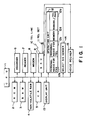
- Fig. 1 is a block diagram showing an arrangement of a facsimile apparatus according to the first embodiment of the present invention.
- a CPU 1 controls the overall facsimile apparatus, i.e., a RAM 3, a non-volatile RAM 4, a character generator (CG) 5, a recorder 6, a reader 7, a modem 8, a network control unit (NCU) 9, an operating unit 12, a display unit 13, a select signal sender 14, and a voice recording/reproducing unit 15, in accordance with programs stored in a ROM 2.
- the respective units will be described below.
- the RAM 3 stores binary image data read by the reader 7 or binary image data recorded by the recorder 6, and stores binary image data obtained by modulating a signal by the modem 8 and to be output to a telephone line 10 via the NCU 9.
- the RAM 3 also stores binary data obtained by demodulating an analog waveform input from the telephone line 10 via the NCU 9 and the modem 8.
- the non-volatile RAM 4 is constituted by, e.g., an EEPROM and can reliably store data to be stored even if a power source of the facsimile apparatus is cut off.
- the non-volatile RAM 4 is also used as registering means for registering destination names and telephone numbers in a one-to-one correspondence via the operating unit 12.
- the CPU 1 has a function as transmitting means for transmitting a destination name corresponding to an input destination telephone number to a destination receiver on the basis of the programs stored in the ROM 2.
- the CG 5 is a ROM for storing characters such as a JIS code and an ASCII code. Under the control of the CPU 1, the CG 5 extracts character data corresponding to a predetermined code by 2-byte data as needed.
- the recorder 6 is constituted by, e.g., a DMA controller, a sub CPU, an A5-size thermal head, and a TTL (transistor-transistor logic) IC. Under the control of the CPU 1, the recorder 6 reads out recorded data stored in the RAM 3 and prints out the data as a hard copy.
- the reader 7 is constituted by, e.g., a DMA controller, a sub CPU, a CCD, a TTL IC, and an A4/A5 sensor.
- the reader 7 digitizes data read by using the CCD and sequentially sends the binary data to the RAM 3.
- the modem 8 is constituted by, e.g., G3, G2, G1, and FM modems, a dock generator, and a voice/DTMF detector. Under the control of the CPU 1, the modem 8 modulates transmission data stored in the RAM 3 and outputs the data to the telephone line 10 via the NCU 9. The modem 8 also receives an analog signal from the telephone line 10 via the NCU 9, demodulates the signal into binary data, and stores the binary data in the RAM 3.
- the NCU 9 switches the telephone line to either the modem 8 or a telephone set 11 under the control of the CPU 1.
- the operating unit 12 is constituted by, e.g., a key for starting transmission/reception and the like, a mode select key for designating an operation mode such as a fine, standard, or auto reception mode upon transmission/reception, and ten keys. Note that the CPU 1 detects depression states of these keys and controls the respective units in accordance with the detected states.
- the manual/TEL-FAX switch 12a is used to perform switching between manual transmission/reception and automatic transmission/reception (TEL-FAX mode). In the TEL-FAX mode, the manual/TEL-FAX switch 12a is used to automatically determine voice communication or facsimile communication upon automatic reception and to select an adequate communication scheme by a toggle operation or the like.
- the two personal radio call switches 12b and 12c for a telephone and a facsimile are used to determine whether a telephone number of a predetermined personal radio receiver (or a predetermined pocket bell receiver) is called in order to inform that data is received by a facsimile.
- the memory reception switch 12d is used to determine whether memory reception is to be performed in facsimile communication, i.e., whether a received image is to be stored in a memory or sequentially output.
- the select signal sender 14 sends select signals such as a pulse dialer and a tone dialer via the NCU 9.
- the voice recording/reproducing unit 15 records/reproduces an analog signal on the telephone line via the NCU 9 under the control of the CPU 1.
- the analog signal on the telephone line is, e.g., a voice message from a destination station, and this analog data can be digital-recorded in the RAM 3.
- a medium such as a magnetic tape may be used.
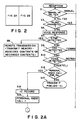
- step S3 If it is determined in step S3 that the TEL-FAX mode is prohibited, i.e., facsimile and telephone communication automatic switching upon data reception is prohibited, the flow advances to step S4.
- step S4 the voice recording/reproducing unit 15 is used to send a voice message such as "a line is connected to a facsimile", thereby performing a voice response.
- the flow then advances to facsimile automatic reception in step S5. That is, when the TEL-FAX mode is prohibited, facsimile automatic reception has priority.
- an operation state of the FAX personal radio call switch 12b is checked in step S55 to check whether a personal radio call is to be performed. If the FAX personal radio call switch 12b is set to perform a TEL personal radio call, the select signal sender 14 is used to call a telephone number of personal radio register beforehand in the non-volatile RAM 4, in step S56. In this case, a personal radio call in a mode 2 is performed so as to be distinguished from an operation of informing a telephone call to be described later.
- a network for performing a personal radio service is called and a personal radio call is performed by this service network
- a difference in call mode can be distinguished by a sound pattern of the radio or a code display on a display unit. If the FAX personal radio call switch 12b is not set to perform the personal radio call in step S55, the processing is immediately ended. Note that registration of telephone numbers in the non-volatile RAM 4 is performed beforehand by a known sequence.
- steps S7, S9, and S10 a DTMF signal for remote control, a CNG signal indicating a non-voice terminal, and a voice signal are detected, respectively.
- step S7 If another DTMF signal (e.g., a DTMF signal corresponding to "*" and "2" keys of the dial keys) is received in step S7, the flow similarly advances to step S8. In this case, however, a voice message automatically recorded by the voice recording/reproducing unit 15 is transmitted to the destination station.
- the destination station is a terminal capable of at least voice reception, e.g., a telephone set.
- step S11 If a CNG signal is received in step S9, in step S11, it is checked in accordance with the operation state of the FAX call switch 12b whether the personal radio call is to be performed. If the personal radio call is not determined, normal automatic reception is performed in step S13.
- step S15 the select signal sender 14 is used to perform the personal radio call in the mode 2 in order to inform of facsimile reception.
- step S10 If a voice is detected in step S10, the flow advances to step S16 to check the operation state of the TEL call switch 12c. If the TEL personal radio call is determined, the flow advances to step S18, and a voice signal from the destination station is recorded by the voice recording/reproducing unit 15. In step S19, the personal radio call is performed by the select signal sender 14. In this case, the call is performed in a mode 1 in order to inform of voice message reception.
- step S17 an internal ringer circuit of the NCU 9 is used to generate a pseudo ringing tone from the telephone set 11 to call a user. If the user picks up a hook of the telephone set 11 and answers the call, a communication is performed between the user and the destination station.
- the apparatus is interlocked with the personal radio receiver. Therefore, in the telephone-facsimile automatic switching mode, incoming calls from a telephone and a facsimile can be distinguished from each other upon paging the personal radio receiver.
- a user can monitor the state of the facsimile apparatus from any place.
- memory-received image data can be transferred to another facsimile by designating a DTMF signal. Therefore, a user need not move to the apparatus but can rapidly obtain the received image data even in a remote location such as a visiting destination.
- an automatically recorded voice message can be remote-transmitted.
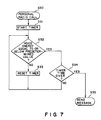
- a timer circuit (constituted by hardware or software of the CPU 1) is used.
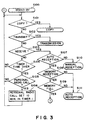
- step S15 or S19 in Fig. 2 After the personal radio call is performed in step S15 or S19 in Fig. 2, a count time of 10 minutes is set in the timer circuit, and the flow returns to a stand-by state in step S100.
- step S105 If the timer circuit is time over, it is checked in step S105 whether a personal radio call is to be performed. If a personal radio call is determined in step S105, a personal radio call is executed again and the count time of 10 minutes is set in the timer circuit in step S106.
- a personal radio call is determined in step S105 when the personal radio call switch 12b of the operating unit 12 is turned on, remote transmission is selected in the past in step S8 of Fig. 2, and the memory-received contents corresponding to a personal radio call are not transmitted orthe recorded contents are not read out.
- These checks can be performed by setting flags corresponding to the above conditions.
- information for identifying a plurality of communications can be transmitted by personal radio control in a personal radio call in the mode 2 in step S15 or S56 of the flow chart shown in Fig. 2.
- a personal radio receiver has a display unit
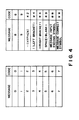
- message codes expressed by DTMF codes can be transmitted and displayed on the display unit of the personal radio.
- Fig. 4 shows examples of the message codes.
- Message codes which can be transmitted are, e.g., numerals, -, (, ), and a space.
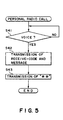
- step S41 shown in Fig. 5 after a telephone number of a predetermined personal radio receiver is called, transmission of a voice message (e.g., "This is a personal radio receiver. Please send a message.") sent back from the personal radio is waited.
- a voice message e.g., "This is a personal radio receiver. Please send a message.”
- This voice detection is performed as in step S10 shown in Fig. 2.
- a user of the personal radio receiver can identify a plurality of times of memory reception by these receive-codes and can designate image data to be remote-transmitted by transmitting the receive-code in addition to a remote transmission command code by a DTMF code in the remote transmission command in step S7 of Fig. 2.
- Fig. 6 is a flow chart for explaining a control sequence of a CPU 1 in the stand-by mode according to the second embodiment.
Landscapes
- Engineering & Computer Science (AREA)
- Signal Processing (AREA)
- Multimedia (AREA)
- General Engineering & Computer Science (AREA)
- Facsimiles In General (AREA)
- Facsimile Transmission Control (AREA)
Claims (4)
- Terminal pour effectuer une transmission vocale et de données, comprenant :caractérisé en ce qu'il comprend en outre des moyens (15) pour recevoir et enregistrer un message vocal, et en ce que les moyens d'émission sont capables d'émettre à la fois des données reçues et des messages vocaux enregistrés, et caractérisé en outre par une unité d'exploitation (12) pour désigner l'opération des moyens d'émission (NCU9, CPU1) et des moyens de réception (8), cette unité d'exploitation (12) ayant des moyens de sélection manuelle pour fixer à l'avance si une destination prédéterminée doit être informée ou non de la réception de données, et si la destination prédéterminée doit être informée ou non de la réception d'un message vocal, etdes moyens de réception (8) pour recevoir des données;des moyens de mémoire (RAM 3) pour enregistrer des données reçues à partir des moyens de réception;des moyens d'information (CPU1), NCU9) pour appeler automatiquement une destination prédéterminée, après qu'une opération de réception en mémoire a été effectuée par les moyens de mémoire, et pour informer la destination que la réception en mémoire a eu lieu; etdes moyens d'émission (NCU9, CPU1), pour émettre des données à partir des moyens de mémoire, conformément à la réception d'un signal de commande, et
dans lequel les moyens d'information appellent automatiquement la destination prédéterminée en réponse à une sélection fixée à l'avance des moyens de sélection manuelle et à la réception de données ou d'un message vocal, et ils sont conçus également pour informer cette destination qu'un message vocal a été enregistré, les moyens d'information réalisant la fonction d'information de manières différentes pour indiquer si une réception en mémoire ou un enregistrement de message vocal a eu lieu, et permettant aux moyens d'émission de sélectionner une technique de communication appropriée à ladite réception. - Terminal selon la revendication 1, dans lequel les moyens d'information exécutent de façon répétée une opération d'information jusqu'à ce que des données reçues en mémoire aient été émises.
- Terminal selon la revendication 1 ou 2, dans lequel les données sont des données d'image.
- Terminal selon l'une quelconque des revendications précédentes, dans lequel les moyens d'information émettent une information pour identifier des données reçues en mémoire, et émettent aussi une information indiquant qu'une réception en mémoire a été effectuée.
Applications Claiming Priority (12)
| Application Number | Priority Date | Filing Date | Title |
|---|---|---|---|
| JP63307310A JP2627794B2 (ja) | 1988-12-05 | 1988-12-05 | ファクシミリ装置 |
| JP305993/88 | 1988-12-05 | ||
| JP30599388 | 1988-12-05 | ||
| JP63305993A JP2993569B2 (ja) | 1988-12-05 | 1988-12-05 | データ通信装置およびデータ通信方法 |
| JP30731088 | 1988-12-05 | ||
| JP307310/88 | 1988-12-05 | ||
| JP30788788 | 1988-12-07 | ||
| JP63307887A JP2683261B2 (ja) | 1988-12-07 | 1988-12-07 | ファクシミリ装置 |
| JP307887/88 | 1988-12-07 | ||
| JP1004460A JPH02184163A (ja) | 1989-01-11 | 1989-01-11 | 通信装置 |
| JP4460/89 | 1989-01-11 | ||
| JP446089 | 1989-01-11 |
Publications (4)
| Publication Number | Publication Date |
|---|---|
| EP0372877A2 EP0372877A2 (fr) | 1990-06-13 |
| EP0372877A3 EP0372877A3 (en) | 1990-09-19 |
| EP0372877B1 EP0372877B1 (fr) | 1994-11-09 |
| EP0372877B2 true EP0372877B2 (fr) | 1999-10-06 |
Family
ID=27454087
Family Applications (1)
| Application Number | Title | Priority Date | Filing Date |
|---|---|---|---|
| EP89312601A Expired - Lifetime EP0372877B2 (fr) | 1988-12-05 | 1989-12-04 | Appareil de communication des données |
Country Status (3)
| Country | Link |
|---|---|
| US (2) | US5953391A (fr) |
| EP (1) | EP0372877B2 (fr) |
| DE (1) | DE68919333T3 (fr) |
Families Citing this family (10)
| Publication number | Priority date | Publication date | Assignee | Title |
|---|---|---|---|---|
| JPH02265371A (ja) * | 1989-04-05 | 1990-10-30 | Matsushita Electric Ind Co Ltd | ファクシミリ装置 |
| EP0740879A4 (fr) * | 1994-01-18 | 2000-01-05 | Flexydial Pty Ltd | Systeme de messages |
| JP3317098B2 (ja) * | 1994-08-22 | 2002-08-19 | ミノルタ株式会社 | デジタル複写機 |
| JPH08116427A (ja) * | 1994-08-22 | 1996-05-07 | Minolta Co Ltd | ファクシミリ装置 |
| US6119142A (en) * | 1995-04-25 | 2000-09-12 | Canon Kabushiki Kaisha | Data communication apparatus for managing information indicating that data has reached its destination |
| JP3114567B2 (ja) * | 1995-06-02 | 2000-12-04 | ブラザー工業株式会社 | ファクシミリ装置 |
| DE69835048T2 (de) * | 1997-03-11 | 2007-05-03 | Koninklijke Philips Electronics N.V. | Fernsprechgerät mit einer digitalen Verarbeitungsschaltung für Sprachsignale und in diesem Gerät durchgeführtes Verfahren |
| US7007061B1 (en) * | 2000-08-07 | 2006-02-28 | Cisco Technology, Inc. | Communicating data using facsimile protocols |
| US7471671B2 (en) * | 2004-02-27 | 2008-12-30 | Innomedia Pte Ltd. | Band signal detection and presentation for IP phone |
| JP4033203B2 (ja) * | 2005-05-31 | 2008-01-16 | ブラザー工業株式会社 | 通信装置 |
Family Cites Families (26)
| Publication number | Priority date | Publication date | Assignee | Title |
|---|---|---|---|---|
| US3234081A (en) * | 1962-09-24 | 1966-02-08 | Exxon Research Engineering Co | Insect repellents manufactured from detergent alkylate |
| US4172969A (en) * | 1975-12-03 | 1979-10-30 | Boris Haskell | Real time absentee telephone and radiant wave signaling system |
| US4106060A (en) * | 1975-12-15 | 1978-08-08 | Rca Corporation | Electronic mail box |
| US4072824A (en) * | 1976-04-26 | 1978-02-07 | Gimix, Inc. | Automatic dialer for paging system or the like |
| US4160125A (en) * | 1977-05-23 | 1979-07-03 | Digital Products Corporation | Telephone polling apparatus |
| JPS561653A (en) * | 1979-06-19 | 1981-01-09 | Hitachi Ltd | Aural reply system |
| US4304968A (en) * | 1979-09-24 | 1981-12-08 | Klausner Industries | Telephone electronic answering device |
| US4602129A (en) * | 1979-11-26 | 1986-07-22 | Vmx, Inc. | Electronic audio communications system with versatile message delivery |
| FR2470800A1 (fr) | 1979-11-29 | 1981-06-12 | Rhone Poulenc Ind | Procede d'epuration des jus de betteraves au moyen d'echangeurs d'ions |
| US4331983A (en) * | 1980-02-11 | 1982-05-25 | Exxon Research & Engineering Co. | Facsimile signalling method |
| JPS57131158A (en) * | 1981-02-06 | 1982-08-13 | Nec Corp | Automatic answering telephone set |
| DE3234081A1 (de) * | 1982-09-14 | 1984-03-15 | Siemens AG, 1000 Berlin und 8000 München | Schaltungsanordnung zur abspeicherung von signalisierungs- und kommunikationsdienstinformationen in einer datenzentrale |
| US4536617A (en) * | 1983-08-01 | 1985-08-20 | Keptel, Inc. | Remotely-activated switching apparatus |
| US4814890A (en) * | 1984-11-19 | 1989-03-21 | Canon Kabushiki Kaisha | Image communicating system |
| GB2170075B (en) * | 1984-12-28 | 1989-08-23 | Canon Kk | Image communication apparatus |
| DE3507479A1 (de) * | 1985-03-02 | 1986-09-04 | Telefonbau Und Normalzeit Gmbh, 6000 Frankfurt | Anordnung fuer die weitergabe von an zentraler stelle empfangenen fernkopien |
| US4794637A (en) * | 1985-11-22 | 1988-12-27 | Hashimoto Corporation | Apparatus for connecting telephone answering device and telephone terminal equipment, selectively, to telephone lines |
| US4837797A (en) * | 1985-11-27 | 1989-06-06 | Advanced Service Development Corporation | Electronic message unit and methods using same |
| US4900902A (en) * | 1985-12-19 | 1990-02-13 | Canon Kabushiki Kaisha | Data communication apparatus |
| DE3705636A1 (de) * | 1986-02-24 | 1987-09-03 | Sharp Kk | Uebermittlungsinformationssystem fuer ein faksimilegeraet |
| US4932048A (en) | 1986-04-15 | 1990-06-05 | Canon Kabushiki Kaisha | Data communication apparatus with voice communication control |
| JPS632461A (ja) * | 1986-06-20 | 1988-01-07 | Nec Corp | フアクシミリ送信装置 |
| US5008926A (en) * | 1986-07-17 | 1991-04-16 | Efrat Future Technology Ltd. | Message management system |
| JP2615571B2 (ja) * | 1986-11-10 | 1997-05-28 | ソニー株式会社 | 留守番電話装置 |
| JP2577553B2 (ja) * | 1987-01-28 | 1997-02-05 | キヤノン株式会社 | 端末装置 |
| US4994926C1 (en) * | 1988-09-22 | 2001-07-03 | Audiofax Ip L L C | Facsimile telecommunications system and method |
-
1989
- 1989-12-04 EP EP89312601A patent/EP0372877B2/fr not_active Expired - Lifetime
- 1989-12-04 DE DE68919333T patent/DE68919333T3/de not_active Expired - Fee Related
-
1993
- 1993-10-19 US US08/138,627 patent/US5953391A/en not_active Expired - Lifetime
-
1999
- 1999-04-19 US US09/294,111 patent/US6498836B1/en not_active Expired - Fee Related
Also Published As
| Publication number | Publication date |
|---|---|
| US5953391A (en) | 1999-09-14 |
| US6498836B1 (en) | 2002-12-24 |
| EP0372877B1 (fr) | 1994-11-09 |
| EP0372877A2 (fr) | 1990-06-13 |
| EP0372877A3 (en) | 1990-09-19 |
| DE68919333T3 (de) | 2000-04-20 |
| DE68919333D1 (de) | 1994-12-15 |
| DE68919333T2 (de) | 1995-04-27 |
Similar Documents
| Publication | Publication Date | Title |
|---|---|---|
| EP0424880B1 (fr) | Système de communication comprenant un récepteur d'appel et un appareil de communication | |
| US5216517A (en) | Communication terminal apparatus | |
| CA1281444C (fr) | Appareil de telecopie | |
| US5444771A (en) | Facsimile machine having answering function | |
| EP0372877B2 (fr) | Appareil de communication des données | |
| KR100296978B1 (ko) | 통신장치 | |
| US5909647A (en) | Portable telephone system with telephone answering device | |
| US6002752A (en) | Method and apparatus for changing operational mode of a facsimile system | |
| US5680449A (en) | Communication apparatus for automatic dialing from a separate terminal | |
| US6236468B1 (en) | Communication device and storage medium | |
| JP2772376B2 (ja) | ファクシミリ装置 | |
| JP2993569B2 (ja) | データ通信装置およびデータ通信方法 | |
| JPH0414945A (ja) | 伝言板機能付ファクシミリ装置 | |
| US6118551A (en) | Technique for informing calling party of no-paper state during reception of image data by facsimile machine | |
| US6816278B2 (en) | Communication device and storage medium | |
| JP2891471B2 (ja) | 通信装置 | |
| JP2683261B2 (ja) | ファクシミリ装置 | |
| KR100233718B1 (ko) | 팩시밀리의 메시지 송,수신보고방법 | |
| JP3533719B2 (ja) | ファクシミリ装置 | |
| JP2527677B2 (ja) | ファクシミリ装置 | |
| JP3399980B2 (ja) | ファクシミリ装置 | |
| JP3363969B2 (ja) | ファクシミリ装置 | |
| KR100208790B1 (ko) | 자동응답기를 구비한 팩시밀리에서 인입메시지에 대한 발신자번호 및 착신시각 확인방법 | |
| JP2962909B2 (ja) | ファクシミリ通信装置 | |
| JP2647399B2 (ja) | 通信システム |
Legal Events
| Date | Code | Title | Description |
|---|---|---|---|
| PUAI | Public reference made under article 153(3) epc to a published international application that has entered the european phase |
Free format text: ORIGINAL CODE: 0009012 |
|
| AK | Designated contracting states |
Kind code of ref document: A2 Designated state(s): DE ES FR GB IT NL |
|
| PUAL | Search report despatched |
Free format text: ORIGINAL CODE: 0009013 |
|
| RHK1 | Main classification (correction) |
Ipc: H04M 1/65 |
|
| AK | Designated contracting states |
Kind code of ref document: A3 Designated state(s): DE ES FR GB IT NL |
|
| 16A | New documents despatched to applicant after publication of the search report | ||
| 17P | Request for examination filed |
Effective date: 19901231 |
|
| 17Q | First examination report despatched |
Effective date: 19930301 |
|
| GRAA | (expected) grant |
Free format text: ORIGINAL CODE: 0009210 |
|
| AK | Designated contracting states |
Kind code of ref document: B1 Designated state(s): DE ES FR GB IT NL |
|
| PG25 | Lapsed in a contracting state [announced via postgrant information from national office to epo] |
Ref country code: IT Free format text: LAPSE BECAUSE OF FAILURE TO SUBMIT A TRANSLATION OF THE DESCRIPTION OR TO PAY THE FEE WITHIN THE PRE;WARNING: LAPSES OF ITALIAN PATENTS WITH EFFECTIVE DATE BEFORE 2007 MAY HAVE OCCURRED AT ANY TIME BEFORE 2007. THE CORRECT EFFECTIVE DATE MAY BE DIFFERENT FROM THE ONE RECORDED.SCRIBED TIME-LIMIT Effective date: 19941109 Ref country code: NL Effective date: 19941109 Ref country code: ES Free format text: THE PATENT HAS BEEN ANNULLED BY A DECISION OF A NATIONAL AUTHORITY Effective date: 19941109 |
|
| REF | Corresponds to: |
Ref document number: 68919333 Country of ref document: DE Date of ref document: 19941215 |
|
| ET | Fr: translation filed | ||
| NLV1 | Nl: lapsed or annulled due to failure to fulfill the requirements of art. 29p and 29m of the patents act | ||
| PLBI | Opposition filed |
Free format text: ORIGINAL CODE: 0009260 |
|
| 26 | Opposition filed |
Opponent name: SIEMENS AG Effective date: 19950728 Opponent name: ALCATEL N.V. Effective date: 19950801 |
|
| PLBF | Reply of patent proprietor to notice(s) of opposition |
Free format text: ORIGINAL CODE: EPIDOS OBSO |
|
| PLBF | Reply of patent proprietor to notice(s) of opposition |
Free format text: ORIGINAL CODE: EPIDOS OBSO |
|
| PLBF | Reply of patent proprietor to notice(s) of opposition |
Free format text: ORIGINAL CODE: EPIDOS OBSO |
|
| PLBF | Reply of patent proprietor to notice(s) of opposition |
Free format text: ORIGINAL CODE: EPIDOS OBSO |
|
| PLBF | Reply of patent proprietor to notice(s) of opposition |
Free format text: ORIGINAL CODE: EPIDOS OBSO |
|
| PLAW | Interlocutory decision in opposition |
Free format text: ORIGINAL CODE: EPIDOS IDOP |
|
| PLAW | Interlocutory decision in opposition |
Free format text: ORIGINAL CODE: EPIDOS IDOP |
|
| PUAH | Patent maintained in amended form |
Free format text: ORIGINAL CODE: 0009272 |
|
| STAA | Information on the status of an ep patent application or granted ep patent |
Free format text: STATUS: PATENT MAINTAINED AS AMENDED |
|
| 27A | Patent maintained in amended form |
Effective date: 19991006 |
|
| AK | Designated contracting states |
Kind code of ref document: B2 Designated state(s): DE ES FR GB IT NL |
|
| ET3 | Fr: translation filed ** decision concerning opposition | ||
| REG | Reference to a national code |
Ref country code: GB Ref legal event code: IF02 |
|
| PGFP | Annual fee paid to national office [announced via postgrant information from national office to epo] |
Ref country code: GB Payment date: 20071228 Year of fee payment: 19 |
|
| PGFP | Annual fee paid to national office [announced via postgrant information from national office to epo] |
Ref country code: DE Payment date: 20071231 Year of fee payment: 19 |
|
| PGFP | Annual fee paid to national office [announced via postgrant information from national office to epo] |
Ref country code: FR Payment date: 20071220 Year of fee payment: 19 |
|
| GBPC | Gb: european patent ceased through non-payment of renewal fee |
Effective date: 20081204 |
|
| REG | Reference to a national code |
Ref country code: FR Ref legal event code: ST Effective date: 20090831 |
|
| PG25 | Lapsed in a contracting state [announced via postgrant information from national office to epo] |
Ref country code: DE Free format text: LAPSE BECAUSE OF NON-PAYMENT OF DUE FEES Effective date: 20090701 |
|
| PG25 | Lapsed in a contracting state [announced via postgrant information from national office to epo] |
Ref country code: GB Free format text: LAPSE BECAUSE OF NON-PAYMENT OF DUE FEES Effective date: 20081204 |
|
| PG25 | Lapsed in a contracting state [announced via postgrant information from national office to epo] |
Ref country code: FR Free format text: LAPSE BECAUSE OF NON-PAYMENT OF DUE FEES Effective date: 20081231 |