EP0373364A2 - Sulfure de poly-p-arylène, linéaire ou ramifié, comportant peu de défauts de structure, leur préparation et leur utilisation - Google Patents
Sulfure de poly-p-arylène, linéaire ou ramifié, comportant peu de défauts de structure, leur préparation et leur utilisation Download PDFInfo
- Publication number
- EP0373364A2 EP0373364A2 EP89120850A EP89120850A EP0373364A2 EP 0373364 A2 EP0373364 A2 EP 0373364A2 EP 89120850 A EP89120850 A EP 89120850A EP 89120850 A EP89120850 A EP 89120850A EP 0373364 A2 EP0373364 A2 EP 0373364A2
- Authority
- EP
- European Patent Office
- Prior art keywords
- mol
- dihaloaromatic
- water
- reaction
- sulfide
- Prior art date
- Legal status (The legal status is an assumption and is not a legal conclusion. Google has not performed a legal analysis and makes no representation as to the accuracy of the status listed.)
- Withdrawn
Links
- 238000000034 method Methods 0.000 title claims abstract description 23
- 238000002360 preparation method Methods 0.000 title claims description 8
- 238000004519 manufacturing process Methods 0.000 claims abstract description 17
- -1 poly-p-phenylene sulfides Chemical class 0.000 claims abstract description 14
- XLYOFNOQVPJJNP-UHFFFAOYSA-N water Substances O XLYOFNOQVPJJNP-UHFFFAOYSA-N 0.000 claims description 54
- 229910001868 water Inorganic materials 0.000 claims description 52
- 229920000642 polymer Polymers 0.000 claims description 35
- 238000006243 chemical reaction Methods 0.000 claims description 34
- 229910052717 sulfur Inorganic materials 0.000 claims description 30
- 238000010521 absorption reaction Methods 0.000 claims description 29
- NINIDFKCEFEMDL-UHFFFAOYSA-N Sulfur Chemical compound [S] NINIDFKCEFEMDL-UHFFFAOYSA-N 0.000 claims description 26
- 239000011593 sulfur Substances 0.000 claims description 25
- IJGRMHOSHXDMSA-UHFFFAOYSA-N Atomic nitrogen Chemical compound N#N IJGRMHOSHXDMSA-UHFFFAOYSA-N 0.000 claims description 23
- 238000002253 near-edge X-ray absorption fine structure spectrum Methods 0.000 claims description 21
- 229910000037 hydrogen sulfide Inorganic materials 0.000 claims description 17
- RWSOTUBLDIXVET-UHFFFAOYSA-N Dihydrogen sulfide Chemical compound S RWSOTUBLDIXVET-UHFFFAOYSA-N 0.000 claims description 16
- 239000000203 mixture Substances 0.000 claims description 16
- 229910052757 nitrogen Inorganic materials 0.000 claims description 13
- 150000001875 compounds Chemical class 0.000 claims description 11
- 239000000155 melt Substances 0.000 claims description 11
- 239000003513 alkali Substances 0.000 claims description 10
- UCKMPCXJQFINFW-UHFFFAOYSA-N Sulphide Chemical compound [S-2] UCKMPCXJQFINFW-UHFFFAOYSA-N 0.000 claims description 8
- 229910052736 halogen Inorganic materials 0.000 claims description 8
- 150000002367 halogens Chemical group 0.000 claims description 7
- 239000007789 gas Substances 0.000 claims description 6
- WKBOTKDWSSQWDR-UHFFFAOYSA-N Bromine atom Chemical compound [Br] WKBOTKDWSSQWDR-UHFFFAOYSA-N 0.000 claims description 5
- ZAMOUSCENKQFHK-UHFFFAOYSA-N Chlorine atom Chemical compound [Cl] ZAMOUSCENKQFHK-UHFFFAOYSA-N 0.000 claims description 5
- GDTBXPJZTBHREO-UHFFFAOYSA-N bromine Substances BrBr GDTBXPJZTBHREO-UHFFFAOYSA-N 0.000 claims description 5
- 229910052794 bromium Inorganic materials 0.000 claims description 5
- 239000000460 chlorine Substances 0.000 claims description 5
- 229910052801 chlorine Inorganic materials 0.000 claims description 5
- 239000003960 organic solvent Substances 0.000 claims description 5
- 230000002269 spontaneous effect Effects 0.000 claims description 5
- 229910052783 alkali metal Inorganic materials 0.000 claims description 4
- 229910052977 alkali metal sulfide Inorganic materials 0.000 claims description 4
- 239000012298 atmosphere Substances 0.000 claims description 4
- 239000003054 catalyst Substances 0.000 claims description 4
- 238000004821 distillation Methods 0.000 claims description 4
- 238000002156 mixing Methods 0.000 claims description 4
- 230000001681 protective effect Effects 0.000 claims description 4
- 230000005540 biological transmission Effects 0.000 claims description 3
- 125000004434 sulfur atom Chemical group 0.000 claims description 3
- 125000004400 (C1-C12) alkyl group Chemical group 0.000 claims description 2
- 125000006736 (C6-C20) aryl group Chemical group 0.000 claims description 2
- UFHFLCQGNIYNRP-UHFFFAOYSA-N Hydrogen Chemical compound [H][H] UFHFLCQGNIYNRP-UHFFFAOYSA-N 0.000 claims description 2
- 125000002877 alkyl aryl group Chemical group 0.000 claims description 2
- 125000003710 aryl alkyl group Chemical group 0.000 claims description 2
- 125000003118 aryl group Chemical group 0.000 claims description 2
- 125000004432 carbon atom Chemical group C* 0.000 claims description 2
- 125000000753 cycloalkyl group Chemical group 0.000 claims description 2
- 239000000945 filler Substances 0.000 claims description 2
- 125000005842 heteroatom Chemical group 0.000 claims description 2
- 125000000623 heterocyclic group Chemical group 0.000 claims description 2
- 239000001257 hydrogen Substances 0.000 claims description 2
- 229910052739 hydrogen Inorganic materials 0.000 claims description 2
- 229910052760 oxygen Inorganic materials 0.000 claims description 2
- 239000012779 reinforcing material Substances 0.000 claims description 2
- 238000000926 separation method Methods 0.000 claims description 2
- 238000007700 distillative separation Methods 0.000 claims 1
- 239000012758 reinforcing additive Substances 0.000 claims 1
- 230000002950 deficient Effects 0.000 abstract description 19
- OCJBOOLMMGQPQU-UHFFFAOYSA-N 1,4-dichlorobenzene Chemical compound ClC1=CC=C(Cl)C=C1 OCJBOOLMMGQPQU-UHFFFAOYSA-N 0.000 description 25
- 230000000052 comparative effect Effects 0.000 description 25
- 239000000126 substance Substances 0.000 description 25
- 238000001228 spectrum Methods 0.000 description 20
- 150000004763 sulfides Chemical class 0.000 description 17
- 239000011541 reaction mixture Substances 0.000 description 15
- 229920000412 polyarylene Polymers 0.000 description 14
- HEMHJVSKTPXQMS-UHFFFAOYSA-M sodium hydroxide Inorganic materials [OH-].[Na+] HEMHJVSKTPXQMS-UHFFFAOYSA-M 0.000 description 14
- 229910052979 sodium sulfide Inorganic materials 0.000 description 13
- GRVFOGOEDUUMBP-UHFFFAOYSA-N sodium sulfide (anhydrous) Chemical compound [Na+].[Na+].[S-2] GRVFOGOEDUUMBP-UHFFFAOYSA-N 0.000 description 13
- 239000000243 solution Substances 0.000 description 13
- ZWXPDGCFMMFNRW-UHFFFAOYSA-N N-methylcaprolactam Chemical compound CN1CCCCCC1=O ZWXPDGCFMMFNRW-UHFFFAOYSA-N 0.000 description 11
- KFZMGEQAYNKOFK-UHFFFAOYSA-N Isopropanol Chemical compound CC(C)O KFZMGEQAYNKOFK-UHFFFAOYSA-N 0.000 description 10
- PBKONEOXTCPAFI-UHFFFAOYSA-N 1,2,4-trichlorobenzene Chemical compound ClC1=CC=C(Cl)C(Cl)=C1 PBKONEOXTCPAFI-UHFFFAOYSA-N 0.000 description 9
- 239000004734 Polyphenylene sulfide Substances 0.000 description 9
- 229920000069 polyphenylene sulfide Polymers 0.000 description 9
- VEXZGXHMUGYJMC-UHFFFAOYSA-N Hydrochloric acid Chemical compound Cl VEXZGXHMUGYJMC-UHFFFAOYSA-N 0.000 description 6
- SECXISVLQFMRJM-UHFFFAOYSA-N N-Methylpyrrolidone Chemical compound CN1CCCC1=O SECXISVLQFMRJM-UHFFFAOYSA-N 0.000 description 6
- 239000013078 crystal Substances 0.000 description 6
- 238000010992 reflux Methods 0.000 description 6
- 238000003756 stirring Methods 0.000 description 6
- 238000004998 X ray absorption near edge structure spectroscopy Methods 0.000 description 5
- 125000004429 atom Chemical group 0.000 description 5
- 238000012512 characterization method Methods 0.000 description 5
- 238000001816 cooling Methods 0.000 description 5
- OCKGFTQIICXDQW-ZEQRLZLVSA-N 5-[(1r)-1-hydroxy-2-[4-[(2r)-2-hydroxy-2-(4-methyl-1-oxo-3h-2-benzofuran-5-yl)ethyl]piperazin-1-yl]ethyl]-4-methyl-3h-2-benzofuran-1-one Chemical compound C1=C2C(=O)OCC2=C(C)C([C@@H](O)CN2CCN(CC2)C[C@H](O)C2=CC=C3C(=O)OCC3=C2C)=C1 OCKGFTQIICXDQW-ZEQRLZLVSA-N 0.000 description 4
- XWUCFAJNVTZRLE-UHFFFAOYSA-N 7-thiabicyclo[2.2.1]hepta-1,3,5-triene Chemical compound C1=C(S2)C=CC2=C1 XWUCFAJNVTZRLE-UHFFFAOYSA-N 0.000 description 4
- XKRFYHLGVUSROY-UHFFFAOYSA-N Argon Chemical compound [Ar] XKRFYHLGVUSROY-UHFFFAOYSA-N 0.000 description 4
- 239000012535 impurity Substances 0.000 description 4
- 239000007788 liquid Substances 0.000 description 4
- 239000000047 product Substances 0.000 description 4
- 239000007787 solid Substances 0.000 description 4
- QTBSBXVTEAMEQO-UHFFFAOYSA-N Acetic acid Chemical compound CC(O)=O QTBSBXVTEAMEQO-UHFFFAOYSA-N 0.000 description 3
- UHOVQNZJYSORNB-UHFFFAOYSA-N Benzene Chemical compound C1=CC=CC=C1 UHOVQNZJYSORNB-UHFFFAOYSA-N 0.000 description 3
- YMWUJEATGCHHMB-UHFFFAOYSA-N Dichloromethane Chemical compound ClCCl YMWUJEATGCHHMB-UHFFFAOYSA-N 0.000 description 3
- LFQSCWFLJHTTHZ-UHFFFAOYSA-N Ethanol Chemical compound CCO LFQSCWFLJHTTHZ-UHFFFAOYSA-N 0.000 description 3
- DGAQECJNVWCQMB-PUAWFVPOSA-M Ilexoside XXIX Chemical compound C[C@@H]1CC[C@@]2(CC[C@@]3(C(=CC[C@H]4[C@]3(CC[C@@H]5[C@@]4(CC[C@@H](C5(C)C)OS(=O)(=O)[O-])C)C)[C@@H]2[C@]1(C)O)C)C(=O)O[C@H]6[C@@H]([C@H]([C@@H]([C@H](O6)CO)O)O)O.[Na+] DGAQECJNVWCQMB-PUAWFVPOSA-M 0.000 description 3
- OKKJLVBELUTLKV-UHFFFAOYSA-N Methanol Chemical compound OC OKKJLVBELUTLKV-UHFFFAOYSA-N 0.000 description 3
- KWYUFKZDYYNOTN-UHFFFAOYSA-M Potassium hydroxide Chemical compound [OH-].[K+] KWYUFKZDYYNOTN-UHFFFAOYSA-M 0.000 description 3
- 230000007547 defect Effects 0.000 description 3
- 230000018044 dehydration Effects 0.000 description 3
- 238000006297 dehydration reaction Methods 0.000 description 3
- 239000000835 fiber Substances 0.000 description 3
- 239000011261 inert gas Substances 0.000 description 3
- 238000002347 injection Methods 0.000 description 3
- 239000007924 injection Substances 0.000 description 3
- 238000005259 measurement Methods 0.000 description 3
- 150000003839 salts Chemical class 0.000 description 3
- HYHCSLBZRBJJCH-UHFFFAOYSA-M sodium hydrosulfide Chemical compound [Na+].[SH-] HYHCSLBZRBJJCH-UHFFFAOYSA-M 0.000 description 3
- 239000002904 solvent Substances 0.000 description 3
- 239000000725 suspension Substances 0.000 description 3
- 229920001169 thermoplastic Polymers 0.000 description 3
- 239000004416 thermosoftening plastic Substances 0.000 description 3
- RMVRSNDYEFQCLF-UHFFFAOYSA-N thiophenol Chemical compound SC1=CC=CC=C1 RMVRSNDYEFQCLF-UHFFFAOYSA-N 0.000 description 3
- BAJUYIOFBOPJCJ-UHFFFAOYSA-N 1,3,5-tris(4-chlorophenyl)benzene Chemical compound C1=CC(Cl)=CC=C1C1=CC(C=2C=CC(Cl)=CC=2)=CC(C=2C=CC(Cl)=CC=2)=C1 BAJUYIOFBOPJCJ-UHFFFAOYSA-N 0.000 description 2
- CSCPPACGZOOCGX-UHFFFAOYSA-N Acetone Chemical compound CC(C)=O CSCPPACGZOOCGX-UHFFFAOYSA-N 0.000 description 2
- AKRJQFGOFJIQMW-UHFFFAOYSA-M NC(C(=O)[O-])CCCC.[Na+] Chemical compound NC(C(=O)[O-])CCCC.[Na+] AKRJQFGOFJIQMW-UHFFFAOYSA-M 0.000 description 2
- NBIIXXVUZAFLBC-UHFFFAOYSA-N Phosphoric acid Chemical compound OP(O)(O)=O NBIIXXVUZAFLBC-UHFFFAOYSA-N 0.000 description 2
- QAOWNCQODCNURD-UHFFFAOYSA-N Sulfuric acid Chemical compound OS(O)(=O)=O QAOWNCQODCNURD-UHFFFAOYSA-N 0.000 description 2
- YTPLMLYBLZKORZ-UHFFFAOYSA-N Thiophene Chemical compound C=1C=CSC=1 YTPLMLYBLZKORZ-UHFFFAOYSA-N 0.000 description 2
- 238000002056 X-ray absorption spectroscopy Methods 0.000 description 2
- 238000004833 X-ray photoelectron spectroscopy Methods 0.000 description 2
- 238000000862 absorption spectrum Methods 0.000 description 2
- 238000004458 analytical method Methods 0.000 description 2
- 229910052786 argon Inorganic materials 0.000 description 2
- 238000009835 boiling Methods 0.000 description 2
- 235000013877 carbamide Nutrition 0.000 description 2
- MVPPADPHJFYWMZ-UHFFFAOYSA-N chlorobenzene Chemical compound ClC1=CC=CC=C1 MVPPADPHJFYWMZ-UHFFFAOYSA-N 0.000 description 2
- 238000004140 cleaning Methods 0.000 description 2
- TWKKUWBBCHHMLT-UHFFFAOYSA-N disodium;sulfide;trihydrate Chemical compound O.O.O.[Na+].[Na+].[S-2] TWKKUWBBCHHMLT-UHFFFAOYSA-N 0.000 description 2
- 230000000694 effects Effects 0.000 description 2
- 150000003951 lactams Chemical class 0.000 description 2
- 238000000465 moulding Methods 0.000 description 2
- 238000010943 off-gassing Methods 0.000 description 2
- 230000035484 reaction time Effects 0.000 description 2
- 229910052708 sodium Inorganic materials 0.000 description 2
- 239000011734 sodium Substances 0.000 description 2
- 239000007858 starting material Substances 0.000 description 2
- 238000005406 washing Methods 0.000 description 2
- JJNFHWKVZWAKEB-UHFFFAOYSA-N 1,3,4-trimethylimidazolidin-2-one Chemical compound CC1CN(C)C(=O)N1C JJNFHWKVZWAKEB-UHFFFAOYSA-N 0.000 description 1
- YWDUZLFWHVQCHY-UHFFFAOYSA-N 1,3,5-tribromobenzene Chemical compound BrC1=CC(Br)=CC(Br)=C1 YWDUZLFWHVQCHY-UHFFFAOYSA-N 0.000 description 1
- XKEFYDZQGKAQCN-UHFFFAOYSA-N 1,3,5-trichlorobenzene Chemical compound ClC1=CC(Cl)=CC(Cl)=C1 XKEFYDZQGKAQCN-UHFFFAOYSA-N 0.000 description 1
- HJQRITCAXSBOPC-UHFFFAOYSA-N 1,3,5-tris(4-bromophenyl)benzene Chemical compound C1=CC(Br)=CC=C1C1=CC(C=2C=CC(Br)=CC=2)=CC(C=2C=CC(Br)=CC=2)=C1 HJQRITCAXSBOPC-UHFFFAOYSA-N 0.000 description 1
- YJTKZCDBKVTVBY-UHFFFAOYSA-N 1,3-Diphenylbenzene Chemical group C1=CC=CC=C1C1=CC=CC(C=2C=CC=CC=2)=C1 YJTKZCDBKVTVBY-UHFFFAOYSA-N 0.000 description 1
- QKEZTJYRBHOKHH-UHFFFAOYSA-N 1,4-dibromo-2-methylbenzene Chemical compound CC1=CC(Br)=CC=C1Br QKEZTJYRBHOKHH-UHFFFAOYSA-N 0.000 description 1
- SWJPEBQEEAHIGZ-UHFFFAOYSA-N 1,4-dibromobenzene Chemical compound BrC1=CC=C(Br)C=C1 SWJPEBQEEAHIGZ-UHFFFAOYSA-N 0.000 description 1
- ZTGQBARLNHQDKA-UHFFFAOYSA-N 1,4-dichloro-2,3-dimethylbenzene Chemical group CC1=C(C)C(Cl)=CC=C1Cl ZTGQBARLNHQDKA-UHFFFAOYSA-N 0.000 description 1
- UTGSRNVBAFCOEU-UHFFFAOYSA-N 1,4-dichloro-2,5-dimethylbenzene Chemical group CC1=CC(Cl)=C(C)C=C1Cl UTGSRNVBAFCOEU-UHFFFAOYSA-N 0.000 description 1
- KFAKZJUYBOYVKA-UHFFFAOYSA-N 1,4-dichloro-2-methylbenzene Chemical compound CC1=CC(Cl)=CC=C1Cl KFAKZJUYBOYVKA-UHFFFAOYSA-N 0.000 description 1
- ZFPGARUNNKGOBB-UHFFFAOYSA-N 1-Ethyl-2-pyrrolidinone Chemical compound CCN1CCCC1=O ZFPGARUNNKGOBB-UHFFFAOYSA-N 0.000 description 1
- NHDODQWIKUYWMW-UHFFFAOYSA-N 1-bromo-4-chlorobenzene Chemical compound ClC1=CC=C(Br)C=C1 NHDODQWIKUYWMW-UHFFFAOYSA-N 0.000 description 1
- GWCFTYITFDWLAY-UHFFFAOYSA-N 1-ethylazepan-2-one Chemical compound CCN1CCCCCC1=O GWCFTYITFDWLAY-UHFFFAOYSA-N 0.000 description 1
- GGYVTHJIUNGKFZ-UHFFFAOYSA-N 1-methylpiperidin-2-one Chemical compound CN1CCCCC1=O GGYVTHJIUNGKFZ-UHFFFAOYSA-N 0.000 description 1
- GHELJWBGTIKZQW-UHFFFAOYSA-N 1-propan-2-ylpyrrolidin-2-one Chemical compound CC(C)N1CCCC1=O GHELJWBGTIKZQW-UHFFFAOYSA-N 0.000 description 1
- QORAVNMWUNPXAO-UHFFFAOYSA-N 2,2',4,4'-tetrachlorobiphenyl Chemical group ClC1=CC(Cl)=CC=C1C1=CC=C(Cl)C=C1Cl QORAVNMWUNPXAO-UHFFFAOYSA-N 0.000 description 1
- RNFJDJUURJAICM-UHFFFAOYSA-N 2,2,4,4,6,6-hexaphenoxy-1,3,5-triaza-2$l^{5},4$l^{5},6$l^{5}-triphosphacyclohexa-1,3,5-triene Chemical compound N=1P(OC=2C=CC=CC=2)(OC=2C=CC=CC=2)=NP(OC=2C=CC=CC=2)(OC=2C=CC=CC=2)=NP=1(OC=1C=CC=CC=1)OC1=CC=CC=C1 RNFJDJUURJAICM-UHFFFAOYSA-N 0.000 description 1
- NUXAUCXMSVFGME-UHFFFAOYSA-N 2,5-dichloro-1,3-dimethylbenzene Chemical group CC1=CC(Cl)=CC(C)=C1Cl NUXAUCXMSVFGME-UHFFFAOYSA-N 0.000 description 1
- OZFQMHJKAODEON-UHFFFAOYSA-N 4-bromo-1-chloro-2-methylbenzene Chemical compound CC1=CC(Br)=CC=C1Cl OZFQMHJKAODEON-UHFFFAOYSA-N 0.000 description 1
- SLXKOJJOQWFEFD-UHFFFAOYSA-N 6-aminohexanoic acid Chemical compound NCCCCCC(O)=O SLXKOJJOQWFEFD-UHFFFAOYSA-N 0.000 description 1
- 0 CC(C)C1C(*)=C(*)C(SC(C)C)=C(*)*1* Chemical compound CC(C)C1C(*)=C(*)C(SC(C)C)=C(*)*1* 0.000 description 1
- 229920013633 Fortron Polymers 0.000 description 1
- 239000004738 Fortron® Substances 0.000 description 1
- FXHOOIRPVKKKFG-UHFFFAOYSA-N N,N-Dimethylacetamide Chemical compound CN(C)C(C)=O FXHOOIRPVKKKFG-UHFFFAOYSA-N 0.000 description 1
- IUAUAVZASZNTLP-UHFFFAOYSA-M N.[OH-].O.O.O.[Na+] Chemical compound N.[OH-].O.O.O.[Na+] IUAUAVZASZNTLP-UHFFFAOYSA-M 0.000 description 1
- 238000005481 NMR spectroscopy Methods 0.000 description 1
- ISWSIDIOOBJBQZ-UHFFFAOYSA-N Phenol Chemical compound OC1=CC=CC=C1 ISWSIDIOOBJBQZ-UHFFFAOYSA-N 0.000 description 1
- 229920013632 Ryton Polymers 0.000 description 1
- 239000004736 Ryton® Substances 0.000 description 1
- VMHLLURERBWHNL-UHFFFAOYSA-M Sodium acetate Chemical compound [Na+].CC([O-])=O VMHLLURERBWHNL-UHFFFAOYSA-M 0.000 description 1
- 239000007983 Tris buffer Substances 0.000 description 1
- 239000002253 acid Substances 0.000 description 1
- 150000007513 acids Chemical class 0.000 description 1
- 239000000654 additive Substances 0.000 description 1
- 150000001298 alcohols Chemical class 0.000 description 1
- 229910000147 aluminium phosphate Inorganic materials 0.000 description 1
- 150000001413 amino acids Chemical class 0.000 description 1
- 229960002684 aminocaproic acid Drugs 0.000 description 1
- 150000008064 anhydrides Chemical class 0.000 description 1
- 239000000010 aprotic solvent Substances 0.000 description 1
- VEFXTGTZJOWDOF-UHFFFAOYSA-N benzene;hydrate Chemical compound O.C1=CC=CC=C1 VEFXTGTZJOWDOF-UHFFFAOYSA-N 0.000 description 1
- 239000006085 branching agent Substances 0.000 description 1
- 229910052799 carbon Inorganic materials 0.000 description 1
- 239000003518 caustics Substances 0.000 description 1
- 238000009614 chemical analysis method Methods 0.000 description 1
- 125000000068 chlorophenyl group Chemical group 0.000 description 1
- 239000013065 commercial product Substances 0.000 description 1
- 230000005493 condensed matter Effects 0.000 description 1
- 238000011109 contamination Methods 0.000 description 1
- 230000007797 corrosion Effects 0.000 description 1
- 238000005260 corrosion Methods 0.000 description 1
- 238000004132 cross linking Methods 0.000 description 1
- 238000002425 crystallisation Methods 0.000 description 1
- 230000008025 crystallization Effects 0.000 description 1
- 125000004122 cyclic group Chemical group 0.000 description 1
- 230000007423 decrease Effects 0.000 description 1
- 238000007872 degassing Methods 0.000 description 1
- 239000008367 deionised water Substances 0.000 description 1
- 229910021641 deionized water Inorganic materials 0.000 description 1
- 229940117389 dichlorobenzene Drugs 0.000 description 1
- XNFVGEUMTFIVHQ-UHFFFAOYSA-N disodium;sulfide;hydrate Chemical compound O.[Na+].[Na+].[S-2] XNFVGEUMTFIVHQ-UHFFFAOYSA-N 0.000 description 1
- 238000001035 drying Methods 0.000 description 1
- 239000003792 electrolyte Substances 0.000 description 1
- 238000001941 electron spectroscopy Methods 0.000 description 1
- 150000002148 esters Chemical class 0.000 description 1
- RTZKZFJDLAIYFH-UHFFFAOYSA-N ether Substances CCOCC RTZKZFJDLAIYFH-UHFFFAOYSA-N 0.000 description 1
- 238000000605 extraction Methods 0.000 description 1
- 238000001914 filtration Methods 0.000 description 1
- 239000003063 flame retardant Substances 0.000 description 1
- 239000011888 foil Substances 0.000 description 1
- 230000036571 hydration Effects 0.000 description 1
- 238000006703 hydration reaction Methods 0.000 description 1
- 150000004679 hydroxides Chemical class 0.000 description 1
- WPYVAWXEWQSOGY-UHFFFAOYSA-N indium antimonide Chemical compound [Sb]#[In] WPYVAWXEWQSOGY-UHFFFAOYSA-N 0.000 description 1
- 238000001746 injection moulding Methods 0.000 description 1
- 150000002576 ketones Chemical class 0.000 description 1
- 239000011159 matrix material Substances 0.000 description 1
- 238000002844 melting Methods 0.000 description 1
- 230000008018 melting Effects 0.000 description 1
- 238000004776 molecular orbital Methods 0.000 description 1
- 230000007935 neutral effect Effects 0.000 description 1
- 239000012299 nitrogen atmosphere Substances 0.000 description 1
- 229910052756 noble gas Inorganic materials 0.000 description 1
- 150000002835 noble gases Chemical class 0.000 description 1
- 230000003647 oxidation Effects 0.000 description 1
- 238000007254 oxidation reaction Methods 0.000 description 1
- 230000020477 pH reduction Effects 0.000 description 1
- 150000004707 phenolate Chemical class 0.000 description 1
- 238000006116 polymerization reaction Methods 0.000 description 1
- 150000008117 polysulfides Polymers 0.000 description 1
- ZOCLAPYLSUCOGI-UHFFFAOYSA-M potassium hydrosulfide Chemical compound [SH-].[K+] ZOCLAPYLSUCOGI-UHFFFAOYSA-M 0.000 description 1
- DPLVEEXVKBWGHE-UHFFFAOYSA-N potassium sulfide Chemical compound [S-2].[K+].[K+] DPLVEEXVKBWGHE-UHFFFAOYSA-N 0.000 description 1
- 238000001556 precipitation Methods 0.000 description 1
- 239000002994 raw material Substances 0.000 description 1
- 238000004064 recycling Methods 0.000 description 1
- 239000011435 rock Substances 0.000 description 1
- 238000007127 saponification reaction Methods 0.000 description 1
- 238000007789 sealing Methods 0.000 description 1
- 238000007086 side reaction Methods 0.000 description 1
- 239000001632 sodium acetate Substances 0.000 description 1
- 235000017281 sodium acetate Nutrition 0.000 description 1
- NESLWCLHZZISNB-UHFFFAOYSA-M sodium phenolate Chemical compound [Na+].[O-]C1=CC=CC=C1 NESLWCLHZZISNB-UHFFFAOYSA-M 0.000 description 1
- 230000003595 spectral effect Effects 0.000 description 1
- 238000003860 storage Methods 0.000 description 1
- 150000003457 sulfones Chemical class 0.000 description 1
- 150000003462 sulfoxides Chemical class 0.000 description 1
- 230000005469 synchrotron radiation Effects 0.000 description 1
- 230000008646 thermal stress Effects 0.000 description 1
- 229930192474 thiophene Natural products 0.000 description 1
- 230000007704 transition Effects 0.000 description 1
- 150000003672 ureas Chemical class 0.000 description 1
- 230000004304 visual acuity Effects 0.000 description 1
- 238000005303 weighing Methods 0.000 description 1
Images





Classifications
-
- C—CHEMISTRY; METALLURGY
- C08—ORGANIC MACROMOLECULAR COMPOUNDS; THEIR PREPARATION OR CHEMICAL WORKING-UP; COMPOSITIONS BASED THEREON
- C08G—MACROMOLECULAR COMPOUNDS OBTAINED OTHERWISE THAN BY REACTIONS ONLY INVOLVING UNSATURATED CARBON-TO-CARBON BONDS
- C08G75/00—Macromolecular compounds obtained by reactions forming a linkage containing sulfur with or without nitrogen, oxygen, or carbon in the main chain of the macromolecule
- C08G75/02—Polythioethers
- C08G75/0204—Polyarylenethioethers
- C08G75/025—Preparatory processes
-
- C—CHEMISTRY; METALLURGY
- C08—ORGANIC MACROMOLECULAR COMPOUNDS; THEIR PREPARATION OR CHEMICAL WORKING-UP; COMPOSITIONS BASED THEREON
- C08G—MACROMOLECULAR COMPOUNDS OBTAINED OTHERWISE THAN BY REACTIONS ONLY INVOLVING UNSATURATED CARBON-TO-CARBON BONDS
- C08G75/00—Macromolecular compounds obtained by reactions forming a linkage containing sulfur with or without nitrogen, oxygen, or carbon in the main chain of the macromolecule
- C08G75/02—Polythioethers
- C08G75/0204—Polyarylenethioethers
- C08G75/0209—Polyarylenethioethers derived from monomers containing one aromatic ring
-
- C—CHEMISTRY; METALLURGY
- C08—ORGANIC MACROMOLECULAR COMPOUNDS; THEIR PREPARATION OR CHEMICAL WORKING-UP; COMPOSITIONS BASED THEREON
- C08G—MACROMOLECULAR COMPOUNDS OBTAINED OTHERWISE THAN BY REACTIONS ONLY INVOLVING UNSATURATED CARBON-TO-CARBON BONDS
- C08G75/00—Macromolecular compounds obtained by reactions forming a linkage containing sulfur with or without nitrogen, oxygen, or carbon in the main chain of the macromolecule
- C08G75/02—Polythioethers
- C08G75/0204—Polyarylenethioethers
- C08G75/0231—Polyarylenethioethers containing chain-terminating or chain-branching agents
Definitions
- the invention relates to linear and branched poly-p-arylene sulfides (PAS), preferably poly-p-phenylene sulfides (PPS), which have an extremely low proportion of defective or foreign structures, a process for their production and their use for the production of shaped bodies .
- PAS poly-p-arylene sulfides
- PPS poly-p-phenylene sulfides
- Polyarylene sulfides are known, e.g. B. US-PS 3 354 129 and EP-OS 171 021. Because of their thermal and mechanical properties and their good chemical resistance, they are valuable raw materials for the production of fibers, films and moldings. They are used, for example, in the automotive, electrical and electronics sectors. They are flame-retardant, dimensionally stable, temperature-resistant and show good electrical properties.
- the defective structures of the polymer can cause macroscopic damage when subjected to thermal stress (for example under conditions in the processing and production of molded articles).
- Semi-crystalline thermoplastics which derive a large part of their desirable properties from the order structure of their crystalline structure, can also be influenced by disturbances of uniformity in properties such as degree of crystallization, rate, morphology and melting behavior.
- the improved polyarylene sulfides known from EP-A 171 021 show a certain advantageous rheological behavior.
- poly-p-arylene sulfides according to the invention preferably poly-p-phenylene sulfides, contain predominantly structural elements of the formula (I) in which R1, R2, R3 and R4 may be the same or different and represent hydrogen (H), C1-C12 alkyl, C4-C16 cycloalkyl, C6-C20 aryl, C7-C30 alkaryl and / or aralkyl.
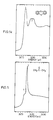
- the absorption curves of the XANES spectra for the energy ranges a) and b) show practically no significant secondary absorption shoulder on the high or low energy flank of the respective absorption maximum.
- the invention relates to a further process B) for the preparation of the poly-p-arylene sulfides, preferably the linear poly-p-phenyl sulfides, in a manner known per se from dihaloaromatic compounds of the formula (II) in which R1 to R4 have the meaning given for formula (I) and X represents halogen such as chlorine or bromine, and a sulfur donor, characterized in that the reaction takes place under a protective gas atmosphere, the reaction is carried out by mixing water-containing sulfur donors with solutions of the dihaloaromatics in an organic solvent, optionally in the presence of known auxiliaries and / or catalysts, at temperatures above 212 ° C, at the same time spontaneous dewatering occurs and the water content of the reaction solution does not exceed 0 to 0.02% by weight of water, as the water-containing sulfur donor, a mixture of alkali sulfide and alkali hydrogen sulfide, with 0.01 to 0.5 mol of alkali hydrogen sulfide being used
- linear and branched poly-p-arylene sulfides according to the invention preferably poly-p-phenylene sulfides, can be used without curing.
- Dichloroaromatics of the formula (II) which can be used according to the invention for processes A) and B) are, for example, 1,4-dichlorobenzene, 1,4-dibromobenzene, 1-bromo-4-chlorobenzene, 2,5-dichlorotoluene, 2,5-dibromotoluene, 2 -Chlor-5-bromotoluene, 2,5-dichloro-para-xylene, 2,5-dichloro-meta-xylene, 3,6-dichloro-ortho-xylene.
- Sodium or potassium sulfide are preferably suitable as alkali sulfides for processes A) and B).
- Sulfides can be used which are produced from the hydrogen sulfides with sodium or potassium hydroxide. They contain 1 to 9 moles of water per mole of sulfide. They can be used as a melt.
- Sodium or potassium hydrogen sulfide are preferably suitable as hydrogen sulfides for processes A) and B). They can be made from hydroxides and hydrogen sulfide. It is also possible to produce them from sulfides with hydrogen sulfide. They can contain 1 to 9 moles of water.
- Organic solvents suitable according to the invention for processes A) and B) are aprotic solvents, in particular N-alkylated lactams, for example N-ethylpyrrolidone, N-methylpiperidone, N-isopropylpyrrolidone, N-methylcaprolactam, N-ethylcaprolactam, ureas, e.g. disubstituted cyclic ureas, such as N, N'-dimethyl-N, N'-ethylene urea, N, N'-dimethyl N, N'-propylene-urea.
- N-alkylated lactams for example N-ethylpyrrolidone, N-methylpiperidone, N-isopropylpyrrolidone, N-methylcaprolactam, N-ethylcaprolactam, ureas, e.g. disubstituted cyclic ureas, such as N, N'-dimethyl-
- the boiling point of the solvent is 212 to 280 ° C. If necessary, can be used to achieve the reaction temperature rature the reaction can be carried out under slight excess pressure up to 10 bar.
- the reaction is carried out according to the invention in processes A) and B) under inert gas.
- inert gas e.g. N2
- noble gases such as Ar, etc. are used.
- all starting materials, solvents and auxiliaries as well as apparatus used in the reaction can be pretreated with inert gas and from reactive gases, e.g. Air to be freed.
- molecular weight regulators e.g. Monochloroaromatics such as chlorobenzene, phenol (s), phenolates, thiophenol (e), thiophenolate (e) etc.
- branching agents of the formula (III) which can be used according to the invention are 1,2,4-trichlorobenzene, 1,3,5-trichlorobenzene, 1,3,5-tribromobenzene, 1,3,5-tris (4, chlorophenyl) benzene, 1 , 3,5-tris (4-bromophenyl) benzene, 2.2 4,4'-tetrachlorodiphenyl, 2,2 ', 4,4'-tetrachlorodiphenyl sulfide, etc.
- Processes A) and B) are carried out in such a way that the solvent, the halogenoaromatics of the formula (II), if appropriate with auxiliaries, and the hydrous hydrogen sulfides and / or sulfides are added to the reaction mixture simultaneously or in succession.
- the temperature of the reaction mixture does not drop below 212 ° C. Dehydration takes place spontaneously with recycling of the azeotropically distilling off halogen aromatics of the formula (II).
- the water content of the reaction mixture is less than 0.02% by weight. (based on halogen aromatic).
- the reaction time can be varied within a wide range. It can take less than an hour up to several days, preferably from 1 hour to 48 hours, particularly preferably 2 to 18 hours.
- the reaction temperature is continuously increased to a maximum of 250 ° C.
- the set excess of the dihaloaromatic is separated off by distillation during the reaction. For example, with a total reaction time of 10 hours after 5 hours up to 40% of the excess dihaloaromatic, after a further 3 hours up to 80% of the excess of dihaloaromatic and after another 2 hours up to 100% of the excess of dihaloaromatic are removed from the reaction mixture. If the reaction by degassing, e.g. is removed from hydrogen sulfide, e.g. to calculate the stoichiometry. The escaping hydrogen sulfide can be recycled, for example, for the production of alkali sulfide.
- the polyarylene sulfides are isolated in a known manner, for example by cooling, filtering and washing the reaction mixture first with ketones such as acetone etc. or alcohols such as methanol, ethanol, isopropanol etc.
- the remaining residue is 5 to 20 in water in a ratio of 1 part residue Parts of water suspended, the suspension adjusted to pH 1 to 5 with acids such as acetic acid, hydrochloric acid, phosphoric acid, sulfuric acid etc. and then washed neutral with water.
- the high molecular weight polyarylene sulfides obtained in this way have a high chemical uniformity.
- the determination of the melt viscosities ( ⁇ m ) and the weight average of the relative molecular weight M w (rel) of the polymers according to the invention as a measure of the molecular weight can, for. B. by the method described in EP-A 142 024, EP-A 171 021 and DE-A 3 622 194.
- linear and branched poly-p-arylene sulfides according to the invention like the model compound without foreign and defective structures - have only 2 absorption maxima in the XANES spectrum.
- the energy position of the absorption maxima at the K-edge of the sulfur should also be taken into account.
- the linear and branched poly-p-arylene sulfides according to the invention are new.
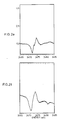
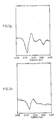
- the XANES spectrum of the new poly-p-arylene sulfides is different from the XANES spectrum of the known polyarylene sulfides.
- the new polyarylene sulfides have a processing, e.g. by injection molding at elevated temperature, practically no annoying outgassing. You can therefore z. B. can be processed without expensive occupational safety measures (smell!). They are also suitable e.g. for the production of intricately shaped injection molded articles without e.g. Highly polished surfaces of the injection mold can be attacked even with long service lives (number of cycles).
- the polymers according to the invention can be used in a known manner for the production of shaped bodies, for example (blow) extrudates, for the production of fibers, films, tubes, profiles, injection molded parts, components for the electrical and electronics industry, etc.
- the polymers can optionally be mixed with conventional fillers and reinforcing materials, other polymers and additives by known processes.
- B. automotive parts, fittings, valves, ball bearing parts, electrical parts, such as. B. switches, electronic boards, chemical-resistant and weather-resistant parts and apparatus, such as pump housings and pump impellers, caustic bath shells, sealing rings, parts of office machines, telecommunications equipment, household appliances, etc.
- distilled 1,4-dichlorobenzene is returned to the mixture after the water has been separated off.
- the column is placed on cooling, the batch is heated to reflux for 10 hours and the product is then isolated in the customary manner.
- a 2 liter autoclave is filled with 1000 g of N-methyl-2-pyrrolidone, 258.2 g of sodium sulfide flakes which contain 60.44% by weight of sodium sulfide, 299.9 g of 1,4-dichlorobenzene and 8 g of sodium hydroxide.
- the temperature is raised to 220 ° C. with stirring in a nitrogen atmosphere and held for 10 hours. It is then cooled to room temperature. 90 g of water and 2 g of sodium hydroxide are added to the mixture.
- the mixture is then heated and kept at 260 ° C. for 5 hours. After cooling, the mixture is filtered.
- Tables IV and V For characterization of chemical uniformity, see Tables IV and
- Defects in poly-p-arylene sulfide can e.g. B. be: (partially) oxidized sulfur units such as sulfoxides or sulfones (see, for example, US Pat. No. 4,251,575, DE-A 1,938,806 or R. Gabler, J. Studinka, Chimia 28 (1974), p. 567 ff ), Branches or crosslinking through aftertreatments (e.g. EP-PS 91 088), (reactive) end groups, which may have been formed, for example, by side reactions such as saponification, oxidation or attack of an auxiliary or contamination in the starting materials, di- or Polysulfide units (B. Hortling, JJ Lindberg, Makromol.
- Defective structures in polymers can in principle be detected by standard analytical methods such as IR, UV, NMR spectroscopy or chemical analysis methods etc. If necessary, some faulty structures can be detected using the ESCA method (see, e.g., A. Kaul, American Chemical Society, Division of Polymer Chemistry, Polymer Preprints 28 (1987), pp. 229-231). Smallest amounts of these faulty structures could e.g. B can be determined by X-ray absorption spectroscopy.
- X-ray absorption spectrum of the corresponding substance is recorded in the vicinity of the sulfur 1s edge.
- the analysis uses structures in the absorption spectrum below the ionization limit, which belong to transitions into bound molecular orbitals ("white lines"), and the structures in the absorption coefficient above the ionization limit, which are caused by multiple scattering of the leaking electron.
- the spectra are recorded, for example, with a vacuum double crystal X-ray monochromator (e.g. Lemonier, M., Collet, O., Depautex, C., Esteva, JM and Raoult, D. (1978), Nucl. Instrum. Methods Vol. 152, p. 108 ff).
- a vacuum double crystal X-ray monochromator e.g. Lemonier, M., Collet, O., Depautex, C., Esteva, JM and Raoult, D. (1978), Nucl. Instrum. Methods Vol. 152, p. 108 ff).
- indium-antimony (In / Sb (1,1,1) crystals, rock crystals of high quality, silicon-1,1,1-crystals, germanium-1,1,1-crystals can be used as crystals
- energy can be applied against the known white line of argon, which is 3203.54 eV (see M. Breinig et
- the energy position of the measured spectra is compared with a calibrated sample of a model substance, e.g. B. sulfur has defined, determined. In this way, an absolute and relative accuracy of ⁇ 0.1 eV can be achieved.
- the resolving power of the monochromator corresponds approximately to the lifespan of the sulfur 1s hole.
- polymers are preferably used which are obtained in the production from the polymerization without aftertreatment. They can already be processed into shaped bodies, for example foils. Surface effects that can occur on test specimens are negligible. The sample thickness is chosen so that saturation effects in the spectrum are avoided. The measurements are carried out in the absence of UV light.
- the spectra After the spectra have been recorded, they are corrected in a known manner, e.g. to average out influences of higher electron shells in the considered atom. Then the spectra are normalized to the intensity of the white line, using the band with the highest absorption coefficient. To differentiate spectra, subtract the normalized spectra of the individual samples.
- the measurements are carried out with an intensive X-ray continuum. This is provided, for example, by high-performance rotating anodes.
- X-ray absorption spectroscopy in the XANES range is able to detect defective or foreign structures even in poly-p-arylene sulfides.
- Substances 1 (a) to 1 (n) are known.
- the substance (1 (n)) is obtained e.g. according to the cycle extraction method (e.g. Tetrahedron Letters 23, (1982), p. 373).
- the cycles were not cleaned of oligomeric linear or other structures.
- the XANES spectrum can be used, for example, of a cleaned cyclic connection (see, for example, Tetrahedron Letters 23 (1982), p. 373; Struct. Comm. 11 (1982), p. 1751) .
- the XANES characterization of this substance in Table II shows that only two - shoulder-free - absorption maxima occur in the energy range between 2470 and 2490 eV. The remaining absorption lines, which indicate the presence of faulty structures, are not found. In this way, you can use the XANES method to decide whether or not the substance contains defective structures of any kind that contain sulfur.
- Example 1A one one Example 1 B one one Example 2 B one one Comparative Example 1A two two Comparative Example 2A two two Comparative Example 3 A two two Comparative Example 1 B two two Comparative Example 2 B two two Comparative Example 3 B two two Summary of the melt viscosities of the examples as a measure of the molecular weights Example No.
Landscapes
- Chemical & Material Sciences (AREA)
- Health & Medical Sciences (AREA)
- Chemical Kinetics & Catalysis (AREA)
- Medicinal Chemistry (AREA)
- Polymers & Plastics (AREA)
- Organic Chemistry (AREA)
- Polymers With Sulfur, Phosphorus Or Metals In The Main Chain (AREA)
- Compositions Of Macromolecular Compounds (AREA)
Applications Claiming Priority (2)
| Application Number | Priority Date | Filing Date | Title |
|---|---|---|---|
| DE3839442 | 1988-11-23 | ||
| DE3839442A DE3839442A1 (de) | 1988-11-23 | 1988-11-23 | Fehlstrukturarmes, lineares und verzweigtes poly-p-arylensulfid, verfahren zu seiner herstellung und seine verwendung |
Publications (2)
| Publication Number | Publication Date |
|---|---|
| EP0373364A2 true EP0373364A2 (fr) | 1990-06-20 |
| EP0373364A3 EP0373364A3 (fr) | 1991-04-03 |
Family
ID=6367660
Family Applications (1)
| Application Number | Title | Priority Date | Filing Date |
|---|---|---|---|
| EP19890120850 Withdrawn EP0373364A3 (fr) | 1988-11-23 | 1989-11-10 | Sulfure de poly-p-arylène, linéaire ou ramifié, comportant peu de défauts de structure, leur préparation et leur utilisation |
Country Status (5)
| Country | Link |
|---|---|
| US (1) | US5138031A (fr) |
| EP (1) | EP0373364A3 (fr) |
| JP (1) | JPH02185528A (fr) |
| CA (1) | CA2003663A1 (fr) |
| DE (1) | DE3839442A1 (fr) |
Cited By (2)
| Publication number | Priority date | Publication date | Assignee | Title |
|---|---|---|---|---|
| EP0792904A3 (fr) * | 1996-02-21 | 1998-04-15 | Kureha Kagaku Kogyo Kabushiki Kaisha | Procédé de préparation de polyarylène sulphide |
| WO1999045057A1 (fr) * | 1998-03-05 | 1999-09-10 | Ticona Gmbh | Procede de production de polymeres contenant du soufre |
Families Citing this family (3)
| Publication number | Priority date | Publication date | Assignee | Title |
|---|---|---|---|---|
| JP2002293938A (ja) * | 2001-03-30 | 2002-10-09 | Petroleum Energy Center | ポリアリーレンスルフィドの連続製造方法 |
| JP5392537B2 (ja) * | 2008-11-27 | 2014-01-22 | Dic株式会社 | ポリアリーレンスルフィドの製造方法 |
| JP5609621B2 (ja) * | 2009-12-22 | 2014-10-22 | 東レ株式会社 | 環式ポリアリーレンスルフィドの製造方法 |
Family Cites Families (4)
| Publication number | Priority date | Publication date | Assignee | Title |
|---|---|---|---|---|
| US3354129A (en) * | 1963-11-27 | 1967-11-21 | Phillips Petroleum Co | Production of polymers from aromatic compounds |
| DE3338501A1 (de) * | 1983-10-22 | 1985-05-02 | Bayer Ag, 5090 Leverkusen | Verfahren zur herstellung von hochmolekularen, gegebenenfalls verzweigten polyarylensulfiden |
| DE3529498A1 (de) * | 1985-08-17 | 1987-02-26 | Bayer Ag | Verfahren zur herstellung von hochmolekularen, gegebenenfalls verzweigten polyarylensulfiden |
| DE3637813A1 (de) * | 1986-11-06 | 1988-05-19 | Bayer Ag | Verfahren zur herstellung von polyarylensulfiden mit erniedrigter kristallisationstemperatur |
-
1988
- 1988-11-23 DE DE3839442A patent/DE3839442A1/de not_active Withdrawn
-
1989
- 1989-11-10 EP EP19890120850 patent/EP0373364A3/fr not_active Withdrawn
- 1989-11-13 US US07/434,804 patent/US5138031A/en not_active Expired - Fee Related
- 1989-11-21 JP JP1300928A patent/JPH02185528A/ja active Pending
- 1989-11-23 CA CA002003663A patent/CA2003663A1/fr not_active Abandoned
Cited By (4)
| Publication number | Priority date | Publication date | Assignee | Title |
|---|---|---|---|---|
| EP0792904A3 (fr) * | 1996-02-21 | 1998-04-15 | Kureha Kagaku Kogyo Kabushiki Kaisha | Procédé de préparation de polyarylène sulphide |
| US5840830A (en) * | 1996-02-21 | 1998-11-24 | Kureha Kagaku Kogyo K.K. | Process for producing poly(arylene sulfide) |
| WO1999045057A1 (fr) * | 1998-03-05 | 1999-09-10 | Ticona Gmbh | Procede de production de polymeres contenant du soufre |
| US6538102B1 (en) | 1998-03-05 | 2003-03-25 | Ticona Gmbh | Method for producing sulfur-containing polymers |
Also Published As
| Publication number | Publication date |
|---|---|
| JPH02185528A (ja) | 1990-07-19 |
| CA2003663A1 (fr) | 1990-05-23 |
| EP0373364A3 (fr) | 1991-04-03 |
| US5138031A (en) | 1992-08-11 |
| DE3839442A1 (de) | 1990-05-31 |
Similar Documents
| Publication | Publication Date | Title |
|---|---|---|
| DE2453485C3 (de) | Phenylensulfidpolymere, Verfahren zu ihrer Herstellung und ihre Verwendung | |
| EP0388358B1 (fr) | Poly(éther d'arylène) | |
| EP0929596B1 (fr) | Procede de fabrication de polymeres sulfures | |
| DE68920598T2 (de) | Saures Waschen von Polyarylensulfiden. | |
| EP0142024B1 (fr) | Procédé de préparation de poly(sulfures d'arylène) à haut poids moléculaire éventuellement ramifiés | |
| EP0414079A2 (fr) | Procédé de préparation de sulfures de polyarylène | |
| DE3614753A1 (de) | Hochtemperaturbestaendige copolykondensat-formmassen | |
| EP0373364A2 (fr) | Sulfure de poly-p-arylène, linéaire ou ramifié, comportant peu de défauts de structure, leur préparation et leur utilisation | |
| WO1997038040A1 (fr) | Sulfures de polyarylene a bande etroite de distribution de masses moleculaires et leur procede de fabrication | |
| EP0214471B1 (fr) | Procédé de préparation de poly(sulfures d'arylène) ayant un poids moléculaire élevé et étant éventuellement ramifiés | |
| EP0162210A1 (fr) | Procédé pour la préparation de poly(sulfures d'arylène) de poids moléculaire élevé qui sont éventuellement ramifiés | |
| EP0372252A2 (fr) | Procédé de préparation de sulfures de polyarylène, éventuellement ramifiés, de haut poids moléculaire | |
| WO1998022525A2 (fr) | Procede pour preparer des polymeres contenant du soufre | |
| EP0374462A2 (fr) | Procédé de préparation de sulfures de polyarylène éventuellement ramifiés de haut poids moléculaire | |
| EP0215258B1 (fr) | Procédé pour la préparation de poly(sulfures d'arylène) à poids moléculaire élevé, éventuellement ramifiés | |
| EP0395883B1 (fr) | Mélange de poly(sulfures d'arylène) avec des groupes terminaux sulfoniques ou leurs dérivés avec des poly(sulfures d'arylène), et utilisation | |
| EP0215259B1 (fr) | Procédé pour la préparation de poly(sulfures d'arylène) à poids moléculaire élevé, éventuellement ramifiés | |
| EP0275007A2 (fr) | Procédé de préparation de sulfures de polyarylène de haut poids moléculaire, éventuellement ramifiés | |
| DE4108033A1 (de) | Verfahren zur molekulargewichts-stabilisierung von linearen oder gegebenenfalls verzweigten polyarylensulfiden | |
| DE3520223C2 (de) | Verfahren zur Herstellung von Poly(arylensulfid) aus Halothiophenolen und Alkalihydroxiden | |
| EP0499929A2 (fr) | Procédé pour préparer des polysulfures d'arylène à poids moléculaire élevé qui peuvent être ramifiés | |
| EP0383119B1 (fr) | Copolymères statistiques ou alternés contenant du soufre, procédé pour leur préparation et leur utilisation | |
| DE4323288A1 (de) | Verfahren zur Herstellung von Polyarylensulfid | |
| DE60016801T2 (de) | Verfahren zur reduktion der korrosität von reaktanden in der polyarylensulfidpolymerproduktion | |
| EP0501217A2 (fr) | Procédé pour la préparation de polysulfures d'arylène |
Legal Events
| Date | Code | Title | Description |
|---|---|---|---|
| PUAI | Public reference made under article 153(3) epc to a published international application that has entered the european phase |
Free format text: ORIGINAL CODE: 0009012 |
|
| 17P | Request for examination filed |
Effective date: 19891110 |
|
| AK | Designated contracting states |
Kind code of ref document: A2 Designated state(s): BE DE FR GB IT |
|
| PUAL | Search report despatched |
Free format text: ORIGINAL CODE: 0009013 |
|
| AK | Designated contracting states |
Kind code of ref document: A3 Designated state(s): BE DE FR GB IT |
|
| 17Q | First examination report despatched |
Effective date: 19921113 |
|
| STAA | Information on the status of an ep patent application or granted ep patent |
Free format text: STATUS: THE APPLICATION HAS BEEN WITHDRAWN |
|
| 18W | Application withdrawn |
Withdrawal date: 19921123 |
|
| R18W | Application withdrawn (corrected) |
Effective date: 19921123 |
|
| R18W | Application withdrawn (corrected) |
Effective date: 19921123 |