EP0375307B1 - Struktur und Verfahren zur Anordnung rekursiv abgeleiteter Daten in einer Datenbank - Google Patents
Struktur und Verfahren zur Anordnung rekursiv abgeleiteter Daten in einer Datenbank Download PDFInfo
- Publication number
- EP0375307B1 EP0375307B1 EP89313180A EP89313180A EP0375307B1 EP 0375307 B1 EP0375307 B1 EP 0375307B1 EP 89313180 A EP89313180 A EP 89313180A EP 89313180 A EP89313180 A EP 89313180A EP 0375307 B1 EP0375307 B1 EP 0375307B1
- Authority
- EP
- European Patent Office
- Prior art keywords
- level
- iteration
- data items
- data item
- data
- Prior art date
- Legal status (The legal status is an assumption and is not a legal conclusion. Google has not performed a legal analysis and makes no representation as to the accuracy of the status listed.)
- Expired - Lifetime
Links
Images


Classifications
-
- G—PHYSICS
- G06—COMPUTING OR CALCULATING; COUNTING
- G06F—ELECTRIC DIGITAL DATA PROCESSING
- G06F16/00—Information retrieval; Database structures therefor; File system structures therefor
- G06F16/90—Details of database functions independent of the retrieved data types
- G06F16/901—Indexing; Data structures therefor; Storage structures
- G06F16/9027—Trees
-
- G—PHYSICS
- G06—COMPUTING OR CALCULATING; COUNTING
- G06F—ELECTRIC DIGITAL DATA PROCESSING
- G06F16/00—Information retrieval; Database structures therefor; File system structures therefor
- G06F16/90—Details of database functions independent of the retrieved data types
- G06F16/901—Indexing; Data structures therefor; Storage structures
- G06F16/9017—Indexing; Data structures therefor; Storage structures using directory or table look-up
- G06F16/902—Indexing; Data structures therefor; Storage structures using directory or table look-up using more than one table in sequence, i.e. systems with three or more layers
-
- Y—GENERAL TAGGING OF NEW TECHNOLOGICAL DEVELOPMENTS; GENERAL TAGGING OF CROSS-SECTIONAL TECHNOLOGIES SPANNING OVER SEVERAL SECTIONS OF THE IPC; TECHNICAL SUBJECTS COVERED BY FORMER USPC CROSS-REFERENCE ART COLLECTIONS [XRACs] AND DIGESTS
- Y10—TECHNICAL SUBJECTS COVERED BY FORMER USPC
- Y10S—TECHNICAL SUBJECTS COVERED BY FORMER USPC CROSS-REFERENCE ART COLLECTIONS [XRACs] AND DIGESTS
- Y10S707/00—Data processing: database and file management or data structures
- Y10S707/99931—Database or file accessing
- Y10S707/99933—Query processing, i.e. searching
Definitions
- the present invention relates generally to database systems and more particularly to a database structure for recursively derived data items and a method of arranging such data items in a database.
- Database systems are being used to store and manage more and more different kinds of data. As the use of database systems has expanded and the quantities of data stored in a database have increased, much effort has been devoted to improving existing database systems and developing new systems with new and better capabilities.
- a database means to request information from it.
- the requested information may be obtained directly by retrieving data items stored in the database or may be derived from data items stored in the database.
- a kind of database query which has grown more important in recent years is a query which derives information recursively.
- Such a query can be described as a query which queries itself repeatedly.
- Deriving information recursively requires evaluating a recursive relation among the data items in the database.
- a general discussion of the mathematical concept of recursion can be found in J. Bradley, Introduction to Discrete Mathematics , ch. 6, Addison-Wesley 1988; see also E. Roberts, Thinking Recursively , John Wiley 1986.
- a certain database contains a set of data items each expressing a parent-child relation.
- a few of such data items might be: Bill is father of Richard; Abigail is mother of Richard; Richard is father of Mary; Jane is mother of Mary; John is father of Andrew; Mary is mother of Andrew; and so on.
- the names of the parents of a person are returned by a query of the form "FIND PARENTS OF [X]" where X is the name of the person whose parents are to be found.
- the name of a parent of a person is an example of the kind of information which is obtainable directly by retrieving a data item in this particular database.
- the database contains no information about grandparents.
- such information can be recursively derived from the information in the database, for example by a query of the form "FIND PARENTS OF [FIND PARENTS OF [X]]".
- Providing the information requested by such a query involves evaluating the recursive relation of grandparent and grandchild.
- An example of a more complex request is a request to find any common grandparents of X and Y.
- Two recursive relations would have to be evaluated and the results of these two evaluations would then have to be compared to find any matches. These two recursive relations are referred to as mutually recursive relations.
- the request to find the grandparents of X requires exactly two iterations -- one to find the parents of X and one to find the parents of the parents of X.
- the evaluation becomes far more difficult; an example of a request in which the number of iterations is not known is a request to find all ancestors of X.
- B-tree In Computing Surveys, Vol. 11, No. 2, June 1979, pages 121-137, "The Ubiquitous B-Tree", D. Comer discusses the widely-used B-tree standard for file organization. An important advantage to the B-tree is that the tree remains balanced when records are inserted or removed. A popular variation of the B-tree is the B + -tree. In a B + -tree all keys reside in the leaves. The upper levels are organized as an index of a conventional B-tree. The leaf nodes in the lower level are usually linked left-to-right and when so linked are referred to as a "sequence set" which is separate from the index. The B-tree and B + -tree support relatively low-cost find, insert and delete operations but have not solved the problem of efficiently evaluating recursive relations.
- f i are defined in terms of the definitions of the recursive relations themselves.
- two mutually recursive relations r 1 and r 2 are defined by the following Horn clauses: r 1 (X,Y) ⁇ b 1 (X,Z),r 2 (Z,Y) r 2 (X,Y) ⁇ r 1 (X,Z),b 2 (Z,Y) r 1 (X, Y) ⁇ b 3 (X,Y) where the b's are base relations and X, Y and Z are columns in the base relations.
- the semi-naive method of computing the least fixpoint is an iterative method.
- the present invention provides a data base structure for recursively derived data items and a method of arranging such data items in a database according to claims 1 and 4.
- Advantageous embodiments can be found in the subclaims.
- a database structure for recursively derived data items includes a plurality of hierarchical iteration levels, one for each iteration of a recursive relation from which the data items are derived; an index structure for indexing the data items; and means for linking together the various data items associated with each iteration level.
- the index structure preferably includes a sequence set having a plurality of leaf nodes, an index set having a plurality of non-leaf nodes, and an iteration level index.
- the nodes of the sequence set are arranged sequentially in a bottom index level.
- Each node provides a reference between a pointer to one of the data items, a key value which uniquely identifies that data item, and the iteration level associated with that data item.
- the nodes of the index set are arranged hierarchically to define a plurality of index levels above the bottom level, each level having fewer nodes than the level beneath it.
- Each node encompasses a range of the key values of the sequence set and all of the nodes on any level together encompass all of said key values.
- Each node provides an access path for each key value within its range to a node on the next lower level having said key value within its range.
- the iteration level index provides a reference between each iteration level and a data item associated with that level.
- each data item associated with a given iteration level is assigned to a page associated with that level and the pages of that level are chained together.
- the individual data items associated with a given iteration level are globally chained to each other.
- a new data item is inserted by finding the existing data having the same iteration level and the closest key value, inserting the new item adjacent thereto, linking the new data item to the others having the same iteration level if the data items are globally linked, and adjusting the index and sequence sets to include a search path to the new item.
- the new item is preferably discarded. Or, if the key values are the same the two items are compared and the new one is discarded only if they are identical. Either of these tests can be performed with minimal overhead during evaluation of the recursive relation, and if all data items derived during a given iteration are discarded then the iterations are stopped. Thus, an efficient test of when to stop iterations is provided if the number of iterations required to evaluate the recursive relation is not known in advance.
- a set of data items arranged according to the invention can be searched very efficiently for a data item having an iteration level within a specified range by following an access path through the index set to the leaf node corresponding with the item being searched for, checking the iteration level of that item, and returning the item only if its iteration level is within the specified range.
- the data may be scanned with high efficiency to find any data items satisfying a specified condition and having a specified iteration level by utilizing the iteration level index to locate a first data item having an iteration level within the specified range and then following the linking of the data items having that level until all such items have been scanned. Performing a scan in this manner provides the requested data items automatically arranged in order on the key value.
- a nested loop join is easily performed by scanning a first set of data items at a specified iteration level; for each data item found during the scan, searching a second set of data items at a specified iteration level for a match, and joining each item found in the scan with any corresponding one found in the search.
- a merge scan join is accomplished by simultaneously scanning a first set of data items at a first iteration level and a second set at a second iteration level and joining any data item found in the first scan with any matching item found in the second scan.
- the invention is embodied in a novel structure and method of arranging recursively derived data in a database.
- a novel structure and method of arranging recursively derived data in a database There has been a need for a way to directly evaluate mutually recursive relations in a database especially if the number of iterations is not known in advance.
- the structure and method of the invention provide a highly efficient way to evaluate mutually recursive relations by, for example, computing the least fixpoint of such relations.
- This permits the use of relational algebra techniques as augmented by newly-proposed operators and makes possible the efficient evaluation of sets of mutually recursive relations even if the number of iterations required for such evaluation is not known in advance.
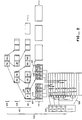
- the index structure 103 includes a sequence set 111 having a plurality of leaf nodes such as the node 113 arranged sequentially to define a bottom index level of the structure, each such node providing a reference between a pointer such as the pointer 115 to one of the data items such as the data item T to which the pointer 115 points, a key value such as the value "5" which uniquely identifies that data item, and the iteration level such as the level "2" associated with that data item.
- the structure 103 also includes an index set 117 having a plurality of non-leaf nodes such as the node 119 arranged hierarchically to define a plurality of index levels such as the levels 121, 123 and 125 above the bottom index level of the structure, each level having fewer nodes than the level beneath it, each node encompassing a range of the key values of the sequence set, all of the nodes on any level together encompassing all of said key values, each range encompassed by a node being included in the range encompassed by a node on the next higher level, each node providing for any key value within its range an access path such as the path depicted by an arrow 127 to a node on the next lower level having said key value within its range.
- an index set 117 having a plurality of non-leaf nodes such as the node 119 arranged hierarchically to define a plurality of index levels such as the levels 121, 123 and 125 above the bottom index level of the structure, each level having fewer
- the structure 103 also includes the iteration level index 101 providing a reference between each iteration level and a data item associated with that level.
- the linking means comprises global chain references such as the arrows 129 in FIG. 2 which link data items associated with each iteration level.
- each data item associated with a given iteration level is assigned to a page such as the page 131 in FIG. 1, each page being associated with that iteration level.
- the linking means comprises page chain references such as the arrows 105, 107 and 109 which link the pages associated with each iteration level.
- the invention provides a method of arranging recursively derived data items in a database wherein the data are arranged according to the structure described above.
- New data items are inserted into the data structure described above as they are derived. Accordingly, if such data are clustered according to iteration level they would ordinarly be assigned to pages sequentially as they are generated. However, this is not required and the data can be assigned to pages in any order so long as only data items derived during a given iteration level are assigned to pages corresponding with that iteration level. Of course, if the data are not clustered by iteration level, then each data item is chained with others of the same level.
- a new data item is inserted by identifying which of the data items associated with the iteration level of the new item has the closest key value to the key value of the new item, inserting the new data item into the database adjacent the identified data item, linking the new data item to the other data items associated with the iteration level of the new item, creating a new leaf node having a pointer to the new data item, inserting the new leaf node into the sequence set, and adjusting the index set to include a path to the new leaf node.
- the index set is adjusted in a manner similar to that used to adjust the index set of an ordinary B-tree as described, for example, in C. J. Date, An Introduction to Database Systems (4th Ed.) vol. 1 pages 63 through 67. If the data are clustered by iteration level, no linking is required other than assignment of the data item to a page of the correct iteration level because the pages corresponding with that iteration level are chained together.
- FIG. 3 The process of insertion of a new data item is illustrated in FIG. 3, wherein a new data item K has been added to the global data set 129.
- a new leaf node 133 has been created and inserted in proper sequence between existing nodes 135 and 137, displacing the node 137 which has been moved one position to the right.
- the data item K has been chained to the item P of level 2 as indicated by an arrow 139 and the index tree has been adjusted as indicated by a changed value in the non-leaf node 119.
- a new pointer as indicated by an arrow 141 has been provided between the node 133 and the data item K.
- duplicate items of data are discarded. This may be done by discarding the new data item if its key value is the same as the key value of the identified data item next to which it is to be placed. If desired, the two data items may be compared to be sure they are identical before the new item is discarded.
- An advantage to eliminating duplicate data items is that iteration can be stopped if all the items generated during an iteration are discarded. This provides an efficient test for when to stop iteration if the number of iterations required to evaluate a recursive relation is not known.
- the invention provides a highly efficient method of searching data items which have been arranged as described to find a data item having a specified key value and an iteration level within a specified range.
- This search method comprises selecting an access path from the paths provided by the non-leaf nodes to locate a leaf node associated with the specified key value; determining whether the iteration level associated with said leaf node is within the specified range; and returning the data item associated with said leaf node only if said determination is affirmative.
- the invention also provides a very efficient method of scanning a set of data items to find any which satisfy a specified condition and have a specified iteration level.
- This method comprises utilizing the iteration level index to locate a first data item associated with that iteration level, following the linking of the data items to locate the other data items associated with that iteration level, examining each located data item in sequence to determine whether it satisfies the prescribed condition, and if the examined item satisfies the prescribed condition, retrieving the item, the items retrieved during the scan being arranged in sequential order according to their key values.
- a method of performing a nested loop join comprises scanning a first set of the data items to find any data items satisfying a specified condition and having a specified iteration level, for each data item found in the preceding step, searching a second set of the data items to find any data items having a key value corresponding with the key value of said data item and a specified iteration level, and joining each data item found in the scan with any corresponding data item found in the search.
- a method of performing a merge scan join comprises simultaneously scanning a first set of data items having a first specified iteration level and a second set of data items having a second iteration level, and joining any data item found in the scan of the first set with any matching data item found in any scan of the second set.
- the first scan pauses at each item during its scan and the second scan advances until no matches are found. Because the data in both sets are arranged in order by key value, only a single pass through each set is required to complete the merge scan operation.
- the data structure and method of the invention provide a way to efficiently respond to complex database queries.
- a set of mutually recursive relations is evaluated, for example by computing the least fixpoints of the relations, with a minimum of overhead even if the number of recursions required to perform the evaluation is not known in advance.
Landscapes
- Engineering & Computer Science (AREA)
- Databases & Information Systems (AREA)
- Theoretical Computer Science (AREA)
- Software Systems (AREA)
- Data Mining & Analysis (AREA)
- Physics & Mathematics (AREA)
- General Engineering & Computer Science (AREA)
- General Physics & Mathematics (AREA)
- Information Retrieval, Db Structures And Fs Structures Therefor (AREA)
Claims (18)
- Eine Datenbankstruktur für rekursiv abgeleitete Datenelemente (A ... Z), wobei die Datenbankstruktur folgende Merkmale aufweist:eine Indexstruktur zum Indizieren der Datenelemente, wobei die Indexstruktur einen Sequenzsatz 111 mit einer Mehrzahl von Blattknoten (113, 135, 137), die sequentiell angeordnet sind, um einen Grundindexpegel der Struktur zu definieren, aufweist; undeinen Indexsatz (117) mit einer Mehrzahl von Nicht-Blatt-Knoten (119), die hierarchisch angeordnet sind, um eine Mehrzahl von Indexebenen (121, 123, 125) über der Grundindexebene der Struktur zu definieren, wobei jede Ebene weniger Knoten als die Ebene unter derselben aufweist, wobei jeder Knoten einen Bereich von Schlüsselwerten des Sequenzsatzes einschließt, wobei alle Knoten auf jeder Ebene zusammen alle Schlüsselwerte einschließen, wobei jeder Bereich, der durch einen Knoten eingeschlossen ist, in dem Bereich enthalten ist, der durch einen Knoten auf der nächsthöheren Ebene eingeschlossen ist, wobei jeder Knoten für jeden Schlüsselwert innerhalb seines Bereichs einen Zugriffsweg (127) zu einem Knoten auf der nächstniedrigeren Ebene, die den Schlüsselwert in dem Bereich derselben aufweist, liefert,wobei die Datenbankstruktur durch folgende Merkmale gekennzeichnet ist:eine Mehrzahl von hierarchischen Iterationsebenen (1 ... 4), wobei eine solche Ebene jeder Iteration der rekursiven Relation, von der die Datenelemente abgeleitet werden, entspricht, wobei alle Datenelemente, die während einer gegebenen Iteration abgeleitet werden, der entsprechenden Iterationsebene zugeordnet sind;einen Bezug, der durch jeden Blattknoten zwischen einem Zeiger (115) und einem der Datenelemente, einem Schlüsselwert, der dieses Datenelement eindeutig identifiziert und der Iterationsebene, die diesem Datenelement zugeordnet ist, vorgesehen ist;einen Iterationsebenenindex (101), der eine Referenz zwischen jeder Iterationsebene und einem Datenelement, das dieser Ebene zugeordnet ist, liefert; undeine Einrichtung zum Verbinden der Datenelemente, die jeder Iterationsebene zugeordnet sind.
- Eine Datenbankstruktur gemäß Anspruch 1, bei der die Verbindungseinrichtung globale Kettenbezüge (129) aufweist, die die Datenelemente, die jeder Iterationsebene zugeordnet sind, verbinden.
- Eine Datenbankstruktur gemäß Anspruch 1, bei der jedes Datenelement, das einer gegebenen Iterationsebene zugeordnet ist, einer Seite (131), die der Iterationsebene zugeordnet ist, zugewiesen ist.
- Eine Datenbankstruktur gemäß Anspruch 3, bei der die Verbindungseinrichtung Seitenkettenbezüge (105, 107, 109) aufweist, die die Seiten, die jeder Iterationsebene zugeordnet sind, verbinden.
- Ein Verfahren des Anordnens rekursiv abgeleiteter Datenelemente (A ... Z) in einer Datenbank mit folgenden Schritten:Definieren eines Sequenzsatzes (111) mit einer Mehrzahl von Blattknoten (113, 135, 137), die sequentiell angeordnet sind, um einen Grundindexpegel einer Indexstruktur (103) zu definieren;Definieren eines Indexsatzes (117) mit einer Mehrzahl von Nicht-Blattknoten (119), die hierarchisch angeordnet sind, um eine Mehrzahl von Indexebenen (121, 123, 125) über der Grundindexebene der Indexstruktur zu definieren, wobei jede Ebene weniger Knoten als die Ebene unter derselben aufweist; undZuweisen jedem Knoten einen Bereich von Schlüsselwerten des Sequenzsatzes, derart, daß alle Knoten auf jeder Ebene zusammen alle Schlüsselwerte einschließen, wobei jeder Bereich, der durch einen Knoten eingeschlossen ist, in dem Bereich enthalten ist, der durch einen Knoten auf der nächsthöheren Ebene eingeschlossen ist, und wobei jeder Knoten für jeden Schlüsselwert innerhalb seines Bereichs einen Zugriffsweg (127) zu einem Knoten auf der nächstniedrigeren Ebene, die den Schlüsselwert innerhalb ihres Bereichs aufweist, liefert, wobei das Verfahren durch folgende Schritte gekennzeichnet ist:Definieren einer Mehrzahl hierarchischer Iterationsebenen (1 ... 4), wobei eine solche Ebene jeder Iteration der rekursiven Relation, von der die Datenelemente abgeleitet werden, entspricht;Zuordnen aller Datenelemente, die während einer gegebenen Iteration abgeleitet werden, zu der entsprechenden Iterationsebene;Zuordnen jedes Blattknotens zu einem Zeiger (115) auf eines der Datenelemente, zu einem Schlüsselwert, der dieses Datenelement eindeutig identifiziert, und zu einer Iterationsebene, die dem Datenelement zugeordnet ist;Definieren eines Iterationsebenenindex (101), um einen Bezug zwischen jeder Iterationsebene und einem Datenelement, das dieser Ebene zugeordnet ist, zu liefern; undVerbinden der Datenelemente, die jeder Iterationsebene zugeordnet sind.
- Ein Verfahren gemäß Anspruch 5, bei dem das Verbinden der Datenelemente das globale Verketten (129) der Datenelemente, die einer gegebenen Iterationsebene zugeordnet sind, aufweist.
- Ein Verfahren gemäß Anspruch 6, das ferner das Einfügen eines neuen Datenelements in die Datenbank durch folgende Schritte aufweist:Identifizieren, welches der Datenelemente, die der Iterationsebene des neuen Datenelements zugeordnet sind, den nächstliegenden Schlüsselwert bezüglich des Schlüsselwerts des neuen Elements aufweist;Einfügen des neuen Datenelements in die Datenbank benachbart zu dem identifizierten Datenelement;Verbinden des neuen Datenelements mit den anderen Datenelementen, die der Iterationsebene des neuen Datenelements zugeordnet sind;Erzeugen eines neuen Blattknotens mit einem Zeiger auf das neue Datenelement;Einfügen des neuen Blattknotens in den Sequenzsatz; undEinstellen des Indexsatzes, um einen Weg zu dem neuen Blattknoten aufzuweisen.
- Ein Verfahren gemäß Anspruch 5, das ferner das Zuweisen jedes Datenelements, das einer gegebenen Iterationsebene zugeordnet ist, zu einer Seite (131), die der Iterationsebene zugeordnet ist, aufweist.
- Ein Verfahren gemäß Anspruch 8, bei dem das Verbinden der Datenelemente das Verketten der Seiten, die einer gegebenen Iterationsebene zugeordnet sind, aufweist.
- Ein Verfahren gemäß Anspruch 9, das ferner das Einfügen eines neuen Datenelements durch folgende Schritte aufweist:Identifizieren, welches der Datenelemente, die der Iterationsebene des neuen Elements zugeordnet sind, den nächstliegenden Schlüsselwert bezüglich des Schlüsselwerts des neuen Elements aufweist;Zuweisen des neuen Datenelements zu einer Seite, die der Iterationsebene des neuen Elements zugeordnet ist, an einem Ort benachbart zu dem identifizierten Datenelement;Erzeugen eines neuen Blattknotens mit einem Zeiger auf das neue Datenelement;Einfügen des neuen Blattknotens in den Sequenzsatz; undEinstellen des Indexsatzes, um einen Weg zu dem neuen Blattknoten aufzuweisen.
- Ein Verfahren gemäß Anspruch 7 oder Anspruch 10, das ferner das Beseitigen neuer Datenelemente aufweist, wenn der Schlüsselwert derselben der gleiche wie der Schlüsselwert des identifizierten Datenelements ist.
- Ein Verfahren gemäß Anspruch 7 oder Anspruch 10, das ferner das Beseitigen des neuen Datenelements aufweist, wenn dasselbe identisch zu dem des identifizierten Datenelements ist.
- Ein Verfahren gemäß Anspruch 11 oder Anspruch 12, das ferner das Stoppen der Iteration der rekursiven Relation aufweist, wenn alle Elemente, die während einer Iteration erzeugt werden, beseitigt sind.
- Ein Verfahren gemäß einem beliebigen der Ansprüche 5, 6, 8 und 9, das ferner das Suchen eines Satzes von Datenelementen aufweist, um ein Datenelement mit einem spezifizierten Schlüsselwert und einer Iterationsebene in einem spezifizierten Bereich zu finden, wobei der Schritt des Suchens folgende Merkmale aufweist:Auswählen eines Zugriffswegs aus den Wegen, die durch die Nicht-Blattknoten geliefert werden, um einen Blattknoten zu lokalisieren, der dem spezifizierten Schlüsselwert zugeordnet ist;Bestimmen, ob der Iterationspegel, der dem Blattknoten zugeordnet ist, innerhalb des spezifizierten Bereichs liegt; undZurückgeben des Datenelements, das dem Blattknoten zugeordnet ist, nur wenn die Bestimmung positiv ist.
- Ein Verfahren gemäß einem beliebigen der Ansprüche 5, 6, 8 oder 9, das ferner das Abtasten eines Satzes von Datenelementen aufweist, um alle Datenelemente zu finden, die einer spezifizierten Bedingung genügen und eine spezifizierte Iterationsebene aufweisen, wobei der Schritt des Abtastens folgende Schritte aufweist:Verwenden des Iterationsebenenindex, um ein erstes Datenelement, das der Iterationsebene zugeordnet ist, zu lokalisieren;Folgen der Verbindung der Datenelemente, um die anderen Datenelemente, die der Iterationsebene zugeordnet sind, zu lokalisieren;Untersuchen jedes lokalisierten Datenelements der Reihe nach, um zu bestimmen, ob dasselbe der vorgeschriebenen Bedingung genügt; undwenn das untersuchte Element der vorgeschriebenen Bedingung genügt, Wiedergewinnen des Elements, wobei die Elemente, die während der Abtastung wiedergewonnen werden, in einer sequentiellen Reihenfolge gemäß ihren Schlüsselwerten angeordnet werden.
- Ein Verfahren gemäß einem beliebigen der Ansprüche 5, 6, 8 oder 9, das ferner das Durchführen einer verschachtelten Schleifenverbindung gemäß folgenden Schritten aufweist:Abtasten eines ersten Satzes von Datenelementen, um alle Datenelemente zu finden, die einer spezifizierten Bedingung genügen und eine spezifizierte Iterationsebene aufweisen;für jedes Datenelement, das bei dem vorhergehenden Schritt gefunden wird, Durchsuchen eines zweiten Satzes von Datenelementen, um alle Datenelemente zu finden, die einen Schlüsselwert aufweisen, der dem Schlüsselwert des Datenelements und einer spezifizierten Iterationsebene entspricht; undVerbinden jedes Datenelements, das bei der Abtastung gefunden wird, mit jedem entsprechenden Datenelement, das bei der Suche gefunden wird.
- Ein Verfahren gemäß einem beliebigen der Ansprüche 5, 6, 8 oder 9, das ferner das Durchführen einer Mischabtastverbindung durch folgende Schritte aufweist:gleichzeitiges Abtasten eines ersten Satzes von Datenelementen mit einer ersten spezifizierten Iterationsebene und eines zweiten Satzes von Datenelementen mit einer zweiten Iterationsebene; undVerbinden jedes Datenelements, das bei dem Abtasten des ersten Satzes gefunden wird, mit jedem übereinstimmenden Datenelement, das bei jedem Abtasten des zweiten Satzes gefunden wird.
- Ein Computer, der die Datenbankstruktur gemäß einem der Ansprüche 1 bis 4 aufweist.
Applications Claiming Priority (2)
| Application Number | Priority Date | Filing Date | Title |
|---|---|---|---|
| US286425 | 1981-07-24 | ||
| US28642588A | 1988-12-19 | 1988-12-19 |
Publications (3)
| Publication Number | Publication Date |
|---|---|
| EP0375307A2 EP0375307A2 (de) | 1990-06-27 |
| EP0375307A3 EP0375307A3 (de) | 1992-06-03 |
| EP0375307B1 true EP0375307B1 (de) | 1996-07-17 |
Family
ID=23098548
Family Applications (1)
| Application Number | Title | Priority Date | Filing Date |
|---|---|---|---|
| EP89313180A Expired - Lifetime EP0375307B1 (de) | 1988-12-19 | 1989-12-18 | Struktur und Verfahren zur Anordnung rekursiv abgeleiteter Daten in einer Datenbank |
Country Status (5)
| Country | Link |
|---|---|
| US (1) | US5546571A (de) |
| EP (1) | EP0375307B1 (de) |
| JP (1) | JP2771288B2 (de) |
| CA (1) | CA2001390C (de) |
| DE (1) | DE68926849T2 (de) |
Families Citing this family (92)
| Publication number | Priority date | Publication date | Assignee | Title |
|---|---|---|---|---|
| DE69131941T2 (de) * | 1990-10-05 | 2000-06-08 | Microsoft Corp | System und verfahren für informationsauffindung |
| CA2117846C (en) * | 1993-10-20 | 2001-02-20 | Allen Reiter | Computer method and storage structure for storing and accessing multidimensional data |
| US5657437A (en) * | 1993-12-10 | 1997-08-12 | Lucent Technologies Inc. | Data processing apparatus and method including proportional updating of data |
| GB9417314D0 (en) * | 1994-08-27 | 1994-10-19 | Int Computers Ltd | Method for performing joins in a database system |
| JP3549608B2 (ja) * | 1995-04-04 | 2004-08-04 | 富士通株式会社 | 識別子による階層構造データの構造判定方法および装置 |
| US5752241A (en) * | 1995-11-14 | 1998-05-12 | Lucent Technologies Inc. | Method and apparatus for estimating transitive closure and reachability |
| US5787424A (en) * | 1995-11-30 | 1998-07-28 | Electronic Data Systems Corporation | Process and system for recursive document retrieval |
| US5761654A (en) * | 1996-06-05 | 1998-06-02 | Oracle Corporation | Memory structure and method for tuning a database statement using a join-tree data structure representation, including selectivity factors, of a master table and detail table |
| US6374232B1 (en) * | 1996-08-29 | 2002-04-16 | Oracle Corp. | Method and mechanism for retrieving values from a database |
| US5937388A (en) * | 1996-12-05 | 1999-08-10 | Hewlett-Packard Company | System and method for performing scalable distribution of process flow activities in a distributed workflow management system |
| US6014673A (en) * | 1996-12-05 | 2000-01-11 | Hewlett-Packard Company | Simultaneous use of database and durable store in work flow and process flow systems |
| FI102426B (fi) | 1997-03-14 | 1998-11-30 | Nokia Telecommunications Oy | Menetelmä muistin toteuttamiseksi |
| US6115716A (en) * | 1997-03-14 | 2000-09-05 | Nokia Telecommunications Oy | Method for implementing an associative memory based on a digital trie structure |
| FI102424B1 (fi) | 1997-03-14 | 1998-11-30 | Nokia Telecommunications Oy | Menetelmä muistin toteuttamiseksi |
| US6735253B1 (en) | 1997-05-16 | 2004-05-11 | The Trustees Of Columbia University In The City Of New York | Methods and architecture for indexing and editing compressed video over the world wide web |
| US5991756A (en) * | 1997-11-03 | 1999-11-23 | Yahoo, Inc. | Information retrieval from hierarchical compound documents |
| US6442557B1 (en) | 1998-02-27 | 2002-08-27 | Prc Inc. | Evaluation of enterprise architecture model including relational database |
| US6272486B1 (en) * | 1998-04-16 | 2001-08-07 | International Business Machines Corporation | Determining the optimal number of tasks for building a database index |
| US6112209A (en) * | 1998-06-17 | 2000-08-29 | Gusack; Mark David | Associative database model for electronic-based informational assemblies |
| US6327587B1 (en) | 1998-10-05 | 2001-12-04 | Digital Archaeology, Inc. | Caching optimization with disk and/or memory cache management |
| US6601058B2 (en) * | 1998-10-05 | 2003-07-29 | Michael Forster | Data exploration system and method |
| US7143434B1 (en) | 1998-11-06 | 2006-11-28 | Seungyup Paek | Video description system and method |
| US7526468B2 (en) * | 1999-01-08 | 2009-04-28 | Computer Associates Think, Inc. | System and method for recursive path analysis of DBMS procedures |
| US6941325B1 (en) * | 1999-02-01 | 2005-09-06 | The Trustees Of Columbia University | Multimedia archive description scheme |
| CN1241140C (zh) * | 1999-02-01 | 2006-02-08 | 纽约市哥伦比亚大学托管会 | 生成多媒体档案描述的系统和方法及生成档案描述文件的方法 |
| US6427123B1 (en) * | 1999-02-18 | 2002-07-30 | Oracle Corporation | Hierarchical indexing for accessing hierarchically organized information in a relational system |
| US6446085B1 (en) | 1999-06-17 | 2002-09-03 | International Business Machines Corporation | Method and apparatus for processing recursive hard links in a data processing system |
| US6473763B1 (en) | 2000-03-31 | 2002-10-29 | International Business Machines Corporation | System, method and computer program for filtering multi-action rule set |
| US7313692B2 (en) | 2000-05-19 | 2007-12-25 | Intertrust Technologies Corp. | Trust management systems and methods |
| KR100413967B1 (ko) * | 2000-12-30 | 2004-01-07 | 한국전자통신연구원 | 항해기반 데이터 모델에서 중첩구조 데이터세트의 해석 및변환 방법 |
| AU2002351310A1 (en) | 2001-12-06 | 2003-06-23 | The Trustees Of Columbia University In The City Of New York | System and method for extracting text captions from video and generating video summaries |
| US7058640B2 (en) * | 2003-02-05 | 2006-06-06 | International Business Machines Corporation | Systems, methods, and computer program products to efficiently update multidimensional databases |
| US8694510B2 (en) | 2003-09-04 | 2014-04-08 | Oracle International Corporation | Indexing XML documents efficiently |
| US8229932B2 (en) | 2003-09-04 | 2012-07-24 | Oracle International Corporation | Storing XML documents efficiently in an RDBMS |
| WO2005024663A1 (en) * | 2003-09-09 | 2005-03-17 | Koninklijke Philips Electronics N.V. | Method of providing tree-structured views of data |
| US7366735B2 (en) | 2004-04-09 | 2008-04-29 | Oracle International Corporation | Efficient extraction of XML content stored in a LOB |
| US7493305B2 (en) | 2004-04-09 | 2009-02-17 | Oracle International Corporation | Efficient queribility and manageability of an XML index with path subsetting |
| US7499915B2 (en) * | 2004-04-09 | 2009-03-03 | Oracle International Corporation | Index for accessing XML data |
| US7680811B2 (en) * | 2004-04-16 | 2010-03-16 | Infoblox Inc. | Set based data store |
| US7930277B2 (en) | 2004-04-21 | 2011-04-19 | Oracle International Corporation | Cost-based optimizer for an XML data repository within a database |
| US20050278301A1 (en) * | 2004-05-26 | 2005-12-15 | Castellanos Maria G | System and method for determining an optimized process configuration |
| US7971191B2 (en) * | 2004-06-10 | 2011-06-28 | Hewlett-Packard Development Company, L.P. | System and method for analyzing a process |
| US8566300B2 (en) | 2004-07-02 | 2013-10-22 | Oracle International Corporation | Mechanism for efficient maintenance of XML index structures in a database system |
| US7885980B2 (en) * | 2004-07-02 | 2011-02-08 | Oracle International Corporation | Mechanism for improving performance on XML over XML data using path subsetting |
| US7236938B2 (en) * | 2004-08-11 | 2007-06-26 | Hewlett-Packard Development Company, L.P. | System and method for refreshing metric values |
| US8412671B2 (en) * | 2004-08-13 | 2013-04-02 | Hewlett-Packard Development Company, L.P. | System and method for developing a star schema |
| US7389296B2 (en) * | 2004-09-02 | 2008-06-17 | International Business Machines Corporation | Method, system and program product for displaying a logical structure |
| US7627547B2 (en) * | 2004-11-29 | 2009-12-01 | Oracle International Corporation | Processing path-based database operations |
| US8131766B2 (en) * | 2004-12-15 | 2012-03-06 | Oracle International Corporation | Comprehensive framework to integrate business logic into a repository |
| US7921076B2 (en) | 2004-12-15 | 2011-04-05 | Oracle International Corporation | Performing an action in response to a file system event |
| US20060167825A1 (en) * | 2005-01-24 | 2006-07-27 | Mehmet Sayal | System and method for discovering correlations among data |
| US8631391B2 (en) | 2005-01-24 | 2014-01-14 | Hewlett-Packard Development Company, L.P. | Method and a system for process discovery |
| US7529790B1 (en) | 2005-01-27 | 2009-05-05 | Hewlett-Packard Development Company, L.P. | System and method of data analysis |
| WO2006096612A2 (en) | 2005-03-04 | 2006-09-14 | The Trustees Of Columbia University In The City Of New York | System and method for motion estimation and mode decision for low-complexity h.264 decoder |
| US7337167B2 (en) * | 2005-04-14 | 2008-02-26 | International Business Machines Corporation | Estimating a number of rows returned by a recursive query |
| US7467145B1 (en) | 2005-04-15 | 2008-12-16 | Hewlett-Packard Development Company, L.P. | System and method for analyzing processes |
| US8423396B1 (en) | 2005-04-28 | 2013-04-16 | Hewlett-Packard Development Company, L.P. | System and method for process discovery |
| US8073841B2 (en) | 2005-10-07 | 2011-12-06 | Oracle International Corporation | Optimizing correlated XML extracts |
| US8356053B2 (en) * | 2005-10-20 | 2013-01-15 | Oracle International Corporation | Managing relationships between resources stored within a repository |
| US20070118510A1 (en) * | 2005-11-18 | 2007-05-24 | Microsoft Corporation | Optimization of leaf-level multi-dimensional calculation using scripts |
| US8949455B2 (en) | 2005-11-21 | 2015-02-03 | Oracle International Corporation | Path-caching mechanism to improve performance of path-related operations in a repository |
| US8510292B2 (en) * | 2006-05-25 | 2013-08-13 | Oracle International Coporation | Isolation for applications working on shared XML data |
| US7499909B2 (en) * | 2006-07-03 | 2009-03-03 | Oracle International Corporation | Techniques of using a relational caching framework for efficiently handling XML queries in the mid-tier data caching |
| US7941451B1 (en) * | 2006-08-18 | 2011-05-10 | Unisys Corporation | Dynamic preconditioning of a B+ tree |
| US7827177B2 (en) * | 2006-10-16 | 2010-11-02 | Oracle International Corporation | Managing compound XML documents in a repository |
| US9183321B2 (en) | 2006-10-16 | 2015-11-10 | Oracle International Corporation | Managing compound XML documents in a repository |
| US7797310B2 (en) | 2006-10-16 | 2010-09-14 | Oracle International Corporation | Technique to estimate the cost of streaming evaluation of XPaths |
| CN101641692A (zh) * | 2006-12-05 | 2010-02-03 | 佛罗里达研究基金会大学 | 非线性动态搜索引擎 |
| US7836098B2 (en) * | 2007-07-13 | 2010-11-16 | Oracle International Corporation | Accelerating value-based lookup of XML document in XQuery |
| US7840609B2 (en) * | 2007-07-31 | 2010-11-23 | Oracle International Corporation | Using sibling-count in XML indexes to optimize single-path queries |
| US7991768B2 (en) | 2007-11-08 | 2011-08-02 | Oracle International Corporation | Global query normalization to improve XML index based rewrites for path subsetted index |
| US8144705B1 (en) * | 2008-03-17 | 2012-03-27 | Juniper Networks, Inc. | Systems and methods for recursively accessing a multi-bank SRAM |
| WO2009126785A2 (en) | 2008-04-10 | 2009-10-15 | The Trustees Of Columbia University In The City Of New York | Systems and methods for image archaeology |
| WO2009144821A1 (ja) | 2008-05-30 | 2009-12-03 | 富士通株式会社 | 装置構成情報最適配置方法及び装置構成情報最適配置システム |
| WO2009155281A1 (en) | 2008-06-17 | 2009-12-23 | The Trustees Of Columbia University In The City Of New York | System and method for dynamically and interactively searching media data |
| US7958112B2 (en) | 2008-08-08 | 2011-06-07 | Oracle International Corporation | Interleaving query transformations for XML indexes |
| US8671069B2 (en) | 2008-12-22 | 2014-03-11 | The Trustees Of Columbia University, In The City Of New York | Rapid image annotation via brain state decoding and visual pattern mining |
| US8219563B2 (en) * | 2008-12-30 | 2012-07-10 | Oracle International Corporation | Indexing mechanism for efficient node-aware full-text search over XML |
| US8126932B2 (en) * | 2008-12-30 | 2012-02-28 | Oracle International Corporation | Indexing strategy with improved DML performance and space usage for node-aware full-text search over XML |
| JP5517263B2 (ja) * | 2011-07-06 | 2014-06-11 | 日本電信電話株式会社 | チャンク生成装置、チャンク読み取り装置、チャンク生成方法及びプログラム |
| US8930375B2 (en) * | 2012-03-02 | 2015-01-06 | Cleversafe, Inc. | Splitting an index node of a hierarchical dispersed storage index |
| US10325032B2 (en) * | 2014-02-19 | 2019-06-18 | Snowflake Inc. | Resource provisioning systems and methods |
| US9959299B2 (en) | 2014-12-02 | 2018-05-01 | International Business Machines Corporation | Compression-aware partial sort of streaming columnar data |
| US10909078B2 (en) * | 2015-02-25 | 2021-02-02 | International Business Machines Corporation | Query predicate evaluation and computation for hierarchically compressed data |
| US9875087B2 (en) * | 2015-04-10 | 2018-01-23 | Oracle International Corporation | Declarative program engine for large-scale program analysis |
| US10783142B2 (en) | 2015-10-23 | 2020-09-22 | Oracle International Corporation | Efficient data retrieval in staged use of in-memory cursor duration temporary tables |
| US10642831B2 (en) | 2015-10-23 | 2020-05-05 | Oracle International Corporation | Static data caching for queries with a clause that requires multiple iterations to execute |
| US10452655B2 (en) | 2015-10-23 | 2019-10-22 | Oracle International Corporation | In-memory cursor duration temp tables |
| US10678792B2 (en) * | 2015-10-23 | 2020-06-09 | Oracle International Corporation | Parallel execution of queries with a recursive clause |
| US11645285B2 (en) * | 2018-04-27 | 2023-05-09 | Aras Corporation | Query engine for recursive searches in a self-describing data system |
| US10942891B2 (en) | 2019-03-27 | 2021-03-09 | Ownbackup Ltd. | Reducing number of queries on a relational database |
| US12141167B2 (en) * | 2022-01-18 | 2024-11-12 | Craxel, Inc. | Executing hierarchical data space operations |
Family Cites Families (11)
| Publication number | Priority date | Publication date | Assignee | Title |
|---|---|---|---|---|
| US4128891A (en) * | 1976-12-30 | 1978-12-05 | International Business Machines Corporation | Magnetic bubble domain relational data base system |
| US4514826A (en) * | 1981-05-18 | 1985-04-30 | Tokyo Shibaura Denki Kabushiki Kaisha | Relational algebra engine |
| US4606002A (en) * | 1983-05-02 | 1986-08-12 | Wang Laboratories, Inc. | B-tree structured data base using sparse array bit maps to store inverted lists |
| US5010478A (en) * | 1986-04-11 | 1991-04-23 | Deran Roger L | Entity-attribute value database system with inverse attribute for selectively relating two different entities |
| US4945475A (en) * | 1986-10-30 | 1990-07-31 | Apple Computer, Inc. | Hierarchical file system to provide cataloging and retrieval of data |
| US5062074A (en) * | 1986-12-04 | 1991-10-29 | Tnet, Inc. | Information retrieval system and method |
| US4972349A (en) * | 1986-12-04 | 1990-11-20 | Kleinberger Paul J | Information retrieval system and method |
| US4823310A (en) * | 1987-08-10 | 1989-04-18 | Wang Laboratories, Inc. | Device for enabling concurrent access of indexed sequential data files |
| US4930072A (en) * | 1987-08-31 | 1990-05-29 | At&T Bell Laboratories | Method for computing transitive closure |
| US5021943A (en) * | 1988-08-01 | 1991-06-04 | Motorola, Inc. | Content independent rule based options negotiations method |
| US5050071A (en) * | 1988-11-04 | 1991-09-17 | Harris Edward S | Text retrieval method for texts created by external application programs |
-
1989
- 1989-10-24 CA CA002001390A patent/CA2001390C/en not_active Expired - Fee Related
- 1989-12-18 DE DE68926849T patent/DE68926849T2/de not_active Expired - Fee Related
- 1989-12-18 EP EP89313180A patent/EP0375307B1/de not_active Expired - Lifetime
- 1989-12-19 JP JP1329400A patent/JP2771288B2/ja not_active Expired - Lifetime
-
1993
- 1993-02-16 US US08/018,473 patent/US5546571A/en not_active Expired - Lifetime
Also Published As
| Publication number | Publication date |
|---|---|
| CA2001390C (en) | 1997-12-30 |
| JPH02212972A (ja) | 1990-08-24 |
| EP0375307A3 (de) | 1992-06-03 |
| US5546571A (en) | 1996-08-13 |
| EP0375307A2 (de) | 1990-06-27 |
| DE68926849D1 (de) | 1996-08-22 |
| DE68926849T2 (de) | 1996-11-21 |
| CA2001390A1 (en) | 1990-06-19 |
| JP2771288B2 (ja) | 1998-07-02 |
Similar Documents
| Publication | Publication Date | Title |
|---|---|---|
| EP0375307A2 (de) | Struktur und Verfahren zur Anordnung rekursiv abgeleiteter Daten in einer Datenbank | |
| US6185550B1 (en) | Method and apparatus for classifying documents within a class hierarchy creating term vector, term file and relevance ranking | |
| US5717924A (en) | Method and apparatus for modifying existing relational database schemas to reflect changes made in a corresponding object model | |
| US6098066A (en) | Method and apparatus for searching for documents stored within a document directory hierarchy | |
| US6334125B1 (en) | Method and apparatus for loading data into a cube forest data structure | |
| US6141655A (en) | Method and apparatus for optimizing and structuring data by designing a cube forest data structure for hierarchically split cube forest template | |
| US6424967B1 (en) | Method and apparatus for querying a cube forest data structure | |
| USRE40235E1 (en) | Data processing system and method for detecting mandatory relations violation in a relational database | |
| EP1393206B1 (de) | Datenstruktur für informationssysteme | |
| US5201047A (en) | Attribute-based classification and retrieval system | |
| US6161109A (en) | Accumulating changes in a database management system by copying the data object to the image copy if the data object identifier of the data object is greater than the image identifier of the image copy | |
| EP1302871A2 (de) | Sammeln von Statistiken in einem Datenbanksystem | |
| EP0723238A1 (de) | Relationelles Datenbanksystem und Verfahren mit grosser Verfügbarkeit der Daten bei der Umstrukturierung von Tabellendaten | |
| EP0380240A2 (de) | Mit kodierten Signaturen indizierte Datenbasen | |
| WO1997003406A9 (en) | Method and apparatus for modifying existing relational database schemas to reflect changes made in a corresponding object model | |
| US7827153B2 (en) | System and method to perform bulk operation database cleanup | |
| Yao et al. | Evaluation of database access paths | |
| US6999967B1 (en) | Semantically reducing the number of partitions involved in a join | |
| US7010539B1 (en) | System and method for schema method | |
| Yao et al. | Selection of file organization using an analytic model | |
| Ito et al. | Hierarchical file organization and its application to similar-string matching | |
| Losee | Probabilistic retrieval and coordination level matching | |
| Shidlovsky et al. | A graph-theoretic approach to indexing in object-oriented databases | |
| Whang et al. | The property of separability and its application to physical database design | |
| Stuckey | Constraint Search Tree. |
Legal Events
| Date | Code | Title | Description |
|---|---|---|---|
| PUAI | Public reference made under article 153(3) epc to a published international application that has entered the european phase |
Free format text: ORIGINAL CODE: 0009012 |
|
| AK | Designated contracting states |
Kind code of ref document: A2 Designated state(s): DE FR GB |
|
| PUAL | Search report despatched |
Free format text: ORIGINAL CODE: 0009013 |
|
| AK | Designated contracting states |
Kind code of ref document: A3 Designated state(s): DE FR GB |
|
| 17P | Request for examination filed |
Effective date: 19921013 |
|
| 17Q | First examination report despatched |
Effective date: 19950112 |
|
| RAP1 | Party data changed (applicant data changed or rights of an application transferred) |
Owner name: LU, HONGJUN Owner name: HEWLETT-PACKARD COMPANY |
|
| RIN1 | Information on inventor provided before grant (corrected) |
Inventor name: LU, HONGJUN Inventor name: SHAN, MING-CHIEN |
|
| GRAH | Despatch of communication of intention to grant a patent |
Free format text: ORIGINAL CODE: EPIDOS IGRA |
|
| GRAH | Despatch of communication of intention to grant a patent |
Free format text: ORIGINAL CODE: EPIDOS IGRA |
|
| GRAA | (expected) grant |
Free format text: ORIGINAL CODE: 0009210 |
|
| AK | Designated contracting states |
Kind code of ref document: B1 Designated state(s): DE FR GB |
|
| REF | Corresponds to: |
Ref document number: 68926849 Country of ref document: DE Date of ref document: 19960822 |
|
| ET | Fr: translation filed | ||
| PLBE | No opposition filed within time limit |
Free format text: ORIGINAL CODE: 0009261 |
|
| STAA | Information on the status of an ep patent application or granted ep patent |
Free format text: STATUS: NO OPPOSITION FILED WITHIN TIME LIMIT |
|
| 26N | No opposition filed | ||
| PGFP | Annual fee paid to national office [announced via postgrant information from national office to epo] |
Ref country code: FR Payment date: 19971119 Year of fee payment: 9 |
|
| PGFP | Annual fee paid to national office [announced via postgrant information from national office to epo] |
Ref country code: DE Payment date: 19971125 Year of fee payment: 9 |
|
| PGFP | Annual fee paid to national office [announced via postgrant information from national office to epo] |
Ref country code: GB Payment date: 19971126 Year of fee payment: 9 |
|
| PG25 | Lapsed in a contracting state [announced via postgrant information from national office to epo] |
Ref country code: GB Free format text: LAPSE BECAUSE OF NON-PAYMENT OF DUE FEES Effective date: 19981218 |
|
| GBPC | Gb: european patent ceased through non-payment of renewal fee |
Effective date: 19981218 |
|
| PG25 | Lapsed in a contracting state [announced via postgrant information from national office to epo] |
Ref country code: FR Free format text: LAPSE BECAUSE OF NON-PAYMENT OF DUE FEES Effective date: 19990831 |
|
| REG | Reference to a national code |
Ref country code: FR Ref legal event code: ST |
|
| PG25 | Lapsed in a contracting state [announced via postgrant information from national office to epo] |
Ref country code: DE Free format text: LAPSE BECAUSE OF NON-PAYMENT OF DUE FEES Effective date: 19991001 |