EP0375978A2 - Programmierbare Priorität und selektive Blockierung in einem Rechnersystem - Google Patents
Programmierbare Priorität und selektive Blockierung in einem Rechnersystem Download PDFInfo
- Publication number
- EP0375978A2 EP0375978A2 EP89122092A EP89122092A EP0375978A2 EP 0375978 A2 EP0375978 A2 EP 0375978A2 EP 89122092 A EP89122092 A EP 89122092A EP 89122092 A EP89122092 A EP 89122092A EP 0375978 A2 EP0375978 A2 EP 0375978A2
- Authority
- EP
- European Patent Office
- Prior art keywords
- priority
- request
- source
- blocking
- bit
- Prior art date
- Legal status (The legal status is an assumption and is not a legal conclusion. Google has not performed a legal analysis and makes no representation as to the accuracy of the status listed.)
- Withdrawn
Links
Images




Classifications
-
- G—PHYSICS
- G06—COMPUTING OR CALCULATING; COUNTING
- G06F—ELECTRIC DIGITAL DATA PROCESSING
- G06F13/00—Interconnection of, or transfer of information or other signals between, memories, input/output devices or central processing units
- G06F13/14—Handling requests for interconnection or transfer
Definitions
- This invention relates generally to priority determination in a computer system, and more particularly to providing programmable priority as well as selective blocking in order to make selections between instructions and commands which require the use of common resources.
- priority system for use when one or more requests is submitted to a serial path within a processing structure.
- the priority system should, for all practical purposes, select the request in a known order that will be desired for the system. If the best priority order is unknown at the time the machine is built or if the best priority order changes from operation to operation, some programmability will be needed.
- Another object is to avoid the typical round-robin type of priority which does not take into account the custom needs for expeditious processing of certain types of commands and instructions.
- a further object is to assign source IDs and then provide a programmability priority code which selects the order that the IDs will be selected.
- Another important object is to provide the capability of a complete reordering of all sources for each different programmable priority code, while at the same time giving the appearance of being fixed during actual operation.
- Yet another object is to provide selective blocking of sources so that any source can come down with a command and block out any of the other sources from entering the priority until that particular source (e.g., a processor) resets it.
- a particular source e.g., a processor
- An additional object is to provide monitor registers to watch a command after it was selected by priority, and if a contention arises forcing the command to start over, the monitor registers make note of it and prevent the command from stealing priority cycles until the contention is resolved. Once it is resolved, the the monitor register is reset and the command is allowed to re-enter priority.
- the invention provides a programmable priority code which can completely change the order of priority, and also provides a method for selectivly blocking out requests which have already been cleared where contention, error, or other events create a need to override the priority.
- the illustrated embodiments of the invention provide a unique technique for dealing with a complicated problem by using a tree structure priority which consists of pods that can select between two to four sources.
- Each pod is controlled with an increasing number of bits of data, from two up to five.
- Each source is given a code, i.e. source one - 00.
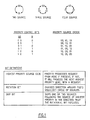
- the sources in the, for best understanding, should be visualized as a circle (see Fig. 1). It can be seen how the assigned source codes are given in the diagram.
- One of these codes will be placed as the first two bits of data controlling the pod ⁇ s priority.
- the source whose code is placed there will have the highest priority. If this source has a request, it will be processed independent of what the other sources have as a request.
- these two bits are all that is needed, even one bit can be used if it does not break consistency with the rest of the tree structure. Because, if the code of the source in the bits used specifies the source of highest priority, then the source not dpecified is second in line for priority.
- the third bit that controls the priority of the pod is used as an indicator of rotation around the visualized circle in Fig. 1.
- the rotational bit will distinguish which source follows the source with the highest priority. If the rotational bit is zero, then the path will be clockwise around the circle. If the bit is one, the path will be counter-clockwise around the circle. This bit is needed only for a three or four-source pod. In a three-source pod, ;if the highest priority code is 00 with the rotational bit set to 0, then the order of priority will be 00, 01, 10. If the rotational bit was a (1), the order of priority would be 00, 10, 01. It can be seen in the previous example that if the source having the highest priority changes from 00 to either 10 or 01, the rotational bit will alter the priority source order in a way to achieve all six combinations of the sources (see Fig. 1).
- the fourth and fifth bits are for a four-source pod only.
- the fourth bit states that the source that would normally be second, as indicated by the highest priority code and the rotational bit, is now last.
- the first three control bits set up a priority source order of 00, 01, 10, 11.
- the fourth bit if set to one, would change the order to 00,10,11,01, rotating the last three sources one position.
- the fifth bit if set to a one, will behave much like the previous one, but the last three sources rotate two positions. So, in the example above, the priority source order 00,01,10,11 will change to 00,11,01,10. This fifth bit will rotate the last three sources ⁇ order by two positions independent of the fourth bit. The fifth will override the fourth if the fifth is set to a 1.
- the programmable priority of this invention can be used to set priorities at the time of installation of a computer system, and/or alternatively can be changed dynamically at any time during the operation of the computer system.
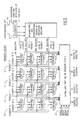
- the foregoing priority scheme is implemented in the so-called priority heart of Fig. 3.
- the numbers 1, 2, 3, and 4 identifying the four levels of priority in Fig. 3 correspond to the numbered gates on Fig. 4.
- the gating will automatically change the priority when conflicting requests are received at the same time, such as the Store Queue request coded 01, the Command Buffer request coded 10 and the Channel & Lower Memory request coded as 11.
- the code 00 is an invalid entry.
- One source of blocking which constitutes an important feature of this invention is the implementation of registers that monitor contentions -- they are called Monitor Registers which are specified as F1 through F6 in Fig. 2.
- Another example would be a lock on eight bytes of data.
- the data could be locked by processor 'A' while processor 'B' wants to store to that data.
- the monitor register associated with that lock detects an address match and sets high the bit position of the source requesting to do the store.
- the store queue bit will be set for processor 'B' in processor A's lock's monitor register.
- the store queue bit that was set will prevent processor 'B' from trying to restart its store command until the locked data is freed. This will prevent priority cycles from being wasted by this command when they can be used for other sources that can be executed.
- processor B's store queue Its not just this bit that can block the priority for processor B's store queue, but each bit that represents processsor B's store queue in each of the twelve monitor registers. They all must be zero for a request to be processed by priority or otherwise the request won't be processed until they are zeroed.
- the lock is the only contention for processor B's store queue and at the time that processor 'A' releases the data from its lock, the monitor is also reset. All the sources that were held out of priority by that monitor register associated to processor A's lock, like processor 'B', will then be allowed back into the priority circuitry
- the monitored contentions in this implemention are due to Locks, Lineholds and Freeze registers.
- the Locks are registers that prevent any other processor from altering the status of a eight byte segment of data.
- the Lineholds are a series of three registers per processor that prevents lines from being invalidated at the cache level.
- the Freeze registers are used to prevent duplicate inpage requests for the cache level, of the same data.
- the monitor registers are a series of registers that are associated with the Lock, Lineholds and Freeze registers. Since this design has six processors then there are six freeze registers and thus six monitor registers for these freeze registers. When it comes to the Lineholds and Lock register there is no need to have a seperate monitor register for each of the eighteen Lineholds and for the each of the six Lock registers. First, the Lineholds and the Locks are mutuality exclusive and share the same phyical register, so there is no need for seperate the monitor registers ethier. Second, the three Lineholds for each processor are reset at the same time, so they can be grouped into one monitor register. This gives twelve monitor registers in all, six to cover contentions on the freeze registers and six to cover the contentions on the Locks and Lineholds.
- monitor register there is a bit corresponding to each of the sources of cammands needed to aid the priority at the level.
- sources of commands per processor There are only two sources of commands per processor that is needed, they are the Command Buffer and the Store Queue.
- the other source of commands is the BSC interface and it is controlled by the BSC priority, so it is not needed in the monitor registers.
- the monitor register will have twelve bits, two for each processor, one for the command buffer (CBx) and one for the store queue (SQx). They will be configured as seen follows:
- the other blocking which can override the normal priority selection is shown in Fig. 2 and includes blocking initiated through the system blocks by Error Set and/or by Selected Source Set. It also includes blocking initiated through the programmable blocks by Programmable Set. As shown in the drawing, the blocking can be for application to individual sources or to all the sources, depending on the circumstances. It is important to note that during any blocking, the request being blocked does not continue to enter the priority heart, but awaits resolution of any contention or other event causing the blocking, and then re-enters the prioriry heart.
Landscapes
- Engineering & Computer Science (AREA)
- Theoretical Computer Science (AREA)
- Physics & Mathematics (AREA)
- General Engineering & Computer Science (AREA)
- General Physics & Mathematics (AREA)
- Bus Control (AREA)
- Computer And Data Communications (AREA)
Applications Claiming Priority (2)
| Application Number | Priority Date | Filing Date | Title |
|---|---|---|---|
| US292297 | 1988-12-30 | ||
| US07/292,297 US5311461A (en) | 1988-12-30 | 1988-12-30 | Programmable priority and selective blocking in a compute system |
Publications (2)
| Publication Number | Publication Date |
|---|---|
| EP0375978A2 true EP0375978A2 (de) | 1990-07-04 |
| EP0375978A3 EP0375978A3 (de) | 1991-09-18 |
Family
ID=23124065
Family Applications (1)
| Application Number | Title | Priority Date | Filing Date |
|---|---|---|---|
| EP19890122092 Withdrawn EP0375978A3 (de) | 1988-12-30 | 1989-11-30 | Programmierbare Priorität und selektive Blockierung in einem Rechnersystem |
Country Status (3)
| Country | Link |
|---|---|
| US (1) | US5311461A (de) |
| EP (1) | EP0375978A3 (de) |
| JP (1) | JPH02226343A (de) |
Families Citing this family (6)
| Publication number | Priority date | Publication date | Assignee | Title |
|---|---|---|---|---|
| US6951019B1 (en) | 1992-09-30 | 2005-09-27 | Apple Computer, Inc. | Execution control for processor tasks |
| JPH06139107A (ja) * | 1992-10-30 | 1994-05-20 | Nec Corp | ブレイクアドレス検出回路 |
| US6948172B1 (en) | 1993-09-21 | 2005-09-20 | Microsoft Corporation | Preemptive multi-tasking with cooperative groups of tasks |
| CA2131406C (en) * | 1993-09-21 | 2002-11-12 | David D'souza | Preemptive multi-tasking with cooperative groups of tasks |
| US5884051A (en) * | 1997-06-13 | 1999-03-16 | International Business Machines Corporation | System, methods and computer program products for flexibly controlling bus access based on fixed and dynamic priorities |
| US6810422B1 (en) | 2000-01-14 | 2004-10-26 | Lockheed Martin Tactical Defense Systems | System and method for probabilistic quality of communication service determination |
Family Cites Families (21)
| Publication number | Priority date | Publication date | Assignee | Title |
|---|---|---|---|---|
| BE755621A (fr) * | 1969-09-02 | 1971-03-02 | Siemens Ag | Systeme de central automatique pour donnees a commande par programme |
| US3836889A (en) * | 1973-03-23 | 1974-09-17 | Digital Equipment Corp | Priority interruption circuits for digital computer systems |
| JPS5075750A (de) * | 1973-11-07 | 1975-06-21 | ||
| US4028664A (en) * | 1975-03-26 | 1977-06-07 | Honeywell Information Systems, Inc. | Apparatus for dispatching data of the highest priority process having the highest priority channel to a processor |
| US4237534A (en) * | 1978-11-13 | 1980-12-02 | Motorola, Inc. | Bus arbiter |
| US4334288A (en) * | 1979-06-18 | 1982-06-08 | Booher Robert K | Priority determining network having user arbitration circuits coupled to a multi-line bus |
| US4314335A (en) * | 1980-02-06 | 1982-02-02 | The Perkin-Elmer Corporation | Multilevel priority arbiter |
| US4473880A (en) * | 1982-01-26 | 1984-09-25 | Intel Corporation | Arbitration means for controlling access to a bus shared by a number of modules |
| JPS58169659A (ja) * | 1982-03-30 | 1983-10-06 | Fujitsu Ltd | 共用ロツク制御方式 |
| JPS58222361A (ja) * | 1982-06-18 | 1983-12-24 | Fujitsu Ltd | デ−タ処理システムにおけるアクセス要求の優先順位決定制御方式 |
| JPS58225442A (ja) * | 1982-06-25 | 1983-12-27 | Toshiba Corp | 優先順位制御回路 |
| US4814974A (en) * | 1982-07-02 | 1989-03-21 | American Telephone And Telegraph Company, At&T Bell Laboratories | Programmable memory-based arbitration system for implementing fixed and flexible priority arrangements |
| IT1159351B (it) * | 1983-02-03 | 1987-02-25 | Cselt Centro Studi Lab Telecom | Circuito di arbitraggio a struttura distribuita per le richieste di accesso al bus di un sistema multiprocessore |
| JPS59148952A (ja) * | 1983-02-14 | 1984-08-25 | インタ−ナショナル ビジネス マシ−ンズ コ−ポレ−ション | 優先順位回路 |
| US4533994A (en) * | 1983-09-09 | 1985-08-06 | Avco Corporation | Priority circuit for a multiplexer terminal |
| US4941086A (en) * | 1984-02-02 | 1990-07-10 | International Business Machines Corporation | Program controlled bus arbitration for a distributed array processing system |
| JPS6242245A (ja) * | 1985-08-19 | 1987-02-24 | Mitsubishi Electric Corp | フアイルアクセス方法 |
| US4760515A (en) * | 1985-10-28 | 1988-07-26 | International Business Machines Corporation | Arbitration apparatus for determining priority of access to a shared bus on a rotating priority basis |
| US4809164A (en) * | 1986-03-26 | 1989-02-28 | Tandem Computers Incorporated | Processor controlled modifying of tabled input/output priority |
| JPS62231338A (ja) * | 1986-03-31 | 1987-10-09 | Toshiba Corp | 優先順位決定方法および装置 |
| JPS62282337A (ja) * | 1986-05-30 | 1987-12-08 | Nec Corp | 排他制御方式 |
-
1988
- 1988-12-30 US US07/292,297 patent/US5311461A/en not_active Expired - Fee Related
-
1989
- 1989-11-30 EP EP19890122092 patent/EP0375978A3/de not_active Withdrawn
- 1989-12-28 JP JP1338894A patent/JPH02226343A/ja active Pending
Also Published As
| Publication number | Publication date |
|---|---|
| US5311461A (en) | 1994-05-10 |
| JPH02226343A (ja) | 1990-09-07 |
| EP0375978A3 (de) | 1991-09-18 |
Similar Documents
| Publication | Publication Date | Title |
|---|---|---|
| US5560019A (en) | Method and apparatus for handling interrupts in a multiprocessor computer system | |
| US4451881A (en) | Data processing system bus for multiple independent users | |
| US4821177A (en) | Apparatus for controlling system accesses having multiple command level conditional rotational multiple port servicing priority hierarchy | |
| EP0569195B1 (de) | Telefonschaltsystem mit einem vom Benützer gesteuerten Datenspeicher-Zugriffssystem und Verfahren | |
| US5025370A (en) | Circuit for preventing lock-out of high priority requests to a system controller | |
| US5218703A (en) | Circuit configuration and method for priority selection of interrupts for a microprocessor | |
| US5586331A (en) | Duplicated logic and interconnection system for arbitration among multiple information processors | |
| US4901234A (en) | Computer system having programmable DMA control | |
| US4130864A (en) | Priority selection circuit for multiported central functional unit with automatic priority reduction on excessive port request | |
| KR100886518B1 (ko) | 멀티프로세서 시스템에서 사용하기 위한 가중 프로세서선택 장치 및 방법 | |
| EP0355363B1 (de) | Integrierte Zeitgeberschaltung mit mehreren Kanälen und zugeordnetem Bedienungsprozessor | |
| US5802541A (en) | Method and apparatus in a data processing system for using chip selects to perform a memory management function | |
| EP0355463B1 (de) | Zeitgeberkanal mit mehreren Zeitgeberreferenzmerkmalen | |
| EP0355465B1 (de) | Zeitgeberkanal mit Übereinstimmungserkennungsmerkmalen | |
| EP0355462B1 (de) | Zugeordneter Dienstprozessor mit Übertragungsmöglichkeiten zwischen Kanälen | |
| EP0354998A2 (de) | Zeitgeberkanal für die Verwendung in einem Mehrkanal-Zeitsystem | |
| HK1000386B (en) | Timer channel with match recognition features | |
| US5894562A (en) | Method and apparatus for controlling bus arbitration in a data processing system | |
| EP0375978A2 (de) | Programmierbare Priorität und selektive Blockierung in einem Rechnersystem | |
| US5051946A (en) | Integrated scannable rotational priority network apparatus | |
| US5203007A (en) | Overriding programmable priority and selective blocking in a computer system | |
| US4047245A (en) | Indirect memory addressing | |
| US4926313A (en) | Bifurcated register priority system | |
| US5568631A (en) | Multiprocessor system with a shared control store accessed with predicted addresses | |
| JPH054710B2 (de) |
Legal Events
| Date | Code | Title | Description |
|---|---|---|---|
| PUAI | Public reference made under article 153(3) epc to a published international application that has entered the european phase |
Free format text: ORIGINAL CODE: 0009012 |
|
| AK | Designated contracting states |
Kind code of ref document: A2 Designated state(s): DE FR GB |
|
| 17P | Request for examination filed |
Effective date: 19901025 |
|
| PUAL | Search report despatched |
Free format text: ORIGINAL CODE: 0009013 |
|
| AK | Designated contracting states |
Kind code of ref document: A3 Designated state(s): DE FR GB |
|
| 17Q | First examination report despatched |
Effective date: 19940408 |
|
| STAA | Information on the status of an ep patent application or granted ep patent |
Free format text: STATUS: THE APPLICATION IS DEEMED TO BE WITHDRAWN |
|
| 18D | Application deemed to be withdrawn |
Effective date: 19961227 |