EP0376368B1 - Verfahren zur Herstellung von Lagerungen - Google Patents
Verfahren zur Herstellung von Lagerungen Download PDFInfo
- Publication number
- EP0376368B1 EP0376368B1 EP89203121A EP89203121A EP0376368B1 EP 0376368 B1 EP0376368 B1 EP 0376368B1 EP 89203121 A EP89203121 A EP 89203121A EP 89203121 A EP89203121 A EP 89203121A EP 0376368 B1 EP0376368 B1 EP 0376368B1
- Authority
- EP
- European Patent Office
- Prior art keywords
- bearing metal
- heat treatment
- metal layer
- process according
- bearing
- Prior art date
- Legal status (The legal status is an assumption and is not a legal conclusion. Google has not performed a legal analysis and makes no representation as to the accuracy of the status listed.)
- Expired - Lifetime
Links
Images


Classifications
-
- C—CHEMISTRY; METALLURGY
- C21—METALLURGY OF IRON
- C21D—MODIFYING THE PHYSICAL STRUCTURE OF FERROUS METALS; GENERAL DEVICES FOR HEAT TREATMENT OF FERROUS OR NON-FERROUS METALS OR ALLOYS; MAKING METAL MALLEABLE, e.g. BY DECARBURISATION OR TEMPERING
- C21D9/00—Heat treatment, e.g. annealing, hardening, quenching or tempering, adapted for particular articles; Furnaces therefor
- C21D9/40—Heat treatment, e.g. annealing, hardening, quenching or tempering, adapted for particular articles; Furnaces therefor for rings; for bearing races
-
- C—CHEMISTRY; METALLURGY
- C22—METALLURGY; FERROUS OR NON-FERROUS ALLOYS; TREATMENT OF ALLOYS OR NON-FERROUS METALS
- C22F—CHANGING THE PHYSICAL STRUCTURE OF NON-FERROUS METALS AND NON-FERROUS ALLOYS
- C22F1/00—Changing the physical structure of non-ferrous metals or alloys by heat treatment or by hot or cold working
- C22F1/04—Changing the physical structure of non-ferrous metals or alloys by heat treatment or by hot or cold working of aluminium or alloys based thereon
-
- C—CHEMISTRY; METALLURGY
- C22—METALLURGY; FERROUS OR NON-FERROUS ALLOYS; TREATMENT OF ALLOYS OR NON-FERROUS METALS
- C22F—CHANGING THE PHYSICAL STRUCTURE OF NON-FERROUS METALS AND NON-FERROUS ALLOYS
- C22F1/00—Changing the physical structure of non-ferrous metals or alloys by heat treatment or by hot or cold working
- C22F1/08—Changing the physical structure of non-ferrous metals or alloys by heat treatment or by hot or cold working of copper or alloys based thereon
-
- C—CHEMISTRY; METALLURGY
- C23—COATING METALLIC MATERIAL; COATING MATERIAL WITH METALLIC MATERIAL; CHEMICAL SURFACE TREATMENT; DIFFUSION TREATMENT OF METALLIC MATERIAL; COATING BY VACUUM EVAPORATION, BY SPUTTERING, BY ION IMPLANTATION OR BY CHEMICAL VAPOUR DEPOSITION, IN GENERAL; INHIBITING CORROSION OF METALLIC MATERIAL OR INCRUSTATION IN GENERAL
- C23C—COATING METALLIC MATERIAL; COATING MATERIAL WITH METALLIC MATERIAL; SURFACE TREATMENT OF METALLIC MATERIAL BY DIFFUSION INTO THE SURFACE, BY CHEMICAL CONVERSION OR SUBSTITUTION; COATING BY VACUUM EVAPORATION, BY SPUTTERING, BY ION IMPLANTATION OR BY CHEMICAL VAPOUR DEPOSITION, IN GENERAL
- C23C14/00—Coating by vacuum evaporation, by sputtering or by ion implantation of the coating forming material
- C23C14/06—Coating by vacuum evaporation, by sputtering or by ion implantation of the coating forming material characterised by the coating material
- C23C14/14—Metallic material, boron or silicon
- C23C14/16—Metallic material, boron or silicon on metallic substrates or on substrates of boron or silicon
- C23C14/165—Metallic material, boron or silicon on metallic substrates or on substrates of boron or silicon by cathodic sputtering
-
- F—MECHANICAL ENGINEERING; LIGHTING; HEATING; WEAPONS; BLASTING
- F16—ENGINEERING ELEMENTS AND UNITS; GENERAL MEASURES FOR PRODUCING AND MAINTAINING EFFECTIVE FUNCTIONING OF MACHINES OR INSTALLATIONS; THERMAL INSULATION IN GENERAL
- F16C—SHAFTS; FLEXIBLE SHAFTS; ELEMENTS OR CRANKSHAFT MECHANISMS; ROTARY BODIES OTHER THAN GEARING ELEMENTS; BEARINGS
- F16C33/00—Parts of bearings; Special methods for making bearings or parts thereof
- F16C33/02—Parts of sliding-contact bearings
- F16C33/04—Brasses; Bushes; Linings
- F16C33/06—Sliding surface mainly made of metal
- F16C33/14—Special methods of manufacture; Running-in
-
- F—MECHANICAL ENGINEERING; LIGHTING; HEATING; WEAPONS; BLASTING
- F16—ENGINEERING ELEMENTS AND UNITS; GENERAL MEASURES FOR PRODUCING AND MAINTAINING EFFECTIVE FUNCTIONING OF MACHINES OR INSTALLATIONS; THERMAL INSULATION IN GENERAL
- F16C—SHAFTS; FLEXIBLE SHAFTS; ELEMENTS OR CRANKSHAFT MECHANISMS; ROTARY BODIES OTHER THAN GEARING ELEMENTS; BEARINGS
- F16C33/00—Parts of bearings; Special methods for making bearings or parts thereof
- F16C33/02—Parts of sliding-contact bearings
- F16C33/04—Brasses; Bushes; Linings
- F16C33/24—Brasses; Bushes; Linings with different areas of the sliding surface consisting of different materials
-
- F—MECHANICAL ENGINEERING; LIGHTING; HEATING; WEAPONS; BLASTING
- F16—ENGINEERING ELEMENTS AND UNITS; GENERAL MEASURES FOR PRODUCING AND MAINTAINING EFFECTIVE FUNCTIONING OF MACHINES OR INSTALLATIONS; THERMAL INSULATION IN GENERAL
- F16C—SHAFTS; FLEXIBLE SHAFTS; ELEMENTS OR CRANKSHAFT MECHANISMS; ROTARY BODIES OTHER THAN GEARING ELEMENTS; BEARINGS
- F16C2223/00—Surface treatments; Hardening; Coating
- F16C2223/30—Coating surfaces
- F16C2223/60—Coating surfaces by vapour deposition, e.g. PVD, CVD
Definitions
- the invention relates to a method for producing bearings from at least one bearing metal layer applied to a metallic support body by sputtering, consisting of a base material with particles of metallic sliding material with an average diameter of embedded therein in a statistical normal distribution x ⁇ 0.8 »m, preferably 0.05 to 0.4» m and embedded oxygen with a content of 0.005 to 1.0 mass%.
- a composite material is provided in DE-C-2 853 724, in which a metallic sliding or friction layer is applied to a carrier layer by cathode sputtering, in which harder particles having an effect on dispersion strengthening in substantially less than 1.0% by weight lying quantity are stored, whereby the harder particles consist of oxides of constituents contained in the metal and are formed from oxides of those metals in which the metal oxide has a larger volume than the metal itself.
- the goal of dispersion hardening is to improve the mobility of lattice construction defects, e.g. B. dislocations and grain boundaries by the oxides present in finely dispersed distribution so that the strength and the heat resistance are increased even at elevated temperature.
- the amount of oxygen required for the formation of the oxides is either already contained in the targets produced by normal continuous casting or is introduced into the plasma gas during sputtering.
- This object is achieved in such a way that the bearings are subjected to an isothermal heat treatment in air at temperatures of 170 to 230 ° C. with the proviso that the microhardness of the bearing metal layer decreases with increasing temperature.
- the design of the method according to the application can be seen in the fact that the temperature range that is preferably considered for the isothermal heat aging is 190 to 220 ° C. and, according to a further feature of the invention, the duration of the isothermal heat treatment with a maximum of 5 hours is sufficient to achieve the desired success is.
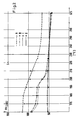
- the drawings show the change in the starting microhardness of the bearing metal layers, the exact composition of which is given in the table below, in the bearings A, B and C as a function of the annealing temperature for a 1-, 5- and 10-hour annealing period (FIGS. 1, 2 and 3 ).
- the bearing metal layer of bearing A has a comparatively high oxygen content, that of bearings B and C has a comparatively low oxygen content.
- the bearing metal layer of bearing D has a composition as specified in DE-C-2 853 724.
- the isothermal heat treatment was carried out in air at 170 ° C, 180 ° C, 190 ° C, 200 ° C, 210 ° C, 225 ° C and 325 ° C.
- the microhardnesses of the bearing metal layers after 1, 5 and 10 hours of heat treatment were determined from five individual measurements.
- the measured isothermal microhardnesses show that the microhardness decreases at all heat treatment temperatures and is greater the higher the heat treatment temperature. For temperatures greater than 200 ° C there is a greater decrease in microhardness at the beginning of the heat treatment, which is then short in time. The decrease in microhardness for the bearing metal layer of bearing D is comparatively insignificant.
- the advantage achieved by the invention is that the microhardnesses of the bearing metal layers with a comparatively low oxygen content can be varied within a wide range by heat treatment in the temperature range, in particular from 190 to 210 ° C., and the desired values corresponding to the requirements can thus be set without problems.
- the desired microhardness of the bearing metal layers depends primarily on the level of the heat treatment temperature and less on the duration of the heat treatment, since the significant change in microhardness takes place within the first 5 hours of the heat treatment.
Landscapes
- Chemical & Material Sciences (AREA)
- Engineering & Computer Science (AREA)
- Mechanical Engineering (AREA)
- Materials Engineering (AREA)
- Metallurgy (AREA)
- Organic Chemistry (AREA)
- General Engineering & Computer Science (AREA)
- Crystallography & Structural Chemistry (AREA)
- Thermal Sciences (AREA)
- Physics & Mathematics (AREA)
- Chemical Kinetics & Catalysis (AREA)
- Physical Vapour Deposition (AREA)
- Sliding-Contact Bearings (AREA)
- Glass Compositions (AREA)
- Rolling Contact Bearings (AREA)
Description
- Die Erfindung betrifft ein Verfahren zur Herstellung von Lagerungen aus wenigstens einer durch Kathodenzerstäubung auf einen metallischen Tragkörper aufgebrachten Lagermetallschicht, bestehend aus einer Grundmasse mit darin in statistischer Normalverteilung eingelagerten Teilchen aus metallischem Gleitwerkstoff mit einem mittleren Durchmesser von
x < 0,8 »m, vorzugsweise 0,05 bis 0,4 »m und eingelagertem Sauerstoff mit einem Gehalt von 0,005 bis 1,0 Masse-%. - Als Folge der Entwicklung im Brennkraftmaschinenbau zu immer größerer Leistungsdichte bei möglichst hoher Wirtschaftlichkeit im Hinblick auf einen möglichst niedrigen Kraftstoffverbrauch und wirtschaftliche Fertigung sind u.a. auch die Anforderungen an die Lagerungen von Kurbelwellen und Pleuel, insbesondere im Hinblick auf höhere Festigkeiten gegenüber dynamischen Wechselbeanspruchungen im Gebiet der Flüssigkeitsreibung sowie an das Gleitverhalten im Gebiet der Mischreibung gestiegen. Für den Hersteller besteht somit die Aufgabe, Lagerungen zu entwickeln, die den bei modernen Brennkraftmaschinen durch gesteigerte Zünddrücke, höhere Verdichtung und Turboaufladung auftretenden Beanspruchungen hinsichtlich Verringerung der Reibungsverluste, der Verschleißfestigkeit und Freßunempfindlichkeit weitgehend angepaßt sind.
- Für diesen Zweck ist in der DE-C- 2 853 724 ein Werkstoffverbund vorgesehen, bei dem auf eine Trägerschicht durch Kathodenzerstäubung eine metallische Gleit- bzw. Reibschicht aufgebracht ist, in der härtere dispersionsverfestigend wirkende Teilchen in wesentlich unter 1,0 Gew.-% liegender Menge eingelagert sind, wobei die härteren Teilchen aus Oxiden von in dem Metall enthaltenen Bestandteilen bestehen und aus Oxiden solcher Metalle gebildet sind, bei denen das Metalloxid ein größeres Volumen als das Metall selbst aufweist. Das Ziel der Dispersionsverfestigung ist, die Beweglichkeit von Gitterbaufehlern, z. B. Versetzungen und Korngrenzen, durch die in feindisperser Verteilung vorliegenden Oxide so zu behindern, daß auch bei erhöhter Temperatur die Festigkeit und die Warmverschleißfestigkeit erhöht werden. Die für die Bildung der Oxide erforderliche Sauerstoffmenge ist entweder bereits in den durch normalen Strangguß hergestellten Targets enthalten oder wird während der Kathodenzerstäubung in das Plasmagas eingeleitet.
- Da mit zunehmenden Mengen dispersionshärtender Oxide die Duktilität der Gleit- bzw. Reibschicht abnimmt und insbesondere das Notlauf- und Einlaufverhalten verschlechtert werden, kann das an sich erwünschte Potential der Dispersionshärtung zur Erzielung einer hohen Warmfestigkeit für Lagerungen nicht ausgeschöpft werden.
- Diesem Nachteil wird durch die in der DE-A- 3 640 767 beschriebenen Lagerung begegnet, die aus wenigstens einer durch Kathodenzerstäubung auf einen metallischen Tragkörper aufgebrachten Lagermetallschicht aus einer Grundmasse mit darin statistischer Normalverteilung eingelagerten Teilchen aus metallischem Gleitwerkstoff mit einem mittleren Durchmesser von
x < 0,8 »m, vorzugsweise 0,05 bis 0,4 »m, und darin eingelagertem Sauerstoff mit einem Gehalt von 0,005 bis 1,0 Masse-% besteht. Die Lagermetallschichten solcher Lagerungen besitzen relativ große Mikrohärten im Bereich von 94 bis 120 (HV 0,002) und sind daher für bestimmte Anwendungsfälle, bei denen beispielsweise hohe Anforderungen an die Einbettfähigkeit und Notlaufeigenschaften bestehen, wegen mangelnder Verträglichkeit mit dem Gleitpartner, also Anpassungsfähigkeit, Einlauffähigkeit und Freßunempfindlichkeit, nicht einsetzbar. - Es ist die Aufgabe der vorliegenden Erfindung, die Mikrohärte der Lagermetallschichten der eingangs beschriebenen Lagerungen innerhalb eines vergleichsweise weiten Bereichs, dessen untere Grenze bis zu 50 % der Ausgangsmikrohärte betragen kann, gezielt auf bestimmte Werte zu senken, um damit die Lagerungen den jeweils mechanisch-technologischen Anforderungen der Gleitpartner, insbesondere hinsichtlich Einbettfähigkeit, Notlaufeigenschaften, Verschleißfähigkeit und Freßunempfindlichkeit anpassen zu können.
- Die Lösung dieser Aufgabe erfolgt in der Weise, daß die Lagerungen einer isothermen Wärmebehandlung an Luft bei Temperaturen von 170 bis 230°C mit der Maßgabe unterworfen werden, daß mit steigender Temperatur die Mikrohärte der Lagermetallschicht abnimmt.
- Die Ausgestaltung des anmeldungsgemäßen Verfahrens ist darin zu sehen, daß der vorzugsweise in Betracht kommende Temperaturbereich für die isotherme Wärmeauslagerung 190 bis 220°C beträgt und nach einem weiteren Merkmal der Erfindung die Dauer der isothermen Wärmebehandlung mit maximal 5 Stunden für die Erzielung des gewünschten Erfolgs ausreichend ist.
- Die mit dem erfindungsgemäß durchgeführten Verfahren erzielte Wirkung ist anhand der Zeichnungen, die nachfolgend näher erläutert sind, beispielhaft dargestellt.
- Die Zeichnungen zeigen die Änderung der Ausgangsmikrohärte der Lagermetallschichten, deren genaue Zusammensetzung in nachstehender Tabelle wiedergegeben ist, der Lagerungen A, B und C in Abhängigkeit von der Glühtemperatur bei 1-, 5- und 10-stündiger Glühdauer (Figen. 1, 2 und 3). Die Lagermetallschicht der Lagerung A besitzt einen vergleichsweise hohen Sauerstoffgehalt, diejenige der Lagerungen B und C einen vergleichsweise niedrigen Sauerstoffgehalt. Die Lagermetallschicht der Lagerung D weist eine Zusammensetzung auf, wie diese in der DE-C-2 853 724 angegeben ist. Die isotherme Wärmebehandlung wurde an Luft bei 170°C, 180°C, 190°C, 200°C, 210°C, 225°C und 325°C durchgeführt. Neben den Ausgangsmikrohärten wurden die Mikrohärten der Lagermetallschichten nach 1-, 5- und 10-stündiger Wärmebehandlung aus je fünf Einzelmessungen ermittelt.
- Die gemessenen isothermen Mikrohärten zeigen, daß bei allen Wärmebehandlungstemperaturen die Mikrohärte abnimmt und um so größer ist, je höher die Wärmebehandlungstemperatur ist. Für Temperaturen größer 200°C erfolgt zu Beginn der Wärmebehandlung eine größere Abnahme der Mikrohärte, die danach zeitlich gering ist. Die Abnahme der Mikrohärte für die Lagermetallschicht der Lagerung D ist vergleichsweise unbedeutend.
- Der mit der Erfindung erzielte Vorteil besteht darin, daß sich die Mikrohärten der Lagermetallschichten mit vergleichsweise geringem Sauerstoffgehalt durch eine Wärmebehandlung im Temperaturbereich insbesondere von 190 bis 210°C in einem weiten Bereich variieren und sich damit problemlos den gewünschten, den Anforderungen entsprechenden Werten einstellen lassen. Die gewünschte Mikrohärte der Lagermetallschichten hängt dabei vor allem von der Höhe der Wärmebehandlungstemperatur und weniger von der Dauer der Wärmebehandlung ab, da die maßgebliche Änderung der Mikrohärte innerhalb der ersten 5 Stunden der Wärmebehandlung erfolgt.

Claims (6)
- Verfahren zur Herstellung von Lagerungen aus wenigstens einer durch Kathodenzerstäubung auf einen metallischen Tragkörper aufgebrachten Lagermetallschicht, bestehend aus einer Grundmasse mit darin in statistischer Normalverteilung eingelagerten Teilchen aus metallischem Gleitwerkstoff mit einem mittleren Durchmesser von
x < 0,8 »m, vorzugsweise 0,05 bis 0,4 »m und darin eingelagertem Sauerstoff mit einem Gehalt von 0,005 bis 1,0 Masse-%, dadurch gekennzeichnet, daß die Lagerungen einer isothermen Wärmebehandlung an Luft im Temperaturbereich von 170 bis 230°C mit der Maßgabe unterworfen werden, daß mit steigenden Temperaturen die Mikrohärte der Lagermetallschicht abnimmt. - Verfahren nach Anspruch 1, dadurch gekennzeichnet, daß die Lagerungen einer isothermen Wärmebehandlung an Luft bei Temperaturen von 190 bis 220°C unterworfen werden.
- Verfahren nach den Ansprüchen 1 und 2, dadurch gekennzeichnet, daß die Dauer der isothermen Wärmebehandlung 0,5 bis 5 Stunden beträgt.
- Verfahren nach den Ansprüchen 1 bis 3, dadurch gekennzeichnet, daß die Grundmasse der Lagermetallschicht aus einem Lagermetall auf der Basis von Aluminium, Kupfer oder Eisen besteht.
- Verfahren nach den Ansprüchen 1 bis 4, dadurch gekennzeichnet, daß die in der Grundmasse eingelagerten Teilchen aus Zinn, Blei, Wismut, Kupfer und/oder Zink bestehen.
- Verfahren nach den Ansprüchen 1 bis 5, dadurch gekennzeichnet, daß die Lagermetallschicht aus einer Legierung des Typs AlSn5Cu, AlSn10Cu, AlSn20Cu, AlSn30Cu, AlSn40Cu, AlSn10Pb10Cu oder AlZn5Pb besteht.
Applications Claiming Priority (2)
| Application Number | Priority Date | Filing Date | Title |
|---|---|---|---|
| DE3843927 | 1988-12-24 | ||
| DE3843927A DE3843927A1 (de) | 1988-12-24 | 1988-12-24 | Verfahren zur herstellung von lagerungen |
Publications (3)
| Publication Number | Publication Date |
|---|---|
| EP0376368A2 EP0376368A2 (de) | 1990-07-04 |
| EP0376368A3 EP0376368A3 (de) | 1992-02-12 |
| EP0376368B1 true EP0376368B1 (de) | 1995-04-26 |
Family
ID=6370284
Family Applications (1)
| Application Number | Title | Priority Date | Filing Date |
|---|---|---|---|
| EP89203121A Expired - Lifetime EP0376368B1 (de) | 1988-12-24 | 1989-12-08 | Verfahren zur Herstellung von Lagerungen |
Country Status (6)
| Country | Link |
|---|---|
| EP (1) | EP0376368B1 (de) |
| JP (1) | JP2935861B2 (de) |
| AT (1) | ATE121802T1 (de) |
| BR (1) | BR8906702A (de) |
| DE (2) | DE3843927A1 (de) |
| ES (1) | ES2071647T3 (de) |
Cited By (3)
| Publication number | Priority date | Publication date | Assignee | Title |
|---|---|---|---|---|
| US5882804A (en) * | 1995-03-01 | 1999-03-16 | Honda Giken Kogyo Kabushiki Kaisha | Slide surface construction |
| DE19824308C1 (de) * | 1998-06-02 | 1999-09-09 | Fraunhofer Ges Forschung | Gleitlagerschale und Verfahren zu ihrer Herstellung |
| EP0571481B2 (de) † | 1991-02-20 | 2004-09-29 | Dana Corporation | Lager |
Families Citing this family (1)
| Publication number | Priority date | Publication date | Assignee | Title |
|---|---|---|---|---|
| AT514955B1 (de) | 2014-01-31 | 2015-05-15 | Miba Gleitlager Gmbh | Verfahren zur Herstellung eines Zweistoff-Gleitlagers |
Family Cites Families (4)
| Publication number | Priority date | Publication date | Assignee | Title |
|---|---|---|---|---|
| BE756700A (fr) * | 1969-09-25 | 1971-03-01 | Clevite Corp | Coussinets en acier a surface en aluminium et procede pour les fabriquer |
| GB2040315B (en) * | 1978-12-13 | 1983-05-11 | Glyco Metall Werke | Laminar material or element and a process for its manufacture |
| DE3640767A1 (de) * | 1986-10-30 | 1988-05-05 | Kolbenschmidt Ag | Lagerung |
| ATE80671T1 (de) * | 1986-12-23 | 1992-10-15 | Balzers Hochvakuum | Verbundwerkstoff mit einer durch kathodenzerstaeubung aufgebrachten gleitschicht. |
-
1988
- 1988-12-24 DE DE3843927A patent/DE3843927A1/de not_active Withdrawn
-
1989
- 1989-12-08 DE DE58909203T patent/DE58909203D1/de not_active Expired - Fee Related
- 1989-12-08 AT AT89203121T patent/ATE121802T1/de not_active IP Right Cessation
- 1989-12-08 ES ES89203121T patent/ES2071647T3/es not_active Expired - Lifetime
- 1989-12-08 EP EP89203121A patent/EP0376368B1/de not_active Expired - Lifetime
- 1989-12-15 JP JP1325729A patent/JP2935861B2/ja not_active Expired - Fee Related
- 1989-12-22 BR BR898906702A patent/BR8906702A/pt unknown
Cited By (4)
| Publication number | Priority date | Publication date | Assignee | Title |
|---|---|---|---|---|
| EP0571481B2 (de) † | 1991-02-20 | 2004-09-29 | Dana Corporation | Lager |
| US5882804A (en) * | 1995-03-01 | 1999-03-16 | Honda Giken Kogyo Kabushiki Kaisha | Slide surface construction |
| DE19824308C1 (de) * | 1998-06-02 | 1999-09-09 | Fraunhofer Ges Forschung | Gleitlagerschale und Verfahren zu ihrer Herstellung |
| EP0962673A2 (de) | 1998-06-02 | 1999-12-08 | Federal-Mogul Wiesbaden GmbH | Gleitlagerschale und Verfahren zu ihrer Herstellung |
Also Published As
| Publication number | Publication date |
|---|---|
| DE3843927A1 (de) | 1990-06-28 |
| EP0376368A2 (de) | 1990-07-04 |
| EP0376368A3 (de) | 1992-02-12 |
| BR8906702A (pt) | 1990-09-11 |
| JPH02221370A (ja) | 1990-09-04 |
| DE58909203D1 (de) | 1995-06-01 |
| JP2935861B2 (ja) | 1999-08-16 |
| ES2071647T3 (es) | 1995-07-01 |
| ATE121802T1 (de) | 1995-05-15 |
Similar Documents
| Publication | Publication Date | Title |
|---|---|---|
| DE112007001514B4 (de) | Abriebbeständige gesinterte Cu-Ni-Sn-Legierung auf Kupferbasis und hieraus hergestelltes (Kugel-)Lager | |
| DE2846122C2 (de) | Sinterlegierung für die Herstellung von Gleitelementen für Motoren | |
| DE2747545C2 (de) | Verwendung einer binären bzw. ternären Kupfer-Blei-Zinn-Legierung für Gleitschichten | |
| DE3629451C2 (de) | ||
| DE3327282C2 (de) | Sinterlegierung für Ventilsitze | |
| DE60306300T2 (de) | Hartstoffpartikel, verschleissbeständige Eisenbasissinterlegierung, Verfahren ihrer Herstellung und Ventilsitz | |
| EP0272447B1 (de) | Verbundwerkstoff mit einer durch Kathodenzerstäubung aufgebrachten Gleitschicht | |
| DE4106001C2 (de) | Gleit- bzw. Schiebematerial und Verfahren zu seiner Herstellung | |
| DE2928004A1 (de) | Lagerlegierung auf aluminium-zinn- basis | |
| DE4328921A1 (de) | Gleitlagermaterial mit einer obersten Schicht, die eine ausgezeichnete Beständigkeit gegenüber fressendem Verschleiß hat | |
| DE2851100C3 (de) | Verschleißfeste Sinterlegierung | |
| DE3015898A1 (de) | Verschleissfeste sinterlegierung zur verwendung in verbrennungsmotoren | |
| DE69412685T2 (de) | Ventilschaftführung, hergestellt aus einer Sinterlegierung auf Eisen-Basis mit sehr guter Beständigkeit gegen Verschleiss und Abrieb | |
| DE4308371A1 (de) | Verschleißbeständige Legierung eines Gleitmaterials | |
| DE3048691A1 (de) | Lochdorn zur verwendung in stopfen- und streckwalzwerken | |
| DE2809797A1 (de) | Mehrschichtiges metallager | |
| DE4336538A1 (de) | Gleitlager auf der Basis einer Kupferlegierung mit einem Stützmetall hoher Festigkeit und Verfahren zu seiner Herstellung | |
| DE4413954A1 (de) | Lagermaterial auf der Basis einer Kupfer-Bleilegierung mit ausgezeichneter Korrosionsbeständigkeit und Verfahren zur Herstellung desselben | |
| EP0265937B1 (de) | Gleitlagerung | |
| DE3519452C2 (de) | Schichtwerkstoff für Gleitlagerelemente mit Antifriktionsschicht aus einem Lagerwerkstoff auf Aluminiumbasis | |
| DE4328612C2 (de) | Gleitlager für ein Gehäuse aus einer leichten Legierung | |
| DE10251457B4 (de) | Gleitelement mit Verbundplattierungsfilm | |
| DE3619664C2 (de) | ||
| DE69600908T2 (de) | Verschleissfester Stahl, Gleitbauteil für Zylinder von Brennkraftmaschinen und Ringspring | |
| EP0376368A2 (de) | Verfahren zur Herstellung von Lagerungen |
Legal Events
| Date | Code | Title | Description |
|---|---|---|---|
| PUAI | Public reference made under article 153(3) epc to a published international application that has entered the european phase |
Free format text: ORIGINAL CODE: 0009012 |
|
| AK | Designated contracting states |
Kind code of ref document: A2 Designated state(s): AT DE ES FR GB IT |
|
| PUAL | Search report despatched |
Free format text: ORIGINAL CODE: 0009013 |
|
| AK | Designated contracting states |
Kind code of ref document: A3 Designated state(s): AT DE ES FR GB IT |
|
| 17P | Request for examination filed |
Effective date: 19920623 |
|
| 17Q | First examination report despatched |
Effective date: 19930301 |
|
| GRAA | (expected) grant |
Free format text: ORIGINAL CODE: 0009210 |
|
| AK | Designated contracting states |
Kind code of ref document: B1 Designated state(s): AT DE ES FR GB IT |
|
| REF | Corresponds to: |
Ref document number: 121802 Country of ref document: AT Date of ref document: 19950515 Kind code of ref document: T |
|
| REF | Corresponds to: |
Ref document number: 58909203 Country of ref document: DE Date of ref document: 19950601 |
|
| REG | Reference to a national code |
Ref country code: ES Ref legal event code: FG2A Ref document number: 2071647 Country of ref document: ES Kind code of ref document: T3 |
|
| ITF | It: translation for a ep patent filed | ||
| GBT | Gb: translation of ep patent filed (gb section 77(6)(a)/1977) |
Effective date: 19950707 |
|
| ET | Fr: translation filed | ||
| PLBQ | Unpublished change to opponent data |
Free format text: ORIGINAL CODE: EPIDOS OPPO |
|
| PLBI | Opposition filed |
Free format text: ORIGINAL CODE: 0009260 |
|
| PLBF | Reply of patent proprietor to notice(s) of opposition |
Free format text: ORIGINAL CODE: EPIDOS OBSO |
|
| 26 | Opposition filed |
Opponent name: GLYCO-METALL-WERKE GLYCO B.V. & CO. KG Effective date: 19960126 |
|
| PLBF | Reply of patent proprietor to notice(s) of opposition |
Free format text: ORIGINAL CODE: EPIDOS OBSO |
|
| PLBF | Reply of patent proprietor to notice(s) of opposition |
Free format text: ORIGINAL CODE: EPIDOS OBSO |
|
| PLBL | Opposition procedure terminated |
Free format text: ORIGINAL CODE: EPIDOS OPPC |
|
| PLBM | Termination of opposition procedure: date of legal effect published |
Free format text: ORIGINAL CODE: 0009276 |
|
| STAA | Information on the status of an ep patent application or granted ep patent |
Free format text: STATUS: OPPOSITION PROCEDURE CLOSED |
|
| 27C | Opposition proceedings terminated |
Effective date: 19980626 |
|
| REG | Reference to a national code |
Ref country code: GB Ref legal event code: IF02 |
|
| PGFP | Annual fee paid to national office [announced via postgrant information from national office to epo] |
Ref country code: GB Payment date: 20051004 Year of fee payment: 17 |
|
| PGFP | Annual fee paid to national office [announced via postgrant information from national office to epo] |
Ref country code: FR Payment date: 20051220 Year of fee payment: 17 |
|
| PGFP | Annual fee paid to national office [announced via postgrant information from national office to epo] |
Ref country code: AT Payment date: 20051223 Year of fee payment: 17 |
|
| PGFP | Annual fee paid to national office [announced via postgrant information from national office to epo] |
Ref country code: ES Payment date: 20051227 Year of fee payment: 17 |
|
| PGFP | Annual fee paid to national office [announced via postgrant information from national office to epo] |
Ref country code: DE Payment date: 20060217 Year of fee payment: 17 |
|
| PGFP | Annual fee paid to national office [announced via postgrant information from national office to epo] |
Ref country code: IT Payment date: 20061231 Year of fee payment: 18 |
|
| PG25 | Lapsed in a contracting state [announced via postgrant information from national office to epo] |
Ref country code: DE Free format text: LAPSE BECAUSE OF NON-PAYMENT OF DUE FEES Effective date: 20070703 |
|
| GBPC | Gb: european patent ceased through non-payment of renewal fee |
Effective date: 20061208 |
|
| REG | Reference to a national code |
Ref country code: FR Ref legal event code: ST Effective date: 20070831 |
|
| PG25 | Lapsed in a contracting state [announced via postgrant information from national office to epo] |
Ref country code: AT Free format text: LAPSE BECAUSE OF NON-PAYMENT OF DUE FEES Effective date: 20061208 Ref country code: GB Free format text: LAPSE BECAUSE OF NON-PAYMENT OF DUE FEES Effective date: 20061208 |
|
| REG | Reference to a national code |
Ref country code: ES Ref legal event code: FD2A Effective date: 20061209 |
|
| PG25 | Lapsed in a contracting state [announced via postgrant information from national office to epo] |
Ref country code: ES Free format text: LAPSE BECAUSE OF NON-PAYMENT OF DUE FEES Effective date: 20061209 Ref country code: FR Free format text: LAPSE BECAUSE OF NON-PAYMENT OF DUE FEES Effective date: 20070102 |
|
| PLAB | Opposition data, opponent's data or that of the opponent's representative modified |
Free format text: ORIGINAL CODE: 0009299OPPO |
|
| PG25 | Lapsed in a contracting state [announced via postgrant information from national office to epo] |
Ref country code: IT Free format text: LAPSE BECAUSE OF NON-PAYMENT OF DUE FEES Effective date: 20071208 |