EP0376468A2 - Chewing-gum anhydre à stabilité modifiée - Google Patents
Chewing-gum anhydre à stabilité modifiée Download PDFInfo
- Publication number
- EP0376468A2 EP0376468A2 EP89312097A EP89312097A EP0376468A2 EP 0376468 A2 EP0376468 A2 EP 0376468A2 EP 89312097 A EP89312097 A EP 89312097A EP 89312097 A EP89312097 A EP 89312097A EP 0376468 A2 EP0376468 A2 EP 0376468A2
- Authority
- EP
- European Patent Office
- Prior art keywords
- chewing gum
- agent
- composition according
- oil
- moisture
- Prior art date
- Legal status (The legal status is an assumption and is not a legal conclusion. Google has not performed a legal analysis and makes no representation as to the accuracy of the status listed.)
- Withdrawn
Links
Images

Classifications
-
- A—HUMAN NECESSITIES
- A23—FOODS OR FOODSTUFFS; TREATMENT THEREOF, NOT COVERED BY OTHER CLASSES
- A23G—COCOA; COCOA PRODUCTS, e.g. CHOCOLATE; SUBSTITUTES FOR COCOA OR COCOA PRODUCTS; CONFECTIONERY; CHEWING GUM; ICE-CREAM; PREPARATION THEREOF
- A23G4/00—Chewing gum
- A23G4/06—Chewing gum characterised by the composition containing organic or inorganic compounds
-
- A—HUMAN NECESSITIES
- A23—FOODS OR FOODSTUFFS; TREATMENT THEREOF, NOT COVERED BY OTHER CLASSES
- A23G—COCOA; COCOA PRODUCTS, e.g. CHOCOLATE; SUBSTITUTES FOR COCOA OR COCOA PRODUCTS; CONFECTIONERY; CHEWING GUM; ICE-CREAM; PREPARATION THEREOF
- A23G4/00—Chewing gum
- A23G4/02—Apparatus specially adapted for manufacture or treatment of chewing gum
-
- A—HUMAN NECESSITIES
- A23—FOODS OR FOODSTUFFS; TREATMENT THEREOF, NOT COVERED BY OTHER CLASSES
- A23G—COCOA; COCOA PRODUCTS, e.g. CHOCOLATE; SUBSTITUTES FOR COCOA OR COCOA PRODUCTS; CONFECTIONERY; CHEWING GUM; ICE-CREAM; PREPARATION THEREOF
- A23G4/00—Chewing gum
- A23G4/06—Chewing gum characterised by the composition containing organic or inorganic compounds
- A23G4/066—Chewing gum characterised by the composition containing organic or inorganic compounds characterised by the fat used
-
- A—HUMAN NECESSITIES
- A23—FOODS OR FOODSTUFFS; TREATMENT THEREOF, NOT COVERED BY OTHER CLASSES
- A23G—COCOA; COCOA PRODUCTS, e.g. CHOCOLATE; SUBSTITUTES FOR COCOA OR COCOA PRODUCTS; CONFECTIONERY; CHEWING GUM; ICE-CREAM; PREPARATION THEREOF
- A23G4/00—Chewing gum
- A23G4/06—Chewing gum characterised by the composition containing organic or inorganic compounds
- A23G4/08—Chewing gum characterised by the composition containing organic or inorganic compounds of the chewing gum base
-
- A—HUMAN NECESSITIES
- A23—FOODS OR FOODSTUFFS; TREATMENT THEREOF, NOT COVERED BY OTHER CLASSES
- A23G—COCOA; COCOA PRODUCTS, e.g. CHOCOLATE; SUBSTITUTES FOR COCOA OR COCOA PRODUCTS; CONFECTIONERY; CHEWING GUM; ICE-CREAM; PREPARATION THEREOF
- A23G4/00—Chewing gum
- A23G4/18—Chewing gum characterised by shape, structure or physical form, e.g. aerated products
- A23G4/20—Composite products, e.g. centre-filled, multi-layer, laminated
-
- A—HUMAN NECESSITIES
- A23—FOODS OR FOODSTUFFS; TREATMENT THEREOF, NOT COVERED BY OTHER CLASSES
- A23L—FOODS, FOODSTUFFS OR NON-ALCOHOLIC BEVERAGES, NOT OTHERWISE PROVIDED FOR; PREPARATION OR TREATMENT THEREOF
- A23L27/00—Spices; Flavouring agents or condiments; Artificial sweetening agents; Table salts; Dietetic salt substitutes; Preparation or treatment thereof
- A23L27/30—Artificial sweetening agents
-
- A—HUMAN NECESSITIES
- A23—FOODS OR FOODSTUFFS; TREATMENT THEREOF, NOT COVERED BY OTHER CLASSES
- A23V—INDEXING SCHEME RELATING TO FOODS, FOODSTUFFS OR NON-ALCOHOLIC BEVERAGES AND LACTIC OR PROPIONIC ACID BACTERIA USED IN FOODSTUFFS OR FOOD PREPARATION
- A23V2002/00—Food compositions, function of food ingredients or processes for food or foodstuffs
-
- A—HUMAN NECESSITIES
- A23—FOODS OR FOODSTUFFS; TREATMENT THEREOF, NOT COVERED BY OTHER CLASSES
- A23V—INDEXING SCHEME RELATING TO FOODS, FOODSTUFFS OR NON-ALCOHOLIC BEVERAGES AND LACTIC OR PROPIONIC ACID BACTERIA USED IN FOODSTUFFS OR FOOD PREPARATION
- A23V2200/00—Function of food ingredients
- A23V2200/15—Flavour affecting agent
-
- A—HUMAN NECESSITIES
- A23—FOODS OR FOODSTUFFS; TREATMENT THEREOF, NOT COVERED BY OTHER CLASSES
- A23V—INDEXING SCHEME RELATING TO FOODS, FOODSTUFFS OR NON-ALCOHOLIC BEVERAGES AND LACTIC OR PROPIONIC ACID BACTERIA USED IN FOODSTUFFS OR FOOD PREPARATION
- A23V2200/00—Function of food ingredients
- A23V2200/20—Ingredients acting on or related to the structure
- A23V2200/24—Tenderizing
Definitions
- the present invention relates to sugarless and sugar containing gums, including chewing gums and bubble gums, and more particularly to gum compositions substantially free from water and having desirable resistance to moisture pick up.
- Conventional chewing gum formulations generally have a molten chewing gum base, resins, waxes, fillers, emulsifiers, an aqueous sugar syrup (corn syrup or sorbitol syrup), dry sugar (sucrose or dextrose) and flavor.
- aqueous sugar syrup or non-sugar syrup has always been believed to be a necessary component as far as conventional commercial manufacture is concerned.
- the chewing gum product would ordinarily contain 2% to 8% by weight of moisture.
- humectants are employed to retard crystallization by retaining water. Not only is this protection temporary at best, compositions containing humectants tend to pick up moisture, resulting in processing difficulties and moisture-related product degradation.
- Moisture related product degradation is one of the prime stability concerns for chewing gum compositions and products.
- the environmental factor influencing moisture loss or gain is relative humidity. It is commonly accepted that the lower the relative humidity, the faster things dry out.
- Relative humidity (RH) is a measure of the vapor pressure exerted by the moisture in the atmosphere. As relative humidity increases or decreases, the pressure of the moisture in the atmosphere increases or decreases accordingly. Pure water exerts a moisture vapor pressure equal to 100% RH. As such, that water will evaporate when stored in any environment less than 100% RH. If impurities are added to that water, the moisture vapor pressure will decrease.
- Equilibrium relative humidity is a means of identifying the susceptibility or propensity of the composition to moisture gain or loss, which in turn relates to the tendency for the gum to remain moisture stable and to not dry out or become stale, or pick up moisture and degrade.
- the ERH measurement depends on the ratio of free moisture to bound moisture in a product and the temperature.
- the amount and rate at which a chewing gum loses or gains moisture depends on the differential between the product's ERH and ambient RH. The transfer of moisture will be in the direction from high to low RH until an equilibrium state is reached.
- U.S. Patent No. 4,514,422 discloses a composition with less than 2% moisture derived from the use of 10% to 18% by weight of glycerin, a humectant, as a softener.
- the composition has an ERH less than 25% and is susceptible to moisture gain, and the problems related therewith, when the RH exceeds this.
- Chewing gum compositions are known using propylene glycol in combination with glycerin at levels between 10% to 18% by weight. While this results in a composition with a higher ERH, the product is still susceptible to moisture gain and moisture gain related problems.
- U.S. Patent No. 4,581,234 discloses a composition with less than 0.3% moisture and resistant to moisture gain up to 80% RH.
- a soft gum base defined as having a softening point between about 40°C and about 60°C. Chewing gum compositions resistant to hardening and moisture gain having formulations in which the choice of gum base softening point is not critical would be highly desirable.
- U.S. Patent No. 4,753,806 discloses a composition with 2 to 8% moisture and relatively high ERH formulated with aqueous hydrogenated starch hydrolysate cooked to a moisture content of 4 to 12% and 0 to 12% glycerin.
- a substantially anhydrous chewing gum composition resistant to moisture pick-up comprising a gum base, a flavouring agent, a sweetening agent and a hydrophobic softening agent.
- composition of the present invention is produced by admixing the various ingredients.
- the process comprises: admixing melted gum base and sweetening agent, the gum base and sweetening agent being substantially moistureless, and mixing until a first homogeneous mass is formed; admixing the flavouring agent and the first homogeneous mass, and mixing until a second homogeneous mass is formed; admixing a hydrophobic softening agent with the second homogeneous mass, and mixing until a third homogeneous mass is formed; and forming the third homogeneous mass into suitable chewing gum pieces without cooling.
- a preferred composition according to the present invention comprises:
- the present invention provides chewing gum compositions which, unlike those of the prior art, can be processed using fewer steps, thereby saving time and production costs.
- the process of the present invention does not require such traditional process steps as cooling and conditioning (setting), nor does it require specified relative humidity conditions for coated gums, as does the prior art. Additionally, no protective wrapping is necessary to maintain freshness.
- the compositions of the present invention do not require one or more moisture containing additives, nor a soft gum base, in order to obtain a formulation of viscosity which is manageable and homogeneous, and which ultimately yields a chewing gum product which has good texture, mouthfeel and/or organoleptic properties.
- the present compositions when prepared in the specified manner, have the juiciness, flavour, texture, mouthfeel and other organoleptic characteristics of known compositions which use moisture or moisture-containing ingredients to achieve these characteristics.
- Another advantage of the present invention is that those ingredients which are ordinarily unstable in the presence of moisture, e.g. aspartame, do not present a problem since the inventive compositions are substantially anhydrous. Thus, traditionally moisture unstable ingredients can be added and without fear of deterioration or instability.
- Another advantage of the present invention is that the gum product formed from the disclosed compositions and using the disclosed process can be wrapped immediately after forming without the need for conventional cooling followed by conditioning for 24-48 hours.
- the compositions of the present invention can be wrapped immediately within 2 hours of rolling without fear of wrapping materials adhering to the chewing gum product.
- Another advantage of the present invention is that chewing gum products formed by means of the disclosed process and containing the disclosed compositions can remain without wrapping or protective covering at ambient temperatures for longer periods of time than traditional chewing gums without going stale, becoming tacky or showing instability.
- the inventive compositions retain their freshness for up to a year or more without the need for protective, hermetic wrappings.
- the inventive process does not require all of the process steps of the prior art.
- the chewing gum compositions once formed do not have to be cooled prior to formation into gum pieces, nor conditioned prior to wrapping.
- the present invention is directed to chewing gum compositions generally with less than about 1.0% moisture, preferably less than about 0.3% moisture, resistant to moisture gain, and having good texture, mouthfeel and organoleptic properties and which can be prepared from both low and high softening point gum bases by being formulated with one or more hydrophobic softening agents.
- Suitable softening agents include mineral oils, partially hydrogenated vegetable oils, polyglycerol esters having hydrophilic-lipophilic balances less than about 14, and mixtures thereof.
- the composition comprises a gum base, a flavouring agent, and a sweetening agent together with the above-described softening agent.
- Emulsifiers, bulking agents, fillers, mineral adjuvants and coloring agents may optionally be included.
- compositions may be prepared by admixing melted gum base, flavoring agent, sweetening agent and the hydrophobic softening agent, until a uniform homogeneous mass is formed. The mass is extruded and formed into suitable chewing gum pieces without cooling, and then wrapped. Before wrapping, the pieces may be coated with a sweetening agent at ambient temperatures at up to 80% RH.
- the moisture stable anhydrous chewing gum of the present invention can be prepared in sugar or sugarless gum combinations which can be made into a variety of products, e.g., sticks, slabs, chunks, balls, ropes, tablets, and/or center-filled products.
- the chewing gum compositions of the instant invention generally have a moisture content of less than about 1.0% and preferably less than about 0.3% by weight of the final composition.
- Moisture containing ingredients, such as aqueous solutions and moisture retaining ingredients, such as humectants are not used and the compositions therefore do not suffer from hardening due to loss of moisture to the atmosphere nor from moisture degradation due to pickup of moisture from the atmosphere.
- compositions of the invention use a hydrophobic softening agent to provide unique chewing gum compositions having significant resistance to moisture gain, indicative of high ERH values. While the invention is not to be limited to theoretical considerations, it is believed that the superior moisture-resistant properties result from the coating of the more hygroscopic ingredients of the composition by the hydrophobic softening agent, thereby preventing their absorption of moisture from the air.
- Chewing gum formulations employing the novel method of the present invention will vary greatly depending upon various factors such as the type of base used, consistency desired and other components used to make the final product. In general, amounts of about 5% to about 55% by weight of the final chewing gum composition are acceptable for use, with preferred amounts of about 15 to about 40% and more preferably about 20% to about 35% by weight.
- the softening point of the gum base is not critical.
- the gum base may be a traditional hard base having a softening point between about 70°C and about 120°C, or the gum base may be a soft gum base, which softens at a temperature range between about 40°C and about 60°C.
- Soft gum bases formulated according to the present invention demonstrate resistance to moisture gain superior to that of the chewing gum compositions disclosed in U.S. Patent No. 4,581,234.
- the gum base may be any water insoluble gum base well known in the art.
- suitable polymers in gum bases include natural and synthetic elastomers and rubbers, and mixtures thereof.
- those polymers which are suitable in gum bases include, without limitation, substances of vegetable origin such as chicle, jelutong, balata, crown gum, guttapercha, lechicapsi, sorba and the like and mixtures thereof.
- Synthetic elastomers such as butadiene-styrene copolymers, isobutylene-isoprene copolymers, polyethylene, polyisobutylene, polyvinylacetate and mixtures thereof, are particularly useful.
- the gum base composition may contain elastomer solvents to aid in softening the rubber component.
- elastomer solvents may comprise methyl, glycerol or pentaerythritol esters of rosins or modified rosins, such as hydrogenated, dimerized or polymerized rosins or mixtures thereof.
- elastomer solvents suitable for use herein include the pentaerythritol ester of partially hydrogenated wood rosin, pentaerythritol ester of wood rosin, glycerol ester of wood rosin, glycerol ester of partially dimerized rosin, glycerol ester of polymerized rosin, glycerol ester of tall oil rosin, glycerol ester of wood rosin and partially hydrogenated wood rosin and partially hydrogenated methyl ester of rosin, such as polymers of alpha-pinene or beta-pinene, terpene resins including polyterpene and mixtures thereof.
- the solvents may be employed in amounts ranging from about 10% to about 75% and preferably from about 45% to about 70% by weight to the gum base.
- the softening agent may be any of the known hydrophobic softening agents.
- Preferred hydrophobic softening agents include partially hydrogenated vegetable oils and mineral oils.
- a particularly useful class of softening agents are the polyglycerol esters having a hydrophilic-lipophilic balance less than about 14.
- Hydrophilic-lipophilic balance determination is a measurement technique known and used by those skilled in the art to quantify a compound as either hydrophobic or hydrophilic. Compounds having hydrophilic-lipophilic balances less than about 14 are generally considered hydrophobic, while compounds having hydrophilic-lipophilic balances greater than about 14 are generally considered hydrophilic. Mixtures of the above softening agents are also acceptable.
- Polyglycerol esters having hydrophilic-lipophilic balances less than about 10 are even more preferred, and balances of less than about 8 are most preferred.
- Other suitable hydrophobic softening agents include fats and oils from animal sources. Of the vegetable oils, cottonseed oil, soybean oil, hard palm oil, corn oil, and mixtures thereof are preferred.
- Suitable polyglycerol esters include fatty acid esters such as stearate and oleate esters, including, but not limited to, triglycerol monostearate, hexaglycerol distearate, decaglycerol hexaoleate, decaglycerol decaoleate and mixtures thereof.
- the resistance to moisture pickup of the chewing gum compositions of the present invention is a direct function of the quantity of the disclosed softening agents used, with any minimal quantity of softening agent contributing an improvement over compositions lacking same.
- the quantity of softening agent must not exceed that amount capable of plasticizing the elastomers and resins in the gum base, thereby resulting in too soft of a product lacking acceptable chew characteristics and tending to disintegrate in the mouth.
- the amount of softening agent may vary with the desired texture selected for a particular chewing gum base. This will be a function of gum base hardness, with harder gum bases requiring more softening agent than softer gum bases.
- the quantity of softening agent should be adequate to provide sufficient discontinuity to the gum base, and can be readily determined by one of average skill in the art. This amount will normally be between about 0.10% and about 10%, with amounts between about 1.0% and about 7.0% preferred, and amounts between about 2.0% and about 3.0% more preferred.
- the present invention also contemplates the encapsulation of some or all of the flavoring agent, the sweetening agent, and mixtures thereof to prolong the duration of flavor and sweetness sensation.
- Encapsulated delivery systems for flavoring agents or sweetening agents comprise a hydrophobic matrix of fat or wax surrounding a sweetener or flavoring component core.
- the fats may be selected from any number of conventional materials such as fatty acids, glycerides, polyglycerol esters, sorbitol esters, and mixtures thereof.
- fatty acids include hydrogenated and partially hydrogenated vegetable oils such as palm oil, palm kernel oil, peanut oil, rapeseed oil, rice bran oil, soybean oil, cottonseed oil, sunflower oil, safflower oil and mixtures thereof.
- Other fatty acid oils are contemplated.
- Glycerides which are useful include mono-,di- and triclycerides.
- Waxes useful are chosen from among the group consisting of natural or synthetic waxes and mixtures thereof.
- Non-limiting examples include paraffin wax, petrolatum, carbowax, microcrystalline wax, beeswax, carnuba wax, candellila wax, lanolin, bayberry wax, sugarcane, spermaceti wax, rice bran wax and combinations thereof.
- the fats and waxes may be used individually or in combination in amounts varying from about 10 to about 70% by weight of the delivery system, and preferably in amounts of about 40 to about 58% by weight. When used in a combination, the fat and wax are preferably present in a ratio of about 70:10 to about 85:15 of fat to wax.
- Flavoring agents well known to the chewing gum art may be added to the chewing gum compositions of the instant invention.
- These flavoring agents may be chosen from synthetic flavor oils, flavorings and/or oils derived from plants, leaves, flowers, fruits and so forth, and combinations thereof.
- Representative flavor oils include: spearmint oil, cinnamon oil, oil of wintergreen (methylsalicylate) and peppermint oils as well as their flavoring replacements.
- Also useful are artificial, natural or synthetic fruit flavors such as citrus oil including lemon, orange, grape, lime and grapefruit and fruit essences including apple, strawberry, cherry, pineapple, banana and so forth.
- Other fruit flavors well known to the art are also employable. Mixtures can be employed.
- the amount of flavoring agent employed is normally a matter of preference subject to such factors as flavor type, base type and strength desired. In general, amounts of about 0.05% to about 3.0% by weight of the final chewing gum composition are usable with amounts of about 0.3% to about 1.5% being preferred and about 0.7% to about 1.2% being most preferred.
- the chewing gum compositions generally contain a major portion of a sweetening agent.
- Sweetening agents can be selected from a wide range of materials such as water-soluble sweetening agents, water-soluble artificial sweetening agents, and dipeptide-based sweeteners, including mixtures thereof. Without being limited to particular sweeteners, representative illustrations encompass:
- the water-soluble sweetening agents described in category A above are preferably used in amounts of about 25% to about 75% by weight and most preferably from about 50% to about 65% by weight of the final chewing gum composition.
- the artificial sweetening agents described in categories B and C are used in amounts of about 0.005% to about 5.0% and most preferably about 0.05% to about 2.5% by weight of the final chewing gum composition. These amounts are ordinarily necessary to achieve the desirable sweetness independent of the flavor level achieved from flavor oils.
- the chewing gum compositions of this invention may additionally include the conventional additives of coloring agents such as titanium dioxides; additional fillers such as aluminum hydroxide, alumina, aluminum silicates; gum base fillers such as talc and calcium carbonate and combinations thereof; and additional emulsifiers such as lecithin and glycerol monostearate.
- coloring agents such as titanium dioxides
- additional fillers such as aluminum hydroxide, alumina, aluminum silicates
- gum base fillers such as talc and calcium carbonate and combinations thereof
- additional emulsifiers such as lecithin and glycerol monostearate.
- the amount of filler in the gum base should remain within the range of about 10 to about 25% by weight of the gum base.
- the process embodying method of the present invention is as follows.
- the gum base is conventionally melted at temperatures that may range from about 40°C to about 120° for a period of time sufficient to render the base molten.
- the gum base may be heated under these conditions for a period of about 30 minutes just prior to mixing with the remaining ingredients of the gum composition.
- a preferred procedure involves mixing the heated gum base with the water-soluble sweetening agent, and flavoring.
- the optional water-soluble artificial sweetener, dipeptide-based sweetener and colorant are also added at this time if present.
- the nature of the claimed invention requires, in order to be mixed properly, that, as the mixing begins, the hydrophobic softening agent is added to the heated mixture to wet out the above ingredients, especially the sweetening agent. Otherwise the ingredients would not bind to and blend with the gum base. It is also at this stage that the hydrophobic softening agent coats the hygroscopic ingredients to provide moisture resistance to the final composition.
- the remainder of the ingredients, and other additives, if any, are added and the resulting composition is then mixed for a period of time that may range as high as 30 minutes, to form a fully uniform homogeneous composition.
- the mass is then removed from the mixer and may thereafter be formed into various final shapes by known gum manufacturing techniques, without cooling.
- the mass may be rolled in contact with a conventional dusting medium, such as calcium carbonate, mannitol, talc and others.
- the present compositions do not require conditioning prior to wrapping and can be wrapped immediately within two hours of rolling without fear of wrapping materials adhering to the chewing gum product.
- the chewing gum pieces Prior to wrapping, may be coated with a sweetening agent in the known manner at ambient temperatures and up to 80% relative humidity.
- Chewing gum products made by the above process using the disclosed formulations have remained fresh, soft and pliable for one year or more with a minimum of protective packaging.
- unwrapped sticks of chewing gum have remained soft, pliable and have retained their quality and freshness for a year or more in the open air or in unsealed pouches. This advantage is attributable to the combination of chewing gum ingredients processed in the manner described.
- the instant invention therefore contemplates a chewing gum composition which remains fresh for a year or more with a minimum of protective wrapping, having a moisture content of up to about 0.3% by weight and capable of being extruded, formed, coated and wrapped without cooling or conditioning.
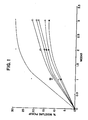
- Examples 2-6 showed significantly higher ERH values than Example 1, a control representing a conventional formulation, and, as would be expected, demonstrated superior resistance to moisture pick-up over the control.
- TABLE 1 Ingredients Percentage (w/w) Example 1 2 3 4 5 6 Gum Base 30.0% 30.0% 30.0% 30.0% 30.0% 30.0% Liquid and Spray-Dried Flavoring 1.696 1.696 1.696 1.696 1.696 Sorbitol 43.479 56.479 56.479 56.479 56.479 56.479 Mannitol 7.00 7.00 7.00 7.00 7.00 7.00 Free and Encapsulated Saccharin 2.153 2.153 2.153 2.153 2.153 2.153 2.153 2.153 2.153 2.153 Coloring Agent 0.172 0.172 0.172 0.172 0.172 0.172 Softening Agent Lecithin 0.50 0.50 0.50 0.50 0.50 0.50 Glycerin 15.00 - - - - - Oil/Glycerol Ester1 - 2.00 - - - - Vegetable Oil2
- Unwrapped chewing gum sticks formed from Examples 1-6 were prepared, weighed and put into a dessicator containing a saturated solution of ammonium chloride to induce 80% RH. The dessicator is then placed at a 27°C incubator. The gum pieces are then reweighed weekly for three consecutive weeks. The weight change is attributed to moisture pickup and the percent dewing is calculated therefore as follows:
- New weight - original weight x 100 % dewing original weight
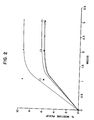
- Examples 7-10 also showed significantly higher ERH values than the Example 1 control as well as superior resistance to moisture pick-up measured in percent dewing, depicted in Figure 2. Examples 7-10 out-performed the control and examples 2-6 after three weeks exposure to 27°C/80% RH.
- Example 11 showed a significantly higher ERH value than Example 12, a control using glycerin, a conventional softening agent. As would be expected, Example 11 demonstrated improved resistance to moisture pick-up over Example 12, measured in percent dewing. The better performance of Example 11 over Example 12 upon exposure of these two samples to 27°C/80% RH for three weeks is depicted in Figure 3.
Landscapes
- Chemical & Material Sciences (AREA)
- Life Sciences & Earth Sciences (AREA)
- Engineering & Computer Science (AREA)
- Food Science & Technology (AREA)
- Polymers & Plastics (AREA)
- Inorganic Chemistry (AREA)
- Proteomics, Peptides & Aminoacids (AREA)
- Health & Medical Sciences (AREA)
- Nutrition Science (AREA)
- Confectionery (AREA)
Applications Claiming Priority (2)
| Application Number | Priority Date | Filing Date | Title |
|---|---|---|---|
| US07/291,707 US4954353A (en) | 1988-12-29 | 1988-12-29 | Anhydrous chewing gum with improved stability |
| US291707 | 1988-12-29 |
Publications (2)
| Publication Number | Publication Date |
|---|---|
| EP0376468A2 true EP0376468A2 (fr) | 1990-07-04 |
| EP0376468A3 EP0376468A3 (fr) | 1990-09-26 |
Family
ID=23121477
Family Applications (1)
| Application Number | Title | Priority Date | Filing Date |
|---|---|---|---|
| EP19890312097 Withdrawn EP0376468A3 (fr) | 1988-12-29 | 1989-11-22 | Chewing-gum anhydre à stabilité modifiée |
Country Status (9)
| Country | Link |
|---|---|
| US (1) | US4954353A (fr) |
| EP (1) | EP0376468A3 (fr) |
| JP (1) | JPH02222652A (fr) |
| KR (1) | KR900008962A (fr) |
| CA (1) | CA2006841A1 (fr) |
| DK (1) | DK670089A (fr) |
| FI (1) | FI896282A7 (fr) |
| NO (1) | NO895264L (fr) |
| ZA (1) | ZA899968B (fr) |
Cited By (3)
| Publication number | Priority date | Publication date | Assignee | Title |
|---|---|---|---|---|
| WO1993020711A1 (fr) | 1992-04-21 | 1993-10-28 | Wm. Wrigley Jr. Company | Utilisation d'une film comestible pour ameliorer l'emballage d'un chewing-gum |
| EP0627886A4 (fr) * | 1992-03-03 | 1995-08-09 | Wrigley W M Jun Co | Procede ameliore de production de gommes a macher exemptes de cire, avec des temps de prise acceleres. |
| US5637334A (en) * | 1993-09-30 | 1997-06-10 | Wm. Wrigley Jr. Company | Chewing gum containing maltitol |
Families Citing this family (21)
| Publication number | Priority date | Publication date | Assignee | Title |
|---|---|---|---|---|
| US5110608A (en) * | 1988-12-29 | 1992-05-05 | Warner-Lambert Company | Chewing gums having longer lasting sweetness |
| US5437877A (en) * | 1992-03-03 | 1995-08-01 | Wm. Wrigley Jr. Company | Wax-free chewing gum with initial soft bite |
| US5462754A (en) * | 1992-03-03 | 1995-10-31 | Wm. Wrigley Jr. Company | Abhesive chewing gum with improved sweetness profile |
| US5437875A (en) * | 1993-03-02 | 1995-08-01 | Wm. Wrigley, Jr. Company | Wax-free low moisture chewing gum |
| US5437876A (en) * | 1993-03-02 | 1995-08-01 | Wm. Wrigley Jr. Company | Wax-free chewing gums with controlled sweetener release |
| US5436013A (en) * | 1993-03-02 | 1995-07-25 | Wm. Wrigley Jr. Company | Process for manufacturing wax-free chewing gums with fast set-up times |
| US5441750A (en) * | 1993-03-02 | 1995-08-15 | Wm. Wrigley Jr. Company | Wax-free chewing gum with improved processing properties |
| EP0788315A4 (fr) * | 1994-11-08 | 1997-10-15 | Wrigley W M Jun Co | Gomme a macher amelioree contenant des esters de polyglycerol |
| KR0159252B1 (ko) * | 1995-01-18 | 1998-11-16 | 김규식 | 여러가지 색상과 무늬를 갖는 껌의 제조방법 |
| US6358060B2 (en) | 1998-09-03 | 2002-03-19 | Jsr Llc | Two-stage transmucosal medicine delivery system for symptom relief |
| US20020098264A1 (en) * | 1998-11-27 | 2002-07-25 | Cherukuri Subraman R. | Medicated chewing gum delivery system for nicotine |
| US8591974B2 (en) * | 2003-11-21 | 2013-11-26 | Kraft Foods Global Brands Llc | Delivery system for two or more active components as part of an edible composition |
| US8389032B2 (en) | 2005-05-23 | 2013-03-05 | Kraft Foods Global Brands Llc | Delivery system for active components as part of an edible composition having selected particle size |
| US8591972B2 (en) | 2005-05-23 | 2013-11-26 | Kraft Foods Global Brands Llc | Delivery system for coated active components as part of an edible composition |
| US8591973B2 (en) | 2005-05-23 | 2013-11-26 | Kraft Foods Global Brands Llc | Delivery system for active components and a material having preselected hydrophobicity as part of an edible composition |
| US20050112236A1 (en) | 2003-11-21 | 2005-05-26 | Navroz Boghani | Delivery system for active components as part of an edible composition having preselected tensile strength |
| US8591968B2 (en) | 2005-05-23 | 2013-11-26 | Kraft Foods Global Brands Llc | Edible composition including a delivery system for active components |
| US8597703B2 (en) | 2005-05-23 | 2013-12-03 | Kraft Foods Global Brands Llc | Delivery system for active components as part of an edible composition including a ratio of encapsulating material and active component |
| US8642016B2 (en) | 2006-07-21 | 2014-02-04 | Jsrnti, Llc | Medicinal delivery system, and related methods |
| MX365710B (es) | 2011-04-29 | 2019-06-11 | Intercontinental Great Brands Llc | Acido encapsulado, metodo para la preparacion del mismo y goma de mascar que comprende el mismo. |
| FI4179877T3 (fi) | 2013-12-06 | 2024-12-12 | Perfetti Van Melle Benelux B V | Järjestelmä ja menetelmä purukumin leikkaamiseksi |
Family Cites Families (13)
| Publication number | Priority date | Publication date | Assignee | Title |
|---|---|---|---|---|
| US2289407A (en) * | 1940-10-31 | 1942-07-14 | Hercules Powder Co Ltd | Chewing gum |
| US4514423A (en) * | 1981-05-22 | 1985-04-30 | Lotte Co., Ltd. | Process of preparing an improved bubble chewing gum |
| US4379169A (en) * | 1981-11-09 | 1983-04-05 | Nabisco Brands, Inc. | New gum base and chewing gum containing same |
| US4378374A (en) * | 1981-12-21 | 1983-03-29 | Nabisco Brands, Inc. | Chewing gum having improved softness |
| US4514422A (en) * | 1981-12-22 | 1985-04-30 | Warner-Lambert Company | Non-staling gum composition and method of preparation |
| US4587125A (en) * | 1984-08-27 | 1986-05-06 | Warner-Lambert Company | Non-staling chewing gum compositions and improved method of preparation |
| US4579738A (en) * | 1984-08-27 | 1986-04-01 | Warner-Lambert Company | Non-staling chewing gum compositions and improved method of preparation |
| DK358385A (da) * | 1984-08-27 | 1986-02-28 | Warner Lambert Co | Tyggegummiblandinger og fremgangsmaade til deres fremstilling |
| US4581234A (en) * | 1984-08-27 | 1986-04-08 | Warner-Lambert Company | Non-staling, substantially moistureless chewing gum compositions and improved method of preparation |
| US4634593A (en) * | 1985-07-31 | 1987-01-06 | Nabisco Brands, Inc. | Composition and method for providing controlled release of sweetener in confections |
| US4740376A (en) * | 1986-01-07 | 1988-04-26 | Warner-Lambert Company | Encapsulation composition for use with chewing gum and edible products |
| US4721620A (en) * | 1986-04-01 | 1988-01-26 | Warner-Lambert Company | Polyvinylacetate bubble gum base composition |
| US4792453A (en) * | 1987-05-04 | 1988-12-20 | Wm. Wrigley Jr. Company | Hard coated sugarless chewing gum |
-
1988
- 1988-12-29 US US07/291,707 patent/US4954353A/en not_active Expired - Fee Related
-
1989
- 1989-11-22 EP EP19890312097 patent/EP0376468A3/fr not_active Withdrawn
- 1989-12-26 JP JP1335259A patent/JPH02222652A/ja active Pending
- 1989-12-27 FI FI896282A patent/FI896282A7/fi not_active Application Discontinuation
- 1989-12-27 NO NO89895264A patent/NO895264L/no unknown
- 1989-12-28 KR KR1019890019879A patent/KR900008962A/ko not_active Withdrawn
- 1989-12-28 ZA ZA899968A patent/ZA899968B/xx unknown
- 1989-12-28 DK DK670089A patent/DK670089A/da not_active Application Discontinuation
- 1989-12-28 CA CA002006841A patent/CA2006841A1/fr not_active Abandoned
Cited By (4)
| Publication number | Priority date | Publication date | Assignee | Title |
|---|---|---|---|---|
| EP0627886A4 (fr) * | 1992-03-03 | 1995-08-09 | Wrigley W M Jun Co | Procede ameliore de production de gommes a macher exemptes de cire, avec des temps de prise acceleres. |
| WO1993020711A1 (fr) | 1992-04-21 | 1993-10-28 | Wm. Wrigley Jr. Company | Utilisation d'une film comestible pour ameliorer l'emballage d'un chewing-gum |
| EP0673207A4 (fr) * | 1992-04-21 | 1996-07-24 | Wrigley W M Jun Co | Utilisation d'une film comestible pour ameliorer l'emballage d'un chewing-gum. |
| US5637334A (en) * | 1993-09-30 | 1997-06-10 | Wm. Wrigley Jr. Company | Chewing gum containing maltitol |
Also Published As
| Publication number | Publication date |
|---|---|
| EP0376468A3 (fr) | 1990-09-26 |
| CA2006841A1 (fr) | 1990-06-29 |
| FI896282A0 (fi) | 1989-12-27 |
| DK670089D0 (da) | 1989-12-28 |
| US4954353A (en) | 1990-09-04 |
| KR900008962A (ko) | 1990-07-02 |
| NO895264D0 (no) | 1989-12-27 |
| ZA899968B (en) | 1990-09-26 |
| NO895264L (no) | 1990-07-02 |
| FI896282A7 (fi) | 1990-06-30 |
| JPH02222652A (ja) | 1990-09-05 |
| DK670089A (da) | 1990-06-30 |
Similar Documents
| Publication | Publication Date | Title |
|---|---|---|
| US4954353A (en) | Anhydrous chewing gum with improved stability | |
| US4581234A (en) | Non-staling, substantially moistureless chewing gum compositions and improved method of preparation | |
| CA1290973C (fr) | Gomme a macher stratifee a couche-enveloppe impermeable a l'humidite | |
| US4374858A (en) | Aspartame sweetened chewing gum of improved sweetness stability | |
| US4933189A (en) | Chewing gum having longer lasting sweetness | |
| EP0403619B1 (fr) | Gomme a macher contenant un emulsifiant hydrate et procedes de preparation | |
| US4587125A (en) | Non-staling chewing gum compositions and improved method of preparation | |
| US4579738A (en) | Non-staling chewing gum compositions and improved method of preparation | |
| US5545415A (en) | Low moisture chewing gum compositions containing erythritol | |
| EP0297048A2 (fr) | Gomme à mâcher avec une mollesse de longue durée | |
| JPH01202256A (ja) | 物理的安定性の改良されたチューインガム組成物 | |
| EP0407498B1 (fr) | Emulsifiants de prolongation du gout de chewing gum | |
| CA2057573C (fr) | Sirops sans sucre a faible teneur en eau a base de maltitol pour de la gomme a macher | |
| US4900563A (en) | Fructose sweetened chewing gum compositions | |
| EP0027024B1 (fr) | Chewing-gum édulcoré à l'aspartame et procédé pour sa fabrication | |
| US4842870A (en) | Anhydrous, non-staling chewing gum composition | |
| EP0328849A2 (fr) | Utilisation d'une mixture racémique d'alpha-D-glucopyranosyl-1-6-mannitol et d'alpha-D-glucopyranosyl-1-6-sorbitol dans des compositions de chewing-gum à absorption d'humidité réduite | |
| US4804543A (en) | Novel hydrophilic plasticizing system and chewing gum containing same | |
| US5320854A (en) | Chewing gum containing stabilized hygroscopic ingredients | |
| EP0176237B1 (fr) | Composition de gomme à mâcher et son procédé de fabrication | |
| EP0298922B1 (fr) | Système hydrophile de matière plastique contenant de la gomme à mâcher | |
| MXPA96002928A (en) | Mask rubber composition containing eritri | |
| CA2181638A1 (fr) | Composition a base d'erythritol pour gomme a macher | |
| CA2005362A1 (fr) | Methode pour prolonger la duree de la saveur et du gout sucre dans les gommes a macher | |
| EP0719094B1 (fr) | Compositions pour gomme a macher a faible humidite contenant de l'erythritol |
Legal Events
| Date | Code | Title | Description |
|---|---|---|---|
| PUAI | Public reference made under article 153(3) epc to a published international application that has entered the european phase |
Free format text: ORIGINAL CODE: 0009012 |
|
| AK | Designated contracting states |
Kind code of ref document: A2 Designated state(s): BE CH DE ES FR GB GR IT LI NL SE |
|
| PUAL | Search report despatched |
Free format text: ORIGINAL CODE: 0009013 |
|
| AK | Designated contracting states |
Kind code of ref document: A3 Designated state(s): BE CH DE ES FR GB GR IT LI NL SE |
|
| 17P | Request for examination filed |
Effective date: 19910315 |
|
| STAA | Information on the status of an ep patent application or granted ep patent |
Free format text: STATUS: THE APPLICATION HAS BEEN WITHDRAWN |
|
| 18W | Application withdrawn |
Withdrawal date: 19920129 |