EP0376918A2 - Méthode et dispositif pour produire des lamelles de bois à partir de bois de charpente - Google Patents
Méthode et dispositif pour produire des lamelles de bois à partir de bois de charpente Download PDFInfo
- Publication number
- EP0376918A2 EP0376918A2 EP90100005A EP90100005A EP0376918A2 EP 0376918 A2 EP0376918 A2 EP 0376918A2 EP 90100005 A EP90100005 A EP 90100005A EP 90100005 A EP90100005 A EP 90100005A EP 0376918 A2 EP0376918 A2 EP 0376918A2
- Authority
- EP
- European Patent Office
- Prior art keywords
- wooden
- cutting
- lamellae
- sawn timber
- wood
- Prior art date
- Legal status (The legal status is an assumption and is not a legal conclusion. Google has not performed a legal analysis and makes no representation as to the accuracy of the status listed.)
- Granted
Links
Images

Classifications
-
- B—PERFORMING OPERATIONS; TRANSPORTING
- B27—WORKING OR PRESERVING WOOD OR SIMILAR MATERIAL; NAILING OR STAPLING MACHINES IN GENERAL
- B27M—WORKING OF WOOD NOT PROVIDED FOR IN SUBCLASSES B27B - B27L; MANUFACTURE OF SPECIFIC WOODEN ARTICLES
- B27M1/00—Working of wood not provided for in subclasses B27B - B27L, e.g. by stretching
- B27M1/08—Working of wood not provided for in subclasses B27B - B27L, e.g. by stretching by multi-step processes
-
- B—PERFORMING OPERATIONS; TRANSPORTING
- B27—WORKING OR PRESERVING WOOD OR SIMILAR MATERIAL; NAILING OR STAPLING MACHINES IN GENERAL
- B27L—REMOVING BARK OR VESTIGES OF BRANCHES; SPLITTING WOOD; MANUFACTURE OF VENEER, WOODEN STICKS, WOOD SHAVINGS, WOOD FIBRES OR WOOD POWDER
- B27L5/00—Manufacture of veneer ; Preparatory processing therefor
- B27L5/06—Cutting strips from a stationarily- held trunk or piece by a rocking knife carrier, or from rocking trunk or piece by a stationarily-held knife carrier; Veneer- cutting machines
-
- B—PERFORMING OPERATIONS; TRANSPORTING
- B27—WORKING OR PRESERVING WOOD OR SIMILAR MATERIAL; NAILING OR STAPLING MACHINES IN GENERAL
- B27M—WORKING OF WOOD NOT PROVIDED FOR IN SUBCLASSES B27B - B27L; MANUFACTURE OF SPECIFIC WOODEN ARTICLES
- B27M1/00—Working of wood not provided for in subclasses B27B - B27L, e.g. by stretching
-
- B—PERFORMING OPERATIONS; TRANSPORTING
- B27—WORKING OR PRESERVING WOOD OR SIMILAR MATERIAL; NAILING OR STAPLING MACHINES IN GENERAL
- B27K—PROCESSES, APPARATUS OR SELECTION OF SUBSTANCES FOR IMPREGNATING, STAINING, DYEING, BLEACHING OF WOOD OR SIMILAR MATERIALS, OR TREATING OF WOOD OR SIMILAR MATERIALS WITH PERMEANT LIQUIDS, NOT OTHERWISE PROVIDED FOR; CHEMICAL OR PHYSICAL TREATMENT OF CORK, CANE, REED, STRAW OR SIMILAR MATERIALS
- B27K1/00—Damping wood
-
- B—PERFORMING OPERATIONS; TRANSPORTING
- B27—WORKING OR PRESERVING WOOD OR SIMILAR MATERIAL; NAILING OR STAPLING MACHINES IN GENERAL
- B27K—PROCESSES, APPARATUS OR SELECTION OF SUBSTANCES FOR IMPREGNATING, STAINING, DYEING, BLEACHING OF WOOD OR SIMILAR MATERIALS, OR TREATING OF WOOD OR SIMILAR MATERIALS WITH PERMEANT LIQUIDS, NOT OTHERWISE PROVIDED FOR; CHEMICAL OR PHYSICAL TREATMENT OF CORK, CANE, REED, STRAW OR SIMILAR MATERIALS
- B27K2200/00—Wooden materials to be treated
- B27K2200/30—Multilayer articles comprising wood
Definitions
- the invention relates to a method and a device for producing wooden slats from sawn timber.
- wooden slats are understood to mean relatively thin wooden boards that are thicker than 2 to 3 mm and processed into high-quality single and multi-layer products, such as multi-layer natural wood panels, glue-laminated timber, glued plywood, window scantlings, solid wood panels u.
- multi-layer natural wood panels glue-laminated timber, glued plywood, window scantlings, solid wood panels u.
- such wood lamellas are usually produced by first drying the sawn timber to a relatively low level of moisture and then cutting the timber planks using band saws and the like. Like. are sawn into the individual wooden slats.
- Such a method has several disadvantages.
- the quality of the wood lamellae produced in this way leaves something to be desired, since the wood lamellae slightly fray or fray during the sawing process, particularly in the area of branches and edges, and the drier the sawn timber to be cut, the more so. This results in a relatively high proportion of rejects.
- Another disadvantage of the known method is the relatively poor yield, ie the proportion of waste is relatively high. This is because everyone Saw cut Waste is generated that corresponds to the thickness of the saw cut. If, for example, wooden slats with a thickness of 4 mm are produced and the saw cut width is 2.5 mm, this results in a waste of about 40% of the sawn timber material.
- Another disadvantage of the method according to the prior art is that a relatively large amount of energy is consumed in the production of the wood lamellae. This is due to the fact that a lot of material has to be cut due to the relatively wide kerf of the saw cut.
- the quality of the wooden slats produced in this way leaves much to be desired, especially since the individual wooden slats leave the cutting device in a severely wounded condition, which is due to the fact that the wooden slats cut from the sawn timber plank are led away obliquely to their original transport direction.
- the known cutting device thus the problem that has not yet been solved, of returning such twisted wooden slats to their non-twisted, flat or plan state with reasonable effort.
- the invention is therefore based on the object of specifying a method which delivers high-quality wooden lamellae with justifiable outlay, at the same time achieving a maximum yield and furthermore keeping the required energy expenditure as low as possible. Furthermore, a device is to be created that meets the above-mentioned conditions.
- This object is achieved according to the invention essentially by cutting the sawn timber into the individual wooden lamellas without sawdust, then drying the wooden lamellas and, if necessary, reworking one or more sides of the dried wooden lamellas, in particular by grinding, the process steps preferably being continuous be carried out so that the individual wood slats run through the entire system automatically and continuously.
- the process step of saw-less cutting can be preceded by a further process step which enables a cutting optimization in such a way that no residual lamellae occur.
- This upstream process step may consist in preconditioning, in particular pre-drying, the sawn timber in order to achieve a uniform initial moisture before the cutting process step, a moisture content of the sawn timber of approximately 40 to 60%, preferably approximately 50%, coordinated with the respective type of wood, is sought.
- this upstream method step can consist in measuring the moisture of the sawn timber fed to the cutting station and in controlling the cutting parameters, such as in particular the contact pressure in the area of the cutting knife and / or the cutting thickness in accordance with the measured moisture. Tolerances that would otherwise lead to the appearance of residual lamellae can be compensated in this way.
- Wooden slats of the highest quality are produced.
- the visible surfaces of the board lamellae treated by grinding have a high surface quality, since fraying in the branch area, as in the case of the prior art, does not even occur to this extent here and is largely eliminated by the grinding process. Since the sawn timber is not dried down to a low moisture level before processing, as in the known prior art, the wood remains intact in the branch areas when cutting.
- the energy required to produce the wood slats is lower than in the prior art. While in the prior art wood is cut to the width of the saw cut for each cut, in the case of the method according to the invention, material is only removed in a fraction of a millimeter due to the grinding process; in the cutting device itself there is no mate rial machined. The sum of the energy required for cutting and subsequent post-treatment (grinding) is less than the energy required for sawing.
- the material use compared to conventional methods is therefore decisive; this results in about 50% to 80% less waste, so that a correspondingly higher yield of the starting material takes place.
- the method according to the invention permits lamella production that is much more gentle on the wood than conventional methods. For example, the otherwise occurring drying and processing cracks, particularly in the branch areas, are largely eliminated or nonexistent.
- the wooden lamellae are dried after the cutting, particularly uniform drying results are achieved down to achieved about 6% wood moisture and possibly even less.
- the conventional technology in which the wood is dried before cutting or sawing, further processing of the material with such a low wood moisture is no longer possible in practice or only to a limited extent, ie with corresponding losses in quality.
- the drying of the wooden lamella after cutting the sawn timber planks has the further advantage that less energy is consumed in the drying process, since, on the one hand, the waste accumulated in the prior art during sawing, such as sawdust and residual lamellae, is not also dried, and furthermore the thinner, already cut material is easier to dry than the much thicker starting material.
- a further, decisive advantage of the drying process which follows the cutting process is that in the temperature-controlled drying process, in which drying is carried out at a temperature of the order of about 160 °, the twisting of the wooden lamellae, which has arisen during the cutting process, can be reversed. so that completely flat, non-twisted board lamellae leave the dryer. This is the only prerequisite for economically viable uses of the known method of producing the wooden slats by means of a knife cut.
- a further feature of the invention is based on the knowledge that when sawing the sawn timber without cutting by means of cutting knives, one of the two side surfaces of the wood lamella, namely that on the cutting side, has a lower surface quality than the other, after this side is evident on the surface in the cutting station Fibers are destroyed, causing these in the following called "open" slat sides small cracks and the like. which reduce the surface quality of this open slat side.
- the wood lamellae are therefore marked after the cutting process with regard to their underside facing the cutting knife and / or their top side facing away from the cutting knife, for example by means of an optical marking, so that it can be determined until the final processing of the wood lamellae into the end product.
- the marking on the wooden slats makes it possible to ensure that the visible surface or the visible surfaces of the end product are always formed by the closed slat sides. This ensures a constant quality of the end products.
- the post-processing device downstream of the drying device preferably comprises individually switchable components for the selective post-processing of the maximum of four side surfaces of the wooden slats running parallel to the feed direction.
- Such components are preferably formed by high-speed grinding machines, but in particular the narrow sides of the wooden lamellae can alternatively also be leveled and machined with high-speed milling units. If required, several components can also be connected in series. The components can be used for grinding, planing, milling and optionally also for profiling the wooden slats, for example for removing the edges.
- the individual connectivity of the individual components ensures that only those sides of the wooden slats are treated where this is technically necessary; For example, in the case of a multilayer board, the inner surfaces of the wooden slats do not have to be sanded, of course, or only to a limited extent.
- the entire processing in the area of post-processing is coordinated with the later use of the wooden lamellae, ie the processing machines are designed so that different surfaces or edges, depending on the setting, cannot be processed or can be processed several times within one pass.
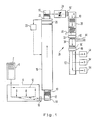
- a conditioning device 4 in which the planks 2 are arranged in a stationary manner.
- the conditioning device 4 can be a lumber dryer, which has the possibility that in certain areas within the lumber dryer the wood moisture can be increased if necessary, for example by spraying or steaming.
- the conditioning device 4 ensures that the screeds leaving the conditioning device have a very uniform initial moisture, whereby particularly good and precise cutting results are achieved.
- the wood moisture content of the planks 2 leaving the conditioning device 4 is approximately 50%.
- the wooden planks After the wooden planks have been conditioned, they are separated and fed to the cutting device, designated overall by reference number 6, in which the aligned wooden planks are guided past one or more cutting stations 8 arranged one behind the other. Each time the screed is moved past a cutting station, a wooden lamella 10 is cut off, the screeds 2 being circulated within the cutting device 6 (indicated by the dashed line 12) until the screed is completely cut into the individual wooden lamellae.
- the cutting device 6 as such is essentially known in the art and therefore requires no further explanation.
- the wooden slats 10 cut from the planks 2 are automatically transported by the cutting device 6 to a conveyor 14, on which they are arranged in parallel next to one another and conveyed through a drying device 16.
- a marking device 18 is arranged che marks the upward-facing side of the wooden slats 10 leaving the cutting device 6. This upward-facing side is the closed side of the board lamella, which is suitable for later use as a visible surface.
- the uniformly dimensioned, marked, arranged side by side wooden slats 10 then continuously run through the drying device 16, which is designed as a drying tunnel.
- This drying tunnel is equipped with a temperature control, which enables exact temperature control within the dryer.
- the wood slats 10 leaving the drying device 16 are dried very uniformly on wood moisture up to about 6%.
- the throughput speed of the wooden slats 10 through the drying tunnel is 2.5 m per minute, the drying temperature being approximately 165 ° C. in the case of spruce slats with a thickness of 8 mm.
- the dryer volume is approximately 1000 m3 and the amount of exhaust air is approximately 15000 m3 per hour.
- the drying tunnel is divided into several, for example three, temperature zones, as seen in the direction of conveyance of the wooden slats.
- the wooden slats to be dried can be arranged one above the other within the drying tunnel 16 on one or more floors.
- the wood fins 10 leaving the drying device 16 then pass through a cooling or air-conditioning device 20 in which the cooling of the wood fins is accelerated in order to have the optimum material temperature available for further processing in the post-processing device 24.
- a moisture measuring station 22 is provided behind the cooling device 20, in which the drying data of the wooden lamellae 10 are measured in order to be able to monitor and control the proper operation of the drying device 16.
- the data measured in the moisture measuring station 22 are fed to a data acquisition and storage device 23, from which the data can be printed out on request or can be used for temperature control of the drying device 16.
- this finishing device 24 comprises a maximum of four-sided high-speed grinding machines which enable the dried lamellas to be continuously processed at feed speeds of up to 150 m per minute.
- the individual units of the high-speed grinding machines known per se can be switched on individually, so that only those sides of the wooden slats are always processed for which such post-processing is necessary, taking into account the later intended use.
- the wooden lamellas are machined to the tightest tolerances in the order of magnitude of a total of 1/10 mm.
- high-speed milling units can be used, for example, for the edge processing of the wooden slats, which work in conjunction with high-speed grinding machines for processing the upper and lower surfaces of the wooden slats.
- the wooden slats After the processing of the wooden slats in the post-processing device 24, the wooden slats, which may be marked again in the further marking station 18 'connected downstream of the post-processing device 24, are fed to a sorting device designated overall by reference number 26, in which the wooden slats are classified according to their quality and corresponding different transport routes.
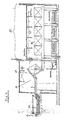
- the structure of the sorting device 26 can also be seen from FIG. 2.
- the wood lamellas 10 coming from the post-processing device 24 are first fed continuously to a sorting line 28, in which they are classified with regard to their quality, for example according to three quality classes A, B and C.
- This classification can be done automatically or by appropriately trained personnel.
- the individual wooden slats 10 are shifted in depth according to the quality class assigned to them, it being possible, for example, to proceed in such a way that the wooden slats of quality class A, i.e. H. of the highest quality class, are not moved, the wooden slats of quality class B and C are moved backwards, the wooden slats of quality class C being shifted lower than those of quality class B.
- light barrier devices 30 are provided, which the respective positions Scan the wooden slats 10 passing underneath them and thereby record the classification of the respective wooden slats 10 and, if necessary, register them.
- the wooden lamellas 10 are transferred to a revolving elevator 32, which feeds the individual wooden lamellas 10 to different sorting lines 34, 36, 38 according to their respective quality class.
- the sorting lines 34, 36, 38 are each ent assigned speaking flaps 40, which are controlled by a control device 42 connected to the light barrier device 30.
- the control device 42 has the effect that, depending on the determined quality class of the individual wooden lamellas 10, the flaps 40 of the respective sorting section assigned to the respective quality class are activated with a corresponding delay.
- a further processing line 44 is provided below the further processing lines 34 to 38, which can optionally also be controlled, so that the wooden slats deposited thereon can be fed directly to a further processing machine, for example a continuously operating side gluing press or the like Wooden slats stacked in the stacking stations 36, a counting device (not shown in more detail) being present, which counts the wooden slats deposited on the stack and triggers the forwarding of a complete stack to a further elevator 48, which feeds the wooden slat stacks 50 to a conveyor device 52, which feeds the individual stacks transported to the final stacking locations 54, where the wooden slats are stacked according to their grade.
- the pre-sorted and stacked wooden slats are then transported to further processing lines, such as a fully automatic press line, with the help of suitable transport equipment.
- FIG. 3 shows an alternative embodiment of a device according to the invention in the area of the cutting device and the unit connected upstream thereof.
- a measuring station 60 is arranged in front of the cutting device 6 in the transport path of the planks to be fed to this cutting device, said measuring station 60 containing the moisture speed of the timber planks and generates a corresponding electrical output signal.
- This electrical output signal is fed to a control device 62 which controls one or more cutting parameters of the cutting device 6 as a function of the measured moisture; Suitable pressure parameters are in particular the contact pressure of the planks to be cut against the cutting knife or the cutting thickness.
- the method steps are carried out continuously. Alternatively, however, they could also be carried out with suitable intermediate storage between certain process steps with subsequent loading.
- the above-mentioned conditioning device upstream of the cutting device 6 can, according to a preferred exemplary embodiment of the invention, be designed in such a way that the sawn timber is first pre-dried in a drying chamber to a predetermined wood moisture content, depending on the wood thickness, for about one to two days. From there, the sawn timber is brought into a steaming chamber by means of a forklift, and here the wood surface is steamed up. The sawn timber packages are then individually conveyed to a tilting table, where the sawn timber is unstacked in layers. The tilting table is located in a climate chamber in which the wood temperature is kept at around 70 to 80 ° Celsius. From here, the separated sawn timber is passed through a hot water bath and then it is fed to the cutting station 8.
- the steaming chamber is designated by the reference number 64, the air conditioning chamber by the reference number 66, the tilting table by the reference number 68 and the water bath by the reference number 70.
- the wood dried in the drying chamber (not shown) is heated by means of steam and in particular the drying that takes place in the outer regions of the raw wood is raised to the average moisture content of the entire wood. Steaming also has the task of warming the raw wood evenly and achieving uniform wood temperatures in the entire raw wood stack.
- the residence time within the steaming chamber can be approximately 30 to 200 minutes, depending on the requirements.
- the air conditioning chamber 66 downstream of the steaming chamber 64 the previously achieved uniform humidity and the heat in the individual woods are maintained, and the air conditioning chamber simultaneously forms a buffer zone in which the planks of the plank stack 82 are separated and fed to the water bath 70.
- the woods that are now separated and lying next to one another are transported through a tempered water bath 70 via suitable conveying devices.
- the purpose of this water bath is to make the structure of the individual boards considerably smoother shortly before being cut open in the cutting station 8, in order thereby to substantially reduce the risk of tears or other damage to the wood on the wood slats 10. Furthermore, it has been shown that the wood pretreated in this way results in wood lamellae which emerge from the Cutting station 8 are significantly less twisted.
- the individual woods have a residence time in the water bath 70 of about 2 to 5 minutes.
- the water bath has a temperature of up to 95 ° Celsius, as a result of which a temperature at the kerf up to 70 ° Celsius can be reached at the cutting devices of the subsequent cutting station 8.
- the pretreatment of the planks described in connection with FIG. 4 has a number of advantages. First of all, the cut quality is much better, especially in the area of branches. Furthermore, there is a much gentler wood treatment during cutting in the cutting device. Ultimately, there are optimal cutting results and very good parallelism of the slats, especially when the starting material is too dry and not optimal.
- the cutting bolt can be preconditioned in whole or in part by irradiation by means of microwaves. In this way, a uniform distribution of moisture and temperature in the sawn timber to be cut can be achieved in a comparatively simple and effective manner.
Landscapes
- Engineering & Computer Science (AREA)
- Life Sciences & Earth Sciences (AREA)
- Wood Science & Technology (AREA)
- Forests & Forestry (AREA)
- Mechanical Engineering (AREA)
- Manufacturing & Machinery (AREA)
- Chemical And Physical Treatments For Wood And The Like (AREA)
- Manufacture Of Wood Veneers (AREA)
Priority Applications (2)
| Application Number | Priority Date | Filing Date | Title |
|---|---|---|---|
| EP90100005A EP0376918B1 (fr) | 1988-12-30 | 1990-01-02 | Méthode et dispositif pour produire des lamelles de bois à partir de bois de charpente |
| US07/627,463 US5088533A (en) | 1988-12-30 | 1990-12-14 | Method and device for the production of wood sheets from cut wood |
Applications Claiming Priority (3)
| Application Number | Priority Date | Filing Date | Title |
|---|---|---|---|
| EP88121905A EP0375807A1 (fr) | 1988-12-30 | 1988-12-30 | Méthode et dispositif pour produire des lamelles de bois à partir de bois de charpente |
| EP88121905 | 1988-12-30 | ||
| EP90100005A EP0376918B1 (fr) | 1988-12-30 | 1990-01-02 | Méthode et dispositif pour produire des lamelles de bois à partir de bois de charpente |
Publications (3)
| Publication Number | Publication Date |
|---|---|
| EP0376918A2 true EP0376918A2 (fr) | 1990-07-04 |
| EP0376918A3 EP0376918A3 (en) | 1990-11-28 |
| EP0376918B1 EP0376918B1 (fr) | 1995-03-29 |
Family
ID=26114880
Family Applications (1)
| Application Number | Title | Priority Date | Filing Date |
|---|---|---|---|
| EP90100005A Expired - Lifetime EP0376918B1 (fr) | 1988-12-30 | 1990-01-02 | Méthode et dispositif pour produire des lamelles de bois à partir de bois de charpente |
Country Status (2)
| Country | Link |
|---|---|
| US (1) | US5088533A (fr) |
| EP (1) | EP0376918B1 (fr) |
Cited By (9)
| Publication number | Priority date | Publication date | Assignee | Title |
|---|---|---|---|---|
| DE3936314A1 (de) * | 1989-11-01 | 1991-05-02 | Linck Masch Gatterlinck | Mehrschichtmassivholzerzeugnisse wie balken, bretter und leimbinder sowie verfahren zu deren herstellung |
| DE3936312A1 (de) * | 1989-11-01 | 1991-05-02 | Linck Masch Gatterlinck | Verfahren zum herstellen einer mehrschicht-massivholzplatte |
| EP0447670A3 (en) * | 1990-03-17 | 1991-11-13 | Gebrueder Linck Maschinenfabrik "Gatterlinck" Gmbh & Co. Kg | Apparatus and process for the manufacture of multiply wood products |
| DE4026347A1 (de) * | 1990-08-21 | 1992-02-27 | Linck Masch Gatterlinck | Verfahren zum herstellen einer mehrschicht-massivholzplatte |
| DE4117474A1 (de) * | 1991-05-28 | 1992-12-03 | Hamberger Industriewerke Gmbh | Verfahren und vorrichtung zur herstellung von holzlamellen |
| EP2008768A1 (fr) * | 2007-06-27 | 2008-12-31 | Hrachowina Bauelemente-Porduktions-Ges.m.b.h. | Installation de fabrication de fenêtres et de portes |
| CN106346564A (zh) * | 2016-10-20 | 2017-01-25 | 合肥海宝节能科技有限公司 | 废旧木材再回收装置 |
| EP2243606B1 (fr) | 2009-04-24 | 2017-02-22 | GreCon Dimter Holzoptimierung Süd GmbH & Co. KG | Installation de fabrication de plaques en lamelles de bois et procédé destiné à la fabrication de telles plaques |
| DE102021112793A1 (de) | 2021-05-18 | 2022-11-24 | H-Flachs Gmbh | Vorrichtung und Verfahren zum Herstellen von Plattensandwichs |
Families Citing this family (18)
| Publication number | Priority date | Publication date | Assignee | Title |
|---|---|---|---|---|
| DE4244329C2 (de) * | 1992-12-28 | 1994-09-29 | Linck Masch Gatterlinck | Anlage zum schneidenden Zerteilen von Kanthölzern in dünne Bretter |
| DE4244310C1 (de) * | 1992-12-28 | 1993-10-28 | Linck Masch Gatterlinck | Verfahren und Anlage zum schneidenden Aufteilen eines Kantholzes in Bretter vorbestimmter Dicke |
| US5419382A (en) * | 1993-11-18 | 1995-05-30 | Hartco Flooring Company | Veneer flattening apparatus and method |
| DE4419682A1 (de) * | 1994-06-06 | 1995-12-07 | Linck Masch Gatterlinck | Verfahren und Vorrichtung zum Herstellen von Holzlamellen |
| US5881786A (en) * | 1997-06-10 | 1999-03-16 | Weyerhaeuser Company | Method of producing wood strips for conversion into composite lumber products |
| AU7953498A (en) * | 1997-06-19 | 1999-01-04 | Masonite Corporation | Post-press molding of fiberboard door skins |
| CA2236870C (fr) * | 1998-05-04 | 2003-09-23 | Lee Young-Hee | Methode pour la production de bois d'oeuvre hautement resistant |
| US7854097B2 (en) * | 2004-01-16 | 2010-12-21 | Jeld-Wen, Inc. | Simulated divided light products and processes and systems for making such products |
| US7640073B2 (en) * | 2005-04-14 | 2009-12-29 | Jeld-Wen, Inc. | Systems and methods of identifying and manipulating objects |
| AT506035A1 (de) * | 2007-10-31 | 2009-05-15 | Springer Maschinenfabrik Ag | Lager |
| US7846295B1 (en) * | 2008-04-30 | 2010-12-07 | Xyleco, Inc. | Cellulosic and lignocellulosic structural materials and methods and systems for manufacturing such materials |
| EP2156914A1 (fr) * | 2008-08-19 | 2010-02-24 | Arnout De Lille | Système de contrôle et son procédé de découpage |
| FR2951976B1 (fr) * | 2009-11-02 | 2012-02-10 | Salm Sas | Dispositif de decoupe de panneaux |
| CA2722003A1 (fr) * | 2009-11-23 | 2011-05-23 | The University Of Maine System Board Of Trustees | Composite de bois don't on a extrait l'hemicellulose et ayant une meilleure performance et des emissions reduites |
| HUE057835T2 (hu) | 2016-05-31 | 2022-06-28 | Tech Pro Packag S L | Nyakhornyoló gép tárolóedények számára és eljárás a géppel elõállított tárolóedények vizsgálatára |
| DE102017116838A1 (de) * | 2017-07-25 | 2019-01-31 | Ima Klessmann Gmbh Holzbearbeitungssysteme | Holzverarbeitungsanlage und Holzverarbeitungsverfahren |
| US11498173B2 (en) | 2017-07-25 | 2022-11-15 | Ima Schelling Deutschland Gmbh | Wood-processing system and wood-processing method |
| SE543314C2 (en) * | 2018-12-18 | 2020-11-24 | Ikea Supply Ag | A method for producing a furniture board product |
Family Cites Families (11)
| Publication number | Priority date | Publication date | Assignee | Title |
|---|---|---|---|---|
| US2763069A (en) * | 1952-07-09 | 1956-09-18 | Southern Wood Preserving Co | Method of controlling air seasoning of wood |
| DE2124086A1 (de) * | 1971-05-14 | 1972-11-16 | Browne, Morton Ross, Newmarket (Neuseeland) | Verfahren und Vorrichtung zur Herstellung von Nutzholzerzeugnissen |
| US3750303A (en) * | 1971-07-09 | 1973-08-07 | Gates T & Sons Inc | Steam tunnels for treating logs and method of treatment |
| US4185672A (en) * | 1974-02-06 | 1980-01-29 | Reed Ltd. | Integrated tree processing mill |
| CA1097193A (fr) * | 1976-11-09 | 1981-03-10 | Ewan R. Orr | Methode et appareil de fabrication de produits en bois lamelle |
| CA1091135A (fr) * | 1978-03-13 | 1980-12-09 | Macmillan Bloedel Limited | Preparation en trois etapes de grandes lamelles de bois |
| US4362197A (en) * | 1981-01-26 | 1982-12-07 | Simpson Timber Co. | Process for slicing veneer |
| US4516526A (en) * | 1984-05-09 | 1985-05-14 | Rauma-Repola Oy | Means for marking timber packages |
| WO1988000517A1 (fr) * | 1986-07-10 | 1988-01-28 | Wurster U. Dietz Gmbh U. Co. Maschinenfabrik | Procede et dispositif de decoupage sans eclats de troncs d'arbres en produits de bois |
| EP0375807A1 (fr) * | 1988-12-30 | 1990-07-04 | Hans Binder | Méthode et dispositif pour produire des lamelles de bois à partir de bois de charpente |
| US4934228A (en) * | 1989-01-13 | 1990-06-19 | U.S. Natural Resources, Inc. | System for diverting veneer sheets having offsize defects |
-
1990
- 1990-01-02 EP EP90100005A patent/EP0376918B1/fr not_active Expired - Lifetime
- 1990-12-14 US US07/627,463 patent/US5088533A/en not_active Expired - Fee Related
Cited By (11)
| Publication number | Priority date | Publication date | Assignee | Title |
|---|---|---|---|---|
| DE3936314A1 (de) * | 1989-11-01 | 1991-05-02 | Linck Masch Gatterlinck | Mehrschichtmassivholzerzeugnisse wie balken, bretter und leimbinder sowie verfahren zu deren herstellung |
| DE3936312A1 (de) * | 1989-11-01 | 1991-05-02 | Linck Masch Gatterlinck | Verfahren zum herstellen einer mehrschicht-massivholzplatte |
| US5352317A (en) * | 1989-11-01 | 1994-10-04 | Firma Gebruder Linck Maschinenfabrik "Gatterlinck" Gmbh & Co. Kg | Method of preparing a multilayered solid wood panel |
| US5500070A (en) * | 1989-11-01 | 1996-03-19 | Firma Gebruder Linck Maschinenfabrik "Gatterlinck" Gmbh & Co. Kg | Method of preparing a multilayered solid wood panel |
| EP0447670A3 (en) * | 1990-03-17 | 1991-11-13 | Gebrueder Linck Maschinenfabrik "Gatterlinck" Gmbh & Co. Kg | Apparatus and process for the manufacture of multiply wood products |
| DE4026347A1 (de) * | 1990-08-21 | 1992-02-27 | Linck Masch Gatterlinck | Verfahren zum herstellen einer mehrschicht-massivholzplatte |
| DE4117474A1 (de) * | 1991-05-28 | 1992-12-03 | Hamberger Industriewerke Gmbh | Verfahren und vorrichtung zur herstellung von holzlamellen |
| EP2008768A1 (fr) * | 2007-06-27 | 2008-12-31 | Hrachowina Bauelemente-Porduktions-Ges.m.b.h. | Installation de fabrication de fenêtres et de portes |
| EP2243606B1 (fr) | 2009-04-24 | 2017-02-22 | GreCon Dimter Holzoptimierung Süd GmbH & Co. KG | Installation de fabrication de plaques en lamelles de bois et procédé destiné à la fabrication de telles plaques |
| CN106346564A (zh) * | 2016-10-20 | 2017-01-25 | 合肥海宝节能科技有限公司 | 废旧木材再回收装置 |
| DE102021112793A1 (de) | 2021-05-18 | 2022-11-24 | H-Flachs Gmbh | Vorrichtung und Verfahren zum Herstellen von Plattensandwichs |
Also Published As
| Publication number | Publication date |
|---|---|
| EP0376918A3 (en) | 1990-11-28 |
| US5088533A (en) | 1992-02-18 |
| EP0376918B1 (fr) | 1995-03-29 |
Similar Documents
| Publication | Publication Date | Title |
|---|---|---|
| EP0376918B1 (fr) | Méthode et dispositif pour produire des lamelles de bois à partir de bois de charpente | |
| EP0375807A1 (fr) | Méthode et dispositif pour produire des lamelles de bois à partir de bois de charpente | |
| DE69601096T2 (de) | Verfahren zur herstellung von hartholzbodenstreifen | |
| DE3936312C2 (fr) | ||
| DE19718812A1 (de) | Paneel mit einer Holzfurnierschicht sowie Verfahren zur Herstellung derartiger Paneele | |
| DE19916041A1 (de) | Verfahren und Anlage zur Herstellung von überbreiten Furniertafeln | |
| EP0097794B1 (fr) | Procédé et dispositif pour la fabrication en continu de feuilles de placage | |
| DE2514901A1 (de) | Verfahren und vorrichtung zur erzeugung von nutzholz aus rundholzstaemmen | |
| DE19504030C1 (de) | Verfahren und Vorrichtung zum Herstellen von Strands | |
| EP3242781B1 (fr) | Procédé de fabrication de bois en placage stratifié | |
| EP0733450A1 (fr) | Procédé et dispositif pour revêtir le cÔté étroit d'une pièce avec des matériaux en bois | |
| DE4026347C2 (de) | Verfahren zum Herstellen einer Mehrschicht-Massivholzplatte | |
| EP3365147A1 (fr) | Procédé permettant d'enturer des feuilles de contreplaqué | |
| EP0447670B1 (fr) | Procédé et dispositif pour la fabrication de produits lamellés en bois | |
| WO1997044168A1 (fr) | Bloc de bois semi-fini, son procede de production et installation pour la mise en oeuvre de ce procede | |
| DE102008061766B4 (de) | Verfahren zur Herstellung von durch Keilzinkenverbindung zusammengesetzten Werkstücken bestehenden Bauelementen und Vorrichtung zur Durchführung dieses Verfahrens | |
| DD289967A5 (de) | Verfahren und Vorrichtung zur Herstellung von Holzlamellen aus Schnittholz | |
| DE3343809C2 (de) | Verfahren und Vorrichtung zum Transportieren und Bearbeiten von Werkstücken, insbesondere von Hölzern | |
| WO2005009702A1 (fr) | Procede et dispositif pour produire des panneaux en materiau derive du bois | |
| EP0732180B1 (fr) | Procédé pour tranches des planches minces, en particulier des lamelles de parquet | |
| DE102008061765B4 (de) | Verfahren zur Herstellung von durch Keilzinkenverbindungen zusammengesetzten Werkstücken gebildeten Bauelementen und Vorrichtung zur Durchführung dieses Verfahrens | |
| EP2703137A2 (fr) | Procédé de sciage de lamelles de bois et de la fabrication d'un produit multicouche | |
| DE102022000453A1 (de) | Holzbearbeitungsanlage zur Herstellung mittels Keilzinkenverbindung zusammengesetzten Strängen von Bauelementen, sowie Verfahren unter Verwendung einer solchen Anlage | |
| DE102006012904B3 (de) | Verfahren und Anlage zur Herstellung von Streifenholzplatten | |
| EP4480657A1 (fr) | Procédé de fabrication de panneaux de bois lamellé-collés et dispositif de fabrication de panneaux de bois |
Legal Events
| Date | Code | Title | Description |
|---|---|---|---|
| PUAI | Public reference made under article 153(3) epc to a published international application that has entered the european phase |
Free format text: ORIGINAL CODE: 0009012 |
|
| AK | Designated contracting states |
Kind code of ref document: A2 Designated state(s): AT BE CH DE DK ES FR GB GR IT LI LU NL SE |
|
| PUAL | Search report despatched |
Free format text: ORIGINAL CODE: 0009013 |
|
| AK | Designated contracting states |
Kind code of ref document: A3 Designated state(s): AT BE CH DE DK ES FR GB GR IT LI LU NL |
|
| 17P | Request for examination filed |
Effective date: 19901031 |
|
| 17Q | First examination report despatched |
Effective date: 19910404 |
|
| 19A | Proceedings stayed before grant |
Effective date: 19920124 |
|
| 19F | Resumption of proceedings before grant (after stay of proceedings) |
Effective date: 19941219 |
|
| GRAA | (expected) grant |
Free format text: ORIGINAL CODE: 0009210 |
|
| RAP1 | Party data changed (applicant data changed or rights of an application transferred) |
Owner name: GEBR. LINCK MASCHINENFABRIK GATTERLINCK GMBH & C |
|
| RIN1 | Information on inventor provided before grant (corrected) |
Inventor name: BINDER, HANS |
|
| AK | Designated contracting states |
Kind code of ref document: B1 Designated state(s): AT BE CH DE DK ES FR GB GR IT LI LU NL SE |
|
| PG25 | Lapsed in a contracting state [announced via postgrant information from national office to epo] |
Ref country code: NL Free format text: LAPSE BECAUSE OF FAILURE TO SUBMIT A TRANSLATION OF THE DESCRIPTION OR TO PAY THE FEE WITHIN THE PRESCRIBED TIME-LIMIT Effective date: 19950329 Ref country code: GR Free format text: LAPSE BECAUSE OF FAILURE TO SUBMIT A TRANSLATION OF THE DESCRIPTION OR TO PAY THE FEE WITHIN THE PRESCRIBED TIME-LIMIT Effective date: 19950329 Ref country code: GB Effective date: 19950329 Ref country code: ES Free format text: THE PATENT HAS BEEN ANNULLED BY A DECISION OF A NATIONAL AUTHORITY Effective date: 19950329 Ref country code: DK Effective date: 19950329 Ref country code: BE Effective date: 19950329 |
|
| REF | Corresponds to: |
Ref document number: 120395 Country of ref document: AT Date of ref document: 19950415 Kind code of ref document: T |
|
| REF | Corresponds to: |
Ref document number: 59008775 Country of ref document: DE Date of ref document: 19950504 |
|
| ET | Fr: translation filed | ||
| ITF | It: translation for a ep patent filed | ||
| NLV1 | Nl: lapsed or annulled due to failure to fulfill the requirements of art. 29p and 29m of the patents act | ||
| GBV | Gb: ep patent (uk) treated as always having been void in accordance with gb section 77(7)/1977 [no translation filed] |
Effective date: 19950329 |
|
| PG25 | Lapsed in a contracting state [announced via postgrant information from national office to epo] |
Ref country code: LU Free format text: LAPSE BECAUSE OF NON-PAYMENT OF DUE FEES Effective date: 19960131 |
|
| PLBE | No opposition filed within time limit |
Free format text: ORIGINAL CODE: 0009261 |
|
| STAA | Information on the status of an ep patent application or granted ep patent |
Free format text: STATUS: NO OPPOSITION FILED WITHIN TIME LIMIT |
|
| 26N | No opposition filed | ||
| PG25 | Lapsed in a contracting state [announced via postgrant information from national office to epo] |
Ref country code: IT Free format text: LAPSE BECAUSE OF NON-PAYMENT OF DUE FEES;WARNING: LAPSES OF ITALIAN PATENTS WITH EFFECTIVE DATE BEFORE 2007 MAY HAVE OCCURRED AT ANY TIME BEFORE 2007. THE CORRECT EFFECTIVE DATE MAY BE DIFFERENT FROM THE ONE RECORDED. Effective date: 20050102 |
|
| PGFP | Annual fee paid to national office [announced via postgrant information from national office to epo] |
Ref country code: FR Payment date: 20050119 Year of fee payment: 16 |
|
| PGFP | Annual fee paid to national office [announced via postgrant information from national office to epo] |
Ref country code: SE Payment date: 20050125 Year of fee payment: 16 Ref country code: CH Payment date: 20050125 Year of fee payment: 16 Ref country code: AT Payment date: 20050125 Year of fee payment: 16 |
|
| PGFP | Annual fee paid to national office [announced via postgrant information from national office to epo] |
Ref country code: DE Payment date: 20050126 Year of fee payment: 16 |
|
| APAH | Appeal reference modified |
Free format text: ORIGINAL CODE: EPIDOSCREFNO |
|
| PG25 | Lapsed in a contracting state [announced via postgrant information from national office to epo] |
Ref country code: AT Free format text: LAPSE BECAUSE OF NON-PAYMENT OF DUE FEES Effective date: 20060102 |
|
| PG25 | Lapsed in a contracting state [announced via postgrant information from national office to epo] |
Ref country code: SE Free format text: LAPSE BECAUSE OF NON-PAYMENT OF DUE FEES Effective date: 20060103 |
|
| PG25 | Lapsed in a contracting state [announced via postgrant information from national office to epo] |
Ref country code: LI Free format text: LAPSE BECAUSE OF NON-PAYMENT OF DUE FEES Effective date: 20060131 Ref country code: FR Free format text: LAPSE BECAUSE OF NON-PAYMENT OF DUE FEES Effective date: 20060131 Ref country code: CH Free format text: LAPSE BECAUSE OF NON-PAYMENT OF DUE FEES Effective date: 20060131 |
|
| PG25 | Lapsed in a contracting state [announced via postgrant information from national office to epo] |
Ref country code: DE Free format text: LAPSE BECAUSE OF NON-PAYMENT OF DUE FEES Effective date: 20060801 |
|
| REG | Reference to a national code |
Ref country code: CH Ref legal event code: PL |
|
| EUG | Se: european patent has lapsed | ||
| REG | Reference to a national code |
Ref country code: FR Ref legal event code: ST Effective date: 20060929 |