EP0378424A1 - Start de priorité à la transmission par lignes de jonction - Google Patents
Start de priorité à la transmission par lignes de jonction Download PDFInfo
- Publication number
- EP0378424A1 EP0378424A1 EP19900300344 EP90300344A EP0378424A1 EP 0378424 A1 EP0378424 A1 EP 0378424A1 EP 19900300344 EP19900300344 EP 19900300344 EP 90300344 A EP90300344 A EP 90300344A EP 0378424 A1 EP0378424 A1 EP 0378424A1
- Authority
- EP
- European Patent Office
- Prior art keywords
- error
- channel
- normal
- priority start
- start command
- Prior art date
- Legal status (The legal status is an assumption and is not a legal conclusion. Google has not performed a legal analysis and makes no representation as to the accuracy of the status listed.)
- Granted
Links
- 230000005540 biological transmission Effects 0.000 title abstract description 18
- 238000000034 method Methods 0.000 claims abstract description 25
- 238000012360 testing method Methods 0.000 claims abstract description 19
- 238000004891 communication Methods 0.000 claims abstract description 12
- 230000004224 protection Effects 0.000 claims abstract description 10
- 238000012545 processing Methods 0.000 claims description 10
- 230000002401 inhibitory effect Effects 0.000 claims 2
- 238000011084 recovery Methods 0.000 abstract description 23
- 230000002159 abnormal effect Effects 0.000 abstract description 19
- 230000001681 protective effect Effects 0.000 abstract description 6
- 238000010586 diagram Methods 0.000 description 11
- 238000013461 design Methods 0.000 description 8
- 239000000835 fiber Substances 0.000 description 5
- 238000012546 transfer Methods 0.000 description 5
- 230000009979 protective mechanism Effects 0.000 description 2
- RYGMFSIKBFXOCR-UHFFFAOYSA-N Copper Chemical compound [Cu] RYGMFSIKBFXOCR-UHFFFAOYSA-N 0.000 description 1
- 239000004020 conductor Substances 0.000 description 1
- 229910052802 copper Inorganic materials 0.000 description 1
- 239000010949 copper Substances 0.000 description 1
- 125000004122 cyclic group Chemical group 0.000 description 1
- 238000001514 detection method Methods 0.000 description 1
- 239000013307 optical fiber Substances 0.000 description 1
Images




Classifications
-
- H—ELECTRICITY
- H04—ELECTRIC COMMUNICATION TECHNIQUE
- H04L—TRANSMISSION OF DIGITAL INFORMATION, e.g. TELEGRAPHIC COMMUNICATION
- H04L1/00—Arrangements for detecting or preventing errors in the information received
- H04L1/24—Testing correct operation
-
- H—ELECTRICITY
- H04—ELECTRIC COMMUNICATION TECHNIQUE
- H04L—TRANSMISSION OF DIGITAL INFORMATION, e.g. TELEGRAPHIC COMMUNICATION
- H04L1/00—Arrangements for detecting or preventing errors in the information received
- H04L1/20—Arrangements for detecting or preventing errors in the information received using signal quality detector
Definitions
- This invention is related to the transmission of digital data over serial links and more particularly to a technique which provides the ability to begin the transmission of data over the link when protective controls would otherwise prevent data transmission.
- the present invention provides a solution to problems which may occur in the transmission of data on a serial link.
- the serial link may be a fibre optic link or may comprise conventional copper conductors.
- the performance of the link has been increased by utilizing link hardware, rather than a system processor and software, to prevent a transmission from occurring unless the link is reported to be in a working state and not presently busy.
- the present invention provides, in a data processing system having a channel for conveying between first and second devices, which system includes error checking and protection from attempting communication through said channel during the presence of an error condition, a method for utilizing said channel during said error condition comprising: testing said error condition to determine if said error condition is a soft error or a hard error; and issuing a priority start command to start said channel of said data processing system when a request to utilize said channel is presented during the presence of a hard error.
- the present invention also provides a data processing system comprising: a channel for conveying between first and second devices, error checking and protection from attempting communication through said channel during the presence of an error condition, means for testing said error condition to determine if said error condition is a soft error or a hard error; and means responsive to said means for testing for issuing a priority start command to start said channel of said data processing system when a request to utilise said channel is presented during the presence of a hard error.
- this invention overcomes the inability of attempting to use the channel to convey error clearing routines or diagnostic data on the channel during such an error condition by the provision of a priority start technique in which a start of transmission over the channel is attempted without reference to any of the protective features which would otherwise prevent a normal start command from being honoured.
- a normal error is one associated with the integrity of the data rather than the integrity of the link.
- An abnormal (hard) error is often a more serious error such as a loss of signal on the link.
- the recovery operation following a normal error ends with a normal channel start attempt.
- the recovery following an abnormal error includes the priority start which ignores the fact that the error would otherwise preclude starting the channel according to the normal channel start technique.
- the safety concerns associated with transmitting over an interrupted link may be met by minimizing the durations of the transmissions and sending only short character bursts.
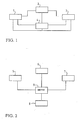
- devices 1-4 may be processors, storage controllers, communications transmitter receiver pairs, or any combination of such devices or other devices.
- Fig. 1 shows a possible connection of any of devices 1-4 to any or all of the other devices 1-4.
- Fig. 2 shows another prior art connection of devices 5-8 which devices are similar to devices 1-4.
- Devices 5-8 each connect through a switch 9 such that any of devices 5-8 may be singly connected to another of these devices through the switch 9.
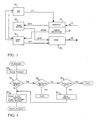
- Fig. 3 is a block diagram of typical, prior art receiver and transmitter circuitry associated with data transfer over links such as those shown in Figs. 1 and 2.
- receive control logic 10 enables a receiver 12 to receive data on line 11.
- Error detection circuitry 13 monitors the incoming data for errors.
- the incoming data is stored in a data buffer 18 which is accessible to a data processing system (not shown) for further utilizing or storing the received data. If errors in the incoming data are detected, an error signal is conveyed to the send control logic 14.
- the send control logic 14 then generates a control signal to the send circuitry 15.
- the send circuitry 15 is able to send a message back on line 16 to tell the station which sent the erroneously received data to send the data again. Data loaded into the data buffer 15 by the data processing system can also be transmitted on line 16 by the send circuitry 15.
- the link transmission priority start technique of this invention is now described beginning with reference to Fig. 4.
- the technique begins with the assumption that an input/output (I/O) request has been made.
- the I/O request is queued.
- a test is made to determine if the channel is busy. If the channel is busy a test is made at 32 to determine whether the channel is busy transmitting data, or busy for some other reason. If the channel is busy transmitting data, the operation is exited. If not, at 33 a test is made to determine if the channel is busy because it is receiving data. If the channel is receiving data the process is exited.
- the channel is busy but neither transmitting nor receiving data, the channel is listening and, in this case, a stop channel command is issued at 34 to stop the channel from listening and the process proceeds to 35.
- a stop channel command is issued at 34 to stop the channel from listening and the process proceeds to 35.
- the operation proceeds directly to 35. Thereafter the normal start channel process is entered.
- Fig. 5 the normal start channel process is shown.
- a time out is established to abort this process if it is not completed before the end of the time out.
- the normal channel start command is issued.
- a status check is made to determine if the start command can be honoured. If the start command must be rejected, a test is made at 42 to determine if the rejection is because unexpected data is now present. If not, an error is assumed and the operation proceeds to 43 at which point a test is made to determine the severity of the error.
- the error is a normal error, such as a cyclic redundancy check (CRC) error or invalid code pattern for a character, the operation proceeds to the normal recover routine to be described below with reference to Fig. 6.
- the error is an abnormal error, such as a loss of signal or synchronization on the channel, the operation proceeds to the hard (abnormal) recover routine to be described below with reference to Fig. 7.
- CRC cyclic redundancy check
- the channel is set up in the receive mode and the current I/O request is requeued to be honoured after the unexpected data has been received. The operation then proceeds back to the beginning of the flow diagram shown in figure 5 for the normal channel start. At 41, if the start command can be honoured the operation is exited and awaits the channel interrupt, to be described below with reference to Fig. 8.
- a total retry counter is tested (step 50). If the total retry count exceeds a predetermined maximum, the error will then be treated as an abnormal error, rather than a normal error. Assuming at 50 that the maximum retry count has not been exceeded, at 51 an appropriate recovery option is selected.
- each type of normal error may have a unique, optimum recovery option, which is chosen during this operation according to the type of normal error that is detected. Only one such recovery option "A" will be described, for the purposes of illustration, although it will be appreciated that numerous recovery options will be available.
- both the retry count for recovery option "A" and the total retry counts are incremented. Then at 54 the channel is set up for a normal start which is thereafter attempted.
- step 43 assume that an abnormal error is encountered which requires the hard (abnormal) error recovery operation.
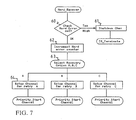
- the hard error recovery operation is described with reference to Fig. 7.
- a hard error count is tested. If the hard error count exceeds a predetermined maximum, at 61 the channel must be shut down, after which the I/O task is terminated, as described below with reference to Fig. 11. Assuming, at 60, that the hard error count does not exceed the predetermined maximum, at 62 the hard error count is incremented. Then, at 63 an appropriate hard recover option is selected.
- each type of abnormal error may have a unique, optimum recovery option, which is chosen in step 63 according to the type of abnormal error that is detected.
- a time out is established to abort this process if it is not completed before the end of the time out. Thereafter, at 101 the priority start command is issued which causes the I/O request to be honoured without regard to the error protections of normal operations.
- Fig. 8 shows the operation associated with a channel interrupt.
- the operation proceeds to 69 in Fig. 8, at which point the time out established at block 40 of Fig. 5 is reset. Then, at 70 the status of the channel is tested. If the last channel operation (i.e., this operation could be a step in an error recovery operation or the original I/O request) was completed without error, at 71 a test is made to determine if the queued I/O request is complete. If so the operation terminates. If not, an error is assumed and at 72 a test is made to determine if the hard error count exceeds zero.
- the operation proceeds to the normal recover operation described above for Fig. 6. If an abnormal error prevented the completion, the operation proceeds to the hard recover operation described above for Fig. 7. At 70, if an error was detected when the channel status was tested, at 73 the severity of the error is determined. If a normal error prevented the completion, the operation proceeds to the normal recover operation described above for Fig. 6. If an abnormal error prevented the completion, the operation proceeds to the hard recover operation described above for Fig. 7.
- Fig. 11 shows the operation associated with an I/O termination. This operation is used when the I/O request is complete.
- the operation proceeds to 110 in Fig. 11 at which point status information is posted to indicate that the operation is complete (without errors or with errors that allow for a retry) or the channel is shut down due to an unrecoverable hard error.
- the I/O task is posted and and 112 a test is made to determine if there is an I/O request on queue. If so, the operation proceeds back to the beginning of Fig. 4 to process the I/O request. If not, the operation is exited.
- Fig. 9 shows the operation of a timeout interrupt, which may be used when the timeouts established at blocks 40 and 100 of Figs. 5 and 10 have been exceeded.
- a timeout retry counter and a total count of retries are incremented.
- a test is made to determine if the number of hard errors exceeds zero. If so the operation proceeds to the hard recover operation described above for Fig. 7. If not, at 92 the operation of the channel is halted. Then, at 93 a test is made to determine the status of the channel. If a normal error led to the timeout, then the normal recover operation of Fig. 6 is taken. If an abnormal error led to the timeout, then the hard recover operation of Fig. 7 is entered.
- a technique for use with a link communications system or other such channel for conveying data, which system or channel includes error checking circuitry and protection from attempting communication through the link or channel when error conditions are indicated.
- the invention overcomes the inability of attempting to use the channel to convey error clearing routines or diagnostic data on the channel during such an error condition by the provision of a priority start technique in which a start of transmission over the channel is attempted without reference to any of the protective features which would otherwise prevent a normal start command from being honoured. After encountering an error associated with the channel, tests are made to determine if the error is a normal error or an abnormal error. The recovery operation following a normal error ends with a normal channel start attempt. The recovery following an abnormal error includes the priority start which ignores the fact that the error would otherwise preclude starting the channel according to the normal channel start technique.
Landscapes
- Engineering & Computer Science (AREA)
- Computer Networks & Wireless Communication (AREA)
- Signal Processing (AREA)
- Quality & Reliability (AREA)
- Debugging And Monitoring (AREA)
- Retry When Errors Occur (AREA)
Applications Claiming Priority (2)
| Application Number | Priority Date | Filing Date | Title |
|---|---|---|---|
| US29771489A | 1989-01-13 | 1989-01-13 | |
| US297714 | 1989-01-13 |
Publications (2)
| Publication Number | Publication Date |
|---|---|
| EP0378424A1 true EP0378424A1 (fr) | 1990-07-18 |
| EP0378424B1 EP0378424B1 (fr) | 1994-08-24 |
Family
ID=23147441
Family Applications (1)
| Application Number | Title | Priority Date | Filing Date |
|---|---|---|---|
| EP19900300344 Expired - Lifetime EP0378424B1 (fr) | 1989-01-13 | 1990-01-11 | Start de priorité à la transmission par lignes de jonction |
Country Status (3)
| Country | Link |
|---|---|
| EP (1) | EP0378424B1 (fr) |
| JP (1) | JPH0675256B2 (fr) |
| DE (1) | DE69011697D1 (fr) |
Citations (3)
| Publication number | Priority date | Publication date | Assignee | Title |
|---|---|---|---|---|
| DE2310222A1 (de) * | 1973-03-01 | 1974-09-05 | Licentia Gmbh | Verfahren zur datenuebertragung unter verwendung von stoerungsdetektoren |
| GB1553572A (en) * | 1976-06-07 | 1979-09-26 | Trend Communications Ltd | Testing of information transmission channels |
| US4769761A (en) * | 1986-10-09 | 1988-09-06 | International Business Machines Corporation | Apparatus and method for isolating and predicting errors in a local area network |
-
1990
- 1990-01-11 DE DE69011697T patent/DE69011697D1/de not_active Expired - Lifetime
- 1990-01-11 EP EP19900300344 patent/EP0378424B1/fr not_active Expired - Lifetime
- 1990-01-12 JP JP2003655A patent/JPH0675256B2/ja not_active Expired - Lifetime
Patent Citations (3)
| Publication number | Priority date | Publication date | Assignee | Title |
|---|---|---|---|---|
| DE2310222A1 (de) * | 1973-03-01 | 1974-09-05 | Licentia Gmbh | Verfahren zur datenuebertragung unter verwendung von stoerungsdetektoren |
| GB1553572A (en) * | 1976-06-07 | 1979-09-26 | Trend Communications Ltd | Testing of information transmission channels |
| US4769761A (en) * | 1986-10-09 | 1988-09-06 | International Business Machines Corporation | Apparatus and method for isolating and predicting errors in a local area network |
Also Published As
| Publication number | Publication date |
|---|---|
| JPH0675256B2 (ja) | 1994-09-21 |
| DE69011697D1 (de) | 1994-09-29 |
| EP0378424B1 (fr) | 1994-08-24 |
| JPH02227757A (ja) | 1990-09-10 |
Similar Documents
| Publication | Publication Date | Title |
|---|---|---|
| EP0570882B1 (fr) | Méthode et dispositif de commande distribuée pour la mise en oeuvre d'une commutation sur réserve | |
| CA1131316A (fr) | Systeme de communication radio portatif avec unite de controle et terminaux multiples | |
| US4270205A (en) | Serial line communication system | |
| JPS6079844A (ja) | ホツトキヤリア発生場所監視方法 | |
| JPS63153941A (ja) | データ通信方法 | |
| EP0738059A2 (fr) | Procédé et dispositif pour tester les liaisons entre les commutateurs d'un réseau | |
| EP0371593B1 (fr) | Méthode pour l'initialisation ou la synchronisation d'une ligne de communication | |
| US5392425A (en) | Channel-initiated retry and unit check for peripheral devices | |
| GB1605059A (en) | Modem test and monitoring apparatus | |
| US5331628A (en) | Path testing and/or monitoring within a multiple node telecommunication system | |
| US5938786A (en) | Simplified recovery of damaged frames in a communication link | |
| EP0378424B1 (fr) | Start de priorité à la transmission par lignes de jonction | |
| EP0472867B1 (fr) | Rétablissement d'une erreur de commutation dans un système entrée/sortie d'ordinateur | |
| US6961876B2 (en) | Automatic handling of link failures | |
| EP0260086B1 (fr) | Système de commande pour installation de production de grande capacité | |
| JPS58111544A (ja) | 回線無通信時間監視制御方式 | |
| EP0239323A2 (fr) | Extension entre un canal d'un CPU et une unité de commande | |
| EP0378398B1 (fr) | Système de traitement de données avec moyens pour la détection de l'état du dispositif de traitement de données recevant des commandes | |
| EP0544965A1 (fr) | Méthode pour fixer les caractéristiques de la transmission asynchrone dans un équipement de télécommunications utilisant un controleur sériel de communication | |
| JPH0535616A (ja) | データ転送システム | |
| EP0429787B1 (fr) | Appareil de transmission de données | |
| JP3008689B2 (ja) | 装置間ケーブル誤接続検出方式 | |
| JPH0756842A (ja) | チャネルサブシステム | |
| JPH0715417A (ja) | データ転送方式 | |
| JPH037439A (ja) | ディジタル通信回線の監視方式 |
Legal Events
| Date | Code | Title | Description |
|---|---|---|---|
| PUAI | Public reference made under article 153(3) epc to a published international application that has entered the european phase |
Free format text: ORIGINAL CODE: 0009012 |
|
| AK | Designated contracting states |
Kind code of ref document: A1 Designated state(s): DE FR GB |
|
| 17P | Request for examination filed |
Effective date: 19901113 |
|
| 17Q | First examination report despatched |
Effective date: 19921229 |
|
| GRAA | (expected) grant |
Free format text: ORIGINAL CODE: 0009210 |
|
| AK | Designated contracting states |
Kind code of ref document: B1 Designated state(s): DE FR GB |
|
| PG25 | Lapsed in a contracting state [announced via postgrant information from national office to epo] |
Ref country code: FR Effective date: 19940824 |
|
| REF | Corresponds to: |
Ref document number: 69011697 Country of ref document: DE Date of ref document: 19940929 |
|
| PG25 | Lapsed in a contracting state [announced via postgrant information from national office to epo] |
Ref country code: DE Effective date: 19941125 |
|
| EN | Fr: translation not filed | ||
| PLBE | No opposition filed within time limit |
Free format text: ORIGINAL CODE: 0009261 |
|
| STAA | Information on the status of an ep patent application or granted ep patent |
Free format text: STATUS: NO OPPOSITION FILED WITHIN TIME LIMIT |
|
| 26N | No opposition filed | ||
| PGFP | Annual fee paid to national office [announced via postgrant information from national office to epo] |
Ref country code: GB Payment date: 19951215 Year of fee payment: 7 |
|
| PG25 | Lapsed in a contracting state [announced via postgrant information from national office to epo] |
Ref country code: GB Effective date: 19970111 |
|
| GBPC | Gb: european patent ceased through non-payment of renewal fee |
Effective date: 19970111 |