EP0378510A2 - Dispersionsfarbstoffe - Google Patents
Dispersionsfarbstoffe Download PDFInfo
- Publication number
- EP0378510A2 EP0378510A2 EP90810004A EP90810004A EP0378510A2 EP 0378510 A2 EP0378510 A2 EP 0378510A2 EP 90810004 A EP90810004 A EP 90810004A EP 90810004 A EP90810004 A EP 90810004A EP 0378510 A2 EP0378510 A2 EP 0378510A2
- Authority
- EP
- European Patent Office
- Prior art keywords
- formula
- dyes
- alkyl
- hydrogen
- methyl
- Prior art date
- Legal status (The legal status is an assumption and is not a legal conclusion. Google has not performed a legal analysis and makes no representation as to the accuracy of the status listed.)
- Granted
Links
- 0 C*=C[C@@](CC=*(C)C(C#N)=C(C#N)C#N)N(*)*NC(ON=C(*)*)=O Chemical compound C*=C[C@@](CC=*(C)C(C#N)=C(C#N)C#N)N(*)*NC(ON=C(*)*)=O 0.000 description 6
Classifications
-
- C—CHEMISTRY; METALLURGY
- C09—DYES; PAINTS; POLISHES; NATURAL RESINS; ADHESIVES; COMPOSITIONS NOT OTHERWISE PROVIDED FOR; APPLICATIONS OF MATERIALS NOT OTHERWISE PROVIDED FOR
- C09B—ORGANIC DYES OR CLOSELY-RELATED COMPOUNDS FOR PRODUCING DYES, e.g. PIGMENTS; MORDANTS; LAKES
- C09B67/00—Influencing the physical, e.g. the dyeing or printing properties of dyestuffs without chemical reactions, e.g. by treating with solvents grinding or grinding assistants, coating of pigments or dyes; Process features in the making of dyestuff preparations; Dyestuff preparations of a special physical nature, e.g. tablets, films
- C09B67/0033—Blends of pigments; Mixtured crystals; Solid solutions
- C09B67/0046—Mixtures of two or more azo dyes
- C09B67/0051—Mixtures of two or more azo dyes mixture of two or more monoazo dyes
-
- C—CHEMISTRY; METALLURGY
- C07—ORGANIC CHEMISTRY
- C07C—ACYCLIC OR CARBOCYCLIC COMPOUNDS
- C07C271/00—Derivatives of carbamic acids, i.e. compounds containing any of the groups, the nitrogen atom not being part of nitro or nitroso groups
- C07C271/60—Derivatives of carbamic acids, i.e. compounds containing any of the groups, the nitrogen atom not being part of nitro or nitroso groups having oxygen atoms of carbamate groups bound to nitrogen atoms
-
- C—CHEMISTRY; METALLURGY
- C07—ORGANIC CHEMISTRY
- C07C—ACYCLIC OR CARBOCYCLIC COMPOUNDS
- C07C311/00—Amides of sulfonic acids, i.e. compounds having singly-bound oxygen atoms of sulfo groups replaced by nitrogen atoms, not being part of nitro or nitroso groups
- C07C311/01—Sulfonamides having sulfur atoms of sulfonamide groups bound to acyclic carbon atoms
- C07C311/02—Sulfonamides having sulfur atoms of sulfonamide groups bound to acyclic carbon atoms of an acyclic saturated carbon skeleton
- C07C311/08—Sulfonamides having sulfur atoms of sulfonamide groups bound to acyclic carbon atoms of an acyclic saturated carbon skeleton having the nitrogen atom of at least one of the sulfonamide groups bound to a carbon atom of a six-membered aromatic ring
-
- C—CHEMISTRY; METALLURGY
- C07—ORGANIC CHEMISTRY
- C07C—ACYCLIC OR CARBOCYCLIC COMPOUNDS
- C07C323/00—Thiols, sulfides, hydropolysulfides or polysulfides substituted by halogen, oxygen or nitrogen atoms, or by sulfur atoms not being part of thio groups
- C07C323/23—Thiols, sulfides, hydropolysulfides or polysulfides substituted by halogen, oxygen or nitrogen atoms, or by sulfur atoms not being part of thio groups containing thio groups and nitrogen atoms, not being part of nitro or nitroso groups, bound to the same carbon skeleton
- C07C323/39—Thiols, sulfides, hydropolysulfides or polysulfides substituted by halogen, oxygen or nitrogen atoms, or by sulfur atoms not being part of thio groups containing thio groups and nitrogen atoms, not being part of nitro or nitroso groups, bound to the same carbon skeleton at least one of the nitrogen atoms being part of any of the groups, X being a hetero atom, Y being any atom
- C07C323/43—Y being a hetero atom
-
- C—CHEMISTRY; METALLURGY
- C07—ORGANIC CHEMISTRY
- C07D—HETEROCYCLIC COMPOUNDS
- C07D223/00—Heterocyclic compounds containing seven-membered rings having one nitrogen atom as the only ring hetero atom
- C07D223/02—Heterocyclic compounds containing seven-membered rings having one nitrogen atom as the only ring hetero atom not condensed with other rings
- C07D223/06—Heterocyclic compounds containing seven-membered rings having one nitrogen atom as the only ring hetero atom not condensed with other rings with hetero atoms or with carbon atoms having three bonds to hetero atoms with at the most one bond to halogen, e.g. ester or nitrile radicals, directly attached to ring carbon atoms
- C07D223/08—Oxygen atoms
- C07D223/10—Oxygen atoms attached in position 2
-
- C—CHEMISTRY; METALLURGY
- C09—DYES; PAINTS; POLISHES; NATURAL RESINS; ADHESIVES; COMPOSITIONS NOT OTHERWISE PROVIDED FOR; APPLICATIONS OF MATERIALS NOT OTHERWISE PROVIDED FOR
- C09B—ORGANIC DYES OR CLOSELY-RELATED COMPOUNDS FOR PRODUCING DYES, e.g. PIGMENTS; MORDANTS; LAKES
- C09B1/00—Dyes with anthracene nucleus not condensed with any other ring
- C09B1/16—Amino-anthraquinones
- C09B1/20—Preparation from starting materials already containing the anthracene nucleus
- C09B1/22—Dyes with unsubstituted amino groups
-
- C—CHEMISTRY; METALLURGY
- C09—DYES; PAINTS; POLISHES; NATURAL RESINS; ADHESIVES; COMPOSITIONS NOT OTHERWISE PROVIDED FOR; APPLICATIONS OF MATERIALS NOT OTHERWISE PROVIDED FOR
- C09B—ORGANIC DYES OR CLOSELY-RELATED COMPOUNDS FOR PRODUCING DYES, e.g. PIGMENTS; MORDANTS; LAKES
- C09B1/00—Dyes with anthracene nucleus not condensed with any other ring
- C09B1/16—Amino-anthraquinones
- C09B1/20—Preparation from starting materials already containing the anthracene nucleus
- C09B1/26—Dyes with amino groups substituted by hydrocarbon radicals
- C09B1/28—Dyes with amino groups substituted by hydrocarbon radicals substituted by alkyl, aralkyl or cyclo alkyl groups
- C09B1/285—Dyes with no other substituents than the amino groups
-
- C—CHEMISTRY; METALLURGY
- C09—DYES; PAINTS; POLISHES; NATURAL RESINS; ADHESIVES; COMPOSITIONS NOT OTHERWISE PROVIDED FOR; APPLICATIONS OF MATERIALS NOT OTHERWISE PROVIDED FOR
- C09B—ORGANIC DYES OR CLOSELY-RELATED COMPOUNDS FOR PRODUCING DYES, e.g. PIGMENTS; MORDANTS; LAKES
- C09B1/00—Dyes with anthracene nucleus not condensed with any other ring
- C09B1/50—Amino-hydroxy-anthraquinones; Ethers and esters thereof
- C09B1/503—Amino-hydroxy-anthraquinones; Ethers and esters thereof unsubstituted amino-hydroxy anthraquinone
-
- C—CHEMISTRY; METALLURGY
- C09—DYES; PAINTS; POLISHES; NATURAL RESINS; ADHESIVES; COMPOSITIONS NOT OTHERWISE PROVIDED FOR; APPLICATIONS OF MATERIALS NOT OTHERWISE PROVIDED FOR
- C09B—ORGANIC DYES OR CLOSELY-RELATED COMPOUNDS FOR PRODUCING DYES, e.g. PIGMENTS; MORDANTS; LAKES
- C09B1/00—Dyes with anthracene nucleus not condensed with any other ring
- C09B1/50—Amino-hydroxy-anthraquinones; Ethers and esters thereof
- C09B1/503—Amino-hydroxy-anthraquinones; Ethers and esters thereof unsubstituted amino-hydroxy anthraquinone
- C09B1/5035—Amino-hydroxy-anthraquinones; Ethers and esters thereof unsubstituted amino-hydroxy anthraquinone only amino and hydroxy groups
-
- C—CHEMISTRY; METALLURGY
- C09—DYES; PAINTS; POLISHES; NATURAL RESINS; ADHESIVES; COMPOSITIONS NOT OTHERWISE PROVIDED FOR; APPLICATIONS OF MATERIALS NOT OTHERWISE PROVIDED FOR
- C09B—ORGANIC DYES OR CLOSELY-RELATED COMPOUNDS FOR PRODUCING DYES, e.g. PIGMENTS; MORDANTS; LAKES
- C09B23/00—Methine or polymethine dyes, e.g. cyanine dyes
- C09B23/14—Styryl dyes
- C09B23/143—Styryl dyes the ethylene chain carrying a COOH or a functionally modified derivative, e.g.-CN, -COR, -COOR, -CON=, C6H5-CH=C-CN
-
- C—CHEMISTRY; METALLURGY
- C09—DYES; PAINTS; POLISHES; NATURAL RESINS; ADHESIVES; COMPOSITIONS NOT OTHERWISE PROVIDED FOR; APPLICATIONS OF MATERIALS NOT OTHERWISE PROVIDED FOR
- C09B—ORGANIC DYES OR CLOSELY-RELATED COMPOUNDS FOR PRODUCING DYES, e.g. PIGMENTS; MORDANTS; LAKES
- C09B29/00—Monoazo dyes prepared by diazotising and coupling
- C09B29/0025—Monoazo dyes prepared by diazotising and coupling from diazotized amino heterocyclic compounds
- C09B29/0029—Monoazo dyes prepared by diazotising and coupling from diazotized amino heterocyclic compounds the heterocyclic ring containing only nitrogen as heteroatom
- C09B29/0037—Monoazo dyes prepared by diazotising and coupling from diazotized amino heterocyclic compounds the heterocyclic ring containing only nitrogen as heteroatom containing a five-membered heterocyclic ring with two nitrogen atoms
-
- C—CHEMISTRY; METALLURGY
- C09—DYES; PAINTS; POLISHES; NATURAL RESINS; ADHESIVES; COMPOSITIONS NOT OTHERWISE PROVIDED FOR; APPLICATIONS OF MATERIALS NOT OTHERWISE PROVIDED FOR
- C09B—ORGANIC DYES OR CLOSELY-RELATED COMPOUNDS FOR PRODUCING DYES, e.g. PIGMENTS; MORDANTS; LAKES
- C09B29/00—Monoazo dyes prepared by diazotising and coupling
- C09B29/0025—Monoazo dyes prepared by diazotising and coupling from diazotized amino heterocyclic compounds
- C09B29/0059—Monoazo dyes prepared by diazotising and coupling from diazotized amino heterocyclic compounds the heterocyclic ring containing only sulfur as heteroatom
-
- C—CHEMISTRY; METALLURGY
- C09—DYES; PAINTS; POLISHES; NATURAL RESINS; ADHESIVES; COMPOSITIONS NOT OTHERWISE PROVIDED FOR; APPLICATIONS OF MATERIALS NOT OTHERWISE PROVIDED FOR
- C09B—ORGANIC DYES OR CLOSELY-RELATED COMPOUNDS FOR PRODUCING DYES, e.g. PIGMENTS; MORDANTS; LAKES
- C09B29/00—Monoazo dyes prepared by diazotising and coupling
- C09B29/0025—Monoazo dyes prepared by diazotising and coupling from diazotized amino heterocyclic compounds
- C09B29/0074—Monoazo dyes prepared by diazotising and coupling from diazotized amino heterocyclic compounds the heterocyclic ring containing nitrogen and sulfur as heteroatoms
- C09B29/0077—Monoazo dyes prepared by diazotising and coupling from diazotized amino heterocyclic compounds the heterocyclic ring containing nitrogen and sulfur as heteroatoms containing a five-membered heterocyclic ring with one nitrogen and one sulfur as heteroatoms
- C09B29/0081—Isothiazoles or condensed isothiazoles
-
- C—CHEMISTRY; METALLURGY
- C09—DYES; PAINTS; POLISHES; NATURAL RESINS; ADHESIVES; COMPOSITIONS NOT OTHERWISE PROVIDED FOR; APPLICATIONS OF MATERIALS NOT OTHERWISE PROVIDED FOR
- C09B—ORGANIC DYES OR CLOSELY-RELATED COMPOUNDS FOR PRODUCING DYES, e.g. PIGMENTS; MORDANTS; LAKES
- C09B29/00—Monoazo dyes prepared by diazotising and coupling
- C09B29/0025—Monoazo dyes prepared by diazotising and coupling from diazotized amino heterocyclic compounds
- C09B29/0074—Monoazo dyes prepared by diazotising and coupling from diazotized amino heterocyclic compounds the heterocyclic ring containing nitrogen and sulfur as heteroatoms
- C09B29/0077—Monoazo dyes prepared by diazotising and coupling from diazotized amino heterocyclic compounds the heterocyclic ring containing nitrogen and sulfur as heteroatoms containing a five-membered heterocyclic ring with one nitrogen and one sulfur as heteroatoms
- C09B29/0085—Thiazoles or condensed thiazoles
- C09B29/0088—Benzothiazoles
-
- C—CHEMISTRY; METALLURGY
- C09—DYES; PAINTS; POLISHES; NATURAL RESINS; ADHESIVES; COMPOSITIONS NOT OTHERWISE PROVIDED FOR; APPLICATIONS OF MATERIALS NOT OTHERWISE PROVIDED FOR
- C09B—ORGANIC DYES OR CLOSELY-RELATED COMPOUNDS FOR PRODUCING DYES, e.g. PIGMENTS; MORDANTS; LAKES
- C09B29/00—Monoazo dyes prepared by diazotising and coupling
- C09B29/0025—Monoazo dyes prepared by diazotising and coupling from diazotized amino heterocyclic compounds
- C09B29/0074—Monoazo dyes prepared by diazotising and coupling from diazotized amino heterocyclic compounds the heterocyclic ring containing nitrogen and sulfur as heteroatoms
- C09B29/0092—Monoazo dyes prepared by diazotising and coupling from diazotized amino heterocyclic compounds the heterocyclic ring containing nitrogen and sulfur as heteroatoms containing a five-membered heterocyclic ring with two nitrogen and one sulfur as heteroatoms
-
- C—CHEMISTRY; METALLURGY
- C09—DYES; PAINTS; POLISHES; NATURAL RESINS; ADHESIVES; COMPOSITIONS NOT OTHERWISE PROVIDED FOR; APPLICATIONS OF MATERIALS NOT OTHERWISE PROVIDED FOR
- C09B—ORGANIC DYES OR CLOSELY-RELATED COMPOUNDS FOR PRODUCING DYES, e.g. PIGMENTS; MORDANTS; LAKES
- C09B29/00—Monoazo dyes prepared by diazotising and coupling
- C09B29/06—Monoazo dyes prepared by diazotising and coupling from coupling components containing amino as the only directing group
- C09B29/08—Amino benzenes
- C09B29/0805—Amino benzenes free of acid groups
- C09B29/0807—Amino benzenes free of acid groups characterised by the amino group
- C09B29/0809—Amino benzenes free of acid groups characterised by the amino group substituted amino group
- C09B29/0811—Amino benzenes free of acid groups characterised by the amino group substituted amino group further substituted alkylamino, alkenylamino, alkynylamino, cycloalkylamino aralkylamino or arylamino
- C09B29/0813—Amino benzenes free of acid groups characterised by the amino group substituted amino group further substituted alkylamino, alkenylamino, alkynylamino, cycloalkylamino aralkylamino or arylamino substituted by OH, O-C(=X)-R, O-C(=X)-X-R, O-R (X being O,S,NR; R being hydrocarbonyl)
-
- C—CHEMISTRY; METALLURGY
- C09—DYES; PAINTS; POLISHES; NATURAL RESINS; ADHESIVES; COMPOSITIONS NOT OTHERWISE PROVIDED FOR; APPLICATIONS OF MATERIALS NOT OTHERWISE PROVIDED FOR
- C09B—ORGANIC DYES OR CLOSELY-RELATED COMPOUNDS FOR PRODUCING DYES, e.g. PIGMENTS; MORDANTS; LAKES
- C09B29/00—Monoazo dyes prepared by diazotising and coupling
- C09B29/06—Monoazo dyes prepared by diazotising and coupling from coupling components containing amino as the only directing group
- C09B29/08—Amino benzenes
- C09B29/0805—Amino benzenes free of acid groups
- C09B29/0807—Amino benzenes free of acid groups characterised by the amino group
- C09B29/0809—Amino benzenes free of acid groups characterised by the amino group substituted amino group
- C09B29/0811—Amino benzenes free of acid groups characterised by the amino group substituted amino group further substituted alkylamino, alkenylamino, alkynylamino, cycloalkylamino aralkylamino or arylamino
- C09B29/0814—Amino benzenes free of acid groups characterised by the amino group substituted amino group further substituted alkylamino, alkenylamino, alkynylamino, cycloalkylamino aralkylamino or arylamino substituted by N
-
- C—CHEMISTRY; METALLURGY
- C09—DYES; PAINTS; POLISHES; NATURAL RESINS; ADHESIVES; COMPOSITIONS NOT OTHERWISE PROVIDED FOR; APPLICATIONS OF MATERIALS NOT OTHERWISE PROVIDED FOR
- C09B—ORGANIC DYES OR CLOSELY-RELATED COMPOUNDS FOR PRODUCING DYES, e.g. PIGMENTS; MORDANTS; LAKES
- C09B29/00—Monoazo dyes prepared by diazotising and coupling
- C09B29/06—Monoazo dyes prepared by diazotising and coupling from coupling components containing amino as the only directing group
- C09B29/08—Amino benzenes
- C09B29/0805—Amino benzenes free of acid groups
- C09B29/0807—Amino benzenes free of acid groups characterised by the amino group
- C09B29/0809—Amino benzenes free of acid groups characterised by the amino group substituted amino group
- C09B29/0811—Amino benzenes free of acid groups characterised by the amino group substituted amino group further substituted alkylamino, alkenylamino, alkynylamino, cycloalkylamino aralkylamino or arylamino
- C09B29/0823—Amino benzenes free of acid groups characterised by the amino group substituted amino group further substituted alkylamino, alkenylamino, alkynylamino, cycloalkylamino aralkylamino or arylamino substituted by CN
-
- C—CHEMISTRY; METALLURGY
- C09—DYES; PAINTS; POLISHES; NATURAL RESINS; ADHESIVES; COMPOSITIONS NOT OTHERWISE PROVIDED FOR; APPLICATIONS OF MATERIALS NOT OTHERWISE PROVIDED FOR
- C09B—ORGANIC DYES OR CLOSELY-RELATED COMPOUNDS FOR PRODUCING DYES, e.g. PIGMENTS; MORDANTS; LAKES
- C09B29/00—Monoazo dyes prepared by diazotising and coupling
- C09B29/06—Monoazo dyes prepared by diazotising and coupling from coupling components containing amino as the only directing group
- C09B29/08—Amino benzenes
- C09B29/0805—Amino benzenes free of acid groups
- C09B29/0807—Amino benzenes free of acid groups characterised by the amino group
- C09B29/0809—Amino benzenes free of acid groups characterised by the amino group substituted amino group
- C09B29/0811—Amino benzenes free of acid groups characterised by the amino group substituted amino group further substituted alkylamino, alkenylamino, alkynylamino, cycloalkylamino aralkylamino or arylamino
- C09B29/0823—Amino benzenes free of acid groups characterised by the amino group substituted amino group further substituted alkylamino, alkenylamino, alkynylamino, cycloalkylamino aralkylamino or arylamino substituted by CN
- C09B29/0826—Amino benzenes free of acid groups characterised by the amino group substituted amino group further substituted alkylamino, alkenylamino, alkynylamino, cycloalkylamino aralkylamino or arylamino substituted by CN having N(-alkenylene/-alkynylene-O)(-alkenylene/-alkynylene-CN)
-
- C—CHEMISTRY; METALLURGY
- C09—DYES; PAINTS; POLISHES; NATURAL RESINS; ADHESIVES; COMPOSITIONS NOT OTHERWISE PROVIDED FOR; APPLICATIONS OF MATERIALS NOT OTHERWISE PROVIDED FOR
- C09B—ORGANIC DYES OR CLOSELY-RELATED COMPOUNDS FOR PRODUCING DYES, e.g. PIGMENTS; MORDANTS; LAKES
- C09B29/00—Monoazo dyes prepared by diazotising and coupling
- C09B29/34—Monoazo dyes prepared by diazotising and coupling from other coupling components
- C09B29/36—Monoazo dyes prepared by diazotising and coupling from other coupling components from heterocyclic compounds
- C09B29/3604—Monoazo dyes prepared by diazotising and coupling from other coupling components from heterocyclic compounds containing only a nitrogen as heteroatom
- C09B29/3617—Monoazo dyes prepared by diazotising and coupling from other coupling components from heterocyclic compounds containing only a nitrogen as heteroatom containing a six-membered heterocyclic with only one nitrogen as heteroatom
- C09B29/3621—Monoazo dyes prepared by diazotising and coupling from other coupling components from heterocyclic compounds containing only a nitrogen as heteroatom containing a six-membered heterocyclic with only one nitrogen as heteroatom from a pyridine ring
- C09B29/3639—Monoazo dyes prepared by diazotising and coupling from other coupling components from heterocyclic compounds containing only a nitrogen as heteroatom containing a six-membered heterocyclic with only one nitrogen as heteroatom from a pyridine ring from a pyridine ring containing one or more amino groups
-
- C—CHEMISTRY; METALLURGY
- C09—DYES; PAINTS; POLISHES; NATURAL RESINS; ADHESIVES; COMPOSITIONS NOT OTHERWISE PROVIDED FOR; APPLICATIONS OF MATERIALS NOT OTHERWISE PROVIDED FOR
- C09B—ORGANIC DYES OR CLOSELY-RELATED COMPOUNDS FOR PRODUCING DYES, e.g. PIGMENTS; MORDANTS; LAKES
- C09B5/00—Dyes with an anthracene nucleus condensed with one or more heterocyclic rings with or without carbocyclic rings
- C09B5/24—Dyes with an anthracene nucleus condensed with one or more heterocyclic rings with or without carbocyclic rings the heterocyclic rings being only condensed with an anthraquinone nucleus in 1-2 or 2-3 position
- C09B5/2409—Dyes with an anthracene nucleus condensed with one or more heterocyclic rings with or without carbocyclic rings the heterocyclic rings being only condensed with an anthraquinone nucleus in 1-2 or 2-3 position not provided for in one of the sub groups C09B5/26 - C09B5/62
- C09B5/2436—Dyes with an anthracene nucleus condensed with one or more heterocyclic rings with or without carbocyclic rings the heterocyclic rings being only condensed with an anthraquinone nucleus in 1-2 or 2-3 position not provided for in one of the sub groups C09B5/26 - C09B5/62 only nitrogen-containing hetero rings
- C09B5/2445—Phtaloyl isoindoles
- C09B5/2454—5,6 phtaloyl dihydro isoindoles
- C09B5/2463—1,3 oxo or imino derivatives
- C09B5/2472—1,3 dioxo derivatives
-
- C—CHEMISTRY; METALLURGY
- C09—DYES; PAINTS; POLISHES; NATURAL RESINS; ADHESIVES; COMPOSITIONS NOT OTHERWISE PROVIDED FOR; APPLICATIONS OF MATERIALS NOT OTHERWISE PROVIDED FOR
- C09B—ORGANIC DYES OR CLOSELY-RELATED COMPOUNDS FOR PRODUCING DYES, e.g. PIGMENTS; MORDANTS; LAKES
- C09B51/00—Nitro or nitroso dyes
-
- C—CHEMISTRY; METALLURGY
- C09—DYES; PAINTS; POLISHES; NATURAL RESINS; ADHESIVES; COMPOSITIONS NOT OTHERWISE PROVIDED FOR; APPLICATIONS OF MATERIALS NOT OTHERWISE PROVIDED FOR
- C09B—ORGANIC DYES OR CLOSELY-RELATED COMPOUNDS FOR PRODUCING DYES, e.g. PIGMENTS; MORDANTS; LAKES
- C09B57/00—Other synthetic dyes of known constitution
- C09B57/02—Coumarine dyes
-
- C—CHEMISTRY; METALLURGY
- C09—DYES; PAINTS; POLISHES; NATURAL RESINS; ADHESIVES; COMPOSITIONS NOT OTHERWISE PROVIDED FOR; APPLICATIONS OF MATERIALS NOT OTHERWISE PROVIDED FOR
- C09B—ORGANIC DYES OR CLOSELY-RELATED COMPOUNDS FOR PRODUCING DYES, e.g. PIGMENTS; MORDANTS; LAKES
- C09B69/00—Dyes not provided for by a single group of this subclass
-
- C—CHEMISTRY; METALLURGY
- C07—ORGANIC CHEMISTRY
- C07C—ACYCLIC OR CARBOCYCLIC COMPOUNDS
- C07C2601/00—Systems containing only non-condensed rings
- C07C2601/12—Systems containing only non-condensed rings with a six-membered ring
- C07C2601/14—The ring being saturated
Definitions
- the present invention relates to novel disperse dyes, processes for their preparation and processes for dyeing and printing using these dyes.
- Disperse dyes i.e. Dyes that do not contain water-solubilizing groups have long been known and are used as dyes e.g. used for dyeing hydrophobic textile material. In many cases, however, the dyeings obtained are not sufficiently resistant to thermal migration.
- the present invention now relates to disperse dyes which can be applied in the customary manner and which can be converted into a form suitable for thermal migration by a thermal aftertreatment.
- the remainder HV is split off from the dyes according to the invention when heated to an elevated temperature, for example to a temperature above 110 ° C., and isocyanate or isothiocyanate groups are formed which can react with suitable groups in their environment, for example with the end groups of the Polyester or its oligomers present hydroxyl groups or with amines of the formula FB-NH 2 , which arise from the isocyanates or isothiocyanates by hydration and decarboxylation and with a further isocyanate or isothiocyanate molecule to give compounds of the formula can react.
- the residue F is the residue of a water-insoluble chromophore, e.g. the rest of one of the known disperse dyes.
- the bridge member B is, for example, a straight-chain or branched alkylene group having 2 to 8 carbon atoms or one of the following groups where R 3 is hydrogen or Ci-C 6 alkyl, p is an integer from 1 to 8 and W is a divalent organic radical.
- Suitable radicals W are, for example: straight-chain or branched alkylene groups having 2 to 8 carbon atoms, phenylene optionally substituted by C 1 -C 4 alkyl, C 1 -C 4 alkylenephenylene-C 1 -C 4 alkylane, phenylene-C 1 -C 4 alkylene-phenylene or residues derived from isophorone diisocyanate.
- Preferred residues W are the following:
- bridge members the following are particularly preferred: where m is an integer from 2 to 6.
- Z means O or S, preferably O.
- R 'and R 2 independently of one another are alkyl, preferably C 1 -C 12 alkyl, or aryl, where the aryl radical can be aromatic or also heteroaromatic. These are, for example, phenyl, naphthyl or pyridyl radicals.
- R 1 and R 2 can also form a cycloaliphatic ring together with the carbon atom connecting them, preferably a 5- to 7-membered ring, such as cyclopentyl, cyclohexyl, methylcyclohexyl or cycloheptyl.
- the alkyl radical R is preferably a C 1 -C 4 alkyl radical, especially methyl.
- the particularly preferred meaning of R is hydrogen.
- n is preferably an integer from 4 to 9, especially from 4 to 7.
- D means the radical of a homo- or heterocyclic diazo component, e.g. from the series thienyl, phenylazothienyl, thiazolyl, isothiazolyl, 1,2,4-thiadiazoiyt, 1,3,4-thiadiazolyl, benzthiazolyl, benzisothiazolyl, pyrazolyl, 1,2,3-triazolyl, 1,2,4-triazolyl, imidazolyl , or phenyl.
- a homo- or heterocyclic diazo component e.g. from the series thienyl, phenylazothienyl, thiazolyl, isothiazolyl, 1,2,4-thiadiazoiyt, 1,3,4-thiadiazolyl, benzthiazolyl, benzisothiazolyl, pyrazolyl, 1,2,3-triazolyl, 1,2,4-triazolyl, imidazolyl , or phenyl.
- Each of these systems can carry further substituents such as alkyl, alkoxy or alkylthio, each with 1 to 4 carbon atoms, phenyl, electronegative groups such as halogen, especially chlorine or bromine, trifluoromethyl, cyano, nitro, acyl, such as e.g. Acetyl or benzoyl, carboalkoxy, especially carbomethoxy or carboethoxy, alkyl sulfone with 1 to 4 carbon atoms, phenyl sulfone, phenoxysulfone, sulfonamido or arylazo, especially phenylazo.
- Two adjacent substituents of the ring systems mentioned can also together form further fused rings, e.g. Phenyl rings or cyclic imides.
- D is preferably a benzothiazolyl, benzisothiazolyl or phenyl radical which is unsubstituted or substituted once or twice by one of the abovementioned radicals.
- D is above all an unsubstituted radical or a radical substituted one or more times by methyl, methoxy, chlorine, bromine, methylsulfone or nitro.
- D is phenyl, which is substituted with a maximum of 4, optionally different, substituents from the above list.
- substituents from the above list.
- electronegatives are preferred. These can be cyano, methyl or ethylsulfonyl, nitro, chlorine, bromine, formyl, acetyl, benzoyl, carbomethoxy, carboethoxy, methoxy, ethoxy or phenylazo.
- alkyl groups are generally understood to mean straight-chain or branched or cyclic alkyl groups, e.g. those with 1 to 12 carbon atoms. It is e.g. around methyl, ethyl, propyl, i-propyl, butyl, i-butyl, tert-butyl, amyl, tert-amyl (1,1-dimethylpropyl), 1,1,3,3-tetramethylbutyl, hexyl, 1- Methylpentyl, neopentyl, 1-, 2- or 3-methylhexyl, heptyl, n-octyl, tert.
- alkyl radicals can be substituted, e.g. by hydroxy, alkoxy with 1 to 4 carbon atoms, especially methoxy, halogen, such as bromine or chlorine, cyano or phenyl. Suitable further substituents are halogen, such as fluorine, chlorine or bromine, or -CO-U or -O-CO-U, where U is alkyl having 1 to 6 carbon atoms or phenyl.
- Suitable alkenyl radicals are those radicals which are derived from the alkyl radicals listed above by replacing at least one single bond with a double bond.
- Suitable residues are e.g. Ethenyl or propenyl.
- Suitable alkoxy radicals are e.g. Methoxy, ethoxy, propoxy, iso-propoxy, n-butoxy, i-butoxy or tert-butoxy.
- Suitable substituted alkyl radicals are: methoxymethyl, ethoxymethyl, ethoxyethyl, ethoxypropyl, n-propoxymethyl, iso-propoxymethyl, butoxymethyl, butoxyethyl, butoxypropyl, ethoxypentyl, methoxybutyl, ethoxypentyl, 2-hydroxyethoxypentyl, cyanoethyl, hydroxyethyl or acetoxy.
- the alkylene radicals B can also be straight-chain or branched or else substituted.
- X represents an acylamino group, it is, for example, a group of the formula where U is -CO- or -S0 2 - and R 8 is optionally substituted alkyl or phenyl.
- the acyl residue is e.g. around the acetyl, propionyl, 2-chloroethylcarbonyl, 2-bromoethylcarbonyl, phenylcarbonyl, 2-methoxycarbonylethylcarbonyl, 2-ethoxycarbonylethylcarbonyl, methoxycarbonyl, ethoxycarbonyl, phenoxycarbonyl, methoxyethylcarbonyl, hydroxyethylcarbonyl, methylsulfonyl or ethylsulfonyl radical.
- X is a group of the formula -NH-CO-NHQ, it is e.g. around the ureido, methylureido, ethylureido or phenylureido group.
- phenyl radicals are generally to be understood as meaning unsubstituted or substituted phenyl radicals.
- suitable substituents are C 1 -C 4 -alkyl, C 1 -C 4 -alkoxy, bromine, chlorine, nitro or C 1 -C 4 -alkylcarbonylamino.
- Halogen in this application generally means fluorine, bromine or especially chlorine.
- R 4 and Y together with the nitrogen atom and the two carbon atoms connecting them can form a 5- or 6-membered ring, which may optionally contain an oxygen atom as a further hetero atom. Suitable substituents for these rings are, for example, hydroxy, methyl, methoxy, chlorine or phenyl.
- R and Y together with the nitrogen atom and the two carbon atoms connecting them form a 6-membered ring which is unsubstituted or carries 1 to 4 methyl groups. It is therefore primarily di- or tetrahydroquinoline compounds with 0 to 4 methyl groups.
- D is a benzothiazolyl radical which is unsubstituted or substituted once or twice by chlorine, or a phenyl radical which is substituted once or twice by nitro, chlorine, cyano, methyl or ethylsulfonyl or phenylazo.
- X are hydrogen, methyl, methoxy, chlorine, bromine, acetylamino or ureido, with hydrogen, methyl, chlorine and acetylamino being particularly preferred.
- Y is preferably chlorine, methyl, methoxy, methoxyethyl or methoxyethoxy or especially hydrogen.
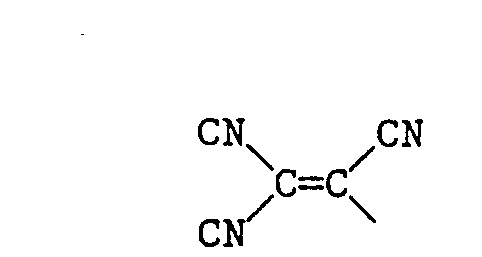
- the dyes of the formula (4) are prepared, for example, by using a diazotized amine of the formula D-NH 2 (10) or tetracyanethylene with a compound of the formula implements.
- the compounds of the formula (10) are known or can be prepared analogously to the preparation of similar compounds.
- the compounds of formula (11) are new and are a further subject of the present invention. They are prepared, for example, by using haloalkyl isocyanate or haloalkyl isothiocyanate of the formula with an oxime or lactam of the formula and the reaction product of the formula obtained with a compound of the formula to react.
- the compounds of the formulas (12) to (15) are known or can be prepared in a manner known per se.
- the reaction of compound (12) with compound (13) is carried out, for example, in an inert solvent and in the presence of a catalyst, e.g. Diazabicyclooctan, and at a temperature between about 0 ° C and 20 ° C.
- a catalyst e.g. Diazabicyclooctan
- the components (12) and (13) can be used in a stoichiometric ratio, but an excess of one of the components is also possible.
- compound (14) is used in a conventional manner, e.g. isolated by crystallization. It is also possible to react the compounds (12) and (13) with one another without a solvent.
- the reaction of compound (14) with compound (15) is carried out, for example, in an inert organic solvent and in the presence of a base.
- inert organic solvents include Compounds with a boiling point above 60 C in question, such as alcohols, ethers, esters, nitrobenzene, halobenzene, toluene, xylenes etc. Alcohols are particularly suitable, e.g. Isopropanol, and the base is e.g. Sodium or potassium carbonate used.
- the reaction of the compound (14) with the compound (15) can also be carried out without the addition of a solvent.
- the components (14) and (15) can be used in a stoichiometric ratio, but an excess of one of the components, preferably the compound (14), often proves to be more favorable.
- the reaction temperature is approximately between 50 and 120 ° C., preferably between 60 and 100 ° C., and the reaction time is approximately 1 to 20 hours, depending on the temperature and reactants.
- any component (15) used in excess and the solvent are removed and the residue is possibly purified, e.g. by recrystallization.
- the diazotization of the compound (10) and the coupling with the compound (11) are carried out according to the usual methods.
- reaction of the compounds of formula (11) with tetracyanethylene is carried out in a manner known per se, preferably in an inert solvent at a temperature between about 20 and 100 ° C., the reaction components being used in approximately equivalent amounts.
- Halogen compounds such as chloroform or chlorobenzene, ethers, aromatic compounds such as benzene, toluene or xylene, but especially tetrahydrofuran or dimethylformamide.
- the isolation of the dyes of formula (4) takes place e.g. by pouring the reaction solutions into ice water, filtering off the excreted dye, possibly washing and drying.
- Another method for producing dyes of the formula (1) consists in reacting a dye of the formula F-H, in which F has the meaning given under the formula (1), with a compound of the formula (14).
- the reaction conditions correspond to the conditions previously described for the reaction of a compound of formula (14) with a compound of formula (15).
- Dyes of the formula (1) or (4) in which V or V 'is an oxime radical are preferably prepared by using a compound of the formula or the with a halogen formate of an oxime of the formula implements.
- the symbols E, X, Y, R 4 , B, F, Hai, R I and R 2 have the same formulas (1) and (4) indicated meanings.
- the reaction of the compound (16) or (18) with the compound (17) is preferably carried out in an inert organic solvent and in the presence of a base.
- inert organic solvents include Hydrocarbons, halogenated hydrocarbons, alcohols, ethers, esters, nitrobenzene, halobenzene, toluene, xylenes etc. come into question.
- Halogenated hydrocarbons e.g. Dichloromethane and as the base e.g. Sodium or potassium carbonate or an organic base, e.g. a trialkylamine used.
- the components (16) or (18) and (17) can be used in a stoichiometric ratio, but an excess of one of the components, preferably the compound (17), often proves to be more favorable.
- the reaction temperature is approximately between 0 and 60 C, preferably between 10 and 30 C and the reaction time is, depending on the temperature and the reactants, about 0.1 to 2 hours. After the reaction has ended, any component (17) used in excess and the solvent are removed and the residue is possibly purified.
- Dyes of the formula (1) or (4), in which B is a bridge member of the formula represents, where W is a divalent organic radical, are preferably prepared by using a diisocyanate of the formula OCN-W-NCO (19) in any order with a dye containing a reactive -OH or - NH group, and with an oxime of the formula (2) or a lactam of the formula (3).
- the reaction conditions correspond to the known conditions for the reaction of isocyanates with OH or containing compounds.
- the dyes according to the invention can be used for dyeing and printing semi-synthetic and in particular synthetic hydrophobic fiber materials, especially textile materials. Textile materials from blended fabrics which contain such semi-synthetic or synthetic hydrophobic textile materials can also be dyed or printed with the aid of the compounds according to the invention.
- Synthetic hydrophobic textile materials consist primarily of linear, aromatic polyesters, for example those made of terephthalic acid and glycols, especially ethylene glycol or condensation products made of terephthalic acid and 1,4-bis (hydroxymethyl) cyclohexane; from polycarbonates, e.g. those of a, a-dimethyl-4,4'-dihydroxy-diphenylmethane and phosgene, of fibers based on polyvinyl chloride and polyamide.
- polyester fiber materials are dyed in the exhaust process from aqueous dispersion in the presence of customary anionic or nonionic dispersants and, if appropriate, customary swelling agents (carriers) at temperatures between 80 and 140 ° C.
- Fiber materials made from cellulose 2 1/2 acetate are preferably dyed between about 65 to 85 ° C. and those made from cellulose triacetate at temperatures up to 115 ° C.
- the dyes according to the invention are particularly suitable for dyeing by the thermosol process.
- the textile material mentioned can be in a wide variety of processing forms, such as as fiber, thread or fleece, as woven or knitted fabric.
- the dyes according to the invention are converted into a dye preparation before they are used.
- the dye is ground so that its particle size is on average between 0.1 and 10 microns.
- the grinding can take place in the presence of dispersants.
- the dried dye is ground with a dispersant or kneaded in paste form with a dispersant and then dried in vacuo or by atomization. With the so obtained Preparations can be colored and printed after adding water.
- the usual thickeners will be used for printing, e.g. modified or unmodified natural products, for example alginates, British gum, gum arabic, crystal gum, locust bean gum, tragacanth, carboxymethyl cellulose, hydroxyethyl cellulose, starch or synthetic products, for example polyacrylamides, polyacrylic acid or their copolymers or polyvinyl alcohols.
- modified or unmodified natural products for example alginates, British gum, gum arabic, crystal gum, locust bean gum, tragacanth, carboxymethyl cellulose, hydroxyethyl cellulose, starch or synthetic products, for example polyacrylamides, polyacrylic acid or their copolymers or polyvinyl alcohols.
- the dyeings obtained are subjected to a thermal aftertreatment, e.g. by heating them to a temperature between 100 and 240 C, preferably between 180 and 220 C, for 30 to 500 seconds, preferably 45 to 200 seconds.
- a thermal aftertreatment e.g. by heating them to a temperature between 100 and 240 C, preferably between 180 and 220 C, for 30 to 500 seconds, preferably 45 to 200 seconds.
- the thermal migration fastness of the dyeings is significantly improved by this thermal aftertreatment, since the dyes are converted into dyes with isocyanate or isothiocyanate groups by splitting off the corresponding residues.
- These groups can then be combined with appropriate groups of the fibers or the chemicals present on the fibers, e.g. react with amine or hydroxy groups.
- the dyeings were produced by the thermosol process, which normally involves heat fixation at approximately 180-210 ° C., a separate thermal aftertreatment can be omitted for some of the dyes according to the invention. Otherwise it is advisable to fix the heat at elevated temperature, e.g. 200 to 230 ° C and / or for a longer period, e.g. Perform 120 to 300 seconds.
- temperatures of 110 to 140 ° C. are sufficient for fixing.
- the thermal aftertreatment can therefore be integrated into an HT dyeing process or can be omitted entirely.
- the dyes according to the invention give the materials mentioned, especially the polyester material, level yellow to blue hues of very good fastness to use, such as, above all, good light fastness, sublimation fastness, heat-setting, pleating, chlorine and wet fastness such as water, sweat and Fastness to washing; the colorations are also characterized by good rub fastness and heat set fastness. Very strong colorations are also achieved.
- N-2-aminoethyl-N-ethylaniline prepared by hydrolysis of phthalimidoethyl-ethylaniline in aqueous hydrogen bromide
- acetic acid a solution of 19.7 g (0.1 mol) of N-2-aminoethyl-N-ethylaniline (prepared by hydrolysis of phthalimidoethyl-ethylaniline in aqueous hydrogen bromide) in 1000 ml of acetic acid is added dropwise at 7-100 ° C. over 15 minutes a diazonium chloride solution of 17.3 g (0.1 mol) of 2-chloro-4-nitroaniline prepared by the usual method. After stirring for two hours, the violet-red suspension is filtered off, the filter cake is suspended in 400 ml of water, adjusted to pH approx.
- Example 1 If in Example 1 the chloroformate of acetone oxime is replaced by an equivalent amount of that of 2-butanone oxime, the dye of the formula is obtained under otherwise identical conditions melting point 107-108 C.
- Example 1 If in Example 1 the chloroformic acid ester of acetone oxime is replaced by an equivalent amount of the chloroformic acid ester of cyclohexanone oxime, the dye of the formula is obtained under otherwise identical conditions melting point 152-154 ° C.
- Example 1 If, in Example 1, the equivalent amount of N-aminoethyl-N-ethyl-m-toluidine (obtained by hydrolysis of the succinimidoethyl compound) is used instead of the aminoethyl-ethylaniline, the dye of the formula is obtained melting point 68 ° C.
- a mixture of equal parts of the dyes described in Examples 1, 2 and 3 is converted into a 5% aqueous dispersion in a known manner by sand grinding with twice the amount of a commercially available disperser of the dinaphthylmethane disulfonate type.
- a dyeing of 1% carrier dye (95 C, carrier based on trichlorobenzene and biphenyl) on polyethylene terephthalate fabric is prepared and reductively cleaned in the usual way.
- the deep red fabric is very good rub and wash fast.
- thermomigration test with and without plasticizer has practically no influence on the rub and wash fastness and the fabric can be extracted even with dimethylformamide at 95 ° C for one hour extract only a little dye.
- thermomigration fastness tested in the manner described in Example 10 proves to be very good.
- HT dyeing behaves in the same way with a 5 percent dispersion of the dye described in Example 1.
- the mother liquor contains approx. 29 g of product of the formula as a toluene solution.
- a toluene solution containing 29 g of the monoisocyanate described in Example 13 is added dropwise at room temperature to 14.1 g of N-ethyl-N-hydroxyethylaniline. After stirring at 80 ° C. for 6 hours, the solvent is distilled off. The colorless mass remaining corresponds to the formula and can be used as a coupling component without further cleaning.
- reaction mixture which is the intermediate of formula contains, can be used in this form as a coupling component.
- the dye dye is polyester material in ruby shades.
- the crude product shows an absorption maximum at 478 nm (in ethanol) and dyes polyester material in scarlet shades.
- a 1% solution in N-methylpyrrolidone is prepared from the dye described in Example 18. This creates a 0.5% dyeing of polyester in terms of dye in the HT process.
- the thermal migration fastness (test analogous to example 10) proves to be very good if the dyed fabric is heated to 230 ° C. for 1 minute before the reductive cleaning.
- 19.2 g of p-nitroaniline are diazotized in hydrochloric acid in the usual way and coupled at 0-10 ° C. to a template containing 34.6 g of 3- (N-cyanoethyl-N-hydroxyethyl) amino-acetanilide in 300 ml of glacial acetic acid and 400 g ice water. The pH is adjusted to 3 at 0-10 ° C. using 30% sodium hydroxide solution. Filtration, washing and drying provide 50.1 g of crude product. For cleaning, it is suspended in 300 ml of tertiary butyl methyl ether and stirred at the reflux temperature for 2 hours. After filtering (hot), washing and drying, 47.8 g of dark red crystals of the formula are obtained melting point 164 - 165 ° C.
- the product mix colors polyester material in scarlet shades.
- the dye dye is polyester material in scarlet shades.
- a 5% aqueous dispersion is produced from the product mixture described in Example 20 (cf. Example 10). This is used to dye polyester in the Thermosol process (10 g / l dye, liquor absorption 50%, fixing temperature 230 ° C).
- thermomigration dyeing A very good thermomigration dyeing is obtained (test analogous to Ex. 10).
- red dyes are obtained by reacting this aminopropyl dye with the chloroformates of the ketoximes listed in column 2 of the following table:
- the dyes described in the following table are prepared in a manner analogous to that described in Examples 5 to 9 and 80 to 83.
- 86 g of the coupling component with a content of 85% are hydrogenated in 280 ml ethanol and 87 g liquid ammonia with the help of 12.6 g Raney nickel at 150 bar within 5 1/2 hours at 70 - 75 ° C. After filtering off and evaporating the hydrogenation solution, 85 g of a yellow-brown, viscous mass are obtained. This is dissolved in approx. 500 ml of 1 N hydrochloric acid, the solution is adjusted to pH 6.5 to 7 with sodium hydroxide and freed from unchanged starting material by shaking out with ethyl acetate.
- the dye of the formula is obtained melting point 100 - 102 ° C.
- This dye s polyester textile material in blue tones.
- 0.45 g of the bromo-dinitro dye from Example 99 are stirred in 15 ml of dimethylformamide with 0.07 g of copper acetate monohydrate and 0.07 g of sodium nitrite for 3 hours at room temperature. Then it is diluted with plenty of water, the precipitate is sucked, washed and dried. 0.33 g of the dye of the formula are obtained as a brown powder with a melting point of 150 - 155 ° C, which dyes textile material made of polyester in greenish blue tones.
- This dye is polyester textile material in violet tones.
- the crystals thus obtained are mixed with 10.9 g of N-ethylaniline, 0.8 g of potassium iodide and 10.6 g of sodium carbonate. The mixture is stirred at 100 ° C. overnight. After adding 2 g of succinic anhydride, the mixture is stirred at 80 ° C. for a further hour. Extraction with methylene chloride gives 24 g of coupling component of the formula as a brown oil. However, the reaction mixture can also be taken up directly in 200 ml of 80% acetic acid without extraction and used for coupling.
- the crude product is suspended in acetone for cleaning. After stirring for 3 hours at reflux temperature, the suspension is stirred overnight at room temperature and then filtered off. 15.3 g of black-green crystals of the formula are obtained and melting point 132 - 134 "C.
- the dye colors polyester material in red shades.
- Example 10 In a manner analogous to that described in Example 10, a 5% aqueous dispersion is prepared from the dye from Example 108. This creates a 0.5% dyeing of polyester in terms of dye in the HT process.
- the thermal migration resistance (test analogous to example 10) proves to be very good.
- thermosol dyeing of polyester is carried out with the same dye dispersion (10 g / l dye, liquor absorption 50%, fixing temperature 220 °), this also results in a dye which is also very thermo-migration-friendly.
- Example 102 if the e-caprolactam is replaced by the equivalent amount of o-valerolactam and the N-ethylaniline is replaced by the equivalent amount of N-methylaniline, and if 20 ml of dimethylformamide are added as a solvent right at the start, the coupling component of the formula is obtained as a saline solution in dimethylformamide.
- Example 108 If in Example 108 the chloronitroaniline is replaced by the equivalent amount of 2-cyano-4-nitro-aniline, 7.7 g of crude product are obtained.
- the crude product is added to 50 ml of tertiary butyl methyl ether and stirred for 3 hours at the reflux temperature. After cooling to room temperature, the mixture is filtered off and dried. 7.0 g of black-brown crystals of the formula are obtained and melting point 137 - 139 ° C.
- the dye dyes polyester material in ruby shades.
Landscapes
- Chemical & Material Sciences (AREA)
- Organic Chemistry (AREA)
- Chemical Kinetics & Catalysis (AREA)
- Coloring (AREA)
- Organic Low-Molecular-Weight Compounds And Preparation Thereof (AREA)
- Hydrogenated Pyridines (AREA)
- Pigments, Carbon Blacks, Or Wood Stains (AREA)
Abstract
Description
- Die vorliegende Erfindung betrifft neue Dispersionsfarbstoffe, Verfahren zu deren Herstellung sowie Verfahren zum Färben und Bedrucken unter Verwendung dieser Farbstoffe.
- Dispersionsfarbstoffe, d.h. Farbstoffe, welche keine wasserlöslichmachenden Gruppen enthalten, sind seit langem bekannt und werden als Farbstoffe z.B. zum Färben von hydrophobem Textilmaterial verwendet. Vielfach sind die erhaltenen Färbungen jedoch nicht ausreichend thermomigrierecht.
- Zur Behebung dieses Mangels wurden schon spezielle Farbstoffe entwickelt, deren Diffusionsvermögen infolge ihrer molekularen Grösse und/oder Sperrigkeit möglichst niedrig ist. Dies erschwert jedoch oft die Anwendbarkeit solcher Farbstoffe, da man mit ihnen nicht oder nur schlecht nach dem Ausziehverfahren färben kann und diese Farbstoffe sogar im Thermosol-Verfahren oft unerwünscht hohe Fixiertemperaturen erfordern.
- Gegenstand der vorliegenden Erfindung sind nun Dispersionsfarbstoffe, welche auf übliche Art und Weise applizierbar sind und durch eine thermische Nachbehandlung in eine thermomigrierechte Form übergeführt werden können.
- Die erfindungsgemässen Farbstoffe entsprechen der Formel

- F den Rest eines von wasserlöslichmachenden Gruppen freien Farbstoffes, B ein Brückenglied oder eine direkte Bindung,
- Z 0 oder S und
- V den Rest einer Gruppe H-V bedeutet, wobei H-V ein Oxim der Formel


- RI und R2 unabhängig voneinander gegebenenfalls substituiertes Alkyl oder Aryl bedeuten oder Rl und R2 zusammen mit dem sie verbindenden C-Atom einen cycloaliphatischen Ring bilden,
- R Wasserstoff oder Alkyl und
- n eine ganze Zahl von 4 bis 11 bedeutet.
- Aus den erfindungsgemässen Farbstoffen spaltet sich beim Erhitzen auf erhöhte Temperatur, z.B. auf eine Temperatur oberhalb 110°C, der Rest H-V ab und es entstehen Isocyanat- bzw. Isothiocyanatgruppen, welche mit geeigneten Gruppen in ihrer Umgebung reagieren können, z.B. mit den als Endgruppen des Polyesters oder dessen Oligomeren vorliegenden Hydroxylgruppen oder mit Aminen der Formel F-B-NH2, die aus den Isocyanaten bzw. Isothiocyanaten durch Hydratation und Decarboxylierung entstehen und mit einem weiteren Isocyanat- bzw. Isothiocyanatmolekül zu Verbindungen der Formel

- Bei dem Rest F handelt es sich um den Rest eines wasserunlöslichen Chromophors, z.B. um den Rest eines der bekannten Dispersionsfarbstoffe. In Frage kommen z.B. Farbstoffreste aus folgenden Klassen: Nitrofarbstoffe, z.B. Nitrodiphenylaminfarbstoffe, Methinfarbstoffe, Chinolinfarbstoffe, Aminonaphthochinonfarbstoffe, Cumarinfarbstoffe und insbesondere Anthrachinonfarbstoffe, Tricyanvinylfarbstoffe und Azofarbstoffe, wie Monoazo und Disazofarbstoffe.
- Bei dem Brückenglied B handelt es sich z.B. um eine geradkettige oder verzweigte Alkylengruppe mit 2 bis 8 C-Atomen oder um eine der folgenden Gruppen

- Geeignete Reste W sind z.B.: geradkettige oder verzweigte Alkylengruppen mit 2 bis 8 C-Atomen, ggf. durch C1-C4-Alkyl substituiertes Phenylen, C1-C4-Alkylenphenylen-C1-C4-Alkylan, Phenylen-C1-C4-Alkylen-Phenylen oder Reste, die sich von Isophorondiisocyanat ableiten. Bevorzugte Reste W sind die folgenden:


- Unter diesen Brückengliedern sind die folgenden besonders bevorzugt:


- Z bedeutet O oder S, vorzugsweise O.
- R' und R2 bedeuten unabhängig voneinander Alkyl, vorzugsweise C1-C12-Alkyl, oder Aryl, wobei der Arylrest aromatisch oder auch heteroaromatisch sein kann. Es handelt sich z.B. um Phenyl-, Naphthyl- oder Pyridylreste.
- R1 und R2 können auch zusammen mit dem sie verbindenden C-Atom einen cycloaliphatischen Ring bilden, vorzugsweise einen 5- bis 7-gliedrigen Ring, wie Cyclopentyl, Cyclohexyl, Methylcyclohexyl oder Cycloheptyl.
- Bei dem Alkylrest R handelt es sich vorzugsweise um einen C1-C4-Alkylrest, vor allem um Methyl. Die besonders bevorzugte Bedeutung von R ist jedoch Wasserstoff.
- n ist vorzugsweise eine ganze Zahl von 4 bis 9, vor allem von 4 bis 7.
- Bevorzugte erfindungsgemässe Farbstoffe entsprechen der Formel

- E D-N = N- oder
- X Wasserstoff, C1-C4-Alkyl, C1-C4-Alkoxy, Acylamino, Halogen, C1-C4-Alkylsulfonylamino oder eine Gruppe der Formel -NH-CO-NHQ, worin Q Wasserstoff, C1-C4-Alkyl oder Phenyl ist,
- Y Wasserstoff, Halogen, C1-C4-Alkyl, C1-C4-Alkoxy, C1-C4-Alkoxy-C1-C4-alkyl oder C1-C4-Alkoxy-C2-C4- alkoxy,
- R4 C1-C2-Alkyl, C2-C6-Alkenyl oder Phenyl, oder Y und R4, zusammen mit dem Stickstoffatom und den beiden sie verbindenden C-Atomen, einen 5-oder 6-gliedrigen Ring bilden,
- B einen Rest der Formel


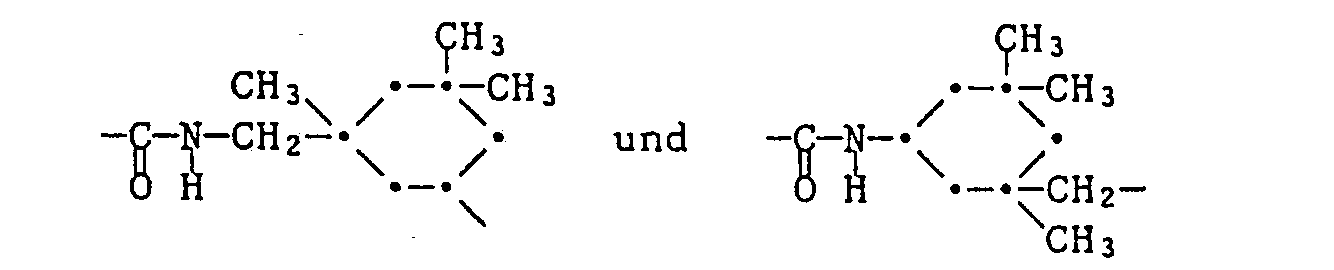
- m eine ganze Zahl von 2 bis 6 bedeutet,
- Z O oder S und

- R5 und R6 unabhängig voneinander C1-C6-Alkyl bedeuten oder R5 und R6 zusammen mit dem sie verbindenden C-Atom einen Cyclopentyl-, Cyclohexyl- oder Cycloheptylrest bilden,
- R7 Methyl oder Wasserstoff und
- n 4, 5, 6 oder 7 ist.
- Unter diesen sind diejenigen besonders bevorzugt, bei denen E einen Rest D-N = N- bedeutet.
- Falls in den Farbstoffen der Formel (4) E einen Rest D-N = N- darstellt, so bedeutet D den Rest einer homo- oder heterocyclischen Diazokomponente, z.B. aus der Reihe Thienyl, Phenylazothienyl, Thiazolyl, Isothiazolyl, 1,2,4-Thiadiazoiyt, 1,3,4-Thiadiazolyl, Benzthiazolyl, Benzisothiazolyl, Pyrazolyl, 1,2,3-Triazolyl, 1,2,4-Triazolyl, Imidazolyl, oder Phenyl. Jedes dieser Systeme kann weitere Substituenten tragen wie Alkyl, Alkoxy oder Alkylthio mit je 1 bis 4 Kohlenstoffatomen, Phenyl, elektronegative Gruppen wie Halogen, besonders Chlor oder Brom, Trifluormethyl, Cyano, Nitro, Acyl, wie z.B. Acetyl oder Benzoyl, Carboalkoxy, besonders Carbomethoxy oder Carboethoxy, Alkylsulfon mit 1 bis 4 Kohlenstoffatomen, Phenylsulfon, Phenoxysulfon, Sulfonamido oder Arylazo, insbesondere Phenylazo. Je 2 benachbarte Substituenten der genannten Ringsysteme können auch zusammen weitere ankondensierte Ringe bilden, z.B. Phenylringe oder cyclische Imide.
- Vorzugsweise bedeutet D einen Benzthiazolyl-, Benzisothiazolyl- oder Phenylrest, welcher unsubstituiert oder ein- oder zweimal durch einen der obengenannten Reste substituiert ist.
- Als Benzthiazolyl- oder Benzisothiazolylrest stellt D vor allem einen unsubstituierten oder einen ein-oder mehrmals durch Methyl, Methoxy, Chlor, Brom, Methylsulfon oder Nitro substituierten Rest dar.
- Die bevorzugte Bedeutung von D ist Phenyl, welches maximal mit 4, gegebenenfalls verschiedenen, Substituenten aus der oben genannten Aufzählung substituiert ist. Von den aufgezählten Substituenten sind elektronegative bevorzugt. Diese können vor allem Cyano, Methyl- oder Ethylsulfonyl, Nitro, Chlor, Brom, Formyl, Acetyl, Benzoyl, Carbomethoxy, Carboethoxy, Methoxy, Ethoxy oder Phenylazo sein.
- Unter Alkylgruppen sind in dieser Anmeldung generell geradkettige oder verzweigte oder cyclische Alkylgruppen zu verstehen, z.B. solche mit 1 bis 12 Kohlenstoffatomen. Es handelt sich z.B. um Methyl, Ethyl, Propyl, i-Propyl, Butyl, i-Butyl, tert.-Butyl, Amyl, tert.-Amyl (1,1-Dimethylpropyl), 1,1,3,3-Tetramethylbutyl, Hexyl, 1-Methylpentyl, Neopentyl, 1-, 2- oder 3-Methylhexyl, Heptyl, n-Octyl, tert. Octyl, 2-Ethylhexyl, n-Nonyl, Isononyl, Decyl, Dodecyl, Cyclopentyl, Cyclohexyl, Methylcyclohexyl sowie die dazu gehörenden Isomeren.
- Diese Alkylreste können substituiert sein, z.B. durch Hydroxy, Alkoxy mit 1 bis 4 Kohlenstoffatomen, insbesondere Methoxy, Halogen, wie Brom oder Chlor, Cyano oder Phenyl. Als weitere Substituenten sind geeignet Halogen, wie Fluor, Chlor oder Brom, oder -CO-U oder -O-CO-U, worin U Alkyl mit 1 bis 6 Kohlenstoffatomen oder Phenyl ist.
- Als Alkenylreste kommen solche Reste in Betracht, welche sich von den oben aufgeführten Alkylresten durch Ersatz mindestens einer Einfachbindung durch eine Doppelbindung ableiten. Geeignete Reste sind z.B. Ethenyl oder Propenyl.
- Geeignete Alkoxyreste sind z.B. Methoxy, Ethoxy, Propoxy, iso-Propoxy, n-Butoxy, i-Butoxy oder tert.-Butoxy.
- Beispiele für geeignete substituierte Alkylreste sind: Methoxymethyl, Ethoxymethyl, Ethoxyethyl, Ethoxypropyl, n-Propoxymethyl, iso-Propoxymethyl, Butoxymethyl, Butoxyethyl, Butoxypropyl, Ethoxypentyl, Methoxybutyl, Ethoxypentyl, 2-Hydroxyethoxypentyl, Cyanethyl, Hydroxyethyl oder Acetoxyethyl.
- Auch die Alkylenreste B können geradkettig oder verzweigt oder auch substituiert sein. Es kommen z.B. Ethylen, 1,3-Propylen, 1,5-Pentylen, 1,2-Propylen, 1,2-Butylen, 1,6-Hexylen, 2-Hydroxy-1,3-propylen oder 2-Chlor-1,3-propylen in Frage.
- Falls X eine Acylaminogruppe darstellt, so handelt es sich z.B. um eine Gruppe der Formel

- Es handelt sich bei dem Acylrest z.B. um den Acetyl-, Propionyl-, 2-Chlorethylcarbonyl-, 2-Bromethylcarbonyl-, Phenylcarbonyl-, 2-Methoxycarbonylethylcarbonyl-, 2-Ethoxycarbonylethylcarbonyl-, Methoxycarbonyl-, Ethoxycarbonyl-, Phenoxycarbonyl, Methoxyethylcarbonyl-, Hydroxyethylcarbonyl-, Methylsulfonyl- oder Ethylsulfonylrest.
- Ist X eine Gruppe der Formel -NH-CO-NHQ, so handelt es sich z.B. um die Ureido-, Methylureido-, Ethylureido- oder Phenylureidogruppe.
- Unter Phenylresten sind in dieser Anmeldung generell unsubstituierte oder substituierte Phenylreste zu verstehen. Als Substituenten kommen z.B. CI-C4-Alkyl, CI-C<1--Alkoxy, Brom, Chlor, Nitro oder Cl-C4-Alkylcarbonylamino in Betracht.
- Halogen bedeutet in dieser Anmeldung generell Fluor, Brom oder vor allem Chlor.
- R4 und Y können zusammen mit dem Stickstoffatom und den beiden sie verbindenden C-Atomen einen 5- oder 6-gliedrigen Ring bilden, welcher gegebenenfalls ein Sauerstoffatom als weiteres Heteroatom enthalten kann. Geeignete Substituenten für diese Ringe sind z.B. Hydroxy, Methyl, Methoxy, Chlor oder Phenyl. Vorzugsweise bilden R und Y zusammen mit dem Stickstoffatom und den beiden sie verbindenden C-Atomen einen 6-gliedrigen Ring, welcher unsubstituiert ist oder 1 bis 4 Methylgruppen trägt. Es handelt sich also vor allem um Di- oder Tetrahydrochinolinverbindungen mit 0 bis 4 Methylgruppen.
- In besonders bevorzugten Dispersionsfarbstoffen ist D ein Benzthiazolylrest, welcher unsubstituiert ist oder ein- oder zweimal durch Chlor substituiert ist, oder ein Phenylrest, der ein- oder zweimal substituiert ist durch Nitro, Chlor, Cyan, Methyl- oder Ethylsulfonyl oder Phenylazo.
- Die bevorzugten Bedeutungen von X sind Wasserstoff, Methyl, Methoxy, Chlor, Brom, Acetylamino oder Ureido, wobei Wasserstoff, Methyl, Chlor und Acetylamino besonders bevorzugt sind.
- Y bedeutet vorzugsweise Chlor, Methyl, Methoxy, Methoxyethyl oder Methoxyethoxy oder vor allem Wasserstoff.
- Besonders wertvolle erfindungsgemässe Farbstoffe entsprechen den Formeln


- In den Formeln (6) bis (9) bedeuten:
- D1 einen Benzthiazolylrest, welcher unsubstituiert ist oder ein- oder zweimal durch Chlor substituiert ist oder einen Phenylrest, der ein- oder zweimal durch Nitro, Chlor, Cyan, Methyl- oder Ethylsulfonyl oder Phenylazo substituiert ist,
- X1 Wasserstoff, Methyl, Methoxy, Chlor, Brom oder Acetylamino,
- Yl Chlor, Methyl, Methoxy, Methoxyethyl, Methoxyethoxy oder Wasserstoff,
- X2 Wasserstoff, Methyl, Methoxy, Chlor oder Brom,
- R9 CI-C4-Alkyl, welches unsubstituiert ist oder durch Hydroxy, Cyan, C1-C4-Alkoxy oder-Phenyl substituiert ist,
- BI einen Rest der Formel


- m eine ganze Zahl von 2 bis 6 bedeutet,
- R5 und R6 unabhängig voneinander C1-C6-Alkyl oder R5 und R6 bilden zusammen mit dem sie verbindenden C-Atom einen Cyclopentyl-, Cyclohexyl- oder Cycloheptylrest,
- R7 Methyl oder Wasserstoff und
- n' 4, 5, 6 oder 7.
- Die Farbstoffe der Formel (4) stellt man z.B. her, indem man ein diazotiertes Amin der Formel
D-NH2 (10)
oder Tetracyanethylen mit einer Verbindung der Formel
- Die Verbindungen der Formel (10) sind bekannt oder lassen sich in Analogie zur Herstellung ähnlicher Verbindungen herstellen.
- Die Verbindungen der Formel (11) sind neu und stellen einen weiteren Gegenstand der vorliegenden Erfindung dar. Sie werden z.B. hergestellt, indem man Halogenalkylisocyanat oder Halogenalkylisothiocyanat der Formel


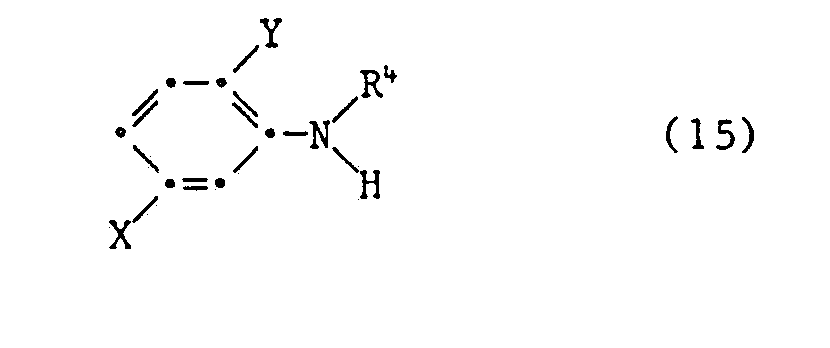
- In den Verbindungen (10) bis (15) weisen D, X, Y, R4, B, Z, und V1 die unter der Formel (4) angegebene Bedeutung auf und Hal bedeutet Chlor oder Brom.
- Die Verbindungen der Formeln (12) bis (15) sind bekannt oder lassen sich auf an und für sich bekannte Art und Weise herstellen.
- Bei der Umsetzung der Verbindung (12) mit der Verbindung (13) arbeitet man beispielsweise in einem inerten Lösungsmittel und in Gegenwart eines Katalysators, wie z.B. Diazabicyclooctan, und bei einer Temperatur etwa zwischen 0°C und 20° C. Die Komponenten (12) und (13) können in stöchiometrischem Verhältnis eingesetzt werden, ein Ueberschuss an einer der Komponenten ist jedoch ebenfalls möglich. Nach Beendigung der Umsetzung wird die Verbindung (14) auf übliche Weise, z.B. durch Kristallisation isoliert. Es ist auch möglich, die Verbindungen (12) und (13) ohne Lösungsmittel miteinander umzusetzen.
- Bei der Umsetzung der Verbindung (14) mit der Verbindung (15) arbeitet man beispielsweise in einem inerten organischen Lösungsmittel und in Gegenwart einer Base. Als inerte organische Lösungsmittel kommen z.B. Verbindungen mit einem Siedepunkt oberhalb 60 C in Frage, wie Alkohole, Ether, Ester, Nitrobenzol, Halogenbenzol, Toluol, Xylole etc. Vor allem geeignet sind Alkohole, wie z.B. Isopropanol, und als Base wird z.B. Natrium- oder Kaliumcarbonat verwendet. Die Umsetzung der Verbindung (14) mit der Verbindung (15) kann ebenfalls auch ohne Zusatz eines Lösungsmittels durchgeführt werden.
- Die Komponenten (14) und (15) können in stöchiometrischem Verhältnis eingesetzt werden, ein Ueberschuss an einer der Komponenten, vorzugsweise der Verbindung (14), erweist sich jedoch oft als günstiger.
- Die Reaktionstemperatur liegt etwa zwischen 50 und 120° C, vorzugsweise zwischen 60 und 100 C und die Reaktionsdauer beträgt, je nach Temperatur und Reaktionspartnern etwa 1 bis 20 Stunden. Nach Beendigung der Umsetzung wird die evtl. im Ueberschuss eingesetzte Komponente (15) und das Lösungsmittel entfernt und der Rückstand evtl. gereinigt, z.B. durch Umkristallisation. Die Diazotierung der Verbindung (10) und die Kupplung mit der Verbindung (11) erfolgen nach den üblichen Methoden.
- Die Umsetzung der Verbindungen der Formel (11) mit Tetracyanethylen erfolgt auf an sich bekannte Art und Weise, vorzugsweise in einem inerten Lösungsmittel bei einer Temperatur zwischen etwa 20 und 100° C, wobei die Reaktionskomponenten in etwa äquivalenten Mengen eingesetzt werden.
- Als inertes Lösungsmittel für die vorstehende Reaktion kommen z.B. Halogenverbindungen wie Chloroform oder Chlorbenzol, Ether, aromatische Verbindungen, wie Benzol, Toluol oder Xylol, insbesondere jedoch Tetrahydrofuran oder Dimethylformamid in Frage.
- Die Isolierung der Farbstoffe der Formel (4) erfolgt z.B. indem man die Reaktionslösungen in Eiswasser giesst, den ausgeschiedenen Farbstoff abfiltriert, eventuell wäscht und trocknet.
- Eine weitere Methode zur Herstellung von Farbstoffen der Formel (1) besteht darin, dass man einen Farbstoff der Formel F-H, worin F die unter der Formel (1) angegebene Bedeutung aufweist, mit einer Verbindung der Formel (14) umsetzt. Die Reaktionsbedingungen entsprechen den vorher beschriebenen Bedingungen für die Umsetzung einer Verbindung der Formel (14) mit einer Verbindung der Formel (15).
- Die vorstehend beschriebenen Darstellungsweisen eignen sich vor allem für solche Verbindungen der Formel (4), bei denen V' einen Lactamrest bedeutet.
- Farbstoffe der Formel (1) oder (4), bei denen V bzw. V' einen Oximrest bedeutet, stellt man vorzugsweise her, indem man eine Verbindung der Formel


- Die Verbindungen der Formeln (16), (17) und (18) sind bekannt oder lassen sich in Analogie zur Herstellung ähnlicher Verbindungen herstellen.
- Bei der Umsetzung der Verbindung (16) bzw. (18) mit der Verbindung (17) arbeitet man vorzugsweise in einem inerten organischen Lösungsmittel und in Gegenwart einer Base. Als inerte organische Lösungsmittel kommen z.B. Kohlenwasserstoffe, Halogenkohlenwasserstoffe, Alkohole, Ether, Ester, Nitrobenzol, Halogenbenzol, Toluol, Xylole etc. in Frage. Vor allem geeignet sind halogenierte Kohlenwasserstoffe, wie z.B. Dichlormethan, und als Base wird z.B. Natrium- oder Kaliumcarbonat oder eine organische Base, z.B. ein Trialkylamin verwendet.
- Die Komponenten (16) bzw. (18) und (17) können in stöchiometrischem Verhältnis eingesetzt werden, ein Ueberschuss an einer der Komponenten, vorzugsweise der Verbindung (17), erweist sich jedoch oft als günstiger.
- Die Reaktionstemperatur liegt etwa zwischen 0 und 60 C, vorzugsweise zwischen 10 und 30 C und die Reaktionsdauer beträgt, je nach Temperatur und Reaktionspartnern etwa 0,1 bis 2 Stunden. Nach Beendigung der Umsetzung wird die evtl. im Ueberschuss eingesetzte Komponente (17) und das Lösungsmittel entfernt und der Rückstand evtl. gereinigt.
- Farbstoffe der Formel (1) oder (4), bei denen B ein Brückenglied der Formel

OCN-W-NCO (19)
in beliebiger Reihenfolge mit einem Farbstoff, enthaltend eine reaktionsfähige -OH- oder - NH Gruppe, und mit einem Oxim der Formel (2) oder einem Lactam der Formel (3) umsetzt. Die Reaktionsbedingungen entsprechen den bekannten Bedingungen für die Reaktion von Isocyanaten mit OH oder
- Die erfindungsgemässen Farbstoffe können zum Färben und Bedrucken von halbsynthetischen und insbesondere synthetischen hydrophoben Fasermaterialien, vor allem Textilmaterialien, verwendet werden. Textilmaterialien aus Mischgeweben, die derartige halbsynthetische bzw. synthetische hydrophobe Textilmaterialien enthalten, können ebenfalls mit Hilfe der erfindungsgemässen Verbindungen gefärbt oder bedruckt werden.
- Als halbsynthetsiche Textilmaterialien kommen vor allem solche aus Cellulose-2 1/2-Acetat und Cellulosetriacetat in Frage.
- Synthetische hydrophobe Textilmaterialien bestehen vor allem aus linearen, aromatischen Polyestern, beispielsweise solchen aus Terephthalsäure und Glykolen, besonders Ethylenglykol oder Kondensationsprodukten aus Terephthalsäure und 1,4-Bis-(hydroxymethyl)-cyclohexan; aus Polycarbonaten, z.B. solchen aus a,a-Dimethyl-4,4'-dihydroxy-diphenylmethan und Phosgen, aus Fasern auf Polyvinylchlorid- sowie Polyamid-Basis.
- Die Applikation der erfindungsgemässen Verbindungen auf die Textilmaterialien erfolgt nach bekannten Färbeverfahren. Beispielsweise färbt man Polyesterfasermaterialien im Ausziehverfahren aus wässriger Dispersion in Gegenwart von üblichen anionischen oder nicht ionischen Dispergiermitteln und gegebenenfalls üblichen Quellmitteln (Carriern) bei Temperaturen zwischen 80 und 140°C. Fasermaterialien aus Cellulose-2 1/2-acetat färbt man vorzugsweise zwischen ungefähr 65 bis 85 C und solche aus Cellulosetriacetat bei Temperaturen bis zu 115° C.
- Einige der erfindungsgemässen Farbstoffe eignen sich aber vor allem zum Färben nach dem Thermosol-Verfahren.
- Das genannte Textilmaterial kann dabei in den verschiedensten Verarbeitungsformen vorliegen, wie z.B. als Faser, Faden oder Vlies, als Gewebe oder Gewirke.
- Es ist vorteilhaft, die erfindungsgemässen Farbstoffe vor ihrer Verwendung in ein Farbstoffpräparat überzuführen. Hierzu wird der Farbstoff vermahlen, so dass seine Teilchengrösse im Mittel zwischen 0,1 und 10 Mikron beträgt. Das Vermahlen kann in Gegenwart von Dispergiermitteln erfolgen. Beispielsweise wird der getrocknete Farbstoff mit einem Dispergiermittel gemahlen oder in Pastenform mit einem Dispergiermittel geknetet und hierauf im Vakuum oder durch Zerstäuben getrocknet. Mit den so erhaltenen Präparaten kann man nach Zugabe von Wasser färben und bedrucken.
- Beim Bedrucken wird man die üblichen Verdickungsmittel verwenden, z.B. modifizierte oder nichtmodifizierte natürliche Produkte, beispielsweise Alginate, British-Gummi, Gummi arabicum, Kristallgummi, Johannisbrotkern mehl, Tragant, Carboxymethylcellulose, Hydroxyethylcellulose, Stärke oder synthetische Produkte, beispielsweise Polyacrylamide, Polyacrylsäure oder deren Copolymere oder Polyvinylalkohole.
- Nach dem eigentlichen Färbeverfahren werden die erhaltenen Färbungen einer thermischen Nachbehandlung unterworfen, z.B. indem man sie 30 bis 500 Sekunden, vorzugsweise 45 bis 200 Sekunden auf eine Temperatur zwischen 100 und 240 C, vorzugsweise zwischen 180 und 220 C erhitzt. Durch diese thermische Nachbehandlung wird die Thermomigrierechtheit der Färbungen wesentlich verbessert, da die Farbstoffe unter Abspaltung der entsprechenden Reste in Farbstoffe mit Isocyanat- oder Isothiocyanatgruppen umgewandelt werden. Diese Gruppen können dann mit geeigneten Gruppen der Fasern oder der auf den Fasern vorhandenen Chemikalien, z.B. mit Amin- oder Hydroxygruppen reagieren.
- Falls die Färbungen nach dem Thermosolverfahren hergestellt wurden, welches normalerweise eine Hitzefixierung bei etwa 180 - 210°C beinhaltet, so kann bei einem Teil der erfindungsgemässen Farbstoffe eine gesonderte thermische Nachbehandlung entfallen. Andernfalls empfiehlt es sich, die Hitzefixierung bei erhöhter Temperatur, z.B. 200 bis 230° C und/oder während einer längeren Dauer, z.B. 120 bis 300 Sekunden durchzuführen.
- Bei einem Teil der erfindungsgemässen Farbstoffe genügen zur Fixierung bereits Temperaturen von 110 bis 140°C. Bei diesen kann deshalb die thermische Nachbehandlung in einen HT-Färbevorgang integriert werden, bzw. ganz entfallen.
- Die erfindungsgemässen Farbstoffe verleihen den genannten Materialien, vor allem dem Polyestermaterial, egale gelbe bis blaue Farbtöne von sehr guten Gebrauchs-Echtheiten, wie vor allem guter Lichtechtheit, Sublimierechtheit, Thermofixier-, Plissier-, Chlor- und Nassechtheit wie Wasser-, Schweiss- und Waschechtheit; die Ausfärbungen sind ferner gekennzeichnet durch gute Reibechtheit und Thermofixierechtheit. Es werden ausserdem sehr farbstarke Färbungen erzielt.
- Die folgenden Beispiele veranschaulichen die Erfindung weiter, ohne sie darauf zu beschränken. Teile und Prozente beziehen sich, sofern nicht anders angegeben, auf das Gewicht. Die Temperaturen sind in Grad Celsius angegeben.
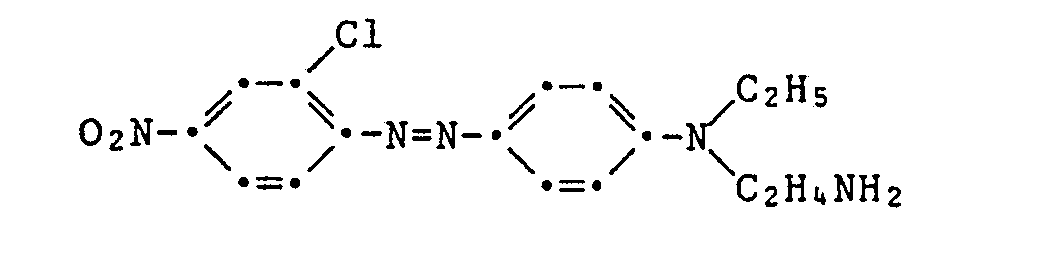
- Zu einer Lösung von 19,7 g (0,1 Mol) N-2-Aminoethyl-N-ethylanilin (hergestellt durch Hydrolyse von Phthalimidoethyl-ethylanilin in wässrigem Bromwasserstoff) in 1000 ml Essigsäure tropft man innerhalb von 15 Minuten bei 7-100 C eine nach üblicher Methode hergestellte Diazoniumchloridlösung von 17,3 g (0,1 Mol) 2-Chlor-4-nitroanilin. Nach zweistündigem Nachrühren wird die violettrote Suspension abgenutscht, das Nutschgut in 400 ml Wasser aufgeschlämmt, mit 60 ml 30-prozentiger Natriumhydroxidlösung auf pH ca. 11 gestellt, abgenutscht, gewaschen und im Vakuumschrank getrocknet. Man erhält 27,6 g (79,3 % der berechneten Menge) des roten Farbstoffes der Formel
- 17,4 g (0,05 Mol) dieses Aminoethylfarbstoffes werden in 200 ml Dichlormethan gelöst, mit 5,5 g Triethylamin (0,055 Mol) versetzt und innerhalb von 20 Minuten tropfenweise unter Einhaltung einer Maximaltemperatur von 25°C mit 25 ml rohem Chlorameisensäureester von Acetonoxim (ca. 10 % Ueberschuss) versetzt. Nach einer halben Stunde wird die Reaktionslösung zuerst mit Wasser, dann mit verdünnter Salzsäure und schliesslich wieder mit Wasser ausgeschüttelt. Nach dem Eindampfen der Dichlormethanschicht, Waschen des Rückstandes mit Isopropanol und Trocknen erhält man 20,9 g (93,6 % d.Th.) des Farbstoffes der Formel

- Ersetzt man im Beispiel 1 den Chlorameisensäureester von Acetonoxim durch eine äquivalente Menge desjenigen von 2-Butanonoxim, so erhält man unter sonst gleichen Bedingungen den Farbstoff der Formel

- Ersetzt man im Beispiel 1 den Chlorameisensäureester von Acetonoxim durch eine äquivalente Menge des Chlorameisensäureesters von Cyclohexanonoxim, so erhält man unter sonst gleichen Bedingungen den Farbstoff der Formel

- Verwendet man im Beispiel 1 anstelle des Aminoethyl-ethylanilins die äquivalente Menge N-Aminoethyl-N-ethyl-m-toluidin (erhalten durch Hydrolyse der Succinimidoethylverbindung), so erhält man den Farbstoff der Formel

- 21,5 g (0,093 Mol) 3-N-Cyanoethyl-N-ethyl-amino-acetanilid wird in 100 ml wasserfreiem Ethanol und 30 g flüssigem Ammoniak in Gegenwart von 4,3 g Raneynickel bei 70-75 C unter einem Anfangsdruck von 150 Bar Wasserstoff hydriert. Nach 1,5-Stunden kommt die Wasserstoffaufnahme zum Stillstand. Man filtriert den Katalysator ab und dampft die Lösung ein, was 22,5 g (ungefähr die berechnete Menge) der rohen Verbindung der Formel

- 5,7 g (ca. 0,024 Mol) dieser rohen Kupplungskomponente wird nun in 200 ml 2 N Schwefelsäure mit der aus 3,45 g (0,02 Mol) 2-Chlor-4-nitroanilin hergestellten Diazoniumchloridlösung während 2 Stunden bei 0-10°C zur Reaktion gebracht. Dann wird der braune Farbstoff abfiltriert, mit 2 N Schwefelsäure gewaschen, in 200 ml Wasser aufgeschlämmt und mit Natriumhydroxid auf pH 10 gestellt. Erneutes Abnutschen, Waschen mit Wasser und Trocknen liefert 5,8 g (69 % d.Th.) als grünbraunes, chromatographisch uneinheitliches Pulver vom Schmelzpunkt 144-147° (Sintern bei 105°C).
- 2,1 g (0,05 Mol) davon werden in 20 ml Dichlormethan gelöst, mit 0,76 ml (ca. 10 % Ueberschuss) Triethylamin und dann innerhalb von 10 Minuten bei 22-25 C mit 5 ml rohem Chlorameisensäureester von Acetonoxim versetzt. Nach einstündigem Nachrühren ist das Ausgangsmaterial im Dünnschichtchromatogramm nicht mehr nachweisbar. Man dampft die Dichlormethanlösung zusammen mit 9 g Kieselgel ein und reinigt das Gemisch an einer Kieselgelsäule mit Ethylacetat als Eluiermittel und erhält 0,9 g des Farbstoffes der Formel

- In analoger Weise werden aus der im Beispiel 5 beschriebenen Kupplungskomponente, den in Spalte 1 der folgenden Tabelle verzeichneten Diazokomponenten und den Chlorameisensäureestern der in Spalte 2 aufgeführten Ketoxime die folgenden Farbstoffe hergestellt:

- Eine Mischung gleicher Teile der in den Beispielen 1, 2 und 3 beschriebenen Farbstoffe wird durch Sandmahlung mit der doppelten Menge eines handelsüblichen Dispergators vom Typ Dinaphthylmethandisulfonat in bekannter Weise in eine 5-prozentige wässrige Dispersion übergeführt. Mit dieser Formulierung wird in üblicher Weise eine bezüglich Farbstoff 1-prozentige Carrierfärbung (95 C, Carrier auf der Basis von Trichlorbenzol und Biphenyl) auf Polyethylenterephthalatgewebe erstellt und reduktiv gereinigt. Das tiefrote Gewebe ist sehr gut reib-und waschecht.
- Erhitzt man es aber zur Prüfung der Thermomigrierechtheit 45 Sekunden auf 160°C, so wird die Reibechtheit sehr schlecht und in üblichen Waschtests bei 60° C werden von den Begleitgeweben vor allem Celluloseacetat und Polyamid sehr stark angeblutet. Dieses Bild wird noch erheblich verschlechtert, wenn das Gewebe vor dem Thermomigrationstest mit einem Textil-Weichmacher vom Typ Distearyl-diethylentriamin ausgerüstet wird.
- Wird das gefärbte Gewebe dagegen vor der reduktiven Reinigung 60 Sekunden auf 210°C erhitzt, so bleibt der Thermomigrationstest mit und ohne Weichmacher praktisch ohne Einfluss auf die Reib- und Waschechtheiten und aus dem Gewebe lässt sich selbst durch einstündiges Extrahieren mit Dimethylformamid bei 95° C nur noch wenig Farbstoff extrahieren.
- Mit der im Beispiel 10 beschriebenen 5-prozentigen Farbstofformulierung wird im HT-Verfahren bei 130°C in üblicher Weise eine bezüglich Farbstoff 1-prozentige Färbung erstellt und reduktiv gereinigt.
- Die in der im Beispiel 10 beschriebenen Weise geprüfte Thermomigrationsechtheit erweist sich als sehr gut. Gleich verhält sich eine HT-Färbung mit einer 5-prozentigen Dispersion des im Beispiel 1 beschriebenen Farbstoffes.
- Eine mit einer 5-prozentigen Dispersion des Farbstoffes von Beispiel 1 durch Foulardieren und Thermofixieren bei 200° hergestellte starke rote Färbung erweist sich in den beschriebenen Tests als sehr gut thermomigrierecht.
- 12,0 g wasserfreies ε-Caprolactam werden in 30 ml Toluol gelöst und bei Raumtemperatur langsam zugetropft zu einer Vorlage von 17,8 g Toluylen-2,4-diisocyanat und 0,05 g Diazabicyclooctan. Nach 22 Stunden Rühren bei Raumtemperatur und 6 Stunden Rühren bei 80° C wird die Lösung mehrere Tage bei Raumtemperatur stehen gelassen. Der sich ausbildende Niederschlag wird abfiltriert und getrocknet. Man erhält 6,1 g farblose Kristalle der Formel

- Die Mutterlauge enthält ca. 29 g Produkt der Formel

- Von dieser Lösung nimmt man 1/4 und destilliert das Lösungsmittel ab.
- Nach Zugabe von 50 ml wasserfreiem Dimethylformamid zum Rückstand wird 6,3 g Farbstoff der Formel


- Eine Toluollösung enthaltend 29 g des im Beispiel 13 beschriebenen Monoisocyanats wird bei Raumtemperatur zugetropft zu 14,1 g N-Ethyl-N-hydroxyethylanilin. Nach 6 Stunden Rühren bei 800 C wird das Lösungsmittel abdestilliert. Die zurückbleibende farblose Masse entspricht der Formel

- 3,3 g 2-Cyan-4-nitroanilin werden auf die übliche Weise in Schwefelsäure diazotiert und bei 0 - 10° C gekuppelt auf eine Vorlage, enthaltend 0,02 mol der Kupplungskomponente aus Beispiel 14, 50 ml Essigsäure und 50 g Eis. Nach Beendigung der Kupplung werden 300 ml Wasser zugegeben. Nach 1 Stunden Rühren bei Raumtemperatur wird abfiltriert und gewaschen. Zur Reinigung wird das Rohprodukt in 100 ml Methanol angeschlämmt und 2 Stunden bei Rückflusstemperatur gerührt. Danach wird heiss abfiltriert und mit Methanol gewaschen. Nach dem Trocknen bei 40° C erhält man 10,2 g schwarzgrünes Pulver der Formel

- Zu 8,9 g Toluylen-2,4-diisocyanat, 0,05 g Diazabicyclooctan und 10 ml Dimethylformamid werden bei 10°C 8,3 g N-Ethyl-N-hydroxyethylanilin langsam zugetropft. Nach 6 Stunden Rühren bei Raumtemperatur werden 5,7 g E-Caprolactam zugegeben. Es wird weitere 6 Stunden bei 80° C gerührt.
- Das Reaktionsgemisch, welches das Zwischenprodukt der Formel

- 4,6 g 2,4-Dinitroanilin werden auf die übliche Art in Schwefelsäure diazotiert und bei 0 - 10°C gekuppelt auf eine Vorlage, enthaltend ca. 7,2 g der im Beispiel 16 beschriebenen Kupplungskomponente in 100 ml 80 %iger Essigsäure. Nach Verdünnen der Reaktionsmasse mit 400 g Eiswasser wird filtriert, gewaschen und getrocknet. Man erhält 12,7 g schwarze Kristalle der Formel

- Der Farbstoff färbt Polyestermaterial in rubinroten Farbtönen.
- 6,3 g Farbstoff der Formel


- Das Rohprodukt zeigt ein Absorptionsmaximum bei 478 nm (in Ethanol) und färbt Polyestermaterial in scharlachroten Farbtönen.
- Vom im Beispiel 18 beschriebenen Farbstoff wird eine 1-prozentige Lösung in N-Methylpyrrolidon hergestellt. Damit wird im HT-Verfahren eine bezüglich Farbstoff 0,5 prozentige Färbung von Polyester erstellt.
- Die Thermomigrierechtheit (Prüfung analog Bsp. 10) erweist sich als sehr gut, wenn das gefärbte Gewebe vor der reduktiven Reinigung 1 Minute auf 230° C erhitzt wird.
- 19,2 g p-Nitroanilin werden auf übliche Weise in Salzsäure diazotiert und bei 0 - 10° C gekuppelt auf eine Vorlage, enthaltend 34,6 g 3-(N-Cyanethyl-N-hydroxyethyl)amino-acetanilid in 300 ml Eisessig und 400 g Eiswasser. Mit 30 %iger Natronlauge wird bei 0 - 10° C auf pH 3 gestellt. Filtrieren, Waschen und Trocknen liefert 50,1 g Rohprodukt. Zur Reinigung wird suspendiert in 300 ml Tertiärbutyl-methylether und 2 Stunden bei Rückflusstemperatur gerührt. Nach Filtrieren (heiss), Waschen und Trocknen erhält man 47,8 g dunkelrote Kristalle der Formel

- 1,6 g dieses Farbstoffs und 0,05 g Diazabicyclooctan werden gelöst in 20 ml wasserfreiem Dimethylformamid. Dazu werden bei Raumtemperatur langsam 0,9 g Toluylen-2,4-diisocyanat zugetropft. Nach 48 Stunden Rühren bei Raumtemperatur werden 1,4 g wasserfreies Caprolactam zugegeben.
- Nach 12 Stunden Rühren bei 80 C wird auf 300 g Eiswasser ausgegossen. Filtrieren, Waschen und Trocknen liefert 2,5 g braunrotes Pulver (Produktegemisch) vom Schmelzpunkt 110 - 150°C. Das Dünnschichtchromatogramm auf Kieselgel mit Essigester zeigt zwei Hauptzonen mit Rf-Werten von 0,75 und 0,6.
- Das Produktegemisch färbt Polyestermaterial in scharlachroten Farbtönen.
- 1,2 g des vorstehend beschriebenen Reaktionsgemisches werden mit Essigester chromatographiert an einer Säule von 230 g Kieselgel. Von der Fraktion mit Rf = 0,75 erhält man 0,2 g braunrotes Pulver der Formel

- Der Farbstoff färbt Polyestermaterial in scharlachroten Farbtönen.
- Von dem im Beispiel 20 beschriebenen Produktegemisch wird eine 5-prozentige wässrige Dispersion hergestellt (vgl. Beispiel 10). Davon wird im Thermosol-Verfahren eine Färbung von Polyester erstellt (10 g/I Farbstoff, Flottenaufnahme 50 %, Fixiertemperatur 230° C).
- Man erhält eine sehr gut thermomigrierechte Färbung (Prüfung analog Bsp. 10).
- Gleich gute Resultate erhält man, wenn anstelle des Produktegemisches aus Beispiel 20 die gereinigte Farbstoff-Fraktion aus diesem Beispiel eingesetzt wird.
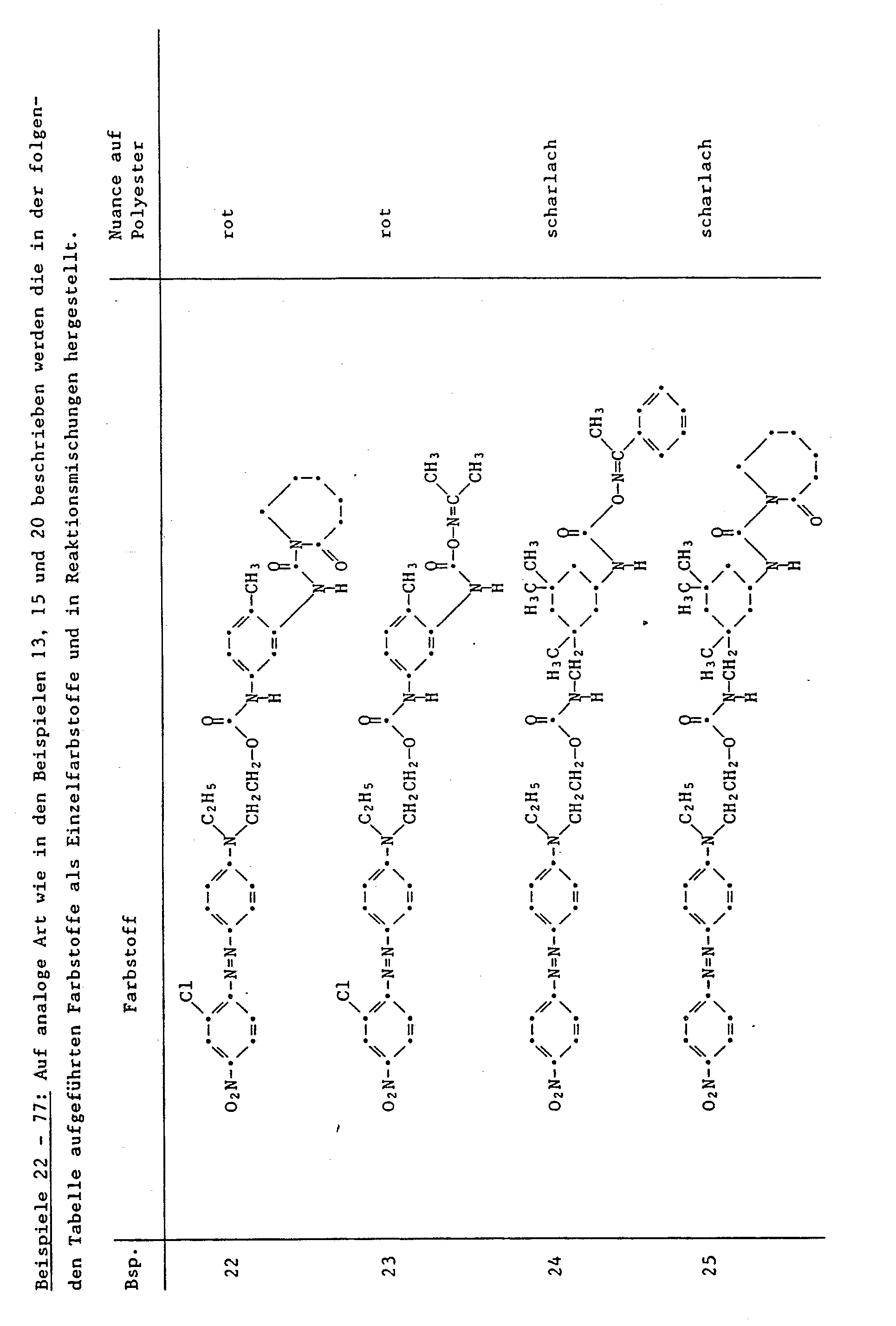


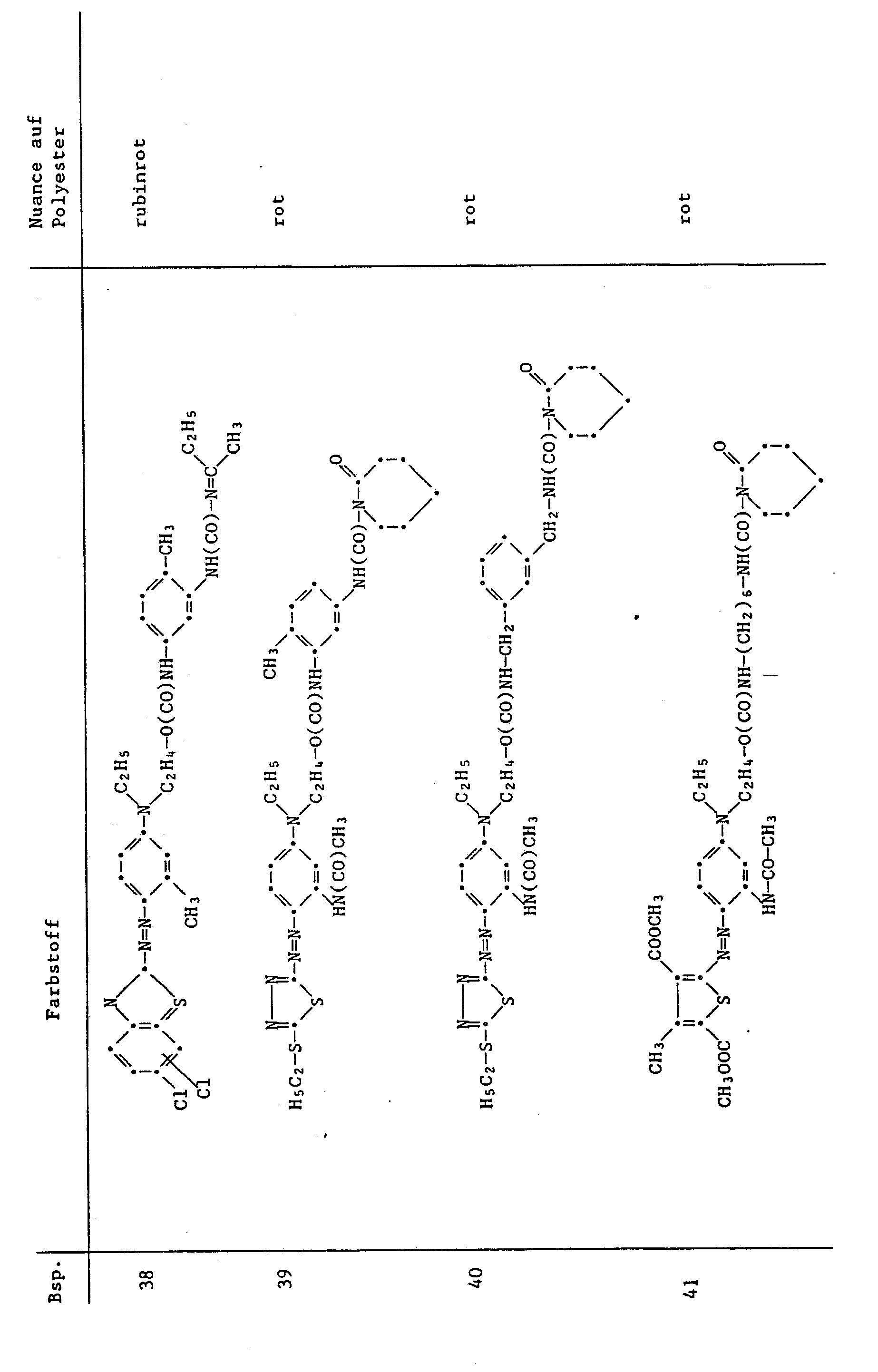


- 70,5 g N-Cyanethyl-N-ethylanilin vom Gehalt 98,7 % werden in der im Beispiel 5 beschriebenen Weise in wasserfreiem Ethanol in Gegenwart von Ammoniak mit Raneynickel hydriert. Nach 2,5 Stunden kommt die Wasserstoffaufnahme zum Stillstand. Das nach dem Abfiltrieren des Katalysators und Einengen der Lösung erhaltene rohe ölige Amin der Formel (64 g = 90 % d.Th.).

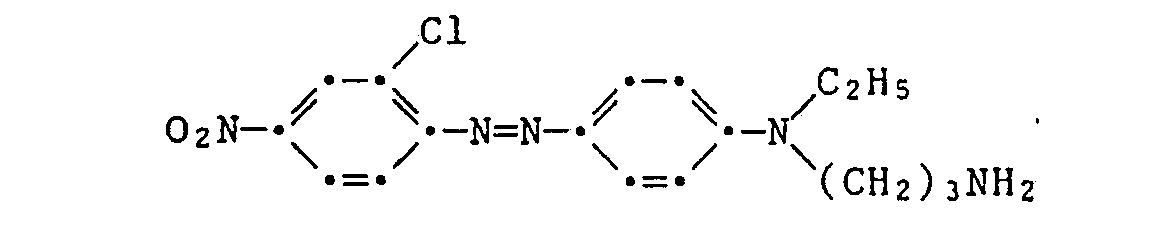
- Durch Umsetzung dieses Aminopropylfarbstoffes mit den Chlorameisensäureestern der in Spalte 2 der folgenden Tabelle aufgeführten Ketoxime werden die folgenden roten Farbstoffe erhalten:


- 21,3 g 2-Brom-3-cyan-4,6-diaminopyridin und 60 g 1,2-Diaminoethan werden in einem Autoklaven 2 Stunden bei 125° und 2 bar gerührt und das überschüssige Diaminoethan im Vakuum abgedampft. Man erhält 32,8 g rohen Eindampfrückstand, der neben Diaminoethanhydrobromid die Verbindung der Formel


- 1,5 g (-0,004 Mol) davon werden in 20 ml Dichlormethan suspendiert und mit 0,6 ml (0,0044 Mol) Triethylamin versetzt. Dann tropft man innerhalb von ca. 20 Minuten 0,0088 Mol Chlorameisensäureester von Acetonoxim zu und lässt 1,5 Stunden bei Raumtemperatur rühren. Man filtriert nicht umgesetzten Aminoethylfarbstoff ab, vernichtet den Chlorameisensäureester mit wenig Ammoniak und dampft im Vakuum ein.
- Chromatographie an Kieselgel mit Ethylacetat als Eluiermittel liefert den roten Farbstoff der Formel

- Auf analoge Art wie in den Beispielen 5 bis 9 und 80 bis 83 beschrieben werden die in der folgenden Tabelle beschriebenen Farbstoffe hergestellt.


- 86 g der Kupplungskomponente

- Dann wird mit Natriumhydroxid auf pH 11,5 gestellt und mit n-Butanol ausgeschüttelt. Nach dem Waschen, Trocknen und Eindampfen der Butanolphasen erhält man 54 g der Aminopropylverbindung der Formel

- 6,2 g (0,022 Mol) davon werden in 20 ml Ethanol gelöst und bei 0 - 5°C in 200 ml 1 N Schwefelsäure eingetragen. Dazu lässt man die aus 0,02 Mol 2-Brom-4,6-dinitroanilin hergestellte Diazoniumsalzlösung bei 0 - 5°C innerhalb von 30 Minuten zutropfen und hält dabei den pH-Wert durch Zugabe von Natriumhydroxid zwischen 2 und 3. Anschliessend stellt man auf pH 11,5 und nutscht, wäscht und trocknet den Aminofarbstoff der Formel
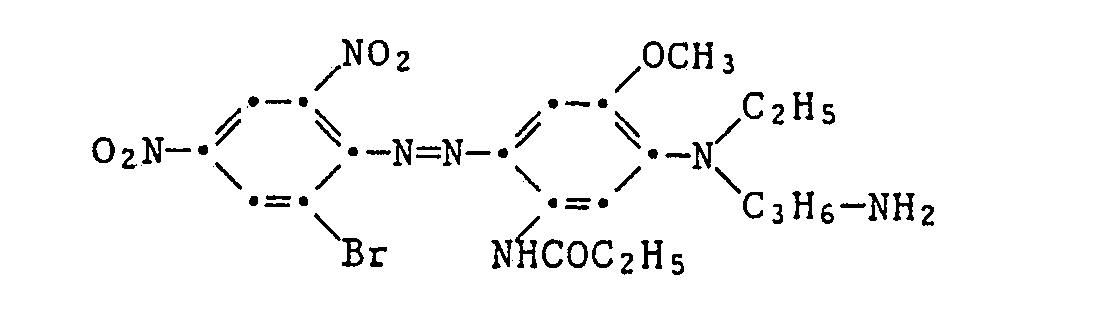
- Durch Umsetzung mit überschüssigem Chlorameisensäureester von Acetonoxim in trockenem Pyridin erhält man daraus den Farbstoff der Formel
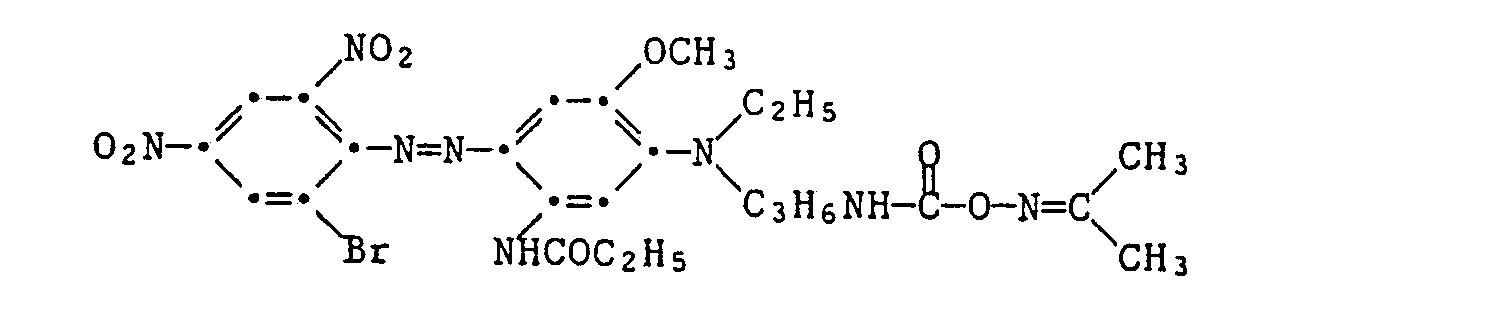
- Dieser färbt Textilmaterial aus Polyester in blauen Tönen.
- 0,45 g des Bromdinitrofarbstoffes aus Beispiel 99 werden in 15 ml Dimethylformamid mit 0,07 g Kupferacetatmonohydrat und 0,07 g Natriumnitrit während 3 Stunden bei Raumtemperatur gerührt. Dann wird mit viel Wasser verdünnt, der Niederschlag genutscht, gewaschen und getrocknet. Man erhält 0,33 g des Farbstoffes der Formel

- 13 g 3-Ethylaminoacetanilid und 9,5 ml Chloracetonitril werden mit 7,5 g Natriumcarbonatpulver während 3 Stunden bei 70 - 80°C gerührt, die Mischung in 80 ml Aceton aufgenommen, heiss von anorganischem Material abfiltriert und aus dem Filtrat durch Fällen mit Wasser, Abfiltrieren und Trocknen 14,8 g der Cyanmethylverbindung der Formel

- Durch Hydrieren in 100 ml Tetrahydrofuran mit Rhodium auf Aluminiumoxid bei 35°C und 3 bar während 20 Stunden erhält man nach üblicher Aufarbeitung 10,3 g der Kupplungskomponente der Formel


- Umsetzung mit dem Chlorameisensäureester von Cyclohexanonoxim und säulenchromatographische Reinigung an Kieselgel mit Ethylacetat als Eluiermittel liefert den Farbstoff der Formel

- Dieser färbt Textilmaterial aus Polyester in violetten Tönen.
- 11,3 g wasserfreies ε-Caprolactam und 0,05 g Diazabicyclooctan werden zusammen auf 80 °C erwärmt. Zur Schmelze werden bei gutem Rühren innert 30 Minuten 10,5 g Chlorethylisocyanat zugetropft. Das Gemisch wird 7 Stunden bei 80° C gerührt. Nach Abkühlen auf Raumtemperatur wird die farbloses Schmelze weitere 3 Stunden unter leichtem Vakuum gerührt. Ueber Nacht bei 5°C erhält man 21,4 g farblose, leicht klebrige Kristalle der Formel

- Die so erhaltenen Kristalle werden versetzt mit 10,9 g N-Ethylanilin, 0,8 g Kaliumiodid und 10,6 g Natriumcarbonat. Das Gemisch wird über Nacht bei 100°C gerührt. Nach Zugabe von 2 g Bernsteinsäureanhydrid wird eine weitere Stunde bei 80 °C gerührt. Durch Extrahieren mit Methylenchlorid erhält man 24 g Kupplungskomponente der Formel

- Auf analoge Art wie in Beispiel 102 beschrieben werden auch die folgenden Kupplungskomponenten erhalten.

- 8,6 g 2-Chlor-4-nitroanilin werden in 95 g 7 %iger Nitrosylschwefelsäure gelöst und 2 Stunden bei Raumtemperatur gerührt. Danach wird die Lösung auf eine Vorlage von 200 g Eis und 2,5 g Harnstoff ausgegossen. Die gelbliche Diazoniumsalzlösung wird innert 5 Minuten bei 0 - 5°C zugetropft zu einer Vorlage von 15,2 g der Kupplungskomponente aus Beispiel 102, 130 g 80 %iger Essigsäure und 200 g Eiswasser. Durch Zugabe von 30 %iger Natronlauge und 600 g Eis wird bei 0 - 10° C auf pH 3 eingestellt. Nach einstündigem Rühren wird abfiltriert, gewaschen und an der Luft getrocknet. Man erhält 23,2 g Rohprodukt. Zur Reinigung wird das Rohprodukt in Aceton angeschlämmt. Nach 3 Stunden Rühren bei Rückflusstemperatur wird die Suspension über Nacht bei Raumtemperatur gerührt und dann abfiltriert. Man erhält 15,3 g schwarzgrüne Kristalle der Formel

- 0,11 g Caprolactam in 10 ml Toluol werden mit 0,15 g Hexachlor-dimethylcarbonat in Gegenwart von 0,16 ml N,N-Diethylanilin während 4 Stunden bei Rückflusstemperatur gerührt. Dann wird die auf Raumtemperatur gekühlte hellbraune Lösung mit 0,2 ml Triethylamin und 0,35 g des im Beispiel 1 beschriebenen Aminoethylfarbstoffes versetzt und 1 Stunde bei Raumtemperatur, dann eine Stunde bei 90° gerührt. Als Hauptkomponente des Reaktionsgemisches erhält man den Farbstoff der Formel

- Auf analoge Art wie im Beispiel 10 beschrieben wird vom Farbstoff aus Beispiel 108 eine 5-prozentige wässrige Dispersion hergestellt. Damit wird im HT-Verfahren eine bezüglich Farbstoff 0,5-prozentige Färbung von Polyester erstellt.
- Wird das gefärbte Gewebe vor oder nach der reduktiven Reinigung 60 Sekunden auf 220 C erhitzt, so erweist sich die Thermomigrierechtheit (Prüfung analog Beispiel 10) als sehr gut.
- Wird mit derselben Farbstoff-Dispersion eine Thermosol-Färbung von Polyester vorgenommen (10 g/I Farbstoff, Flottenaufnahme 50 %, Fixiertemperatur 220°), so resultiert daraus eine ebenfalls sehr thermomigrierechte Färbung.
- Ersetzt man in Beispiel 102 das e-Caprolactam durch die äquivalente Menge o-Valerolactam und das N-Ethylanilin durch die äquivalente Menge N-Methylanilin und setzt man gleich zu Beginn zusätzlich 20 ml Dimethylformamid als Lösungsmittel zu, so erhält man die Kupplungskomponente der Formel

- Wird die Hälfte dieser Lösung (0,05 mol) mit 100 ml 80 % Essigsäure vermischt und wie im Beispiel 108 angegeben mit 0,05 mol diazotiertem 2-Chlor-4-nitroanilin gekuppelt, so erhält man 15,5 g weinrotes, öliges Produkt. Reinigung durch Säulenchromatographie an Kieselgel mit Essigester ergibt ein schwarzes Pulver der Formel

- Ersetzt man in Beispiel 108 das Chlornitroanilin durch die äquivalente Menge 2-Cyan-4-nitro-anilin, so erhält man 7,7 g Rohprodukt. Zur Reinigung wird das Rohprodukt zu 50 ml Tertiärbutyl methylether gegeben und 3 Stunden bei Rückflusstemperatur gerührt. Nach Abkühlen auf Raumtemperatur wird abfiltriert und getrocknet. Man erhält 7,0 g schwarzbraune Kristalle der Formel

- Auf analoge Art wie im Beispiel 102 beschrieben werden 9,6 g Brompentylisocyanat zunächst mit 5,7 g ε-Caprolactam und anschliessend mit 7,2 g 3-(N-Ethyl)-amino-acetanilid umgesetzt zum Zwischenprodukt der Formel

- 10,5 g 6-Brom-2,4-dinitro-anilin werden auf die übliche Weise in Schwefelsäure diazotiert und bei 0 - 10°C gekuppelt auf eine Lösung der oben beschriebenen Kupplungskomponente in 200 ml 50 %iger Essigsäure. Das Reaktionsgemisch wird mit 600 g Eiswasser versetzt und mehrere Stunden gerührt. Danach wird die Wasserphase dekantiert und verworfen. Dieser Waschvorgang wird noch zweimal wiederholt. Trocknen an der Luft ergibt 21,8 g Produkt der Formel

- 16,9 g des im Beispiel 113 beschriebenen Farbstoffs, 110 ml Dimethylformamid und 3,3 g Kupfer(I)-cyanid werden zusammengegeben und 12 Stunden bei 50°C gerührt. Das Reaktionsgemisch wird ausgegossen auf eine Vorlage von 600 m Eiswasser und 13 g (0,03 mol) Eisen(III)chlorid. Nach 2 Stunden Rühren wird filtriert, gewaschen und getrocknet. Man erhält 10,4 g Rohprodukt. Zur Reinigung wird suspendiert in 150 ml Methanol und 3 Stunden bei Rückflusstemperatur gerührt. Abkühlen auf 0 - 5° C, Filtrieren und Trocken an der Luft liefert schwarze Kristalle der Formel

- 16,2 g der gemäss Beispiel 102 erhaltenen Kupplungskomponente werden in 20 ml Dimethylformamid gelöst und mit 5,8 g Tetracyanethylen versetzt. Ueber Nacht wird bei 40° C gerührt. Nach Abkühlen auf 0 - 5° C werden 180 ml 70 %iges Methanol zugetropft. Nach 2 Stunden Rühren bei 0 - 5° C wird abfiltriert und gewaschen. Der Rückstand wird suspendiert in 50 ml Methanol und 2 Stunden bei Rückflusstemperatur gerührt. Abkühlen lassen, 4 Stunden bei 0 - 5°C Rühren, Abfiltrieren, Waschen und Trocknen bei 40 C liefert 7,5 g schwarze Kristalle der Formel

- Auf analoge Art wie im Beispiel 115 beschrieben erhält man folgende Tricyanvinyl-Farbstoffe:

- 0,8 g der im Beispiel 102 beschriebenen Additionsverbindung aus Chlorethylisocyanat und e-Caprolactam, 10 ml Dimethylformamid, 1,1 g des Natriumsalzes von 1,4-Diamino-3-cyan-2-tetrazolyl-anthrachinon und 0,1 g Kaliumiodid werden über Nacht bei 80°C gerührt. Bei 0 - 5°C werden 50 ml Methanol zugetropft. Nach weiteren 2 Stunden Rühren bei 0 - 5°C wird abfiltriert. Nach dem Waschen mit kaltem Methanol und mit Wasser wird der Filtrierrückstand suspendiert in 20 ml Methanol und 2 Stunden bei Rückflusstemperatur gerührt. Nach dem Abkühlen wird abfiltriert, gewaschen und getrocknet bei 40° C. Man erhält 0,8 g blaues Pulver der Formel

- Auf analoge Art wie im Beispiel 121 oder im Beispiel 83 beschrieben erhält man folgende AnthrachinonFarbstoffe:


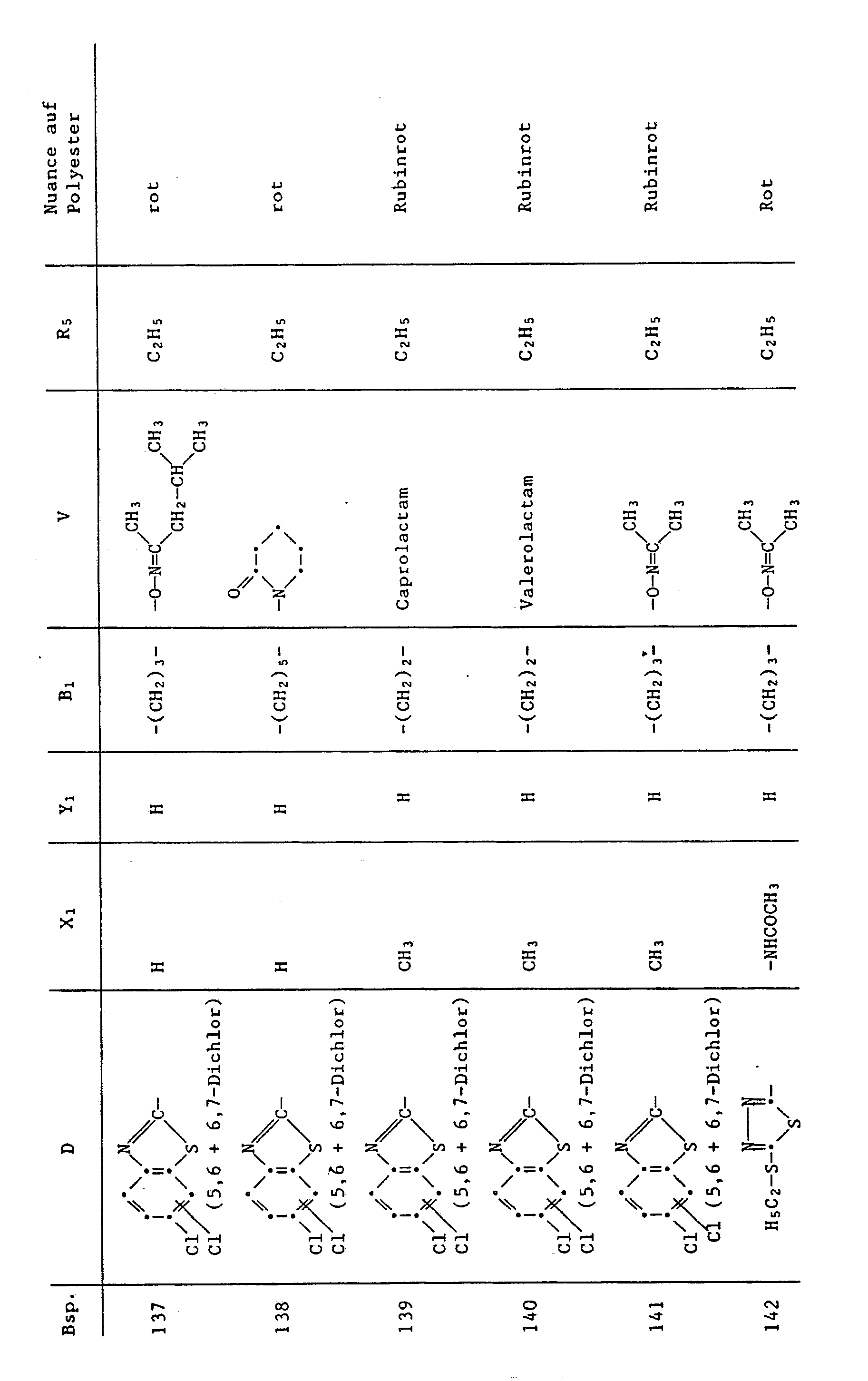


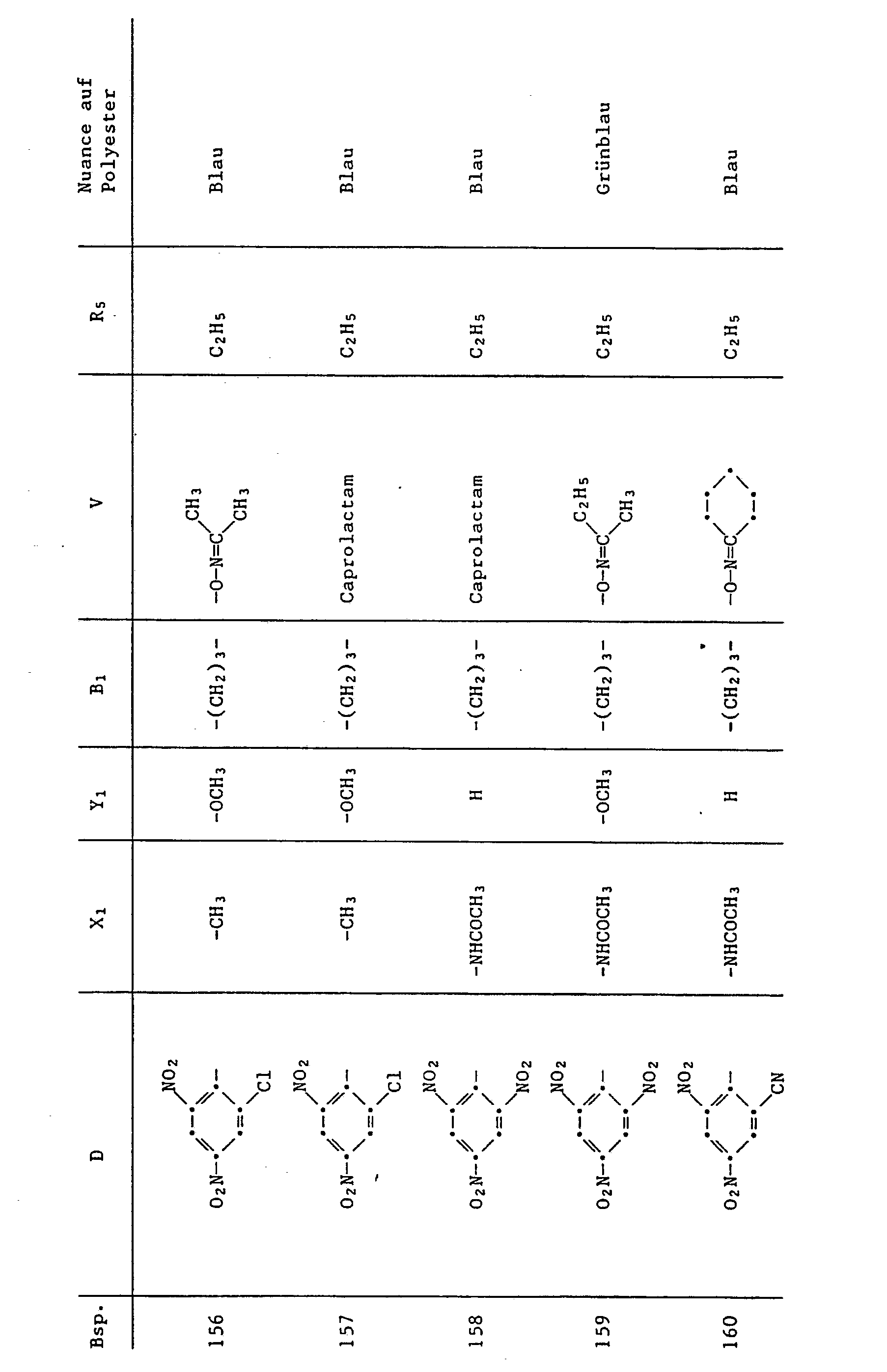


Claims (22)


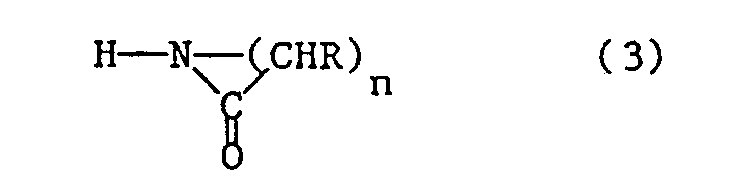


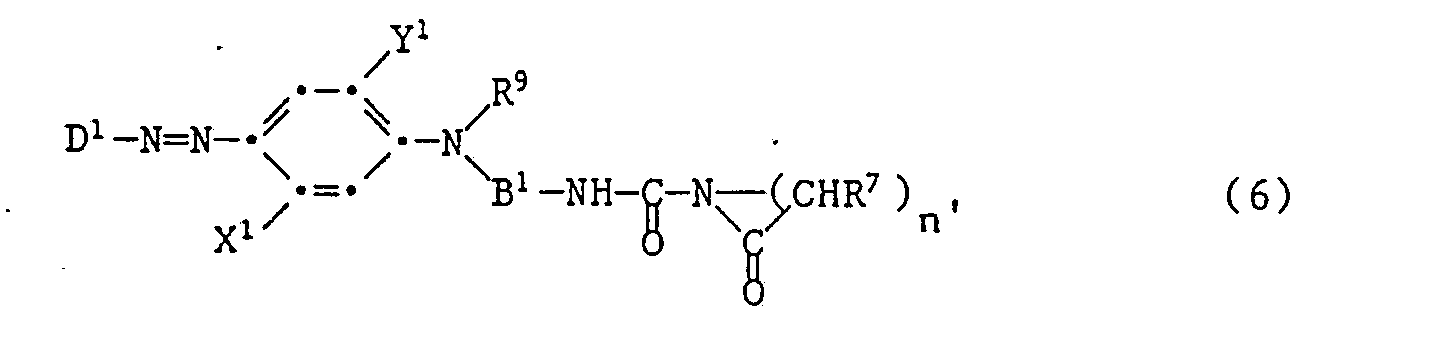


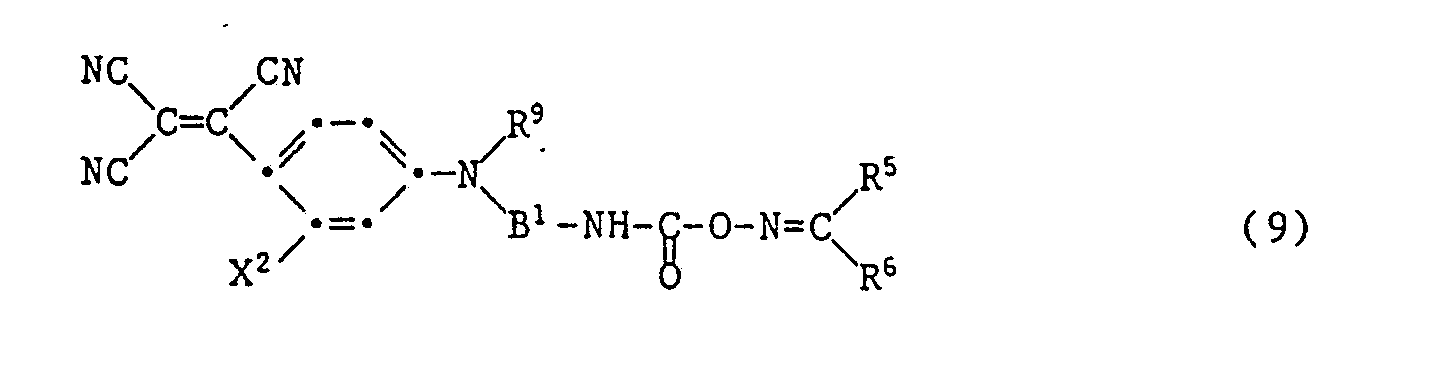




Applications Claiming Priority (2)
| Application Number | Priority Date | Filing Date | Title |
|---|---|---|---|
| CH107/89 | 1989-01-13 | ||
| CH10789 | 1989-01-13 |
Publications (3)
| Publication Number | Publication Date |
|---|---|
| EP0378510A2 true EP0378510A2 (de) | 1990-07-18 |
| EP0378510A3 EP0378510A3 (de) | 1991-10-30 |
| EP0378510B1 EP0378510B1 (de) | 1996-09-18 |
Family
ID=4179432
Family Applications (1)
| Application Number | Title | Priority Date | Filing Date |
|---|---|---|---|
| EP90810004A Expired - Lifetime EP0378510B1 (de) | 1989-01-13 | 1990-01-04 | Dispersionsfarbstoffe |
Country Status (5)
| Country | Link |
|---|---|
| US (1) | US5116958A (de) |
| EP (1) | EP0378510B1 (de) |
| JP (1) | JPH02258873A (de) |
| DE (1) | DE59010498D1 (de) |
| ES (1) | ES2091813T3 (de) |
Cited By (1)
| Publication number | Priority date | Publication date | Assignee | Title |
|---|---|---|---|---|
| EP0489421A3 (en) * | 1990-12-06 | 1993-03-10 | Hoechst Aktiengesellschaft | Pigment preparations |
Families Citing this family (7)
| Publication number | Priority date | Publication date | Assignee | Title |
|---|---|---|---|---|
| FR2697026B1 (fr) * | 1992-10-19 | 1997-06-27 | Sandoz Sa | Nouveaux composes azouiques, leur preparation et leur utilisation comme colorants de dispersion. |
| DE59408909D1 (de) | 1993-10-13 | 1999-12-16 | Ciba Sc Holding Ag | Neue Fluoreszenzfarbstoffe |
| US6080213A (en) * | 1998-03-18 | 2000-06-27 | Morton International, Inc. | Stabilized aqueous diazo solutions |
| DE10105030A1 (de) * | 2001-02-05 | 2002-08-08 | Basf Ag | Verfahren zur Herstellung von N,N'-Carbonylbis-Epsilon-caprolactam |
| KR101144597B1 (ko) * | 2010-09-01 | 2012-05-11 | 에스케이이노베이션 주식회사 | 셀룰로오스아세테이트 필름 |
| KR101968291B1 (ko) | 2016-11-24 | 2019-04-12 | 한국기계연구원 | 탄소섬유용 사이징제, 계면접착력이 향상된 탄소섬유, 이를 이용한 중합 반응형 탄소섬유 강화 고분자 복합재료 및 이의 제조방법 |
| CN109970598B (zh) * | 2019-04-19 | 2022-04-12 | 苏州大学 | 超临界co2流体中天然纤维无水染色用蓝色活性分散染料及中间体 |
Family Cites Families (10)
| Publication number | Priority date | Publication date | Assignee | Title |
|---|---|---|---|---|
| GB824443A (en) * | 1956-07-18 | 1959-12-02 | Sandoz Ltd | Improvements in or relating to water-insoluble azo dyestuffs containing urea or urethane groups |
| IL37738A0 (en) * | 1970-09-30 | 1971-11-29 | Ciba Geigy Ag | Styryl dyestuffs which are sparingly soluble in water and their manufacture and use |
| GB1351375A (en) * | 1971-09-23 | 1974-04-24 | Yorkshire Chemicals Ltd | Monoazo disperse dyes |
| CH561247A5 (de) * | 1972-03-21 | 1975-04-30 | Ciba Geigy Ag | |
| DE2507460C3 (de) * | 1975-02-21 | 1979-01-25 | Basf Ag, 6700 Ludwigshafen | Azofarbstoffe mit Benzisothiazol-Diazokomponenten, ihre Herstellung und Verwendung zum Färben von synthetischen und halbsynthetischen organischen Fasern |
| DE2752805A1 (de) * | 1977-11-26 | 1979-05-31 | Basf Ag | Azofarbstoffe |
| DE2817201A1 (de) * | 1978-04-20 | 1979-10-31 | Basf Ag | Azofarbstoffe |
| JPS5531039A (en) * | 1978-08-25 | 1980-03-05 | Sumitomo Chem Co Ltd | Oximecarbamate derivative, its preparation, and microbicide and herbicide containing the same |
| FR2442257A1 (fr) * | 1978-11-21 | 1980-06-20 | Ugine Kuhlmann | Composes structurellement colores reticulables, leur preparation et leur utilisation dans des compositions pour revetements |
| US4914190A (en) * | 1987-03-19 | 1990-04-03 | Ciba-Geigy Corporation | Tricyanovinyl-N,N-disubstituted anilines as disperse dyes |
-
1990
- 1990-01-04 DE DE59010498T patent/DE59010498D1/de not_active Expired - Fee Related
- 1990-01-04 ES ES90810004T patent/ES2091813T3/es not_active Expired - Lifetime
- 1990-01-04 EP EP90810004A patent/EP0378510B1/de not_active Expired - Lifetime
- 1990-01-05 US US07/461,497 patent/US5116958A/en not_active Expired - Fee Related
- 1990-01-12 JP JP2003668A patent/JPH02258873A/ja active Pending
Cited By (1)
| Publication number | Priority date | Publication date | Assignee | Title |
|---|---|---|---|---|
| EP0489421A3 (en) * | 1990-12-06 | 1993-03-10 | Hoechst Aktiengesellschaft | Pigment preparations |
Also Published As
| Publication number | Publication date |
|---|---|
| EP0378510A3 (de) | 1991-10-30 |
| JPH02258873A (ja) | 1990-10-19 |
| ES2091813T3 (es) | 1996-11-16 |
| US5116958A (en) | 1992-05-26 |
| DE59010498D1 (de) | 1996-10-24 |
| EP0378510B1 (de) | 1996-09-18 |
Similar Documents
| Publication | Publication Date | Title |
|---|---|---|
| EP1141138B1 (de) | Phthalimidyl-azofarbstoffe, verfahren zu deren herstellung und deren verwendung | |
| EP0555179A1 (de) | Azofarbstoffe | |
| EP0623654A1 (de) | Azofarbstoffe | |
| EP0378510B1 (de) | Dispersionsfarbstoffe | |
| EP0864615B1 (de) | Azofarbstoffmischungen | |
| EP0667376A1 (de) | Phthalimidyl-Azofarbstoffe, Verfahren zu deren Herstellung und deren Verwendung | |
| EP0699718A2 (de) | Azothiophenfarbstoffe mit einer 2,4,6-Triamino-3-cyanpyridin Kupplungskomponente | |
| EP0443984B1 (de) | Phthalimidyl-Azofarbstoffe | |
| EP0894830A2 (de) | Dispersionsfarbstoffe | |
| EP0337948B1 (de) | Dispersionsfarbstoffe | |
| EP0284560B1 (de) | Dispersionsfarbstoffe, enthaltend eine Tricyanovinylgruppierung | |
| EP0463995B1 (de) | Azofarbstoffe mit 2-Alkylamino-3-cyan-4,6-diaminopyridinen als Kupplungskomponenten | |
| EP0083313B1 (de) | Farbstoffmischung, Verfahren zu ihrer Herstellung und Verwendung zum Färben und Bedrucken von hydrophobem Fasermaterial | |
| DE1644373A1 (de) | Monoazofarbstoffe,ihre Herstellung und Verwendung | |
| EP0776948B1 (de) | Mischungen von Monoazopyridonfarbstoffen | |
| CH689980A5 (de) | Mischungen von Monoazopyridonfarbstoffen. | |
| EP0335834A2 (de) | Heteroaromatische Azofarbstoffe | |
| EP1085055B1 (de) | Azofarbstoff, Verfahren zu dessen Herstellung und dessen Verwendung zum Färben oder Bedrucken von hydrophoben Fasermaterialien | |
| EP0271444B1 (de) | Dispersionsfarbstoffe | |
| DE2525557A1 (de) | Wasserunloesliche azofarbstoffe, verfahren zu ihrer herstellung und ihre verwendung | |
| EP0351367A2 (de) | Dispersionsfarbstoffe, enthaltend eine Tricyanovinylgruppierung | |
| DE1644252C (de) | In Wasser schwerlösliche Farbstoffe der Anthrachinon Azoreihe, Verfahren zu ihrer Herstellung und ihre Verwendung | |
| DE1644260C (de) | In Wasser schwerlösliche Mono- und Disazofarbstoffe sowie Verfahren zu deren Herstellung und Verwendung | |
| EP0258180A2 (de) | Dispersionsfarbstoffe | |
| DE2935011A1 (de) | Disperse monoazofarbstoffe und verfahren zu ihrer herstellung sowie ihre verwendung zum faerben von synthetischen textilmaterialien |
Legal Events
| Date | Code | Title | Description |
|---|---|---|---|
| PUAI | Public reference made under article 153(3) epc to a published international application that has entered the european phase |
Free format text: ORIGINAL CODE: 0009012 |
|
| 17P | Request for examination filed |
Effective date: 19900108 |
|
| AK | Designated contracting states |
Kind code of ref document: A2 Designated state(s): BE CH DE ES FR GB IT LI |
|
| PUAL | Search report despatched |
Free format text: ORIGINAL CODE: 0009013 |
|
| AK | Designated contracting states |
Kind code of ref document: A3 Designated state(s): BE CH DE ES FR GB IT LI |
|
| GRAG | Despatch of communication of intention to grant |
Free format text: ORIGINAL CODE: EPIDOS AGRA |
|
| D17Q | First examination report despatched (deleted) | ||
| GRAH | Despatch of communication of intention to grant a patent |
Free format text: ORIGINAL CODE: EPIDOS IGRA |
|
| GRAH | Despatch of communication of intention to grant a patent |
Free format text: ORIGINAL CODE: EPIDOS IGRA |
|
| GRAH | Despatch of communication of intention to grant a patent |
Free format text: ORIGINAL CODE: EPIDOS IGRA |
|
| GRAA | (expected) grant |
Free format text: ORIGINAL CODE: 0009210 |
|
| AK | Designated contracting states |
Kind code of ref document: B1 Designated state(s): BE CH DE ES FR GB IT LI |
|
| PG25 | Lapsed in a contracting state [announced via postgrant information from national office to epo] |
Ref country code: FR Effective date: 19960918 |
|
| REF | Corresponds to: |
Ref document number: 59010498 Country of ref document: DE Date of ref document: 19961024 |
|
| REG | Reference to a national code |
Ref country code: CH Ref legal event code: PUE Owner name: CIBA-GEIGY AG TRANSFER- CIBA SC HOLDING AG |
|
| ITF | It: translation for a ep patent filed | ||
| REG | Reference to a national code |
Ref country code: ES Ref legal event code: FG2A Ref document number: 2091813 Country of ref document: ES Kind code of ref document: T3 |
|
| GBT | Gb: translation of ep patent filed (gb section 77(6)(a)/1977) |
Effective date: 19961106 |
|
| BECA | Be: change of holder's address |
Free format text: 960918 *CIBA SC HOLDING A.G.:KLYBECKSTRASSE 141, CH - 4057 BALE |
|
| BECH | Be: change of holder |
Free format text: 960918 *CIBA SC HOLDING A.G. |
|
| BECN | Be: change of holder's name |
Effective date: 19961129 |
|
| EN | Fr: translation not filed | ||
| REG | Reference to a national code |
Ref country code: CH Ref legal event code: PFA Free format text: CIBA SC HOLDING AG TRANSFER- CIBA SPECIALTY CHEMICALS HOLDING INC. |
|
| REG | Reference to a national code |
Ref country code: GB Ref legal event code: 732E |
|
| PLBE | No opposition filed within time limit |
Free format text: ORIGINAL CODE: 0009261 |
|
| STAA | Information on the status of an ep patent application or granted ep patent |
Free format text: STATUS: NO OPPOSITION FILED WITHIN TIME LIMIT |
|
| 26N | No opposition filed | ||
| REG | Reference to a national code |
Ref country code: ES Ref legal event code: PC2A |
|
| PGFP | Annual fee paid to national office [announced via postgrant information from national office to epo] |
Ref country code: CH Payment date: 19981207 Year of fee payment: 10 |
|
| PGFP | Annual fee paid to national office [announced via postgrant information from national office to epo] |
Ref country code: DE Payment date: 19981210 Year of fee payment: 10 |
|
| PGFP | Annual fee paid to national office [announced via postgrant information from national office to epo] |
Ref country code: GB Payment date: 19981216 Year of fee payment: 10 |
|
| PGFP | Annual fee paid to national office [announced via postgrant information from national office to epo] |
Ref country code: ES Payment date: 19990114 Year of fee payment: 10 |
|
| PGFP | Annual fee paid to national office [announced via postgrant information from national office to epo] |
Ref country code: BE Payment date: 19990324 Year of fee payment: 10 |
|
| PG25 | Lapsed in a contracting state [announced via postgrant information from national office to epo] |
Ref country code: GB Free format text: LAPSE BECAUSE OF NON-PAYMENT OF DUE FEES Effective date: 20000104 |
|
| PG25 | Lapsed in a contracting state [announced via postgrant information from national office to epo] |
Ref country code: ES Free format text: LAPSE BECAUSE OF NON-PAYMENT OF DUE FEES Effective date: 20000105 |
|
| PG25 | Lapsed in a contracting state [announced via postgrant information from national office to epo] |
Ref country code: LI Free format text: LAPSE BECAUSE OF NON-PAYMENT OF DUE FEES Effective date: 20000131 Ref country code: CH Free format text: LAPSE BECAUSE OF NON-PAYMENT OF DUE FEES Effective date: 20000131 Ref country code: BE Free format text: LAPSE BECAUSE OF NON-PAYMENT OF DUE FEES Effective date: 20000131 |
|
| BERE | Be: lapsed |
Owner name: CIBA SPECIALTY CHEMICALS HOLDING INC. Effective date: 20000131 |
|
| GBPC | Gb: european patent ceased through non-payment of renewal fee |
Effective date: 20000104 |
|
| REG | Reference to a national code |
Ref country code: CH Ref legal event code: PL |
|
| PG25 | Lapsed in a contracting state [announced via postgrant information from national office to epo] |
Ref country code: DE Free format text: LAPSE BECAUSE OF NON-PAYMENT OF DUE FEES Effective date: 20001101 |
|
| REG | Reference to a national code |
Ref country code: ES Ref legal event code: FD2A Effective date: 20011010 |
|
| PG25 | Lapsed in a contracting state [announced via postgrant information from national office to epo] |
Ref country code: IT Free format text: LAPSE BECAUSE OF NON-PAYMENT OF DUE FEES;WARNING: LAPSES OF ITALIAN PATENTS WITH EFFECTIVE DATE BEFORE 2007 MAY HAVE OCCURRED AT ANY TIME BEFORE 2007. THE CORRECT EFFECTIVE DATE MAY BE DIFFERENT FROM THE ONE RECORDED. Effective date: 20050104 |