EP0381172A2 - Homogen gemischte Legierungen aus aromatischen Polyamiden und Poly-N-Vinylpyrrolidon, Verfahren zu ihrer Herstellung und ihre Verwendung - Google Patents
Homogen gemischte Legierungen aus aromatischen Polyamiden und Poly-N-Vinylpyrrolidon, Verfahren zu ihrer Herstellung und ihre Verwendung Download PDFInfo
- Publication number
- EP0381172A2 EP0381172A2 EP90101856A EP90101856A EP0381172A2 EP 0381172 A2 EP0381172 A2 EP 0381172A2 EP 90101856 A EP90101856 A EP 90101856A EP 90101856 A EP90101856 A EP 90101856A EP 0381172 A2 EP0381172 A2 EP 0381172A2
- Authority
- EP
- European Patent Office
- Prior art keywords
- radical
- phenylene
- alloy according
- poly
- alkyl
- Prior art date
- Legal status (The legal status is an assumption and is not a legal conclusion. Google has not performed a legal analysis and makes no representation as to the accuracy of the status listed.)
- Granted
Links
- 229920000191 poly(N-vinyl pyrrolidone) Polymers 0.000 title claims description 51
- 239000000203 mixture Substances 0.000 title claims description 16
- 238000004519 manufacturing process Methods 0.000 title claims description 6
- 229920003235 aromatic polyamide Polymers 0.000 title description 17
- 239000004760 aramid Substances 0.000 title description 6
- 239000000956 alloy Substances 0.000 claims abstract description 54
- 229910045601 alloy Inorganic materials 0.000 claims abstract description 54
- 238000000576 coating method Methods 0.000 claims abstract description 4
- 229920000642 polymer Polymers 0.000 claims description 21
- 239000002904 solvent Substances 0.000 claims description 11
- 125000000217 alkyl group Chemical group 0.000 claims description 10
- 125000004169 (C1-C6) alkyl group Chemical group 0.000 claims description 8
- -1 1,2-phenylene, 1,3-phenylene Chemical group 0.000 claims description 8
- 238000009833 condensation Methods 0.000 claims description 8
- 230000005494 condensation Effects 0.000 claims description 8
- 238000000034 method Methods 0.000 claims description 8
- 229910052794 bromium Inorganic materials 0.000 claims description 7
- 125000004432 carbon atom Chemical group C* 0.000 claims description 7
- 229910052801 chlorine Inorganic materials 0.000 claims description 7
- 239000000460 chlorine Substances 0.000 claims description 7
- 229910052731 fluorine Inorganic materials 0.000 claims description 7
- 150000004985 diamines Chemical class 0.000 claims description 6
- 229910052736 halogen Inorganic materials 0.000 claims description 5
- 239000001257 hydrogen Substances 0.000 claims description 5
- 229910052739 hydrogen Inorganic materials 0.000 claims description 5
- 125000004435 hydrogen atom Chemical group [H]* 0.000 claims description 5
- 125000002023 trifluoromethyl group Chemical group FC(F)(F)* 0.000 claims description 5
- 125000004191 (C1-C6) alkoxy group Chemical group 0.000 claims description 4
- 150000002367 halogens Chemical class 0.000 claims description 4
- WKBOTKDWSSQWDR-UHFFFAOYSA-N Bromine atom Chemical compound [Br] WKBOTKDWSSQWDR-UHFFFAOYSA-N 0.000 claims description 3
- ZAMOUSCENKQFHK-UHFFFAOYSA-N Chlorine atom Chemical compound [Cl] ZAMOUSCENKQFHK-UHFFFAOYSA-N 0.000 claims description 3
- PXGOKWXKJXAPGV-UHFFFAOYSA-N Fluorine Chemical compound FF PXGOKWXKJXAPGV-UHFFFAOYSA-N 0.000 claims description 3
- 239000000654 additive Substances 0.000 claims description 3
- 125000003118 aryl group Chemical group 0.000 claims description 3
- 125000003709 fluoroalkyl group Chemical group 0.000 claims description 3
- 125000000956 methoxy group Chemical group [H]C([H])([H])O* 0.000 claims description 3
- 125000004178 (C1-C4) alkyl group Chemical group 0.000 claims description 2
- 229920001400 block copolymer Polymers 0.000 claims description 2
- GDTBXPJZTBHREO-UHFFFAOYSA-N bromine Substances BrBr GDTBXPJZTBHREO-UHFFFAOYSA-N 0.000 claims description 2
- 238000001704 evaporation Methods 0.000 claims description 2
- 230000008020 evaporation Effects 0.000 claims description 2
- 239000011737 fluorine Substances 0.000 claims description 2
- 229920000578 graft copolymer Polymers 0.000 claims description 2
- 238000005266 casting Methods 0.000 claims 1
- 238000000465 moulding Methods 0.000 claims 1
- 229920005604 random copolymer Polymers 0.000 claims 1
- XLYOFNOQVPJJNP-UHFFFAOYSA-N water Substances O XLYOFNOQVPJJNP-UHFFFAOYSA-N 0.000 abstract description 10
- 238000010521 absorption reaction Methods 0.000 abstract description 4
- 238000003825 pressing Methods 0.000 abstract 1
- WHNWPMSKXPGLAX-UHFFFAOYSA-N N-Vinyl-2-pyrrolidone Chemical compound C=CN1CCCC1=O WHNWPMSKXPGLAX-UHFFFAOYSA-N 0.000 description 39
- 239000000243 solution Substances 0.000 description 25
- SECXISVLQFMRJM-UHFFFAOYSA-N N-Methylpyrrolidone Chemical compound CN1CCCC1=O SECXISVLQFMRJM-UHFFFAOYSA-N 0.000 description 12
- 239000011521 glass Substances 0.000 description 10
- 238000006068 polycondensation reaction Methods 0.000 description 8
- LXEJRKJRKIFVNY-UHFFFAOYSA-N terephthaloyl chloride Chemical compound ClC(=O)C1=CC=C(C(Cl)=O)C=C1 LXEJRKJRKIFVNY-UHFFFAOYSA-N 0.000 description 8
- ZMXDDKWLCZADIW-UHFFFAOYSA-N N,N-Dimethylformamide Chemical compound CN(C)C=O ZMXDDKWLCZADIW-UHFFFAOYSA-N 0.000 description 6
- 239000011888 foil Substances 0.000 description 6
- 230000009477 glass transition Effects 0.000 description 6
- 238000002156 mixing Methods 0.000 description 5
- IJGRMHOSHXDMSA-UHFFFAOYSA-N Atomic nitrogen Chemical compound N#N IJGRMHOSHXDMSA-UHFFFAOYSA-N 0.000 description 4
- OFOBLEOULBTSOW-UHFFFAOYSA-N Malonic acid Chemical compound OC(=O)CC(O)=O OFOBLEOULBTSOW-UHFFFAOYSA-N 0.000 description 4
- ATUOYWHBWRKTHZ-UHFFFAOYSA-N Propane Chemical compound CCC ATUOYWHBWRKTHZ-UHFFFAOYSA-N 0.000 description 4
- 239000000292 calcium oxide Substances 0.000 description 4
- ODINCKMPIJJUCX-UHFFFAOYSA-N calcium oxide Inorganic materials [Ca]=O ODINCKMPIJJUCX-UHFFFAOYSA-N 0.000 description 4
- 238000005259 measurement Methods 0.000 description 4
- CBCKQZAAMUWICA-UHFFFAOYSA-N 1,4-phenylenediamine Chemical compound NC1=CC=C(N)C=C1 CBCKQZAAMUWICA-UHFFFAOYSA-N 0.000 description 3
- NUIURNJTPRWVAP-UHFFFAOYSA-N 3,3'-Dimethylbenzidine Chemical compound C1=C(N)C(C)=CC(C=2C=C(C)C(N)=CC=2)=C1 NUIURNJTPRWVAP-UHFFFAOYSA-N 0.000 description 3
- JCRRFJIVUPSNTA-UHFFFAOYSA-N 4-[4-(4-aminophenoxy)phenoxy]aniline Chemical compound C1=CC(N)=CC=C1OC(C=C1)=CC=C1OC1=CC=C(N)C=C1 JCRRFJIVUPSNTA-UHFFFAOYSA-N 0.000 description 3
- UHOVQNZJYSORNB-UHFFFAOYSA-N Benzene Chemical compound C1=CC=CC=C1 UHOVQNZJYSORNB-UHFFFAOYSA-N 0.000 description 3
- YMWUJEATGCHHMB-UHFFFAOYSA-N Dichloromethane Chemical compound ClCCl YMWUJEATGCHHMB-UHFFFAOYSA-N 0.000 description 3
- WMFOQBRAJBCJND-UHFFFAOYSA-M Lithium hydroxide Chemical compound [Li+].[OH-] WMFOQBRAJBCJND-UHFFFAOYSA-M 0.000 description 3
- 238000006243 chemical reaction Methods 0.000 description 3
- 125000001997 phenyl group Chemical group [H]C1=C([H])C([H])=C(*)C([H])=C1[H] 0.000 description 3
- CSCPPACGZOOCGX-UHFFFAOYSA-N Acetone Chemical compound CC(C)=O CSCPPACGZOOCGX-UHFFFAOYSA-N 0.000 description 2
- IAZDPXIOMUYVGZ-UHFFFAOYSA-N Dimethylsulphoxide Chemical compound CS(C)=O IAZDPXIOMUYVGZ-UHFFFAOYSA-N 0.000 description 2
- VEXZGXHMUGYJMC-UHFFFAOYSA-N Hydrochloric acid Chemical compound Cl VEXZGXHMUGYJMC-UHFFFAOYSA-N 0.000 description 2
- FXHOOIRPVKKKFG-UHFFFAOYSA-N N,N-Dimethylacetamide Chemical compound CN(C)C(C)=O FXHOOIRPVKKKFG-UHFFFAOYSA-N 0.000 description 2
- 239000004952 Polyamide Substances 0.000 description 2
- 150000001408 amides Chemical class 0.000 description 2
- 150000004984 aromatic diamines Chemical class 0.000 description 2
- PASDCCFISLVPSO-UHFFFAOYSA-N benzoyl chloride Chemical compound ClC(=O)C1=CC=CC=C1 PASDCCFISLVPSO-UHFFFAOYSA-N 0.000 description 2
- 230000005540 biological transmission Effects 0.000 description 2
- 238000009835 boiling Methods 0.000 description 2
- BRPQOXSCLDDYGP-UHFFFAOYSA-N calcium oxide Chemical compound [O-2].[Ca+2] BRPQOXSCLDDYGP-UHFFFAOYSA-N 0.000 description 2
- 238000007707 calorimetry Methods 0.000 description 2
- 150000001875 compounds Chemical class 0.000 description 2
- 229910000041 hydrogen chloride Inorganic materials 0.000 description 2
- IXCSERBJSXMMFS-UHFFFAOYSA-N hydrogen chloride Substances Cl.Cl IXCSERBJSXMMFS-UHFFFAOYSA-N 0.000 description 2
- KWGKDLIKAYFUFQ-UHFFFAOYSA-M lithium chloride Chemical compound [Li+].[Cl-] KWGKDLIKAYFUFQ-UHFFFAOYSA-M 0.000 description 2
- 229920002521 macromolecule Polymers 0.000 description 2
- 239000000463 material Substances 0.000 description 2
- 239000011259 mixed solution Substances 0.000 description 2
- 229910052757 nitrogen Inorganic materials 0.000 description 2
- 229920002647 polyamide Polymers 0.000 description 2
- 238000002360 preparation method Methods 0.000 description 2
- 239000001294 propane Substances 0.000 description 2
- 239000002994 raw material Substances 0.000 description 2
- 238000003756 stirring Methods 0.000 description 2
- 239000000126 substance Substances 0.000 description 2
- MSWAXXJAPIGEGZ-UHFFFAOYSA-N 2-chlorobenzene-1,4-dicarbonyl chloride Chemical compound ClC(=O)C1=CC=C(C(Cl)=O)C(Cl)=C1 MSWAXXJAPIGEGZ-UHFFFAOYSA-N 0.000 description 1
- HGUYBLVGLMAUFF-UHFFFAOYSA-N 2-methoxybenzene-1,4-diamine Chemical compound COC1=CC(N)=CC=C1N HGUYBLVGLMAUFF-UHFFFAOYSA-N 0.000 description 1
- WVDRSXGPQWNUBN-UHFFFAOYSA-N 4-(4-carboxyphenoxy)benzoic acid Chemical compound C1=CC(C(=O)O)=CC=C1OC1=CC=C(C(O)=O)C=C1 WVDRSXGPQWNUBN-UHFFFAOYSA-N 0.000 description 1
- NEQFBGHQPUXOFH-UHFFFAOYSA-N 4-(4-carboxyphenyl)benzoic acid Chemical compound C1=CC(C(=O)O)=CC=C1C1=CC=C(C(O)=O)C=C1 NEQFBGHQPUXOFH-UHFFFAOYSA-N 0.000 description 1
- RYYUUQPLFHRZOY-UHFFFAOYSA-N 4-[2-(4-aminophenoxy)phenoxy]aniline Chemical compound C1=CC(N)=CC=C1OC1=CC=CC=C1OC1=CC=C(N)C=C1 RYYUUQPLFHRZOY-UHFFFAOYSA-N 0.000 description 1
- PEZDGINXZHEJFN-UHFFFAOYSA-N 5-tert-butylbenzene-1,3-dicarbonyl chloride Chemical compound CC(C)(C)C1=CC(C(Cl)=O)=CC(C(Cl)=O)=C1 PEZDGINXZHEJFN-UHFFFAOYSA-N 0.000 description 1
- ZCYVEMRRCGMTRW-UHFFFAOYSA-N 7553-56-2 Chemical compound [I] ZCYVEMRRCGMTRW-UHFFFAOYSA-N 0.000 description 1
- UXVMQQNJUSDDNG-UHFFFAOYSA-L Calcium chloride Chemical compound [Cl-].[Cl-].[Ca+2] UXVMQQNJUSDDNG-UHFFFAOYSA-L 0.000 description 1
- 229920000049 Carbon (fiber) Polymers 0.000 description 1
- MQJKPEGWNLWLTK-UHFFFAOYSA-N Dapsone Chemical compound C1=CC(N)=CC=C1S(=O)(=O)C1=CC=C(N)C=C1 MQJKPEGWNLWLTK-UHFFFAOYSA-N 0.000 description 1
- UFHFLCQGNIYNRP-UHFFFAOYSA-N Hydrogen Chemical compound [H][H] UFHFLCQGNIYNRP-UHFFFAOYSA-N 0.000 description 1
- 239000004697 Polyetherimide Substances 0.000 description 1
- 239000004642 Polyimide Substances 0.000 description 1
- 238000003917 TEM image Methods 0.000 description 1
- 229920004747 ULTEM® 1000 Polymers 0.000 description 1
- 239000012963 UV stabilizer Substances 0.000 description 1
- 230000006978 adaptation Effects 0.000 description 1
- 238000005275 alloying Methods 0.000 description 1
- 229920006231 aramid fiber Polymers 0.000 description 1
- QVGXLLKOCUKJST-UHFFFAOYSA-N atomic oxygen Chemical compound [O] QVGXLLKOCUKJST-UHFFFAOYSA-N 0.000 description 1
- FDQSRULYDNDXQB-UHFFFAOYSA-N benzene-1,3-dicarbonyl chloride Chemical compound ClC(=O)C1=CC=CC(C(Cl)=O)=C1 FDQSRULYDNDXQB-UHFFFAOYSA-N 0.000 description 1
- HFACYLZERDEVSX-UHFFFAOYSA-N benzidine Chemical class C1=CC(N)=CC=C1C1=CC=C(N)C=C1 HFACYLZERDEVSX-UHFFFAOYSA-N 0.000 description 1
- 230000015572 biosynthetic process Effects 0.000 description 1
- ZLSMCQSGRWNEGX-UHFFFAOYSA-N bis(4-aminophenyl)methanone Chemical compound C1=CC(N)=CC=C1C(=O)C1=CC=C(N)C=C1 ZLSMCQSGRWNEGX-UHFFFAOYSA-N 0.000 description 1
- 239000001110 calcium chloride Substances 0.000 description 1
- 229910001628 calcium chloride Inorganic materials 0.000 description 1
- AXCZMVOFGPJBDE-UHFFFAOYSA-L calcium dihydroxide Chemical compound [OH-].[OH-].[Ca+2] AXCZMVOFGPJBDE-UHFFFAOYSA-L 0.000 description 1
- 239000000920 calcium hydroxide Substances 0.000 description 1
- 229910001861 calcium hydroxide Inorganic materials 0.000 description 1
- 239000004917 carbon fiber Substances 0.000 description 1
- 125000001309 chloro group Chemical group Cl* 0.000 description 1
- 238000005345 coagulation Methods 0.000 description 1
- 230000015271 coagulation Effects 0.000 description 1
- 230000000052 comparative effect Effects 0.000 description 1
- 229920001577 copolymer Polymers 0.000 description 1
- 238000007334 copolymerization reaction Methods 0.000 description 1
- 239000011557 critical solution Substances 0.000 description 1
- 238000000354 decomposition reaction Methods 0.000 description 1
- 230000001419 dependent effect Effects 0.000 description 1
- 239000004744 fabric Substances 0.000 description 1
- 239000000835 fiber Substances 0.000 description 1
- 238000001914 filtration Methods 0.000 description 1
- 239000003365 glass fiber Substances 0.000 description 1
- 239000012510 hollow fiber Substances 0.000 description 1
- 239000008240 homogeneous mixture Substances 0.000 description 1
- 230000003993 interaction Effects 0.000 description 1
- 229910052740 iodine Inorganic materials 0.000 description 1
- 239000011630 iodine Substances 0.000 description 1
- 125000001449 isopropyl group Chemical group [H]C([H])([H])C([H])(*)C([H])([H])[H] 0.000 description 1
- 150000002605 large molecules Chemical class 0.000 description 1
- 239000007788 liquid Substances 0.000 description 1
- 150000004988 m-phenylenediamines Chemical class 0.000 description 1
- NZZGQZMNFCTNAM-UHFFFAOYSA-N naphthalene-2,6-dicarbonyl chloride Chemical compound C1=C(C(Cl)=O)C=CC2=CC(C(=O)Cl)=CC=C21 NZZGQZMNFCTNAM-UHFFFAOYSA-N 0.000 description 1
- 239000003960 organic solvent Substances 0.000 description 1
- 239000001301 oxygen Substances 0.000 description 1
- 229910052760 oxygen Inorganic materials 0.000 description 1
- 230000000737 periodic effect Effects 0.000 description 1
- 238000005191 phase separation Methods 0.000 description 1
- 150000004986 phenylenediamines Chemical class 0.000 description 1
- 230000000704 physical effect Effects 0.000 description 1
- 229920003023 plastic Polymers 0.000 description 1
- 239000004033 plastic Substances 0.000 description 1
- 239000002798 polar solvent Substances 0.000 description 1
- 229920002492 poly(sulfone) Polymers 0.000 description 1
- 229920000728 polyester Polymers 0.000 description 1
- 229920001601 polyetherimide Polymers 0.000 description 1
- 229920001721 polyimide Polymers 0.000 description 1
- 229920002959 polymer blend Polymers 0.000 description 1
- 125000002924 primary amino group Chemical group [H]N([H])* 0.000 description 1
- 230000003014 reinforcing effect Effects 0.000 description 1
- 239000012783 reinforcing fiber Substances 0.000 description 1
- 238000004626 scanning electron microscopy Methods 0.000 description 1
- 239000007858 starting material Substances 0.000 description 1
- 229920006301 statistical copolymer Polymers 0.000 description 1
- 150000003457 sulfones Chemical class 0.000 description 1
- 238000003786 synthesis reaction Methods 0.000 description 1
- 239000003017 thermal stabilizer Substances 0.000 description 1
- 230000010512 thermal transition Effects 0.000 description 1
Images

Classifications
-
- C—CHEMISTRY; METALLURGY
- C08—ORGANIC MACROMOLECULAR COMPOUNDS; THEIR PREPARATION OR CHEMICAL WORKING-UP; COMPOSITIONS BASED THEREON
- C08L—COMPOSITIONS OF MACROMOLECULAR COMPOUNDS
- C08L77/00—Compositions of polyamides obtained by reactions forming a carboxylic amide link in the main chain; Compositions of derivatives of such polymers
-
- C—CHEMISTRY; METALLURGY
- C08—ORGANIC MACROMOLECULAR COMPOUNDS; THEIR PREPARATION OR CHEMICAL WORKING-UP; COMPOSITIONS BASED THEREON
- C08L—COMPOSITIONS OF MACROMOLECULAR COMPOUNDS
- C08L79/00—Compositions of macromolecular compounds obtained by reactions forming in the main chain of the macromolecule a linkage containing nitrogen with or without oxygen or carbon only, not provided for in groups C08L61/00 - C08L77/00
- C08L79/04—Polycondensates having nitrogen-containing heterocyclic rings in the main chain; Polyhydrazides; Polyamide acids or similar polyimide precursors
-
- C—CHEMISTRY; METALLURGY
- C08—ORGANIC MACROMOLECULAR COMPOUNDS; THEIR PREPARATION OR CHEMICAL WORKING-UP; COMPOSITIONS BASED THEREON
- C08L—COMPOSITIONS OF MACROMOLECULAR COMPOUNDS
- C08L77/00—Compositions of polyamides obtained by reactions forming a carboxylic amide link in the main chain; Compositions of derivatives of such polymers
- C08L77/10—Polyamides derived from aromatically bound amino and carboxyl groups of amino-carboxylic acids or of polyamines and polycarboxylic acids
Definitions
- the invention relates to homogeneously mixed alloys of aromatic polyamides with poly-N-vinylpyrrolidone, a process for their preparation and their use as shaped articles such as foils, coatings or compacts.
- homogeneously mixed alloys means that the components of the alloy are homogeneously mixed with one another.
- Aromatic polyamides (hereinafter referred to as polyaramides) are known for their excellent thermal, chemical and mechanical properties. For this reason, fibers and foils made from such raw materials, for example, are well suited for technical areas of application - especially for reinforcing plastics or as filter materials.
- Poly-N-vinyl pyrrolidone is commercially available with different molecular weights. Up to molecular weights of around one million, PVP dissolves in cold water. The softening temperature (glass temperature) of PVP is 175 ° C in the completely water-free state. PVP has the following recurring structural units:
- microporous, high-strength hollow fibers from a stable solution of aromatic polysulfone polymers or aromatic polyamides as fiber-forming polymers, PVP and suitable solvents such as dimethylacetamide or dimethylformamide is known (US Pat. No. 4,051,300). This publication states that the polyaramide should only have limited compatibility with PVP and that phase separation occurs in the coagulation process described.
- the clearest criterion for homogeneous miscibility is the occurrence of a single glass temperature that lies between those of the components used to produce the mixture.
- the transparency of foils made of polymer alloys is an indication that the components are homogeneously mixed.
- Multi-phase alloys can usually be distinguished from homogeneously mixed alloys by means of transmission electron microscopic examinations on thin sections. Scanning electron microscope examinations of fracture surfaces or etched surfaces of alloys allow conclusions to be drawn about the miscibility of the components they contain.
- Aromatic dicarboxylic acid derivatives of the formula Cl-CO-Ar1-CO-Cl such as 4,4′-diphenylsulfone dicarboxylic acid dichloride, 4,4′-diphenyl ether dicarboxylic acid dichloride, 4,4′-diphenyldicarboxylic acid dichloride, 2,6-naphthalenedicarboxylic acid dichloride, Isophthalic acid dichloride, but especially terephthalic acid dichloride and substituted terephthalic acid dichloride, for example 2-chloro-terephthalic acid dichloride, aromatic diamines of the structure H2N-Ar1-NH2 such as m-phenylenediamines or substituted phenylenediamines, for example 2-chloro, 2,5-di-chloro or 2-methoxy-p-phenylenediamine, in particular p-phenylenediamine, substituted benzidine derivatives of the formula in which R2 represents
- the homo- or copolyaramide is formed from recurring structural units of the formula (I).
- the individual structural units of the polymers can be different, so that both E 1 and E 2 can represent different radicals in the copolymers.
- E 1 is preferably a 1,3- or 1,4-phenylene radical
- the rest and E2 is a 1,4-phenylene radical or the radical in which R2 represents a lower alkyl or alkoxy radical with up to 4 carbon atoms in the alkyl group or F, Cl or Br, or the rest where X 'is the group -C (R1) 2-, in which R1 is hydrogen or (C1-C4) alkyl, or the grouping represents.
- An alloy which, in addition to PVP, has at least one copolyaramide with at least three statistical recurring structural units of the formula (I) in which E1 is a divalent p-phenylene radical, E2 in each of the three recurring structural units is a divalent p-phenylene radical, a radical of the formula with R2 is CH3, OCH3, F, Cl or Br, and a radical of the formula is in which X 'has the meaning given above, in particular where the copolyaramide contains the recurring structural units having.
- Copolyaramides of this composition are known from EP-A 0 199 090, to which reference is hereby made.
- Polyaramides can generally be prepared in a known manner by solution, interface or melt condensation. The way in which the polycondensation is carried out determines whether statistical copolymers, block or graft copolymers are formed.
- the solution condensation of the aromatic dicarboxylic acid dichlorides with the aromatic diamines is carried out in aprotic, polar solvents of the amide type such as N, N-dimethylacetamide or in particular N-methyl-2-pyrrolidone.
- aprotic, polar solvents of the amide type such as N, N-dimethylacetamide or in particular N-methyl-2-pyrrolidone.
- halide salts of the first and / or second group of the periodic system can be added to these solvents in a known manner to increase the solvency or to stabilize the polyamide solutions.
- Preferred additives are calcium chloride and / or lithium chloride.
- the amount of dicarboxylic acid dichloride is chosen so that the desired solution viscosity is achieved.
- the polycondensation temperatures are usually between -20 and + 120 ° C, preferably between +10 and + 100 ° C. Particularly good results are achieved at reaction temperatures between +10 and + 80 ° C.
- the polycondensation reactions are generally carried out in such a way that after the reaction has ended, 2 to 30, preferably 3.5 to 20,% by weight of polycondensate are present in the solution.
- the polycondensation can be e.g. can be stopped by adding monofunctional compounds such as benzoyl chloride.
- the hydrogen chloride formed and loosely bound to the amide solvent is neutralized by adding basic substances.
- basic substances for example, lithium hydroxide, calcium hydroxide, but especially calcium oxide are suitable.
- the alloys can be isolated by removing the solvent, preferably by evaporation, or the PVP-polyaramide solutions obtained are further processed in a known manner to give shaped structures, such as films or compacts.
- the alloys are very versatile because the components mix homogeneously.
- the molecular weight of the PVP is generally from 1,000 to 3,000,000, preferably from 40,000 to 200,000, in particular from 50,000 to 100,000.
- the components of the alloys according to the invention can be mixed homogeneously in all ratios.
- the PVP alloys in amounts of from 2 to 98% by weight, preferably from 15 to 85% by weight and particularly preferably from 30 to 70% by weight, based on the sum of the components (A + B).
- the alloys can contain additives in conventional amounts, e.g. thermal stabilizers or UV stabilizers. Reinforcing fibers can also generally be added in amounts up to 50% by weight, e.g. Carbon fibers, aramid fibers or glass fibers, also in the form of fabrics. In addition, other polymers, e.g. Polyimides or polyesters, e.g. in amounts up to 10% by weight. The quantity ratios in both cases always refer to the sum of the components (A + B).
- the glass transition temperature of the alloys according to the invention can be varied in a targeted manner depending on the PVP content.
- the water absorption capacity of the alloys can be influenced in the same way.
- the dyeability of aramids can be achieved e.g. by adding a colored PVP copolymer.
- the use of the alloys according to the invention is more economical compared to the aramids.
- the solution was filtered and coagulated in water.
- the precipitated polyaramide was washed several times with water and then with acetone.
- the polymer was dried at 130 ° C. under reduced pressure to constant weight.
- the polyaramide obtained has a glass transition temperature Tg of 255 ° C. according to DSC measurements.
- Example 3 a polyaramide was produced using 0.4 mol of the diamine from Example 1 and 0.4 mol of terephthalic acid dichloride (TPC). Tg 235 ° C.
- PVP alloys of different PVP contents were produced in accordance with Example 2. According to DSC measurements, all the mixtures obtained each have a single glass transition temperature, which is dependent on the composition, and were therefore judged to be homogeneously mixed (see figure and table below).
- Example 4 4 g of an alloy described in Example 3, consisting of 50% PVP and 50% polyaramide, were ground in a mill and then pressed at 250 ° C. under a pressure of 0.2 t. The result was a transparent plate that did not scatter the visible light.
- Example 5 15 g of PVP and 15 g of the polyaramide described in Example 3 were dissolved together in 170 g of N-methylpyrrolidone at room temperature, the solution was degassed and cast into films. For this purpose, the mixed solution was drawn out on glass plates at 60 ° C. using a doctor blade. The cast films were then predried for 48 hours at 90 ° C. and then freed from solvent under reduced pressure at 110 ° C. to constant weight. The film thicknesses were between 2 and 100 ⁇ m depending on the knife thickness.
- the foils are mechanically stable, not brittle, colorless and transparent. They show a water absorption of 9.8% measured at 23 ° C and 85% relative humidity. Films treated with boiling water for approx. 120 minutes show a single glass temperature of 217 ° C., which corresponds to the glass temperature of the untreated films.
- the films obtained are transparent, colorless and mechanically stable. According to DSC measurements, just like the aramid used, they show no glass transition temperature below 400 ° C.
- TPC terephthalic acid dichloride
- the table below shows the starting materials for the polyaramides in the individual examples, furthermore the amounts used and the glass transition temperatures Tg obtained.
- the polyaramides were produced according to Example 1, the alloys according to Example 2 (in all The weight ratio of PVP to polyaramide is 50:50) and the production of the film according to Example 14 (ratio 50:50).
Landscapes
- Chemical & Material Sciences (AREA)
- Health & Medical Sciences (AREA)
- Chemical Kinetics & Catalysis (AREA)
- Medicinal Chemistry (AREA)
- Polymers & Plastics (AREA)
- Organic Chemistry (AREA)
- Compositions Of Macromolecular Compounds (AREA)
- Polyamides (AREA)
Abstract
Description
- Die Erfindung betrifft homogen gemischte Legierungen von aromatischen Polyamiden mit Poly-N-vinylpyrrolidon, ein Verfahren zu ihrer Herstellung, und ihre Verwendung als geformte Artikel wie Folien, Beschichtungen oder Preßkörper. Der Begriff "homogen gemischte Legierungen" sagt aus, daß die Komponenten der Legierung miteinander homogen gemischt sind.
- Aromatische Polyamide (im folgenden als Polyaramide bezeichnet) sind bekannt für ihre ausgezeichneten thermischen, chemischen und mechanischen Eigenschaften. Daher sind beispielsweise Fasern und Folien aus solchen Rohstoffen für technische Einsatzgebiete gut geeignet - insbesondere zur Verstärkung von Kunststoffen oder als Filtermaterialien.
- Poly-N-vinylpyrrolidon (PVP) ist mit unterschiedlichen Molekulargewichten im Handel. Bis zu Molekulargewichten von ca. einer Million löst sich PVP schon in kaltem Wasser. Die Erweichungstemperatur (Glastemperatur) von PVP beträgt im vollkommen wasserfreien Zustand 175°C. PVP weist folgende wiederkehrende Struktureinheiten auf:

- Die Synthese und die Eigenschaften von PVP sind ausführlich beschrieben in Houben-Weyl: Methoden der Organischen Chemie, Band XIV/1, S. 1106 ff. (1961)
- Die Herstellung von mikroporösen, hochfesten Hohlfasern aus einer stabilen Lösung aus aromatischen Polysulfonpolymeren bzw. aromatischen Polyamiden als faserbildenen Polymeren, PVP und geeigneten Lösungsmitteln wie Dimethylacetamid oder Dimethylformamid ist bekannt (US-PS 4,051,300). Diese Veröffentlichung führt aus, daß das Polyaramid mit PVP nur begrenzt verträglich sein soll und daß beim beschriebenen Koagulationsprozess eine Phasenseparation eintritt.
- Es ist weiterhin bekannt, Polymere zu legieren, um neue Werkstoffe herzustellen, wie sie auf andere Art und Weise, z.B. durch Copolymerisation, nicht oder nur schwierig realisierbar sind. Insbesondere können auf diese Weise technologisch wichtige Eigenschaften verbessert werden, z.B. thermische Stabilität, mechanische Eigenschaften und Lösungsmittelresistenz, zudem wird ihre Wirtschaftlichkeit erhöht.
- Man ist jedoch bis heute weit davon entfernt, die Eigenschaften einer Legierung aus den Eigenschaften der Einzelkomponenten vorherzusagen zu können. Daher bleibt das Legieren von Polymeren noch weitgehend empirisch. Insbesondere ist die homogene Mischbarkeit oder Kompatibilität von Legierungen, speziell solchen aus stark wechselwirkenden Polymeren, trotz einer sehr großen Zahl von experimentellen und theoretischen Arbeiten auf diesem Gebiet bisher nicht vorhersagbar. So ist bekannt, daß kompatible Legierungen aus Polymeren selten sind (Journal of Polymer Science, Polymer Physics Edition, Vol. 21, S. 11 (1983)).
- An anderer Stelle wird ausgeführt, daß Forschungsaktivitäten zur Entdeckung einer Reihe von mischbaren Polymerkombinationen geführt haben. Die vollständige Mischbarkeit sei eine ungewöhnliche Eigenschaft in binären Polymer-Mischungen, die normalerweise dazu tendieren, Zweiphasensysteme auszubilden (Polymer, Vol. 24, S. 60 (1983)).
- Es ist auch bekannt, daß die überwiegende Mehrheit von Paaren von Polymeren nach dem Mischen zweiphasige Blends bilden, wie aufgrund der kleinen Mischungsentropie für sehr große Moleküle vermutet werden kann. Diese Mischungen sind allgemein charakterisiert durch Opazität, unterschiedliche thermische Übergange und schlechte mechanische Eigenschaften (Olabisi, Robeson, Shaw: Polymer-Polymer Miscibility, Academic Press, New York, S. 7 (1979)).
- In einer anderen Veröffentlichung wird angegeben, daß im letzten Jahrzehnt die Zahl von Blendsystemen, die als mischbar bekannt sind, beträchtlich zugenommen hat. Weiterhin wurde eine Reihe von Systemen gefunden, die eine obere oder untere kritische Lösungstemperatur aufweisen, d.h. vollständige Mischbarkeit besteht nur in einem begrenzten Temperaturbereich. Moderne thermodynamische Theorien waren bis zu diesem Zeitpunkt begrenzt erfolgreich, was die Vorhersagbarkeit der Mischbarkeit betrifft. Es wurde daher bezweifelt, daß irgendeine praktische Theorie entwickelt werden kann, welche die realen Komplexitäten berücksichtigt, die die Natur den Polymer-Polymer-Wechselwirkungen verleiht (Macromolecules, Vol. 16, S. 753 (1983)).
- Legierungen aus homogen gemischten Polymeren sind also sehr selten. Außerdem ist Mischbarkeit nicht vorhersagbar. Demgegenüber sind die Methoden zur experimentellen Bestimmung des Mischbarkeitsverhaltens bekannt (Olabisi, Robeson, Shaw: Polymer-Polymer-Miscibility, Academic Press, New York, S. 321-327 (1979)).
- Es bestehen neben anderem folgende Unterscheidungsmerkmale:
Das eindeutigste Kriterium für homogene Mischbarkeit besteht in dem Auftreten einer einzigen Glastemperatur, die zwischen denen der zur Herstellung der Mischung verwendeten Komponenten liegt.
Die Transparenz von Folien aus Polymer-Legierungen ist ein Indiz, daß die Komponenten homogen gemischt vorliegen.
Mehrphasige Legierungen können meist von homogen gemischten Legierungen durch transmissionselektronenmikroskopische Untersuchungen an Dünnschnitten unterschieden werden.
Rasterelektronenmikroskopische Untersuchungen von Bruchflächen oder geätzten Oberflächen von Legierungen erlauben Rückschlüsse auf die Mischbarkeit der enthaltenden Komponenten. - In der Technik besteht großes Interesse an homogen gemischten Polymerlegierungen, da ihre Eigenschaften durch Variation der Komponenten und der Mischungsverhältnisse bestimmten Anforderungen gezielt angepaßt werden können. Polyamide sind aufgrund ihrer außergewöhnlichen thermischen und mechanischen Eigenschaften als Legierungsbestandteil besonders interessant. Für bestimmte Anwendungen, z.B. zur Verbesserung der Verarbeitbarkeit, ist eine Erniedrigung der Glastemperatur von Vorteil. Auch die gezielte Anpassung von mechanischen Eigenschaften wird in der Praxis verlangt. Schließlich ist das Erreichen einer bestimmten Wasseraufnahmefähigkeit für viele Anwendungen von Bedeutung. Da die bisher bekannten Legierungen diesen Anforderungen meist nicht gewachsen sind, bestand somit die Aufgabe, neue Polyaramidlegierungen zu finden, deren Komponenten homogen gemischt sind, und die genannten Kriterien erfüllen.
- Die Aufgabe wirde dadurch gelöst, daß bestimmte Polyaramide mit PVP überraschenderweise homogen gemischte Legierungen bilden, die abhängig von dem Mischungsverhältnis beider Komponenten die gezielte Einstellung der oben genannten physikalischen Eigenschaften erlauben.
- Die Erfindung betrifft eine homogen gemischte Legierung enthaltend im wesentlichen
- A) Poly-N-vinylpyrrolidon und
- B) mindestens ein Homo- oder Copolyaramid mit mindestens einer wiederkehrenden Struktureinheit der Formel (I)
(̵- E¹ - - NH - E² - NH)̵ (I)
in der E¹ und E² gleich oder verschieden sind und aus der Gruppierungen
- a) eine direkte Bindung ist oder einen der folgenden zweiwertigen Reste darstellt
-O-, -SO₂-, -CO-,-C(R¹)₂-, in dem R¹ Wasserstoff, (C₁-C₆)-Alkyl oder Fluoralkyl mit 1-4 C-Atomen in der Alkylgruppe ist, wie -CH₂-, -C(CH₃)₂- oder -C(CF₃)₂- oder - b) -Z-Ar¹-Z-, in dem Z der Rest -O- oder -C(CH₃)-₂ ist, oder
- c) -O-Ar¹-Y-Ar²-O-, in der Y die unter Xa) angegebene Bedeutung hat.
- a) eine direkte Bindung ist oder einen der folgenden zweiwertigen Reste darstellt
- Zur Herstellung der erfindungsgemäß benötigten Polyaramide mit den wiederkehrenden Struktureinheiten gemäß Formel (I), sind beispielsweise die folgenden Verbindungen geeignet:
- Aromatische Dicarbonsäurederivate der Formel Cl-CO-Ar¹-CO-Cl wie 4,4′-Diphenylsulfondicarbonsäuredichlorid,
4,4′-Diphenyletherdicarbonsäuredichlorid,
4,4′-Diphenyldicarbonsäuredichlorid,
2,6-Naphthalindicarbonsäuredichlorid,
Isophthalsäuredichlorid, ganz besonders aber Terephthalsäuredichlorid und substituiertes Terephthalsäuredichlorid, z.B.
2-Chlor-Terephthalsäuredichlorid,
aromatische Diamine der Struktur H₂N-Ar¹-NH₂ wie m-Phenylendiamine bzw. substituierte Phenylendiamine, z.B. 2-Chlor-, 2,5-Di-Chlor- oder 2-Methoxy-p-Phenylendiamin, insbesondere p-Phenylendiamin,
substituierte Benzidinderivate der Formel
wie 3,3′-Dimethoxy-, 3,3′-Di-Chlor-, 2,2′-Dimethyl- und vorzugsweise 3,3′-Dimethylbenzidin,
Diaminkomponenten der Formel H₂N-Ar¹-X-Ar²-NH₂ wie 4,4′-Diaminobenzophenon, Bis[4-Aminophenyl]-sulfon,
Bis[4-(4′-Aminophenoxy)phenyl]-sulfon,
1,2-Bis[4′-Aminophenoxy]-benzol,
1,4-Bis[(4′-Aminophenyl)isopropyl]-benzol,
2,2′-Bis[4-(4′-Aminophenoxy)phenyl]-propan,
insbesondere 1,4-Bis-(4′-aminophenoxy)benzol. - Ebenfalls können auch Gemische der genannten Dicarbonsäurechloride und/oder der Diamine eingesetzt werden.
- Das Homo- oder Copolyaramid wird aus wiederkehrenden Struktureinheiten der Formel (I) gebildet. Die einzelnen Struktureinheiten der Polymeren können verschieden sein, so daß bei den Copolymeren sowohl E¹ als auch E² unterschiedliche Reste darstellen können.
- Vorzugsweise ist E¹ ein 1,3- oder 1,4-Phenylenrest, der Rest


- Besonders bevorzugt ist eine Legierung, die neben PVP wenigstens ein Copolyaramid mit mindestens drei statistisch wiederkehrenden Struktureinheiten der Formel (I), in der
E¹ ein zweiwertiger p-Phenylenrest ist,
E² in den drei wiederkehrenden Struktureinheiten je einmal ein zweiwertiger p-Phenylenrest, ein Rest der Formel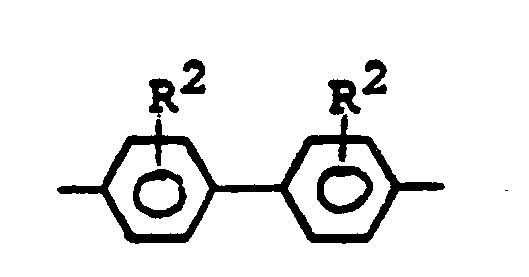


- Copolyaramide dieser Zusammensetzung sind aus der EP-A 0 199 090 bekannt, auf die hiermit Bezug genommen wird.
- Die Herstellung von Polyaramiden kann im allgemeinen in bekannter Weise durch Lösungs-, Grenzflächen- oder Schmelzekondensation erfolgen. Hierbei bestimmt die Art der Durchführung der Polykondensation, ob statistische Copolymere, Block- oder Pfropfcopolymere entstehen.
- Die Lösungskondensation der aromatischen Dicarbonsäuredichloride mit den aromatischen Diaminen wird in aprotischen, polaren Lösungsmitteln vom Amidtyp wie N,N-Dimethylacetamid oder insbesondere N-Methyl-2-pyrrolidon durchgeführt. Gegebenenfalls können diesen Lösungsmitteln in bekannter Weise zur Erhöhung der Lösefähigkeit bzw. zur Stabilisierung der Polyamidlösungen Halogenidsalze der ersten und/oder zweiten Gruppe des periodischen Systems zugegeben werden. Bevorzugte Zusätze sind Calciumchlorid und/oder Lithiumchlorid. Die Menge an Dicarbonsäuredichlorid wird so gewählt, daß die gewünschte Lösungsviskosität erreicht wird.
- Die Polykondensationstemperaturen liegen üblicherweise zwischen -20 und +120°C, bevorzugt zwischen +10 und +100°C. Besonders gute Ergebnisse werden bei Reaktionstemperaturen zwischen +10 und +80°C erzielt. Die Polykondensationsreaktionen werden im allgemeinen so ausgeführt, daß nach Abschluß der Reaktion 2 bis 30, vorzugsweise 3,5 bis 20 Gew.-% an Polykondensat in der Lösung vorliegen.
- Die Polykondensation kann in üblicher Weise z.B. durch Zugabe von monofunktionellen Verbindungen wie Benzoylchlorid gestoppt werden.
- Nach Beendigung der Polykondensation, d.h. wenn die Polymerlösung die zur Weiterverarbeitung erforderliche Viskosität erreicht hat, wird der entstandene und locker an das Amidlösungsmittel gebundene Chlorwasserstoff durch Zugabe basischer Substanzen neutralisiert. Geeignet sind dafür beispielsweise Lithiumhydroxid, Calciumhydroxid, insbesondere aber Calciumoxid.
- Die Legierungen gemäß der Erfindung können im allgemeinen in üblicher Weise hergestellt werden aus gemeinsamer Lösung von PVP und einem Polyaramid in einem aprotischen organischen Lösungsmittel, z.B. Dimethylformamid, Dimethylsulfoxid, N-Methylpyrrolidon oder N-N-Dimethylacetamid. Dazu stehen beispielsweise folgende Möglichkeiten zur Wahl:
- 1. a) Polykondensation eines Polyaramides mittels Lösungs-, Grenzflächen- oder Schmelzekondensation,
- b) Lösen des resultierenden Polyaramides,
- c) Lösen von PVP und
- d) anschließend Mischen der PVP- mit der Polyaramidlösung.
- 2. a) Lösungskondensation eines Polyaramides und
- b) anschließend direktes Beimengen von trockenem PVP oder einer PVP-Lösung direkt in den Polykondensationsansatz.
- 3. a) Lösungskondensation eines Polyaramides in Gegenwart von PVP.
Auch auf diese Weise werden homogene Mischungen der Komponenten erhalten. Dazu werden die Diamine gemeinsam mit PVP gelöst und durch Zugabe von Dicarbonsäuredichloriden zu einer PVP/Polyaramid-Lösung kondensiert. - Die Legierungen können durch Entfernen des Lösungsmittels, vorzugsweise durch Verdampfen, isoliert werden, oder die erhaltenen PVP-Polyaramid-Lösungen werden in bekannter Weise zu geformten Gebilden, wie Filmen oder Preßkörpern, weiterverarbeitet. Die Verwendbarkeit der Legierungen ist sehr vielseitig, da sich die Komponenten homogen mischen.
- Das Molekulargewicht des PVP, angegeben als Gewichtsmittel, liegt im allgemeinen bei 1000 - 3 000 000, vorzugsweise bei 40 000 bis 200 000, insbesondere bei 50 000 bis 100 000.
- Die Komponenten der Legierungen gemäß der Erfindung sind in allen Verhältnissen homogen mischbar. Insbesondere enthalten die Legierungen PVP in Mengen von 2 bis 98 Gew.-%, bevorzugt von 15 bis 85 Gew.-% und besonders bevorzugt von 30 bis 70 Gew.-%, bezogen auf die Summe der Komponenten (A + B).
- Die Legierungen können Additive in üblichen Mengen enthalten, z.B. thermische Stabilisatoren oder UV-Stabilisatoren. Auch verstärkende Fasern können im allgemeinen in Mengen bis zu 50 Gew.-% zugefügt werden, z.B. Kohlefasern, Aramidfasern oder Glasfasern, auch in Form von Geweben. Darüber hinaus können weitere Polymere, z.B. Polyimide oder Polyester, zugesetzt werden, z.B. in Mengen bis zu 10 Gew.-%. Die Mengenverhältnisse beziehen sich in beiden Fällen stets auf die Summe der Komponenten (A + B).
- In Abhängigkeit des PVP-Gehaltes läßt sich die Glastemperatur der erfindungsgemäßen Legierungen gezielt variieren. In gleicher Weise kann die Wasseraufnahmefähigkeit der Legierungen beeinflußt werden. Die Färbbarkeit von Aramiden kann erreicht werden z.B. durch Beimischen eines farbigen PVP-Copolymeren. Schließlich ist der Einsatz der erfindungsgemäßen Legierungen wirtschaftlicher im Vergleich zu den Aramiden.
- Die homogene Mischbarkeit der Komponenten der Legierungen wurde unter Anwendung mehrerer der vorstehend beschriebenen Methoden nachgewiesen. Beispielsweise zeigen diejenigen homogenen Legierungen, die ein Polyaramid mit einer unterhalb der Zersetzungstemperatur differentialkalorimetrisch nachweisbaren Glastemperatur enthalten, eine einzige, differentialkalorimetrisch nachweisbare Glastemperatur, die zwischen der von PVP (175°C) und der des eingesetzten Polyaramides liegt. Völlig überraschend ist außerdem, daß das wasserlösliche PVP aus den erfindungsgemäßen Legierungen durch Wasser nicht herausgelöst wird, auch nicht durch mehrstündiges Kochen. Dies ist ein weiteres Indiz für das Vorliegen einer Legierung, die aus homogen gemischten Komponenten besteht.
- 1) 0,4 mol 2,2′-Bis[4-(4′-Aminophenoxy)phenyl]-propan wurden unter Stickstoff in 2000 g N-Methylpyrrolidon (NMP) gelöst und zwischen 15°C und 70°C innerhalb von 60 Minuten 0,4 mol 5-tert.-Butyl-isophthalsäuredichlorid zugegeben.
- Die klare Lösung wurde noch ca. 40 Minuten lang bei 70°C nachgerührt und anschließend mit 24,5 g CaO (96 %ig, d.h. im Überschuß, entsprechend 0,42 mol) neutralisiert und weitere 30 Minuten bei 70°C nachgerührt.
- Die Lösung wurde filtriert und in Wasser koaguliert. Das ausgefällte Polyaramid wurde mehrfach mit Wasser und dann mit Aceton gewaschen. Die Trocknung des Polymeren erfolgte bei 130°C unter vermindertem Druck bis zur Gewichtskonstanz.
- Das erhaltene Polyaramid besitzt nach DSC-Messungen eine Glastemperatur Tg von 255°C.
- 2) 5 g Poly-N-vinylpyrrolidon (PVP) wurden mit 5 g des in Beispiel 1 beschriebenen Polyaramides zusammen in ca. 90 g N-Methylpyrrolidon bei Raumtemperatur gelöst. Die Mischung wurde anschließend bei 110°C unter vermindertem Druck bis zur Gewichtskonstanz vom Lösemittel befreit. Die resultierende PVP-Polyaramid-Legierung zeigt nach DSC-Messungen eine einzige Glastemperatur von 225°C und wurde daher als homogen gemischt beurteilt.
- 3) Gemäß Beispiel 1 wurde ein Polyaramid hergestellt unter Verwendung von 0,4 mol des Diamins aus Beispiel 1 und 0,4 mol Terephthalsäuredichlorid (TPC). Tg 235°C.
- Mit dem erhaltenen Polyaramid wurden PVP-Legierungen unterschiedlichen PVP-Gehaltes gemäß Beispiel 2 hergestellt. Alle erhaltenen Mischungen zeigen nach DSC-Messungen jeweils eine einzige, von der Zusammensetzung abhängige Glastemperatur und wurden daher als homogen gemischt beurteilt (s. Figur und nachfolgende Tabelle).
PVP-Gehalt in Gew.-% 0 25 50 75 100 Glastemperatur in °C 235 228 217 200 175 - 4) 4 g einer in Beispiel 3 beschriebenen Legierung, bestehend aus 50 % PVP und 50 % Polyaramid, wurden in einer Mühle gemahlen und anschließend bei 250°C unter einem Druck von 0,2 t verpreßt. Es resultierte eine transparente, das sichtbare Licht nicht streuende Platte.
- 5) 15 g PVP und 15 g des in Beispiel 3 beschriebenen Polyaramides wurden in 170 g N-Methylpyrrolidon bei Raumtemperatur gemeinsam gelöst, die Lösung entgast und zu Folien gegossen. Dazu wurde die Mischlösung mit einer Rakel bei 60°C auf Glasplatten ausgezogen. Die gegossenen Folien wurden anschließend 48 Stunden bei 90°C vorgetrocknet und danach unter vermindertem Druck bei 110°C bis zur Gewichtskonstanz von Lösungsmittel befreit. Die Foliendicken betrugen je nach den aufgerakelten Schichtdicken zwischen 2 und 100 µm.
- Die Folien sind mechanisch stabil, nicht spröde, farblos und transparent. Sie zeigen eine Wasseraufnahme von 9,8 % gemessen bei 23°C und 85 % relativer Feuchte. Mit kochendem Wasser für ca. 120 Minuten behandelte Folien zeigen eine einzige Glastemperatur von 217°C, die mit der Glastemperatur der unbehandelten Folien übereinstimmt.
- 6) In 3,750 g N-Methylpyrrolidon wurden 0,2 mol p-Phenylendiamin, 0,2 mol 1,4-Bis-(4′-aminophenoxy)-benzol und 0,4 mol 3,3′-Dimethylbenzidin gemeinsam gelöst. Bei 16°C wurde auf einmal 0,8 mol Terephthalsäuredichlorid zugegeben und innerhalb von ca. 60 Minuten unter Rühren auf 60°C erhitzt. Die klare Lösung wurde mit 49 g CaO (96 %ig) neutralisiert, anschließend bei 70°C ca. 60 Minuten nachgerührt und unter Rühren 268,8 g getrocknetes PVP beigefügt. Die Mischlösung wurde filtriert und gemäß Beispiel 5 zu Folien verarbeitet.
- Die erhaltenen Folien sind transparent, farblos und mechanisch stabil. Sie zeigen nach DSC-Messungen ebenso wie das eingesetzte Aramid keine Glastemperatur unterhalb von 400°C.
- Es wurden sowohl Bruchflächen von in flüssigem Stickstoff gebrochenen Folien als auch mit verschiedenen Lösemitteln (z.B. Wasser oder Methylenchlorid) oder Sauerstoff geätzte Oberflächen rasterelektronenmikroskopisch untersucht. Alle Aufnahmen zeigen glatte Bruch- bzw. Oberflächen.
- Neben den rasterelektronenmikroskopischen Untersuchungen wurden auch transmissionselektronenmikroskopische Untersuchungen sowohl von Dünnschichten als auch von mit Jod kontrastierten Dünnschichten der Folien durchgeführt. Alle transmissionselektronenmikroskopischen Aufnahmen zeigten keine Inhomogenität der Filme.
- Die beschriebenen experimentellen Ergebnisse zeigen, daß die Komponenten der Legierungen homogen gemischt vorliegen.
- 7) (Polykondensation in Gegenwart von PVP) 89,7 g getrocknetes PVP wurden in 734 g destilliertem NMP gelöst. Eine Lösung von 10,8 g p-Phenylendiamin, 42,5 g 3,3′-Dimethylbenzidin und 29,2 g 1,4-Bis-(4′-aminophenoxy)benzol in 1000 g destilliertem NMP wurde hinzugefügt und die Mischung auf 15°C abgekühlt.
- Zu dieser Lösung wurden unter Rühren 78,8 g Terephthalsäuredichlorid (TPC) auf einmal zugegeben. Durch die Reaktionswärme stieg die Temperatur auf ca. 23°C an. Die viskose Lösung wurde auf 50°C erwärmt und soviel weiteres TPC zugegeben, bis die gewünschte Viskosität erreicht wurde. Danach wurden zur Umsetzung der noch verbliebenen Aminoendgruppen 2,4 g Benzoylchlorid zugegeben. Es wurde ca. 1/2 Stunde nachgerührt und dann der lose an NMP gebundene Chlorwasserstoff durch Zugabe von 24,5 g Calciumoxid neutralisiert. Nach Filtration ist die viskose Lösung direkt zum Herstellen von Folien, Überzügen und dergleichen geeignet.
- 8) - 14) In der nachfolgenden Tabelle sind bei den einzelnen Beispielen die Ausgangsstoffe für die Polyaramide aufgeführt, ferner die eingesetzten Mengen sowie die erhaltenen Glastemperaturen Tg. Die Herstellung der Polyaramide erfolgte gemäß Beispiel 1, die Herstellung der Legierungen entsprechend Beispiel 2 (in allen Fällen ist das Gewichts-Verhältnis PVP zu Polyaramid wie 50:50) und die Herstellung der Folie gemäß Beispiel 14 (Verhältnis 50:50).

- 5 g PVP wurden mit 5 g eines Polyetherimids (R)Ultem 1000, (Hersteller General Electric Co., Schenectady N.Y., USA) (Tg= 217°C) in 90 g NMP bei Raumtemperatur gelöst und anschließend durch Abdampfen unter vermindertem Druck das Lösungsmittel entfernt. Die Legierung zeigt die beiden Glastemperaturen der Ausgangsstoffe von 175°C und 217°C und ist demnach nicht homogen gemischt.
Claims (16)
(̵


in der E¹ und E² gleich oder verschieden sind und aus den Gruppierungen

-O-, -SO₂-, -CO-, -C(R¹)₂-, in dem R¹ Wasserstoff, (C₁-C₆)-Alkyl oder Fluoralkyl mit 1-4 C-Atomen in der Alkylgruppe ist, oder


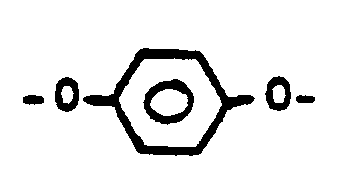
E¹ ein zweiwertiger p-Phenylenrest ist,
E² in den drei wiederkehrenden Struktureinheiten je einmal ein zweiwertiger p-Phenylenrest, ein Rest der Formel


A) Poly-N-vinylpyrrolidon, gelöst oder in Substanz, einer Lösung von B) mindestens einem Homo- oder Copolyaramid mit mindestens einer wiederkehrenden Struktureinheit der Formel (I)
(̵


zugesetzt wird, das durch Lösungs-, Grenzflächen- oder Schmelzekondensation erhalten worden ist, worauf das Lösungsmittel aus der Lösung entfernt wird, und wobei in den Struktureinheiten der Formel (I) E¹ und E² gleich oder verschieden sind und aus den Gruppierungen

-O-, -SO₂-, -CO-, -C(R¹)₂-, in dem R¹ Wasserstoff, (C₁-C₆)-Alkyl oder Fluoralkyl mit 1-4 C-Atomen in der Alkylgruppe ist, oder
Applications Claiming Priority (2)
| Application Number | Priority Date | Filing Date | Title |
|---|---|---|---|
| DE3903099A DE3903099A1 (de) | 1989-02-02 | 1989-02-02 | Homogen gemischte legierungen aus aromatischen polyamiden und poly-n-vinylpyrrolidon, verfahren zu ihrer herstellung und ihre verwendung |
| DE3903099 | 1989-02-02 |
Publications (3)
| Publication Number | Publication Date |
|---|---|
| EP0381172A2 true EP0381172A2 (de) | 1990-08-08 |
| EP0381172A3 EP0381172A3 (de) | 1991-10-23 |
| EP0381172B1 EP0381172B1 (de) | 1994-01-26 |
Family
ID=6373295
Family Applications (1)
| Application Number | Title | Priority Date | Filing Date |
|---|---|---|---|
| EP90101856A Expired - Lifetime EP0381172B1 (de) | 1989-02-02 | 1990-01-31 | Homogen gemischte Legierungen aus aromatischen Polyamiden und Poly-N-Vinylpyrrolidon, Verfahren zu ihrer Herstellung und ihre Verwendung |
Country Status (6)
| Country | Link |
|---|---|
| EP (1) | EP0381172B1 (de) |
| JP (1) | JPH02233761A (de) |
| KR (1) | KR900013017A (de) |
| AU (1) | AU618167B2 (de) |
| CA (1) | CA2009139A1 (de) |
| DE (2) | DE3903099A1 (de) |
Cited By (6)
| Publication number | Priority date | Publication date | Assignee | Title |
|---|---|---|---|---|
| EP0604881A3 (en) * | 1992-12-30 | 1994-09-21 | Hoechst Ag | Homogeneous polymer alloy based on sulphonated aromatic polyetherketones. |
| WO1994024211A1 (en) * | 1993-04-12 | 1994-10-27 | E.I. Du Pont De Nemours And Company | Solution of ppd-t and pvp and articles made therefrom |
| US5532059A (en) * | 1994-09-29 | 1996-07-02 | E. I. Du Pont De Nemours And Company | Poly(p-phenylene terephthalamide) pulp |
| US5637653A (en) * | 1995-05-02 | 1997-06-10 | Dainippon Ink And Chemicals, Incorporated | Polymer blend materials composed of an aromatic polyamide and a soluble polyamide |
| NL1013134C2 (nl) * | 1999-09-24 | 2001-03-27 | Dsm Nv | Vlamvertragende thermoplastische samenstelling met verbeterde eigenschappen. |
| US12577397B2 (en) | 2022-01-27 | 2026-03-17 | Dupont Safety & Construction, Inc. | Flame-resistant garments and fabrics with yarns comprising a polymer blend of meta-aramid and polyvinylpyrrolidone |
Family Cites Families (5)
| Publication number | Priority date | Publication date | Assignee | Title |
|---|---|---|---|---|
| NL250256A (de) * | 1959-04-07 | |||
| US3564075A (en) * | 1969-03-07 | 1971-02-16 | Bayer Ag | Polyamides with improved transparency containing polyvinyl pyrrolidone |
| EP0199090B1 (de) * | 1985-03-23 | 1990-10-03 | Hoechst Aktiengesellschaft | Geformte Gebilde aus aromatischen Copolyamiden und Verfahren zu ihrer Herstellung |
| DE3833631A1 (de) * | 1988-10-04 | 1990-04-05 | Hoechst Ag | Verwendung substituierter aromatischer polyamide als orientierungsschichten fuer fluessigkristallanzeigeelemente und fluessigkristallschaltelemente |
| US5073440A (en) * | 1989-06-05 | 1991-12-17 | E. I. Du Pont De Nemours And Company | Poly(vinyl pyrrolidone)/p-phenylene terephthalamide composite fibers (pvp/ppd-t) |
-
1989
- 1989-02-02 DE DE3903099A patent/DE3903099A1/de not_active Withdrawn
-
1990
- 1990-01-31 EP EP90101856A patent/EP0381172B1/de not_active Expired - Lifetime
- 1990-01-31 DE DE90101856T patent/DE59004370D1/de not_active Expired - Fee Related
- 1990-01-31 KR KR1019900001035A patent/KR900013017A/ko not_active Ceased
- 1990-02-01 CA CA002009139A patent/CA2009139A1/en not_active Abandoned
- 1990-02-01 AU AU48995/90A patent/AU618167B2/en not_active Ceased
- 1990-02-02 JP JP2024269A patent/JPH02233761A/ja active Pending
Cited By (11)
| Publication number | Priority date | Publication date | Assignee | Title |
|---|---|---|---|---|
| EP0604881A3 (en) * | 1992-12-30 | 1994-09-21 | Hoechst Ag | Homogeneous polymer alloy based on sulphonated aromatic polyetherketones. |
| US5510424A (en) * | 1992-12-30 | 1996-04-23 | Hoechst Aktiengesellschaft | Homogeneous polymer alloys based on sulfonated aromatic polyether ketones |
| WO1994024211A1 (en) * | 1993-04-12 | 1994-10-27 | E.I. Du Pont De Nemours And Company | Solution of ppd-t and pvp and articles made therefrom |
| US5416164A (en) * | 1993-04-12 | 1995-05-16 | E. I. Du Pont De Nemours And Company | Solution of PPD-T and PVP and articles made therefrom |
| US5523034A (en) * | 1993-04-12 | 1996-06-04 | E. I. Du Pont De Nemours And Company | Solution of PPD-T and PVP and articles made therefrom |
| US5532059A (en) * | 1994-09-29 | 1996-07-02 | E. I. Du Pont De Nemours And Company | Poly(p-phenylene terephthalamide) pulp |
| US5637653A (en) * | 1995-05-02 | 1997-06-10 | Dainippon Ink And Chemicals, Incorporated | Polymer blend materials composed of an aromatic polyamide and a soluble polyamide |
| NL1013134C2 (nl) * | 1999-09-24 | 2001-03-27 | Dsm Nv | Vlamvertragende thermoplastische samenstelling met verbeterde eigenschappen. |
| WO2001021711A1 (en) * | 1999-09-24 | 2001-03-29 | Dsm N.V. | Flame-retardant thermoplastic composition with improved properties |
| US6951896B2 (en) | 1999-09-24 | 2005-10-04 | Dsm Ip Assets B.V. | Flame-retardant thermoplastic composition with improved properties |
| US12577397B2 (en) | 2022-01-27 | 2026-03-17 | Dupont Safety & Construction, Inc. | Flame-resistant garments and fabrics with yarns comprising a polymer blend of meta-aramid and polyvinylpyrrolidone |
Also Published As
| Publication number | Publication date |
|---|---|
| JPH02233761A (ja) | 1990-09-17 |
| AU618167B2 (en) | 1991-12-12 |
| DE3903099A1 (de) | 1990-08-16 |
| AU4899590A (en) | 1990-08-09 |
| CA2009139A1 (en) | 1990-08-02 |
| EP0381172B1 (de) | 1994-01-26 |
| EP0381172A3 (de) | 1991-10-23 |
| KR900013017A (ko) | 1990-09-03 |
| DE59004370D1 (de) | 1994-03-10 |
Similar Documents
| Publication | Publication Date | Title |
|---|---|---|
| EP3044249B2 (de) | Polyarylenethersulfon-polymere für membrananwendungen | |
| DE69405558T2 (de) | Ppd-t und pvp lösung und daraus hergestellte artikel | |
| EP0496313B1 (de) | Schmelzbinderverfestigter Vliesstoff | |
| DE3689599T2 (de) | Kunstharzzusammensetzungen. | |
| DE69702717T2 (de) | Polyimide mit hohem tg, hoher oxidativer thermischer stabilität und niedriger wasseraufnahmefähigkeit | |
| EP1242538B1 (de) | Thermoplastische formmassen mit verbessertem verarbeitungsverhalten auf basis von polyarylenethersulfonen und polyamiden | |
| DE69328681T2 (de) | Selbstschmierende polybenzimidazole enthaltende zusammensetzung | |
| EP0424860A2 (de) | Vollaromatische Polyamide, Verfahren zu ihrer Herstellung und daraus geformte Gebilde | |
| EP0381172B1 (de) | Homogen gemischte Legierungen aus aromatischen Polyamiden und Poly-N-Vinylpyrrolidon, Verfahren zu ihrer Herstellung und ihre Verwendung | |
| DE69121540T2 (de) | Imid- und Amid-Imid-Copolymer | |
| DE69027949T2 (de) | Polybenzimidazol-Polyarylenketonformteile und Verfahren zu ihrer Herstellung | |
| DE3686250T2 (de) | Copolyamide und verfahren zu deren herstellung. | |
| DE3914226A1 (de) | Fasermaterialien aus homogenen legierungen aus aromatischen polyamiden und poly-n-vinylpyrrolidon, verfahren zu ihrer herstellung und ihre verwendung | |
| DE2144126C3 (de) | Hochmolekulare aromatische Polyamide und Fäden aus ihnen | |
| DE69115942T2 (de) | Vollaromatisches Polyamid | |
| DE69206670T2 (de) | Mischungen aus Polybenzimidazolen und aromatischen Polyamiden, aromatischen Polyamidhydraziden oder heterocyclische Bindungen enthaltenden aromatischen Polyamiden | |
| DE68905225T2 (de) | Polyimiaharzzusammensetzung. | |
| DE68927235T2 (de) | Vollaromatisches Polyamidcopolymer | |
| EP0852246A2 (de) | Zusammensetzungen enthaltend aromatische Polyamide und Fullerene, sowie geformte Gebilde daraus | |
| EP0604881B1 (de) | Homogene Polymerlegierungen auf der Basis von sulfonierten, aromatischen Polyetherketonen | |
| EP0265842A2 (de) | Hochtemperaturbeständige Polyethersulfon/Polyetherketon-Blockcopolykondensate | |
| EP0322837B1 (de) | Fäden-, faser- oder filmbildende aromatische Copolyamide, Verfahren zu ihrer Herstellung und Verwendung | |
| DE4007142A1 (de) | Aromatische copolyamide, verfahren zu ihrer herstellung und daraus geformte gebilde | |
| DE69229694T2 (de) | Verbundwerkstoff | |
| EP0442399A2 (de) | Vollaromatische Polyamide, Verfahren zu ihrer Herstellung und daraus geformte Gebilde |
Legal Events
| Date | Code | Title | Description |
|---|---|---|---|
| PUAI | Public reference made under article 153(3) epc to a published international application that has entered the european phase |
Free format text: ORIGINAL CODE: 0009012 |
|
| AK | Designated contracting states |
Kind code of ref document: A2 Designated state(s): AT BE CH DE ES FR GB GR IT LI LU NL SE |
|
| 17P | Request for examination filed |
Effective date: 19901221 |
|
| PUAL | Search report despatched |
Free format text: ORIGINAL CODE: 0009013 |
|
| AK | Designated contracting states |
Kind code of ref document: A3 Designated state(s): AT BE CH DE ES FR GB GR IT LI LU NL SE |
|
| 17Q | First examination report despatched |
Effective date: 19930402 |
|
| RBV | Designated contracting states (corrected) |
Designated state(s): BE DE FR GB IT NL SE |
|
| GRAA | (expected) grant |
Free format text: ORIGINAL CODE: 0009210 |
|
| AK | Designated contracting states |
Kind code of ref document: B1 Designated state(s): BE DE FR GB IT NL SE |
|
| REF | Corresponds to: |
Ref document number: 59004370 Country of ref document: DE Date of ref document: 19940310 |
|
| ITF | It: translation for a ep patent filed | ||
| GBT | Gb: translation of ep patent filed (gb section 77(6)(a)/1977) |
Effective date: 19940408 |
|
| ET | Fr: translation filed | ||
| PLBE | No opposition filed within time limit |
Free format text: ORIGINAL CODE: 0009261 |
|
| STAA | Information on the status of an ep patent application or granted ep patent |
Free format text: STATUS: NO OPPOSITION FILED WITHIN TIME LIMIT |
|
| 26N | No opposition filed | ||
| EAL | Se: european patent in force in sweden |
Ref document number: 90101856.4 |
|
| PGFP | Annual fee paid to national office [announced via postgrant information from national office to epo] |
Ref country code: BE Payment date: 20010118 Year of fee payment: 12 |
|
| PGFP | Annual fee paid to national office [announced via postgrant information from national office to epo] |
Ref country code: NL Payment date: 20011227 Year of fee payment: 13 |
|
| REG | Reference to a national code |
Ref country code: GB Ref legal event code: IF02 |
|
| PGFP | Annual fee paid to national office [announced via postgrant information from national office to epo] |
Ref country code: SE Payment date: 20020102 Year of fee payment: 13 |
|
| PG25 | Lapsed in a contracting state [announced via postgrant information from national office to epo] |
Ref country code: BE Free format text: LAPSE BECAUSE OF NON-PAYMENT OF DUE FEES Effective date: 20020131 |
|
| BERE | Be: lapsed |
Owner name: HOECHST A.G. Effective date: 20020131 |
|
| PG25 | Lapsed in a contracting state [announced via postgrant information from national office to epo] |
Ref country code: NL Free format text: LAPSE BECAUSE OF NON-PAYMENT OF DUE FEES Effective date: 20020801 |
|
| NLV4 | Nl: lapsed or anulled due to non-payment of the annual fee |
Effective date: 20020801 |
|
| PG25 | Lapsed in a contracting state [announced via postgrant information from national office to epo] |
Ref country code: SE Free format text: LAPSE BECAUSE OF NON-PAYMENT OF DUE FEES Effective date: 20030201 |
|
| EUG | Se: european patent has lapsed | ||
| PGFP | Annual fee paid to national office [announced via postgrant information from national office to epo] |
Ref country code: DE Payment date: 20050119 Year of fee payment: 16 |
|
| PGFP | Annual fee paid to national office [announced via postgrant information from national office to epo] |
Ref country code: FR Payment date: 20050124 Year of fee payment: 16 |
|
| PG25 | Lapsed in a contracting state [announced via postgrant information from national office to epo] |
Ref country code: IT Free format text: LAPSE BECAUSE OF NON-PAYMENT OF DUE FEES;WARNING: LAPSES OF ITALIAN PATENTS WITH EFFECTIVE DATE BEFORE 2007 MAY HAVE OCCURRED AT ANY TIME BEFORE 2007. THE CORRECT EFFECTIVE DATE MAY BE DIFFERENT FROM THE ONE RECORDED. Effective date: 20050131 |
|
| PGFP | Annual fee paid to national office [announced via postgrant information from national office to epo] |
Ref country code: GB Payment date: 20050131 Year of fee payment: 16 |
|
| PG25 | Lapsed in a contracting state [announced via postgrant information from national office to epo] |
Ref country code: GB Free format text: LAPSE BECAUSE OF NON-PAYMENT OF DUE FEES Effective date: 20060131 Ref country code: FR Free format text: LAPSE BECAUSE OF NON-PAYMENT OF DUE FEES Effective date: 20060131 |
|
| PG25 | Lapsed in a contracting state [announced via postgrant information from national office to epo] |
Ref country code: DE Free format text: LAPSE BECAUSE OF NON-PAYMENT OF DUE FEES Effective date: 20060801 |
|
| GBPC | Gb: european patent ceased through non-payment of renewal fee |
Effective date: 20060131 |
|
| REG | Reference to a national code |
Ref country code: FR Ref legal event code: ST Effective date: 20060929 |