EP0384122A2 - Mutanten von humanem Antithrombin III - Google Patents
Mutanten von humanem Antithrombin III Download PDFInfo
- Publication number
- EP0384122A2 EP0384122A2 EP90101045A EP90101045A EP0384122A2 EP 0384122 A2 EP0384122 A2 EP 0384122A2 EP 90101045 A EP90101045 A EP 90101045A EP 90101045 A EP90101045 A EP 90101045A EP 0384122 A2 EP0384122 A2 EP 0384122A2
- Authority
- EP
- European Patent Office
- Prior art keywords
- iii
- atiii
- mutants
- mutation
- mutant
- Prior art date
- Legal status (The legal status is an assumption and is not a legal conclusion. Google has not performed a legal analysis and makes no representation as to the accuracy of the status listed.)
- Granted
Links
Images


Classifications
-
- C—CHEMISTRY; METALLURGY
- C12—BIOCHEMISTRY; BEER; SPIRITS; WINE; VINEGAR; MICROBIOLOGY; ENZYMOLOGY; MUTATION OR GENETIC ENGINEERING
- C12N—MICROORGANISMS OR ENZYMES; COMPOSITIONS THEREOF; PROPAGATING, PRESERVING, OR MAINTAINING MICROORGANISMS; MUTATION OR GENETIC ENGINEERING; CULTURE MEDIA
- C12N15/00—Mutation or genetic engineering; DNA or RNA concerning genetic engineering, vectors, e.g. plasmids, or their isolation, preparation or purification; Use of hosts therefor
- C12N15/09—Recombinant DNA-technology
- C12N15/11—DNA or RNA fragments; Modified forms thereof; Non-coding nucleic acids having a biological activity
-
- C—CHEMISTRY; METALLURGY
- C07—ORGANIC CHEMISTRY
- C07K—PEPTIDES
- C07K14/00—Peptides having more than 20 amino acids; Gastrins; Somatostatins; Melanotropins; Derivatives thereof
- C07K14/81—Protease inhibitors
- C07K14/8107—Endopeptidase (E.C. 3.4.21-99) inhibitors
- C07K14/811—Serine protease (E.C. 3.4.21) inhibitors
- C07K14/8121—Serpins
- C07K14/8128—Antithrombin III
-
- A—HUMAN NECESSITIES
- A61—MEDICAL OR VETERINARY SCIENCE; HYGIENE
- A61K—PREPARATIONS FOR MEDICAL, DENTAL OR TOILETRY PURPOSES
- A61K38/00—Medicinal preparations containing peptides
- A61K38/16—Peptides having more than 20 amino acids; Gastrins; Somatostatins; Melanotropins; Derivatives thereof
- A61K38/17—Peptides having more than 20 amino acids; Gastrins; Somatostatins; Melanotropins; Derivatives thereof from animals; from humans
-
- A—HUMAN NECESSITIES
- A61—MEDICAL OR VETERINARY SCIENCE; HYGIENE
- A61P—SPECIFIC THERAPEUTIC ACTIVITY OF CHEMICAL COMPOUNDS OR MEDICINAL PREPARATIONS
- A61P7/00—Drugs for disorders of the blood or the extracellular fluid
- A61P7/02—Antithrombotic agents; Anticoagulants; Platelet aggregation inhibitors
-
- A—HUMAN NECESSITIES
- A61—MEDICAL OR VETERINARY SCIENCE; HYGIENE
- A61K—PREPARATIONS FOR MEDICAL, DENTAL OR TOILETRY PURPOSES
- A61K38/00—Medicinal preparations containing peptides
Definitions
- the invention relates to mutants of AT III which have improved properties compared to wild type AT III.
- the change at one or more potential glycosylation sites e.g. Asn 135, Asn 155
- Changes to item Arg 393 lead to changes in the specificity towards proteases.
- the combination of the mutations usually potentiates the improvements.
- AT III human antithrombin III
- E. coli The cDNA coding for human antithrombin III (AT III) and their expression in E. coli are described in European patent application EP 0 090 505 A2.
- AT III which is secreted into the culture medium by mammalian cells, shows complete biological activity in vitro and has a complex carbohydrate structure very similar to the plasma protein (Zettlmeissl et al., BioTechnology, 1987, 5, 720-725 ).
- the molecular weight of recombinant AT III from mammalian cells corresponds to that of the protein purified from plasma.
- the amino acid sequence of mature human AT III is shown in Table 1.
- AT III is a member of the protein family of the serpins and therefore has high homology to protease inhibitors such as alpha-1-antitrypsin, alpha-2-antiplasmin, heparin factor II, alpha-1-antichymotrypsin, plasminogen activator inhibitor, etc. If the serine protease thrombin with AT III interacts, it cleaves the Arg393-Ser394 bond and a covalent AT III-thrombin complex is formed. With the formation of a complex, thrombin loses its protease activity. In the absence of heparin, AT III is a relatively poor inhibitor of thrombin.
- protease inhibitors such as alpha-1-antitrypsin, alpha-2-antiplasmin, heparin factor II, alpha-1-antichymotrypsin, plasminogen activator inhibitor, etc. If the serine protease thrombin with AT III interacts, it cleaves the Arg393-
- Optimal concentrations of heparin increase the rate constant of the AT III thrombin association reaction by at least a factor of 2000 (Hoylaerts et al., J. Biol. Chem., 1984, 259, 5670-5677).
- AT III alpha and beta
- There are two forms of AT III (alpha and beta) with different heparin affinity in human plasma (Peterson and Blackburn, J. Biol. Chem., 1985, 260, 610-615; Brennan et al., FEBS LETT., 1987, 219, 431-436).
- AT IIIalpha which is 90-95% in plasma, carries carbohydrate side chains on the Asn residues 96, 135, 155 and 192, only positions 96, 155 and 192 are occupied in AT IIIbeta.
- the physiological role of the two AT III forms is not known.
- the technique of targeted mutagenesis allows specific changes to be introduced into the AT III cDNA, which lead to changes in the amino acid composition of AT III.
- Methods for targeted mutagenesis that work with single-stranded DNA or heteroduplex DNA are known (Morinaga et al., BioTechnology, 1984, 7, 636-639; Kramer et al., Nucl. Acid Res., 198, 12, 9441- 9456).
- Tab. 2 shows an example of some oligonucleotides as they were used for the targeted mutagenesis of human AT III.
- Mutants have now been produced which carry a different amino acid, preferably Gln, at one or more of the glycosylation sites Asn 96, Asn 135, Asn 155, Asn 192, which improves the heparin binding / heparin activation properties while maintaining the protease specificity; mutants were also produced which are changed at position Arg393 (preferably mutation to Met or Val), which causes a change in the enzyme specificity.
- Arg393 preferably mutation to Met or Val
- Mutants with improved heparin binding / heparin activation properties have advantages in AT III / heparin co-therapy because, if appropriate, therapy can be carried out with lower doses of heparin.
- Specificity mutants lead to new molecules in which the property of heparin activatability can be transferred from AT III to mutant molecules with affinity for new proteases (e.g. elastase, plasmin, etc.), so that such molecules allow advantageous, changed therapy concepts due to changed dosages.
- new proteases e.g. elastase, plasmin, etc.
- AT III proteins can be expressed in mammalian cells, purified using standard methods and examined with regard to their protease specificity or their heparin activation properties, their biochemical / biophysical properties and / or with regard to clinical parameters.
- the synthesis of modified forms of AT III is achieved by means of a vector / host cell system which quickly leads to high expression rates (Zettlm pursuel et al. (1988) Behring Inst. Mitt. 82, 26-34).
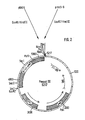
- a 1.4 kb fragment which contains the entire coding region of the human AT III cDNA was isolated from the plasmid pbetaAT6 (EP 0 256 302 A2) by digestion with EcoRI / HindIII. This fragment was cloned into the polylinker (EcoRI / HindIII-cleaved) of the mutagenesis vector pMA 5-8 (FIG. 1). The resulting plasmid was named PMAATIII (Fig. 2).
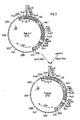
- the mutated cDNA was isolated by cutting with SacII / XbaI and cloned into the expression vector pAB 3-1 (AT III wild type), which was also digested with SacII / XbaI, which resulted in the plasmid pABmut (Fig. 3).
- the pABmut plasmids carry the SV40 "early" enhancer / promoter unit, the SV40 polyadenylation site for early transcripts and the CMV "immediate early" enhancer (Zettlm fabricatl et al. Loc. Cit.).
- the pABmut plasmids were purified via CsCl gradients and, as described in Zettlm Strukturl et al., Loc. Cit., Co-transfected with the plasmids pSV2dhfr and pRMH140 in BHK cells (ATCC CCL10). After double selection in DME medium + 10% FCS + 400 ⁇ g / ml G418 and 1 ⁇ M methotrexate (standard growth medium) the resistant clones (approx. 40 - 100) were combined as a clone mixture in T25 culture vessels. The mixed clones were expanded via T80 and T180 culture vessels in standard growth medium on plastic roller bottles (1750 cm2) and grown there to confluence.
- the confluent cells were washed twice with 200 ml Iscove's medium (Behringwerke AG, Marburg) (2 hours each at 37 ° C) and then with 500 ml of the same medium as harvesting medium 48 Rolled for hours.
- the harvested medium was freed from cellular components by centrifugation. Aliquots of the conditioned harvesting media were examined for their AT III antigen content in an ELISA specific for human AT III (Zettlm pursuel et al. 1987, BioTechnology 5, 720-725). Expression values determined here for wild type AT III (AT III-WT) and various mutants are given as examples in Table 3.
- AT III-WT and mutated proteins derived therefrom were purified from the harvesting media by a standard method (affinity chromatography with heparin-Sepharose, followed by fractionated ammonium sulfate precipitation) (Zettlm sandwichl et al. 1987) and then characterized.
- Mutant AT III molecules can also be expressed with other expression vectors in various permanent mammalian cell lines according to the prior art.
- Plasmid DNA from PMC5-8 (see legend to Fig. 1) was cut with EcoRI / HindIII and the vector fragment (3.8kb) from an agarose gel via paper elution (Maniatis et al. 1982, Molecular Cloning - A Laboratory Manual, Cold Spring Harbor, New York) cleaned.
- 0.1 pmol double-stranded fragment (from pMC) and 0.5 pmol single were used to produce a "gapped-duplex" DNA strand of DNA (pMAATIII) in 12.5 mM Tris-HCl pH 7.5 + 190 mM KCl (final volume 40 ⁇ l) heated for 4 minutes at 100 ° C. and then incubated for 10 minutes at 65 ° C.
- pMAATIII DNA strand of DNA
- 8 ⁇ l of the hybridization solution mentioned was heated to 65 ° C. for 5 minutes with 4-8 pmol (2 ⁇ l) of the enzymatically phosphorylated oligonucleotide and then slowly cooled to room temperature.
- the entire transformation mixture is grown in a shaking culture in LB medium + 25 ⁇ g / ml chloramphenicol (10 ml) overnight at 37 ° C. From the entire approach, the plasmid DNA was purified using standard methods (Maniatis et al. 1982). About 20 ng of the purified plasmid was transformed into WK6. The transformants were selected on LB plates with 25 ⁇ g / ml chloramphenicol.
- Arg393 was converted from AT III (P1 position) into a Met, Val or Leu. Oligonucleotides Nos. 1, 2 and 3 from Table 2 were used for mutagenesis.
- the mutants are synthesized by BHK cells in comparable amounts as AT III wild type (WT) and ejected into the culture medium (Tab. 4). In comparison to AT III plasma and AT III WT, they show identical behavior towards anti-AT III Sera from rabbits and can be purified analogously to AT III-WT using the standard method described above to purities greater than 95%. The binding and elution behavior of these mutants on heparin sepharose shows no difference to AT III-WT. This indicates intact heparin binding and heparin activation behavior of the mutant.
- mutants no longer show any progressive inhibitor (Hensen et al., 1963, Thromb. Diatl. Haemorrh. 9, 18-29) and heparin cofactor activity (Schrader et al., 1986, Phys. Lab. 32, 111-114) towards thrombin ( Tab. 3).
- the three mutants inhibit leukocyte elastase.
- the elastase was obtained from human leukocytes according to the method described by Engelbrecht et al. (Hoppe-Seyler's Zschr. Physiol. Chemie 363 , 305-315, 1982) isolated method.
- the substrate used by Nakajima et al. (J. Biol. Chem. 254 , 4027-4032, 1979) uses MeO-Suc-Ala-Ala-Pro-Val-pNA (Calbiochem).
- the release of the paranitroaniline from the substrate was observed as an increase in the absorption at 405 nm in the spectrophotometer within 15 min. measured.
- This absorption value was defined as 100% enzyme activity of PMN elastase.
- the inhibitors were preincubated with the enzyme in increasing concentrations up to a maximum of 100 ⁇ g / ml.
- the enzyme reaction was then started with the substrate.
- the test was carried out in 0.1 mol / l HEPES, pH 7.5, + 0.1 mol / l sodium chloride.
- the substrate concentration was 0.13 mmol / l.
- the IC50 in ⁇ g / ml was the inhibitor concentration that inhibited 50% of the enzyme activity. Substances that showed no inhibitory effect at a maximum concentration of 100 ⁇ g / ml were defined as ineffective.
- Alpha1 protease inhibitor (alpha1-PI, alpha1-antitrypsin), which had an inhibition value of 3.7, served as the reference inhibitor.
- AT III-WT showed no inhibition of PMN elastase activity.
- AT III Val showed an activity of 4.0 ⁇ g / ml comparable to alpha1-PI, while AT III Met and AT III Leu were significantly less active with 28 and 65 ⁇ g / ml, respectively (see table below).
- the KI determination was carried out for AT III - Val 393 in comparison to alpha1 PI.
- concentrations of the substrate MeO-Suc-Ala-Ala-Pro-Val-pNA used were 0.0011, 0.0022, 0.0044, 0.0087, 0.0175, 0.035, 0.7 mmol / l.
- concentration of the inhibitor was 3.5 x 10 ⁇ 8 mol / l.
- An aim of the experiments claimed in this application as an invention is to investigate the influence of glycosylation in the AT III molecule on the biological and biochemical properties of AT III.
- the test was carried out under the following conditions: 0.02 U (antigen) / ml AT III (AT III plasma, AT III-WT or AT III mut) were treated with 0.3 IU / ml alpha-thrombin (human), 2 KIU / ml aprotinin (Behringwerke) and heparin (Hoffmann-LaRoche) in concentrations of 0 - 25 IU / ml were pre-incubated in a volume of 1 ml for 5 minutes at 37 ° C. After adding 100 ⁇ l of substrate reagent (2 mM HD-CHA-But-Arg-pNA), the change in extinction at 405 nm (37 ° C.) was monitored kinetically. Maximum inhibition of alpha-thrombin with heparin saturation was set to 100%.
- the mutants AT III-Gln135 and AT III-Gln155 show an improved inhibition of thrombin at low heparin concentrations compared to AT III plasma and AT III-WT (Table 5).
- Table 5 shows the heparin concentration at half-maximum thrombin inhibition (c 1/2) for AT III plasma, AT III-WT and various AT III mutants.
- Example 4 The mutations described in Example 4 were combined by sequential mutagenesis with the oligonucleotides 8 and 9 (Tab. 2) in an AT III molecule.
- the mutated protein behaves like a recombinant wild-type AT III molecule in the standard purification process described.
- F1-ORI origin of replication of phage f1; ORI: origin of replication of the ColE1 type; CAT: coding region for chloramphenicol acetyl transferase; AMP: coding region for ß-lactamase.
- pMA5-8 carries an amber mutation in CAT (A at position 3409) and pMC5-8 an amber mutation in AMP (C at position 2238).
Landscapes
- Health & Medical Sciences (AREA)
- Life Sciences & Earth Sciences (AREA)
- Chemical & Material Sciences (AREA)
- Organic Chemistry (AREA)
- Engineering & Computer Science (AREA)
- Genetics & Genomics (AREA)
- General Health & Medical Sciences (AREA)
- Bioinformatics & Cheminformatics (AREA)
- Medicinal Chemistry (AREA)
- Molecular Biology (AREA)
- Proteomics, Peptides & Aminoacids (AREA)
- Biomedical Technology (AREA)
- Biophysics (AREA)
- Biochemistry (AREA)
- Zoology (AREA)
- Gastroenterology & Hepatology (AREA)
- Wood Science & Technology (AREA)
- General Engineering & Computer Science (AREA)
- Biotechnology (AREA)
- Pharmacology & Pharmacy (AREA)
- Animal Behavior & Ethology (AREA)
- Public Health (AREA)
- Veterinary Medicine (AREA)
- Nuclear Medicine, Radiotherapy & Molecular Imaging (AREA)
- Physics & Mathematics (AREA)
- General Chemical & Material Sciences (AREA)
- Chemical Kinetics & Catalysis (AREA)
- Plant Pathology (AREA)
- Microbiology (AREA)
- Hematology (AREA)
- Diabetes (AREA)
- Immunology (AREA)
- Epidemiology (AREA)
- Peptides Or Proteins (AREA)
- Medicines That Contain Protein Lipid Enzymes And Other Medicines (AREA)
- Preparation Of Compounds By Using Micro-Organisms (AREA)
- Saccharide Compounds (AREA)
- Medicines Containing Material From Animals Or Micro-Organisms (AREA)
- Micro-Organisms Or Cultivation Processes Thereof (AREA)
Abstract
Description
- Die Erfindung betrifft Mutanten von AT III, die gegenüber Wildtyp AT III verbesserte Eigenschaften besitzen. Die Veränderung an einer oder mehreren potentiellen Glykosylierungsstellen (z.B. Asn 135, Asn 155) erhöht die Heparinbindungs-/Heparinaktivierungseigenschaften unter Beibehaltung der Proteasespezifität von AT III. Änderungen an Pos. Arg 393 führen zu Änderungen der Spezifität gegenüber Proteasen. Die Kombination der Mutationen bewirkt in der Regel eine Potenzierung der Verbesserungen.
- Die für humanes Antithrombin III (AT III) kodierende cDNA und deren Expression in E.coli sind in der europäischen Patentanmeldung EP 0 090 505 A2 beschrieben. Darüberhinaus ist die Expression von AT III in rekombinanten Hefen (EP 0 256 302 A2) und Säugerzellen (DE 3 624 453 A1) gezeigt. Bei diesen Experimenten stellte sich heraus, daß nur AT III, welches von Säugerzellen ins Kulturmedium sezerniert wird, vollständige biologische Aktivität in vitro zeigt und eine dem Plasmaprotein sehr ähnliche komplexe Kohlehydratstruktur besitzt (Zettlmeißl et al., BioTechnology, 1987, 5, 720-725).
- Das Molekulargewicht von rekombinantem AT III aus Säugerzellen entspricht mit ca. 58 kd dem des aus Plasma gereinigten Proteins. Die Aminosäuresequenz von reifem humanem AT III ist in Tab. 1 dargestellt.
- AT III ist ein Mitglied der Proteinfamilie der Serpine und besitzt demnach hohe Homologie zu Proteaseinhibitoren wie Alpha-1-Antitrypsin, Alpha-2-Antiplasmin, Heparinkofaktor II, Alpha-1-Antichymotrypsin, Plasminogenaktivator inhibitor, etc. Wenn die Serinprotease Thrombin mit AT III interagiert, spaltet sie die Arg393-Ser394 Bindung und es kommt zur Ausbildung eines kovalenten AT III-Thrombin-Komplexes. Mit der Komplexbildung verliert Thrombin seine Proteaseaktivität. In Abwesenheit von Heparin ist AT III ein relativ schlechter Inhibitor von Thrombin. Durch optimale Konzentrationen von Heparin wird die Geschwindigkeitskonstante der AT III-Thrombinassoziationsreaktion um mindestens Faktor 2000 gesteigert (Hoylaerts et al., J. Biol. Chem., 1984, 259, 5670-5677). Im menschlichen Plasma existieren zwei Formen von AT III (alpha und beta) mit unterschiedlicher Heparinaffinität (Peterson und Blackburn, J. Biol. Chem., 1985, 260, 610-615; Brennan et al., FEBS LETT., 1987, 219, 431-436). Während AT IIIalpha, das zur 90-95% im Plasma vorkommt, an den Asn-Resten 96, 135,155 und 192 Kohlehydratseitenketten trägt, sind bei AT IIIbeta nur die Stellen 96, 155 und 192 besetzt. Die physiologische Rolle der beiden AT III-Formen ist nicht bekannt.
- Die Technik der gezielten Mutagenese erlaubt es, spezifische Änderungen in die AT III cDNA einzubringen, die zu Veränderungen in der Aminosäurezusammensetzung von AT III führen. Methoden zur gezielten Mutagenese, die mit Einzelstrang DNA bzw. Heteroduplex DNA arbeiten, sind bekannt (Morinaga et al., BioTechnology, 1984, 7, 636-639; Kramer et al., Nucl. Acid Res., 198, 12, 9441-9456). Tab. 2 zeigt beispielhaft einige Oligonukleotide, wie sie zur gezielten Mutagenese von humanem AT III eingesetzt wurden.
- Es wurden nun Mutanten hergestellt, die an einer oder mehr der Glykosylierungsstellen Asn 96, Asn 135, Asn 155, Asn 192 eine andere Aminosäure, vorzugsweise Gln, tragen, was die Heparinbindungs-/Heparinaktivierungseigenschaften unter Beibehaltung der Proteasespezifität verbessert; ferner wurden Mutanten hergestellt, die an Position Arg393 (vorzugsweise Mutation zu Met oder Val) verändert sind, was eine Veränderung der Enzymspezifität bewirkt.
- Mutanten mit verbesserten Heparinbindungs-/Heparinaktivierungseigenschaften besitzen Vorteile bei der AT III/Heparin-Kotherapie, weil gegebenenfalls mit niedrigeren Heparindosen therapiert werden kann.
- Spezifitätsmutanten hingegen führen zu neuen Molekülen, bei denen die Eigenschaft der Heparinaktivierbarkeit von AT III auf mutierte Moleküle mit Affinität zu neuen Proteasen (z.B. Elastase, Plasmin etc.) übertragen werden kann, so daß solche Moleküle vorteilhafte, geänderte Therapiekonzepte aufgrund geänderter Dosierungen gestatten.
- Mutierte AT III Proteine können in Säugerzellen exprimiert, über Standardmethoden gereinigt und bezüglich ihrer Proteasespezifität bzw. ihrer Heparinaktivierungseigenschaften, ihrer biochemisch/biophysikalischer Eigenschaften und/oder bezüglich klinischer Parameter untersucht werden. Die Synthese von veränderten Formen von AT III wird durch ein Vektor-/Wirt-Zellsystem, das schnell zu hohen Expressionsraten führt, erreicht (Zettlmeißl et al. (1988) Behring Inst. Mitt. 82, 26-34).
- Die Erfindung betrifft folglich AT III-Mutanten, die
- (1) an einer oder mehr der Glykosylierungsstellen Asn 96, Asn 135, Asn 155, Asn 192 eine andere Aminosäure, vorzugsweise Gln, tragen,
- (2) an Position Arg 393 (vorzugsweise Mutation zu Met oder Val) verändert sind,
- (3) eine Kombination der Mutationen von (1) und (2) besitzen, die in der Regel eine Potenzierung der Verbesserungen bewirken.
- Die Erfindung ist ferner in den Beispielen und in den Patentansprüchen beschrieben.
- Aus dem Plasmid pbetaAT6 (EP 0 256 302 A2) wurde durch Verdauung mit EcoRI/HindIII ein 1,4 kb Fragment isoliert, das den gesamten kodierenden Bereich der humanen AT III cDNA enthält. Dieses Fragment wurde in den Polylinker (EcoRI/HindIII-gespalten) des Mutagenesevektors pMA 5-8 (Fig. 1) kloniert. Das resultierende Plasmid wurde PMAATIII genannt (Fig. 2).
- Nach Durchführung der Mutagenese (s.u.: Beschreibung "Mutagenese") wurde die mutierte cDNA durch Schneiden mit SacII/XbaI isoliert und in den Expressionsvektor pAB 3-1 (AT III Wildtyp), der ebenfalls mit SacII/XbaI verdaut wurde, kloniert, was zu dem Plasmid pABmut führte (Fig. 3). Die pABmut-Plasmide tragen neben der jeweiligen mutierten cDNA die SV40 "early" Enhancer/Promotor-Einheit, die SV40 Polyadenylierungsstelle für frühe Transkripte und den CMV "immediate early" Enhancer (Zettlmeißl et al. a.a.O).
- Die pABmut-Plasmide wurden über CsCl-Gradienten gereinigt und, wie bei Zettlmeißl et al., a.a.O. beschrieben, mit den Plasmiden pSV2dhfr und pRMH140 in BHK-Zellen (ATCC CCL10) kotransfiziert. Nach Doppelselektion in DME-Medium + 10% FKS + 400 µg/ml G418 und 1 µM Methotrexat (Standardwachstumsmedium) wurden die auftretenden resistenten Klone (ca. 40 - 100) als Klonmischung in T25-Kulturgefäßen vereinigt. Die Mischklone wurden über T80 und T180 Kulturgefäße in Standardwachstumsmedium auf Plastikrollerflaschen (1750 cm²) expandiert und dort adhärent zur Konfluenz gezüchtet. Die konfluenten Zellen wurden zweimal mit 200 ml Iscove's Medium (Behringwerke AG, Marburg) gewaschen (je 2 Stunden bei 37°C) und anschliessend mit 500 ml desselben Mediums als Erntemedium 48 Stunden lang gerollt. Das Erntemedium wurde durch Zentrifugation von zellulären Bestandteilen befreit. Aliquots der konditionierten Erntemedien wurden in einem für humanes AT III spezifischen ELISA (Zettlmeißl et al. 1987, BioTechnology 5, 720-725) bezüglich ihres AT III-Antigengehalts untersucht. Hierbei ermittelte Expressionswerte für Wildtyp AT III (AT III-WT) und verschiedene Mutanten sind in Tab. 3 exemplarisch angegeben.
- AT III-WT und davon abgeleitete mutierte Proteine wurden aus den Erntemedien nach einem Standardverfahren (Affinitätschromatographie mit Heparin-Sepharose, gefolgt von fraktionierter Ammoniumsulfatfällung) aufgereinigt (Zettlmeißl et al. 1987) und anschließend charakterisiert.
- Mutante AT III Moleküle können auch mit anderen Expressionsvektoren in verschiedenen permanenten Säugerzellinien entsprechend dem Stand der Technik exprimiert werden.
- Einzelstrang DNA des Mutagenesevektors pMAATIII (Fig. 2), welcher in dem E.coli Stamm WK6 transformiert worden war, wurde nach Standardmethoden isoliert.
- Plasmid DNA von PMC5-8 (siehe Legende zu Fig. 1) wurde mit EcoRI/HindIII geschnitten und das Vektorfragment (3.8kb) aus einem Agarosegel über Papierelution (Maniatis et al. 1982, Molecular Cloning - A Laboratory Manual, Cold Spring Harbor, New York) gereinigt.
- Zur Herstellung einer "gapped-duplex" DNA wurden 0,1 pmol doppelsträngiges Fragment (aus pMC) und 0,5 pmol Einzel strang DNA (pMAATIII) in 12,5 mM Tris-HCl pH 7,5 + 190 mM KCl (Endvolumen 40 µl) für 4 Minuten bei 100°C erhitzt und anschließend 10 Minuten bei 65°C inkubiert. Zur Anhybridisierung des Mutageneseoligonukleotids (s. Tab. 2) wurden 8 µl der genannten Hybridisierungslösung mit 4 - 8 pmol (2 µl) des enzymatisch phosphorylierten Oligonukleotids für 5 Minuten auf 65°C erhitzt und dann langsam auf Raumtemperatur abgekühlt. Nach Zugabe von 24 µl H₂O, 4 µl 10fachem "fill-in" Puffer (625 mM KCl, 275 mM Tris-HCl pH 7,5, 150 mM MgCl₂, 20 mM DTT, 0,5 mM ATP und je 0,25 mM der vier dNTP's), 1 µl T4-DNA-Ligase (5 U/µl) und 1 µl Klenow-Fragment der DNA Polymerase I (1 U/µl) folgte eine 45minütige Inkubation bei Raumtemperatur. 5 µl aufgefüllter gapped-duplex DNA wurden in WK6 muts (mutS215:Tn10) transformiert. Der gesamte Transformationsansatz wird in einer Schüttelkultur in LB-Medium + 25 µg/ml Chloramphenicol (10 ml) über Nacht bei 37°C vermehrt. Aus dem gesamten Ansatz wurde die Plasmid-DNA nach Standardmethoden gereinigt (Maniatis et al. 1982). Etwa 20 ng des gereinigten Plasmids wurden in WK6 transformiert. Die Transformanten wurden auf LB-Platten mit 25 µg/ml Chloramphenicol selektioniert.
- Fünf dieser Transformanten wurden durch eine geeignete Sequenzreaktion (C-, T-, A- oder G-spezifisch) auf die gewünschte Mutation hin analysiert. Positive Klone wurden durch detaillierte Sequenzanalyse im Bereich der Mutagenesestelle bestätigt (Sanger et al. (1977), Proc.Natl. Acad.Sci. USA 74, 5463-5467).
- Mit dem Ziel, ein Molekül mit Alphal-Antitrypsin ähnlicher Spezifität (Elastaseinhibitor) zu erzeugen, wurde Arg393 von AT III (P1-Position) in ein Met, Val bzw. Leu umgewandelt. Zur Mutagenese wurden die Oligonukleotide Nr. 1, 2 und 3 aus Tab. 2 eingesetzt.
- Die Mutanten werden in vergleichbaren Mengen wie AT III-Wildtyp (WT) von BHK-Zellen synthetisiert und ins Kulturmedium ausgeschleußt (Tab.4) , zeigen im Vergleich zu AT III-Plasma und AT III-WT identisches Verhalten gegenüber anti-AT III-Seren aus Kaninchen und lassen sich in Analogie zum AT III-WT nach dem oben beschriebenen Standardverfahren zu Reinheiten größer 95% aufreinigen. Das Bindungs- und Elutionsverhalten dieser Mutanten auf Heparinsepharose zeigt keinen Unterschied zu AT III-WT. Dies weist auf intaktes Heparinbindungs- und Heparinaktivierungsverhalten der Mutante hin.
- Die Mutanten zeigen keine Progressivinhibitor- (Hensen et al., 1963, Thromb. Diatl. Haemorrh. 9, 18-29) und Heparinkofaktoraktivität (Schrader et al., 1986, Ärztl. Lab. 32, 111-114) gegenüber Thrombin mehr (Tab. 3).
- Die drei Mutanten inhibieren im Gegensatz zu AT III-WT Leukozyten-Elastase. Die Elastase wurde aus menschlichen Leukozyten nach der von Engelbrecht et al. (Hoppe-Seyler's Ztschr. Physiol. Chemie 363, 305-315, 1982) beschriebenen Methode isoliert. Als Substrat wurde das von Nakajima et al. (J. Biol. Chem. 254, 4027-4032, 1979) beschriebene MeO-Suc-Ala-Ala-Pro-Val-pNA (Calbiochem) benutzt. Die Freisetzung des Paranitroanilins aus dem Substrat wurde als Zunahme der Absorption bei 405 nm im Spektralphotometer innerhalb von 15 min. gemessen. Dieser Absorptionswert wurde als 100 % Enzymaktivität der PMN Elastase definiert. Die Inhibitoren wurden in steigenden Konzentrationen bis maximal 100 µg/ml für eine Stunde mit dem Enzym vorinkubiert. Die Enzymreaktion wurde dann mit dem Substrat gestartet. Der Test wurde in 0.1 mol/l HEPES, pH 7.5, + 0.1 mol/l Natriumchlorid durchgeführt. Die Substratkonzentration betrug 0.13 mmol/l. Als IC50 in µg/ml wurde diejenige Inhibitorkonzentration bezeichnet, die 50% der Enzymaktivität inhibierte. Substanzen, die bei einer Maximalkonzentration von 100 µg/ml keine inhibierende Wirkung zeigten, wurden als wirkungslos definiert. Als Referenzinhibitor diente alpha1-Proteaseinhibitor (alpha1-PI, alpha1-Antitrypsin), der einen Inhibitionswert von 3.7 hatte. AT III-WT zeigte keine Hemmung der PMN Elastaseaktivität. AT III Val zeigte eine dem alpha1-PI vergleichbare Aktivität von 4.0 µg/ml, während AT III Met und AT III Leu mit 28 bzw. 65 µg/ml deutlich weniger aktiv waren (s. nachfolgende Tabelle).
- Mit dem beschriebenen PMN-Elastase Test wurde für AT III - Val 393 im Vergleich zu alpha1 PI die KI-Bestimmung durchgeführt. Die eingesetzten Konzentrationen des Substrates MeO-Suc-Ala-Ala-Pro-Val-pNA betrugen 0.0011, 0.0022, 0.0044, 0.0087, 0.0175, 0.035, 0.7 mmol/l. Die Konzentration des Inhibitors betrug 3,5 x 10⁻⁸ mol/l.
- In beiden Fällen handelt es sich bei der Hemmung der PMN-Elastase um eine nicht kompetitive Hemmung (s. nachfolgende Tabelle). Die KI-Werte für alpha1 PI und AT III - Val 393 sind nahezu identisch.
- Ein Ziel der in dieser Anmeldung als Erfindung beanspruchten Experimente ist es, den Einfluß der Glykosylierung im AT III Molekül auf die biologischen und biochemischen Eigenschaften von AT III zu untersuchen.
- Durch Asn→Gln Austausche in den Positionen 135 bzw. 155 wurden zwei AT III-Mutanten (AT III-Gln135 und AT III-Gln155) erzeugt, denen jeweils eine Kohlehydratseitenkette fehlt. Als Mutageneseoligonukleotide wurden die Oligonukleotide 8 und 9 (Tab. 2) eingesetzt. Die Expressionsraten für beide Mutanten in BHK-Zellen (AT III im Kulturmedium) liegen, wie in Tab. 4 gezeigt, in derselben Größenordnung wie für AT III-WT. Beide Mutanten zeigen im Vergleich zu AT III-Plasma und AT III-WT identisches Verhalten gegenüber anti-AT III-Seren aus Kaninchen, bezüglich spezifischer Progressivinhibitor- und Heparinkofaktoraktivität (Tab. 4) und lassen sich nach dem oben beschriebenen Standardverfahren zu Reinheiten größer 95% aufreinigen.
- Beide Mutanten wurden bezüglich ihrer relativen Thrombininaktivierungsfähigkeit in Abhängigkeit von der Heparinkonzentration im Test untersucht und mit AT III-Plasma, AT III-WT bzw. der Mutante AT III-Lys49 verglichen (Tab. 5).
- Der Test wurde unter folgenden Bedingungen durchgeführt: 0,02 U (Antigen)/ml AT III (AT III-Plasma, AT III-WT oder AT III-Mut) wurden mit 0,3 IU/ml alpha-Thrombin (human), 2 KIU/ml Aprotinin (Behringwerke) und Heparin (Hoffmann-LaRoche) in Konzentrationen von 0 - 25 IU/ml wurden in einem Volumen von 1 ml 5 Minuten bei 37°C vorinkubiert. Nach Zugabe von 100 µl Substratreagenz (2 mM HD-CHA-But-Arg-pNA) wurde die Extinktionsänderung bei 405 nm (37°C) kinetisch verfolgt. Maximale Inhibition von alpha-Thrombin bei Heparinsättigung wurde 100% gesetzt.
- Die Mutanten AT III-Gln135 und AT III-Gln155 zeigen im Vergleich zu AT III-Plasma und AT III-WT eine verbesserte Inhibition von Thrombin bei niedrigen Heparinkonzentrationen (Tab. 5).
- Tab. 5 gibt die Heparinkonzentration bei halbmaximaler Thrombininhibition (c 1/2) für AT III-Plasma, AT III-WT und verschiedene AT III-Mutanten an.
- Die in Beispiel 4 beschriebenen Mutationen wurden durch sequentielle Mutagenese mit den Oligonukleotiden 8 und 9 (Tab. 2) in einem AT III-Molekül vereinigt. Das mutierte Protein verhält sich im beschriebenen Standardreinigungsverfahren wie ein rekombinantes Wildtyp AT III-Molekül.
- Die bei AT III-Gln135 und bei AT III-Gln155 verbesserte Inhibition von alpha-Thrombin bei niedrigen Heparinkonzentrationen ist im Falle von AT III-Gln135/155 noch stärker ausgeprägt (Tab. 5).

Tab.2 Beispiele für Mutageneseoligonukleotide No. Sequenz Mutation 1 5′ GGG GTT TAG CGA CAT GCC AGC AAT CAC 3′ Arg393-Met 2 5′ GGG GTT TAG CGA AAC GCC AGC AAT CAC 3′ Arg393-Val 3 5′ GGG GTT TAG CGA AAG GCC AGC AAT CAC 3′ Arg393-Leu 4 5′ GGG GTT TAG CGT ACG GCC AGC 3′ Ser394-Thr 5 5′ GGG GTT TAG CAT ACG GCC AGC 3′ Ser394-Met 6 5′ GGA CAG TTC CTT GAC ACG CCG G 3′ Trp49-Lys 7 5′ G GAG GGT GTC CTG ACA GGC ACC CAG C 3′ Asn96-Gln 8 5′ GGA GGA TTT CTG GGC TTT TCG Asn135-Gln 9 5′ G GTA GGT CTC CTG GAA GGT AAG G 3′ Asn155-Gln 10 5′ CG GCC TTC GGT CTT CTG GGA CAC CC 3′ Asn192-Gln Tab.3 Inhibition der Elastase aus humanen polymorphkernigen Granulozyten (PMN Elastase) Substanz IC₅₀ (µg/ml) kI (mol/l) alpha₁ PI 3.7 1,7 x 10⁻⁸ AT III - WT - n.b. AT III - Met 393 28.0 n.b. AT III - Val 393 4.0 1 x 10⁻⁸ AT III - Leu 393 65.0 n.b. - = keine Inhibition (IC₅₀ > 100 µg/ml) n.b. = nicht bestimmt Tab.4 Expression und Reinigung von AT III-Mutanten konz.in Rollerüberständen1) (mg/l) Reinigung nach Standardverf. PI2) (U/mg) HC3) (U/mg) ATIII-Plasma - +++ 4-6,5* 4-6,5* ATIII-WT 4,2 +++ 6,2 5 ATIII-Met393 5,5 +++ 0 0 ATIII-Val393 4,8 +++ 0 0 ATIII-Leu393 9,8 +++ 0 0 ATIII-Thr394 9,7 +++ n.b. 3,5 ATIII-Lys49 3,3 ++ 4,6 4,3 ATIII-Gln135 8 +++ 3,9 4,5 ATIII-Gln155 3,6 +++ 4,2 5,5 ATIII-Gln135/155 1,2 +++ n.b. 3,8 1) 48 h serumfreie Überstände (ELISA) von BHK-Zellen 2) Progressivinhibitoraktivität (Hensen et al. 1963) 3) Heparinkofaktoraktivität (Schrader et al. 1986) n.b. = nicht bestimmt * = Chargenabhängige Schwankungsbreite Tab.5 Abhängigkeit der Thrombininaktivierung von der Heparinkonzentration C1/2 Heparin1) (mIU/ml) ATIII-Plasma 65 ATIII-WT 65 ATIII-Gln135 22 ATIII-Gln155 22 ATIII-Gln135/155 5 ATIII-Lys49 größer 360 1) Heparinkonzentration bei halbmaximaler relativer Thrombininhibition - Karte der Plasmide pMAC5-8 (= pMA5-8 und pMC5-8).
F1-ORI: Replikationsursprung des Phagen f1;
ORI: Replikationsursprung vom ColE1-Typ;
CAT: Kodierende Region für Chloramphenicol-acetyl-transferase;
AMP: Kodierende Region für ß-Lactamase.
pMA5-8 trägt eine amber-Mutation in CAT (A bei Position 3409) und pMC5-8 eine amber-Mutation in AMP (C bei Position 2238). - Abhängigkeit der relativen Inhibition von humanem alphaThrombin durch AT III-Plasma (o), AT III-WT (□), AT III-Gln135 (●), AT III-Gln155 (■) und AT III-Lys (). Die experimentellen Bedingungen sind in Beispiel 4 beschrieben.

Claims (16)
Applications Claiming Priority (2)
| Application Number | Priority Date | Filing Date | Title |
|---|---|---|---|
| DE3901917A DE3901917A1 (de) | 1989-01-24 | 1989-01-24 | Mutanten von humanem antithrombin iii |
| DE3901917 | 1989-01-24 |
Publications (3)
| Publication Number | Publication Date |
|---|---|
| EP0384122A2 true EP0384122A2 (de) | 1990-08-29 |
| EP0384122A3 EP0384122A3 (de) | 1991-07-03 |
| EP0384122B1 EP0384122B1 (de) | 1999-09-22 |
Family
ID=6372631
Family Applications (1)
| Application Number | Title | Priority Date | Filing Date |
|---|---|---|---|
| EP90101045A Expired - Lifetime EP0384122B1 (de) | 1989-01-24 | 1990-01-19 | Mutanten von humanem Antithrombin III |
Country Status (13)
| Country | Link |
|---|---|
| US (2) | US5618713A (de) |
| EP (1) | EP0384122B1 (de) |
| JP (1) | JP3226215B2 (de) |
| KR (1) | KR0171197B1 (de) |
| AT (1) | ATE184913T1 (de) |
| AU (1) | AU625667B2 (de) |
| CA (1) | CA2008390C (de) |
| DE (2) | DE3901917A1 (de) |
| DK (1) | DK0384122T3 (de) |
| ES (1) | ES2137918T3 (de) |
| GR (1) | GR3031991T3 (de) |
| IE (1) | IE900251L (de) |
| PT (1) | PT92928B (de) |
Cited By (4)
| Publication number | Priority date | Publication date | Assignee | Title |
|---|---|---|---|---|
| EP0568833A1 (de) | 1992-04-10 | 1993-11-10 | Eisai Co., Ltd. | Mutanten von menschlichem Antithrombin III |
| EP0995446A3 (de) * | 1998-08-28 | 2000-05-24 | Aventis Behring Gesellschaft mit beschränkter Haftung | Antithrombin III-beta enthaltende Arzneimittelzubereitung |
| WO2000078811A1 (fr) * | 1999-06-23 | 2000-12-28 | Aventis Pharma Ltd. | Variants d'antithrombine humaine |
| EP1194033A4 (de) * | 1999-05-13 | 2004-07-14 | Gtc Biotherapeutics Inc | Transgene hergestellte antithrombin iii und deren mutanten |
Families Citing this family (10)
| Publication number | Priority date | Publication date | Assignee | Title |
|---|---|---|---|---|
| KR20010052345A (ko) * | 1998-05-12 | 2001-06-25 | 수잔 씨 복 | 인간 항트롬빈 3 및 그에 관련된 방법 |
| WO2000020026A2 (en) | 1998-10-08 | 2000-04-13 | Children's Hospital | Compositions and methods for inhibiting angiogenesis |
| AUPP971299A0 (en) * | 1999-04-12 | 1999-05-06 | South Eastern Sydney Area Health Service | Procoagulant assay |
| DE19932782A1 (de) * | 1999-07-14 | 2001-01-18 | Biotest Pharma Gmbh | Verfahren zur chromatographischen Fraktionierung von Plasma oder Serum, so erhaltene Präparate und deren Verwendung |
| EP1530629B1 (de) * | 2002-05-31 | 2011-08-31 | The University of Utah Research Foundation | Varianten von antithrombin iii |
| AU2005206806A1 (en) * | 2004-01-09 | 2005-08-04 | University Of Utah Research Foundation | Methods of using high affinity ATIII variants |
| DK2175877T3 (da) * | 2007-07-20 | 2012-04-16 | Univ Paris Sud Xi | Anvendelse af muterede antitrombiner til behandling eller forebyggelse af koagulationssygdomme |
| WO2010081878A1 (en) * | 2009-01-16 | 2010-07-22 | Universite Paris-Sud Xi | Mutated antithrombins, a process for preparing the same and their use as drugs |
| PT2496246T (pt) | 2009-11-03 | 2018-07-31 | Grifols Therapeutics Llc | Composição, método e kit para o inibidor da alfa-1 protease |
| RU2540480C2 (ru) | 2009-11-24 | 2015-02-10 | Грифольс Терапьютикс Инк. | Способы, композиции и наборы для лиофилизации |
Family Cites Families (7)
| Publication number | Priority date | Publication date | Assignee | Title |
|---|---|---|---|---|
| DE3381783D1 (de) * | 1982-03-03 | 1990-09-13 | Genentech Inc | Menschliches antithrombin iii, dns sequenzen dafuer, expressions- und klonierungsvektoren die solche sequenzen enthalten und damit transformierte zellkulturen, verfahren zur expression von menschlichem antithrombin iii und diese enthaltende pharmazeutische zusammensetzungen. |
| US4746306A (en) * | 1982-03-26 | 1988-05-24 | General Motors Corporation | Electrical connector lock with gauge pin |
| US4632981A (en) * | 1982-07-30 | 1986-12-30 | Genentech, Inc. | Human antithrombin III |
| US4711848A (en) * | 1984-03-14 | 1987-12-08 | Zymogenetics, Inc. | Site specific mutagenesis in alpha-1-antitrypsin |
| DE3624453A1 (de) * | 1986-07-19 | 1988-01-28 | Behringwerke Ag | Verfahren zur herstellung von humanem antithrombin iii (atiii), dafuer geeignete vektoren und wirtszellen, so erhaltenes, biologisch aktives atiii und dieses enthaltende arzneimittel |
| GB8621118D0 (en) * | 1986-09-01 | 1986-10-08 | Whitbread & Co Plc | Stabilised polypeptides |
| IE902276A1 (en) * | 1989-06-26 | 1991-01-16 | Akzo Nv | Serpin variants |
-
1989
- 1989-01-24 DE DE3901917A patent/DE3901917A1/de not_active Withdrawn
-
1990
- 1990-01-19 EP EP90101045A patent/EP0384122B1/de not_active Expired - Lifetime
- 1990-01-19 ES ES90101045T patent/ES2137918T3/es not_active Expired - Lifetime
- 1990-01-19 DK DK90101045T patent/DK0384122T3/da active
- 1990-01-19 DE DE59010884T patent/DE59010884D1/de not_active Expired - Fee Related
- 1990-01-19 AT AT90101045T patent/ATE184913T1/de not_active IP Right Cessation
- 1990-01-23 IE IE900251A patent/IE900251L/xx not_active IP Right Cessation
- 1990-01-23 AU AU48639/90A patent/AU625667B2/en not_active Ceased
- 1990-01-23 CA CA002008390A patent/CA2008390C/en not_active Expired - Fee Related
- 1990-01-23 KR KR1019900000748A patent/KR0171197B1/ko not_active Expired - Fee Related
- 1990-01-23 PT PT92928A patent/PT92928B/pt not_active IP Right Cessation
- 1990-01-24 JP JP01471290A patent/JP3226215B2/ja not_active Expired - Fee Related
-
1992
- 1992-12-18 US US07/993,910 patent/US5618713A/en not_active Expired - Fee Related
-
1995
- 1995-05-30 US US08/452,836 patent/US5700663A/en not_active Expired - Fee Related
-
1999
- 1999-11-30 GR GR990403084T patent/GR3031991T3/el unknown
Cited By (6)
| Publication number | Priority date | Publication date | Assignee | Title |
|---|---|---|---|---|
| EP0568833A1 (de) | 1992-04-10 | 1993-11-10 | Eisai Co., Ltd. | Mutanten von menschlichem Antithrombin III |
| US5420252A (en) * | 1992-04-10 | 1995-05-30 | Eisai Co., Ltd. | Human antithrombin III mutants |
| EP0995446A3 (de) * | 1998-08-28 | 2000-05-24 | Aventis Behring Gesellschaft mit beschränkter Haftung | Antithrombin III-beta enthaltende Arzneimittelzubereitung |
| EP1194033A4 (de) * | 1999-05-13 | 2004-07-14 | Gtc Biotherapeutics Inc | Transgene hergestellte antithrombin iii und deren mutanten |
| WO2000078811A1 (fr) * | 1999-06-23 | 2000-12-28 | Aventis Pharma Ltd. | Variants d'antithrombine humaine |
| US7001993B1 (en) | 1999-06-23 | 2006-02-21 | Aventis Pharma Ltd. | Human antithrombin variants |
Also Published As
| Publication number | Publication date |
|---|---|
| DE3901917A1 (de) | 1990-07-26 |
| ATE184913T1 (de) | 1999-10-15 |
| AU4863990A (en) | 1990-09-13 |
| AU625667B2 (en) | 1992-07-16 |
| CA2008390A1 (en) | 1990-07-24 |
| ES2137918T3 (es) | 2000-01-01 |
| EP0384122A3 (de) | 1991-07-03 |
| US5700663A (en) | 1997-12-23 |
| US5618713A (en) | 1997-04-08 |
| PT92928B (pt) | 1995-12-29 |
| IE900251L (en) | 1990-07-24 |
| EP0384122B1 (de) | 1999-09-22 |
| KR0171197B1 (ko) | 1999-02-01 |
| GR3031991T3 (en) | 2000-03-31 |
| JP3226215B2 (ja) | 2001-11-05 |
| JPH02262598A (ja) | 1990-10-25 |
| DE59010884D1 (de) | 1999-10-28 |
| DK0384122T3 (da) | 2000-03-27 |
| PT92928A (pt) | 1990-07-31 |
| KR900011896A (ko) | 1990-08-02 |
| CA2008390C (en) | 2002-03-19 |
Similar Documents
| Publication | Publication Date | Title |
|---|---|---|
| EP0384122B1 (de) | Mutanten von humanem Antithrombin III | |
| DE69033699T2 (de) | Gegenüber eigenen inhibitoren resistente t-pa mutanten | |
| DE69004966T2 (de) | Antikoagulierendes protein. | |
| DE69034040T2 (de) | Rekombinanter Abkömmling des menschlichen Faktors VIII | |
| DE69126205T2 (de) | Oxidationsresistente analoga des thrombomodulins | |
| EP1133555B1 (de) | Pharmazeutisches faktor vii-präparat | |
| DE68928751T2 (de) | Glykosylierte Polypeptide | |
| DE3687651T2 (de) | Analoge des gewebespezifischen plasminogenaktivators. | |
| DE69230206T2 (de) | Rekombinante derivate des menschlichen faktors viii | |
| DE3877529T2 (de) | Herstellung von hoch-gereingtem menschlichen Faktor IX sowie anderem Plasmaproteinkonzentrat und dessen therapeutische Verwendung. | |
| DE68914022T2 (de) | Aprotinin-Analoge und Verfahren zu ihrer Herstellung. | |
| DE3923963A1 (de) | Muteine des menschlichen erythropoetins, ihre herstellung und ihre verwendung | |
| DE69429868T2 (de) | Verfahren zur herstellung eines inter-alpha-trypsin inhibitor konzentrats mit therapeutischer anwendung und so erhaltenes konzentrat | |
| DE3786961T2 (de) | Alpha-1-antitrypsin-Varianten, besonders verwendbar als Kallikrein-Inhibitoren. | |
| DE69030909T2 (de) | Verwendung von modifiziertem Heparin Kofaktor II | |
| DE69132889T2 (de) | Überlegende thrombomodulinanaloga zur pharmazeutischen verwendung | |
| DE69021885T2 (de) | Mutanten des menschlichen plasminogenaktivator-inhibitors 1 (pai-1), ihre herstellung und verwendung. | |
| DE60114819T2 (de) | Thrombomodulin analoga und ihre pharmazeutische verwendung | |
| DE69328992T2 (de) | Mutanten von menschlichem Antithrombin III | |
| DE69210797T2 (de) | Prolyl Endopeptidase Inhibitor | |
| DE69429512T2 (de) | Thermoresistente alpha-1-antitrypsinmütante | |
| DE69619808T2 (de) | Chimäre msp und daf proteine mit einem telloberflächenlokalisierendem domän | |
| EP0356945B1 (de) | Verwendung von Plasminogen-Aktivator-Inhibitor (PAI-2) zur Immunsuppression | |
| EP0549915A1 (de) | Neue synthetische Isohirudine mit verbesserter Stabilität | |
| EP0677107B1 (de) | Thrombininhibitor aus speichel von protostomiern |
Legal Events
| Date | Code | Title | Description |
|---|---|---|---|
| PUAI | Public reference made under article 153(3) epc to a published international application that has entered the european phase |
Free format text: ORIGINAL CODE: 0009012 |
|
| AK | Designated contracting states |
Kind code of ref document: A2 Designated state(s): AT BE CH DE DK ES FR GB GR IT LI LU NL SE |
|
| 17P | Request for examination filed |
Effective date: 19901221 |
|
| PUAL | Search report despatched |
Free format text: ORIGINAL CODE: 0009013 |
|
| AK | Designated contracting states |
Kind code of ref document: A3 Designated state(s): AT BE CH DE DK ES FR GB GR IT LI LU NL SE |
|
| 17Q | First examination report despatched |
Effective date: 19930902 |
|
| RAP1 | Party data changed (applicant data changed or rights of an application transferred) |
Owner name: CENTEON PHARMA GMBH |
|
| GRAG | Despatch of communication of intention to grant |
Free format text: ORIGINAL CODE: EPIDOS AGRA |
|
| GRAG | Despatch of communication of intention to grant |
Free format text: ORIGINAL CODE: EPIDOS AGRA |
|
| GRAH | Despatch of communication of intention to grant a patent |
Free format text: ORIGINAL CODE: EPIDOS IGRA |
|
| GRAH | Despatch of communication of intention to grant a patent |
Free format text: ORIGINAL CODE: EPIDOS IGRA |
|
| GRAA | (expected) grant |
Free format text: ORIGINAL CODE: 0009210 |
|
| AK | Designated contracting states |
Kind code of ref document: B1 Designated state(s): AT BE CH DE DK ES FR GB GR IT LI LU NL SE |
|
| REF | Corresponds to: |
Ref document number: 184913 Country of ref document: AT Date of ref document: 19991015 Kind code of ref document: T |
|
| REG | Reference to a national code |
Ref country code: CH Ref legal event code: EP |
|
| REF | Corresponds to: |
Ref document number: 59010884 Country of ref document: DE Date of ref document: 19991028 |
|
| ET | Fr: translation filed | ||
| ITF | It: translation for a ep patent filed | ||
| GBT | Gb: translation of ep patent filed (gb section 77(6)(a)/1977) |
Effective date: 19991124 |
|
| REG | Reference to a national code |
Ref country code: ES Ref legal event code: FG2A Ref document number: 2137918 Country of ref document: ES Kind code of ref document: T3 |
|
| REG | Reference to a national code |
Ref country code: DK Ref legal event code: T3 |
|
| REG | Reference to a national code |
Ref country code: CH Ref legal event code: PFA Free format text: CENTEON PHARMA GMBH TRANSFER- AVENTIS BEHRING GESELLSCHAFT MIT BESCHRAENKTER HAFTUNG |
|
| PLBE | No opposition filed within time limit |
Free format text: ORIGINAL CODE: 0009261 |
|
| STAA | Information on the status of an ep patent application or granted ep patent |
Free format text: STATUS: NO OPPOSITION FILED WITHIN TIME LIMIT |
|
| NLT1 | Nl: modifications of names registered in virtue of documents presented to the patent office pursuant to art. 16 a, paragraph 1 |
Owner name: AVENTIS BEHRING GMBH |
|
| 26N | No opposition filed | ||
| REG | Reference to a national code |
Ref country code: FR Ref legal event code: CD |
|
| REG | Reference to a national code |
Ref country code: GB Ref legal event code: IF02 |
|
| PGFP | Annual fee paid to national office [announced via postgrant information from national office to epo] |
Ref country code: AT Payment date: 20031209 Year of fee payment: 15 |
|
| PGFP | Annual fee paid to national office [announced via postgrant information from national office to epo] |
Ref country code: NL Payment date: 20031210 Year of fee payment: 15 |
|
| PGFP | Annual fee paid to national office [announced via postgrant information from national office to epo] |
Ref country code: SE Payment date: 20031211 Year of fee payment: 15 Ref country code: GB Payment date: 20031211 Year of fee payment: 15 Ref country code: FR Payment date: 20031211 Year of fee payment: 15 Ref country code: DK Payment date: 20031211 Year of fee payment: 15 Ref country code: CH Payment date: 20031211 Year of fee payment: 15 |
|
| PGFP | Annual fee paid to national office [announced via postgrant information from national office to epo] |
Ref country code: GR Payment date: 20040123 Year of fee payment: 15 Ref country code: ES Payment date: 20040123 Year of fee payment: 15 |
|
| PGFP | Annual fee paid to national office [announced via postgrant information from national office to epo] |
Ref country code: LU Payment date: 20040129 Year of fee payment: 15 |
|
| PGFP | Annual fee paid to national office [announced via postgrant information from national office to epo] |
Ref country code: DE Payment date: 20040131 Year of fee payment: 15 |
|
| PGFP | Annual fee paid to national office [announced via postgrant information from national office to epo] |
Ref country code: BE Payment date: 20040409 Year of fee payment: 15 |
|
| PG25 | Lapsed in a contracting state [announced via postgrant information from national office to epo] |
Ref country code: LU Free format text: LAPSE BECAUSE OF NON-PAYMENT OF DUE FEES Effective date: 20050119 Ref country code: IT Free format text: LAPSE BECAUSE OF NON-PAYMENT OF DUE FEES;WARNING: LAPSES OF ITALIAN PATENTS WITH EFFECTIVE DATE BEFORE 2007 MAY HAVE OCCURRED AT ANY TIME BEFORE 2007. THE CORRECT EFFECTIVE DATE MAY BE DIFFERENT FROM THE ONE RECORDED. Effective date: 20050119 Ref country code: GB Free format text: LAPSE BECAUSE OF NON-PAYMENT OF DUE FEES Effective date: 20050119 Ref country code: AT Free format text: LAPSE BECAUSE OF NON-PAYMENT OF DUE FEES Effective date: 20050119 |
|
| PG25 | Lapsed in a contracting state [announced via postgrant information from national office to epo] |
Ref country code: SE Free format text: LAPSE BECAUSE OF NON-PAYMENT OF DUE FEES Effective date: 20050120 Ref country code: ES Free format text: LAPSE BECAUSE OF NON-PAYMENT OF DUE FEES Effective date: 20050120 |
|
| PG25 | Lapsed in a contracting state [announced via postgrant information from national office to epo] |
Ref country code: LI Free format text: LAPSE BECAUSE OF NON-PAYMENT OF DUE FEES Effective date: 20050131 Ref country code: DK Free format text: LAPSE BECAUSE OF NON-PAYMENT OF DUE FEES Effective date: 20050131 Ref country code: CH Free format text: LAPSE BECAUSE OF NON-PAYMENT OF DUE FEES Effective date: 20050131 Ref country code: BE Free format text: LAPSE BECAUSE OF NON-PAYMENT OF DUE FEES Effective date: 20050131 |
|
| BERE | Be: lapsed |
Owner name: *ZLB BEHRING G.M.B.H. Effective date: 20050131 |
|
| PG25 | Lapsed in a contracting state [announced via postgrant information from national office to epo] |
Ref country code: NL Free format text: LAPSE BECAUSE OF NON-PAYMENT OF DUE FEES Effective date: 20050801 |
|
| PG25 | Lapsed in a contracting state [announced via postgrant information from national office to epo] |
Ref country code: GR Free format text: LAPSE BECAUSE OF NON-PAYMENT OF DUE FEES Effective date: 20050802 Ref country code: DE Free format text: LAPSE BECAUSE OF NON-PAYMENT OF DUE FEES Effective date: 20050802 |
|
| EUG | Se: european patent has lapsed | ||
| REG | Reference to a national code |
Ref country code: DK Ref legal event code: EBP |
|
| GBPC | Gb: european patent ceased through non-payment of renewal fee |
Effective date: 20050119 |
|
| REG | Reference to a national code |
Ref country code: CH Ref legal event code: PL |
|
| PG25 | Lapsed in a contracting state [announced via postgrant information from national office to epo] |
Ref country code: FR Free format text: LAPSE BECAUSE OF NON-PAYMENT OF DUE FEES Effective date: 20050930 |
|
| NLV4 | Nl: lapsed or anulled due to non-payment of the annual fee |
Effective date: 20050801 |
|
| REG | Reference to a national code |
Ref country code: FR Ref legal event code: ST |
|
| REG | Reference to a national code |
Ref country code: ES Ref legal event code: FD2A Effective date: 20050120 |
|
| BERE | Be: lapsed |
Owner name: *ZLB BEHRING G.M.B.H. Effective date: 20050131 |