EP0384185A2 - Ein Verfahren zur Erzeugung und Expansion von Markierungselementen eines strukturierten Dokuments - Google Patents
Ein Verfahren zur Erzeugung und Expansion von Markierungselementen eines strukturierten Dokuments Download PDFInfo
- Publication number
- EP0384185A2 EP0384185A2 EP90102064A EP90102064A EP0384185A2 EP 0384185 A2 EP0384185 A2 EP 0384185A2 EP 90102064 A EP90102064 A EP 90102064A EP 90102064 A EP90102064 A EP 90102064A EP 0384185 A2 EP0384185 A2 EP 0384185A2
- Authority
- EP
- European Patent Office
- Prior art keywords
- mark
- document
- recited
- structured document
- current
- Prior art date
- Legal status (The legal status is an assumption and is not a legal conclusion. Google has not performed a legal analysis and makes no representation as to the accuracy of the status listed.)
- Withdrawn
Links
Images


Classifications
-
- G—PHYSICS
- G06—COMPUTING OR CALCULATING; COUNTING
- G06T—IMAGE DATA PROCESSING OR GENERATION, IN GENERAL
- G06T1/00—General purpose image data processing
-
- G—PHYSICS
- G06—COMPUTING OR CALCULATING; COUNTING
- G06F—ELECTRIC DIGITAL DATA PROCESSING
- G06F40/00—Handling natural language data
- G06F40/20—Natural language analysis
- G06F40/258—Heading extraction; Automatic titling; Numbering
-
- G—PHYSICS
- G06—COMPUTING OR CALCULATING; COUNTING
- G06F—ELECTRIC DIGITAL DATA PROCESSING
- G06F40/00—Handling natural language data
- G06F40/10—Text processing
- G06F40/12—Use of codes for handling textual entities
- G06F40/14—Tree-structured documents
- G06F40/143—Markup, e.g. Standard Generalized Markup Language [SGML] or Document Type Definition [DTD]
-
- G—PHYSICS
- G06—COMPUTING OR CALCULATING; COUNTING
- G06F—ELECTRIC DIGITAL DATA PROCESSING
- G06F40/00—Handling natural language data
- G06F40/10—Text processing
- G06F40/166—Editing, e.g. inserting or deleting
Definitions
- This invention relates generally to document processing for a data processing system. More particularly, it relates to a method of marking elements of a hierarchical document structure, which may contain text, graphic, image or other data such as that defined by the Standard Generalized Markup Language (SGML), to allow a user to manipulate the logical structure of the elements of the document hierarchy with or without requiring the display of tags.
- SGML Standard Generalized Markup Language
- WYSIWYG editors are based on the principle that the creator of a document should interact with a display which accurately represents how the document will appear when it is finally printed, otherwise known as the "What You See Is What You Get" (WYSIWYG) philosophy. This type of document editor is deemed particularly user friendly for unsophisticated users to obtain predictable results without a detailed understanding of the underlying document structure.
- a mark is a string of visually altered alphanumeric characters between two document positions which are defined by the user.
- a few existing word processors allow a user to mark a portion of text analagous to a single element in a structured document by visually altering, the string of alphanumeric characters which corresponds to a given set of formatting controls.
- the latter group of the prior art editors have no concept of marking a generic element nor do they operate on hierarchically structured documents.
- a begin tag In a structured or hierarchical document, all data resides in elements which are defined by a begin tag, its content, usually a string of alphanumeric characters, but possibly graphical or image data, and an end tag, if necessary.
- a number of lower-level elements typically comprise the next higher-level element; for example, several paragraph elements may make up a chapter element, and several chapter elements make up the entire document.
- the tags which define the logical structure of the document cannot normally be displayed without compromising the WYSIWYG nature of the display. Without the display of the tag locations, it is more difficult for a user to mark complete elements and to perform subsequent editing operations, such as move, copy or delete, upon the entire element of a document.
- the technique which allows the user to create, expand or contract a new type of logical mark, an element mark, which is defined as a stream mark containing exactly one element.
- the technique is implemented by a set of programs for controlling a document processing system.
- the document processing system includes at least a central processing unit, a random access memory and a display. It preferably also includes a printer, a read-only memory, disk storage and I/O equipment.
- the random access memory stores the element mark code and the contract mark code which hierarchically expand or contract stream or element mark in a structured document respectively.
- the code determines whether a mark exists in the document, determines the current document position with respect to the mark, contracts or expands the mark as appropriate to the next level element and displays the altered mark to the user. If no error message is transmitted, the invention guarantees that a single element of the structured document is marked.
- the invention can be utilized in a distributed data processing system such as an IBM 3090 mainframe attached to a plurality of individual workstations.
- the invention can also be implemented in a stand alone processor such as a personal computer, for example an IBM PS/2 computer.
- the invention can be implemented in any hardware configuration which includes the components described in the following illustrative embodiment.
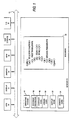
- the preferred embodiment of the invention comprises a set of programs for controlling a document processing system as shown in FIG. 1.
- a central processing unit (CPU) 10 is connected via a system bus 12 to a random access memory 13.
- the random access memory 13 stores the set of program instructions in the form of code modules.
- Operating system functions are performed by the code in module 14, document processor functions are performed by the code in module 16.
- the code which hierarchically contracts and expands element marks is found in modules 18 and 20 respectively.
- code modules 18 and 20 are parts of the document processor code, however, they could be modules written separately for an existing document editor.
- the control of the WYSIWYG presentation of document processing to the display 21 is accomplished by the code in module 22.
- the final document is produced on the printer 23 by the use of the printer code in module 24.
- a read only memory 26 which contains fixed instructions which are executed by the CPU 10 to carry out elementary operations for the system.
- the disk storage 28 can permanently store code modules when they are not in use in RAM 13.
- the I/O 30 is connected to communication lines or other I/O equipment for communication by the CPU 10 with external equipment.
- Document 33 is read into memory 13, and is a hierarchically structured document, e.g., a document written in Standardized General Markup Language (SGML) which is defined by the International Standards Organization standard 8879-1986. While for purposes of illustration document 33 is composed entirely of text data, hierarchically defined documents can contain image, graphic, calendar, spreadsheet or audio elements as well.
- SGML Standardized General Markup Language
- begin tags are enclosed by the "(" and ")” symbols and end tags are enclosed by the "(/" and ")” symbols.
- begin tags are enclosed by the "(/" and ")” symbols
- end tags are enclosed by the "(/" and ")” symbols.
- “(p)" and “(/p)” denote the begin paragraph and end paragraph tags respectively.
- the contents of document 33 are indented to emphasize its hierarchical structure.
- each element is ranked in a hierarchy, having a next higher-level, or parent, element and a next lower-level, or child, element in the document, except that the lowest level element within a particular branch of the hierarchy has no child element and the document element itself has no parent element.
- an element may have a number of equal-level, or sibling, elements which together make up its parent element.
- the first paragraph element is the parent element of the unordered list element
- the chapter element is the parent element of the paragraph element and is comprised of two paragraph elements which are sibling elements.
- the unordered list element is the child element of the first paragraph element
- the list item elements are the child elements of the unordered list.
- the list item elements and the second paragraph element have no child element as they are the lowest elements in their particular branch of the hierarchy.
- Hierarchical expansion or contraction of an element mark occurs when the code adjusts the mark to mark the next level element from the currently marked element.
- the mark is adjusted, i.e., expanded to mark the parent element from the currently marked element; in hierarchical contraction, the mark is adjusted, i.e., contracted, to mark the child element.
- document 33 may be operated on by the code in modules 18 and 20 to create an element mark, or contract or expand the current mark to an element mark as desired by the user, as well as other editing operations provided by document processor code 16 or operating system code 14.
- Prior art document processors require a physical knowledge of the document being edited to create or adjust a mark.
- the user must move the cursor through the document to the beginning of the portion to be marked, invoke the mark function, then move the cursor through the document to the end of the portion and complete the mark function.
- the present invention allows the user to deal with the logical elements of the document, which is closer to the way in which most individuals conceive of a document. Rather than deciding to write ten lines of text about a given topic, one generally decides to write a paragraph; rather than twenty pages, one writes a chapter. Thus, in addition to being much faster than prior art methods of marking the present invention emulates the manner in which the human mind comprehends the structure of a document.
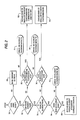
- FIG. 2 shows a flowchart of the preferred embodiment of mark element function 20.
- the code is used to create an element mark or expand a stream mark into an element mark.
- a user is currently editing a document on the text processor of FIG. 1 and invokes the mark element function 20 at the current document position.
- the code 20 determines whether a stream mark already exists (in box X1). If not, it creates an element mark highlighting the lowest-level element in which the current document position is located, box R1. If there is a stream mark already existing the code 20 ascertains if the current document position is inside the stream mark, box X2. If not, it is determined whether an element exists which contains both the current mark and the current document position in box X5.
- the code 20 checks to see whether the mark is an element mark in box X3, i.e., it is bounded by a corresponding begin and end tag, or some other type of stream mark. If the mark is not an element mark, the mark element code 20 looks for an element which would contain the entire mark, if none exists, an error message F2 is generated. Otherwise, the mark is expanded to the smallest element containing the mark R3. If the mark is an element mark, the code 20 determines whether there is a parent element to which the mark can be expanded in box X4. If not, an error message F3 is generated. If there is, the mark is expanded to the parent element of the element currently marked R4.
- additional editing operations such as move, delete, copy, convert to uppercase, search, sort, put, cut, etc., provided by the document processor code 16 or the operating system 14 may be performed on the contents of the element mark.
- the contents of the element mark may be moved or copied within the document 33, or to another document resident on the document processing system.
- the element mark can be adjusted by other conventional marking operations which expand or contract a mark based on document position rather than logical elements.
- further expansion of the mark to higher level elements is possible by reinvoking the mark element code 20.
- the mark element code 20 is used to create or expand a stream mark.
- the mark produced by this function will always mark a complete element. In other words, this function will always produce an element mark.
- the mark element code 20 can be invoked by a single user action, e.g., keystroke, mouse click, entry at a command line, panel selection, etc. Similarly, the code 20 does not change the current document position.
- Examples 1 through 5 illustrate the operation of the mark element code 20 on document 33.
- the contents of the stream mark are highlighted.
- the current document position is represented by an asterisk "*".
- the begin tags are enclosed by "(" and ")” and the end tags are enclosed by "(/" and ")".
- the end tags are not strictly necessary since the document processor can determine the boundaries of the element by semantics; however, they are included for sake of clarity.
- FIG. 3 shows a flowchart of the preferred embodiment of the contract mark function 18.
- the user is currently editing a document on the text processing system of FIG. 1 and elects to invoke the contract mark function 18 at the current document position depicted on the display 21 by the cursor.
- the contract mark code 18 checks to see if there is a mark available to contract in box C1. If not, an error message E1 is generated indicating to the user that no mark currently exists. If a mark is present, the contract mark code next determines whether the current document position is within the mark, in box C2. If not, a second error message E2 is generated informing the user he must move the cursor within a mark to proceed.
- box C3 the code 18 checks to see if the highlighted mark is an element mark.
- the code will attempt to contract the mark to the largest element fully contained in the current mark box C6. If no complete element mark exists within the current mark, an error message E3 is generated. If the mark is an element mark, the contract mark code 18 determines whether a child element exists completely within the current element mark box C4. If not an error message E4 is generated. Next, in box C5, the code ascertains if the current document position is within a child element. If not, an error message E5 is generated. If so, the code 18 contracts the mark to the child element containing the current document position. After the element is marked, additional editing operations provided by the document processor code 16 or the operating system 14 may be performed on the contents of the element mark. In addition, further contraction of the mark to lower-level elements is possible by reinvoking the contract mark code 18.
- the contract mark function will contract a stream or element mark.
- the stream mark produced by the code 18 will always mark a complete element. In other words, an element mark is always produced when this function is successfully completed. Otherwise, an error is generated.
- the contract mark code can be invoked by a single user action, e.g., a keystroke, mouse click, entry at a command line, panel selection, etc. In addition, the current document position is not changed.
- Examples 6 through 11 will illustrate the operation of the contract mark code 18 on document 33.
- the examples share the same notation used in Examples 1 through 5 above.
- Examples 1 through 11 were depicted in indented format showing the beginning and end tags of the various elements of document 33 for the sake of understanding. None of this detail would be available to the user on a WYSIWYG display.
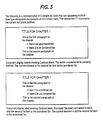
- the change to the mark caused by the mark element code 20 in Example 2 above is shown in FIG. 4. Note that none of the tags are visible, and only the amount of highlighting is changed.
- the change to the mark caused by the contract mark code 18 in Example 7 above is shown in FIG. 3 as displayed to the user.
- the mark element code and contract mark code function on somewhat different principles.
- the mark element code operates on the document with respect to two focal points: the current document position and the current mark. It will function if the current document position is within or outside the current mark, and will produce an element mark if no mark currently exists in the document.
- the contract mark code has but one focal point which must be the current document position inside the current mark. If the current document position is outside the current mark, or no mark currently exists in the document, the contract mark code will generate an error.
Landscapes
- Engineering & Computer Science (AREA)
- Theoretical Computer Science (AREA)
- Physics & Mathematics (AREA)
- General Physics & Mathematics (AREA)
- Health & Medical Sciences (AREA)
- Artificial Intelligence (AREA)
- Audiology, Speech & Language Pathology (AREA)
- Computational Linguistics (AREA)
- General Health & Medical Sciences (AREA)
- General Engineering & Computer Science (AREA)
- Document Processing Apparatus (AREA)
- Information Retrieval, Db Structures And Fs Structures Therefor (AREA)
Applications Claiming Priority (2)
| Application Number | Priority Date | Filing Date | Title |
|---|---|---|---|
| US315375 | 1989-02-24 | ||
| US07/315,375 US5113341A (en) | 1989-02-24 | 1989-02-24 | Technique for creating and expanding element marks in a structured document |
Publications (2)
| Publication Number | Publication Date |
|---|---|
| EP0384185A2 true EP0384185A2 (de) | 1990-08-29 |
| EP0384185A3 EP0384185A3 (de) | 1992-12-30 |
Family
ID=23224118
Family Applications (1)
| Application Number | Title | Priority Date | Filing Date |
|---|---|---|---|
| EP19900102064 Withdrawn EP0384185A3 (de) | 1989-02-24 | 1990-02-02 | Ein Verfahren zur Erzeugung und Expansion von Markierungselementen eines strukturierten Dokuments |
Country Status (9)
| Country | Link |
|---|---|
| US (1) | US5113341A (de) |
| EP (1) | EP0384185A3 (de) |
| JP (1) | JPH02249059A (de) |
| KR (1) | KR920006775B1 (de) |
| CN (1) | CN1014845B (de) |
| AU (1) | AU622749B2 (de) |
| BR (1) | BR9000875A (de) |
| CA (1) | CA1320000C (de) |
| MX (1) | MX169613B (de) |
Cited By (1)
| Publication number | Priority date | Publication date | Assignee | Title |
|---|---|---|---|---|
| US5247437A (en) * | 1990-10-01 | 1993-09-21 | Xerox Corporation | Method of managing index entries during creation revision and assembly of documents |
Families Citing this family (40)
| Publication number | Priority date | Publication date | Assignee | Title |
|---|---|---|---|---|
| CA2036859C (en) * | 1990-04-30 | 1994-04-05 | Eric M. Hesse | System and method for editing a structured document to modify emphasis characteristics |
| JP3124568B2 (ja) * | 1991-03-15 | 2001-01-15 | キヤノン株式会社 | 文書処理装置及び方法 |
| CA2048039A1 (en) * | 1991-07-19 | 1993-01-20 | Steven Derose | Data processing system and method for generating a representation for and random access rendering of electronic documents |
| US5448691A (en) * | 1992-04-30 | 1995-09-05 | Ricoh Company, Ltd. | Method and apparatus for processing page selection in a document processing language |
| JPH0713966A (ja) * | 1993-04-12 | 1995-01-17 | Xerox Corp | 文書の編集方法 |
| JP3444948B2 (ja) * | 1993-12-28 | 2003-09-08 | キヤノン株式会社 | 文書編集装置および文書編集方法 |
| JPH0830620A (ja) * | 1994-07-19 | 1996-02-02 | Fuji Xerox Co Ltd | 構造検索装置 |
| JP3143345B2 (ja) * | 1994-12-02 | 2001-03-07 | 富士通株式会社 | 文字列検索装置 |
| US6546406B1 (en) | 1995-11-03 | 2003-04-08 | Enigma Information Systems Ltd. | Client-server computer system for large document retrieval on networked computer system |
| US6167409A (en) * | 1996-03-01 | 2000-12-26 | Enigma Information Systems Ltd. | Computer system and method for customizing context information sent with document fragments across a computer network |
| US5893109A (en) * | 1996-03-15 | 1999-04-06 | Inso Providence Corporation | Generation of chunks of a long document for an electronic book system |
| US5758361A (en) * | 1996-03-20 | 1998-05-26 | Sun Microsystems, Inc. | Document editor for linear and space efficient representation of hierarchical documents |
| US6038590A (en) * | 1996-07-01 | 2000-03-14 | Sun Microsystems, Inc. | Object-oriented system, method and article of manufacture for a client-server state machine in an interprise computing framework system |
| US5999972A (en) * | 1996-07-01 | 1999-12-07 | Sun Microsystems, Inc. | System, method and article of manufacture for a distributed computer system framework |
| US6424991B1 (en) | 1996-07-01 | 2002-07-23 | Sun Microsystems, Inc. | Object-oriented system, method and article of manufacture for a client-server communication framework |
| US5848246A (en) * | 1996-07-01 | 1998-12-08 | Sun Microsystems, Inc. | Object-oriented system, method and article of manufacture for a client-server session manager in an interprise computing framework system |
| US6304893B1 (en) | 1996-07-01 | 2001-10-16 | Sun Microsystems, Inc. | Object-oriented system, method and article of manufacture for a client-server event driven message framework in an interprise computing framework system |
| US6272555B1 (en) | 1996-07-01 | 2001-08-07 | Sun Microsystems, Inc. | Object-oriented system, method and article of manufacture for a client-server-centric interprise computing framework system |
| US6266709B1 (en) | 1996-07-01 | 2001-07-24 | Sun Microsystems, Inc. | Object-oriented system, method and article of manufacture for a client-server failure reporting process |
| US6434598B1 (en) | 1996-07-01 | 2002-08-13 | Sun Microsystems, Inc. | Object-oriented system, method and article of manufacture for a client-server graphical user interface (#9) framework in an interprise computing framework system |
| US5987245A (en) * | 1996-07-01 | 1999-11-16 | Sun Microsystems, Inc. | Object-oriented system, method and article of manufacture (#12) for a client-server state machine framework |
| US6065026A (en) * | 1997-01-09 | 2000-05-16 | Document.Com, Inc. | Multi-user electronic document authoring system with prompted updating of shared language |
| US5905991A (en) * | 1997-08-21 | 1999-05-18 | Reynolds; Mark L | System and method providing navigation between documents by creating associations based on bridges between combinations of document elements and software |
| US6041326A (en) * | 1997-11-14 | 2000-03-21 | International Business Machines Corporation | Method and system in a computer network for an intelligent search engine |
| US6137488A (en) * | 1997-12-05 | 2000-10-24 | International Business Machines Corporation | System for creating structured fields on electronic forms |
| US7236983B1 (en) * | 1998-11-09 | 2007-06-26 | Chrome Data Corporation | Hierarchical data structure for vehicle identification and configuration data including protected customer data |
| US7073122B1 (en) | 2000-09-08 | 2006-07-04 | Sedghi Ali R | Method and apparatus for extracting structured data from HTML pages |
| EP1388211A2 (de) * | 2001-02-05 | 2004-02-11 | Expway | Verfahren und system zur komprimierung von strukturierten dokumenten |
| US7055092B2 (en) * | 2001-12-05 | 2006-05-30 | Canon Kabushiki Kaisha | Directory for multi-page SVG document |
| US7099918B2 (en) * | 2002-08-16 | 2006-08-29 | Sas Institute Inc. | Web-based form validation system and method |
| US7996411B2 (en) * | 2003-03-28 | 2011-08-09 | International Business Machines Corporation | Method, apparatus, and system for translating selected characters in a record processing system |
| US7487464B2 (en) | 2006-02-16 | 2009-02-03 | International Business Machines Corporation | Enhanced visualization and selection of multi-layered elements in a containment hierarchy |
| US20080040661A1 (en) * | 2006-07-07 | 2008-02-14 | Bryce Allen Curtis | Method for inheriting a Wiki page layout for a Wiki page |
| US8775930B2 (en) * | 2006-07-07 | 2014-07-08 | International Business Machines Corporation | Generic frequency weighted visualization component |
| US8219900B2 (en) * | 2006-07-07 | 2012-07-10 | International Business Machines Corporation | Programmatically hiding and displaying Wiki page layout sections |
| US8560956B2 (en) * | 2006-07-07 | 2013-10-15 | International Business Machines Corporation | Processing model of an application wiki |
| US8196039B2 (en) * | 2006-07-07 | 2012-06-05 | International Business Machines Corporation | Relevant term extraction and classification for Wiki content |
| US7954052B2 (en) * | 2006-07-07 | 2011-05-31 | International Business Machines Corporation | Method for processing a web page for display in a wiki environment |
| WO2008151466A1 (en) * | 2007-06-14 | 2008-12-18 | Google Inc. | Dictionary word and phrase determination |
| RU2599902C1 (ru) | 2015-09-08 | 2016-10-20 | Общество с ограниченной ответственностью "Лаборатория подводной связи и навигации" | Способ навигации подводных объектов и система для его осуществления |
Family Cites Families (14)
| Publication number | Priority date | Publication date | Assignee | Title |
|---|---|---|---|---|
| GB2043311B (en) * | 1979-03-02 | 1982-06-23 | Ibm | Text processing |
| DE3138734A1 (de) * | 1980-09-29 | 1982-04-29 | Canon K.K., Tokyo | Textverarbeitungsgeraet |
| US4393463A (en) * | 1980-11-20 | 1983-07-12 | International Business Machines Corporation | Insertion of character set change codes in an altered text stream |
| US4454576A (en) * | 1981-05-18 | 1984-06-12 | International Business Machines Corporation | Report preparation |
| US4481603A (en) * | 1981-05-18 | 1984-11-06 | International Business Machines Corporation | File processing method using expanding display windows for selected records and text fields |
| US4686649A (en) * | 1981-05-29 | 1987-08-11 | International Business Machines Corporation | Word processor with alternative formatted and unformatted display modes |
| US4539653A (en) * | 1983-04-11 | 1985-09-03 | International Business Machines Corporation | Formatting text/graphics using plural independent formatting mechanisms |
| US4959769A (en) * | 1983-10-03 | 1990-09-25 | Wang Laboratories, Inc. | Structures and methods for representing and processing documents |
| US4996662A (en) * | 1983-10-03 | 1991-02-26 | Wang Laboratories, Inc. | Method for generating document using tables storing pointers and indexes |
| US4633430A (en) * | 1983-10-03 | 1986-12-30 | Wang Laboratories, Inc. | Control structure for a document processing system |
| US4739477A (en) * | 1984-08-30 | 1988-04-19 | International Business Machines Corp. | Implicit creation of a superblock data structure |
| US4713754A (en) * | 1984-10-09 | 1987-12-15 | Wang Laboratories, Inc. | Data structure for a document processing system |
| JPS6438866A (en) * | 1987-08-05 | 1989-02-09 | Hitachi Ltd | Document editing device |
| JPS6450158A (en) * | 1987-08-20 | 1989-02-27 | Mitsubishi Electric Corp | Document generating device |
-
1989
- 1989-02-24 US US07/315,375 patent/US5113341A/en not_active Expired - Lifetime
- 1989-09-27 CA CA000613498A patent/CA1320000C/en not_active Expired - Fee Related
-
1990
- 1990-01-12 AU AU47944/90A patent/AU622749B2/en not_active Ceased
- 1990-01-23 CN CN90100367A patent/CN1014845B/zh not_active Expired
- 1990-01-24 KR KR1019900000807A patent/KR920006775B1/ko not_active Expired
- 1990-02-02 EP EP19900102064 patent/EP0384185A3/de not_active Withdrawn
- 1990-02-20 JP JP2037535A patent/JPH02249059A/ja active Pending
- 1990-02-22 BR BR909000875A patent/BR9000875A/pt unknown
- 1990-02-23 MX MX019649A patent/MX169613B/es unknown
Cited By (1)
| Publication number | Priority date | Publication date | Assignee | Title |
|---|---|---|---|---|
| US5247437A (en) * | 1990-10-01 | 1993-09-21 | Xerox Corporation | Method of managing index entries during creation revision and assembly of documents |
Also Published As
| Publication number | Publication date |
|---|---|
| AU622749B2 (en) | 1992-04-16 |
| JPH02249059A (ja) | 1990-10-04 |
| EP0384185A3 (de) | 1992-12-30 |
| CN1046625A (zh) | 1990-10-31 |
| BR9000875A (pt) | 1991-02-13 |
| KR920006775B1 (ko) | 1992-08-17 |
| CN1014845B (zh) | 1991-11-20 |
| CA1320000C (en) | 1993-07-06 |
| KR900013419A (ko) | 1990-09-05 |
| AU4794490A (en) | 1990-08-30 |
| US5113341A (en) | 1992-05-12 |
| MX169613B (es) | 1993-07-14 |
Similar Documents
| Publication | Publication Date | Title |
|---|---|---|
| EP0384185A2 (de) | Ein Verfahren zur Erzeugung und Expansion von Markierungselementen eines strukturierten Dokuments | |
| US5185698A (en) | Technique for contracting element marks in a structured document | |
| US8434014B1 (en) | System and method for editing information | |
| JP4140980B2 (ja) | プログラムツリーを表示するコンピュータプログラムの構文依存しない表示方法 | |
| US5710926A (en) | Developers tool for object-oriented programming | |
| US6466240B1 (en) | Method for visually writing programs or scripts that transform structured text presented as a tree | |
| AU2003233573B2 (en) | System and method for making user interface elements known to an application and user | |
| RU2537776C2 (ru) | Основанная на разметке расширяемость для интерфейсов пользователя | |
| US8510647B2 (en) | Computer programming and markup language source code visualization tool | |
| WO1994014122A1 (en) | System for display of structured documents | |
| US8386919B2 (en) | System for displaying an annotated programming file | |
| US20020104070A1 (en) | Document builder classes and methods | |
| US20040003349A1 (en) | Content segments | |
| US20090132906A1 (en) | Document processing device and document processing method | |
| US9158507B2 (en) | Domain transformation languages | |
| US8381183B2 (en) | Navigation in computer software applications developed in a procedural language | |
| Topley | Core Swing: advanced programming | |
| US20090235156A1 (en) | Document processing device and document processing method | |
| MacDonald | Pro. NET 2.0 Windows Forms and Custom Controls in C# | |
| EP1933233A1 (de) | Datenverarbeitungsvorrichtung | |
| EP1936491A1 (de) | Datenverarbeitungseinrichtung | |
| Bauwens et al. | SGML as an enabling technology for access to digital information by print disabled readers | |
| Struss | Introduction to LATEX | |
| Joffe et al. | The TLex Suite |
Legal Events
| Date | Code | Title | Description |
|---|---|---|---|
| PUAI | Public reference made under article 153(3) epc to a published international application that has entered the european phase |
Free format text: ORIGINAL CODE: 0009012 |
|
| AK | Designated contracting states |
Kind code of ref document: A2 Designated state(s): BE CH DE ES FR GB IT LI NL SE |
|
| 17P | Request for examination filed |
Effective date: 19901210 |
|
| PUAL | Search report despatched |
Free format text: ORIGINAL CODE: 0009013 |
|
| AK | Designated contracting states |
Kind code of ref document: A3 Designated state(s): BE CH DE ES FR GB IT LI NL SE |
|
| 17Q | First examination report despatched |
Effective date: 19960321 |
|
| STAA | Information on the status of an ep patent application or granted ep patent |
Free format text: STATUS: THE APPLICATION IS DEEMED TO BE WITHDRAWN |
|
| 18D | Application deemed to be withdrawn |
Effective date: 19961001 |