EP0384315A2 - Verfahren zur Herstellung von Lactonen - Google Patents
Verfahren zur Herstellung von Lactonen Download PDFInfo
- Publication number
- EP0384315A2 EP0384315A2 EP90103021A EP90103021A EP0384315A2 EP 0384315 A2 EP0384315 A2 EP 0384315A2 EP 90103021 A EP90103021 A EP 90103021A EP 90103021 A EP90103021 A EP 90103021A EP 0384315 A2 EP0384315 A2 EP 0384315A2
- Authority
- EP
- European Patent Office
- Prior art keywords
- groups
- general formula
- radicals
- halide
- lactol
- Prior art date
- Legal status (The legal status is an assumption and is not a legal conclusion. Google has not performed a legal analysis and makes no representation as to the accuracy of the status listed.)
- Granted
Links
- 0 CC(C)(*O1)C(*)(*)C1=O Chemical compound CC(C)(*O1)C(*)(*)C1=O 0.000 description 1
Classifications
-
- C—CHEMISTRY; METALLURGY
- C07—ORGANIC CHEMISTRY
- C07D—HETEROCYCLIC COMPOUNDS
- C07D307/00—Heterocyclic compounds containing five-membered rings having one oxygen atom as the only ring hetero atom
- C07D307/02—Heterocyclic compounds containing five-membered rings having one oxygen atom as the only ring hetero atom not condensed with other rings
- C07D307/26—Heterocyclic compounds containing five-membered rings having one oxygen atom as the only ring hetero atom not condensed with other rings having one double bond between ring members or between a ring member and a non-ring member
- C07D307/30—Heterocyclic compounds containing five-membered rings having one oxygen atom as the only ring hetero atom not condensed with other rings having one double bond between ring members or between a ring member and a non-ring member with hetero atoms or with carbon atoms having three bonds to hetero atoms with at the most one bond to halogen, e.g. ester or nitrile radicals, directly attached to ring carbon atoms
- C07D307/32—Oxygen atoms
- C07D307/33—Oxygen atoms in position 2, the oxygen atom being in its keto or unsubstituted enol form
-
- C—CHEMISTRY; METALLURGY
- C25—ELECTROLYTIC OR ELECTROPHORETIC PROCESSES; APPARATUS THEREFOR
- C25B—ELECTROLYTIC OR ELECTROPHORETIC PROCESSES FOR THE PRODUCTION OF COMPOUNDS OR NON-METALS; APPARATUS THEREFOR
- C25B3/00—Electrolytic production of organic compounds
- C25B3/01—Products
- C25B3/05—Heterocyclic compounds
-
- C—CHEMISTRY; METALLURGY
- C25—ELECTROLYTIC OR ELECTROPHORETIC PROCESSES; APPARATUS THEREFOR
- C25B—ELECTROLYTIC OR ELECTROPHORETIC PROCESSES FOR THE PRODUCTION OF COMPOUNDS OR NON-METALS; APPARATUS THEREFOR
- C25B3/00—Electrolytic production of organic compounds
- C25B3/01—Products
- C25B3/07—Oxygen containing compounds
-
- C—CHEMISTRY; METALLURGY
- C25—ELECTROLYTIC OR ELECTROPHORETIC PROCESSES; APPARATUS THEREFOR
- C25B—ELECTROLYTIC OR ELECTROPHORETIC PROCESSES FOR THE PRODUCTION OF COMPOUNDS OR NON-METALS; APPARATUS THEREFOR
- C25B3/00—Electrolytic production of organic compounds
- C25B3/20—Processes
- C25B3/23—Oxidation
Definitions
- This invention relates to a new process for the production of lactones by electrochemical oxidation of lactols.
- bromocarbamide can be used for such an oxidation.
- Other oxidizing agents used for this purpose are, for example, chromium compounds, such as chromium trioxide in pyridine (THL 1975 , 2275-2277), silver oxide (Helv. Chim. Acta 55 , 249-252 (1972) or silver carbonate on kieselguhr (J. Org. Chem. 40 , 892-894 (1975).
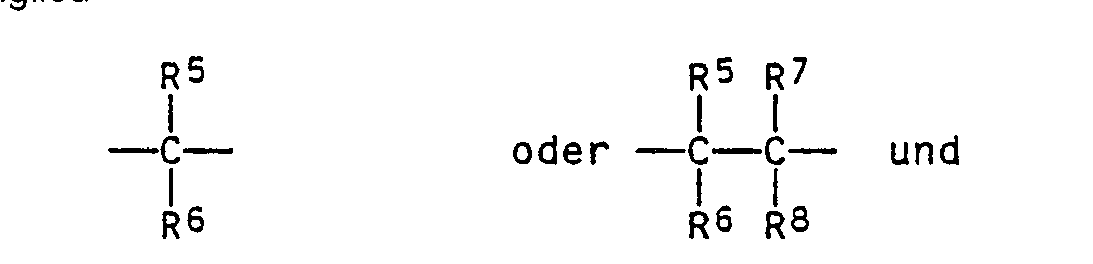
- Lactones of the general formula are prepared by the new process of this invention in the X the pontic R1 to R8 are hydrogen atoms, hydroxyl groups, alkyl or alkylene groups, which can be substituted by halogen atoms, hydroxyl groups, carboxy groups or nitrile groups, mean alkoxy groups or acetoxy groups, where R1, R3, R5 and R7 can also represent ring-shaped hydrocarbon radicals and the two R radicals bonded to a C atom can also jointly represent an alkylene radical or an oxygen atom, in that lactols of the general formula in which X and the radicals R have the abovementioned meaning, are electrochemically oxidized in the presence of an ionogenic halide.
- the lactols of the formula II used as starting materials contain, as radicals R1 to R8, hydrogen atoms, hydroxyl groups, alkoxy groups, such as methoxy or ethoxy groups, acetoxy groups, alkyl or alkylene groups, for example 1 to 12, preferably 1 to 8, in particular 1 to 4, Contain atoms such as methyl, ethyl, n and iso-propyl, n-butyl, iso-butyl, tert-butyl, vinyl, allyl or isopropenyl groups.
- radicals R1 to R8 hydrogen atoms, hydroxyl groups, alkoxy groups, such as methoxy or ethoxy groups, acetoxy groups, alkyl or alkylene groups, for example 1 to 12, preferably 1 to 8, in particular 1 to 4, Contain atoms such as methyl, ethyl, n and iso-propyl, n-butyl, iso-butyl, tert-
- the alkyl or alkylene groups can in turn be substituted by halogen atoms such as fluorine, chlorine or bromine atoms, hydroxyl groups, carboxy groups or nitrile groups.
- halogen atoms such as fluorine, chlorine or bromine atoms, hydroxyl groups, carboxy groups or nitrile groups.
- substituted radicals are, for example, chloromethyl or hydroximethyl groups.
- the radicals R1, R3, R5 and R7 can also be ring-shaped hydrocarbon radicals, such as cycloalkyl radicals, which contain, for example, 3 to 8, preferably 5 to 6, carbon atoms, such as cyclopentyl or cyclohexyl radicals.
- the two R radicals bonded in pairs to a C atom can also together for an alkylene radical, such as for a radical of the formula - (CH2) n -, in which n is an integer from 4 to 7, or for an oxygen atom stand.
- an alkylene radical such as for a radical of the formula - (CH2) n -, in which n is an integer from 4 to 7, or for an oxygen atom stand.
- the radicals R are hydrogen atoms, hydroxyl groups or alkyl or alkoxy groups having 1 to 4 carbon atoms or two R radicals bonded to one carbon atom are one oxygen atom.
- the starting compounds of the formula II can be prepared in a technically simple and known manner, for example by hydroformylation of unsaturated alcohols on rhodium catalysts, such as, for example, THL 25 , 4051-4053 (1984).
- Suitable ionogenic halides are salts of hydroiodic, hydrobromic and hydrochloric acid. Salts of hydrobromic acid, such as alkali or alkaline earth bromides, and quaternary ammonium bromides, in particular tetraalkylammonium bromides, are preferred.
- the cation does not play an essential role in the invention, therefore other ionic metal halides can also be used, but cheap halides will advantageously be chosen. Examples include sodium, potassium, calcium and ammonium bromide and di-, tri- and tetramethyl- or tetraethylammonium bromide.
- a solution of the lactols and the inogenous halide in a suitable solvent is expediently used for the electrooxidation.
- suitable solvents are those which are sufficiently stable under the electrolysis conditions. These are e.g. Ethers such as dioxane, chlorinated hydrocarbons such as methylene chloride, ketones such as acetone, nitriles such as acetonitrile or alcohols such as alkanols with 1 to 4 carbon atoms. Methanol and ethanol are particularly suitable.
- the composition of the electrolyte can be chosen within wide limits.
- the electrolyte consists of an alcoholic solution of the lactol of the general formula II with a content of the lactol of 1 to 50, preferably 3 to 20% by weight and a content of the ionogenic halide of 0.1 to 20, preferably 0.5 up to 5% by weight.
- Undivided flow cells are preferably used, which advantageously have small electrode spacings of, for example, 0.25-2 mm in order to minimize the cell voltage.
- anodes e.g. Precious metals such as platinum, titanium doped with noble metal oxides, metal oxides such as MnO2 and PbO2, but preferably graphite is used.
- cathode materials e.g. Lead, iron, steel, nickel or precious metals such as platinum are used. The preferred cathode material is also graphite.
- the current yields are unusually high in the method according to the invention.
- the lactols have already been completely converted in electrolysis with 2 to 2.5 F / mol lactol.
- the current density is not a limiting factor, e.g. 0.1 to 25 A / dm2, preferably 3 to 15 A / dm2.
- the process according to the invention is carried out, for example, at temperatures up to 5 ° C. below the boiling point of the solvent used, preferably at 5 to 90 ° C., in particular at 10 to 70 ° C. If methanol or ethanol is used as the solvent, the electrolysis is expediently carried out at from 15 to 35 ° C.
- the electrolysis discharges can be worked up by methods known per se.
- the electrolysis discharge is expediently worked up by distillation. Excess solvent is first distilled off.
- the halides can e.g. separate by filtration or extraction and the lactone pure by distillation or recrystallization. Solvents, possibly unreacted lactol and halides can advantageously be returned to the electrolysis.
- the process according to the invention can be carried out batchwise or continuously.
- lactones of the general formula I prepared by the process according to the invention are versatile intermediates for the synthesis of fragrances, flavorings and pharmaceuticals.
- the electrooxidations were carried out in an undivided electrolysis cell with 6 graphite electrodes (5 columns, electrode spacing 0.5 mm) at temperatures of 20 to 25 ° C.
- the electrolyte which contained sodium bromide as the conductive salt, was pumped through the cell at 200 l / h via a heat exchanger.
- Electrolyte 130 g 3,3-dimethyl-2-hydroxy-4-oxotetrahydrofuran ( 1 ) 26 g sodium bromide and 2,440 g methanol Electrolysis with 2.5 F / mol 1 Current density: 7.5 A / dm2 Temperature: 20 to 21 ° C
- methanol is distilled off from the electrolysis discharge at normal pressure, the precipitated salt is separated off at room temperature using a pressure filter (can be recycled together with methanol for electrolysis) and the filtrate is distilled in at 60 to 70 ° C. and 5 to 6 mbar. 88 g of 2,4-dioxo-3,3-dimethyltetrahydrofuran are obtained, corresponding to a material yield of 69%.
- Electrolyte 250 g of 2-hydroxy-4-methyltetrahydrofuran ( 2 ), 25 g of sodium bromide and 2 225 g of methanol Electrolysis with 2.5 F / mol 2 Current density: 10 A / dm2 Temperature: 21 ° C
- Electrolyte 212 g of a 1: 1 mixture of 2-hydroxy-5-hydroximethyltetra hydrofuran ( 3a ) and 2,5-dihydroxitetrahydropyran ( 3b ), 26 g sodium bromide and 2 209 g methanol. Electrolysis at 2.0 F / mol 3 Current density 10 A / dm2 Temperature 21 to 23 ° C
- Example 2 The discharge is worked up analogously to Example 1 and the crude product is distilled at 100-103 ° C. and 0.1 mbar. 175.4 g of 5-hydroximethyl-2-oxotetrahydrofuran are isolated, corresponding to a yield of 84%.
Landscapes
- Chemical & Material Sciences (AREA)
- Organic Chemistry (AREA)
- Engineering & Computer Science (AREA)
- Chemical Kinetics & Catalysis (AREA)
- Electrochemistry (AREA)
- Materials Engineering (AREA)
- Metallurgy (AREA)
- Electrolytic Production Of Non-Metals, Compounds, Apparatuses Therefor (AREA)
- Nitrogen And Oxygen Or Sulfur-Condensed Heterocyclic Ring Systems (AREA)
Abstract

Description
- Diese Erfindung betrifft ein neues Verfahren für die Herstellung von Lactonen durch elektrochemische Oxidation von Lactolen.
- Es sind schon verschiedene Verfahren für die Herstellung von Lactonen aus Lactolen beschrieben worden. So ist z.B. aus Helv. Chim. Acta 47, 398-399 (1964) bekannt, daß sich Bromcarbamid für eine derartige Oxidation verwenden läßt. Andere für diesen Zweck eingesetzte Oxidationsmittel sind z.B. Chromverbindungen, wie Chromtrioxid in Pyridin (THL 1975, 2275-2277), Silberoxid (Helv. Chim. Acta 55, 249-252 (1972) oder Silbercarbonat auf Kieselgur (J. Org. Chem. 40, 892-894 (1975).
- Diese Methoden sind für eine industrielle Nutzung wenig vorteilhaft. So erfordern der Umgang mit Brom oder Chromsalzen aus Sicherheits- und Umweltgründen einen erheblichen Aufwand und die Verwendung des teuren Silbers als Oxidaitonsmittel eine zur Vermeidung von Silberverlusten aufwendige Regenerierung.
- Es wurde nun ein neues Verfahren gefunden, das es ermöglicht, Lactole nach einem technisch einfachen und besonders umweltfreundlichen Verfahren zu den entsprechenden Lactonen zu oxidieren.
- Nach dem neuen Verfahren dieser Erfindung stellt man Lactone der allgemeinen Formel


- Die als Ausgangsstoffe verwendeten Lactole der Formel II enthalten als Reste R¹ bis R⁸ Wasserstoffatome, Hydroxigruppen, Alkoxigruppen, wie Methoxi- oder Ethoxigruppen, Acetoxigruppen, Alkyl- oder Alkylengruppen, die z.B. 1 bis 12, vorzugsweise 1 bis 8, insbesondere 1 bis 4 C-Atome enthalten, wie Methyl-, Ethyl-, n- und iso-Propyl-, n-Butyl, iso-Butyl-, tert.-Butyl, Vinyl-, Allyl- oder Isopropenylgruppen. Die Alkyl- oder Alkylengruppen können ihrerseits durch Halogenatome wie Fluor- Chlor- oder Bromatome, Hydroxigruppen, Carboxigruppen oder Nitrilgruppen substituiert sein. Solche substituierten Reste sind z.B. Chlormethyl- oder Hydroximethylgruppen. Die Reste R¹, R³, R⁵ und R⁷ können auch ringförmige Kohlenwasserstoffreste, wie Cycloalkylreste, die z.B. 3 bis 8, vorzugsweise 5 bis 6 C-Atome enthalten, wie Cyclopentyl- oder Cyclohexylreste sein. Außerdem können jeweils die beiden paarförmig an einem C-Atom gebundenen R-Reste auch gemeinsam für einen Alkylenrest, wie für einen Rest der Formel -(CH₂)n-, in der n eine ganze Zahl von 4 bis 7 bedeutet, oder für ein Sauerstoffatom stehen. Bevorzugt sind solche Ausgangsstoffe der Formel II, in denen die Reste R Wasserstoffatome, Hydroxigruppen oder Alkyl- oder Alkoxigruppen mit 1 bis 4 C-Atomen oder zwei an einem C-Atom gebundene R-Reste ein Sauerstoffatom bedeuten. Beispielsweise seien die folgenden Verbindungen der Formel II genannt:
2-Hydroxi-4-methyl-tetrahydropyran, 2,5-Dihydroxitetrahydropyran, 3,3-Dimethyl-2-hydroxi-4-oxo-tetrahydrofuran, 2-Hydroxi-5-hydroximethyltetrahydrofuran oder 2,4-Dihydroxi-3-methyltetrahydrofuran. - Die Ausgangsverbindungen der Formel II lassen sich auf technisch einfache und an sich bekannte Weise, z.B. durch Hydroformylierung ungesättigter Alkohole an Rhodium Katalysatoren, wie z.B. THL 25, 4051-4053 (1984) beschrieben, herstellen.
- Als ionogene Halogenide kommen Salze der Jodwasserstoff-, Bromwasserstoff- und Chlorwasserstoffsäure in Betracht. Bevorzugt sind Salze der Bromwasserstoffsäure, wie Alkali- oder Erdalkalibromide sowie quartäre Ammoniumbromide, insbesondere Tetraalkylammoniumbromide. Das Kation spielt keine erfindungswesentliche Rolle, es können daher auch andere ionogene Metallhalogenide verwendet werden, vorteilhaft wird man jedoch billige Halogenide wählen. Beispielsweise seien Natrium-, Kalium-, Calcium-und Ammoniumbromid sowie Di-, Tri- und Tetramethyl- oder Tetraethylammoniumbromid genannt.
- Für die Elektrooxidation verwendet man zweckmäßigerweise eine Lösung der Lactole und des inogenen Halogenid, in einem geeigneten Lösungsmittel. Als Lösungsmittel eignen sich solche, die unter den Elektrolysebedingungen ausreichend stabil sind. Das sind z.B. Ether, wie Dioxan, Chlorkohlenwasserstoffe, wie Methylenchlorid, Ketone, wie Aceton, Nitrile, wie Acetonitril oder Alkohole, wie Alkanole mit 1 bis 4 C-Atomen. Besonders gut geeignet sind Methanol und Ethanol.
- Die Zusammensetzung des Elektrolyten kann in weiten Grenzen gewählt werden. So besteht der Elektrolyt beispielsweise aus einer alkoholischen Lösung des Lactols der allgemeinen Formel II mit einem Gehalt des Lactols von 1 bis 50, vorzugsweise 3 bis 20 Gew.% und einem Gehalt an dem ionogenen Halogenid von 0,1 bis 20, vorzugsweise 0,5 bis 5 Gew.%.
- Das erfindungsgemäße Verfahren kann in den üblichen technischen Elektrolysezellen durchgeführt werden. Man verwendet vorzugsweise ungeteilte Durchflußzellen, die zweckmäßigerweise zur Minimierung der Zellspannung geringe Elektrodenabstände von beispielsweise 0,25-2 mm aufweisen. Als Anoden werden z.B. Edelmetalle wie Platin, mit Edelmetalloxiden dotiertes Titan, Metalloxide, wie MnO₂ und PbO₂, bevorzugt jedoch Graphit eingesetzt. Als Kathodenmaterialien werden z.B. Blei, Eisen, Stahl, Nickel oder Edelmetalle wie Platin verwendet. Bevorzugtes Kathodenmaterial ist ebenfalls Graphit.
- Die Stromausbeuten sind bei den erfindungsgemäßen Verfahren ungewöhnlich hoch. So sind die Lactole bei Elektrolyse mit 2 bis 2,5 F/mol Lactol bereits vollständig umgesetzt. Die Stromdichte ist kein begrenzender Faktor, sie beträgt z.B. 0,1 bis 25 A/dm², vorzugsweise 3 bis 15 A/dm².
- Man führt das erfindungsgemäße Verfahren z.B. bei Temperaturen bis zu 5°C unter dem Siedepunkt des eingesetzten Lösungsmittels, vorzugsweise bei 5 bis 90°C, insbesondere bei 10 bis 70°C durch. Verwendet man als Lösungsmittel Methanol oder Ethanol, so elektrolysiert man zweckmäßigerweise bei Temperaturen von 15 bis 35°C.
- Die Aufarbeitung der Elektrolyseausträge kann man nach an sich bekannten Methoden vornehmen. Zweckmäßigerweise wird der Elektrolyseaustrag destillativ aufgearbeitet. Überschüssiges Lösungsmittel wird zunächst abdestilliert. Die Halogenide kann man z.B. durch Filtration oder Extraktion abtrennen und das Lacton durch Destillation oder Umkristallisation rein gewinnen. Lösungsmittel, evtl. unumgesetztes Lactol sowie Halogenide können vorteilhaft zur Elektrolyse zurückgeführt werden.
- Das erfindungsgemäße Verfahren kann sowohl diskontinuierlich als auch kontinuierlich durchgeführt werden.
- Die nach dem erfindungsgemäßen Verfahren hergestellten Lactone der allgemeinen Formel I sind vielfältig einsetzbare Zwischenprodukte für die Synthese von Riechstoffen, Aromastoffen und Pharmazeutika.
- Die Elektrooxidationen wurden in einer ungeteilten Elektrolysezelle mit 6 Graphitelektroden (5 Spalte, Elektrodenabstand 0,5 mm) bei Temperaturen von 20 bis 25°C durchgeführt. Während der Elektrolyse wurde der Elektrolyt, der als Leitsalz Natriumbromid enthielt, mit 200 l/h über einen Wärmetauscher durch die Zelle gepumpt.
- Elektrolyt: 130 g 3,3-Dimethyl-2-hydroxi-4-oxotetrahydrofuran (1) 26 g Natriumbromid und 2 440 g Methanol
Elektrolyse mit 2,5 F/mol 1
Stromdichte: 7,5 A/dm²
Temperatur : 20 bis 21°C - Nach Beendigung der Elektrolyse wird vom Elektrolyseaustrag Methanol bei Normaldruck abdestilliert, das ausgefallene Salz bei Raumtemperatur über eine Drucknutsche abgetrennt (kann zusammen mit Methanol zur Elektrolyse zurückgeführt werden) und das Filtrat bei 60 bis 70°C und 5 bis 6 mbar reindestilliert. Man erhält 88 g 2,4-Dioxo-3,3-dimethyltetrahydrofuran entsprechend einer Materialausbeute von 69 %.
- Elektrolyt: 250 g 2-Hydroxi-4-methyltetrahydrofuran (2), 25 g Natriumbromid und 2 225 g Methanol
Elektrolyse mit 2,5 F/mol 2
Stromdichte: 10 A/dm²
Temperatur : 21°C - Die Isolierung des Produktes nach der Elektrolyse erfolgt analog Beispiel 1. Man erhält nach einer Reindestillation bei 119 bis 120°C und 20 mbar 168,8 g 2-0xo4-methyltetrahydropyran entsprechend einer Ausbeute von 68 %
- Elektrolyt: 212 g eines 1:1-Gemisches aus 2-Hydroxi-5-hydroximethyltetra hydrofuran (3a) und 2,5-Dihydroxitetrahydropyran (3b), 26 g Natriumbromid und 2 209 g Methanol.
Elektrolyse mit 2,0 F/mol 3
Stromdichte 10 A/dm²
Temperatur 21 bis 23°C - Der Austrag wird analog Beispiel 1 aufgearbeitet und das Rohprodukt bei 100-103°C und 0,1 mbar reindestilliert. Man isoliert 175,4 g 5-Hydroximethyl-2-oxotetrahydrofuran entsprechend einer Ausbeute von 84 %.
Claims (6)


Applications Claiming Priority (2)
| Application Number | Priority Date | Filing Date | Title |
|---|---|---|---|
| DE3905243 | 1989-02-21 | ||
| DE3905243A DE3905243A1 (de) | 1989-02-21 | 1989-02-21 | Verfahren zur herstellung von lactonen |
Publications (3)
| Publication Number | Publication Date |
|---|---|
| EP0384315A2 true EP0384315A2 (de) | 1990-08-29 |
| EP0384315A3 EP0384315A3 (de) | 1991-09-04 |
| EP0384315B1 EP0384315B1 (de) | 1993-06-16 |
Family
ID=6374557
Family Applications (1)
| Application Number | Title | Priority Date | Filing Date |
|---|---|---|---|
| EP90103021A Expired - Lifetime EP0384315B1 (de) | 1989-02-21 | 1990-02-16 | Verfahren zur Herstellung von Lactonen |
Country Status (2)
| Country | Link |
|---|---|
| EP (1) | EP0384315B1 (de) |
| DE (2) | DE3905243A1 (de) |
Family Cites Families (1)
| Publication number | Priority date | Publication date | Assignee | Title |
|---|---|---|---|---|
| JPH0696567B2 (ja) * | 1986-03-05 | 1994-11-30 | 大塚化学株式会社 | 4−アルコキシ−2−ブテニルラクトンの製造方法 |
-
1989
- 1989-02-21 DE DE3905243A patent/DE3905243A1/de not_active Withdrawn
-
1990
- 1990-02-16 EP EP90103021A patent/EP0384315B1/de not_active Expired - Lifetime
- 1990-02-16 DE DE9090103021T patent/DE59001738D1/de not_active Expired - Lifetime
Also Published As
| Publication number | Publication date |
|---|---|
| DE59001738D1 (de) | 1993-07-22 |
| EP0384315B1 (de) | 1993-06-16 |
| EP0384315A3 (de) | 1991-09-04 |
| DE3905243A1 (de) | 1990-08-23 |
Similar Documents
| Publication | Publication Date | Title |
|---|---|---|
| EP0011712B1 (de) | Verfahren zur Herstellung von in 4-Stellung substituierten Benzaldehyddialkylacetalen | |
| EP0012240A2 (de) | Verfahren zur Herstellung von gegebenenfalls substituierten Benzaldehyd-dialkylacetalen | |
| EP0339523B1 (de) | Verfahren zur Herstellung von Hydroxicarbonsäureestern | |
| EP0072914B1 (de) | Verfahren zur Herstellung von alkylsubstituierten Benzaldehyden | |
| EP0129795B1 (de) | Verfahren zur Herstellung von Benzaldehyddialkylacetalen | |
| EP0384315B1 (de) | Verfahren zur Herstellung von Lactonen | |
| EP0078004B1 (de) | Elektrochemisches Verfahren zur Herstellung von 2,5-Dialkoxy-2,5-dihydrofuranen | |
| EP0638665B1 (de) | Verfahren zur Herstellung von Bezaldehyddialkylacetalen | |
| DE2855508A1 (de) | Verfahren zur herstellung von benzaldehyden | |
| WO2008145627A1 (de) | Elektrochemische oxidation an allylgruppen | |
| EP0237762B1 (de) | Verfahren zur Herstellung von Pyrazolen | |
| EP0179289B1 (de) | Verfahren zur Herstellung von aromatischen Carbonsäureestern | |
| EP0212512B1 (de) | Verfahren zur Herstellung von Carbamidsäureestern | |
| EP0152801B1 (de) | Verfahren zur Herstellung von Benzaldehyddialkylacetalen | |
| DE2710420C2 (de) | Verfahren zur elektrolytischen Herstellung von 2,5-Dialkoxy-2,5-dihydrofuranen | |
| EP0053261B1 (de) | Verfahren zur Herstellung eines Gemisches von Ketalen des Trimethyl-p-benzochinons | |
| EP0237769B1 (de) | Benzaldehyd-dialkylacetale | |
| EP0179377B1 (de) | Verfahren zur Herstellung von 1-Alkoxyisochromanen und neue 1-Alkoxy-alkylisochromane | |
| EP0040331B1 (de) | Verfahren zur Herstellung von Diacetonketogulonsäure | |
| EP0069918B1 (de) | Verfahren zur Herstellung von Cyclopentadecanolid | |
| EP0326855A1 (de) | Verfahren zur Herstellung von Fluormalonsäure und ihren Derivaten | |
| EP0252284B1 (de) | 2,6-Dimethyl-p-benzochinontetraalkylketale | |
| DE2851732A1 (de) | Verfahren zur herstellung von substituierten benzaldehyd-dialkylacetalen | |
| DE2601543A1 (de) | Verfahren zur herstellung von 2,5diacyloxy-2,5-dihydrofuranen | |
| DE3718201A1 (de) | Neue benzaldehydderivate, ihre herstellung und verwendung |
Legal Events
| Date | Code | Title | Description |
|---|---|---|---|
| PUAI | Public reference made under article 153(3) epc to a published international application that has entered the european phase |
Free format text: ORIGINAL CODE: 0009012 |
|
| AK | Designated contracting states |
Kind code of ref document: A2 Designated state(s): BE CH DE FR GB IT LI NL |
|
| 17P | Request for examination filed |
Effective date: 19901227 |
|
| PUAL | Search report despatched |
Free format text: ORIGINAL CODE: 0009013 |
|
| AK | Designated contracting states |
Kind code of ref document: A3 Designated state(s): BE CH DE FR GB IT LI NL |
|
| 17Q | First examination report despatched |
Effective date: 19921113 |
|
| GRAA | (expected) grant |
Free format text: ORIGINAL CODE: 0009210 |
|
| AK | Designated contracting states |
Kind code of ref document: B1 Designated state(s): BE CH DE FR GB IT LI NL |
|
| ITF | It: translation for a ep patent filed | ||
| REF | Corresponds to: |
Ref document number: 59001738 Country of ref document: DE Date of ref document: 19930722 |
|
| GBT | Gb: translation of ep patent filed (gb section 77(6)(a)/1977) |
Effective date: 19930715 |
|
| ET | Fr: translation filed | ||
| PLBE | No opposition filed within time limit |
Free format text: ORIGINAL CODE: 0009261 |
|
| STAA | Information on the status of an ep patent application or granted ep patent |
Free format text: STATUS: NO OPPOSITION FILED WITHIN TIME LIMIT |
|
| 26N | No opposition filed | ||
| PGFP | Annual fee paid to national office [announced via postgrant information from national office to epo] |
Ref country code: FR Payment date: 19970124 Year of fee payment: 8 |
|
| PGFP | Annual fee paid to national office [announced via postgrant information from national office to epo] |
Ref country code: NL Payment date: 19970131 Year of fee payment: 8 |
|
| PGFP | Annual fee paid to national office [announced via postgrant information from national office to epo] |
Ref country code: CH Payment date: 19970203 Year of fee payment: 8 |
|
| PGFP | Annual fee paid to national office [announced via postgrant information from national office to epo] |
Ref country code: GB Payment date: 19970217 Year of fee payment: 8 Ref country code: BE Payment date: 19970217 Year of fee payment: 8 |
|
| PGFP | Annual fee paid to national office [announced via postgrant information from national office to epo] |
Ref country code: DE Payment date: 19970225 Year of fee payment: 8 |
|
| PG25 | Lapsed in a contracting state [announced via postgrant information from national office to epo] |
Ref country code: DE Free format text: LAPSE BECAUSE OF THE APPLICANT RENOUNCES Effective date: 19971218 |
|
| PG25 | Lapsed in a contracting state [announced via postgrant information from national office to epo] |
Ref country code: GB Free format text: LAPSE BECAUSE OF NON-PAYMENT OF DUE FEES Effective date: 19980216 |
|
| PG25 | Lapsed in a contracting state [announced via postgrant information from national office to epo] |
Ref country code: LI Free format text: LAPSE BECAUSE OF NON-PAYMENT OF DUE FEES Effective date: 19980228 Ref country code: FR Free format text: THE PATENT HAS BEEN ANNULLED BY A DECISION OF A NATIONAL AUTHORITY Effective date: 19980228 Ref country code: CH Free format text: LAPSE BECAUSE OF NON-PAYMENT OF DUE FEES Effective date: 19980228 Ref country code: BE Free format text: LAPSE BECAUSE OF NON-PAYMENT OF DUE FEES Effective date: 19980228 |
|
| BERE | Be: lapsed |
Owner name: BASF A.G. Effective date: 19980228 |
|
| PG25 | Lapsed in a contracting state [announced via postgrant information from national office to epo] |
Ref country code: NL Free format text: LAPSE BECAUSE OF NON-PAYMENT OF DUE FEES Effective date: 19980901 |
|
| GBPC | Gb: european patent ceased through non-payment of renewal fee |
Effective date: 19980216 |
|
| REG | Reference to a national code |
Ref country code: CH Ref legal event code: PL |
|
| NLV4 | Nl: lapsed or anulled due to non-payment of the annual fee |
Effective date: 19980901 |
|
| REG | Reference to a national code |
Ref country code: FR Ref legal event code: ST |
|
| PG25 | Lapsed in a contracting state [announced via postgrant information from national office to epo] |
Ref country code: IT Free format text: LAPSE BECAUSE OF NON-PAYMENT OF DUE FEES;WARNING: LAPSES OF ITALIAN PATENTS WITH EFFECTIVE DATE BEFORE 2007 MAY HAVE OCCURRED AT ANY TIME BEFORE 2007. THE CORRECT EFFECTIVE DATE MAY BE DIFFERENT FROM THE ONE RECORDED. Effective date: 20050216 |