EP0386563B1 - Oligonucléotides antisens pour l'inhibition de la séquence cible de transactivation (TAR) et de la synthèse de la protéine de transactivation (TAT) de VIH-I et leur utilisation - Google Patents
Oligonucléotides antisens pour l'inhibition de la séquence cible de transactivation (TAR) et de la synthèse de la protéine de transactivation (TAT) de VIH-I et leur utilisation Download PDFInfo
- Publication number
- EP0386563B1 EP0386563B1 EP90103641A EP90103641A EP0386563B1 EP 0386563 B1 EP0386563 B1 EP 0386563B1 EP 90103641 A EP90103641 A EP 90103641A EP 90103641 A EP90103641 A EP 90103641A EP 0386563 B1 EP0386563 B1 EP 0386563B1
- Authority
- EP
- European Patent Office
- Prior art keywords
- antisense oligonucleotides
- oligonucleotides
- tat
- antisense
- hiv
- Prior art date
- Legal status (The legal status is an assumption and is not a legal conclusion. Google has not performed a legal analysis and makes no representation as to the accuracy of the status listed.)
- Expired - Lifetime
Links
- 239000000074 antisense oligonucleotide Substances 0.000 title claims abstract description 56
- 238000012230 antisense oligonucleotides Methods 0.000 title claims abstract description 56
- 108020000948 Antisense Oligonucleotides Proteins 0.000 title claims abstract description 52
- 108091023040 Transcription factor Proteins 0.000 title abstract description 9
- 230000015572 biosynthetic process Effects 0.000 title abstract description 9
- 230000002401 inhibitory effect Effects 0.000 title abstract description 9
- 102000040945 Transcription factor Human genes 0.000 title abstract description 8
- 238000003786 synthesis reaction Methods 0.000 title abstract description 7
- 108090000623 proteins and genes Proteins 0.000 claims abstract description 25
- 239000000523 sample Substances 0.000 claims abstract description 6
- 239000003814 drug Substances 0.000 claims abstract 3
- 208000031886 HIV Infections Diseases 0.000 claims abstract 2
- 101710149951 Protein Tat Proteins 0.000 claims description 17
- RYYWUUFWQRZTIU-UHFFFAOYSA-N Thiophosphoric acid Chemical class OP(O)(S)=O RYYWUUFWQRZTIU-UHFFFAOYSA-N 0.000 claims description 8
- 150000005690 diesters Chemical class 0.000 claims description 6
- 108700004027 tat Genes Proteins 0.000 claims description 6
- 101150098170 tat gene Proteins 0.000 claims description 6
- YACKEPLHDIMKIO-UHFFFAOYSA-N methylphosphonic acid Chemical class CP(O)(O)=O YACKEPLHDIMKIO-UHFFFAOYSA-N 0.000 claims description 5
- 230000000295 complement effect Effects 0.000 claims description 4
- 238000007385 chemical modification Methods 0.000 claims 1
- 150000004713 phosphodiesters Chemical class 0.000 claims 1
- 230000001225 therapeutic effect Effects 0.000 claims 1
- 241000725303 Human immunodeficiency virus Species 0.000 abstract description 8
- 230000000840 anti-viral effect Effects 0.000 abstract description 3
- 241000713772 Human immunodeficiency virus 1 Species 0.000 abstract 1
- 238000002560 therapeutic procedure Methods 0.000 abstract 1
- 108091034117 Oligonucleotide Proteins 0.000 description 53
- 230000014616 translation Effects 0.000 description 36
- JLCPHMBAVCMARE-UHFFFAOYSA-N [3-[[3-[[3-[[3-[[3-[[3-[[3-[[3-[[3-[[3-[[3-[[5-(2-amino-6-oxo-1H-purin-9-yl)-3-[[3-[[3-[[3-[[3-[[3-[[5-(2-amino-6-oxo-1H-purin-9-yl)-3-[[5-(2-amino-6-oxo-1H-purin-9-yl)-3-hydroxyoxolan-2-yl]methoxy-hydroxyphosphoryl]oxyoxolan-2-yl]methoxy-hydroxyphosphoryl]oxy-5-(5-methyl-2,4-dioxopyrimidin-1-yl)oxolan-2-yl]methoxy-hydroxyphosphoryl]oxy-5-(6-aminopurin-9-yl)oxolan-2-yl]methoxy-hydroxyphosphoryl]oxy-5-(6-aminopurin-9-yl)oxolan-2-yl]methoxy-hydroxyphosphoryl]oxy-5-(6-aminopurin-9-yl)oxolan-2-yl]methoxy-hydroxyphosphoryl]oxy-5-(6-aminopurin-9-yl)oxolan-2-yl]methoxy-hydroxyphosphoryl]oxyoxolan-2-yl]methoxy-hydroxyphosphoryl]oxy-5-(5-methyl-2,4-dioxopyrimidin-1-yl)oxolan-2-yl]methoxy-hydroxyphosphoryl]oxy-5-(4-amino-2-oxopyrimidin-1-yl)oxolan-2-yl]methoxy-hydroxyphosphoryl]oxy-5-(5-methyl-2,4-dioxopyrimidin-1-yl)oxolan-2-yl]methoxy-hydroxyphosphoryl]oxy-5-(5-methyl-2,4-dioxopyrimidin-1-yl)oxolan-2-yl]methoxy-hydroxyphosphoryl]oxy-5-(6-aminopurin-9-yl)oxolan-2-yl]methoxy-hydroxyphosphoryl]oxy-5-(6-aminopurin-9-yl)oxolan-2-yl]methoxy-hydroxyphosphoryl]oxy-5-(4-amino-2-oxopyrimidin-1-yl)oxolan-2-yl]methoxy-hydroxyphosphoryl]oxy-5-(4-amino-2-oxopyrimidin-1-yl)oxolan-2-yl]methoxy-hydroxyphosphoryl]oxy-5-(4-amino-2-oxopyrimidin-1-yl)oxolan-2-yl]methoxy-hydroxyphosphoryl]oxy-5-(6-aminopurin-9-yl)oxolan-2-yl]methoxy-hydroxyphosphoryl]oxy-5-(4-amino-2-oxopyrimidin-1-yl)oxolan-2-yl]methyl [5-(6-aminopurin-9-yl)-2-(hydroxymethyl)oxolan-3-yl] hydrogen phosphate Chemical class Cc1cn(C2CC(OP(O)(=O)OCC3OC(CC3OP(O)(=O)OCC3OC(CC3O)n3cnc4c3nc(N)[nH]c4=O)n3cnc4c3nc(N)[nH]c4=O)C(COP(O)(=O)OC3CC(OC3COP(O)(=O)OC3CC(OC3COP(O)(=O)OC3CC(OC3COP(O)(=O)OC3CC(OC3COP(O)(=O)OC3CC(OC3COP(O)(=O)OC3CC(OC3COP(O)(=O)OC3CC(OC3COP(O)(=O)OC3CC(OC3COP(O)(=O)OC3CC(OC3COP(O)(=O)OC3CC(OC3COP(O)(=O)OC3CC(OC3COP(O)(=O)OC3CC(OC3COP(O)(=O)OC3CC(OC3COP(O)(=O)OC3CC(OC3COP(O)(=O)OC3CC(OC3COP(O)(=O)OC3CC(OC3COP(O)(=O)OC3CC(OC3CO)n3cnc4c(N)ncnc34)n3ccc(N)nc3=O)n3cnc4c(N)ncnc34)n3ccc(N)nc3=O)n3ccc(N)nc3=O)n3ccc(N)nc3=O)n3cnc4c(N)ncnc34)n3cnc4c(N)ncnc34)n3cc(C)c(=O)[nH]c3=O)n3cc(C)c(=O)[nH]c3=O)n3ccc(N)nc3=O)n3cc(C)c(=O)[nH]c3=O)n3cnc4c3nc(N)[nH]c4=O)n3cnc4c(N)ncnc34)n3cnc4c(N)ncnc34)n3cnc4c(N)ncnc34)n3cnc4c(N)ncnc34)O2)c(=O)[nH]c1=O JLCPHMBAVCMARE-UHFFFAOYSA-N 0.000 description 32
- 108020004999 messenger RNA Proteins 0.000 description 28
- 238000012360 testing method Methods 0.000 description 21
- 238000013519 translation Methods 0.000 description 19
- 238000000338 in vitro Methods 0.000 description 18
- 238000001243 protein synthesis Methods 0.000 description 17
- HVYWMOMLDIMFJA-DPAQBDIFSA-N cholesterol Chemical compound C1C=C2C[C@@H](O)CC[C@]2(C)[C@@H]2[C@@H]1[C@@H]1CC[C@H]([C@H](C)CCCC(C)C)[C@@]1(C)CC2 HVYWMOMLDIMFJA-DPAQBDIFSA-N 0.000 description 16
- 230000005764 inhibitory process Effects 0.000 description 16
- 210000004027 cell Anatomy 0.000 description 15
- 108010000521 Human Growth Hormone Proteins 0.000 description 14
- 230000000694 effects Effects 0.000 description 11
- 239000012634 fragment Substances 0.000 description 11
- 235000018102 proteins Nutrition 0.000 description 11
- 102000004169 proteins and genes Human genes 0.000 description 11
- 102000002265 Human Growth Hormone Human genes 0.000 description 10
- 239000000854 Human Growth Hormone Substances 0.000 description 10
- 238000000034 method Methods 0.000 description 10
- 239000002773 nucleotide Substances 0.000 description 8
- 125000003729 nucleotide group Chemical group 0.000 description 8
- RYYWUUFWQRZTIU-UHFFFAOYSA-K thiophosphate Chemical compound [O-]P([O-])([O-])=S RYYWUUFWQRZTIU-UHFFFAOYSA-K 0.000 description 7
- 108020004414 DNA Proteins 0.000 description 6
- 150000007523 nucleic acids Chemical class 0.000 description 6
- 239000013612 plasmid Substances 0.000 description 6
- 230000009471 action Effects 0.000 description 5
- 235000012000 cholesterol Nutrition 0.000 description 5
- 102000039446 nucleic acids Human genes 0.000 description 5
- 108020004707 nucleic acids Proteins 0.000 description 5
- 108091032973 (ribonucleotides)n+m Proteins 0.000 description 4
- 101710163270 Nuclease Proteins 0.000 description 4
- 108091028043 Nucleic acid sequence Proteins 0.000 description 4
- 230000000692 anti-sense effect Effects 0.000 description 4
- 230000014509 gene expression Effects 0.000 description 4
- BXWNKGSJHAJOGX-UHFFFAOYSA-N hexadecan-1-ol Chemical compound CCCCCCCCCCCCCCCCO BXWNKGSJHAJOGX-UHFFFAOYSA-N 0.000 description 4
- 238000009396 hybridization Methods 0.000 description 4
- 238000004519 manufacturing process Methods 0.000 description 4
- 230000007246 mechanism Effects 0.000 description 4
- 238000002360 preparation method Methods 0.000 description 4
- KXDHJXZQYSOELW-UHFFFAOYSA-M Carbamate Chemical compound NC([O-])=O KXDHJXZQYSOELW-UHFFFAOYSA-M 0.000 description 3
- 230000004071 biological effect Effects 0.000 description 3
- 238000004113 cell culture Methods 0.000 description 3
- 210000000170 cell membrane Anatomy 0.000 description 3
- 239000001963 growth medium Substances 0.000 description 3
- 239000006166 lysate Substances 0.000 description 3
- 238000011160 research Methods 0.000 description 3
- 210000001995 reticulocyte Anatomy 0.000 description 3
- YBJHBAHKTGYVGT-ZKWXMUAHSA-N (+)-Biotin Chemical compound N1C(=O)N[C@@H]2[C@H](CCCCC(=O)O)SC[C@@H]21 YBJHBAHKTGYVGT-ZKWXMUAHSA-N 0.000 description 2
- HVYWMOMLDIMFJA-UHFFFAOYSA-N 3-cholesterol Natural products C1C=C2CC(O)CCC2(C)C2C1C1CCC(C(C)CCCC(C)C)C1(C)CC2 HVYWMOMLDIMFJA-UHFFFAOYSA-N 0.000 description 2
- 102000053602 DNA Human genes 0.000 description 2
- 239000006144 Dulbecco’s modified Eagle's medium Substances 0.000 description 2
- 241000588724 Escherichia coli Species 0.000 description 2
- 108700024394 Exon Proteins 0.000 description 2
- 241000283973 Oryctolagus cuniculus Species 0.000 description 2
- 108700008625 Reporter Genes Proteins 0.000 description 2
- 238000012300 Sequence Analysis Methods 0.000 description 2
- 108091081024 Start codon Proteins 0.000 description 2
- 241000700605 Viruses Species 0.000 description 2
- 125000000641 acridinyl group Chemical class C1(=CC=CC2=NC3=CC=CC=C3C=C12)* 0.000 description 2
- 230000015556 catabolic process Effects 0.000 description 2
- 238000003776 cleavage reaction Methods 0.000 description 2
- 238000010367 cloning Methods 0.000 description 2
- 230000000875 corresponding effect Effects 0.000 description 2
- 230000001419 dependent effect Effects 0.000 description 2
- 231100000673 dose–response relationship Toxicity 0.000 description 2
- 238000002474 experimental method Methods 0.000 description 2
- FDGQSTZJBFJUBT-UHFFFAOYSA-N hypoxanthine Chemical compound O=C1NC=NC2=C1NC=N2 FDGQSTZJBFJUBT-UHFFFAOYSA-N 0.000 description 2
- 238000011534 incubation Methods 0.000 description 2
- 238000003752 polymerase chain reaction Methods 0.000 description 2
- 150000003212 purines Chemical class 0.000 description 2
- 150000003230 pyrimidines Chemical class 0.000 description 2
- 108091008146 restriction endonucleases Proteins 0.000 description 2
- 230000007017 scission Effects 0.000 description 2
- 125000001424 substituent group Chemical group 0.000 description 2
- 238000013518 transcription Methods 0.000 description 2
- 230000035897 transcription Effects 0.000 description 2
- BRZYSWJRSDMWLG-DJWUNRQOSA-N (2r,3r,4r,5r)-2-[(1s,2s,3r,4s,6r)-4,6-diamino-3-[(2s,3r,4r,5s,6r)-3-amino-4,5-dihydroxy-6-[(1r)-1-hydroxyethyl]oxan-2-yl]oxy-2-hydroxycyclohexyl]oxy-5-methyl-4-(methylamino)oxane-3,5-diol Chemical compound O1C[C@@](O)(C)[C@H](NC)[C@@H](O)[C@H]1O[C@@H]1[C@@H](O)[C@H](O[C@@H]2[C@@H]([C@@H](O)[C@H](O)[C@@H]([C@@H](C)O)O2)N)[C@@H](N)C[C@H]1N BRZYSWJRSDMWLG-DJWUNRQOSA-N 0.000 description 1
- 108020005544 Antisense RNA Proteins 0.000 description 1
- 241000894006 Bacteria Species 0.000 description 1
- 108090000790 Enzymes Proteins 0.000 description 1
- 102000004190 Enzymes Human genes 0.000 description 1
- 241000233866 Fungi Species 0.000 description 1
- 241001295925 Gegenes Species 0.000 description 1
- 108700039691 Genetic Promoter Regions Proteins 0.000 description 1
- UGQMRVRMYYASKQ-UHFFFAOYSA-N Hypoxanthine nucleoside Natural products OC1C(O)C(CO)OC1N1C(NC=NC2=O)=C2N=C1 UGQMRVRMYYASKQ-UHFFFAOYSA-N 0.000 description 1
- 208000026350 Inborn Genetic disease Diseases 0.000 description 1
- UGQMRVRMYYASKQ-KQYNXXCUSA-N Inosine Chemical compound O[C@@H]1[C@H](O)[C@@H](CO)O[C@H]1N1C2=NC=NC(O)=C2N=C1 UGQMRVRMYYASKQ-KQYNXXCUSA-N 0.000 description 1
- 229930010555 Inosine Natural products 0.000 description 1
- 108091092195 Intron Proteins 0.000 description 1
- 108091026898 Leader sequence (mRNA) Proteins 0.000 description 1
- UEZVMMHDMIWARA-UHFFFAOYSA-N Metaphosphoric acid Chemical compound OP(=O)=O UEZVMMHDMIWARA-UHFFFAOYSA-N 0.000 description 1
- 229910019142 PO4 Inorganic materials 0.000 description 1
- 206010039491 Sarcoma Diseases 0.000 description 1
- 108091081021 Sense strand Proteins 0.000 description 1
- 238000002105 Southern blotting Methods 0.000 description 1
- 239000002253 acid Substances 0.000 description 1
- 150000007513 acids Chemical class 0.000 description 1
- 239000004480 active ingredient Substances 0.000 description 1
- 229940059260 amidate Drugs 0.000 description 1
- AVKUERGKIZMTKX-NJBDSQKTSA-N ampicillin Chemical compound C1([C@@H](N)C(=O)N[C@H]2[C@H]3SC([C@@H](N3C2=O)C(O)=O)(C)C)=CC=CC=C1 AVKUERGKIZMTKX-NJBDSQKTSA-N 0.000 description 1
- 229960000723 ampicillin Drugs 0.000 description 1
- 239000002246 antineoplastic agent Substances 0.000 description 1
- 229940041181 antineoplastic drug Drugs 0.000 description 1
- 229940027998 antiseptic and disinfectant acridine derivative Drugs 0.000 description 1
- 239000011616 biotin Substances 0.000 description 1
- 229960002685 biotin Drugs 0.000 description 1
- 235000020958 biotin Nutrition 0.000 description 1
- 230000000903 blocking effect Effects 0.000 description 1
- 210000004369 blood Anatomy 0.000 description 1
- 239000008280 blood Substances 0.000 description 1
- 239000000872 buffer Substances 0.000 description 1
- 238000004364 calculation method Methods 0.000 description 1
- 230000000052 comparative effect Effects 0.000 description 1
- 150000001875 compounds Chemical group 0.000 description 1
- 108091036078 conserved sequence Proteins 0.000 description 1
- 230000002596 correlated effect Effects 0.000 description 1
- 239000006071 cream Substances 0.000 description 1
- 238000005520 cutting process Methods 0.000 description 1
- XUJNEKJLAYXESH-UHFFFAOYSA-N cysteine Natural products SCC(N)C(O)=O XUJNEKJLAYXESH-UHFFFAOYSA-N 0.000 description 1
- 235000018417 cysteine Nutrition 0.000 description 1
- 210000000172 cytosol Anatomy 0.000 description 1
- 238000006731 degradation reaction Methods 0.000 description 1
- 238000003745 diagnosis Methods 0.000 description 1
- 238000009510 drug design Methods 0.000 description 1
- 238000001962 electrophoresis Methods 0.000 description 1
- 238000001976 enzyme digestion Methods 0.000 description 1
- 102000015694 estrogen receptors Human genes 0.000 description 1
- 108010038795 estrogen receptors Proteins 0.000 description 1
- NPUKDXXFDDZOKR-LLVKDONJSA-N etomidate Chemical compound CCOC(=O)C1=CN=CN1[C@H](C)C1=CC=CC=C1 NPUKDXXFDDZOKR-LLVKDONJSA-N 0.000 description 1
- 210000003527 eukaryotic cell Anatomy 0.000 description 1
- 239000007850 fluorescent dye Substances 0.000 description 1
- 238000009472 formulation Methods 0.000 description 1
- 239000000499 gel Substances 0.000 description 1
- 108091006104 gene-regulatory proteins Proteins 0.000 description 1
- 102000034356 gene-regulatory proteins Human genes 0.000 description 1
- 208000016361 genetic disease Diseases 0.000 description 1
- 230000002068 genetic effect Effects 0.000 description 1
- 238000003018 immunoassay Methods 0.000 description 1
- 208000015181 infectious disease Diseases 0.000 description 1
- 229960003786 inosine Drugs 0.000 description 1
- 238000009434 installation Methods 0.000 description 1
- 238000002955 isolation Methods 0.000 description 1
- 208000032839 leukemia Diseases 0.000 description 1
- 150000002634 lipophilic molecules Chemical class 0.000 description 1
- 239000002502 liposome Substances 0.000 description 1
- 238000005259 measurement Methods 0.000 description 1
- 239000002609 medium Substances 0.000 description 1
- 238000002844 melting Methods 0.000 description 1
- 230000008018 melting Effects 0.000 description 1
- 239000000203 mixture Substances 0.000 description 1
- 238000012986 modification Methods 0.000 description 1
- 230000004048 modification Effects 0.000 description 1
- 238000010369 molecular cloning Methods 0.000 description 1
- 239000000178 monomer Substances 0.000 description 1
- 239000002777 nucleoside Substances 0.000 description 1
- 125000003835 nucleoside group Chemical group 0.000 description 1
- 239000002674 ointment Substances 0.000 description 1
- 238000002515 oligonucleotide synthesis Methods 0.000 description 1
- 238000012261 overproduction Methods 0.000 description 1
- 230000035515 penetration Effects 0.000 description 1
- 239000000825 pharmaceutical preparation Substances 0.000 description 1
- 230000000144 pharmacologic effect Effects 0.000 description 1
- 239000010452 phosphate Substances 0.000 description 1
- 150000008298 phosphoramidates Chemical class 0.000 description 1
- 229910052698 phosphorus Inorganic materials 0.000 description 1
- 239000011574 phosphorus Substances 0.000 description 1
- 229920002401 polyacrylamide Polymers 0.000 description 1
- 239000013641 positive control Substances 0.000 description 1
- 238000011533 pre-incubation Methods 0.000 description 1
- 239000002243 precursor Substances 0.000 description 1
- 230000008569 process Effects 0.000 description 1
- 230000002285 radioactive effect Effects 0.000 description 1
- 230000009467 reduction Effects 0.000 description 1
- 108700004030 rev Genes Proteins 0.000 description 1
- 101150098213 rev gene Proteins 0.000 description 1
- 238000012552 review Methods 0.000 description 1
- 238000002415 sodium dodecyl sulfate polyacrylamide gel electrophoresis Methods 0.000 description 1
- 239000000243 solution Substances 0.000 description 1
- 239000003381 stabilizer Substances 0.000 description 1
- 239000000126 substance Substances 0.000 description 1
- 210000001519 tissue Anatomy 0.000 description 1
- 230000000699 topical effect Effects 0.000 description 1
- 238000001890 transfection Methods 0.000 description 1
- 230000029812 viral genome replication Effects 0.000 description 1
Images


Classifications
-
- C—CHEMISTRY; METALLURGY
- C12—BIOCHEMISTRY; BEER; SPIRITS; WINE; VINEGAR; MICROBIOLOGY; ENZYMOLOGY; MUTATION OR GENETIC ENGINEERING
- C12N—MICROORGANISMS OR ENZYMES; COMPOSITIONS THEREOF; PROPAGATING, PRESERVING, OR MAINTAINING MICROORGANISMS; MUTATION OR GENETIC ENGINEERING; CULTURE MEDIA
- C12N15/00—Mutation or genetic engineering; DNA or RNA concerning genetic engineering, vectors, e.g. plasmids, or their isolation, preparation or purification; Use of hosts therefor
- C12N15/09—Recombinant DNA-technology
- C12N15/11—DNA or RNA fragments; Modified forms thereof; Non-coding nucleic acids having a biological activity
- C12N15/113—Non-coding nucleic acids modulating the expression of genes, e.g. antisense oligonucleotides; Antisense DNA or RNA; Triplex- forming oligonucleotides; Catalytic nucleic acids, e.g. ribozymes; Nucleic acids used in co-suppression or gene silencing
- C12N15/1131—Non-coding nucleic acids modulating the expression of genes, e.g. antisense oligonucleotides; Antisense DNA or RNA; Triplex- forming oligonucleotides; Catalytic nucleic acids, e.g. ribozymes; Nucleic acids used in co-suppression or gene silencing against viruses
- C12N15/1132—Non-coding nucleic acids modulating the expression of genes, e.g. antisense oligonucleotides; Antisense DNA or RNA; Triplex- forming oligonucleotides; Catalytic nucleic acids, e.g. ribozymes; Nucleic acids used in co-suppression or gene silencing against viruses against retroviridae, e.g. HIV
-
- C—CHEMISTRY; METALLURGY
- C07—ORGANIC CHEMISTRY
- C07K—PEPTIDES
- C07K14/00—Peptides having more than 20 amino acids; Gastrins; Somatostatins; Melanotropins; Derivatives thereof
- C07K14/005—Peptides having more than 20 amino acids; Gastrins; Somatostatins; Melanotropins; Derivatives thereof from viruses
-
- A—HUMAN NECESSITIES
- A61—MEDICAL OR VETERINARY SCIENCE; HYGIENE
- A61K—PREPARATIONS FOR MEDICAL, DENTAL OR TOILETRY PURPOSES
- A61K38/00—Medicinal preparations containing peptides
-
- C—CHEMISTRY; METALLURGY
- C12—BIOCHEMISTRY; BEER; SPIRITS; WINE; VINEGAR; MICROBIOLOGY; ENZYMOLOGY; MUTATION OR GENETIC ENGINEERING
- C12N—MICROORGANISMS OR ENZYMES; COMPOSITIONS THEREOF; PROPAGATING, PRESERVING, OR MAINTAINING MICROORGANISMS; MUTATION OR GENETIC ENGINEERING; CULTURE MEDIA
- C12N2310/00—Structure or type of the nucleic acid
- C12N2310/30—Chemical structure
- C12N2310/31—Chemical structure of the backbone
- C12N2310/312—Phosphonates
- C12N2310/3125—Methylphosphonates
-
- C—CHEMISTRY; METALLURGY
- C12—BIOCHEMISTRY; BEER; SPIRITS; WINE; VINEGAR; MICROBIOLOGY; ENZYMOLOGY; MUTATION OR GENETIC ENGINEERING
- C12N—MICROORGANISMS OR ENZYMES; COMPOSITIONS THEREOF; PROPAGATING, PRESERVING, OR MAINTAINING MICROORGANISMS; MUTATION OR GENETIC ENGINEERING; CULTURE MEDIA
- C12N2310/00—Structure or type of the nucleic acid
- C12N2310/30—Chemical structure
- C12N2310/31—Chemical structure of the backbone
- C12N2310/315—Phosphorothioates
-
- C—CHEMISTRY; METALLURGY
- C12—BIOCHEMISTRY; BEER; SPIRITS; WINE; VINEGAR; MICROBIOLOGY; ENZYMOLOGY; MUTATION OR GENETIC ENGINEERING
- C12N—MICROORGANISMS OR ENZYMES; COMPOSITIONS THEREOF; PROPAGATING, PRESERVING, OR MAINTAINING MICROORGANISMS; MUTATION OR GENETIC ENGINEERING; CULTURE MEDIA
- C12N2310/00—Structure or type of the nucleic acid
- C12N2310/30—Chemical structure
- C12N2310/31—Chemical structure of the backbone
- C12N2310/318—Chemical structure of the backbone where the PO2 is completely replaced, e.g. MMI or formacetal
-
- C—CHEMISTRY; METALLURGY
- C12—BIOCHEMISTRY; BEER; SPIRITS; WINE; VINEGAR; MICROBIOLOGY; ENZYMOLOGY; MUTATION OR GENETIC ENGINEERING
- C12N—MICROORGANISMS OR ENZYMES; COMPOSITIONS THEREOF; PROPAGATING, PRESERVING, OR MAINTAINING MICROORGANISMS; MUTATION OR GENETIC ENGINEERING; CULTURE MEDIA
- C12N2740/00—Reverse transcribing RNA viruses
- C12N2740/00011—Details
- C12N2740/10011—Retroviridae
- C12N2740/16011—Human Immunodeficiency Virus, HIV
- C12N2740/16311—Human Immunodeficiency Virus, HIV concerning HIV regulatory proteins
- C12N2740/16322—New viral proteins or individual genes, new structural or functional aspects of known viral proteins or genes
Definitions
- the targeted switching off of unwanted gene expression by complementary nucleic acids is a very effective tool to remedy genetic disorders of protein overproduction. In a broader sense, this also includes switching off foreign nucleic acids in an organism, such as after an infection with viruses, bacteria or fungi.
- antisense methodology antisense oligonucleotide derivatives hybridize with the mRNA to be inhibited, so that protein synthesis based on this mRNA is prevented. The mechanism of the inhibitory effect has not yet been finally clarified. A breakdown of the RNA at the hybridized sites with RNAse H or a steric hindrance of the ribosome binding as well as an inhibition of the splicing process are discussed.
- the HIV-I Tat gene was chosen as the target of the antisense strategy because the Tat protein is an essential regulatory protein for virus replication (Dayton, AJ et.al. (1986) Cell 44, 941-947 , Fisher, AG et al. (1986) Nature 320, 367-369). Furthermore, the HIV-I transactivator target region (TAR) was selected in the LTR (long terminal repeat) because it is common to all previously known mRNAs of the virus (Rosen, CA et.al. (1985 Cell 41, 813-823, Parkin, NT et.al. (1988) EMBO J. 7, 2831-2837).
- the antisense oligonucleotides according to the invention are chemically modified Oligonucleotides and oligonucleosides which are derivatized to normal deoxyribonucleic acid oligomers, in particular on the phosphodiester bonds and also on the 3 'and 5' termini, so that they are more resistant to nuclease degradation and have better permeation properties or hybridization properties.
- These chemically modified antisense oligonucleotides are referred to in the following text as antisense oligonucleotides.
- These antisense oligonucleotides according to the invention are those which inhibit the synthesis of the transactivator protein and the transactivator target sequence (TAR) from HIV-I (AIDS virus) and thus have antiviral activity.
- TAR transactivator target sequence
- HIV-I Tat mRNA is formed from the transactivator gene fragment. Protein is then synthesized from the mRNA in a rabbit reticulocyte lysate. This step of protein synthesis is controlled by antisense oligonucleotides. They hybridize to the Tat mRNA in a sequence-specific manner and thereby prevent protein synthesis. About the exact mechanism of the The exact inhibitory effect is not yet known.
- antisense mRNA In the case of antisense mRNA, the sense mRNA is completely blocked by RNA / RNA duplex formation and is no longer accessible for protein synthesis. If suitable antisense oligonucleotides are used, there are a number of theoretical possibilities for blocking an existing mRNA. Although the exact mechanism of inhibition is not known, "sensitive" regions can be postulated on the target mRNA in which antisense oligonucleotides can show their desired effect.
- regions that are determined by the secondary structure of the mRNA can also be regions, regions on the mRNA that interact with proteins or other nucleic acids can also be sensitive, including the splice points.
- the oligonucleotides according to the invention and their derivatives, as described below, are suitable for parenteral use.
- the corresponding pharmaceutical preparations contain the auxiliaries customary for parenteral preparations, such as mm buffers and / or stabilizers or liposome formulations.
- auxiliaries customary for parenteral preparations such as mm buffers and / or stabilizers or liposome formulations.
- a topical application is also conceivable because the tat gene is expressed in the skin and possibly causes Karposi sarcomas here [J. Vogel et al., Nature 335: 606-611 (1988)].
- the preparations which can be used for this purpose are, for example, ointments, creams, solutions or plasters which, in addition to the active ingredient, contain the pharmaceutical auxiliaries suitable for this application.
- pSP65-Tat the 240 bp Sal I / Hind III-Tat fragment from HIV-I (nt 5358-5625, according to L. Ratner et al. Nature, 313 (1985), 277-284) was cut in the identical manner pSP65 vector ligated and transformed into E. coli 5k (Maniatis, T. et al.
- pSP65-TAR-tat the TAR fragment [(-17, 80) based on the cap site] was isolated from the LTR of HIV-I by cutting with Pvu II and Sal I and into the Sma I / Sal I - Interface of the construct pSP65-Tat ligated.
- the Tat gene only serves as a reporter gene in the pSP65-TAR Tat clone and could also be caused by another Protein will be replaced.
- Positive clones were identified by plasmid mini-preparation and restriction enzyme digestion and then fully characterized by DNA sequence analysis.
- Tat mRNA and TAR mRNA were essentially determined according to Melton, D.A. et.al. (1984) Nucl. Acids Res. 12, 7035-7056, the DNA of the constructs being linearized with Pvu II or Hind III.
- a rabbit reticulocyte lysate from Stratagene, La Jolla, CA, USA was used for in vitro translation, which is based essentially on the methods of Hunt, T. and Jackson, R.J. (1974) "Modern Trends in Human Leukemia", ed. Neth, Gallo, Spiegelman and Stohlman, Lehmannns Verlag, Kunststoff and Pelham, H.R.B. and Jackson, R.J. (1976) Eur. J. Biochem. 67, 247ff.
- 1 ⁇ g mRNA is used for translation in the presence of radioactively labeled cysteine.
- the protein formed was analyzed on a 6-20% discontinuous SDS-PAGE according to Laemmli, U.K. (1970) Nature 227, 680-685.
- oligonucleotide For the quantitative measurement of the translation inhibition by antisense oligonucleotides, a desired amount of oligonucleotide (0.1 ⁇ g - 2 ⁇ g) was added to the mRNA and then translated as described above. Autoradiographs of SDS polyacrylamide electrophoresis gels from the test batches were evaluated quantitatively using a scanner. As can be seen from Table 1, the specific antisense oligonucleotides used inhibit translation by 90-95%. In contrast, non-specific antisense oligonucleotides do not inhibit.
- the genomic hGH gene fragment (human growth hormone gene) with its 5 exons and introns was cut out from the plasmid pOGH (Nichols Institute, Los Angeles, CA, USA) as a 2.2 kb Sal I-EcoRI fragment.
- Double cleavage with EcoRI and Sal I gives the correct orientation of the hGH gene to the LTR promoter region. Both gene fragments were ligated together and transformed into E. coli 5K.
- Recombinant clones containing LTR and hGH sequences were preselected via the ampicillin resistance of pBR322 and then identified after analytical isolation of the plasmids by cleavage with restriction enzymes and Southern blotting with the LTR and hGH gene fragment as a gene sample and by DNA sequence analysis.
- the biological effect of antisense oligonucleotides was measured using a genetically manipulated HeLa cell line.
- the vector containing LTR-hGH was stably cotransfected together with pKOneo into the HeLa cell line (ATCC.CCL2).
- the cotransfected cells were selected using the antibiotic G418 sulfate (from Gibco). After cotransfection with the LTR-hGH vector and the pKOneo vector containing the G418 resistance gene and a 2-day preincubation, the growth medium (DMEM, Fa Flow Lab.) was treated with 0.6 mg G418 per ml added. After a further 14 days of incubation, the clones which had formed from the G418-resistant transfected cells were isolated.
- the growth medium DMEM, Fa Flow Lab.
- the isolated clones were examined for hGH production.
- the stable installation of the LTR region was detected with the help of genetic test techniques, i.e.
- the genomic DNA of the cells was isolated and the LTR region was amplified using the PCR (polymerase chain reaction) method and detected using LTR-specific gene probes.
- Two HeLa transfectants were selected as test cell lines based on these studies.
- the biological effect of antisense oligonucleotides which specifically affect the LTR region from HIV was measured by the inhibition of the formation of human growth hormone (hGH) by the test cell lines.
- hGH human growth hormone
- the hGH test was carried out using the immunoassay offered by the Nichols Institute, Diagnostics, San Juan Capistrano for the quantitative determination of human growth hormone.
- the HeLa test cells were initially pre-incubated for 1 to 3 days in the presence of various concentrations (10 ⁇ g - 100 ⁇ g / ml) of antisense phosphorothioate oligonucleotides. The cells were then trypsinized in the presence of the oligonucleotides and converted into new growth medium (DMEM medium, from Flow Lab.). After further incubation for 24 and 48 hours, the hGH concentration in the growth medium was measured. The test was carried out in 96 microwell microtiter plates.
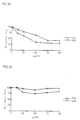
- the LTR sequence-specific antisense oligonucleotides (g) and (h) inhibit the hGH production between 30 and 70% depending on the concentration.
- a non-sequence-specific phosphorothioate oligonucleotide (CCC GCG CCA AAG ACC GCC ACC), in which all phosphorus diester bonds are sulfur-substituted, showed only low inhibitory activity even in higher concentrations (50-100 ⁇ g / ml) (Fig. 3b).
- the in vitro translation of the Tat mRNA resulted in a protein of the size 13 kDa (DNA cut with Hind III) and 17 kDa (DNA cut with Pvu II).
- FIG. 1 The result of the inhibition of the in vitro translations is shown in Figure 1.
- the percentage of protein formed is plotted against the respective antisense oligonucleotides.
- the sequence-dependent position of the antisense oligonucleotides is shown schematically on the abscissa in the 5'3 'orientation of the Tat mRNA.
- the control (shown on the far right in Fig. 1) symbolizes 100% Tat protein synthesis. The lower the protein synthesis, the better an oligonucleotide works.
- Antisense oligonucleotides were developed against the following TAR and leader sequences nt 21-53, 74-161, 202-279 and the second and third exons of the Tat gene nt 5368-5403, 5421-5548, 5583-5617 and nt 7967- 8366, 8385-9183 (nucleotide numbers according to L. Ratner et al., Nature 313 , (1985) 277-284) of the HIV I genome.
- the antisense oligonucleotides can inhibit protein synthesis both in the 5 'untranslated region, at the 3' end of the present Tat mRNA and within the Tat mRNA, although other groups have published that the antiserse oligonucleotides in the region of the AUG start codon best inhibit protein synthesis.
- the antisense oligonucleotides show a clear dose-response relationship to tat expression in vitro (Fig. 2).
- a combination of internucleotide-modified oligonucleotides with terminally covalently linked lipophilic compounds such as cholesterol, hexadecanol, acridine derivatives and others has proven to be particularly effective (synthesis analogous to Thuong, NT and Chassignol, M. (1988), Tetrahedron Letters 29, 5905-5908) .
- These conjugates increase cell membrane penetration while increasing their effectiveness.
- conjugates of phosphorothioate oligonucleotides and cholesterol show a significantly higher inhibition of protein synthesis than the identical phosphorothioate without the covalently bound cholesterol (Fig. 2A).
- the effect of the HIV sequence-specific antisense oligonucleotides was also tested on estrogen receptor, TMV and BMV mRNA. It was shown that they do not affect the translation of these mRNAs in the concentrations used.
- the oligonucleotides according to the invention are therefore highly specific for the HIV gene sequence.
- the TAR mRNA also tested here is characterized by a pronounced stem-loop structure (Feng, S. and Holland, E.C. (1988) Nature 334, 165-167).
- the oligonucleotides (phosphorothioates) that hybridized in the loop region worked best (g and h in Table 1).
- the secondary structure can be obtained from a computer-simulated calculation.
- the antisense oligonucleotides identified by us as particularly effective can in principle be extended by the complementary nucleotides at the 3 'and 5' termini of the target sequence without losing the effective quality found.
- the quality of action according to the invention can also be maintained by changes in the specified nucleotide sequences by exchanging one or more nucleobases with other partial structures such as, for example, hypoxanthine or other purines, pyrimidines or entirely other substituents which do not impair the hybridization.
- antisense oligonucleotides act on changes in the specified oligonucleotide sequences by omitting or adding nucleotides or pseudonucleotides within the said sequences, if the hybridization is not prevented thereby.
- antisense oligonucleotides from the group of a large number of free oligonucleotides proved to be particularly highly effective against HIV-I.
- Tat oligos
- the numbering is done according to L. Ratner (see above).
- the present invention also includes fragments of these nucleotides, as well as extensions of these sequences at the 3 'and / or 5' end, insofar as they do not impair the action of the sequences indicated.
- oligonucleotide sequences by omitting or adding nucleotides or pseudonucleotides within the sequences mentioned.
- the chain length of the oligonucleotides is 6-50 base pairs. 10-30 base pairs are preferred and 10-20 base pairs are particularly preferred.
- the tat gene is known to overlap with the rev gene. Regardless of the name of the gene, the sequences given here are the place of action for the antisense oligonucleotides and derivatives according to the invention.
Landscapes
- Life Sciences & Earth Sciences (AREA)
- Health & Medical Sciences (AREA)
- Chemical & Material Sciences (AREA)
- Genetics & Genomics (AREA)
- Organic Chemistry (AREA)
- Engineering & Computer Science (AREA)
- Virology (AREA)
- Biomedical Technology (AREA)
- Molecular Biology (AREA)
- Biochemistry (AREA)
- Biophysics (AREA)
- General Engineering & Computer Science (AREA)
- General Health & Medical Sciences (AREA)
- Bioinformatics & Cheminformatics (AREA)
- Biotechnology (AREA)
- Wood Science & Technology (AREA)
- Zoology (AREA)
- Physics & Mathematics (AREA)
- Microbiology (AREA)
- Plant Pathology (AREA)
- AIDS & HIV (AREA)
- Gastroenterology & Hepatology (AREA)
- Medicinal Chemistry (AREA)
- Proteomics, Peptides & Aminoacids (AREA)
- Pharmaceuticals Containing Other Organic And Inorganic Compounds (AREA)
- Medicines That Contain Protein Lipid Enzymes And Other Medicines (AREA)
Claims (8)
- Oligonucléotides anti-sens modifiés chimiquement, comportant des séquences contre la séquence de TAR et la séquence leader nt 21-53, 74-161, 202-279 et le deuxième et le troisième exon du gène de Tat nt 5368-5403, 5421-5548, 5583-5617 et nt 7967-8366, 8385-9183 du génome de VIH-I.
- Oligonucléotides anti-sens suivant la revendication 1 contre la séquence TAR nt 21-53 et la séquence Tat 5368-5403, 5421-5548, 5583-5617.
- Oligonucléotides anti-sens suivant les revendications 1 et 2, du groupe :

- Oligonucléotides anti-sens suivant les revendications 1 à 3, dans lesquels une, plusieurs ou la totalité des liaisons diester phosphoré internucléotidiques sont présentes sous forme de phosphorothioates ou de méthylphosphonates ou des deux formes chimiques.
- Médicament contenant les oligonucléotides anti-sens suivant les revendications 1 à 4.
- Oligonucléotides anti-sens suivant les revendications 1 à 4, destinés à être utilisés pour le traitement thérapeutique d'infections à VIH.
- Utilisation des oligonucléotides anti-sens suivant les revendications 1 à 4, y compris les séquences complémentaires, comme sondes géniques.
- Utilisation d'oligonucléotides anti-sens à séquences suivant la revendication 3, y compris leurs séquences complémentaires, comme sondes géniques, lesquelles se présentent sous forme de diester.
Priority Applications (1)
| Application Number | Priority Date | Filing Date | Title |
|---|---|---|---|
| AT9090103641T ATE105020T1 (de) | 1989-03-09 | 1990-02-25 | Antisense-oligonukleotide zur inhibierung der transaktivatorzielsequenz (tar) und der synthese des transaktivatorproteins (tat) aus hiv-i und deren verwendung. |
Applications Claiming Priority (2)
| Application Number | Priority Date | Filing Date | Title |
|---|---|---|---|
| DE3907562 | 1989-03-09 | ||
| DE3907562A DE3907562A1 (de) | 1989-03-09 | 1989-03-09 | Antisense-oligonukleotide zur inhibierung der transaktivatorzielsequenz (tar) und der synthese des transaktivatorproteins (tat) aus hiv-1 und deren verwendung |
Publications (2)
| Publication Number | Publication Date |
|---|---|
| EP0386563A1 EP0386563A1 (fr) | 1990-09-12 |
| EP0386563B1 true EP0386563B1 (fr) | 1994-04-27 |
Family
ID=6375881
Family Applications (1)
| Application Number | Title | Priority Date | Filing Date |
|---|---|---|---|
| EP90103641A Expired - Lifetime EP0386563B1 (fr) | 1989-03-09 | 1990-02-25 | Oligonucléotides antisens pour l'inhibition de la séquence cible de transactivation (TAR) et de la synthèse de la protéine de transactivation (TAT) de VIH-I et leur utilisation |
Country Status (5)
| Country | Link |
|---|---|
| EP (1) | EP0386563B1 (fr) |
| JP (1) | JPH02276577A (fr) |
| AT (1) | ATE105020T1 (fr) |
| DE (2) | DE3907562A1 (fr) |
| ES (1) | ES2063183T3 (fr) |
Cited By (5)
| Publication number | Priority date | Publication date | Assignee | Title |
|---|---|---|---|---|
| US6153382A (en) * | 1990-09-20 | 2000-11-28 | Ribotargets, Ltd. | Viral growth inhibition |
| US6776986B1 (en) | 1996-06-06 | 2004-08-17 | Novartis Ag | Inhibition of HIV-1 replication by antisense RNA expression |
| US7507420B2 (en) | 2001-05-31 | 2009-03-24 | Medarex, Inc. | Peptidyl prodrugs and linkers and stabilizers useful therefor |
| US7517903B2 (en) | 2004-05-19 | 2009-04-14 | Medarex, Inc. | Cytotoxic compounds and conjugates |
| US7691962B2 (en) | 2004-05-19 | 2010-04-06 | Medarex, Inc. | Chemical linkers and conjugates thereof |
Families Citing this family (29)
| Publication number | Priority date | Publication date | Assignee | Title |
|---|---|---|---|---|
| FI924964A7 (fi) * | 1990-05-04 | 1992-11-03 | Isis Pharmaceuticals Inc | Geenien ilmentymisen muuntelu vaikuttamalla häiritsevästi RNA:n sekund aarirakenteeseen |
| US5866698A (en) * | 1990-05-04 | 1999-02-02 | Isis Pharmaceuticals, Inc. | Modulation of gene expression through interference with RNA secondary structure |
| WO1991017246A1 (fr) * | 1990-05-04 | 1991-11-14 | Isis Pharmaceuticals, Inc. | Procedes de modulation de l'expression des genes par l'interference dans la structure secondaire de l'arn |
| US5166195A (en) * | 1990-05-11 | 1992-11-24 | Isis Pharmaceuticals, Inc. | Antisense inhibitors of the human immunodeficiency virus phosphorothioate oligonucleotides |
| GB9016973D0 (en) * | 1990-08-02 | 1990-09-19 | Medical Res Council | Viral growth inhibition |
| CA2372251A1 (fr) | 1991-01-21 | 1992-08-06 | Michael John Mullan | Test et modele pour la maladie d'alzheimer |
| FR2677039B1 (fr) * | 1991-05-31 | 1994-09-09 | Cis Bio Int | Oligonucleotides, utilisables comme reactifs pour la detection in vitro des infections a retrovirus de type hiv et procede de detection de retrovirus de type hiv. |
| IT1250722B (it) * | 1991-07-30 | 1995-04-21 | Univ Degli Studi Milano | Oligonucleotidi antisenso |
| US5646267A (en) * | 1991-08-05 | 1997-07-08 | Polish Academy Of Sciences | Method of making oligonucleotides and oligonucleotide analogs using phospholanes and enantiomerically resolved phospholane analogues |
| US5359052A (en) * | 1991-08-05 | 1994-10-25 | Polish Academy Of Sciences | Chalcophospholanes useful in the synthesis of oligonucleoside phosphorothioates, phosphorodithioates and related selenates |
| JP3113280B2 (ja) * | 1992-07-20 | 2000-11-27 | アイシス・ファーマシューティカルス・インコーポレーテッド | アンチセンスオリゴヌクレオチドの標的rna二次構造へのハイブリダイゼーションによるシュード−ハーフ−ノットrnaの形成 |
| CN1124980A (zh) * | 1993-03-31 | 1996-06-19 | 海布里顿公司 | 具有改良抗流感活性的经修饰寡核苷酸 |
| AU697234B2 (en) * | 1993-06-23 | 1998-10-01 | Viventia Biotech Inc. | Antisense oligonucleotides and therapeutic use thereof in human immunodeficiency virus infection |
| KR960704033A (ko) * | 1993-07-19 | 1996-08-31 | 다니엘 엘. 캐시앙 | 인간 면역결핍 바이러스에 대한 활성을 갖는 올리고뉴클레오티드(Oligonucleotides with Activity against Humand Immunodeficiency Virus) |
| AU2419595A (en) * | 1994-05-10 | 1995-11-29 | Hisamitsu Pharmaceutical Co., Inc. | Recombinant human immunodeficiency virus vector and process for producing the same |
| DE19514089C2 (de) * | 1995-04-13 | 1997-07-10 | Deutsches Krebsforsch | Nachweisverfahren für HIV-TAT |
| US6426412B1 (en) * | 1995-12-20 | 2002-07-30 | Subsidiary No. 3, Inc. | Nucleic acids encoding human immunodeficiency virus type 1 genetic suppressor elements |
| US5955644A (en) * | 1996-08-08 | 1999-09-21 | M.D. Anderson Cancer Center | Ku deficient cells and non-human transgenic animals |
| US6057489A (en) * | 1996-09-12 | 2000-05-02 | M.D. Anderson Cancer Center | MmRad51-deficient cells and transgenic mice |
| GB0012497D0 (en) * | 2000-05-23 | 2000-07-12 | Syngenix Ltd | Antiviral therapy |
| AU2001263708A1 (en) * | 2000-07-03 | 2002-01-14 | Werner Alex Hafner | Method for formulating molecular probes |
| AU2006294554B2 (en) | 2005-09-26 | 2013-03-21 | E. R. Squibb & Sons, L.L.C. | Antibody-drug conjugates and methods of use |
| CA2627190A1 (fr) | 2005-11-10 | 2007-05-24 | Medarex, Inc. | Composes et conjugues cytotoxiques |
| SI2056845T1 (en) | 2006-08-08 | 2018-02-28 | Rheinische Friedrich-Wilhelms-Universitaet Bonn | STRUCTURE AND USE 5 'PHOSPHATE OF OLIGONUCLEOTES |
| WO2009097006A2 (fr) | 2007-08-10 | 2009-08-06 | Medarex, Inc. | Hco32 et hco27 et exemples connexes |
| EP2297323A1 (fr) | 2008-05-21 | 2011-03-23 | Hartmann, Gunther | Oligonucléotide à 5 -triphosphate présentant une extrémité franche et ses utilisations |
| IT1397569B1 (it) | 2009-12-10 | 2013-01-16 | Icgeb | Peptidi e loro derivati che inibiscono il rilascio extracellulare della proteina tat di hiv-1 e la replicazione di hiv-1. |
| EP2508530A1 (fr) | 2011-03-28 | 2012-10-10 | Rheinische Friedrich-Wilhelms-Universität Bonn | Purification d'oligonucléotides triphosphorylés au moyen d'étiquettes de capture |
| EP2712870A1 (fr) | 2012-09-27 | 2014-04-02 | Rheinische Friedrich-Wilhelms-Universität Bonn | Nouveaux ligands de RIG-I et procédés pour les produire |
Family Cites Families (1)
| Publication number | Priority date | Publication date | Assignee | Title |
|---|---|---|---|---|
| US5276019A (en) * | 1987-03-25 | 1994-01-04 | The United States Of America As Represented By The Department Of Health And Human Services | Inhibitors for replication of retroviruses and for the expression of oncogene products |
-
1989
- 1989-03-09 DE DE3907562A patent/DE3907562A1/de not_active Withdrawn
-
1990
- 1990-02-25 DE DE59005494T patent/DE59005494D1/de not_active Expired - Fee Related
- 1990-02-25 EP EP90103641A patent/EP0386563B1/fr not_active Expired - Lifetime
- 1990-02-25 AT AT9090103641T patent/ATE105020T1/de not_active IP Right Cessation
- 1990-02-25 ES ES90103641T patent/ES2063183T3/es not_active Expired - Lifetime
- 1990-03-09 JP JP2056779A patent/JPH02276577A/ja active Pending
Non-Patent Citations (1)
| Title |
|---|
| JOURNAL OF VIROLOGY, Band 62, Nr. 10, Oktober 1988, Washington, DC; J.A. ZAIA et al., Seiten 3914-3917 * |
Cited By (8)
| Publication number | Priority date | Publication date | Assignee | Title |
|---|---|---|---|---|
| US6153382A (en) * | 1990-09-20 | 2000-11-28 | Ribotargets, Ltd. | Viral growth inhibition |
| US6776986B1 (en) | 1996-06-06 | 2004-08-17 | Novartis Ag | Inhibition of HIV-1 replication by antisense RNA expression |
| US7507420B2 (en) | 2001-05-31 | 2009-03-24 | Medarex, Inc. | Peptidyl prodrugs and linkers and stabilizers useful therefor |
| US7977465B2 (en) | 2001-05-31 | 2011-07-12 | Medarex, Inc. | Peptidyl prodrugs and linkers and stabilizers useful therefor |
| US8034959B2 (en) | 2001-05-31 | 2011-10-11 | Medarex, Inc. | Methods of treating cancer with an antibody-drug conjugate |
| US7517903B2 (en) | 2004-05-19 | 2009-04-14 | Medarex, Inc. | Cytotoxic compounds and conjugates |
| US7691962B2 (en) | 2004-05-19 | 2010-04-06 | Medarex, Inc. | Chemical linkers and conjugates thereof |
| US8399403B2 (en) | 2004-05-19 | 2013-03-19 | Medarex, Inc. | Chemical linkers and conjugates thereof |
Also Published As
| Publication number | Publication date |
|---|---|
| DE59005494D1 (de) | 1994-06-01 |
| ES2063183T3 (es) | 1995-01-01 |
| ATE105020T1 (de) | 1994-05-15 |
| JPH02276577A (ja) | 1990-11-13 |
| EP0386563A1 (fr) | 1990-09-12 |
| DE3907562A1 (de) | 1990-09-13 |
Similar Documents
| Publication | Publication Date | Title |
|---|---|---|
| EP0386563A1 (fr) | Oligonucléotides antisens pour l'inhibition de la séquence cible de transactivation (TAR) et de la synthèse de la protéine de transactivation (TAT) de VIH-I et leur utilisation | |
| DE68921315T2 (de) | Verfahren zur Herstellung synthetischer Oligonukleotide, die spezifisch an Bestimmungsstellen auf Duplex-DNA-Molekülen binden durch Formen eines kolinearen Triplex, die synthetischen Oligonukleotide und Verfahren zu ihrer Herstellung. | |
| DE69729179T2 (de) | Lückenhaft Zucker-modifizierte Oligonukleotide | |
| DE69331524T2 (de) | Verfahren zum spezifischen schneiden von rna-strängen | |
| DE69432934T2 (de) | Oligonukleotidmodulation der expression von multiwirkstoff-resistenz -assoziiertem protein | |
| DE3852714T2 (de) | Oligodesoxynukleotide als Inhibitoren der Replikation von Retroviren und der Expression von Onkogenen. | |
| DE69232032T3 (de) | Antisense oligonukleotide | |
| DE69533697T2 (de) | ANTISENSE OLIGONUKLEOTIDMODULATION DER raf GENEXPRESSION | |
| DE69131422T2 (de) | Gegensinnige hemmer des humanen immunmangel virus (hiv) | |
| EP1409670B1 (fr) | Oligonucleotides synthetiques a double brin utilises pour inhiber de fa on ciblee l'expression genique | |
| DE69231739T2 (de) | Aus alternden zellen abgeleitete hemmer der dns-synthese | |
| EP1352061B9 (fr) | Procede pour inhiber l'expression d'un gene cible | |
| DE60038495T2 (de) | Oligonukleotid n3'-p5' thiophosphoramidate: ihre synthese und verwendung | |
| DE69933653T2 (de) | Zur Hemmung der Expression des CCR5-Rezeptors befähigte Ribozyme | |
| DE69729145T2 (de) | Reagenz und Verfahren zur Inhibierung der N-RAS Expression | |
| DE4338704A1 (de) | Stabilisierte Oligonucleotide und deren Verwendung | |
| EP0726274A2 (fr) | Oligonucléotides stabilisés par des radicaux G-gap | |
| DE69626393T2 (de) | Spezifische oligonukleotide für hepatitis b virus | |
| DE69613336T2 (de) | Chimere ribozym-snRNA Moleküle mit katalytischen Aktivität nuklearer RNAs | |
| DE19935303A1 (de) | Oligonukleotide zur Inhibierung der Expression von humanem eg5 | |
| EP0560156A2 (fr) | Polynucléotides du virus pseudorabique (PRV) et leur utilisation pour la production de cellules encaryotiques résistantes au virus | |
| DE69501081T2 (de) | Oligonukleotide mit anti-cytomegalovirus wirkung | |
| DE69611368T2 (de) | Oligonukleotide spezifisch für humane papillomaviren | |
| DE69131848T2 (de) | Modulation der genexpression durch eingreifen in die rna sekundärstruktur | |
| EP0594881A1 (fr) | Vecteurs d'expression et leur utilisation pour la production de cellules humaines résistantes au HIV pour les applications thérapeutiques |
Legal Events
| Date | Code | Title | Description |
|---|---|---|---|
| PUAI | Public reference made under article 153(3) epc to a published international application that has entered the european phase |
Free format text: ORIGINAL CODE: 0009012 |
|
| 17P | Request for examination filed |
Effective date: 19900302 |
|
| AK | Designated contracting states |
Kind code of ref document: A1 Designated state(s): AT BE CH DE ES FR GB GR IT LI LU NL SE |
|
| 17Q | First examination report despatched |
Effective date: 19931013 |
|
| GRAA | (expected) grant |
Free format text: ORIGINAL CODE: 0009210 |
|
| AK | Designated contracting states |
Kind code of ref document: B1 Designated state(s): AT BE CH DE ES FR GB GR IT LI LU NL SE |
|
| REF | Corresponds to: |
Ref document number: 105020 Country of ref document: AT Date of ref document: 19940515 Kind code of ref document: T |
|
| REF | Corresponds to: |
Ref document number: 59005494 Country of ref document: DE Date of ref document: 19940601 |
|
| GBT | Gb: translation of ep patent filed (gb section 77(6)(a)/1977) |
Effective date: 19940510 |
|
| ITF | It: translation for a ep patent filed | ||
| ET | Fr: translation filed | ||
| REG | Reference to a national code |
Ref country code: GR Ref legal event code: FG4A Free format text: 3012738 |
|
| REG | Reference to a national code |
Ref country code: ES Ref legal event code: FG2A Ref document number: 2063183 Country of ref document: ES Kind code of ref document: T3 |
|
| EAL | Se: european patent in force in sweden |
Ref document number: 90103641.8 |
|
| PLBE | No opposition filed within time limit |
Free format text: ORIGINAL CODE: 0009261 |
|
| STAA | Information on the status of an ep patent application or granted ep patent |
Free format text: STATUS: NO OPPOSITION FILED WITHIN TIME LIMIT |
|
| 26N | No opposition filed | ||
| PGFP | Annual fee paid to national office [announced via postgrant information from national office to epo] |
Ref country code: DE Payment date: 19990114 Year of fee payment: 10 |
|
| PGFP | Annual fee paid to national office [announced via postgrant information from national office to epo] |
Ref country code: SE Payment date: 19990120 Year of fee payment: 10 |
|
| PGFP | Annual fee paid to national office [announced via postgrant information from national office to epo] |
Ref country code: GR Payment date: 19990121 Year of fee payment: 10 |
|
| PGFP | Annual fee paid to national office [announced via postgrant information from national office to epo] |
Ref country code: FR Payment date: 19990125 Year of fee payment: 10 |
|
| PGFP | Annual fee paid to national office [announced via postgrant information from national office to epo] |
Ref country code: CH Payment date: 19990209 Year of fee payment: 10 Ref country code: AT Payment date: 19990209 Year of fee payment: 10 |
|
| PGFP | Annual fee paid to national office [announced via postgrant information from national office to epo] |
Ref country code: ES Payment date: 19990211 Year of fee payment: 10 |
|
| PGFP | Annual fee paid to national office [announced via postgrant information from national office to epo] |
Ref country code: LU Payment date: 19990219 Year of fee payment: 10 |
|
| PGFP | Annual fee paid to national office [announced via postgrant information from national office to epo] |
Ref country code: BE Payment date: 19990224 Year of fee payment: 10 |
|
| PGFP | Annual fee paid to national office [announced via postgrant information from national office to epo] |
Ref country code: GB Payment date: 19990225 Year of fee payment: 10 |
|
| PGFP | Annual fee paid to national office [announced via postgrant information from national office to epo] |
Ref country code: NL Payment date: 19990228 Year of fee payment: 10 |
|
| PG25 | Lapsed in a contracting state [announced via postgrant information from national office to epo] |
Ref country code: LU Free format text: LAPSE BECAUSE OF NON-PAYMENT OF DUE FEES Effective date: 20000225 Ref country code: GB Free format text: LAPSE BECAUSE OF NON-PAYMENT OF DUE FEES Effective date: 20000225 Ref country code: AT Free format text: LAPSE BECAUSE OF NON-PAYMENT OF DUE FEES Effective date: 20000225 |
|
| PG25 | Lapsed in a contracting state [announced via postgrant information from national office to epo] |
Ref country code: SE Free format text: LAPSE BECAUSE OF NON-PAYMENT OF DUE FEES Effective date: 20000226 Ref country code: ES Free format text: LAPSE BECAUSE OF NON-PAYMENT OF DUE FEES Effective date: 20000226 |
|
| PG25 | Lapsed in a contracting state [announced via postgrant information from national office to epo] |
Ref country code: BE Free format text: LAPSE BECAUSE OF NON-PAYMENT OF DUE FEES Effective date: 20000228 |
|
| PG25 | Lapsed in a contracting state [announced via postgrant information from national office to epo] |
Ref country code: LI Free format text: LAPSE BECAUSE OF NON-PAYMENT OF DUE FEES Effective date: 20000229 Ref country code: GR Free format text: LAPSE BECAUSE OF NON-PAYMENT OF DUE FEES Effective date: 20000229 Ref country code: CH Free format text: LAPSE BECAUSE OF NON-PAYMENT OF DUE FEES Effective date: 20000229 |
|
| BERE | Be: lapsed |
Owner name: BAYER A.G. Effective date: 20000228 |
|
| PG25 | Lapsed in a contracting state [announced via postgrant information from national office to epo] |
Ref country code: NL Free format text: LAPSE BECAUSE OF NON-PAYMENT OF DUE FEES Effective date: 20000901 |
|
| EUG | Se: european patent has lapsed |
Ref document number: 90103641.8 |
|
| REG | Reference to a national code |
Ref country code: CH Ref legal event code: PL |
|
| GBPC | Gb: european patent ceased through non-payment of renewal fee |
Effective date: 20000225 |
|
| PG25 | Lapsed in a contracting state [announced via postgrant information from national office to epo] |
Ref country code: FR Free format text: LAPSE BECAUSE OF NON-PAYMENT OF DUE FEES Effective date: 20001031 |
|
| NLV4 | Nl: lapsed or anulled due to non-payment of the annual fee |
Effective date: 20000901 |
|
| PG25 | Lapsed in a contracting state [announced via postgrant information from national office to epo] |
Ref country code: DE Free format text: LAPSE BECAUSE OF NON-PAYMENT OF DUE FEES Effective date: 20001201 |
|
| REG | Reference to a national code |
Ref country code: FR Ref legal event code: ST |
|
| REG | Reference to a national code |
Ref country code: ES Ref legal event code: FD2A Effective date: 20011010 |
|
| PG25 | Lapsed in a contracting state [announced via postgrant information from national office to epo] |
Ref country code: IT Free format text: LAPSE BECAUSE OF NON-PAYMENT OF DUE FEES;WARNING: LAPSES OF ITALIAN PATENTS WITH EFFECTIVE DATE BEFORE 2007 MAY HAVE OCCURRED AT ANY TIME BEFORE 2007. THE CORRECT EFFECTIVE DATE MAY BE DIFFERENT FROM THE ONE RECORDED. Effective date: 20050225 |