EP0387821A2 - 2-Alkyl-4-arylmethylaminochinoline, ihre Verwendung und daraus hergestellte Arzneimittel - Google Patents
2-Alkyl-4-arylmethylaminochinoline, ihre Verwendung und daraus hergestellte Arzneimittel Download PDFInfo
- Publication number
- EP0387821A2 EP0387821A2 EP90104777A EP90104777A EP0387821A2 EP 0387821 A2 EP0387821 A2 EP 0387821A2 EP 90104777 A EP90104777 A EP 90104777A EP 90104777 A EP90104777 A EP 90104777A EP 0387821 A2 EP0387821 A2 EP 0387821A2
- Authority
- EP
- European Patent Office
- Prior art keywords
- methoxy
- formula
- group
- compounds
- quinoline
- Prior art date
- Legal status (The legal status is an assumption and is not a legal conclusion. Google has not performed a legal analysis and makes no representation as to the accuracy of the status listed.)
- Granted
Links
Classifications
-
- C—CHEMISTRY; METALLURGY
- C07—ORGANIC CHEMISTRY
- C07D—HETEROCYCLIC COMPOUNDS
- C07D215/00—Heterocyclic compounds containing quinoline or hydrogenated quinoline ring systems
- C07D215/02—Heterocyclic compounds containing quinoline or hydrogenated quinoline ring systems having no bond between the ring nitrogen atom and a non-ring member or having only hydrogen atoms or carbon atoms directly attached to the ring nitrogen atom
- C07D215/16—Heterocyclic compounds containing quinoline or hydrogenated quinoline ring systems having no bond between the ring nitrogen atom and a non-ring member or having only hydrogen atoms or carbon atoms directly attached to the ring nitrogen atom with hetero atoms or with carbon atoms having three bonds to hetero atoms with at the most one bond to halogen, e.g. ester or nitrile radicals, directly attached to ring carbon atoms
- C07D215/38—Nitrogen atoms
- C07D215/42—Nitrogen atoms attached in position 4
-
- A—HUMAN NECESSITIES
- A61—MEDICAL OR VETERINARY SCIENCE; HYGIENE
- A61P—SPECIFIC THERAPEUTIC ACTIVITY OF CHEMICAL COMPOUNDS OR MEDICINAL PREPARATIONS
- A61P1/00—Drugs for disorders of the alimentary tract or the digestive system
-
- A—HUMAN NECESSITIES
- A61—MEDICAL OR VETERINARY SCIENCE; HYGIENE
- A61P—SPECIFIC THERAPEUTIC ACTIVITY OF CHEMICAL COMPOUNDS OR MEDICINAL PREPARATIONS
- A61P1/00—Drugs for disorders of the alimentary tract or the digestive system
- A61P1/04—Drugs for disorders of the alimentary tract or the digestive system for ulcers, gastritis or reflux esophagitis, e.g. antacids, inhibitors of acid secretion, mucosal protectants
-
- A—HUMAN NECESSITIES
- A61—MEDICAL OR VETERINARY SCIENCE; HYGIENE
- A61P—SPECIFIC THERAPEUTIC ACTIVITY OF CHEMICAL COMPOUNDS OR MEDICINAL PREPARATIONS
- A61P29/00—Non-central analgesic, antipyretic or antiinflammatory agents, e.g. antirheumatic agents; Non-steroidal antiinflammatory drugs [NSAID]
Definitions
- the invention relates to new 2-alkyl-4-arylmethylaminoquinolines and their use in combating diseases.
- EP-OS 258 755 claims 4-amino-2-methylquinolin-3-yl ketones and alkanols for the treatment of Alzheimer's disease.
- R1 is a C1-C3-alkyl group which can be substituted by a hydroxy or a C1-C3-alkoxy group
- R2 is either a naphthyl radical or a radical of the formula (a)
- R3 is a C1-C3-alkyl group which can be substituted by a hydroxy or methoxy group, a C1-C3-alkoxy group, a fluorine, chlorine or bromine atom
- R4 is a hydrogen atom, a methyl, hydroxy or methoxy group, a fluorine, chlorine or bromine atom
- R5 is a C1-C3-alkoxy, a C1-C3-alkyl group, which can be substituted by a hydroxy or C1-C3-alkoxy group, a hydroxy group, a fluorine, chlorine or bromine atom
- R6 represents a hydrogen atom
- R1 is a methyl group which can be substituted by a hydroxy or C1-C3 alkoxy group, especially a methoxy group.
- R2 is preferably a 1-naphthyl radical or a radical of the formula (a).
- R3 is preferably a C1-C3-alkyl group, in particular the methyl and ethyl group, a C1-C3-alkoxy group, in particular the methoxy group, a chlorine or a bromine atom.
- R4 preferably denotes a hydrogen atom, a 4-hydroxy group or a 6-methyl, 6-methoxy group or a 6-fluorine or 6-chlorine atom, in particular R4 denotes a hydrogen atom or a 6-fluorine or 6-chlorine atom.
- R5 are a C1-C2-alkoxy group, a C1-C2-alkyl group, which can be substituted by a hydroxy or methoxy group.
- R5 particularly preferably represents a methoxy, a methyl or ethyl group.
- R6 is a hydrogen atom.
- the compounds according to the invention are prepared by analogy processes in a manner known per se, using a quinoline of the formula II where X represents a nucleophilic leaving group such as a chlorine or bromine atom or a phenoxy group and R1, R5 and R6 have the above meanings, is reacted with an amine of the formula R2-CH2-NH2 in a conventional manner.
- the reaction can be carried out in the presence of a solvent such as toluene, xylene, phenol, ethanol, dimethyl sulfoxide, dimethylethylene urea, dimethylpropylene urea, pyrrolidone, N-methylpyrrolidone, in mixtures of these solvents or in the absence of solvents, if appropriate in the presence of a catalyst such as copper or bronze powder or copper ( I) chloride at temperatures of 50 to 250 ° C, optionally under pressure.
- a solvent such as toluene, xylene, phenol, ethanol, dimethyl sulfoxide, dimethylethylene urea, dimethylpropylene urea, pyrrolidone, N-methylpyrrolidone, in mixtures of these solvents or in the absence of solvents, if appropriate in the presence of a catalyst such as copper or bronze powder or copper ( I) chloride at temperatures of 50 to 250 ° C, optionally under pressure.
- the amines R2CH2NH2
- reaction of the compounds of formula II with the amines R2CH2NH2 is preferably carried out in a ratio of 1: 1 to 1:10 in the presence of phenol at temperatures from 60 to 160 ° C.
- the amines R2CH2NH2 and the starting materials of the formula II are known from the literature or are commercially available, or can be prepared analogously to known compounds.
- R 1 denotes a hydroxymethyl group
- R2 has the meanings given for formula I and R7 represents a hydrogen atom or a C1-C3 alkyl group
- suitable reducing agents such as lithium aluminum hydride.
- the compounds of the formula I according to the invention in which R1 is a C1-C3 alkoxymethyl group can also be obtained by reacting the compounds of the formula IV, in which R2, R5 and R6 have the meanings mentioned, can be obtained with an alkali C1-C3 alkoxide in a solvent such as the corresponding C1-C3 alcohol or dimethylformamide.
- the starting materials of the formula IV can be prepared by reacting the compounds of the formula I in which R 1 is a hydroxymethyl group with thionyl chloride.
- the starting materials of the formula V are obtained by reacting the 4-hydroxyquinolines of the formula VI, in which R8 has the meaning given for formula V, can be obtained with customary chlorinating agents such as POCl3, PCl5, SOCl2, a hydroxyl group in R5 first being modified by a suitable protective group which, after conversion, is split off again to give compounds of formula (V).
- R6 H, see eg J. Org. Chem. 16 (1951) 412-414; J.Amer.Chem.Soc. 73 (1951) 3520; Z. Naturforsch. 35B (1980) 1569-1571; Z. Physiol. Chem. 297 (1954) 247-248.
- the compounds according to the invention obtained are converted into the acid addition salt of a physiologically tolerated acid.
- a compilation of customary physiologically acceptable acids can be found in the advances in drug research in 1966, Germany, Switzerland, Birkhäuser Verlag, vol. 10, pp. 224-285 and J.Pharm will.
- the acid addition salts are generally in a manner known per se by mixing the free base or its solutions with the corresponding acid or its solutions in an organic solvent, for example a lower alcohol, such as methanol, ethanol or propanol, or a lower ketone, such as acetone , Methyl ethyl ketone or methyl isobutyl ketone, or an ether such as diethyl ether, tetrahydrofuran or dioxane. Mixtures of the solvents mentioned can be used for better crystal deposition.
- pharmaceutically acceptable aqueous solutions of acid addition compounds of the amino compounds of the formula I can be prepared by dissolving the free bases in an aqueous acid solution.
- the compounds according to the invention and their salts with physiologically compatible acids have valuable pharmacological effects. In particular, they inhibit gastrointestinal K+ / H+ ATPase and gastric acid secretion.
- the compounds according to the invention can therefore be used for the therapy of all diseases in which a reduction in gastric acid secretion has a favorable effect on healing, e.g. Ulcer ventriculi, duodenal ulcer, gastritis, reflux esophagitis, Zollinger-Ellison syndrome can be used (see review on inhibitors of K+ / H+ ATPase, G. Sachs et al., Ann. Rev. Pharmacol. Toxicol. 28 (88) 269-284 and quoted there).
- the present invention also relates to pharmaceuticals for oral, rectal or intravenous administration which, in addition to conventional carriers and diluents, contain the compounds of the formula I or their acid addition salts as active ingredients, and the use of the new compound and its physiologically tolerable salts in the treatment of the said Diseases.
- the medicaments of the invention are produced in a known manner with the customary solid or liquid carriers or diluents and the commonly used pharmaceutical-technical auxiliaries in accordance with the desired type of application with a suitable dosage.
- the preferred preparations are in a dosage form which is suitable for oral administration. Dosage forms of this type are, for example, tablets, film-coated tablets, coated tablets, capsules, pills, powders, solutions or suspensions or depot forms.
- parenteral preparations such as injection solutions are also suitable. Suppositories may also be mentioned as preparations.
- Corresponding tablets can be obtained, for example, by mixing the active ingredient with known auxiliaries, for example inert diluents such as dextrose, sugar, sorbitol, mannitol, polyvinylpyrrolidone, disintegrants such as corn starch or alginic acid, binders such as starch or gelatin, lubricants such as magnesium stearate or talc and / or agents to achieve one Depot effects such as carboxypolymethylene, carboxymethyl cellulose, cellulose acetate phthalate or polyvinyl acetate can be obtained.
- auxiliaries for example inert diluents such as dextrose, sugar, sorbitol, mannitol, polyvinylpyrrolidone, disintegrants such as corn starch or alginic acid, binders such as starch or gelatin, lubricants such as magnesium stearate or talc and / or agents to achieve one Depot effects such as carboxypoly
- Coated tablets can accordingly be produced by coating cores produced analogously to the tablets with agents conventionally used in tablet coatings, for example polyvinylpyrrolidone or shellac, gum arabic, talc, titanium dioxide or sugar.
- the coated tablet can also consist of several layers, wherein the auxiliaries mentioned above for the tablets can be used.
- Solutions or suspensions with the active ingredient according to the invention can additionally taste-improving agents such as saccharin, cyclamate or sugar and e.g. Flavorings such as vanillin or orange extract. They can also contain suspending aids such as sodium carboxymethyl cellulose or preservatives such as p-hydroxybenzoates.
- Capsules containing active ingredients can be produced, for example, by mixing the active ingredient with an inert carrier, such as milk sugar or sorbitol, and encapsulating it in gelatin capsules.
- Suitable suppositories can be produced, for example, by mixing them with suitable carriers such as neutral fats or polyethylene glycol or their derivatives.
- the individual dosage is in humans for oral or rectal use at 10 to 1000 mg per single dose, for iv use at 0.01 to 1.0 mg / kg body weight.
- the mucosa of a freshly removed pig's stomach is homogenized in an ice bath in 0.25 M sucrose, 20 mM Tris (trishydroxymethylamino-methane), 1 mM EGTA (ethylene bis (oxyethylene nitrilo) tetraacetic acid) pH 7.0 and 20 min at 20,000 xg centrifuged. The supernatant is centrifuged at 100,000 xg for 60 min. The microsomal pellet obtained is homogenized with 50 mM Tris + 2 mM MgCl2 + 0.1 mM EGTA, pH 7.5 and at -20 ° C. frozen in portions.
- the K+ / H+ activity is tested in 1 ml batches with the following composition: 50 mM Tris / HCl buffer, pH 7.5, 2 mM MgCl2, 20 ug membrane protein with or without the addition of 5 mM KCl.
- the ATPase reaction is started by adding Na2ATP, final concentration 2 mM, reaction time 15 min at 37 ° C.
- the reaction is then stopped by adding 1 ml of 20% trichloroacetic acid.
- the released phosphate is determined by the method of Sanui (Analyt. Biochem. 60, 1974, 489-504).
- the K+ / H+-ATPase is inhibited by adding the compounds according to the invention in the above test arrangement.
Landscapes
- Chemical & Material Sciences (AREA)
- Organic Chemistry (AREA)
- Health & Medical Sciences (AREA)
- Life Sciences & Earth Sciences (AREA)
- Public Health (AREA)
- General Chemical & Material Sciences (AREA)
- Medicinal Chemistry (AREA)
- Nuclear Medicine, Radiotherapy & Molecular Imaging (AREA)
- Chemical Kinetics & Catalysis (AREA)
- Pharmacology & Pharmacy (AREA)
- Veterinary Medicine (AREA)
- Animal Behavior & Ethology (AREA)
- General Health & Medical Sciences (AREA)
- Bioinformatics & Cheminformatics (AREA)
- Engineering & Computer Science (AREA)
- Pain & Pain Management (AREA)
- Rheumatology (AREA)
- Pharmaceuticals Containing Other Organic And Inorganic Compounds (AREA)
- Plural Heterocyclic Compounds (AREA)
- Quinoline Compounds (AREA)
Abstract
Description
- Die Erfindung betrifft neue 2-Alkyl-4-arylmethylaminochinoline sowie deren Verwendung bei der Bekämpfung von Krankheiten.
- In folgenden Literaturstellen wurden 8-substituierte 4-Benzylamino-2-methylchinoline mit potentiell amöbizider und z.T. fungizider Wirkung beschrieben:
J. Indian Chem. Soc. 51 (1974), 880-882
J. Indian Chem. Soc. 56 (1979), 1265-1268
Ann.Biochem.Exptl.Med. (Calcutta) Suppl.20 (1960) 493-504 (= CA-58, 8254c)
J.scient.ind. Res. India 13B (1954), 15-21 4-Arylmethylaminochinoline mit fungizider Wirksamkeit werden in US 4,744,823 beschrieben. - In allgemeiner Form wurden 2-Alkyl-4-benzylamino-chinoline als Zwischenprodukte in der US-P 3 075 984 genannt; 2,8-Dimethyl-4-benzylaminochinolin wurde in Bull.Soc.Chim. France 1973, 2860-2864 sowie in C.R. Acad. Sci., Ser. C 275 (1972), 1041-1044 beschrieben. Für diese Verbindungen wurden jedoch keine pharmakologischen Wirkungen beschrieben.
- Aus dem weiteren Umfeld pharmakologisch aktiver 4-Aminochinoline mit stark variiertem Subtitutionsmuster am Chinolingerüst sind zu nennen:
- In 2-Position unsubstituierte 4-Anilino- und 4-Phenylalkylaminochinolin-3-yl-ketone und -carbonsäureester mit magensäuresekretionshemmender Wirkung wurden in US-P 4 343 804 sowie in der EP-OS 259 174 beschrieben.
- In der EP-OS 258 755 wurden 4-Amino-2-methylchinolin-3-yl-ketone und -alkanole zur Behandlung von Morbus Alzheimer beansprucht.
- Es wurde nun überraschenderweise gefunden, daß die erfindungsgemäßen Verbindungen der Formel I

R¹ eine C₁-C₃-Alkylgruppe, die durch eine Hydroxy- oder eine C₁-C₃-Alkoxygruppe substituiert sein kann,
R² entweder einen Naphthylrest oder einen Rest der Formel (a),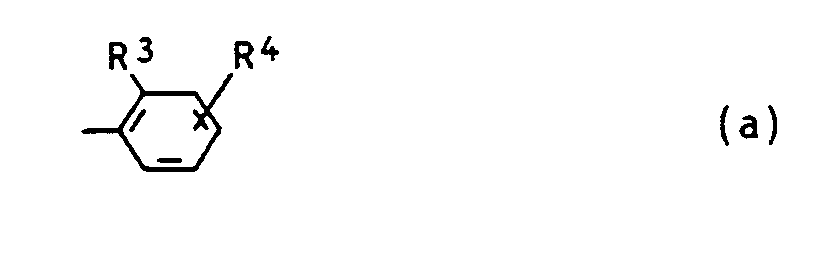
R³ eine C₁-C₃-Alkylgruppe, die durch eine Hydroxy- oder Methoxygruppe substituiert sein kann, eine C₁-C₃-Alkoxygruppe, ein Fluor-, Chlor- oder Bromatom, und
R⁴ ein Wasserstoffatom, eine Methyl-, Hydroxy- oder Methoxygruppe, ein Fluor-, Chlor- oder Bromatom und
R⁵ eine C₁-C₃-Alkoxy-, eine C₁-C₃-Alkylgruppe, die durch eine Hydroxy- oder C₁-C₃-Alkoxygruppe substituiert sein kann, eine Hydroxygruppe, ein Fluor-, Chlor- oder Bromatom und
R⁶ ein Wasserstoffatom, eine Methyl-, Methoxygruppe, ein Fluor-, Chlor- oder Bromatom bedeutet,
sowie deren physiologisch verträgliche Salze wertvolle pharmakologische Wirkungen besitzen. Insbesondere hemmen sie die H⁺/K⁺-ATPase und die Säuresekretion des Magens. - Bevorzugt bedeutet R¹ eine Methylgruppe, die durch eine Hydroxy- oder C₁-C₃-Alkoxygruppe, insbesondere eine Methoxygruppe substituiert sein kann.
- Bevorzugt bedeutet R² einen 1-Naphthylrest oder einen Rest der Formel (a).
- Bevorzugt bedeutet R³ eine C₁-C₃-Alkylgruppe, insbesondere die Methyl- und Ethylgruppe, eine C₁-C₃-Alkoxygruppe, insbesondere die Methoxygruppe, ein Chlor- oder ein Bromatom.
- R⁴ bedeutet bevorzugt ein Wasserstoffatom, eine 4-Hydroxygruppe oder eine 6-Methyl-, 6-Methoxygruppe oder ein 6-Fluor- oder 6-Chloratom, insbesondere bedeutet R⁴ ein Wasserstoffatom oder ein 6-Fluor- oder 6-Chloratom.
- Bevorzugte Bedeutungen von R⁵ sind eine C₁-C₂-Alkoxygruppe, eine C₁-C₂-Alkylgruppe, die durch eine Hydroxy- oder Methoxygruppe substituiert sein kann. Besonders bevorzugt steht R⁵ für eine Methoxy-, eine Methyl- oder Ethylgruppe.
- Bevorzugte Bedeutung von R⁶ ist ein Wasserstoffatom.
- Die Herstellung der erfindungsgemäßen Verbindungen erfolgt durch Analogieverfahren in an sich bekannter Weise, indem ein Chinolin der Formel II

- Die Reaktion kann in Gegenwart eines Lösungsmittels wie Toluol, Xylol, Phenol, Ethanol, Dimethylsulfoxid, Dimethylethylenharnstoff, Dimethylpropylenharnstoff, Pyrrolidon, N-Methylpyrrolidon, in Gemischen dieser Lösungsmittel oder in Abwesenheit von Lösungsmitteln gegebenenfalls in Gegenwart eines Katalysators wie Kupfer- oder Bronzepulver oder Kupfer(I)-chlorid bei Temperaturen von 50 bis 250°C, gegebenenfalls unter Druck, durchgeführt werden. Die Amine R²CH₂NH₂ können in äquimolekularen Mengen oder im Überschuß eingesetzt werden.
- Bevorzugt wird die Umsetzung der Verbindungen der Formel II mit den Aminen R²CH₂NH₂ im Verhältnis 1:1 bis 1:10 in Gegenwart von Phenol bei Temperaturen von 60 bis 160°C durchgeführt.
- Die Herstellung von 4-Aminochinolinen nach obigem Verfahren wurde u.a. in folgenden Literaturstellen beschrieben:
G. Jones, Quinolines, Part I, John Wiley & Sons, London, New York, 1977, S. 547-550 u. dort zit. Lit.; J. Indian Chem. Soc. 51 (1974) 880-882; J.Med.Chem. 14 (1971) 1060-1066; Chim. Therap. 1 (1966) 339-346; Eur.J.Med.Chem. 11 (1976) 561-565. - Die Amine R²CH₂NH₂ sowie die Edukte der Formel II sind literaturbekannt, bzw. kommerziell erhältlich, bzw. können analog bekannten Verbindungen hergestellt werden.
- Zur Darstellung von 4-Chlor-, 4-Brom- und 4-Phenoxychinolinen siehe G. Jones (Ed) Quinolines, Part I, John Wiley & Sons, London, 1977: X = Cl: S. 391-398, X = Br: S. 404-406 X = OC₆H₅: S. 577-579. 4-Phenoxychinoline können auch bei der Umsetzung der 4-Chlorchinoline mit Aminen R²CH₂NH₂ in Gegenwart von Phenol als Zwischenstufen nachgewiesen werden.
- Zur Darstellung der Verbindung II, X = Cl, R¹ = CH₃, R⁵ = OCH₃, R⁶ = H (CA-Reg.-Nr. 64 951-58-2) siehe z.B. Coll. Czech. Chem. Com. 20 (1955) 1206-1214; J. Chem. Soc. 1932, 1984-1988.
- Die erfindungsgemäßen Verbindungen der Formel I, bei denen R¹ eine Hydroxymethyl-gruppe bedeutet, können auch durch Reduktion von Verbindungen der allgemeinen Formel III,

- Die erfindungsgemäßen Verbindungen der Formel I, bei denen R¹ eine C₁-C₃-Alkoxymethylgruppe bedeutet, können auch durch Umsetzung der Verbindungen der Formel IV,

- Die Edukte der Formel IV können durch Umsetzung der Verbindungen der Formel I, in der R¹ eine Hydroxymethylgruppe bedeutet, mit Thionylchlorid hergestellt werden. Eine Hydroxygruppe in R⁵ muß durch eine geeignete Schutzgruppe modifiziert werden, die nach der Umsetzung der Verbindungen IV mit C₁-C₃-Alkoxiden zu Verbindungen I, R¹ = CH₃O-C₁-C₃-Alk wieder abgespalten wird.
- Die Edukte der Formel III sind durch Umsetzung der Verbindungen der Formel V,

- Die Edukte der Formel V sind durch Umsetzung der 4-Hydroxychinoline der Formel VI,

- Gegebenenfalls werden die erhaltenen erfindungsgemäßen Verbindungen in das Säureadditionssalz einer physiologisch verträglichen Säure überführt. Eine Zusammenstellung üblicher physiologisch verträglicher Säuren kann aus Fortschritte der Arzneimittelforschung 1966, Deutschland, Schweiz, Birkhäuser Verlag, Bd. 10. S. 224-285 und J.Pharm.Sci., Bd. 66 (1977), S. 1-5 entnommen werden.
- Die Säureadditionssalze werden in der Regel in an sich bekannter Weise durch Mischen der freien Base oder deren Lösungen mit der entsprechenden Säure oder deren Lösungen in einem organischen Lösungsmittel, beispielsweise einem niederen Alkohol, wie Methanol, Ethanol oder Propanol, oder einem niederen Keton, wie Aceton, Methylethylketon oder Methylisobutylketon, oder einem Ether, wie Diethylether, Tetrahydrofuran oder Dioxan erhalten. Zur besseren Kristallabscheidung können Mischungen der genannten Lösungsmittel verwendet werden. Darüber hinaus können pharmazeutisch vertretbare wäßrige Lösungen von Säure-Additionsverbindungen der Aminoverbindungen der Formel I durch Auflösen der freien Basen in einer wäßrigen Säurelösung hergestellt werden.
- Die erfindungsgemäßen Verbindungen und ihre Salze mit physiologisch verträglichen Säuren besitzen wertvolle pharmakologische Wirkungen. Insbesondere hemmen sie die gastrointestinale K⁺/H⁺-ATPase und die Magensäuresekretion. Die erfindungsgemäßen Verbindungen können daher zur Therapie aller Krankheiten, bei denen eine Herabsetzung der Magensäuresekretion die Heilung günstig beeinflußt, z.B. Ulcus ventriculi, Ulcus duodeni, Gastritis, Reflux-ösophagitis, Zollinger-Ellison-Syndrom eingesetzt werden (vgl. Review über Hemmstoffe der K⁺/H⁺-ATPase, G. Sachs et al., Ann. Rev. Pharmacol. Toxicol. 28 (88) 269-284 u. dort zit. Lit.).
- Gegenstand der vorliegenden Erfindung sind auch Arzneimittel zur oralen, rektalen oder intravenösen Applikation, die neben üblichen Träger- und Verdünnungsmitteln die Verbindungen der Formel I oder deren Säureadditionssalze als Wirkstoff enthalten, sowie die Verwendung der neuen Verbindung und ihrer physiologisch verträglichen Salze bei der Behandlung der genannten Krankheiten.
- Die Arzneimittel der Erfindung werden mit den üblichen festen oder flüssigen Trägerstoffen oder Verdünnungsmitteln und den üblicherweise verwendeten pharmazeutisch-technischen Hilfsstoffen entsprechend der gewünschten Applikationsart mit einer geeigneten Dosierung in bekannter Weise hergestellt. Die bevorzugten Zubereitungen bestehen in einer Darreichungsform, die zur oralen Applikation geeignet ist. Solche Darreichungsformen sind beispielsweise Tabletten, Filmtabletten, Dragees, Kapseln, Pillen, Pulver, Lösungen oder Suspensionen oder Depotformen.
- Selbstverständlich kommen auch parenterale Zubereitungen, wie Injektionslösungen, in Betracht. Weiterhin seien als Zubereitungen beispielsweise auch Suppositorien genannt.
- Entsprechende Tabletten können beispielsweise durch Mischen des Wirkstoffs mit bekannten Hilfsstoffen, beispielsweise inerten Verdünnungsmitteln wie Dextrose, Zucker, Sorbit, Mannit, Polyvinylpyrrolidon, Sprengmitteln wie Maisstärke oder Alginsäure, Bindemitteln wie Stärke oder Gelatine, Gleitmitteln wie Magnesiumstearat oder Talk und/oder Mitteln zur Erzielung eines Depoteffektes wie Carboxypolymethylen, Carboxymethylcellulose, Celluloseacetatphthalat oder Polyvinylacetat, erhalten werden. Die Tabletten können auch aus mehreren Schichten bestehen.
- Entsprechend können Dragees durch überziehen von analog den Tabletten hergestellten Kernen mit üblicherweise in Drageeüberzügen verwendeten Mitteln, beispielsweise Polyvinylpyrrolidon oder Schellack, Gummiarabicum, Talk, Titandioxid oder Zucker, hergestellt werden. Dabei kann auch die Drageehülle aus mehreren Schichten bestehen, wobei die oben bei den Tabletten erwähnten Hilfsstoffe verwendet werden können.
- Lösungen oder Suspensionen mit dem erfindungsgemäßen Wirkstoff können zusätzlich geschmacksverbessernde Mittel wie Saccharin, Cyclamat oder Zucker sowie z.B. Aromastoffe wie Vanillin oder Orangenextrakt, enthalten. Sie können außerdem Suspendierhilfsmittel wie Natriumcarboxymethylcellulose oder Konservierungsstoffe wie p-Hydroxybenzoate, enthalten. Wirkstoffe enthaltende Kapseln können beispielsweise hergestellt werden, indem man den Wirkstoff mit einem inerten Träger, wie Milchzucker oder Sorbit, mischt und in Gelatinekapseln einkapselt.
- Geeignete Suppositorien lassen sich beispielsweise durch Vermischen mit dafür vorgesehenen Trägermitteln wie Neutralfetten oder Polyethylenglykol bzw. deren Derivaten, herstellen.
- Die Einzeldosierung liegt beim Menschen
für die orale oder rektale Anwendung bei 10 bis 1000 mg pro Einzeldosis,
für die i.v. Anwendung bei 0,01 bis 1,0 mg/kg Körpergewicht. - Die Wirkung der erfindungsgemäßen Verbindungen wurde in der folgenden Testanordnung bestimmt:
- Die Mukosa eines frisch entnommenen Schweinemagens wird im Eisbad in 0,25 M Saccharose, 20 mM Tris (Trishydroxymethyl-amino-methan), 1 mM EGTA (Ethylenbis(oxyethylennitrilo)-tetraessigsäure) pH 7,0 homogenisiert und 20 min bei 20 000 xg zentrifugiert. Der Überstand wird 60 min bei 100 000 xg zentrifugiert. Das erhaltene mikrosomale Pellet wird mit 50 mM Tris + 2 mM MgCl₂ + 0,1 mM EGTA, pH 7,5, homogenisiert und bei -20°C portionsweise eingefroren. Die K⁺/H⁺-Aktivität wird in 1 ml-Ansätzen mit folgender Zusammensetzung getestet: 50 mM Tris/HCl-Puffer, pH 7,5, 2 mM MgCl₂, 20 µg Membran-Protein mit oder ohne Zugabe von 5 mM KCl. Die ATPase-Reaktion wird gestartet durch Zugabe von Na₂ATP, Endkonzentration 2 mM, Reaktionszeit 15 min bei 37°C. Danach wird die Reaktion durch Zugabe von 1 ml 20 % Trichloressigsäure gestoppt. Die Bestimmung des freigesetzten Phosphats erfolgt nach der Methode von Sanui (Analyt. Biochem. 60, 1974, 489-504).
- Durch Zugabe der erfindungsgemäßen Verbindungen in der obigen Testanordnung wird die K⁺/H⁺-ATPase gehemmt.
- Eine Mischung aus 1 Äquivalent 4-Chlor-8-methoxy-2-methylchinolin, 1 bis 11 Äquivalenten eines Amins der Formel R²CH₂NH₂ und 5 bis 20 Äquivalenten Phenol wurde 3 bis 8 Stunden auf 110 bis 140°C gegebenenfalls im Autoklav erhitzt. Nach Abkühlen der Reaktionsmischung wurde mit Essigester versetzt und mehrmals mit wäßriger Weinsäurelösung extrahiert. Die wäßrige Phase wurde mit konz. NH₃ oder mit verd. NaOH alkalisch gestellt. Dabei kristallisierte ein Teil der Wertprodukte aus, nach Absaugen und Waschen mit Wasser, Ether oder Essigester wurden die Kristalle getrocknet und mit Ether aufgekocht. Nach Absaugen und Trocknen erhielt man die erfindungsgemäßen Verbindungen. Falls aus der alkalischen wäßrigen Phase keine Kristalle ausfielen, wurde mit Essigester mehrmals extrahiert, die org. Phase mehrmals mit verd. NaOH und H₂O gewaschen, über Na₂SO₄ getrocknet und am Rotationsverdampfer vom Lösungsmittel befreit. Die Rohprodukte wurden mit Ether aufgekocht und das Produkt abgesaugt und getrocknet. Falls notwendig, wurden die Produkte z.B. aus Isopropanol oder Ethanol umkristallisiert (s. Tabelle).
- Nach dieser Vorschrift wurden die Verbindungen der Beispiele 1 bis 11 erhalten.


- Analog der allgemeinen Arbeitsvorschrift für die Beispiele 1 bis 11 wurden durch Umsetzung von 4-Chlor-8-methoxy-2-methyl-chinolin mit Aminen R²CH₂NH₂ die Verbindungen 12(a)-12(d) erhalten.
Beispiel 12(a)
4-(2-Chlorbenzylamino)-8-methoxy-2-methyl-chinolin (Schmp.: 230-231°C)
Beispiel 12(b)
4-(2-Fluorbenzylamino)-8-methoxy-2-methyl-chinolin
Schmp.: 248-249°C
Beispiel 12(c)
4-(2-Chlor-6-fluorbenzylamino)-8-methoxy-2-methyl-chinolin
Schmp.: 259-260°C
Beispiel 12(d)
4(2,6-Difluorbenzylamino)-8-methoxy-2-methyl-chinolin
Schmp.: 258-259°C - 10 g (= 48,2 mMol) 4-Chlor-8-methoxy-2-methylchinolin wurden mit 30 g (= 319 mMol) Phenol in Gegenwart von 80 ml konz. Ammoniaklösung im Autoklav 8 Stunden bei 140°C gehalten. Der Ansatz wurde mit Essigester verdünnt, die org. Phase mehrmals mit Weinsäurelösung gewaschen. Anschließend wurde die wäßrige Phase mit NaOH auf pH 10 eingestellt und mit Essigester extrahiert. Nach Trocknen der organischen Phase über Natriumsulfat und Abziehen des Lösungsmittels am Rotationsverdampfer wurde der Rückstand mit Ether aufgerührt und das Produkt abgesaugt. Man erhielt 8,4 g = 93 % der obengenannten Verbindung vom Schmp. 140-141°C.
- 2,0 g (= 7,55 mMol) 8-Methoxy-2-methyl-4-phenoxychinolin wurden mit 1,8 g (= 11,5 mMol) 1-Naphthylmethylamin und 7,1 g (= 75 mMol) im Autoklav 5 Stunden bei 130°C gehalten. Nach Abkühlen wurde die Reaktionsmischung mit Essigester versetzt und mehrmals mit Weinsäurelösung extrahiert. Die wäßrige Phase wurde mit konz. Ammoniaklösung alkalisch gestellt, das ausgefallene Produkt wurde abgesaugt, mit Ether gewaschen und getrocknet. Man erhielt 1,6 g (= 65 %) 8-Methoxy-2-methyl-4-(1-naphthylmethylamin)-chinolin, das mit der Verbindung aus Beispiel 5 identisch war.
- In 113 ml POCl₃ trug man bei Raumtemperatur bis 40°C portionsweise 57,6 g (247 mMol) 4-Hydroxy-8-methoxychinolincarbonsäuremethylester ein und heizte 2 Stunden bei 80°C nach. Die dunkle Reaktionsmischung wurde auf Eis gegossen und mit konz. K₂CO₃-Lösung auf pH 6 eingestellt. Der ausgefallene Niederschlag wurde abgesaugt und aus DMF/Wasser umkristallisiert. Man erhielt 42,7 g (= 69 %) 4-Chlor-8-methoxy-chinolin-2-carbonsäuremethylester vom Schmp. 139-141°C.
- Eine Mischung aus 54 g (= 215 mMol) 4-Chlor-8-methoxy-chinolin-2-carbonsäuremethylester, 33,7 g (= 278 mMol) 2-Methylbenzylamin und 243 g (= 2,58 Mol) Phenol wurden im Autoklav 4 Stunden auf 140°C erhitzt. Die abgekühlte Reaktionsmischung wurde zu 4 l Essigester getropft und der entstandene Niederschlag abgesaugt. Der Festkörper wurde in 1 l THF gelöst und mit 10 % NaOH auf pH 10 eingestellt. Unter Konstanthaltung des pH-Wertes wurde 1 Stunde bei 50°C gerührt, auf 10°C abgekühlt und mit verd. HCl auf pH 5-6 eingestellt. Dabei fiel das Produkt kristallin aus. Man erhielt 18,85 g 8-Methoxy-(2-methylbenzylamino)-chinolin-2-carbonsäure vom Schmp. 276-277°C.
- Eine Mischung aus 0,50 g (12,9 mMol) LiAlH₄, 2,8 g (8,6 mMol) 8-Methoxy-4-(2-methylbenzylamino)-chinolin-2-carbonsäure und 20 ml abs. THF wurde unter N₂ 6 Stunden bei Raumtemperatur umgesetzt. Man versetzte nacheinander mit 3,6 ml Essigester, 36 ml Wasser und 17 ml 2 N NaOH. Nach Stehen über Nacht wurde das Filtrat am Rotationsverdampfer eingeengt, mit Wasser versetzt und mit Essigester extrahiert. Nach Trocknen über Na₂SO₄ wurde der Essigester abrotiert und der Rückstand in Methanol gelöst und mit methanolischer HCl-Lösung sauer gestellt. Nach Abrotieren des Lösungsmittels am Rotationsverdampfer und Umkristallisation aus Ethanol erhielt man 2,69 g (=̂, 81 %) 2-Hydroxymethyl-8-methoxy-4-(2-methylbenzylamino)-chinolin-hydrochlorid vom Schmp. 158-160°C.
- Eine Mischung aus 2,5 g (= 7,2 mMol) 2-Hydroxymethyl-8-methoxy-4-(2-methylbenzylamino)-chinolin-hydrochlorid, 5,3 ml Thionylchlorid und 2 Tropfen DMF wurden bei Raumtemperatur 90 Minuten gerührt. Der Ansatz wurde auf Eis gegossen, mit 1 N NaOH alkalisch gestellt und mit Essigester extrahiert. Nach Trocknung der org. Phase mit Na₂SO₄ und Abziehen des Lösungsmittels wurde das Rohprodukt mit methanolischer Salzsäure in das Hydrochlorid überführt. Man erhielt 2,48 g 2-Chlormethyl-8-methoxy-4-(2-methylbenzylamino)-chinolin-hydrochlorid.
- 800 mg (= 2,2 mMol) 2-Chlormethyl-8-methoxy-4-(2-methylbenzylamino)-chinolin-hydrochlorid wurden in Gegenwart von 1,2 g (= 22 mMol) Natriummethylat in 30 ml absolutem Methanol 5 Stunden bei Rückfluß gerührt. Man engte den Ansatz am Rotationsverdampfer weitgehend ein, versetzte mit Essigester, extrahierte mehrmals mit K₂CO₃-Lösung. Nach Trocknen über Na₂SO₄ und Entfernung des Lösungsmittels wurde der Rückstand aus Ethanol umkristallisiert. Man erhielt 200 mg (= 28 %) 8-methoxy-2-methoxymethyl-4-(2-methylbenzylamino)-chinolin vom Schmp.: 194-195°C.
- Eine Mischung aus 100 g o-Anisidin, 190 g γ-Methoxy-acetessigsäuremethylester, 2,3 ml Essigsäure, 203 g Calciumsulfat und 800 ml abs. Ethanol wurden 16 Stunden am Rückfluß gerührt. Nach Filtration und Einengen des Filtrats im Vakuum wurde der Rückstand in Essigester aufgenommen, mehrmals mit 2N NaOH und 5 %iger Citronensäure extrahiert, über Na₂SO₄ getrocknet und am Rotationsverdampfer vom Lösungsmittel befreit. Man erhielt 150 g Rohprodukt, das ohne weitere Reinigung in der folgenden Stufe eingesetzt wurde.
- 150 g des Rohprodukts aus Beispiel 16a) wurden in 330 g Polyphosphorsäure bei 80°C 4 Stunden gerührt. Die Mischung wurde mit 1 l H₂O versetzt und mit conz. NaOH auf pH 6 eingestellt. Durch Extraktion mit Essigester wurde o-Anisidin abgetrennt. Nach Aufsättigen der wäßrigen Phase mit NaCl wurde das Wertprodukt mit CH₂Cl₂ extrahiert. Nach Trocknen über Na₂SO₄ und Abziehen des Lösungsmittels wurde aus Essigester umkristallisiert. Man erhielt 60 g 4-Hydroxy-8-methoxy-2-methoxymethylchinolin vom Schmp.: 193-195°C.
- 60 g der Verbindung aus Beispiel 16b) wurden mit 210 g POCl₃ 1 Stunde bei Raumtemperatur und 1 Stunde bei Rückfluß gerührt. Nach dem Abkühlen wurde auf 800 ml Eis gegossen und unter Kühlen mit konz. NaOH alkalisch gestellt. Nach Aufsättigen mit NaCl wurde die wäßrige Phase mit CH₂Cl₂ extrahiert. Nach Trocknen über Na₂SO₄ und Abrotieren des Lösungsmittels wurde das Rohprodukt durch eine Säulenchromatographie (SiO₂, Laufmittel: Essigester) gereinigt. Man erhielt 26 g 4-Chlor-8-methoxy-2-methoxymethylchinolin vom Schmp.: 67-69°C.
- Nach der allgemeinen Arbeitsvorschrift für die Beispiele 1 bis 11 wurden durch Umsetzung der Verbindung aus Beispiel 16c) mit Aminen R²CH₂NH₂ und Phenol bei 120 bis 130°C die Verbindungen der Beispiele 17a) bis 17e) erhalten.
Beispiel 17(a)
8-Methoxy-2-methoxymethyl-4-(2-methylbenzylamino)-chinolin,
Schmp.: 194-195°C
Beispiel 17(b)
4-(2-Brombenzylamino)-8-methoxy-2-methoxymethyl-chinolin
Schmp.: 202-203°C
Beispiel 17(c)
4-(2-Chlorbenzylamino)-8-methoxy-2-methoxymethyl-chinolin
Schmp.: 213-214°C
Beispiel 17(d)
8-Methoxy-4-(2-methoxybenzylamino)-2-methoxymethyl-chinolin
Schmp.: 207-208°C
Beispiel 17(e)
8-Methoxy-2-methoxymethyl-4-(1-naphthylmethylamino)-chinolin
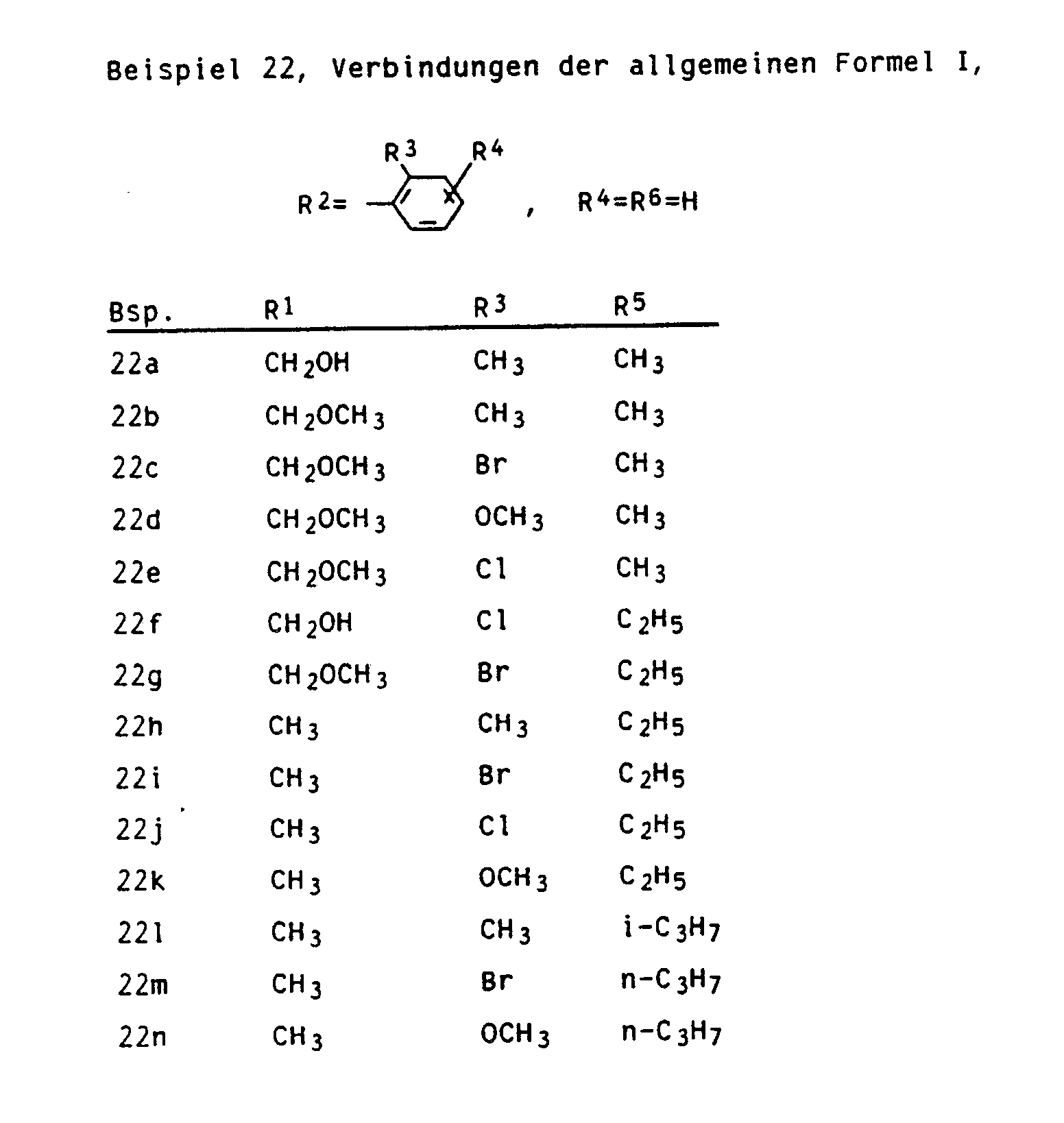
Schmp.: 211-212°C - Analog der allgemeinen Arbeitsvorschrift für die Beispiele 1 bis 11 können durch Umsetzung der entsprechenden Verbindungen der allgemeinen Formel II mit den Aminen R²CH₂NH₂ die folgenden Beispiele erhalten werden.



Claims (10)
- Verfahren zur Herstellung der Verbindungen der Formel I

R¹ eine C₁-C₃-Alkylgruppe, die durch eine Hydroxy- oder eine C₁-C₃-Alkoxygruppe substituiert sein kann,
R² entweder einen Naphthylrest oder einen Rest der Formel (a),
R³ eine C₁-C₃-Alkylgruppe, die durch eine Hydroxy- oder Methoxygruppe substituiert sein kann, eine C₁-C₃-Alkoxygruppe, ein Fluor-, Chlor- oder Bromatom, und
R⁴ ein Wasserstoffatom, eine Methyl-, Hydroxy- oder Methoxygruppe, ein Fluor-, Chlor- oder Bromatom, und
R⁵ eine C₁-C₃-Alkoxy-, eine C₁-C₃-Alkylgruppe, die durch eine Hydroxy- oder C₁-C₃-Alkoxygruppe substituiert sein kann, eine Hydroxygruppe, ein Fluor-, Chlor- oder Bromatom, und
R⁶ ein Wasserstoffatom, eine Methyl-, Methoxygruppe, ein Chlor- oder Bromatom bedeutet
dadurch gekennzeichnet, daß ein Chinolin der Formel II
Applications Claiming Priority (4)
| Application Number | Priority Date | Filing Date | Title |
|---|---|---|---|
| DE3908767 | 1989-03-17 | ||
| DE3908767 | 1989-03-17 | ||
| DE3943158 | 1989-12-28 | ||
| DE3943158 | 1989-12-28 |
Publications (3)
| Publication Number | Publication Date |
|---|---|
| EP0387821A2 true EP0387821A2 (de) | 1990-09-19 |
| EP0387821A3 EP0387821A3 (de) | 1991-09-18 |
| EP0387821B1 EP0387821B1 (de) | 1994-08-24 |
Family
ID=25878895
Family Applications (1)
| Application Number | Title | Priority Date | Filing Date |
|---|---|---|---|
| EP90104777A Expired - Lifetime EP0387821B1 (de) | 1989-03-17 | 1990-03-14 | 2-Alkyl-4-arylmethylaminochinoline, ihre Verwendung und daraus hergestellte Arzneimittel |
Country Status (7)
| Country | Link |
|---|---|
| US (1) | US5102892A (de) |
| EP (1) | EP0387821B1 (de) |
| JP (1) | JPH02279672A (de) |
| AT (1) | ATE110365T1 (de) |
| CA (1) | CA2011086A1 (de) |
| DE (1) | DE59006868D1 (de) |
| DK (1) | DK0387821T3 (de) |
Cited By (2)
| Publication number | Priority date | Publication date | Assignee | Title |
|---|---|---|---|---|
| FR2827599A1 (fr) * | 2001-07-20 | 2003-01-24 | Neuro3D | Composes derives de quinoleine et quinoxaline,preparation et utilisations |
| WO2008144865A3 (en) * | 2007-05-28 | 2009-07-23 | Fundacao Universidade Fed De S | Process for the preparation and pharmaceutical formulations for 4-quinolinones and quinolines and use thereof |
Families Citing this family (14)
| Publication number | Priority date | Publication date | Assignee | Title |
|---|---|---|---|---|
| US5294622A (en) * | 1988-01-29 | 1994-03-15 | Dowelanco | Substituted quinolines and cinnolines |
| GT198900008A (es) * | 1988-01-29 | 1990-07-17 | Derivados de quinolina, quinazolina y cinolina. | |
| US5242932A (en) * | 1991-12-17 | 1993-09-07 | The Rockefeller University | Treatment of amyloidosis associated with alzheimer disease |
| US5227387A (en) * | 1991-09-03 | 1993-07-13 | Dowelanco | Quinoline nematicidal method |
| US5493027A (en) * | 1993-01-22 | 1996-02-20 | Board Of Regents, The University Of Texas System | Anticonvulsive agents and uses thereof |
| US5556863A (en) * | 1993-06-11 | 1996-09-17 | Astra Aktiebolag | Compound for gastric acid secretion inhibition |
| IS4164A (is) * | 1993-06-11 | 1994-12-12 | Ab Astra | Efnasambönd sem hindra flæði magasýru |
| WO2001012608A1 (en) * | 1999-08-18 | 2001-02-22 | Nippon Soda Co., Ltd. | Quinoline compounds and process for producing the same |
| UA80393C2 (uk) | 2000-12-07 | 2007-09-25 | Алтана Фарма Аг | Фармацевтична композиція, яка містить інгібітор фде 4, диспергований в матриці |
| MY140561A (en) | 2002-02-20 | 2009-12-31 | Nycomed Gmbh | Dosage form containing pde 4 inhibitor as active ingredient |
| DK1606261T3 (da) | 2003-03-10 | 2010-01-18 | Nycomed Gmbh | Hidtil ukendt fremgangsmåde til fremstilling af roflumilast |
| AU2006224619B2 (en) * | 2005-03-16 | 2012-06-07 | Takeda Gmbh | Taste masked dosage form containing roflumilast |
| EP2178842A2 (de) * | 2007-08-22 | 2010-04-28 | Abbott GmbH & Co. KG | 4-benzylaminochinoline, pharmazeutische zusammensetzungen, die diese enthalten, und ihre verwendung |
| US10781178B2 (en) | 2015-08-12 | 2020-09-22 | The General Hospital Corporation | 8-hydroxyquinoline derivatives as diagnostic and therapeutic agents |
Family Cites Families (14)
| Publication number | Priority date | Publication date | Assignee | Title |
|---|---|---|---|---|
| US3075984A (en) * | 1958-05-09 | 1963-01-29 | Sterling Drug Inc | 1-[(lower-aromatic)-(lower-alkyl)]-4-[(lower-aromatic)-(lower-alkyl) imino]-1, 4-dihydroquinolines and their preparation |
| GB1496371A (en) * | 1975-08-18 | 1977-12-30 | Serdex | 4-amino-quinoline derivatives process for their preparation and therapeutic applications thereof |
| US4343804A (en) * | 1979-03-26 | 1982-08-10 | A. H. Robins Company, Inc. | 4-Amino-3-quinolinecarboxylic acids and esters-antisecretory anti-ulcer compounds |
| FR2592663B1 (fr) * | 1986-01-06 | 1992-07-24 | Pechiney Aluminium | Procede ameliore de purification de metaux par cristallisation fractionnee |
| US4789678A (en) * | 1986-08-25 | 1988-12-06 | Hoechst-Roussel Pharmaceuticals, Inc. | Memory enhancing α-alkyl-4-amino-3-quinolinemethanols and 1-(4-aralkylamino-3-quinolinyl)alkanones and related compounds |
| GB8621425D0 (en) * | 1986-09-05 | 1986-10-15 | Smith Kline French Lab | Compounds |
| GB8717644D0 (en) * | 1987-07-24 | 1987-09-03 | Smithkline Beckman Intercredit | Compounds |
| IL88507A (en) * | 1987-12-03 | 1993-02-21 | Smithkline Beckman Intercredit | 2,4-diaminoquinazolines, process for their preparation and pharmaceutical compositions comprising them |
| IL89026A (en) * | 1988-01-29 | 1993-02-21 | Lilly Co Eli | Substituted quinolines and cinnolines, process for their preparation and fungicidal, insecticidal and miticidal compositions containing them |
| GT198900008A (es) * | 1988-01-29 | 1990-07-17 | Derivados de quinolina, quinazolina y cinolina. | |
| GB8804447D0 (en) * | 1988-02-25 | 1988-03-23 | Smithkline Beckman Intercredit | Compounds |
| GB8804445D0 (en) * | 1988-02-25 | 1988-03-23 | Smithkline Beckman Intercredit | Compounds |
| GB8804443D0 (en) * | 1988-02-25 | 1988-03-23 | Smithkline Beckman Intercredit | Compounds |
| GB8804448D0 (en) * | 1988-02-25 | 1988-03-23 | Smithkline Beckman Intercredit | Compounds |
-
1990
- 1990-02-26 CA CA002011086A patent/CA2011086A1/en not_active Abandoned
- 1990-03-01 US US07/486,824 patent/US5102892A/en not_active Expired - Fee Related
- 1990-03-14 AT AT90104777T patent/ATE110365T1/de not_active IP Right Cessation
- 1990-03-14 DE DE59006868T patent/DE59006868D1/de not_active Expired - Fee Related
- 1990-03-14 EP EP90104777A patent/EP0387821B1/de not_active Expired - Lifetime
- 1990-03-14 DK DK90104777.9T patent/DK0387821T3/da active
- 1990-03-16 JP JP2064491A patent/JPH02279672A/ja active Pending
Cited By (3)
| Publication number | Priority date | Publication date | Assignee | Title |
|---|---|---|---|---|
| FR2827599A1 (fr) * | 2001-07-20 | 2003-01-24 | Neuro3D | Composes derives de quinoleine et quinoxaline,preparation et utilisations |
| WO2003010146A1 (fr) * | 2001-07-20 | 2003-02-06 | Neuro3D | Composes derives de quinoleine et quinoxaline, preparation et utilisations |
| WO2008144865A3 (en) * | 2007-05-28 | 2009-07-23 | Fundacao Universidade Fed De S | Process for the preparation and pharmaceutical formulations for 4-quinolinones and quinolines and use thereof |
Also Published As
| Publication number | Publication date |
|---|---|
| JPH02279672A (ja) | 1990-11-15 |
| EP0387821A3 (de) | 1991-09-18 |
| ATE110365T1 (de) | 1994-09-15 |
| EP0387821B1 (de) | 1994-08-24 |
| US5102892A (en) | 1992-04-07 |
| CA2011086A1 (en) | 1990-09-17 |
| DE59006868D1 (de) | 1994-09-29 |
| DK0387821T3 (da) | 1994-09-19 |
Similar Documents
| Publication | Publication Date | Title |
|---|---|---|
| EP0387821B1 (de) | 2-Alkyl-4-arylmethylaminochinoline, ihre Verwendung und daraus hergestellte Arzneimittel | |
| DE3855388T2 (de) | 7-Piperazinyl- oder 7-Morpholino-4-oxo-Chinolin-3- carbonsäurederivate, ihre Herstellung und ihre Verwendung als antimikrobielle Mittel | |
| DE69530989T2 (de) | Neue pyrimidinderivate und verfahren zu ihrer herstellung | |
| EP0299470B1 (de) | Imidazo[1,2-a]pyridine | |
| EP0006506B1 (de) | 1,2-Dihydro-chinolin-2-on-Derivate, Verfahren zu deren Herstellung sowie diese Verbindungen enthaltende Arzneimittel | |
| EP0043535A1 (de) | Tricyclische Arylether, Verfahren zu ihrer Herstellung sowie diese Verbindungen enthaltende Arzneimittel | |
| DE2854115C2 (de) | ||
| EP0263352A1 (de) | Neue Imidazo-benzoxazinone, ihre Herstellung und diese Verbindungen enthaltende Arzneimittel | |
| DE2720085C2 (de) | ||
| EP0024290A1 (de) | 8-Phenyl-purine, ihre Herstellung sowie sie enthaltende Arzneimittel | |
| EP0013894A1 (de) | Neue Arylether, Verfahren zu deren Herstellung sowie diese Verbindungen enthaltende Arzneimittel | |
| DE3533331A1 (de) | Pyridothiazolderivate, verfahren zu ihrer herstellung und diese verbindungen enthaltende arzneimittel | |
| DE2446821A1 (de) | Substituierte 1,3-dimethyl-1hpyrazol eckige klammer auf 3,4b eckige klammer zu -chinoline | |
| EP0708093A1 (de) | Chinoxaline, Verfahren zu ihrer Herstellung und ihre Verwendung | |
| EP0005154B1 (de) | 1-Oxo-1H-pyrimido (6,1-b) benzthiazol-Derivate, Verfahren zu deren Herstellung sowie diese Verbindungen enthaltende Arzneimittel | |
| EP0148431A1 (de) | Neue Benzimidazole, ihre Herstellung und diese Verbindungen enthaltende Arzneimittel | |
| EP0621037A1 (de) | Pyrido-pyrimidindione, Verfahren zu ihrer Herstellung und ihre Verwendung als Arzneimittel | |
| DE3917233A1 (de) | 8-substituierte 4-(heterocyclylmethylamino)-chinoline, ihre verwendung und daraus hergestellte arzneimittel | |
| EP0665228A1 (de) | Neue 3-Phenylsulfonyl-3,7-diazabicyclo(3,3,1)nonan-Verbindungen enthaltende Arzneimittel | |
| EP0657459A1 (de) | Neue Thienothiazinderivate, ein Verfahren zu ihrer Herstellung und ihre Verwendung als Antiinflammatorikum und Analgeticum | |
| EP0180833B1 (de) | 4-Oxo-pyrido[2,3]pyrimidin-Derivate, Verfahren zur deren Herstellung und diese ethaltende Arzneimittel | |
| DE3917232A1 (de) | 4-arylmethamino-2,3-dialkyl-chinoline, ihre verwendung und daraus hergestellte arzneimittel | |
| EP0873315B1 (de) | Phenanthridinderivate, verfahren zu ihrer herstellung und arzneimittel, enthaltend phenanthridinderivate | |
| EP0167045A1 (de) | Benzo (c)(1,8)naphthyridine, Verfahren zu ihrer Herstellung und ihre Verwendung sowie diese Verbindungen enthaltende Zubereitungen | |
| EP0190563A1 (de) | Neue 12-Amino-pyridazino[4',5':3,4]pyrrolo-[2,1-a]isochinoline, Verfahren zu ihrer Herstellung und ihre Verwendung |
Legal Events
| Date | Code | Title | Description |
|---|---|---|---|
| PUAI | Public reference made under article 153(3) epc to a published international application that has entered the european phase |
Free format text: ORIGINAL CODE: 0009012 |
|
| AK | Designated contracting states |
Kind code of ref document: A2 Designated state(s): AT BE CH DE DK FR GB IT LI NL SE |
|
| 17P | Request for examination filed |
Effective date: 19901227 |
|
| PUAL | Search report despatched |
Free format text: ORIGINAL CODE: 0009013 |
|
| AK | Designated contracting states |
Kind code of ref document: A3 Designated state(s): AT BE CH DE DK FR GB IT LI NL SE |
|
| 17Q | First examination report despatched |
Effective date: 19931203 |
|
| GRAA | (expected) grant |
Free format text: ORIGINAL CODE: 0009210 |
|
| AK | Designated contracting states |
Kind code of ref document: B1 Designated state(s): AT BE CH DE DK FR GB IT LI NL SE |
|
| REF | Corresponds to: |
Ref document number: 110365 Country of ref document: AT Date of ref document: 19940915 Kind code of ref document: T |
|
| REG | Reference to a national code |
Ref country code: DK Ref legal event code: T3 |
|
| REF | Corresponds to: |
Ref document number: 59006868 Country of ref document: DE Date of ref document: 19940929 |
|
| GBT | Gb: translation of ep patent filed (gb section 77(6)(a)/1977) |
Effective date: 19940907 |
|
| ITF | It: translation for a ep patent filed | ||
| ET | Fr: translation filed | ||
| EAL | Se: european patent in force in sweden |
Ref document number: 90104777.9 |
|
| PLBE | No opposition filed within time limit |
Free format text: ORIGINAL CODE: 0009261 |
|
| STAA | Information on the status of an ep patent application or granted ep patent |
Free format text: STATUS: NO OPPOSITION FILED WITHIN TIME LIMIT |
|
| 26N | No opposition filed | ||
| PGFP | Annual fee paid to national office [announced via postgrant information from national office to epo] |
Ref country code: FR Payment date: 19960223 Year of fee payment: 7 |
|
| PGFP | Annual fee paid to national office [announced via postgrant information from national office to epo] |
Ref country code: SE Payment date: 19960226 Year of fee payment: 7 |
|
| PGFP | Annual fee paid to national office [announced via postgrant information from national office to epo] |
Ref country code: NL Payment date: 19960229 Year of fee payment: 7 |
|
| PGFP | Annual fee paid to national office [announced via postgrant information from national office to epo] |
Ref country code: GB Payment date: 19960301 Year of fee payment: 7 Ref country code: DK Payment date: 19960301 Year of fee payment: 7 |
|
| PGFP | Annual fee paid to national office [announced via postgrant information from national office to epo] |
Ref country code: AT Payment date: 19960306 Year of fee payment: 7 |
|
| PGFP | Annual fee paid to national office [announced via postgrant information from national office to epo] |
Ref country code: BE Payment date: 19960313 Year of fee payment: 7 |
|
| PGFP | Annual fee paid to national office [announced via postgrant information from national office to epo] |
Ref country code: CH Payment date: 19960314 Year of fee payment: 7 |
|
| PGFP | Annual fee paid to national office [announced via postgrant information from national office to epo] |
Ref country code: DE Payment date: 19960326 Year of fee payment: 7 |
|
| PG25 | Lapsed in a contracting state [announced via postgrant information from national office to epo] |
Ref country code: GB Effective date: 19970314 Ref country code: DK Effective date: 19970314 Ref country code: AT Effective date: 19970314 |
|
| REG | Reference to a national code |
Ref country code: DK Ref legal event code: EBP |
|
| PG25 | Lapsed in a contracting state [announced via postgrant information from national office to epo] |
Ref country code: SE Effective date: 19970315 |
|
| PG25 | Lapsed in a contracting state [announced via postgrant information from national office to epo] |
Ref country code: LI Effective date: 19970331 Ref country code: CH Effective date: 19970331 Ref country code: BE Effective date: 19970331 |
|
| BERE | Be: lapsed |
Owner name: BASF A.G. Effective date: 19970331 |
|
| PG25 | Lapsed in a contracting state [announced via postgrant information from national office to epo] |
Ref country code: NL Effective date: 19971001 |
|
| GBPC | Gb: european patent ceased through non-payment of renewal fee |
Effective date: 19970314 |
|
| REG | Reference to a national code |
Ref country code: CH Ref legal event code: PL |
|
| PG25 | Lapsed in a contracting state [announced via postgrant information from national office to epo] |
Ref country code: FR Free format text: LAPSE BECAUSE OF NON-PAYMENT OF DUE FEES Effective date: 19971128 |
|
| NLV4 | Nl: lapsed or anulled due to non-payment of the annual fee |
Effective date: 19971001 |
|
| PG25 | Lapsed in a contracting state [announced via postgrant information from national office to epo] |
Ref country code: DE Effective date: 19971202 |
|
| EUG | Se: european patent has lapsed |
Ref document number: 90104777.9 |
|
| REG | Reference to a national code |
Ref country code: FR Ref legal event code: ST |
|
| PG25 | Lapsed in a contracting state [announced via postgrant information from national office to epo] |
Ref country code: IT Free format text: LAPSE BECAUSE OF NON-PAYMENT OF DUE FEES Effective date: 20050314 |