EP0392979A2 - Härtbare, ein Bismaleinimid und eine Propenylverbindung enthaltende Gemische - Google Patents
Härtbare, ein Bismaleinimid und eine Propenylverbindung enthaltende Gemische Download PDFInfo
- Publication number
- EP0392979A2 EP0392979A2 EP90810278A EP90810278A EP0392979A2 EP 0392979 A2 EP0392979 A2 EP 0392979A2 EP 90810278 A EP90810278 A EP 90810278A EP 90810278 A EP90810278 A EP 90810278A EP 0392979 A2 EP0392979 A2 EP 0392979A2
- Authority
- EP
- European Patent Office
- Prior art keywords
- oder
- und
- formula
- worin
- bedeutet
- Prior art date
- Legal status (The legal status is an assumption and is not a legal conclusion. Google has not performed a legal analysis and makes no representation as to the accuracy of the status listed.)
- Granted
Links
- 239000000203 mixture Substances 0.000 title claims abstract description 37
- 229920003192 poly(bis maleimide) Polymers 0.000 title claims abstract description 17
- -1 propenyl compound Chemical class 0.000 title claims abstract description 11
- XQUPVDVFXZDTLT-UHFFFAOYSA-N 1-[4-[[4-(2,5-dioxopyrrol-1-yl)phenyl]methyl]phenyl]pyrrole-2,5-dione Chemical compound O=C1C=CC(=O)N1C(C=C1)=CC=C1CC1=CC=C(N2C(C=CC2=O)=O)C=C1 XQUPVDVFXZDTLT-UHFFFAOYSA-N 0.000 title claims abstract description 10
- 125000003118 aryl group Chemical group 0.000 claims abstract description 7
- 125000005843 halogen group Chemical group 0.000 claims abstract description 6
- 125000004178 (C1-C4) alkyl group Chemical group 0.000 claims abstract description 5
- 125000000229 (C1-C4)alkoxy group Chemical group 0.000 claims abstract description 5
- 125000004435 hydrogen atom Chemical group [H]* 0.000 claims abstract description 5
- UFHFLCQGNIYNRP-UHFFFAOYSA-N Hydrogen Chemical compound [H][H] UFHFLCQGNIYNRP-UHFFFAOYSA-N 0.000 claims abstract description 4
- 229910052739 hydrogen Inorganic materials 0.000 claims abstract description 4
- 239000001257 hydrogen Substances 0.000 claims abstract description 4
- 125000000843 phenylene group Chemical group C1(=C(C=CC=C1)*)* 0.000 claims abstract description 4
- 238000000034 method Methods 0.000 claims description 7
- 238000002360 preparation method Methods 0.000 claims description 2
- 230000002349 favourable effect Effects 0.000 abstract description 2
- 239000003733 fiber-reinforced composite Substances 0.000 abstract description 2
- 238000004519 manufacturing process Methods 0.000 abstract description 2
- NFBAXHOPROOJAW-UHFFFAOYSA-N phenindione Chemical class O=C1C2=CC=CC=C2C(=O)C1C1=CC=CC=C1 NFBAXHOPROOJAW-UHFFFAOYSA-N 0.000 abstract description 2
- 229910052757 nitrogen Inorganic materials 0.000 description 22
- 150000001875 compounds Chemical class 0.000 description 11
- 125000004368 propenyl group Chemical group C(=CC)* 0.000 description 7
- WFDIJRYMOXRFFG-UHFFFAOYSA-N Acetic anhydride Chemical compound CC(=O)OC(C)=O WFDIJRYMOXRFFG-UHFFFAOYSA-N 0.000 description 6
- CSCPPACGZOOCGX-UHFFFAOYSA-N Acetone Chemical compound CC(C)=O CSCPPACGZOOCGX-UHFFFAOYSA-N 0.000 description 6
- 238000006243 chemical reaction Methods 0.000 description 6
- KZTYYGOKRVBIMI-UHFFFAOYSA-N diphenyl sulfone Chemical compound C=1C=CC=CC=1S(=O)(=O)C1=CC=CC=C1 KZTYYGOKRVBIMI-UHFFFAOYSA-N 0.000 description 6
- 239000000047 product Substances 0.000 description 6
- KRMVWVVSHRBHJF-UHFFFAOYSA-N 3-(2-ethyl-6-methylphenyl)pyrrole-2,5-dione Chemical compound CCC1=CC=CC(C)=C1C1=CC(=O)NC1=O KRMVWVVSHRBHJF-UHFFFAOYSA-N 0.000 description 4
- 239000003795 chemical substances by application Substances 0.000 description 4
- 239000003960 organic solvent Substances 0.000 description 4
- 239000000843 powder Substances 0.000 description 4
- VYPSYNLAJGMNEJ-UHFFFAOYSA-N silicon dioxide Inorganic materials O=[Si]=O VYPSYNLAJGMNEJ-UHFFFAOYSA-N 0.000 description 4
- 239000002904 solvent Substances 0.000 description 4
- ZMXDDKWLCZADIW-UHFFFAOYSA-N N,N-Dimethylformamide Chemical compound CN(C)C=O ZMXDDKWLCZADIW-UHFFFAOYSA-N 0.000 description 3
- ZMANZCXQSJIPKH-UHFFFAOYSA-N Triethylamine Chemical compound CCN(CC)CC ZMANZCXQSJIPKH-UHFFFAOYSA-N 0.000 description 3
- 239000000853 adhesive Substances 0.000 description 3
- 230000001070 adhesive effect Effects 0.000 description 3
- JRZSSQRNBKDVDD-UHFFFAOYSA-N bis[4-(2-prop-1-enylphenoxy)phenyl]methanone Chemical compound CC=CC1=CC=CC=C1OC1=CC=C(C(=O)C=2C=CC(OC=3C(=CC=CC=3)C=CC)=CC=2)C=C1 JRZSSQRNBKDVDD-UHFFFAOYSA-N 0.000 description 3
- 238000000576 coating method Methods 0.000 description 3
- 239000000155 melt Substances 0.000 description 3
- 125000002496 methyl group Chemical group [H]C([H])([H])* 0.000 description 3
- 238000000465 moulding Methods 0.000 description 3
- 229920005989 resin Polymers 0.000 description 3
- 239000011347 resin Substances 0.000 description 3
- QIRNGVVZBINFMX-UHFFFAOYSA-N 2-allylphenol Chemical compound OC1=CC=CC=C1CC=C QIRNGVVZBINFMX-UHFFFAOYSA-N 0.000 description 2
- 125000003903 2-propenyl group Chemical group [H]C([*])([H])C([H])=C([H])[H] 0.000 description 2
- PPQRFOFHENJYMN-UHFFFAOYSA-N 3-(2,6-dimethylphenyl)pyrrole-2,5-dione Chemical compound CC1=CC=CC(C)=C1C1=CC(=O)NC1=O PPQRFOFHENJYMN-UHFFFAOYSA-N 0.000 description 2
- OKTJSMMVPCPJKN-UHFFFAOYSA-N Carbon Chemical compound [C] OKTJSMMVPCPJKN-UHFFFAOYSA-N 0.000 description 2
- IAZDPXIOMUYVGZ-UHFFFAOYSA-N Dimethylsulphoxide Chemical compound CS(C)=O IAZDPXIOMUYVGZ-UHFFFAOYSA-N 0.000 description 2
- 239000004606 Fillers/Extenders Substances 0.000 description 2
- XEEYBQQBJWHFJM-UHFFFAOYSA-N Iron Chemical compound [Fe] XEEYBQQBJWHFJM-UHFFFAOYSA-N 0.000 description 2
- UQSXHKLRYXJYBZ-UHFFFAOYSA-N Iron oxide Chemical compound [Fe]=O UQSXHKLRYXJYBZ-UHFFFAOYSA-N 0.000 description 2
- WYURNTSHIVDZCO-UHFFFAOYSA-N Tetrahydrofuran Chemical compound C1CCOC1 WYURNTSHIVDZCO-UHFFFAOYSA-N 0.000 description 2
- GWEVSGVZZGPLCZ-UHFFFAOYSA-N Titan oxide Chemical compound O=[Ti]=O GWEVSGVZZGPLCZ-UHFFFAOYSA-N 0.000 description 2
- ADCOVFLJGNWWNZ-UHFFFAOYSA-N antimony trioxide Chemical compound O=[Sb]O[Sb]=O ADCOVFLJGNWWNZ-UHFFFAOYSA-N 0.000 description 2
- 238000005266 casting Methods 0.000 description 2
- 229910052801 chlorine Inorganic materials 0.000 description 2
- 125000001309 chloro group Chemical group Cl* 0.000 description 2
- 150000004985 diamines Chemical class 0.000 description 2
- 125000001495 ethyl group Chemical group [H]C([H])([H])C([H])([H])* 0.000 description 2
- RRAFCDWBNXTKKO-UHFFFAOYSA-N eugenol Chemical compound COC1=CC(CC=C)=CC=C1O RRAFCDWBNXTKKO-UHFFFAOYSA-N 0.000 description 2
- 239000002657 fibrous material Substances 0.000 description 2
- 230000009477 glass transition Effects 0.000 description 2
- 239000010439 graphite Substances 0.000 description 2
- 229910002804 graphite Inorganic materials 0.000 description 2
- 238000005470 impregnation Methods 0.000 description 2
- 125000001449 isopropyl group Chemical group [H]C([H])([H])C([H])(*)C([H])([H])[H] 0.000 description 2
- FPYJFEHAWHCUMM-UHFFFAOYSA-N maleic anhydride Chemical compound O=C1OC(=O)C=C1 FPYJFEHAWHCUMM-UHFFFAOYSA-N 0.000 description 2
- 238000002156 mixing Methods 0.000 description 2
- 239000000049 pigment Substances 0.000 description 2
- BWHMMNNQKKPAPP-UHFFFAOYSA-L potassium carbonate Chemical compound [K+].[K+].[O-]C([O-])=O BWHMMNNQKKPAPP-UHFFFAOYSA-L 0.000 description 2
- 238000012545 processing Methods 0.000 description 2
- 239000012744 reinforcing agent Substances 0.000 description 2
- 235000012239 silicon dioxide Nutrition 0.000 description 2
- 239000007787 solid Substances 0.000 description 2
- XLYOFNOQVPJJNP-UHFFFAOYSA-N water Substances O XLYOFNOQVPJJNP-UHFFFAOYSA-N 0.000 description 2
- CBDRUEGMPXPMET-UHFFFAOYSA-N 3-(2,6-diethylphenyl)pyrrole-2,5-dione Chemical compound CCC1=CC=CC(CC)=C1C1=CC(=O)NC1=O CBDRUEGMPXPMET-UHFFFAOYSA-N 0.000 description 1
- ZDLXFKQHJAFHRE-UHFFFAOYSA-N 3-(2-ethyl-6-propan-2-ylphenyl)pyrrole-2,5-dione Chemical compound C(C)C1=C(C(=CC=C1)C(C)C)C=1C(=O)NC(C1)=O ZDLXFKQHJAFHRE-UHFFFAOYSA-N 0.000 description 1
- QBNJTHTXKFNJHH-UHFFFAOYSA-N 3-(3-chloro-2,6-diethylphenyl)pyrrole-2,5-dione Chemical compound ClC=1C(=C(C(=CC1)CC)C=1C(=O)NC(C1)=O)CC QBNJTHTXKFNJHH-UHFFFAOYSA-N 0.000 description 1
- GLHJTARCCBCLJD-UHFFFAOYSA-N 3-[2,6-di(propan-2-yl)phenyl]pyrrole-2,5-dione Chemical compound CC(C)C1=CC=CC(C(C)C)=C1C1=CC(=O)NC1=O GLHJTARCCBCLJD-UHFFFAOYSA-N 0.000 description 1
- IYMZEPRSPLASMS-UHFFFAOYSA-N 3-phenylpyrrole-2,5-dione Chemical group O=C1NC(=O)C(C=2C=CC=CC=2)=C1 IYMZEPRSPLASMS-UHFFFAOYSA-N 0.000 description 1
- UGNSMKDDFAUGFT-UHFFFAOYSA-N 4,4-dimethyl-2-phenyl-5h-1,3-oxazole Chemical compound CC1(C)COC(C=2C=CC=CC=2)=N1 UGNSMKDDFAUGFT-UHFFFAOYSA-N 0.000 description 1
- ZFNBMPKLGYWYFF-UHFFFAOYSA-N 4-[(4-amino-2-ethyl-6-methylphenyl)methyl]-3-ethyl-5-methylaniline Chemical compound CCC1=CC(N)=CC(C)=C1CC1=C(C)C=C(N)C=C1CC ZFNBMPKLGYWYFF-UHFFFAOYSA-N 0.000 description 1
- CXXSQMDHHYTRKY-UHFFFAOYSA-N 4-amino-2,3,5-tris(oxiran-2-ylmethyl)phenol Chemical compound C1=C(O)C(CC2OC2)=C(CC2OC2)C(N)=C1CC1CO1 CXXSQMDHHYTRKY-UHFFFAOYSA-N 0.000 description 1
- 229910002012 Aerosil® Inorganic materials 0.000 description 1
- ZOXJGFHDIHLPTG-UHFFFAOYSA-N Boron Chemical compound [B] ZOXJGFHDIHLPTG-UHFFFAOYSA-N 0.000 description 1
- FERIUCNNQQJTOY-UHFFFAOYSA-M Butyrate Chemical compound CCCC([O-])=O FERIUCNNQQJTOY-UHFFFAOYSA-M 0.000 description 1
- FERIUCNNQQJTOY-UHFFFAOYSA-N Butyric acid Natural products CCCC(O)=O FERIUCNNQQJTOY-UHFFFAOYSA-N 0.000 description 1
- GKOMDADFDFNIPT-UHFFFAOYSA-N CCC(CC(C)C1C(CC2C(CC3)C3C2C)C2C(C)C2C)CC1C(C)=C Chemical compound CCC(CC(C)C1C(CC2C(CC3)C3C2C)C2C(C)C2C)CC1C(C)=C GKOMDADFDFNIPT-UHFFFAOYSA-N 0.000 description 1
- 229920000049 Carbon (fiber) Polymers 0.000 description 1
- NPBVQXIMTZKSBA-UHFFFAOYSA-N Chavibetol Natural products COC1=CC=C(CC=C)C=C1O NPBVQXIMTZKSBA-UHFFFAOYSA-N 0.000 description 1
- 239000005770 Eugenol Substances 0.000 description 1
- 229920000271 Kevlar® Polymers 0.000 description 1
- FXHOOIRPVKKKFG-UHFFFAOYSA-N N,N-Dimethylacetamide Chemical compound CN(C)C(C)=O FXHOOIRPVKKKFG-UHFFFAOYSA-N 0.000 description 1
- SECXISVLQFMRJM-UHFFFAOYSA-N N-Methylpyrrolidone Chemical compound CN1CCCC1=O SECXISVLQFMRJM-UHFFFAOYSA-N 0.000 description 1
- 229920000459 Nitrile rubber Polymers 0.000 description 1
- 239000004698 Polyethylene Substances 0.000 description 1
- 239000004743 Polypropylene Substances 0.000 description 1
- UVMRYBDEERADNV-UHFFFAOYSA-N Pseudoeugenol Natural products COC1=CC(C(C)=C)=CC=C1O UVMRYBDEERADNV-UHFFFAOYSA-N 0.000 description 1
- 239000002253 acid Substances 0.000 description 1
- 239000000654 additive Substances 0.000 description 1
- XAGFODPZIPBFFR-UHFFFAOYSA-N aluminium Chemical compound [Al] XAGFODPZIPBFFR-UHFFFAOYSA-N 0.000 description 1
- 239000010425 asbestos Substances 0.000 description 1
- 239000010426 asphalt Substances 0.000 description 1
- TZCXTZWJZNENPQ-UHFFFAOYSA-L barium sulfate Chemical compound [Ba+2].[O-]S([O-])(=O)=O TZCXTZWJZNENPQ-UHFFFAOYSA-L 0.000 description 1
- 229910052601 baryte Inorganic materials 0.000 description 1
- 239000010428 baryte Substances 0.000 description 1
- 229910052796 boron Inorganic materials 0.000 description 1
- CJZGTCYPCWQAJB-UHFFFAOYSA-L calcium stearate Chemical class [Ca+2].CCCCCCCCCCCCCCCCCC([O-])=O.CCCCCCCCCCCCCCCCCC([O-])=O CJZGTCYPCWQAJB-UHFFFAOYSA-L 0.000 description 1
- 239000006229 carbon black Substances 0.000 description 1
- 239000004917 carbon fiber Substances 0.000 description 1
- 229920002678 cellulose Polymers 0.000 description 1
- 239000001913 cellulose Substances 0.000 description 1
- 229920006217 cellulose acetate butyrate Polymers 0.000 description 1
- 150000008280 chlorinated hydrocarbons Chemical class 0.000 description 1
- 239000011280 coal tar Substances 0.000 description 1
- 239000013065 commercial product Substances 0.000 description 1
- 239000002131 composite material Substances 0.000 description 1
- 210000003298 dental enamel Anatomy 0.000 description 1
- 238000004455 differential thermal analysis Methods 0.000 description 1
- 239000000975 dye Substances 0.000 description 1
- 229920001971 elastomer Polymers 0.000 description 1
- 150000002148 esters Chemical class 0.000 description 1
- JDVIRCVIXCMTPU-UHFFFAOYSA-N ethanamine;trifluoroborane Chemical class CCN.FB(F)F JDVIRCVIXCMTPU-UHFFFAOYSA-N 0.000 description 1
- 229960002217 eugenol Drugs 0.000 description 1
- 239000000835 fiber Substances 0.000 description 1
- 239000000945 filler Substances 0.000 description 1
- 239000003063 flame retardant Substances 0.000 description 1
- 238000009472 formulation Methods 0.000 description 1
- 239000011521 glass Substances 0.000 description 1
- 239000003365 glass fiber Substances 0.000 description 1
- 239000010440 gypsum Substances 0.000 description 1
- 229910052602 gypsum Inorganic materials 0.000 description 1
- 238000010438 heat treatment Methods 0.000 description 1
- 150000002460 imidazoles Chemical class 0.000 description 1
- 125000005462 imide group Chemical group 0.000 description 1
- 238000006317 isomerization reaction Methods 0.000 description 1
- 239000004761 kevlar Substances 0.000 description 1
- 238000005259 measurement Methods 0.000 description 1
- 238000002844 melting Methods 0.000 description 1
- 230000008018 melting Effects 0.000 description 1
- 229910052751 metal Inorganic materials 0.000 description 1
- 239000002184 metal Substances 0.000 description 1
- 125000000956 methoxy group Chemical group [H]C([H])([H])O* 0.000 description 1
- 239000010445 mica Substances 0.000 description 1
- 229910052618 mica group Inorganic materials 0.000 description 1
- 238000012986 modification Methods 0.000 description 1
- 230000004048 modification Effects 0.000 description 1
- 239000003607 modifier Substances 0.000 description 1
- 239000006082 mold release agent Substances 0.000 description 1
- 239000012778 molding material Substances 0.000 description 1
- 239000004014 plasticizer Substances 0.000 description 1
- 229920000573 polyethylene Polymers 0.000 description 1
- 229920000642 polymer Polymers 0.000 description 1
- 229920001155 polypropylene Polymers 0.000 description 1
- 229920001296 polysiloxane Polymers 0.000 description 1
- 229910000027 potassium carbonate Inorganic materials 0.000 description 1
- 239000002244 precipitate Substances 0.000 description 1
- 239000010453 quartz Substances 0.000 description 1
- 239000012048 reactive intermediate Substances 0.000 description 1
- 239000012763 reinforcing filler Substances 0.000 description 1
- 229910052895 riebeckite Inorganic materials 0.000 description 1
- 239000005060 rubber Substances 0.000 description 1
- 238000007493 shaping process Methods 0.000 description 1
- 239000000377 silicon dioxide Substances 0.000 description 1
- 238000003756 stirring Methods 0.000 description 1
- 239000000126 substance Substances 0.000 description 1
- LMBFAGIMSUYTBN-MPZNNTNKSA-N teixobactin Chemical compound C([C@H](C(=O)N[C@@H]([C@@H](C)CC)C(=O)N[C@@H](CO)C(=O)N[C@H](CCC(N)=O)C(=O)N[C@H]([C@@H](C)CC)C(=O)N[C@@H]([C@@H](C)CC)C(=O)N[C@@H](CO)C(=O)N[C@H]1C(N[C@@H](C)C(=O)N[C@@H](C[C@@H]2NC(=N)NC2)C(=O)N[C@H](C(=O)O[C@H]1C)[C@@H](C)CC)=O)NC)C1=CC=CC=C1 LMBFAGIMSUYTBN-MPZNNTNKSA-N 0.000 description 1
- 238000012360 testing method Methods 0.000 description 1
- YLQBMQCUIZJEEH-UHFFFAOYSA-N tetrahydrofuran Natural products C=1C=COC=1 YLQBMQCUIZJEEH-UHFFFAOYSA-N 0.000 description 1
- 238000002076 thermal analysis method Methods 0.000 description 1
- 239000004408 titanium dioxide Substances 0.000 description 1
- 229920002554 vinyl polymer Polymers 0.000 description 1
- 239000001993 wax Substances 0.000 description 1
Classifications
-
- C—CHEMISTRY; METALLURGY
- C08—ORGANIC MACROMOLECULAR COMPOUNDS; THEIR PREPARATION OR CHEMICAL WORKING-UP; COMPOSITIONS BASED THEREON
- C08G—MACROMOLECULAR COMPOUNDS OBTAINED OTHERWISE THAN BY REACTIONS ONLY INVOLVING UNSATURATED CARBON-TO-CARBON BONDS
- C08G73/00—Macromolecular compounds obtained by reactions forming a linkage containing nitrogen with or without oxygen or carbon in the main chain of the macromolecule, not provided for in groups C08G12/00 - C08G71/00
- C08G73/06—Polycondensates having nitrogen-containing heterocyclic rings in the main chain of the macromolecule
- C08G73/10—Polyimides; Polyester-imides; Polyamide-imides; Polyamide acids or similar polyimide precursors
- C08G73/12—Unsaturated polyimide precursors
-
- C—CHEMISTRY; METALLURGY
- C08—ORGANIC MACROMOLECULAR COMPOUNDS; THEIR PREPARATION OR CHEMICAL WORKING-UP; COMPOSITIONS BASED THEREON
- C08F—MACROMOLECULAR COMPOUNDS OBTAINED BY REACTIONS ONLY INVOLVING CARBON-TO-CARBON UNSATURATED BONDS
- C08F222/00—Copolymers of compounds having one or more unsaturated aliphatic radicals, each having only one carbon-to-carbon double bond, and at least one being terminated by a carboxyl radical and containing at least one other carboxyl radical in the molecule; Salts, anhydrides, esters, amides, imides, or nitriles thereof
- C08F222/36—Amides or imides
- C08F222/40—Imides, e.g. cyclic imides
- C08F222/404—Imides, e.g. cyclic imides substituted imides comprising oxygen other than the carboxy oxygen
-
- C—CHEMISTRY; METALLURGY
- C08—ORGANIC MACROMOLECULAR COMPOUNDS; THEIR PREPARATION OR CHEMICAL WORKING-UP; COMPOSITIONS BASED THEREON
- C08J—WORKING-UP; GENERAL PROCESSES OF COMPOUNDING; AFTER-TREATMENT NOT COVERED BY SUBCLASSES C08B, C08C, C08F, C08G or C08H
- C08J2379/00—Characterised by the use of macromolecular compounds obtained by reactions forming in the main chain of the macromolecule a linkage containing nitrogen with or without oxygen, or carbon only, not provided for in groups C08J2361/00 - C08J2377/00
- C08J2379/04—Polycondensates having nitrogen-containing heterocyclic rings in the main chain; Polyhydrazides; Polyamide acids or similar polyimide precursors
- C08J2379/08—Polyimides; Polyester-imides; Polyamide-imides; Polyamide acids or similar polyimide precursors
Definitions
- the present invention relates to curable mixtures comprising an aromatic, alkyl-substituted bismaleimide and a propenyl compound and to the crosslinked and infusible products obtained therefrom by curing.
- Curable mixtures based on aromatic bismaleimides and propenyl compounds are known, for example from the publication by H.D. Stenzenberger et al., Regarding allyl (propenyl) -terminated arylene-ether-sulfone oligomers as co-reactive intermediates for tough bismaleimides, 18th International SAMPE Technical Conference, October 7-9, 1986, pages 500-509, and from EP Patent applications 230 741 and 276 737. In all of these publications, no ring-substituted N, N′-4,4′-methylene-bis- (phenylmaleimide) is used as bismaleimide, or the use thereof is recommended or suggested. These known curable mixtures still leave something to be desired in terms of their processability, in particular in the melt.
- the mixtures according to the invention contain 0.05 to 2.0 moles, preferably 0.5 to 1.2 moles, of component (b) per mole of component (a).
- Aromatic bismaleimides are preferably present as component (a) in the mixtures according to the invention, in which in formula I R1 and R2 each independently represent methyl, ethyl or isopropyl and R3 and R4 each represent a hydrogen or chlorine atom.
- those bismaleimides of the formula I are used for the mixtures according to the invention in which R1 and R2 independently of one another each represent methyl, ethyl or isopropyl and R3 and R4 each represent a hydrogen atom.
- suitable bismaleimides of the formula I are N, N'-4,4'-methylene-bis- (2-ethyl-6-methylphenylmaleinimide) and N, N'-4,4'-methylene-bis- (2,6 -dimethylphenylmaleimide), which are particularly preferred compounds for (a), and N, N'-4,4'-methylene-bis- (2,6-diethylphenylmaleinimide), N, N'-4,4'-methylene-bis - (2,6-diisopropylphenylmaleimide), N, N'-4,4'-methylene-bis- (2-ethyl-6-isopropylphenylmaleimide) and N, N'-4,4'-methylene-bis- (3- chloro-2,6-diethylphenylmaleimide).
- bismaleimides of the formula I are known compounds and can be prepared, for example, by the process disclosed in JP application Kokai 61-93159 by adding 1 mol of a diamine of the formula Ia wherein R1, R2, R3 and R4 have the same meaning as in formula I, reacted with 2 moles of maleic anhydride in an organic solvent to the corresponding bismaleic acid and then cyclized with dehydrating agents such as acetic anhydride to bismaleimide.
- the diamines of the formula Ia are known compounds and are disclosed, for example, in DE-OS 23 39 237 or in EP-A-0 171 588.
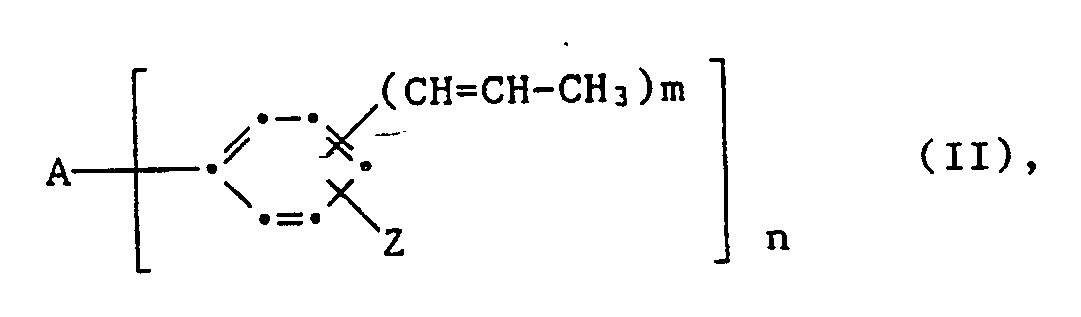
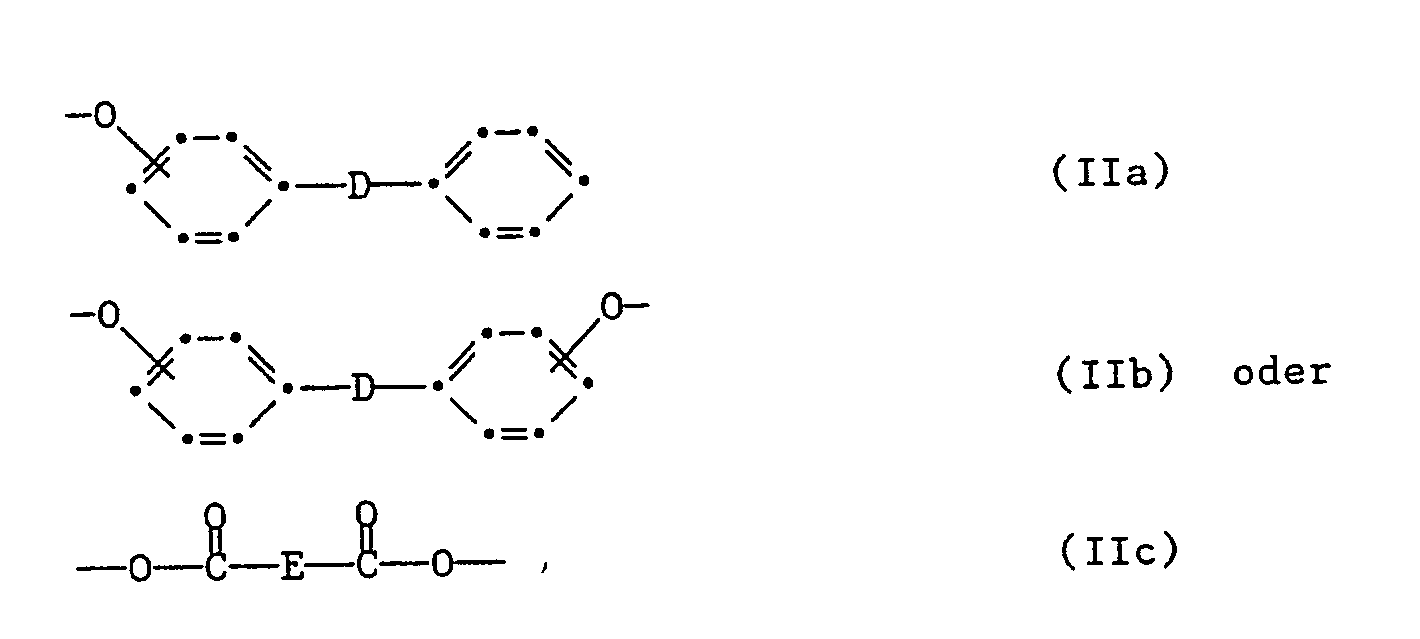
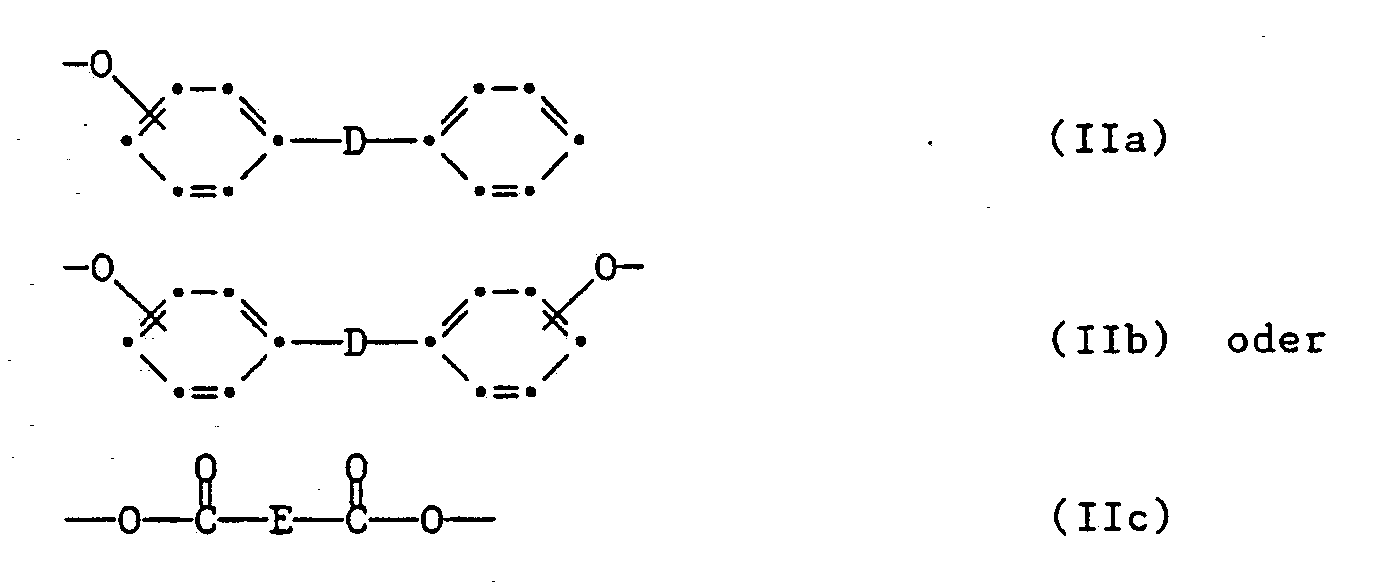
- the mixtures according to the invention preferably contain, as component (b), a compound of the formula II in which m is the number 1 or 2 and n is the number 1, Z is a hydrogen atom or methoxy and A is a radical of the formula IIb or IIc.
- the mixtures according to the invention preferably contain as component (1b) a compound of the formula II in which A is a radical of the formula IIb, in which D is or a radical of the formula IV in which X and X1 are each -CO- or -SO2- and p is zero.
- Also preferred in the mixtures according to the invention are those compounds of the formula II in which A is a radical of the formula IIc, where E is phenylene or a radical of the formula V in which q is zero.
- propenyl compounds of the formula II are 4,4'-bis (o-propenylphenoxy) benzophenone and 4,4'-bis (o-propenylphenoxy) diphenyl sulfone, which are particularly preferred compounds for component (b), as well as the compounds of the following formulas where Y is for the rest - - or -SO2- stands.
- the propenyl compounds of the formula II are known, for example from the SAMPE publication mentioned at the outset and EP patent applications 230 741 and 276 737, and can be prepared by the process disclosed there, for example by using a dihalogen compound of the formula VI A ( ⁇ Hal) n (VI), wherein A and n have the same meaning as in formula II and Hal represents a halogen atom, preferably chlorine atom, with an allylphenol of formula VII wherein Z and m have the same meaning as in formula II, in the presence of a base to form a compound of formula II.
- a dihalogen compound of the formula VI A ( ⁇ Hal) n (VI) wherein A and n have the same meaning as in formula II and Hal represents a halogen atom, preferably chlorine atom, with an allylphenol of formula VII wherein Z and m have the same meaning as in formula II, in the presence of a base to form a compound of formula II.
- the reaction is preferably carried out at temperatures between 120 to 220 ° C in an organic solvent, such as dimethylformamide, dimethylacetamide, N-methylpyrrolidone or dimethyl sulfoxide, in the presence of a base, such as potassium carbonate, the isomerization of the allyl group to the propenyl group being known to occur.
- organic solvent such as dimethylformamide, dimethylacetamide, N-methylpyrrolidone or dimethyl sulfoxide
- the dihalogen compounds of the formula VI and the allylphenols of the formula VII, such as 2-allylphenol, 2,4-diallylphenol or eugenol, are also known compounds.
- Some of the propenyl compounds of the formula II are also commercially available, for example under the product name TM 123 (4,4'-bis (o-propenylphenoxy) benzophenone) and TM 122 (4,4'-bis (o-propenylphenoxy) diphenyl sulfone) from Technochemie GmbH, DE-Dossenheim.
- the mixtures according to the invention can be prepared by simply mixing the components together or by heating the mixture at 75 to 130 ° C. for about 15 to 60 minutes.
- solvents particularly volatile solvents such as chlorinated hydrocarbons, esters or tetrahydrofuran can also be used. The solvent is removed after the reaction.
- the mixtures according to the invention are generally cured at temperatures between 100 and 280 ° C. for a time sufficient for the curing.
- a network with a high crosslink density is formed during curing.
- hardening used here therefore means the conversion of mixtures into insoluble and non-meltable cross-linked products, with simultaneous shaping into shaped articles such as e.g. Castings, compacts, laminates, or to two-dimensional structures, such as Coatings, enamels and adhesive bonds.
- the coatings produced are e.g. due to increased toughness, especially fracture toughness.
- the mixtures according to the invention can be mixed with the customary modifiers, such as extenders, fillers and reinforcing agents, pigments, dyes, organic solvents, plasticizers, agents for improving dry tack (tackifiers), rubbers, accelerators or thinners in each processing phase before curing.
- suitable extenders, reinforcing agents, fillers and pigments are: coal tar, bitumen, glass fibers, boron fibers, carbon fibers, cellulose, polyethylene powder, polypropylene powder, mica, asbestos, quartz powder, gypsum, antimony trioxide, bentones, silicon dioxide airgel (“aerosil”), lithopone, Barite, titanium dioxide, carbon black, graphite, iron oxide or metal powder such as aluminum powder or iron powder.
- customary additives such as, for example, flame retardants, thixotropy agents, leveling agents, such as silicones, cellulose acetate butyrate, polyvinyl butyrate, waxes, stearates and the like (which are also used in part as mold release agents) can also be added to the curable mixtures.
- leveling agents such as silicones, cellulose acetate butyrate, polyvinyl butyrate, waxes, stearates and the like (which are also used in part as mold release agents) can also be added to the curable mixtures.
- mixtures according to the invention are used, for example, as adhesive formulations, carboxyl-terminated acrylonitrile-butadiene rubber, modification resins such as triglycidyl-p-aminophenol, and accelerators such as boron trifluoride-monoethylamine complexes or imidazole complexes can also be added.
- modification resins such as triglycidyl-p-aminophenol
- accelerators such as boron trifluoride-monoethylamine complexes or imidazole complexes
- the curable mixtures can be produced in a conventional manner using known mixing units, such as stirrers, kneaders, roller bodies and the like.
- the mixtures according to the invention are notable for very good processability, good solubility in customary organic solvents, good stability in the melt or in solution, and also good thermal and mechanical properties of the cured products, in particular high fracture toughness.
- the products obtained also have good electrical properties, have high glass transition temperatures and are not brittle.
- the mixtures according to the invention can also be used without problems as a melt, especially without the addition of non-volatile solvents, e.g. for impregnation.
- the present invention therefore also relates to the crosslinked, infusible products obtained by curing the mixtures according to the invention.
- the mixtures according to the invention described can be used in various fields, such as, for example, in prepregs, laminates, composites, printed circuit boards, castings, moldings, adhesives and coatings.
- the modified resins can thus be used for the pre-impregnation of various fibrous material which is used as a top layer for honeycomb structures or as structural parts.
- Methods for producing prepregs are known to the person skilled in the art. For example, graphite, glass, Kevlar can be used as fibrous materials. Methods for producing laminates are also known.
- Laminates of various thicknesses can e.g. can be produced by press molding or autoclave molding.
- the mixtures according to the invention can also be used successfully as adhesion-promoting substances.
- Tg-onset intersection of the extended baseline with the tangent to the measurement curve in the area of the steepest slope (measured with TMA-943, Dupont 9900 thermal analysis)
- the resin which is thin at 150 ° C., is poured into a test tube and cured for 4 hours (h) at 200 ° C., 1 hour at 220 ° C. and 6 hours at 250 ° C.
- a bubble-free, transparent solid with a Tg 2) onset (TMA) of 300 ° C. is obtained.
Landscapes
- Chemical & Material Sciences (AREA)
- Health & Medical Sciences (AREA)
- Chemical Kinetics & Catalysis (AREA)
- Medicinal Chemistry (AREA)
- Polymers & Plastics (AREA)
- Organic Chemistry (AREA)
- Addition Polymer Or Copolymer, Post-Treatments, Or Chemical Modifications (AREA)
- Treatments For Attaching Organic Compounds To Fibrous Goods (AREA)
Abstract
- a) ein aromatisches Bismaleinimid der Formel I

- b) eine Propenylverbindung der Formel II

 (CH₃)₂,
Description
- Die vorliegende Erfindung betrifft härtbare Gemische enthaltend ein aromatisches, alkylsubstituiertes Bismaleinimid und eine Propenylverbindung sowie die daraus durch Härtung erhaltenen vernetzten und unschmelzbaren Produkte.
- Härtbare Gemische auf Basis von aromatischen Bismaleinimiden und Propenylverbindungen sind bekannt, beispielsweise aus der Publikation von H.D. Stenzenberger et al., betreffend Allyl(propenyl)-terminated arylene-ether-sulfone oligomers as co-reactive intermediates for tough bismaleimides, 18th International SAMPE Technical Conference, October 7-9, 1986, Seite 500-509, sowie aus den EP-Patentanmeldungen 230 741 und 276 737. In all diesen Publikationen wird als Bismaleinimid kein ringsubstituiertes N,N′-4,4′-Methylen-bis-(phenylmaleinimid) eingesetzt oder deren Verwendung empfohlen oder nahegelegt. Diese bekannten härtbaren Gemische lassen hinsichtlich ihrer Verarbeitbarkeit, insbesondere in der Schmelze, noch zu wünschen übrig.
- Es wurde nun gefunden, dass man bei Verwendung von aromatischen, in o,o'-Stellung zur Imidgruppe alkylsubstituierten Methylen-bis-(phenylmaleinimiden) eine bessere Mischbarkeit mit Propenylverbindungen erreicht und dass solche härtbaren Gemische bei erhöhter Temperatur, wie beispielsweise 120°C, längere, also günstigere Verarbeitungszeiten (pot life), aufweisen. Die aus den erfindungsgemässen härtbaren Gemischen durch Härtung hergestellten Formstoffe weisen ausserdem bessere Zähigkeitseigenschaften und eine bessere Feuchtigkeitsresistenz auf.
- Gegenstand vorliegender Erfindung sind somit härtbare Gemische enthaltend
- a) ein aromatisches Bismaleinimid der Formel I

- b) eine Propenylverbindung der Formel II


 (CH₃)₂,
 (CF₃)₂, -O-, -CH₂- oder -CO- steht und q Null oder die Zahl 1 bedeutet.
- Im allgemeinen enthalten die erfindungsgemässen Gemische pro Mol der Komponente (a) 0,05 bis 2,0 Mole, vorzugsweise 0,5 bis 1,2 Mole, der Komponente (b).
- Vorzugsweise sind in den erfindungsgemässen Gemischen als Komponente (a) solche aromatische Bismaleinimide enthalten, worin in Formel I R¹ und R² unabhängig voneinander je für Methyl, Ethyl oder Isopropyl stehen und R³ und R⁴ je ein Wasserstoff- oder Chloratom bedeuten.
- Insbesondere verwendet man für die erfindungsgemässen Gemische solche Bismaleinimide der Formel I, worin R¹ und R² unabhängig voneinander je für Methyl, Ethyl oder Isopropyl stehen und R³ und R⁴ je ein Wasserstoffatom bedeuten.
- Beispiele für geeignete Bismaleinimide der Formel I sind N,N′-4,4′-Methylen-bis-(2-ethyl-6-methylphenylmaleinimid) und N,N′-4,4′-Methylen-bis-(2,6-dimethylphenylmaleinimid), welche besonders bevorzugte Verbindungen für (a) darstellen, sowie N,N′-4,4′-Methylen-bis-(2,6-diethylphenylmaleinimid), N,N′-4,4′-Methylen-bis-(2,6-diisopropylphenylmaleinimid), N,N′-4,4′-Methylen-bis-(2-ethyl-6-isopropylphenylmaleinimid) und N,N′-4,4′-Methylen-bis-(3-chlor-2,6-diethylphenylmaleinimid).
- Als Komponente (a) kann auch ein Gemisch aus einem Bismaleinimid der Formel I und einem unsubstituierten Bismaleinimid der Formel I (R¹ bis R⁴ = H) eingesetzt werden, wobei im Gemisch der Anteil an unsubstituiertem Bismaleinimid bis etwa 60 Mol%, bezogen auf die Gesamtmenge von Bismaleinimiden, betragen kann.
- Die Bismaleinimide der Formel I stellen zum Teil bekannte Verbindungen dar und können beispielsweise gemäss dem in der JP-Anmeldung Kokai 61-93159 offenbarten Verfahren hergestellt werden, indem man 1 Mol eines Diamins der Formel Ia

- Die Diamine der Formel Ia stellen bekannte Verbindungen dar und werden beispielsweise in der DE-OS 23 39 237 oder in der EP-A-0 171 588 offenbart.
- Die erfindungsgemässen Gemische enthalten als Komponente (b) vorzugsweise eine Verbindung der Formel II, worin m für die Zahl 1 oder 2 und n für die Zahl 1 stehen, Z ein Wasserstoffatom oder Methoxy und A einen Rest der Formel IIb oder IIc bedeuten.
- Vorzugsweise enthalten die erfindungsgemassen Gemische als Komponente (1b) eine Verbindung der Formel II, worin A für einen Rest der Formel IIb steht, wobei D für

- Auch sind in den erfindungsgemässen Gemischen solche Verbindungen der Formel II bevorzugt, worin A für einen Rest der Formel IIc steht, wobei E Phenylen oder einen Rest der Formel V bedeutet, worin q für Null steht.
- Beispiele für geeignete Propenylverbindungen der Formel II sind 4,4′-Bis-(o-propenylphenoxy)-benzophenon und 4,4′-Bis-(o-propenylphenoxy)-diphenylsulfon, welche besonders bevorzugte Verbindungen für die Komponente (b) darstellen, sowie die Verbindungen der folgenden Formeln

-- oder -SO₂- steht.
- Die Propenylverbindungen der Formel II sind bekannt, beispielsweise aus der eingangs genannten SAMPE-Publikation und den EP-Patentanmeldungen 230 741 und 276 737, und können nach dem dort offenbarten Verfahren hergestellt werden, indem man beispielsweise eine Dihalogenverbindung der Formel VI
A(̵Hal)n (VI),
worin A und n die gleiche Bedeutung wie in Formel II haben und Hal für ein Halogenatom, vorzugsweise Chloratom, steht, mit einem Allylphenol der Formel VII
- Die Umsetzung erfolgt vorzugsweise bei Temperaturen zwischen 120 bis 220°C in einem organischen Lösungsmittel, wie beispielsweise Dimethylformamid, Dimethylacetamid, N-Methylpyrrolidon oder Dimethylsulfoxid, in Gegenwart einer Base, wie beispielsweise Kaliumcarbonat, wobei bekannterweise die Isomerisation der Allylgruppe zur Propenylgruppe eintritt.
- Die Dihalogenverbindungen der Formel VI und die Allylphenole der Formel VII, wie beispielsweise 2-Allylphenol, 2,4-Diallylphenol oder Eugenol, stellen ebenfalls bekannte Verbindungen dar. Propenylverbindungen der Formel II sind zum Teil auch im Handel erhältlich, beispielsweise unter der Produktebezeichnung TM 123 (4,4′-Bis-(o-propenylphenoxy)-benzophenon) und TM 122 (4,4′-Bis-(o-propenylphenoxy)-diphenylsulfon) von der Technochemie GmbH, DE-Dossenheim.
- Die erfindungsgemässen Gemische können durch blosses Zusammenmischen der Komponenten oder durch Erhitzen des Gemisches bei 75 bis 130°C während etwa 15 bis 60 Minuten, hergestellt werden. Um die Umsetzung zu erleich tern, können auch Lösungsmittel, besonders flüchtige Lösungsmittel, wie chlorierte Kohlenwasserstoffe, Ester oder Tetrahydrofuran eingesetzt werden. Das Lösungsmittel wird nach der Umsetzung entfernt.
- Die Härtung der erfindungsgemässen Gemische erfolgt im allgemeinen bei Temperaturen zwischen 100 und 280°C während einer für die Härtung ausreichenden Zeit.
- Während der Härtung entsteht ein Netzwerk mit hoher Vernetzungsdichte. Der hier verwendete Ausdruck Härtung bedeutet daher die Umwandlung von Gemischen in unlösliche und nichtschmelzbare vernetzte Produkte, mit gleichzeitiger Formung zu geformten Artikeln wie z.B. Giesskörpern, Presskörpern, Laminaten, oder zu zweidimensionalen Strukturen, wie z.B. Ueberzügen, Emaillen und Klebverbindungen. Die hergestellten Ueberzüge zeichnen sich z.B. durch erhöhte Zähigkeit, insbesondere Bruchzähigkeit, aus.
- Die erfindungsgemässen Gemische können in jeder Verarbeitungsphase vor der Härtung mit den üblichen Modifizierungsmitteln vermischt werden, wie z.B. Streckmittel, Füllstoffe und Verstärkungsmittel, Pigmente, Farbstoffe, organische Lösungsmittel, Plastifizierungsmittel, Mittel zur Verbesserung der Trockenklebrigkeit (Klebrigmacher), Gummis, Beschleuniger oder Verdünner. Als Streckmittel, Verstärkungsmittel, Füllstoffe und Pigmente kommen z.B. in Frage: Kohleteer, Bitumen, Glasfasern, Borfasern, Kohlefasern, Cellulose, Polyethylenpulver, Polypropylenpulver, Glimmer, Asbest, Quarzpulver, Gips, Antimontrioxid, Bentone, Siliziumdioxidaerogel ("Aerosil"), Lithopon, Barit, Titandioxid, Russ, Graphit, Eisenoxid oder Metallpulver wie z.B. Aluminiumpulver oder Eisenpulver. Den härtbaren Gemischen können auch andere übliche zusätze, wie z.B. Flammschutzmittel, Thixotropiemittel, Verlaufsmittel, wie Silicone, Celluloseacetatbutyrat, Polyvinylbutyrat, Wachse, Stearate und ähnliches (welche zum Teil auch als Formtrennmittel verwendet werden) beigegeben werden.
- Wenn die erfindungsgemässen Gemische beispielsweise als Klebstoffformulierungen verwendet werden, können auch carboxylgruppenendständiger Acrylnitril-Butadien-Kautschuk, Modifizierungsharze, wie Triglycidyl-p-aminophenol, und Beschleuniger, wie Bortrifluorid-Monoethylaminkomplexe oder Imidazolkomplexe, beigegeben werden.
- Die härtbaren Gemische können auf übliche Art unter Verwendung bekannter Mischaggregate, wie Rührer, Kneter, Walzkörper und ähnliches, hergestellt werden.
- Die erfindungsgemässen Gemische zeichnen sich durch eine sehr gute Verarbeitbarkeit, gute Löslichkeit in üblichen organischen Lösungsmitteln, gute Stabilität in der Schmelze oder in Lösung sowie durch gute thermische und mechanische Eigenschaften der gehärteten Produkte, insbesondere durch hohe Bruchzähigkeiten aus. Die erhaltenen Produkte weisen auch gute elektrische Eigenschaften auf, haben hohe Glasumwandlungstemperaturen und sind nicht brüchig Die erfindungsgemässen Gemische können auch problemlos als Schmelze, besonders ohne Zugabe von nichtflüchtigen Lösungsmsitteln, z.B. für die Imprägnierung, verwendet werden.
- Gegenstand der vorliegenden Erfindung sind daher auch die durch Härtung der erfindungsgemässen Gemische erhaltenen vernetzten, unschmelzbaren Produkte.
- Die beschriebenen erfindungsgemässen Gemische können auf verschiedenen Gebieten eingesetzt werden, wie z.B in Prepregs, Laminaten, Verbundstoffen, Leiterplatten, Giesslingen, Formkörpern, Klebstoffen und Ueberzügen. Von besonderem Interesse ist ihre Anwendung für die Herstellung von faserverstärkten Verbundstoffen, welche z.B. in der Luftfahrtindustrie sehr wichtig sind. So können die modifizierten Harze zum Präimprägnieren von verschiedenem faserartigem Material verwendet werden, welches als Deckschicht für Honigwabenstrukturen oder als Strukturteile eingesetzt wird. Verfahren zur Herstellung von Prepregs sind dem Fachmann bekannt. Als faserartige Materialien können z.B. Graphit, Glas, Kevlar verwendet werden. Auch Verfahren zur Herstellung von Laminaten sind bekannt.
- Laminate verschiedenster Dicke können z.B. durch Pressformen oder Autoklavformen hergestellt werden. Die erfindungsgemässen Gemische können auch erfolgreich als haftvermittelnde Substanzen eingesetzt werden.
- In den folgenden Beispielen sind einige bevorzugte Ausführungsformen der vorliegenden Erfindung beschrieben.
- Zu einer Lösung von 216 g Maleinsäureanhydrid in 2000 ml Aceton wird bei 0°C eine Lösung von 1,0 Mol Bis-(4-amino-2-ethyl-6-methylphenyl)-methan in 1000 ml Aceton innerhalb 1 Stunde zugetropft. Man rührt 2 Stunden bei Raumtemperatur nach und gibt dann 780 ml Acetanhydrid, 90 ml Triethylamin und 14,4 g Nickel(II)acetat-tetrahydrat hinzu. Nach 20 Stunden bei Raumtemperatur destilliert man etwa 2/3 des Acetons im Vakuum ab. Den Rückstand giesst man unter Rühren auf 5 l Wasser. Der Niederschlag wird abfiltriert, mehrmals mit Wasser gewaschen und im Vakuumschrank bei 70°C getrocknet.
Ausbeute: 415 g (94 % der Theorie). Schmelzpunkte (DSC): 153°C. -
1) gemessen mit TA 3000 der Firma Mettler AG, CH-Greifensee
2) Tg-onset = Schnittpunkt der verlängerten Basislinie mit der Tangente an die Messkurve im Bereich des steilsten Anstieges (gemessen mit TMA-943, Dupont 9900 Thermoanalyse) - Man schmilzt 8,85 g (0,02 Mol) N,N′-4,4′-Methylen-bis-(2-ethyl-6-methylphenylmaleinimid) und 8,93 g (0,02 Mol) 4,4′-Bis-(o-propenylphenoxy)-benzophenon (TM 123, Handelsprodukt der Technochemie GmbH, DE-Dossenheim) bei 150°C auf. Die bei Raumtemperatur feste, rotgelbe Mischung zeigt bei der Differentialthermoanalyse 1)einen Reaktionsbeginn TA bei 170°C und ein Reaktionsmaximum Tmax bei 276°C. Die integrale Reaktionswärme ΔH der Härtung beträgt 300 J/g. Das bei 150°C dünnflüssige Harz giesst man in ein Reagenzglas und härtet 4 Stunden (h) bei 200°C, 1 h bei 220°C und 6 h bei 250°C. Man erhält einen blasenfreien, transparenten Festkörper mit einem Tg2) onset (TMA) von 300°C.
- Nach dem in Beispiel 1 beschriebenen Verfahren werden weitere Gemische hergestellt und zu Polymeren verarbeitet. Die Zusammensetzung dieser Gemische, deren Eigenschaften und die Glasumwandlungstemperatur nach der Härtung sind in der folgenden Tabelle I zusammengefasst.
Tabelle I Beispiele 2 3 4 N,N′-4,4′-Methylen-bis-(2-ethyl-6-methylphenylmaleinimid) 13,3 g - 11,1 g (0,03 Mol) (0,025 Mol) N,N′-4,4′-Methylen-bis-(2,6-di-methylphenylmaleinimid - 10,4 g - (0,025 Mol) 4,4′-Bis-(o-propenylphenoxy)-benzophenon 6,7 g 11,2 g - (0,015 Mol) (0,025 Mol) 4,4′-Bis-o-propenylphenoxy)-diphenylsulfon - - 12,1 g (0,025 Mol) (TM 122 der Technochemie GmbH) Viskosität bei 120°C (mPas) 997 2070 730 DSC: TA (°C) 168 170 142 Tmax (°C) 274 246/320 302 ΔH (kJ/kg) 239 184 235 Tg onset (TMA) a) 306 257 240 b) 260 241 a) Härtung: 4 h bei 200°C, 2 h bei 220°C und 6 h bei 250°C. b) Härtung: 4 h bei 200°C, 2 h bei 220°C und 6 h bei 280°C.
Claims (10)




Applications Claiming Priority (2)
| Application Number | Priority Date | Filing Date | Title |
|---|---|---|---|
| CH142389 | 1989-04-14 | ||
| CH1423/89 | 1989-04-14 |
Publications (3)
| Publication Number | Publication Date |
|---|---|
| EP0392979A2 true EP0392979A2 (de) | 1990-10-17 |
| EP0392979A3 EP0392979A3 (de) | 1991-10-09 |
| EP0392979B1 EP0392979B1 (de) | 1994-06-29 |
Family
ID=4210109
Family Applications (1)
| Application Number | Title | Priority Date | Filing Date |
|---|---|---|---|
| EP90810278A Expired - Lifetime EP0392979B1 (de) | 1989-04-14 | 1990-04-05 | Härtbare, ein Bismaleinimid und eine Propenylverbindung enthaltende Gemische |
Country Status (6)
| Country | Link |
|---|---|
| US (1) | US5013804A (de) |
| EP (1) | EP0392979B1 (de) |
| JP (1) | JPH02296810A (de) |
| CA (1) | CA2014479A1 (de) |
| DE (1) | DE59006277D1 (de) |
| ES (1) | ES2055895T3 (de) |
Cited By (2)
| Publication number | Priority date | Publication date | Assignee | Title |
|---|---|---|---|---|
| EP0524409A1 (de) * | 1991-06-24 | 1993-01-27 | BASF Aktiengesellschaft | Hitzehärtbare Bismaleinimid-Formmassen |
| WO1997018254A1 (en) * | 1995-11-13 | 1997-05-22 | Cytec Technology Corp. | Thermosetting polymers for composite and adhesive applications |
Families Citing this family (8)
| Publication number | Priority date | Publication date | Assignee | Title |
|---|---|---|---|---|
| US5138000A (en) * | 1989-02-28 | 1992-08-11 | Ciba-Geigy Corporation | Curable compositions based on aromatic bismaleimides |
| US5198515A (en) * | 1989-08-03 | 1993-03-30 | Akzo N.V. | Biscitraconimide copolymers with olefinically unsaturated materials |
| ES2389215T3 (es) * | 2005-04-28 | 2012-10-24 | Cytec Technology Corp. | Sistema de resina de bismaleimida con propiedades de elaboración mejoradas |
| US8043534B2 (en) * | 2005-10-21 | 2011-10-25 | Designer Molecules, Inc. | Maleimide compositions and methods for use thereof |
| US8686162B2 (en) | 2010-08-25 | 2014-04-01 | Designer Molecules Inc, Inc. | Maleimide-functional monomers in amorphous form |
| KR102605758B1 (ko) * | 2015-07-06 | 2023-11-23 | 미츠비시 가스 가가쿠 가부시키가이샤 | 수지 조성물, 프리프레그, 레진 시트, 적층판, 및 프린트 배선판 |
| EP3144289A1 (de) * | 2015-09-16 | 2017-03-22 | Evonik Technochemie GmbH | [(2-ethoxy-5-trans-1-propen-1-yl)-phenoxyl]-terminierte verbindungen |
| JP7014006B2 (ja) * | 2018-03-29 | 2022-02-15 | Dic株式会社 | 硬化性組成物及びその硬化物 |
Family Cites Families (4)
| Publication number | Priority date | Publication date | Assignee | Title |
|---|---|---|---|---|
| US4288583A (en) * | 1978-12-29 | 1981-09-08 | Ciba-Geigy Corporation | Curable mixtures based on maleimides and 1-propenyl-substituted phenols |
| DE3688882T2 (de) * | 1986-01-18 | 1993-11-25 | Technochemie Gmbh | Härtbare Harze. |
| CA1274048A (en) * | 1986-07-15 | 1990-09-11 | Linda A. Domeier | Bismaleimide formulations containing olefinic ether modifiers |
| DE3701900A1 (de) * | 1987-01-23 | 1988-08-04 | Basf Ag | Hitzehaertbare formmassen |
-
1990
- 1990-04-03 US US07/505,097 patent/US5013804A/en not_active Expired - Lifetime
- 1990-04-05 EP EP90810278A patent/EP0392979B1/de not_active Expired - Lifetime
- 1990-04-05 ES ES90810278T patent/ES2055895T3/es not_active Expired - Lifetime
- 1990-04-05 DE DE59006277T patent/DE59006277D1/de not_active Expired - Fee Related
- 1990-04-12 CA CA002014479A patent/CA2014479A1/en not_active Abandoned
- 1990-04-14 JP JP2099146A patent/JPH02296810A/ja active Pending
Cited By (2)
| Publication number | Priority date | Publication date | Assignee | Title |
|---|---|---|---|---|
| EP0524409A1 (de) * | 1991-06-24 | 1993-01-27 | BASF Aktiengesellschaft | Hitzehärtbare Bismaleinimid-Formmassen |
| WO1997018254A1 (en) * | 1995-11-13 | 1997-05-22 | Cytec Technology Corp. | Thermosetting polymers for composite and adhesive applications |
Also Published As
| Publication number | Publication date |
|---|---|
| ES2055895T3 (es) | 1994-09-01 |
| DE59006277D1 (de) | 1994-08-04 |
| EP0392979A3 (de) | 1991-10-09 |
| CA2014479A1 (en) | 1990-10-14 |
| EP0392979B1 (de) | 1994-06-29 |
| JPH02296810A (ja) | 1990-12-07 |
| US5013804A (en) | 1991-05-07 |
Similar Documents
| Publication | Publication Date | Title |
|---|---|---|
| DE3111403C2 (de) | Härtbare Polyphenylenätherharzmasse | |
| EP0227598B1 (de) | Stabile imidenthaltende Stoffgemische | |
| DE2754632C2 (de) | Heißhärtbare Imidharze | |
| EP0087392B1 (de) | Cyanacylamidverbindungen und Verfahren zu ihrer Herstellung | |
| DE69027294T2 (de) | Polyimidharze, hergestellt durch eine Additionsreaktion | |
| EP0392979B1 (de) | Härtbare, ein Bismaleinimid und eine Propenylverbindung enthaltende Gemische | |
| DE2230887C3 (de) | Verfahren zur Herstellung von härtbaren Vorpolymeren aus Maleinsäureimiden und Polyaminen | |
| DE2921513C2 (de) | Imidgruppenhaltige Polymerisate | |
| EP0385937A1 (de) | Härtbare Gemische auf Basis von aromatischen Bismaleinimiden | |
| EP0235084B1 (de) | Heisshärtbare Stoffgemische enthaltend substituierte Bicyclo [2.2.1]hept-5-en-2,3-dicarbonsäureimide und Polymaleinimide | |
| EP0276737A2 (de) | Hitzehärtbare Formmassen | |
| EP0327498B1 (de) | Polyethersulfon- oder Polyetherketon-Copolymere | |
| DE69026703T2 (de) | Polyimidharze, hergestellt durch eine Additionsreaktion | |
| JPS6026494B2 (ja) | 硬化性樹脂組成物 | |
| DE2719305A1 (de) | Polyarylenpolyaether mit silan- endgruppen | |
| EP0458240A1 (de) | Neue härtbare Zusammensetzungen | |
| EP0357558B1 (de) | Bisimide der Allyl- oder Methallylbicyclo[2,2,1]hept-5-en-2,3-dicarbonsäure | |
| EP0300329B1 (de) | Bismaleinimid-Harze | |
| EP0457732B1 (de) | Neue härtbare Zusammensetzungen | |
| DE2159935A1 (de) | Verfahren zur herstellung loeslicher polyimide | |
| DE2321513A1 (de) | Loesliche polyimide aus aromatischen dianhydriden und 10,10-di-(p-aminophenyl)thioxanthen | |
| EP0458744B1 (de) | Neue härtbare Bismaleinimid-Systeme | |
| DE3421949C2 (de) | ||
| EP0524409A1 (de) | Hitzehärtbare Bismaleinimid-Formmassen | |
| DE2350471A1 (de) | Neue, lagerstabile und heisshaertbare mischungen |
Legal Events
| Date | Code | Title | Description |
|---|---|---|---|
| PUAI | Public reference made under article 153(3) epc to a published international application that has entered the european phase |
Free format text: ORIGINAL CODE: 0009012 |
|
| 17P | Request for examination filed |
Effective date: 19900409 |
|
| AK | Designated contracting states |
Kind code of ref document: A2 Designated state(s): CH DE ES FR GB IT LI NL SE |
|
| PUAL | Search report despatched |
Free format text: ORIGINAL CODE: 0009013 |
|
| AK | Designated contracting states |
Kind code of ref document: A3 Designated state(s): CH DE ES FR GB IT LI NL SE |
|
| 17Q | First examination report despatched |
Effective date: 19931210 |
|
| GRAA | (expected) grant |
Free format text: ORIGINAL CODE: 0009210 |
|
| AK | Designated contracting states |
Kind code of ref document: B1 Designated state(s): CH DE ES FR GB IT LI NL SE |
|
| REF | Corresponds to: |
Ref document number: 59006277 Country of ref document: DE Date of ref document: 19940804 |
|
| REG | Reference to a national code |
Ref country code: ES Ref legal event code: FG2A Ref document number: 2055895 Country of ref document: ES Kind code of ref document: T3 |
|
| ITF | It: translation for a ep patent filed | ||
| GBT | Gb: translation of ep patent filed (gb section 77(6)(a)/1977) |
Effective date: 19940908 |
|
| ET | Fr: translation filed | ||
| EAL | Se: european patent in force in sweden |
Ref document number: 90810278.3 |
|
| PLBE | No opposition filed within time limit |
Free format text: ORIGINAL CODE: 0009261 |
|
| STAA | Information on the status of an ep patent application or granted ep patent |
Free format text: STATUS: NO OPPOSITION FILED WITHIN TIME LIMIT |
|
| 26N | No opposition filed | ||
| REG | Reference to a national code |
Ref country code: CH Ref legal event code: PUE Owner name: CIBA-GEIGY AG TRANSFER- CIBA SC HOLDING AG |
|
| PGFP | Annual fee paid to national office [announced via postgrant information from national office to epo] |
Ref country code: NL Payment date: 19970213 Year of fee payment: 8 |
|
| NLS | Nl: assignments of ep-patents |
Owner name: CIBA SC HOLDING AG |
|
| PGFP | Annual fee paid to national office [announced via postgrant information from national office to epo] |
Ref country code: CH Payment date: 19970401 Year of fee payment: 8 |
|
| PGFP | Annual fee paid to national office [announced via postgrant information from national office to epo] |
Ref country code: ES Payment date: 19970415 Year of fee payment: 8 |
|
| PGFP | Annual fee paid to national office [announced via postgrant information from national office to epo] |
Ref country code: SE Payment date: 19970421 Year of fee payment: 8 |
|
| REG | Reference to a national code |
Ref country code: CH Ref legal event code: PFA Free format text: CIBA SC HOLDING AG TRANSFER- CIBA SPECIALTY CHEMICALS HOLDING INC. |
|
| REG | Reference to a national code |
Ref country code: GB Ref legal event code: 732E |
|
| NLT1 | Nl: modifications of names registered in virtue of documents presented to the patent office pursuant to art. 16 a, paragraph 1 |
Owner name: CIBA SPECIALTY CHEMICALS HOLDING INC. |
|
| PGFP | Annual fee paid to national office [announced via postgrant information from national office to epo] |
Ref country code: FR Payment date: 19980311 Year of fee payment: 9 |
|
| PGFP | Annual fee paid to national office [announced via postgrant information from national office to epo] |
Ref country code: DE Payment date: 19980312 Year of fee payment: 9 |
|
| PGFP | Annual fee paid to national office [announced via postgrant information from national office to epo] |
Ref country code: GB Payment date: 19980325 Year of fee payment: 9 |
|
| PG25 | Lapsed in a contracting state [announced via postgrant information from national office to epo] |
Ref country code: SE Free format text: LAPSE BECAUSE OF NON-PAYMENT OF DUE FEES Effective date: 19980406 Ref country code: ES Free format text: LAPSE BECAUSE OF EXPIRATION OF PROTECTION Effective date: 19980406 |
|
| REG | Reference to a national code |
Ref country code: FR Ref legal event code: TP |
|
| PG25 | Lapsed in a contracting state [announced via postgrant information from national office to epo] |
Ref country code: LI Free format text: LAPSE BECAUSE OF NON-PAYMENT OF DUE FEES Effective date: 19980430 Ref country code: CH Free format text: LAPSE BECAUSE OF NON-PAYMENT OF DUE FEES Effective date: 19980430 |
|
| REG | Reference to a national code |
Ref country code: ES Ref legal event code: PC2A |
|
| PG25 | Lapsed in a contracting state [announced via postgrant information from national office to epo] |
Ref country code: NL Free format text: LAPSE BECAUSE OF NON-PAYMENT OF DUE FEES Effective date: 19981101 |
|
| REG | Reference to a national code |
Ref country code: CH Ref legal event code: PL |
|
| NLV4 | Nl: lapsed or anulled due to non-payment of the annual fee |
Effective date: 19981101 |
|
| EUG | Se: european patent has lapsed |
Ref document number: 90810278.3 |
|
| PG25 | Lapsed in a contracting state [announced via postgrant information from national office to epo] |
Ref country code: GB Free format text: LAPSE BECAUSE OF NON-PAYMENT OF DUE FEES Effective date: 19990405 |
|
| GBPC | Gb: european patent ceased through non-payment of renewal fee |
Effective date: 19990405 |
|
| PG25 | Lapsed in a contracting state [announced via postgrant information from national office to epo] |
Ref country code: FR Free format text: LAPSE BECAUSE OF NON-PAYMENT OF DUE FEES Effective date: 19991231 |
|
| REG | Reference to a national code |
Ref country code: FR Ref legal event code: ST |
|
| PG25 | Lapsed in a contracting state [announced via postgrant information from national office to epo] |
Ref country code: DE Free format text: LAPSE BECAUSE OF NON-PAYMENT OF DUE FEES Effective date: 20000201 |
|
| REG | Reference to a national code |
Ref country code: ES Ref legal event code: FD2A Effective date: 20010201 |
|
| PG25 | Lapsed in a contracting state [announced via postgrant information from national office to epo] |
Ref country code: IT Free format text: LAPSE BECAUSE OF NON-PAYMENT OF DUE FEES Effective date: 20050405 |