EP0393442A2 - Supertwist-Flüssigkristallanzeige - Google Patents
Supertwist-Flüssigkristallanzeige Download PDFInfo
- Publication number
- EP0393442A2 EP0393442A2 EP90106667A EP90106667A EP0393442A2 EP 0393442 A2 EP0393442 A2 EP 0393442A2 EP 90106667 A EP90106667 A EP 90106667A EP 90106667 A EP90106667 A EP 90106667A EP 0393442 A2 EP0393442 A2 EP 0393442A2
- Authority
- EP
- European Patent Office
- Prior art keywords
- compounds
- liquid crystal
- group
- crystal mixture
- eccp
- Prior art date
- Legal status (The legal status is an assumption and is not a legal conclusion. Google has not performed a legal analysis and makes no representation as to the accuracy of the status listed.)
- Withdrawn
Links
- UHOVQNZJYSORNB-UHFFFAOYSA-N c1ccccc1 Chemical compound c1ccccc1 UHOVQNZJYSORNB-UHFFFAOYSA-N 0.000 description 6
- 0 **(CC1)CCC1C1CC*CC1 Chemical compound **(CC1)CCC1C1CC*CC1 0.000 description 4
- XDTMQSROBMDMFD-UHFFFAOYSA-N C1CCCCC1 Chemical compound C1CCCCC1 XDTMQSROBMDMFD-UHFFFAOYSA-N 0.000 description 3
Classifications
-
- C—CHEMISTRY; METALLURGY
- C09—DYES; PAINTS; POLISHES; NATURAL RESINS; ADHESIVES; COMPOSITIONS NOT OTHERWISE PROVIDED FOR; APPLICATIONS OF MATERIALS NOT OTHERWISE PROVIDED FOR
- C09K—MATERIALS FOR MISCELLANEOUS APPLICATIONS, NOT PROVIDED FOR ELSEWHERE
- C09K19/00—Liquid crystal materials
- C09K19/04—Liquid crystal materials characterised by the chemical structure of the liquid crystal components, e.g. by a specific unit
- C09K19/42—Mixtures of liquid crystal compounds covered by two or more of the preceding groups C09K19/06 - C09K19/40
-
- C—CHEMISTRY; METALLURGY
- C09—DYES; PAINTS; POLISHES; NATURAL RESINS; ADHESIVES; COMPOSITIONS NOT OTHERWISE PROVIDED FOR; APPLICATIONS OF MATERIALS NOT OTHERWISE PROVIDED FOR
- C09K—MATERIALS FOR MISCELLANEOUS APPLICATIONS, NOT PROVIDED FOR ELSEWHERE
- C09K19/00—Liquid crystal materials
- C09K19/04—Liquid crystal materials characterised by the chemical structure of the liquid crystal components, e.g. by a specific unit
- C09K19/06—Non-steroidal liquid crystal compounds
- C09K19/08—Non-steroidal liquid crystal compounds containing at least two non-condensed rings
- C09K19/30—Non-steroidal liquid crystal compounds containing at least two non-condensed rings containing saturated or unsaturated non-aromatic rings, e.g. cyclohexane rings
- C09K19/3001—Cyclohexane rings
-
- C—CHEMISTRY; METALLURGY
- C09—DYES; PAINTS; POLISHES; NATURAL RESINS; ADHESIVES; COMPOSITIONS NOT OTHERWISE PROVIDED FOR; APPLICATIONS OF MATERIALS NOT OTHERWISE PROVIDED FOR
- C09K—MATERIALS FOR MISCELLANEOUS APPLICATIONS, NOT PROVIDED FOR ELSEWHERE
- C09K19/00—Liquid crystal materials
- C09K19/04—Liquid crystal materials characterised by the chemical structure of the liquid crystal components, e.g. by a specific unit
- C09K19/06—Non-steroidal liquid crystal compounds
- C09K19/08—Non-steroidal liquid crystal compounds containing at least two non-condensed rings
- C09K19/30—Non-steroidal liquid crystal compounds containing at least two non-condensed rings containing saturated or unsaturated non-aromatic rings, e.g. cyclohexane rings
- C09K19/3098—Unsaturated non-aromatic rings, e.g. cyclohexene rings
-
- G—PHYSICS
- G02—OPTICS
- G02F—OPTICAL DEVICES OR ARRANGEMENTS FOR THE CONTROL OF LIGHT BY MODIFICATION OF THE OPTICAL PROPERTIES OF THE MEDIA OF THE ELEMENTS INVOLVED THEREIN; NON-LINEAR OPTICS; FREQUENCY-CHANGING OF LIGHT; OPTICAL LOGIC ELEMENTS; OPTICAL ANALOGUE/DIGITAL CONVERTERS
- G02F1/00—Devices or arrangements for the control of the intensity, colour, phase, polarisation or direction of light arriving from an independent light source, e.g. switching, gating or modulating; Non-linear optics
- G02F1/01—Devices or arrangements for the control of the intensity, colour, phase, polarisation or direction of light arriving from an independent light source, e.g. switching, gating or modulating; Non-linear optics for the control of the intensity, phase, polarisation or colour
- G02F1/13—Devices or arrangements for the control of the intensity, colour, phase, polarisation or direction of light arriving from an independent light source, e.g. switching, gating or modulating; Non-linear optics for the control of the intensity, phase, polarisation or colour based on liquid crystals, e.g. single liquid crystal display cells
- G02F1/137—Devices or arrangements for the control of the intensity, colour, phase, polarisation or direction of light arriving from an independent light source, e.g. switching, gating or modulating; Non-linear optics for the control of the intensity, phase, polarisation or colour based on liquid crystals, e.g. single liquid crystal display cells characterised by the electro-optical or magneto-optical effect, e.g. field-induced phase transition, orientation effect, guest-host interaction or dynamic scattering
- G02F1/139—Devices or arrangements for the control of the intensity, colour, phase, polarisation or direction of light arriving from an independent light source, e.g. switching, gating or modulating; Non-linear optics for the control of the intensity, phase, polarisation or colour based on liquid crystals, e.g. single liquid crystal display cells characterised by the electro-optical or magneto-optical effect, e.g. field-induced phase transition, orientation effect, guest-host interaction or dynamic scattering based on orientation effects in which the liquid crystal remains transparent
- G02F1/1396—Devices or arrangements for the control of the intensity, colour, phase, polarisation or direction of light arriving from an independent light source, e.g. switching, gating or modulating; Non-linear optics for the control of the intensity, phase, polarisation or colour based on liquid crystals, e.g. single liquid crystal display cells characterised by the electro-optical or magneto-optical effect, e.g. field-induced phase transition, orientation effect, guest-host interaction or dynamic scattering based on orientation effects in which the liquid crystal remains transparent the liquid crystal being selectively controlled between a twisted state and a non-twisted state, e.g. TN-LC cell
- G02F1/1397—Devices or arrangements for the control of the intensity, colour, phase, polarisation or direction of light arriving from an independent light source, e.g. switching, gating or modulating; Non-linear optics for the control of the intensity, phase, polarisation or colour based on liquid crystals, e.g. single liquid crystal display cells characterised by the electro-optical or magneto-optical effect, e.g. field-induced phase transition, orientation effect, guest-host interaction or dynamic scattering based on orientation effects in which the liquid crystal remains transparent the liquid crystal being selectively controlled between a twisted state and a non-twisted state, e.g. TN-LC cell the twist being substantially higher than 90°, e.g. STN-, SBE-, OMI-LC cells
Definitions
- the invention relates to supertwist liquid crystal displays (SFA) with very short switching times and good steepness and angle dependencies, and to the new nematic liquid crystal mixtures used therein.
- SFA supertwist liquid crystal displays
- SFA according to the preamble are known, for example from EP 0 131 216 B1; DE 34 23 993 A1; EP 0 098 070 A2; M. Schadt and F. Leenhouts, 17th Koch Working Conference on Liquid Crystals (April 8-10, 1987); K. Kawasaki et al., SID 87 Digest 391 (20.6); M. Schadt and F. Leenhouts, SID 87 Digest 372 (20.1); K. Katoh et al., Japanese Journal of Applied Physics, vol. 26, no. 11, L 1784-L 1786 (1987); F. Leenhouts et al., Appl. Phys. Lett.
- SFA encompasses any higher-twisted display element with a twist angle between 160 ° and 360 °, such as the display elements according to Waters et al. (CM Waters et al., Proc.
- SFAs of this type are distinguished by significantly better slopes of the electro-optical characteristic curve and the associated better contrast values, and by a significantly lower angle dependence of the contrast.
- SFAs with very short switching times especially at lower temperatures.
- the viscosities of the liquid crystal mixtures in particular have been optimized using mostly monotropic additives with a relatively high vapor pressure.
- the switching times achieved were not sufficient for every application.
- the invention has for its object to provide SFA that do not have the disadvantages indicated above or only to a lesser extent and at the same time have very short switching times.
- the invention thus relates to a corresponding SFA and also corresponding liquid crystal mixtures for use in SFA.
- the individual compounds of the formulas AI to AVI, BI to BIV, Ca and CI to CIII or else other compounds which can be used in the SFA according to the invention are either known, or they can be prepared analogously to the known compounds.
- Preferred liquid crystal mixtures which can be used according to the invention contain one or more compounds from group A in a proportion of 4% to 40%, preferably 10% to 32%.
- Compounds of the formulas AIII to AVI are preferred.
- the mixtures simultaneously comprise (a) compounds of the formula AV and / or AVI and (b) compounds of the formula AIII and / or AIV.
- R1 and R2 are preferably each independently n-alkyl having 1 to 7 carbon atoms or (trans) -n-alkenyl having 3 to 7 carbon atoms.
- the proportion of component (s) from group B1 is preferably 5% to 45%, particularly preferably approximately 10% to 40%.
- the proportion of the compounds of the formula BIII in the partial formulas given above is preferably approximately 5% to 45%, particularly preferably approximately 10% to 35%.
- the proportion of these compounds, or of the compounds of the formula BIV, is preferably approximately 5% to 40%, particularly preferably approximately 10% to 35%.
- the mixtures preferably contain compounds of the formula III, in particular those of the sub-formula
- the mixtures simultaneously contain compounds of the formulas BIII and BIV, the total proportion for components of group B1 being preserved.
- R 1 and R 2 are each, independently of one another, preferably n-alkyl having 1 to 7 C atoms or (trans) -n-alkenyl having 3 to 7 C atoms.
- Z2 is preferably a single bond. BI is particularly preferred.
- Mixtures according to the invention which contain one or more compounds of the formula BIV in which means and R1 and R2 have one of the preferred meanings given above, particularly preferably n-alkyl having 1 to 7 carbon atoms.
- the proportion of the compounds of group B2 is preferably approximately 5% to 45%, particularly preferably 5% to 20%.
- the proportion (preferred areas) for BV to BVII is as follows: BV approx. 5% to 30%, preferably approx. 5% to 15% Total BVI and BVII: approx. 5% to 25%, preferably approx. 10% to 20%.
- R1 is preferably n-alkyl with 1 to 7 C atoms or (trans) -n-alkenyl with 3 to 7 C atoms.
- Z0 is preferably a single bond.
- R preferably has the preferred meaning given above for R 1 or is fluorine.
- Y is preferably fluorine.
- the mixtures according to the invention preferably contain one or more compounds selected from the group consisting of BV3, BVI1 and BVII1 in a total proportion of approximately 5 to 35%.
- the total proportion of all terminally fluorinated compounds is preferably approximately 5% to 65%, in particular approximately 15% to 40%.
- the proportion of the compounds from group B3 is preferably approximately 5% to 30%, particularly preferably approximately 10% to 20%.
- R1 is preferably n-alkyl or n-alkoxy, each having 1 to 9 carbon atoms.
- R2 is preferably n-alkyl having 1 to 9 carbon atoms.
- analogous compounds with alkenyl or alkenyloxy groups can also be used.
- Compounds of formula BVIII are preferred is preferably 1,4-phenylene.
- the mixtures according to the invention contain compounds from at least one of groups B1, B2 and B3. They preferably contain one or more compounds from group B1 and one or more compounds from group B2 and / or B3.
- the proportion of the compounds of component C is preferably approximately 10% to 80%, in particular approximately 20% to 70%.
- the person skilled in the art can easily set this proportion to set the desired threshold voltage, it being possible in principle to use not only the compounds of the formula Ca but also all customary liquid crystal compounds with ⁇ > +1.5.
- the proportion of the compounds of the formula Ca is preferably 10% to 45%, in particular 15% to 35%. If predominantly less strongly positive terminally fluorinated compounds (see above) are used, the total proportion is more in the upper range (approx. 35% to 80%), while when using terminally cyan-substituted compounds the proportion can be lower (approx. 10% to 35%).
- particularly preferred compounds are the preferred cyan compounds mentioned below: wherein R has the meaning given in claim 1, a single bond, -CO-O- or -O-CO- and means.
- R1 is preferably n-alkyl having 1 to 7 carbon atoms, n-oxaalkyl having 3 to 7 carbon atoms (for example n-alkoxymethyl) or n-alkenyl having 3-7 carbon atoms.
- Y is H or fluorine;
- X is 1 or 2;
- y is 0 or 1.
- Isothiocyanates for example of the formula, are also preferred wherein R1 is n-alkyl having 1 to 7 carbon atoms or n-alkenyl having 3 to 7 carbon atoms.
- the mixtures according to the invention preferably contain approximately 5% to 20% of one or more compounds with a dielectric anisotropy of less than -1.5 (component D).
- Such compounds are known, for example derivatives of 2,3-dicyanohydroquinone or cyclohexane derivatives with the structural element according to DE-OS 32 31 707 or DE-OS 34 07 013.
- compounds with the structural element 2,3-difluoro-1,4-phenylene are preferably selected, for example compounds according to DE-OS 38 07 801, 38 07 861, 38 07 863, 38 07 864 or 38 07 908.
- Tolanes are particularly preferred with this structural element according to the international patent application PCE / DE 88/00133, in particular those of the formulas wherein R1 and R2 each independently of one another preferably mean n-alkyl having 1 to 7 C atoms or n-alkenyl having 3 to 7 C atoms and Z0 is -CH2CH2- or a single bond.
- Component D in particular improves the steepness of the characteristic.
- the mixtures contain about 5% to 35%, particularly preferably about 10% to 20%, of liquid-crystalline tolan compounds.
- Particularly preferred tolanes are given below: R1 is preferably n-alkyl having 1 to 7 carbon atoms, Z0 is -CH2CH2 - or a single bond, Q is in which R2 is n-alkyl or n-alkoxy each having 1 to 7 carbon atoms or n-alkenyl or n-alkenyloxy each having 3 to 7 carbon atoms.
- the mixtures contain 30-60% by weight of component C, 20-70% by weight of compounds from groups A and B, 0-10% by weight of component D and an amount of component E which adds up to 100% by weight, a component D which contains one or more compounds having a 1-cyano-trans-1,4-cyclohexylene group or a 2,3-difluoro-1,4-phenylene group, at least two compounds of the formula AIII or AV, Compounds of the formula AIII and AV, a component C which contains one or more compounds having a 4-fluorophenyl group or a 3,4-difluorophenyl group, - at least one connection from the following group: wherein alkyl is a straight-chain alkyl group with 2-7 C atoms and X, H or F, one or more compounds in which R is a trans-alkenyl group or a trans-alkenyloxy group, - one or more compounds selected from the following group wherein R1 and R
- the term of the conventional construction is broadly encompassed here and also includes all known modifications and modifications of the super twist cell, in particular also matrix display elements and the display elements containing additional magnets according to DE-OS 2 748 738.
- the surface tilt angle on the two carrier plates can be the same or to be different. The same tilt angles are preferred.
- liquid crystal mixtures which can be used according to the invention are prepared in a manner which is conventional per se.
- the desired amount of the components used in smaller amounts is dissolved in the components which make up the main constituent, advantageously at elevated temperature.
- solutions of the components in an organic solvent e.g. in acetone, chloroform or methanol, and to remove the solvent after thorough mixing, for example by distillation.
- the dielectrics can also contain further additives known to the person skilled in the art and described in the literature. For example, 0-15% pleochroic dyes can be added.
- the SFA is controlled in multiplex mode (multiplex ratio 1: 100, bias 1:11, operating voltage 18.5 volts).
- a code for the substituents R1, R2, L1 and L2 follows separately from the acronym for the base body: Code for R1, R2, L1, L2 R1 R2 L1 L2 nm C n H 2n + 1 C m H 2m + 1 H H no C n H 2n + 1 OC m H 2m + 1 H H nO.m OC n H 2n + 1 C m H 2m + 1 H H n C n H 2n + 1 CN H H nN.F C n H 2n + 1 CN H F nF C n H 2n + 1 F H H nOF OC n H 2n + 1 F H H nCl C n H 2n + 1 Cl H H nF.F C n H 2n + 1 F H F nOmFF C n H 2n + 1 OC m H 2m + 1 F F nmF C n H 2n + 1 C m H 2m + 1 F H nCF
Landscapes
- Chemical & Material Sciences (AREA)
- Crystallography & Structural Chemistry (AREA)
- Engineering & Computer Science (AREA)
- Materials Engineering (AREA)
- Organic Chemistry (AREA)
- Liquid Crystal Substances (AREA)
Abstract
Supertwist-Flüssigkristallanzeigen mit sehr kurzen Schaltzeiten werden erhalten, falls die nematische Flüssigkristallmischung mindestens eine Komponente, ausgewählt aus der Gruppe A, bestehend aus Verbindungen der Formeln AI bis AVI:

worin R¹ und R² jeweils unabhängig voneinander jeweils R bedeuten und R Alkyl mit 1-12 C-Atomen ist, worin auch eine oder zwei nicht benachbarte CH₂-Gruppen durch -O-, -CH=CH-, -CO-, -O-CO- oder -CO-O- ersetzt sein können,
und bis zu vier weiteren Komponenten enthält.
und bis zu vier weiteren Komponenten enthält.
Description
- Die Erfindung betrifft Supertwist-Flüssigkristallanzeigen (SFA) mit sehr kurzen Schaltzeiten und guten Steilheiten und Winkelabhängigkeiten sowie die darin verwendeten neuen nematischen Flüssigkristallmischungen.
- SFA gemäß Oberbegriffs sind bekannt, z.B. aus EP 0 131 216 B1; DE 34 23 993 A1; EP 0 098 070 A2; M. Schadt unf F. Leenhouts, 17. Freiburger Arbeitstagung Flüssigkristalle (8.-10.04.87); K. Kawasaki et al., SID 87 Digest 391 (20.6); M. Schadt und F. Leenhouts, SID 87 Digest 372 (20.1); K. Katoh et al., Japanese Journal of Applied Physics, Vol. 26, No. 11, L 1784-L 1786 (1987); F. Leenhouts et al., Appl. Phys. Lett. 50 (21), 1468 (1987); H.A. van Sprang und H.G. Koopman, J. Appl. Phys. 62 (5), 1734 (1987); T.J. Scheffer und J. Nehring, Appl. Phys. Lett. 45 (10), 1021 (1984), M. Schadt und F. Leenhouts, App. Phys. Lett. 50 (5), 236 (1987) und E.P. Raynes, Mol. Cryst. Liq. Cryst. Letters Vol. 4 (1), pp. 1-8 (1986). Der Begriff SFA umfaßt hier jedes höher verdrillte Anzeigeelement mit einem Verdrillungswinkel dem Betrage nach zwishen 160° und 360°, wie beispielsweise die Anzeigeelemente nach Waters et al. (C.M. Waters et al., Proc. Soc. Inf. Disp. (New York) (1985) (3rd Intern. Display Conference, Kobe, Japan), die STN-LCD's (DE OS 35 03 259), SBE-LCD's (T.J. Scheffer und J. Nehring, Appl. Phys. Lett. 45 (1984) 1021), OMI-LCD's (M. Schadt und F. Leenhouts, Appl. Phys. Lett. 50 (1987), 236, DST-LCD's (EP OS 0 246 842) oder BW-STN-LCD's (K. Kawasaki et al., SID 87 Digest 391 (20.6)).
- Derartige SFA zeichnen sich im Vergleich zu Standard-TN-Anzeigen durch wesentlich bessere Steilheiten der elektrooptischen Kennlinie und damit verbundenen besseren Kontrastwerten sowie durch eine wesentlich geringere Winkelabhängigkeit des Kontrastes aus. Von besonderem Interesse sind SFA mit sehr kurzen Schaltzeiten insbesondere auch bei tieferen Temperaturen. Zur Erzielung von kurzen Schaltzeiten wurden bisher insbesondere die Viskositäten der Flüssigkristallmischungen optimiert unter Verwendung von meist monotropen Zusätzen mit relativ hohem Dampfdruck. Die erzielten Schaltzeiten waren jedoch nicht für jede Anwendung ausreichend.
- Es besteht somit immer noch ein großer Bedarf nach SFA mit sehr kurzen Schaltzeiten bei gleichzeitig großem Arbeitstemperaturbereich, hoher Kennliniensteilheit, guter Winkelabhängigkeit des Kontrastes und niedriger Schwellenspannung.
- Der Erfindung liegt die Aufgabe zugrunde, SFA bereitzustellen, die die oben angegebenen Nachteile nicht oder nur in geringerem Maße und gleichzeitig sehr kurze Schaltzeiten aufweisen.
- Es wurde nun gefunden, daß diese Aufgabe gelöst werden kann, wenn man nematische Flüssigkristallmischungen verwendet, die folgende Komponenten enthalten:
- a) mindestens eine Komponente, ausgewählt aus der Gruppe A, bestehend aus Verbindungen der Formeln AI bis AVI:

R Alkyl mit 1-12 C-Atomen ist, worin auch eine oder zwei nicht benachbarte CH₂-Gruppen durch -O-, -CH=CH-, -CO-, -O-CO- oder -CO-O- ersetzt sein können, - b) 0-40 Gew.% einer flüssigkristallinen Komponente B bestehend aus Verbindungen ausgewählt aus den Gruppen B1, B2 und B3, wobei Gruppe B1 aus den Verbindungen der Formeln BI bis BIV besteht:


Gruppe B2 besteht aus den Verbindungen der Formeln BV bis BVII: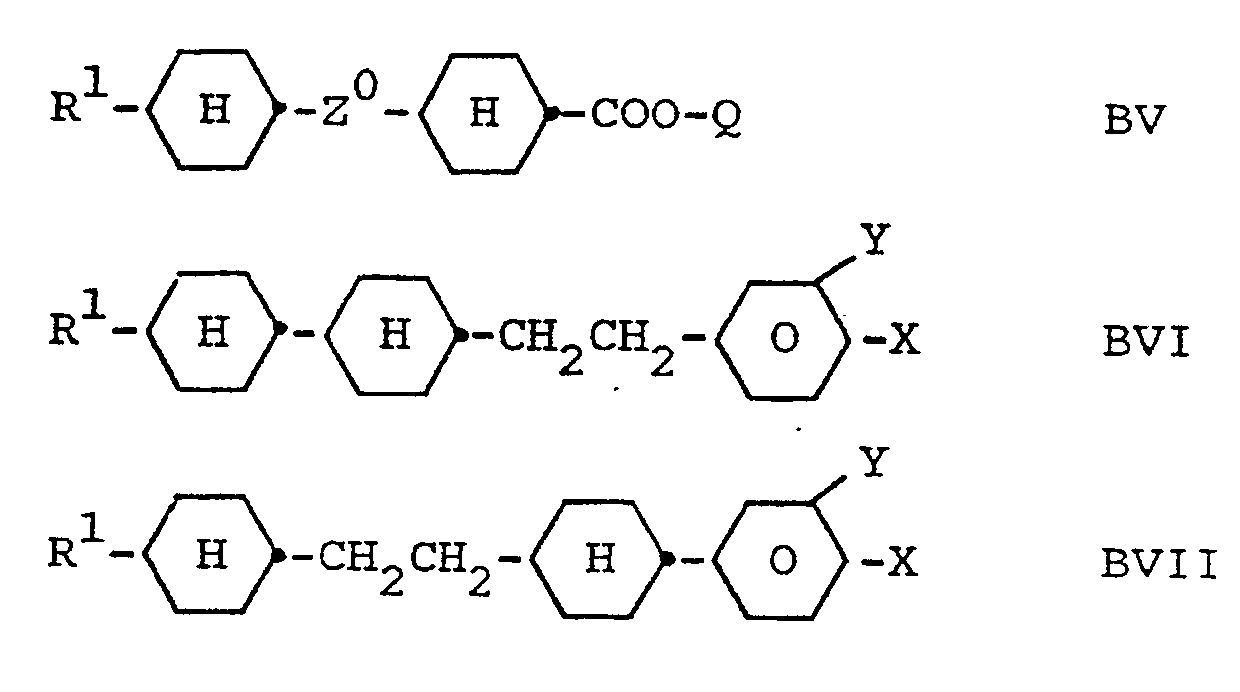
Z⁰ -CH₂CH₂- oder eine Einfachbindung ist und
wobei n 1 bis 9 ist, X bedeutet CN oder F und Y ist H oder F; und
Gruppe B3 besteht aus den Verbindungen der Formeln BVIII und BIX:

- c) 10-80 Gew.% einer flüssigkristallinen Komponente C, bestehend aus einer oder mehreren Verbindungen mit einer dielektrischen Anisotropie von über +1,5, wobei Komponente C mindestens eine Verbindung der Formal Ca enthält,

- d) 0-20 Gew.% einer flüssigkristallinen Komponente D, bestehend aus einer oder mehreren Verbindungen mit einer dielektrischen Anisotropie von unter -1,5 und
- e) einer optisch aktiven Komponente E in einer Menge, daß das Verhältnis zwischen Schichtdicke (Abstand der planparallelen Trägerplatten) und natürlicher Ganghöhe der chiralen nematischen Flüssigkristallmischung etwa 0,2 bis 1,3 beträgt, und
- Gegenstand der Erfindung ist somit eine entsprechende SFA sowie auch entsprechende Flüssigkristallmischungen zur Verwendung in SFA.
- Die einzelnen Verbindungen der Formeln AI bis AVI, BI bis BIV, Ca und CI bis CIII oder auch andere Verbindungen, die in den erfindungsgemäßen SFA verwendet werden können, sind entweder bekannt, oder sie können analog zu den bekannten Verbindungen hergestellt werden.
- Bevorzugte erfindungsgemäß verwendbare Flüssigkristallmischungen enthalten eine oder mehrere Verbindungen aus der Gruppe A in einem Anteil von 4 % bis 40 %, vorzugsweise 10 % bis 32 %. Verbindungen der Formeln AIII bis AVI sind bevorzugt. In einer besonders bevorzugten Ausführungsform enthalten die Mischungen gleichzeitig (a) Verbindungen der Formel AV und/oder AVI und (b) Verbindungen der Formel AIII und/oder AIV. R¹ und R² bedeuten vorzugsweise jeweils unabhängig voneinander n-Alkyl mit 1 bis 7 C-Atomen oder (trans)-n-Alkenyl mit 3 bis 7 C-Atomen.
- Der Anteil der Komponente(n) aus Gruppe B1 beträgt vorzugsweise 5 % bis 45 %, insbesondere bevorzugt ca. 10 % bis 40 %. Komponenten der Formeln BIII und BIV sind bevorzugt. Besonders bevorzugte Verbindungen der Formel BIII sind diejenigen der folgenden Teilformeln:

R¹ CH₃-(CH₂)n-O-, CH₃-(CH₂)t-, trans-H-(CH₂)r-CH=CH-(CH₂CH₂)s-CH₂O- oder trans-H-(CH₂)r-CH=CH-(CH₂CH₂)s-,
R² CH₃-(CH₂)t-
n 1, 2, 3 oder 4
r 0, 1, 2 oder 3
s 0 oder 1, und
t 1, 2, 3 oder 4 ist. - Ferner bevorzugt sind diejenigen der Teilformel

- Der Anteil der Verbindungen der Formel BIII der oben angegebenen Teilformeln ist vorzugsweise ca. 5 % bis 45 %, insbesondere bevorzugt ca. 10 % bis 35 %. Besonders bevorzugte Verbindungen der Formel BIV sind diejenigen der folgenden Teilformel:

R¹ CH₃-(CH₂)n-O- oder trans-H-(CH₂)r-CH=CH-(CH₂CH₂)s-CH₂O- und R² CH₃-(CH₂)t- ist, wobei
n 1, 2, 3 oder 4,
r 0, 1, 2 oder 3,
s 0 oder 1, und
t 1, 2, 3 oder 4 ist. - Der Anteil dieser Verbindungen, bzw. der Verbindungen der Formel BIV, ist vorzugsweise ca. 5 % bis 40 %, insbesondere bevorzugt ca. 10 % bis 35 %.
- Vorzugsweise enthalten die Mischungen Verbindungen der Formel III, insbesondere solche der Teilformel

- In einer besonders bevorzugten Ausführungsform enthalten die Mischungen gleichzeitig Verbindungen der Formeln BIII und BIV, wobei der Gesamtanteil für Komponenten der Gruppe B1 gewahrt bleibt.
- Falls Verbindungen der Formeln BI und/oder BIII vorhanden sind, bedeuten R¹ und R² vorzugsweise jeweils unabhängig voneinander n-Alkyl mit 1 bis 7 C-Atomen oder (trans)-n-Alkenyl mit 3 bis 7 C-Atomen. Z² ist vorzugsweise eine Einfachbindung. BI ist besonders bevorzugt.
- Ferner bevorzugt sind erfindungsgemäße Mischungen, die einer oder mehrere Verbindungen der Formel BIV enthalten, worin

- In jedem Fall bleibt der Gesamtanteil für Komponenten der Gruppe B1 gewahrt.
- Der Anteil der Verbindungen der Gruppe B2 beträgt vorzugsweise ca. 5 % bis 45 %, insbesondere bevorzugt 5 % bis 20 %. Der Anteil (bevorzugte Bereiche) für BV bis BVII ist wie folgt:
BV ca. 5 % bis 30 %, vorzugsweise ca. 5 % bis 15 %
Summe BVI und BVII: ca. 5 % bis 25 %, vorzugsweise ca. 10 % bis 20 %. - Bevorzugte Verbindungen der Gruppe B2 sind im folgenden angegeben:

- Vorzugsweise enthalten die erfindungsgemäßen Mischungen eine oder mehrere Verbindungen ausgewählt aus der Gruppe bestehend aus BV3, BVI1 und BVII1 in einem Gesamtanteil von ca. 5 bis 35 %.
- In einer besonders bevorzugten Ausführungsform enthalten die erfindungsgemäßen Mischungen neben BV3, BVI1, BVII1 und BV2 (R = F) weitere terminal fluorierte Verbindungen zum Beispiel ausgewählt aus der Gruppe bestehend aus:

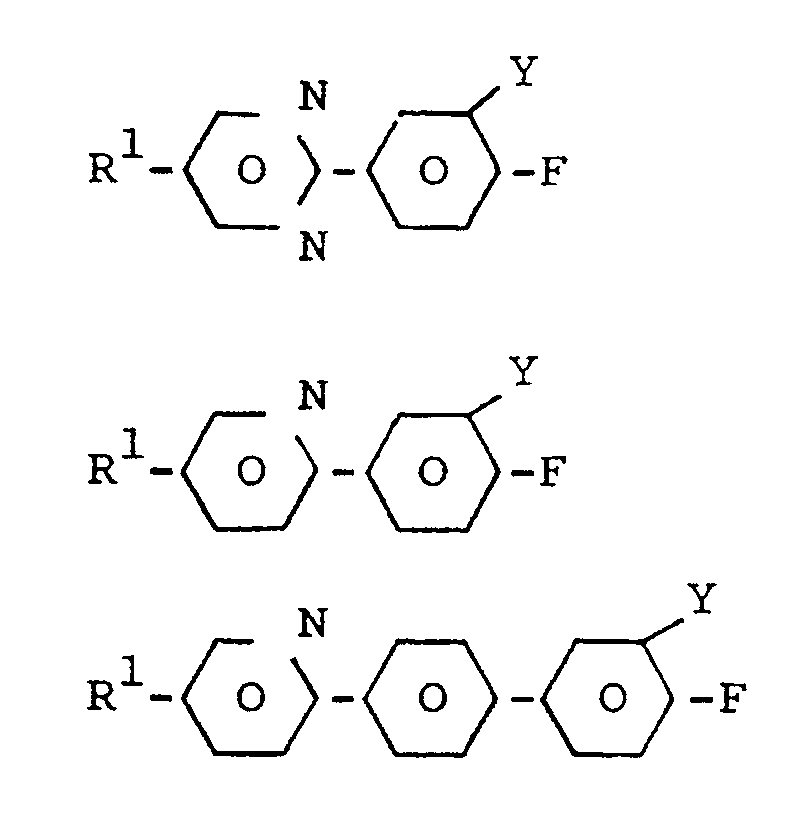
- Der Gesamtanteil aller terminal fluorierter Verbindungen beträgt vorzugsweise ca. 5 % bis 65 %, insbesondere ca. 15 % bis 40 %..
- Der Anteil der Verbindungen aus Gruppe B3 beträgt vorzugsweise ca. 5 % bis 30 %, insbesondere bevorzugt ca. 10 % bis 20 %. R¹ ist vorzugsweise n-Alkyl oder n-Alkoxy mit jeweils 1 bis 9 C-Atomen. R² ist vorzugsweise n-Alkyl mit 1 bis 9 C-Atomen. Es können jedoch auch analoge Verbindungen mit Alkenyl- bzw. Alkenyloxy-Gruppen eingesetzt werden. Verbindungen der Formel BVIII sind bevorzugt

- Die erfindungsgemäßen Mischungen enthalten Verbindungen aus mindestens einer der Gruppen B1, B2 und B3. Vorzugsweise enthalten sie eine oder mehrere Verbindungen aus Gruppe B1 und eine oder mehrere Verbindungen aus Gruppe B2 und/oder B3.
- Der Anteil der Verbindungen der Komponente C ist vorzugsweise ca. 10 % bis 80 %, insbesondere ca. 20 % bis 70 %. Der Fachmann kann zur Einstellung der gewünschten Schwellenspannung leicht diesen Anteil einstellen, wobei prinzipiell neben den Verbindungen der Formel Ca alle üblichen Flüssigkristallverbindungen mit Δε > +1,5 verwendet werden können. Der Anteil der Verbindungen der Formel Ca liegt vorzugsweise bei 10 % bis 45 %, insbesondere 15 % bis 35 %. Falls überwiegend weniger stark positive terminal fluorierte Verbindungen (siehe oben) verwendet werden, bewegt sich der Gesamtanteil mehr im oberen Bereich (ca. 35 % bis 80 %), während bei Verwendung von terminal cyan-substituierten Verbindungen der Anteil niedriger sein kann (ca. 10 % bis 35 %). Besonders bevorzugte Verbindungen sind neben den oben angegebenen terminal fluorierten Verbindungen die hier folgenden genannten bevorzugten Cyanverbindungen:

R die in Anspruch 1 angegebene Bedeutung hat,
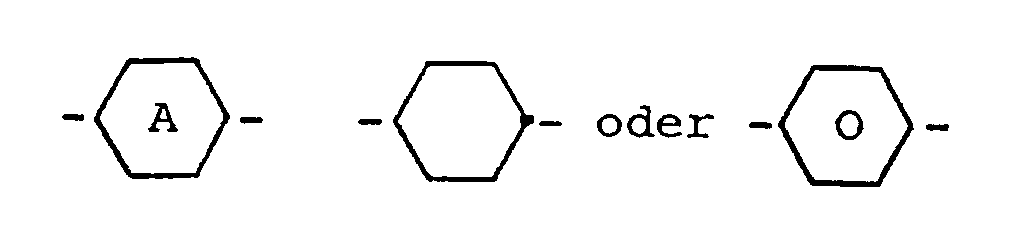
- Einige besonders bevorzugte kleinere Gruppen sind im folgenden angegeben:

- Ferner bevorzugt sind Isothiocyanate, z.B. der Formel

- In einer besonders bevorzugten Ausführungsform enthalten die erfindungsgemäßen Mischungen vorzugsweise ca. 5 % bis 20 % einer oder mehrerer Verbindungen mit einer dielektrischen Anisotropie von unter -1,5 (Komponente D). Derartige Verbindungen sind bekannt, z.B. Derivate des 2,3-Dicyanhydrochinon oder Cyclohexanderivate mit den Strukturelement

- Vorzugsweise werden jedoch Verbindungen mit dem Strukturelement 2,3-Difluor-1,4-phenylen gewählt, z.B. Verbindungen gemäß DE-OS 38 07 801, 38 07 861, 38 07 863, 38 07 864 oder 38 07 908. Besonders bevorzugt sind Tolane mit diesem Strukturelement gemäß der Internationalen Patentanmeldung PCE/DE 88/00133, insbesondere solche der Formeln

- Die Komponente D bewirkt insbesondere eine Verbesserung der Steilheit der Kennlinie.
- In einer besonders bevorzugten Ausführungsform enthalten die Mischungen ca. 5 % bis 35 %, insbesondere bevorzugt ca. 10 % bis 20 % an flüssigkristallinen Tolan-Verbindungen. Hierdurch kann bei geringeren Schichtdicken (ca. 5-6 µm) gearbeitet werden, wodurch die Schaltzeiten deutlich kürzer werden. Besonders bevorzugte Tolane sind im folgenden angegeben:

Z⁰ ist -CH₂CH₂ - oder eine Einfachbindung,
Q ist
R² n-Alkyl oder n-Alkoxy mit jeweils 1 bis 7 C-Atomen oder n-Alkenyl oder n-Alkenyloxy mit jeweils 3 bis 7 C-Atomen bedeutet. - In weiteren besonders bevorzugten Ausführungsformen enthalten die Mischungen
- 30-60 Gew.% Komponente C, 20-70 Gew.% Verbindungen aus den Gruppen A und B, 0-10 Gew.% Komponente D und eine sich zu 100 Gew.% addierende Menge der Komponente E,
- eine Komponente D, die eine oder mehrere Verbindungen mit einer 1-Cyan-trans-1,4-cyclohexylen-Gruppe oder einer 2,3-Difluor-1,4-phenylen-Gruppe enthält,
- mindestens zwei Verbindungen der Formel AIII oder AV,
- Verbindungen der Formel AIII und AV,
- eine Komponente C, die eine oder mehrere Verbindungen mit einer 4-Fluorphenyl-Gruppe oder einer 3,4-Difluorphenyl-Gruppe enthält,
- mindestens eine Verbindung aus folgender Gruppe: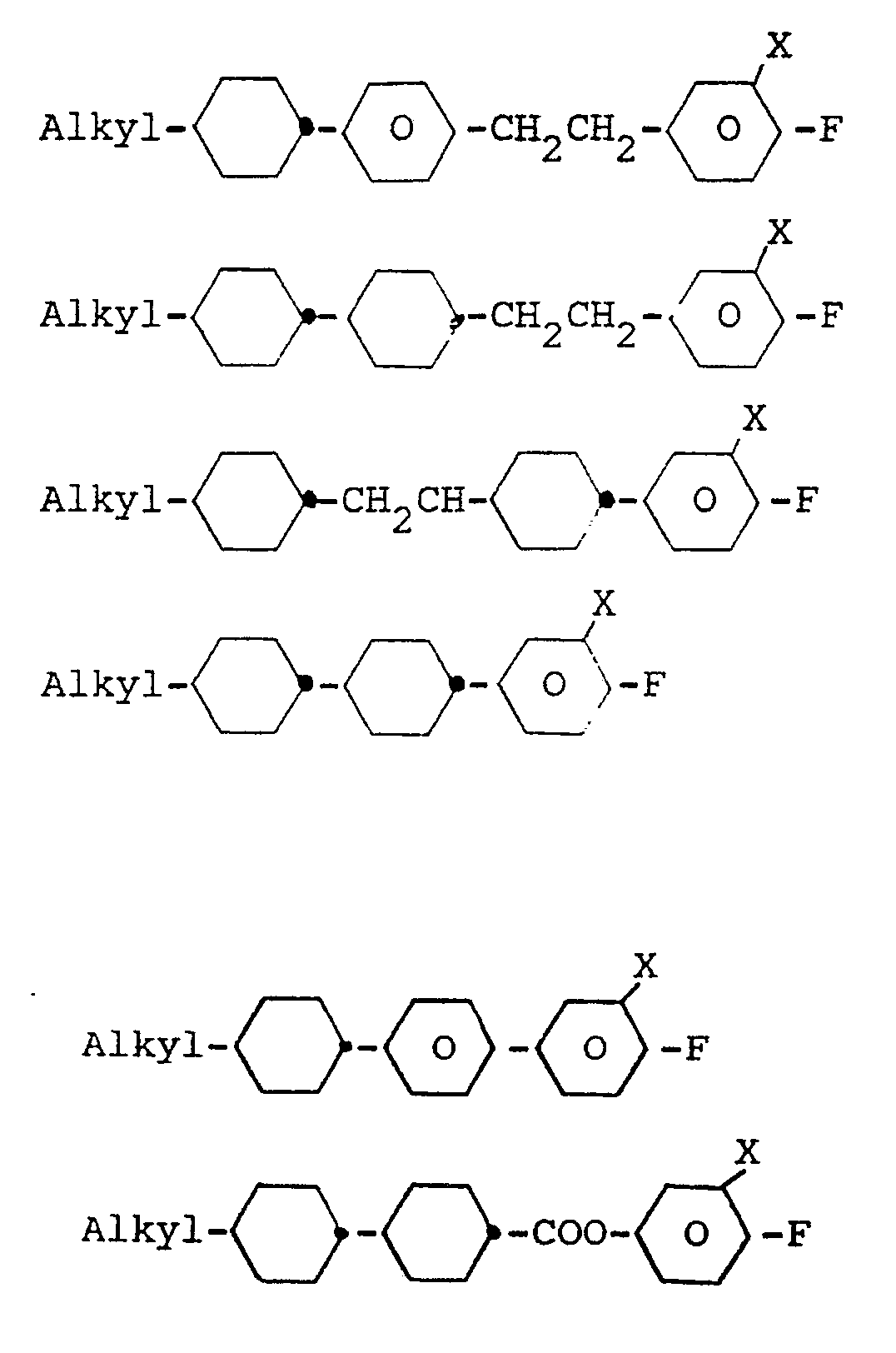
- eine oder mehrere Verbindungen, worin R eine trans-Alkenylgruppe oder eine trans-Alkenyloxygruppe ist,
- eine oder mehrere Verbindungen ausgewählt aus der folgenden Gruppe
- Für die Komponente E stehen dem Fachmann eine Vielzahl, zum Teil kommerziell erhältlicher chiraler Dotierstoffe zur Verfügung. Deren Wahl ist an sich nicht kritisch.
- Der Aufbau der erfindungsgemäßen Flüssigkristall-Anzeigeelemente aus Polarisatoren, Elektrodengrundplatten und Elektroden mit einer solchen Oberflächenbehandlung, daß die Vorzugsorientierung (Direktor) der jeweils daran angrenzenden Flüssigkristall-Moleküle von der einen zur anderen Elektrode gewöhnlich um betragsmäßig 160° bis 360° gegeneinander verdreht ist, entspricht der für derartige Anzeigeelemente üblichen Bauweise. Dabei ist der Begriff der üblichen Bauweise hier weit gefaßt und umfaßt auch alle literaturbekannten Abwandlungen und Modifikationen der Supertwistzelle, insbesondere auch Matrix-Anzeigeelemente sowie die zusätzliche Magnete enthaltenden Anzeigeelemente nach der DE-OS 2 748 738. Der Oberflächentiltwinkel an den beiden Trägerplatten kann gleich oder verschieden sein. Gleiche Tiltwinkel sind bevorzugt.
- Ein wesentlicher Unterschied der erfindungsgemäßen Anzeigeelemente zu den bisher üblichen auf der Basis der verdrillten nematischen Zelle besteht jedoch in der Wahl der Flüssigkristallkomponenten der Flüssigkristallschicht.
- Die Herstellung der erfindungsgemäß verwendbaren Flüssigkristallmischungen erfolgt in an sich üblicher Weise. In der Regel wird die gewünschte Menge der in geringerer Menge verwendeten Komponenten in der den Hauptbestandteil ausmachenden Komponenten gelöst, zweckmäßig bei erhöhter Temperatur. Es ist auch möglich, Lösungen der Komponenten in einem organischen Lösungsmittel, z.B. in Aceton, Chloroform oder Methanol, zu mischen und das Lösungsmittel nach Durchmischung wieder zu entfernen, beispielsweise durch Destillation.
- Die Dielektrika können auch weitere, dem Fachmann bekannte und in der Literatur beschriebene Zusätze enthalten. Beispielsweise können 0-15 % pleochroitische Farbstoffe zugesetzt werden.
- Die folgenden Beispiele sollen die Erfindung erläutern, ohne sie zu begrenzen.
- Es bedeutet:
S-N Phasenübergangs-Temperatur smektisch-nematisch,
Klp. Klärpunkt,
Visk. Viskosität (m Pa.s),
Ton Zeit vom Einschalten bis zur Erreichung von 90 % des maximalen Kontrastes
Toff Zeit vom Ausschalten bis zur Erreichung von 10 % des maximalen Kontrastes - Die SFA wird im Multiplexbetrieb angesteuert (Multiplexverhältnis) 1:100, Bias 1:11, Betriebsspannung 18,5 Volt).
- Vor und nachstehend sind alle Temperaturen in °C angegeben. Die Prozentzahlen sind Gewichtsprozente. Die Werte für die Schaltzeiten und Viskositäten beziehen sich auf 20 °C.
- Ein SFA mit Verdrillungswinkel 200° enthaltend eine Flüssigkristallmischung bestehend aus
10 % p-trans-4-Propylcyclohexylbenzonitril,
11 % 1-(trans-4-Propylcyclohexyl)-2-(p-cyanphenyl)-ethan,
8 % 1-(trans-4-Pentylcyclohexyl)-2-(p-cyanphenyl)-ethan,
13 % trans,trans-4-Propoxy-4′-propylcyclohexylcyclohexan,
11 % trans,trans-4-Methoxy-4′-pentylcyclohexylcyclohexan,
10 % trans,trans-4-Ethoxy-4′-pentylcyclohexylcylcohexan,
7 % trans-1-(trans-4-Propylcyclohexyl)-4-(p-ethylphenyl)-cyclohexan,
7 % trans-1-(trans-4-Propylcyclohexyl)-4-(p-propylphenyl)-cyclohexan,
7 % trans-1-(trans-4-Propylcyclohexyl)-4-(p-fluorphenyl)-cyclohexan,
7 % trans-1-(trans-4-Propylcyclohexyl)-4-(3,4-difluorphenyl)-cyclohexan,
3 % 4,4′-Bis-(trans-4-propylcyclohexyl)-2-fluorbiphenyl,
3 % 4,4′-Bis-(trans-4-pentylcyclohexyl)-2-fluorbiphenyl und
3 % 4-(trans-4-Pentylcyclohexyl)-4′-(trans-4-propylcyclohexyl)-2-fluorbiphenyl
zeigt eine steile, stabile elektrooptische Kennlinie und eine sehr geringe Abhängigkeit des Kontrastes vom Blickwinkel. - Ein SFA mit Verdrillungswinkel 240° enthaltend eine Flüssigkristallmischung bestehend aus
21 % p-trans-4-Propylcyclohexylbenzonitril,
15 % 1-(trans-4-Propylcyclohexyl)-2-(p-cyanphenyl)-ethan,
12 % 1-(trans-4-Butylcyclohexyl)-2-(p-cyanphenyl)-ethan,
12 % 1-(trans-4-Pentylcyclohexyl)-2(p-cyanphenyl)-ethan,
5 % 4-p-Cyanphenyl-4′-pentylbiphenyl,
10 % 4-Cyan-4′-(trans-4-pentylcyclohexyl)-biphenyl,
10 % trans-1-(trans-4-Propylcyclohexyl)-4-(4-cyanphenyl)-cyclohexan,
10 % trans-1-(trans-4-Propylcyclohexyl)-4-(3,4-difluorphenyl)-cyclohexan und
5 % trans-1-(trans-4-Propylcyclohexyl)-4-(4-cyan-3-fluorphenyl)-cyclohexan,
zeigt eine steile, bistabile elektrooptische Kennlinie und eine sehr geringe Abhängigkeit des Kontrastes vom Blickwinkel. - Ein SFA mit Verdrillungswinkel 220° enthaltend eine Flüssigkristallmischung bestehend aus
20 % 1-(trans-4-Propylcyclohexyl)-2-(p-cyanphenyl)-ethan,
10 % 1-(trans-4-Butylcyclohexyl)-2-(p-cyanphenyl)-ethan,
12 % 1-(trans-4-Pentylcyclohexyl)-2-(p-cyanphenyl)-ethan,
13 % trans-1-p-Methoxyphenyl-4-propylcyclohexan,
7 % trans-1-(trans-4-Propylcyclohexyl)-4-(p-ethylphenyl)-cyclohexan,
7 % trans-1-(trans-4-Propylcyclohexyl)-4-(p-propylphenyl)-cyclohexan,
7 % trans-1-(trans-4-Propylcyclohexyl)-4-(p-methylphenyl)-cyclohexan,
7 % trans-1-(trans-4-Propylcyclohexyl)-4-(p-pentylphenyl)-cyclohexan,
6 % 4-(trans-4-Propylcyclohexyl)-4′-methoxy-tolan,
5 % 4-(trans-4-Propylcyclohexyl)-4′-ethoxy-tolan und
6 % 4-(trans-4-Propylcyclohexyl)-4′-propoxy-tolan,
zeigt eine steile, stabile elektrooptische Kennlinie und eine sehr geringe Abhängigkeit des Kontrastes vom Blickwinkel. - In der vorliegenden Anmeldung und in den folgenden Beispielen sind die Strukturen der Flüssigkristallverbindungen durch Acronyme angegeben, wobei die Transformation in chemische Formeln gemäß folgender Tabellen A und B erfolgt. Alle Rest CnH2n+1 und CmH2m+1 sind geradkettige Alkylreste mit n bzw. m C-Atomen. Die Codierung gemäß Tabelle B versteht sich von selbst. In Tabelle A ist nur das Acronym für den Grundkörper angegeben. Im Einzelfall folgt getrennt vom Acronym für den Grundkörper mit einem Strich ein Code für die Substituenten R¹, R², L¹ und L²:
Code für R¹, R², L¹, L² R¹ R² L¹ L² nm CnH2n+1 CmH2m+1 H H nOm CnH2n+1 OCmH2m+1 H H nO.m OCnH2n+1 CmH2m+1 H H n CnH2n+1 CN H H nN.F CnH2n+1 CN H F nF CnH2n+1 F H H nOF OCnH2n+1 F H H nCl CnH2n+1 Cl H H nF.F CnH2n+1 F H F nOmFF CnH2n+1 OCmH2m+1 F F nmF CnH2n+1 CmH2m+1 F H nCF₃ CnH2n+1 CF₃ H H nOCF₃ CnH2n+1 OCF₃ H H nOCF₂ CnH2n+1 OCHF₂ H H nS CnH2n+1 NCS H H rVsN CrH2r+1-CH=CH-CsH2s- CN H H rEsN CrH2r+1-O-CsH2s- CN H H nNF CnH2n+1 CN F H nAm CnH2n+1 COOCmH2m+1 H H 


- Die folgenden Flüssigkristallmischungen zeigen in SFA vorteilhafte Eigenschaften
Beispiel 4 G6 8.00 S/N N/I G9 13.00 < -40 +88 G15 13.00 G21 8.00 D-302FF 7.00 D-502FF 6.00 CP-302FF 7.00 ECCP-31 8.00 ECCP-33 6.00 ECCP-35 8.00 ECCP-3 8.00 ECCP-3F 8.00 Beispiel 5 G6 8.00 S/N N/I G9 13.00 < -40 +90 G15 13.00 G21 8.00 D-302FF 7.00 D-502FF 6.00 CP-302FF 7.00 ECCP-31 8.00 ECCP-33 6.00 ECCP-35 8.00 ECCP-3 8.00 ECCP-3F 8.00 Beispiel 6 PCH-3 18.00 S/N N/I PCH-4 12.00 -40 +86 G6 6.00 G9 10.00 G15 10.00 CCH-303 3.00 ECCP-3 8.00 ECCP-3F 6.00 ECCP-5F 6.00 CH-33 4.00 CH-35 4.00 CP-33 5.00 CP-35 4.00 CP-43 4.00 Beispiel 7 PCH-3 18.00 S/N N/I PCH-4 12.00 < -40 +89 G6 6.00 G9 10.00 G15 10.00 CCH-303 3.00 CCP-3N 8.00 CCP-3F 6.00 ECCP-5F 6.00 CH-33 4.00 CH-35 4.00 CP-33 5.00 CP-35 4.00 CP-43 4.00 Beispiel 8 PCH-2 13.00 N/I PCH-3 7.00 98 G9 10.00 K9 2.00 PYP-3N.F 5.00 PYP-5N.F 5.00 PCH-301 10.00 PCH-501 10.00 ECCP-31 6.00 ECCP-32 6.00 ECCP-33 6.00 CBC-33 5.00 CBC-53 5.00 CBC-33F 5.00 CBC-55F 5.00 Beispiel 9 PCH-2 7.00 S/N N/I PCH-3 17.00 < -40 +87 G9 10.00 ME2N 5.00 ME2N.F 2.00 ME3N.F 3.00 HP-3N.F 5.00 PCH-302 10.00 CCH-303 4.00 ECCP-31 6.00 ECCP-32 7.00 ECCP-33 7.00 ECCP-35 5.00 CPTP-301 4.00 CPTP-302 4.00 CPTP-303 4.00 Beispiel 10 PCH-2 10.00 PCH-3 20.00 PCH-5 10.00 G9 10.00 ME2N 5.00 CCH-303 4.00 ECCP-3F 6.00 ECCP-5F 6.00 ECCP-31 6.00 ECCP-32 6.00 ECCP-33 5.00 CPTP-301 4.00 CPTP-302 4.00 CPTP-303 4.00 Beispiel 11 PCH-3 16.00 S/N N/I PCH-5F 5.00 < -40 +97 PCH-7F 3.00 CCH-501 9.00 ECCP-3F 14.00 ECCP-5F 15.00 CP-3F 15.00 CP-5F 15.00 G9 8.00 Beispiel 12 PCH-2 8.00 S/N N/I PCH-3 19.00 < -30 +87 K6 6.00 K9 6.00 G9 6.00 ME2N.F 2.00 ME3N.F 3.00 PCH-302 6.00 PTP-35 3.00 PTP-102 3.00 CPTP-302FF 4.00 ECCP-31 6.00 ECCP-32 6.00 ECCP-33 6.00 ECCP-35 6.00 CBC-33 5.00 CBC-53 5.00 Beispiel 13 PCH-2 7.00 S/N N/I PCH-3 13.00 < -30 +81 K6 7.00 K9 7.00 K15 3.00 G9 9.00 ME2N 3.00 ME2N.F 2.00 ME3N.F 3.00 PCH-302 5.00 PTP-502FF 4.00 ECCP-31 6.00 ECCP-32 7.00 ECCP-33 7.00 ECCP-35 5.00 CBC-33F 6.00 CBC-53F 6.00 Beispiel 14 PCH-2 8.00 S/N N/I PCH-3 17.00 < -30 +90 K6 6.00 K9 5.00 G9 7.00 ME2N 3.00 ME3N 3.00 ME2N.F 2.00 ME3N.F 3.00 PCH-302 6.00 PTP-102 3.00 CPTP-301 4.00 CPTP-302FF 4.00 ECCP-31 6.00 ECCP-32 6.00 ECCP-33 7.00 CBC-33 5.00 CBC-53 5.00 Beispiel 15 PCH-2 10.00 S/N N/I PCH-3 18.00 < -40 +85 PCH-4 14.00 PCH-5 13.00 G9 8.00 ECCP-31 6.00 ECCP-32 6.00 ECCP-33 6.00 ECCP-35 6.00 CPTP-301 5.00 CPTP-302 4.00 CPTP-303 4.00 Beispiel 16 PCH-2 8.00 S/N N/I PCH-3 17.00 < -40 83 K6 6.00 K9 6.00 G9 6.00 ME2N.F 2.00 ME3N.F 2.00 PCH-302 6.00 PTP-35 5.00 PTP-102 5.00 CPTP-301 4.00 ECCP-31 8.00 ECCP-32 8.00 ECCP-33 7.00 CBC-33F 5.00 CBC-53F 5.00 Beispiel 17 PCH-2 8.00 S/N N/I PCH-3 17.00 < -40 83 K6 6.00 K9 6.00 G9 6.00 ME2N.F 3.00 ME3N.F 2.00 PCH-302 6.00 PTP-35 5.00 PTP-102 5.00 CPTP-302FF 4.00 ECCP-31 8.00 ECCP-32 8.00 ECCP-33 7.00 CBC-33F 5.00 CBC-53F 5.00 Beispiel 18 PCH-2 8.00 S/N N/I PCH-3 17.00 < -40 83 K6 6.00 K9 5.00 G9 7.00 ME2N.F 2.00 ME3N.F 3.00 PCH-302 6.00 PTP-35 5.00 PTP-102 5.00 CPTP-302FF 4.00 ECCP-31 8.00 ECCP-32 7.00 ECCP-33 8.00 CBC-33F 5.00 CBC-53F 4.00 Beispiel 19 PCH-2 8.00 S/N N/I PCH-3 17.00 < -30 87 K6 6.00 K9 6.00 G9 6.00 ME2N.F 2.00 ME3N.F 2.00 PCH-302 6.00 PTP-35 3.00 PTP-102 3.00 CPTP-302FF 4.00 ECCP-31 7.00 ECCP-32 7.00 ECCP-33 7.00 ECCP-35 6.00 CBC-33F 5.00 CBC-53F 5.00 Beispiel 20 PCH-2 8.00 S/N N/I PCH-3 17.00 < -20 88 K6 6.00 K9 6.00 G9 6.00 ME2N.F 2.00 ME3N.F 2.00 PCH-302 7.00 PTP-35 3.00 PTP-102 3.00 CPTP-302FF 4.00 ECCP-31 7.00 ECCP-32 7.00 ECCP-33 7.00 ECCP-35 6.00 CBC-33F 5.00 CBC-53F 4.00 Beispiel 21 PCH-2 8.00 S/N N/I PCH-3 18.00 < -40 78 K6 6.00 K9 5.00 G9 9.00 ME2N 3.00 ME2N.F 2.00 ME3N.F 3.00 PCH-302 8.00 PTP-102 3.00 ECCP-31 6.00 ECCP-32 7.00 ECCP-33 7.00 ECCP-35 5.00 CBC-33F 5.00 CBC-53F 5.00 Beispiel 22 PCH-2 7.00 PCH-3 17.00 G9 10.00 ME2N 3.00 ME2N.F 2.00 ME3N.F 3.00 HP-3N.F 3.00 CCH-303 12.00 ECCP-3F 6.00 ECCP-31 6.00 ECCP-32 7.00 ECCP-33 7.00 ECCP-35 5.00 CPTP-301 4.00 CPTP-302 4.00 CPTP-303 4.00 Beispiel 23 PCH-2 7.00 S/N N/I PCH-3 17.00 < -40 +87 G9 10.00 ME2N 5.00 ME2N.F 2.00 ME3N.F 3.00 HP-3N.F 5.00 PCH-302 10.00 CCH-303 4.00 ECCP-31 6.00 ECCP-32 7.00 ECCP-33 7.00 ECCP-35 5.00 CPTP-301 4.00 CPTP-302 4.00 CPTP-303 4.00 Beispiel 24 PCH-2 7.00 S/N N/I PCH-3 17.00 < -40 +85 K6 6.00 K9 6.00 G9 6.00 ME2N.F 2.00 ME3N.F 2.00 PCH-302 6.00 PTP-35 5.00 PTP-102 5.00 CPTP-301 4.00 ECCP-31 8.00 ECCP-32 8.00 ECCP-33 7.00 CBC-33F 5.00 CBC-53F 5.00 Beispiel 25 PCH-2 8.00 S/N N/I PCH-3 18.00 < -20 +88 K6 6.00 K9 6.00 G9 6.00 ME2N.F 2.00 ME3N.F 2.00 PCH-302 6.00 PTP-35 3.00 PTP-102 3.00 CPTP-302FF 4.00 ECCP-31 7.00 ECCP-32 7.00 ECCP-33 7.00 ECCP-35 6.00 CBC-33 5.00 CBC-53 4.00 Beispiel 26 PCH-2 8.00 S/N N/I PCH-3 17.00 < -20 +87 K6 6.00 K9 6.00 G9 7.00 ME2N.F 2.00 ME3N.F 2.00 PCH-302 6.00 PTP-35 3.00 PTP-102 3.00 CPTP-302FF 4.00 ECCP-31 7.00 ECCP-32 7.00 ECCP-33 7.00 ECCP-35 6.00 CBC-33 5.00 CBC-53 4.00 Beispiel 27 PCH-2 8.00 S/N N/I PCH-3 19.00 < 0 +87 K6 6.00 K9 6.00 G9 6.00 ME2N.F 2.00 ME3N.F 3.00 PCH-302 4.00 PTP-35 3.00 PTP-102 3.00 CPTP-302FF 4.00 ECCP-31 7.00 ECCP-32 7.00 ECCP-33 7.00 ECCP-35 6.00 CBC-33 5.00 CBC-53 4.00 Beispiel 28 PCH-3 22.00 S/N N/I PCH-4 20.00 < -30 +88 G9 13.00 HP-3N.F 4.00 ECCP-31 6.00 ECCP-32 6.00 ECCP-33 6.00 ECCP-35 5.00 CP-3F 8.00 CP-5F 5.00 BCH-32 5.00 Beispiel 29 PCH-2 8.00 S/N N/I PCH-3 18.00 < -30 +77 K6 6.00 K9 5.00 G9 9.00 ME2N 3.00 ME2N.F 2.00 ME3N.F 3.00 PCH-302 6.00 PTP-35 3.00 PTP-102 4.00 ECCP-31 6.00 ECCP-32 6.00 ECCP-33 5.00 ECCP-35 5.00 CBC-33F 5.00 CBC-53F 6.00 Beispiel 30 PCH-2 7.00 S/N N/I PCH-3 12.00 < -31 +77 K6 7.00 K9 7.00 K15 4.00 G9 9.00 ME2N 3.00 ME2N.F 2.00 ME3N.F 3.00 PCH-302 8.00 PTP-102 3.00 ECCP-31 6.00 ECCP-32 7.00 ECCP-33 7.00 ECCP-35 5.00 CBC-33F 5.00 CBC-53F 5.00
Claims (13)
1. Supertwist-Flüssigkristallanzeige mit
- zwei planparallelen Trägerplatten, die mit einer Umrandung eine Zelle bilden,
- einer in der Zelle befindlichen nematischen Flüssigkristallmischung mit positiver dielektrischer Anisotropie,
- Elektrodenschichten mit darüberliegenden Orientierungsschichten auf den Innenseiten der Trägerplatten,
- einem Anstellwinkel zwischen der Längsachse der Moleküle an der Oberfläche der Trägerplatten und den Trägerplatten von etwa 1 Grad bis 30 Grad, und
- einem Verdrillungswinkel der Flüssigkristallmischung in der Zelle von Orientierungsschicht zu Orientierungsschicht dem Betrag nach zwischen 160 und 360°, dadurch gekennzeichnet, daß die nematische Flüssigkristallmischung
a) mindestens eine Komponente, ausgewählt aus der Gruppe A, bestehend aus Verbindungen der Formeln AI bis AVI: 
worin R¹ und R² jeweils unabhängig voneinander jeweils R bedeuten und
R Alkyl mit 1-12 C-Atomen ist, worin auch eine oder zwei nicht benachbarte CH₂-Gruppen durch -O-, -CH=CH-, -CO-, -O-CO- oder -CO-O- ersetzt sein können,
b) 0-40 Gew.% einer flüssigkristallinen Komponente B bestehend aus Verbindungen ausgewählt aus den Gruppen B1, B2 und B3, wobei Gruppe B1 aus den Verbindungen der Formeln BI bis BIV besteht: 
worin R¹ und R² jeweils unabhängig voneinander die für R angegebene Bedeutung haben, Z² -CH₂CH₂ -, -CO-O-, -O-CO- oder eine Einfachbindung, und

bedeutet;
Gruppe B2 besteht aus den Verbindungen der Formeln BV bis BVII: 
worin R¹ die für R angegebene Bedeutung hat,
Z⁰ -CH₂CH₂- oder eine Einfachbindung ist und 
bedeutet,
wobei n 1 bis 9 ist, X bedeutet CN oder F und Y ist H oder F; und
Gruppe B3 besteht aus den Verbindungen der Formeln BVIII und BIX: 
worin R¹ und R² jeweils unabhängig voneinander die für R angegebene Bedeutung haben, und
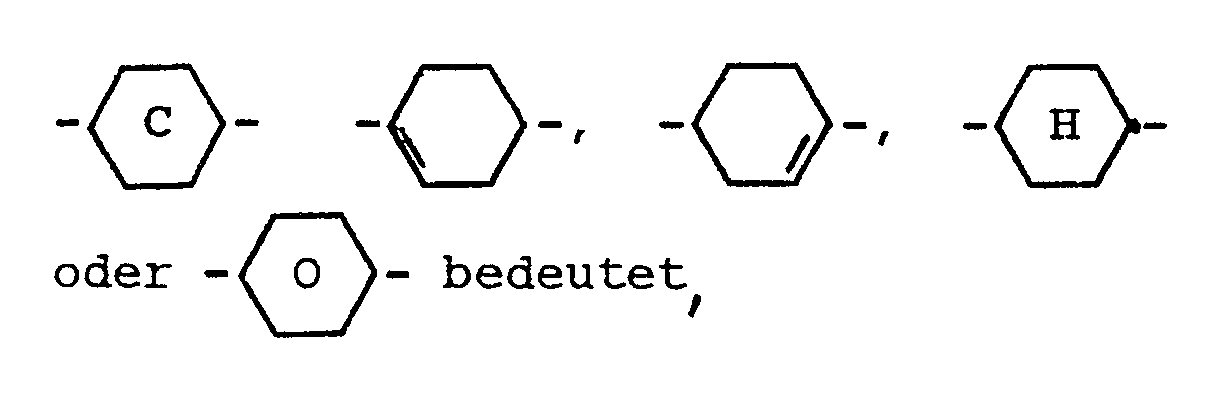
c) 10-80 Gew.% einer flüssigkristallinen Komponente C, bestehend aus einer oder mehreren Verbindungen mit einer dielektrischen Anisotropie von über +1,5, wobei Komponente C mindestens eine Verbindung der Formal Ca enthält,

worin n 1 bis 7 bedeutet,
d) 0-20 Gew.% einer flüssigkristallinen Komponente D, bestehend aus einer oder mehreren Verbindungen mit einer dielektrischen Anisotropie von unter -1,5 und
e) einer optisch aktiven Komponente E in einer Menge, daß das Verhältnis zwischen Schichtdicke (Abstand der planparallelen Trägerplatten) und natürlicher Ganghöhe der chiralen nematischen Flüssigkristallmischung etwa 0,2 bis 1,3 beträgt, und
daß die nematische Flüssigkristallmischung einen nematischen Phasenbereich von mindestens 60 °C, eine Viskosität von nicht mehr als 30 mPa.s und eine dielektrische Anisotropie von mindestens +5 aufweist, wobei die dielektrischen Anisotropien der Verbindungen und die auf die nematische Flüssigkristallmischung bezogenen Parameter auf eine Temperatur von 20 °C bezogen sind.
- zwei planparallelen Trägerplatten, die mit einer Umrandung eine Zelle bilden,
- einer in der Zelle befindlichen nematischen Flüssigkristallmischung mit positiver dielektrischer Anisotropie,
- Elektrodenschichten mit darüberliegenden Orientierungsschichten auf den Innenseiten der Trägerplatten,
- einem Anstellwinkel zwischen der Längsachse der Moleküle an der Oberfläche der Trägerplatten und den Trägerplatten von etwa 1 Grad bis 30 Grad, und
- einem Verdrillungswinkel der Flüssigkristallmischung in der Zelle von Orientierungsschicht zu Orientierungsschicht dem Betrag nach zwischen 160 und 360°, dadurch gekennzeichnet, daß die nematische Flüssigkristallmischung
a) mindestens eine Komponente, ausgewählt aus der Gruppe A, bestehend aus Verbindungen der Formeln AI bis AVI:
R Alkyl mit 1-12 C-Atomen ist, worin auch eine oder zwei nicht benachbarte CH₂-Gruppen durch -O-, -CH=CH-, -CO-, -O-CO- oder -CO-O- ersetzt sein können,
b) 0-40 Gew.% einer flüssigkristallinen Komponente B bestehend aus Verbindungen ausgewählt aus den Gruppen B1, B2 und B3, wobei Gruppe B1 aus den Verbindungen der Formeln BI bis BIV besteht:
Gruppe B2 besteht aus den Verbindungen der Formeln BV bis BVII:
Z⁰ -CH₂CH₂- oder eine Einfachbindung ist und
wobei n 1 bis 9 ist, X bedeutet CN oder F und Y ist H oder F; und
Gruppe B3 besteht aus den Verbindungen der Formeln BVIII und BIX:
d) 0-20 Gew.% einer flüssigkristallinen Komponente D, bestehend aus einer oder mehreren Verbindungen mit einer dielektrischen Anisotropie von unter -1,5 und
e) einer optisch aktiven Komponente E in einer Menge, daß das Verhältnis zwischen Schichtdicke (Abstand der planparallelen Trägerplatten) und natürlicher Ganghöhe der chiralen nematischen Flüssigkristallmischung etwa 0,2 bis 1,3 beträgt, und
daß die nematische Flüssigkristallmischung einen nematischen Phasenbereich von mindestens 60 °C, eine Viskosität von nicht mehr als 30 mPa.s und eine dielektrische Anisotropie von mindestens +5 aufweist, wobei die dielektrischen Anisotropien der Verbindungen und die auf die nematische Flüssigkristallmischung bezogenen Parameter auf eine Temperatur von 20 °C bezogen sind.
2. Anzeige nach Anspruch 1, dadurch gekennzeichnet, daß Komponente C zusätzlich Verbindungen enthält, ausgewählt aus der Gruppe C, bestehend aus den Verbindungen der Formeln CI bis CIII:

worin
R die in Anspruch 1 angegebene Bedeutung hat, 
eine Einfachbindung,
-CO-O- oder -O-CO- und 
bedeutet.
R die in Anspruch 1 angegebene Bedeutung hat,
-CO-O- oder -O-CO- und
3. Anzeige nach mindestens einem der Ansprüche 1 und 2, dadurch gekennzeichnet, daß die nematische Flüssigkristallmischung zusammengesetzt ist aus 30-60 Gew.% Komponente C, 20-70 Gew.% Verbindungen aus den Gruppen A und B, 0-10 Gew.% Komponente D und einer sich zu 100 Gew.% addierenden Menge der Komponente E.
4. Anzeige nach mindestens einem der Ansprüche 1 bis 3, dadurch gekennzeichnet, daß Komponente D eine oder mehrere Verbindungen mit einer 1-Cyan-trans-1,4-cyclohexylen-Gruppe oder einer 2,3-Difluor-1,4-phenylen-Gruppe enthält.
5. Anzeige nach mindestens einem der Ansprüche 1 bis 4, dadurch gekennzeichnet, daß die nematische Flüssigkristallmischung mindestens zwei Verbindungen der Formel AIII oder AV enthält.
6. Anzeige nach Anspruch 5, dadurch gekennzeichnet, daß die nematische Flüssigkristallmischung Verbindungen der Formel AIII und AV enthält.
7. Anzeige nach mindestens einem der Ansprüche 1 bis 6, dadurch gekennzeichnet, daß die nematische Flüssigkristallmischung Verbindungen der Formel BIII enthält.
8. Anzeige nach Anspruch 7, dadurch gekennzeichnet, daß die Flüssigkristallmischung Verbindungen der Formel
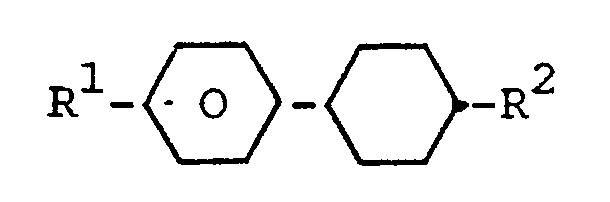
enthält, worin R¹ CH₃-(CH₂)n-O- oder trans-H-(CH₂)r-CH=CH-(CH₂CH₂)s-CH₂-O- und R² CH₃-(CH₂)t- ist, wobei
n 1, 2, 3 oder 4,
r 0, 1, 2 oder 3,
s 0 oder 1, und
t 1, 2, 3 oder 4 ist.
n 1, 2, 3 oder 4,
r 0, 1, 2 oder 3,
s 0 oder 1, und
t 1, 2, 3 oder 4 ist.
9. Anzeige nach Anspruch 7 oder 8, dadurch gekennzeichnet, daß die Flüssigkristallmischung Verbindungen der Formeln

worin
R¹ CH₃-(CH₂)n-O-, CH₃-(CH₂)t-, trans-H-(CH₂)r-CH=CH-(CH₂CH₂)s-CH₂O- oder trans-H-(CH₂)r-CH=CH-(CH₂CH₂)s-, und
R² CH₃-(CH₂)t- ist,
wobei n, r, s und t die in Anspruch 8 angegebene Bedeutung haben.
R¹ CH₃-(CH₂)n-O-, CH₃-(CH₂)t-, trans-H-(CH₂)r-CH=CH-(CH₂CH₂)s-CH₂O- oder trans-H-(CH₂)r-CH=CH-(CH₂CH₂)s-, und
R² CH₃-(CH₂)t- ist,
wobei n, r, s und t die in Anspruch 8 angegebene Bedeutung haben.
10. Anzeige nach mindestens einem der Ansprüche 1 bis 9, dadurch gekennzeichnet, daß Komponente C eine oder mehrere Verbindungen mit einer 4-Fluorphenyl-Gruppe oder einer 3,4-Difluorphenyl-Gruppe enthält.
11. Anzeige nach Anspruch 10, dadurch gekennzeichnet, daß die Flüssigkristallmischung mindestens eine Verbindung aus folgender Gruppe
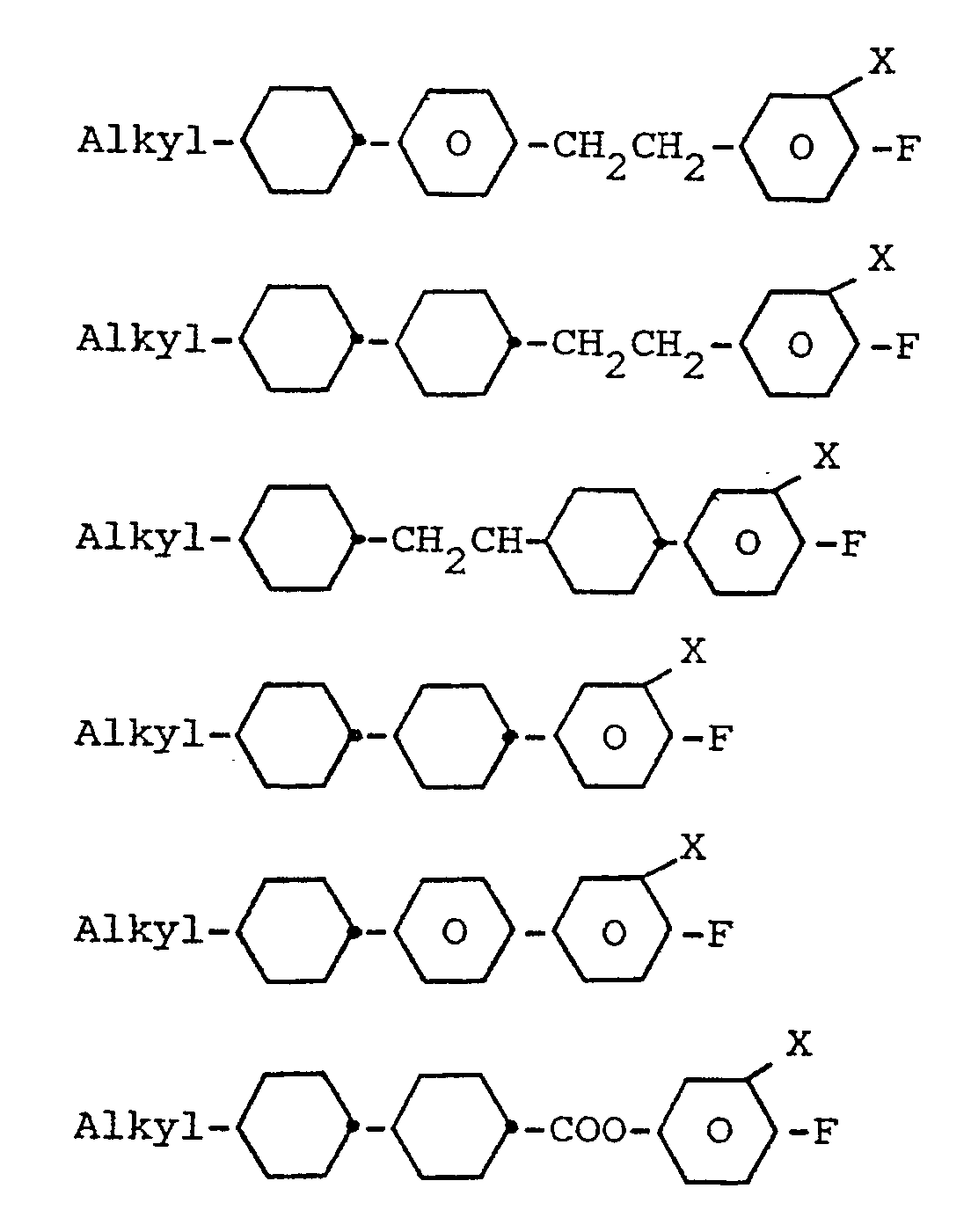
enthält, worin Alkyl eine geradkettige Alkylgruppe mit 2-7 C-Atomen und X H oder F ist.
12. Anzeige nach mindestens einem der Ansprüche 1 bis 11, dadurch gekennzeichnet, daß die Flüssigkristallmischung eine oder mehrere Verbindungen enthält, worin R eine trans-Alkenylgruppe oder eine trans-Alkenyloxygruppe ist.
13. Nematische Flüssigkristallmischung der in mindestens einer der Ansprüche 1 bis 12 definierten Zusammensetzung.
Applications Claiming Priority (2)
| Application Number | Priority Date | Filing Date | Title |
|---|---|---|---|
| DE3912762 | 1989-04-19 | ||
| DE3912762 | 1989-04-19 |
Publications (2)
| Publication Number | Publication Date |
|---|---|
| EP0393442A2 true EP0393442A2 (de) | 1990-10-24 |
| EP0393442A3 EP0393442A3 (de) | 1991-08-14 |
Family
ID=6378941
Family Applications (1)
| Application Number | Title | Priority Date | Filing Date |
|---|---|---|---|
| EP19900106667 Withdrawn EP0393442A3 (de) | 1989-04-19 | 1990-04-06 | Supertwist-Flüssigkristallanzeige |
Country Status (1)
| Country | Link |
|---|---|
| EP (1) | EP0393442A3 (de) |
Cited By (4)
| Publication number | Priority date | Publication date | Assignee | Title |
|---|---|---|---|---|
| EP0588484A3 (de) * | 1992-08-24 | 1994-08-31 | Hitachi Ltd | |
| EP0712918A3 (de) * | 1990-04-13 | 1996-07-03 | Merck Patent Gmbh | |
| JPH10245560A (ja) * | 1997-02-27 | 1998-09-14 | Merck Patent Gmbh | Tnおよびstn液晶ディスプレイ |
| JP2001019961A (ja) * | 1999-05-25 | 2001-01-23 | Merck Patent Gmbh | 液晶媒体および液晶ディスプレイ |
Family Cites Families (6)
| Publication number | Priority date | Publication date | Assignee | Title |
|---|---|---|---|---|
| EP0260450B1 (de) * | 1986-09-12 | 1991-12-04 | F. Hoffmann-La Roche Ag | Flüssigkristallanzeige |
| EP0261614A3 (de) * | 1986-09-26 | 1989-07-12 | F. HOFFMANN-LA ROCHE & CO. Aktiengesellschaft | Flüssigkristallanzeigezelle |
| US5013477A (en) * | 1987-11-06 | 1991-05-07 | Hoffmann-La Roche Inc. | Alkenylbicyclohexane liquid crystals |
| DE3835803A1 (de) * | 1988-03-10 | 1990-04-26 | Merck Patent Gmbh | Supertwist-fluessigkristallanzeigeelement und fluessigkristallmischung |
| DE3807958B4 (de) * | 1988-03-10 | 2004-03-18 | Merck Patent Gmbh | Supertwist-Flüssigkristallanzeigeelement |
| DE3835804B4 (de) * | 1988-10-20 | 2006-12-28 | Merck Patent Gmbh | Nematische Flüssigkristallmischung |
-
1990
- 1990-04-06 EP EP19900106667 patent/EP0393442A3/de not_active Withdrawn
Cited By (4)
| Publication number | Priority date | Publication date | Assignee | Title |
|---|---|---|---|---|
| EP0712918A3 (de) * | 1990-04-13 | 1996-07-03 | Merck Patent Gmbh | |
| EP0588484A3 (de) * | 1992-08-24 | 1994-08-31 | Hitachi Ltd | |
| JPH10245560A (ja) * | 1997-02-27 | 1998-09-14 | Merck Patent Gmbh | Tnおよびstn液晶ディスプレイ |
| JP2001019961A (ja) * | 1999-05-25 | 2001-01-23 | Merck Patent Gmbh | 液晶媒体および液晶ディスプレイ |
Also Published As
| Publication number | Publication date |
|---|---|
| EP0393442A3 (de) | 1991-08-14 |
Similar Documents
| Publication | Publication Date | Title |
|---|---|---|
| EP0494368B1 (de) | Supertwist-Flüssigkristallanzeige | |
| EP0332005B1 (de) | Supertwist-Flüssigkristallanzeige | |
| DE69407050T2 (de) | Supertwist-flüssigkristallanzeige | |
| DE3835804B4 (de) | Nematische Flüssigkristallmischung | |
| EP0481293B1 (de) | Supertwist-Flüssigkristallanzeige | |
| DE19758941B4 (de) | Flüssigkristallmischung und ihre Verwendung in TN- und STN-Flüssigkristallanzeigen | |
| DE10020061B4 (de) | STN-Flüssigkristallmischungen | |
| DE3923064B4 (de) | Flüssigkristallmischung und sie enthaltende Supertwist-Flüssigkristallanzeige | |
| EP0363451B1 (de) | Supertwist-flüssigkristallanzeige | |
| DE19831709A1 (de) | STN-Flüssigkristallanzeige | |
| DE69125055T2 (de) | Supertwist Flüssigkristallanzeige | |
| EP0393443B1 (de) | Supertwist-Flüssigkristallanzeige | |
| EP0562051B1 (de) | Supertwist-flüssigkristallanzeige | |
| DE4441469B4 (de) | Neue nematische Flüssigkristallmischungen sowie deren Verwendung in STN-Flüssigkristallanzeigen | |
| DE19720296A1 (de) | Supertwist-Flüssigkristallanzeige | |
| DE10030459B4 (de) | Nematische Flüssigkristallmischung und deren Verwendung in TN- und STN-Flüssigkristallanzeigen | |
| DE4010684A1 (de) | Supertwist-fluessigkristallanzeige | |
| DE4119292A1 (de) | Supertwist-fluessigkristallanzeige | |
| DE4010668A1 (de) | Supertwist-fluessigkristallanzeige | |
| DE4100288A1 (de) | Supertwist-fluessigkristallanzeige | |
| DE4219283A1 (de) | Supertwist-Flüssigkristallanzeige | |
| DE4415977B4 (de) | Flüssigkristallmischung und ihre Verwendung in einer Supertwist-Flüssigkristallanzeige | |
| DE4100287A1 (de) | Supertwist-fluessigkristallanzeigeelement | |
| DE3807805A1 (de) | Supertwist-fluessigkristallanzeigeelement |
Legal Events
| Date | Code | Title | Description |
|---|---|---|---|
| PUAI | Public reference made under article 153(3) epc to a published international application that has entered the european phase |
Free format text: ORIGINAL CODE: 0009012 |
|
| AK | Designated contracting states |
Kind code of ref document: A2 Designated state(s): DE GB |
|
| PUAL | Search report despatched |
Free format text: ORIGINAL CODE: 0009013 |
|
| AK | Designated contracting states |
Kind code of ref document: A3 Designated state(s): DE GB |
|
| 17P | Request for examination filed |
Effective date: 19920117 |
|
| 17Q | First examination report despatched |
Effective date: 19920908 |
|
| STAA | Information on the status of an ep patent application or granted ep patent |
Free format text: STATUS: THE APPLICATION IS DEEMED TO BE WITHDRAWN |
|
| 18D | Application deemed to be withdrawn |
Effective date: 19930629 |