EP0396384A2 - Hydrocracken von an Asphaltenen reichen Bitumenrückständen - Google Patents
Hydrocracken von an Asphaltenen reichen Bitumenrückständen Download PDFInfo
- Publication number
- EP0396384A2 EP0396384A2 EP90304719A EP90304719A EP0396384A2 EP 0396384 A2 EP0396384 A2 EP 0396384A2 EP 90304719 A EP90304719 A EP 90304719A EP 90304719 A EP90304719 A EP 90304719A EP 0396384 A2 EP0396384 A2 EP 0396384A2
- Authority
- EP
- European Patent Office
- Prior art keywords
- asphaltene
- feedstock
- hydrocracking
- catalyst
- catalyst precursor
- Prior art date
- Legal status (The legal status is an assumption and is not a legal conclusion. Google has not performed a legal analysis and makes no representation as to the accuracy of the status listed.)
- Withdrawn
Links
Images


Classifications
-
- C—CHEMISTRY; METALLURGY
- C10—PETROLEUM, GAS OR COKE INDUSTRIES; TECHNICAL GASES CONTAINING CARBON MONOXIDE; FUELS; LUBRICANTS; PEAT
- C10G—CRACKING HYDROCARBON OILS; PRODUCTION OF LIQUID HYDROCARBON MIXTURES, e.g. BY DESTRUCTIVE HYDROGENATION, OLIGOMERISATION, POLYMERISATION; RECOVERY OF HYDROCARBON OILS FROM OIL-SHALE, OIL-SAND, OR GASES; REFINING MIXTURES MAINLY CONSISTING OF HYDROCARBONS; REFORMING OF NAPHTHA; MINERAL WAXES
- C10G47/00—Cracking of hydrocarbon oils, in the presence of hydrogen or hydrogen- generating compounds, to obtain lower boiling fractions
- C10G47/24—Cracking of hydrocarbon oils, in the presence of hydrogen or hydrogen- generating compounds, to obtain lower boiling fractions with moving solid particles
- C10G47/26—Cracking of hydrocarbon oils, in the presence of hydrogen or hydrogen- generating compounds, to obtain lower boiling fractions with moving solid particles suspended in the oil, e.g. slurries
Definitions
- the present invention relates to a catalytic process for the hydrocracking of the asphaltene-rich fraction of bitumen residuums to produce a refinery treatable product.
- Upgrading processes are normally carried out to remove or reduce the contaminants in the oil and to convert the heavier components of the oil into lower boiling point hydrocarbon products.
- the types of reactor employed in hydrocracking may typically be a tubular reactor containing a fixed bed of catalyst or a fluidized bed of catalyst.
- the disadvantages common to both types of reactor are that they are easily plugged by coke and the hydrodynamics involved are complex.
- bitumen feedstock is usually subjected first to an atmospheric distillation step followed by a vacuum distillation step.
- the overhead or fractions having an IBP below approximately 430 o C are passed to a refinery for conventional treatment.
- the fractions having an IBP above 430 o C, termed, the bitumen residuum are usually treated in a coker or simply burned.
- composition of pitch is chemically complex, containing different fractions which are identifiable by their solubility, or otherwise, in various organic solvents.
- One such class is termed the asphaltenes. Asphaltenes are known to be difficult to treat. Additionally, it is known that a correlative relationship exists in hydrocracking operations between the percentage of asphaltene conversion and the formation of coke. Stated otherwise as the asphaltene conversion increases the coke formation increases proportionately therewith.
- asphaltene conversions is meant :
- Pitch conversion as used hereinafter, is defined as:
- conversion is meant the thermal cracking of the feedstock to a distillable fraction.
- U.S. Patent 2,091,831 issued to E.V. Pongratz et al. described a batch hydrocracking process wherein a catalyst comprising a hydrocarbon oil soluble molybdenum salt of a naphthenic acid is utilized. It will be noted that under the reaction conditions, the salt is not entirely decomposable.
- the treated feedstock comprises specifically a light oil.
- the process is based on the discovery that if a thermally decomposable catalyst precursor in admixture with an asphaltene-rich feedstock is first preheated within a specific temperature range to convert it to an 'active' colloidal catalyst prior to the conventional hydrocracking step, the asphaltenes are preferentially converted to maltenes or volatile products with concomitantly reduced coke formation. Without being bound by the same it is believed that the 'active' colloidal catalyst is preferentially associated with the asphaltene molecules in the preheat stage, thereby rendering that fraction selectively more amenable to the subsequent hydrocracking step.
- the process involves: - concentrating the bitumen residuum to provide an asphaltene-rich feedstock; - admixing the feedstock with a thermally decomposable catalyst precursor; - preheating the catalyst and feedstock mixture to a temperature of between about 200 o C - 300 o C under ambient conditions to convert said catalyst precursor to an active colloidal catalyst; - reacting the mixture with hydrogen under hydrocracking conditions at a temperature of between about 420 o C-490 o C to thereby selectively convert said asphaltenic fraction; and - recovering the reaction products.
- colloidal catalyst a catalyst having a particle size within the colloidal range.
- catalyst precursor is meant a thermally decomposable compound comprising an oil-soluble compound of the group VIA metals for the group VIIIA metals. In its most preferred embodiment the catalyst precursor is molybdenum naphthenate.
- the asphaltene-rich feedstock would have an asphaltene fraction content of at least about twenty-five percent.
- the hydrocracking process is conducted in a tubular upflow reactor on a continuous basis with sufficient turbulence as is necessary to maintain the catalyst as a colloidal dispersion, and sufficient hydrogen flow to strip the volatile components from the reactor.
- the volumetric flow of hydrogen must be greater than twenty times the liquid flow therethrough.
- the invention comprises a process for selectively hydrocracking the asphaltenic fraction of bitumen residuum to a refinery treatable product which comprises admixing the asphaltenic feedstock with a thermally decomposable catalyst precursor; preheating the catalyst precursor and feedstock mixture to a temperature of between 200 o C - 300 o C under ambient conditions to convert said catalyst precursor to an active colloidal catalyst; reacting the mixture with hydrogen under hydrocracking conditions between a temperature of about 420 o C and 490 o C to thereby selectively convert said asphaltenic fraction; and recovering the reaction products.
- Such an asphaltene-rich feedstock may be obtained by the conventional distillation of bitumen.
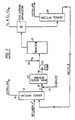
- bitumen is introduced into a vacuum tower 3 via a line 2.
- the overheads are withdrawn via a line 4.
- the residuum leaving the vacuum tower 3 via a line 5 forms the feedstock for the process of the present invention.
- solvent extraction of the bitumen by pentane, ligroin or other light petroleum fractions may be used to obtain the asphaltenic fraction in a higher concentration.
- the asphaltenic fraction may otherwise be concentrated by introducing bitumen residuum via a line 6 into a deasphalting unit 7.
- the overheads leave the deasphalting unit 7 and are then treated further as shown by conventional methods.
- the asphaltene-rich residuum leaves the deasphalting unit 7 via a line 8 where it is passed to a heater 9.
- the feedstock leaves the heater via line 10.
- the feedstock obtained from the above-described asphaltene concentrating processes would contain at least 25% asphaltene.
- API gravity of such feeds would be in the range of -10 o to +12 o .
- a catalyst precursor is added to the feedstock in lines 5 or 10 via line 11 to a metal concentration of between 50 to 500 ppm. Most preferably the metal concentration would be in the range of about 70 to 150 ppm.
- the precursor may comprise the oil-soluble metal compounds of the group VIA or group VIIIA metals including molybdenum naphthenate, cobalt naphthenate, nickel naphthenate.
- the preferred catalyst would comprise molybdenum naphthenate.
- the catalyst precursor and feedstock in admixture are introduced via line 12 into a surge tank 13 where the mixture is subjected to a preheat stage.
- the mixture is heated to a temperature in the range of between about 200 o C - 300 o C under ambient conditions.
- the catalyst precursor is converted to what is believed to be an active colloidal catalyst.
- the catalyst associates with the asphaltene molecules to preferentially predispose the latter to maltene and other volatiles formation during hydrocracking rather than coke formation.
- Figure 3 which is a plot of asphaltene conversion versus pitch conversion over a broad range of operating conditions, is included to illustrate the selectivity of asphaltene conversion in the presence of colloidal catalyst.
- the tubular reactor 17 which could alternatively be described as a still-pot reactor with overflow, is operated on a continuous basis with sufficient turbulence as is necessary to maintain the catalyst as a colloidal dispersion and sufficient hydrogen flow to strip the volatile components from the reactor. Under reactor conditions, the volumetric flow of hydrogen must be greater than twenty times the liquid flow therethrough.
- the reactor may be described as well-mixed with liquid Peclet numbers much less than one. The gas Peclet numbers would be about ten times larger.
- the hydrogen gas would comprise from between about 85 to 100 mole percent.
- the temperature of the reactor in the hydrocracking zone would be from between about 420 o C to 490 o C.
- the preferred temperature range would be 450 o C to about 485 o C.
- the reactor pressure would be maintained between about 10.2 MPa to about 17.0 MPa.
- An asphaltene-rich feedstock of Cold Lake vacuum residuum IBP greater than 430 o C was charged to a 0.01 m3 surge tank. 300 ppm of molybdenum, as molybdenum naphthenate was added to the tank which was equipped with a stirrer and recycle pump and mixed homogeneously therewith. The mixture was heated under a nitrogen blanket to 250 o C. The mixture was then pumped to a preheater. Hydrogen was admixed with the feedstock and catalyst at the entrance to the preheater.
- the preheater consisted of a 2.9mm I.D. 6100mm long coil immersed in a fluidized sand bath at reactor temperature.
- the gaseous heated mixture comprising 93 mole percent hydrogen was introduced into the bottom of the reactor at a rate of 330cc/h.
- the 328cc reactor has an I.D. of 25mm and was .670m.
- the reactor was manufactured by Autoclave Engineers, Erie, Pa.
- the LHSV was 0.9 to 1.2 h ⁇ 1. It usually required 4 - 6 h. for the reactor to reach steady state operating conditions.
- the hydrocracking took place at a temperature of 470 o C and pressure of 17.0 MPa.
- the reactor effluent comprising a mixture of gases and liquids was fed to a hot separator where primary product separation took place.
- the above hydrocracking tests were conducted on Cold Lake vacuum bottoms.
- the pressure was 17.0 MPa.
- the liquid hour space velocity was 4 h ⁇ 1.
- the hydrogen gas rate was 28 slpm.
- the temperature was 455 o C.
- the runs were conducted on a continuous basis in the above-described upflow reactor.
- the feedstock comprised Cold Lake vacuum bottoms IBP 430 o C.
- the pressure was maintained at 17.0 MPa, the liquid hour space velocity was 1.2h ⁇ 1.
- the hydrogen gas rate was 43 reactor volumes per minute at NTP.
- the catalyst concentration was 300 ppm Mo.
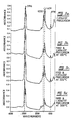
- the produced pitch has a composition of +525 o C.
- Pitch I was derived from a run containing molybdenum naphthenate precursor.
- Pitch II was derived from a run which was conducted without the presence of a catalyst.
Landscapes
- Chemical & Material Sciences (AREA)
- Oil, Petroleum & Natural Gas (AREA)
- Engineering & Computer Science (AREA)
- Chemical Kinetics & Catalysis (AREA)
- General Chemical & Material Sciences (AREA)
- Organic Chemistry (AREA)
- Production Of Liquid Hydrocarbon Mixture For Refining Petroleum (AREA)
- Catalysts (AREA)
- Working-Up Tar And Pitch (AREA)
Applications Claiming Priority (4)
| Application Number | Priority Date | Filing Date | Title |
|---|---|---|---|
| CA598440 | 1989-05-02 | ||
| CA598440 | 1989-05-02 | ||
| US34952789A | 1989-05-09 | 1989-05-09 | |
| US349527 | 1989-05-09 |
Publications (2)
| Publication Number | Publication Date |
|---|---|
| EP0396384A2 true EP0396384A2 (de) | 1990-11-07 |
| EP0396384A3 EP0396384A3 (de) | 1990-12-12 |
Family
ID=25672675
Family Applications (1)
| Application Number | Title | Priority Date | Filing Date |
|---|---|---|---|
| EP19900304719 Withdrawn EP0396384A3 (de) | 1989-05-02 | 1990-05-01 | Hydrocracken von an Asphaltenen reichen Bitumenrückständen |
Country Status (1)
| Country | Link |
|---|---|
| EP (1) | EP0396384A3 (de) |
Cited By (5)
| Publication number | Priority date | Publication date | Assignee | Title |
|---|---|---|---|---|
| EP0540793A1 (de) * | 1990-09-12 | 1993-05-12 | Alberta Oil Sands Technology And Research Authority | Verbesserungen in der Erniedrigung von Koksabsetzungen in thermische Veredelungsverfahren |
| US5578197A (en) * | 1989-05-09 | 1996-11-26 | Alberta Oil Sands Technology & Research Authority | Hydrocracking process involving colloidal catalyst formed in situ |
| WO1998044077A1 (en) * | 1997-03-27 | 1998-10-08 | Amoco Corporation | Fluid hydrocracking catalyst precursor and method |
| FR2806642A1 (fr) * | 2000-03-27 | 2001-09-28 | Inst Francais Du Petrole | Procede de conversion d'hydrocarbures dans un reacteur triphasique |
| DE10240666A1 (de) * | 2002-09-04 | 2004-03-18 | Mann + Hummel Gmbh | Flüssigkeitsfilter, insbesondere für Getriebeöl in Kraftfahrzeugen |
Family Cites Families (4)
| Publication number | Priority date | Publication date | Assignee | Title |
|---|---|---|---|---|
| US3161585A (en) * | 1962-07-02 | 1964-12-15 | Universal Oil Prod Co | Hydrorefining crude oils with colloidally dispersed catalyst |
| US3694352A (en) * | 1970-02-24 | 1972-09-26 | Universal Oil Prod Co | Slurry hydrorefining of black oils with mixed vanadium and manganese sulfides |
| US4192735A (en) * | 1976-07-02 | 1980-03-11 | Exxon Research & Engineering Co. | Hydrocracking of hydrocarbons |
| FR2555192B1 (fr) * | 1983-11-21 | 1987-06-12 | Elf France | Procede de traitement thermique de charges hydrocarbonees en presence d'additifs qui diminuent la formation de coke |
-
1990
- 1990-05-01 EP EP19900304719 patent/EP0396384A3/de not_active Withdrawn
Cited By (10)
| Publication number | Priority date | Publication date | Assignee | Title |
|---|---|---|---|---|
| US5578197A (en) * | 1989-05-09 | 1996-11-26 | Alberta Oil Sands Technology & Research Authority | Hydrocracking process involving colloidal catalyst formed in situ |
| EP0540793A1 (de) * | 1990-09-12 | 1993-05-12 | Alberta Oil Sands Technology And Research Authority | Verbesserungen in der Erniedrigung von Koksabsetzungen in thermische Veredelungsverfahren |
| WO1998044077A1 (en) * | 1997-03-27 | 1998-10-08 | Amoco Corporation | Fluid hydrocracking catalyst precursor and method |
| US5954945A (en) * | 1997-03-27 | 1999-09-21 | Bp Amoco Corporation | Fluid hydrocracking catalyst precursor and method |
| US6274530B1 (en) | 1997-03-27 | 2001-08-14 | Bp Corporation North America Inc. | Fluid hydrocracking catalyst precursor and method |
| FR2806642A1 (fr) * | 2000-03-27 | 2001-09-28 | Inst Francais Du Petrole | Procede de conversion d'hydrocarbures dans un reacteur triphasique |
| WO2001072408A1 (fr) * | 2000-03-27 | 2001-10-04 | Institut Francais Du Petrole | Procede de conversion d'hydrocarbures dans un reacteur triphasique |
| US6700030B2 (en) | 2000-03-27 | 2004-03-02 | Institut Francais Du Petrole | Method for converting hydrocarbons in a three-phase reactor |
| DE10240666A1 (de) * | 2002-09-04 | 2004-03-18 | Mann + Hummel Gmbh | Flüssigkeitsfilter, insbesondere für Getriebeöl in Kraftfahrzeugen |
| DE10240666B4 (de) * | 2002-09-04 | 2011-03-10 | Mann + Hummel Gmbh | Flüssigkeitsfilter, insbesondere für Getriebeöl in Kraftfahrzeugen |
Also Published As
| Publication number | Publication date |
|---|---|
| EP0396384A3 (de) | 1990-12-12 |
Similar Documents
| Publication | Publication Date | Title |
|---|---|---|
| US4192735A (en) | Hydrocracking of hydrocarbons | |
| US4134825A (en) | Hydroconversion of heavy hydrocarbons | |
| US4226742A (en) | Catalyst for the hydroconversion of heavy hydrocarbons | |
| CN101098949B (zh) | 用于重质原料例如重质原油和蒸馏渣油转化的方法 | |
| US4659454A (en) | Hydrocracking of heavy feeds plus light fractions with dispersed dual function catalyst | |
| CN100467575C (zh) | 重质原料如重质原油和蒸馏残渣的转化方法 | |
| US4762607A (en) | Hydroconversion process with combined temperature and feed staging | |
| EP2562235B1 (de) | Mehrstufiges hydrocracking von rückständen | |
| EP0456058B1 (de) | Raffinierung von Schlamm-Schwerölfraktionen | |
| US7594990B2 (en) | Hydrogen donor solvent production and use in resid hydrocracking processes | |
| US7431824B2 (en) | Process for recycling an active slurry catalyst composition in heavy oil upgrading | |
| US6511937B1 (en) | Combination slurry hydroconversion plus solvent deasphalting process for heavy oil upgrading wherein slurry catalyst is derived from solvent deasphalted rock | |
| EP0435242B1 (de) | Verfahren zur Umwandlung von Kohlenwasserstoff-Schweröl | |
| JPS5898387A (ja) | ガス状オレフイン及び単環芳香族炭化水素の製造方法 | |
| US4569752A (en) | Combination coking and hydroconversion process | |
| EP0683218A2 (de) | Verfahren zur Verwandlung von rückstand Kohlenwasserstofföls | |
| US9334452B2 (en) | Two-stage, close-coupled, dual-catalytic heavy oil hydroconversion process | |
| EP0396384A2 (de) | Hydrocracken von an Asphaltenen reichen Bitumenrückständen | |
| KR101793144B1 (ko) | 석탄계 방향족 화합물를 사용한 초중질유 경질화 수첨분해 반응조성물과 수첨분해 반응공정 | |
| CN1101846C (zh) | 转化残烃油的方法 | |
| US4675097A (en) | Process for production of hydrogenated light hydrocarbons by treatment of heavy hydrocarbons with water and carbon monoxide | |
| EP1578891B1 (de) | Verfahren zur umwandlung von schweren einsatzstoffen wie schweröl und destillationsrückstände | |
| CA1161775A (en) | On line hydrotreating to produce finished products | |
| EP4613829A1 (de) | Verfahren zur umwandlung von hydrogecracktem pech | |
| EP4613830A1 (de) | Verfahren zur aufwärtsgradierung von gecrackten restkohlenwasserstoffen |
Legal Events
| Date | Code | Title | Description |
|---|---|---|---|
| PUAI | Public reference made under article 153(3) epc to a published international application that has entered the european phase |
Free format text: ORIGINAL CODE: 0009012 |
|
| PUAL | Search report despatched |
Free format text: ORIGINAL CODE: 0009013 |
|
| AK | Designated contracting states |
Kind code of ref document: A2 Designated state(s): DE FR GB IT |
|
| AK | Designated contracting states |
Kind code of ref document: A3 Designated state(s): DE FR GB IT |
|
| 17P | Request for examination filed |
Effective date: 19910605 |
|
| 17Q | First examination report despatched |
Effective date: 19921208 |
|
| STAA | Information on the status of an ep patent application or granted ep patent |
Free format text: STATUS: THE APPLICATION IS DEEMED TO BE WITHDRAWN |
|
| 18D | Application deemed to be withdrawn |
Effective date: 19930619 |