EP0400227A1 - Peptides natriurétiques - Google Patents
Peptides natriurétiques Download PDFInfo
- Publication number
- EP0400227A1 EP0400227A1 EP89305412A EP89305412A EP0400227A1 EP 0400227 A1 EP0400227 A1 EP 0400227A1 EP 89305412 A EP89305412 A EP 89305412A EP 89305412 A EP89305412 A EP 89305412A EP 0400227 A1 EP0400227 A1 EP 0400227A1
- Authority
- EP
- European Patent Office
- Prior art keywords
- peptide
- pro
- glu
- asn
- peptides
- Prior art date
- Legal status (The legal status is an assumption and is not a legal conclusion. Google has not performed a legal analysis and makes no representation as to the accuracy of the status listed.)
- Withdrawn
Links
Images


Classifications
-
- C—CHEMISTRY; METALLURGY
- C07—ORGANIC CHEMISTRY
- C07K—PEPTIDES
- C07K7/00—Peptides having 5 to 20 amino acids in a fully defined sequence; Derivatives thereof
- C07K7/04—Linear peptides containing only normal peptide links
- C07K7/06—Linear peptides containing only normal peptide links having 5 to 11 amino acids
-
- C—CHEMISTRY; METALLURGY
- C07—ORGANIC CHEMISTRY
- C07K—PEPTIDES
- C07K7/00—Peptides having 5 to 20 amino acids in a fully defined sequence; Derivatives thereof
- C07K7/04—Linear peptides containing only normal peptide links
- C07K7/08—Linear peptides containing only normal peptide links having 12 to 20 amino acids
Definitions
- This invention relates to novel peptides possessing potent natriuretic and diuretic activity and sharing sequence homology with portions of the N-terminal fragment (NTF) of the pituitary prohormone proopiomelanocortin (POMC). Similar or identical peptide(s) may function as hormone(s) involved in the physiological regulation of body water and electrolyte balance.
- this invention relates to a process for the production of the novel compounds and to pharmaceutical compositions containing said peptides as free acids, as amides or as salts in combination with a pharmaceutically acceptable carrier or diluent, and to the use of such compositions as natriuretic, diuretic or antihypertensive agents in the treatment of congestive heart failure, hypertension and other disturbances of water and electrolyte balance.
- POMC is the precursor molecule of ACTH or corticotropin, the pituitary hormone which regulates production of the glucocorticoid hormone cortisol by the adrenal cortex, as well as of several other biologically active peptides including beta-lipotropin, alpha- and beta-melanotropin, and beta-endorphin. In high concentrations, all of these peptides are capable of stimulating secretion of the mineralocorticoid hormone aldosterone in vitro or in vivo suggesting that they may play a role in the physiological regulation of volume and blood pressure homeostasis, although direct proof for this hypothesis is lacking.
- POMC While all of these peptides are derived from the mid- and C-terminal portions of the POMC molecule, POMC also contains a large N-terminal fragment of more than 70 aminoacids whose physiological function is still uncertain. Wiedemann et al. (1982, Program, Seventh Asia and Oceania Congress of Endocrinology, p. 88), synthesized an NTF-midregion peptide, namely NTF[32-49], raised antisera to it and developed a radio-immunoassay suitable to measure NTF midregion-like peptides.
- NTF midregion-like immunoreactive material IR-NTF
- IR-NTF NTF midregion-like immunoreactive material
- novel synthetic peptides whose primary structure is X-Gly-Asn-Gly-Asp-Glu-Gln-Pro-Leu-Thr-Y, where X is H, a single mono acid, e.g. Pro, or a peptide composed of from two to at least six amino acids, e.g.
- Glu-Asn or Glu-Asn-Pro or Glu-Asn-Pro-Arg can be used as natriuretic, diuretic and antihypertensive agents.
- Therapeutic uses of the invented compounds include, but are not limited to administration to subjects suffering from congestive heart failure and other disorders of volume homeostasis and from hypertension.
- this invention includes those peptides having G9T as their core and being N-terminally extended by 1,2,3,4,5,6 or more amino acids or C-terminally extended by 1,2,3,4 or more amino acids or both. Both the C-terminal and N-terminal extensions may be either identical with or different from the corresponding amino acids in the naturally occurring sequence of NTF.
- the peptides of this invention can be produced by chemical synthesis employing solid phase or liquid phase methods, by extraction from pituitary glands or other tissues, or by recombinant DNA technology.
- Chemical synthesis is preferably carried out by the solid phase method as described by Merrifield (J. Am. Chem. Soc. 85:2148, 1963). With this method protected amino acids bonded to a solid phase resin, such as 4-alkoxybenzoyl-resin, are coupled one by one to the growing peptide chain starting that the protected derivative of the amino acid representing the C-terminus of the peptide and employing a complete cycle of deprotection, neutralization and coupling reaction for each successive amino acid.
- a solid phase resin such as 4-alkoxybenzoyl-resin
- the ⁇ -amino group in all amino acids is protected with a tert-butyloxycarbonyl group (Boc);
- the B-carboxyl group in aspartic acid and glutamic acid is protected with an O-benzyl group (O-Bzl);
- the hydroxyl group in serine and threonine is protected with a benzyl group (Bzl);
- the hydroxyl group in tyrosine is protected with a 2,6-dichlorobenzyl group (Cl2:Bzl);
- the guanidino group in arginine and the imidazole group in histidine are protected with a tosyl group (Tos);
- the ⁇ -amino group in lysine is protected with a chlorobenzyloxycarbonyl group (Cl-Z) and the thiol group in cysteine is protected with an acetoaminomethyl group (Acm).
- the protected peptide resin is treated with hydrogen fluoride to remove the peptide from the resin and to remove the protecting groups.
- the crude peptide is extracted from the peptide-resin mixture with aqueous acetic acid and purified by flash chromatography on C-18 and reverse phase high performance liquid chromatography (HPLC).
- the synthetic peptides of this invention can be produced by a skilled investigator with appropriate equipment and the knowledge relevant to the amnio acid sequence of the peptide desired.
- the invented compounds can also be produced by extraction of natural POMC N-terminal from pituitary glands, preferably of bovine, porcine or ovine origin, followed by enzymatic cleavage into peptides of the desired structure and extraction and purification of same by standard methods of protein purification.
- Recombinant DNA technology can also be employed to produce the inventive peptides.
- oligonucleotides encoding the amino acid sequence of the desired peptide(s) can be synthesized and inserted into a suitable plasmid which is then introduced into E. coli. The peptide then expressed in E. coli is extracted and purified by established methodology.
- Diuretic and natriuretic activity of the peptides of this invention is assayed in male rats of the Sprague-Dawley or Long-Evans strains.
- Peptide or vehicle (for control purposes) is administered by intravenous bolus injection or by continuous infusion into one real artery of animals anesthetized for the duration of the experiment, or by intramuscular or subcutaneous injection into animals only briefly anesthetized with ether and subsequently conscious and freely moving until completion of the experiment.
- Timed urine samples are collected for determination of volume and measurement of sodium and potassium concentration by flame photometry. Details of each method are given in Examples II to IV below.
- the compounds of this invention are best used for therapeutic purposes in subjects suffering from congestive heart failure or other conditions associated with water and sodium retention, such as chronic renal failure or cirrhosis of the liver, or from hypertension.
- they offer several advantages. Being peptides, they are readily broken down to natural amino acids which form the building blocks of the body's proteins. Because of their extremely high specific activity they may cause virtually no toxicity and fewer side effects at therapeutic doses than conventional drugs.
- the novel compounds of this invention offer the advantage of a longer duration of action, thereby facilitating less frequent administration.
- novel compounds are useful as active ingredients in diuretic pharmaceutical compositions. They may be used in the form of free acids or as amides or as salts, such as acetate, citrate, hydrochloride, malate, malonate, oxalate or succinate.
- Parenteral compositions for intravenous, intramuscular or subcutaneous injection may be produced as ready-to-use solutions or as lyophilized powders to be reconstituted in sterile water, saline or other suitable solvent prior to administration. These compositions may contain 0.01 to 100 micrograms of peptide per ml of solution and may also contain inactive ingredients, e.g.
- compositions for parenteral, particularly intramuscular or subcutaneous use may be specifically formulated for prolonged activity. This may be accomplished by slow release of the active peptides from solid carriers to which they are adsorbed, e.g. zinc hydroxide, or from viscous liquids in which they are dissolved, e.g.
- oils or partially hydrogenated gelatin, or from hydrocolloids in which they are suspended e.g., sodium alginate, sodium carboxymethyl-cellulose or polyvinylpyrrolidone, or from liposomes in which they are microencapsulated.
- Pharmaceutical compositions may also be formulated as rectal suppositories, nasal sprays, sublingual tablets or transdermal skin patches.
- Pharmaceutical presentations that protect the peptides from the digestive enzymes of the stomach and small intestine may also be considered.
- the absolute quantity of active ingredients present in any dosage unit should not exceed that appropriate to the rate and manner of administration to be employed, but on the other hand, should also desirably be adequate to allow the desired rate of administration to be achieved by a small number of doses.
- the preferred, but not exclusive route of administration is the parenteral one, namely intravenous, intramuscular or subcutaneous injection.
- the appropriate dose range is from 0.002 to 20.0, but preferably from 0.02 to 2.0 nanomoles peptide per kg body weight.
- the dose to be administered in any given case as well as the rate of administration will depend on the specific peptide used, the pharmaceutical formulation employed, the specific purpose of administration and such factors as age, sex and coexisting diseases.
- F15R The peptide Phe-Pro-Gly-Asn-Gly-Asp-Glu-Gln-Pro-Leu-Thr-Glu-Ans-Pro-Arg-OH, hereinafter referred to as F15R, was synthesized according to the Solid Phase Peptide Synthesis Method described above.
- Boc-Arg(Tos)-0-resin (0.38 meq/g substitution) as the C-terminal residue
- 14 successive cycles of deprotection, neutralization and coupling reaction were performed in the following order: Boc-Pro, Boc-Asn, Boc-Glu(OBzl), Boc-Thr(Bzl), Boc-Leu, Boc-Pro, Boc-Gln, Boc-Glu(OBzl), Boc-Asp(OBzl), Boc-Gly, Boc-Asn, Boc-Gly, Boc-Pro and Boc-Phe.
- the following scheme was used to couple each new amino acid to the growing peptide chain:
- the protected peptide-resin was washed with MeCl, the treated with 40% TFA in MeCl for 30 minutes, then washed successively with MeCl, EtOH and MeCl and dried under vacuum.
- the dried peptide-resin weighed 4.0 g.
- Deprotection and cleavage of the peptide was effected with 70 ml of distilled anhydrous hydrogen fluoride (HF) in the presence of 7.5 ml anisole for 30 minutes at -20°C and 30 minutes at 0°C. After removal of the excess HF, the peptide-resin mixture was washed with anhydrous ether to remove anisole and its derivatives.
- HF distilled anhydrous hydrogen fluoride
- the crude peptide was extracted with 10% aqueous acetic acid.
- the crude lyphilized product (1.1 g) was purified by flash chromatography on a 4x20 cm column of C-18 (J.T. Baker, 40 micron), employing a 0 to 100% B linear gradient (A: 1 liter 0.1% TFA; B: 1 liter 30% acetonitrile/70% H2O) at a flow rate of 2.5 ml/minute.
- the eluate was monitored at 254 nm and analyzed by analytical HPLC and thinlayer chromatography (TLC). This procedure was repeated twice to give a total of 47.1 mg of final peptide product.
- This peptide was analyzed by HPLC, TLC, paper electrophoresis, amino acid analysis and high performance electrophoresis and found to be substantially free of impurities (Table I).
- the peptides G9T, G13R and E19R having the amino acid sequences Gly-Asn-Gly-Asp-Glu-Gln-Pro-Leu-Thr, Gly-Asn-Gly-Asp-Glu-Gln-Pro-Leu-Thr-Pro-Asn-Pro-Arg and Glu-Thr-Pro-Met-Phe-Pro-Gly-Asn-Gly-Asp-Glu-Gln-Pro-Leu-Thr-Glu-Asn-Pro, respectively, were synthesized and analyzed by the same methods as F15R. Amino acid analysis and TLC data for these peptides are listed in Table II and Table III, respectively.
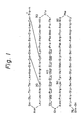
- FIG. 1 The natriuretic and diuretic activity of the inventive peptides F15R, G13R, E19R and G9T was assessed by intrarenal infusion in rats.
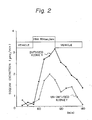
- Figure 2 shows a typical example of the effect of intrarenal infusion of F15R on sodium excretion by the infused and the uninfused kidney.
- a 350 gram male Sprague-Dawley rat was given an intraperitoneal injection of 42 mg of the long-acting barbiturate Inactin® (Byk-Gulden, Konstanz, FRG) under light ether anesthesia.
- a catheter was placed in the right femoral vein for infusion of 5.25 ml of 5% bovine serum albumin in saline over a period of 30 minutes, followed by saline at a rate of 2.0 ml/hour for the duration of the experiment.
- a catheter was placed in the left ureter for urine collections, and a 30 gauge needle attached to a catheter was inserted into the left renal artery for infusion of vehicle (1% bovine serum albumin and 0.1% bacitracin in normal saline) at a rate of 1.0 ml/hour.
- Surgical preparation was completed within 45 minutes by closure of the abdominal incision.
- Intrarenal infusion of peptides G13R, E19R and G9T evoked similar natriuretic responses as F15R as shown in Figures 3, 4 and 5, respectively.
- natriuretic and diuretic effect of intravenous bolus injection of peptides F15R, G13R and E19R was tested in male Sprague-Dawley or Long-Evans rats weighing 300-400 g.
- the animals were given Inactin®, 120 mg per kg body weight i.p. under light ether anesthesia.
- the right femoral vein was catheterized for infusion of 5% bovine serum albumin at a dose of 0.4% of body weight and at a rate of 6.0 ml/hour.
- normal saline was infused for the duration of the experiment at a rate of 2.0 ml/hour.
- the bladder was exposed through an abdominal incision and catheterized for urine collection. Serial 15-minute urine collections in preweighed vials were begun after a recovery period of 45 minutes. After collection of four control samples, the peptide in 0.1 ml of vehicle was injected into the femoral vein over a period of 1 minute and 6 to 10 further urine samples were collected. Urine volume was determined by weighing and urine sodium and potassium were assayed by flame photometry. All peptides produced natriuresis and diuresis reaching peak levels usually between 30 and 60 minutes after injection. The difference between urine volume and sodium excretion observed from 30 to 60 minutes after and 30 to 0 minutes before peptide administration was calculated for each rat as a measure of activity. The results are shown in Table IV below.
Landscapes
- Chemical & Material Sciences (AREA)
- Organic Chemistry (AREA)
- Genetics & Genomics (AREA)
- Biochemistry (AREA)
- Biophysics (AREA)
- General Health & Medical Sciences (AREA)
- Health & Medical Sciences (AREA)
- Medicinal Chemistry (AREA)
- Molecular Biology (AREA)
- Proteomics, Peptides & Aminoacids (AREA)
- Life Sciences & Earth Sciences (AREA)
- Medicines That Contain Protein Lipid Enzymes And Other Medicines (AREA)
- Peptides Or Proteins (AREA)
Priority Applications (1)
| Application Number | Priority Date | Filing Date | Title |
|---|---|---|---|
| EP89305412A EP0400227A1 (fr) | 1989-05-30 | 1989-05-30 | Peptides natriurétiques |
Applications Claiming Priority (1)
| Application Number | Priority Date | Filing Date | Title |
|---|---|---|---|
| EP89305412A EP0400227A1 (fr) | 1989-05-30 | 1989-05-30 | Peptides natriurétiques |
Publications (1)
| Publication Number | Publication Date |
|---|---|
| EP0400227A1 true EP0400227A1 (fr) | 1990-12-05 |
Family
ID=8202699
Family Applications (1)
| Application Number | Title | Priority Date | Filing Date |
|---|---|---|---|
| EP89305412A Withdrawn EP0400227A1 (fr) | 1989-05-30 | 1989-05-30 | Peptides natriurétiques |
Country Status (1)
| Country | Link |
|---|---|
| EP (1) | EP0400227A1 (fr) |
Citations (1)
| Publication number | Priority date | Publication date | Assignee | Title |
|---|---|---|---|---|
| US4632780A (en) * | 1981-07-10 | 1986-12-30 | Seidah Nabil G | N-terminal fragment of human pro-opiomelanocortin and process therefor |
-
1989
- 1989-05-30 EP EP89305412A patent/EP0400227A1/fr not_active Withdrawn
Patent Citations (1)
| Publication number | Priority date | Publication date | Assignee | Title |
|---|---|---|---|---|
| US4632780A (en) * | 1981-07-10 | 1986-12-30 | Seidah Nabil G | N-terminal fragment of human pro-opiomelanocortin and process therefor |
Non-Patent Citations (2)
| Title |
|---|
| BIOCHEMICAL AND BIOPHYSICAL RESEARCH COMMUNICATIONS, vol. 99, no. 1, 16th March 1981, pages 65-72, Academic Press Inc., New York, US; (G.P. VINSON et al.): 'Specific stimulation of steroidogenesis in rat adrenal zona glomerulosa cells by pituitary peptides' * |
| NATURE, vol. 297, 3rd June 1982, pages 439-424, Macmillan Journals Ltd, London, GB; (F.E. ESTIVARIZ et al.): 'Stimulation of adrenal mitogenesis by N-terminal proopiocortin peptides' * |
Similar Documents
| Publication | Publication Date | Title |
|---|---|---|
| US5434133A (en) | CNP analog peptides and their use | |
| Bloom et al. | Diarrhoea in vipoma patients associated with cosecretion of a second active peptide (peptide histidine isoleucine) explained by single coding gene | |
| US5124314A (en) | Pharmaceutical compositions containing amylin | |
| EP0847278B1 (fr) | Analogues de la parathormone | |
| CA1341207C (fr) | Analogues de facteur de croissance-1 ressemblant a l'insuline | |
| EP0948541B1 (fr) | Analogues de PTHrP | |
| US7632811B2 (en) | Analogs of parathyroid hormone | |
| US20090023646A1 (en) | GHRH analogues | |
| US20070299009A1 (en) | Analogs of parathyroid hormone | |
| CA2218173A1 (fr) | Analogues du facteur liberant l'hormone de croissance | |
| US5106834A (en) | Linear free-sulfhydryl-containing oligopeptide derivatives as antihypertensive agents | |
| CZ281507B6 (cs) | Syntetické peptidy, biologický aktivní fragment a jejich netoxické soli | |
| EP0177819A2 (fr) | Analogues du facteur libérant l'hormone de croissance et leur procédé | |
| EP1133522B1 (fr) | Analogues antagonistes de gh-rh inhibant igf-i et igf-ii | |
| AU737057B2 (en) | Cyclic CRF antagonist peptides | |
| US4734399A (en) | Growth hormone releasing factor analogs | |
| FI98731C (fi) | Menetelmä superaktiivisten insuliinianalogien valmistamiseksi | |
| US5023322A (en) | Analogs of growth hormone releasing factor (GRF) and a method for the preparation thereof | |
| EP0239558A2 (fr) | Peptides synthétiques atriaux | |
| REAGAN et al. | Isolation and biological characterization of fragments of human growth hormone produced by digestion with plasmin | |
| EP0438566B1 (fr) | Antagonistes de substance P | |
| AU8237187A (en) | Derivatives of atrial natriuretic peptides | |
| EP0796867A1 (fr) | Peptide, bronchodilatateur et agent facilitant l'ecoulement sanguin | |
| JPS60501861A (ja) | インスリン増強ペプチド | |
| US5135912A (en) | Natriuretic peptides from the pituitary prohormone proopiomelanocortin |
Legal Events
| Date | Code | Title | Description |
|---|---|---|---|
| PUAI | Public reference made under article 153(3) epc to a published international application that has entered the european phase |
Free format text: ORIGINAL CODE: 0009012 |
|
| AK | Designated contracting states |
Kind code of ref document: A1 Designated state(s): DE FR GB |
|
| 17P | Request for examination filed |
Effective date: 19901218 |
|
| 17Q | First examination report despatched |
Effective date: 19920521 |
|
| RAP1 | Party data changed (applicant data changed or rights of an application transferred) |
Owner name: ACTICOR, INC. |
|
| STAA | Information on the status of an ep patent application or granted ep patent |
Free format text: STATUS: THE APPLICATION IS DEEMED TO BE WITHDRAWN |
|
| 18D | Application deemed to be withdrawn |
Effective date: 19940208 |