EP0401010A2 - Pyranyl cyanoguanidine derivatives - Google Patents
Pyranyl cyanoguanidine derivatives Download PDFInfo
- Publication number
- EP0401010A2 EP0401010A2 EP90305920A EP90305920A EP0401010A2 EP 0401010 A2 EP0401010 A2 EP 0401010A2 EP 90305920 A EP90305920 A EP 90305920A EP 90305920 A EP90305920 A EP 90305920A EP 0401010 A2 EP0401010 A2 EP 0401010A2
- Authority
- EP
- European Patent Office
- Prior art keywords
- cyano
- alkyl
- hydroxy
- dimethyl
- benzopyran
- Prior art date
- Legal status (The legal status is an assumption and is not a legal conclusion. Google has not performed a legal analysis and makes no representation as to the accuracy of the status listed.)
- Granted
Links
- 0 CN(*CCN1*)C1=* Chemical compound CN(*CCN1*)C1=* 0.000 description 2
Classifications
-
- C—CHEMISTRY; METALLURGY
- C07—ORGANIC CHEMISTRY
- C07D—HETEROCYCLIC COMPOUNDS
- C07D405/00—Heterocyclic compounds containing both one or more hetero rings having oxygen atoms as the only ring hetero atoms, and one or more rings having nitrogen as the only ring hetero atom
- C07D405/02—Heterocyclic compounds containing both one or more hetero rings having oxygen atoms as the only ring hetero atoms, and one or more rings having nitrogen as the only ring hetero atom containing two hetero rings
- C07D405/04—Heterocyclic compounds containing both one or more hetero rings having oxygen atoms as the only ring hetero atoms, and one or more rings having nitrogen as the only ring hetero atom containing two hetero rings directly linked by a ring-member-to-ring-member bond
-
- A—HUMAN NECESSITIES
- A61—MEDICAL OR VETERINARY SCIENCE; HYGIENE
- A61P—SPECIFIC THERAPEUTIC ACTIVITY OF CHEMICAL COMPOUNDS OR MEDICINAL PREPARATIONS
- A61P1/00—Drugs for disorders of the alimentary tract or the digestive system
- A61P1/12—Antidiarrhoeals
-
- A—HUMAN NECESSITIES
- A61—MEDICAL OR VETERINARY SCIENCE; HYGIENE
- A61P—SPECIFIC THERAPEUTIC ACTIVITY OF CHEMICAL COMPOUNDS OR MEDICINAL PREPARATIONS
- A61P11/00—Drugs for disorders of the respiratory system
-
- A—HUMAN NECESSITIES
- A61—MEDICAL OR VETERINARY SCIENCE; HYGIENE
- A61P—SPECIFIC THERAPEUTIC ACTIVITY OF CHEMICAL COMPOUNDS OR MEDICINAL PREPARATIONS
- A61P13/00—Drugs for disorders of the urinary system
- A61P13/02—Drugs for disorders of the urinary system of urine or of the urinary tract, e.g. urine acidifiers
-
- A—HUMAN NECESSITIES
- A61—MEDICAL OR VETERINARY SCIENCE; HYGIENE
- A61P—SPECIFIC THERAPEUTIC ACTIVITY OF CHEMICAL COMPOUNDS OR MEDICINAL PREPARATIONS
- A61P15/00—Drugs for genital or sexual disorders; Contraceptives
-
- A—HUMAN NECESSITIES
- A61—MEDICAL OR VETERINARY SCIENCE; HYGIENE
- A61P—SPECIFIC THERAPEUTIC ACTIVITY OF CHEMICAL COMPOUNDS OR MEDICINAL PREPARATIONS
- A61P25/00—Drugs for disorders of the nervous system
-
- A—HUMAN NECESSITIES
- A61—MEDICAL OR VETERINARY SCIENCE; HYGIENE
- A61P—SPECIFIC THERAPEUTIC ACTIVITY OF CHEMICAL COMPOUNDS OR MEDICINAL PREPARATIONS
- A61P7/00—Drugs for disorders of the blood or the extracellular fluid
- A61P7/02—Antithrombotic agents; Anticoagulants; Platelet aggregation inhibitors
-
- A—HUMAN NECESSITIES
- A61—MEDICAL OR VETERINARY SCIENCE; HYGIENE
- A61P—SPECIFIC THERAPEUTIC ACTIVITY OF CHEMICAL COMPOUNDS OR MEDICINAL PREPARATIONS
- A61P9/00—Drugs for disorders of the cardiovascular system
-
- A—HUMAN NECESSITIES
- A61—MEDICAL OR VETERINARY SCIENCE; HYGIENE
- A61P—SPECIFIC THERAPEUTIC ACTIVITY OF CHEMICAL COMPOUNDS OR MEDICINAL PREPARATIONS
- A61P9/00—Drugs for disorders of the cardiovascular system
- A61P9/06—Antiarrhythmics
-
- A—HUMAN NECESSITIES
- A61—MEDICAL OR VETERINARY SCIENCE; HYGIENE
- A61P—SPECIFIC THERAPEUTIC ACTIVITY OF CHEMICAL COMPOUNDS OR MEDICINAL PREPARATIONS
- A61P9/00—Drugs for disorders of the cardiovascular system
- A61P9/10—Drugs for disorders of the cardiovascular system for treating ischaemic or atherosclerotic diseases, e.g. antianginal drugs, coronary vasodilators, drugs for myocardial infarction, retinopathy, cerebrovascula insufficiency, renal arteriosclerosis
-
- A—HUMAN NECESSITIES
- A61—MEDICAL OR VETERINARY SCIENCE; HYGIENE
- A61P—SPECIFIC THERAPEUTIC ACTIVITY OF CHEMICAL COMPOUNDS OR MEDICINAL PREPARATIONS
- A61P9/00—Drugs for disorders of the cardiovascular system
- A61P9/12—Antihypertensives
-
- C—CHEMISTRY; METALLURGY
- C07—ORGANIC CHEMISTRY
- C07D—HETEROCYCLIC COMPOUNDS
- C07D311/00—Heterocyclic compounds containing six-membered rings having one oxygen atom as the only hetero atom, condensed with other rings
- C07D311/02—Heterocyclic compounds containing six-membered rings having one oxygen atom as the only hetero atom, condensed with other rings ortho- or peri-condensed with carbocyclic rings or ring systems
- C07D311/04—Benzo[b]pyrans, not hydrogenated in the carbocyclic ring
- C07D311/58—Benzo[b]pyrans, not hydrogenated in the carbocyclic ring other than with oxygen or sulphur atoms in position 2 or 4
- C07D311/68—Benzo[b]pyrans, not hydrogenated in the carbocyclic ring other than with oxygen or sulphur atoms in position 2 or 4 with nitrogen atoms directly attached in position 4
-
- C—CHEMISTRY; METALLURGY
- C07—ORGANIC CHEMISTRY
- C07D—HETEROCYCLIC COMPOUNDS
- C07D405/00—Heterocyclic compounds containing both one or more hetero rings having oxygen atoms as the only ring hetero atoms, and one or more rings having nitrogen as the only ring hetero atom
- C07D405/02—Heterocyclic compounds containing both one or more hetero rings having oxygen atoms as the only ring hetero atoms, and one or more rings having nitrogen as the only ring hetero atom containing two hetero rings
- C07D405/06—Heterocyclic compounds containing both one or more hetero rings having oxygen atoms as the only ring hetero atoms, and one or more rings having nitrogen as the only ring hetero atom containing two hetero rings linked by a carbon chain containing only aliphatic carbon atoms
-
- C—CHEMISTRY; METALLURGY
- C07—ORGANIC CHEMISTRY
- C07D—HETEROCYCLIC COMPOUNDS
- C07D491/00—Heterocyclic compounds containing in the condensed ring system both one or more rings having oxygen atoms as the only ring hetero atoms and one or more rings having nitrogen atoms as the only ring hetero atoms, not provided for by groups C07D451/00 - C07D459/00, C07D463/00, C07D477/00 or C07D489/00
- C07D491/02—Heterocyclic compounds containing in the condensed ring system both one or more rings having oxygen atoms as the only ring hetero atoms and one or more rings having nitrogen atoms as the only ring hetero atoms, not provided for by groups C07D451/00 - C07D459/00, C07D463/00, C07D477/00 or C07D489/00 in which the condensed system contains two hetero rings
- C07D491/04—Ortho-condensed systems
-
- C—CHEMISTRY; METALLURGY
- C07—ORGANIC CHEMISTRY
- C07F—ACYCLIC, CARBOCYCLIC OR HETEROCYCLIC COMPOUNDS CONTAINING ELEMENTS OTHER THAN CARBON, HYDROGEN, HALOGEN, OXYGEN, NITROGEN, SULFUR, SELENIUM OR TELLURIUM
- C07F9/00—Compounds containing elements of Groups 5 or 15 of the Periodic Table
- C07F9/02—Phosphorus compounds
- C07F9/547—Heterocyclic compounds, e.g. containing phosphorus as a ring hetero atom
- C07F9/655—Heterocyclic compounds, e.g. containing phosphorus as a ring hetero atom having oxygen atoms, with or without sulfur, selenium, or tellurium atoms, as the only ring hetero atoms
- C07F9/6552—Heterocyclic compounds, e.g. containing phosphorus as a ring hetero atom having oxygen atoms, with or without sulfur, selenium, or tellurium atoms, as the only ring hetero atoms the oxygen atom being part of a six-membered ring
- C07F9/65522—Heterocyclic compounds, e.g. containing phosphorus as a ring hetero atom having oxygen atoms, with or without sulfur, selenium, or tellurium atoms, as the only ring hetero atoms the oxygen atom being part of a six-membered ring condensed with carbocyclic rings or carbocyclic ring systems
-
- C—CHEMISTRY; METALLURGY
- C07—ORGANIC CHEMISTRY
- C07F—ACYCLIC, CARBOCYCLIC OR HETEROCYCLIC COMPOUNDS CONTAINING ELEMENTS OTHER THAN CARBON, HYDROGEN, HALOGEN, OXYGEN, NITROGEN, SULFUR, SELENIUM OR TELLURIUM
- C07F9/00—Compounds containing elements of Groups 5 or 15 of the Periodic Table
- C07F9/02—Phosphorus compounds
- C07F9/547—Heterocyclic compounds, e.g. containing phosphorus as a ring hetero atom
- C07F9/6558—Heterocyclic compounds, e.g. containing phosphorus as a ring hetero atom containing at least two different or differently substituted hetero rings neither condensed among themselves nor condensed with a common carbocyclic ring or ring system
- C07F9/65586—Heterocyclic compounds, e.g. containing phosphorus as a ring hetero atom containing at least two different or differently substituted hetero rings neither condensed among themselves nor condensed with a common carbocyclic ring or ring system at least one of the hetero rings does not contain nitrogen as ring hetero atom
-
- C—CHEMISTRY; METALLURGY
- C07—ORGANIC CHEMISTRY
- C07F—ACYCLIC, CARBOCYCLIC OR HETEROCYCLIC COMPOUNDS CONTAINING ELEMENTS OTHER THAN CARBON, HYDROGEN, HALOGEN, OXYGEN, NITROGEN, SULFUR, SELENIUM OR TELLURIUM
- C07F9/00—Compounds containing elements of Groups 5 or 15 of the Periodic Table
- C07F9/02—Phosphorus compounds
- C07F9/547—Heterocyclic compounds, e.g. containing phosphorus as a ring hetero atom
- C07F9/6561—Heterocyclic compounds, e.g. containing phosphorus as a ring hetero atom containing systems of two or more relevant hetero rings condensed among themselves or condensed with a common carbocyclic ring or ring system, with or without other non-condensed hetero rings
-
- C—CHEMISTRY; METALLURGY
- C07—ORGANIC CHEMISTRY
- C07F—ACYCLIC, CARBOCYCLIC OR HETEROCYCLIC COMPOUNDS CONTAINING ELEMENTS OTHER THAN CARBON, HYDROGEN, HALOGEN, OXYGEN, NITROGEN, SULFUR, SELENIUM OR TELLURIUM
- C07F9/00—Compounds containing elements of Groups 5 or 15 of the Periodic Table
- C07F9/02—Phosphorus compounds
- C07F9/547—Heterocyclic compounds, e.g. containing phosphorus as a ring hetero atom
- C07F9/6564—Heterocyclic compounds, e.g. containing phosphorus as a ring hetero atom having phosphorus atoms, with or without nitrogen, oxygen, sulfur, selenium or tellurium atoms, as ring hetero atoms
- C07F9/6571—Heterocyclic compounds, e.g. containing phosphorus as a ring hetero atom having phosphorus atoms, with or without nitrogen, oxygen, sulfur, selenium or tellurium atoms, as ring hetero atoms having phosphorus and oxygen atoms as the only ring hetero atoms
- C07F9/657163—Heterocyclic compounds, e.g. containing phosphorus as a ring hetero atom having phosphorus atoms, with or without nitrogen, oxygen, sulfur, selenium or tellurium atoms, as ring hetero atoms having phosphorus and oxygen atoms as the only ring hetero atoms the ring phosphorus atom being bound to at least one carbon atom
- C07F9/657181—Heterocyclic compounds, e.g. containing phosphorus as a ring hetero atom having phosphorus atoms, with or without nitrogen, oxygen, sulfur, selenium or tellurium atoms, as ring hetero atoms having phosphorus and oxygen atoms as the only ring hetero atoms the ring phosphorus atom being bound to at least one carbon atom the ring phosphorus atom and, at least, one ring oxygen atom being part of a (thio)phosphonic acid derivative
Definitions
- the present invention provides novel compounds having potassium channel activating activity which are therefore useful, for example, as cardiovascular agents.
- novel compounds having potassium channel activating activity which are useful, for example, as cardiovascular agents, are disclosed.
- These compounds have the general formula wherein a, b, and c are all carbons or one of a, b and c can be nitrogen or -NO- and the others are carbons;
- R2 is hydrogen, hydroxy, -O CH3;
- R3 and R4 are each independently hydrogen, alkyl or arylalkyl, or, R3 and R4 taken together with the carbon atom to which they are attached form a 5- to 7-membered carbocyclic ring;
- R5 is selected from H, alkyl, haloalkyl, alkenyl, alkynyl, cycloalkyl, arylalkyl, cycloalkylalkyl, -CN, -NO2, -COR, -COOR, -CONHR, -CONR2, -CF3, S-alkyl, -SOalkyl, -SO2alkyl,
- This invention in its broadest aspects relates to the cyanoguanidine compounds of formula I above, to compositions and the methods of using such compounds.
- the compounds of formula I are useful, for example, as cardiovascular agents.
- Preferred compounds are those with the 3S, 4R stereochemistry.
- alkyl used in defining various symbols refers to straight or branched chain saturated hydrocarbon radicals having up to eight carbons, preferably from one to five carbons.
- alkoxy and “alkylthio” refer to such alkyl groups attached to an oxygen or sulfur.
- alkenyl refers to straight or branched chain hydrocarbon radicals having from two to eight carbons and one double bond, preferably three to five carbons.
- alkynyl refers to straight or branched chain hydrocarbon radicals having from two to eight carbons and one triple bond, preferably three to five carbons.
- cycloalkyl refers to saturated carbocyclic rings of 3 to 7 carbon atoms with cyclopropyl, cyclopentyl and cyclohexyl being most preferred.
- halo or halogen refers to chloro, bromo and fluoro.
- halo substituted alkyl refers to such alkyl groups described above in which one or more hydrogens have been replaced by chloro, bromo or fluoro groups such as trifluoromethyl, which is preferred,pentafluoroethyl, 2,2,2-trichloroethyl, chloromethyl, bromomethyl, etc.
- aryl refers to phenyl, 1-naphthyl, 2-naphthyl or mono substituted phenyl, 1-naphthyl, 2-naphthyl wherein said substituent is alkyl of 1 to 4 carbons, alkylthio of 1 to 4 carbons, alkoxy of 1 to 4 carbons, halo, nitro, cyano, hydroxy, amino, -NH-alkyl wherein alkyl is of 1 to 4 carbons, -N(alkyl)2 wherein alkyl is of 1 to 4 carbons, (wherein R11 is hydrogen, alkyl of 1 to 4 carbons, alkoxy of 1 to 4 carbons, alkylthio of 1 to 4 carbons, halo, hydroxy or CF3), -O-CH2-cycloalkyl, or -S-CH2- cycloalkyl, and di-substituted phenyl, 1-naphthyl, 2-naph
- Preferred aryl groups include unsubstituted phenyl and monosubstituted phenyl wherein the substituents are nitro, halo, -CF3, alkyl, cyano or methoxy.
- heterocyclo refers to fully saturated or unsaturated rings of 5 or 6 atoms containing one or two O and S atoms and/or one to four N atoms provided that the total number of hetero atoms in the ring is 4 or less.
- the hetero ring is attached by way of an available carbon atom.
- Preferred monocyclic hetero groups include 2- and 3-thienyl, 2- and 3-furyl, 2-, 3- and 4-pyridyl, and imidazolyl.
- hetero also includes bicyclic rings wherein the five or six membered ring containing O, S and N atoms as defined above is fused to a benzene ring and the bicyclic ring is attached by way of an available carbon atom.
- Preferred bicyclic hetero groups include 4, 5, 6, or 7-indolyl, 4, 5, 6, or 7-isoindolyl, 5, 6, 7 or 8-quinolinyl, 5, 6, 7 or 8-isoquinolinyl, 4, 5, 6, or 7-benzothiazolyl, 4, 5, 6 or 7-benzoxazolyl, 4, 5, 6 or 7-benzimidazolyl, 4, 5, 6 or 7-benzoxadiazolyl, and 4, 5, 6 or 7-benzofuranzanyl.
- heterocyclo also includes such monocyclic and bicyclic rings wherein an available carbon atom is substituted with a lower alkyl of 1 to 4 carbons, lower alkylthio of 1 to 4 carbons, lower alkoxy of 1 to 4 carbons, halo, nitro, keto, cyano, hydroxy, amino, -NH-alkyl wherein alkyl is of 1 to 4 carbons, -N(alkyl)2 wherein alkyl is of 1 to 4 carbons, CF3, or OCHF2 or such monocyclic and bicyclic rings wherein two or three available carbons have substituents selected from methyl, methoxy, methylthio, halo, CF3, nitro, hydroxy, amino and OCHF2.
- substituted amino refers to a group of the formula -NZ1Z2 wherein Z1 is hydrogen, alkyl, cycloalkyl, aryl, arylalkyl, cycloalkylalkyl and Z2 is alkyl, cycloalkyl, aryl, arylalkyl, cycloalkylalkyl or Z1 and Z2 taken together with the nitrogen atom to which they are attached are 1-pyrrolidinyl, 1-piperidinyl, 1-azepinyl, 4-morpholinyl, 4-thiamorpholinyl, 1-piperazinyl, 4-alkyl-1-piperazinyl, 4-arylalkyl-1-piperazinyl, 4-diarylalkyl-1-piperazinyl, 1-pyrrolidinyl, 1-piperidinyl, or 1-azepinyl substituted with alkyl, alkoxy, alkylthio, halo, trifluoromethyl or hydroxy.
- the compounds of formula I wherein R1 is can be prepared by treatment of a thiourea of the formula with an amine of the formula in the presence of a carbodiimide, preferably 1-(3-dimethylaminopropyl)-3-ethylcarbodiimide or dicyclohexylcarbodiimide and an acid source in an organic solvent, such as dimethylformamide, tetrahydrofuran, acetonitrile or dichloromethane.
- a carbodiimide preferably 1-(3-dimethylaminopropyl)-3-ethylcarbodiimide or dicyclohexylcarbodiimide and an acid source in an organic solvent, such as dimethylformamide, tetrahydrofuran, acetonitrile or dichloromethane.
- the other thioureas of formula II can be prepared by standard methods described in the literature, such as by C. R. Rasmussen, F. J. Villani, Jr., L. E. Weaner, B. E. Reynolds, A. R. Hood, L. R. Hecker, S. O. Nortey, A. Hanslin, M. J. Costanzo, E. T. Powell, A. J. Molinari, Synthesis , 1988, p. 456, and V. V. Mozolis and S. P. Locubaitite, Russian Chemical Reviews , 1973, 42, 587.
- the aminoalcohol of formula III wherein R2 is hydroxy can be prepared by methods described in the literature, such as by J. M. Evans, C. S. Fake, T. C. Hamilton, R. H. Poyser, E. A. Watts, J. Med. Chem . 1983, 26, 1582 and J. Med. Chem . 1986, 29, 2194; R. W. Lang, P. F. Wenk, Helvetica Chimica Acta , 1988, 71, 596; EP 0205292 A2 (1986), and WO 87/07607.
- the amine of formula III, wherein R2 is hydrogen, can be prepared from a ketone of the formula by standard methodology.
- the ketone of formula V can be obtained by literature procedures, such as disclosed by P. Sebok and T. Timar, Heterocycles , 1988, 27, 2595; P. Teixidor et al., Heterocycles , 1988, 27, 2459; A. Benerji and N. C. Goomer, Tetrahedron Letters , 1979, 3685; G. Ariamala and K. K. Subramanian, Tetrahedron Letters , Vol. 29, No. 28, p. 3487-3488 (1988).
- the compounds of formula I wherein R1 is can also be prepared by heating a thiourea of the formula with monosodium cyanamide in the presence of a carbodiimide such as 1-(3-dimethylaminopropyl)-3-ethylcarbodiimide or dicyclohexylcarbodiimide in an organic solvent.
- a carbodiimide such as 1-(3-dimethylaminopropyl)-3-ethylcarbodiimide or dicyclohexylcarbodiimide in an organic solvent.
- the compounds of formula VI can be prepared from the amino alcohol of formula III by standard methods (i.e., the Rasmussen and Mozolis references above).
- the compounds of formula I wherein R1 is can also be prepared by reacting a compound of the formula with an amine of the formula VIII R7R8NH in a polar solvent such as isopropanol.
- the compounds of formula VII are prepared by reacting an amine of formula III with diphenylcyanocarbonimidate.
- the compounds of formula I wherein R1 is can be prepared by treating a compound of the formula with mercuric acetate in an alcoholic solvent such as methanol.
- the compounds of formula IX are prepared by treating a diamine of the formula with dimethyl-N-cyanodithioiminocarbonate.
- the compounds of formula I wherein R1 is can also be prepared by treating a diamine of formula X with diphenylcyanocarbonimidate in an alcoholic solvent, such as 2-propanol.
- the compound of formula X whrein R2 is trans hydroxyl is obtained by treatment of an epoxide with diamine of the formula in an alcoholic solvent, such as ethanol.
- Compounds of formula X can also be prepared from the amino alcohol III and an alkylating agent of the formula wherein P is a protecting group and X is a leaving group, such as Cl, Br and I, in the presence of a base catalyst, followed by deprotection.
- Compounds of formula X can also be prepared from a ketone or aldehyde of formula XIII (i.e., wherein X is oxo) and amino alcohol III by standard techniques of reductive amination followed by removal of the protection group P.
- R2 is OCOalkyl
- R2 is OCOalkyl
- acylation of the alcohol of formula I, wherein R2 is OH with an acid chloride of the formula in the presence of a base catalyst, such as pyridine or triethylamine.
- the compounds of the present invention can have asymmetric centers at carbons 2-4 of benzopyran ring. Also, any one of the R's can have an asymmetric carbon. Consequently, compounds of formula I can exist in diastereomeric forms or in mixtures thereof.
- the above described process can utilize racemates, enantiomers or diastereomers as starting materials. When diastereomeric products are prepared, they can be separated by conventional chromatographic or fractional crystallization methods.
- the compounds of formula I and the pharmaceutically acceptable salts act as potassium channel activators.
- compounds of the present invention are useful as anti-arrhythmic agents, antiischemic agents and in the treatment of hypertension.
- compounds of formula I wherein R7 is aryl, arylalkyl, cycloalkyl, (cycloalkyl)alkyl, heterocyclo or (heterocyclo)alkyl are preferred as antiischemic agents, i.e., for the treatment of ischemic conditions such as myocardial ischemia, cerebral ischemia, lower limb ischemia and the like.
- ischemic conditions such as myocardial ischemia, cerebral ischemia, lower limb ischemia and the like.
- R7 is aryl or arylalkyl and R3 and R9 are each hydrogen. While any of the compounds of formula I may be used as antiischemic agents, these preferred antiischemic agents have been found to possess little or no vasodilator activity. This means that in the treatment of ischemic heart, these compounds are less likely to cause coronary steal, profound hypotension and coronary underperfusion.
- the most preferred compounds of formula I for reducing hypertension are those wherein R7 is hydrogen or alkyl of 1 to 3 carbons, R7 and R8 taken together with the nitrogen atom to which they are attached for a 5- or 6-membered ring, such as pyrrolidine or piperidene, R9 and R10 are each hydrogen and n is 1 or 2.
- ischemic conditions of a mammalian (e.g., human) host are reduced.
- the substance is preferably administered orally, but parenteral routes, such as the subcutaneous, intramuscular, or intravenous routes or any other convenient delivery system, such as inhalation or intranasal solutions or transdermal patches, can also be employed.
- the above doses are also suitable for the other cardiovascular (e.g., hypertension) and non-cardiovascular uses.
- compounds of this invention are also useful in the treatment of cardiovascular disorders and any disorders associated with smooth muscle contraction.
- compounds of the present invention are useful as therapy for congestive heart failure, therapy for peripheral vascular disorders (e.g. Raynaud's Disease), therapy for pulmonary hypertension, as anti-anginal agents, as anti-fibrillatory agents, as thrombolytic agents and in limiting myocardial infarction.
- Compounds of the present invention are additionally expected to be useful in the treatment of central nervous system disorders (e.g., Parkinsonism, as anti-tremor agents, epilepsy), in therapy for renal failure, in therapy for urinary incontinence, as anti-diarrheal agents, in therapy for pre-eclampsia, dysmenorrhea and premature labor, as well as for the promotion of hair growth (e.g., in the treatment of male pattern baldness) and as anti-asthmatic agents.
- central nervous system disorders e.g., Parkinsonism, as anti-tremor agents, epilepsy
- central nervous system disorders e.g., Parkinsonism, as anti-tremor agents, epilepsy
- in therapy for renal failure in therapy for urinary incontinence
- anti-diarrheal agents in therapy for pre-eclampsia, dysmenorrhea and premature labor
- hair growth e.g., in the treatment of male pattern baldness
- the compounds of this invention can also be formulated in combination with a diuretic such as, chlorothiazide, hydrochlorothiazide, flumethiazide, hydroflumethiazide, bendroflumethiazide, methylchlothiazide, trichloromethiazide, polythiazide or benzthiazide as well as ethacrynic acid, tricrynafen, chlorthalidone, furosemide, musolimine, bumetanide, triamterene, amiloride and spironolactone and salts of such compounds, angiotensin converting enzyme inhibitors such as captopril, zofenopril, fosinopril, enalapril, ceranopril, cilazopril, delapril, pentopril, quinapril, ramipril, lisinopril, and salts of such compounds, thrombolytic agents such as
- the compounds of formula I, and combinations thereof, can be formulated, as described above, in compositions such as tablets, capsules or elixirs for oral administration, in sterile solutions or suspensions for parenteral administration, and may also be administered via transdermal patch or nasal inhalation solutions.
- compositions such as tablets, capsules or elixirs for oral administration, in sterile solutions or suspensions for parenteral administration, and may also be administered via transdermal patch or nasal inhalation solutions.
- About 10 to 500 milligrams of a compound of formula I is compounded with physiologically acceptable vehicle, carrier, excipient, binder, preservative, stabilizer, flavor, etc., in a unit dosage form as called for by accepted pharmaceutical practice.
- the amount of active substance in these compositions or preparations is such that a suitable dosage in the range indicated is obtained.
- Preferred compounds are those wherein a is nitrogen or -CR5; b and c are each -CH-; R1 is R2 is hydroxy; R3 and R4 are each alkyl; R5 is an electron withdrawing group; R6 is hydrogen, alkyl, O-alkyl, amino; R7 is hydrogen, alkyl, aryl or arylalkyl; R8 is hydrogen; R9 is hydrogen or alkyl; R10 is hydrogen; and, n is 1 or 2.
- n is 1.
- the preferred compound of the present invention which is preferably employed as an antiischemic agent, is
- the residue was diluted with water, alkalized to pH ⁇ 9.0 with 5N NaOH and the product was extracted with 5% methanolic chloroform.
- the combined organic extracts were washed with brine whereby a thick emulsion resulted.
- the two phase mixture was filtered through a celite pad and the organic layer was separated and dried over magnesium sulfate.
- the solvent was evaporated and the residue was purified by flash chromatography (5% methanol in chloroform) on silica gel to provide a colorless residue. This residue was triturated with ethyl acetate to yield the desired product (740 mg).
- Example 20 is an alternate procedure to Example 18 and the procedure of this Example 20 is preferred. Additionally, the 3S, 4R enantiomer of Example 20 is the preferred compound of the present invention.
- reaction mixture was allowed to stir at room temperature for 20 hours and then cooled in an ice bath. The solid was removed by filtration and the filtrate was concentrated in vacuo . The residue was dissolved in 5% methanol in chloroform and washed with 1 N sodium hydroxide, 1 N hydrochloric acid, brine followed by drying over anhydrous magnesium sulfate. After removing drying agent the solvent was removed in vacuo .
Landscapes
- Chemical & Material Sciences (AREA)
- Health & Medical Sciences (AREA)
- Organic Chemistry (AREA)
- Life Sciences & Earth Sciences (AREA)
- General Health & Medical Sciences (AREA)
- Engineering & Computer Science (AREA)
- Bioinformatics & Cheminformatics (AREA)
- Pharmacology & Pharmacy (AREA)
- Medicinal Chemistry (AREA)
- Nuclear Medicine, Radiotherapy & Molecular Imaging (AREA)
- General Chemical & Material Sciences (AREA)
- Animal Behavior & Ethology (AREA)
- Chemical Kinetics & Catalysis (AREA)
- Public Health (AREA)
- Veterinary Medicine (AREA)
- Biochemistry (AREA)
- Cardiology (AREA)
- Molecular Biology (AREA)
- Heart & Thoracic Surgery (AREA)
- Urology & Nephrology (AREA)
- Hematology (AREA)
- Biomedical Technology (AREA)
- Neurology (AREA)
- Neurosurgery (AREA)
- Vascular Medicine (AREA)
- Diabetes (AREA)
- Endocrinology (AREA)
- Reproductive Health (AREA)
- Pulmonology (AREA)
- Pharmaceuticals Containing Other Organic And Inorganic Compounds (AREA)
- Saccharide Compounds (AREA)
- Plural Heterocyclic Compounds (AREA)
- Organic Low-Molecular-Weight Compounds And Preparation Thereof (AREA)
- Medicines That Contain Protein Lipid Enzymes And Other Medicines (AREA)
- Pyrane Compounds (AREA)
- Acyclic And Carbocyclic Compounds In Medicinal Compositions (AREA)
- Nitrogen Condensed Heterocyclic Rings (AREA)
- Liquid Crystal Substances (AREA)
Abstract

Description
- The present invention provides novel compounds having potassium channel activating activity which are therefore useful, for example, as cardiovascular agents.
- In accordance with the present invention novel compounds having potassium channel activating activity which are useful, for example, as cardiovascular agents, are disclosed. These compounds have the general formula

 CH₃;
CH₃;
R₃ and R₄ are each independently hydrogen, alkyl or arylalkyl, or, R₃ and R₄ taken together with the carbon atom to which they are attached form a 5- to 7-membered carbocyclic ring;
R₅ is selected from H, alkyl, haloalkyl, alkenyl, alkynyl, cycloalkyl, arylalkyl, cycloalkylalkyl, -CN, -NO₂, -COR, -COOR, -CONHR, -CONR₂, -CF₃, S-alkyl, -SOalkyl, -SO₂alkyl,
R₃ is selected from H, alkyl, OH, O-alkyl, amino, substituted amino, CN, and NO₂;
R₇ and R₈ are each independently selected from hydrogen, alkyl, alkenyl, aryl, (heterocyclo)alkyl, heterocyclo, arylalkyl, cycloalkyl and (cycloalkyl)alkyl, substituted alkyl wherein the substituents include alkoxy, alkylthio and substituted amino, or R₇ and R₈ taken together with the nitrogen atom to which they are attached form 1-pyrrolidinyl, 1-piperidinyl, 1-azepinyl, 4-morpholinyl, 4-thiamorphilinyl, 1-piperazinyl, 4-alkyl-1-piperazinyl or 4-arylalkyl-1-piperazinyl, wherein each of the so-formed groups can be substituted with alkyl, alkoxy, alkylthio, halogen or trifluoromethyl;
R₉ and R₁₀ are selected from hydrogen, alkyl, alkenyl, aryl, arylalkyl, cycloalkyl or cycloalkylalkyl; and
n is 1, 2 or 3. - This invention in its broadest aspects relates to the cyanoguanidine compounds of formula I above, to compositions and the methods of using such compounds. The compounds of formula I are useful, for example, as cardiovascular agents. Preferred compounds are those with the 3S, 4R stereochemistry.
- The term "alkyl" used in defining various symbols refers to straight or branched chain saturated hydrocarbon radicals having up to eight carbons, preferably from one to five carbons. Similarly, the terms "alkoxy" and "alkylthio" refer to such alkyl groups attached to an oxygen or sulfur.
- The term "alkenyl" refers to straight or branched chain hydrocarbon radicals having from two to eight carbons and one double bond, preferably three to five carbons. The term "alkynyl" refers to straight or branched chain hydrocarbon radicals having from two to eight carbons and one triple bond, preferably three to five carbons.
- The term "cycloalkyl" refers to saturated carbocyclic rings of 3 to 7 carbon atoms with cyclopropyl, cyclopentyl and cyclohexyl being most preferred.
- The term "halo" or "halogen" refers to chloro, bromo and fluoro.
- The term "halo substituted alkyl" refers to such alkyl groups described above in which one or more hydrogens have been replaced by chloro, bromo or fluoro groups such as trifluoromethyl, which is preferred,pentafluoroethyl, 2,2,2-trichloroethyl, chloromethyl, bromomethyl, etc.
- The term "aryl" refers to phenyl, 1-naphthyl, 2-naphthyl or mono substituted phenyl, 1-naphthyl, 2-naphthyl wherein said substituent is alkyl of 1 to 4 carbons, alkylthio of 1 to 4 carbons, alkoxy of 1 to 4 carbons, halo, nitro, cyano, hydroxy, amino, -NH-alkyl wherein alkyl is of 1 to 4 carbons, -N(alkyl)₂ wherein alkyl is of 1 to 4 carbons,

- Preferred aryl groups include unsubstituted phenyl and monosubstituted phenyl wherein the substituents are nitro, halo, -CF₃, alkyl, cyano or methoxy.
- The term "heterocyclo" refers to fully saturated or unsaturated rings of 5 or 6 atoms containing one or two O and S atoms and/or one to four N atoms provided that the total number of hetero atoms in the ring is 4 or less. The hetero ring is attached by way of an available carbon atom. Preferred monocyclic hetero groups include 2- and 3-thienyl, 2- and 3-furyl, 2-, 3- and 4-pyridyl, and imidazolyl. The term hetero also includes bicyclic rings wherein the five or six membered ring containing O, S and N atoms as defined above is fused to a benzene ring and the bicyclic ring is attached by way of an available carbon atom. Preferred bicyclic hetero groups include 4, 5, 6, or 7-indolyl, 4, 5, 6, or 7-isoindolyl, 5, 6, 7 or 8-quinolinyl, 5, 6, 7 or 8-isoquinolinyl, 4, 5, 6, or 7-benzothiazolyl, 4, 5, 6 or 7-benzoxazolyl, 4, 5, 6 or 7-benzimidazolyl, 4, 5, 6 or 7-benzoxadiazolyl, and 4, 5, 6 or 7-benzofuranzanyl.
- The term heterocyclo also includes such monocyclic and bicyclic rings wherein an available carbon atom is substituted with a lower alkyl of 1 to 4 carbons, lower alkylthio of 1 to 4 carbons, lower alkoxy of 1 to 4 carbons, halo, nitro, keto, cyano, hydroxy, amino, -NH-alkyl wherein alkyl is of 1 to 4 carbons, -N(alkyl)₂ wherein alkyl is of 1 to 4 carbons, CF₃, or OCHF₂ or such monocyclic and bicyclic rings wherein two or three available carbons have substituents selected from methyl, methoxy, methylthio, halo, CF₃, nitro, hydroxy, amino and OCHF₂.
- The term "substituted amino" refers to a group of the formula -NZ₁Z₂ wherein Z₁ is hydrogen, alkyl, cycloalkyl, aryl, arylalkyl, cycloalkylalkyl and Z₂ is alkyl, cycloalkyl, aryl, arylalkyl, cycloalkylalkyl or Z₁ and Z₂ taken together with the nitrogen atom to which they are attached are 1-pyrrolidinyl, 1-piperidinyl, 1-azepinyl, 4-morpholinyl, 4-thiamorpholinyl, 1-piperazinyl, 4-alkyl-1-piperazinyl, 4-arylalkyl-1-piperazinyl, 4-diarylalkyl-1-piperazinyl, 1-pyrrolidinyl, 1-piperidinyl, or 1-azepinyl substituted with alkyl, alkoxy, alkylthio, halo, trifluoromethyl or hydroxy.
- The compounds of formula I wherein R₁ is


- The thiourea of formula II, wherein R₈ is hydrogen can be prepared by heating an isothiocyanate of the formula
IV R₇N=C=S
with either monosodium cyanamide or with cyanamide in the presence of an organic base, such as triethyl amine. - The other thioureas of formula II can be prepared by standard methods described in the literature, such as by C. R. Rasmussen, F. J. Villani, Jr., L. E. Weaner, B. E. Reynolds, A. R. Hood, L. R. Hecker, S. O. Nortey, A. Hanslin, M. J. Costanzo, E. T. Powell, A. J. Molinari, Synthesis, 1988, p. 456, and V. V. Mozolis and S. P. Locubaitite, Russian Chemical Reviews, 1973, 42, 587.
- The aminoalcohol of formula III wherein R₂ is hydroxy can be prepared by methods described in the literature, such as by J. M. Evans, C. S. Fake, T. C. Hamilton, R. H. Poyser, E. A. Watts, J. Med. Chem. 1983, 26, 1582 and J. Med. Chem. 1986, 29, 2194; R. W. Lang, P. F. Wenk, Helvetica Chimica Acta, 1988, 71, 596; EP 0205292 A2 (1986), and WO 87/07607.
- The amine of formula III, wherein R₂ is hydrogen, can be prepared from a ketone of the formula

- The compounds of formula I wherein R₁ is


- The compounds of formula VI can be prepared from the amino alcohol of formula III by standard methods (i.e., the Rasmussen and Mozolis references above).
- The compounds of formula I wherein R₁ is


VIII R₇R₈NH
in a polar solvent such as isopropanol. The compounds of formula VII are prepared by reacting an amine of formula III with diphenylcyanocarbonimidate. - The compounds of formula I wherein R₁ is


- The compounds of formula IX are prepared by treating a diamine of the formula

- The compounds of formula I wherein R₁ is

- The compound of formula X whrein R₂ is trans hydroxyl is obtained by treatment of an epoxide
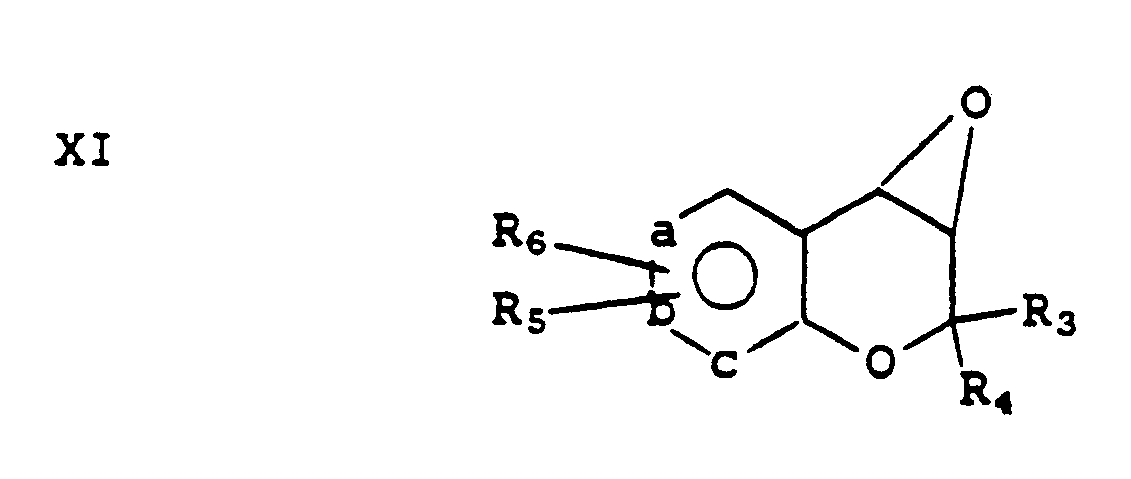

- The preparation of the epoxide XI is described by Evans and Lang (references above).
- Compounds of formula X can also be prepared from the amino alcohol III and an alkylating agent of the formula

- The compounds of the present invention wherein R₂ is OCOalkyl can be prepared by acylation of the alcohol of formula I, wherein R₂ is OH, with an acid chloride of the formula

- For the preparation of individual enantiomers of compounds of formula I (wherein R₂ =H, OH), compound III (R₂ = =H, OH) is converted to diastereomeric amides of the formula

- Compounds XV and XVI are separated by crystallization or chromatography. The enantiomer of mandelic acid that yields crystalline diastereomer with the desired 4R-stereochemistry of benzopyran (as shown in formula XV) is preferred in the resolution step.
- Compounds XV and XVI are then hydrolyzed by heating in the presence of sulfuric acid in dioxane to give enantiomers of the formula

- The enantiomers XVII and XVIII are then converted to chiral nonracemic compounds of formula 1.
- The compounds of the present invention can have asymmetric centers at carbons 2-4 of benzopyran ring. Also, any one of the R's can have an asymmetric carbon. Consequently, compounds of formula I can exist in diastereomeric forms or in mixtures thereof. The above described process can utilize racemates, enantiomers or diastereomers as starting materials. When diastereomeric products are prepared, they can be separated by conventional chromatographic or fractional crystallization methods.
- The compounds of the present invention wherein R₉ and/or R₈ is hydrogen, can exist as a mixture of tautomers represented by the following structures. The tautomeric products are obtained in relative amounts that differ from compound to compound. All forms are included in the scope of formula I.

- The compounds of formula I and the pharmaceutically acceptable salts act as potassium channel activators. Thus, compounds of the present invention are useful as anti-arrhythmic agents, antiischemic agents and in the treatment of hypertension.
- It has been found that compounds of formula I wherein R₇ is aryl, arylalkyl, cycloalkyl, (cycloalkyl)alkyl, heterocyclo or (heterocyclo)alkyl are preferred as antiischemic agents, i.e., for the treatment of ischemic conditions such as myocardial ischemia, cerebral ischemia, lower limb ischemia and the like. Especially preferred are those compounds where R₇ is aryl or arylalkyl and R₃ and R₉ are each hydrogen. While any of the compounds of formula I may be used as antiischemic agents, these preferred antiischemic agents have been found to possess little or no vasodilator activity. This means that in the treatment of ischemic heart, these compounds are less likely to cause coronary steal, profound hypotension and coronary underperfusion.
- Similarly, the most preferred compounds of formula I for reducing hypertension are those wherein R₇ is hydrogen or alkyl of 1 to 3 carbons, R₇ and R₈ taken together with the nitrogen atom to which they are attached for a 5- or 6-membered ring, such as pyrrolidine or piperidene, R₉ and R₁₀ are each hydrogen and n is 1 or 2.
- Thus, for example, by the administration of a composition containing one (or a combination) of the compounds of this invention, ischemic conditions of a mammalian (e.g., human) host are reduced. A single dose, or preferably two to four divided daily doses, provided on a basis of about 0.001 to 100 mg per kilogram of body weight per day, preferably from about 0.1 to about 25 mg per kilogram per day, is appropriate to reduce ischemic conditions. The substance is preferably administered orally, but parenteral routes, such as the subcutaneous, intramuscular, or intravenous routes or any other convenient delivery system, such as inhalation or intranasal solutions or transdermal patches, can also be employed. The above doses are also suitable for the other cardiovascular (e.g., hypertension) and non-cardiovascular uses.
- As a result of the potassium channel activating activity of compounds of this invention, these compounds are also useful in the treatment of cardiovascular disorders and any disorders associated with smooth muscle contraction. For example, compounds of the present invention are useful as therapy for congestive heart failure, therapy for peripheral vascular disorders (e.g. Raynaud's Disease), therapy for pulmonary hypertension, as anti-anginal agents, as anti-fibrillatory agents, as thrombolytic agents and in limiting myocardial infarction.
- Compounds of the present invention are additionally expected to be useful in the treatment of central nervous system disorders (e.g., Parkinsonism, as anti-tremor agents, epilepsy), in therapy for renal failure, in therapy for urinary incontinence, as anti-diarrheal agents, in therapy for pre-eclampsia, dysmenorrhea and premature labor, as well as for the promotion of hair growth (e.g., in the treatment of male pattern baldness) and as anti-asthmatic agents.
- The compounds of this invention can also be formulated in combination with a diuretic such as, chlorothiazide, hydrochlorothiazide, flumethiazide, hydroflumethiazide, bendroflumethiazide, methylchlothiazide, trichloromethiazide, polythiazide or benzthiazide as well as ethacrynic acid, tricrynafen, chlorthalidone, furosemide, musolimine, bumetanide, triamterene, amiloride and spironolactone and salts of such compounds, angiotensin converting enzyme inhibitors such as captopril, zofenopril, fosinopril, enalapril, ceranopril, cilazopril, delapril, pentopril, quinapril, ramipril, lisinopril, and salts of such compounds, thrombolytic agents such as tissue plasminogen activator (tPA), recombinant tPA, streptokinase, urokinase, prourokinase, and anisoylated plasminogen streptokinase activator complex (APSAC, Eminase, Beecham Laboratories), or calcium channel blocking agents such as nifedipine or diltiazem. Such combination products if formulated as a fixed dose employ the compounds of this invention within the dose range described above and the other pharmaceutically active agent within its approved dose range.
- The compounds of formula I, and combinations thereof, can be formulated, as described above, in compositions such as tablets, capsules or elixirs for oral administration, in sterile solutions or suspensions for parenteral administration, and may also be administered via transdermal patch or nasal inhalation solutions. About 10 to 500 milligrams of a compound of formula I is compounded with physiologically acceptable vehicle, carrier, excipient, binder, preservative, stabilizer, flavor, etc., in a unit dosage form as called for by accepted pharmaceutical practice. The amount of active substance in these compositions or preparations is such that a suitable dosage in the range indicated is obtained.
- Preferred compounds are those wherein
a is nitrogen or -CR₅;
b and c are each -CH-;
R₁ is
R₃ and R₄ are each alkyl;
R₅ is an electron withdrawing group;
R₆ is hydrogen, alkyl, O-alkyl, amino;
R₇ is hydrogen, alkyl, aryl or arylalkyl;
R₈ is hydrogen;
R₉ is hydrogen or alkyl;
R₁₀ is hydrogen; and,
n is 1 or 2. - Most preferred are those compounds wherein
a is nitrogen or -CR₅;
b and c are each -CH-;
R₂ is trans-hydroxy;
R₃ and R₄ are each methyl;
R₅ is -CN or -NO₂;
R₆ is hydrogen;
R₇ is methyl, ethyl, phenyl or phenylmethyl;
R₈ is hydrogen;
R₉ is hydrogen;
R₁₀ is hydrogen; and
n is 1. - The preferred compound of the present invention, which is preferably employed as an antiischemic agent, is

- Specific embodiments of the present invention are described hereinafter in the following examples.
- To a suspension of monosodium cyanamide (0.64 g, 10 mmol) in absolute ethanol (30 mL), 1,1-dimethylpropylisothiocyanate (1.29 g, 10 mmol) was added slowly at room temperature. Exothermic reaction occurred during addition and near the end of the addition, the initially heterogeneous mixture became a homogeneous solution. It was allowed to stir at room temperature for 2 hours and then heated at 75°C for 1 hour. The reaction mixture was cooled to room temperature and the solid was filtered. The filtrate solution was concentrated to yield the title A compound (1.6 g) as a colorless solid.
- To a solution of the title A compound (0.94 g, 5.5 mmol) and (trans)-4-amino-3,4-dihydro-3-hydroxy-2,2-dimethyl-2H-1-benzopyran-6-carbonitrile (prepared according to Evans et al., J. Med. Chem., 1983, 26, 1582 and J. Med. Chem., 1986, 29, 2194) (1.0 g, 4.6 mmol) in dimethylformamide (5 mL) under argon, 1-(3-dimethylaminopropyl)-2-ethylcarbodiimide hydrochloride (1.14 g, 5.9 mmol) was added at room temperature. The reaction mixture was stirred at room temperature for 2 hours and then partitioned between 1N HCl and ethyl acetate. The organic layer was separated and the aqueous phase was reextracted with ethyl acetate and the combined organic phase was washed with water, aqueous sodium bicarbonate and brine. After drying over anhydrous magnesium sulfate, the filtrate was concentrated and the residue was purified by flash chromatography on silica gel (1:1 Hexane/EtOAc). The fractions containing the desired product were combined and concentrated to yield a colorless solid (620 mg). This solid was triturated with isopropyl ether to yield the title compound, m.p. 207-208°C.
Analysis calc'd for C₁₉H₂₅N₅O₂: C, 64.20; H, 7.09; N, 19.71; Found: C, 64.04; H, 7.11; N, 19.44. - To a suspension of monosodium cyanamide (6.4 g, 100 mmol) in absolute ethanol (30 mL), ethylisothiocyanate (9.0 mL, 100 mmol) was added slowly with stirring at room temperature. During addition, exothermic reaction occurred and near the end of the addition the reaction mixture became a homogeneous solution. It was allowed to stir at room temperature for 2 hours and then heated at 75°C for 1 hour. The reaction mixture was cooled to room temperature and the insoluble material was filtered off (700 mg). The mother liquor was concentrated and the resulting solid was triturated with isopropanol-isopropyl ether to yield the title A compound (11.2 g), m.p. >240°C.
- To a solution of the title A compound (1.15 g, 8.9 mmol) and (trans)-4-amino-3,4-dihydro-3-hydroxy-2,2-dimethyl-2H-1-benzopyran-6-carbonitrile (prepared according to Evans et al., J. Med. Chem., 1983, 26, 1582 and J. Med. Chem., 1986, 29, 2194). (1.5 g, 6.9 mmol) in dimethylformamide (5 mL) under argon was added 1-(3-dimethylaminopropyl)-2-ethylcarbodiimide hydrochloride (1.71 g, 8.9 mmol) at room temperature. The reaction mixture was stirred at room temperature for 2 hours and then partitioned between 1N HCl and ethyl acetate. The organic phase was separated and the aqueous phase was reextracted with ethyl acetate. The combined organic phase was washed with water, aqueous sodium bicarbonate and brine. After drying over anhydrous magnesium sulfate, the solvent was evaporated and the residue was purified by flash chromatography on silica gel (25% acetone in dichloromethane). The fractions containing the desired product were combined and evaporated to yield a colorless solid (801 mg). This solid product was recrystallized from acetonitrile-ether to yield the title compound, m.p. 185-188°C.
Analysis calc'd for C₁₆H₁₉N₅O₂ 0.2 H₂O: C, 60.64; H, 6.17; N, 22.10; Found: C, 60.63; H, 6.16; N, 22.25. - To a suspension of monosodium cyanamide (6.4 g, 100 mmol) in absolute ethanol (170 mL), phenylisothiocyanate (12.5 mL, 104.5 mmol) was added slowly with stirring at room temperature. The reaction was allowed to stir at room temperature for 1 hour and then heated at 75°C for 4 hours. The reaction was cooled to room temperature and the colorless solid was filtered and washed with ethanol to give the title A compound (13.6 g), m.p. >250°C.
- To a solution of the title A compound (1.06 g, 5.96 mmol) and (trans)-4-amino-3,4-dihydro-3-hydroxy-2,2-dimethyl-2H-1-benzopyran-6-carbonitrile (prepared according to Evans et al., J. Med. Chem., 1983, 26, 1582 and J. Med. Chem., 1986, 29, 2194). (1.0 g, 4.59 mmol) in dimethylformamide (5 mL) under argon, 1-(3-dimethylaminopropyl)-2-ethylcarbodiimide hydrochloride (1.17 g, 5.96 mmol) was added at room temperature. The reaction mixture was stirred at room temperature for 2 hours and then partitioned between 1N HCl and ethyl acetate. The organic phase was separated and the aqueous phase was reextracted with ethyl acetate and the combined organic phase was washed with water, aqueous sodium bicarbonate and brine. After drying over anhydrous magnesium sulfate, the solvent was evaporated and the colorless residue was triturated with ether to yield the title compound (1.3 g), m.p. 247-249°C (with effervescence).
Analysis calc'd for C₂₀H₁₉N₅O₂: C, 66.46; H, 5.30; N, 19.38; Found: C, 66.09; H, 5.30; N, 19.35. - To a solution of the title A compound from Example 2 (1.2 g, 9.4 mmol) and (trans)-4-amino-3,4-dihydro-2,2-dimethyl-6-nitro-2H-1-benzopyran (1.5 g, 6.3 mmol) (prepared according to Evans et al., J. Med. Chem., 1983, 26, 1582 and J. Med. Chem., 1986, 29, 2194) in dimethylformamide (5 ml) under argon, 1-(3-dimethylaminopropyl)-2-ethylcarbodiimide hydrochloride (2.1 g, 10.7 mmol) was added at room temperature. The reaction mixture was stirred at room temperature for 2 hours and then partitioned between 1N HCl and ethyl acetate. The organic phase was taken and the aqueous phase was reextracted with ethyl acetate and the combined organic phase was washed with water, aqueous sodium bicarbonate and brine. After drying over anhydrous magnesium sulfate, the solvent was evaporated and the residue was purified by flash chromatography on silica gel (Hexane/Acetone/6:4) to yield a colorless solid (500 mg).
This was triturated with isopropyl ether to provide the title compound, m.p. 204-205°C.Analysis calc'd for C₁₅H₁₉N₅O₄·0.17 H₂O: C, 53.55; H, 5.79; N, 20.82; Found: C, 53.89; H, 5.63; N, 20.48. - To a suspension of 6-cyano-3,4-epoxy-3,4-dihydro-2,2-dimethyl-2H-benzopyran (1.2 g, 5.97 mmol) (prepared according to Evans et al., J. Med. Chem., 1983, 26, 1582 and J. Med. Chem., 1986, 29, 2194) in ethanol (7.0 mL), ethylenediamine (2.4 mL, 35.8 mmol) was added at room temperature and the reaction mixture was stirred at room temperature for 36 hours. The solvent was removed under reduced pressure and the residue was further dried by use of vacuum pump to yield the title A compound (1.74 g, >100%) as a colorless foam. This material was used for the next reaction without any purification.
- To a solution of the title A compound (1.74 g, 5.97 mmol) in ethanol at room temperature, triethylamine (1.7 mL, 11.94 mmol) was added slowly, followed by dimethyl N-cyanodithioiminocarbonate (1.16 g, 11.94 mmol of 90%). The reaction mixture was heated at 80°C for 3 hours and then cooled to ambient temperature. The solvent was evaporated to give a light yellow foam (2.4 g). This material was taken up in methanol (20 mL) and the resulting suspension was treated with mercuric acetate (2.52 g, 7.77 mmol). The reaction mixture was stirred at room temperature for 2 hours and the solvent was evaporated under reduced pressure. The residue was diluted with water, alkalized to pH ∼ 9.0 with 5N NaOH and the product was extracted with 5% methanolic chloroform. The combined organic extracts were washed with brine whereby a thick emulsion resulted. The two phase mixture was filtered through a celite pad and the organic layer was separated and dried over magnesium sulfate. The solvent was evaporated and the residue was purified by flash chromatography (5% methanol in chloroform) on silica gel to provide a colorless residue. This residue was triturated with ethyl acetate to yield the desired product (740 mg). The mother liquour was concentrated and triturated with ethyl acetate to provide a second crop (370 mg) for a total of 1.1 g. The combined material was recrystallized from hot ethyl accetate to give the title compound as a white powder, m.p. 254-255°C.
Analysis calc'd for C₁₆H₁₇N₅O₂ 0.42 H₂O: C, 60.27; H, 5.63; N, 21.97; Found: C, 60.40; H, 5.30; N, 21.84. - To a solution of the title A compound from Example 3 (2.2 g, 12.5 mmol) and (trans)-4-amino-3,4-dihydro-2,2-dimethyl-2H-pyrano[3,2-c]pyridin-3-ol (1.1 g, 5.7 mmol) (prepared according to EP 0 205 292 A2) in dimethylformamide (5 ml) under argon, 1-(3-dimethylaminopropyl)-2-ethylcarbodiimide hydrochloride (2.2 g, 10.8 mmol) was added at room temperature. The reaction mixture was stirred at room temperature for 2 hours and then partitioned between water (pH ∼ 11) and ethyl acetate. The organic phase was separated and the aqueous phase was reextracted with ethyl acetate and the combined organic phase was washed with water, aqueous sodium bicarbonate and brine. After drying over anhydrous magnesium sulfate, the solvent was evaporated and the residue was purified by flash chromatography on silica gel (acetone:dichloromethane/1:4) to yield a colorless solid (470 mg) which was crystallized from acetonitrile to provide the title compound, m.p. 233-236°C.
Analysis calc'd for C₁₈H₁₉N₅O₂: C, 64.08; H, 5.67; N, 20.76; Found: C, 63.88; H, 5.48; N, 20.76. - To a solution of (trans)-4-amino-3,4-dihydro-3-hydroxy-2,2-dimethyl-2H-1-benzopyran-6-carbonitrile (prepared according to Evans et al., J. Med. Chem., 1983, 26, 1582 and J. Med. Chem., 1986, 29, 2194) . (5.0 g, 23 mmol) in isopropanol (50 mL), diphenylcyanocarbonimidate (5.5 g, 25 mmol) was added at room temperature and the reaction mixture was allowed to stir at room temperature for 16 hours. Most of the isopropanol was evaporated and the residue was dissolved in ethyl acetate. The resulting solution was washed successively with 10% citric acid, 1N sodium hydroxide solution and brine. It was dried over anhydrous magnesium sulfate, concentrated and the residue was crystallized from chloroform-isopropyl ether to yield the title A compound (4.2 g) as a colorless solid, m.p. 186-188°C.
Analysis calc'd for C₂₀H₁₈N₄O₃·0.6H₂O: C, 64.37; H, 5.18; N, 15.02; Found: C, 64.64; H, 4.86; N, 14.75. - To a solution of title A compound (0.8 g, 12.2 mmol) in isopropanol (4 mL), pyrrolidine (0.5 mL) was added at room temperature and the reaction mixture was allowed to stir at room temperature overnight. The suspension was diluted with ether and the colorless solid was filtered and dried to yield the title compound (0.4 g), m.p. 263-264°C.
Analysis calc'd for C₁₈H₂₁N₅O₂: C, 63.70; H, 6.24; N, 20.64; Found: C, 63.45; H, 6.29; N, 20.88. - To a solution of (trans)-3,4-dihydro-3-hydroxy-2,2-dimethyl-4-(methylamino)-2H-1-benzopyran-6-carbonitrile (prepared according to Evans et al., J. Med. Chem., 1983, 26, 1582 and J. Med. Chem., 1986, 29, 2194) (1.0 g, 4.3 mmol) in isopropanol (4 mL), diphenylcyanocarbonimidate (1.0 g, 4.3 mmol) was added at room temperature and the reaction mixture was allowed to stir at room temperature for 16 hours. Most of the isopropanol was evaporated and the residue was dissolved in ethyl acetate. The resulting solution was washed successively with 10% citric acid, 1N sodium hydroxide and brine. It was dried over anhydrous magnesium sulfate and concentrated. The resiude was purified by flash chromatography (ethyl acetate:hexanes 1:1) on silica gel to yield the title A compound. This compound was used for the next step without further purification.
- To a solution of the title A compound (0.1 g, 0.27 mmol) in isopropanol (1 mL) and triethyl amine (0.25 mL), ethyl amine hydrochloride (0.1 g, 1.2 mmol) was added at room temperature and the reaction mixture was allowed to stir at room temperature overnight. Most of the solvent was evaporated and the residue was dissolved in ethyl acetate. The solution was washed successively with 10% citric acid, aqueous sodium bicarbonate and brine. After drying over anhydrous magnesium sulfate, the solvent was evaporated and the residue was triturated with ether to yield the title compound as a colorless solid, m.p. 227-228°C.
- To a suspension of the compound from Example 7, part A (0.8 g, 2.2 mmol) in isopropanol (3 ml), 95% 1,1-dimethylethylenediamine (0.5 g, 5.7 mmol) was added at room temperature. It was allowed to stir at room temperature for 20 hours and concentrated in vacuo. The residue was triturated with isopropyl ether to give the title compound (0.4 g) as a white solid, m.p. 172-173°C: ¹H NMR (CDCl₃) δ7.6 (s, 1 H), 7.4 (dd, J = 2.0 & 9.0 Hz, 1H), 6.9 (d, J = 9.0 Hz, 1 H), 6.6 (s, 1 H), 4.9 (t, J = 9.0 Hz, 2 H), 3.5 (d, J = 9.0 Hz, 1 H), 3.4 (s, 2 H), 2.5 (m, 2 H), 2.0 (s, 6 H), 1.5 (s, 3 H), 1.3 (s, 3 H); ¹³C NMR (CDCl₃) δ 163.4, 156.8, 133.1, 132.5, 122.8, 118.8, 118.7, 118.0, 103.9, 80.4, 76.2, 69.1, 60.8, 51.8, 44.6, 41.7, 26.4, 18.5; IR (KBr) 1126.9, 1267.0, 1431.4, 1489.0, 1577.0, 1635.8, 2173.3, 3391.9, 3407.6 cm⁻¹.
Analysis calc'd for C₁₈H₂₄N₆O₂: C, 60.65; H, 6.79; N, 23.58; Found: C, 60.53; H, 6.75; N, 23.62. - To a suspension of the compound of Example 7, part A (1.0 g, 2.8 mmol) in isopropanol (6 ml), methylamine (40% solution in methanol, 1 ml) was added at room temperature. The reaction mixture was allowed to stir at room temperature for 20 hours and concentrated in vacuo. The crude product obtained was crystallized from isopropanol to give the title compound (0.4 g) as a white solid, m.p. 212-214°C: ¹H NMR (CDCl₃/DMSO) δ 7.5 (s, 1 H), 7.45 (d, J = 9.0 Hz, 1 H), 6.9 (m, 2 H), 6.8 (d, J = 8.0 Hz, 1 H), 5.55 (br, 1 H), 4.85 (br, 1 H), 3.7 (m, 1 H), 2.88 (d, J = 5.0 Hz, 3 H), 1.48 (s, 3 H), 1.24 (s, 3 H); ¹³C NMR (CDCl₃/DMSO) 160.5, 155.5, 131.6, 131.3, 123.7, 117.9, 117.3, 116.9, 102.2, 79.4, 76.6, 70.9, 27.6, 25.6, 17.7; IR (KBr) 1267, 1419, 1489, 1576, 1608, 2170, 2225, 2977, 3338 cm⁻¹.
Analysis calc'd for C₁₅H₁₇N₅O₂·0.3 H₂O: C, 59.16; H, 5.82; N, 23.01; Found: C, 59.16; H, 5.57; N, 23.01. - To a suspension of the compound from Example 7, part A (2.0 g, 5.5 mmol) in isopropanol (5 ml), 4-(phenylmethyl)-1-piperazine (1.0 ml) was added at room temperature. The reaction mixture was allowed to stir at room temperature for 20 hours and concentrated in vacuo. The crude product obtained was purified by flash chromatography on silica gel eluting with dichloromethane/acetone (7/3) to give the title compound (0.6 g). It was recrystallized from isopropanol-ether to give the desired product (250 mg) as a white solid, m.p. 205-207°C: ¹H NMR (DMSO-d₆) δ 7.4 (s, 1 H), 7.3 (d, J = 8.0 Hz, 1 H), 7.2 (d, J = 8.0 Hz, 1 H), 7.0 (s, 6 H), 6.6 (d, J = 9.0 Hz, 1 H), 5.6 (d, J = 6.0 Hz, 1 H), 4.6 (t, J = 8.0 & 10.0 Hz, 1 H), 3.2 (m, 5 H), 2.2 (m, 5 H), 1.14 (s, 3 H), 0.88 (s, 3 H); ¹³C NMR (DMSO-d₆) 161.1, 156.4, 137.6, 133.1, 132.9, 129,1, 128.3, 127.2, 124.6, 117.9, 102.7, 80.6, 71.5, 61.9, 53.0, 52.2, 46.6, 26.7, 18.6; IR (KBr) 1125, 1490, 1524, 1577, 1611, 2170, 2224, 3429 cm⁻¹.
Analysis calc'd for C₂₅H₂₈N₆O₂: C, 67.54; H, 6.35; N, 18.91; Found: C, 67.29; H, 6.37; N, 18.73. - To a suspension of the compound of Example 7, part A (1.0 g, 2.8 mmol) in isopropanol (6 ml), ammonium hydroxide (1 ml) was added at room temperature. It was allowed to stir at room temperature for 20 hours and concentrated in vacuo. The crude product obtained was crystallized from acetone/ethyl acetate to give the title compound (0.31 g) as a white solid, m.p. 250-251°C: ¹H NMR (DMSO-d₆) δ 7.7 (dd, J = 2.0 & 7.0 Hz, 1 H), 7.5 (s, 1 H), 6.9 (m, 2 H), 7.0 (d, J = 9.0 Hz, 1 H), 5.8 (br s, 1 H), 4.8 (br s, 1 H), 3.6 (m, 1 H), 1.48 (s, 3 H), 1.25 (s, 3 H); ¹³C NMR (DMSO-d₆) 162.3, 156.3, 132.9, 132.6, 124.8, 119.1, 118.1, 102.7, 80.5, 71.3, 26.5, 19.0; IR (KBr) 1064, 1268, 1489.7, 1555, 1635, 2183, 2225, 3432 cm⁻¹.
Analysis calc'd for C₁₄H₁₅N₅O₂: C, 58.93; H, 5.30; N, 24.55; Found: C, 58.74; H, 5.32; N, 24.23. - To a suspension of the compound from Example 7, part A (2.0 g, 5.5 mmol) in isopropanol (5 ml), isopropylamine (1.5 ml) was added at room temperature. It was allowed to stir at room temperature for 20 hours and concentrated in vacuo. The crude product obtained was purified by flash chromatography on silica gel eluting with 7/3 dichloromethane/acetone to give the title compound (1.2 g). This solid was crystallized from isopropanol-isopropyl ether to give the desired product as a white solid, m.p. 150-152°C: ¹H NMR (DMSO-d₆) δ 7.6 (dd, J = 2.0 & 7.0 Hz, 1 H), 7.5 (s, 1 H), 7.2 (d, J = 9.0 Hz, 1 H), 7.0 (d, J = 9.0 Hz, 1 H), 6.8 (d, J = 8.0 Hz, 1 H), 5.9 (d, J = 5.0 Hz, 1 H), 4.8 (t, J = 9.0 Hz, 1 H), 3.9 (m, 1 H), 3.8 (m, 1 H), 1.47 (s, 3 H), 1.24 (s, 3 H), 1.2 (d, J = 3.0 Hz, 6 H); ¹³C NMR (DMSO-d₆) 159.5, 156.3, 132.7, 132.4, 125.2, 119.1, 118.0, 117.8, 102.7, 80.5, 71.1, 51.5, 43.4, 26.7, 22.6, 22.4, 18.7; IR (KBr) 1268, 1490, 1587.8, 2170, 2226, 2978, 3419 cm⁻¹
Analysis calc'd for C₁₇H₂₁N₅O₂·0.1 H₂O: C, 62.03; H, 6.49; N, 21.28; Found: C, 61.75; H, 6.66; N, 21.86. - To a suspension of the compound from Example 7, part A (1.0 g, 2.8 mmol) in isopropanol (6 ml), dimethylamine hydrochloride (0.33 g, 4.2 mmol) was added, followed by powdered potassium carbonate (0.57 g, 4.2 mmol) at room temperature. The reaction mixture was allowed to stir at room temperature for 20 hours and concentrated in vacuo. The residue was dissolved in chloroform (150 ml) and washed with water, dried over magnesium sulfate and concentrated in vacuo. The crude product obtained was crystallized from dichloromethane-ether to give the title compound (0.44 g) as a white solid. This solid was recrystallized from acetonitrilechloroform to give colorless solid, m.p. 196-197°C. ¹H NMR (DMSO-d₆) δ 7.7 (s, 1 H), 7.6 (dd, J = 3.0 & 8.0 Hz, 1 H), 7.2 (d, J = 9.0 Hz, 1 H), 6.9 (d, J = 9.0 Hz, 1 H), 5.8 (d, J = 6.0 Hz, 1 H), 4.9 (t, J = 9.0 & 10.0 Hz, 1 H), 3.6 (dd, J = 8.0 & 5.0 Hz, 1 H), 3.0 (s, 6 H), 1.42 (s, 3 H), 1.24 (s, 3 H); ¹³C NMR (DMSO-d₆) 159.3, 154.9, 131.5, 130.8, 123.4, 116.1, 101.4, 78.9, 70.3, 51.5, 25.2, 17.0; IR (KBr) 1143, 1269, 1398, 1489, 1527, 1595, 2168, 2226, 2935, 2980, 3433 cm⁻¹.
Analysis calc'd for C₁₆H₁₉N₅O₂·0.5 H₂O: C, 59.61; H, 6.25; N, 21.73; Found: C, 59.44; H, 5.95; N, 22.03. - To a suspension of the compound from Example 7, part A (0.5 g, 1.4 mmol) in isopropanol (3 ml) was added benzylamine (90% 0.5 ml) at room temperature. The reaction mixture was allowed to stir at room temperature for 20 hours and concentrated in vacuo. The residue was combined with another batch of the same material and purified by flash chromatography on silica gel eluting with hexaneethyl acetate (3:7) to give a white solid (0.8 g). This solid was crystallized from acetonitrileisopropyl ether to give the title compound as a colorless solid, m.p. 188-189°C: ¹H NMR (CDCl₃) δ 7.7 (m, 1 H), 7.5 (dd, J = 2.0 & 9.0 Hz, 1 H), 7.4 (m, 6 H), 6.86 (d, J = 9.0 Hz, 1 H), 5.8 (s, 1 H), 4.8 (m, 1 H), 4.5 (d, J = 5.0 Hz, 2 H), 3.7 (dd, J = 6.0 & 4.0 Hz, 1 H), 1.41 (s, 3 H), 1.19 (s, 3 H); ¹³C NMR (CDCl₃) 158.7, 154.5, 136.8, 130.7, 126.5, 125.2, 125.0, 123.0, 116.0, 101.0, 78.6, 42.6, 24.8, 16.9; IR (KBr) 1267, 1491, 1579, 1595, 2175, 2222, 3433 cm⁻¹
Analysis calc'd for C₂₁H₂₁N₅O₂: C, 67.18; H, 5.64; N, 18.66; Found: C, 67.14; H, 5.55; N, 18.65. - To a suspension of the compound from Example 7, part A (0.5 g, 1.4 mmol) in isopropanol (3 ml), N-methylbenzylethylamine (0.5 ml) was added at room temperature. The reaction mixture was allowed to stir at room temperature for 24 hours. The initially heterogeneous mixture became a homogeneous solution slowly and as the reaction proceeded the product precipitated out of the reaction mixture. Upon completion of reaction, the solid was filtered and triturated with ether to give the title compound (0.45 g) as a colorless solid, m.p. 184-185°C: ¹H NMR (CDCl₃) δ 9.4 (s, 1 H), 7.59 (d, J = 8.0 Hz, 1 H), 7.2 (m, 4 H), 6.96 (s, 2 H), 6.87 (d, J = 9.0 Hz, 1 H), 6.4 (s, 1 H), 4.9 (m, 2 H), 3.4 (m, 4 H), 2.6 (m, 2 H), 2.1 (s, 3 H), 1.49 (S, 3 H), 1.26 (s, 3 H); ¹³C NMR (CDCl₃) 205.2, 160.7, 155.6, 131.6, 128.0, 127.4, 126.2, 123.5, 118.0, 117.3, 117.1, 102.4, 79.4, 61.3, 55.6, 40.5, 25.7, 17.74; IR (KBr) 1126, 1267, 1489, 1575, 1608, 2172, 2224, 2800, 2976, 3421 cm⁻¹.
Analysis calc'd for C₂₄H₂₈N₆O₂: C, 66.64; H, 6.52; N, 19.43; Found: C, 66.40; H, 6.52; N, 19.99. - To a suspension of the compound from Example 7, part A (0.5 g, 1.4 mmol) in isopropanol (3 ml), 2-methoxyethylamine (0.12 g, 1.7 mmol, 0.15 ml) was added at room temperature. The reaction mixture was allowed to stir at room temperature for 20 hours and concentrated in vacuo. The residue was purified by flash chromatography on silica gel eluting with ethyl acetate to give the title compound (0.3 g) as a colorless solid, m.p. 94-96°C: ¹H NMR (CDCl₃) δ 7.5 (s, 1 H), 7.38 (d, J = 7.0 Hz, 1 H), 6.8 (m, 3 H), 4.86 (s, 1 H), 4.0 (m, 1 H), 3.5 (m, 4 H), 3.2 (s, 3 H), 1.9 (s, 1 H), 1.43 (s, 3 H), 1.19 (s, 3 H); ¹³C NMR (CDCl₃) 162.6, 156.8, 133.2, 132.4, 122.5, 119.0, 118.5, 118.1, 103.9, 80.2, 74.7, 60.3, 58.9, 52.2, 26.4, 21.0, 18.7, 14.1; IR (KBr) 1635, 1693, 3404 cm⁻¹.
Analysis calc'd for C₁₇H₂₁N₅O₃·0.24 H₂O: C, 58.71; H, 6.23; N, 20.14; Found: C, 58.81; H, 6.38; N, 20.04. - and
- To a solution of (trans)-4-amino-3,4-dihydro-3-hydroxy-2,2-dimethyl-2H-1-benzopyran-6-carbonitrile (prepared according to Evans et al., J. Med. Chem., 1983, 26, 1582 and J. Med. Chem., 1986, 29, 2194) (10.0 g, 45.9 mmol), S-(+)-mandelic acid (6.98 g, 45.9 mmol), hydroxybenzotriazole hydrate (6.2 g, 45.9 mmol) in dimethylformamide (60 ml) at 0°C was added dicyclohexylcarbodiimide (9.5 g, 45.9 mmol). It was allowed to stir at room temperature for 20 hours and then cooled in an ice bath. The precipitated solid was filtered and the filtrate was concentrated in vacuo. The residue was dissolved in 5 percent methanol in chloroform and washed with 1 N sodium hydroxide, 1 N hydrochloric acid, brine and dried over anhydrous magnesium sulfate. After removing drying agent, the solvent was removed in vacuo. The residue was crystallized from ethanol to give [3R-[3α,4β(S*)]]-N-(6-cyano-3,4-dihydro-3-hydroxy-2,2-dimethyl-2H-1-benzopyran- 4-yl)-α-hydroxybenzeneacetamide (6.0 g) as a white solid, m.p. 238-240°C, [αD]²⁵ = +94.6° (c = 1, MeOH): ¹H NMR (CDCl₃) δ 7.4 (m, 5 H), 7.26 (t, J = 1.0 HZ, 1 H), 6.97 (d, J = 9.0 HZ, 1 H), 6.83 (d, J = 9.0 HZ, 1 H), 5.16 (s, 1 H), 4.98 (t, J = 9.0 HZ, 1 H, 3.8 (d, J = 5.0 HZ, 1 H), 3.55 (dd, J = 4.0 & 5.0 HZ, 1 H), 1.45 (s, 3 H), 1.2 (s, 3 H).
Analysis calc'd for C₂₀H₂₀N₂O₄: C, 68.17; H, 5.72; N, 7.95; Found: C, 67.92; H, 5.49; N, 8.05. - The residual material of the mother liquor was purified by flash chromatography on silica gel eluting with hexane-ethyl acetate mixture (3:7) and the residue was crystallized from dichloromethane-isopropyl ether to give [3S-[3α,4β(R*)]]-N-(6-cyano-3,4-dihydro-3-hydroxy-2,2-dimethyl-2H-1-benzopyran-4-yl)-α-hydroxybenzeneacetamide (6.0 g) as a white solid, m.p. 100-102°C (foaming); [αD]²⁵ = -26.1° (c = 1, MeOH): ¹H NMR (DMSO-d₆) δ 8.45 (d, J = 8.0 Hz, 1 H), 7.5 (m, 4 H), 7.3 (m, 2 H), 7.0 (s, 1 H), 6.88 (d, J = 8.0 Hz, 1 H), 6.2 (s, 1 H), 5.57 (d, J = 5.0 Hz, 1 H), 5.0 (s, 1 H), 4.76 (t, J = 9.0 Hz, 1 H), 3.75 (dd, J = 5.0 & 5.0 Hz, 1 H), 1.40 (S, 3 H), 1.15 (s, 3 H).
Analysis calc'd for C₂₀H₂₀N₂O₄·0.25 H₂O: C, 67.30; H, 5.78; N, 7.84; Found: C, 67.54; H, 5.95; N, 7.44. - To a solution of [3S-[3α,4β(R*)]]-N-(6-cyano-3,4-dihydro-3-hydroxy-2,2-dimethyl-2H-1-benzopyran-4-yl)-α-hydroxybenzeneacetamide, title A compound (2.8 g, 7.9 mmol) in dioxane (30 ml) was added a solution of sulfuric acid (2.5 g) in water (12 ml) at room temperature and the reaction mixture was heated at reflux temperature for 24 hours. It was concentrated in vacuo and the residue was dissolved in ethyl acetate (200 ml). The organic layer was washed with 1 N sodium hydroxide (50 ml) followed by water (50 ml) and dried over anhydrous magnesium sulfate and concentrated in vacuo to give the title B compound (1.6 g) as an oil: ¹H NMR (CDCl₃) δ 7.74 (s, 1 H), 7.42 (dd, J = 2.0 & 6.0 Hz, 1 H), 6.82 (d, J = 8.0 Hz, 1 H), 3.65 (d, J = 10.0 Hz, 1 H), 3.36 (d, J = 10.0 Hz, 1 H), 1.53 (s, 3 H), 1.23 (s, 3 H).
- To a solution of N-cyano-N′-phenylthiourea (1.7 g, 9.5 mmol) and the title B compound (1.6 g, 7.3 mmol) in dimethylformamide (7 mL), under argon was added 1-(3-dimethylaminopropyl)-2-ethylcarbodiimide hydrochloride (1.8 g, 9.5 mmol) at room temperature. The reaction mixture was stirred at room temperature for 2 hours and then partitioned between 1N hydrochloric acid and ethyl acetate. The organic phase was separated and the aqueous phase was reextracted with ethyl acetate. The combined extracts were washed with water, aqueous sodium bicarbonate and brine. After drying over anhydrous magnesium sulfate, the solvent was evaporated and the crude product was purified by flash chromatography on silica gel eluting with ethyl acetate/hexanes (7:3) to give a cololess solid (0.7 g). The solid was triturated with ether to yield the title compound (0.35 g) , m.p. 214-216°C; [αD]²⁵ = -34.8° (c = 0.417, MeOH): ¹H NMR (DMSO-d₆) d 9.28 (s, 1 H), 7.58 (d, J = 8.0 Hz, 3 H), 7.35 (m, 4 H), 7.15 (m, 1 H), 6.90 (d, J = 8.2 Hz, 1 H), 5.92 (br s, 1 H), 4.92 (t, J = 9.0 Hz, 1 H), 3.72 (br d, J = 5.9 Hz, 1 H), 1.41, 1.18 (s, 3 H each); ¹³C NMR (DMSO-d₆) 159.2, 156.3, 137.5, 132.6, 132.5, 129.0, 124.8, 124.7, 123.6, 119.0, 117.8, 117.0, 102.6, 80.4, 70.9, 51.9, 26.6, 18.6; IR(KBr) 2226, 2179, 1609, 1582, 1491, 1267 cm⁻¹.
Analysis calc'd for C₂₀H₁₉N₅O₂·0.37 H₂O: C, 65.26; H, 5.40; N, 19.02; Found: C, 65.62; H, 5.36; N, 18.57. - To a solution of [3R-[3α,4β(S*)]]-N-(6-cyano-3,4-dihydro-3-hydroxy-2,2-dimethyl-2H-1-benzopyran-4-yl)-α-hydroxybenzeneacetamide, compound of Example 18, part A (2.8 g, 7.9 mmol) in dioxane (30 ml) were added concentrated sulfuric acid (2.5 g) and water (12 ml} at room temperature and the reaction mixture was heated at reflux temperature for 24 hours. It was concentrated in vacuo and the residue was combined with another batch of the same material and dissolved in ethyl acetate (400 ml). The resulting solution was washed with 1N sodium hydroxide (50 ml) followed by water (50 ml) and dried over anhydrous magnesium sulfate and concentrated in vacuo to give the title A compound (3.7 g) as an oil: ¹H NMR (CDCl₃) δ 7.74 (s, 1 H), 7.42 (dd, J = 2.0 & 6.0 Hz, 1 H), 6.82 (d, J = 8.0 Hz, 1 H), 3.65 (d, J = 10.0 Hz, 1 H), 3.36 (d, J = 10.0 Hz, 1 H), 1.53 (s, 3 H), 1.23 (s, 3 H).
- To a solution of N-cyano-N′-phenylthiourea (3.9 g, 21.9 mmol) and the title A compound (3.68 g, 16.9 mmol) in dimethylformamide (20 mL) under argon, 1-(3-dimethylaminopropyl)-2-ethylcarbodiimide hydrochloride (4.2 g, 21.9 mmol) was added at room temperature. The reaction mixture was stirred at room temperature for 2 hours and then partitioned between 1N hydrochloric acid and ethyl acetate. The organic phase was separated and the aqueous phase was reextracted with ethyl acetate. The combined extracts were washed with water, aqueous sodium bicarbonate and brine. After drying over anhydrous magnesium sulfate, the solvent was evaporated and the crude product was triturated with ethyl acetate-ether to give a colorless solid (3.5 g). The crude product was purified by flash chromatography on silica gel eluting with ethyl acetate/hexanes (7:3) and the solid, obtained after evaporation of the solvent, was triturated with ether to give the title compound (1.8 g) as a colorless solid, m.p. 215-217°C, [αD]²⁵ = +34.8° (c = 0.417, MeOH): ¹H NMR (CDCl₃/DMSO-d₆) δ 8.8 (s, 1 H), 7.6 (s, 1 H), 7.44 (d, J = 8.0 Hz, 1 H), 7.35 (d, J = 5.0 Hz, 4 H), 7.22 (m, 1 H), 6.85 (d, J = 8.8 Hz, 1 H), 6.7 (br s, 1 H), 5.0 (t, J = 9.0 Hz, 1 H), 3.72 (br d, J = 5.3 Hz, 1 H), 1.48, 1.18 (s, 3 H each); ¹³C NMR (CDCl₃/DMSO-d₆) 159.6, 156.5, 136.6, 132.5, 129.2, 125.7, 124.1, 123.7, 118.9, 118.1, 117.2, 103.4, 80.3, 72.8, 52.4, 26.4, 18.6; IR (KBr) 2226, 2179, 1609, 1582, 1491, 1267 cm⁻¹.
Analysis calc'd for C₂₀H₁₉N₅O₂·0.45 H₂O: C, 65.01; H, 5.42; N, 18.95; Found: C, 65.18; H, 5.47; N, 18.51. - Example 20 is an alternate procedure to Example 18 and the procedure of this Example 20 is preferred. Additionally, the 3S, 4R enantiomer of Example 20 is the preferred compound of the present invention.
- and
- To a solution of (trans)-4-amino-3,4-dihydro-3-hydroxy-2,2-dimethyl-2H-1-benzopyran-6-carbonitrile (prepared according to Evans et al., J. Med. Chem., 1983, 26, 1582 and J. Med. Chem., 1986, 29, 2194) (1.64 g, 7.5 mmol), R(-)-mandelic acid (1.14 g, 7.5 mmol), hydroxybenzotriazole hydrate (1.0 g, 7.5 mmol) in dimethylformamide (15 ml) at 0°C was added dicyclohexylcarbodiimide (1.55 g, 7.5 mmol) at room temperature. The reaction mixture was allowed to stir at room temperature for 20 hours and then cooled in an ice bath. The solid was removed by filtration and the filtrate was concentrated in vacuo. The residue was dissolved in 5% methanol in chloroform and washed with 1 N sodium hydroxide, 1 N hydrochloric acid, brine followed by drying over anhydrous magnesium sulfate. After removing drying agent the solvent was removed in vacuo. The residue was crystallized from ethanol to give [3S-[3α,4β(S*)]]-N-(6-cyano-3,4-dihydro-3-hydroxy-2,2-dimethyl-2H-1-benzopyran-4-yl)-α-hydroxybenzeneacetamide (0.85 g) as a white solid, m.p. 235-237°C: [αD]²⁵ = -94.9° (c = 1, MeOH); ¹H NMR (DMSO-d₆) δ 8.45 (d, J = 8.0 Hz, 1 H), 7.5 (m, 4 H), 7.3 (m, 2 H), 7.0 (s, 1 H), 6.88 (d, J = 8.0 Hz, 1 H), 6.2 (s, 1 H), 5.57 (d, J = 5.0 Hz, 1 H), 5.0 (s, 1 H), 4.76 (t, J = 9.0 Hz, 1 H), 3.75 (dd, J = 5.0 & 5.0 Hz, 1 H), 1.40 (s, 3 H), 1.15 (s, 3 H).
Analysis calc'd for C₂₀H₂₀N₂O₄: C, 68.17; H, 5.72; N, 7.95; Found: C, 68.00; H, 5.52; N, 7.95. - The residual material recovered from the mother liquor was purified by flash chromatography on silica gel eluting with hexane-ethyl acetate (3:7) and the product was crystallized from dichloromethane-isopropyl ether to give [3R-[3α,4β(R*)]]-N-(6-Cyano-3,4-dihydro-3-hydroxy-2,2-dimethyl-2H-1-benzopyran-4-yl)-α-hydroxybenzeneacetamide as a white solid, m.p. 100-102°C (foaming): [αD]²⁵ = +25.6° (c = 1, MeOH): ¹H NMR (CDCl₃) δ 7.4 (m, 5 H), 7.26 (t, J = 1.0 Hz, 1 H), 6.97 (d, J = 9.0 Hz, 1 H), 6.83 (d, J = 9.0 Hz, 1 H), 5.16 (s, 1 H), 4.98 (t, J = 9.0 Hz, 1 H), 3.8 (d, J = 5.0 Hz, 1 H), 3.55 (dd, J = 4.0 & 5.0 Hz, 1 H), 1.45 (s, 3 H), 1.2 (s, 3 H).
Analysis calc'd for C₂₀H₂₀N₂O₄·0.25 H₂O: C, 67.30; H, 5.78; N, 7.84; Found: C, 67.17; H, 5.87; N, 7.44. - To a solution of [3S-[3α,4β(S*)]]-N-(6-cyano-3,4-dihydro-3-hydroxy-2,2-dimethyl-2H-1-benzopyran-4-yl)-α-hydroxybenzeneacetamide, title A compound (6.09 g, 17.0 mmol) in dioxane (60 ml) was added a solution of sulfuric acid (6.0 g) in water (30 ml) at room temperature and the reaction mixture was heated at reflux temperature for 24 hours. It was then concentrated in vacuo and the residue was dissolved in ethyl acetate. The organic layer was washed with 1N sodium hydroxide followed by water and dried over anhydrous magnesium sulfate. The solvent was evaporated to give the title B compound as an oil: ¹H NMR (CDCl₃) δ 7.74 (s, 1 H), 7.42 (dd, J = 2.0 & 6.0 Hz, 1 H), 6.82 (d, J = 8.0 Hz, 1 H), 3.65 (d, J = 10.0 Hz, 1 H), 3.36 (d, J = 10.0 Hz, 1 H), 1.53 (s, 3 H), 1.23 (s, 3 H).
- To a solution of N-cyano-N′-phenylthiourea (2.11 g, 11.9 mmol) and (3S-trans)-4-amino-3,4-dihydro-3-hydroxy-2,2-dimethyl-2H-1-benzopyran-6-carbonitrile (2.0 g, 9.1 mmol), title B compound, in dimethylformamide (20 mL) under argon was added 1-(3-dimethylaminopropyl)-2-ethylcarbodiimide hydrochloride (2.23 g, 11.9 mmol) at room temperature. The reaction mixture was stirred at room temperature for 2 hours and then partitioned between 1N hydrochloric acid and ethyl acetate. The organic phase was separated and the aqueous phase was reextracted with ethyl acetate. The combined organic extracts were washed with water, sodium bicarbonate and brine. After drying over anhydrous magnesium sulfate, the solvent was evaporated and the crude product was purified by flash chromatography on silica gel eluting with ethyl acetate/hexanes (7:3) to give a colorless solid which was triturated with ether to yield the title compound (0.35 g), m.p. 215-216°C: [α]D²⁵ = -33.5° (c = 1, MeOH); ¹H NMR (DMSO-d₆) δ 9.28 (s, 1 H), 7.58 (d, J = 8.0 Hz, 3 H), 7.35 (m, 4 H), 7.15 (m, 1 H), 6.90 (d, J = 8.2 Hz, 1 H), 5.92 (br s, 1 H), 4.92 (t, J = 9.0 Hz, 1 H), 3.72 (br d, J = 5.9 Hz, 1 H), 1.41, 1.18 (s, 3 H each); ¹³C NMR (DMSO-d₆) 159.2, 156.3, 137.5, 132.6, 132.5, 129.0 124.8, 124.7, 123.6, 119.0, 117.8, 117.0, 102.6, 80.4, 70.9, 51.9, 26.6, 18.6; IR (KBr) 2226, 2179, 1609, 1582, 1491, 1267 cm⁻¹.
Analysis calc'd for C₂₀H₁₉N₅O₂·0.24 H₂O: C, 65.26; H, 5.40; N, 19.02; Found: C, 65.62; H, 5.36; N, 18.57. - To a suspension of 6-cyano-3,4-expoxy-3,4-dihydro-2,2-dimethyl-2H-benzopyran (prepared according to Evans et al., J. Med. Chem., 1983, 26, 1582 and J. Med. Chem., 1986, 29, 2194) (1.0 g, 5.0 mmol) in ethanol (5.0 mL), 1,3-diaminopropane (2.4 mL, 32.4 mmol) was added at room temperature and the reaction mixture was stirred at room temperature for 36 hours. The solvent was removed under reduced pressure and the residue was dried by use of a vacuum pump for 5 hours to yield the title A compound (1.3 g) as a colorless foam. This material was used for the next step without purification.
- To a solution of the title A compound (1.3 g, 4.7 mmol) in ethanol (5 ml) at room temperature, triethylamine (1.3 mL, 9.4 mmol) was added followed by dimethyl N-cyanodithioiminocarbonate (1.5 g, 9.4 mmol of 90%) with stirring at room temperature. The reaction mixture was heated at 80°C for 3 hours and then cooled to ambient temperature. The solvent was evaporated to give a light yellow foam (1.5 g). This material was taken up in methanol (20 mL) and the resulting suspension was treated with mercuric acetate (2.0 g, 6.1 mmol). The reaction mixture was stirred at room temperature for 2 hours and the solvent was evaporated under reduced pressure. The residue was diluted with water and alkalized to pH ∼9.0 with 2.5N sodium hydroxide and the product was extracted with 10 percent methanolic chloroform (3x). The combined extract was washed with brine whereby a thick emulsion resulted. The two phase mixture was filtered through a celite pad and the organic layer was separated and dried over magnesium sulfate. The solvent was evaporated and the residue was purified by flash chromatography (5% methanol in chloroform) on silica gel to provide a colorless residue (0.5 g) which was crystallized from isopropyl ether-ethyl acetate to yield the title compound as a white powder, m.p. 152-153°C: ¹H NMR (DMSO-d₆) δ 7.60 (d, J = 7.0 Hz, 1 H), 7.40 (s, 1 H), 7.0 (d, J = 9.0, 1 H), 5.85 (d, J = 5.2 Hz, 1 H), 5.6 (d, J = 10.5 Hz, 1 H), 3.8 (dd, J = 5.0 Hz, 1 H), 3.2 (m, 4 H), 2.9 (br d, 1H), 1.54, 1.26 (s, 3 H each); ¹³C NMR (DMSO-d₆) 164.5, 156.8, 133.2, 131.6, 118.9, 118.2, 118.0, 103.1, 80.4, 67.3, 51.2, 40.3, 26.6, 18.6; IR (KBr) 1268.7, 1316.8, 1402.2, 1489.5, 1558.1, 1580.4, 2174.7, 3421.3 cm⁻¹.
Analysis calc'd for C₁₇H₁₉N₅O₂·0.42 H₂O: C, 61.33; H, 6.01; N, 21.04; Found: C, 61.31; H, 6.02; N, 21.06. - A suspension of (trans)-4[[(cyanoimino)phenoxymethyl]amino]-3,4-dihydroxy-2,2-dimethyl-2H-1-benzopyran-6-carbonitrile (1.0 g, 2.76 mmol), compound of Example 7, part A, in isopropanol (5 ml) was treated at room temperature with 4-(aminomethyl)pyridine (1.0 ml). The reaction mixture was allowed to stir at room temperature for 4 hours and then heated at reflux temperature for 16 hours. The reaction mixture was cooled to ambient temperature and the precipitated solid was filtered off. The product was recrystallized from ethyl acetate to give the title compound (0.76 g) as a colorless solid, m.p. 156-158°C: ¹H NMR (DMSO-d₆) δ 8.53 (d, J = 6.0 Hz, 2 H), 7.9 (m, 1 H), 7.59 (dd, J = 3.0 & 6.0 Hz, 1 H), 7.44 (s, 2 H), 7.31 (d, J = 6.0 Hz, 2 H), 6.91 (d, J = 9.0 Hz, 1 H), 5.9 (s, 1 H), 4.87 (m, 1 H), 4.48 (t, J = 2.0 & 6.0 Hz, 2 H), 3.7 (m, 1 H), 1.99 (s, 3 H), 1.18 (s, 3 H); ¹³C NMR (DMSO-d₆) 160.4, 156.2, 149.4, 132.6, 132.3, 124.7, 121.7, 117.8, 117.4, 102.6, 80.4, 71.0, 51.5, 43.4, 26.5, 18.6; IR (KBr) 1125.2, 1490.2, 1524.1, 1577.8, 1611.3, 2170.4, 2224.9, 3429.7 cm⁻¹.
Analysis calc'd for C₂₀H₂₀N₆O₂·0.2 H₂O: C, 63.22; H, 5.41; N, 22.12; Found: C, 63.42; H, 5.17; N, 21.92. - A suspension of (trans)-4-[[(cyanoimino)phenoxymethyl]amino]-3,4-dihydroxy-2,2-dimethyl-2H-1-benzopyran-6-carbonitrile (1.0 g, 2.76 mmol), compound of Example 7, part A, in isopropanol (5 ml) was treated at room temperature with 3-(aminomethyl)pyridine (1.0 ml). The reaction mixture was allowed to stir at room temperature for 4 hours and then heated under reflux for 16 hours. The reaction mixture was concentrated in vacuo and the resulting solid was crystallized from ethyl acetate to give the title compound (0.72 g) as a colorless solid, m.p. 226-228°C: ¹H NMR (DMSO-d₆) δ 8.55 (s, 1 H), 8.49 (d, J = 2.0 Hz, 2 H), 7.85 (m, 1 H), 7.75 (d, J = 8.0 Hz, 1 H), 7.59 (d, J = 8.0 Hz, 1 H), 7.40 (m, 3 H), 6.91 (d, J = 8.0 Hz, 1 H), 5.85 (s, 1 H), 4.82 (m, 1 H), 4.48 (m, 2 H), 3.74 (m, 1 H), 1.40 (s, 3 H), 1.17 (s, 3 H); ¹³C NMR 160.43, 156.2, 148.6, 148.2, 134.6, 134.2, 132.7, 132.2, 124.8, 123.4, 118.9, 117.9, 117.5, 102.6, 80.4, 71.0, 51.5, 42.1, 26.6, 18.7; IR (KBr) 1125.2, 1490.1, 1524.1, 1577.8, 1611.3, 2170.4, 2224.9, 3429.7 cm⁻¹.
Analysis calc'd for C₂₀H₂₀N₆O₂·0.17 H₂O: C, 63.22; H, 5.41; N, 22.12; Found: C, 63.08; H, 5.32; N, 22.38. - A solution of 3-chloro-3-methyl-1-butyne (10.0 g, 97.9 mmol), 4-iodophenol (15.0 g, 68.4 mmol), sodium hydroxide (3.90 g, 97.5 mmol) and tetrabutylammonium hydrogen sulfate (9.33 g, 27.5 mmol) in methylene chloride (50 mL) and water (50 mL) was stirred for 19 days at room temperature. After separating the two layers, the organic layer was washed with 1 N sodium hydroxide followed by water, dried over magnesium sulfate and concentrated in vacuo. The residue was dissolved in ethyl acetate and washed successively with 1 N hydrochloric acid, 1 N sodium hydroxide, water, brine and dried over anhydrous magnesium sulfate. After removing drying agent, the solvent was removed in vacuo. The crude product was purified by flash chromatography on silica gel eluting with toluene/hexane (1:10) to give the title compound as an oil (5.78 g, 20.2 mmol) in 30% yield: ¹H NMR (CDCl₃) δ 7.56 (d, J = 8.7 Hz, 2H), 6.98 (d, J = 8.8 Hz, 2H), 2.56 (s, 1H), 1.63 (s, 6H); ¹³C NMR (CDCl₃) δ 155.4, 137.8, 123.5, 86.0, 85.6, 74.3, 72.6, 29.5.
- The title A compound (3.91 g, 13.7 mmol) was heated in an oil bath at 170° for 2 hours. After cooling, the crude product was purified by flash chromatography on silica gel eluting with toluene/hexane (1:20) to give the title compound as an oil (3.26 g, 11.4 mmol) in 83% yield: ¹H NMR (CDCl₃) δ 7.34 (dd, J₁ = 1.8, J₂ = 2.4 Hz, 1H), 7.24 (d, J = 0.9 Hz, 1H), 6.52 (d, J = 8.8 Hz, 1H), 6.21 (d, J = 10.0 Hz, 1H), 5.58 (d, J = 10.0 Hz, 1H), 1.40 (s, 6H); ¹³C NMR (CDCl₃) δ 152.8, 137.5, 134.7, 131.6, 123.6, 121.1, 118.6, 82.4, 76.4, 27.9.
- A solution of the title B compound (1.32 g, 4.61 mmol), trimethyl((trimethylstannyl)ethynyl)-silane (1.60 g, 5.69 mmol), lithium chloride (0.62 g, 14.6 mmol) and tetrakis(triphenylphosphine) palladium (0.69 g, 0.60 mmol) in dioxane (16.5 mL) was stirred under argon for 5 hours in an oil bath at 65°. The reaction mixture was cooled to room temperature and concentrated in vacuo to give a residue that was combined with the material prepared in a similar manner on a 2.42 mmol scale. The combined material was rinsed with toluene/hexane (1:10) and the filtrate was concentrated in vacuo. The crude product was purified by flash chromatography on silica gel eluting with toluene/hexane (1:10) to give the title C cmpound as an oil (1.82 g, 7.00 mmol) in 100% yield: ¹H NMR (CDCl₃) δ 6.98 (dd, J₁ = 2.3, J₂ = 8.2 Hz, 1H), 6.87 (d, J = 1.8 Hz, 1H), 6.44 (d, J = 8.2 Hz, 1H), 6.02 (d, J = 9.4 Hz, 1H), 5.38 (d, J = 10.0 Hz, 1H), 1.20 (s, 6H), 0.00 (s, 9H); ¹³C NMR (CDCl₃) δ 153.4, 133.0,131.2, 130.0,121.6, 121.0, 116.3, 115.2, 105.2, 92.1, 76.7, 28.1, 0.1.
Analysis calc'd for C₁₆H₂₀OSi: C, 74.94; H, 7.86; Found: C, 75.19; H, 7.61. - To a solution of the title C compound (1.37 g, 5.34 mmol) and sodium bicarbonate (2.33 g, 27.7 mmol) in methylene chloride (27 mL) and water (27 mL) at 0° was added 3-chloroperoxybenzoic acid (1.51 g of 80-85% purity, 7.01 mmol). After a few minutes of stirring, the ice bath was removed and the reaction mixture was stirred at room temperature for 9 hours. After adding methylene chloride to the reaction mixture, the organic layer was separated and washed with water followed by brine, dried over magnesium sulfate and concentrated in vacuo. The crude product was purified by flash chromatography on silica gel eluting with hexane/ethyl acetate (10:1) to give recovered starting material (0.47 g) and the title copound as an oil (0.53 g, 1.95 mmol) in 36% yield: ¹H NMR (CDCl₃) δ 7.24 (d, J = 1.8 Hz, 1H), 7.11 (dd, J₁ = 1.78, J₂ = 2.3 Hz, 1H), 6.49 (d, J = 8.2 Hz, 1H), 3.62 (d, J = 4.1 Hz, 1H), 3.25 (d, J = 4.1 Hz, 1H), 1.34 (s, 3H), 1.00 (s, 3H), 0.00 (s, 9H); ¹³C NMR (CDCl₃) δ 152.9, 134.1, 133.4, 120.0, 118.1, 103.6, 92.9, 73.6, 62.5, 50.5, 25.6, 22.7, 0.00.
- A solution of the title D compound (0.53 g, 1.95 mmol) in ethanol (15 mL) and concentrated aqueous ammonium hydroxide (30 mL) was stirred at room temperature for 4 days. The solvent was removed in vacuo and the residue was purified by flash chromatography on silica gel eluting with hexane/ethyl acetate/methanol (5:5:1) to give a partially purified product. This material was triturated with diethyl ether to give the title compound as a white solid (0.42 g, 1.93 mmol) in 99% yield, m.p. 132-134°C: ¹H NMR (CDCl₃) δ 7.62 (s, 1H), 7.38 (dd, J₁ = 1.2, J₂ = 1.8 Hz, 1H), 6.82 (d, J = 8.2, Hz, 1H), 3.73 (d, J = 10.0 Hz, 1H), 3.45 (d, J = 9.4 Hz, 1 H), 3.10 (s, 1H), 2.56 (br s, 3H), 1.59 (s, 3H), 1.30 (s, 3H); ¹³C NMR (CDCl₃) δ 153.0, 132.6, 131.0, 125.7, 117.2, 114.0, 83.6 78.6, 75.9, 75.8, 51.1, 26.9, 18.7.
Analysis calc'd for C₁₃H₁₅NO₂·0.06 H₂O: C, 71.52; H, 6.98; N, 6.42; Found: C, 71.47; H, 6.95; N, 6.47. - To a solution of the title E compound (0.150 g, 0.69 mmol) and N-cyano-N′-phenylthiourea (0.180 g, 1.0 mmol) in dimethylformamide (5 mL) was added 1-(3-dimethylaminopropyl)-2-ethylcarbodiimide hydrochloride (0.200 g, 1.0 mmol) at room temperature. The reaction mixture was stirred overnight at room temperature and the solvent was removed in vacuo. The residue was partitioned between water and ethyl acetate. The organic layer was separated and dried over sodium sulfate. The solvent was removed in vacuo and the residue was purified by flash chromatography on silica gel eluting with hexane/ethyl acetate/ethanol (30:10:5) to give a partially pure product. This material was triturated with diethyl ether to give the title compound (0.12 g, 0.34 mmol) in 49% yield, m.p. 220-222°C (dec); ¹H NMR (CDCl₃) δ 7.20-7.40 (m, 7H), 6.70 (d, J = 8.2 Hz, 1H), 5.00 (d, J = 10.0 Hz, 1H), 3.67 (d, J = 9.4 Hz, 1H), 3.34 (s, 1H), 1.44 (s, 3H), 1.24 (s, 3H); ¹³C NMR (CDCl₃) δ 161.6, 154.6, 138.2, 133.7, 132.8 130.5, 127.2, 125.7, 123.9, 118.9, 118.3, 116.0, 84.3, 80.5, 77.2, 74.6, 54.0, 27.1, 18.6.
Analysis calc'd for C₂₁H₂₀N₄O₂·0.32 H₂O: C, 68.89; H, 5.68; N, 15.31; Found: C, 69.11; H, 5.55; N, 15.09. - To a solution of the title B compound from Example 24 (1.69 g, 5.91 mmol) and phenylacetylene (2.0 mL, 18.1 mmol) in diethylamine (30 mL) at room temperature were added bis(triphenylphosphine)palladium(II)chloride (0.40 g, 0.572 mmol) and copper(I) iodide (0.22 g, 1.41 mmol) under argon atmosphere. After stirring for 1 hour at room temperature, the reaction mixture was concentrated under reduced pressure. The residue was dissolved in ethyl acetate and the insoluble material was filtered. The filtrate was concentrated in vacuo. The residue was again dissolved in toluene/hexane (1:10) and the insoluble material was filtered. The filtrate was concentrated in vacuo and the crude product was purified by flash chromatography on silica gel eluting with toluene/hexane (1:10) to give the title compound as an oil (1.43 g, 5.49 mmol) in 92% yield: ¹H NMR (CDCl₃) δ 7.47-7.50 (m, 2H), 7.24-7.31 (m, 4H), 7.14 (d, J = 2.4 Hz, 1H), 6.72 (d, J = 8.2 Hz, 1H), 6.26 (d, J = 10.0 Hz, 1H), 5.58 (d, J = 9.4 Hz, 1H), 1.40 (s, 6H); ¹³C NMR (CDCl₃) δ 153.2, 132.5, 131.3, 131.2, 129.5, 128.2, 127.8, 123.6, 121.6, 121.1, 116.4, 115.2, 89.4, 87.8, 76.7, 28.0.
- To a solution of the title A compound (1.14, 4.38 mmol) and sodium bicarbonate (1.86 g, 22.1 mmol) in methylene chloride (15 mL) and water (15 mL) at 0° was added 3-chloroperoxybenzoic acid (1.21 g of 80-85% purity, 5.62 mmol). After 5 minutes, the ice bath was removed and the reaction mixture was stirred at room temperature for 8 hours. It was diluted with methylene chloride and the organic layer was taken. It was washed with water followed by brine and dried over magnesium sulfate. The solvent was concentrated in vacuo and the material was purified by flash chromatography on silica gel eluting with hexane/ethyl acetate (10:1) to give recovered starting material (0.17 g) and the title compound as an oil (0.74 g, 2.68 mmol) in 61% yield: ¹H NMR (CDCl₃) δ 7.42-7.64 (m, 7H), 6.90 (d, J = 8.8 Hz, 1H), 3.99 (d, J = 4.7 Hz, 1H), 3.60 (d, J = 4.7 Hz, 1H), 1.69 (s, 3H), 1.38 (s, 3H); ¹³C NMR (CDCl₃) δ 152.8, 133.7, 132.9, 131.4, 128.3, 128.0, 123.4, 120.2, 118.2, 115.9, 88.9, 88.3, 73.6 62.5, 50.6, 48.2, 22.7.
- A solution of the title B compound (0.71 g, 2.55 mmol) in absolute ethanol (20 mL) and concentrated aqueous ammonium hydroxide (40 mL) was stirred for 7 days and the solvents were removed in vacuo. The crude product was triturated with hexane and diisopropyl ether to give the title compound as a white solid (0.64 g, 2.18 mmol) in 86% yield, m.p. 162-164°C; ¹H NMR (CDCl₃) δ 7.36-7.67 (m, 7H), 6.86 (d, J = 8.2 Hz, 1H), 3.78 (d, J = 10.0 Hz, 1H), 3.48 (d, J = 10.0 Hz, 1H), 2.51 (br s, 3H), 1.62 (s, 3H), 1.32 (s, 3H); ¹³C NMR (CDCl₃) δ 152.7, 132.1, 131.4, 130.4, 128.3, 128.0, 125.6, 122.8, 117.3, 115.0, 88.6, 87.1, 78.5, 76.0, 51.2, 26.9, 18.7.
Analysis calc'd for C₁₉H₁₉O₂N·0.28 H₂O: C, 76.46; H, 6.61; N, 4.69; Found: C, 76.39; H, 6.52; N, 4.76. - To a solution of the title C compound (0.64 g, 2.18 mmol) and N-cyano-N′-phenylthiourea (0.56 g, 3.16 mmol) in dimethylformamide (16 mL) was added 1-(3-dimethylaminopropyl)-2-ethyl-carbodiimide hydrochloride (0.60 g, 3.49 mmol) at room temperature. The reaction mixture was stirred at room temperature for 2 days and the solvent was removed in vacuo. The residue was partitioned between ethyl acetate and water. The organic layer was taken and it was washed with water followed by brine, dried over sodium sulfate and concentrated in vacuo. The residue was purified by flash chromatography on silica gel eluting with hexane/ethyl acetate/ethanol (10:10:1) to give a partially purified material. This material was triturated with diisopropyl ether to give the title compound as a white solid (0.46 g, 1.05 mmol) in 48% yield, m.p. 175-177°C: ¹H NMR (DMSO-d₆) δ 9.42 (s, 1H), 7.82 (d, J = 8.8 Hz, 1H), 7.20-7.75 (m, 14H), 6.88 (d, J = 9.4 Hz, 1H), 5.59 (br s, 1H), 5.02 (dd, J₁ = 8.8, J₂ = 9.4 Hz, 1H), 3.80 (br d, J = 9.4 Hz, 1H), 1.50 (s, 3H), 1.27 (s, 3H); ¹³C NMR (DMSO-d₆) δ 159.5, 153.2, 138.0, 132.2, 131.6, 131.3. 129.3, 129.0, 128.0, 124.9, 124.1, 123.7, 122.9, 117.4, 114.3, 89.7, 88.3, 79.9, 71.6, 52.5, 27.1, 18.8.
Claims (37)


R₃ and R₄ are each independently hydrogen, alkyl or arylalkyl, or, R₃ and R₄ taken together with the carbon atom to which they are attached form a 5- to 7-membered carbocyclic ring;
R₅ is selected from H, alkyl, haloalkyl, alkenyl, alkynyl, cycloalkyl, arylalkyl, cycloalkylalkyl, -CN, -NO₂, -COR, -COOR, -CONHR, -CONR₂, -CF₃, S-alkyl, -SOalkyl, -SO₂alkyl,

R₆ is selected from H, alkyl, OH, O-alkyl, amino, substituted amino, CN, and NO₂;
R₇ and R₈ are each independently selected from hydrogen, alkyl, alkenyl, aryl, heterocyclo, (heterocyclo)alkyl, arylalkyl, cycloalkyl and (cycloalkyl)alkyl, substituted alkyl wherein the substituents include alkoxy, alkylthio and substituted amino, or R₇ and R₈ taken together with the nitrogen atom to which they are attached form 1-pyrrolidinyl, 1-piperidinyl, 1-azepinyl, 4-morpholinyl, 4-thiamorphilinyl, 1-piperazinyl, 4-alkyl-1-piperazinyl or 4-arylalkyl-1-piperazinyl, wherein each of the so-formed groups can be substituted with alkyl, alkoxy, alkylthio, halogen or trifluoromethyl;
R₉ and R₁₀ are selected from hydrogen, alkyl, alkenyl, aryl, arylalkyl, cycloalkyl or cycloalkylalkyl; and
n is 1, 2 or 3.
a is nitrogen or -CR₅;
b and c are each -CH-;
R₁ is

R₃ and R₄ are each alkyl;
R₅ is an electron withdrawing group;
R₆ is hydrogen, alkyl, O-alkyl, amino;
R₇ is hydrogen, alkyl, aryl or arylalkyl;
R₈ is hydrogen;
R₉ is hydrogen or alkyl;
R₁₀ is hydrogen; and,
n is 1 or 2.
a is nitrogen or -CR₅;
b and c are each -CH-;
R₂ is transhydroxy;
R₃ and R₄ are each methyl;
R₅ is -CN or -NO₂;
R₆ is hydrogen;
R₇ is hydrogen, methyl, ethyl, phenyl or phenylmethyl;
R₈ is hydrogen;
R₉ is hydrogen;
R₁₀ is hydrogen; and
n is 1.


R₃ and R₄ are each independently hydrogen, alkyl or arylalkyl, or, R₃ and R₄ taken together with the carbon atom to which they are attached form a 5- to 7-membered carbocyclic ring;
R₅ is selected from H, alkyl, haloalkyl, alkenyl, alkynyl, cycloalkyl, arylalkyl, cycloalkylalkyl, -CN, -NO₂, -COR, -COOR, -CONHR, -CONR₂, -CF₃, S-alkyl, -SOalkyl, -SO₂alkyl, halogen, amino, substituted amino, O-alkyl, -OCOalkyl, -OCONRalkyl, -NRCOalkyl and NRCOOalkyl, NRCONR₂ wherein R in each of the above groups can be hydrogen, alkyl, aryl, arylalkyl, cycloalkyl, or cycloalkylalkyl;
R₆ is selected from H, alkyl, OH, O-alkyl, amino, substituted amino, CN, and NO₂;
R₇ and R₈ are each independently selected from hydrogen, alkyl, alkenyl, aryl, arylalkyl, cycloalkyl and cycloalkylalkyl, or R₇ and R₈ taken together with the nitrogen atom to which they are attached form 1-pyrrolidinyl, 1-piperidinyl, 1-azepinyl, 4-morpholinyl, 4-thiamorphilinyl, 1-piperazinyl, 4-alkyl-1-piperazinyl or 4-arylalkyl-1-piperazinyl, wherein each of the so-formed groups can be substituted with alkyl, alkoxy, alkylthio, halogen or trifluoromethyl;
R₉ and R₁₀ are selected from hydrogen, alkyl, alkenyl, aryl, arylalkyl, cycloalkyl or cycloalkylalkyl; and
n is 1, 2 or 3.
Applications Claiming Priority (4)
| Application Number | Priority Date | Filing Date | Title |
|---|---|---|---|
| US35923689A | 1989-05-31 | 1989-05-31 | |
| US49306090A | 1990-03-13 | 1990-03-13 | |
| US493060 | 1990-03-13 | ||
| US359236 | 1999-07-22 |
Publications (3)
| Publication Number | Publication Date |
|---|---|
| EP0401010A2 true EP0401010A2 (en) | 1990-12-05 |
| EP0401010A3 EP0401010A3 (en) | 1991-05-02 |
| EP0401010B1 EP0401010B1 (en) | 1996-08-21 |
Family
ID=27000402
Family Applications (1)
| Application Number | Title | Priority Date | Filing Date |
|---|---|---|---|
| EP90305920A Expired - Lifetime EP0401010B1 (en) | 1989-05-31 | 1990-05-31 | Pyranyl cyanoguanidine derivatives |
Country Status (22)
| Country | Link |
|---|---|
| EP (1) | EP0401010B1 (en) |
| JP (2) | JPH0327375A (en) |
| KR (1) | KR950006155B1 (en) |
| CN (1) | CN1047672A (en) |
| AT (1) | ATE141598T1 (en) |
| AU (1) | AU633082B2 (en) |
| CA (1) | CA2015296C (en) |
| DE (1) | DE69028143T2 (en) |
| DK (1) | DK0401010T3 (en) |
| EG (1) | EG19389A (en) |
| ES (1) | ES2090099T3 (en) |
| FI (1) | FI109120B (en) |
| GR (1) | GR3021702T3 (en) |
| HK (1) | HK16997A (en) |
| HU (1) | HU207857B (en) |
| IE (1) | IE901793A1 (en) |
| IL (1) | IL94326A (en) |
| NO (1) | NO174807B (en) |
| NZ (1) | NZ233845A (en) |
| PL (4) | PL166230B1 (en) |
| PT (1) | PT94210B (en) |
| RU (1) | RU2057129C1 (en) |
Cited By (15)
| Publication number | Priority date | Publication date | Assignee | Title |
|---|---|---|---|---|
| EP0462761A3 (en) * | 1990-06-18 | 1992-01-22 | E.R. SQUIBB & SONS, INC. | Benzopyran derivatives and heterocyclic analogs thereof as antiischemic agents |
| EP0480257A3 (en) * | 1990-09-26 | 1992-08-05 | E.R. Squibb & Sons, Inc. | Use of a potassium channel activator for pharmaceutical compositions useful in cardiopulmonary bypass and organ transplant |
| EP0501797A1 (en) * | 1991-02-27 | 1992-09-02 | E.R. SQUIBB & SONS, INC. | Pyranyl cyanoguanidine derivatives |
| EP0489404A3 (en) * | 1990-12-05 | 1992-10-14 | E.R. Squibb & Sons, Inc. | Method of treating shock using a potassium channel activator |
| EP0587180A3 (en) * | 1992-09-11 | 1994-04-20 | Squibb & Sons Inc | |
| EP0389861B1 (en) * | 1989-03-28 | 1995-08-23 | Fujisawa Pharmaceutical Co., Ltd. | Benzopyran derivatives and processes for preparation thereof |
| EP0624589A3 (en) * | 1993-05-11 | 1995-09-06 | Bristol Myers Squibb Co | Intermediate products for the preparation of pyranyl-cyanoguanidine derivatives and their preparation. |
| EP0747374A1 (en) * | 1995-06-07 | 1996-12-11 | Bristol-Myers Squibb Company | Sulfonamido substituted benzopyran potassium channel activators |
| US5612370A (en) * | 1995-06-07 | 1997-03-18 | Bristol-Myers Squibb Company | Phenylglycine and phenylalaninen amido benzopyran derivatives |
| US5612323A (en) * | 1995-06-07 | 1997-03-18 | Bristol-Myers Squibb Company | Phosphinic ester substituted benzopyran derivatives |
| US5629429A (en) * | 1995-06-07 | 1997-05-13 | Bristol-Myers Squibb Company | Process for preparing 4-arylamino-benzopyran and related compounds |
| EP0629702A3 (en) * | 1993-06-18 | 1997-06-04 | Bristol Myers Squibb Co | Enzymatic preparation of chiral epoxide or hydroxy compounds by stereoselective epoxidation or hydroxylation. |
| WO2001029023A1 (en) * | 1999-10-21 | 2001-04-26 | Korea Research Institute Of Chemical Technology | Benzopyranyl guanidine derivatives, process for preparation thereof, and pharmaceutical compositions containing them |
| KR100429609B1 (en) * | 1999-10-21 | 2004-05-03 | 동부한농화학 주식회사 | Benzopyranyl guanidine derivatives, method for preparation thereof and pharmaceutical compositions containing the said derivatives |
| US9296697B2 (en) | 2005-08-24 | 2016-03-29 | Abbott Laboratories | Hetaryl-substituted guanidine compounds and use thereof as binding partners for 5-HT5-receptors |
Families Citing this family (8)
| Publication number | Priority date | Publication date | Assignee | Title |
|---|---|---|---|---|
| AU631588B2 (en) * | 1988-12-23 | 1992-12-03 | Beecham Group Plc | Benzopyran derivatives and related compounds |
| CA2015296C (en) * | 1989-05-31 | 2001-08-07 | Karnail Atwal | Pyranyl cyanoguanidine derivatives |
| FR2657872B2 (en) * | 1989-11-06 | 1992-06-12 | Sanofi Sa | AMIDINO-4 CHROMAN DERIVATIVE, PROCESS FOR OBTAINING SAME AND PHARMACEUTICAL COMPOSITIONS CONTAINING THE SAME. |
| DE69019350T2 (en) * | 1990-05-17 | 1996-02-15 | Union Camp Patent Holding, Inc., Wilmington, Del. | MORE ENVIRONMENTALLY FRIENDLY METHOD FOR BLEACHING LIGNOCELLULOSIC MATERIALS. |
| DE4120322A1 (en) * | 1991-06-20 | 1992-12-24 | Bayer Ag | AMINOMETHYL-SUBSTITUTED 2,3-DIHYDROPYRANO (2,3-B) PYRIDINES, METHOD FOR THE PRODUCTION THEREOF AND THEIR USE IN MEDICAMENTS |
| DE19742508A1 (en) * | 1997-09-26 | 1999-04-01 | Hoechst Marion Roussel De Gmbh | Sulfonamide-substituted chromanes, processes for their preparation, their use as medicaments or diagnostic agents and pharmaceutical preparations containing them |
| CN1854135B (en) * | 2005-04-18 | 2013-06-12 | 李伟章 | Heteronuclear compound with dicyandiamide connection and its medicinal use |
| KR101619564B1 (en) * | 2009-04-23 | 2016-05-10 | 바이엘 파마 악티엔게젤샤프트 | Novel precursor molecules for f-18 labelled pet tracers |
Family Cites Families (9)
| Publication number | Priority date | Publication date | Assignee | Title |
|---|---|---|---|---|
| DE3682331D1 (en) * | 1985-06-08 | 1991-12-12 | Beecham Group Plc | PYRANO (3,2-C) PYRIDE DERIVATIVES, METHODS AND INTERMEDIATE PRODUCTS FOR THEIR PREPARATION AND PHARMACEUTICAL PREPARATIONS CONTAINING THEM. |
| GB8521857D0 (en) * | 1985-09-03 | 1985-10-09 | Beecham Group Plc | Active compounds |
| JPH027217A (en) * | 1988-04-30 | 1990-01-11 | Mitsubishi Electric Corp | Magnetic recording and reproducing device |
| US4988723A (en) * | 1988-06-02 | 1991-01-29 | Fujisawa Pharmaceutical Co., Ltd. | Benzopyran derivatives and their use as anti-hypertensives |
| DE3823533A1 (en) * | 1988-07-12 | 1990-02-08 | Beiersdorf Ag | SUBSTITUTED 4-HETEROCYCLYL-2H-BENZO (B) PYRANEES, METHOD AND 4-HYDROXY-3-BROM, 3,4-OXIRANYL-3,4-DEHYDRO-2H-BENZO (B) PYRANES AS INTERMEDIATE PRODUCTS FOR THEIR MANUFACTURE, AND THE INVENTION PHARMACEUTICAL PRECAUTIONS CONTAINING THEM |
| DE68926729T2 (en) * | 1988-09-16 | 1997-02-13 | Beecham Group Plc | Benzopyran derivatives with an antihypertensive effect |
| JPH02172984A (en) * | 1988-12-23 | 1990-07-04 | Yamanouchi Pharmaceut Co Ltd | Chroman derivative |
| US5104890A (en) * | 1989-03-28 | 1992-04-14 | Fujisawa Pharmaceutical Company, Ltd. | Benzopyran derivatives and processes for preparation thereof |
| CA2015296C (en) * | 1989-05-31 | 2001-08-07 | Karnail Atwal | Pyranyl cyanoguanidine derivatives |
-
1990
- 1990-04-24 CA CA002015296A patent/CA2015296C/en not_active Expired - Lifetime
- 1990-04-30 AU AU54552/90A patent/AU633082B2/en not_active Ceased
- 1990-05-08 IL IL9432690A patent/IL94326A/en not_active IP Right Cessation
- 1990-05-18 IE IE179390A patent/IE901793A1/en unknown
- 1990-05-29 NZ NZ233845A patent/NZ233845A/en unknown
- 1990-05-30 JP JP2143243A patent/JPH0327375A/en active Pending
- 1990-05-30 PT PT94210A patent/PT94210B/en not_active IP Right Cessation
- 1990-05-30 RU SU904830194A patent/RU2057129C1/en not_active IP Right Cessation
- 1990-05-30 EG EG31990A patent/EG19389A/en active
- 1990-05-30 NO NO902394A patent/NO174807B/en not_active IP Right Cessation
- 1990-05-30 KR KR1019900007840A patent/KR950006155B1/en not_active Expired - Fee Related
- 1990-05-30 HU HU903271A patent/HU207857B/en not_active IP Right Cessation
- 1990-05-31 PL PL90290036A patent/PL166230B1/en not_active IP Right Cessation
- 1990-05-31 PL PL90290035A patent/PL166174B1/en not_active IP Right Cessation
- 1990-05-31 AT AT90305920T patent/ATE141598T1/en not_active IP Right Cessation
- 1990-05-31 ES ES90305920T patent/ES2090099T3/en not_active Expired - Lifetime
- 1990-05-31 FI FI902710A patent/FI109120B/en active IP Right Grant
- 1990-05-31 PL PL90285415A patent/PL166007B1/en not_active IP Right Cessation
- 1990-05-31 EP EP90305920A patent/EP0401010B1/en not_active Expired - Lifetime
- 1990-05-31 CN CN90103959A patent/CN1047672A/en active Pending
- 1990-05-31 DE DE69028143T patent/DE69028143T2/en not_active Expired - Fee Related
- 1990-05-31 PL PL90290037A patent/PL166192B1/en not_active IP Right Cessation
- 1990-05-31 DK DK90305920.2T patent/DK0401010T3/en active
-
1991
- 1991-06-28 JP JP3158327A patent/JPH05239049A/en active Pending
-
1996
- 1996-11-19 GR GR960403095T patent/GR3021702T3/en unknown
-
1997
- 1997-02-13 HK HK16997A patent/HK16997A/en not_active IP Right Cessation
Cited By (19)
| Publication number | Priority date | Publication date | Assignee | Title |
|---|---|---|---|---|
| EP0389861B1 (en) * | 1989-03-28 | 1995-08-23 | Fujisawa Pharmaceutical Co., Ltd. | Benzopyran derivatives and processes for preparation thereof |
| EP0462761A3 (en) * | 1990-06-18 | 1992-01-22 | E.R. SQUIBB & SONS, INC. | Benzopyran derivatives and heterocyclic analogs thereof as antiischemic agents |
| EP0480257A3 (en) * | 1990-09-26 | 1992-08-05 | E.R. Squibb & Sons, Inc. | Use of a potassium channel activator for pharmaceutical compositions useful in cardiopulmonary bypass and organ transplant |
| US5643921A (en) * | 1990-09-26 | 1997-07-01 | E.R. Squibb & Sons, Inc. | Cardiopulmonary bypass and organ transplant using a potassium channel activator |
| EP0489404A3 (en) * | 1990-12-05 | 1992-10-14 | E.R. Squibb & Sons, Inc. | Method of treating shock using a potassium channel activator |
| EP0501797A1 (en) * | 1991-02-27 | 1992-09-02 | E.R. SQUIBB & SONS, INC. | Pyranyl cyanoguanidine derivatives |
| CN1035253C (en) * | 1991-02-27 | 1997-06-25 | E·R·斯奎布父子公司 | The preparation method of pyranyl cyanoguanidine derivative |
| EP0587180A3 (en) * | 1992-09-11 | 1994-04-20 | Squibb & Sons Inc | |
| US5374643A (en) * | 1992-09-11 | 1994-12-20 | E. R. Squibb & Sons, Inc. | Aryl urea (thiourea) and cyanoguanidine derivatives |
| EP0624589A3 (en) * | 1993-05-11 | 1995-09-06 | Bristol Myers Squibb Co | Intermediate products for the preparation of pyranyl-cyanoguanidine derivatives and their preparation. |
| EP0629702A3 (en) * | 1993-06-18 | 1997-06-04 | Bristol Myers Squibb Co | Enzymatic preparation of chiral epoxide or hydroxy compounds by stereoselective epoxidation or hydroxylation. |
| US5629429A (en) * | 1995-06-07 | 1997-05-13 | Bristol-Myers Squibb Company | Process for preparing 4-arylamino-benzopyran and related compounds |
| US5612323A (en) * | 1995-06-07 | 1997-03-18 | Bristol-Myers Squibb Company | Phosphinic ester substituted benzopyran derivatives |
| US5612370A (en) * | 1995-06-07 | 1997-03-18 | Bristol-Myers Squibb Company | Phenylglycine and phenylalaninen amido benzopyran derivatives |
| EP0747374A1 (en) * | 1995-06-07 | 1996-12-11 | Bristol-Myers Squibb Company | Sulfonamido substituted benzopyran potassium channel activators |
| US5869478A (en) * | 1995-06-07 | 1999-02-09 | Bristol-Myers Squibb Company | Sulfonamido substituted benzopyran derivatives |
| WO2001029023A1 (en) * | 1999-10-21 | 2001-04-26 | Korea Research Institute Of Chemical Technology | Benzopyranyl guanidine derivatives, process for preparation thereof, and pharmaceutical compositions containing them |
| KR100429609B1 (en) * | 1999-10-21 | 2004-05-03 | 동부한농화학 주식회사 | Benzopyranyl guanidine derivatives, method for preparation thereof and pharmaceutical compositions containing the said derivatives |
| US9296697B2 (en) | 2005-08-24 | 2016-03-29 | Abbott Laboratories | Hetaryl-substituted guanidine compounds and use thereof as binding partners for 5-HT5-receptors |
Also Published As
Similar Documents
| Publication | Publication Date | Title |
|---|---|---|
| US5140031A (en) | Pyranyl cyanoguanidine derivatives | |
| CA2015296C (en) | Pyranyl cyanoguanidine derivatives | |
| US5401848A (en) | Indane and quinoline derivatives | |
| US5374643A (en) | Aryl urea (thiourea) and cyanoguanidine derivatives | |
| EP0462761A2 (en) | Benzopyran derivatives and heterocyclic analogs thereof as antiischemic agents | |
| US5563170A (en) | Substituted cyanoimino benzopyranes | |
| US5466817A (en) | Benzopyran derivatives and heterocyclic analogs thereof as antiischemic agents | |
| EP0624581A2 (en) | 4-Substituted benzopyran and related compounds useful as pharmaceutical agents | |
| US5310932A (en) | Chromanyl substituted indole potassium channel openers | |
| US5453421A (en) | Aryl and heterocyclic substituted propenamide derivatives | |
| US5164509A (en) | Benzodiazolo analogs | |
| US5612323A (en) | Phosphinic ester substituted benzopyran derivatives | |
| AU658618B2 (en) | Indole and dihydroquinoline potassium channel opener | |
| NZ245300A (en) | Protecting organs from ischemic damage using 4-(cyanoguanidine)benzopyran derivatives | |
| DD294715A5 (en) | PROCESS FOR THE PREPARATION OF PYRANYLCYANO-GUANIDINE DERIVATIVES |
Legal Events
| Date | Code | Title | Description |
|---|---|---|---|
| PUAI | Public reference made under article 153(3) epc to a published international application that has entered the european phase |
Free format text: ORIGINAL CODE: 0009012 |
|
| AK | Designated contracting states |
Kind code of ref document: A2 Designated state(s): AT BE CH DE DK ES FR GB GR IT LI LU NL SE |
|
| 17P | Request for examination filed |
Effective date: 19901219 |
|
| PUAL | Search report despatched |
Free format text: ORIGINAL CODE: 0009013 |
|
| AK | Designated contracting states |
Kind code of ref document: A3 Designated state(s): AT BE CH DE DK ES FR GB GR IT LI LU NL SE |
|
| 17Q | First examination report despatched |
Effective date: 19931122 |
|
| GRAA | (expected) grant |
Free format text: ORIGINAL CODE: 0009210 |
|
| AK | Designated contracting states |
Kind code of ref document: B1 Designated state(s): AT BE CH DE DK ES FR GB GR IT LI LU NL SE |
|
| REF | Corresponds to: |
Ref document number: 141598 Country of ref document: AT Date of ref document: 19960915 Kind code of ref document: T |
|
| REG | Reference to a national code |
Ref country code: CH Ref legal event code: NV Representative=s name: KIRKER & CIE SA |
|
| REG | Reference to a national code |
Ref country code: DK Ref legal event code: T3 |
|
| ET | Fr: translation filed | ||
| REF | Corresponds to: |
Ref document number: 69028143 Country of ref document: DE Date of ref document: 19960926 |
|
| REG | Reference to a national code |
Ref country code: ES Ref legal event code: FG2A Ref document number: 2090099 Country of ref document: ES Kind code of ref document: T3 |
|
| ITF | It: translation for a ep patent filed | ||
| REG | Reference to a national code |
Ref country code: ES Ref legal event code: FG2A Ref document number: 2090099 Country of ref document: ES Kind code of ref document: T3 |
|
| REG | Reference to a national code |
Ref country code: GR Ref legal event code: FG4A Free format text: 3021702 |
|
| PLBE | No opposition filed within time limit |
Free format text: ORIGINAL CODE: 0009261 |
|
| STAA | Information on the status of an ep patent application or granted ep patent |
Free format text: STATUS: NO OPPOSITION FILED WITHIN TIME LIMIT |
|
| 26N | No opposition filed | ||
| REG | Reference to a national code |
Ref country code: GB Ref legal event code: IF02 |
|
| PGFP | Annual fee paid to national office [announced via postgrant information from national office to epo] |
Ref country code: LU Payment date: 20080604 Year of fee payment: 19 Ref country code: DK Payment date: 20080515 Year of fee payment: 19 Ref country code: DE Payment date: 20080605 Year of fee payment: 19 Ref country code: CH Payment date: 20080527 Year of fee payment: 19 Ref country code: ES Payment date: 20080619 Year of fee payment: 19 |
|
| PGFP | Annual fee paid to national office [announced via postgrant information from national office to epo] |
Ref country code: AT Payment date: 20080514 Year of fee payment: 19 |
|
| PGFP | Annual fee paid to national office [announced via postgrant information from national office to epo] |
Ref country code: IT Payment date: 20080527 Year of fee payment: 19 |
|
| PGFP | Annual fee paid to national office [announced via postgrant information from national office to epo] |
Ref country code: NL Payment date: 20080501 Year of fee payment: 19 Ref country code: SE Payment date: 20080509 Year of fee payment: 19 |
|
| PGFP | Annual fee paid to national office [announced via postgrant information from national office to epo] |
Ref country code: GB Payment date: 20080604 Year of fee payment: 19 |
|
| PGFP | Annual fee paid to national office [announced via postgrant information from national office to epo] |
Ref country code: BE Payment date: 20081128 Year of fee payment: 19 |
|
| PGFP | Annual fee paid to national office [announced via postgrant information from national office to epo] |
Ref country code: GR Payment date: 20080410 Year of fee payment: 19 |
|
| BERE | Be: lapsed |
Owner name: E.R. *SQUIBB & SONS INC. Effective date: 20090531 |
|
| REG | Reference to a national code |
Ref country code: CH Ref legal event code: PL |
|
| REG | Reference to a national code |
Ref country code: DK Ref legal event code: EBP |
|
| GBPC | Gb: european patent ceased through non-payment of renewal fee |
Effective date: 20090531 |
|
| PG25 | Lapsed in a contracting state [announced via postgrant information from national office to epo] |
Ref country code: AT Free format text: LAPSE BECAUSE OF NON-PAYMENT OF DUE FEES Effective date: 20090531 Ref country code: LI Free format text: LAPSE BECAUSE OF NON-PAYMENT OF DUE FEES Effective date: 20090531 Ref country code: CH Free format text: LAPSE BECAUSE OF NON-PAYMENT OF DUE FEES Effective date: 20090531 |
|
| NLV4 | Nl: lapsed or anulled due to non-payment of the annual fee |
Effective date: 20091201 |
|
| PG25 | Lapsed in a contracting state [announced via postgrant information from national office to epo] |
Ref country code: NL Free format text: LAPSE BECAUSE OF NON-PAYMENT OF DUE FEES Effective date: 20091201 |
|
| REG | Reference to a national code |
Ref country code: FR Ref legal event code: ST Effective date: 20100129 |
|
| PG25 | Lapsed in a contracting state [announced via postgrant information from national office to epo] |
Ref country code: FR Free format text: LAPSE BECAUSE OF NON-PAYMENT OF DUE FEES Effective date: 20090602 Ref country code: DK Free format text: LAPSE BECAUSE OF NON-PAYMENT OF DUE FEES Effective date: 20090531 |
|
| PGFP | Annual fee paid to national office [announced via postgrant information from national office to epo] |
Ref country code: FR Payment date: 20080514 Year of fee payment: 19 |
|
| PG25 | Lapsed in a contracting state [announced via postgrant information from national office to epo] |
Ref country code: GB Free format text: LAPSE BECAUSE OF NON-PAYMENT OF DUE FEES Effective date: 20090531 |
|
| PG25 | Lapsed in a contracting state [announced via postgrant information from national office to epo] |
Ref country code: BE Free format text: LAPSE BECAUSE OF NON-PAYMENT OF DUE FEES Effective date: 20090531 Ref country code: DE Free format text: LAPSE BECAUSE OF NON-PAYMENT OF DUE FEES Effective date: 20091201 Ref country code: GR Free format text: LAPSE BECAUSE OF NON-PAYMENT OF DUE FEES Effective date: 20091202 |
|
| REG | Reference to a national code |
Ref country code: ES Ref legal event code: FD2A Effective date: 20090601 |
|
| PG25 | Lapsed in a contracting state [announced via postgrant information from national office to epo] |
Ref country code: ES Free format text: LAPSE BECAUSE OF NON-PAYMENT OF DUE FEES Effective date: 20090601 |
|
| PG25 | Lapsed in a contracting state [announced via postgrant information from national office to epo] |
Ref country code: IT Free format text: LAPSE BECAUSE OF NON-PAYMENT OF DUE FEES Effective date: 20090531 |
|
| PG25 | Lapsed in a contracting state [announced via postgrant information from national office to epo] |
Ref country code: LU Free format text: LAPSE BECAUSE OF NON-PAYMENT OF DUE FEES Effective date: 20090531 |
|
| PG25 | Lapsed in a contracting state [announced via postgrant information from national office to epo] |
Ref country code: SE Free format text: LAPSE BECAUSE OF NON-PAYMENT OF DUE FEES Effective date: 20090601 |