EP0401246B1 - Appareil et procede servant a optimiser de facon adaptative le retard d'egalisation d'un equipement de transmission de donnees - Google Patents
Appareil et procede servant a optimiser de facon adaptative le retard d'egalisation d'un equipement de transmission de donnees Download PDFInfo
- Publication number
- EP0401246B1 EP0401246B1 EP89902316A EP89902316A EP0401246B1 EP 0401246 B1 EP0401246 B1 EP 0401246B1 EP 89902316 A EP89902316 A EP 89902316A EP 89902316 A EP89902316 A EP 89902316A EP 0401246 B1 EP0401246 B1 EP 0401246B1
- Authority
- EP
- European Patent Office
- Prior art keywords
- data
- impulse response
- equalizer
- coefficients
- training sequence
- Prior art date
- Legal status (The legal status is an assumption and is not a legal conclusion. Google has not performed a legal analysis and makes no representation as to the accuracy of the status listed.)
- Expired - Lifetime
Links
Images

Classifications
-
- H—ELECTRICITY
- H04—ELECTRIC COMMUNICATION TECHNIQUE
- H04L—TRANSMISSION OF DIGITAL INFORMATION, e.g. TELEGRAPHIC COMMUNICATION
- H04L25/00—Baseband systems
- H04L25/02—Details ; arrangements for supplying electrical power along data transmission lines
- H04L25/03—Shaping networks in transmitter or receiver, e.g. adaptive shaping networks
- H04L25/03006—Arrangements for removing intersymbol interference
- H04L25/03012—Arrangements for removing intersymbol interference operating in the time domain
- H04L25/03019—Arrangements for removing intersymbol interference operating in the time domain adaptive, i.e. capable of adjustment during data reception
- H04L25/03038—Arrangements for removing intersymbol interference operating in the time domain adaptive, i.e. capable of adjustment during data reception with a non-recursive structure
Definitions
- This invention relates to data communications equipment (e.g. modems) and is particularly useful in a multi-point arrangements in which a central station communicates with a number of remote stations sequentially.
- data communications equipment e.g. modems
- a training sequence of fixed duration may be sent between the data communications equipment (modem) sending the information to the data communication equipment (modem) receiving the information prior to the sending of actual data.
- the training sequence is typically used to synchronize the timing between the modems and to permit the receiving modem to compensate for the amplitude and phase delay characteristics of the channel over which data is to be sent.
- the amplitude and phase delay characteristics which create intersymbol interference are often corrected through the use of equalizers or adaptive equalizers located in the receiving modem. Examples of such equalizers and techniques relating to the same may be seen with reference to the following U.S.
- US 4,004,226 describes a communications receiver which has an adaptive equaliser having taps spaced equally apart for receiving transmitted data. Tap coefficient circuitry is provided for repeatedly multiplying the output of each tap by a respective tap coefficient, the coefficients being updated over an initial training period.
- the durations of training sequences have been fixed to permit modems to adapt to the worst case line scenarios. Because the accuracy of the equalization becomes more critical as the data rate of the modem increases, it is not uncommon to find training sequences (RTS-CTS delay) of between .25 to 1.5 seconds in length for modems operating at or greater than 9600 bits per seconds (bps). Of course, lengthy training times have been viewed unfavourably as they increase "overhead", and it has been a desire in the art to provide equalization techniques which can reduce the training time required.
- a data communication equipment equaliser for receiving and processing data comprising a training sequence and communications data transmitted over a communication channel
- the equaliser comprising: impulse response means including coefficient update means for adapting coefficients of the impulse response means in dependence upon a received training sequence and for processing received communications data using the adapted coefficients to allow substantially error free data reception; buffer delay means coupled to the input of the impulse response means, for receiving and delaying transmission of communications data thereto until such time as said co-efficients have been adapted to enable said substantially error free reception; and data decision means coupled to an output of the impulse response means for deciding what data values to assign to a processed data sample.
- a modem equalizer which is arranged to receive training sequence data followed by "communications" data (hereinafter used to indicate the real data which is intended to be communicated from one data terminal to another) is provided, where the equalizer detects and processes data which has been sent over and distorted by a channel.
- the modem equalizer preferably comprises:
- the total training time delay (RTS-CTS) of the system is minimized and consists of a delay due to a minimal training sequence based on a best case channel plus the particular delay necessary for the equalizer coefficients to sufficiently adapt to a particular channel.
- the training sequence length is minimized for the base case channel, no communications data is lost as the buffer means stores the communications data while the equalization means uses the communications data to continue to adapt its coefficients.
- the provided method for adjusting training time delay requires no communication between the data communication equipment.
- the impulse response means of the equalizer is a finite impulse response filter (FIR), and preferably, a second FIR is provided at the output of the buffer delay means to receive the communications data and to process the data with the coefficients determined by the equalization means of the first FIR.
- the data decision means of the equalizer of the invention may be placed at the output of the second FIR such that the determined signals may be sent to a desired data terminal equipment. With two FIRs, a double adjustment to the tap gain means per baud is possible. With a single FIR, switches are preferably provided to permit the data source to send communications directly to the buffer delay and to permit the buffer delay to send its information to the data taps once convergence is obtained, and to connect the output of the data decision means to the data terminal equipment.
- the particular connections between the input to the buffer delay means with the data taps, and the output of the buffer delay means with the data taps may be arranged as desired. It will be seen that in one arrangement, the data taps of the FIR can act as part of the data delay buffer, although such arrangement might add additional delay beyond the absolute minimum.
- a method for adaptively optimising equalisation delay in an equaliser comprising the steps of: receiving training sequence data followed by communications data: determining coefficients from the training sequence and adapting the coefficients in dependence upon the training sequence using impulse response means; delaying re-transmission of communications data to the impulse response means until such time as said coefficients have been adapted to enable substantially error free reception; subsequently transmitting communications data to the finite impulse means for processing using the adapted coefficients to allow substantially error free reception; and deciding what value to assign to a processed communications data value in dependence upon the processed data.
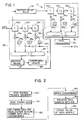
- the modem equalizer 10 preferably includes two impulse response processors 20 and 30, a buffer delay means 40, and a data decision means 50. Both impulse response processors are preferably finite impulse response filters (FIRs), although other filters such as an infinite impulse response filter (IIR) might be used. Regardless, the impulse response processor 20 preferably includes a plurality of taps 22a, 22b... 22n for storing values of the incoming signal over time, a plurality of tap gain means 24a, 24b... 24n for multiplying the tapped signals with equalizer coefficients 25a, 25b...
- FIRs finite impulse response filters
- IIR infinite impulse response filter
- a summing means 26 for summing the products of the plurality of tap gain means 24a, 24b... 24n and producing a processed output signal therefrom, a decision means 27 for determining whether the equalizer coefficients 25 are sufficiently adapted to allow substantially error free transmission, and a coefficient update means 28 for comparing the output to an ideal value, for changing the equalizer coefficients accordingly.
- BER bit error ratio
- SLER block error ratio
- the second impulse response processor 30 is of similar structure to impulse response processor 20 and preferably includes taps 32a, 32b... 32n, tap gain means 34a, 34b... 34n, coefficients 25a, 25b... 25n, and summation means 36.
- the function of second impulse response processor 30 in the preferred embodiment is to process and pass data as opposed to the function of the first impulse response processor 20 which is to adapt the coefficients.
- the coefficients adapted by FIR 20 are used by FIR 30 to process the data as will be indicated hereinafter.
- the buffer delay means 40 of the invention is used to create a variable delay; i.e. the delay required for a particular channel.
- the buffer delay means 40 may be a RAM or an analog delay line.
- the buffer 40 preferably starts receiving communications data after the completion of the training sequence but before the equalizer coefficients of the FIR 20 have sufficiently adapted to allow substantially error free transmission.
- the length of the buffer i.e. the variable delay of the data
- the FIR 20 sufficiently adapt (i.e. converge).
- the data channel is optimal (i.e. minimal amplitude and phase delay distortion conditions)
- the FIR will have already converged and hence the buffer 40 will not be utilized (i.e. buffer of zero length).
- the FIR will still not have sufficiently adapted to allow substantially error free transmission.
- the data which is being communicated is sent both to the FIR 20 so that additional coefficient adaptation can occur in the equalizer and to the buffer 40 so that the data will not be lost.
- the buffer 40 sends the stored data to the second FIR 30 so that FIR 30 can process the data and pass the data to data decision means 50 where a decision can be made from the processed data sample as to what data value was originally communicated over the channel.
- the modems of the prior art have a fixed RTS-CTS (request to send - clear to send) delay which is determined by the requirements imposed by the worst case unconditioned line that the modem might encounter.
- the provided training sequence is a training sequence which ostensibly permits the modem to equalize in the worst case conditions.
- the line (channel) conditions are worse than the expected worse case, data will be sent after the fixed delay regardless of whether the equalizer has converged.
- the RTS-CTS delay is still of fixed duration because of the fixed length training sequence. Hence, data communication must wait until the RTS-CTS delay is over.
- a training sequence is sent from the remote terminal and is received by the equalizer 10.
- the training sequence sent to the equalizer is arranged to be minimal; that is, the training sequence is based on the best channel arrangement such that convergence will only be obtained where the training signal is being received over a best case channel (e.g. minimal amplitude and phase delay distortion conditions).
- the training sequence is received by FIR 20 and is processed according to techniques well known in the art with the equalizer coefficients being iteratively updated.
- communications data (the data intended for the data terminal equipment) is sent at 110 regardless of whether the equalizer has sufficiently adapted to permit error free transmission.
- the communications data will be used by the equalizer to further converge but will also be stored at 130 in the buffer means 40 so that none of the data is lost after the data has passed through FIR 20. Additional storage of the data and expansion of the buffer will continue in the buffer means 40 until convergence is obtained at 140, at which time the buffer means 40 will act as a FIFO with new communications data being sent directly into the buffer means 40 and the first bits of communications data being sent from the buffer means 40 to the taps 32 of FIR 30.
- the transfer of data from the buffer 40 to the second FIR 30 can take various forms.
- a set of samples may be sent in parallel from buffer means 40 to the taps 32a, 32b... 32n such that tap 32n has the first data sample etc. (in this arrangement it is assumed that tap 32n is the main and final tap).
- a single sample is sent in a serial manner from FIFO buffer 40 to tap 32a as the other samples shift one tap to the right (i.e. tap 32a to 32b, 32b to 32c... 32n-1 to 32n.
- the first communications data sample is sent to the appropriate main tap.
- all taps after the main tap are preferably sent the last training sequence data samples which preceded the first communications data sample. These last training sequence samples would have had to have been stored in the buffer means 40.
- an exact determination as to when the buffer means 40 is to start receiving the data signal samples is preferably made according to the nature of the FIR 30. If the last tap of FIR 30 is the main tap, then the buffer means 40 preferably starts accumulating data with the first communications data sample.
- the buffer means 40 preferably accumulates enough training sequence samples to exactly correspond to the number of taps beyond the main tap. In this manner the delay that is incurred is the minimum possible. It will also be appreciated that the first set of data samples could be sent serially to the taps upon convergence rather than in parallel if desired.
- the data samples are sent to the data taps 32a, 32b... 32n, they are processed by the FIR 30 at 150 in accord with the equalization coefficients 25a, 25b, 25c... 25n determined by FIR 20 that had provided the convergence. As additional data samples are obtained, the equalization coefficients 25 of FIR 20 are updated and used by FIR 30 to process the data.
- the processed data is then sent to the decision means 50 where a decision is made at 160 according to well known techniques as to the value of the data that was originally sent.
- the equalizer of Figure 3 basically includes two finite impulse response processors 60 and 61 which may share a plurality of taps 62a, 62b,..., and a plurality of coefficients 73a, 73b,..., and which each have a plurality of tap gain means 64a, 64b,..., 65a, 65b..., a summing means 66 and 67, decision means 68 and 69, and coefficient update means 70 and 71.
- both equalization means benefit from the other's adaptations, as after the second equalization means further refines the coefficients, the first equalization means uses the further refined coefficients for the next data sample.
- the second equalizer slides with time to retain the last samples of the training sequence and/or the first samples of the data.
- a buffer (not shown) must be placed between the two to absorb the delay.
- the sliding of the data taps with respect to each other can occur at any time during the receiving of the training sequence or "communication" data rather than necessarily with the last samples of the training sequence.
- the data taps need not slide at any fixed rate as they may maintain a fixed relative position to one another.
- a buffer may be placed between the two FIRs when they disconnect and/or at the end of the second FIR. If a buffer is placed at the end of the second FIR, the data in the buffer must be processed by the second FIR upon convergence.
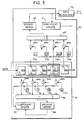
- the FIR filter 80 includes a plurality of taps 82a, 82b..., a plurality of tap gain means 84a, 84b..., a plurality of adaptable coefficients 85a, 85b..., a summing means 86, and a coefficient update means 88 which perform the functions as aforedescribed with respect to Figure 1.
- switch 91 When the training sequence starts, switch 91 is closed and the training data is forwarded through switch 91 to the FIR filter 80 where samples are taken at the taps 82, the samples are multiplied by equalizer coefficients 85 at tap gain means 84, the products are summed at summing means 86, a decision as to the ideal data value is made at decision means 87 and the equalizer coefficients are updated via coefficient update means 88.
- switch 92 At the end of the training sequence, if the equalizer has not converged, switch 92 is closed and the communications data starts to flow both into taps 82 and the buffer delay means 90. The communications data samples are processed by the FIR filter 80 until convergence is reached and data may be passed substantially error free. At that time, switch 91 is opened, and switch 93 is closed.
- Switch 94 may also be closed at that time if the first tap of FIR 80 is the main tap or if enough communication data samples are sent in parallel such that the main tap receives the first communication data sample. Otherwise, switch 94 is closed when the first communications data reaches the main tap.
- the data path resulting from the switching is that the communications data is send directly to FIFO buffer delay means 90 which sends the first communications data sample received when switch 92 was closed through closed switch 93 to the taps 82.
- the information in the main tap is processed, and a decision as to the ideal value is made at decision means 87.
- the determined value is then sent via switch 94 to the data detector 89 which processes the ideal value and sends the data to the data terminal equipment (DTE).
- DTE data terminal equipment
- the buffer delay means could be placed at one of many different desired locations along the data taps of either the single or double FIR embodiment.
- the buffer delay means could be located at the output of the FIR (i.e. at the last tap).
- the taps could be thought as being an extension of the buffer delay means such that even if convergence does not occur before communications data is received by the taps, it might occur before the first data sample leaves the taps.
- the delay part of this "extended" delay buffer means might not get utilized.
- the buffer delay means could be placed at the main tap location.
- the equalizer of the invention would use the real "communications" data as the data on which to train its equalizer coefficients.
- the communications data would simultaneously be stored in the buffer delay means unit, the coefficients were sufficiently adapted.
- a "buffer delay means” is broad terminology intended to encompass a storage means for delaying data for a previously undetermined duration.
- a RAM or an analog delay line are two means of accomplishing the same.
- various equivalents of other of the components of the disclosed modem equalizer may be utilized.
- the coefficient update means could be a processing means for correlating, averaging and adjusting, or an FFT means.
Landscapes
- Engineering & Computer Science (AREA)
- Power Engineering (AREA)
- Computer Networks & Wireless Communication (AREA)
- Signal Processing (AREA)
- Cable Transmission Systems, Equalization Of Radio And Reduction Of Echo (AREA)
Abstract
Claims (16)
- Egaliseur pour appareillage de communications de données destiné à recevoir et à traiter des données comprenant une séquence d'apprentissage et des données de communications, transmises par un canal de communication, l'égaliseur comprenant :
un dispositif (20, 30 ; 60 ; 80) à réponse impulsionnelle, comprenant un dispositif (28 ; 70, 71 ; 88) de remise à jour de coefficients destiné à adapter des coefficients du dispositif à réponse impulsionnelle en fonction d'une séquence reçue d'apprentissage et à traiter des données reçues de communications à l'aide des coefficients adaptés afin qu'une réception de données pratiquement dépourvue d'erreur soit permise,
un dispositif (40, 90) à retard à tampon, couplé à l'entrée du dispositif à réponse impulsionnelle et destiné à recevoir et à retarder la transmission des données de communications jusqu'au moment où les coefficients ont été adaptés pour permettre une réception pratiquement dépourvue d'erreur, et
un dispositif (50, 72, 89) de décision de données couplé à une sortie du dispositif à réponse impulsionnelle et destiné à décider quelles valeurs de données affecter à un échantillon des données traitées. - Egaliseur selon la revendication 1, dans lequel les données de la séquence d'apprentissage comprennent une séquence pratiquement minimale d'apprentissage correspondant à un canal à faible distorsion.
- Egaliseur selon la revendication 1 ou 2, dans lequel le dispositif à retard à tampon (40, 90) reçoit au moins les données de communications reçues après la fin de la séquence minimale d'apprentissage et avant que les coefficients de l'égaliseur aient été suffisamment adaptés, et dans lequel le retard total dû au temps d'apprentissage de l'égaliseur pour ledit canal est réduit pratiquement au minimum et comprend un retard dû à la séquence d'apprentissage augmenté d'un retard nécessaire pour que le canal permette une adaptation suffisante des coefficients de l'égaliseur.
- Egaliseur selon la revendication 3, dans lequel toutes les données de communications sont conservées lorsque le dispositif à tampon mémorise les données de communications alors que le dispositif à réponse impulsionnelle utilise les données de communications pour poursuivre l'adaptation de ses coefficients.
- Egaliseur selon l'une quelconque des revendications précédentes, dans lequel le dispositif à réponse impulsionnelle comprend un filtre à réponse impulsionnelle finie (20, 30 ; 60, 61 ; 80), et le dispositif à retard à tampon comprend une mémoire à accès direct RAM (40).
- Egaliseur selon l'une quelconque des revendications précédentes, dans lequel le dispositif à réponse impulsionnelle comprend plusieurs dispositifs à prises de données (22, 32 ; 62, 82) destinés à mémoriser les échantillons des signaux de données au cours du temps et un processeur à réponse impulsionnelle, ce processeur comprenant :
plusieurs dispositifs (24, 34 ; 64, 65 ; 84) à gains de prises qui multiplient plusieurs des coefficients d'égaliseur par les échantillons mémorisés des signaux de données, et
un dispositif (26 ; 67, 66 ; 86) de sommation des produits des dispositifs à gains de prises et de production d'un signal de sortie correspondant,
dans lequel le dispositif à réponse impulsionnelle est réalisé afin qu'il compare le signal de sortie à une valeur idéale, qu'il modifie en conséquence les coefficients de l'égaliseur, et qu'il détermine si les coefficients de l'égaliseur sont suffisamment adaptés pour permettre une transmission pratiquement dépourvue d'erreur ou non. - Egaliseur selon la revendication 6, dans lequel, après que les coefficients de l'égaliseur ont été suffisamment adaptés pour permettre une transmission pratiquement dépourvue d'erreur, le dispositif à retard à tampon (40, 90) est destiné à transmettre un nombre prédéterminé d'échantillons de données à un nombre prédéterminé des dispositifs à prises pendant un cycle, et à transmettre ensuite un échantillon de données par cycle à l'un des dispositifs à prises.
- Egaliseur selon la revendication 6 ou 7, comprenant plusieurs dispositifs de commutation comportant un premier dispositif de commutation (92) destiné à connecter directement le canal au dispositif à tampon (90), un second dispositif de commutation (91) destiné à déconnecter le canal de l'un au moins des dispositifs à prises de données (82) auquel il peut être connecté, un troisième dispositif de commutation (93) destiné à connecter la sortie du dispositif à retard à tampon à l'un au moins des dispositifs à prises de données (82) lorsque les coefficients ont été suffisamment adaptés pour permettre une transmission des données pratiquement dépourvue d'erreur, et un quatrième dispositif de commutation (94) destiné à connecter la sortie du dispositif de décision de données à un équipement terminal de données.
- Egaliseur selon l'une quelconque des revendications 1 à 7, dans lequel le dispositif à réponse impulsionnelle comprend un premier et un second processeur à réponse impulsionnelle (20, 30 ; 60, 61), le second processeur à réponse impulsionnelle comprenant un dispositif de traitement des données en fonction des coefficients adaptés d'égaliseur déterminés par le premier processeur à réponse impulsionnelle, et le dispositif de remise à jour des coefficients auquel sont transmises des données par le dispositif à retard à tampon est le second processeur à réponse impulsionnelle.
- Egaliseur selon la revendication 9 lorsqu'elle dépend de la revendication 6, dans lequel le second processeur à réponse impulsionnelle (30 ; 60) comporte :
plusieurs dispositifs à gain de prise (34 ; 65) destinés à multiplier les coefficients adaptés par des échantillons respectifs de prises, et
un dispositif (67) de sommation des produits résultants et de transmission de la somme comme second signal de sortie. - Egaliseur selon la revendication 10, dans lequel le second processeur à réponse impulsionnelle (30) comporte plusieurs dispositifs à prises (32) en plus du premier ensemble de dispositifs à prises (33), destinés à mémoriser les échantillons de données au cours du temps et à transmettre les échantillons au dispositif à gain de prises du second processeur à réponse impulsionnelle.
- Egaliseur selon l'une quelconque des revendications 9 à 11, dans lequel le premier et le second processeur à réponse impulsionnelle sont des filtres à réponse impulsionnelle finie.
- Egaliseur selon l'une quelconque des revendications 9 à 11, dans lequel le dispositif de décision de données (50 ; 72) est connecté à la sortie du second filtre à réponse impulsionnelle finie de manière que les valeurs déterminées des données puissent être transmises à l'équipement terminal de données voulu.
- Procédé d'optimisation par adaptation d'un retard d'égalisation dans un égaliseur, comprenant les étapes suivantes :
la réception de données de séquence d'apprentissage, suivies par des données de communications,
la détermination de coefficients, à partir de la séquence d'apprentissage, et l'adaptation des coefficients en fonction de la séquence d'apprentissage à l'aide d'un dispositif à réponse impulsionnelle,
le retard de la retransmission des données de communications au dispositif à réponse impulsionnelle jusqu'à ce que les coefficients aient été adaptés pour permettre une réception pratiquement dépourvue d'erreur,
puis la transmission des données de communications au dispositif impulsionnel fini pour le traitement à l'aide des coefficients adaptés de manière que la réception puisse être réalisée pratiquement sans erreur, et
la décision de la valeur à affecter à une valeur des données traitées de communications en fonction des données traitées. - Procédé selon la revendication 14, comprenant l'étape d'utilisation des données de communications pour l'adaptation supplémentaire des coefficients lorsque l'utilisation de la séquence d'apprentissage n'adapte pas les coefficients à une transmission suffisamment dépourvue d'erreur.
- Procédé selon la revendication 14 ou 15, dans lequel les données de séquence d'apprentissage représentent une séquence d'apprentissage pratiquement minimale en fonction de l'hypothèse d'une faible distorsion dans le canal.
Applications Claiming Priority (3)
| Application Number | Priority Date | Filing Date | Title |
|---|---|---|---|
| US144534 | 1988-01-14 | ||
| US07/144,534 US4811360A (en) | 1988-01-14 | 1988-01-14 | Apparatus and method for adaptively optimizing equalization delay of data communication equipment |
| PCT/US1989/000147 WO1989006878A1 (fr) | 1988-01-14 | 1989-01-13 | Appareil et procede servant a optimiser de façon adaptative le retard d'egalisation d'un equipement de transmission de donnees |
Publications (3)
| Publication Number | Publication Date |
|---|---|
| EP0401246A1 EP0401246A1 (fr) | 1990-12-12 |
| EP0401246A4 EP0401246A4 (en) | 1991-05-15 |
| EP0401246B1 true EP0401246B1 (fr) | 1995-10-25 |
Family
ID=22509021
Family Applications (1)
| Application Number | Title | Priority Date | Filing Date |
|---|---|---|---|
| EP89902316A Expired - Lifetime EP0401246B1 (fr) | 1988-01-14 | 1989-01-13 | Appareil et procede servant a optimiser de facon adaptative le retard d'egalisation d'un equipement de transmission de donnees |
Country Status (5)
| Country | Link |
|---|---|
| US (1) | US4811360A (fr) |
| EP (1) | EP0401246B1 (fr) |
| CA (1) | CA1338961C (fr) |
| DE (1) | DE68924643T2 (fr) |
| WO (1) | WO1989006878A1 (fr) |
Families Citing this family (46)
| Publication number | Priority date | Publication date | Assignee | Title |
|---|---|---|---|---|
| US5216629A (en) * | 1987-12-23 | 1993-06-01 | U.S. Philips Corp. | Adjusting filter coefficients |
| SE461308B (sv) * | 1988-06-03 | 1990-01-29 | Ericsson Telefon Ab L M | Adaptivt digitalt filter omfattande en icke rekursiv del och en rekursiv del |
| EP0426026B1 (fr) * | 1989-10-31 | 1996-08-28 | Mitsubishi Denki Kabushiki Kaisha | Egaliseur |
| US5175747A (en) * | 1989-10-31 | 1992-12-29 | Mitsubishi Denki Kabushiki Kaisha | Equalizer |
| SE465245B (sv) * | 1989-12-22 | 1991-08-12 | Ericsson Telefon Ab L M | Foerfarande att utfoera kanalestimering foer en faedande kanal vid oeverfoering av symbolsekvenser |
| US5117291A (en) * | 1990-11-30 | 1992-05-26 | At&T Bell Laboratories | Technique for adjusting signal dispersion cancellation apparatus in communications systems |
| JP2842026B2 (ja) * | 1991-02-20 | 1998-12-24 | 日本電気株式会社 | 適応フィルタの係数制御方法及び装置 |
| EP0543568A2 (fr) * | 1991-11-22 | 1993-05-26 | AT&T Corp. | Filtrage à haute résolution utilisant des processeurs à basse résolution |
| US5268930A (en) * | 1991-12-19 | 1993-12-07 | Novatel Communications Ltd. | Decision feedback equalizer |
| JP3100447B2 (ja) * | 1992-01-10 | 2000-10-16 | 三菱電機株式会社 | 適応等化器および受信機 |
| US5648987A (en) * | 1994-03-24 | 1997-07-15 | Samsung Electronics Co., Ltd. | Rapid-update adaptive channel-equalization filtering for digital radio receivers, such as HDTV receivers |
| DE19614543C1 (de) * | 1996-04-12 | 1997-08-28 | Philips Patentverwaltung | Entzerrer mit erweiterter Kanalschätzung für einen Empfänger in einem digitalen Übertragungssystem |
| KR100201776B1 (ko) * | 1996-11-06 | 1999-06-15 | 김영환 | 고리 구조를 갖는 적응 등화기 |
| US6760371B1 (en) * | 2000-03-22 | 2004-07-06 | The Boeing Company | Method and apparatus implementation of a zero forcing equalizer |
| US6879630B2 (en) * | 2000-03-30 | 2005-04-12 | Hitachi Kokusai Electric Inc. | Automatic equalization circuit and receiver circuit using the same |
| JP3898415B2 (ja) * | 2000-03-30 | 2007-03-28 | 株式会社日立国際電気 | 自動等化回路 |
| US20020027952A1 (en) * | 2000-09-07 | 2002-03-07 | Yoshiro Kokuryo | Method for automatic equalization for use in demodulating a digital multilevel modulation signal and automatic equalization circuit and receiver circuit using the method |
| US7116735B2 (en) * | 2000-11-01 | 2006-10-03 | Ntt Docomo, Inc. | Adaptive equalization apparatus and method |
| US8135057B2 (en) * | 2002-12-20 | 2012-03-13 | Texas Instruments Incorporated | Reconfigurable chip level equalizer architecture |
| US20050249274A1 (en) * | 2004-05-10 | 2005-11-10 | Larosa Christopher P | Linear filter equalizer |
| US7738546B2 (en) * | 2004-09-27 | 2010-06-15 | Intel Corporation | Feed forward equalizer for a communication system |
| US9088355B2 (en) * | 2006-03-24 | 2015-07-21 | Arris Technology, Inc. | Method and apparatus for determining the dynamic range of an optical link in an HFC network |
| JP5202340B2 (ja) * | 2006-03-24 | 2013-06-05 | ジェネラル・インスツルメント・コーポレーション | ネットワークにおける論理チャネルを構成するための装置、方法、およびコンピュータ読取可能な記録媒体 |
| US8537972B2 (en) * | 2006-12-07 | 2013-09-17 | General Instrument Corporation | Method and apparatus for determining micro-reflections in a network |
| US8516532B2 (en) * | 2009-07-28 | 2013-08-20 | Motorola Mobility Llc | IP video delivery using flexible channel bonding |
| US8526485B2 (en) * | 2009-09-23 | 2013-09-03 | General Instrument Corporation | Using equalization coefficients of end devices in a cable television network to determine and diagnose impairments in upstream channels |
| US8284828B2 (en) * | 2009-11-11 | 2012-10-09 | General Instrument Corporation | Monitoring instability and resetting an equalizer |
| US8654640B2 (en) | 2010-12-08 | 2014-02-18 | General Instrument Corporation | System and method for IP video delivery using distributed flexible channel bonding |
| US8937992B2 (en) | 2011-08-30 | 2015-01-20 | General Instrument Corporation | Method and apparatus for updating equalization coefficients of adaptive pre-equalizers |
| US8576705B2 (en) | 2011-11-18 | 2013-11-05 | General Instrument Corporation | Upstream channel bonding partial service using spectrum management |
| US9113181B2 (en) | 2011-12-13 | 2015-08-18 | Arris Technology, Inc. | Dynamic channel bonding partial service triggering |
| US8867371B2 (en) | 2012-04-27 | 2014-10-21 | Motorola Mobility Llc | Estimating physical locations of network faults |
| US8868736B2 (en) | 2012-04-27 | 2014-10-21 | Motorola Mobility Llc | Estimating a severity level of a network fault |
| US8837302B2 (en) | 2012-04-27 | 2014-09-16 | Motorola Mobility Llc | Mapping a network fault |
| US9003460B2 (en) | 2012-04-27 | 2015-04-07 | Google Technology Holdings LLC | Network monitoring with estimation of network path to network element location |
| US9065731B2 (en) | 2012-05-01 | 2015-06-23 | Arris Technology, Inc. | Ensure upstream channel quality measurement stability in an upstream channel bonding system using T4 timeout multiplier |
| US8929501B2 (en) * | 2012-05-29 | 2015-01-06 | Hughes Network Systems, Llc | Method and apparatus for synchronization of data and error samples in a communications system |
| US9136943B2 (en) | 2012-07-30 | 2015-09-15 | Arris Technology, Inc. | Method of characterizing impairments detected by equalization on a channel of a network |
| US9137164B2 (en) | 2012-11-15 | 2015-09-15 | Arris Technology, Inc. | Upstream receiver integrity assessment for modem registration |
| US9203639B2 (en) | 2012-12-27 | 2015-12-01 | Arris Technology, Inc. | Dynamic load balancing under partial service conditions |
| US9197886B2 (en) | 2013-03-13 | 2015-11-24 | Arris Enterprises, Inc. | Detecting plant degradation using peer-comparison |
| US10477199B2 (en) | 2013-03-15 | 2019-11-12 | Arris Enterprises Llc | Method for identifying and prioritizing fault location in a cable plant |
| US9042236B2 (en) | 2013-03-15 | 2015-05-26 | Arris Technology, Inc. | Method using equalization data to determine defects in a cable plant |
| US9025469B2 (en) | 2013-03-15 | 2015-05-05 | Arris Technology, Inc. | Method for estimating cable plant topology |
| US9237044B1 (en) | 2013-05-17 | 2016-01-12 | Altera Corporation | Methods for joint optimization of link equalization |
| US9749746B2 (en) * | 2015-04-29 | 2017-08-29 | Fortemedia, Inc. | Devices and methods for reducing the processing time of the convergence of a spatial filter |
Family Cites Families (6)
| Publication number | Priority date | Publication date | Assignee | Title |
|---|---|---|---|---|
| US3715666A (en) * | 1971-03-30 | 1973-02-06 | Bell Telephone Labor Inc | Fast start-up system for transversal equalizers |
| JPS5146047A (fr) * | 1974-10-18 | 1976-04-20 | Nippon Electric Co | |
| US4539689A (en) * | 1978-04-26 | 1985-09-03 | Racal Data Communications, Inc. | Fast learn digital adaptive equalizer |
| JPS58121838A (ja) * | 1981-12-28 | 1983-07-20 | Fujitsu Ltd | 自動等化器 |
| JPS5980026A (ja) * | 1982-10-30 | 1984-05-09 | Nec Corp | トレ−ニング検出回路 |
| US4695969A (en) * | 1984-12-17 | 1987-09-22 | American Telephone And Telegraph Company At&T Bell Laboratories | Equalizer with improved performance |
-
1988
- 1988-01-14 US US07/144,534 patent/US4811360A/en not_active Expired - Fee Related
-
1989
- 1989-01-13 EP EP89902316A patent/EP0401246B1/fr not_active Expired - Lifetime
- 1989-01-13 WO PCT/US1989/000147 patent/WO1989006878A1/fr not_active Ceased
- 1989-01-13 DE DE68924643T patent/DE68924643T2/de not_active Expired - Fee Related
- 1989-01-16 CA CA000588350A patent/CA1338961C/fr not_active Expired - Fee Related
Also Published As
| Publication number | Publication date |
|---|---|
| WO1989006878A1 (fr) | 1989-07-27 |
| EP0401246A1 (fr) | 1990-12-12 |
| DE68924643D1 (de) | 1995-11-30 |
| CA1338961C (fr) | 1997-03-04 |
| EP0401246A4 (en) | 1991-05-15 |
| DE68924643T2 (de) | 1996-08-29 |
| US4811360A (en) | 1989-03-07 |
Similar Documents
| Publication | Publication Date | Title |
|---|---|---|
| US4811360A (en) | Apparatus and method for adaptively optimizing equalization delay of data communication equipment | |
| CA2186329C (fr) | Dispositif et methode de detection de signaux de donnees en presence de distorsion et de brouillage dans les systemes de communication | |
| US4621366A (en) | Modem equalizer training using previously stored parameters | |
| EP1254542B1 (fr) | Procede pour recevoir un signal et recepteur correspondant | |
| EP1258120B1 (fr) | Procede et appareil pour mettre en oeuvre la phase d'entrainement d'une egalisation a decision retroactive adaptative | |
| US6754294B1 (en) | Dual equalizer for use in an receiver and method of operation | |
| WO1998019432A1 (fr) | Procede et appareil de traitement des signaux pour reduire les erreurs d'un egaliseur | |
| EP0515761A1 (fr) | Procédé et dispositif pour l'égalisation adaptative d'un signal dans un équipement de terminaison de circuit de données | |
| TW200408228A (en) | A modulator used for network transceiver and method thereof | |
| CA2306111A1 (fr) | Egaliseur de modem mic a compensation adaptative de signalisation par reassignation d'element binaire | |
| US5732112A (en) | Channel training of multi-channel receiver system | |
| WO2002015505A2 (fr) | Egaliseur avec prefiltre adaptatif | |
| KR100518029B1 (ko) | 블라인드 판정궤환등화 장치 및 그 방법 | |
| WO1996013908A1 (fr) | Procede permettant d'etablir une connexion de signal mia utilisant une sequence d'apprentissage | |
| CN115426066B (zh) | 数据同步电路、多端口以太网收发器及数据同步方法 | |
| CN1697332A (zh) | 线性滤波均衡器 | |
| EP1397880B1 (fr) | Systeme commun pour l'extraction de la synchronisation et l'egalisation dans un systeme a n antennes | |
| US7409003B2 (en) | Method and apparatus for implementing adaptive tomlinson-harashima precoding in a digital data link | |
| CN118101396B (zh) | 信息接收方法及基于ADC的SerDes系统 | |
| US6404810B1 (en) | Activation method in data transceivers | |
| US5550862A (en) | Method and apparatus for centering equalizer taps | |
| WO2002013448A2 (fr) | Sequence de formation adaptative pour systemes utilisant l'acces multiple a repartition dans le temps | |
| US7239665B2 (en) | Selection of pre-computed equalizer based on channel characteristic | |
| US7079586B1 (en) | Systems and methods for optimal distribution of symbols in a fixed size data packet to improve receiver performance | |
| US7031414B2 (en) | Combined feedforward filter for a decision feedback equalizer |
Legal Events
| Date | Code | Title | Description |
|---|---|---|---|
| PUAI | Public reference made under article 153(3) epc to a published international application that has entered the european phase |
Free format text: ORIGINAL CODE: 0009012 |
|
| 17P | Request for examination filed |
Effective date: 19900713 |
|
| AK | Designated contracting states |
Kind code of ref document: A1 Designated state(s): DE FR GB IT |
|
| A4 | Supplementary search report drawn up and despatched |
Effective date: 19910328 |
|
| AK | Designated contracting states |
Kind code of ref document: A4 Designated state(s): DE FR GB IT |
|
| 17Q | First examination report despatched |
Effective date: 19930921 |
|
| GRAA | (expected) grant |
Free format text: ORIGINAL CODE: 0009210 |
|
| AK | Designated contracting states |
Kind code of ref document: B1 Designated state(s): DE FR GB IT |
|
| REF | Corresponds to: |
Ref document number: 68924643 Country of ref document: DE Date of ref document: 19951130 |
|
| ITF | It: translation for a ep patent filed | ||
| ET | Fr: translation filed | ||
| PLBE | No opposition filed within time limit |
Free format text: ORIGINAL CODE: 0009261 |
|
| STAA | Information on the status of an ep patent application or granted ep patent |
Free format text: STATUS: NO OPPOSITION FILED WITHIN TIME LIMIT |
|
| 26N | No opposition filed | ||
| PGFP | Annual fee paid to national office [announced via postgrant information from national office to epo] |
Ref country code: FR Payment date: 19980115 Year of fee payment: 10 |
|
| PGFP | Annual fee paid to national office [announced via postgrant information from national office to epo] |
Ref country code: DE Payment date: 19980123 Year of fee payment: 10 |
|
| PGFP | Annual fee paid to national office [announced via postgrant information from national office to epo] |
Ref country code: GB Payment date: 19981203 Year of fee payment: 11 |
|
| PG25 | Lapsed in a contracting state [announced via postgrant information from national office to epo] |
Ref country code: FR Free format text: LAPSE BECAUSE OF NON-PAYMENT OF DUE FEES Effective date: 19990930 |
|
| PG25 | Lapsed in a contracting state [announced via postgrant information from national office to epo] |
Ref country code: DE Free format text: LAPSE BECAUSE OF NON-PAYMENT OF DUE FEES Effective date: 19991103 |
|
| REG | Reference to a national code |
Ref country code: FR Ref legal event code: ST |
|
| PG25 | Lapsed in a contracting state [announced via postgrant information from national office to epo] |
Ref country code: GB Free format text: LAPSE BECAUSE OF NON-PAYMENT OF DUE FEES Effective date: 20000113 |
|
| GBPC | Gb: european patent ceased through non-payment of renewal fee |
Effective date: 20000113 |
|
| PG25 | Lapsed in a contracting state [announced via postgrant information from national office to epo] |
Ref country code: IT Free format text: LAPSE BECAUSE OF NON-PAYMENT OF DUE FEES;WARNING: LAPSES OF ITALIAN PATENTS WITH EFFECTIVE DATE BEFORE 2007 MAY HAVE OCCURRED AT ANY TIME BEFORE 2007. THE CORRECT EFFECTIVE DATE MAY BE DIFFERENT FROM THE ONE RECORDED. Effective date: 20050113 |