EP0405284A2 - Mit einem Pharmazeutikum imprägnierter Katheter - Google Patents
Mit einem Pharmazeutikum imprägnierter Katheter Download PDFInfo
- Publication number
- EP0405284A2 EP0405284A2 EP90111468A EP90111468A EP0405284A2 EP 0405284 A2 EP0405284 A2 EP 0405284A2 EP 90111468 A EP90111468 A EP 90111468A EP 90111468 A EP90111468 A EP 90111468A EP 0405284 A2 EP0405284 A2 EP 0405284A2
- Authority
- EP
- European Patent Office
- Prior art keywords
- catheter
- pharmaceutical
- impregnated
- solvent
- pharmaceutically
- Prior art date
- Legal status (The legal status is an assumption and is not a legal conclusion. Google has not performed a legal analysis and makes no representation as to the accuracy of the status listed.)
- Withdrawn
Links
Images
Classifications
-
- C—CHEMISTRY; METALLURGY
- C08—ORGANIC MACROMOLECULAR COMPOUNDS; THEIR PREPARATION OR CHEMICAL WORKING-UP; COMPOSITIONS BASED THEREON
- C08J—WORKING-UP; GENERAL PROCESSES OF COMPOUNDING; AFTER-TREATMENT NOT COVERED BY SUBCLASSES C08B, C08C, C08F, C08G or C08H
- C08J7/00—Chemical treatment or coating of shaped articles made of macromolecular substances
- C08J7/04—Coating
- C08J7/06—Coating with compositions not containing macromolecular substances
- C08J7/065—Low-molecular-weight organic substances, e.g. absorption of additives in the surface of the article
-
- A—HUMAN NECESSITIES
- A61—MEDICAL OR VETERINARY SCIENCE; HYGIENE
- A61L—METHODS OR APPARATUS FOR STERILISING MATERIALS OR OBJECTS IN GENERAL; DISINFECTION, STERILISATION OR DEODORISATION OF AIR; CHEMICAL ASPECTS OF BANDAGES, DRESSINGS, ABSORBENT PADS OR SURGICAL ARTICLES; MATERIALS FOR BANDAGES, DRESSINGS, ABSORBENT PADS OR SURGICAL ARTICLES
- A61L29/00—Materials for catheters, medical tubing, cannulae, or endoscopes or for coating catheters
- A61L29/14—Materials characterised by their function or physical properties, e.g. lubricating compositions
- A61L29/16—Biologically active materials, e.g. therapeutic substances
-
- A—HUMAN NECESSITIES
- A61—MEDICAL OR VETERINARY SCIENCE; HYGIENE
- A61L—METHODS OR APPARATUS FOR STERILISING MATERIALS OR OBJECTS IN GENERAL; DISINFECTION, STERILISATION OR DEODORISATION OF AIR; CHEMICAL ASPECTS OF BANDAGES, DRESSINGS, ABSORBENT PADS OR SURGICAL ARTICLES; MATERIALS FOR BANDAGES, DRESSINGS, ABSORBENT PADS OR SURGICAL ARTICLES
- A61L2300/00—Biologically active materials used in bandages, wound dressings, absorbent pads or medical devices
-
- Y—GENERAL TAGGING OF NEW TECHNOLOGICAL DEVELOPMENTS; GENERAL TAGGING OF CROSS-SECTIONAL TECHNOLOGIES SPANNING OVER SEVERAL SECTIONS OF THE IPC; TECHNICAL SUBJECTS COVERED BY FORMER USPC CROSS-REFERENCE ART COLLECTIONS [XRACs] AND DIGESTS
- Y02—TECHNOLOGIES OR APPLICATIONS FOR MITIGATION OR ADAPTATION AGAINST CLIMATE CHANGE
- Y02P—CLIMATE CHANGE MITIGATION TECHNOLOGIES IN THE PRODUCTION OR PROCESSING OF GOODS
- Y02P20/00—Technologies relating to chemical industry
- Y02P20/50—Improvements relating to the production of bulk chemicals
- Y02P20/54—Improvements relating to the production of bulk chemicals using solvents, e.g. supercritical solvents or ionic liquids
Definitions
- the present invention relates to catheters that are made of a polymer material which have been impregnated with a pharmaceutical.
- the present invention relates to a catheterization system which incorporates impregnating a pharmaceutical into a catheter by contacting the catheter with a volatile solvent or swelling agent.
- the catheter is capable of providing prolonged protection of localized tissue areas.
- Catheters are tubular, flexible, open-ended, medical instruments which are used for shunting fluids into and out of the body of an animal. Such catheters may have preformed ends to facilitate selective locating, as in a renal or coronary vessel, from a remote entry site, and may be named according to the site of entry and destination.
- tissue irritation Another area of concern in the use of a catheter, is the occurrence of tissue irritation at the site of insertion.
- This irritation can be of a short term effect such as pain or discomfort associated with friction generated by the insertion of the catheter, or it can be of a long term nature such as the effects associated with a lesion or sore formed at the point of contact between the catheter and the local tissue area.
- Such lesions or sores may arise when pressure is applied over an extended time. Pressure results in shear and compressive forces on tissues, blood vessels, and the lymphatic system. When blood vessels close as a result of these forces, flow of blood stops and tissues become starved of nutrients, particularly oxygen. Eventually tissues die and the affected area becomes sensitive to microbial infection. Such an occurrence is common in tissue areas that have been in prolonged contact with a catheter.
- Known methods of applying pharmaceuticals to catheters include osmotic swelling, coating the surface of a polymer with an antibiotic and a chemical binder, applying a film or solid particles which includes an antithrombotic, applying a coating capable of adsorbing a microbiocide, incorporating microporous walls into the catheter for holding a medicament, and treating the surface of the medical device with a compound having reactive functional groups followed by a second coating of a hydrophilic polymer.
- a method of impregnating a catheter, made of a polymeric material, with a pharmaceutical comprising the steps of immersing the catheter into a saturated solution of a pharmaceutical in a pharmaceutically acceptable solvent, contacting the catheter at or near supercritical pressure and temperature conditions of the solvent with the saturated solution, and reducing the pressure from the supercritical pressure condition to release the solvent from the catheter, thereby leaving the pharmaceutical impregnated into the catheter.
- the presence in the catheter of impregnated pharmaceuticals such as antibiotics, reduces problems encountered in the use, particularly extended use, of catheters in animals.
- a catheter impregnated with an antibiotic in accordance with the present invention inhibits microbiological infection and possible damage in the tissue contacting the catheter.
- a catheter impregnated in accordance with the present invention reduces localized pain and inflammation and retards tissue necrosis which may be associated with prolonged insertion of the catheter into the body.
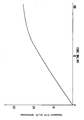
- Fig. 1 is a graph which illustrates the results of the rate of release of benzocaine from various polymer compositions used in the manufacture of the catheter. Details of Fig. 1 are included in the examples.
- the impregnated polymer is a catheter that is to be inserted into the body of an animal for shunting fluids into and out of body cavities such as the alimentary canal, cerebrospinal cavities, urinary tract, Eustacian tube, reproductive tracts, cranial cavity, ductal tracts, endocrine system, lymphatic system, respiratory system, cardiovascular system, skeletomuscular system, and integumentary system.
- the catheter can have various forms and structures, which will be apparent to the skilled artisan. Examples of these types of catheters are urinary catheters and percutaneous lead devices such as a shunt, cannulae or wire.
- An antibiotic or an anti-inflammatory agent is preferably impregnated into the urinary catheter.
- An antibiotic, anti-inflammatory agent or an anesthetic is preferably impregnated into the percutaneous lead device.
- the percutaneous lead device can then be implanted through the skin for providing access to veins and arteries and to administer drugs and fluids.
- the catheter of the present invention is made of a polymer composition.
- polymer compositions include polypropylene, polyurethane, polytetrafluoroethylene and silicone rubbers.
- the useful polymeric catheter materials are preferably impregnated with the pharmaceutical by immersing the catheter in a saturated solution containing the pharmaceutical dissolved in a highly volatile, pharmaceutically acceptable solvent capable of swelling the polymer materials or more preferably by using a pharmaceutically acceptable swelling agent as a deposition medium as taught in U.S. Pat. No. 4,958,006.
- a saturated solution is the most concentrated solution that can remain in the presence of an excess of the dissolved solvent.
- Highly volatile solvents are considered to be those materials which have high vapor pressures at about room temperature. Examples of preferred solvents include, but are not limited to carbon dioxide, nitrous oxide, nitrogen, ethylene, pentane, hexane, cyclohexane, methanol, ethanol, diethyl ether, methyl chloride, methylene chloride, water, isopropanol.
- a temperature of at least 40°C will be employed in order to ensure a convenient rate of swelling, with an upper limit of about 60°C being preferred.
- Pressure is also determined by practical considerations such as the properties of the particular solvent used and by the cost and availability of equipment. The optimal pressure will be determinable by those of ordinary skill in the art. It is preferred that contacting the catheter with the mixture of the pharmaceutical and the swelling agent be carried out in a range of about 35.2 kg/cm2 to about 703 kg/cm2, with about 70.4 kg/cm2 to about 35.6 k./cm2 being preferred.
- the volatile swelling agent After contacting, the volatile swelling agent is separated from the catheter, leaving the pharmaceutical behind. Because of the volatility of the swelling agents employed, separation is easily accomplished by lowering the pressure.
- a pharmaceutical that is dissolvable in a pharmaceutically acceptable, swelling solvent or highly volatile, pharmaceutically acceptable swelling agent is useful in accordance with the present invention.
- Non-limiting examples include antibiotics, anti-inflammatory agents, analgesics, anti-fungal agents, topical anesthetics, antiseptics, vasodilators, anti-spasmodic agents, and growth factors such as methenamine, nalidixic acid, cinoxacin, norfloxacin, pifloxacin, gentamicin sulfate, clindamycin phosphate, benzocaine, triethanolamine salicylate, hydrocortisone, trolamine salicylate, theophylline, dipyridamole, minoxidil, nylidrin hydrochloride, nifedipine, erythrityl nitrate, nitroglycerine, cinepazide, isoxsurpine, trolnitrate phosphate, isosorbide dinitrate
- the amount of pharmaceutical impregnated into the polymer depends upon various factors such as length of time desired for administration and the minimum and maximum effective dose.
- the amount of pharmaceutical varies between about 1 and 50% by weight of the catheter. Preferred ranges depend explicitly on the pharmaceutical agent, but generally will be about 5 to 15% by weight of the catheter.
- the pharmaceutical impregnated into the catheter is capable of being released from the catheter at a prolonged and controlled rate.
- the pharmaceutical is released at a rate of about 0.01 to 30.0 wt % of the agent per hour based on total weight of the catheter plus impregnated material.
- the polymer is preformed into the desired catheter end product before impregnation with the pharmaceutical.
- commercially available, preformed catheters that can be impregnated with a pharmaceutical in accordance with the present invention include BardexTM latex Foley catheters with silicone coating (made by C. R. Bard, Inc.); BardexTM latex Foley catheter with teflon coating (made by C. R. Bard, Inc.); all silicone Foley catheters; long-term, indwelling catheters; balloon-type cardiovascular catheters; coronary profusion catheters; hemodialysis catheters; and angiographic catheters.
- the catheter of the present invention can be conveniently contained in a sterilized kit for dispensing.
- the kit is a sterilized wrapper that is impermeable to air, moisture, and bacteria.
- useful wrappers are TyvekTM, polyethylene or polyvinylidene chloride pouches and polyolefin trays.
- a commercially available polyurethane catheter is mounted in a stainless steel cage, placed in a reactor, and 1 g of benzocaine is added to the reactor.
- the reactor is closed, heated to 40°C, and pressurized with carbon dioxide to 1200 psig. After the contents of the reactor are agitated at 1,000 rpm for 4 hours, the reactor is cooled and depressurized.
- the catheter is found to contain 25% benzocaine by weight, as determined by weight gain.
- the presence of benzocaine is confirmed by extracting the benzocaine with a pharmaceutically acceptable solvent and analyzing the extracted solution by UV analysis.
- the rate of release of benzocaine from the catheter is measured by the following procedure.
- the catheter is placed in a beaker containing 100 ml of water, and the contents of the beaker are slightly agitated with a magnetic stirrer. At given times, an aliquot is removed, placed in a cuvette and the UV absorbance @ 285 nm is measured. The concentration is determined by comparison with a standard calibration curve.
- Fig. 1 These results demonstrate the prolonged release rate characteristics of the impregnated catheter.
- Example 1 The process described in Example 1 is repeated except that benzene is replaced with a slurry solution of ethanol and 1 gram of benzene.
- the catheter is analyzed for weight gain and is found to contain 42% benzocaine.
- a Hickman right atrial catheter (made by Evermed of Medina, WA) is impregnated according to the process described in Example 1.
- This catheter is made of SilasticTM, a silicone rubber compound, which is a product of Dow Corning.
- a latex rubber catheter (made by C. R. Bard, Inc.) is impregnated with gentamicin according to the process described in Example 1.
- CyclospasmolTM a cyclandelate vasodilator made by Wyeth Laboratories
- a commercially available polyurethane catheter is impregnated with 1.0 g sulfathiazole, an antibacterial agent, according to the process described in Example 1.
- FluocinonideTM an anti-inflammatory agent made by Syntex Labs
Landscapes
- Health & Medical Sciences (AREA)
- Chemical & Material Sciences (AREA)
- Medicinal Chemistry (AREA)
- Chemical Kinetics & Catalysis (AREA)
- Polymers & Plastics (AREA)
- Organic Chemistry (AREA)
- Life Sciences & Earth Sciences (AREA)
- Biomedical Technology (AREA)
- Engineering & Computer Science (AREA)
- Molecular Biology (AREA)
- Epidemiology (AREA)
- Animal Behavior & Ethology (AREA)
- General Health & Medical Sciences (AREA)
- Public Health (AREA)
- Veterinary Medicine (AREA)
- Materials For Medical Uses (AREA)
Applications Claiming Priority (2)
| Application Number | Priority Date | Filing Date | Title |
|---|---|---|---|
| US37277589A | 1989-06-29 | 1989-06-29 | |
| US372775 | 1989-06-29 |
Publications (2)
| Publication Number | Publication Date |
|---|---|
| EP0405284A2 true EP0405284A2 (de) | 1991-01-02 |
| EP0405284A3 EP0405284A3 (en) | 1991-03-27 |
Family
ID=23469594
Family Applications (1)
| Application Number | Title | Priority Date | Filing Date |
|---|---|---|---|
| EP19900111468 Withdrawn EP0405284A3 (en) | 1989-06-29 | 1990-06-18 | Pharmaceutically impregnated catheters |
Country Status (2)
| Country | Link |
|---|---|
| EP (1) | EP0405284A3 (de) |
| CA (1) | CA2017332A1 (de) |
Cited By (23)
| Publication number | Priority date | Publication date | Assignee | Title |
|---|---|---|---|---|
| EP0520160A1 (de) * | 1991-06-28 | 1992-12-30 | BOC HEALTH CARE, Inc. | Verfahren zur antimikrobiellen Behandlung von Polyurethan |
| DE4202320A1 (de) * | 1992-01-29 | 1993-08-05 | Dierk Dr Knittel | Verfahren zum impraegnieren von substraten |
| WO1994018264A1 (en) * | 1993-02-11 | 1994-08-18 | Minnesota Mining And Manufacturing Company | Methods of polymer impregnation |
| WO1994021308A1 (en) * | 1993-03-18 | 1994-09-29 | Cedars-Sinai Medical Center | Drug incorporating and releasing polymeric coating for bioprosthesis |
| DE4404839A1 (de) * | 1994-02-16 | 1995-08-17 | Deutsches Textilforschzentrum | Verfahren zum Aufbringen oder Einbringen von Substanzen auf bzw. in Substrate und/oder Imprägnierung von Substraten |
| WO2000007633A1 (de) * | 1998-08-07 | 2000-02-17 | Leica Microsystems Ag | Medizinisches gerät |
| DE10018954A1 (de) * | 2000-04-17 | 2001-11-15 | Orgentec Diagnostika Gmbh | Verfahren zur Beschichtung von Kunststoff-Festphasen |
| WO2001087368A1 (en) * | 2000-05-16 | 2001-11-22 | Ortho-Mcneil Pharmaceutical, Inc. | Process for coating medical devices using super-critical carbon dioxide |
| WO2002000274A1 (en) * | 2000-06-28 | 2002-01-03 | Sulzer Carbomedics Inc. | Antimicrobial reservoirs for implantable medical devices |
| WO2002100456A1 (en) * | 2001-06-13 | 2002-12-19 | Boston Scientific Limited | Using supercritical fluids to infuse therapeutic on a medical device |
| WO2003045448A1 (en) * | 2001-11-20 | 2003-06-05 | The University Of Nottingham | Impregnation of polymeric substrates with antimicrobial substances using superficial fluids |
| WO2004043506A1 (en) * | 2002-11-14 | 2004-05-27 | Synecor, Llc. | Intraluminal prostheses and carbon dioxide-assisted methods of impregnating same with pharmacological agents |
| WO2004047873A3 (en) * | 2002-11-14 | 2004-11-18 | Synecor Llc | Carbon dioxide-assisted methods of providing biocompatible intraluminal prostheses |
| US6913779B2 (en) * | 2000-03-17 | 2005-07-05 | Eurand International S.P.A. | Process for the preparation of accelerated release formulations using compressed fluids |
| WO2005055972A3 (en) * | 2003-12-09 | 2005-07-14 | Nanon As | A drug delivery device and a method of producing it |
| US6932930B2 (en) | 2003-03-10 | 2005-08-23 | Synecor, Llc | Intraluminal prostheses having polymeric material with selectively modified crystallinity and methods of making same |
| EP1588700A1 (de) * | 1997-05-10 | 2005-10-26 | The University Of Nottingham | Biofunktionelle Polymere im überkritischem Fluid hergestellt |
| EP1308180A4 (de) * | 2000-11-30 | 2007-11-21 | Igaki Iryo Sekkei Kk | Stent fur ein blutgefass und material fur eine vaskulare endoprothese |
| US20110071478A1 (en) * | 2009-09-09 | 2011-03-24 | Jian-Lin Liu | Methods of manufacturing drug-loaded substrates |
| JP2013507347A (ja) * | 2009-10-08 | 2013-03-04 | タイガ ポリマーズ オーワイ | 抗微生物組成物 |
| WO2013075724A1 (en) * | 2011-11-23 | 2013-05-30 | Ptt Holding Aps | A method of producing a delivery device |
| US9226900B2 (en) | 2008-07-11 | 2016-01-05 | Critical Pharmaceuticals Limited | Process for preparing microparticles |
| EP4370170A4 (de) * | 2022-02-23 | 2024-10-16 | Sino Medical Sciences Technology Inc. | Verfahren zur herstellung von medikamentenbeschichteten ballons ohne beschichtung |
Family Cites Families (5)
| Publication number | Priority date | Publication date | Assignee | Title |
|---|---|---|---|---|
| US3695921A (en) * | 1970-09-09 | 1972-10-03 | Nat Patent Dev Corp | Method of coating a catheter |
| US4605564A (en) * | 1984-01-23 | 1986-08-12 | Biological & Environmental Control Laboratories, Inc. | Coating process for making antimicrobial medical implant device |
| US4612337A (en) * | 1985-05-30 | 1986-09-16 | The Trustees Of Columbia University In The City Of New York | Method for preparing infection-resistant materials |
| US4917686A (en) * | 1985-12-16 | 1990-04-17 | Colorado Biomedical, Inc. | Antimicrobial device and method |
| JPS63501932A (ja) * | 1985-12-16 | 1988-08-04 | デンバ− サ−ジカル デイベロツプメンツ インコ−ポレ−テツド | 抗菌カテ−テル及びその方法 |
-
1990
- 1990-05-23 CA CA002017332A patent/CA2017332A1/en not_active Abandoned
- 1990-06-18 EP EP19900111468 patent/EP0405284A3/en not_active Withdrawn
Cited By (40)
| Publication number | Priority date | Publication date | Assignee | Title |
|---|---|---|---|---|
| EP0520160A1 (de) * | 1991-06-28 | 1992-12-30 | BOC HEALTH CARE, Inc. | Verfahren zur antimikrobiellen Behandlung von Polyurethan |
| DE4202320A1 (de) * | 1992-01-29 | 1993-08-05 | Dierk Dr Knittel | Verfahren zum impraegnieren von substraten |
| WO1994018264A1 (en) * | 1993-02-11 | 1994-08-18 | Minnesota Mining And Manufacturing Company | Methods of polymer impregnation |
| US5340614A (en) * | 1993-02-11 | 1994-08-23 | Minnesota Mining And Manufacturing Company | Methods of polymer impregnation |
| US5508060A (en) * | 1993-02-11 | 1996-04-16 | Minnesota Mining And Manufacturing Company | Method of polymer impregnation |
| WO1994021308A1 (en) * | 1993-03-18 | 1994-09-29 | Cedars-Sinai Medical Center | Drug incorporating and releasing polymeric coating for bioprosthesis |
| US5562922A (en) * | 1993-03-18 | 1996-10-08 | Cedars-Sinai Medical Center | Drug incorporating and release polymeric coating for bioprosthesis |
| US5900246A (en) * | 1993-03-18 | 1999-05-04 | Cedars-Sinai Medical Center | Drug incorporating and releasing polymeric coating for bioprosthesis |
| DE4404839A1 (de) * | 1994-02-16 | 1995-08-17 | Deutsches Textilforschzentrum | Verfahren zum Aufbringen oder Einbringen von Substanzen auf bzw. in Substrate und/oder Imprägnierung von Substraten |
| EP1588700A1 (de) * | 1997-05-10 | 2005-10-26 | The University Of Nottingham | Biofunktionelle Polymere im überkritischem Fluid hergestellt |
| US7510724B2 (en) | 1998-08-07 | 2009-03-31 | Leica Microsystems (Schweiz) Ag | Medical apparatus |
| WO2000007633A1 (de) * | 1998-08-07 | 2000-02-17 | Leica Microsystems Ag | Medizinisches gerät |
| US6913779B2 (en) * | 2000-03-17 | 2005-07-05 | Eurand International S.P.A. | Process for the preparation of accelerated release formulations using compressed fluids |
| DE10018954A1 (de) * | 2000-04-17 | 2001-11-15 | Orgentec Diagnostika Gmbh | Verfahren zur Beschichtung von Kunststoff-Festphasen |
| DE10018954B4 (de) * | 2000-04-17 | 2007-07-19 | Orgentec Diagnostika Gmbh | Verwendung einer beschichteten Kunststoff-Festphase in einem Verfahren zur Bestimmung eines Analyten |
| US6627246B2 (en) | 2000-05-16 | 2003-09-30 | Ortho-Mcneil Pharmaceutical, Inc. | Process for coating stents and other medical devices using super-critical carbon dioxide |
| WO2001087368A1 (en) * | 2000-05-16 | 2001-11-22 | Ortho-Mcneil Pharmaceutical, Inc. | Process for coating medical devices using super-critical carbon dioxide |
| WO2002000274A1 (en) * | 2000-06-28 | 2002-01-03 | Sulzer Carbomedics Inc. | Antimicrobial reservoirs for implantable medical devices |
| EP1308180A4 (de) * | 2000-11-30 | 2007-11-21 | Igaki Iryo Sekkei Kk | Stent fur ein blutgefass und material fur eine vaskulare endoprothese |
| WO2002100456A1 (en) * | 2001-06-13 | 2002-12-19 | Boston Scientific Limited | Using supercritical fluids to infuse therapeutic on a medical device |
| WO2003045448A1 (en) * | 2001-11-20 | 2003-06-05 | The University Of Nottingham | Impregnation of polymeric substrates with antimicrobial substances using superficial fluids |
| WO2004043506A1 (en) * | 2002-11-14 | 2004-05-27 | Synecor, Llc. | Intraluminal prostheses and carbon dioxide-assisted methods of impregnating same with pharmacological agents |
| JP2006512175A (ja) * | 2002-11-14 | 2006-04-13 | サインコア,リミテッド・ライアビリティ・カンパニー | 管腔内プロテーゼ及びこれに薬剤を含浸させる二酸化炭素アシスト方法。 |
| AU2003286631B2 (en) * | 2002-11-14 | 2009-02-05 | Synecor, Llc. | Intraluminal prostheses and carbon dioxide-assisted methods of impregnating same with pharmacological agents |
| US7285287B2 (en) | 2002-11-14 | 2007-10-23 | Synecor, Llc | Carbon dioxide-assisted methods of providing biocompatible intraluminal prostheses |
| WO2004047873A3 (en) * | 2002-11-14 | 2004-11-18 | Synecor Llc | Carbon dioxide-assisted methods of providing biocompatible intraluminal prostheses |
| US6932930B2 (en) | 2003-03-10 | 2005-08-23 | Synecor, Llc | Intraluminal prostheses having polymeric material with selectively modified crystallinity and methods of making same |
| US8906286B2 (en) | 2003-03-10 | 2014-12-09 | Synecor, Llc | Intraluminal prostheses having polymeric material with selectively modified crystallinity and methods of making same |
| US7919162B2 (en) | 2003-03-10 | 2011-04-05 | Synecor, Llc | Intraluminal prostheses having polymeric material with selectively modified crystallinity and methods of making same |
| WO2005055972A3 (en) * | 2003-12-09 | 2005-07-14 | Nanon As | A drug delivery device and a method of producing it |
| US9226900B2 (en) | 2008-07-11 | 2016-01-05 | Critical Pharmaceuticals Limited | Process for preparing microparticles |
| US9216268B2 (en) | 2009-09-09 | 2015-12-22 | Cook Medical Technologies Llc | Methods of manufacturing drug-loaded substrates |
| US8673388B2 (en) | 2009-09-09 | 2014-03-18 | Cook Medical Technologies Llc | Methods of manufacturing drug-loaded substrates |
| US20140227426A1 (en) * | 2009-09-09 | 2014-08-14 | Cook Medical Technologies Llc | Methods of manufacturing drug-loaded substrates |
| US20110071478A1 (en) * | 2009-09-09 | 2011-03-24 | Jian-Lin Liu | Methods of manufacturing drug-loaded substrates |
| EP2488023A4 (de) * | 2009-10-08 | 2013-12-18 | Taiga Polymers Oy | Antimikrobielle zusammensetzung |
| JP2013507347A (ja) * | 2009-10-08 | 2013-03-04 | タイガ ポリマーズ オーワイ | 抗微生物組成物 |
| WO2013075724A1 (en) * | 2011-11-23 | 2013-05-30 | Ptt Holding Aps | A method of producing a delivery device |
| US10023708B2 (en) | 2011-11-23 | 2018-07-17 | Ptt Holding Aps | Method of producing a delivery device |
| EP4370170A4 (de) * | 2022-02-23 | 2024-10-16 | Sino Medical Sciences Technology Inc. | Verfahren zur herstellung von medikamentenbeschichteten ballons ohne beschichtung |
Also Published As
| Publication number | Publication date |
|---|---|
| EP0405284A3 (en) | 1991-03-27 |
| CA2017332A1 (en) | 1990-12-29 |
Similar Documents
| Publication | Publication Date | Title |
|---|---|---|
| EP0405284A2 (de) | Mit einem Pharmazeutikum imprägnierter Katheter | |
| US5762638A (en) | Anti-infective and anti-inflammatory releasing systems for medical devices | |
| US4381380A (en) | Thermoplastic polyurethane article treated with iodine for antibacterial use | |
| US5344411A (en) | Method and device for inhibiting HIV, hepatitis B and other viruses and germs when using a catheter in a medical environment | |
| EP2177238B1 (de) | Medizinische Vorrichtung mit kontrolliert freigesetztem antibakteriellem Wirkstoff | |
| EP2833720B1 (de) | Systeme und verfahren zur aufbringung eines neuartigen antimikrobiellen beschichtungsmaterials auf eine medizinische vorrichtung | |
| CA1156891A (en) | Catheterization | |
| JP4602556B2 (ja) | 親水性被覆を有する医療器具の滅菌方法 | |
| EP0022289B1 (de) | Antibakterielle Polymer-Zusammensetzungen und deren Verwendung in medizinischen Vorrichtungen | |
| EP3332817B1 (de) | Vorrichtungen mit antithrombogener und antimikrobielle behandlung | |
| US4605564A (en) | Coating process for making antimicrobial medical implant device | |
| KR890001881B1 (ko) | 크림기제 조성물 | |
| JP2002535090A (ja) | 潤滑性医療装置 | |
| US20090255536A1 (en) | Biofilm-Inhibiting Catheters and Tubings | |
| JPH11506685A (ja) | 用具関連感染を予防するための多目的抗菌性シラスチックシースシステム | |
| EP0655002A1 (de) | Bakterizide und/oder fungizide kunststoffgegenstände für den medizinischen bedarf | |
| EP2658372B1 (de) | Antimikrobielle verpackunug für medizinisches set und herstellungsverfahren dafür | |
| US5183663A (en) | Treating skin lesions | |
| CN102869394B (zh) | 涂有利莫司的医疗装置 | |
| EP0021504B1 (de) | Gegenstand zum Gebrauch als Katheter oder dgl. | |
| CA2688624A1 (en) | Biocidic medical devices, implants and wound dressings | |
| Winslow et al. | Selection of vascular access devices and nursing care | |
| JPS61100256A (ja) | 沃素制御放出用製剤 | |
| RU2296587C2 (ru) | Способ изготовления изделий из полиуретана с антисептическим покрытием, изделие, полученное этим способом, и способ нанесения антисептического покрытия на изделие из полиуретана | |
| JPH1080467A (ja) | 医療用物品 |
Legal Events
| Date | Code | Title | Description |
|---|---|---|---|
| PUAI | Public reference made under article 153(3) epc to a published international application that has entered the european phase |
Free format text: ORIGINAL CODE: 0009012 |
|
| AK | Designated contracting states |
Kind code of ref document: A2 Designated state(s): DE FR GB |
|
| PUAL | Search report despatched |
Free format text: ORIGINAL CODE: 0009013 |
|
| AK | Designated contracting states |
Kind code of ref document: A3 Designated state(s): DE FR GB |
|
| STAA | Information on the status of an ep patent application or granted ep patent |
Free format text: STATUS: THE APPLICATION IS DEEMED TO BE WITHDRAWN |
|
| 18D | Application deemed to be withdrawn |
Effective date: 19910928 |