EP0406021B1 - Platten-Aufzeichnungs-/-Wiedergabegerät - Google Patents
Platten-Aufzeichnungs-/-Wiedergabegerät Download PDFInfo
- Publication number
- EP0406021B1 EP0406021B1 EP90307184A EP90307184A EP0406021B1 EP 0406021 B1 EP0406021 B1 EP 0406021B1 EP 90307184 A EP90307184 A EP 90307184A EP 90307184 A EP90307184 A EP 90307184A EP 0406021 B1 EP0406021 B1 EP 0406021B1
- Authority
- EP
- European Patent Office
- Prior art keywords
- information
- recording
- recorded
- area
- write
- Prior art date
- Legal status (The legal status is an assumption and is not a legal conclusion. Google has not performed a legal analysis and makes no representation as to the accuracy of the status listed.)
- Expired - Lifetime
Links
- 238000012545 processing Methods 0.000 claims description 25
- 230000000452 restraining effect Effects 0.000 claims description 5
- 230000004044 response Effects 0.000 claims description 3
- 230000000694 effects Effects 0.000 claims 1
- 238000013139 quantization Methods 0.000 claims 1
- 230000003287 optical effect Effects 0.000 description 26
- 230000033458 reproduction Effects 0.000 description 25
- 238000010586 diagram Methods 0.000 description 17
- 238000000034 method Methods 0.000 description 13
- 230000006870 function Effects 0.000 description 11
- 230000002950 deficient Effects 0.000 description 3
- 238000012423 maintenance Methods 0.000 description 3
- 230000007246 mechanism Effects 0.000 description 3
- 238000012937 correction Methods 0.000 description 2
- 230000007547 defect Effects 0.000 description 2
- 238000001514 detection method Methods 0.000 description 2
- 238000005562 fading Methods 0.000 description 2
- 230000005415 magnetization Effects 0.000 description 2
- 238000012544 monitoring process Methods 0.000 description 2
- 230000005374 Kerr effect Effects 0.000 description 1
- 230000008859 change Effects 0.000 description 1
- 238000007796 conventional method Methods 0.000 description 1
- 238000013016 damping Methods 0.000 description 1
- 230000007423 decrease Effects 0.000 description 1
- 239000006185 dispersion Substances 0.000 description 1
- 230000030279 gene silencing Effects 0.000 description 1
- 230000012447 hatching Effects 0.000 description 1
- 230000007257 malfunction Effects 0.000 description 1
- 230000010287 polarization Effects 0.000 description 1
- 230000008569 process Effects 0.000 description 1
- 230000007704 transition Effects 0.000 description 1
Images







Classifications
-
- G—PHYSICS
- G11—INFORMATION STORAGE
- G11B—INFORMATION STORAGE BASED ON RELATIVE MOVEMENT BETWEEN RECORD CARRIER AND TRANSDUCER
- G11B7/00—Recording or reproducing by optical means, e.g. recording using a thermal beam of optical radiation by modifying optical properties or the physical structure, reproducing using an optical beam at lower power by sensing optical properties; Record carriers therefor
-
- G—PHYSICS
- G11—INFORMATION STORAGE
- G11B—INFORMATION STORAGE BASED ON RELATIVE MOVEMENT BETWEEN RECORD CARRIER AND TRANSDUCER
- G11B20/00—Signal processing not specific to the method of recording or reproducing; Circuits therefor
- G11B20/00086—Circuits for prevention of unauthorised reproduction or copying, e.g. piracy
- G11B20/00137—Circuits for prevention of unauthorised reproduction or copying, e.g. piracy involving measures which result in a restriction to contents recorded on or reproduced from a record carrier to authorised users
-
- G—PHYSICS
- G11—INFORMATION STORAGE
- G11B—INFORMATION STORAGE BASED ON RELATIVE MOVEMENT BETWEEN RECORD CARRIER AND TRANSDUCER
- G11B11/00—Recording on or reproducing from the same record carrier wherein for these two operations the methods are covered by different main groups of groups G11B3/00 - G11B7/00 or by different subgroups of group G11B9/00; Record carriers therefor
- G11B11/10—Recording on or reproducing from the same record carrier wherein for these two operations the methods are covered by different main groups of groups G11B3/00 - G11B7/00 or by different subgroups of group G11B9/00; Record carriers therefor using recording by magnetic means or other means for magnetisation or demagnetisation of a record carrier, e.g. light induced spin magnetisation; Demagnetisation by thermal or stress means in the presence or not of an orienting magnetic field
- G11B11/105—Recording on or reproducing from the same record carrier wherein for these two operations the methods are covered by different main groups of groups G11B3/00 - G11B7/00 or by different subgroups of group G11B9/00; Record carriers therefor using recording by magnetic means or other means for magnetisation or demagnetisation of a record carrier, e.g. light induced spin magnetisation; Demagnetisation by thermal or stress means in the presence or not of an orienting magnetic field using a beam of light or a magnetic field for recording by change of magnetisation and a beam of light for reproducing, i.e. magneto-optical, e.g. light-induced thermomagnetic recording, spin magnetisation recording, Kerr or Faraday effect reproducing
- G11B11/10502—Recording on or reproducing from the same record carrier wherein for these two operations the methods are covered by different main groups of groups G11B3/00 - G11B7/00 or by different subgroups of group G11B9/00; Record carriers therefor using recording by magnetic means or other means for magnetisation or demagnetisation of a record carrier, e.g. light induced spin magnetisation; Demagnetisation by thermal or stress means in the presence or not of an orienting magnetic field using a beam of light or a magnetic field for recording by change of magnetisation and a beam of light for reproducing, i.e. magneto-optical, e.g. light-induced thermomagnetic recording, spin magnetisation recording, Kerr or Faraday effect reproducing characterised by the transducing operation to be executed
-
- G—PHYSICS
- G11—INFORMATION STORAGE
- G11B—INFORMATION STORAGE BASED ON RELATIVE MOVEMENT BETWEEN RECORD CARRIER AND TRANSDUCER
- G11B11/00—Recording on or reproducing from the same record carrier wherein for these two operations the methods are covered by different main groups of groups G11B3/00 - G11B7/00 or by different subgroups of group G11B9/00; Record carriers therefor
- G11B11/10—Recording on or reproducing from the same record carrier wherein for these two operations the methods are covered by different main groups of groups G11B3/00 - G11B7/00 or by different subgroups of group G11B9/00; Record carriers therefor using recording by magnetic means or other means for magnetisation or demagnetisation of a record carrier, e.g. light induced spin magnetisation; Demagnetisation by thermal or stress means in the presence or not of an orienting magnetic field
- G11B11/105—Recording on or reproducing from the same record carrier wherein for these two operations the methods are covered by different main groups of groups G11B3/00 - G11B7/00 or by different subgroups of group G11B9/00; Record carriers therefor using recording by magnetic means or other means for magnetisation or demagnetisation of a record carrier, e.g. light induced spin magnetisation; Demagnetisation by thermal or stress means in the presence or not of an orienting magnetic field using a beam of light or a magnetic field for recording by change of magnetisation and a beam of light for reproducing, i.e. magneto-optical, e.g. light-induced thermomagnetic recording, spin magnetisation recording, Kerr or Faraday effect reproducing
- G11B11/1055—Disposition or mounting of transducers relative to record carriers
- G11B11/10556—Disposition or mounting of transducers relative to record carriers with provision for moving or switching or masking the transducers in or out of their operative position
-
- G—PHYSICS
- G11—INFORMATION STORAGE
- G11B—INFORMATION STORAGE BASED ON RELATIVE MOVEMENT BETWEEN RECORD CARRIER AND TRANSDUCER
- G11B11/00—Recording on or reproducing from the same record carrier wherein for these two operations the methods are covered by different main groups of groups G11B3/00 - G11B7/00 or by different subgroups of group G11B9/00; Record carriers therefor
- G11B11/10—Recording on or reproducing from the same record carrier wherein for these two operations the methods are covered by different main groups of groups G11B3/00 - G11B7/00 or by different subgroups of group G11B9/00; Record carriers therefor using recording by magnetic means or other means for magnetisation or demagnetisation of a record carrier, e.g. light induced spin magnetisation; Demagnetisation by thermal or stress means in the presence or not of an orienting magnetic field
- G11B11/105—Recording on or reproducing from the same record carrier wherein for these two operations the methods are covered by different main groups of groups G11B3/00 - G11B7/00 or by different subgroups of group G11B9/00; Record carriers therefor using recording by magnetic means or other means for magnetisation or demagnetisation of a record carrier, e.g. light induced spin magnetisation; Demagnetisation by thermal or stress means in the presence or not of an orienting magnetic field using a beam of light or a magnetic field for recording by change of magnetisation and a beam of light for reproducing, i.e. magneto-optical, e.g. light-induced thermomagnetic recording, spin magnetisation recording, Kerr or Faraday effect reproducing
- G11B11/10595—Control of operating function
-
- G—PHYSICS
- G11—INFORMATION STORAGE
- G11B—INFORMATION STORAGE BASED ON RELATIVE MOVEMENT BETWEEN RECORD CARRIER AND TRANSDUCER
- G11B19/00—Driving, starting, stopping record carriers not specifically of filamentary or web form, or of supports therefor; Control thereof; Control of operating function ; Driving both disc and head
- G11B19/02—Control of operating function, e.g. switching from recording to reproducing
- G11B19/04—Arrangements for preventing, inhibiting, or warning against double recording on the same blank or against other recording or reproducing malfunctions
-
- G—PHYSICS
- G11—INFORMATION STORAGE
- G11B—INFORMATION STORAGE BASED ON RELATIVE MOVEMENT BETWEEN RECORD CARRIER AND TRANSDUCER
- G11B20/00—Signal processing not specific to the method of recording or reproducing; Circuits therefor
- G11B20/00086—Circuits for prevention of unauthorised reproduction or copying, e.g. piracy
-
- G—PHYSICS
- G11—INFORMATION STORAGE
- G11B—INFORMATION STORAGE BASED ON RELATIVE MOVEMENT BETWEEN RECORD CARRIER AND TRANSDUCER
- G11B20/00—Signal processing not specific to the method of recording or reproducing; Circuits therefor
- G11B20/00086—Circuits for prevention of unauthorised reproduction or copying, e.g. piracy
- G11B20/00137—Circuits for prevention of unauthorised reproduction or copying, e.g. piracy involving measures which result in a restriction to contents recorded on or reproduced from a record carrier to authorised users
- G11B20/00152—Circuits for prevention of unauthorised reproduction or copying, e.g. piracy involving measures which result in a restriction to contents recorded on or reproduced from a record carrier to authorised users involving a password
-
- G—PHYSICS
- G11—INFORMATION STORAGE
- G11B—INFORMATION STORAGE BASED ON RELATIVE MOVEMENT BETWEEN RECORD CARRIER AND TRANSDUCER
- G11B20/00—Signal processing not specific to the method of recording or reproducing; Circuits therefor
- G11B20/10—Digital recording or reproducing
-
- G—PHYSICS
- G11—INFORMATION STORAGE
- G11B—INFORMATION STORAGE BASED ON RELATIVE MOVEMENT BETWEEN RECORD CARRIER AND TRANSDUCER
- G11B20/00—Signal processing not specific to the method of recording or reproducing; Circuits therefor
- G11B20/10—Digital recording or reproducing
- G11B20/10527—Audio or video recording; Data buffering arrangements
-
- G—PHYSICS
- G11—INFORMATION STORAGE
- G11B—INFORMATION STORAGE BASED ON RELATIVE MOVEMENT BETWEEN RECORD CARRIER AND TRANSDUCER
- G11B20/00—Signal processing not specific to the method of recording or reproducing; Circuits therefor
- G11B20/10—Digital recording or reproducing
- G11B20/12—Formatting, e.g. arrangement of data block or words on the record carriers
- G11B20/1217—Formatting, e.g. arrangement of data block or words on the record carriers on discs
- G11B20/1251—Formatting, e.g. arrangement of data block or words on the record carriers on discs for continuous data, e.g. digitised analog information signals, pulse code modulated [PCM] data
-
- G—PHYSICS
- G11—INFORMATION STORAGE
- G11B—INFORMATION STORAGE BASED ON RELATIVE MOVEMENT BETWEEN RECORD CARRIER AND TRANSDUCER
- G11B20/00—Signal processing not specific to the method of recording or reproducing; Circuits therefor
- G11B20/10—Digital recording or reproducing
- G11B20/18—Error detection or correction; Testing, e.g. of drop-outs
- G11B20/1883—Methods for assignment of alternate areas for defective areas
-
- G—PHYSICS
- G11—INFORMATION STORAGE
- G11B—INFORMATION STORAGE BASED ON RELATIVE MOVEMENT BETWEEN RECORD CARRIER AND TRANSDUCER
- G11B27/00—Editing; Indexing; Addressing; Timing or synchronising; Monitoring; Measuring tape travel
- G11B27/02—Editing, e.g. varying the order of information signals recorded on, or reproduced from, record carriers
- G11B27/031—Electronic editing of digitised analogue information signals, e.g. audio or video signals
- G11B27/034—Electronic editing of digitised analogue information signals, e.g. audio or video signals on discs
-
- G—PHYSICS
- G11—INFORMATION STORAGE
- G11B—INFORMATION STORAGE BASED ON RELATIVE MOVEMENT BETWEEN RECORD CARRIER AND TRANSDUCER
- G11B27/00—Editing; Indexing; Addressing; Timing or synchronising; Monitoring; Measuring tape travel
- G11B27/02—Editing, e.g. varying the order of information signals recorded on, or reproduced from, record carriers
- G11B27/031—Electronic editing of digitised analogue information signals, e.g. audio or video signals
- G11B27/036—Insert-editing
-
- G—PHYSICS
- G11—INFORMATION STORAGE
- G11B—INFORMATION STORAGE BASED ON RELATIVE MOVEMENT BETWEEN RECORD CARRIER AND TRANSDUCER
- G11B27/00—Editing; Indexing; Addressing; Timing or synchronising; Monitoring; Measuring tape travel
- G11B27/02—Editing, e.g. varying the order of information signals recorded on, or reproduced from, record carriers
- G11B27/031—Electronic editing of digitised analogue information signals, e.g. audio or video signals
- G11B27/038—Cross-faders therefor
-
- G—PHYSICS
- G11—INFORMATION STORAGE
- G11B—INFORMATION STORAGE BASED ON RELATIVE MOVEMENT BETWEEN RECORD CARRIER AND TRANSDUCER
- G11B27/00—Editing; Indexing; Addressing; Timing or synchronising; Monitoring; Measuring tape travel
- G11B27/10—Indexing; Addressing; Timing or synchronising; Measuring tape travel
- G11B27/102—Programmed access in sequence to addressed parts of tracks of operating record carriers
- G11B27/105—Programmed access in sequence to addressed parts of tracks of operating record carriers of operating discs
-
- G—PHYSICS
- G11—INFORMATION STORAGE
- G11B—INFORMATION STORAGE BASED ON RELATIVE MOVEMENT BETWEEN RECORD CARRIER AND TRANSDUCER
- G11B27/00—Editing; Indexing; Addressing; Timing or synchronising; Monitoring; Measuring tape travel
- G11B27/10—Indexing; Addressing; Timing or synchronising; Measuring tape travel
- G11B27/11—Indexing; Addressing; Timing or synchronising; Measuring tape travel by using information not detectable on the record carrier
-
- G—PHYSICS
- G11—INFORMATION STORAGE
- G11B—INFORMATION STORAGE BASED ON RELATIVE MOVEMENT BETWEEN RECORD CARRIER AND TRANSDUCER
- G11B27/00—Editing; Indexing; Addressing; Timing or synchronising; Monitoring; Measuring tape travel
- G11B27/10—Indexing; Addressing; Timing or synchronising; Measuring tape travel
- G11B27/19—Indexing; Addressing; Timing or synchronising; Measuring tape travel by using information detectable on the record carrier
- G11B27/28—Indexing; Addressing; Timing or synchronising; Measuring tape travel by using information detectable on the record carrier by using information signals recorded by the same method as the main recording
- G11B27/30—Indexing; Addressing; Timing or synchronising; Measuring tape travel by using information detectable on the record carrier by using information signals recorded by the same method as the main recording on the same track as the main recording
- G11B27/3027—Indexing; Addressing; Timing or synchronising; Measuring tape travel by using information detectable on the record carrier by using information signals recorded by the same method as the main recording on the same track as the main recording used signal is digitally coded
-
- G—PHYSICS
- G11—INFORMATION STORAGE
- G11B—INFORMATION STORAGE BASED ON RELATIVE MOVEMENT BETWEEN RECORD CARRIER AND TRANSDUCER
- G11B27/00—Editing; Indexing; Addressing; Timing or synchronising; Monitoring; Measuring tape travel
- G11B27/10—Indexing; Addressing; Timing or synchronising; Measuring tape travel
- G11B27/19—Indexing; Addressing; Timing or synchronising; Measuring tape travel by using information detectable on the record carrier
- G11B27/28—Indexing; Addressing; Timing or synchronising; Measuring tape travel by using information detectable on the record carrier by using information signals recorded by the same method as the main recording
- G11B27/32—Indexing; Addressing; Timing or synchronising; Measuring tape travel by using information detectable on the record carrier by using information signals recorded by the same method as the main recording on separate auxiliary tracks of the same or an auxiliary record carrier
- G11B27/327—Table of contents
- G11B27/329—Table of contents on a disc [VTOC]
-
- G—PHYSICS
- G11—INFORMATION STORAGE
- G11B—INFORMATION STORAGE BASED ON RELATIVE MOVEMENT BETWEEN RECORD CARRIER AND TRANSDUCER
- G11B27/00—Editing; Indexing; Addressing; Timing or synchronising; Monitoring; Measuring tape travel
- G11B27/10—Indexing; Addressing; Timing or synchronising; Measuring tape travel
- G11B27/34—Indicating arrangements
-
- G—PHYSICS
- G11—INFORMATION STORAGE
- G11B—INFORMATION STORAGE BASED ON RELATIVE MOVEMENT BETWEEN RECORD CARRIER AND TRANSDUCER
- G11B27/00—Editing; Indexing; Addressing; Timing or synchronising; Monitoring; Measuring tape travel
- G11B27/36—Monitoring, i.e. supervising the progress of recording or reproducing
-
- G—PHYSICS
- G11—INFORMATION STORAGE
- G11B—INFORMATION STORAGE BASED ON RELATIVE MOVEMENT BETWEEN RECORD CARRIER AND TRANSDUCER
- G11B7/00—Recording or reproducing by optical means, e.g. recording using a thermal beam of optical radiation by modifying optical properties or the physical structure, reproducing using an optical beam at lower power by sensing optical properties; Record carriers therefor
- G11B7/002—Recording, reproducing or erasing systems characterised by the shape or form of the carrier
- G11B7/0037—Recording, reproducing or erasing systems characterised by the shape or form of the carrier with discs
-
- G—PHYSICS
- G11—INFORMATION STORAGE
- G11B—INFORMATION STORAGE BASED ON RELATIVE MOVEMENT BETWEEN RECORD CARRIER AND TRANSDUCER
- G11B2220/00—Record carriers by type
- G11B2220/20—Disc-shaped record carriers
-
- G—PHYSICS
- G11—INFORMATION STORAGE
- G11B—INFORMATION STORAGE BASED ON RELATIVE MOVEMENT BETWEEN RECORD CARRIER AND TRANSDUCER
- G11B2220/00—Record carriers by type
- G11B2220/20—Disc-shaped record carriers
- G11B2220/21—Disc-shaped record carriers characterised in that the disc is of read-only, rewritable, or recordable type
- G11B2220/215—Recordable discs
- G11B2220/216—Rewritable discs
-
- G—PHYSICS
- G11—INFORMATION STORAGE
- G11B—INFORMATION STORAGE BASED ON RELATIVE MOVEMENT BETWEEN RECORD CARRIER AND TRANSDUCER
- G11B2220/00—Record carriers by type
- G11B2220/20—Disc-shaped record carriers
- G11B2220/25—Disc-shaped record carriers characterised in that the disc is based on a specific recording technology
- G11B2220/2525—Magneto-optical [MO] discs
-
- G—PHYSICS
- G11—INFORMATION STORAGE
- G11B—INFORMATION STORAGE BASED ON RELATIVE MOVEMENT BETWEEN RECORD CARRIER AND TRANSDUCER
- G11B2220/00—Record carriers by type
- G11B2220/20—Disc-shaped record carriers
- G11B2220/25—Disc-shaped record carriers characterised in that the disc is based on a specific recording technology
- G11B2220/2537—Optical discs
- G11B2220/2545—CDs
-
- G—PHYSICS
- G11—INFORMATION STORAGE
- G11B—INFORMATION STORAGE BASED ON RELATIVE MOVEMENT BETWEEN RECORD CARRIER AND TRANSDUCER
- G11B2220/00—Record carriers by type
- G11B2220/60—Solid state media
- G11B2220/65—Solid state media wherein solid state memory is used for storing indexing information or metadata
Definitions
- the present invention relates to a disk recording and reproducing device for recording as well as reproducing information, for example, music information or the like on and from a writable disk having absolute addresses.
- CD compact disks
- CD's are used only for reproduction, and for those used for music programs, a plurality of music programs are successively recorded on the disk, and at the innermost track, what we call a lead-in area thereof, there is created a so-called TOC (Table Of Content) area wherein recording start positions and the like with respect to each music program are recorded.
- TOC Table Of Content
- the disk recording and reproducing device since those CD's are used only for reproduction, as a new method, it has been desired to develop a disk recording and reproducing device whereby the user can freely record music programs or the like on a recording medium.
- the recording medium it is suggested to apply magneto-optical disks or the like functioning as a re-writable recording medium.
- the disk recording and reproducing device is preferably designed to have an interchangeability so that it can also reproduce conventional CD's.
- the absolute addresses indicating the recording start position and recording end position thereof are successively recorded in the TOC area while corresponding those absolute addresses to the program numbers, and in the reproductions thereafter the absolute addresses recorded therein are of great use.
- the capacity of the TOC area it is suggested to give a capacity requiring, for example, several tens of second in reproduction, however, in the case where the disk recording and reproducing device is designed to reproduce information in all the TOC area when the disk is placed therein, reproducing time for all the capacity of the TOC area is required even if actual additional information recorded therein is very little compared with the capacity of the TOC area, and therefore a problem arises in that waiting time required to reach a stand-by state is very long.
- the aforementioned disk recording and reproducing device for example, in recording music programs recorded on another recording medium as a music source, it is possible for the user himself to instruct to start a recording operation through operation keys by choosing a right timing while listening to the music program coming from the music source.
- the recording operation is sometimes performed from a position H located away past the recording start position F of the former music program.
- a recording area of the former music program that is, a range shown by F to G, and it is possible that a recording of a new music program is started from H within the range.
- the user has to determine a reproducing level and a recording level at the disk recording and reproducing device as a reproducing device and at the external device as a recording device while examining level meters or the like.
- One of the objects of the present invention is to solve the above problem; however, by the use of the invention, when write protection is applied to each music program, and then a new music program is recorded in a non-write-protection range, there arises a case where the capacity of the non-write-protection range (range where write protection is not applied) is smaller than the capacity required to record the new music program therein. Therefore, in reproducing from the disk wherein such recordings are made, the performance of the newly recorded music program is finished halfway, and simultaneously with the finishing, the performance of the music program recorded in a write protection range is started. Consequently, a drawback is presented in that the listener feels displeased because of having a missing part at the end of the music program.
- the present invention aims at providing a disk recording and reproducing device having full functions.
- JP-A-1-179 275 published on 17th July 1989, discloses an optical disk recording device in which a signal is faded out during recording at the end of an available recording area. The timing of the fade-out is determined according to an absolute time recorded on the disk.
- JP-A-1-143 081 discloses a magnetic disk device in which secret data is prevented from being read using a pass word signal of low frequency recorded with the data signal.
- EP-A-0 292 917 already describes an apparatus for recording and/or reproducing an optical disk with a TOC area, in which the TOC is completed when a further recording is made.
- WO-A-88/07254 already describes a disk recording/reproducing apparatus, where in a kind of a TOC an erasure inhibit flag for each recorded unit can be recorded.
- EP-A-0 378 449 which is only relevant under Art.54(3), already describes to store additional data in the TOC, as e.g. silence damping and fade-in/fade-out (cf. p.15 1.17).
- the present invention provides the recording and reproducing device defined by claim 1.
- the sound in reproducing music information recorded in a non-write-protection range, gradually decreases before the end of the music information, and therefore, since it is completed without giving the impression of a missing part at the end, the listener does not experience an unpleasant feeling.
- the present invention provides the recording and reproducing device defined by claim 5.
- the maintenance of secrecy is possible with respect to desired programs of recorded information.
- write protection is automatically applied to the program of information having read protection if an entered pass word does not agree with the pass word already recorded, it is preventable for another person who does not know the pass word to rewrite on an area of the disk containing recorded information and having read protection, by misunderstanding that there is no information recorded in the area because the protected recorded information is not reproduced. Thus, erasing important information is avoidable.
- Figs. 1 to 5 show one example which is useful for understanding the present invention.
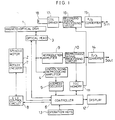
- Fig. 1 is a schematic block diagram showing a disk recording and reproducing device.
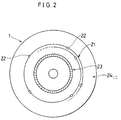
- Fig. 2 is a schematic plan view of a magneto-optical disk.
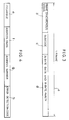
- Fig. 3 is an explanatory diagram showing a format of data.
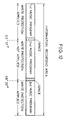
- Fig. 4 is an explanatory diagram showing a format of absolute addresses.
- Fig. 5 is an explanatory diagram showing recording conditions of an information recording area.
- Figs. 11 and 12 show another example which is useful for understanding the present invention.
- Fig. 11 is a schematic block diagram showing a disk recording and reproducing device.
- Fig. 12 is an explanatory diagram showing a condition of write protection applied to the first to third music programs.
- Figs. 13 and 14 show an embodiment of the present invention.
- Fig. 13 is a schematic block diagram showing a disk recording and reproducing device.
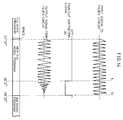
- Fig. 14 is an explanatory diagram showing relationship and the like between an input signal to a fader circuit and an output signal from the fader circuit.
- Figs. 15 to 18 show another embodiment of the present invention.
- Fig. 15 is a schematic block diagram showing a disk recording and reproducing device.
- Fig. 16 is an explanatory diagram showing a condition of read protection applied to the first to third music programs.
- Fig. 17 is an explanatory diagram showing conditions of write protection and read protection applied to the first to third music programs.
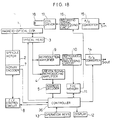
- Fig. 18 is a schematic block diagram showing a disk recording and reproducing device.
- Figs. 19 to 22 are omitted in this specification.
- Figs. 23 to 26 are diagrams showing the prior art.
- Fig. 23 is an explanatory diagram showing recording conditions of an information recording area.
- Fig. 24 is an explanatory diagram showing the position of an absolute address for recording start and the position of track-jumps, located on a track.
- Fig. 25 is an explanatory diagram showing the position of the absolute address for the recording start and the position of the track-jumps, according to the time-axis.
- Fig. 26 is an explanatory diagram showing the position from which the re-recording is started in Fig. 25.
- a magneto-optical disk is employed as a re-writable disk, and the device is designed to record and reproduce music information or the like by the use of data formats standardized in CD's, and to perform reproduction of the conventional CD's as well.
- a magneto-optical disk 1 there are predeterminately provided a track 21 in a spiral shape, and absolute addresses 22 in at least recording areas where recording and reproducing operations are performed.
- the recording areas include an information recording area 24 wherein information of music programs or the like are recorded by the user, and a TOC area 23 located at the innermost track of the disk 1, wherein additional information with respect to each music program recorded in the information recording area 24 is recorded.
- information a of one frame comprises a frame synchronizing signal b , a data field d including data of 24 bytes for a music program or the like and an additional parity of 8 bytes for error detection and correction, and a sub-code c for recording a program number, time information and the like for each data field d .
- Pieces of the above-mentioned information a are successively recorded in the information recording area 24 and the TOC area 23.
- the sub-code c since the sub-code c isn't particularly necessary, its contents can be predeterminately set.
- each of the absolute addresses 22 comprises a preamble e for reproduction synchronization, an address mark f for indicating the leading part of the respective absolute addresses 22, an address number g for showing each address successively incrementing one by one from the innermost track of the magneto-optical disk 1(to be concrete, the absolute time in one second) and an error detection code h for detecting errors in recognizing the address numbers g , and those absolute addresses are predeterminately formed in a pit-like shape so that they are reproduced once every one second in a given linear velocity.
- Fig. 1 shows one example of a disk recording and reproducing device which performs recording and reproducing operations on and from a magneto-optical disk 1.
- the magneto-optical disk 1 is rotatively driven by a spindle motor 2, and above the one side of the magneto-optical disk 1, is disposed an optical head 3 for applying a light beam onto the magneto-optical disk 1 so as to record or reproduce information thereon or therefrom.
- an uneven signal component reproduced from the absolute addresses 22 is amplified by an uneven signal reproducing amplifier 4.
- the amplified uneven signal component is sent to an address decoder 5 where the value of the absolute address 22 is recognized, and then is sent to a controller 6 which executes control operation on the whole mechanisms of the disk recording and reproducing device.
- a controller 6 which executes control operation on the whole mechanisms of the disk recording and reproducing device.
- the pulses from the rotary encoder 7 are entered to a CLV control circuit 8 and to a controller 6.
- the CLV control circuit 8 is designed to control rotation speed of the spindle motor 2 so that the linear velocity of the optical head 3 to the magneto-optical disk 1 can be kept constant according to the aforementioned pulses and to positional information of the optical head 3 released from the controller 6.
- a reproduction amplifier 9 connected to the optical head 3
- a magneto-optical signal component corresponding to each music program reproduced by the optical head 3 is amplified, and sent to a reproduced signal processing circuit 10.
- the reproduced signal processing circuit 10 processes the reproduced data of the music program or the like having a data format shown in Fig. 3 by selecting necessary data and sorting them, and performs error correction processing, if necessary.
- TOC memory 11 In the TOC memory 11, are successively stored pieces of information specified by the user (specified through a group of operation keys 13 which will be described later). To the controller 6, is connected a display 12 which displays the additional information and the like stored in the TOC memory 11. To the controller 6, is also connected the group of operation keys 13 whereby the user executes various instructions.
- A/D converter 14 By a D/A converter 14 connected to the reproduced signal processing circuit 10, digital data sequences from the reproduced signal processing circuit 10 are converted to analog signals, and are released to the external device as analog signals S out .
- analog signals S in for a music program entered from the external device are converted to digital signals by an A/D converter 15, and are sent to a recording signal processing circuit 16.
- the recording signal processing circuit 16 permits the music program from the A/D converter 15, or additional information or the like from the TOC memory 11 to be converted to signals having a data format respectively shown in Fig. 3, and produces recording signals.
- a coil driver 17 is designed to drive a magnetic coil 18 according to the recording signals from the recording signal processing circuit 16, and to permit the magnetic coil 18 to apply an external magnetic field to the magneto-optical disk 1 corresponding to the recording signals.
- the controller 6 controls an optical head transportation system (not shown in Figs.) to shift the optical head 3 to a position corresponding to the TOC area 23, and on the other hand gives positional information corresponding to the position to the CLV control circuit 8.
- the CLV control circuit 8 finds the number of rotation required to obtain a predetermined linear velocity, and also finds a pulse frequency reference value for the rotary encoder 7 corresponding to the number of the rotation.
- the CLV control circuit 8 then rotatively drives the magneto-optical disk 1 at the predetermined linear velocity by controlling the actual output pulse frequency of the rotary encoder 7 to have the same value with the pulse frequency reference value.
- absolute addresses 22 are released from the optical head 3 as reproduced signals, and after being amplified by the uneven signal reproducing amplifier 4 and being recognized their absolute addresses 22 by the address decoder 5, the absolute addresses 22 as those reproduced signals are entered to the controller 6.
- the positional information does not necessarily conform to the actual position because of dispersions of machine accuracy and the like, and therefore it is difficult to obtain an accurate predetermined linear velocity.
- Analog signals S in for a music program entered from the external device are converted into digital signals by the A/D converter 15, and by their format being converted to the aforementioned predetermined format through the recording signal processing circuit 16, recording signals are produced.
- the magnetic coil 18 is driven by the coil driver 17, and a magnetic field in response to the recording data is applied onto the magneto-optical disk 1.
- Magnetic coercive force lowers in a local part where a temperature rise has occurred by the application of the light beam.
- the direction of magnetization is reversed by the magnetic field applied by the magnetic coil 18, thereby permitting the information to be recorded.
- this method is generally referred to as magnetic field modulation method whereby rewriting on an area where recordings have already been made is possible by overwriting thereon.
- additional information including at least a program number of each music program recorded in the information recording area 24 and a recording start position and a recording end position of each music program according to the absolute addresses 22, is recorded by the optical head 3 and the magnetic coil 18 in the same manner as was aforementioned in recording in the information recording area 24. Furthermore, at the recording end position of the additional information located in the last part of the TOC area 23 is recorded a predetermined end mark.
- the magneto-optical disk 1 when the magneto-optical disk 1 is placed in the disk recording and reproducing device, as aforementioned, the contents of the TOC area 23 are read by the optical head 3 and stored in the TOC memory 11.
- the end mark "EE" recorded in the position where the program number of the third music program is supposed to be recorded by overwriting thereon, is recorded the program number "03" of the third music program, and further the recording start position as well as the recording end position of the newly recorded third music program M3 is recorded. Then, in order to show that the additional information with respect to the third music program M3 is the last additional information recorded within the TOC area 23, the end mark "EE" is recorded in the position where the program number of the fourth music program is supposed to be recorded.
- the arrangement allows time required to record the additional information to be shortened. Further, in the arrangement, since the end mark "EE" is recorded in the furthest rear end of additional information, reproduction of the TOC area 23 can be completed upon reproducing the end mark "EE", and therefore reproducing time for TOC area 23 can be shortened by eliminating such inefficiency as to reproduce all the TOC area 23.
- the same magneto-optical disk 1 is used as a re-writable disk, and the device is designed to record and reproduce information by the use of data formats standardized in conventional CD's.
- the disk recording and reproducing device of the present example has the same arrangement as that shown in
- a controller 27 is used therein instead of the controller 6 in Fig. 1.
- the controller 27 not only controls the whole mechanisms of the disk recording and reproducing device, but also functions as control means, which will be described later. Moreover, a display 12 is connected to the controller 27, and the display 12 displays thereon a program number, time information and write protection information with respect to each of the music programs, according to the contents of a TOC memory 11 (memory means).
- a TOC memory 11 memory means
- the controller 27 also functions as control means for controlling to restrain the device from writing in a write protection range when an instruction is given by the user so as to write in the write protection range in his information recording instruction.
- control means to restrain recording operation such a method is suggested, wherein while driving of an optical head 3 (application of light beam required for recording) is stopped, the control operation, which has proceeded to a routine for recording information information, is returned to a routine for waiting for key input in the controller 27.
- the recorded contents of the TOC area 23 include, for example, the program number, the recording start position and recording end position and the like recorded therein according to the absolute addresses 22, with respect to each of the music programs or the like recorded in the information recording area 24 (see Fig. 2).
- the controller 27 When the magneto-optical disk 1 is placed on a spindle motor 2, the controller 27 on the one hand shifts the optical head 3 to the TOC area 23, and on the other hand rotates the magneto-optical disk 1 at a predetermined linear velocity to reproduce the contents of the TOC area 23.
- the TOC area 23 When there are some pieces of information recorded in the TOC area 23, it permits the TOC memory to store those pieces of information therein.
- the recording start position and recording end position of each corresponding program number correspond to the time information given by the absolute addresses 22, and are read from the TOC area 23 and stored in the TOC memory 11.
- the controller 27 permits the display 12 to display thereon the above contents of the TOC memory 11.
- the user can recognize the contents of the music programs or the like recorded in the disk 1 by the above-mentioned contents displayed, and if he wants to listen to, for example, the second music program, he gives an instruction to do so through operation keys 13.
- the controller 27 makes the optical head 3 access to an absolute address position showing (03'57") in Table 8, thereby permitting the selection of the music program.
- the controller 27 stores the write protection information in the TOC memory 11.
- the write protection may be also given to a space between music programs, disposed after the end of the music program to which write protection is given.
- the contents of the TOC memory 11 are recorded in the TOC area 23 as additional information, for example, when the magneto-optical disk 1 is removed from the spindle motor 2, or when the user specifies the necessity of the recording through the operation keys 13. Accordingly, even if the magneto-optical disk 1 is removed from the disk recording and reproducing device, the write protection information is maintained in the magneto-optical disk 1.
- the write protection information is read from the TOC area 23 and stored in the TOC memory 11, and recording control is performed according to the contents. Further, the write protection information once entered is effective unless it is updated, and therefore the write protection is executed with respect to the first and third music programs every time recording is made on the magneto-optical disk 1.
- the optical head 3 and a magnetic coil 18 function as recording means for recording in the TOC area 23 the contents stored in the TOC memory 11 as additional information.
- a fader circuit 28 before an A/D converter 15 in addition to the arrangement shown in Fig. 11.
- a controller 27 is connected to the fader circuit 28.
- Music programs (music information) as analog signals are entered to the fader circuit 28, where fade-out processing is applied to the music programs according to the instruction of the controller 27, and the processed music programs are entered to the A/D converter 15.
- the controller 27 also give instructions to the fader circuit 28 about the timing when to apply the fade-out processing according to the information of the TOC memory 11 (information read from the TOC area 23, as shown in Fig. 2).
- the time corresponding to the non-write-protection area (writable areas) is from (03'57") to (08'20"), that is to say, there is a writable range of 4 min. 23 sec.
- a music program requiring more than 4 min. 23 sec. is recorded in the writable range, since the recording of the music program is finished halfway, a fade-out operation is applied thereto according to predetermined timing. For example, as shown in Fig.
- the fade-out operation is applied to the music program at the time (08'13")t 1 ) which is seven seconds before the write protection start time (08'20") by a method such as monitoring the elapsed time of the music program during its recording operation.
- the fade-out operation is preset so as to become soundless at the time three seconds before the end within the seven seconds, and during the three seconds, a soundless condition is maintained, thereby forming a three second space between the newly recorded second music program and the third music program.
- the fade-out processing is applied to music programs entered as analog signals; however, when music programs are entered as digital signals, the fade-out processing can be applied to the digital signals as they are.
- the disk recording and reproducing device comprises the operation keys which are operable by the user, the memory means for storing therein write protection information to each of desired pieces of information entered through the operation keys, the recording means for recording in the TOC area the contents stored in the memory means as additional information, the control means for restraining writing operation in a write protection range and a fader circuit for applying the fade-out processing to the information before the end of a non-write-protection range when information is recorded in the non-write-protection range and, at least, the capacity of the information to be recorded is greater than that of the non-write-protection range.
- the recorded information is a music program and it is reproduced, the sound becomes gradually fading out before the end of the music program, and therefore, since the music program is completed without giving the impression of having a missing part at the end, it is avoidable to give unpleasant feeling to the listener.
- Figs. 2, 15 and 16 the same magneto-optical disk 1 as before is used as a re-writable disk, as shown in Fig. 2, and the device is designed to record and reproduce information by the use of data formats standardized in conventional CD's. Further, those of members having the same functions as before are indicated by the same reference numerals and the description thereof is omitted.
- a disk recording and reproducing device of the present embodiment basically has the same arrangement as that shown in Fig. 1 except that a controller 29 is used therein instead of the controller 6 in Fig. 1.
- the controller 29 not only controls the whole mechanisms of the disk recording and reproducing device, but also functions as control means, which will be described later.
- a TOC memory (memory means) 11 stores those of the signals corresponding to the contents of the TOC area 23, as shown in Fig. 2, among signals processed by a reproduced signal processing circuit 10, and on the other hand, has an arrangement such that it can store information specified by the user through operation keys 13, for example, the recording start position, pass word and the like of each music program.
- a display 12 is connected to the controller 29, and the display 12 displays the music program number, time information and also the read protection information and the like of each music program, according to the contents of the TOC memory 11. Further, to the controller 29 there is connected the group of operation keys 13, whereby the user can give various instructions such as those for the aforementioned pass word.
- the controller 29 also functions as control means for restraining the reproduction of recorded music programs which have corresponding read protection information, when an input pass word entered through the operation keys 13 is compared with a recorded pass word which is read from the TOC area 23 of the magneto-optical disk 1 shown in Fig. 2 and stored in the TOC memory 11 and if those pass words do not agree with each other.
- the recorded contents of the TOC area 23 include, for example, the program number, the recording start position and recording end position and the like recorded therein according to the absolute addresses 22, with respect to each of the music programs recorded in the information recording region 24 (see Fig. 2), and also include the aforementioned pass word.
- the recording start position and recording end position of each corresponding program number correspond to the time information given by the absolute addresses 22, and are read from the TOC area 23 and stored in the TOC memory 11.
- the controller 29 displays the above contents of the TOC memory 11 on the display 12.
- the controller 29 permits the TOC memory 11 to store the read protection information therein. Further, the user enters a pass word to release the read protection information through the operation keys 13 (for example, when the operation keys are ten keys for selecting music programs, numbers such as "0123" are entered as the pass word). Upon receiving the instruction, the controller 29 permits the TOC memory 11 to store the pass word information therein.
- the read protection information is maintained in the magneto-optical disk 1 even if the magneto-optical disk 1 is removed from the disk recording and reproducing device.
- the read protection information is read from the TOC area 23 and stored in the TOC memory 11, and therefore the read protection information once entered is effective unless it is updated. Accordingly, the read protection is executed with respect to the first and third music programs every time recording is made on the magneto-optical disk 1.
- the controller 29 upon receiving an instruction by the user to reproduce a music program having read protection, the controller 29 on the one hand displays a message on the display 12 to show that the music program has read protection, and on the other hand requests the user to enter the pass word.
- the input pass word is compared with the pass word already recorded. As a result of the comparison, if those pass words do not agree with each other, the controller 29 restrains the reproduction of the music program. On the other hand, if both of the pass words agree with each other, the controller 29 permits the normal reproduction.
- a disk recording and reproducing device of this embodiment has the same arrangement as that shown in Fig. 15 except that a controller 35 is installed therein instead of the controller 29 as the aforementioned control means in Fig. 15.
- the controller 35 after comparing an input pass word entered through operation keys 13 and a pass word already recorded and upon receiving no agreement between those pass words, on the one hand inhibits the reproduction of a recorded music program having the corresponding read protection information, and on the other hand controls the device to automatically apply write protection to the recorded music program having the corresponding read protection, as shown in Fig. 17.
- a controller 36 is installed instead of the controller 35 (Fig. 15) as the aforementioned control means.
- the controller 36 after comparing an input pass word entered through operation keys 13 and the aforementioned pass word already recorded and upon receiving no agreement between those pass words, controls the device to lower the quality of reproduced signals in reproducing recorded information having the corresponding read protection information.
- the controller 36 is connected to a D/A converter 14, and in reproducing information having the corresponding read protection, the controller 36 controls the D/A converter 14 to fix the low order bit of the quantizing data.
- the arrangement causes the resolution of the quantizing data to lower in the D/A converter 14, resulting in the lowering of the reproduced signal quality due to the lowering of the resolution.
- variable filter which is controlled by the controller 36. More specifically, in reproducing information having the corresponding read protection, the controller 36 controls the variable filter to narrow a frequency band for reproducing the music program so as to lower the quality of the reproduced signals.
- the quality of the reproduced signals may be lowered by giving an intermittent reproducing operation by the use of the timer installed in the controller 36 so as not to perform a successive reproducing operation, or by giving noise to the reproduced signals.
- the disk recording and reproducing device comprises the operation keys which are operable by the user, the memory means for storing therein read protection information to desired pieces of recorded information and a pass word to release the read protection information, entered through the operation keys, recording means for recording in the TOC area the contents stored in the memory means as additional information, and the control means for restraining the reproduction of the recorded information having the corresponding read protection information, after comparing the input pass word entered through the operation keys and the pass word already recorded, when no agreement between those pass words is obtained.
- the application of another control means is proposed, which after comparing the input pass word entered through the operation keys and the pass word already recorded, when no agreement between those pass words is obtained, controls the device on the one hand to restrain the reproduction of recorded information having the corresponding read protection information, and on the other hand to apply write protection to the range of the recorded information having the corresponding read protection information. Then, the demand for the maintenance of secrecy to desired pieces of recorded information can be met, and it is preventable to erase recorded information having the corresponding read protection, or to rewrite on a range containing recorded information and having read protection applied thereto. Thus, erasing important information is avoidable.
- the application of another control means is proposed, which after comparing the input pass word entered through the operation keys and the pass word already recorded, when no agreement between those pass words is obtained, controls the device to lower the quality of reproduced signals in reproducing recorded information having the corresponding read protection information.
- the absolute addresses 22 are formed on the magneto-optical disk 1 in the shape of pits, instead of the arrangement, the absolute addresses 22 can be recorded by modulating frequencies of the absolute addresses 22, and by wobbling the track in response to the values obtained from the modulated frequencies.
- magneto-optical disk as an example of a re-writable disk; however, re-writable disks of other types such as optical disks of phase transition type may be used.
- music programs are taken up as an example of information to be recorded; however, information of other types, for example, such as data for computers or the like may be recorded on the re-writable disk.
Landscapes
- Engineering & Computer Science (AREA)
- Signal Processing (AREA)
- Computer Security & Cryptography (AREA)
- Multimedia (AREA)
- Signal Processing For Digital Recording And Reproducing (AREA)
- Management Or Editing Of Information On Record Carriers (AREA)
- Optical Recording Or Reproduction (AREA)
Claims (14)
- Aufzeichnungs- und Wiedergabevorrichtung, die Information auf und von einer umschreibbaren Aufzeichnungsplatte (1) mit Absolutadressen (22) aufzeichnet und wiedergibt, die einen Informationsaufzeichnungsbereich (24), in dem Programme von Information aufgezeichnet sind, und einen TOC-Bereich (23) enthält, in dem Zusatzinformation hinsichtlich jedes im Informationsaufzeichnungsbereich aufgezeichneten Programms von Information aufgezeichnet ist, mit:- Bedientasten (13), die vom Benutzer bedienbar sind;- einer Speichereinrichtung (11) zum Einspeichern von Lese/ Schreib-Steuerinformation, wie über die Bedientasten für gewünschte Programme von Information eingegeben;- einer Aufzeichnungseinrichtung (3, 16 - 18) zum Aufzeichnen der Lese/Schreib-Steuerinformation in der Speichereinrichtung als Zusatzinformation im TOC-Bereich;- einer Steuereinrichtung (27) zum Steuern eines Lese/ Schreib-Vorgangs für die umschreibbare Platte abhängig von der Lese/Schreib-Steuerinformation;- wobei die Lese/Schreib-Steuerinformation Schreibschutzinformation umfaßt, wie sie über die Bedientasten hinsichtlich gewünschter Programme der aufgezeichneten Information eingegeben wurde, und die Steuereinrichtung so ausgebildet ist, daß sie einen Schreibvorgang in einem Schreibschutzabschnitt verhindert, wobei der Schreibschutzabschnitt ein Abschnitt des Informationsaufzeichnungsbereichs ist, wie durch die Schreibschutzinformation definiert, wodurch ein Schreibvorgang verhindert wird; und- einer Schwundschaltung (28) zum Anwenden einer Herunterfahrverarbeitung für ein Programm von Information während eines Aufzeichnungsvorgangs kurz vor dem Ende eines nicht schreibgeschützten Abschnitts, wenn das Programm von Information in den nicht schreibgeschützten Abschnitt eingeschrieben wird und die Kapazität des Programms von Information größer als diejenige des nicht schreibgeschützten Abschnitts ist, wobei der nicht schreibgeschützte Abschnitt ein anderer Abschnitt des Informationsaufzeichnungsbereichs als der schreibgeschützte Abschnitt ist;- wobei der Zeitpunkt der Herunterfahrverarbeitung unter Bezugnahme auf die im TOC-Bereich aufgezeichnete Schreibschutzinformation gesteuert wird.
- Aufzeichnungs- und -wiedergabegerät nach Anspruch 1, bei dem die Schreibschutzinformation dazu dient, den Schreibvorgang in einem Abschnitt des Informationsaufzeichnungsbereichs zu verhindern, indem nur relevante, aufgezeichnete Information liegt.
- Aufzeichnungs- und -wiedergabegerät nach Anspruch 1, bei dem die Schreibschutzinformation dazu dient, einen Schreibvorgang in einem Abschnitt zu verhindern, in dem relevante, aufgezeichnete Information liegt, und auch in einem Abschnitt zwischen der relevanten Information und der folgenden Information.
- Aufzeichnungs- und -wiedergabegerät nach einem der Ansprüche 1 bis 3, bei dem die Zusatzinformation hinsichtlich jedes Programms von Information eine Programmnummer, eine Aufzeichnungsstartposition, eine Aufzeichnungsposition oder die Länge ab der Aufzeichnungsstartposition bis zur Aufzeichnungsendposition sowie die Schreibschutzinformation, falls solche vorhanden ist, enthält.
- Aufzeichnungs- und Wiedergabevorrichtung, die Information auf und von einer umschreibbaren Aufzeichnungsplatte (1) mit Absolutadressen (22) aufzeichnet und wiedergibt, die einen Informationsaufzeichnungsbereich (24), in dem Programme von Information aufgezeichnet sind, und einen TOC-Bereich (23) enthält, in dem Zusatzinformation hinsichtlich jedes im Informationsaufzeichnungsbereich aufgezeichneten Programms von Information aufgezeichnet ist, mit:- Bedientasten (13), die vom Benutzer bedienbar sind;- einer Speichereinrichtung (11) zum Einspeichern von Lese/ Schreib-Steuerinformation, wie über die Bedientasten für gewünschte Programme von Information eingegeben;- einer Aufzeichnungseinrichtung (3, 16 - 18) zum Aufzeichnen der Lese/Schreib-Steuerinformation in der Speichereinrichtung als Zusatzinformation im TOC-Bereich;- einer Steuereinrichtung (29; 35; 36) zum Steuern eines Lese/Schreib-Vorgangs für die umschreibbare Platte abhängig von der Lese/Schreib-Steuerinformation;- wobei die Lese/Schreib-Steuerinformation Leseschutzinformation hinsichtlich relevanter, aufgezeichneter Information und ein Paßwort zum Aufheben der Wirkung der Leseschutzinformation enthält, wobei die Leseschutzinformation und das Paßwort über die Bedientasten eingegeben werden.
- Aufzeichnungs- und -wiedergabevorrichtung nach Anspruch 5, bei der die Leseschutzinformation dazu dient, den Lesevorgang für relevante, aufgezeichnete Information aus dem Informationsaufzeichnungsbereich zu verhindern.
- Aufzeichnungs- und -wiedergabevorrichtung nach Anspruch 5, bei der die Steuereinrichtung (29) so ausgebildet ist, daß sie das Gerät so steuert, daß ein Lesevorgang relevanter, aufgezeichneter Information verhindert wird, wenn ein über die Bedientasten eingegebenes Paßwort mit einem bereits aufgezeichneten Paßwort verglichen wird und diese Paßwörter nicht übereinstimmen.
- Aufzeichnungs- und -wiedergabegerät nach Anspruch 5, bei dem die Steuereinrichtung (35) so ausgebildet ist, daß sie das Gerät einerseits so steuert, daß ein Lesevorgang hinsichtlich relevanter, aufgezeichneter Information verhindert ist und andererseits automatisch Schreibschutz für denjenigen Abschnitt des Informationsaufzeichnungsbereichs verwendet wird, in dem die relevante, aufgezeichnete Information liegt, wenn ein über die Bedientasten eingegebenes Paßwort mit einem bereits aufgezeichneten Paßwort verglichen wird und diese Paßwörter nicht übereinstimmen.
- Aufzeichnungs- und -wiedergabegerät nach Anspruch 5, bei dem die Steuereinrichtung (36) so ausgebildet ist, daß sie das Gerät so ansteuert, daß es die Qualität des Wiedergabesignals bei einem Lesevorgang der relevanten, aufgezeichneten Information herabsetzt, wenn ein über die Bedientasten eingegebenes Paßwort mit einem bereits aufgezeichneten Paßwort verglichen wird und diese Paßwörter nicht übereinstimmen.
- Aufzeichnungs- und -wiedergabegerät nach Anspruch 9, bei dem die Qualität des Wiedergabesignals dadurch abgesenkt wird, daß das Quantisierungsniveau eines D/A-Umsetzers (14), der das Wiedergabesignal ausgibt, heruntergesetzt wird.
- Aufzeichnungs- und -wiedergabegerät nach Anspruch 9, bei dem die Qualität des Wiedergabesignals dadurch abgesenkt wird, daß die Steuereinrichtung (36) die Frequenzcharakteristik eines variablen Filters so steuert, daß sie das Frequenzband des Wiedergabesignals einengt.
- Aufzeichnungs- und -wiedergabegerät nach Anspruch 9, bei dem die Qualität des Wiedergabesignals dadurch abgesenkt wird, daß die Steuereinrichtung (36) das Wiedergabesignal intermittierend ausbildet.
- Aufzeichnungs- und -wiedergabegerät nach Anspruch 9, bei dem die Qualität des Wiedergabesignals dadurch abgesenkt wird, daß zu ihm Störsignale hinzugefügt werden.
- Aufzeichnungs- und -wiedergabegerät nach einem der Ansprüche 5 bis 13, bei dem die Zusatzinformation hinsichtlich jedes Programms von Information eine Programmnummer, eine Aufzeichnungsstartposition, eine Aufzeichnungsposition oder die Länge ab der Aufzeichnungsstartposition bis zur Aufzeichnungsendposition sowie die Leseschutzinformation, falls solche vorhanden ist, enthält.
Applications Claiming Priority (12)
| Application Number | Priority Date | Filing Date | Title |
|---|---|---|---|
| JP1170649A JPH06105536B2 (ja) | 1989-06-30 | 1989-06-30 | ディスク記録再生装置 |
| JP1170653A JPH0335480A (ja) | 1989-06-30 | 1989-06-30 | ディスク記録再生装置 |
| JP170653/89 | 1989-06-30 | ||
| JP17065189A JPH0664841B2 (ja) | 1989-06-30 | 1989-06-30 | ディスク記録再生装置 |
| JP170649/89 | 1989-06-30 | ||
| JP1170650A JPH0335471A (ja) | 1989-06-30 | 1989-06-30 | ディスク記録再生装置 |
| JP170651/89 | 1989-06-30 | ||
| JP170650/89 | 1989-06-30 | ||
| JP170652/89 | 1989-06-30 | ||
| JP1170652A JPH0335479A (ja) | 1989-06-30 | 1989-06-30 | ディスク記録再生装置 |
| JP1203230A JPH0366086A (ja) | 1989-08-04 | 1989-08-04 | ディスク記録再生装置 |
| JP203230/89 | 1989-08-04 |
Publications (3)
| Publication Number | Publication Date |
|---|---|
| EP0406021A2 EP0406021A2 (de) | 1991-01-02 |
| EP0406021A3 EP0406021A3 (en) | 1993-09-29 |
| EP0406021B1 true EP0406021B1 (de) | 1996-10-16 |
Family
ID=27553374
Family Applications (1)
| Application Number | Title | Priority Date | Filing Date |
|---|---|---|---|
| EP90307184A Expired - Lifetime EP0406021B1 (de) | 1989-06-30 | 1990-06-29 | Platten-Aufzeichnungs-/-Wiedergabegerät |
Country Status (5)
| Country | Link |
|---|---|
| US (1) | US5420838A (de) |
| EP (1) | EP0406021B1 (de) |
| KR (1) | KR940001016B1 (de) |
| CA (1) | CA2020059C (de) |
| DE (1) | DE69028880T2 (de) |
Families Citing this family (69)
| Publication number | Priority date | Publication date | Assignee | Title |
|---|---|---|---|---|
| NL8902613A (nl) * | 1989-10-23 | 1991-05-16 | Philips Nv | Inrichting voor het uitlezen van op een informatiedrager opgetekende digitale informatie alsmede een piekdetector en een informatiedrager voor een dergelijke inrichting. |
| US5878019A (en) * | 1991-04-02 | 1999-03-02 | U.S. Philips Corporation | Record carrier having at least two information volumes |
| JP3480943B2 (ja) * | 1991-07-05 | 2003-12-22 | ソニー株式会社 | 情報再生装置 |
| JP3220960B2 (ja) * | 1992-04-24 | 2001-10-22 | ソニー株式会社 | 情報記録装置 |
| JP3435703B2 (ja) * | 1992-05-20 | 2003-08-11 | ソニー株式会社 | 再生装置、再生方法 |
| JP3355649B2 (ja) * | 1992-05-20 | 2002-12-09 | ソニー株式会社 | 記録又は再生装置 |
| TW258810B (de) * | 1992-05-25 | 1995-10-01 | Sony Co Ltd | |
| JPH06139704A (ja) * | 1992-10-29 | 1994-05-20 | Kenwood Corp | ディスク記録再生装置 |
| US5508984A (en) * | 1992-10-30 | 1996-04-16 | Kabushiki Kaisha Kenwood | Optical disc player having program title display |
| EP0833338B1 (de) * | 1993-01-06 | 2006-04-05 | Sony Corporation | Aufzeichnungsmethode für Aufzeichnungsmedium |
| JP3463352B2 (ja) * | 1993-07-23 | 2003-11-05 | ソニー株式会社 | 再生装置 |
| JP3517907B2 (ja) | 1993-10-08 | 2004-04-12 | ソニー株式会社 | ディスク記録装置 |
| JP3579910B2 (ja) * | 1993-10-27 | 2004-10-20 | ソニー株式会社 | 記録再生装置 |
| EP0674316B1 (de) | 1994-03-19 | 2006-05-31 | Sony Corporation | Optische Platte und Verfahren und Gerät zur Aufzeichnung und Wiedergabe von dieser Platte |
| EP0673034B1 (de) * | 1994-03-19 | 2003-07-16 | Sony Corporation | Optische Platte und Methode und Gerät zur Aufzeichnung auf und danach Wiedergabe von Informationen von dieser Platte |
| USRE38802E1 (en) | 1994-03-19 | 2005-09-27 | Sony Corporation | Method for reproducing compressed information data from a disk using a spatial frequency less than the track pitch |
| JP3467832B2 (ja) * | 1994-04-20 | 2003-11-17 | ソニー株式会社 | 記録方法及び記録装置 |
| JPH07326175A (ja) * | 1994-05-30 | 1995-12-12 | Sony Corp | 記録又は再生装置 |
| KR0127195Y1 (ko) * | 1994-07-07 | 1998-10-15 | 김광호 | 디스크의 사용불가 영역 복원 제어방법 |
| JP3503231B2 (ja) * | 1994-11-30 | 2004-03-02 | ソニー株式会社 | 記録装置 |
| DE69618684T2 (de) * | 1995-02-16 | 2002-10-10 | Kabushiki Kaisha Toshiba, Kawasaki | Ausgabesteuerungssystem für umschaltbare Torkanäle |
| CN1086498C (zh) * | 1995-02-22 | 2002-06-19 | 株式会社东芝 | 信息记录方法,信息重放方法以及信息重放装置 |
| US5813010A (en) * | 1995-04-14 | 1998-09-22 | Kabushiki Kaisha Toshiba | Information storage and information transmission media with parental control |
| US6009433A (en) * | 1995-04-14 | 1999-12-28 | Kabushiki Kaisha Toshiba | Information storage and information transmission media with parental control |
| JPH09161375A (ja) * | 1995-12-07 | 1997-06-20 | Sony Corp | ディスク再生装置 |
| EP0755055B1 (de) * | 1995-07-14 | 2002-01-16 | Sony Corporation | Übertragung, Aufzeichnung und Wiedergabe von Daten |
| JPH1064244A (ja) * | 1996-08-23 | 1998-03-06 | Sony Corp | 記録媒体、再生装置 |
| JP4580472B2 (ja) * | 1997-02-04 | 2010-11-10 | ソニー株式会社 | 情報信号記録再生装置および記録再生方法 |
| JPH10302266A (ja) * | 1997-04-24 | 1998-11-13 | Sanyo Electric Co Ltd | 光ディスク |
| SG82587A1 (en) | 1997-10-21 | 2001-08-21 | Sony Corp | Recording apparatus, recording method, playback apparatus, playback method, recording/playback apparatus, recording/playback method, presentation medium and recording medium |
| DE69841745D1 (de) * | 1997-10-21 | 2010-08-12 | Sony Corp | Aufzeichnungsgerät, Aufzeichnungsverfahren, Aufzeichnungsmedium |
| JPH11213633A (ja) | 1998-01-21 | 1999-08-06 | Pioneer Electron Corp | 情報記録装置 |
| JP3796944B2 (ja) * | 1998-02-25 | 2006-07-12 | ソニー株式会社 | 再生方法、記録媒体およびコンピュータ |
| JPH11306647A (ja) | 1998-04-24 | 1999-11-05 | Sony Corp | 記録再生装置および方法、提供媒体、並びに記録媒体 |
| EP1306841A3 (de) | 1998-06-15 | 2007-05-23 | Samsung Electronics Co., Ltd. | Aufzeichnungsmedium zur Speicherung von Schreibschutzinformationen und Schreibschutzverfahren dazu |
| US6765853B1 (en) | 1998-06-15 | 2004-07-20 | Samsung Electronics Co., Ltd. | Recording medium for storing write protection information and write protection method thereof |
| KR100601598B1 (ko) | 1998-06-15 | 2006-07-14 | 삼성전자주식회사 | 기록 방지 정보를 저장하는 기록 매체와 기록 방지 방법 |
| JP3356691B2 (ja) | 1998-07-07 | 2002-12-16 | 株式会社東芝 | 情報記録媒体とその記録方法及び再生方法 |
| TW452771B (en) * | 1998-09-18 | 2001-09-01 | Sony Corp | Reproduction apparatus and reproduction method |
| TW462038B (en) * | 1998-09-18 | 2001-11-01 | Sony Corp | Reproduction method and reproduction apparatus |
| KR100677064B1 (ko) * | 1999-04-21 | 2007-02-01 | 삼성전자주식회사 | 끊어짐없이 데이터를 저장하는 광 기록 매체와 그 결함 영역 처리 방법 |
| EP1054405A1 (de) * | 1999-05-18 | 2000-11-22 | Deutsche Thomson-Brandt Gmbh | Datenmarkierungsverfahren |
| EP1054404B1 (de) * | 1999-05-18 | 2006-03-01 | Deutsche Thomson-Brandt Gmbh | Verfahren zur Markierung von Daten |
| JP3916029B2 (ja) * | 1999-07-30 | 2007-05-16 | パイオニア株式会社 | 情報記録装置 |
| US7028082B1 (en) | 2001-03-08 | 2006-04-11 | Music Choice | Personalized audio system and method |
| US7325043B1 (en) | 2000-03-08 | 2008-01-29 | Music Choice | System and method for providing a personalized media service |
| US8463780B1 (en) | 2000-03-08 | 2013-06-11 | Music Choice | System and method for providing a personalized media service |
| US7320025B1 (en) | 2002-03-18 | 2008-01-15 | Music Choice | Systems and methods for providing a broadcast entertainment service and an on-demand entertainment service |
| US7783722B1 (en) | 2000-03-08 | 2010-08-24 | Music Choice | Personalized audio system and method |
| US7856485B2 (en) | 2000-03-08 | 2010-12-21 | Music Choice | Systems and methods for providing customized media channels |
| JP4304888B2 (ja) * | 2000-09-04 | 2009-07-29 | ソニー株式会社 | 記録媒体、編集装置及び編集方法 |
| US20020042754A1 (en) * | 2000-10-10 | 2002-04-11 | Del Beccaro David J. | System and method for receiving broadcast audio/video works and for enabling a consumer to purchase the received audio/video works |
| US6985426B2 (en) * | 2001-02-23 | 2006-01-10 | Matsushita Electric Industrial Co., Ltd. | Method and apparatus for recording optical information including dummy data, and optical disk having such data recorded thereon |
| JP2002314929A (ja) * | 2001-04-10 | 2002-10-25 | Victor Co Of Japan Ltd | 映像信号の記録方法、映像信号の再生方法、映像信号記録装置、映像信号再生装置、及び映像信号の記録媒体 |
| JP4649781B2 (ja) * | 2001-06-20 | 2011-03-16 | ソニー株式会社 | 画像処理方法および装置 |
| WO2003007294A1 (en) * | 2001-07-09 | 2003-01-23 | Koninklijke Philips Electronics N.V. | Write control method |
| JP4234921B2 (ja) * | 2001-09-12 | 2009-03-04 | 株式会社リコー | 情報記録装置 |
| US7151732B2 (en) * | 2001-10-30 | 2006-12-19 | Ricoh Company, Ltd. | Optical disk unit capable of reading out data normally and continuously after suspension of data writing |
| KR100878524B1 (ko) * | 2002-05-21 | 2009-01-13 | 삼성전자주식회사 | 등화기의 필터 탭계수 갱신 장치 및 갱신 방법 |
| JP3735594B2 (ja) * | 2002-06-28 | 2006-01-18 | 株式会社東芝 | 光ディスク装置と光ディスク装置の待機方法 |
| US7096187B1 (en) * | 2002-07-23 | 2006-08-22 | Harris Scott C | Compressed audio information |
| AU2003276519A1 (en) * | 2002-11-27 | 2004-06-18 | Koninklijke Philips Electronics N.V. | Power failure recovery method |
| KR100667765B1 (ko) * | 2004-10-22 | 2007-01-11 | 삼성전자주식회사 | 정보 저장 매체, 기록/재생 장치 및 기록/재생 방법 |
| US7668538B2 (en) * | 2005-06-15 | 2010-02-23 | Music Choice | Systems and methods for facilitating the acquisition of content |
| EP2018878A1 (de) | 2007-07-25 | 2009-01-28 | Sorin Dr. Lenz | Keramikimplantate- Zirkonimplantate- mit einer Titan- oder Titanoxidbeschichtung des intraossären Teiles |
| US20100217410A1 (en) * | 2009-02-22 | 2010-08-26 | Yang Pan | User interface for home media system |
| EP2439183B1 (de) | 2010-10-06 | 2013-12-25 | CeramOss GmbH | Monolithischer Keramikkörper mit Mischoxid-Randbereich und metallischer Oberfläche, Verfahren zu dessen Herstellung und dessen Verwendung |
| US9197937B1 (en) | 2012-04-26 | 2015-11-24 | Music Choice | Automatic on-demand navigation based on meta-data broadcast with media content |
| US10219027B1 (en) | 2014-10-24 | 2019-02-26 | Music Choice | System for providing music content to a user |
Citations (2)
| Publication number | Priority date | Publication date | Assignee | Title |
|---|---|---|---|---|
| EP0283304A2 (de) * | 1987-03-20 | 1988-09-21 | Matsushita Electric Industrial Co., Ltd. | Vorrichtung zur Wiedergabe von optischen Platten |
| EP0378449A2 (de) * | 1989-01-13 | 1990-07-18 | Sharp Kabushiki Kaisha | Informationsaufzeichnungs- und Informationswiederherstellungssystem |
Family Cites Families (26)
| Publication number | Priority date | Publication date | Assignee | Title |
|---|---|---|---|---|
| US4301482A (en) * | 1978-08-11 | 1981-11-17 | Trevithick Richard W | Programmable multi-channel audio playback system for reel-to-reel tapes |
| JPS615624Y2 (de) * | 1980-09-30 | 1986-02-20 | ||
| US4554651A (en) * | 1981-06-04 | 1985-11-19 | Pioneer Electronic Corporation | Magneto-optical recording medium and method for preventing the erasing of the information recorded on the magneto-optical recording medium |
| JPS60109034A (ja) * | 1983-11-18 | 1985-06-14 | Canon Inc | 光デイスクの記録再生方法 |
| NL8402095A (nl) * | 1984-07-02 | 1986-02-03 | Philips Nv | Inrichting voor het weergeven van informatie van een registratiedrager. |
| JPH0756734B2 (ja) * | 1985-05-27 | 1995-06-14 | 松下電器産業株式会社 | 情報記録再生装置 |
| JPS62102482A (ja) * | 1985-10-28 | 1987-05-12 | Matsushita Electric Ind Co Ltd | 情報記録再生装置 |
| US4841506A (en) * | 1986-01-01 | 1989-06-20 | Pioneer Electronic Corporation | Random playing method for disk player |
| US4872151A (en) * | 1986-02-19 | 1989-10-03 | Bennie C. Fulkerson | Compact disc player capable of playing plural selections recorded on a compact disc in a preselected sequence |
| JP2590071B2 (ja) * | 1986-08-29 | 1997-03-12 | 株式会社東芝 | 情報処理装置 |
| JP2578780B2 (ja) * | 1986-10-16 | 1997-02-05 | ソニー株式会社 | 光ディスク記録装置 |
| EP0272029B1 (de) * | 1986-12-19 | 1993-09-15 | Matsushita Electric Industrial Co., Ltd. | Löschbare optische Platte und Gerät zur Aufnahme und Wiedergabe optischer Informationen mit Einrichtung zur Handhabung defekter Sektoren |
| JPH0731901B2 (ja) * | 1987-03-11 | 1995-04-10 | ソニー株式会社 | デイスク記録再生装置 |
| JP2805700B2 (ja) * | 1987-03-13 | 1998-09-30 | ソニー株式会社 | デイスク記録再生装置 |
| NO172518C (no) * | 1987-03-20 | 1993-07-28 | Massachusetts Inst Technology | Fremgangsmaate for utledning av banedata som beskriver satellitter |
| JP2663436B2 (ja) * | 1987-05-25 | 1997-10-15 | ソニー株式会社 | 光ディスク記録装置 |
| NL8701632A (nl) * | 1987-07-10 | 1989-02-01 | Philips Nv | Systeem voor het optekenen en/of uitlezen van een informatiesignaal, een registratiedrager, een opteken en/of uitleesinrichting voor toepassing in een dergelijk systeem, en een inrichting en werkwijze voor het vervaardigen van een dergelijke registratiedrager. |
| US4855842A (en) * | 1987-08-06 | 1989-08-08 | Professional Training Systems, Inc. | Dedicated programmable controller for interactive video disc system |
| JPH01128266A (ja) * | 1987-11-13 | 1989-05-19 | Pioneer Electron Corp | 書込み可能型ディスク用ドライブ装置の制御方法 |
| JPH01143081A (ja) * | 1987-11-30 | 1989-06-05 | Nec Corp | 磁気デイスク装置 |
| JPH01179275A (ja) * | 1987-12-29 | 1989-07-17 | Sony Corp | 記録装置 |
| EP0363186B1 (de) * | 1988-10-05 | 1993-12-29 | Pioneer Electronic Corporation | Methode zum Einrichten eines Tonaufnahmeniveaus |
| JPH02179982A (ja) * | 1988-12-29 | 1990-07-12 | Sharp Corp | ディスク記録再生装置 |
| JP2672849B2 (ja) * | 1988-12-29 | 1997-11-05 | シャープ株式会社 | ディスク記録再生装置 |
| US5130969A (en) * | 1989-02-15 | 1992-07-14 | Sony Corporation | Apparatus having defective sector compensation coupled with analog information mode and digital information mode recording/reproducing capability |
| US5075804A (en) * | 1989-03-31 | 1991-12-24 | Alps Electric Co., Ltd. | Management of defect areas in recording media |
-
1990
- 1990-06-28 CA CA002020059A patent/CA2020059C/en not_active Expired - Fee Related
- 1990-06-29 DE DE69028880T patent/DE69028880T2/de not_active Expired - Fee Related
- 1990-06-29 EP EP90307184A patent/EP0406021B1/de not_active Expired - Lifetime
- 1990-06-29 KR KR1019900009752A patent/KR940001016B1/ko not_active Expired - Fee Related
-
1993
- 1993-03-03 US US08/025,801 patent/US5420838A/en not_active Expired - Fee Related
Patent Citations (2)
| Publication number | Priority date | Publication date | Assignee | Title |
|---|---|---|---|---|
| EP0283304A2 (de) * | 1987-03-20 | 1988-09-21 | Matsushita Electric Industrial Co., Ltd. | Vorrichtung zur Wiedergabe von optischen Platten |
| EP0378449A2 (de) * | 1989-01-13 | 1990-07-18 | Sharp Kabushiki Kaisha | Informationsaufzeichnungs- und Informationswiederherstellungssystem |
Also Published As
| Publication number | Publication date |
|---|---|
| EP0406021A2 (de) | 1991-01-02 |
| US5420838A (en) | 1995-05-30 |
| KR910001665A (ko) | 1991-01-31 |
| KR940001016B1 (ko) | 1994-02-08 |
| CA2020059A1 (en) | 1990-12-31 |
| DE69028880T2 (de) | 1997-03-20 |
| EP0406021A3 (en) | 1993-09-29 |
| DE69028880D1 (de) | 1996-11-21 |
| CA2020059C (en) | 1995-05-23 |
Similar Documents
| Publication | Publication Date | Title |
|---|---|---|
| US5420838A (en) | Disk recording and reproducing device | |
| US5553045A (en) | Disk recording method and apparatus for indentifying and skipping defective clusters | |
| EP0417277B1 (de) | Plattenaufnahme/-wiedergabe-anordnung sowie verfahren | |
| EP0399853B1 (de) | Gerät zum Aufzeichnen und Wiedergeben | |
| US5367510A (en) | Disk recording/reproducing apparatus having the capability of recording an operator designated program sequence | |
| US4817075A (en) | Program selection for a digital audio disk | |
| EP0376756B1 (de) | Aufzeichnungs-/Wiedergabeanordnung | |
| JPH02179982A (ja) | ディスク記録再生装置 | |
| US5613112A (en) | Management of recordable area for TOC (table of contents) and recording or recording/reproducing apparatus for performing recording action based on the same TOC information | |
| HK81195A (en) | Apparatus for information recording and/or reproducing on or from an optical disc | |
| US5881041A (en) | Apparatus for recording and reproducing information | |
| EP0378449B1 (de) | Informationsaufzeichnungs- und Informationswiederherstellungssystem | |
| JP3528271B2 (ja) | ディスク記録再生装置 | |
| JP3481102B2 (ja) | 光ディスク用記録装置 | |
| JPH09288823A (ja) | 光ディスク記録装置 | |
| JPH06105536B2 (ja) | ディスク記録再生装置 | |
| JPH0335480A (ja) | ディスク記録再生装置 | |
| JP3393492B2 (ja) | 記録装置および記録方法 | |
| JPH06111544A (ja) | 記録可能時間算出表示装置 | |
| JPH09312085A (ja) | 情報記録再生装置及び情報記録再生方法 | |
| JPH01279458A (ja) | 光ディスク装置 | |
| JPH0366086A (ja) | ディスク記録再生装置 | |
| JP2000149440A (ja) | 再生装置 | |
| JP2001052423A (ja) | 記録再生装置 | |
| JPH0620453A (ja) | 記録再生装置 |
Legal Events
| Date | Code | Title | Description |
|---|---|---|---|
| PUAI | Public reference made under article 153(3) epc to a published international application that has entered the european phase |
Free format text: ORIGINAL CODE: 0009012 |
|
| 17P | Request for examination filed |
Effective date: 19900724 |
|
| AK | Designated contracting states |
Kind code of ref document: A2 Designated state(s): DE FR GB IT NL |
|
| PUAL | Search report despatched |
Free format text: ORIGINAL CODE: 0009013 |
|
| AK | Designated contracting states |
Kind code of ref document: A3 Designated state(s): DE FR GB IT NL |
|
| 17Q | First examination report despatched |
Effective date: 19950428 |
|
| GRAG | Despatch of communication of intention to grant |
Free format text: ORIGINAL CODE: EPIDOS AGRA |
|
| GRAH | Despatch of communication of intention to grant a patent |
Free format text: ORIGINAL CODE: EPIDOS IGRA |
|
| GRAH | Despatch of communication of intention to grant a patent |
Free format text: ORIGINAL CODE: EPIDOS IGRA |
|
| GRAA | (expected) grant |
Free format text: ORIGINAL CODE: 0009210 |
|
| AK | Designated contracting states |
Kind code of ref document: B1 Designated state(s): DE FR GB IT NL |
|
| PG25 | Lapsed in a contracting state [announced via postgrant information from national office to epo] |
Ref country code: IT Free format text: LAPSE BECAUSE OF FAILURE TO SUBMIT A TRANSLATION OF THE DESCRIPTION OR TO PAY THE FEE WITHIN THE PRE;WARNING: LAPSES OF ITALIAN PATENTS WITH EFFECTIVE DATE BEFORE 2007 MAY HAVE OCCURRED AT ANY TIME BEFORE 2007. THE CORRECT EFFECTIVE DATE MAY BE DIFFERENT FROM THE ONE RECORDED.SCRIBED TIME-LIMIT Effective date: 19961016 |
|
| ET | Fr: translation filed | ||
| REF | Corresponds to: |
Ref document number: 69028880 Country of ref document: DE Date of ref document: 19961121 |
|
| PLBE | No opposition filed within time limit |
Free format text: ORIGINAL CODE: 0009261 |
|
| STAA | Information on the status of an ep patent application or granted ep patent |
Free format text: STATUS: NO OPPOSITION FILED WITHIN TIME LIMIT |
|
| 26N | No opposition filed | ||
| REG | Reference to a national code |
Ref country code: GB Ref legal event code: IF02 |
|
| PGFP | Annual fee paid to national office [announced via postgrant information from national office to epo] |
Ref country code: NL Payment date: 20050605 Year of fee payment: 16 |
|
| PGFP | Annual fee paid to national office [announced via postgrant information from national office to epo] |
Ref country code: FR Payment date: 20050608 Year of fee payment: 16 |
|
| PGFP | Annual fee paid to national office [announced via postgrant information from national office to epo] |
Ref country code: DE Payment date: 20050623 Year of fee payment: 16 |
|
| PGFP | Annual fee paid to national office [announced via postgrant information from national office to epo] |
Ref country code: GB Payment date: 20050629 Year of fee payment: 16 |
|
| PG25 | Lapsed in a contracting state [announced via postgrant information from national office to epo] |
Ref country code: GB Free format text: LAPSE BECAUSE OF NON-PAYMENT OF DUE FEES Effective date: 20060629 |
|
| PG25 | Lapsed in a contracting state [announced via postgrant information from national office to epo] |
Ref country code: NL Free format text: LAPSE BECAUSE OF NON-PAYMENT OF DUE FEES Effective date: 20070101 |
|
| PG25 | Lapsed in a contracting state [announced via postgrant information from national office to epo] |
Ref country code: DE Free format text: LAPSE BECAUSE OF NON-PAYMENT OF DUE FEES Effective date: 20070103 |
|
| GBPC | Gb: european patent ceased through non-payment of renewal fee |
Effective date: 20060629 |
|
| NLV4 | Nl: lapsed or anulled due to non-payment of the annual fee |
Effective date: 20070101 |
|
| REG | Reference to a national code |
Ref country code: FR Ref legal event code: ST Effective date: 20070228 |
|
| PG25 | Lapsed in a contracting state [announced via postgrant information from national office to epo] |
Ref country code: FR Free format text: LAPSE BECAUSE OF NON-PAYMENT OF DUE FEES Effective date: 20060630 |